






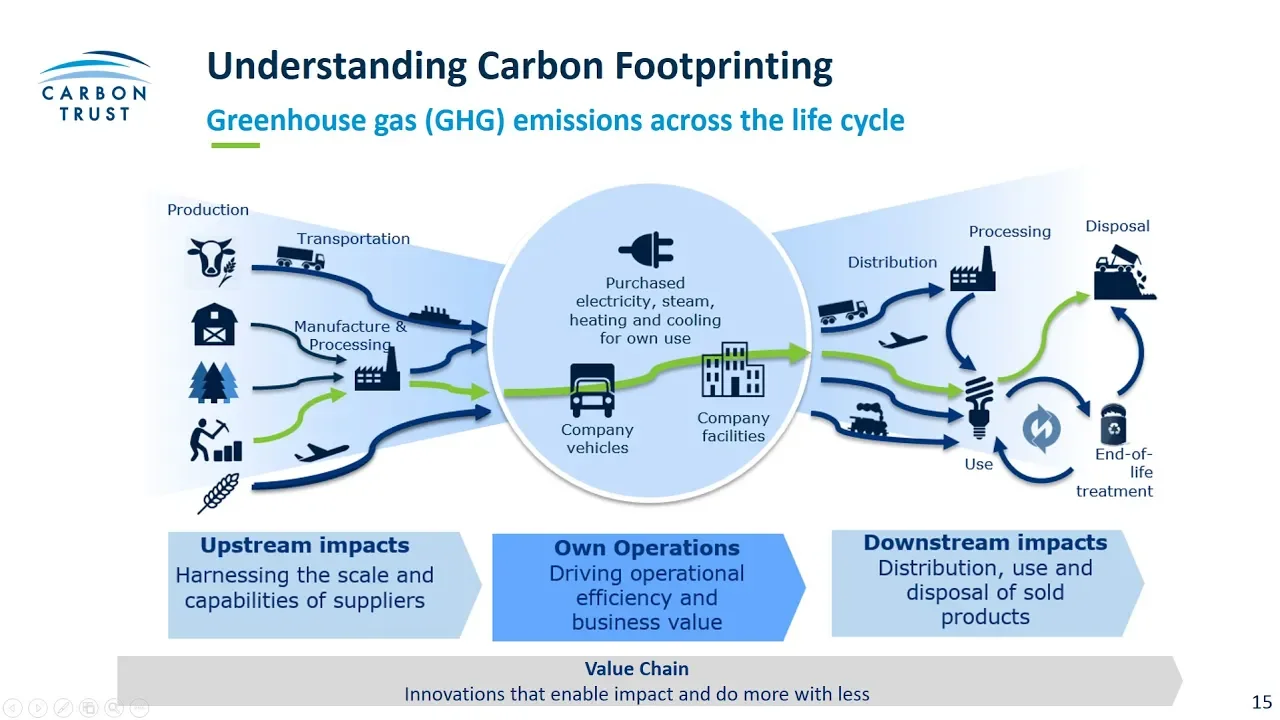



















The Greenhouse Gas Protocol, developed by the World Resources Institute and World Business Council for Sustainable Development, defines three scopes for corporate GHG accounting: Scope 1 covers direct emissions from sources owned or controlled by the company (e.g., combustion in boilers, vehicles); Scope 2 covers indirect emissions from purchased electricity generation; and Scope 3 covers other indirect emissions from activities not owned or controlled by the company (e.g., material production, product use). These scopes ensure transparency and prevent double-counting in organizational GHG reporting.
Understanding Scope 1, 2, and 3 GHG Emissions | Greenhouse Gas Protocol
Added:The basic science of climate change, including the identification of key greenhouse gases (GHGs) like carbon dioxide, methane, and nitrous oxide.
The concept of corporate sustainability and why organizations conduct environmental impact assessments.
The distinction between operational boundaries and financial control when defining organizational limits.
Familiarity with standard metrics used in carbon accounting, specifically Carbon Dioxide Equivalent (CO2e).
How to collect activity data and apply emission factors to calculate actual carbon footprints for each scope.
Strategies for addressing the complexities of Scope 3 emission mapping across upstream and downstream value chains.
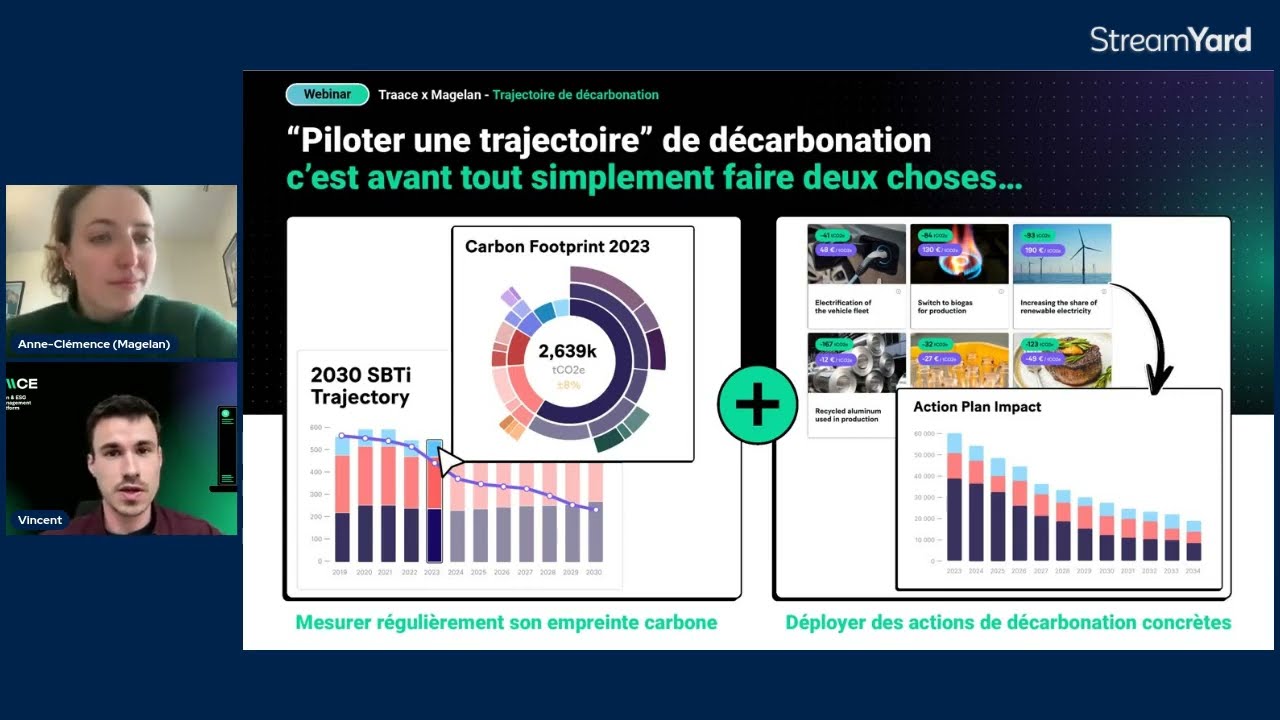
How to establish Science-Based Targets (SBTi) and design effective corporate decarbonization roadmaps.
Compliance with international climate disclosure regulations and frameworks such as CSRD, TCFD, and SEC requirements.
23.3K views509likes5:56Original Release: 2021-04-13
when accounting for your greenhouse gas emissions it's not too long before you encounter the terms scope 1 scope 2 and scope 3 emissions what do these terms mean and how do they affect your greenhouse gas accounting let's take a look [Music] [Applause] [Music] welcome to ems mastery where we look at the successful strategies and tactics to master environmental management and sustainability if we're meeting for the first time my name is andrew marlow this episode looks at the terms scope 1 scope 2 and scope 3 emissions used in greenhouse gas or ghg accounting and how they can be used within the ghg accounting within your organization one of the main documents that can be used for ghg accounting is the greenhouse gas protocol a corporate accounting and reporting standard which has been published jointly by the world resources institute and the world business council for sustainable development within this document the concept of scope is used to help provide a distinction between direct and indirect emission sources to help improve transparency and provide clarity for different types of organizations and different types of climate policies and business goals therefore three scopes scope one two and three are defined for ghg accounting and reporting purposes scopes one and two are carefully defined in this standard to ensure that two or more companies will not account for the same emissions under the same scope this makes the scopes compatible for use in ghg programs where double counting matters as a minimum organizations can separately account for and report for scope 1 and scope 2 emissions so let's take a look at each of the scopes and their definitions scope one is the direct ghg emissions direct ghg emissions occur from sources that are owned or controlled within the company for example emissions from combustion in owned or controlled boilers furnaces and vehicles further examples are given such as emissions from chemical production in owned or controlled process equipment direct co2 emissions from the combustion of biomass are not including scope 1 but can be reported separately ghg emissions not covered by the kyoto protocol such as cfcs and nitrogenous oxides shall not be included in scope 1 but may also be reported separately scope 2 electricity indirect ghg emissions scope 2 accounts for the ghg emissions from the generation of purchased electricity consumed by the company purchased electricity is defined as electricity that is purchased or otherwise bought into the organizational boundary of the company within this definition the scope 2 emissions physically occur at the facility where the electricity is generated scope 3 other indirect ghg emissions scope 3 is an optional reporting category that allows for the treatment of all other indirect emissions scope 3 emissions are the consequence of the activities of the company but occur from sources not owned or controlled by the company such examples of scope 3 activities are extraction and production of purchased materials transportation of purchase fuels and use of sold products and services so to summarise the greenhouse gas protocol a corporate accounting and reporting standard provides the definitions of scope 1 2 and 3 emissions which can help to inform your greenhouse gas accounting within your organization further information on scope 1 2 and 3 emissions and a link to the greenhouse gas protocol is given in the description box below including a link to the resources on the ems mastery.com website if this episode has helped to advance your understanding of the use of the terms scope 1 2 and 3 in your greenhouse accounting please leave a comment in the box below if this episode has helped you if you got value from this episode please subscribe to this youtube channel to ensure that you don't miss out on other episodes on environmental management and sustainability until then thank you for listening if you enjoyed this episode you can watch other episodes by clicking on the boxes in the top and bottom right and to subscribe to this youtube channel click on the link to the left thank you
Up Next
6:35
Supply Chain Management Explained: Stages, Process & Strategy
@SimplilearnOfficial
1.5M views•2021-12-15

12:54
Triumph of Orthodoxy Icon: Byzantine Art & History Explained
@BenCallan
2.1K views•2024-08-06

9:49
FastAPI vs Flask vs Django: Choosing the Right Python Web Framework
@TechWithTim
302.5K views•2024-05-26

1:42
Game of Thrones Opening Credits: A Cinematic Analysis
@gameofthrones
46.3M views•2011-04-18
Related Study Plans & Knowledge Roadmaps
Structured learning paths in General & Interdisciplinary Studies
general-studies
Elevator Engineering: History, Physics & Cities
01From Hoists to Safety Brakes: The Dawn of Vertical Lift
02Hydraulic vs. Traction: The Engineering Physics of Elevators
03Modern Speed, Safety, and Algorithms
+ 2 more learning modules
12h5 modules
Explore Roadmap
general-studies
Rubber: Material Science, History & Geopolitics
01Origins of Natural Rubber & Mesoamerican History
02The Chemistry of Natural Rubber & Vulcanization
03The Geopolitics of the Rubber Boom & Colonization
+ 2 more learning modules
12h5 modules
Explore Roadmap
general-studies
Containerization: Evolution, Logistics & Trade
01Ancient Trade & Bulk Cargo: Amphorae to Barrels
02The Industrial Revolution & Cardboard Packaging
03The Containerization Revolution: Malcom McLean
+ 2 more learning modules
12h5 modules
Explore Roadmap
general-studies
Textile Tech: Evolution, Labor & Global Impact
01Pre-Industrial Textiles: Handloom & Cottage Industry
02Mechanization: The Spinning Jenny to the Power Loom
03The Factory System & Global Labor Transformation
+ 2 more learning modules
10h5 modules
Explore Roadmap