Frankenstein by Mary Shelley begins and ends with an epistolary frame consisting of letters from explorer Robert Walton to his sister Margaret, which serves as a narrative device to introduce the main story, establish themes of companionship and loneliness, and connect to Romantic period literary traditions including biblical references to Paradise Lost.
Frankenstein by Mary Shelley | Letters 1-4 Summary & Analysis
Added:Deep Dive
Basic understanding of the epistolary novel format and the literary concept of a frame narrative.
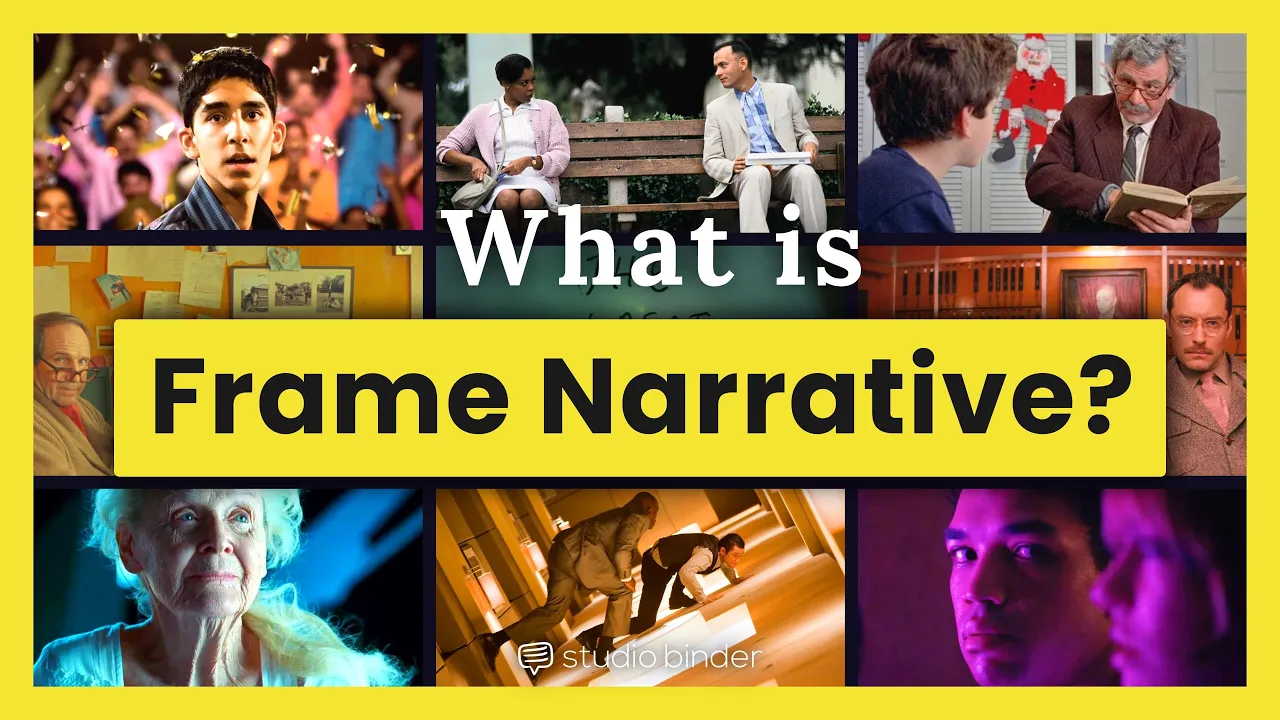
What is a Frame Narrative? — Why Writers Use the Literary Device
113.3K
A frame narrative, also known as a sandwich narrative, intercalation, or frame story, is a narrative structure containing one or more distinct stories within it. The inner story is called an embedded narrative or story within a story, and multiple layers are termed nested stories. This device has existed since ancient times, appearing in The Epic of Gilgamesh where the protagonist's exploits are relayed to the gods, and in Geoffrey Chaucer's The Canterbury Tales where each pilgrim tells their own tale. Frame narratives operate as structuring devices allowing multiple stories to progress congruently, playing off each other to emphasize themes or create suspense. They can be laid out in two ways: starting and ending a story (bookend structure) or being interwoven throughout runtime. Examples include bookend structures like Baz Luhrmann's The Great Gatsby and Titanic, in-story media like Drive My Car performing Uncle Vanya, and documentaries/mockumentaries like Spinal Tap using dual timelines.
Click to watch →

КНИГИ и ФИЛЬМЫ // ИЮНЬ
59.4K
An epistolary novel is a book written in the form of letters or documents. This narrative technique allows readers to experience the story through personal correspondence, creating an intimate and immersive reading experience. The format enables characters to develop organically as their perspectives and emotions are revealed through their own words.
Click to watch →

Epistolary novel || Literary Terms || Literature Lovers
11.9K
An epistolary novel is a literary format where the story is told through letters, documents, or other written communications, with characters exchanging correspondence that advances the narrative; classic examples include Frankenstein and Pamela, where characters communicate their experiences through letters to family members or others.
Click to watch →
CUET PG 2026 English Literature (LAQP01) | MA English Entrance | Mcq Practice & Preparation Strategy
554
Frame narrative is a literary technique where a story contains another story within it, typically featuring multiple narrators. Key examples include Wuthering Heights (Lockwood and Nelly Dean as narrators), Heart of Darkness (unnamed narrator and Marlow), Canterbury Tales (unnamed narrator introducing pilgrims who tell their own stories), and Hamlet (which uses 'play within a play' rather than frame narrative). Frame narrative creates layered storytelling where the main narrator introduces sub-stories told by additional characters.
Click to watch →

may tbr + reading journal set up🪡🌷✨💌
24.9K
An epistolary novel is a literary format where the story is told through letters, documents, or other written correspondence between characters. This narrative structure allows for intimate character perspectives and can create unique storytelling experiences. Examples include novels featuring underwater characters communicating through letters, which combine romantic and scholarly elements.
Click to watch →
Deep Dive
An overview of the Romantic Era and the tension between scientific rationalism (Enlightenment) and the emotional sublime (Romanticism).

The Western Tradition - Episode 43 - Revolution and Romantics (1989)
4.9K
Romanticism was a reaction against Enlightenment rationalism—the dream that everything could be calculated and worked out in rational terms. While Enlightenment thought investigated what could be seen with scientific instruments and calculated what could be calculated, romantics wanted the invisible and incalculable: dreams, fantasies, madness. Jean-Jacques Rousseau became the patron saint of romanticism through his Confessions, the first modern autobiography. His philosophy held that man is naturally good and happy, but society perverts him. The conclusion was to fight oppression, resist social convention, and choose rejection and failure to be true to nature.
Click to watch →

Otto von Bismarck - El Canciller de Hierro - Magdalena Merbilháa - Red Cultural
60.8K
Romanticism emphasized the 'sublime' - experiences of extreme beauty, terror, or awe that overwhelmed ordinary perception. Romantics were drawn to extreme experiences, such as standing at the edge of cliffs and facing the infinite, or experiencing natural disasters. This aesthetic of extremes distinguished Romanticism from the more measured sensibilities of the Enlightenment.
Click to watch →

Прямой эфир с Евгением Жариновым
1.9K
Romanticism emerged as a deliberate opposition to the Enlightenment's cult of reason. While Enlightenment thinkers worshipped reason as the highest value, romanticists turned their attention to everything dark, mysterious, and irrational. This opposition manifested in their preference for night over day, the supernatural over the natural, and emotional experience over rational analysis. The romantic aesthetic embraced the demonic and the mysterious, creating a fundamental tension with the rationalist worldview that had dominated Western thought for centuries. This opposition shaped romantic literature, art, and philosophy, establishing a tradition that continues to influence contemporary culture.
Click to watch →

What is Romanticism?
79K
Romanticism (late 18th to mid-19th century) was an artistic and intellectual movement in Europe that emerged as a break from the Enlightenment's emphasis on reason, instead celebrating emotional sensitivity, individual subjectivity, and imagination as the supreme creative faculty of the human mind; while Enlightenment thinkers like Kant and Hegel viewed nature as orderly and benign and believed reason could liberate humanity from ignorance and injustice, Romantics portrayed nature as powerful, unpredictable, and destructive, asserting that through imagination humans not only perceive but actively create reality.
Click to watch →

El Romanticismo
111.2K
Romanticism was an artistic movement emerging in mid-19th century Europe that rebelled against Enlightenment rationalism and Classical artistic canons, emphasizing emotion, individual subjectivity, existential anguish, and themes of rebellion and imperfection; key literary examples include Goethe's *Doctor Faustus* and *The Sorrows of Young Werther*, while visual arts feature Goya's works and music is exemplified by Beethoven's Ninth Symphony.
Click to watch →
Deep Dive
Familiarity with the Greek myth of Prometheus and the concept of 'hubris' or overreaching ambition.

Gran Hermana. El editorial de Jonatan Viale.
124.8K
Hubris is a Greek mythological concept representing excessive pride or self-confidence that leads to downfall. It describes the irrational impulse of a person to believe they can become like a god, possessing omniscience and omnipotence. The myth of Prometheus illustrates this: he stole fire from the gods and was punished by having his liver eaten daily by an eagle, which regenerated each night, symbolizing eternal punishment for overstepping mortal limits.
Click to watch →

당신의 날 수를 계산하십시오
179
The Greek myth of Prometheus explains how humans received fire (science and technology) but lost awareness of death. Prometheus removed humans' mortality consciousness and implanted unrealistic hopes and ambitions. This led humans to compete, pursue success, and believe they could become like gods. The video argues modern society has become 'Promethean' - forgetting we are not gods. Psalm 90 is 'anti-Promethean' because it reminds us to live within human limitations. The key lesson is that technological advancement and ambition cannot overcome our fundamental mortality.
Click to watch →
Science Fiction, Lecture 3, Concluding Frankenstein, ENG 2420, Prof. Jason Ellis, Spring 2020
250
Hubris is excessive pride or overconfidence, particularly in one's abilities. In Greek mythology, hubris was presumption or arrogance toward the gods, and those who committed hubris were punished by Nemesis (the agent of retribution). Victor Frankenstein exhibits hubris by believing his scientific knowledge gives him the authority to create life without considering consequences. The character of Prometheus, punished by Zeus for giving fire to humanity, is a key parallel to Victor, representing the consequences of human ambition to transcend natural limits.
Click to watch →

Ancient Astronauts and The Old Ones | At the Mountains of Madness & Prometheus | CC EP: 6
33.8K
Prometheus is a semi-prequel to Alien set in the same universe. Scientists discover cave paintings pointing to LV223, a planet named after Leviticus 22:3. The main themes include hubris (human and of the engineers), greed of Weyland Corp, the origin of life on Earth, God versus man, and consciousness (biological versus artificial life). The movie is named after the Greek myth where Prometheus stole fire from the gods and was punished, paralleling the Garden of Eden where mankind is punished for seeking forbidden knowledge.
Click to watch →
TROY | First Time Watching | REACTION
76.8K
The Trojan War began when Agamemnon, king of Mycenae, forced Greek kingdoms into a loose alliance, with only Thesaly remaining unconquered. Achilles, considered the greatest warrior ever born, fought for the Greeks but his disdain for Agamemnon's rule threatened to break the fragile alliance. According to Greek mythology, Achilles' mother Thetis dipped him in the River Styx to make him invulnerable, but she held him by his heel, leaving that one spot vulnerable—the origin of the famous 'Achilles heel' weakness. Hubris, referring to excessive pride or self-confidence that leads to one's downfall, is a central theme in Greek mythology and literature, where characters who become too proud or arrogant face tragic consequences, often at the hands of the gods.
Click to watch →
Deep Dive
An introduction to the Gothic literary tradition, focusing on themes of isolation, horror, and psychological depth.

O Fascinante Mundo da Literatura Gótica | Origem, Livros e Características
3.2K
Gothic literature explores the internal conflict where evil and madness threaten protagonists from within, contrasting with Romantic external heroism. The genre challenges religion, morality, and established values through characters like the Promethean figure who defies orders and suffers eternal punishment. The sublime—evoking admiration and terror before nature's greatness—creates an 'expansion of spirit' through suspense and vastness. Gothic literature serves as a window into humanity's deepest fears: death, loneliness, the unknown, and most importantly, fear of oneself. The terror often comes from within rather than external sources, exploring psychological depths and the darkness within each person.
Click to watch →
10 LIBRI da Leggere ad HALLOWEEN 🎃 Cozy fantasy, dark acedemia, gotico
853
Gothic literature creates psychological horror through atmosphere, ambiguity, and isolation rather than explicit violence. Key characteristics include: (1) Physical and social isolation that intensifies psychological tension (as in 'Abbiamo sempre vissuto nel castello' where a family is isolated after a mysterious tragedy); (2) Uncertainty about reality, leaving readers questioning whether supernatural events are real or imagined (as in 'Giro di vite' where the protagonist's perceptions may be unreliable); (3) Exploration of the boundaries between reality and perception, where simple actions can create profound uncertainty about sanity; (4) Use of macabre irony and dark humor to create tension. These elements create lasting psychological impact that distinguishes gothic fiction from traditional horror.
Click to watch →

Book Haul December 2020
3.3K
Gothic literature traditionally explores themes of isolation, repression, and psychological transformation through atmospheric settings. The novel 'Black Narcissus' by Rumer Godden, published by Virago Books with a new introduction by Amanda Coe, exemplifies this tradition by setting its story in a Himalayan palace converted into a nunnery. The narrative examines how isolation and repression can lead to the emergence of repressed desires, demonstrating how gothic literature uses physical and psychological spaces to explore complex human emotions and the consequences of social constraints.
Click to watch →
Frankenstein II – Canavarınla Yüzleşmek #BeraberOkuyoruz
29.2K
Gothic literature emerged in the late 18th century as a distinct literary tradition characterized by supernatural elements, horror, and psychological terror. The term 'Gothic' originally referred to the art style of the Middle Ages, but was applied to literature to describe works that were considered barbaric and aesthetically distant from classical traditions. Gothic literature often explores themes of death, decay, madness, and the supernatural, creating atmospheres of fear and unease. Frankenstein is considered a foundational work of Gothic literature.
Click to watch →
TOP 10 Mejores Lecturas 2019
39K
Gothic horror literature uses historical settings to create atmospheric tension while exploring supernatural elements. Authors combine historical accuracy with paranormal elements to create immersive worlds where readers learn about history while experiencing fear. The genre explores how adolescent isolation and loneliness can drive individuals to harmful acts, demonstrating how the human need for belonging can override moral judgment when one feels completely disconnected from society.
Click to watch →
Prerequisite Knowledge
- Concept 01Basic understanding of the epistolary novel format and the literary concept of a frame narrative.
- Concept 02An overview of the Romantic Era and the tension between scientific rationalism (Enlightenment) and the emotional sublime (Romanticism).
- Concept 03Familiarity with the Greek myth of Prometheus and the concept of 'hubris' or overreaching ambition.
- Concept 04An introduction to the Gothic literary tradition, focusing on themes of isolation, horror, and psychological depth.
Subsequent Learning
- Step 01Analysis of Victor Frankenstein's narrative (Chapters 1-10) to compare his scientific hubris with Robert Walton's exploratory ambition.
- Step 02Examination of the 'Doppelgänger' (double) motif, exploring how Walton serves as a literary foil to both Victor and the Creature.
- Step 03Investigation of the role of the 'sublime' in nature, contrasting the frozen Arctic landscape in the letters with the Alpine settings later in the novel.
- Step 04Evaluation of the novel's framing device by analyzing the closing letters to see how Walton's final decisions resolve the narrative's core moral questions.
Walton's Quest
Frame & Theme
Walton's Quest
0:00Playing Section
- 1
Captain Walton seeks Arctic glory and scientific fame.
- 2
His letters reveal deep loneliness and a need for companionship.
- 3
He rescues a stranger chasing a giant figure on the ice.
Feminist and Domestic Critique of Walton's Frame Narrative
While traditional analyses view Robert Walton's letters as a sympathetic frame establishing the tragic, universal dangers of intellectual ambition, feminist and domestic literary criticism offers an alternative perspective. Critics argue that Walton's voyage represents a destructive, patriarchal rejection of the domestic and feminine spheres. Walton writes to his sister, Margaret Saville, but her voice is completely silenced, representing the marginalization of women in a male-dominated quest for conquest and scientific glory. From this viewpoint, Walton's isolation is not a tragic, unavoidable consequence of his genius, but a self-inflicted result of abandoning the relational, nurturing, and ethical responsibilities of the domestic home in pursuit of masculine dominance over nature. Thus, the opening letters serve less as a romantic exploration of heroic ambition and more as a critique of how patriarchal egotism destroys vital social and familial bonds.
Deep Dive
Analysis of Victor Frankenstein's narrative (Chapters 1-10) to compare his scientific hubris with Robert Walton's exploratory ambition.
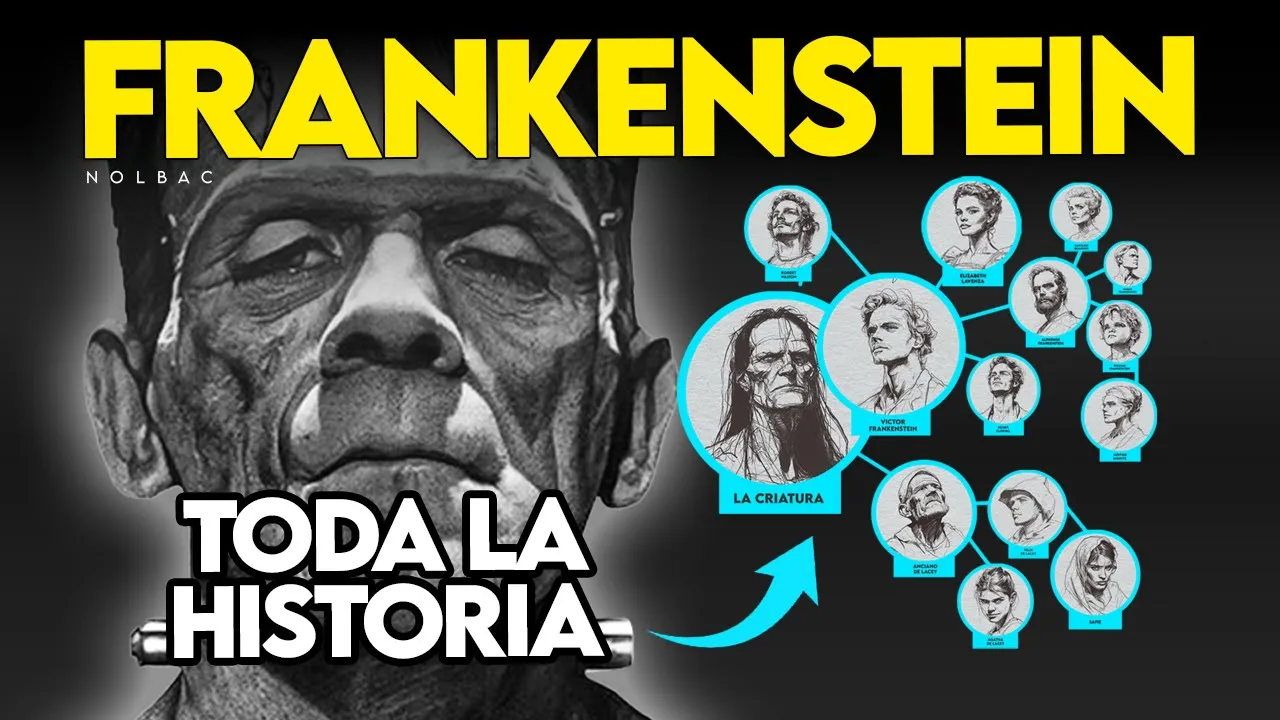
FRANKENSTEIN: Resumen Completo y Análisis
95.7K
The novel opens with Robert Walton's letters to his sister Margaret, describing his Arctic expedition to explore the North Pole and discover a faster passage between continents. Walton represents ambition and isolation, concerned his refined education makes him too sensitive to life's brutality. He encounters a strange man he initially calls 'wild' based on appearance—a prejudice that will prove significant. This man is Victor Frankenstein, who has been wandering after abandoning his creation. Walton comes to consider him a brother and friend despite initial prejudice, introducing themes of judgment and acceptance. Walton's romanticized view of the sea based on books rather than experience establishes his innocence and ignorance.
Click to watch →
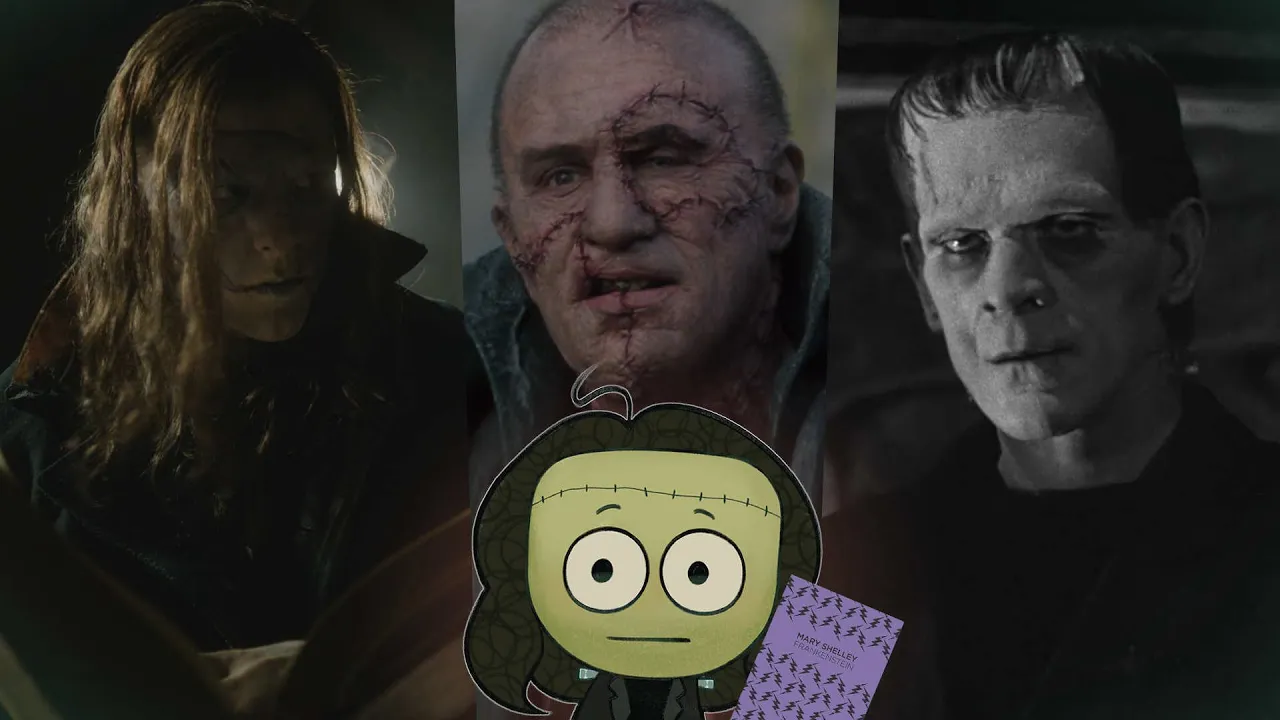
3 Versiones de Frankenstein vs La Novela
124.4K
In Mary Shelley's novel, Victor Frankenstein is characterized by extreme ambition without considering consequences. He dreams of breaking nature's limits, a theme that typically ends badly. When he creates the monster, his life becomes constant tragedy. He describes feeling tormented by the creature's actions but also shows an egotistical side, refusing to take responsibility. From the beginning, he views the creature as inhuman and inferior. This lack of responsibility leads to his terrible destiny. His boundless ambitions parallel the Arctic sailors who also attempt to go against nature's forces but, unlike Victor, decide to return home before risking their lives.
Click to watch →
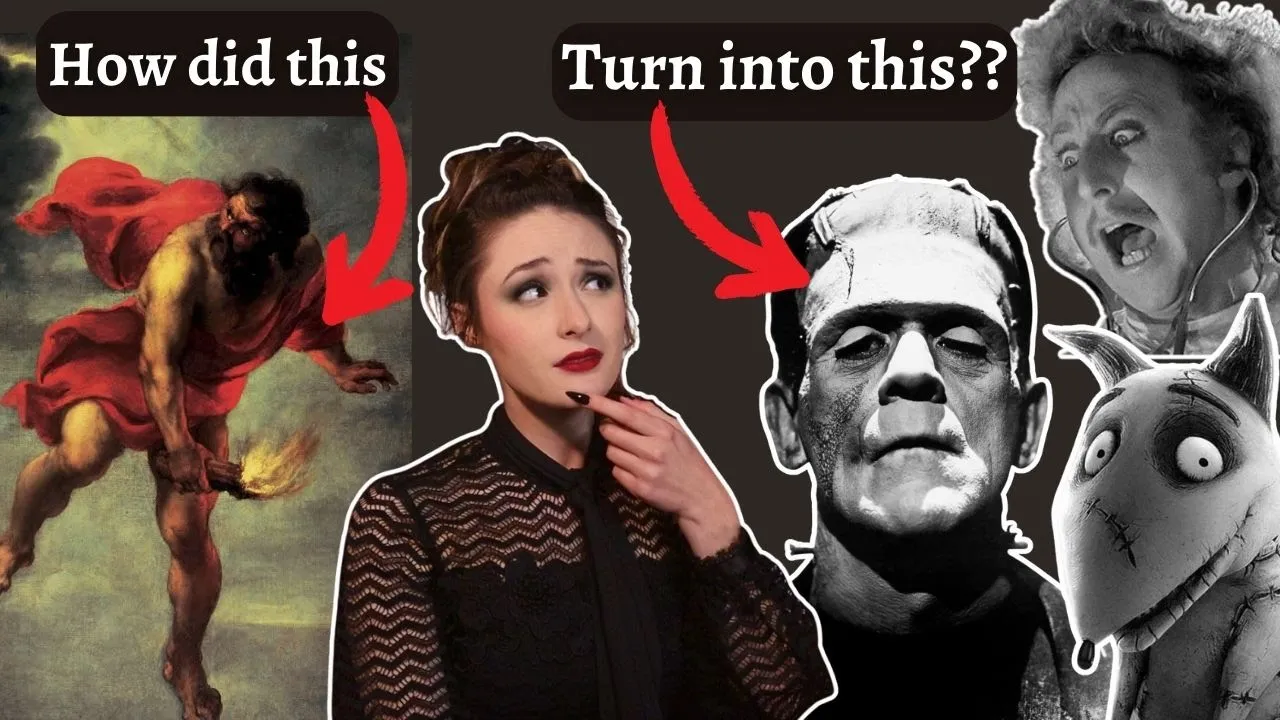
How Frankenstein Became a Modern Myth
61.2K
Victor pursues the monster across Europe, with the monster leaving clues so Victor can follow. Both are trapped in a cycle of unattainable revenge. Near the North Pole, the ice breaks, stranding Victor on a float drifting toward death. There, Walton finds him. Victor warns Walton to seek happiness and avoid ambition, even innocent scientific discovery, having been 'blasted in these hopes.' Walton is horrified by the events and sees himself in Victor. The crew urges turning back, and Victor dies before they can continue, having learned too late the cost of unchecked ambition. Walton finds the monster weeping over Victor's body, lamenting his transformation from one hoping to be loved for his qualities to someone 'degraded beneath the meanest animal.' The novel's alternate title 'The Modern Prometheus' draws from Greek mythology, comparing Victor unfavorably to Prometheus, who created mankind out of love and was punished for it. Unlike Prometheus, Frankenstein creates selfishly to prove he can achieve Godlike power. The first film adaptation appeared in 1910, only 16 minutes long, emphasizing spectacle over narrative. Universal's 1931 Frankenstein established the classic template: the mad scientist, the dumb assistant, the violent mob, and the tragic monster. This version decentralized Victor as villain, instead telling a tale of a creature turned monster by cruelty.
Click to watch →

‘Frankenstein' Quotes For GCSE Exams! | Victor Frankenstein Character Quotes & Word-Level Analysis
49.3K
Victor Frankenstein serves as a cautionary tale against excessive human ambition and using science to play God's role. The novel's subtitle 'The Modern Prometheus' draws parallels between Victor and the Titan who stole fire from the gods, representing forbidden knowledge. Victor's ambition to learn 'the secrets of heaven and earth' demonstrates his desire to play God's role, warning Captain Walton that 'knowledge' is 'dangerous.' His horrifying process of creating the creature from grave bodies, described as 'unhallowed' actions, shows the moral cost of overreaching. Upon achieving his goal, he describes the creature as 'the filthy demon' and realizes 'the beauty of the dream had vanished.' His transformation from hopeful ambition to destructive revenge, where 'revenge kept me alive,' completes the Promethean cycle. His final warning that 'sorrow only increases with knowledge' emphasizes that ignorance is bliss and overreaching human capabilities leads to catastrophic consequences.
Click to watch →

Frankenstein, The Walton Letters (The Opening of the Novel)
103
The opening letters of Frankenstein, written by Robert Walton to his sister Margaret, establish the narrative frame of the novel through Walton's ambitious Arctic expedition, his self-education and literary influences, his longing for companionship, and his encounter with the mysterious stranger who will become Victor Frankenstein, setting up the themes of exploration, ambition, and the dangers of unchecked scientific pursuit.
Click to watch →
Deep Dive
Examination of the 'Doppelgänger' (double) motif, exploring how Walton serves as a literary foil to both Victor and the Creature.
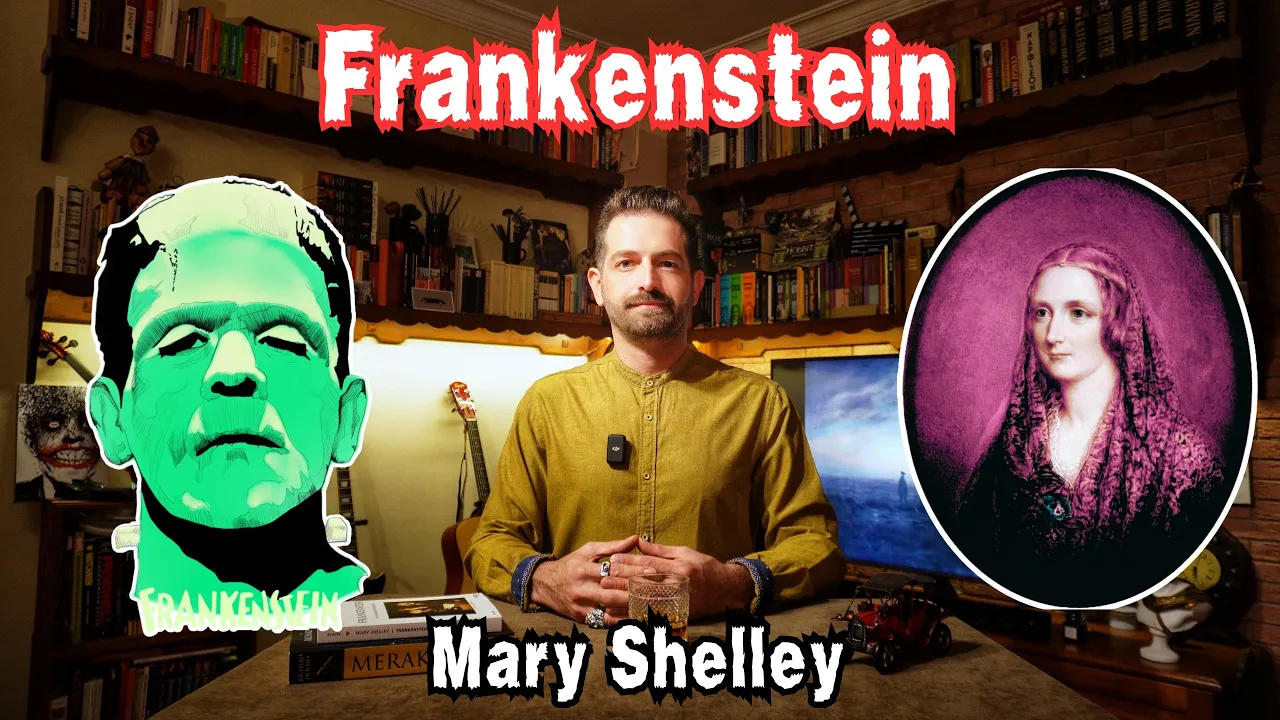
Mary Shelley | Frankenstein | Biyografi & Kitap
573
Victor Frankenstein represents the 'Modern Prometheus'—a hubristic scientist who seeks to conquer nature through reason but fails to accept parental responsibility. The Creature embodies the 'Noble Savage' concept: born innocent and kind, he learns morality through observation but becomes corrupted by society's rejection. They function as a doppelgänger pair, representing split human psychology. Captain Walton serves as a potential Victor who learns from the story and chooses differently. The novel's structure uses nested narratives: Walton's letters, Victor's story, and the Creature's testimony.
Click to watch →

The FrankenFiles || Chapter One: Hallmark's "Frankenstein" (2004)
1.3K
Captain Walton serves as both frame narrative and foil to Victor, recognizing himself on the same dangerous path. The series uses Walton's question about sacrificing everything for knowledge to warn against ambition. However, casting Donald Sutherland as older Walton alongside young Luke Goss creates awkward visual dynamics, undermining the mentor-student relationship. The theme of questioning humanity is explored through the Creature reading Paradise Lost and contemplating his identity, though other characters refuse to acknowledge his humanity. The series includes controversial explicit content showing Victor and Elizabeth alongside the Creature watching Felix and Agatha, which critics argue unnecessarily sexualizes the story and detracts from its deeper themes of love and belonging.
Click to watch →

Mary Shelley Literally Wrote Two Frankensteins: A Comparative Analysis | Video Essay
76.9K
One of the biggest changes in regards to this idea of submission comes in Volume 1, Chapter 5 or 6. The creature has little to no change at all, except for some word choice like changing 'My enemy is not impregnable' in 1818 to 'My enemy is not invulnerable' in 1831. Besides that and some cuts for redundancy, he's pretty untouched, which is funny because if you look at the chart of changes, his seven chapters are just entirely blank because Mary Shelley knew that they were perfect. Similarly with Walton, there is minimal change to him. Similar to Victor in both editions, Walton is willing to die fighting off the creature in 1831 like some sort of hero.
Click to watch →

El doble o doppelgänger
158
The doppelgänger is a literary motif representing a dark or alternate version of the protagonist that questions reality or drives the character toward madness; according to Freud's 1919 essay 'The Uncanny,' this motif originates from childhood narcissism as a protective mechanism for the ego against destruction, but transforms into something terrifying as individuals mature, because the double comes to represent the superego's moral judgment and all repressed aspects of the self that have been alienated through repression, creating a disturbing familiarity when we encounter a part of ourselves we no longer wish to recognize.
Click to watch →
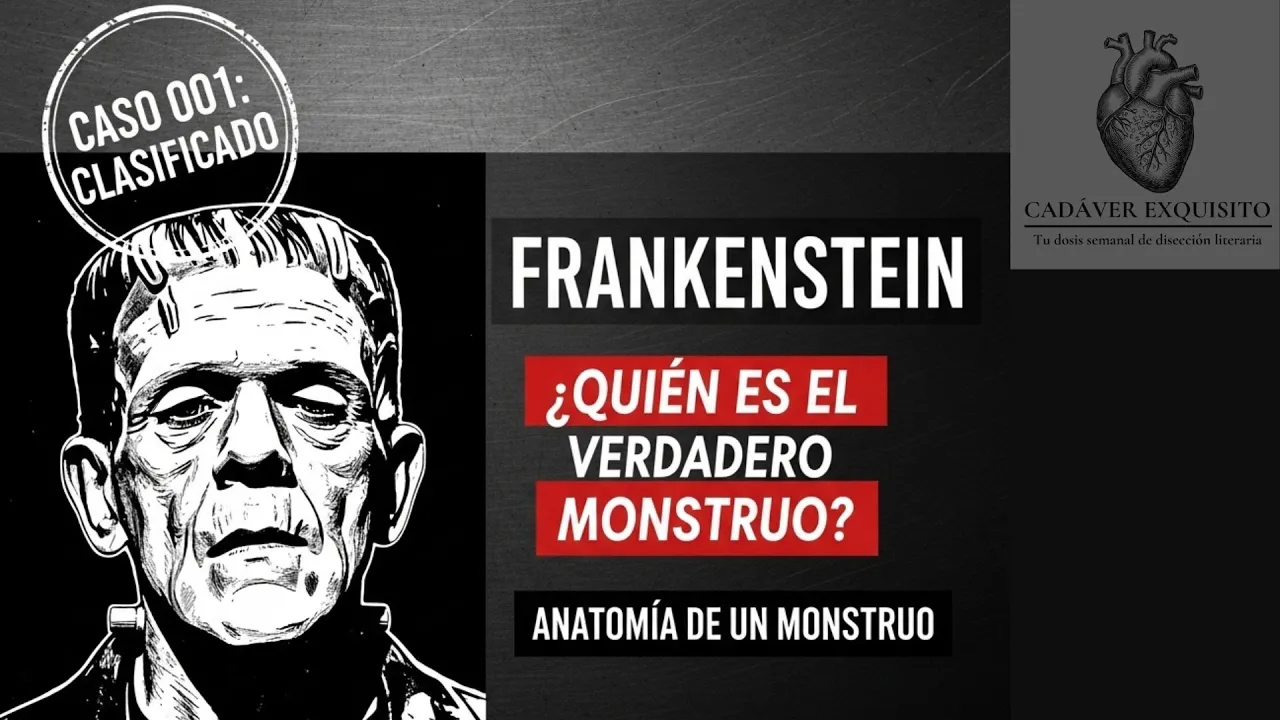
El VERDADERO monstruo de Frankenstein NO es la criatura (Análisis a fondo)
158
Mary Shelley introduces Robert Walton before Victor Frankenstein to establish a foil character. Walton represents the Romantic curiosity that could have led to greatness, but his ambition is tempered by poetry and a genuine need for human connection, as evidenced by his letters to his sister. He serves as a warning—a living advertisement—because he finds Victor at the brink of death, completely defined by his persecution. This contrast highlights how the same curiosity that drives exploration can become destructive when unchecked.
Click to watch →
Deep Dive
Investigation of the role of the 'sublime' in nature, contrasting the frozen Arctic landscape in the letters with the Alpine settings later in the novel.

Conceitos de Beleza - Prof. Lúcia Helena Galvão de Nova Acrópole
152.9K
There are two types of beauty: ordinary beauty (following symmetry and common patterns) and extraordinary beauty (the Sublime), which breaks patterns in an extraordinary way. The Sublime appears in nature when it breaks patterns—like stormy oceans or mountain peaks—possessing grandiosity that challenges us. When confronted with the Sublime, we can recover our dignity by recognizing that while these things can physically destroy us, they cannot corrupt us. Beauty is a human who has reached the limits of their human possibilities and realized their potential, including power over circumstances and the animal self.
Click to watch →

The Romantics - Nature (BBC documentary)
462K
Wordsworth learned to look on nature not as in thoughtless youth but hearing often times the still sad music of humanity. He experienced something many identify with modern pilgrimages to nature—a presence that disturbs with joy of elevated thoughts, a sense sublime of something far more deeply interfused. The Romantics were the first to express yearning for the sublime in nature, teaching us how to appreciate sunsets.
Click to watch →
JANE EYRE: A Calm Reading | Full Audiobook by Charlotte Bronte (part 1 of 3)
64.3K
Jane forms an idea of the death-white realms of the Arctic, where fields of ice, the accumulation of centuries of winters, glaze in Alpine Heights above Heights, surrounding the pole and congealing the multiplied rigors of extreme cold. These shadowy notions float dim through children's brains but are strangely impressive. The words in the introductory pages connect themselves with succeeding vignettes, giving significance to the rock standing up alone in a sea of billow and spray, the broken boat stranded on a desolate coast, and the cold and ghastly moon glancing through bars of cloud at a wreck just sinking.
Click to watch →
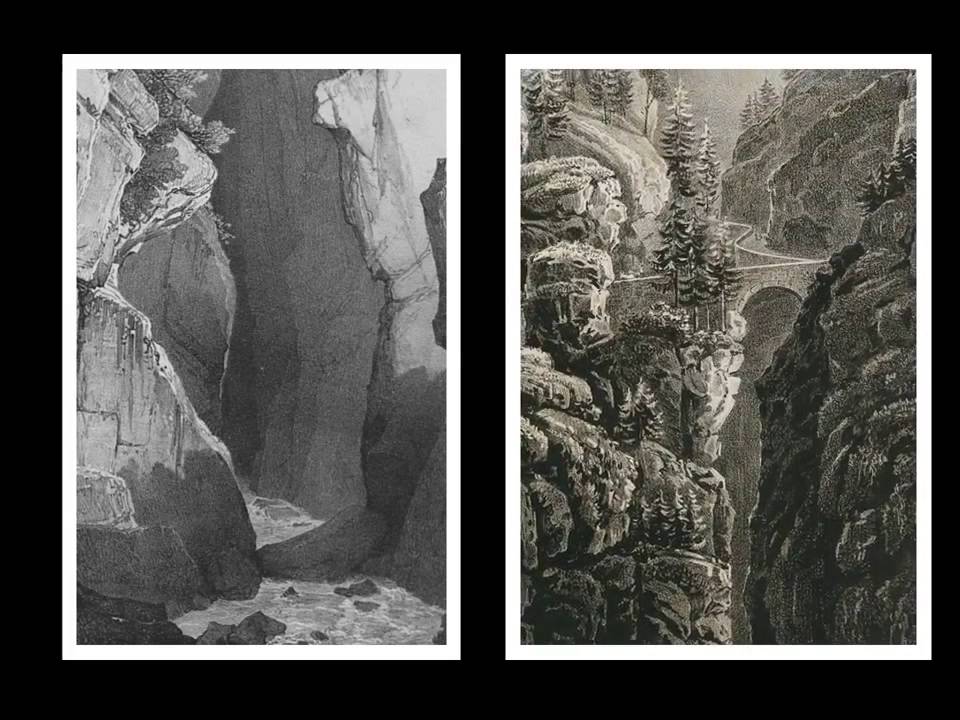
De Martigny à Chamonix, sur les pas des voyageurs d'autrefois
840
Travelers held contrasting views of Alpine pastoral life: some romanticized it as peaceful and archaic, others criticized it as monotonous. John Murray described the Col de Balme panorama as magnificent, while Alexandre Dumas was overwhelmed by Mont Blanc, described as 'the king of European mountains' lying like a white bear on polar ice. The Tête Noire route featured gorges and precipices that appealed to romantic travelers seeking the sublime. William Bartlett transformed Alpine landscapes into gothic and fantastical worlds through his engravings. Thophile Gautier described the Trient valley as typical romantic sublime: chasms with convulsive water flow, eternal shadow, and mountains of wild, formidable appearance.
Click to watch →

Cian Duffy — Returning to Mont Blanc in 2020 — EHUNineteen Seminar Series 2020-2021
381
Jean-Jacques Rousseau's account of the Alps in Julie, ou la Nouvelle Héloïse established a physiological theory of alpine experience: at high altitudes, pure air produces bodily and mental transformations—bodies become more active, minds more serene, passions more moderate, and meditations acquire sublimity from surrounding grandeur. This theory profoundly influenced Romantic writers including Victor Frankenstein and Percy Shelley, who describe similar experiences of elevation leading to spiritual transformation. Both Victor Frankenstein and the funeral party in 'The Last Man' seek consolation among the mountains, finding elevation elevates them from 'all littleness of feeling.' This lineage connects Rousseau's epistolary novel to Mary Shelley's novel and ultimately to contemporary scholarship returning to these sites, demonstrating how Romantic writers built upon earlier philosophical frameworks to articulate their experiences of the sublime.
Click to watch →
Deep Dive
Evaluation of the novel's framing device by analyzing the closing letters to see how Walton's final decisions resolve the narrative's core moral questions.

Frankenstein ~ Lost in Adaptation
12.4K
The monster, after being abandoned, learns speech and reading by observing the DeLacey family, but society's rejection drives it toward violence. It kills Victor's brother and frames Justine for the murder. The monster demands Victor create a female companion, but Victor destroys the creation, provoking the monster's revenge. The novel uses a framing device through Captain Walton's letters to his sister, with Frankenstein dictating his story to Walton. The monster's final fate is ambiguous as it rides an iceberg into the night. The novel's dual themes explore unchecked ambition and the tragedy of a creature rejected by society until it snaps.
Click to watch →
Which Frankenstein Film is Most Faithful to the Book?
384.3K
Frankenstein tells Captain Walton to destroy the creature. This occurs in TNT and Hallmark. In TNT, Walton actually tries to go through with it, but the creature kills the whole crew. In Hallmark, Walton is present but doesn't actively participate. This framing device connects back to the novel's structure and gives Walton a meaningful role in the climax.
Click to watch →

I personaggi di Frankenstein di Mary Shelley
4.5K
Captain Walton serves as a first-degree narrator whose letters open and close the novel. He is the captain of a ship that becomes trapped in Arctic ice. His letters are addressed to his sister Margaret Saville in England and form a frame around the main story of Victor Frankenstein. Walton saves Victor from the ice and hears Victor's story. Walton laments the death of a man with whom he was forming a significant friendship. Walton serves as the intermediary through which the reader hears the story of Victor and his monster.
Click to watch →

Frankenstein by Mary Shelley - Summary and Analysis
140
Captain Robert Walton serves as the framing device for Frankenstein's story. He is an explorer consumed by the desire for glory, driven by the same burning ambition that will define Victor Frankenstein. Walton's dangerous journey to the North Pole frames the entire narrative, and it is in this frozen wasteland that he witnesses the events that trigger Victor's story.
Click to watch →
How Frankenstein Became a Modern Myth
61.2K
Frankenstein is framed through letters written by Robert Walton, an explorer heading to the North Pole who rescues Victor Frankenstein from the ice. This epistolary structure creates a layered narrative where Walton recounts Frankenstein's story, which in turn contains the monster's own account. The framing device serves multiple purposes: it grounds the supernatural elements in a believable first-person account, provides a moral framework for interpreting Frankenstein's actions, and creates dramatic irony where readers know more than Walton does about the true nature of the creature.
Click to watch →
Walton's Quest
Frame & Theme
Walton's Quest
0:00- 1
Captain Walton seeks Arctic glory and scientific fame.
- 2
His letters reveal deep loneliness and a need for companionship.
- 3
He rescues a stranger chasing a giant figure on the ice.
Feminist and Domestic Critique of Walton's Frame Narrative
While traditional analyses view Robert Walton's letters as a sympathetic frame establishing the tragic, universal dangers of intellectual ambition, feminist and domestic literary criticism offers an alternative perspective. Critics argue that Walton's voyage represents a destructive, patriarchal rejection of the domestic and feminine spheres. Walton writes to his sister, Margaret Saville, but her voice is completely silenced, representing the marginalization of women in a male-dominated quest for conquest and scientific glory. From this viewpoint, Walton's isolation is not a tragic, unavoidable consequence of his genius, but a self-inflicted result of abandoning the relational, nurturing, and ethical responsibilities of the domestic home in pursuit of masculine dominance over nature. Thus, the opening letters serve less as a romantic exploration of heroic ambition and more as a critique of how patriarchal egotism destroys vital social and familial bonds.
Basic understanding of the epistolary novel format and the literary concept of a frame narrative.
An overview of the Romantic Era and the tension between scientific rationalism (Enlightenment) and the emotional sublime (Romanticism).
Familiarity with the Greek myth of Prometheus and the concept of 'hubris' or overreaching ambition.
An introduction to the Gothic literary tradition, focusing on themes of isolation, horror, and psychological depth.
Analysis of Victor Frankenstein's narrative (Chapters 1-10) to compare his scientific hubris with Robert Walton's exploratory ambition.
Examination of the 'Doppelgänger' (double) motif, exploring how Walton serves as a literary foil to both Victor and the Creature.
Investigation of the role of the 'sublime' in nature, contrasting the frozen Arctic landscape in the letters with the Alpine settings later in the novel.
Evaluation of the novel's framing device by analyzing the closing letters to see how Walton's final decisions resolve the narrative's core moral questions.
147.1K views1.8Klikes2:26@courseheroOriginal Release: 2019-03-15
[Music] Frankenstein begins and ends with an epistolary frame a series of letters from the Explorer Robert Walton to his sister Margaret Saville Walton Walton is a successful Englishman and the captain of a ship headed on a dangerous voyage to the North Pole he wants to make scientific discoveries and become a famous explorer in the first letter Walton describes the preparations leading up to the voyage and his desire to accomplish something great in the second letter Walton describes securing a ship and hiring sailors but more importantly his loneliness and need for friendship in the third letter Walton writes that the ship is nearing the North Pole he and his crew have sailed through a storm but he assures her he is in no danger in the fourth letter Walton tells his sister his ship is stuck in a field of icebergs he and his crew saw a gigantic figure of a man travelling by dogsled the next morning they found another man of normal size also on a dogsled this second man was near to death but refused to enter the ship unless it was bound for the North Pole the man revealed that he was chasing the gigantic figure Walton explains in the letter that he is thrilled to have a friend to talk to even though the man does not talk much and seems to be miserable Walton tells his sister that the stranger is going to tell his story the following day and has agreed to let Walton record it the connections to Paradise Lost continue into the letters for instance critics have noted that both st. Petersburg and Archangel the places where Walton prepares are biblical references these letters serve several purposes as a frame of narrative as a veneer of realism and as a way to introduce Walton Walton is a character who will come to resemble Victor Frankenstein anyways given that the book is written during the Romantic period readers would likely find Walton to be an interesting character given his ambition and imagination lastly the letters introduced one of the novel's primary themes companionship Walton is bitterly lonely and even though Victor is reclusive Walton quickly takes to him
Up Next

10:23
Dracula by Bram Stoker: Epistolary Horror and Victorian Anxieties
@extrahistory
459.7K views•2021-10-20

13:43
Formalism in Literary Criticism: An Academic Lecture Overview
@mattalberhasky9952
39.1K views•2015-08-05
2:38
The Rime of the Ancient Mariner Part 1 | Summary & Analysis
@coursehero
50.4K views•2020-04-28

15:25
1984: Orwell's Dystopian World and the Mechanisms of Totalitarianism
@AlternateHistoryHub
7M views•2017-03-04
Related Study Plans & Knowledge Roadmaps
Structured learning paths in Literature
literature
Graphic Memoirs: Visual Art, Trauma & History
01Foundations of Sequential Art and Visual Language
02Autographics and Processing Historical Trauma
03Visualizing Personal Trauma, Grief, and Graphic Medicine
+ 2 more learning modules
14h5 modules
Explore Roadmap
literature
Campus Novels: Evolution, Themes & Critique
01Introduction to the Campus Novel Genre
02Mid-Century Satire and the Post-War Academy
03Dark Academia and the Critique of Privilege
+ 2 more learning modules
14h5 modules
Explore Roadmap
literature
Theater of the Absurd: Philosophy & Plays
01Postwar Existentialism & Historical Roots
02Dismantling Narrative: Esslin & Absurdist Conventions
03Samuel Beckett and Tragicomic Existentialism
+ 2 more learning modules
12h5 modules
Explore Roadmap
literature
Revenge Tragedy: Justice, Madness & State
01Foundations of Early Modern English Theatre
02Anatomy of Revenge: Structural Conventions
03Psychological Complexity: Madness and Melancholy
+ 2 more learning modules
15h5 modules
Explore Roadmap