Humans evolved over approximately 3.8 billion years, beginning from simple single-celled organisms in primordial environments through a series of transitional life forms including prokaryotes, cyanobacteria, eukaryotes, choanoflagellates, flatworms, early fish, amphibians, reptiles, mammals, and finally hominins, ultimately leading to modern Homo sapiens.
Human Evolution Timeline: From Primordial Life to Homo Sapiens
Added:Deep Dive
The theory of natural selection and basic mechanisms of evolution, such as mutation, genetic drift, adaptation, and speciation.
What is EVOLUTION? (Evrim nedir?) | ETForSci
193
Natural selection is the fundamental mechanism where living things that adapt to nature are stronger than those that cannot adapt and can pass genes better to future generations. Adaptation refers to characteristics changed during evolution. For example, forest rabbits with fur color matching their environment survive better, while white rabbits in forests are easily caught. Mutations are changes in genomes due to external/internal factors like radiation, viruses, or bacteria. When mutations occur in reproductive cells (sperm, egg), they can be passed to next generations; otherwise, they disappear. Genomes are made of nucleotides arranged like strings, double-stranded in DNA and single-stranded in RNA. Mutation effects accumulate over years, causing significant changes in organs and systems. This large-scale change is called macroevolution. Natural selection, artificial selection, sexual selection, and kin selection are basic mechanisms on which evolution theory is based.
Click to watch →

نظرية التطور | 2- التطور يحدث أمام عينيك مباشرة
85.7K
Evolution is driven by three mechanisms: (1) Random genetic mutations, (2) Natural selection (non-random), and (3) Genetic drift. Natural selection is the primary mechanism that explains adaptation and the apparent design in living organisms.
Click to watch →

BIOLOGÍA | Teoría Actual de la Evolución 1° Medio | Clase N° 7
6.7K
The Modern Synthesis identifies four mechanisms of evolution: mutation creates new alleles through random DNA changes in reproductive cells, migration introduces alleles when individuals move between populations, natural selection operates on overproduction, limited resources, and individual variation with advantageous traits increasing survival and reproduction, and genetic drift causes random allele frequency changes through chance events in reproduction and survival. Genetic drift is particularly significant in small populations where chance events have larger effects. Both natural selection and genetic drift operate simultaneously in populations, with selection being non-random and drift being purely random.
Click to watch →

Mecanismos evolutivos: deriva génica, flujo génico, mutación y selección natural | Evolución |
102.8K
Evolution is defined as changes in allele frequencies in a population over time, driven by four mechanisms: genetic drift (random changes in allele frequencies, more pronounced in small populations, including bottleneck and founder effects), gene flow (migration of individuals or gametes between populations introducing new alleles), mutation (changes in DNA nucleotide sequences that introduce new alleles, forming the basis of heritable variation), and natural selection (the only mechanism that can result in adaptation by favoring alleles that enhance survival and reproduction).
Click to watch →
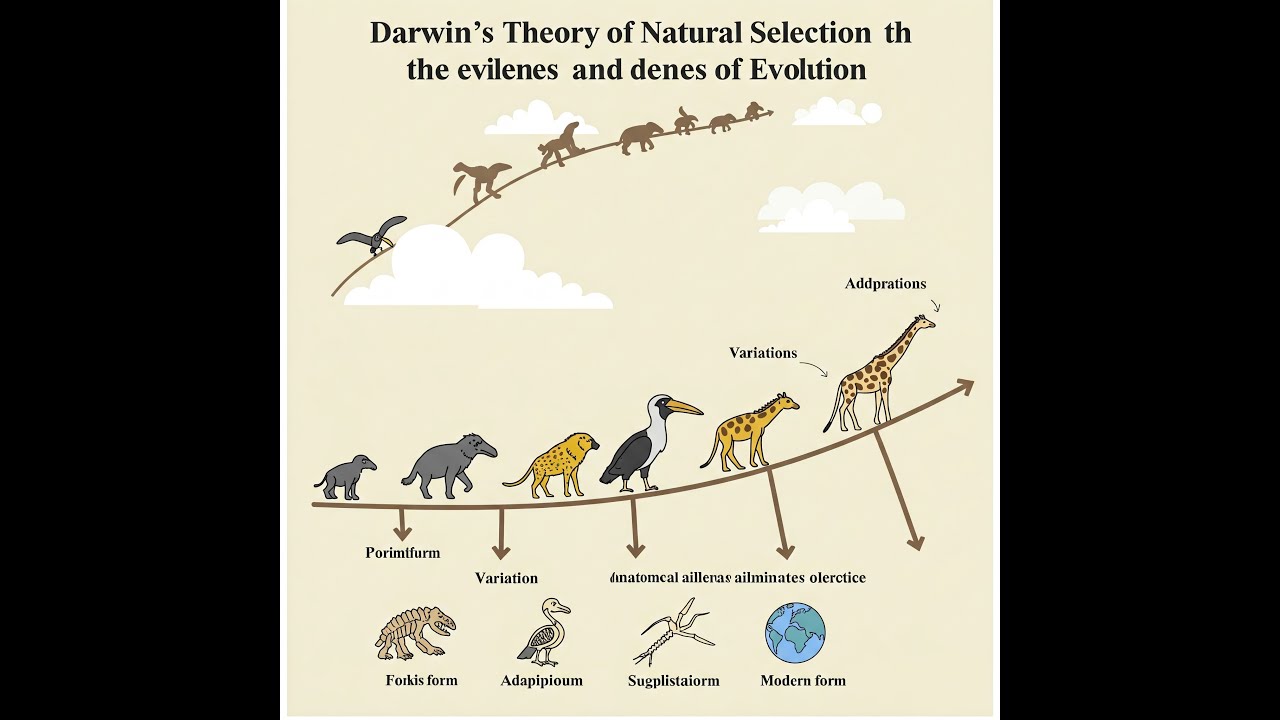
Natural Selection Evidences of Evolution and Shaping the Evolutionary Theory
420
Genetic drift is random change in allele frequency, typically decreasing variation in small populations through founder effect (small group colonizes new area) or bottleneck effect (population sharply declines then recovers). Mutation is random DNA change that can increase or decrease allele frequency. Natural selection operates through three main types: stabilizing selection (favors average individuals), directional selection (shifts population toward one extreme), and disruptive selection (favors both extremes against average). These mechanisms drive evolutionary change at different rates and patterns.
Click to watch →
Deep Dive
An understanding of geological deep time, including how Earth's history is divided into major eons, eras, and periods.

【2027共通テスト完全対応】4時間で極める地学基礎 無料テキスト付き!!
39.4K
The geologic time scale divides Earth's history into major eons, eras, periods, and epochs. The major divisions are: (1) Hadean Eon (4.6-4.0 billion years ago); (2) Archean Eon (4.0-2.5 billion years ago); (3) Proterozoic Eon (2.5-0.54 billion years ago); (4) Phanerozoic Eon (0.54 billion years ago to present). The Phanerozoic Eon is divided into three eras: Paleozoic (541-252 million years ago), Mesozoic (252-66 million years ago), and Cenozoic (66 million years ago to present). Each era is characterized by distinctive life forms and geological events.
Click to watch →
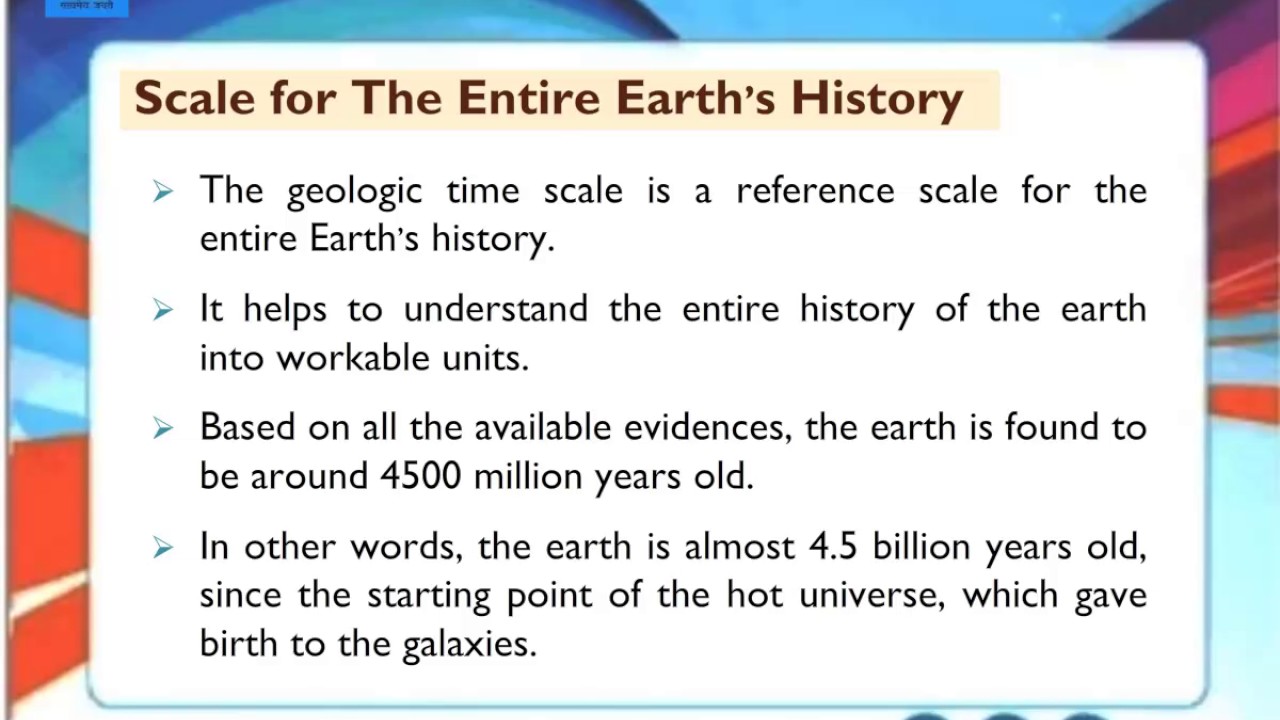
018 The Geological Time Scale(ES)
8.7K
Earth's history is divided hierarchically: Eon (half billion+ years), Era (hundreds of millions), Period (millions), Epoch (tens of millions), and Age (millions). Two major eons exist: Phanerozoic (visible life, 541 Ma-present) and Cryptozoic (hidden life, 4.5 Ga-541 Ma). Five major eras span Earth's history: Precambrian (4.5 Ga-541 Ma), Paleozoic (541-252 Ma), Mesozoic (252-66 Ma), Cenozoic (66 Ma-present), and Archean (3.9 Ga-2.5 Ga). The Precambrian accounts for 88% of geological time, with very limited fossil evidence but crucial developments including first life, oxygen accumulation, and basic tectonic processes.
Click to watch →
![[2021학년도 고3 3월 모의고사 해설강의] 지구과학Ⅰ- 정영일쌤: 해설강의 풀버전](https://i.ytimg.com/vi/x7xJoF_tOZ0/maxresdefault.jpg)
[2021학년도 고3 3월 모의고사 해설강의] 지구과학Ⅰ- 정영일쌤: 해설강의 풀버전
10.3K
The geological time scale divides Earth's history into eons, eras, periods, and epochs. The major divisions are: Hadean Eon (4.6-4.0 billion years ago), Archean Eon (4.0-2.5 billion years ago), Proterozoic Eon (2.5-0.541 billion years ago), and Phanerozoic Eon (0.541 billion years ago to present). The Phanerozoic Eon is divided into Paleozoic, Mesozoic, and Cenozoic eras.
Click to watch →
Deep Time – How Old Is Old? | Chapter 12 – Earth: Portrait of a Planet
106
The geological column divides Earth's history into major chunks: eons (largest), eras, periods, and epochs. The four eons are Hadean, Archean, Proterozoic, and Phanerozoic (the last three often grouped as Precambrian). The Phanerozoic eon means 'visible life' and is what most people think of with abundant fossils. Eras within Phanerozoic are Paleozoic (ancient life), Mesozoic (middle life), and Cenozoic (recent life). Periods and epochs further divide these, with names often relating to geography or characteristics (Jurassic after Jura Mountains, Carboniferous for coal).
Click to watch →

Evolution Part 7 | NEET 2024 Biology | NEET in 140 days | Class 12
1.3K
The geological time scale is divided into major units: Eons (largest divisions), Eras (subdivisions of eons), Periods (subdivisions of eras), and Epochs (subdivisions of periods). The major eons of Earth's history, in chronological order, are: Archean Eon, Proterozoic Eon, Paleozoic Era, Mesozoic Era, and Cenozoic Era. The Pre-Cambrian Eon (Archean and Proterozoic) spans approximately 4 billion years and is characterized by the absence of complex multicellular life. The Paleozoic Era contains 6 periods (Cambrian to Permian), the Mesozoic Era contains 3 periods (Triassic to Cretaceous), and the Cenozoic Era contains 7 periods (Paleocene to Quaternary).
Click to watch →
Deep Dive
Fundamental concepts of cell biology, specifically the distinction between prokaryotic and eukaryotic life forms.
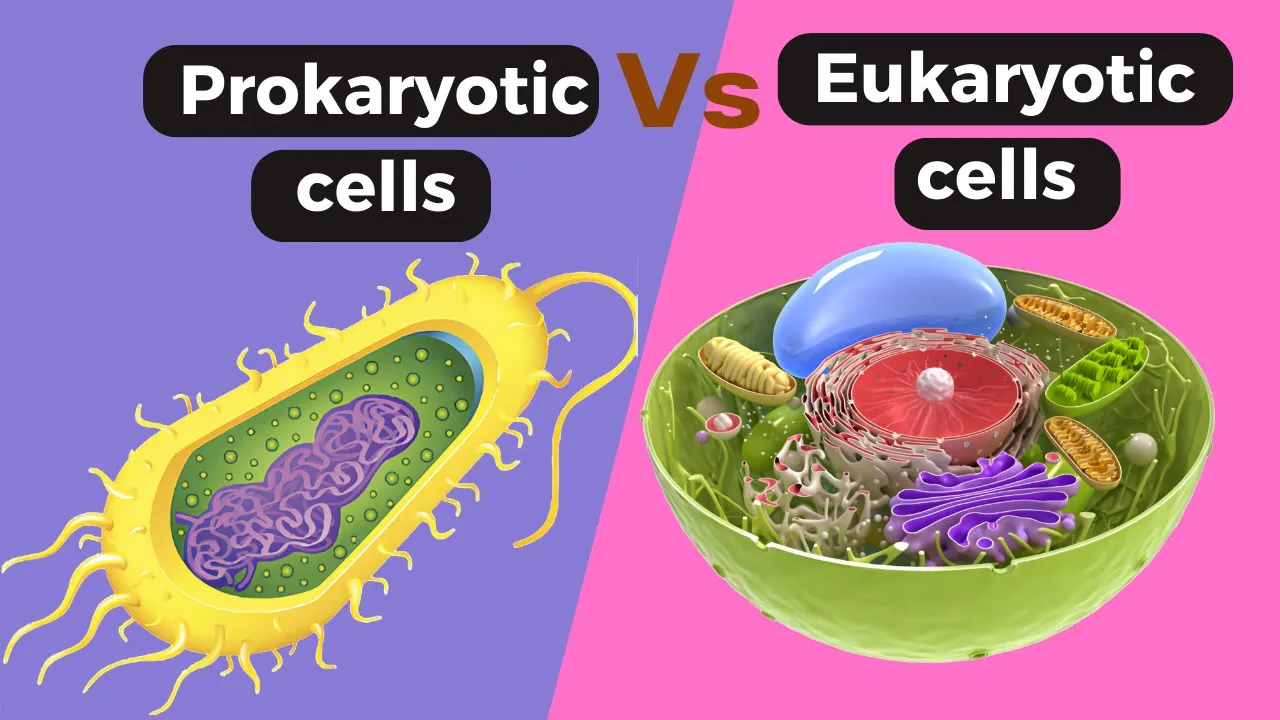
Prokaryotic cell Vs Eukaryotic cells|| Difference between prokaryotic and eukaryotic cell
140.9K
Prokaryotic cells represent the simplest form of cellular life, found in bacteria and archaea, while eukaryotic cells are more complex and found in plants, animals, and fungi. Key differences include: prokaryotes lack a nucleus (DNA in nucleoid region) while eukaryotes have a membrane-bound nucleus containing chromosomes; prokaryotes lack membrane-bound organelles while eukaryotes possess mitochondria, chloroplasts, ER, Golgi, and lysosomes; prokaryotes range from 0.1-5 micrometers while eukaryotes range from 10-100 micrometers; prokaryotes often have peptidoglycan cell walls while eukaryotes typically lack them; prokaryotes use binary fission for reproduction while eukaryotes use mitosis and meiosis. These distinctions reflect fundamental evolutionary divergences in cellular organization and complexity.
Click to watch →
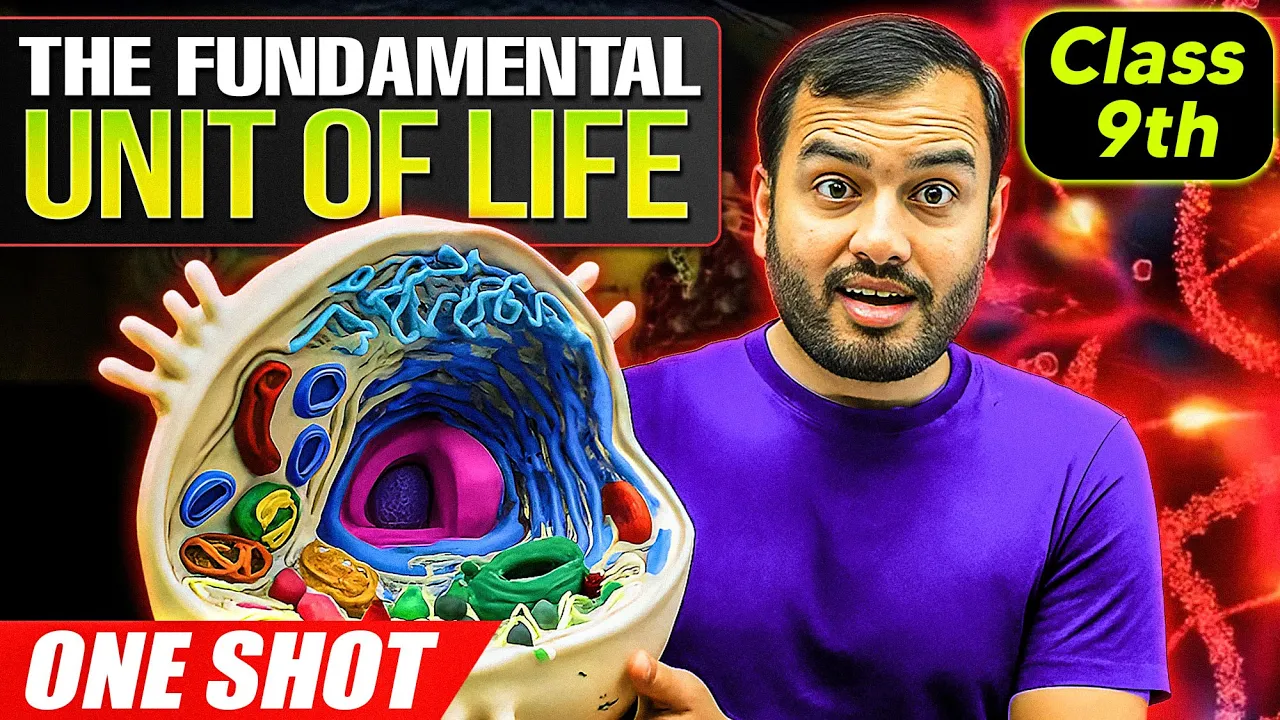
The Fundamental Unit of Life Class 9 || Complete CHAPTER IN ONE SHOT || NCERT Covered | Alakh Pandey
7.6M
Cells divide into prokaryotic (bacteria) and eukaryotic (plants, animals, fungi): Prokaryotes lack true nuclei and membrane-bound organelles, having only a nucleoid region with scattered DNA and ribosomes; Eukaryotes have well-defined nuclei with nuclear membranes, membrane-bound organelles, and centrioles for cell division. Only eukaryotes have complex internal organization enabling specialized functions.
Click to watch →

जीवन की मौलिक इकाई Class 9 Science Fundamental Unit of Life | अध्याय 5 Chapter 5 | Biology
138.4K
Prokaryotic cells (प्रोकैरियोटिक कोशिका) are primitive, ancient cells (प्राचीन कोशिकाएं) that are less developed (अविकसित). They are also called archaean cells (आधे कोशिका). Mitochondria (माइटोकांड्रिया) are absent in prokaryotic cells but present in eukaryotic cells. Golgi bodies (गोलजी बॉडी) are absent in prokaryotic cells but present in eukaryotic cells. Ribosomes (राइबोसोम) are present in both types: prokaryotic cells have only 70S type, while eukaryotic cells have both 70S and 80S types. Examples of prokaryotic cells: Bacteria (जीवाणु), Cyanobacteria (नील हरित शैवाल), Mycoplasma. Examples of eukaryotic cells: All plants (पेड़ पौधे) and animals (जंतु).
Click to watch →

Plus One Public Exam Biology | Express Revision- Anatomy Of Flowering Plants , Cell-the Unit Of Life
42.1K
Prokaryotic and eukaryotic cells differ in several key features: (1) Nucleus - prokaryotic cells lack a true nucleus, eukaryotic cells have a membrane-bound nucleus, (2) DNA structure - prokaryotic cells have circular DNA, eukaryotic cells have linear DNA, (3) Ribosome size - prokaryotic cells have 70S ribosomes, eukaryotic cells have 80S ribosomes, (4) Membrane-bound organelles - prokaryotic cells lack membrane-bound organelles, eukaryotic cells have membrane-bound organelles. These differences reflect the fundamental complexity difference between these cell types.
Click to watch →
Difference Between Prokaryotic and Eukaryotic Cells - Cell: The Unit of Life | Class 11 Biology
260.8K
Eukaryotic cells are characterized by well-organized internal structures including a well-defined nucleus with nuclear envelope, endoplasmic reticulum, Golgi bodies, mitochondria, cell membrane, cytoskeleton, and ribosomes. The genetic material (DNA) is organized into chromosomes and located within the nucleus. Eukaryotic cells are found in plants, animals, and fungi. Mitochondria are semi-autonomous organelles that originated from free-living bacteria through endosymbiosis. Prokaryotic cells are small and lack a well-defined nucleus with nuclear membrane. Their genetic material exists as a nucleoid region in the cytoplasm without membrane enclosure. They lack nucleolus and membrane-bound organelles. Protein synthesis occurs in cytoplasm, mitochondria, and chloroplasts. Prokaryotic cells have 70S ribosomes and possess extra-chromosomal genetic material called plasmids. Eukaryotic cells are larger with a well-defined nucleus enclosed by nuclear envelope, containing organized chromosomes. They have membrane-bound organelles including endoplasmic reticulum and Golgi apparatus. Eukaryotic cells have 80S ribosomes and lack plasmids.
Click to watch →
Deep Dive
Basic taxonomy and biological classification, particularly how humans fit into the animal kingdom, mammals, and the primate order.
Lecture 06 - Primates
108
Humans are classified within the animal kingdom, vertebrate phylum, mammal class, primate order, great ape family, Homo genus, and sapiens species. Primates is the Latin name for the order of mammals including lemurs, lorises, tarsiers, monkeys, apes, and humans. Humans are a kind of ape. Primatology focuses on non-human primates, and studying them helps us understand human biology because we share both derived and ancestral traits with other primates.
Click to watch →

Human Evolution
157.2K
Humans belong to the animal kingdom, specifically among vertebrates (organisms with a backbone). Within mammals, humans are classified under the order Primates, suborder Anthropoidea, family Hominidae (alongside gorillas, chimpanzees, and orangutans), and genus Homo.
Click to watch →

What is Taxonomy?|Biological Classification | Kingdom Classification | Biology for Competitive Exam
125
Humans (Homo sapiens) are classified as follows: Kingdom - Animalia, Phylum - Chordata, Subphylum - Vertebrata, Class - Mammalia, Order - Primates, Family - Hominidae, Genus - Homo, Species - sapiens. This classification demonstrates how humans fit into the broader taxonomic framework of living organisms.
Click to watch →
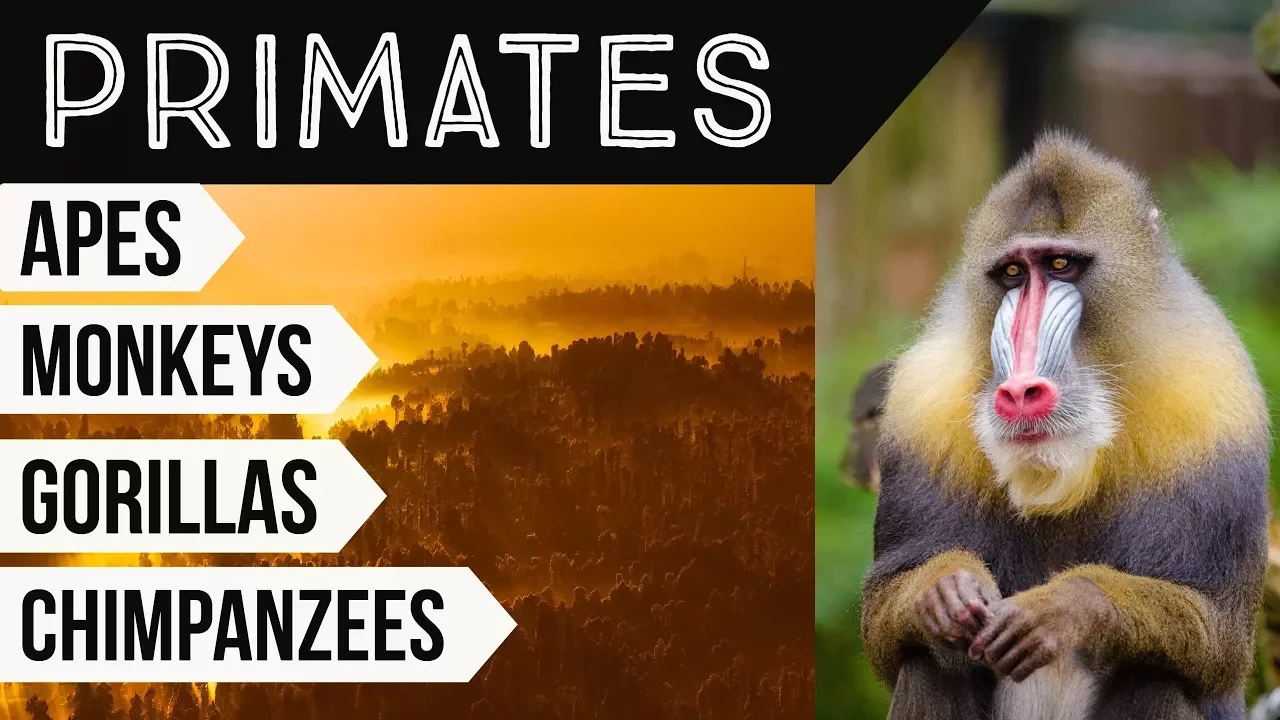
Anthropology Optional for UPSC Mains - Primates, their characteristics and evolution
66.1K
Humans are classified within the animal kingdom as follows: Kingdom Animalia, Phylum Chordata, Subphylum Vertebrata, Class Mammalia, Subclass Eutheria, Order Primates. This hierarchical classification system places humans within the primate order alongside other primates.
Click to watch →
classificação e organização dos seres vivos
10.7K
Humans (Homo sapiens) share the same Kingdom (Animalia) and Phylum (Chordata) as other mammals. Humans are classified as mammals (Class Mammalia) because they nurse their young with milk. The order is Primata, distinguishing humans from carnivores. The family is Hominidae, the genus is Homo, and the species is sapiens. Humans also have a subspecies designation (sapiens sapiens), which is more specific than the species level. This classification shows how humans relate to other organisms in the biological hierarchy.
Click to watch →
Prerequisite Knowledge
- Concept 01The theory of natural selection and basic mechanisms of evolution, such as mutation, genetic drift, adaptation, and speciation.
- Concept 02An understanding of geological deep time, including how Earth's history is divided into major eons, eras, and periods.
- Concept 03Fundamental concepts of cell biology, specifically the distinction between prokaryotic and eukaryotic life forms.
- Concept 04Basic taxonomy and biological classification, particularly how humans fit into the animal kingdom, mammals, and the primate order.
Subsequent Learning
- Step 01The specific fossil record and genetic lineage of the hominin branch, including the coexistence and interbreeding of Homo sapiens, Neanderthals, and Denisovans.
- Step 02The 'Out of Africa' migration theory, detailing the geographical routes and environmental pressures that shaped early human distribution.
- Step 03The Cognitive Revolution and cultural evolution, exploring the development of language, complex tool use, symbolic art, and agricultural societies.
- Step 04The principles of evolutionary medicine, which study how our evolutionary history explains modern human health, chronic diseases, and anatomical vulnerabilities.
- Step 05Technological methods in paleoanthropology, such as radiometric dating, stratigraphy, and ancient DNA (aDNA) extraction and sequencing.
Opening Act
Rhythm Build
Melodic Peak
Transition Flow
Climax Surge
Finale Resolve
Opening Act
0:52Playing Section
- 1
Performance commences with atmospheric musical introduction.
- 2
Initial segment establishes mood and audience engagement.
Reticulate Evolution and the "Bushy" Tree Model
While traditional timelines often present human evolution as a straightforward, linear progression from simple organisms to Homo sapiens, modern paleoanthropology and genetics increasingly favor a non-linear, "bushy" or "braided stream" model. This perspective, known as reticulate evolution, argues that human lineage is not a single ladder of progress but a complex network of co-existing hominin species that frequently diverged, overlapped, and interbred. For instance, genetic evidence reveals that ancient Homo sapiens interbred with Neanderthals and Denisovans, showing that our evolutionary history is characterized by hybridization rather than strict isolation. Additionally, theories like punctuated equilibrium suggest that evolutionary change occurs in rapid bursts separated by long periods of stability, countering the concept of a constant, gradual transition. Representing evolution as a linear sequence of milestones can oversimplify these dynamic, web-like relationships and obscure the messy reality of natural selection.
Deep Dive
The specific fossil record and genetic lineage of the hominin branch, including the coexistence and interbreeding of Homo sapiens, Neanderthals, and Denisovans.
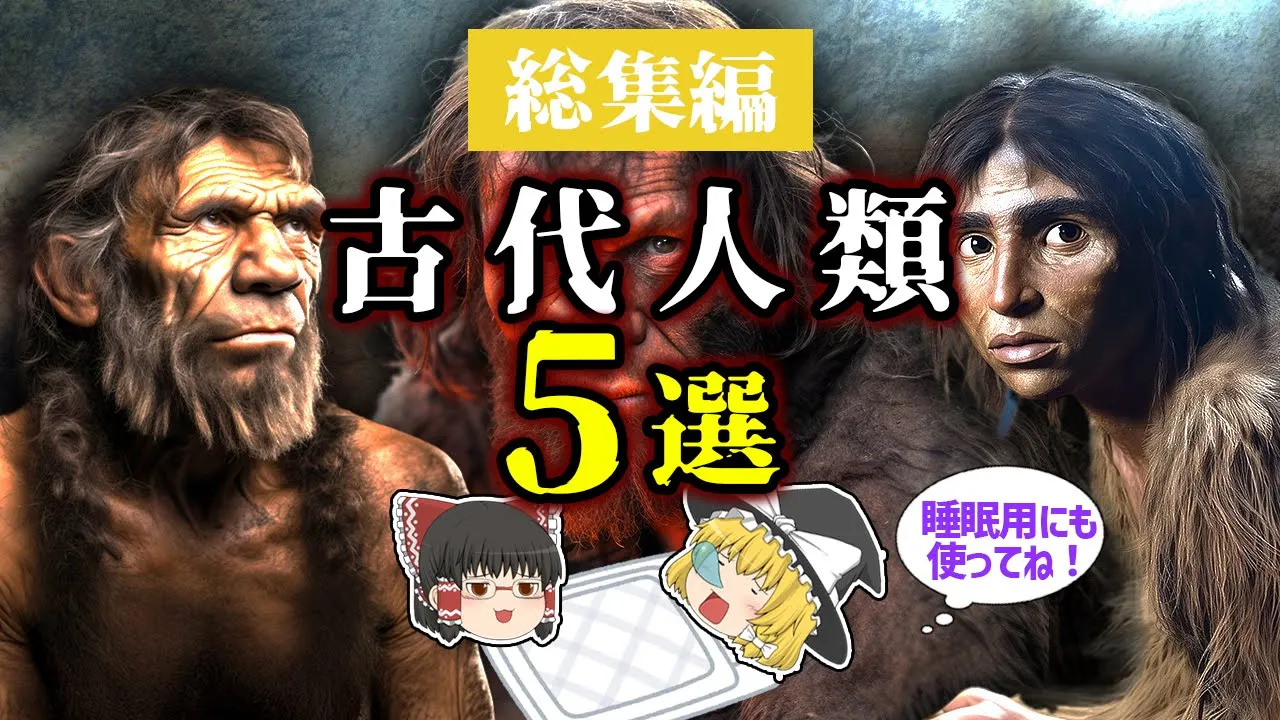
【睡眠用・ゆっくり解説】古代人類5選! ネアンデルタール人/ホモ・ハビリス/フローレス原人など【広告最初のみ 途中広告なし】
195.9K
Genetic evidence reveals that Neanderthals, Denisovans, and Homo sapiens coexisted for tens of thousands of years, creating a world where multiple human species lived simultaneously. Neanderthals and Homo sapiens interbred, with 1-4% of non-African Homo sapiens DNA coming from Neanderthals. Interbreeding occurred approximately 50,000-80,000 years ago when Homo sapiens migrated from Africa to West Asia and Europe. Evidence from Denisova Cave shows a girl with a Neanderthal mother and Denisovan father, demonstrating that multiple human species could interbreed and produce fertile offspring. Denisovans were discovered through DNA analysis rather than fossil evidence in 2008, with a finger bone from Denisova Cave (76,000-51,000 years old) identified as a new human species—the first time a new human species was identified through genetic analysis rather than fossil morphology. Denisovans likely had dark skin and black hair, with physical features similar to Neanderthals but with larger jaws and more robust builds. They lived in Asia and adapted to extreme environments including the Tibetan Plateau, where they developed genetic adaptations for high-altitude living. Denisovan DNA is present in approximately 4-6% of Papuan and South Pacific island populations, and about 1% of Southeast Asian populations. Homo sapiens originated in Africa approximately 300,000 years ago and migrated out of Africa in two major waves: 125,000-100,000 years ago and 70,000-50,000 years ago. They spread to Europe, Asia, Australia (65,000 years ago), and the Americas (15,000 years ago), eventually reaching remote islands like Hawaii and Madagascar. During this migration, they interbred with Neanderthals and Denisovans. Homo sapiens developed complex language, enabling abstract thought, planning, and cultural transmission. They created art (cave paintings from 50,000 years ago), domesticated animals (20,000 years ago), and developed agriculture. These cultural innovations allowed Homo sapiens to adapt to diverse environments and eventually dominate the planet.
Click to watch →

Finding Ancient Minds in the Human Evolutionary Tree | University Place
60.1K
DNA evidence reveals ancient hominin diversity beyond the fossil record. Neanderthal DNA from 430,000 years ago and Denisovan DNA from a single finger bone show populations lived alongside each other and interbred. Denisovans inhabited eastern and southeastern Asia. Our evolutionary tree includes hybridization events—species interacting culturally and biologically. Multiple species coexisted at various times: Neanderthals and East Asian archaics, modern and archaic Africans, Homo naledi with early modern humans, and Homo floresiensis until 65,000 years ago. This interconnected web of species interactions shaped human evolution, challenging views of isolated development.
Click to watch →
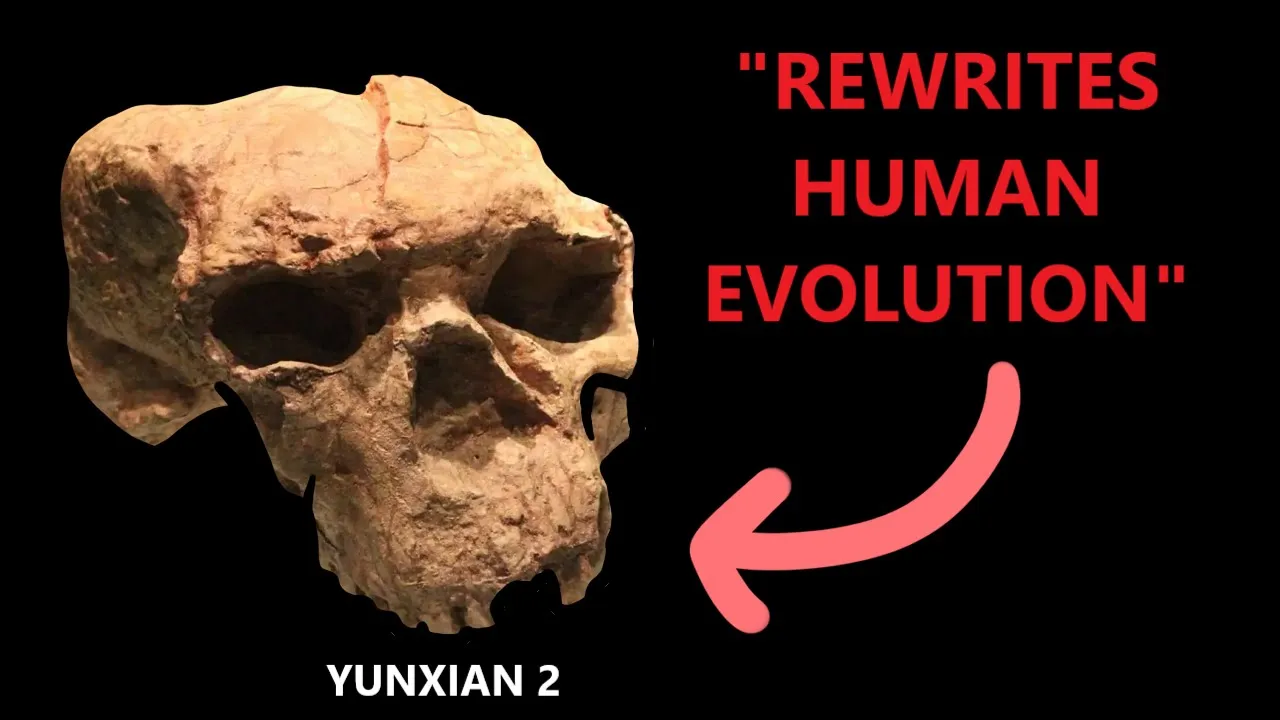
No, a New Fossil does NOT mean the Human Species is Over a Million Years Old | Yunxian 2 explained
84.5K
Genetic evidence reveals all three major hominin lineages—Homo sapiens, Homo neanderthalensis, and Homo longi/Denisovans—interbred with one another. First-generation hybrids exist, including a Neanderthal-Denisovan child. Phylogenetic analysis produces conflicting results: nuclear DNA/proteomics support Neanderthals-Denisovans as sister taxa with Homo sapiens as outgroup; mitochondrial DNA suggests Homo sapiens-Neanderthals as sister taxa; morphology shows yet another pattern. This controversy illustrates how different data types yield different evolutionary trees.
Click to watch →

VL2025 - L'evoluzione umana fra linearità e scarti. Homo sapiens e i suoi fratelli
13.3K
Approximately 50,000-100,000 years ago, at least five Homo species coexisted: sapiens in Africa, Neanderthals in Europe and parts of Asia, Denisovans across Asia, Homo floresiensis from Flores Island, and Homo luzonensis from Luzon Island. The island species were much smaller (1-1.2 meters) and likely evolved from Homo erectus through island isolation. Genetic evidence confirms that sapiens hybridized with both Neanderthals and Denisovans. A bone fragment from Denisova cave contained DNA showing equal parts Neanderthal and Denisovan ancestry, indicating a hybrid between a Neanderthal female and a Denisovan male. Modern humans outside Africa carry 1-4% Neanderthal DNA and East Asians additionally carry 0.2-6% Denisovan DNA, while Africans carry neither.
Click to watch →
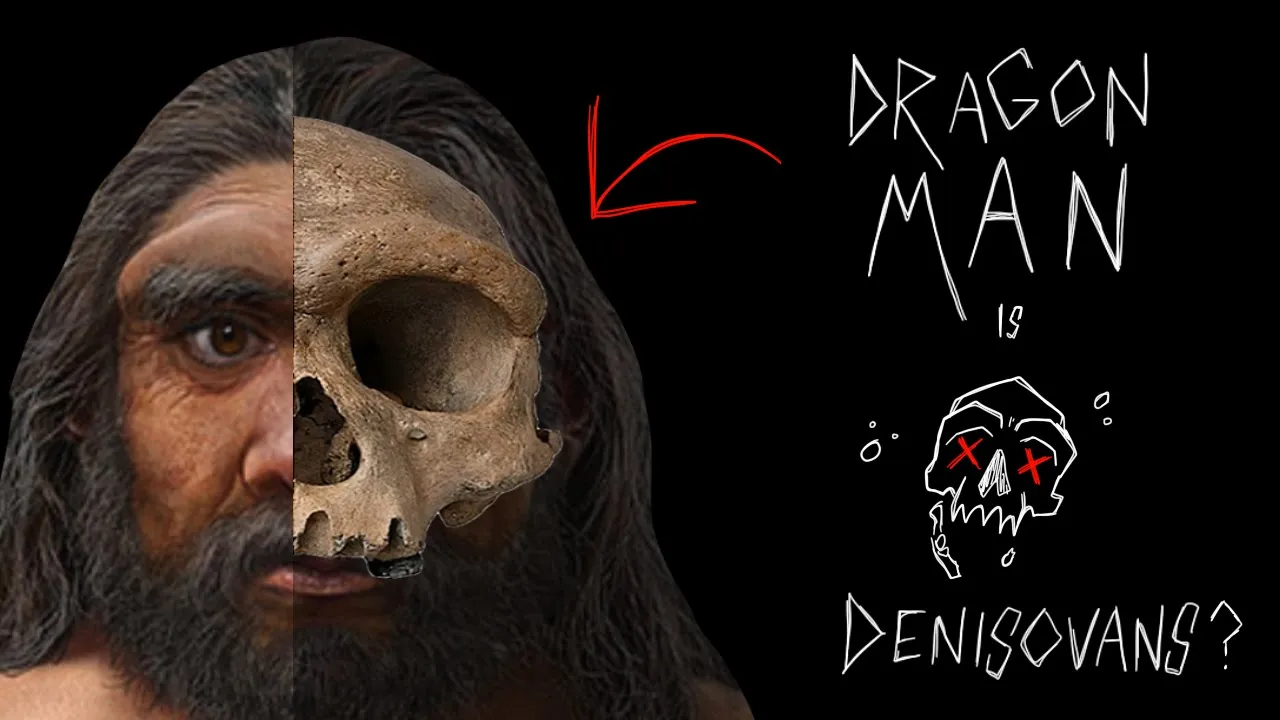
Did Denisovans Finally Get a Face? New Homo longi Discovery Explained
85.2K
Humans belong to Homo sapiens within the genus Homo, family Hominidae, and superfamily Hominoidea. The hominin lineage split from chimpanzees ~7 million years ago, developing bipedalism, reduced canine dimorphism, flatter faces, and larger brains. Homo erectus was the first hominin to leave Africa, giving rise to descendant populations that evolved into Homo sapiens in Africa, Homo neanderthalensis in Eurasia, and various hominin groups in Eastern Asia including Denisovans, Homo floresiensis, and Homo luzonensis. Throughout much of Homo sapiens' history, humans coexisted with multiple hominin species. The biological species concept fails when species can interbreed yet maintain distinct identities, as demonstrated by Neanderthals and Homo sapiens who interbred but maintained separate species status.
Click to watch →
Deep Dive
The 'Out of Africa' migration theory, detailing the geographical routes and environmental pressures that shaped early human distribution.

Станислав Дробышевский. «Миграция: куда и зачем ходили наши предки».
405.6K
Humans originated in Africa's savanna environment approximately 1.5 million years ago, evolving from tree-dwelling primates. Three migration routes existed: Gibraltar (no evidence), Suez (desert barrier), and Bab el Mandeb Strait (2 km wide during low sea levels). African wildlife crossed this route successfully, but humans were the last to migrate, even after other animals had crossed multiple times. The climate was significantly warmer than today, with Mediterranean regions having tropical conditions. This environmental similarity facilitated northward migration without significant adaptation challenges.
Click to watch →

What Is The Out Of Africa Theory?
81.1K
The Out of Africa theory explains that early human species migrated from Africa to other continents primarily due to climate changes and environmental pressures, with Homo erectus being the first hominin species to leave Africa around 1.9 million years ago, followed by Homo heidelbergensis, Neanderthals, and finally Homo sapiens around 120,000 years ago; this migration pattern demonstrates how environmental factors like the Saharan pump cycle drove human dispersal across Eurasia, and how interbreeding between different human species (Homo sapiens with Neanderthals and Denisovans) contributed to modern human genetic diversity.
Click to watch →
![1320 - Chi furono i primi essere umani a lasciare l'Africa? [Pillole di Storia]](https://i.ytimg.com/vi_webp/y3APNGUGHMc/maxresdefault.webp)
1320 - Chi furono i primi essere umani a lasciare l'Africa? [Pillole di Storia]
19.2K
Two main theories explain how humans left Africa: the Red Sea route (through Yemen) and the Saharan Pump Theory. The Red Sea route suggests migration through the Red Sea using small islands that formed during lower sea levels. The Saharan Pump Theory proposes migration through periods when the Sahara was less arid, allowing populations to move northward following water sources and animals. When the Sahara became desert again, it separated populations and forced some to continue migrating eastward into Asia. This environmental pressure drove human expansion beyond Africa.
Click to watch →

Out of Africa: The Great Human Migration | Human Evolution | Ancient Humans
49.6K
The Out of Africa theory describes humanity's epic journey beginning 200,000 years ago in Africa, where Homo sapiens first emerged with larger brains, upright posture, and complex language capabilities. Fossil evidence from Omo Kibish (195,000 years ago), Herto (160,000 years ago), and Jebel Irhoud (300,000 years ago) establishes Africa as the cradle of humankind. Genetic studies confirm all non-African populations descend from a small group who left Africa 60,000-70,000 years ago. Before global dispersal, significant migrations occurred within Africa driven by environmental changes and resource pressures. Around 130,000-100,000 years ago, increased aridity forced populations southward as the Sahara expanded. The initial exodus out of Africa occurred 60,000-70,000 years ago through the Levantine corridor into the Middle East, where early humans encountered and interbred with Neanderthals and Denisovans. Migration into South Asia occurred around 70,000 years ago via coastal and inland routes, with sites like Jwalapuram revealing sophisticated stone tools dated to 74,000 years ago. The journey to East Asia occurred 50,000-60,000 years ago, with Tianyuan Cave near Beijing providing evidence of early Homo sapiens around 40,000 years ago. The migration to Australia occurred approximately 65,000 years ago, representing one of humanity's earliest migrations outside Africa and involving crossing significant water barriers through Southeast Asia. The Lapita culture settled Pacific Islands around 3,500 years ago, using outrigger canoes and sophisticated navigation techniques. Each region presented unique environmental challenges requiring specialized adaptations, technological innovations, and cultural developments that enabled survival and eventual establishment of complex societies across the globe.
Click to watch →
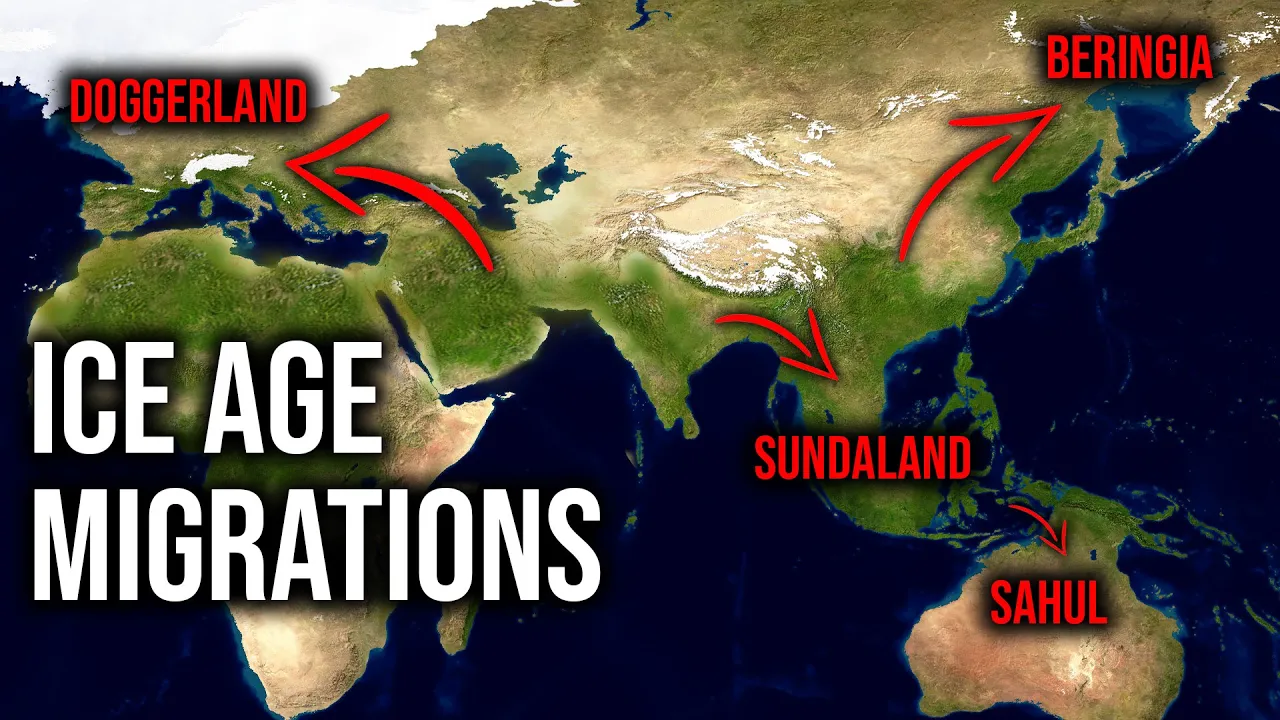
2 Million Years of Ice Age Migrations | The Lost "Flooded" Lands
96K
Around 130,000 years ago, Neanderthals or other archaic humans took short sea voyages to Crete, where stone tools were found in strata at least 130,000 years old. Crete has been isolated for 5 million years with no land bridge. At 130,000 years ago, the nearest mainland was the Peloponnese, 170 km away, with stepping stone islands Kythira and Antikythera in between. These islands have high elevations (Kythira 50m, Antikythera 380m), allowing visibility of 75 km. Early humans could see land across the sea, making deliberate short sea crossings plausible. The Apidima Cave contains a 210,000-year-old Homo sapiens skull (oldest outside Africa) and a 170,000-year-old Neanderthal skull, showing both species occupied the same cave. Around 125,000 years ago, Earth entered a warm interglacial, with sea levels rising 6-9 meters above current levels. This raised the Red Sea and Persian Gulf, making crossings at Bab el-Mandeb and Strait of Hormuz more difficult. Early Homo sapiens made limited forays out of Africa around 120,000 years ago, taking the Sinai land route since the southern path was flooded. These modern humans eventually disappeared, leaving Eurasia to Neanderthals until the next glacial period. The mainstream consensus is that modern humans migrated out of Africa around 70,000 years ago, with sea levels 80 meters lower than today. One route was via Bab el-Mandeb into southern Arabia, where the strait might have been only a few kilometers across. Glacial aridity turned Arabia into a harsher desert with wet climate windows around 50,000 years ago. Stone tools found in today's Nafud Desert show both Homo sapiens and earlier humans took advantage of these green corridors. By 60,000 years ago, humans followed the Indian Ocean shoreline, aided by lower sea levels exposing broader coastal plains. By 50,000 years ago, Homo sapiens reached Southeast Asia, encountering Neanderthals in West Asia, Denisovans in Asia, Homo erectus in Java, and floresiensis/luzonensis in the islands. Modern humans picked up 2% Neanderthal DNA in West Eurasia and 4-5% Denisovan DNA in Melanesia. Sundaland was open again, allowing walking from Thailand to Java or Borneo. Modern human tools appear in Sumatra, Borneo, and Java by 45,000 years ago.
Click to watch →
Deep Dive
The Cognitive Revolution and cultural evolution, exploring the development of language, complex tool use, symbolic art, and agricultural societies.
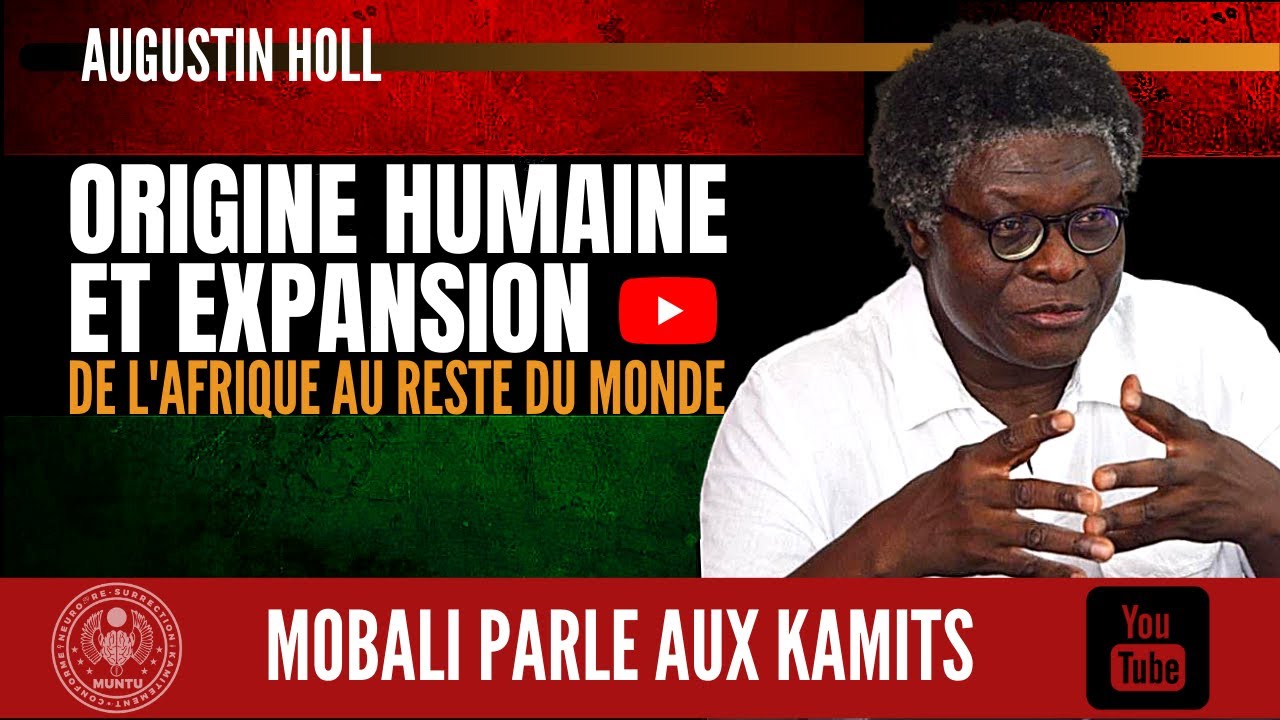
ORIGINE HUMAINE ET EXPANSION AVEC AUGUSTIN HOLL
16.8K
The cognitive revolution refers to the development of complex human cognition that enabled symbolic thought, art, religion, and language. This revolution allowed humans to create elaborate burial practices, develop religious beliefs, and produce artistic works. These cultural developments represent key milestones in human evolution that distinguish humans from other species and enable the complex social organization that characterizes human societies.
Click to watch →
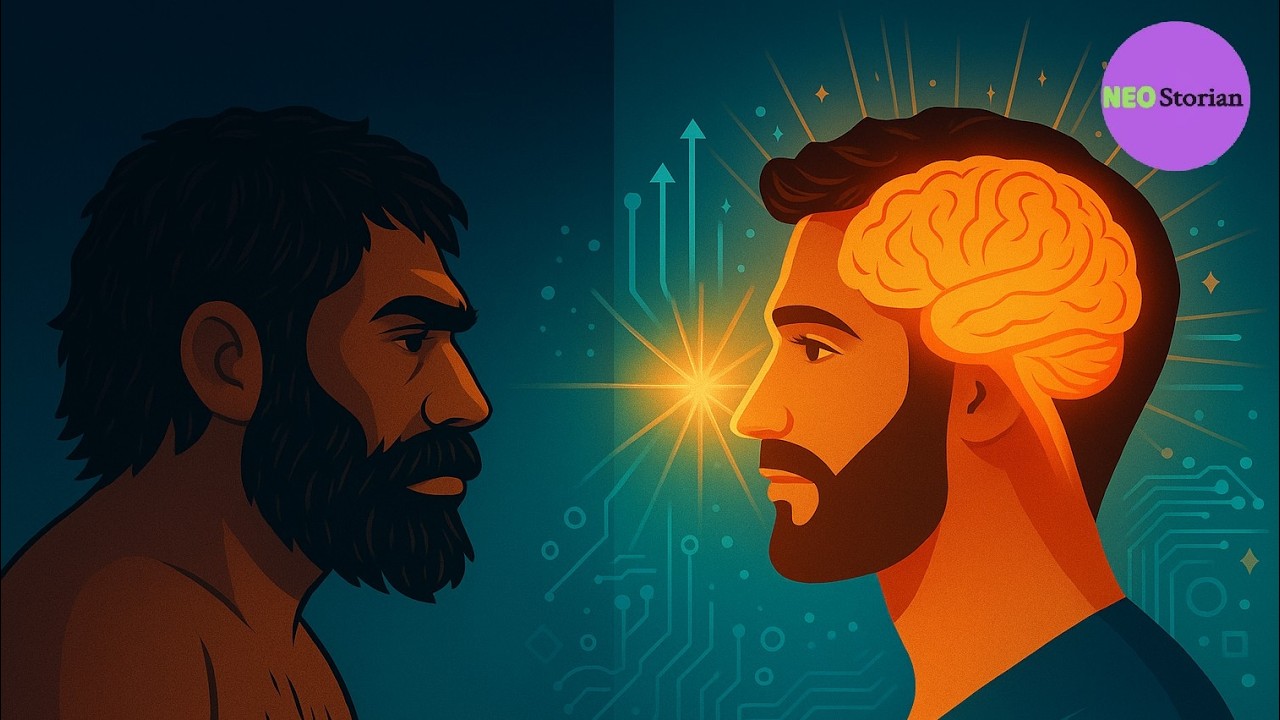
The Cognitive Revolution: When Humans First Became Conscious?
275
The Cognitive Revolution was a transformative period roughly 70,000 years ago when Homo sapiens developed qualitatively different mental capabilities. Despite anatomically modern Homo sapiens having large brains similar to Neanderthals by 300,000 years ago, their behavior remained unchanged for tens of thousands of years. What changed was cognition—not anatomy. Symbolism lies at the core of human cognition—the ability to allow one thing to represent another, evidenced by ochre carvings from Blombos Cave (75,000 years ago) and cave paintings (40,000 years ago). Human language evolved recursive grammar, metaphor, and syntax enabling transmission of complex stories and myths. Perhaps most radically, humans developed collective fictions—shared beliefs like gods, nations, and money—that enabled cooperation beyond the Dunbar number of 150 individuals. The revolution enabled unprecedented social transformations: humans expanded cooperation to hundreds or thousands through shared beliefs, religions, and cultural symbols, creating fluid societies unlike rigid animal hierarchies. The birth of complex culture accelerated cultural evolution beyond biological limits, enabling cumulative learning across generations. Technological innovation exploded—stone tools became sophisticated with blades and microliths, while humans invented sewing needles, fish hooks, bolts, and bows and arrows. Religion emerged as a powerful byproduct, with animistic beliefs providing frameworks for meaning, social regulation, and coping with uncertainty.
Click to watch →

Qué Nos Hizo Humanos: Por qué somos como somos
1.7K
Approximately 70,000-40,000 years ago, humans experienced a cognitive revolution that enabled language, abstract thinking, and sophisticated cooperation. This period saw the development of art, rituals, and complex social structures. The cognitive revolution marked the beginning of cultural evolution, which eventually surpassed biological evolution as the primary driver of human change.
Click to watch →

Evoluzioni. Comprendere il cambiamento... - LiberaMente - Ciclo di conversazioni - 31 dicembre 2020
320
Fossil evidence shows that substantially modern human morphologies appeared approximately 200,000 years ago, but the great cognitive revolution producing language, symbolic activity, and art occurred only in the last 80,000 years. This late emergence of complex cultural capabilities suggests that anatomical modernity preceded cognitive modernity. The standard narrative proposes that language represented a key innovation that restructured neural systems already present, triggering cascading developments in human cultural evolution.
Click to watch →

역사책 5,000년은 가짜다? 사라진 10만 년, 문명 이전 인류의 삶
54.9K
Around 70,000 years ago, archaeological records show an explosion of sophisticated tools, long-distance trade networks, musical instruments, and complex burial practices. This 'Cognitive Revolution' did not involve brain hardware upgrades (which were already complete) but rather the installation of 'software'—language, cultural accumulation, and symbolic thinking that enabled rapid cultural evolution.
Click to watch →
Deep Dive
The principles of evolutionary medicine, which study how our evolutionary history explains modern human health, chronic diseases, and anatomical vulnerabilities.

2012 - "Methods for Testing Hypotheses: Why Darwinian Medicine is Difficult" - Randolph Nesse
2.4K
Evolutionary medicine applies Tinbergen's four questions framework to understand health and disease: ontogeny (development), mechanism (how it works), phylogeny (evolutionary history), and selective advantage (fitness consequences). The field distinguishes proximate questions (how things work) from ultimate evolutionary causes. Key principles include recognizing that diseases themselves lack evolutionary explanations because they aren't shaped by natural selection; instead, we study traits that leave us vulnerable. Six categories explain suboptimal traits: environmental mismatch, pathogen competition, trade-offs, selection constraints, reproductive focus over health, and defense costs. This framework provides a systematic approach to understanding why bodies have vulnerabilities.
Click to watch →

0.0 - Welcome to Evolution and Medicine
133.9K
Evolutionary medicine applies principles of evolutionary biology to understand and address medical issues by examining how evolutionary processes shape human health, disease susceptibility, and treatment responses; key concepts include viewing patients as bundles of evolutionary tradeoffs, categorizing diseases based on their evolutionary origins, understanding cancer as clonal evolution, recognizing mismatch between evolved biology and modern environments as a major cause of chronic diseases like obesity and diabetes, and acknowledging conflicts between individual and population health benefits in medical decision-making.
Click to watch →

Anthropogeny and Medicine-Genes that Harm Health; Sleep and Health; High Altitude Adaptation
1.5K
Evolutionary medicine applies principles from evolutionary biology to understand why humans are vulnerable to disease. Unlike traditional medicine which asks why people differ, evolutionary medicine asks why we are all the same in ways that create vulnerabilities. The field identifies six categories explaining disease susceptibility: limits of natural selection, environmental mismatch, faster-evolving pathogens, trade-offs between functions, selection for reproduction over health, and useful defenses that cause harm. This framework helps explain why traits like our backs, appendix, and coronary arteries are vulnerable to disease despite natural selection.
Click to watch →
An evolutionary perspective on human health and disease | Lara Durgavich
93.7K
Evolutionary medicine explains that harmful genetic mutations can persist in populations when they confer survival advantages to carriers (heterozygotes), such as resistance to diseases like malaria or tuberculosis; this understanding helps explain why certain genetic disorders are more common in specific populations and highlights how our evolutionary past shapes current health vulnerabilities.
Click to watch →

What is Evolutionary Medicine?
277
Evolutionary medicine applies principles of evolutionary biology to understand why humans are susceptible to certain diseases, injuries, and conditions by examining our evolutionary history. This field explains that our genes evolved in environments vastly different from modern ones, creating a 'mismatch' where our bodies haven't adapted to today's abundant high-fat, high-sugar diets, leading to common diseases like obesity, diabetes, and cardiovascular disease. Additionally, the 'Hygiene/Old Friends Hypothesis' suggests that our immune systems co-evolved with intestinal parasites, and their elimination through modern hygiene may contribute to increased autoimmune disorders.
Click to watch →
Deep Dive
Technological methods in paleoanthropology, such as radiometric dating, stratigraphy, and ancient DNA (aDNA) extraction and sequencing.
Paléoanthropologie et préhistoire - Yves Coppens (1983)
2.6K
Multiple radiometric dating methods revolutionized paleoanthropology since 1961: potassium-argon dating (1961), rubidium-strontium, uranium-thorium-plumbum, fission track dating, argon-39/argon-40 dating (1965), electron spin resonance dating (1978), amino acid racemization dating, and thermoluminescence dating. These methods enabled absolute chronology for hominid sites, with magnetostratigraphy providing additional temporal calibration through Earth's magnetic field reversals.
Click to watch →
Seminar by Professor Chris Stringer: Some current issues in the later stages of human evolution.
61.4K
Ancient DNA recovery has advanced dramatically since 1997's first mitochondrial DNA extraction. Whole genomes can now be recovered from very old specimens, including the Denisovan genome from a tiny finger bone. Cold environments like Denisova Cave preserve DNA exceptionally well. Multiple dating methods exist: radiocarbon dating (effective up to ~50,000 years), luminescence dating (sediments since last sunlight exposure), uranium series dating (calcium carbonate materials), and potassium-argon dating (volcanic rocks). These methods allow dating of tools and fossils by association with datable materials.
Click to watch →

The Dragon Man: Unmasking a Genetic Ghost
11.3K
The breakthrough in understanding human evolution came from revolutionary DNA sequencing technologies developed over two decades. In 2003, scientists completed the full sequencing of the modern human genome, containing over three billion base pairs. The real challenge was looking backwards into the genetic echoes of extinct relatives. In 2010, the Neanderthal genome was decoded, winning researchers a Nobel Prize. This shattered assumptions that Neanderthals were evolutionary dead ends—they had interbred with early humans, and their DNA lives on in all human populations today, including African populations. Next-generation sequencing enabled scientists to read millions of degraded DNA fragments simultaneously, reconstructing complete genomes from minuscule samples. From a single pinky bone, researchers reconstructed the entire Denisovan genome. These techniques allowed scientists to extract DNA from hardened dental calculus, sediment samples, and even food particles embedded in ancient teeth. Using mitochondrial DNA from the Harbin skull's dental calculus and proteomic analysis identifying 95 proteins, researchers proved the skull belongs to Denisovans. This technological revolution transformed paleoanthropology, allowing researchers to resurrect extinct humans from fragments of bone and soil, revealing genetic connections that would have been impossible to detect through fossil morphology alone.
Click to watch →

Palaeoanthropology - Lee Berger (University of Witwatersrand, South Africa)
4K
The last decade represents the most extraordinary period in paleoanthropology due to technological advances including synchrotrons, molecular biology, ancient proteins, and DNA analysis. These technologies transformed untestable questions into testable hypotheses, moving the field from stamp collecting to rigorous science. Key discoveries like Australopithecus sediba (2010) and Homo naledi (2013) demonstrate how technology enables unprecedented fossil analysis, with synchrotron scanning revealing internal structures without damaging specimens and enabling population-level studies that were previously impossible.
Click to watch →
#270 Christopher Stringer: The Past and Future of Human Evolution
5.1K
Different dating methods serve different purposes: radiocarbon dating becomes unreliable beyond 40,000 years; argon-argon dating requires volcanic rocks; micro-tephra dating uses volcanic ash layers as marker horizons (e.g., Toba eruption at 74,000 years); amino acid dating is being refined for reliability. Genetic analysis using mitochondrial DNA and Y-chromosomes provides molecular clocks calibrated against archaeological evidence. Ancient DNA extraction from fossils allows direct comparison with modern genomes to establish relationships and timing of divergence events. Denisovan DNA can be used to roughly date Denisovan occupations. These complementary approaches help resolve questions about population movements and interbreeding events between ancient human lineages.
Click to watch →
Opening Act
Rhythm Build
Melodic Peak
Transition Flow
Climax Surge
Finale Resolve
Opening Act
0:52- 1
Performance commences with atmospheric musical introduction.
- 2
Initial segment establishes mood and audience engagement.
Reticulate Evolution and the "Bushy" Tree Model
While traditional timelines often present human evolution as a straightforward, linear progression from simple organisms to Homo sapiens, modern paleoanthropology and genetics increasingly favor a non-linear, "bushy" or "braided stream" model. This perspective, known as reticulate evolution, argues that human lineage is not a single ladder of progress but a complex network of co-existing hominin species that frequently diverged, overlapped, and interbred. For instance, genetic evidence reveals that ancient Homo sapiens interbred with Neanderthals and Denisovans, showing that our evolutionary history is characterized by hybridization rather than strict isolation. Additionally, theories like punctuated equilibrium suggest that evolutionary change occurs in rapid bursts separated by long periods of stability, countering the concept of a constant, gradual transition. Representing evolution as a linear sequence of milestones can oversimplify these dynamic, web-like relationships and obscure the messy reality of natural selection.
The theory of natural selection and basic mechanisms of evolution, such as mutation, genetic drift, adaptation, and speciation.
An understanding of geological deep time, including how Earth's history is divided into major eons, eras, and periods.
Fundamental concepts of cell biology, specifically the distinction between prokaryotic and eukaryotic life forms.
Basic taxonomy and biological classification, particularly how humans fit into the animal kingdom, mammals, and the primate order.
The specific fossil record and genetic lineage of the hominin branch, including the coexistence and interbreeding of Homo sapiens, Neanderthals, and Denisovans.
The 'Out of Africa' migration theory, detailing the geographical routes and environmental pressures that shaped early human distribution.
The Cognitive Revolution and cultural evolution, exploring the development of language, complex tool use, symbolic art, and agricultural societies.
The principles of evolutionary medicine, which study how our evolutionary history explains modern human health, chronic diseases, and anatomical vulnerabilities.
Technological methods in paleoanthropology, such as radiometric dating, stratigraphy, and ancient DNA (aDNA) extraction and sequencing.
5.7M views84Klikes3:27@InsiderTechOriginal Release: 2018-03-25
[Music] [Music] [Music] [Music] [Music] [Music] [Music] [Music] [Music] [Music] [Applause] [Music] [Applause] [Music] you
Up Next

49:42
Evolution of the Human Body: Trade-Offs and Imperfections (2024)
@HistoryofHumankind
1.4M views•2024-06-30
50:12
Bacterial Communication: Quorum Sensing and Biofilm Formation Explained
@JHUAAP
12.6K views•2011-06-28

5:35
Enteric Nervous System Explained: The Gut's Brain | Neurobiology Lecture
@alumniu6029
438 views•2018-09-12
7:08
Bacteriophages: Earth's Deadliest Killers and Future Antibiotics
@kurzgesagt
34.6M views•2018-05-13
Related Study Plans & Knowledge Roadmaps
Structured learning paths in Biology
biology
RNAi: Biogenesis, RISC & Gene Silencing
01Molecular Biology Foundations: DNA to Protein
02Introduction to RNA Interference (RNAi)
03Molecular Biogenesis of miRNA and siRNA
+ 2 more learning modules
10h5 modules
Explore Roadmap
biology
Mycorrhizae: Signaling, Biophysics & Ecology
01Foundations of Mycorrhizal Symbiosis
02Molecular Signaling and Root Colonization
03Biophysics and Bioenergetics of Nutrient Exchange
+ 1 more learning modules
11h4 modules
Explore Roadmap
biology
Circadian Clocks: TTFL, SCN & Periphery
01Foundations of Molecular Biology & Gene Expression
02Introduction to Chronobiology and Actograms
03The Core TTFL: Molecular Architecture of the Clock
+ 3 more learning modules
14h6 modules
Explore Roadmap
biology
Population Genetics: Math, Drift & Selection
01Genetic & Probability Foundations
02The Hardy-Weinberg Principle and Baseline Models
03Mathematical Modeling of Natural Selection
+ 3 more learning modules
18h6 modules
Explore Roadmap