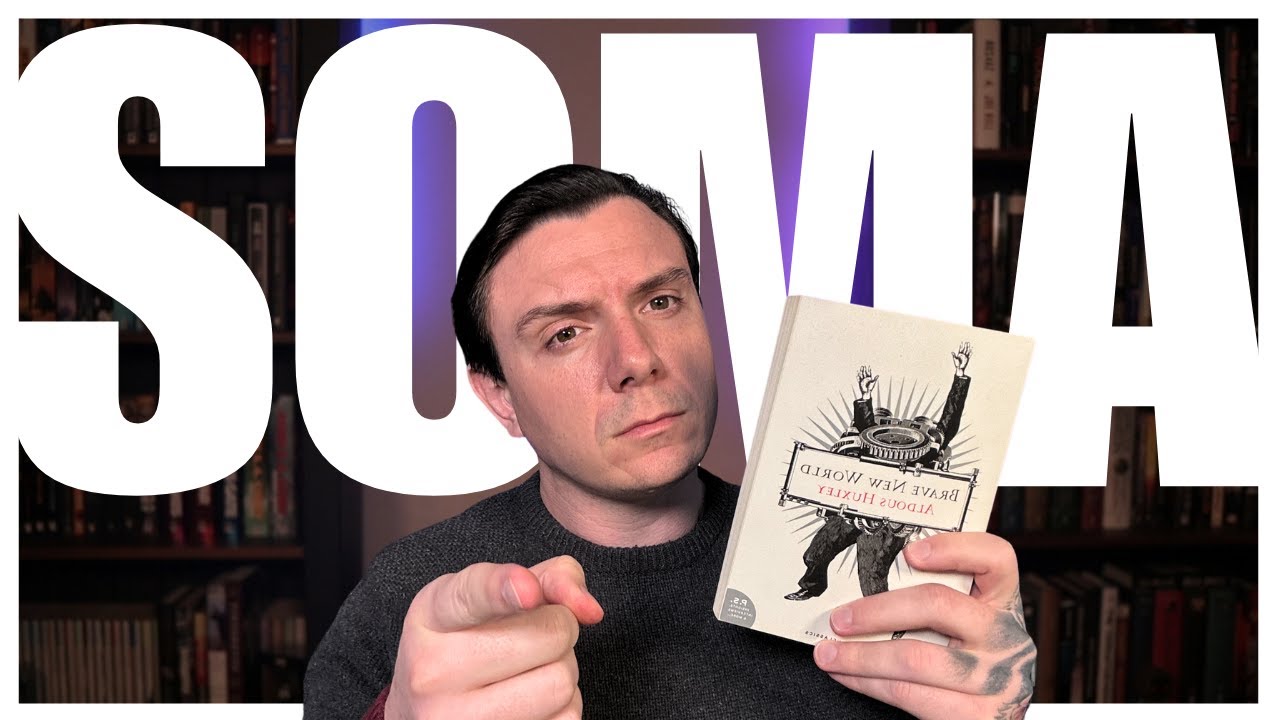



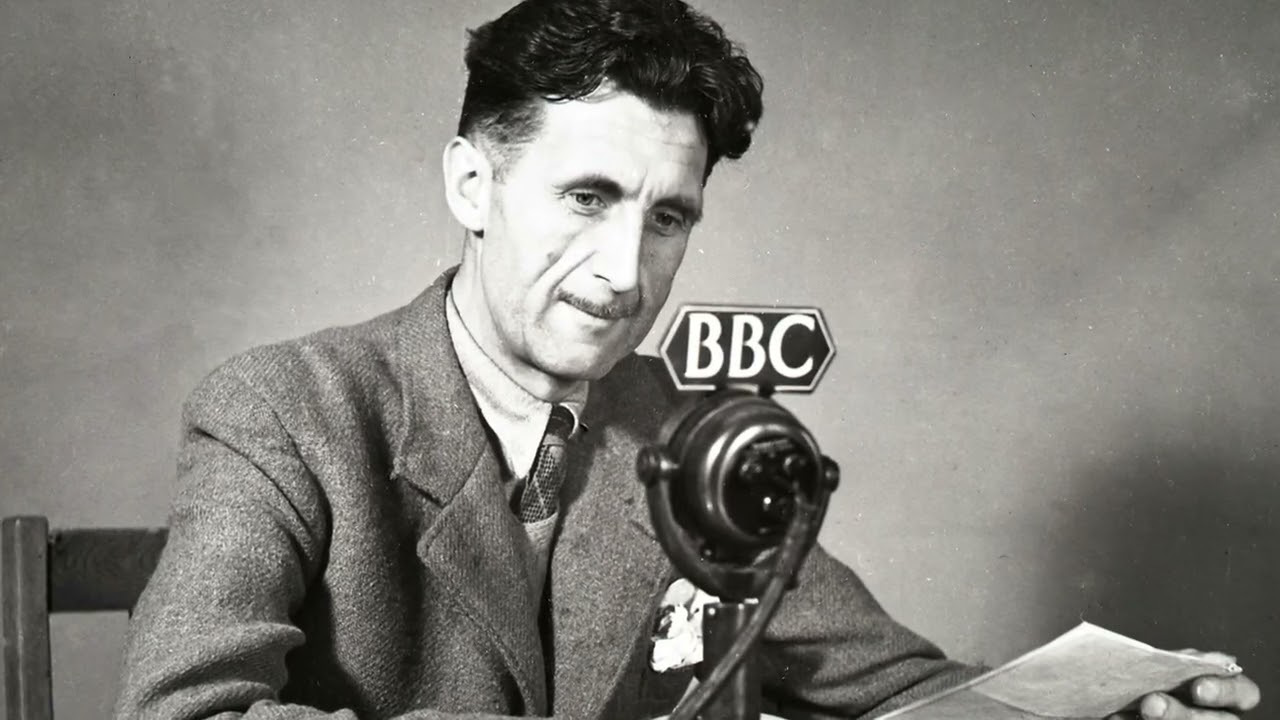







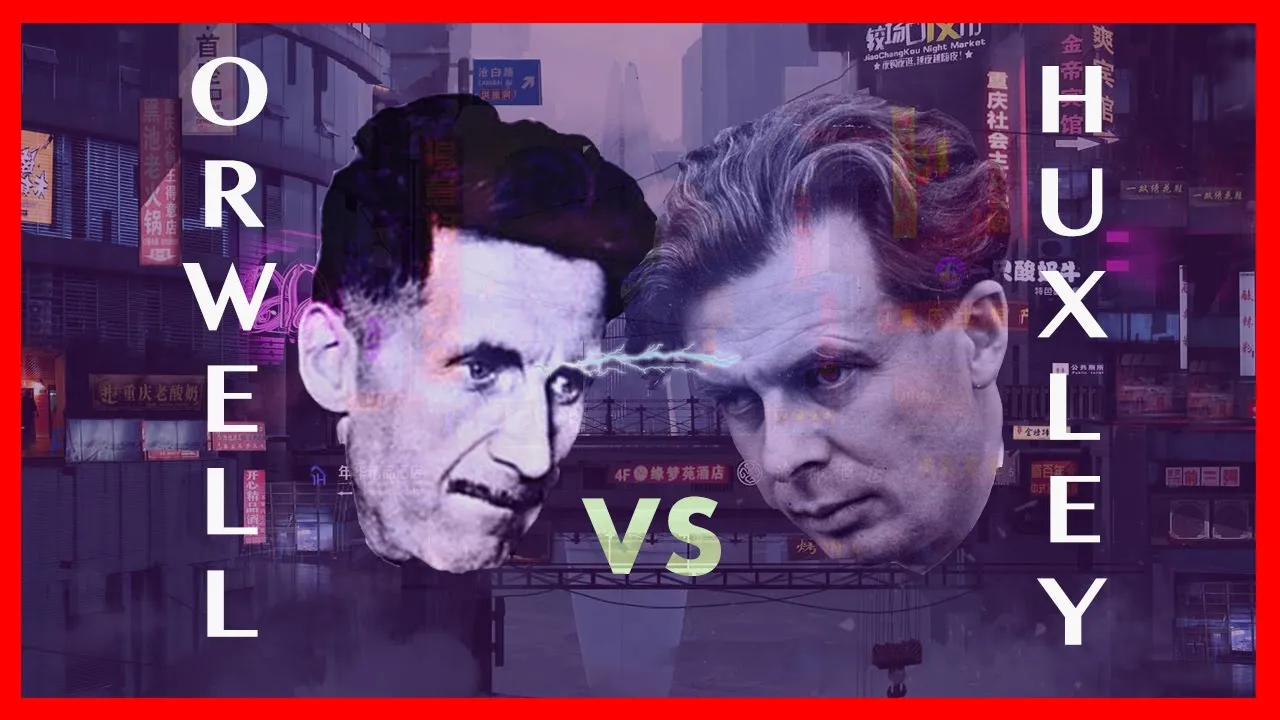







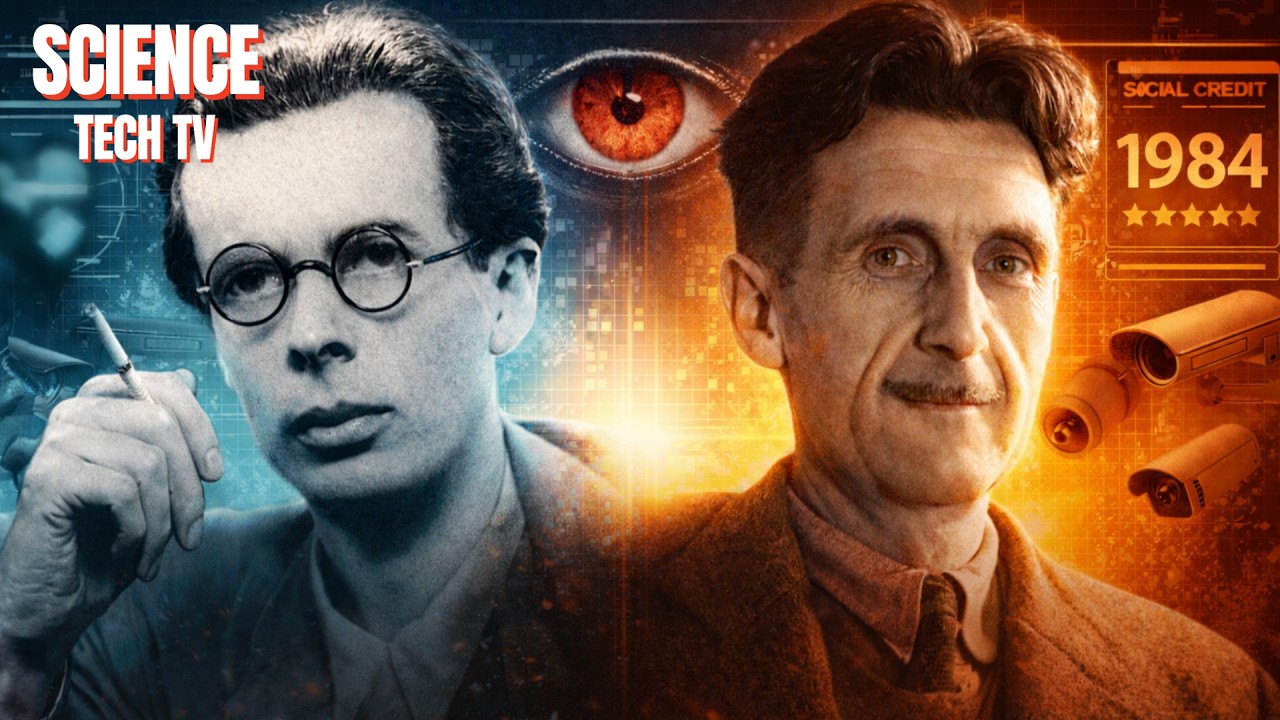

This debate explores which dystopian novel—Aldous Huxley's 'Brave New World' (1931) or George Orwell's 'Nineteen Eighty-Four' (1948)—better captures contemporary society. Will Self argues that Huxley's vision of consumerist, pleasure-seeking society with genetic engineering, antidepressants, and constant entertainment (mirrored in modern smartphone addiction and social media) is more prescient, while Adam Gopnik contends that Orwell's depiction of totalitarian power, language manipulation, and perpetual war resonates more strongly given recent global trends toward authoritarianism. The debate concludes with audience voting showing a decisive shift toward 'Brave New World' (65% vs 34%), suggesting modern society aligns more closely with Huxley's vision of technological pacification than Orwell's political dystopia.
Brave New World vs 1984: A Debate on Dystopian Visions
Added:Thank You Hana thanks to all of you for coming my name is Jonathan friedland I'm going to be guiding the proceedings this evening and often you know you have these cultural combat evenings where the debate is of course enlightening and fascinating but rarely can it claim to be urgently topical and yet somehow with two novels one written in 1931 and one written in between 1948 1949 you nevertheless have two works that speak to us in our own time with great urgency and topicality we of course are going to leave proceedings tonight knowing which one does that more than the other one but that is the subject before so two dominant novels of the 20th century discussed and debated and advocated by two of the leading public intellectuals of our 21st century so it's going to be a hugely stimulating evening the other thing about cultural combat events is that they often have a different quality from the debates that intelligent squared hosts on this stage those of course are about the current affairs questions of our time the big political questions whereas the cultural debate can be at a more serene pace and yet here we have two novels which speak absolutely of the questions that ordinarily we might be discussing in an evening of political debate two novels that deal in tyranny in technology in memory in conflict in love the big questions of our time discussed by and aired by two of the great writers of the last century as I said so the debate could not be more dramatically poised between these two great novels and I'm going to present to you the two people who will be making the case for each of them along with a starry cast of ancillary auxilary backup and defense for their argument let me hand introduce our two speakers to make these arguments for advocating for Aldous Huxley's brave new world is the widely acclaimed novelist broadcaster political commentator and literary critic his most recent novels are umbrella shark and phone a trilogy which the New Statesman predicted will become and I quote one of the most significant literary works of our century books the reflect and refract the hideousness of our times making the case for brave new world is will self [Applause] and to advocate for George Orwell's 1984 is a staff writer on The New Yorker of some time and award-winning author essayist lecturer and broadcaster he wrote after Donald Trump's first week in office in The New Yorker about quote how primitive atavistic and uncomplicated ly brutal Trump's brand of authoritarianism is turning out to be we have to go back to 1984 he wrote because in effect we have to go back to 1948 to get the flavor he is Adam Gopnik [Applause] and as I said bringing in reinforcements for both our two advocates as if you like expert witnesses are actors of great distinction who will bring to life the written word on the page here tonight on our stage please welcome first the rising star of film and television who starred as Miss Havisham in the BBC series series Dickensian and as the Russian princess lenka Regina in the recent BBC adaptation of war and peace or warm welcome for tuppence Middleton best known for playing louis xiv in the recent TV series versailles he's also starred in the oscar-winning film adaptation of lai miserable and the series vikings and will appear in the forthcoming series on Netflix of Black Mirror he is George Blagdon [Applause] an actor known for his work at the Royal Shakespeare Company and his roles in TV and film have included the West Wing the IT Crowd motherland' mr. Selfridge Hamlet Bobby and Sleepy Hollow he is Orlando Seal [Applause] and completing our lineup we're delighted to say that joining us is one of the country's most celebrated stage and screen actors best with what a best loved perhaps performance in films such as Four Weddings and a funeral a room with a view and Shakespearean love he has also written biographies of to great acclaim on Oscar Wilde Orson Welles Charles Dickens and Richard Wagner he is of course Simon Callow so before we get fully underway and we get legal with the two advocates making the case in this courtroom that we've assembled here just an opening question to each of you let's start with you Adam Gopnik a Gavin got Nick and what drew you first to the man whose work you are advocating tonight George Orwell I read Orwell for the first time when I was 12 or 13 growing up in Canada and I read 1984 and the descriptions of wine and sex in 1984 were hugely impressive to me as a 12 year old a key I think that there's a humane subtext in Orwell that transcends even the inhumane material and so you the same question will self what drew you first if you remember that we all first encounter with Aldous Huxley my childhood would took place Jonathan in antique hay and chrome yellow until I reached adolescence I was eyeless in Gaza there's a brave new world once my balls drop what can I tell you I drank in Huxley with my mother's milk it's an element I swim in I hope you there by setting the tone for the rest of the evening very nicely done and if you can keep up with that then you're doing very well for the rest of the evening we want you to stay in that genre excellent so let's get on with the proceedings as you know on your way in that this evening you will have in for a pre vote to get a sense of your opinion and we are going to tell you the outcome of that only after you've heard the cases made so the purpose of this evening is really for you to put aside the preconceptions and prejudices you may have walked in with and instead listen to the arguments as they're made and see if you can be moved either from the Huxley column into the Orwell column or vice versa or and I think all the prized constituency this evening if you were a don't know before these two gentlemen here want to move you onto their side so first to make his case is with I think 25 minutes I'm going to hold you strictly to time there may be an implied ping of the glass from me but here to make his case is will self [Applause] yes have you left your prejudices behind that's what I wonder and I also would have liked you all to only have voted if you have indeed read both novels in their entirety and hopefully fairly recently I want to make a few preliminary remarks because remarks at the beginning are always preliminary the status of all well in our culture is such that he's earned the epithet sin George and I doubt that very very few people entered the Emanuel Center this evening with a preconception about Aldous Huxley a strong idea about who he was and what he represented but it's almost impossible to be an adult in this country without having a very very firm view about all well and I need to deconstruct your image of all well a bit before I even get to the business of brave new world because I have a suspicion that many of you will be naturally prejudiced in all wells favor fair enough I bow to no man or woman when it comes to admiration for George Orwell he was an extremely fine writer journalist and broadcaster you may be aware that a statue of him is being installed in the courtyard of new Broadcasting House almost as we speak I think people on the right in Britain love George Orwell because they see him as something of a socialist turncoat who virtually on his deathbed sent in a list of some 500 fellow travelers who he believed might be sympathetic to the Soviet cause so that's earned him the lasting love people on the right who always pull him up as an example of the kind of good lefty who knew where to draw the line and of course people on the left laughs and George because he was an old Etonian who went and lived down an hour in Paris wrote an anti-imperialist novel and cleaved to a kind of English traditionalism that you see written everywhere in 1984 and if I can launch a preemptive strike against Adam Gopnik isn't it notable how much variance ed it himself when he said he liked the sex and the boozing in 1984 the bits in 1984 that are really good are the bits about 1948 and it's to all wells credit that he simply reversed the numerals in order to title his novel fair enough I bow as I say to know man when it comes to admiration for all well and indeed I've been to barn Hill where he wrote 1984 in fact I wrote myself on the island of Jura for three months purely in order to channel the influence of George Orwell however when it comes to actually being prescient about the state we're in now I'm afraid 1984 is not a terribly good guide you have to ask yourself the simple reversal of the numerals 1948 turned into 1984 all works of fictional prognostication we know it's a truism it's a PAP ulam are really about their own error so I ask you as an initial question is 2017 more like 1948 in other words are we a society recovering from a world war in which we face the prospect of another world war or at any rate some sort of deadlock between massive empires or are we in a condition as a country perhaps more akin to 1931 the years immediately after the stock market crash when you saw very much the same kind of pattern of debt privation in Britain that you're seeing now in 2017 with a kind of isolated and perhaps still relatively well-off group in the southeast of the country and considerable poverty and deprivation elsewhere so let me just Park that with you dear audience and the other thing I want to call your attention to having blown away the sfumato of you're all well worship I hope that's now gone okay it's to say to you audience I always think with an audience you can always address its highest common denominator or its lowest common denominator you can either make fart jokes and allude to things that juvenile people find funny or you can try and hit the highest common denominator and make some serious and important arguments well judging from the ticket price for this event a subject I will return to later judging from its location judging from your marvelously swanee a appearance this evening I think it's probably best to go for the highest common denominator because I suspect that you are all alphas and it at worst beta pluses I don't think there are many epsilon semi morons in the audience tonight at all so tell me alphas of London are you suffering a life of constant deprivation at the moment only drinking bathtub gin that's tinks and trying to light cigarettes where the tobacco's so dry that they fall out of them as we raise them to your lips or are your lives in fact characterized by instant gratification usually by consumption of one sort or another hold that thought while these marvelous actors give us our first extract from the sublime brave new world [Applause] observe said the director triumphantly observe books and loud noises flowers and electric shocks already in the infant mind these couples are compromising ly linked and after 200 repetitions of the same or a similar lesson we'll be wedded indissolubly what man has joined nature is powerless to put asunder they all grow up with what the psychologists used to call an instinctive hatred of books and flowers reflexes unalterably conditioned they'll be safe from books and botany all their lives one of the students held up his hand though I can see quite well why you can't have lower caste people wasting the community's time over books and that there is always the risk of their reading something which might undesirably decondition one of their reflexes yep well I can't understand about the flowers why go to the trouble of making it psychologically impossible for deltas to like flowers patiently the DHC explained if the children were made to scream at the sight of a rose that was on grounds of high economic policy not so very long ago a century or there abouts Gama's Delta's even Epsilon's had been conditioned like flowers flowers in particular and wild nature in general the idea was to make them want to be going out into the country at every available opportunity and so compelled them to consume transport and didn't they consume transport ask the student quite a lot the THC replied but nothing else promises primroses and landscapes have one grave defect they are gratuitous a love of nature keeps no factories busy it was decided to abolish the love of nature at any rate among the lower classes to abolish the love of nature but not the tendency to consume transport because it was essential that they should keep on going to the country even though they hated it the problem was to find an economically sound a reason for consuming transport than a mere affection for primroses and landscapes it was duly found we conditioned the masses to hate the country concluded the director simultaneously we conditioned them to love all country sports at the same time we see to it that all countries sports shall entail the use of elaborate apparatus so that they consume manufactured articles as well as transport hence those electric shocks I see said the student and was silent lost in admiration [Applause] I hope everybody's got their phone on Airport or whatever it is mode because if you didn't have it on airport mode you might receive a little electric shock during the event yeah so recent studies in cognitive science establish that you get a little jolt of dopamine every time you get an alert on your mobile phone every time you push a button on it or a consumer or a computer console you are rewarded there is a pleasurable sensation you will have noticed in the flow of your screen mediated lives that there are a myriad of these little electric shocks going on throughout your day the only difference between you and the children in brave new world who are conditioned to hate flowers and beautiful things and books in that way is that your conditioning is happening while you're wide awake or are you is the current lifestyle of the consumer in fact a kind of waking dream what Huxley understands only too well is conditions under what we might call late capitalism in other words the kind of neoliberal capitalist societies we live in now what Huxley understood only too well was that in an economy that is defined by consumption and advertising is the form of behavioral conditioning everybody will be perfectly Pacific as long as their needs and their wants are conflated in their own minds that is very much the world we're living in you don't need to be a Marxist to understand that you're a commodity fetter just you don't need to feel that you've been conditioned to be conditioned I think that's the real genius of the dystopic future that Huxley summons up in brave new world there's no strife there's no angst the only angst has to be introduced by an agonist in the form of the Savage who comes from outside the perfect and hermetic world of the one state all Wells dystopic future is so clearly based on the command economy of the Soviet Union there's no real reference to production or how things are made but in Huxley's world the combination it's true that what he looked for in terms of technological advance was most clearly in the biological sciences but think about it the conjunction in brave new world of large-scale genetic engineering and assembly line production equals the automation that is currently making most of the people in this Hall tonight effectively unemployed in that we do not actually contribute to our own necessities we do really useless jobs none more useless than Adam and me all well didn't grasp any of that Orwell didn't purpose his dystopia in mind of the economic realities his was a political attack a deliberate political attack but Huxley understood the real economic terms of existence under lay capitalism and Huxley had the vision because he understood that the key determinant of the nature of the future would be humankind's ongoing relationship with technology to fashion a portrait of a dystopic future where while not exactly like the world we're living in has so many of the same lineaments it's uncanny let's have the second extract how much I love you Lenina he brought out almost desperately an emblem of the inner tide of startled elation the blood rushed up into Leninist cheeks do you mean it John but I hadn't mean to say so cried the savage clasping his hands in the kind of agony not until listen Lenina in Mal peace people get married get what the irritation had begun to creep back into her voice what was he talking about now for always they make a promise to live together for always what a horrible idea Lenina was genuinely shocked outliving beauty's outward with a mind that does renew swifter than blood decays what it's like that in Shakespeare too if thou dost break her virgin not before all sanctimonious ceremonies may with full and holy right affords st. John talks sense I can't understand a word you say if I didn't like you so much I'd be furious with you and suddenly her arms were round his neck he felt her lips soft against his own so deliciously soft so warm and electric that inevitably he found himself thinking of the embraces in three weeks in a helicopter oh the stereoscopic blonde and ah the more the real black amor horah horah horah he tried to disengage himself but Lenina tightened her embrace if you loved me why didn't you say so she whispered drawing back her face to look at him her eyes were tenderly reproachful the murkiest Sten at the most opportune place the voice of conscience poetically the strongest suggestion our worser genius can shall never melt mine honor into lust never never he resolved you silly boy she was saying I wanted you so much and if you wanted me to why didn't you but Lenina he began protesting and as she immediately unwind her arms as she stepped away from him he thought for a moment that she had taken his unspoken hint but when she unbuckled her white patent cartridge belt and hung it carefully over the back of a chair he began to suspect that he had been mistaken 'no Nina he repeated apprehensively she put her hand to her neck and gave a long vertical pull her white sailors blouse was ripped to the hem suspicion condensed into a to too solid certainty Nina what are you doing zip zip her answer was wordless she stepped out of her bell-bottom trousers her zippy cam enix were a pale shell pink the arts community songsters golden tea dangled at her breast for those milk taps that through the window bars poor men's eyes the singing thundering magical words made her seem doubly dangerous doubly alluring soft soft but how piercing boring and drilling into reason tunneling through resolution the strongest oaths are straw to the fire in the blood be more abstemious all or else zip the rounded pinkness fell apart like a neatly divided apple a wriggle of the arms a lifting first of the right foot than the left the zippy cam Enix were lying lifeless and as though deflated on the floor still wearing her shoes and socks and a rakish Lee tilted round white cap she advanced towards him darling darling if only you'd said so before she held out her arms but instead of also saying darling and holding out his arms the savage retreated in terror flapping his hands at her as though he were trying to scare away some intruding and dangerous animal for backward escapes and he was brought to Bay against the wall sweet said La Nina and laying her hands on his shoulders pressed herself against him put your arms around me she commanded hug me till you drugged me honey she too had poetry at her command new words that sang and were spells and beat drums kiss me she closed her eyes she let her voice sink to a sleepy man kiss me till I'm in a coma hug me honey's snuggly the savage caught her by the wrists tore her hands from his shoulders and thrust her roughly away at arm's length [Applause] well it may be cast in a different light it may be focused in this scene in the form of the savage John's rejection of Lenina who is a kind of properly promiscuous member of the one state whereas he is stuck in this antediluvian mindset where he believes in fidelity and monogamy and you may well be sitting there thinking really how can this be a picture of the kind of sexual politics and reality of our own era but I think it is I really think it is just consider Huxley was writing in 1931 before the contraceptive pill but he anticipates its role in the one state there's nothing like it of course in 1984 Huxley anticipates of course genetic engineering something that we now have something incidentally that's keeping me alive since I take medication that kills stem cells so I'm well aware of the existence of that and you may think the idea that Huxley puts into a brave new world whereby in the one state it's mandatory to be promiscuous it's mandatory to share yourself with other people sexually doesn't really apply to the world we're in you may particularly feel it doesn't apply to you for example if you're sexually frustrated right now but the fact of the matter is you can get that little electronic shock device that you have in your pocket out and you can switch it off air airplane mode and within milliseconds you can be looking at a variety and intensity of pornography the world has never seen the like of the quantity of pornographic imagery on the world wide web is simply phenomenal again back to cognitive science I'm going to talk a bit more after the next extract about the two visions of war and peace in 1984 in brave new world in brave new world permanent peace in 1984 permanent war but what's significant here is that research shows the people who are watching internet pornography or engaging in internet pornography are experiencing at the level of brain chemistry the same thing as people who are actually having sex so our indulgence and I'm sure you're sitting there thinking it doesn't apply to me I never look at pornography but nonetheless you sense it's great seething Polya lating morass behind the screen you know it's there and that is a kind of mass collective promiscuity but even so you know in the years since 1931 we have gone into a much much more promiscuous much better it's serial monogamy or actual polygamy of one form or another we do live in an increasingly Singleton society the number of single households goes up and up and up and again this is something that we don't really see anything of in 1984 because apart from helicopters speakwrite machines and the ubiquitous screens in 1984 there is no illusion to technology whatsoever back to the genetic engineering of the different groups in 1984 or there in brave new world all the different classes are you alphas so confident you're not living in a world that actually does have deltas and epsilon semi morons stick around after the event and have a chat with some of the people who are cleaning this hall before you go home people who are probably going back to zone for people who may well be in the black or gray economy or certainly on minimum wage they're among us the Epsilon's and Delta's of brave new world but the thing about us alphas is we've always got the feel ease and the stereoscopic movies we've always got a virtual reality to hand usually right in our pocket in order to evade our realization of that it's not an enviable task telling an audience that they're living in a dystopia it's a dirty job somebody has to do it here's the third extract but God's the reason for everything Noble and fine and heroic if you had a God my dear young friend said Mustapha Mond civilization has absolutely no need of nobility or heroism these things are symptoms of political inefficiency in a properly organized society like ours nobody has any opportunities for being Noble or heroic conditions have got to be thoroughly unstable before the occasion can arise where there are walls where there are divided allegiances where there are temptations to be resisted objects of love to be fought for or defended there have some sense but there aren't any wars nowadays the greatest care is taken to prevent you from loving anyone too much there's no such thing as a divided Allegiance you're so conditioned that you can't help doing what you want to do and what you want to do is on the whole so pleasant so many of the natural impulses are allowed free play that there really aren't any temptations to resist and if ever by some unlucky chance anything unpleasant should somehow happen why there's always so much to give you a holiday from the facts there's always soup to calm your anger to reconcile you to your enemies to make you patient long-suffering in the past you could only accomplish these things by making a great effort and after years of hard moral training now you swallow two or three half gram tablets and there you are anybody can be virtuous now you can carry at least half your morality about in a bottle Christianity without tears that's what soma is but the tears are necessary don't you remember what a fellow said if after every tempest came such calms may the winds blow till they have weakened death there's a story one of the old Indians used to tell us about the girl of Metesky the young men who wanted to marry her had to do a morning's hoeing in her garden it seemed easy but there were flies and mosquitoes magic ones most of the young men simply couldn't stand the biting and stinging but the one that could he got the girl charming but in civilized countries said the controller you can have girls without hoeing for them and there aren't any flies or mosquitoes - Stingo we got rid of them all centuries ago the Savage nodded frowning you got rid of them yes that's just like you getting rid of everything unpleasant instead of learning to put up with it whether tis better in the mind to suffer the slings and arrows of outrageous fortune or to take arms against a sea of troubles and by opposing end them but you don't do either neither suffer nor oppose you just abolish the slings and arrows it's too easy what you need the savage went on is something with Tears for a change nothing costs enough here exposing what is mortal and then Shaw to all that fortune death and danger dare even for an eggshell isn't there something in that he asked looking up at Mustapha Mond quite apart from God though of course God would be a reason for it isn't there something in living dangerously [Applause] I've got to be quick we're under the gun you're all on soma or quite a lot of you are 11 million prescriptions for selective serotonin reuptake inhibitors written in the last year in the UK statistically at least 10% of this audience is on some kind of mood altering drugs as I speak to you Orwell didn't spot that one coming Aldous did and not just things like prozac and sock sack but the oxycontin plague epidemic in America at the moment coming soon to a doctor's surgery near you prozac to get it up zop Lacan to make it lie down again I shouldn't imagine there's actually anybody in this room that hasn't got some chemical in their system at the moment antibiotics they're a form of soma - really they are you live your lives in a kind of amniotic fluid of drugs Orwell didn't see that he's just got his lousy victory gin but Huxley understood the technology is imminent in human being and that it determines the historical ear as we live through permanent war versus no war some might like to argue that we are still in an extended version of superpower conflict of some kind or another or certainly that the idea of permanent peace is ridiculous when we look at the mayhem all around us in the world but get this where you alphas are sitting right now it's permanent peace none of you have seen the least conflict in your lifetimes if you've been sitting here in zone one and two conflict goes on somewhere else you watch it on your stereoscopic movies or your Feelies and your brain chemistry if you're an aggressive young man makes you effectively experience the same thing as if you had inflicted violence Huxley understood that this was the brave new world that was coming a world in which young men sitting upstairs bedrooms pretending to kill and slaughter thousands or a world in which five million people have died in the Congo in the last 15 or 20 years so you can have that mobile phone in your pocket with its coltan in it war for us nowadays is a spectacle that takes place in another country since 9/11 what maybe half a million people have died in the Middle East five million people have been displaced failed states in Iraq Syria the Lebanon Yemen but it's really peaceful here in our newfound land isn't it that conflict doesn't really disturb our sense of civic peace it's something going on it's noises off for us again I think Huxley understood that kind of world he understood how a world of consumption and conditioning and advertising could insulate people from the reality and the real terms of their existence I urge you I urge you to give brave new world your vote thank you thank you so tropic world as well you've got the bit about killing all the Flies okay we got good so in this combat in the language of sports we'll self has taken it to the opposition they're sticking it to 1984 making the case that Aldous Huxley in brave new world anticipates the world we live in today like capitalism consumerism antidepressants genetic engineering pornography and says 1984 is just a political screed against soviet-style communism so the challenge is lay down here to pick it up and make the opposing case for 1984 Adam Gopnik thank you thank you ladies and gentlemen thank you will thank you players will I too was once a Huxley in I too once thought that Huxley's vision was the one that was dominant that would indeed be triumphant in our time as recently as the turn of the millennium I think most of us felt that way it seemed that we had entered into a realm in which some of you may recall this history had ended in which a model of materialist pleasure in which the blind pursuit of technological progress was all that would preoccupy mankind it might have been even a time when the thing that most preoccupied us was the possibility that there would be wildly erotic women who failed to rise to our standards of Shakespearean drama but that is not the time we live in now not the time we live in now at all in the last few years in the last decade in the last five years and certainly for those of us who live in America in the past year we've become aware of the ongoing cogent see and necessity of Orwell's vision the two visions we're looking at tonight can be I think simply encapsulated Huxley showed us a vision of the future in which we would enslave ourselves through the blind pursuit of pleasure and Orwell showed us a vision of the world which we would be enslaved by those in blind pursuit of power and I asked you if the history of recent times doesn't suggest more powerfully than that second darker vision is not now in the ascendancy shockingly in the ascendancy startlingly perhaps in the ascendancy but with Putin and Russia with the waves of right-wing nationalism running through Europe and yes above all with the rise of Trump ISM in America we see the brute realities of Orwell's vision of power forget for a moment all the parts of 1984 that are indeed is will rightly said taken from Britain in 1948 the bad meat and the bad bread of the BBC cafeteria see past that for a moment see past Orwell's attempt to allegorize Soviet Union in Stalinism and spread it into the future that's not the core of Orwell's vision that's not what makes 1984 matter now know what Orwell saw was that there would be three principal ways in which power would propagate itself and enslave free men and women first through the corruption of thought through the compression of language not merely by reducing the means of argument not merely by reducing things that there are to argue about as we find in Huxley's homogenized and sedated pleasure satiated world nope Orwell saw that we could make it impossible for rational speech to be heard at all for language and argument to take place simply by altering the means with which we communicate second Orwell saw that power would be able to propagate and extend itself through the perpetual creation of an evil other it didn't even matter what the other was first we were always at war with Eastasia and then always at war with Eurasia at any moment another has to be created that can become a focus of hatred and blind us to the realities power and the state and third and finally Orwell anticipated far more cogently even than he projected forward the ideology of the Soviet state in the future Orwell anticipated the possibility of an autocracy of a form of totalitarianism that had no connection at all to any utopian vision Marxist or materialist whatever no relation at all to a positive vision of the future however distorted or warped it might have become no Orwell saw that the evil of the future would be an evil that would be rooted in an appetite for power and a desire to perpetuate power in the hands of a small inner party of an oligarchy if you like of a kleptocracy if you like whose only end was simply to perpetually gain more power and inflict more pain to keep it I want you to think about those three central pillars of Orwell's vision when you consider which book to turn to tonight the first one the question of language and thought Orwell's great preoccupation how it is that simply by altering the means the instrument of language with which we must articulate our vision of the world and our argument for Liberty by altering language we can reshape thought here's the first instance of that as Orwell pictures it in an exchange in the cafeteria it's a beautiful thing the destruction of words of course the great wastage is in the verbs and adjectives there are hundreds of nouns that could be got rid of as well it's isn't only the synonyms they're also the antonyms after what justification is there for a word which is simply the opposite of some other word a word contains its opposite in itself take good for instance if you have a word like good what need is there for a word like bad ungood will do just as well better because an exact opposite which the other is not or again if you want a stronger version of good what sense is there and having a whole string of vague useless words like excellent and splendid and all the rest of them plus good covers the meaning or double-plus good if you want something stronger still of course we use those forms already but in the final version of Newspeak there'll be nothing else in the end the whole notion of goodness and badness were covered by only six words in reality only one word don't you see the beauty it was Big Brother's idea originally of course he added as an afterthought a sort of vapid eagerness flitted across Winston's face at the mention of Big Brother nevertheless Syme immediately detected a certain lack of enthusiasm you haven't a real appreciation of Newspeak Winston he said almost sadly even when you write it you're still thinking in Oh speak I've read some of those pieces that you write it in The Times occasionally but their translations in your heart you'd prefer to stick to old speak with all its vagueness useless shades of meaning you don't grasp the beauty of the destruction of words here that new speak is the only language in the world whose vocabulary gets smaller every year Winston did know that of course he smiled sympathetically he hoped not trusting himself to speak Syme bit off another fragment of the dark-colored bread chewed it briefly and went on don't you see that the whole aim of Newspeak is to narrow the range of thought in the end which will make thoughtcrime literally impossible because there will be no words in which to express it every concept that can ever be needed will be expressed by exactly one word with its meaning rigidly defined and all its subsidiary meanings rubbed out and forgotten already in the 11th edition we're not far from that point the process will still be continuing long after you and I are dead every year fewer and fewer words and the range of consciousness even now of course there's no reason or excuse for committing thoughtcrime it's merely a question of self discipline reality control but in the end there won't be any need even for that the revolutions will be complete when the language is perfect Newsweek is in shock an ink sock is Newsweek he added with a sort of mystical satisfaction they recurred to Winston that by the year 2050 at the very latest not a single human being will be alive who could understand such a conversation as we are having now accept began Winston doubtfully and he stopped it had been on the tip of his tongue to say except the proles but he checked himself not feeling fully certain that this remark was not in some way unorthodox Syme however had divined what he was about to say the pros are not human beings he said carelessly by 2050 earlier probably all real knowledge of old speak would have disappeared the whole literature of the past would have been destroyed Chaucer Shakespeare Milton Byron that only exists in new speak versions not merely changed into something different but actually changed into something contradictory of what they used to be even the literature of the party will change even the slogans will change how can you have a slogan like freedom is slavery when the concept of freedom has been abolished the whole climate of thought will be different in fact there will be no sport as we understand it now orthodoxy means not thinking not needing to think orthodoxy is unconsciousness [Applause] Oh orthodoxy is unconsciousness the end of Newspeak is to deprive us of the possibility of argument not merely to out argue us but to deprive us of that possibility now Orwell made one error looking into the future perhaps he thought that that act of fatal compression would happen through the elimination of lexical elements of words isn't what we've seen precisely is it what we've seen is that you can achieve the same power of thought control of the compression of language and with it the elimination of argument through the compression of speech we live in an age of social media in Twitter in which we've seen in the most frightening possible way that the only people who can manipulate those means effectively are those with an autocratic or an authoritarian vision you may have heard of a leading politician in the country from which I flew last night who uses Twitter exclusively as his means of communication exactly because in the limited number of characters that are allowed to the speaker of Twitter our own news speak it's impossible to have what's essential to liberal democracy a developed argument first this premise and then this evidence and then this revision know all you can do is make authoritarian assertion and all you can do in return is make a counter assertion and in the act of making that counter assertion you yourself subscribe necessarily to the nature of authoritarian discourse there's no way you can have an extended reasoned argument on Twitter you can merely have a shouting match that's exactly what or well understood about the way that the corruption of language leads to the impossibility of real political argument the second thing that are well understood and that he projects forward to us through past all of the specific details of 1984 the second thing he understood was the power of hatred and more subtly even more potently the way that the power of hatred depends on the manipulation of memory we always have to have another - hey whether it's East Asia Eurasia Islam the bad hombre is coming across from Mexico it's essential to the authoritarian imagination that everyone those prose those Epsilon's of whom will speaks are focused on the threatening other and not on the powers-that-be not on the structure of power and that's only possible or well understood if the past itself becomes meaningless we can only constantly move the object of our rage and our fear effectively if we no longer have a regular and reliable grasp on our own history at one moment in 1984 you'll recall Winston is sure that he's seen one potent piece of newspaper that has a photograph of three purged inner party members who are now non persons now never existed at all and he's convinced that if he can only share this information this simple fact that there was a past things actually happened in one way and not in any way that authority decrees if he can hold on to that then he can hold on to his sanity and to his sense of his inner self but even with his beloved Julia the woman for whom he has risked everything he can't convey how essential it it is to have a secure grasp of what happened once sometimes he talked to her of the records department and the impudent forgeries that he committed there such things did not appear to horrify her she did not feel the abyss opening beneath her feet the thought of lies becoming truths he told her the story of Jones Aaronson and Rutherford and her momenta slip of paper which he had once held between his fingers did not make much impression on her at first indeed she failed to grasp the point of the story were they friends of yours she said no I never knew them they were inner party members besides they were far older men than I was they belonged to the old days before the Revolution I barely knew them by sight then what was there to worry about people are being killed off all the time aren't they he tried to make her understand this was an exceptional case it wasn't just a question of somebody being killed do you realize that the past starting from yesterday has been actually abolished if it survives anywhere it's in a few solid object with no words attached to them like that lump of glass there already we know almost literally nothing about the revolution and the years before the revolution every record has been destroyed or falsified every book has been rewritten every picture has been repainted every statue and Street and building has been renamed every date has been altered and that process is continuing day by day and minute by minute history has stopped nothing exists except an endless present in which the party is always right I know of course that the past is falsified but it would never be possible for me to prove it even when I did the falsification myself after the thing is done no evidence ever remains the only evidence is inside my own mind and I don't know with any certainty that any other human being shares my memories just in that one instance in my whole life I did possess actual concrete evidence after the event years after it and what good was that it was no good because I threw it away a few minutes later but if the same thing happened today I should keep it well I wouldn't sir Julia I'm quite ready to take risks but only for something worthwhile not bits of old newspaper what could you have done with it even if you had kept it not much perhaps but it was evidence it might have planted a few doubts here and there supposing that I dared to show it to anybody I don't imagine that we can alter anything in our own lifetime but one can imagine little knots of resistance springing up here and there small groups of people banding themselves together and gradually growing and even leaving a few records behind so that the next generations can carry on where we leave off I'm not interested in the next generation dear I'm interested in us you're only a rebel from the waist downwards [Applause] think of how the wave of autocracy the wave of renewed authoritarianism that's sweeping through the world right now how it reasons think about how fragile our grasp on the past becomes in France the country where I lived for many years the National Front goes about making 1940 hard to recuperate in its reality in Russia we've seen how putinism makes the actuality of the hundred years between the Revolution and today always up in the air again loses its essential hold on what really happened in our own country in the United States of America things that happened a mere eight months ago the number of people who we're at Trump's and oration the number of votes cast for Hillary Clinton or for Trump are thrown up in the air and we're told that they're undecidable we're told that there are two sides to a story in which in reality there is only one side but our ability to grasp and assert that truth is as fragile as Winston's piece of newspaper with the three inner party members on it another way in which the totalitarian mind works and is working now is through a simple brute power will is absolutely right to point to what's happening in the Congo or in Africa or everywhere else not through Huxley's imagined pursuit of pleasure and elimination of strife and difficulty all the Shakespearean emotions know the world is ruled now as it was in Orwell's time by brute power because brute power alone can make us change our simple grasp of arithmetic how can you stop people remembering things cried Winston momentarily forgetting the dial it is involuntary it is outside oneself how can you control memory you've not controlled mine O'Brien's manner grew Stern again he laid his hand on the dial on the contrary he said you have not controlled it that is what has brought you here you are here because you have failed in humility in self-discipline you will not make the act of submission which is the price of sanity you preferred to be a lunatic a minority of one only the disciplined mind can see reality Winston you believe that reality is something objective external existing in its own right you also believe that the nature of reality is self evident when you delude yourself into thinking that you see something you assume that everyone else sees the same thing as you but I tell you Winston that everyone else sees the same thing that reality is not external reality exists in the human mind and nowhere else not in the individual mind which can make mistakes and in any case soon perishes only in the mind of the party which is collective and immortal whatever the party holds to be the truth is true it is impossible to see reality except by looking through the eyes of the party that is the fact you have got to read learn Winston it needs an act of self destruction an effort of the will you must humble yourself before you can become sane he paused for a few moments as though to allow what he had been saying to sink in you remember he went on writing in your diary freedom is the freedom to say that two plus two make four yes said Winston O'Brien held up his left hand its back towards Winston with the thumb hidden and the four fingers extended how many fingers am i holding up Winston four and if the party says that it is not four but five then how many four the word ended in a gasp of pain the needle of the dial had shot up 255 the sweat had sprung out all over Winston's body the air tore into his lungs and issued again deep groans which even by clenching his teeth he could not stop O'Brien watched him the four fingers still extended he drew back the lever this time the pain was only slightly eased how many fingers Winston for the needle went up to 60 how many fingers Winston for four what else can I say for the needle must have risen again but he didn't look at it the heavy Stern face and the four fingers filled his vision the finger stood up before his eyes like pillars enormous blurry and seemed to vibrate but unmistakably for how many fingers Winston for stop it stop it how can you go on for four how many fingers Winston I five five no Winston that is no use you are lying you still think there are four how many fingers please for five for anything you like only stop it stop the pain abruptly he was sitting up with O'Brien's arm round his shoulders he had perhaps lost consciousness for a few seconds the bonds that held his body down were loosened he felt very cold he was shaking uncontrollably his teeth were chattering the tears were rolling down his cheeks for a moment he clung to her Brian like a baby curiously comforted by the heavy arm around his shoulders he had the feeling that O'Brien was his protector that the pain was something that came from outside from some other source and that it was O'Brien who had save him from it you are a slow learner Winston said O'Brien gently how can I help it he blubbered how how can I help seeing what is in front of my eyes two and two are four sometimes Winston sometimes they are five sometimes they are three sometimes they are all of them at once you must try harder it is not easy to become sane [Applause] all over the world scenes like the one that we just dramatized from Orwell are taking place that's how powers still asserts itself yes we're lucky here tonight in this London meeting room we're not likely to be taken to room 101 tonight but all around the world far more people are being hauled into the rooms 101 of autocracies and tyrannies of all kinds than are being eject injected with an elating soma that brings them up and one last thing that Orwell understood prescient Lee prophetically even beyond his understanding of the nature of the Stalinist tyranny he understood that finally power is there for its own sake and if there is a single chilling truth about the 21st century is that we've seen in putinism in Russia in trumpism in America an ideology of authoritarianism that no longer relies even even on the vision even on the lie of an improved world it simply asserts itself as brutal domination for domination sake that was stupid Winston stupid he said you should know better than to say a thing like that he pulled the lever back and continued now I will tell you the answer to my question it is this the party seeks power entirely for its own sake we are not interested in the good of others we are interested solely in power not wealth or luxury long life or happiness only power pure power what pure power means you will understand presently we are different all the oligarchies of the past in that we know what we are doing all the others even who resembled ourselves with cowards and hypocrites the German Nazis and the Russian communists came very close to us in their methods but they never had the courage to recognize their own motives they pretended perhaps they even believed that they had seized power unwillingly and for a limited time and the just round the corner their lair paradise where human beings would be free and equal we are not like that we know that no one ever sees his power with the intention of relinquishing it power is not a means it is an end does not establish a dictatorship in order to safeguard a revolution when establishes makes the revolution in order to establish the dictatorship the object of persecution is persecution the object of torture is torture the object of power is power now do you begin to understand me O'Brien leaned over him deliberately bringing the warm face nearer power over matter external reality is you would call it there's not important already our control over matter is absolute the real power the power we have to fight for night and day is not power over things but over men he paused and for a moment assumed again his air of a schoolmaster questioning a promising pupil how does one man assert his power over another Winston Winston thought by making him suffer he said exactly by making him suffer obedience is not enough unless he is suffering how can you be sure that he is obeying your will and not his own power is in inflicting pain and humiliation power is in caring human minds to pieces and putting them together again in new shapes of your own choosing you begin to see then what kind of a world we have created it is the exact opposite of the stupid hedonistic utopias of the old reformers imagined the world of fear and treachery is torment a world of trampling and being trampled upon the world which will grow not less but more merciless as it refines itself progress in our world will be progressed towards more pain the old civilizations claimed that they were founded on love nor justice ours is founded upon hatred in our world there will be no emotions except fear rage triumph and self abasement everything else we shall destroy everything thank you ladies and gentlemen [Applause] would that Huxley's vision which will has so ably advocated for tonight where's the truth of our time would that the blind pursuit of material pleasure was leading us to a hedonistic utopia where pain and strife were no longer available to us I ask you if that's the world you see at this moment when a wave of authoritarianism is sweeping across the planet or if you do not see as I do as an emissary from a country where is in the midst of happening a new ideology in which power and pain perpetuate themselves for their own sake over and over and I ask you of that is not the core of Orwell's vision and if it is not the horrifying truth of our time thank you so much [Applause] thank you but thanks thanks to both our speakers for such powerful advocacy of these two remarkable novels as you know before you came in you did have a little vote a straw poll which gave us some sense of the room and let me just tell you now the outcome of that vote which obviously may have moved through the power and rhetoric we've just heard before as you came in the number of people who voted for brave new world was the most pre siient novel of our time was 35 percent the number who cast their votes for 1984 was 41 percent and there were 24% who would don't knows so that's how things stood before we all came in we're gonna have just a very short discussion here but and then we're gonna open it up for questions in a few minutes time there'll be a chance to cast your votes and new I want to put to each of you in a way that I mean you made so many strong points but one of your strongest points each to to each side and first we'll starting with you will so if you're a writer you know and value the importance of language the point Adam Gopnik made was that how central the control of language is in 1984 and surely a sign of its resonance in our own time is the fact that this novel 70 years on has shaped so much of our vocabulary today so to this day we still speak of thoughtcrime room 101 bigbrother doublethink non-person the list goes on surely that itself shows you the power of this novel and how prescient and resolute it is for our time yes and what do we use room 101 and Big Brother to refer to television programs I just asked you you know Big Brother stands at the center of 1984 Ford stands at the center of brave new world and Ford symbolizes all of the multinational corporations who are smuggling away and not declaring their tax not paying their taxes and who was selling to you yeah it's not a pleasurable you Opia for most of the world but I ask you are you gonna believe this hole and in the next few weeks indulge in collective hate ceremonies or are you going to have a drugged up solidarity ceremony in which you collectively spunk off millions of pounds on consumer goods you don't need I think probably the latter and in answer to Adams point about the control of language and Twitter he's got it completely wrong that's not language language isn't being impoverished that's a mediatised discourse and the commoditized discourse and again it's a function of Huxley's vision of a world dominated by technology thank you the the chance to cast your vote new is already happening real quick on the uptake here and so the way you're gonna vote as you hear these closing arguments he's using your ballot paper here there's a very convenient little perforated edge just break that apart and put in to the ballot box whichever novel you feel is the one more prescient for our time but haven't got me you can come back on that point there about language but I also wanted to put you that the elements of our world that will self emphasized in his opening presentation form such a part of our world from consumerism antidepressant drugs pornography contraception genetic engineering there were so many technological innovations that albeit sitting in 1931 Aldous Huxley did seem to preempt he may not have given us quite the vocabulary the 1984 did but he does seem to anticipate so many of the things that shape our world there's no question brave new world is an extraordinary prescient and and in every way remarkable novel as I said at the beginning of my remarks tonight the striking thing is it as recently as the millennium I would have taken wills side and I would have agreed with him I would have I would have grabbed that I think that as a great man said once when the world changes are when the facts change our views have to change and it seems to me that the facts have changed in the most dramatic possible way in the last decade the last five years the last one year and have reminded us that exactly the world in which we thought we were living this matrix of pleasure in hedonism is not the world in which we are actually living the world in which we're actually living is one in which power is asserting itself in the most brutal imaginable way everywhere from Moscow to New York City and the conditions of the world have changed and our understanding of literature has to change with it to your point which i think is a reasonable one that Twitter far from being news speak in fact is an extension of Technology and is Huxley and commoditization is true what no one foresaw properly when Twitter first came forward is that the finest tweeters would be would be authoritarian tyrants who everyone thought it would be a great cocktail party in which all would share and it turns out to be a big fascist meeting in which one big boss tweets out his rule his assertion of the day including wildly false and fake assertions I feel that's inherent in the medium because it only allows for brief assertion rather than elaborate and complex how do you come how do you come back at a an authoritarian assertion all you can have as I said is a counter assertion but assertion and counter assertion are not the means are not the Chi argument and democracy depends Liberty depends on argument well yes but I mean the real thought police of course are already in your pocket and it's it's your Google search engine that is also adverting these are transnational phenomena I don't doubt we're in a period of right-wing and nationalist reverse ISM but but you know what all well dwells on Adams so lovingly in his depiction of airstrip one and Oceania is is the mechanisms of the party and the totalitarian the raw totalitarianism expressed very much using the methods of the the great totalitarian regimes of the past what he doesn't foresee at all is the creeping totalitarianism of consumerism and mass consumption and mass advertising he just doesn't get there or understand that at all and while I absolutely accept your argument I thought you made it very well as a clarion call for us to resist authoritarian and potentially though not actually yet totalitarian regimes that's true what I'm more concerned about is the creeping one state totalitarianism that is conditioning you through those electric pulses and that's really clear what about Adam governings point about the wall on the past that Putin and now are engaged in a war on fact yes even about the size of the inaugural crowds that feels very O'Bryant if it's happening now it does feel very O'Brien and I I agree to some extent but you have to see that it works in lockstep curiously with a with a weird environment in which actually you can say anything you want but guess what no one's listening all right let's get some responses from our audience we've time is very much marching on but that we've got somebody there we're going to take party two or three we'll bring it back here yeah we'll go to number four next number one yeah I'm dr. Anthony fry I'm a neuropsychiatrist I know Zack Posner but I am an ordinary practicing doc and I'm not a celebrity so for God's sake try and realized that unfamous people are also have things to say very quickly there's a clear line from being smacked out on the prime minister's jet to orders Huxley ordering his LSD as he was dying and I believe that the future is in brave new world we've seen nothing certainly two billion people follow Facebook but wait to the Google glasses move one step further and there is a digital wide electrode in your brain people Huxley saw as new humans are nearly with us thank you predict twenty years to go thank you very much yeah let's go for a question there yep gopnik was using the words authoritarianism and totalitarianism interchangeably and both self I think was somewhat terrifying that but they are actually quite different things totalitarian state that we know in today's well just North Korea Russia and the United States authoritarian say it's all becoming increasingly Serb if they are not territory Hannah Arendt who was also an incredible commentator on what was going on and seeing into the future wrote about that I think have you got a question for our I think I'm allowed to make a comment well we certainly heard the comment it was a question I was after third question yep do you believe the difference is that we haven't become a we are not to terrorism we are not this one entity that you can control but every there are groups of different people and therefore to group us as in blocks is is where brave new world it separates us from 1984 where communism has failed Nazism has failed all these one person one value one way has failed brave new world says that there are far more ways of manipulating individual groups as a whole thank you let's let's bring some of these Punk's out I'll come to they forget if we've time allows so to you Adam first this point about the distinction between that yes our world certain has authoritarianism but 1984 was talking about totalitarianism and there with the exception the question who says Newton North Korea that's not our world well I have dared to praise or well and I will admit that I have in the past dared to criticize Hannah Arendt as well I think that that distinction distinction the Chitra and others have drawn is made into schematic away the truth is is that every authoritarian state is a totalitarian state waiting to happen in totalitarian states very often devolve very quickly back into being authoritarian states history of the Soviet Union is a good example of that and so try saying that we're merely living in an authoritarian state and not yet a totalitarian one is a bit like saying we have the first signs of you banach plague but it hasn't fully developed throughout our system it's bad enough to be in an authoritarian condition because it tends to evolve in that direction thank you and to you was of this this question it was put over there about the difference between people and whether or not we know one of the reasons why communism and other things failed as they didn't recognize the inherent pluralism of people and perhaps brave new world with it's very rigid car system doesn't reflect the diversity of human beings well I mean I think the interesting thing about let's get this straight I think the the penetrating quality of heart sees vision was yeah you know the the technology he advanced most clearly in in brave new world was genetic engineering but what does it give you it gives you the equivalent with epsilon semi morons and Delta's of the kind of automation that's doing you out of jobs now and what it also in my view kind of slightly reflects is the way the internet and the web in conjunction with multinational corporations and advertisers can treat people as groups for the purposes of selling and therefore pacifying them so that is you know that that to me is very redolent of the one-state world and and if I could just comment on the point about totalitarian versus authoritarian everything Adam says is true and we should certainly guard against a new totalitarianism but it's not going to take the form of kind of everybody belonging to a party and everybody the form of totalitarianism that we should be on guard against has already happened it's already happened we already have a totalitarian one state culture and and you all know it so I really think I've won well we'll know for sure very soon let's go take another couple of questions if we can squeeze them in thank you very much for this debate I was rather surprised - surprised - your discussion of 1984 without mentioning of government surveillance 1918 for is big metaphor for government surveillance around the world and I think this is where all will falls short because we're not surrounded by Big Brother we're surrounded by big brothers and sisters and cousins and neighbors lofty your thoughts on this Thank You Christian let's hear from somebody there yeah hi yeah well we've presented it very much as one versus the other in terms of brave new world versus 1984 but is it not more the case where you know what sorry the question is are they necessarily mutually exclusive you've anticipated of course my very feel-good closing remarks you've you're getting ahead of ourselves but that's a very helpful contribution and one which I will return to do we have one more question hovering I just want to build on that last question I asked you if we were to broaden this out beyond our sort of Western current dystopian fears and I got a lot of that coming from from yourself Adam as well understandably and look at China as an example of a potential future a major power and very much on the rise and I wonder whether we're seeing something there where you might see a 1984 type vision evolving in quite an interesting and rapid way towards some of the content of a brave brave new world because that is that you know that the China or such forces of the future are not going to be and as we might have imagined previously everyone is pushing you to together maybe you've notices they want this to end in harmony and unity let's have a final question here and then we'll have closing remarks yeah okay brave new world and the issue of conditioning when you look at issues especially in the states around the Flint water crisis or austerity measures that roll back environmental protections specifically around lead paint or suitability of children's housing which we know has a distinct impact on intelligence are we in some ways instituting the conditioning that brave new world suggested okay thank you well it's 40 I'm gonna reverse the order a little bit here surely this point that the questioner made about surveillance is indeed one of the strongest cases for 1984's prescient the notion that there is CCTV everywhere we're constantly surveilled all well got that right yeah but who are we being surveilled by I mean the thing is the back door that was opened by the NSA in cahoots with Google Microsoft etc is if you think about it much more to do with consumption than it is to do with surveillance and actually the people in the NSA I mean sociologists call it professional closure their surveillance is really only a concomitant of that commercial surveillance so yeah I think Orwell got it right in some ways that we were going to live if you like in our in a world in which we were permanently surveyed but I would argue that the purposes of that surveillance is more to make us good little tractable consumers than it is to confirm our ideological purity and also if I could just say the gentleman he mentioned China here I thought it's very significant Adam that you didn't talk about China and I'd argue that you didn't mention China in your list of authoritarian regimes precisely because of what you're saying it's mutating into brave new world why don't you come back with that and then we're gonna have closing remarks all right China I failed to mention some more from a slip of the mind than from any particular strategic purpose I will say China does seem to be mutating from Orwell to Huxley without going through Jefferson and Mill along the way first it seems to me in fact China is a very frightening example of how it's possible it seems to have a free market without civil freedoms at all I find that frightening rather than reassuring and let me say where I think will and I have a genuine and profound disagreement is that consumerist society with all of its absurdities oppressions and homogenize a ssin of sensibility turns out to be a very small form of oppression compared to autocratic Society with a few little trainers in it and then sweatshop in the third world open absolutely the problem is that when we have the sweatshop in the third world extended into increasingly into the first world that's what we're seeing as as the way and I am here to say as an a radicalized American that however bad you think the Empire the Internet is the Empire of the oligarchs is worse very good we've got 30 seconds left for each of you before I reveal the result of tonight's vote 30 seconds of absolute closing distilled to sentence argument for your case for brave new world and then you for 1984 why don't you stop I'm not gonna make a case for the knoll I've done that already I'll make a case for aldous huxley a man who battled blindness all his life who went to to live in the States and suffer too terrible misfortunes that mean he doesn't have the place that all well has in our national consciousness one is all his books and personal papers were destroyed in a fire two years before he died so we've never had been able to have the kind of love in on Huxley that goes on with all well so I think he would have a much more salient place in our culture without that fact the second kicking in in the poor man's arse as he departed life was he died on the same day as President Kennedy was assassinated and so nobody ever paid any attention to it so let's recover poor old Aldous not that we want to diss George but Aldous needs to be brought okay Clayton thank you closing a closing couple of sentences from you Adam got me it reminds me of when the great Groucho Marx died in the same day as Elvis and no one was was around to notice let me say something about or Willman I have never been in the past a uncritical Orwell fan many things that Orwell thought were either wrong or as I wrote once how can we praise the clarity of someone with whom everyone agrees that this seems to me true nonetheless as I tried to say tonight Orwell had enormous clarity of mind and with an enormous lucidity of thought and he captured something that's utterly essential in that will we unfortunately are living with now and that is that the appetite for power in the modern world is not an appetite is not a warped appetite to give us all pleasure as Huxley believed that the appetite for power is in itself a predatory drive that governs the world that's essential and I have learned from it thank you thank you my unscientific suspicion is that quite a lot of people in this room share the sentiment I think was voiced in a couple of questions which is to say that both of these books have tremendous things to say and value and insight into the world we live in now nevertheless he has been a competition and a debate so you want to hear the result before you came in the vote was votes for brave new world 35% for 1984 41% and nearly a quarter 24% of you were undecided well since then there is only now 1% a view that who are undecided and I can reveal that 34% still believe 1984 is the book that speaks to us but a stunning 65 percent have voted for brave new world a swing of 19% it means the winner of tonight's debate is brave new world by Aldous Huxley and it's advocate will self but I'm sure you're going to want to thank not only will self but also of course Adam Gopnik and our tremendous car star performers Simon Callow tuppence Middleton George Blagdon and Orlando seal thanks all of you good night [Applause]
Up Next
1984 by George Orwell: Dystopian Literature Analysis
@crashcourse
2.7M views•2017-11-07

Formalism in Literary Criticism: An Academic Lecture Overview
@mattalberhasky9952
39.1K views•2015-08-05

Point of View in Fiction: First Person vs. Third Person
@magicalthriftyteacher
153.8K views•2014-03-31

1984: Orwell's Dystopian World and the Mechanisms of Totalitarianism
@AlternateHistoryHub
7M views•2017-03-04
Related Study Plans & Knowledge Roadmaps
Structured learning paths in Literature