













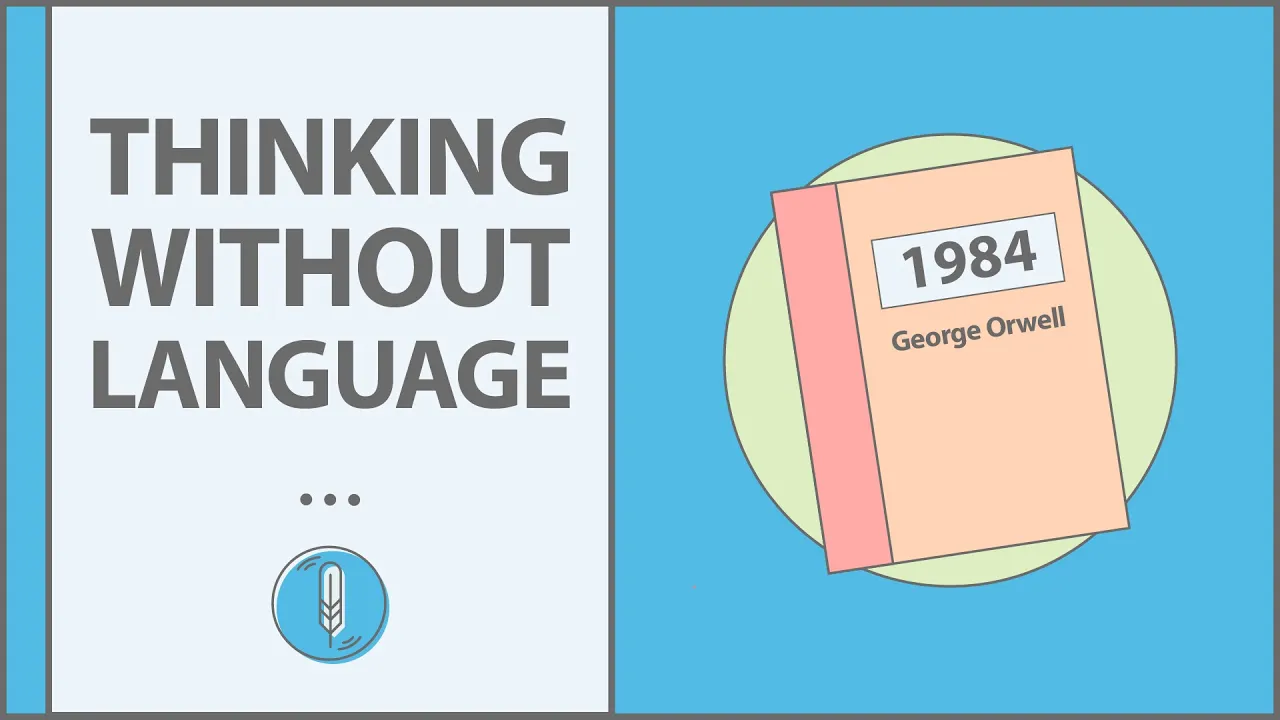






In George Orwell's 1984, the totalitarian government of Oceania employs Newspeak—a systematically designed language with three vocabulary categories (A for daily functions, B for political concepts, and C for technical jargon)—to suppress individual thought and maintain control, demonstrating how restricting language can fundamentally constrain human cognition and freedom of expression.
1984 by George Orwell: Dystopian Literature Analysis
Added:Understanding the basic plot, characters, and setting of George Orwell's '1984'.
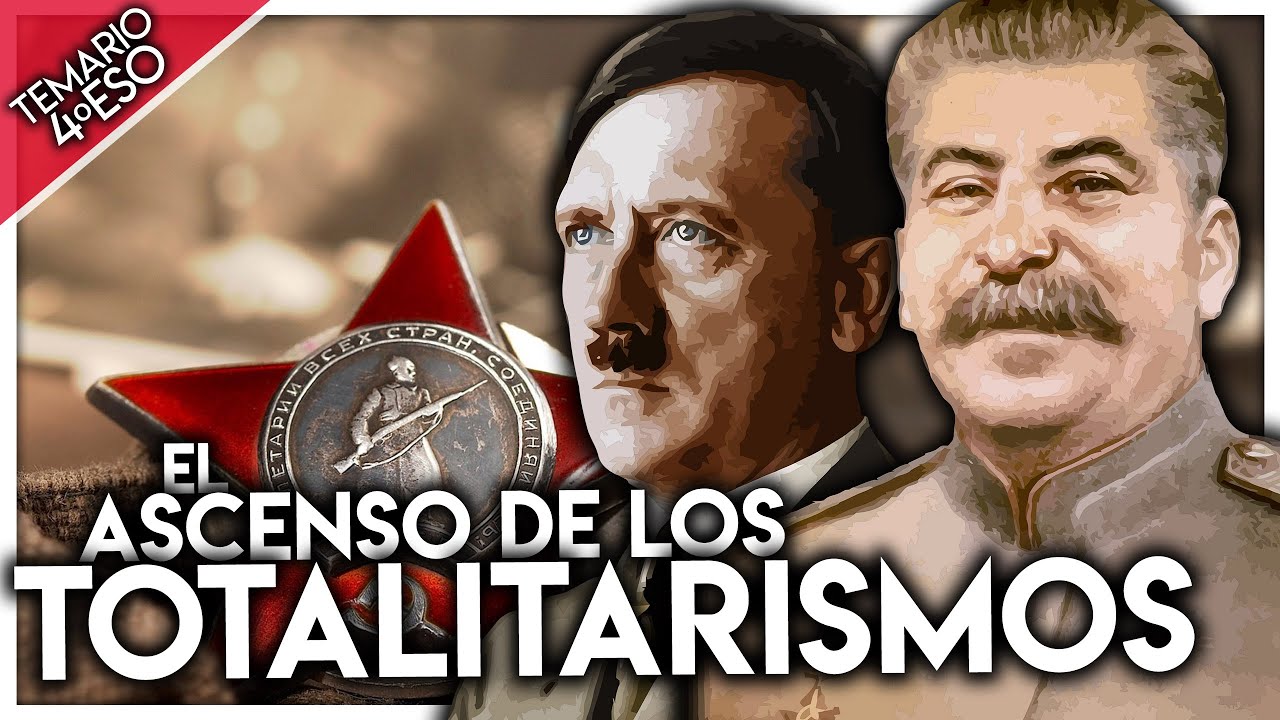
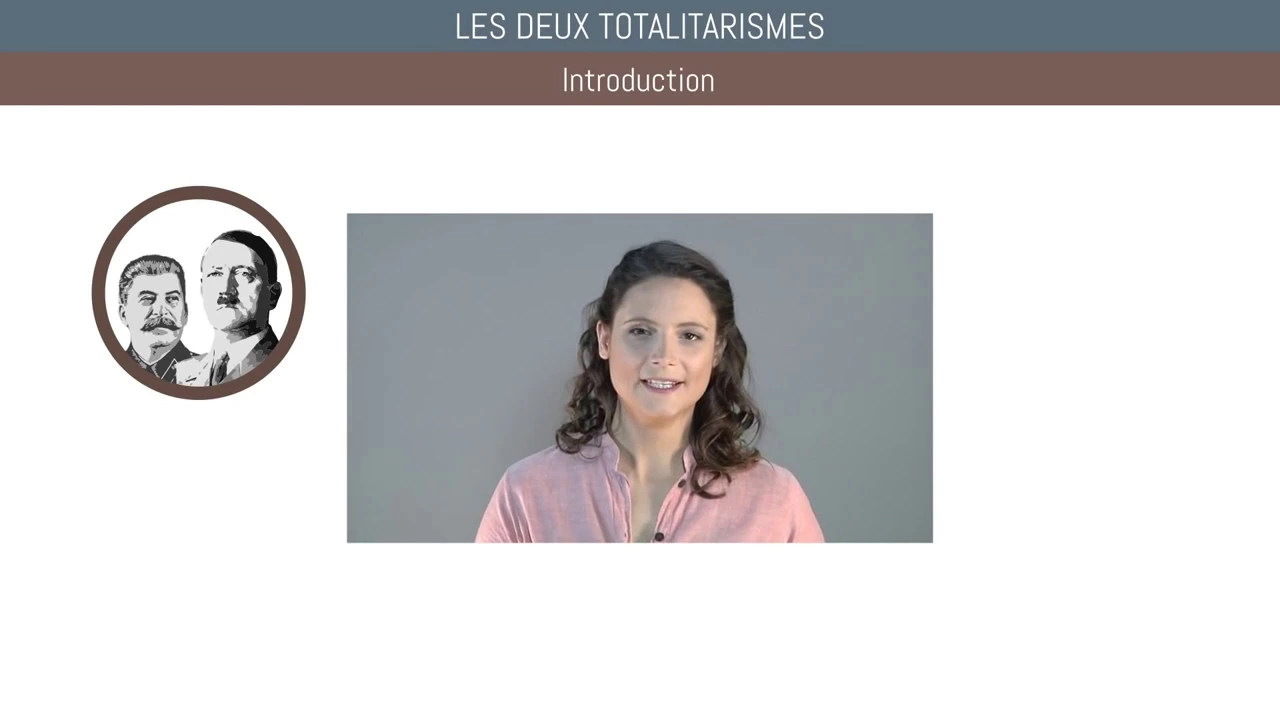
Familiarity with the historical context of the mid-20th century, specifically the rise of totalitarian regimes like Stalinism and Nazism.
A foundational definition of 'dystopia' and how it contrasts with 'utopia'.
Basic knowledge of how propaganda and censorship are used by authoritarian governments to control public perception.
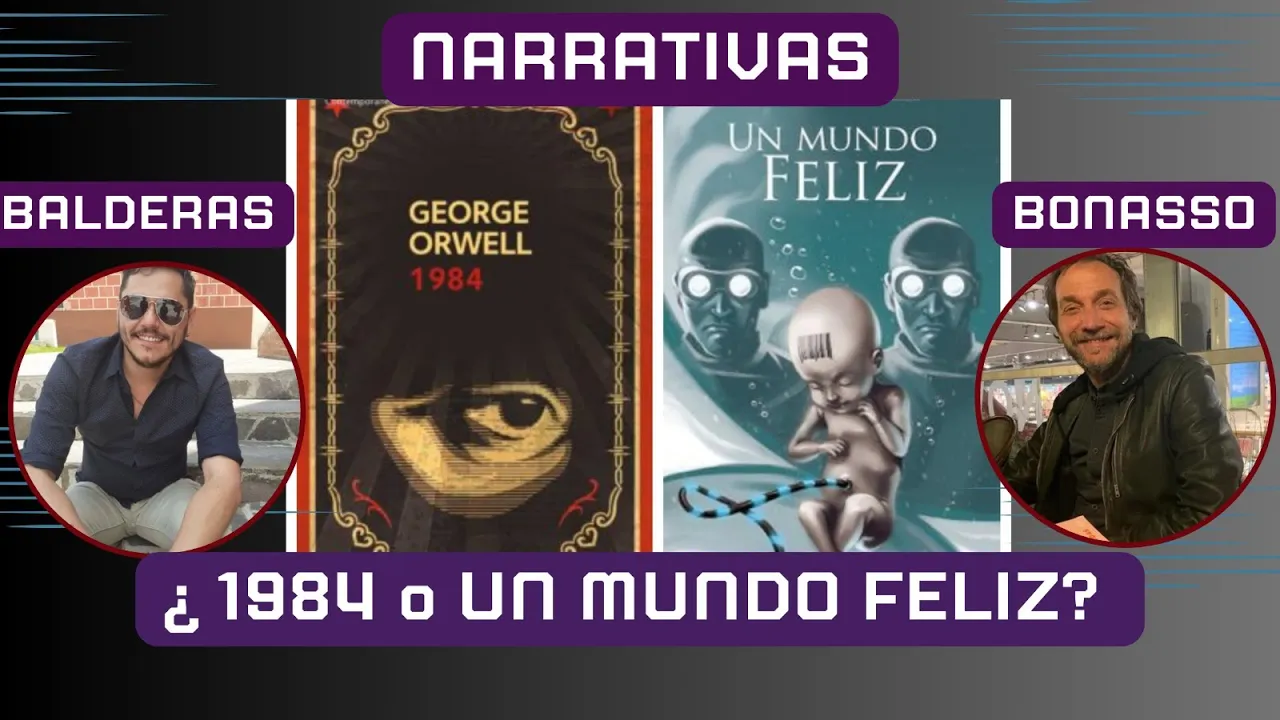
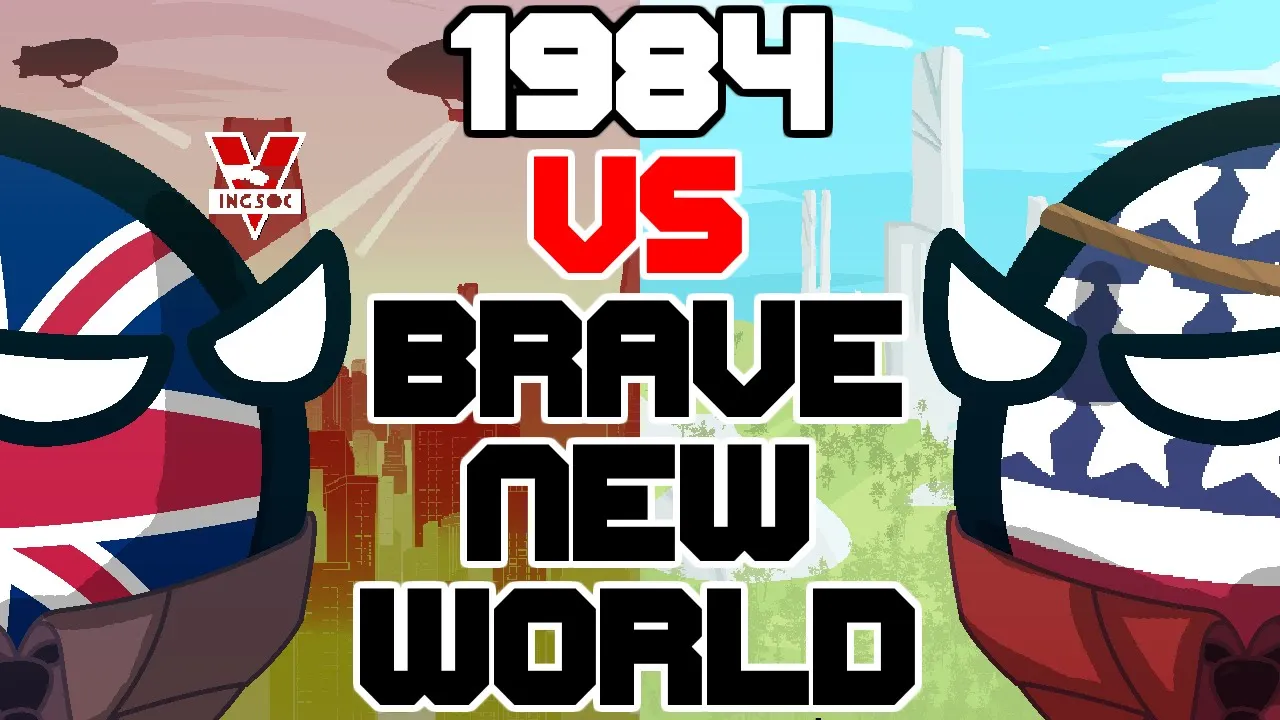
Comparative analysis between Orwell's '1984' and Aldous Huxley's 'Brave New World' regarding methods of societal control.
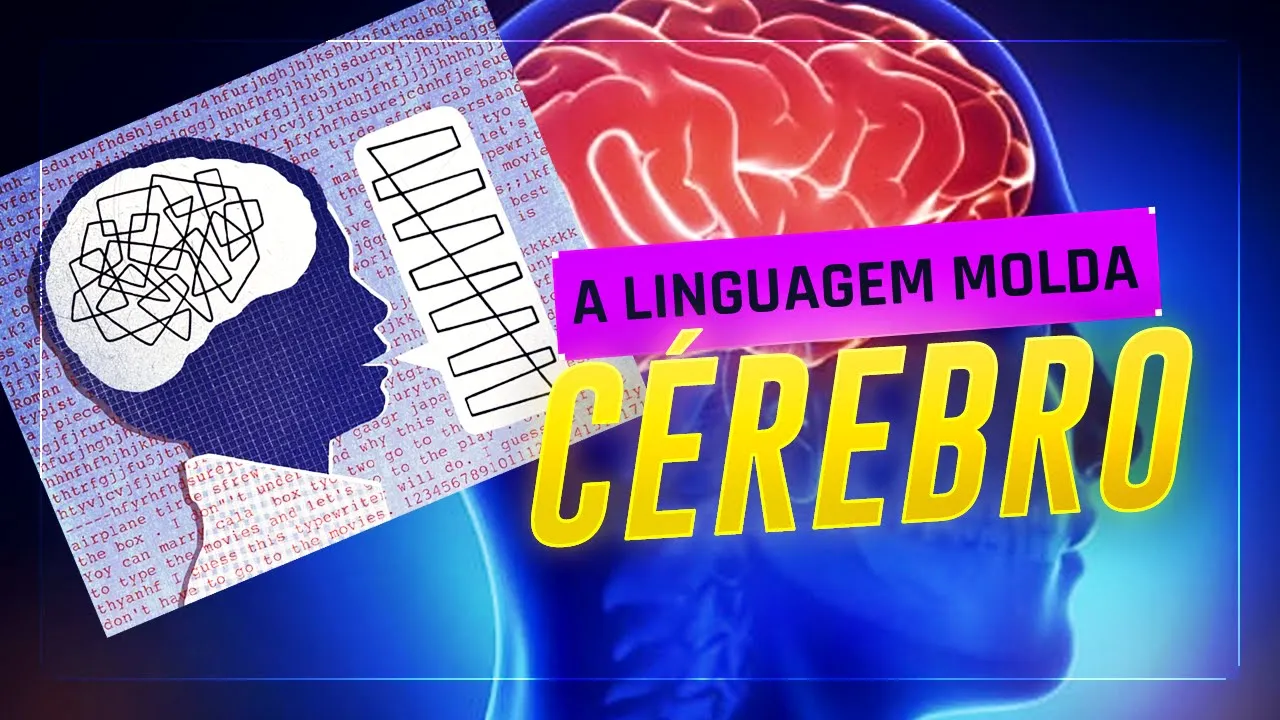
Exploration of the Sapir-Whorf hypothesis and linguistic relativity to understand how the fictional 'Newspeak' limits human thought.
Examination of modern digital surveillance, data privacy, and the ethical implications of government and corporate tracking.
Analysis of contemporary 'post-truth' politics, disinformation campaigns, and the manipulation of historical records in the digital age.
2.7M views56.8Klikes14:27Original Release: 2017-11-07
Hi I’m John Green and welcome to season 4 of CrashCourse literature.
Today, we’re transporting you to one of my favorite (slash least favorite) dystopias, George Orwell’s 1984.
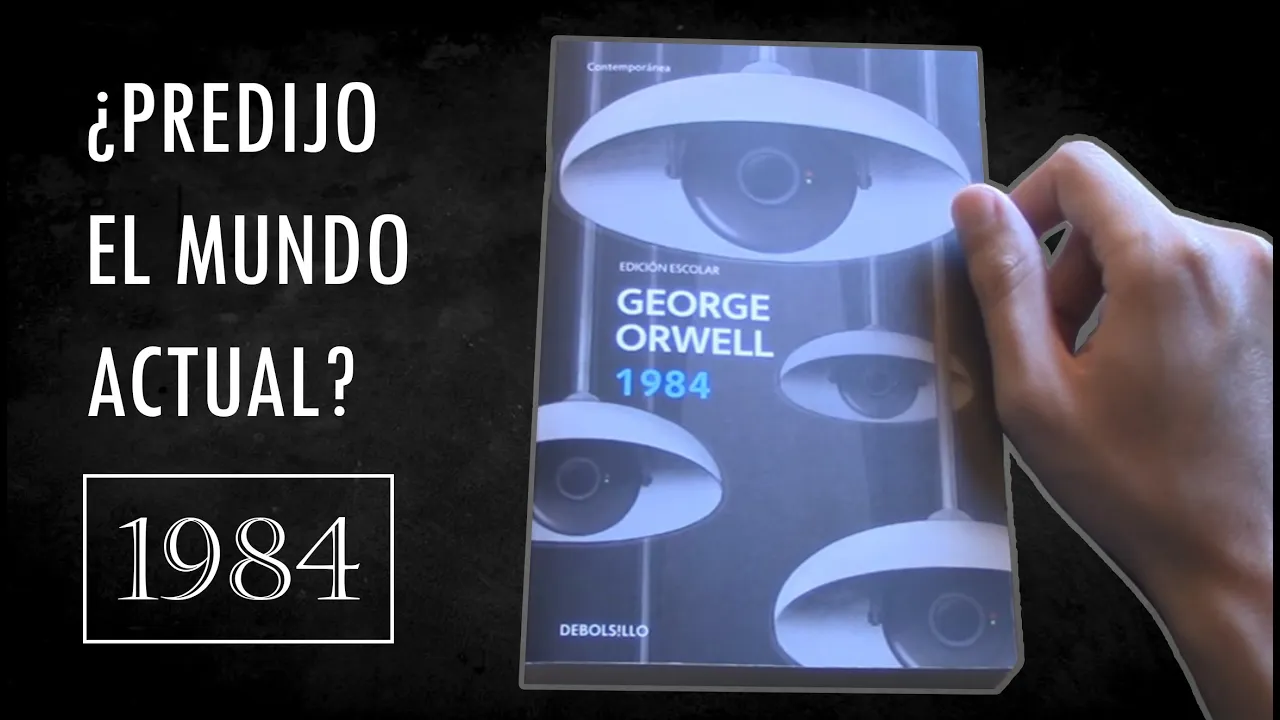
I feel like that eye is looking at me.
The book starts like this: It was a bright cold day in April and the clocks were striking thirteen.
Winston Smith, his chin nuzzled into his breast in an effort to escape the vile wind, slipped quickly through the glass doors of Victory Mansions, though not quickly enough to prevent a swirl of gritty dust from entering along with him.
(1) Of course it’s not just a swirl of gritty dust traveling with Winston; like everyone in 1984, he’s never really alone.
In Orwell’s dystopian future 1984, which was published in 1949, the world is vile and gritty and the clock strikes 13 and citizens are under near constant government surveillance.
But you know what?
Orwell did not correctly predict the future; our clocks still stop at 12.
Also, in the novel 1984, people routinely disappear and evidence of their existence is erased from public records, and that doesn’t happen much.
Yet.
1984 is an indictment of specific governments.
But it’s also a warning about the importance of free thought and speech, and in today’s episode, we’re gonna discuss the historical context in which 1984 was written and also its use of oppressive language.
I want to think about whether Orwell suggests, within the logic of this novel, that the written word can significantly alter the society in which it is produced.
And I mean that on at least two levels: Can the novel 1984 change the actual world in which we live, and are characters in the novel ultimately controlled by the language they, and their government, use?
Spoiler alert: We’re all doomed.
I’m just kidding.
I mean, I hope I’m kidding.
The truth is, as usual, it’s complicated.
INTRO George Orwell’s protagonist, the wind-blown Winston Smith, shares a first name with Winston Churchill, the Prime Minister of the United Kingdom from 1940-1945 and again from 1951-1955.
And by replacing a lofty, aristocratic surname (that evokes Churches.
And Hills) with a common one (a Smith is a metal worker), Orwell puts the fate of England in the hands of a working man, although this one bends words, not metal, since he is a writer.
As for whether Orwell’s Winston will prevail as Winston Churchill did in World War II...of course not!
Now, some dystopias end with the overthrow of the horrible government, but Orwell’s tend to end with the bad guys and/or pigs winning.
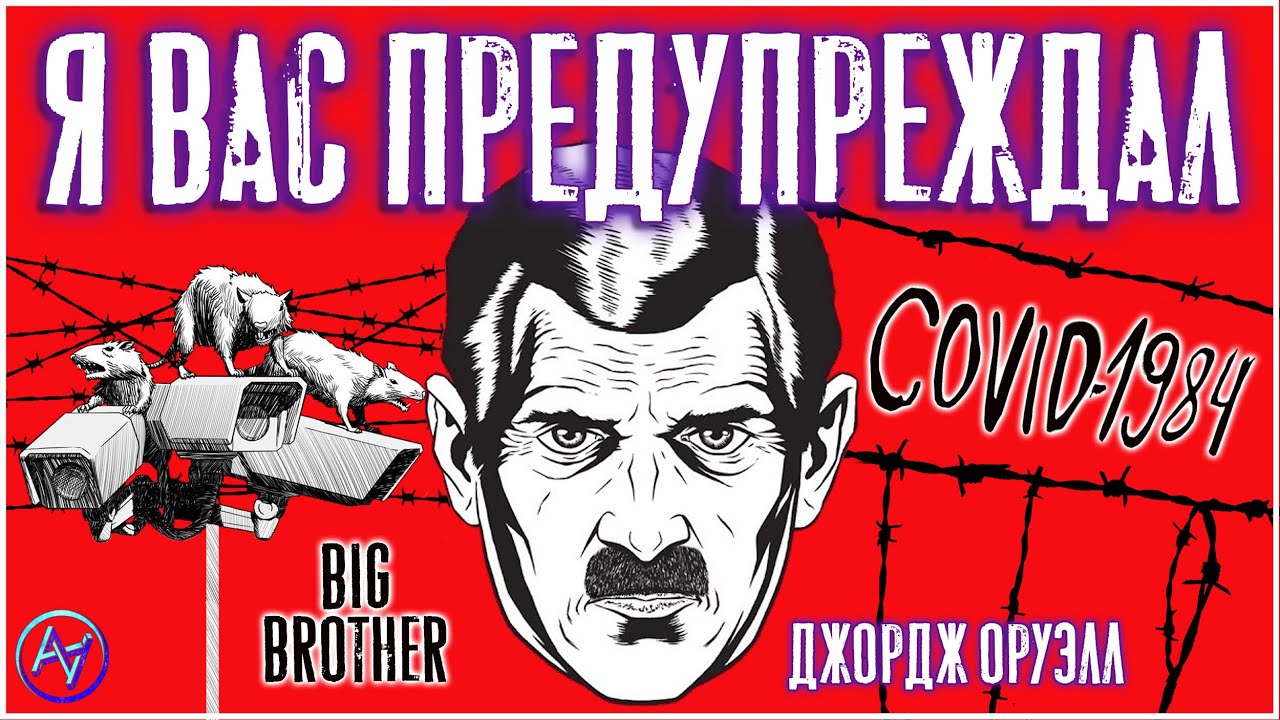
And 1984 is very much a dystopia -- a dehumanizing society in which “there seemed to be no color in anything” and posters of a “black-mustachio’d face gazing down from every commanding corner” bearing the now-famous caption, “BIG BROTHER IS WATCHING YOU” (2).
In this world, the government endorses something called “doublethink,” which links contradictory beliefs.
So you see slogans like: “WAR IS PEACE,” “FREEDOM IS SLAVERY,” and “IGNORANCE IS STRENGTH” are commonplace.
The problem isn’t that citizens are told the opposite of what is true.
The real issue is that their experiences have become so limited that they lack the perspective and the language to differentiate between major concepts.
But, let’s back up for a second and talk about George Orwell.
Here’s some “doublespeak” for you: George Orwell is not George Orwell.
He was born Eric Arthur Blair in 1903 to English parents in Bengal, near the border with Nepal.
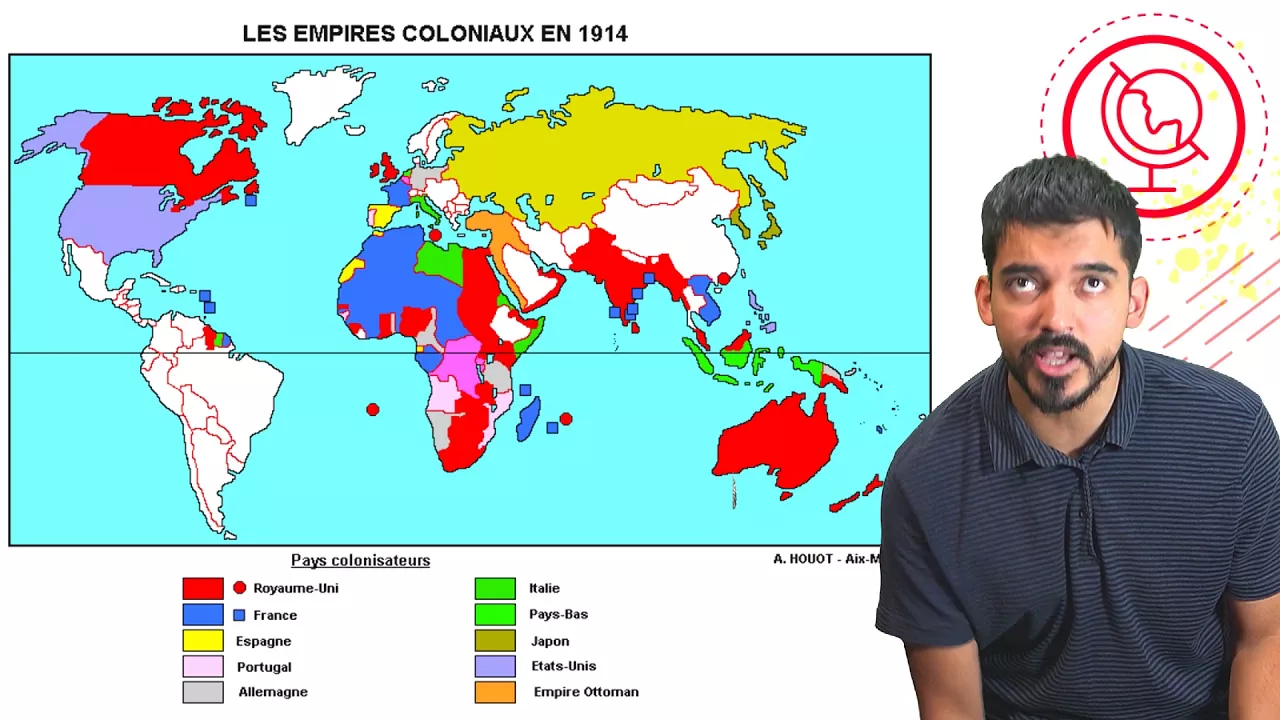
His father worked in “quality control” for opium, which is used to make morphine, codeine, and heroin, and the British held a monopoly on the trade of opium for years and exported it to China, both for financial gain and to subdue Chinese citizens.
Although the Chinese government tried to get the British to dismantle the India-China opium trade for 150 years, and there were wars fought about it, they weren’t successful until 1910.
Basically, this was one of the largest (legal) international drug cartels in history.
Ah, Colonialism: The Original Dystopia.
I guess the original dystopia was actually hunting and gathering.
I mean, at least for those of us who hate the paleo diet.
God, I love processed carbohydrates.
What were we talking about?
Oh, right!
Eric Arthur Blair, soon to be George Orwell!
So as a kid, Blair moved to England and was eventually sent to Eton, a prestigious boarding school.
In 1922, he joined the imperial police in Burma.
In “Why I Write,” he explains that he rejected imperialism after spending five years in the “unsuitable profession” of working in the imperial police force and experienced poverty himself when he returned to England.
Sensitized to the evils of colonialism, and now “fully aware of the existence of the working classes,” Blair was on his way to forming what he called a “political orientation.” He changed his name to George Orwell when he published Down and Out in Paris and London in 1933.
But he still hadn’t identified where he “stood” politically.
Then in 1936, he declared that he was “against totalitarianism and for democratic socialism, as I understand it.” Democratic socialism basically uses democratic means to create a political and economic structure that supports socialist goals.
You might think of it as being a rejection of unfettered capitalism.
Orwell found the “real nature of capitalist society” abhorrent because: “I have seen British imperialism at work in Burma, and I have seen something of the effects of poverty and unemployment in Britain….
One has got to be actively a Socialist, not merely sympathetic to Socialism, or one plays into the hands of our always-active enemies.” Orwell was against Stalin and totalitarian strains of Communism as well.
For instance, in 1936, when he went to Spain to fight the Fascist leader, Francisco Franco, he joined the Marxist group, POUM (Partido Obrero de Unificación Marxista).
He didn’t join the main communist party.
In Homage to Catalonia, he explains: “the Communists stood not upon the extreme Left, but upon the extreme right.
In reality this should come as no surprise, because of the tactics of the Communist parties elsewhere.” These tactics, as seen in the USSR, include the conscious use of propaganda, the repression of individual freedoms, and also state-sponsored murder.
But the point I want to make here is that it’s not quite accurate for either the contemporary left or right to “claim” Orwell--his most famous novels are anti-communist; but they’re also anti-capitalist.
Mostly, they seek to show the ways that many government structures are prone to totalitarianism, and they chart the slow, almost unnoticeable descent into that totalitarianism.
But in 1984 specifically, Orwell explores the difficulty of retaining individual freedom within the confines of an oppressive society.
In the book, the earth is divided into three zones--Oceania, Eurasia, and Eastasia--which are constantly at war with one another.
And Winston lives in London, the main city of Airstrip One, which is a province of Oceania.
He’s legally married to the stiff, brainwashed, and desireless Katherine.
Unable to produce children, they live separately and are forbidden from remarrying.
Winson’s primary pleasures include itching a varicose ulcer above his right ankle, drinking shots of a “sickly, oily” Victory Gin (which provides “the sensation of being hit on the back of the head with a rubber club”) and writing in a “thick, quarto-sized blank book with a red back and a marbled cover” (1, 5, 5).
So you know, his pleasures are scant.
Any life where one of the chief pleasures is scratching an actual, literal itch, is not, like, a great life.
I mean, it’s a good life for a dog, but not a great life for a person.
Then Winston’s pleasures, and anxieties, experience a significant uptick when he begins an affair with the young, vital and beautiful Julia.
Despite being “ten or fifteen years younger,” Julia boldly declares her love for Winston.
Winston is incredulous: “I’m thirty-nine years old.
I’ve got a wife that I can’t get rid of.
I’ve got varicose veins.
I’ve got five false teeth.” And the reader may have doubts as well.
I mean, when Julia replies, “I couldn’t care less,” Orwell seems to acknowledge (but not apologize for) this particular breed of middle-aged male fantasy.
(122).
But you know, it’s also a romance that serves a plot.
So, Winston and Julia meet secretly for months.
They rent rooms from an antiques dealer named Mr. Charrington in the plebian quarter of London.
They confess their affair and anti-party beliefs to O’Brien, a member of the Inner Party who seems to be sympathetic to their cause.
And they begin reading a book that is allegedly written by the underground resistance leader, Emmanuel Goldstein.
They know that they’ll be discovered, tortured, and (very probably) executed.
Their victories--and yes they have some--come from small moments of consciousness, human connection, and personal freedom.
And these moments are tiny.
For Winston, some of these moments include: procuring a pen with a real nib “simply because of a feeling that the beautiful creamy paper deserved to be written on” (7); succumbing to the ”balminess of the April air” to stroll through the “labyrinth of London” (84); Winston also purchases a glass paperweight containing coral, and all of this leads to a cool point: despite the authoritarian nature of Ingsoc (the perversion of socialism that dominates Oceania), moments of personal freedom like these are commonplace.
There’s even a word for them in Newspeak, the new language that the government is developing: “ownlife, it was called, meaning individualism and eccentricity” (84).
But of course, the line between experiencing an “ownlife” and engaging in political subversion is really thin.
I mean, when Winston gives in to his “animal instinct, the simple undifferentiated desire” to have sex with Julia: “Their embrace had been a battle, the climax a victory.
It was a blow struck against the Party.
It was a political act” (128-9).
There’s no ambiguity there.
Making your life yours, making your choices yours, is political.
And also, having your own thoughts is political.
I mean, The Party doesn’t just suppress subversion through surveillance, and arrest, and torture, and execution, those oldies but goodies from Totalitarianism for Dummies.
In 1984, the government also suppresses individualism by limiting language.
Just four pages into the book, an asterisk appears after the first mention of “Newspeak”: This asterisk interrupts the narrative flow, breaking any bond that the reader may be (or, let’s be honest, may not be) forming with Winston.
And it entices the reader towards an appendix, narrated by a scholar living long after Winston.
The appendix explains that Newspeak had been “devised to meet the ideological needs of Ingsoc” (309) and that its vocabulary has been designed: “to make speech, and especially speech on any subject not ideologically neutral, as nearly as possible independent of consciousness” (319).
In other words, it’s meant newspeak seeks to make it nearly impossible to express, and maybe in turn maybe even to THINK, revolutionary thoughts.
Let’s go to the Thought-bubble: Newspeak has three main categories of vocabulary: The A vocabulary contains blunt words for daily functions, like eating, working, and sleeping.
These words don’t have multiple meanings.
(The examples listed include “hit, run, dog, tree, sugar, house, field”) The B vocabulary contains compound words that blend a noun and verb to express a limited number of political or ideological concepts.
Like, “Goodthink” means orthodoxy to party policy.
“Crimethink” is its opposite.
And the C vocabulary is scientific and technical.
It contains jargon accessible only to workers in a particular field.
The idea is that no individual will be able to synthesize knowledge from multiple fields.
So people will be able to do their work, but not be able to understand the context in which that work is happening.
And that’s one example of how, by trying to limit what people can say, the government is hoping to constrain what they can think.
And an interesting feature of the Appendix is that it explains th contained many superfluous words and archaic formulations which were due to be suppressed later” (309).
This foreshadows that language will become increasingly oppressive… Which, of course, is bad news for Winston and his peers.
But there is some good news for the rest of humanity.
Because you will notice that the appendix is written in Standard English.
As many readers (including Thomas Pynchon and Margaret Atwood) have pointed out, this suggests that free thought and its expression will ultimately prevail, and that language will once again be rich and complex and free.
Thanks Thought Bubble.
So how do we get back to free language?
Well I’m a writer, and as such I’m almost professionally obligated to believe in the power of language--and next week we’ll go into more detail about the complicated relationship between thoughts and language, but I think it’s worth mentioning now that while we don’t think entirely in words, language does help give form and expression to complex ideas within us.
I mean, that’s part of what books attempt to do, but it’s also something we’re all doing all day, because we think in language.
It’s one of the primary ways we communicate our feelings and experiences to other people, but it’s also one of the primary ways we communicate that stuff within us.
And I think in 1984 Orwell argues that the restriction of language is ultimately a form of restricting thought itself.
It’s encouraging that Newspeak may ultimately fail, but it does make me wonder: what thoughts can’t I think because of the language that I’ve inherited?
Next time we’ll also address a question that should be on your mind (since you’re watching this video on something very like a telescreen, possibly while in a government-funded school where the government is deciding at least in part what you learn about): What can 1984 teach us about our current political context and our relationship to what many have called “surveillance” society?
And in a world where so many of us volunteer so much of ourselves to the public sphere, is there value in private life?
Spoiler alert: I think so.
But we’ll talk more about that next week.
Thanks for watching.
I’ll see you then.
Up Next

19:33
Why Dystopias Dominate: Utopian Imagination in Late Capitalism
@YUGOPNIK
92.8K views•2021-09-09

13:43
Formalism in Literary Criticism: An Academic Lecture Overview
@mattalberhasky9952
39.1K views•2015-08-05
12:38
Frankenstein, Part 2: Romanticism and Critical Readings
@crashcourse
1.1M views•2014-04-03

15:25
1984: Orwell's Dystopian World and the Mechanisms of Totalitarianism
@AlternateHistoryHub
7M views•2017-03-04
Related Study Plans & Knowledge Roadmaps
Structured learning paths in Literature
literature
Graphic Memoirs: Visual Art, Trauma & History
01Foundations of Sequential Art and Visual Language
02Autographics and Processing Historical Trauma
03Visualizing Personal Trauma, Grief, and Graphic Medicine
+ 2 more learning modules
14h5 modules
Explore Roadmap
literature
Campus Novels: Evolution, Themes & Critique
01Introduction to the Campus Novel Genre
02Mid-Century Satire and the Post-War Academy
03Dark Academia and the Critique of Privilege
+ 2 more learning modules
14h5 modules
Explore Roadmap
literature
Theater of the Absurd: Philosophy & Plays
01Postwar Existentialism & Historical Roots
02Dismantling Narrative: Esslin & Absurdist Conventions
03Samuel Beckett and Tragicomic Existentialism
+ 2 more learning modules
12h5 modules
Explore Roadmap
literature
Revenge Tragedy: Justice, Madness & State
01Foundations of Early Modern English Theatre
02Anatomy of Revenge: Structural Conventions
03Psychological Complexity: Madness and Melancholy
+ 2 more learning modules
15h5 modules
Explore Roadmap