




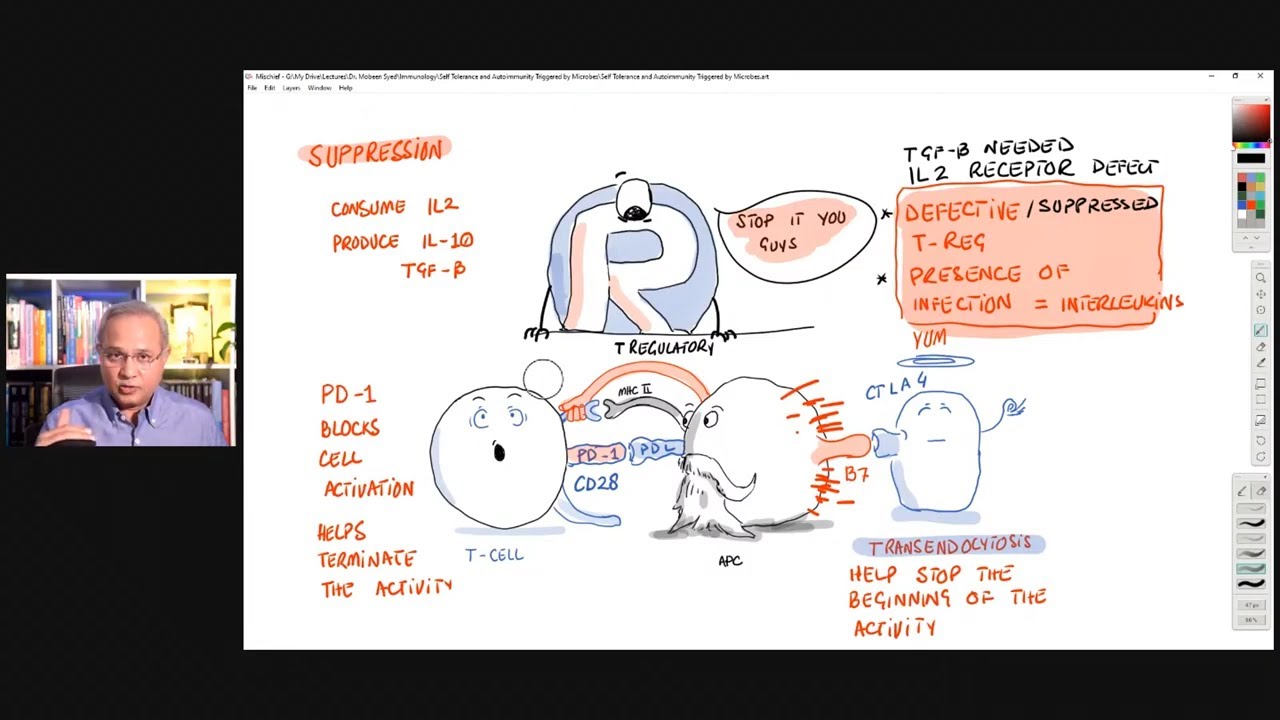






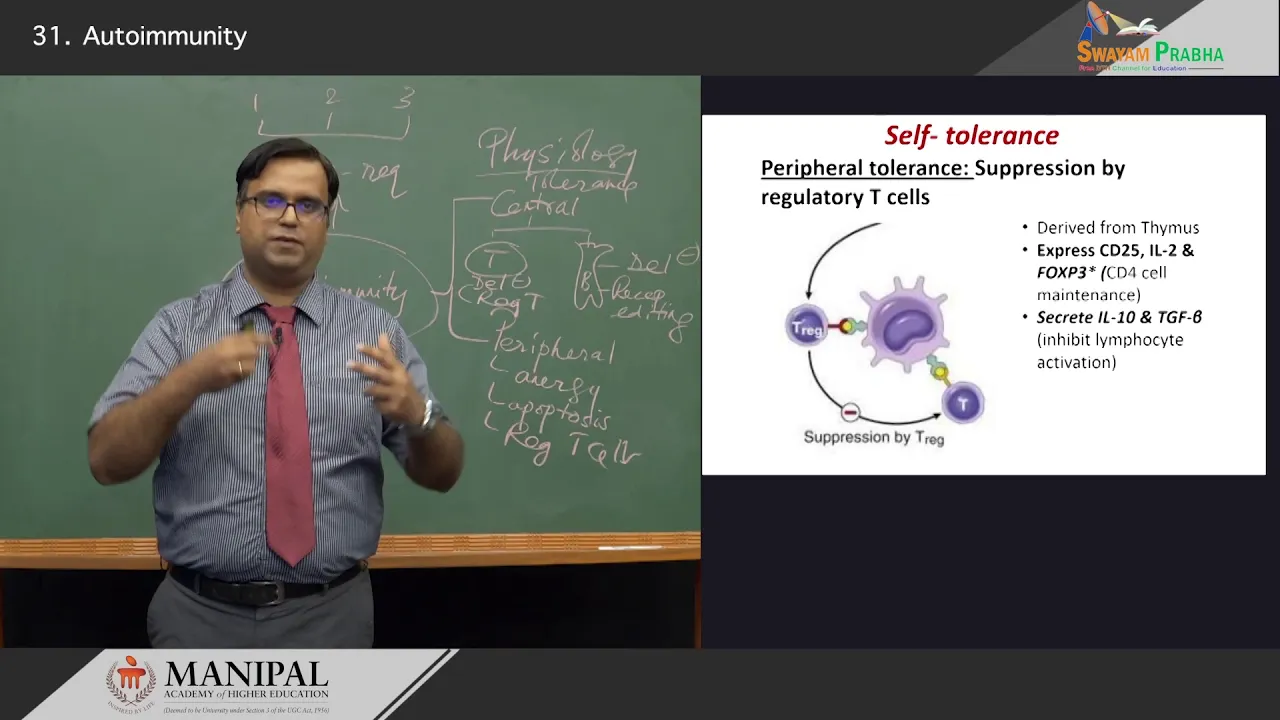







Autoimmunity occurs when the immune system loses its natural tolerance to the body's own cells, attacking healthy tissue instead of just pathogens; this can be triggered by genetic mutations affecting MHC proteins that display self-antigens, infections where pathogen antigens resemble self-antigens (molecular mimicry), or damage to immunologically privileged sites like the eyes or brain where self-antigens enter the bloodstream and are recognized as foreign.
Autoimmunity and Autoimmune Diseases: Causes and Mechanisms
Added:Basic components of the adaptive immune system, specifically the roles and functions of T-lymphocytes, B-lymphocytes, and antibodies.
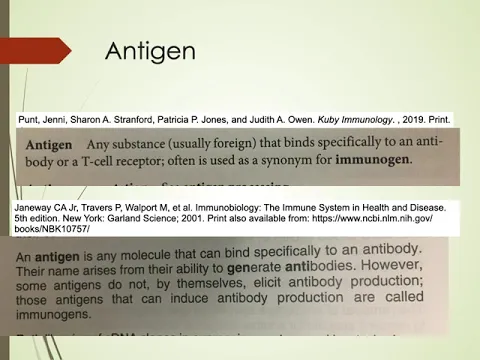
The fundamental concept of antigen recognition and how the immune system distinguishes between self-antigens and foreign pathogens.
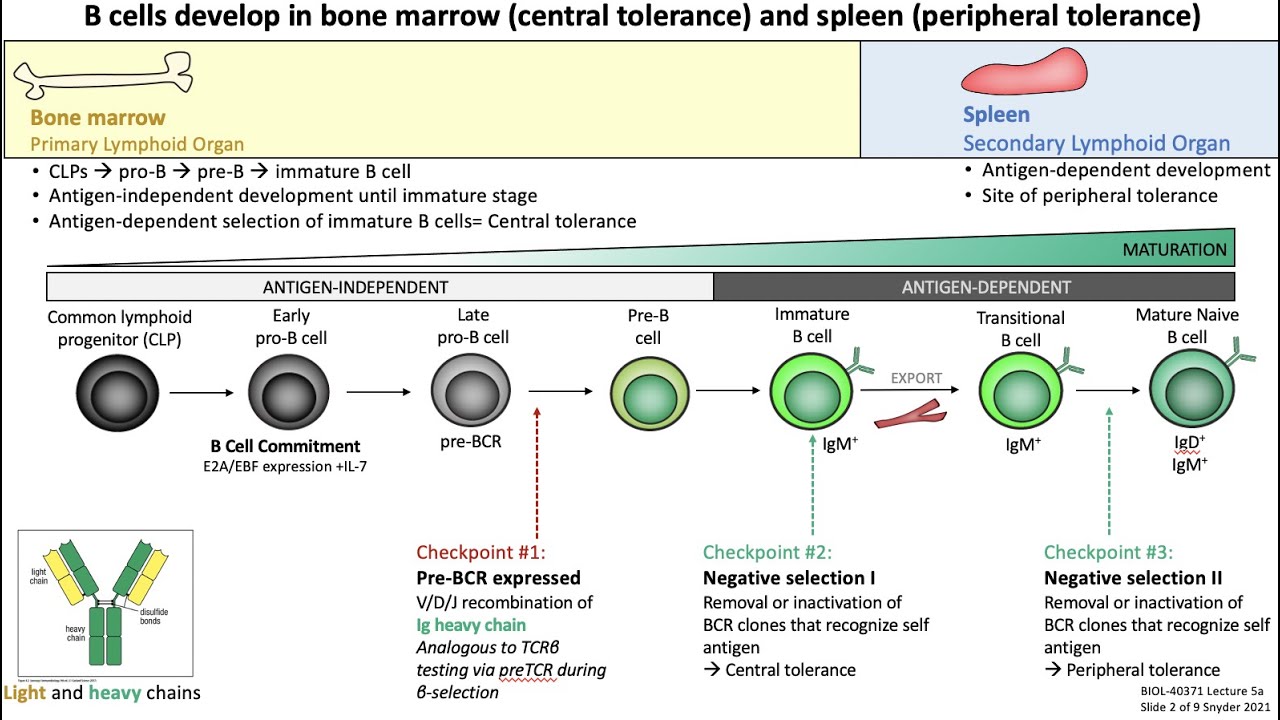
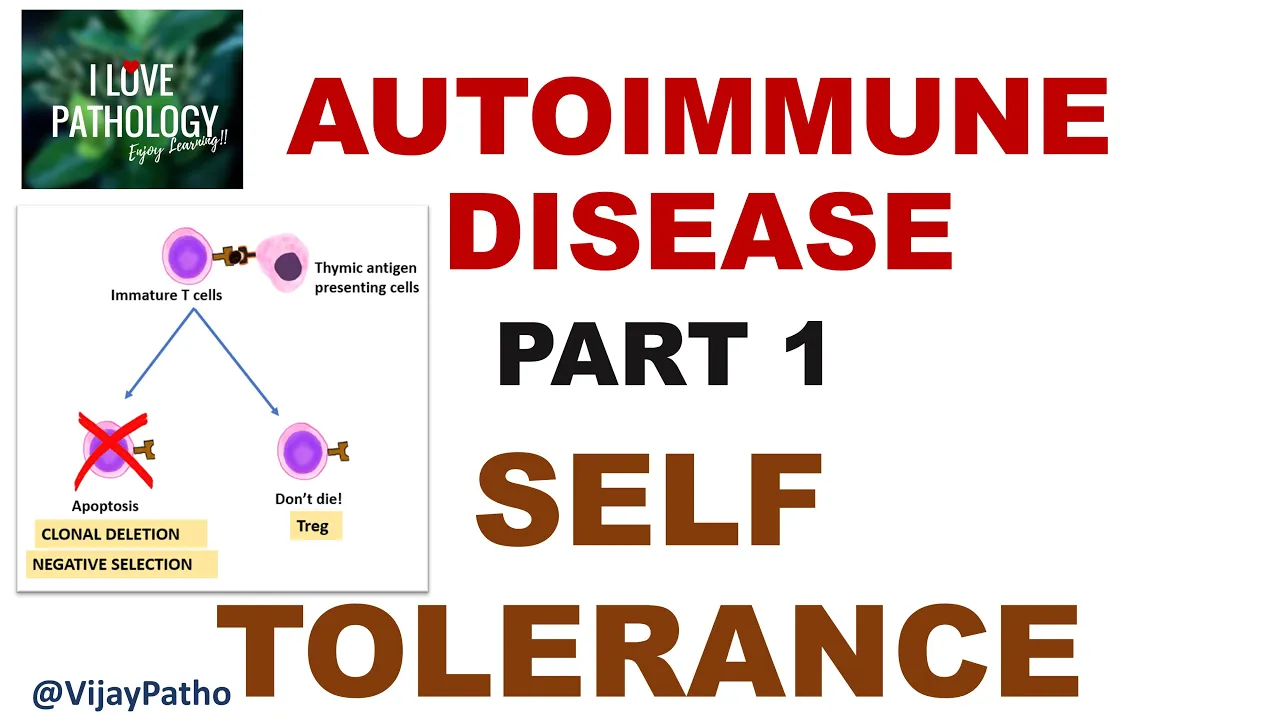
The developmental process of immune cells, including central tolerance mechanism in the thymus and bone marrow.
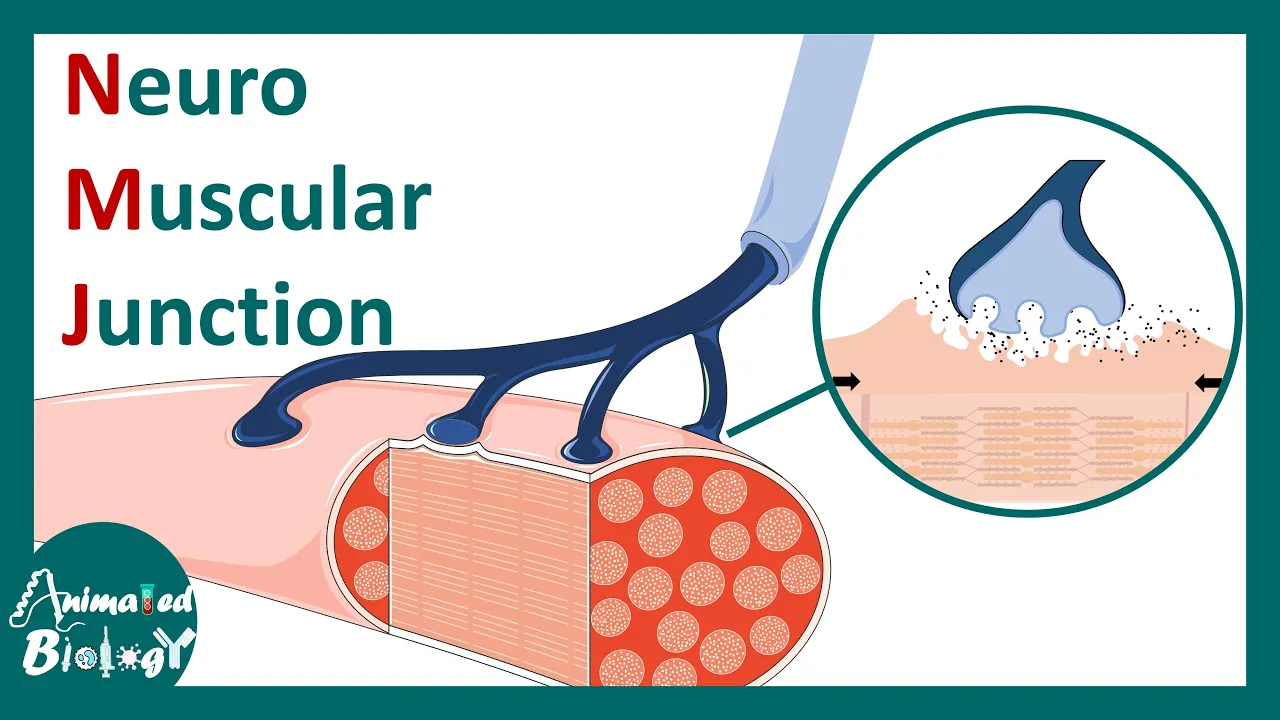
Basic cellular biology of the nervous system and the neuromuscular junction to contextually understand myelin damage and acetylcholine receptor disruption.
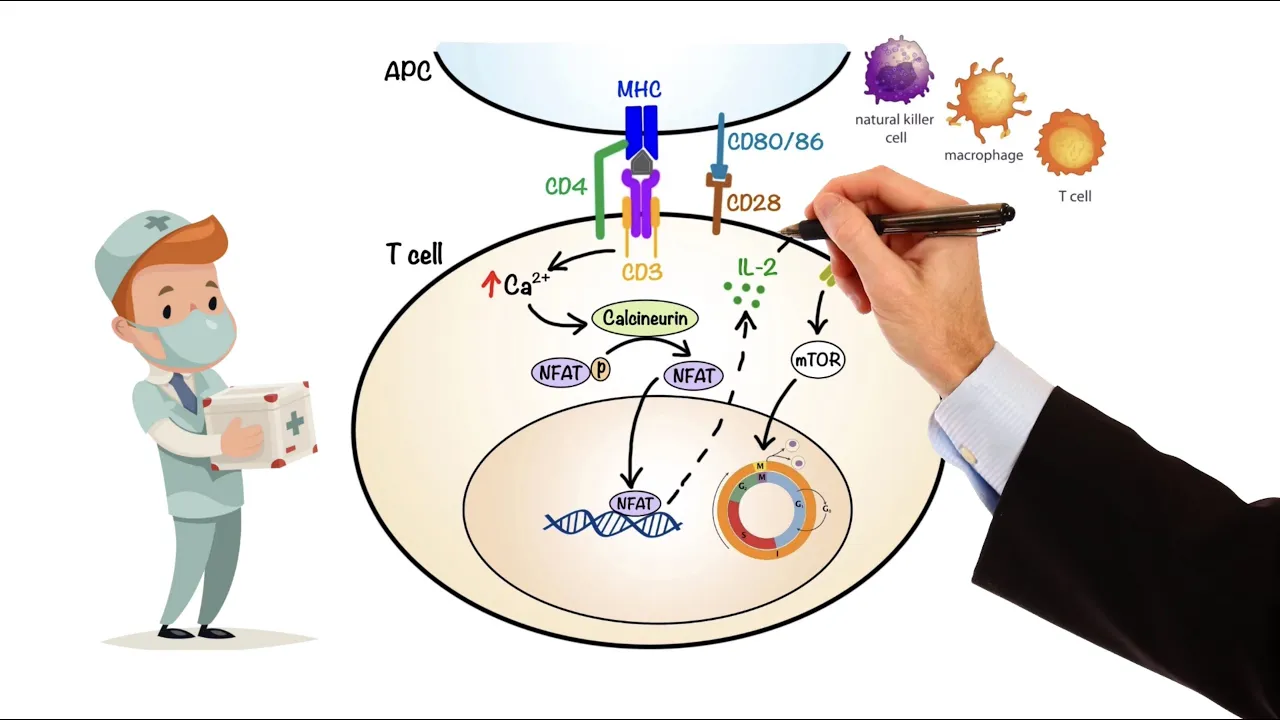
Advanced pharmacological interventions for autoimmune disorders, including immunosuppressants, corticosteroids, and targeted monoclonal antibodies.
The genetic and environmental etiologies of autoimmunity, exploring Human Leukocyte Antigen (HLA) susceptibility and the concept of molecular mimicry.
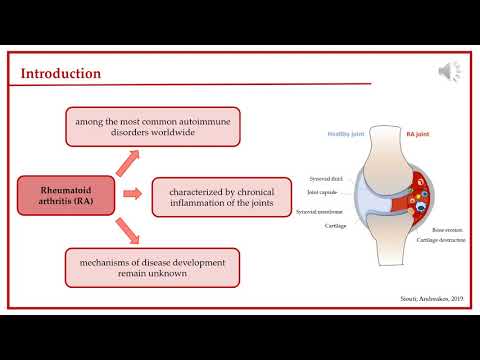
Comparative pathology of systemic autoimmune diseases (such as Systemic Lupus Erythematosus or Rheumatoid Arthritis) versus organ-specific ones.
Emerging immunological research, such as regulatory T-cell (Treg) therapy, tolerogenic dendritic cells, and the influence of the gut microbiome on immune tolerance.
106.5K views1.4Klikes12:08Original Release: 2014-11-20
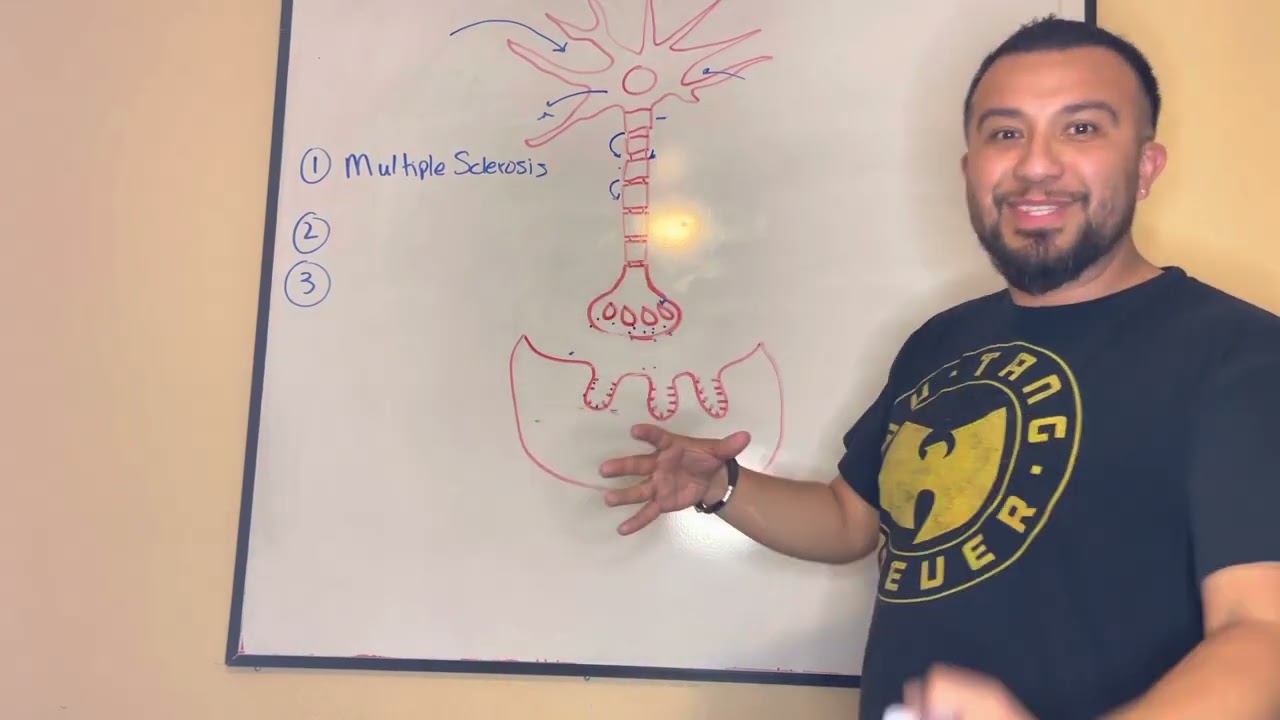
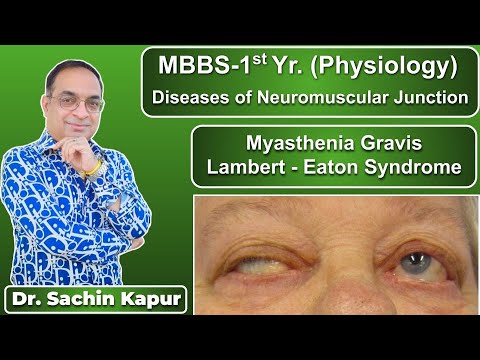
our immune system displays something known as immunological tolerance so our wide blood cells of our immune system are naturally immunologically tolerant to the healthy cells of our body and what that means is these white blood cells will not attack the healthy cells of our body why is that well because our healthy cells produce proteins called self antigens and they display these self antigens on special protein complexes found on the membrane of those healthy cells and they display these antigens to wide blood cells so when a wide blood cell sees a self antigen on a healthy cell it will not attack that healthy cell so under normal and healthy conditions our immune system has no problem distinguishing between these self antigens found on healthy cells and pathogenic antigens found on Infected cells or on invading pathogens such as bacterial cells however in certain cases and in certain individuals our immune system can actually lose its natural immunological tolerance to the healthy cells of our body and what that means is our immune system can no longer distinguish or differentiate between self antigens of healthy cells and pathogenic antigen and at this point the white blood cells will begin to attack not only the pathogens and infected cells but also the healthy cells of our body and this condition in which our immune system loses its natural immunological tolerance to our healthy cells is known as autoimmunity or autoimmune disease now what are some examples of autoimmune diseases well multiple sclerosis is one rheumatoid arthritis is a second one diabetes type one is a third one and we also have myasthenia gravis which we'll focus on briefly in this lecture so what exactly is myasthenia gravis well this is an autoimmune disease of our body that affect that affects our skeletal tissue so basically our body begins to produce an antibody that it normally shouldn't and when this antibod is produced it begins to circulate inside our blood and it binds onto aetl choline receptors found between the motor neurons of our nervous system and our muscle tissue skeletal muscle tissue and by binding onto these acetal choline receptors it blocks the action potential our electrical signal from actually moving from the nervous system to our skeletal muscle and this this decreases our ability to actually voluntarily control our contraction of skeletal muscle and this can lead to many problems because for example as we know the process of breathing involves the diaphragm and the diaphram is in fact a skeleton muscle so in a person that has myasthenia gravis if they begin to exercise very vigorously they will have problems breathing because uh this or autoimmune disease affects the way the ability that we actually contract our skeletal muscle now although this topic of autoimmunity is heavily researched we still actually do not quite understand how autoimmunity actually takes place but we do have some ideas so some possibilities that basically uh that cause autoimmunity might be a genetic mutation on our DNA in a section that codes for some type of important component of our immune system for example the major hysto compatibility complex as we'll see in just a moment another fact that that might lead to autoimmunity are infections that we experience as a result of some type of pathogens and we'll see what that is in just a moment another Factor might be damage to immunologic ically privileged sites and we we'll see what that means in just a moment so let's begin with gene mutations so earlier we discussed these self antigens and the fact that our immune cells white blood cells can distinguish between our healthy cells and non-healthy cells by these self antigens and we said the self antigens must be displayed on special protein complexes on the membrane of the healthy cells and these protein complexes are known as major hysto compatibility complexes or simply MHC now these protein complexes must be coded by some type of section within our DNA but what happens if there is a mutation within that section of our genetic code that means we no longer have the ability this cell no longer has the ability to produce this MHC complex that is needed to actually display the self antigen and in this particular case our white blood cells when they approach this otherwise healthy cell they will not notice those self antigens because the self antigens will not be able to bind onto the membrane because of the missing major hyoc compatibility complex and therefore the wi blood cells will begin to attack these otherwise normal cell so a genetic predisposition is believed to be one possible cause of autoimmunity Research indicates that autoimmunity runs in the family or may run in the family and may be passed down to offspring from parent now genetic mutations for example in the DNA that codes for MHC membrane proteins may lead to autoimmunity as we just discussed now now let's move on to factor number two that might lead to autoimmunity infections by pathogen so let's suppose some type of pathogen infects our body and infects a cell so here we have an infected cell now what the infected cell will do is it will take a certain antigen that came from that pathogen and it will displayed on this MHC protein complex so the major his compatibility complex as shown now in some cases the pathogenic antigen that is displayed on our membrane that came from that pathogen might resemble some other self antigen that is found on healthy cells of our body so we have two healthy cells in some place in our body and notice that these green self antigens which are normally seen by the white blood cells as normal res resemble the pathogenic antigen now when our adaptive immune system begins producing plasma cells and these plasma cells begin to produce these antibodies that combin to this pathogenic antigen these antibodies will not only bind to the pathogenic antigen but because of the resemblance between these two antigens our antigen and self antigen these antibodies will also begin to bind on the self antigens of our normal healthy cells and once that binding takes place these antibodies will essentially label these healthy cells for Destruction by our white blood cells for instance an example of such an infection is strepto coal infections that take place for example in our throat so for instance strepto coal infections can produce antigens that have similar epitopes compared to self antigens found in our heart this can lead to a condition in autoimmune disease known as rheumatic heart disease now an epitope is basically a special sequence on that antigen that binds onto our antibody so when an individual is infected by a pathogen that pathogen may contain or produce antigens that resemble the cell antigens of the healthy cells of our body when the pathogenic antigens induce the immune system to produce antibodies the antibodies not only bind on the pathogenic antigen but because of the resemblance they also bind onto our self antigens in this particular case the streptococcal infection produces antibodies that not only bind to that pathogen but also to the cells of our heart so we have gene mutations as well as pathogenic infections that can lead to autoimmunity now what about the third Factor what exactly is an immunologically privileged site well there are certain locations in our body that do not have any lymph vessels or do not have any blood vessels and what that means is why blood cells have no way of actually getting to these locations and what that implies is because the white blood cells cannot get to these immunologically privileged sites then the self antigens found on the cells of these immunologically privileged sites basically are not recognized by the white blood cells so certain places of our body are out of reach to the majority of our white blood cells because they contain virtually no blood vessels or no no lymph vessels and two examples are our Coria in the eye as well as our brain so when some type of physical damage takes place on these immunologically privileged sides for example somebody punches ey punches Us in the eye the self antigens might actually get somehow into our blood system or into our lymph system and when these self antigens begin to circulate inside our blood because the white blood cells have never actually encountered these self antigens they will see them as pathogenic antigens and they will begin to produce plasma cells that produce antibodies that bind to these self antigens and destroy those self antigens and what will happen is these white blood cells and antibodies will move into the eye and will begin to destroy not only this eye that experience that physical damage but also the other eye because the other the other eye contains those same types of self antigen so these are the three different factors that can lead to autoimmune diseases so we have gene mutations along our DNA that codes for special types of things like the major histo compatibility complex that is involved in helping our white blood cells distinguish between healthy cells and our pathogens now viral or some type of of bacterial infections can also lead to autoimmunity as can damage to our immunologically privileg sites
Up Next

13:45
Antibody Structure Explained: Heavy & Light Chains | Immunology
@FrankLectures
187.7K views•2017-06-07
50:12
Bacterial Communication: Quorum Sensing and Biofilm Formation Explained
@JHUAAP
12.6K views•2011-06-28

7:47
Post-Translational Modifications Explained: Types & Functions
@AKLECTURES
136.8K views•2014-09-11
7:08
Bacteriophages: Earth's Deadliest Killers and Future Antibiotics
@kurzgesagt
34.6M views•2018-05-13
Related Study Plans & Knowledge Roadmaps
Structured learning paths in Biology
biology
RNAi: Biogenesis, RISC & Gene Silencing
01Molecular Biology Foundations: DNA to Protein
02Introduction to RNA Interference (RNAi)
03Molecular Biogenesis of miRNA and siRNA
+ 2 more learning modules
10h5 modules
Explore Roadmap
biology
Mycorrhizae: Signaling, Biophysics & Ecology
01Foundations of Mycorrhizal Symbiosis
02Molecular Signaling and Root Colonization
03Biophysics and Bioenergetics of Nutrient Exchange
+ 1 more learning modules
11h4 modules
Explore Roadmap
biology
Circadian Clocks: TTFL, SCN & Periphery
01Foundations of Molecular Biology & Gene Expression
02Introduction to Chronobiology and Actograms
03The Core TTFL: Molecular Architecture of the Clock
+ 3 more learning modules
14h6 modules
Explore Roadmap
biology
Population Genetics: Math, Drift & Selection
01Genetic & Probability Foundations
02The Hardy-Weinberg Principle and Baseline Models
03Mathematical Modeling of Natural Selection
+ 3 more learning modules
18h6 modules
Explore Roadmap