



![Summary of the Adaptive Immune System [T & B Cells]](https://i.ytimg.com/vi_webp/n-nXEcUotU8/maxresdefault.webp)
![Patología 1 | Repaso Parcial Parte 2 [Tema 5 - 6] | Enrique Aguado | 2026 - 1](https://i.ytimg.com/vi/xR_DmqtKFHY/maxresdefault.jpg)



![🎓 باك 2025 🚀 | علوم الطبيعة من A إلى Z في أقل من ساعة ⏱️💪 [ الفرزة الواعرة 🎯 ] !!](https://i.ytimg.com/vi_webp/Lye5cEn0K-Y/maxresdefault.webp)
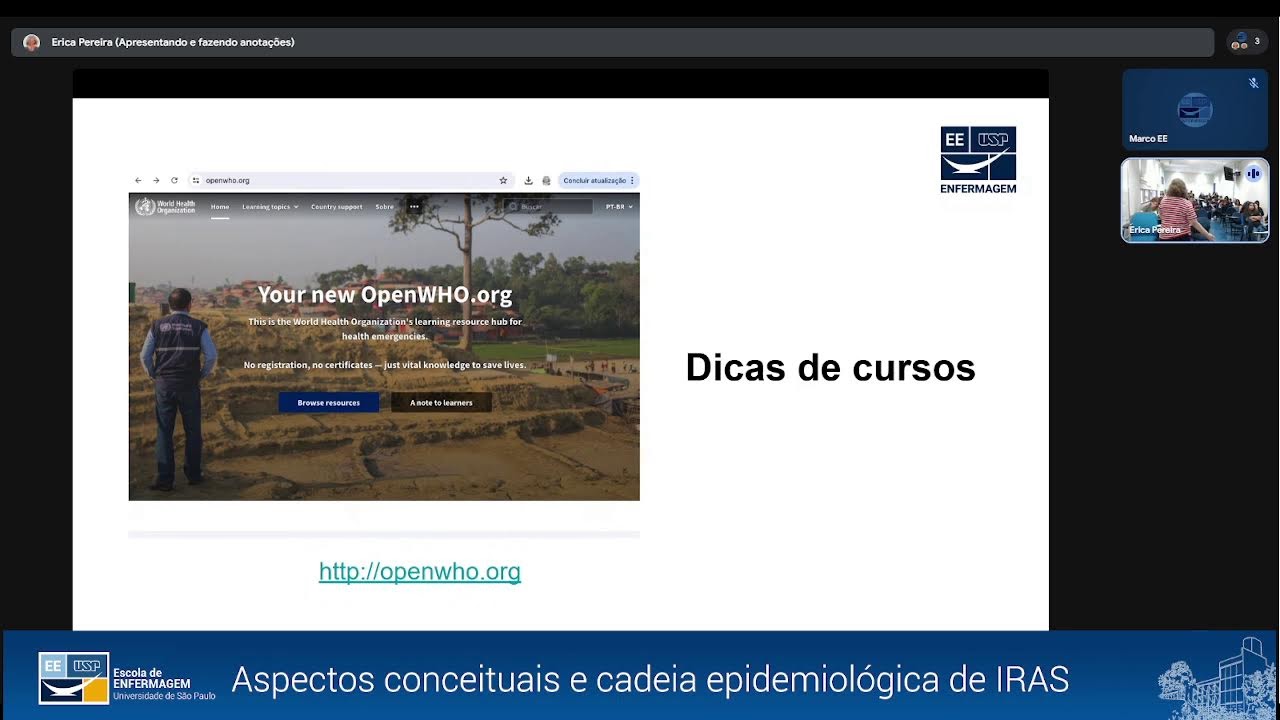




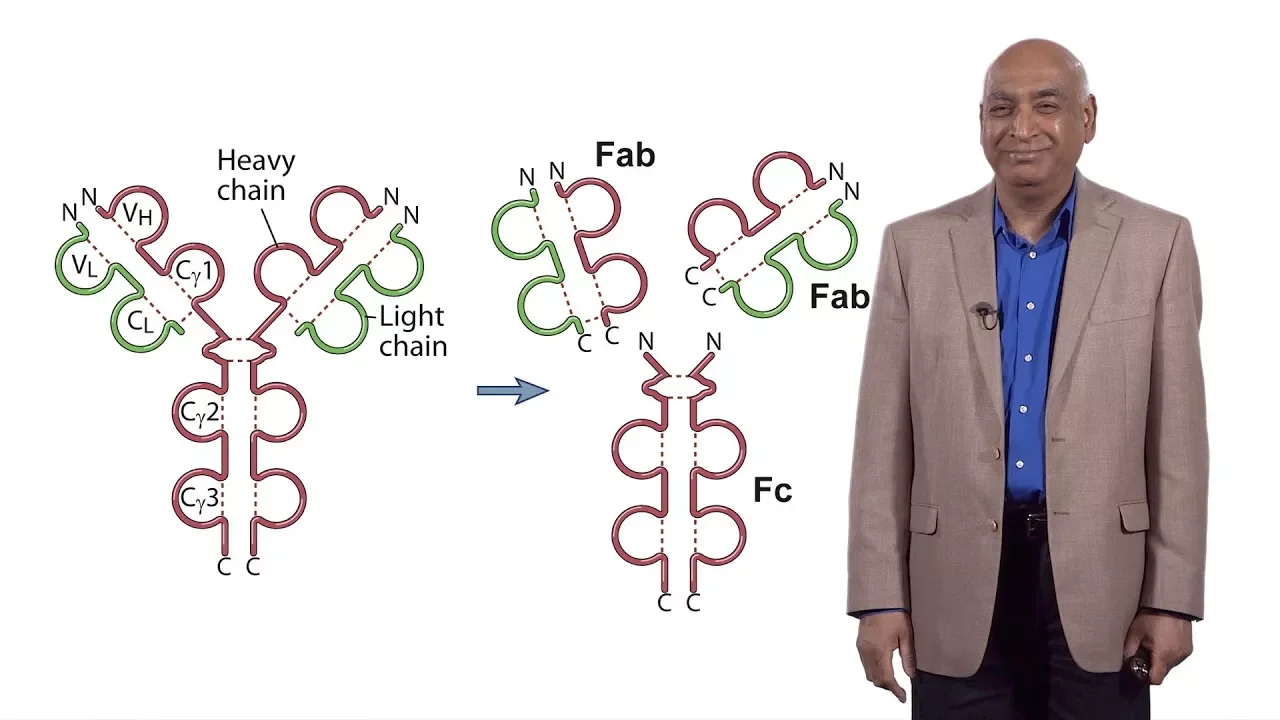


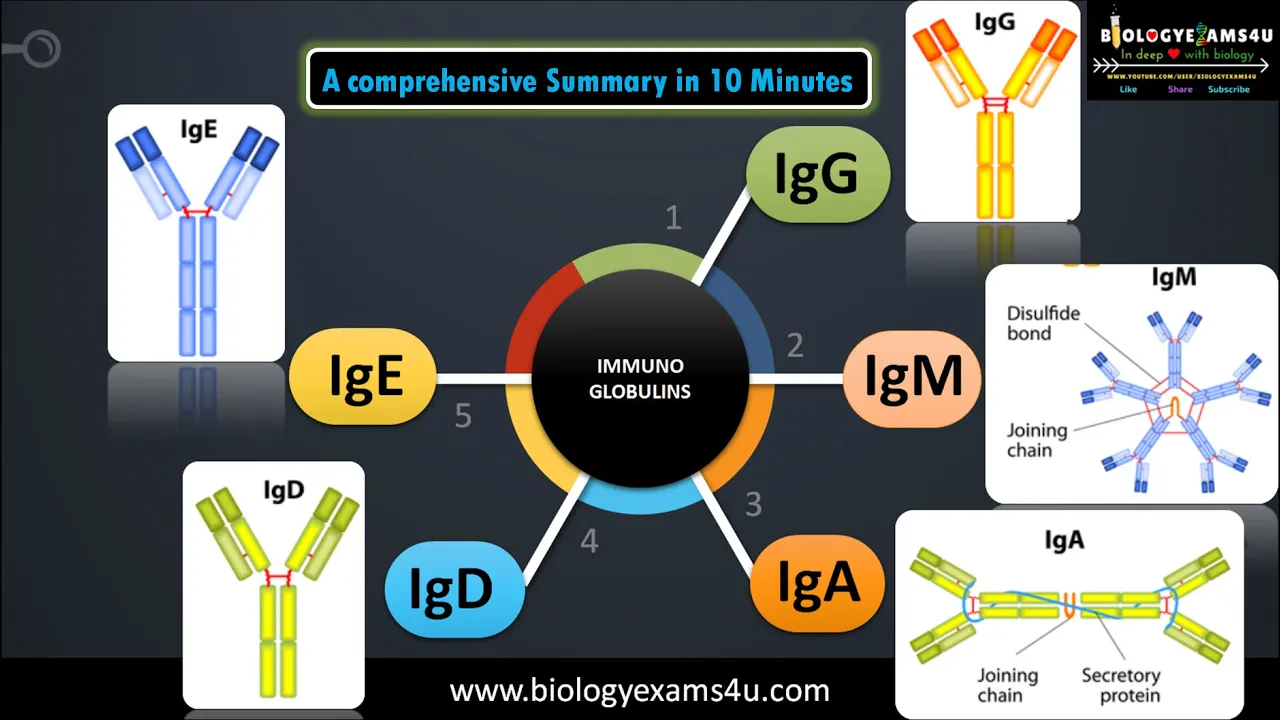
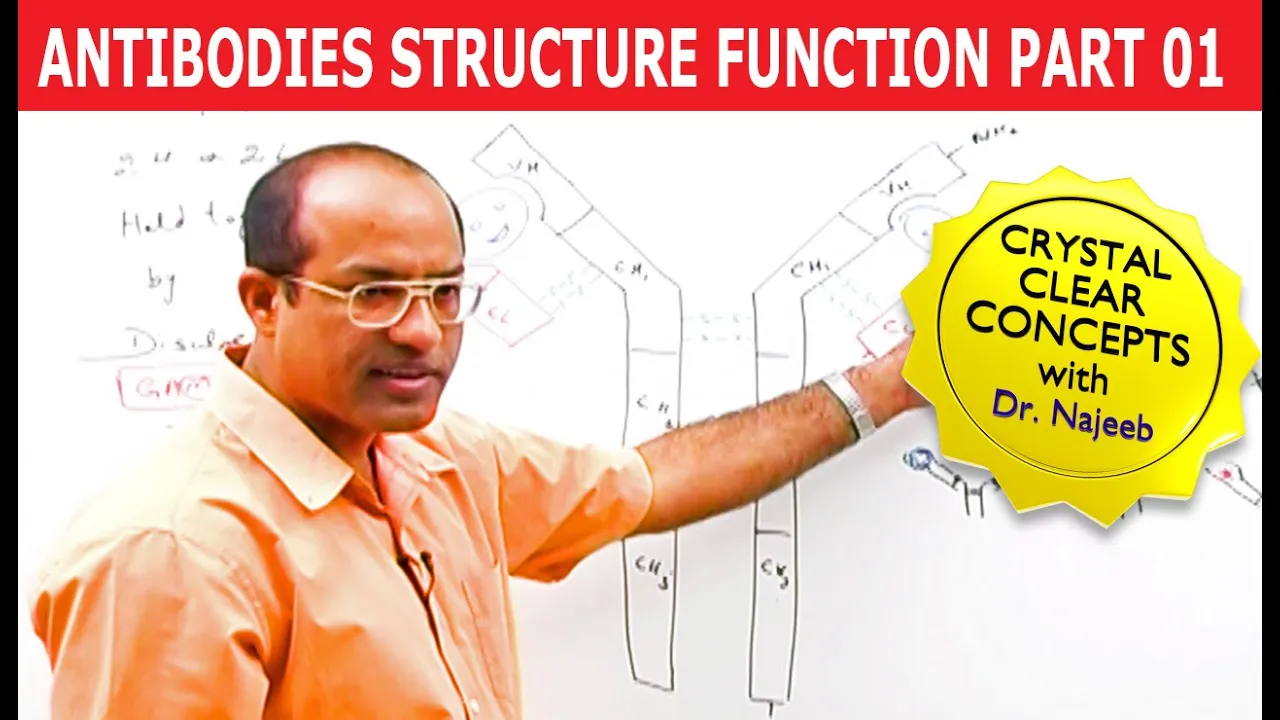





Antibodies (immunoglobulins) are Y-shaped glycoproteins composed of four polypeptide chains—two identical heavy chains and two identical light chains—connected by disulfide bonds; each antibody contains two antigen-binding sites formed by variable regions (VH and VL) that include three hypervariable regions called Complementarity Determining Regions (CDRs), with the constant regions determining antibody class (IgG, IgA, IgM, IgD, IgE) and the hinge region providing flexibility for antigen binding.
Antibody Structure Explained: Heavy & Light Chains | Immunology
Added:Basic protein structure, including polypeptide chains, folding, domains, and the role of disulfide bonds in stabilizing quaternary structures.
The fundamental distinction between the innate and adaptive immune systems, particularly the role of B lymphocytes (B cells).
The basic concept of an antigen as a foreign substance and the general purpose of the immune response to neutralize it.
The central dogma of molecular biology, specifically how separate genes can encode different polypeptide chains that assemble into a single functional protein.
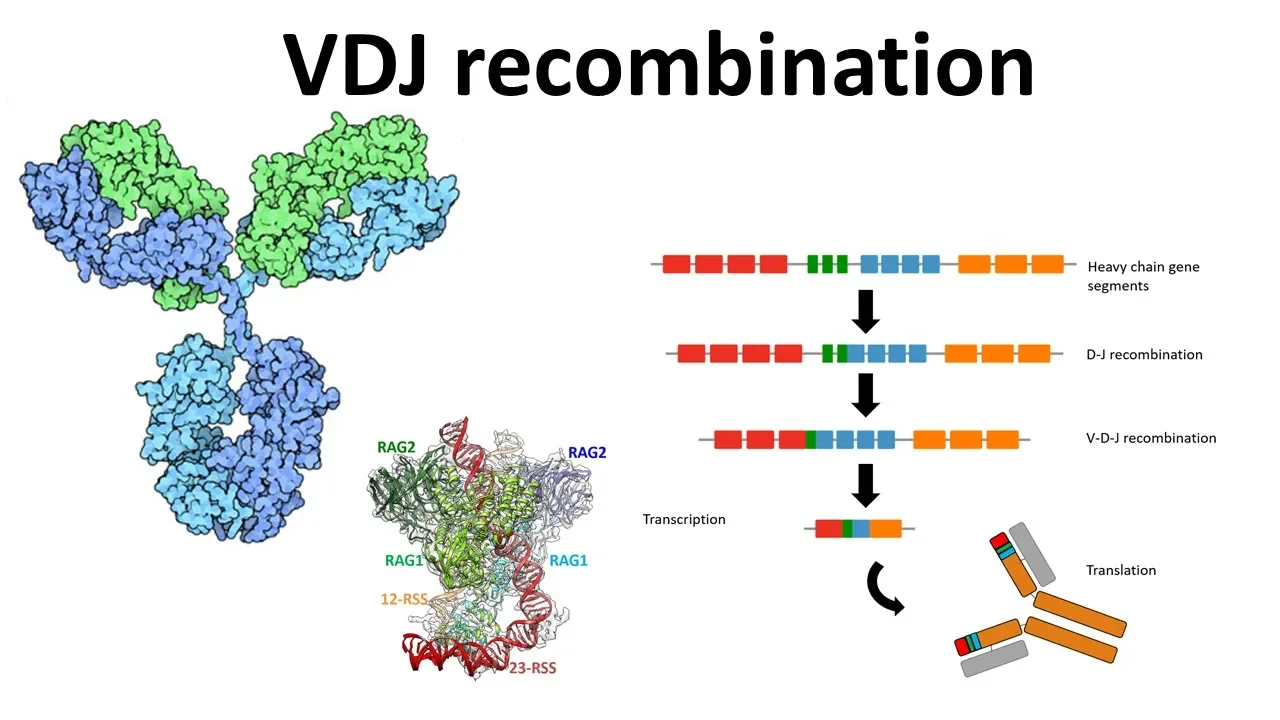
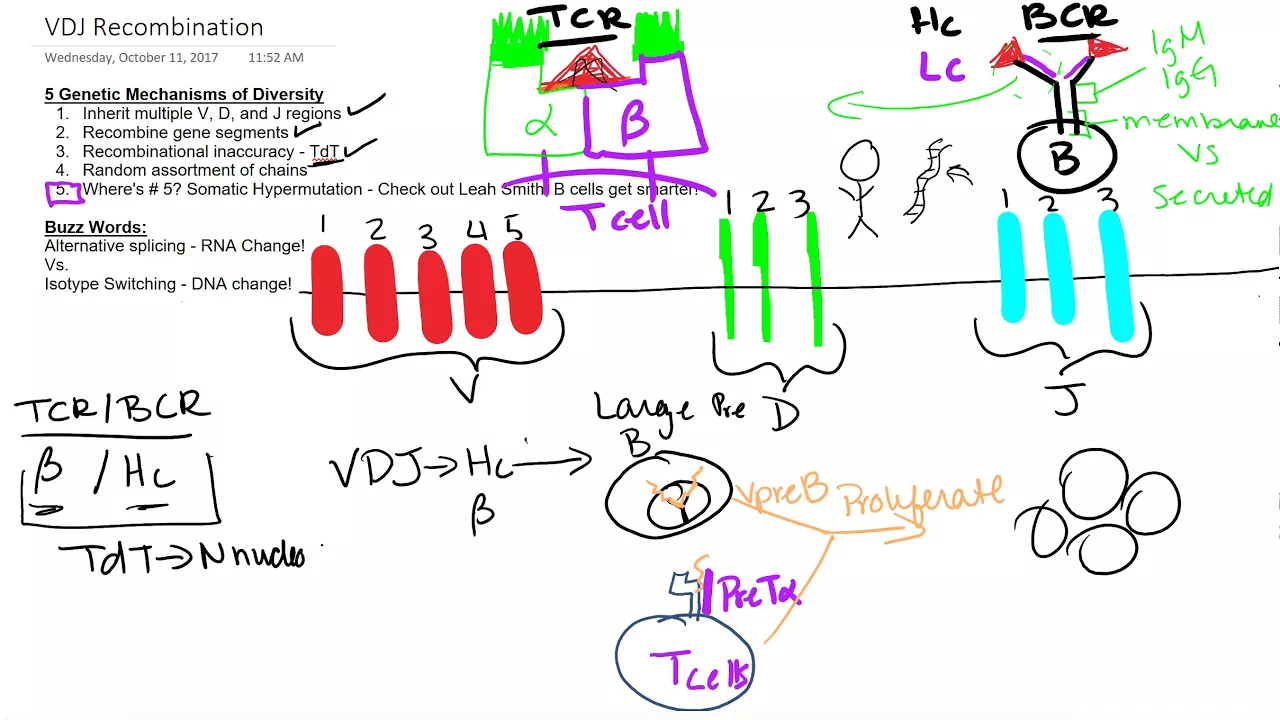
The genetic mechanisms of V(D)J recombination that generate the immense diversity of variable regions and CDRs.
The structural and functional differences between the five classes of immunoglobulins (IgG, IgM, IgA, IgD, and IgE).
Antibody effector functions, including how the constant (Fc) region interacts with immune cells to trigger opsonization, complement activation, and ADCC.
The clinical and biotechnological applications of antibodies, such as monoclonal antibody therapies, ELISA, and western blotting.
187.7K views3.5Klikes13:45Original Release: 2017-06-07
[Music] in the last few lectures we covered cell mediated immunity which involves t-lymphocytes cell mediated immunity fights against intracellular antigens they kill infected cell tumor cells Etc but there are many pathogens which multiply in the extracelular spaces of the human body these extracellular spaces are protected by B lympocytes which are responsible for humoral immunity in this video lecture we will understand role of be lympocytes in the basic structure of antibody B lymphocytes originate in bone arrow and they also complete their maturation in the bone marrow after the maturation stage these cells are released into the blood they keep recirculating between lymph blood and secondary lymphoid tissues when these mature b cells recognize specific antigens they get activated this recognition occurs via specific receptors present on B cells which are known as B cell receptors once activated these B cells proliferate and differentiate into affector B cells and memory B cells affector B cells are known as plasma cells which are antibod secreting cells they produce and secrete antibodies specific to the antigen recognized by the B cell antibodies are glycoproteins the basic structure of antibody resembles y-shaped molecule having two antigen binding sites and a stock known as FC region these antibodies circulate in the lymph and blood from there they reach the site of invasion by the pathogen they bind to the pathogens or antigens end activate defense mechanisms that lead to the destruction of the pathogen antibodies are also known as immunoglobulins this is because they belong to a group of glycoproteins known as globulins the term immune reflects that these glycoproteins play major role in immunity the basic structure of all antibodies and the structure of B cell receptors is same so B cell receptors are also immunoglobulins the difference is that B cell receptor is a membranebound imunoglobulin whereas antibodies are secreted immunoglobulins let us now study the basic antibody structure all antibodies have a same core structure it consists of four polypeptide chains two identical heavy chains designated as H chains and two identical light chains designated as L chains as you can see here heavy chains are the longer ones and light chains are the shorter ones the term heavy and light refers to their molecular weights heavy chains have more molecular weights than light chains now since these are polypeptides the N terminal of this polypeptide chain is present at the tip end C terminal is present at the base of each polypeptide chain as you can see in this image these chains are assembled into a y-shaped structure each light chain is connected to a heavy chain via a disulfide bond here this yellow line is representing a disulfide bond Bond the heavy chains are connected to each other via two disulfide Bonds in the mid region besides these disulfide bonds a number of non-covalent bonds are also present which keep these chains together the mid region of antibody has considerable flexibility this region is known as the hinge region the main advantage which this region provide to a antib body molecule is the ability to adjust to different spatial Arrangements of antigens or epitopes in other words hinge region make possible the rotation and bending of antibody molecule the stock of this y-shaped antibody molecule is the stem region also known as FC region to each heavy chain short carbohydrate chains are attached these carbohydrate chains serve many additional functions such as increasing the solubility of imunoglobulin before going into further details of antibody structure let's have a look what we have studied just now these are the two identical heavy chains and these are two identical light chains each light chain is attached to a heavy chain via a disulfide bond the two heavy chains are linked to each other via two disulfide bonds mid region is known as hinge region and this is the stem or FC region short carbohydrate chains are attached to each heavy chain here you can see how 3D structure of antibody looks like let's study more about light and heavy chains light chains as we said before these are the two shorter subunits of basic antibody molecule each light chain has a molecular weight of about 25 kilodaltons and each contains about 220 amino acids in humans there are two types of light chains Kappa chain and Lambda chain they are similar in structure and function but they are coded by different genes Kappa chains are encoded on chromosome 2 and Lambda chains are encoded on chromosome 22 it is important to note here that each antibody molecule produced by AB cell will either have Kappa or Lambda light chain but never both in humans six 0% of light chains are Kappa and 40% are Lambda heavy chains heavy chains are the longer subunits of the antibody structure each heavy chain has a molecular weight of about 50 to 70 kilo dotons and each heavy chain contains about 440 amino acids there are five types or classes of heavy chains in humans all encoded on chromosome 14 these five classes are designated by lowercase Greek letters gamma Alpha Mu Delta and Epsilon they are also written as g a m d and e respectively each light and heavy chain contain two distinct regions variable regions and constant regions variable region refers to the first 110 amino acids of the end terminal region in each heavy and light chain these regions are socalled because the amino acid sequences in these regions have great variability these regions are designated as VL in each light chain and VH in in each heavy chain it is the variable region of a light chain and a heavy chain which together form the antigen binding site so there are two antigen binding sites in a core antibody molecule further the variability of amino acid sequences in these regions is localized within certain areas since these areas consists of variable amino acid sequence es these areas are known as hypervariable regions they are also known as complementarity determining regions abbreviated as cdrs this is because these regions together form a structure which is complementary to the shape of specific antigen Bound by the antibody let's say this line is representing first 110 amino acids in the variable region the cdrs are represented by blue color scientists have found that there are three cdrs in the variable region of each chain these are designated as cdr1 cdr2 and cdr3 the intervening sequences between cdrs or hypervariable regions are known as framework residues these intervening sequences have restricted variability now as you can see here the cdrs are the regions which actually interact with its specific antigen or in other words they form the antigen binding site these cdrs are brought together when the antibody molecule folds into its native conformation in this image the three blue color lines in each light and heavy chain is representing the cdrs so now we understand that antibodies can recognize diverse types of antigens because of these hypervariable regions the region beyond the variable region of both heavy and light chain is known as constant region they are socalled because the amino acid sequence in these regions shows little variation among antibodies there is a single constant region in each light chain which is designated as CL now recall that light chains are of two types Capa chain and Lambda chain These Chains differ from each other by minor differences in the constant region of light chain constant regions in heavy chains vary form 3 to four this depends on the antibody class and it is the constant region of heavy chain which forms the basis of this antibody class ification in a particular class of antibody all antibodies have almost same constant region but constant region of one antibody class is different from the another class the constant regions of the heavy chains are designated as ch1 ch2 ch3 CH4 starting from the end terminal of the chain finally each variable and constant region in an antibody molecule also has at least one dulfi Bond these are internal disulfide bonds [Music] [Laughter] [Music] [Music]
Up Next
13:43
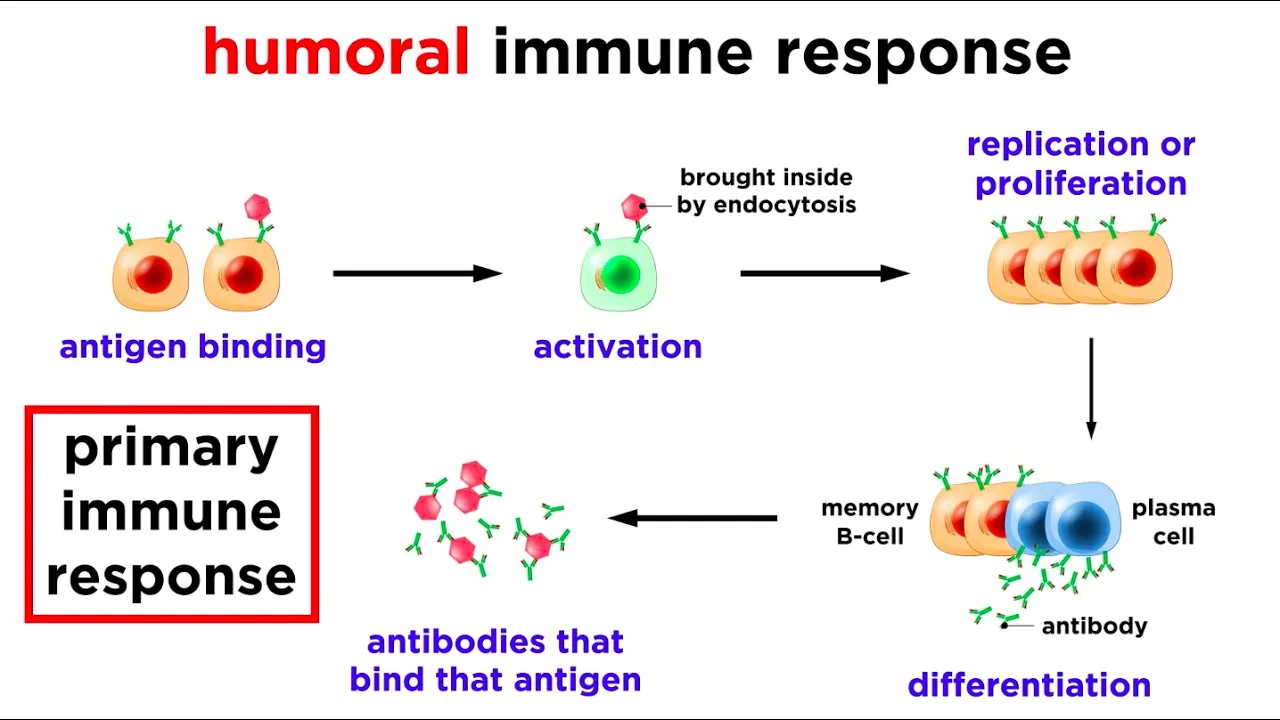
Innate vs Adaptive Immunity: Immune System Explained
@ProfessorDaveExplains
599.5K views•2019-04-25

50:12
Bacterial Communication: Quorum Sensing and Biofilm Formation Explained
@JHUAAP
12.6K views•2011-06-28

5:35
Enteric Nervous System Explained: The Gut's Brain | Neurobiology Lecture
@alumniu6029
438 views•2018-09-12
7:08
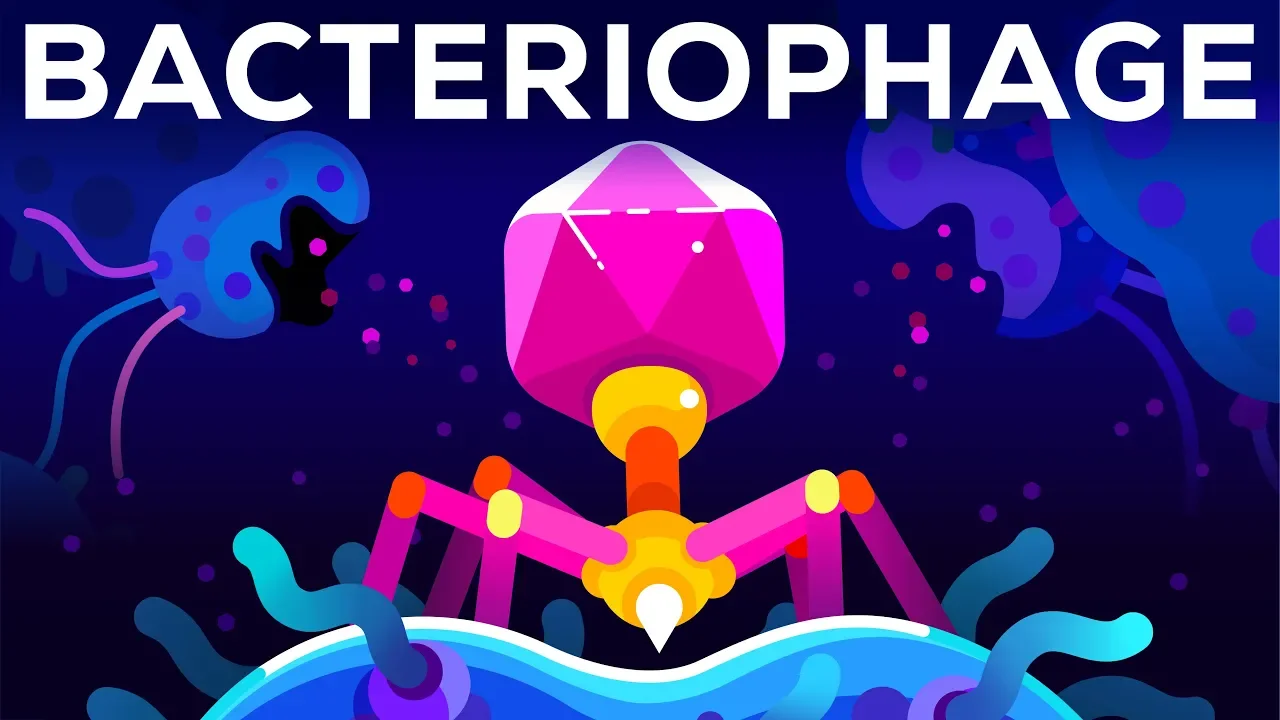
Bacteriophages: Earth's Deadliest Killers and Future Antibiotics
@kurzgesagt
34.6M views•2018-05-13
Related Study Plans & Knowledge Roadmaps
Structured learning paths in Biology
biology
RNAi: Biogenesis, RISC & Gene Silencing
01Molecular Biology Foundations: DNA to Protein
02Introduction to RNA Interference (RNAi)
03Molecular Biogenesis of miRNA and siRNA
+ 2 more learning modules
10h5 modules
Explore Roadmap
biology
Mycorrhizae: Signaling, Biophysics & Ecology
01Foundations of Mycorrhizal Symbiosis
02Molecular Signaling and Root Colonization
03Biophysics and Bioenergetics of Nutrient Exchange
+ 1 more learning modules
11h4 modules
Explore Roadmap
biology
Circadian Clocks: TTFL, SCN & Periphery
01Foundations of Molecular Biology & Gene Expression
02Introduction to Chronobiology and Actograms
03The Core TTFL: Molecular Architecture of the Clock
+ 3 more learning modules
14h6 modules
Explore Roadmap
biology
Population Genetics: Math, Drift & Selection
01Genetic & Probability Foundations
02The Hardy-Weinberg Principle and Baseline Models
03Mathematical Modeling of Natural Selection
+ 3 more learning modules
18h6 modules
Explore Roadmap