















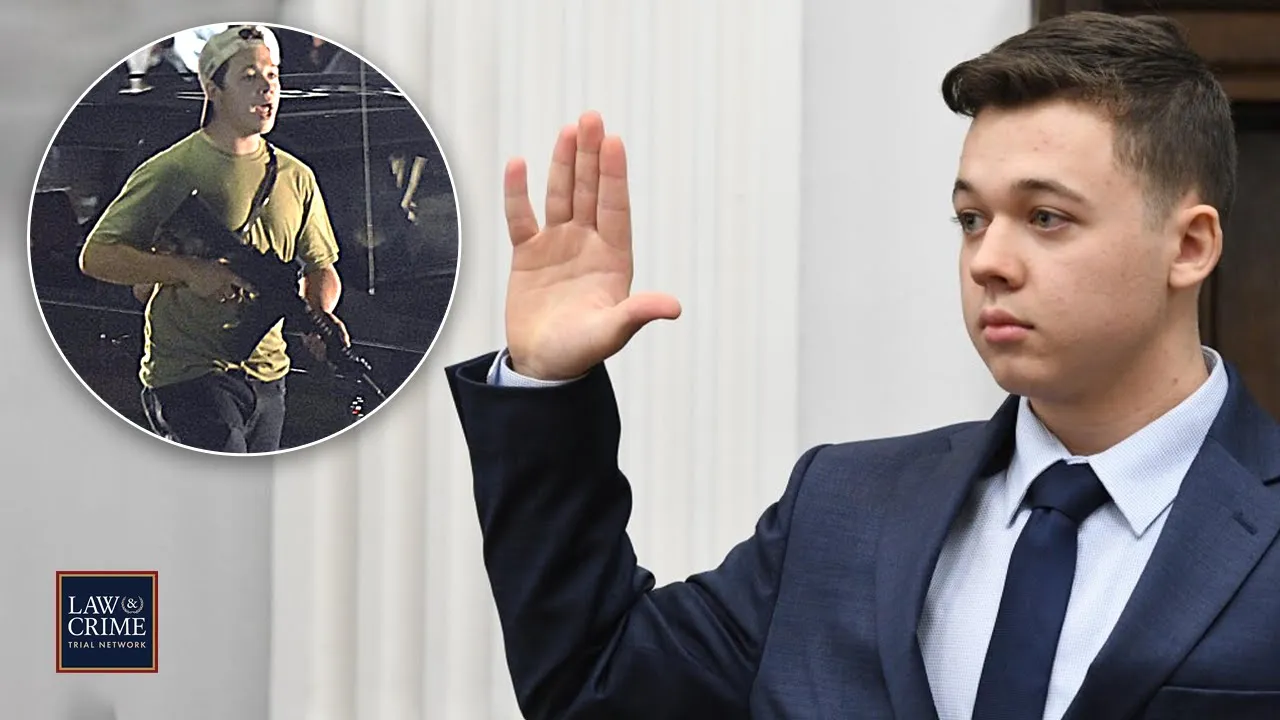
Self-defense law requires five essential elements that must all be satisfied for a defendant to successfully claim self-defense: (1) Innocence - the defendant must not have provoked the confrontation; (2) Imminence - the threat must be immediate and present, not future; (3) Reasonable belief - the defendant must genuinely believe they face death or serious bodily injury, and this belief must be objectively reasonable; (4) Proportionality - deadly force can only be used in response to deadly force, not non-deadly force; (5) Avoidance - in most jurisdictions, the defendant must have no opportunity to safely retreat before using deadly force. Tennessee is a 'stand your ground' state, meaning no duty to retreat, but this privilege can be lost if the defendant is committing a felony or qualifying misdemeanor. The case of Chud the Builder (Dalton Etherly) illustrates these principles, where the key legal questions involve whether he provoked the fight, whether the threat was imminent, whether his belief of danger was reasonable, and whether his use of deadly force was proportional to the threat faced.
Chud the Builder Shooting: Legal Analysis of Self-Defense
Added:Hey, hey, hey gang. What is going on? We are doing some legal analysis tonight.
We are going to be hanging out with the Crucible crew. Hey, what's going on Doritus? Hey, what's going on Twiggy World Radio Wthram? Draco Irain. Oh, you've got some questions.
Yeah, it's all about the 90, buddy.
Greetings and salutations to Vian Twiggy. Hey, man. Good to see everybody in chat. What's up, Sam Josh? We are going to be doing some legal analysis tonight. Let me turn that banner off.
Uh, gonna be talking some Chud the Builder. Some Chud the Builder. And if you guys don't know, if you guys don't know about Chud the Builder, this is going to be interesting for you to learn because this is going to be when this goes to trial, I think there's going to be um cameras in the trial and this is going to be a real big deal. People are going to be talking about this one. Um for sure people are going to be talking about this one. So, let's um do a little warmup on Chud so you guys know what I'm talking about when I uh I say we're talking about Chud the Builder tonight.
So, let me give you a little warm up.
This here is is Chud the Builder, otherwise known as Dalton Etherly. So, let's see what Dalton has been up to.
Viral video circulating online purports to show the chaotic aftermath of a racist streamer allegedly shooting a black man outside a Tennessee courthouse. Streamer Chud the Builder, whose real name is Dalton Etherly, shot the unidentified man during a scuffle on May 13th outside of the courthouse in Clarksville. According to the DA, who said Chud also accidentally shot himself during the confrontation.
>> All right, so key details so far. Uh he's a he's an IRL streamer. He does a lot of Hey, what's up Chipping girl. He does a lot of rage bait content uh which we'll get into. He shot uh somebody during a confrontation outside a courthouse in Tennessee. Um and during the conflict um you know he drew his gun and fired. He injured both himself and the other man. The 28-year-old has amassed an online following by filming himself spewing vile racial slurs, such as referring to black people as chimps and openly saying the n-word to get reactions. In footage captured by Clarksville now, Etherly could be seen tended to by first responders at the scene where he began streaming his interactions following the alleged shooting. Etherly can be heard blaming his gunfire on the other man who was black. According to witnesses, saying the man confronted and threatened him over his vile online content, >> he said, "You start saying all that chimp out to me, I'mma hit you." He hit me, started wailing on me. Even after I had to defend myself by shooting him, he's still wailing on me.
>> Elsewhere in the 16-minute clip, the streamer can be heard asking authorities if he shot himself amid the scuffle, noting a graze on his arm. The victim was medically evacuated and is recovering in stable condition.
Officials said the mustached antagonist was supposed to appear at the court for a civil case over unpaid debts, which comes just days after he was arrested for allegedly refusing to pay a $400 restaurant bill, even after he polished off his entire meal. Following the shooting, Etherly was booked into the Montgomery County Jail, while the local sheriff's office vowed those responsible would be held accountable to the fullest extent of the law. Eitherly has been charged with attempted murder, employing a firearm during dangerous felony, aggravated assault, and reckless endangerment with a deadly weapon.
Okay, so that's kind of like the long and the short of it. I like that video because it gives a um it it it's a uh you know it gives a good summary of what the what this is all about. Um so what do we know about Chud the Builder from that video and in general?
Chud is a guy who does um rather provocative online content. He's been banned from basically every platform because he's an IRL streamer and his key content is that he goes up to black people and um he basically says like, "Hey, are you into free speech?" And normally they say, "Yeah." And then he's like, "Oh, are you into white guys who use?" And then he drops a hard R. And if they say that's fine, then he dabs them up and he's friendly. But if they don't, then normally some kind of altercation ensues. Um and um a as is often the case with rage bait content, it can get out of hand.
Now, in this case, he went up to a man named Fox, um Joshua Fox, and we don't know what was said. This happened outside of a a courthouse in Tennessee.
We have no idea what was said. It could have been that Chud said something that was quite provocative. It could also be that Chud didn't say something quite provocative. We do not have that information. Uh, however, at some point a fight broke out. Now, another interesting question is, did the fight break out as Chud was leaving, as Mr. Dalton was leaving, or did it break out as they were talking? Maybe when the provocative stuff, if it was said, was said. We don't know. A fight breaks out.
During the fight, Mr. Etherly removes his firearm and fires his weapon, hitting Mr. Fox, I believe, five times and himself at once.
Could be six, but I think it's I think it's five in one. Shoots himself in the arm. Now, shooting yourself in the arm is pretty consistent with it being uh like to shoot yourself in an arm, you probably are in a wrestling match, right? Like you wouldn't shoot yourself in the other arm if you were drawing and shooting. This is probably probably a wrestling match, but we don't know. So, The question is going to be not did he shoot Mr. Fox. He did. We know he shot Mr. Fox. There's no question. There's no real question as to whether uh Mr. Eully shot Mr. Fox. And I He's not going to contest that. He's going to claim self-defense.
And in order to claim self-defense, there are basically five pillars of self-defense that you have to you have to cover. You have because the way this works, the prosecution has to prove you're guilty beyond a reasonable doubt.
You make the affirmative defense of self-defense and then the prosecution has to prove that you didn't have self-defense. But self-defense has five pillars. So if they can disprove even one pillar, they disprove your self-defense defense and it fails and then you're kind of screwed because you already admitted you did it. So what are the five pillars? And this is common in basically all jurisdictions. Yeah, this is a this is um so the five pillars are innocence, imminence, reasonable belief, proportionality, and avoidance.
So what does that mean? Innocence, you can't be the one who started the fight.
You can't go, you can't be the one who started the fight because if you started the fight, you don't get to claim self-defense when it escalates. That's kind of rule number one. What's the second one? Imminence.
There has to be a threat to you, to your life. And to use deadly force, it has to be a threat of, you know, death or seriously body serious bodily injury.
And it has to be imminent. Has to be right around the corner. Can't be they threaten me in a week or a month or a year. It has to be right now. imminence.
Third, the reasonable belief. You have to have a reason. Your belief that you are under threat of death or serious bodily injury has to be reasonable both objectively and subjectively.
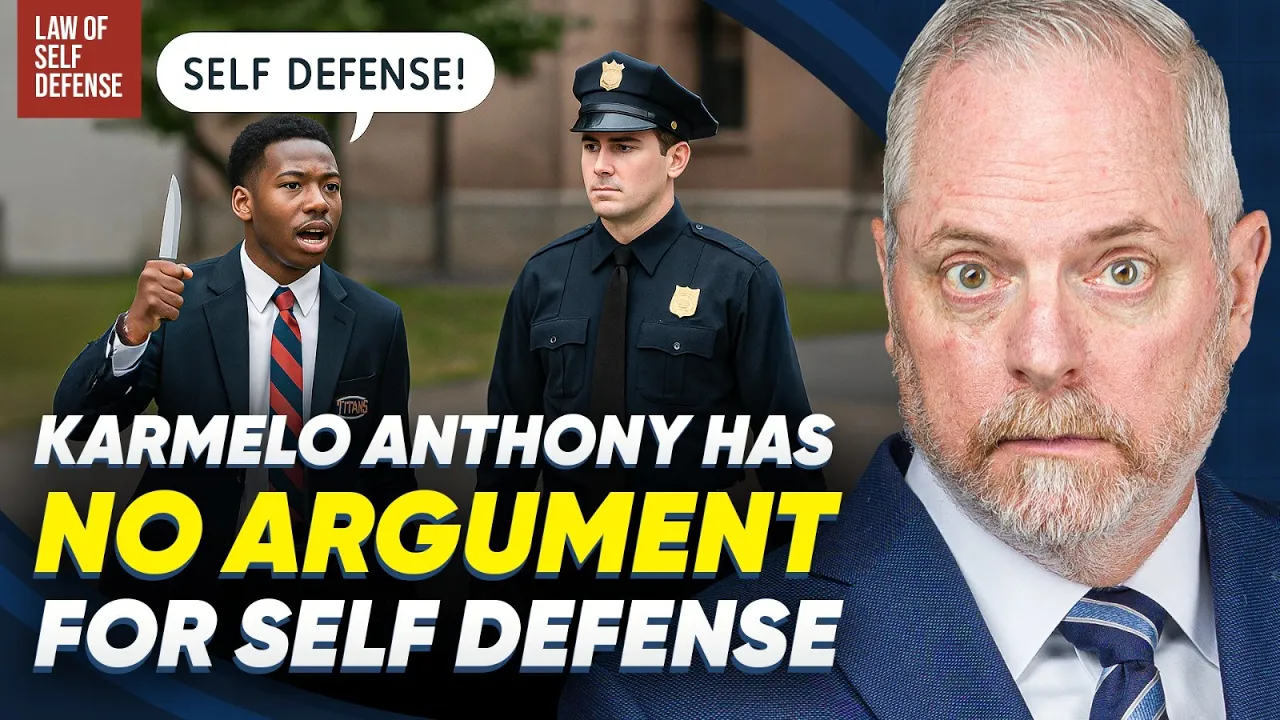
And then proportionality. You can't use deadly force in response to non-deadly force. Uh this was the Carmelo Anthony issue where he used deadly force in response to non-dely force. If you're going to use deadly force, the force that is being used against you has to be deadly. And avoidance. Um, in most states you have a duty to retreat. If you can safely retreat instead of using deadly force, you should. And therefore, you can't use deadly force uh unless you have retreated if it was possible for you to do so. That said, in Tennessee, it's a stand your ground state. So, there's no duty to retreat, but you can lose the benefit of the no duty to retreat statute, which is something we're going to talk about a little bit later on. So, that's the that's the basics of self-defense law.
Now, it varies a little bit from jurisdiction to jurisdiction. Um, and we've we've talked about this a bit in the context of um Renee Good and Alex Prey, a little bit in the context of Carmelo Anthony. I'll be doing um Carmelo Anthony with Wilfford Riley tomorrow. So, we'll be covering the Carmelo Anthony case um both uh from 6 to 8 on a on an X uh on an X spot, I guess they're called spaces, an X space with Wilfrid Riley and I will endeavor to um stream the X space so that we can uh have a record of that on our end, too. And then at 900 PM tomorrow night, I'm gonna be going on Wilfred's um I'm gonna be going on Wilfred's podcast.
So I'll be streaming that as well to do more Carmelo Anthony. So we'll be double dipping Carmemelllo Anthony tomorrow night. Uh but that should be a good time. I always enjoy talking to Wilfred.
Uh and he's a great follow on X. So that should be good.
Chapingro with gift in a membership.
Thank you my friend. Really appreciate that. and you turning the chat green given people the benefit of the memberships. By the way, I hope it doesn't echo. I think I solved the echo issue. I think it's only when I have the screen share up. But um what do we think of this as a new asset?
I think this is a good new media asset.
Let me know what you think.
>> Talk about am I am I blacklisted or are you stalking me? What's going on here, brother?
>> I'm stalking you and you're blacklisted.
I'm stalking you and you're blacklisted.
It It's uh It's the Destiny way. It's the Destiny way. He's both stalking me and I'm blacklisted. So hopefully that didn't give you the double tap echo that we've had sometimes in the past. Um Malovich, hey Ryan, playing devil's advocate. Could you argue proportionality with written house v Rosenbomb? Well, you certainly can argue it, but you you'd lose. Uh because if you remember in the Writtenhouse case, he was running away. He was struck in the back of the head. I think it was with a rock or a skateboard. He fell to the ground and then they were reaching for his firearm and he has to assume they're going to shoot him once he they disarm him. Right? So, uh proportionality does not require like to like. It's not like I can't use a gun unless you have a gun. It's deadly force to deadly force. A fist can be deadly force, right? The problem in the Carmelo Anthony case is that the only force was a shove. A shove is not deadly force.
But if I have you down and I'm doing like a UFC style ground and pound, my fists are now deadly force. It's all context specific. It's all context specific.
Amplifox, do you think if he provoked but made an attempt to flee after, that would be considered deescalation enough to regain self-defense? It's very, very context specific. Amplifox, let's say he said something really provocative and then he turned around and said, "I don't want to fight you." and walked away.
That probably would be deescalation. And then it would, if another fight broke out, that would be a separate analysis, right? The provocation's gone. On the flip side, I've seen some of Chud the Builder's content and what he likes, what he often does is he says something inflammatory and then he turns around and puts the selfie stick up and he's filming them behind him and while he's walking away and they're mad, he starts saying stuff like, "Don't chimp out.
Don't chimp out. Why you chimping out?"
Which is obviously continuing to provoke them. So, the provocation hasn't ended in that case. Which one happened? We don't know.
We just don't know. We don't know. So, it could be the case uh that this provocation um either never happened or terminated and he tried to end the encounter such that he was deescalating.
On the flip side, it could also be the case that he was provoking or continued to provoke while he was walking away. We just don't have that evidence yet. Um so, we'll have to see. We'll have to see when it goes to trial. This is why this trial, unlike the Carmelo Anthony trial, which I was saying was kind of legally uninteresting because it it the testimony seems so cut and dry from what I've heard. This one really could go either way. I'm not saying I know how this should go. I don't have a read on how this should go yet because I just don't know the evidence well enough and none of us do. We'll have to see how the trial goes and hopefully we get cameras in the courtroom.
Psycher Carrick with the five re-watched you and Dev. He really backpedalled on having no limits. And you know he's lying. He believes no limits. He just doesn't want to look crazy. Wild. I couldn't believe he admitted that in like the first couple minutes. Like what a lunatic. I mean that that's such a crazy thing to admit. By the way, by the way, can we talk about this for a second?
Can we can we talk about this [ __ ] for a second? Because Wick's all a ghast, right? like, "Oh my god, Dev called for political violence."
And you know, Wick has Dev on his show tonight.
Wick has Dev on his show tonight. How mad could he be? Right. I It's just, you know, it's it's funny. Like I I guess people can just say that they're into political violence and nobody gives a [ __ ] Truth Revolt TV4 $4.99. I'm stalking you and you're blacklisted. What Wick says when he goes on dates.
Oh, well played. Well played. Yeah, I think this is gold. I I'm going to get a lot of mileage out of this. Every time Destiny tries to call into the am I blacklisted or are you stalking me?
What's going on here, brother?
>> I'm stalking you and you're blacklisted.
Oh, strange little man. Delta sword 1994 gifted in a natural law membership.
Thank you, my friend. Appreciate you and appreciate the support. Uh, pass out those memberships. Get your flee toy.
Get your golden cups. Get your amp. Get all the good things that make you feel good about your natural law membership.
Got to get that green name. Got to get that eagle. gotta feel good about supporting your channel. So, um, yeah.
So, it should be a cool stream tonight.
I'm looking forward uh to ex to doing some Ch the Builder coverage tonight.
So, what else can I tell you about this case? Because this is good. This warms me up for talking to Andrew. This warms me up for talking to Andrew. Um, what what else would be useful for you to know about this case? Well, one problem that Chud the Builder is going to have is that Chud has very provocative content. He has very provocative content. Now, here's why this is going to be a problem. Like, I I I'm not going to show you his content, his kick, his like streaming, because uh quite frankly, I value my channel and there's no way I can share his content. But here is a post he has. This is from his uh ex account.
He wrote, "Serious finale is dead chimp on the pavement and you monkey monkeys rioting when I walk free. Stay tuned."
Now, I don't think you have to be a lawyer to think to yourself, how would this play with a jury?
Imagine this guy's on trial for shooting a black man and imagine this gets into evidence. How would this tend to make the jury feel?
I think the I think it's a rhetorical question, right? Like you're for sure for sure. And by the way, that's not even like the worst thing on his social media. So, his social media is very provocative and would tend to make the jury side against him. It would tend to make the jury side against him.
Now, um I'm not an expert in Tennessee law, but most courts most courts use uh the same standard that they use in federal courts. So, by the way, this is a federal standard.
It's um it's not the Tennessee standard.
So, I'm not telling you this is the Tennessee standard. Please don't get that confused. But this is rule 404 in federal courts. And most states do something similar for this. Right? And it says prohibited evidence, character evidence, evidence of a person's character or character trait is not admissible to prove on a particular occasion that the person acted in accordance with that character or trait.
What does that mean? Well, that means you can't introduce evidence that a person has a character trait to show that they generally do that thing. Like if I'm trying to prove that you are a murderer, I can't just introduce evidence that you're generally angry, right? Because why? It'll make the jury prejudiced against you, but it doesn't prove that you did this murder.
Similarly, Chud the Builder is generally provocative, but you can't just introduce evidence of him being generally provocative in order um you can't just be generally provocative in order to prove that the person was provocative on this instance on this day. So hope hopefully for Chud, his defense attorney is going to be able to limit the amount of social media stuff that gets into the jury. He might, but that's going to be a fight for sure.
That's not going to be the prosecution is definitely going to try to get it in for sure.
Sam Josh with the two bucks. Thanks, buddy. What is the legal definition of fighting words? It actually doesn't matter. Um, let me This is a common misconception.
The first amendment protects your right to free speech and fighting words is a doctrine within the first amendment context. The first amendment is irrelevant to this case. Completely irrelevant. Because the question here is not whether the government can criminalize Chud the Builder's use of slurs. The question is whether Chud the Builder has a self-defense claim and whether he provoked uh Mr. Josh M.
Joshua Fox is part of that self-defense claim. Now, you can provoke somebody without using a slur. If somebody came up to you at your your mother's funeral and called her a [ __ ] that would be very provocative. Maybe not a slur. They could they could not use the word [ __ ] could just say that she slept with a lot of people and was generally a woman of illreute would be very provocative. Um but not a slur. So the question here is whether uh whether Mr. Etherly provoked Mr. Fox, not whether or not his words are illegal. Now fighting words generally you can't make words illegal.
fighting words is an exception in the first amendment context which says that there are certain words that are so inflammatory that the state can make them illegal because they're fighting words. But again, uh whether or not the the state could make the slur illegal, which I don't think they can, is irrelevant because they didn't. The question here is about self-defense and provocation, which is totally different.
Totally different. So those are all um while culturally this case will have a first a a first amendment flare to it, the first amendment is not really relevant to um Mr. Mr. Affidan or his defense.
Psycher Carrick with the five. No slight against you, but I'm surprised Andrew didn't turn to Andrew Brana. He's the man for these sort of talks. Andrew Brana does incredible, incredible work on self-defense. Uh his YouTube channel is awesome. Um he and I have we don't have a big relationship, but you know um we have a mutual respect and uh we've been complimentary to each other in DMs. I deeply uh support Brana's channel. And if you are interested in self-defense law, I really encourage you to go look at Brana's stuff. Brana's great. Uh Brana, I think does almost purely self-defense on his channel. So, he would be a he would be a definite person to watch if this is a topic of interest to you. Um, and he does self-defense day in day out. He's got a book on it. I think his law practice, if I recall correctly, is exclusively um the law of force and self-defense. So, he's uh he would be a wonderful person to check out.
That's a great idea.
That's a great idea.
Let me hit up. Um, that's a great idea.
Holy [ __ ] that's a good idea. Let me hit them up.
Let me hit them up because that would be very cool.
Uh, let me see what All right, hold on. Uh, all right. A little technical issue. I'll I'll do it after stream. I'm not going to not going to fight the tech while I'm streaming.
I've learned this lesson. I don't have the skill set. I just don't have the skill set.
I just don't have the skill set.
Brian, you should cut down the clip to just Destiny's words. Oh, that's a good idea. Hold on. Let me Let me play it again. Let me play it again. Let me see.
>> Am I Am I blacklisted or are you stalking me? What's going on here, brother?
>> I'm stalking you and you're blacklisted.
>> That's a good idea. Maybe I should cut it down further. I like I like the idea.
I like the idea. It's such a funny clip.
Like he's so unself-aware that he's like that doesn't he doesn't think that makes him look like a [ __ ] idiot. Oh, good times. Good times. Good times.
I Raslam says, "Ron, I think it's worth clarifying those five pillars are not all deciding factors. For example, I could start a fight and still be justified in lethal self-defense. No, my words aren't.
Um, you you'd have to give me more context about that situation because generally speaking, if you started the fight, you don't have a right to self-defense.
Now, it's possible that there might be some corner case exception to that rule.
Like if you started a fist fight and the other person escalated to lethal self-defense and then you use lethal self-defense in response to their um escalation to lethal self-defense because they improperly escalated. That might be possible, but generally speaking, if you start the fight, you're wrong. Uh and you don't have the benefit of self-defense. Um, but I maybe there's something there's something on there that uh I'm unaware of. I just I'm just not sure what you're talking about.
Not sure what you mean, brother. Not sure what you mean.
Okay. All right. So, what else do we need to know about uh Mr. Etherly and his self-defense claim.
So, Mr. Etherly, these are just the facts that we are aware of now.
We know he went up to Mr. Fox.
We know he they said something.
We know a fight broke out. We know at least from the affidavit attached to the arrest warrant that at some point during the altercation, Mr. Etherly took a bladed stance, which means he turned sideways and reached into his jacket where his gun was. Now, there's testimony that people are saying says that um Mr. that uh that Mr. Etherly shot Mr. Fox before before he um he was hit, but I don't think that's what the testimony actually indicates. I think people on X are blowing it out of proportion. So, let me show you what I was looking at because this is breaking news today. This is um just in the last couple minutes. So, let me show this to you and let me I I'll explain to you how I understand it and you can tell me if you agree.
>> Happening now, the controversial online streamer known as Chud the Builder is making an appearance in a Nashville courtroom. Dalton Etherly faces three misdemeanor charges stemming from a May incident at Bob St. And >> he so he's he's actually under arrest for two different things at the same time. There's the shooting and then he was also had an altercation at a restaurant where he got into a confrontation with the owners. He refused to pay. They kicked because they kicked him out uh and he got charged with theft of services and resisting arrest and disorderly conduct. So there's two separate uh court cases happening at the same time with him.
>> Chop house inside the Omni Hotel.
Investigators say Ether Lee live streamed inside the restaurant after staff asked him not to then refused to pay. Ether Lee also faces separate felony charges in Montgomery County for a shooting investigation. During Ether Lee's court appearance, one investigator on the stand recalled the shooting.
>> This is key because we got testimony from an investigator about the shooting.
Does this mean it's true? No. But it's evidence. It's testimony. So, let's hear what the investigator has to say.
>> Shots were shown being fired prior to them um hitting the ground.
>> He said shots were fired prior to them hitting the ground. Now, people on X are saying shots were fired prior to Mr. Etherly being hit. That's not how I understand that testimony.
Shots were fired prior to them hitting the ground is what I heard him say. Let me rewind that to make sure I got it right.
During Ether Lee's court appearance, one investigator on the stand recalled the shooting.
>> Shots were shown being fired prior to them um hitting the ground. Okay, that I definitely heard it right. So, this shots were fired prior to them hitting the ground. Here's why this is really important. If shots were fired prior to Etherly being hit, imagine uh, you know, Chud the Builder and Mr. Etherly and Mr. Fox are, you know, facing off.
Chud draws his gum and shoots before he even gets hit once in the face. That's hard to see how that's a self-defense claim. It's possible, but it's tough.
Now, on the flip side, they were grappling, right? There's video of them grappling, which I can show you again in a second. So, if they're grappling and the shots are fired before they hit the ground, well, that's different. That means they're in a physical scuffle, um, some people have said in terms of like with, you know, bystanders, there's been news reports, I don't know if they're true, but there's been news reports that Mr. Etherly was in a headlock because um Mr. Fox put him in a headlock. Now, if you're in a headlock and you think somebody's going to slam you onto the ground, that could be a lethal defense scenario. Not always, but it could be.
So, I don't I don't think this is I think people on X are misrepresenting this testimony. I did not hear him say shots were fired before he was hit. I heard him say shots were fired before they hit the ground, which is very different. Shots are being shown to have been fired prior to that.
>> Yes.
>> And how do we know that?
>> I can see or in the courthouse video it shows the casing ejecting from the firearm. It also shows the ricochet off the concrete plant.
>> Okay.
>> Prior to hitting the ground.
>> So Mr. Fox hadn't been hit at that point. Correct. If you're seeing a ricochet in one case, >> I would assume so.
>> I think that's why people are getting confused. They said Mr. Fox hasn't been hit, but that refers to the bullet. Mr. Fox hadn't been hit. That's why they saw ricochets. But Mr. Fox being hit by the bullet just means that it was shot later. Um this this does again I think this what this means is merely that um there was a scuffle and during the scuffle then you had a situation where uh they fell to the ground and before they fell to the ground that's when we had um the shots fired. Uh so let me show you what I mean by this again.
This is at the very beginning of this video from the New York Post.
Let's watch it again so I can show you what I mean. There's a little video at the beginning.
>> Viral video circulating online for ports.
>> See how they're scuffling right there?
There's one guy on another guy's back.
Now, I can't really see who's who. I'm not going to lie. I can't see who's who.
>> To show the chaotic aftermath of a racist streamer allegedly shooting a black man. See, so what they're saying if if what this testimony tells us, >> viral video circulating online purports to show the chaotic aftermath of a race is that there was a shot fired before they hit the ground. Right now, this is a pretty serious scuffle right now. This could qualify as a lethal self-defense scenario.
Can I tell for sure from this video? No, I cannot. I can't tell for sure. But it could be a lethal defense scenario. Uh because if you're in a fight where somebody's wrestling you to the ground, that could be the case where somebody could be trying to kill you. And there's no rule that says your hands and fists can't be lethal um implements. They they certainly can be. They certainly can be.
It's just context dependent.
Uh so KK, what's going on? How do more fighting words factor in here? They don't. Um, so fighting words is a first amendment doctrine and there's the first amendment is irrelevant to this case.
The only issue here that where the the kind of naughty words used by Mr. Etherly, if he used them, we don't have evidence yet that he did, we don't know.
But if Mr. Etherly was being provocative, where that would matter is that you lose your ability to make a self-defense argument if you were the one who provoked the fight. So if he provoked the fight with uh you know dropping the hard R as he is prone to do if he's the one who uh provoked the fight then he would he couldn't claim self-defense unless he deescalated but the fighting words doctrine won't matter. Now another thing that's interesting is that there's a there have been uh reports I don't know if it's true but there's been reports that say that um after Mr. Etherly spoke to Mr. Fox Mr. Fox chased after him and said, "I have PTSD." before he attacked him.
That certainly would make Mr. Etherly more likely to think that he uh would be justified in using lethal self-defense because if somebody says that they have PTSD and then they attack you, um it's hard to imagine. It's hard to imagine that they um they aren't serious about hurting you. That certainly is an that certainly certainly is indicative of the fact that they they might be there to uh do you death or seriously bodily injury.
Oh [ __ ] I missed a few. I missed a few while we were talking to here. Let me follow up.
World Radio 332 Destiny hate watching hate following Ryan on YouTube. the only subscription where you pay with your sanity and give me ad revenue.
It is a fact. It is a fact. Uh, you know, I don't I don't know how I feel about being hatewatched by Destiny, but that does seem to be the state of play.
We do seem to have a tiny stalker in our midst.
Uh, James Tubox, Destiny's blacklist is a form of Shringers's cat. I know. I I I feel like he uses the blacklist to avoid having to actually schedule a debate, you know, like he could schedule a debate. We could have a real prompt. We could have a real debate, but nah, he just wants to he wants to call into my shows and try to snipe me, you know?
That's that's uh that's more his style, whatever. You know, we we were trying to set one up on Modern Day Debate. He sent over a really bad prompt. I sent him back four or five. It might have been four. Four or five. I'm not sure. We were going through James at Modern Day Debate and then he was all crickets. He wanted to give me like um a TDS prompt where basically it was like the prompt was, you know, would you like me to yell at you about how bad Trump is for an hour and uh there's no actual prompt. I was like, no, that doesn't sound good.
I'll pass on that one, brother. But here's some prompts I would debate.
Wasn't interested. Wasn't interested.
World Radio 3 through2 with another five. Thanks, buddy. If he can't stand Ryan, why is Natural Law Channel his most consistent relationship? Therapy is cheaper, King.
That's really funny. That's really funny. Yeah, he's got a strange way of doing things. I work in Mont Gam from Montgomery County, Tennessee. This is not what Clarksville wants to be famous.
Yeah, I heard Chud was getting pretty famous in Tennessee. I heard people knew who like he was starting to he was starting to make some noise. I don't know if I don't know if you knew him, but uh you know the thing about I will say this though like the thing about ragebait streamers uh you saw this with Johnny Somali uh I don't know where he was. Where's Johnny Somal? He's in Asia somewhere, right?
Johnny Somali arrested. Where was he arrested? I should know this.
Oh, he was in South Korea. Yeah, he got arrested in South Korea. You know, I mean, like these guys who do the rage bait streams, they just it always escalates. It always escalates. They can't help themselves because they got to keep upping the ante, right? So, if you're an IRL streamer, and by the way, um, of all people, of all people, Fuentes, Fuentes was talking about this, um, and had a really based as [ __ ] take, which I, you know, I mean, I don't watch a ton of Fuentes, but I saw a clip come across, um, and I, I thought Fuentes was dead on where he was just saying like, look, uh, first of all, you know, running around and calling people arers is just not helpful to the right or the movement. It's just not like it just makes things worse. It's kind of like um how when you get like the random, you know, pink and purple-haired communist uh with like the truly like dear dear self, squirrel self pronouns. You're like, are you really helping the left or are you helping the right? You know, it run that's that's the vibe. Like it really does not help the right. And then the second part is um IRL streamers who are just like kind of drama farming, it always escalates because they've always got to make it crazier and crazier and crazier. Their content today has to be crazier than their content yesterday has to be and their content tomorrow has to be even crazier and have bigger drama and more provocation. So every time they uh they have a stream, they're gonna they need to up the ante.
And because of that, they tend to get in a lot of trouble. Eventually they say or do something that gets them in a lot of trouble. And that's the problem with um this genre, this kind of rageba genre.
It is what it is. But um you you can't be surprised when people in this genre find themselves on the wrong side of the law.
Yeah. foul actual. That's a good question. I I think in that case you are allowed to do it but let me check um because that's an interesting uh fact pattern.
And then the other person uses lethal force.
Can I use lethal force in selfdefense?
Um I I mean it's going to be state by state is the answer. Uh but um and I and by the way there's no reason to think that that's relevant to this fact pattern.
The question is going to be actually um foulmouth just to give you the policy considerations because I think the answer is um varies state by state and in some states the answer is yes and in some states the answer is no.
Uh, but here's the policy considerations. On one hand, you have what you're talking about. If I go and I start a fight with somebody, I'm like, "You bastard." And I punch him, and then he pulls out a knife and tries to stab me. Um, do I give up my right to self-defense? Uh, the on one hand, intuitively, the answer might be no. Of course, you can defend yourself. But here's the problem. Uh, you committed an assault, right? You hit him in the face. You started the fight. You committed an assault. So, you already committed a crime and typically speaking, you don't have a right to self-defense while you are in the middle of committing a felony assault on someone, right? Like the state isn't going to privilege you when you are in the middle of committing a crime in that way. So, those are the policy considerations. Like there's a kind of the intuitive point that you made, but on the other hand, uh self-defense is an exception where they say we're going to let you do violence in a way that we normally wouldn't let you. Why is the state giving you permission to do violence when you started the fight? That's kind of the the the other side of the policy coin there. 10 bucks from world radio. So generous tonight. Thanks, buddy. We've established Ryan's words cause actual damage to Pisco's emotional support doll. Ryan regularly uses our word reality, which hospitalized the doll.
He's still waiting on the arrest warrant.
Oh boy. That's good. That's good. I will say I will say this court packing arc has gone swimmingly. It's gone [ __ ] swimmingly because these bastards, they were setting up their little hug boxes and having their little debates and they were feeling so good about their syllogism and their ridiculous arguments and their propaganda. And then then the [ __ ] boogeyman showed up and ever since then, have they been having streams about, oh, what a good job we did. Have they been having streams about like, oh [ __ ] uh, you know, we went on Wick show and we [ __ ] these guys up. No. Endless cope streams. Endless [ __ ] cope streams.
Then Rob spends 11 hours picking Peace Go Apart. Endless cope streams. Endless cope streams. Oh my god. Endless cope streams.
Then I go on with Dev. Dev admits he has no limiting principles and supports using political violence against the right. Then he tries to walk it back, but that's what happens.
It goes so badly that Destiny jumps on.
Destiny, first of all, says that he's stalking.
>> Am I Am I blacklisted or are you stalking me? What's going on here, brother?
>> I'm stalking you and you're blacklisted.
So beyond the stalking um he then says he then says a bunch of absolute [ __ ] nonsense. He just gets caught over and over again just equivocating using random logic. At one point uh he he says, "Yo, you're using an example from the Civil War." And I'm like, "Be careful, man, because when we start talking about court packing, you're going to say that there's examples from the Civil War that you want to use. you sure you want to do this? He says, "Fine." He says, "Ah, it's a crazy you're using an example from the Civil War." We get to court packing. I He says, "Well, the course been packed before." And I was like, when? During the Civil War, like endlessly caught.
Endlessly caught. And as usual, as usual, he puts the [ __ ] triangles on his head.
And then rage quits because as is typical when he talks to me, he gets washed. He has no idea what he's talking about. It doesn't go well for him. And all he can do is drama farm and [ __ ] optics farm and clip farm and then quit.
Every time. Every [ __ ] time we talk, he gets washed out. He optics farms and then he quits.
His only other move is that he gets really animated and he talks for a long time and he tries to shift the goalpost.
like he'll try to pretend that my position is his position or he'll try to pretend I said something I didn't say and then I just have to correct him because he know he took crazy positions like he took the position that I was insane for saying that the Mitch McConnell Merrick Garland stuff was a norm violation but you know who else said that Pisco Josiah everybody everybody agrees it's a norm violation it's not even under it's not really disputed anybody who would dispute it would be on my side be on the right but like everybody on the left says it's a norm violation in fact it a norm violation is their argument. Then he said it was unconstitutional. Good luck with that, buddy. Good luck with that.
It's just not. There's no court authority on that. There's no Supreme Court juristp prudence on that. Nobody thinks it's unconstitutional. Of course, the Congress has the power to advise and consent. They can choose to not give consent. That's up to them. That's up to them. So, the whole thing, it's just a joke. It's a joke. He it it's a um truly embarrassing showing from him. And quite frankly, quite frankly, I don't know, man. Like maybe he he has like lesser opponents and that's why he does well, but he doesn't maybe he's just fallen off.
He doesn't seem He doesn't seem as sharp uh debate-wise as he used to. May maybe it's just um maybe he's just out of his depth. I don't know. Uh but he he doesn't seem as sharp a debater as he used to be. That's all.
That's all. But anyway, but anyway, so what else? By the way, very cool to see 147 people in stream tonight. Nice to see the community growing. That's awesome. Uh very much appreciate everybody here. Please do um like subscribe if you're new. This is a growing channel. We just started at the beginning of the year really like December is when the channel really started picking up. We're just getting ahead of steam. Subscribers are coming in. It's a growing channel. The community is growing. We appreciate all of you being here. Please do like, subscribe. Please do click the alert button so you know when I'm on. Join the Discord. come hang out with us. You know, it's uh it's very cool to see the community growing. Really appreciate it and really appreciate you. So, um wait, what?
What?
Are you trolling me?
Are you trolling me or is that a real thing?
Oh, okay. Now, let's see if the uh the AI function is up on Wick stream yet. Oh, it's not.
Uh I don't know that I'm going to walk through this whole thing without the [ __ ] AI function.
Did you have a time stamp for that? I'm not going to watch the whole [ __ ] thing without a without if I have the AI function um then I would hit that up, but uh I'm not I don't think the AI is live yet.
Oh, Wick's doing well though. I guess he um solidified himself within the Destiny ecosystem and his sub he's gotten about like a thousand subscribers in a month.
Good for Wick. Good for Wick.
Good for Wick. Oh, it was near the end of the stream.
Well, let's see if I can find it.
All right, I'll see if I can find it. I mean, well, K, I I appreciate that, by the way.
Like, I I think that's probably true.
That's probably true.
But let let me just be clear about something, K. Uh because like the other night on his stream, I covered this, you know, it's in one of the videos I had. He destiny did the following. He went he was watching a video of me and he goes, "I would never call for doxing. I would never call for doxing. I would never do that." even though he has done it, by the way, but I would never do that. But somebody should really find this guy's personal information and figure out if he's a lawyer and now his chat's visible on screen and you know I'm watching the video and what's what's all up in his chat? My personal information.
Now look, I use my real name so you know I it's not hard to figure my [ __ ] out.
It's really not. But um all I'm saying, Kay, is that like I don't I agree with you. I don't I think he's probably being hyperbolic, but you know, when a guy with like 800,000 subscribers, most of whom appear to be [ __ ] crazy, uh, says hyperbolic things about you, I I think that's worth knowing and paying attention to. I think that's worth knowing and paying attention to. Uh, you know, if he said that, that's something I think I should know, right? I mean, like, don't you think it would be worth knowing if somebody said that you should be killed? I think I think that seems like a fair thing for me to want to know if he said world radio the five. Would I believe Destiny would say that considering what he said doubled tripled down on on the slain firefighter at the rally? Then yes. I I think I mean that's the thing.
That's the thing. He's he's taken this position publicly. It's not like this is new. Uh it's new that it's about me. But yeah, I I I agree. I tend to agree.
Carlos gifting five memberships. Thank you so much, my friend. Thank you so much. Appreciate that. And you appreciate that. And you giving the memberships to people in chat is a big deal. It helps us support the stream. It gives people the most wonderful emotes in the business. Turns their name green.
Gives them the eagle. Supports the stream allin one. That's a big thing to do. I really appreciate that, brother.
Thank you so much. Thank you so much, Ryan. What do you think about removing a bunch of laws and putting them into an overarching law, like multiple laws in one, simplifying to enforce easier? Um, I think that we should remove most laws.
Um, it our our law books are jam-packed with old laws and old regulations. We almost never get rid of old laws. We just add new ones. It would be great for us to purge the law books and erase an enormous amount of law and start over fresh. Um, so I'd go even further than that. I think I think we have uh we have way too much stuff in the books right now. Way too much law. Way too many regulations.
Which F to Destiny is Wick?
The F of friendship. Of course. The F of friendship.
Of course. of course. And Carlos becoming a member, double dipping on his support. What is going on, buddy?
Splashing the pot with memberships, becoming a member, getting that eagle all for yourself. Holy [ __ ] Incredible.
Incredible. The support that we're seeing today. Incredible. Well done, gang. Well done. Really appreciate that.
Well, since we got a little bit of extra time, uh, since we got a little bit of extra time, there's some more Chud stuff of media I wanted to look at. So, let's take a look at this so I can prep for tonight.
This is I don't think there's any video.
This is just audio, I think, of um Chud's Chud tried to stream after the fight, and this is what he said. Now, of course, Chud's own comments, take them with a grain of salt, but this is what the man said.
>> Walked past him. He was sitting on the corner. I walked up to him because they they're pointing at me.
>> They're laughing. They're pointing at me. And I said, "What's up, guys? How y'all doing?" I said, "Y'all like the you like the new suit?" He said, "Walk away from me." I walked away from him.
>> He came back up to me. He literally said, "I have PTSD. I feel like I'm in He said, "You start saying all that chimp out [ __ ] to me, I'mma hit you." He hit me. started wailing on me. Even after I had to defend myself by shooting him, he's still wailing on me.
>> Now, can we This is an important hypothetical. Now, again, Mr. Etherly's comments about his own trial and his own situation, you should take with a grain of salt. He might not be telling the truth. But let's assume hypothetically that this is what happened, the way he described it. What did he describe?
He said he walked up to somebody, right?
They said, "Walk away from me." Why?
Probably they're aware of his content.
They're aware he's going to say something. He said, "Don't say that chimp out stuff to me." Right? Mr. Etherly didn't say that he said anything to the guy. Now, maybe Mr. Ether is leaving that out. But let's assume for the sake of argument that Mr. Etherly didn't provoke him, but the guy was triggered because he knows who Mi Mr. Etherly is. He knows that's Chud the Builder. He knows Chud the Builder says a bunch of racist stuff. So, he gets mad and when Mr. Etherly walks away, he says, "I have PTSD," chases after him, puts him in a headlock. Mr. Etherly draws his gun, shoots the the Mr. Fox during the scuffle shoots himself in the other arm while the scuffle's going on.
That sounds like a pretty good self-defense case. That's a pretty good self-defense case. If those are the facts, Chud's probably going to win.
If those are the facts, Chud's probably going to win. But now, let's play it the other way around. Just to show you the example.
Mr. Ether left something out. He goes up to Mr. Fox. uh calls him uh you know he drops the hard R on him calls him the n-word to his face Mr. Fox starts getting mad Mr. Eley starts saying don't chimp out don't chimp out the way he often does the guy says I have PTSD Mr. Etherly turns around but walks away but when he walks away he puts up his selfie stick he's filming he's filming Mr. briefly and he keeps saying all this inflammatory stuff.
Now, pretty good argument that he provoked the fight. Now, is there a rule? No. But the judge would probably, and of course, judges are different, but what the judge would probably do is let the jury decide based on the evidence whether that was so provocative that Mr. Etherly does not have a self-defense claim. Remember, if it's if he provoked the fight, he can't argue self-defense. And remember also that juries are full of normies, right?
Juries are not full of like internet warriors. Juries are full of normies. If you if you drop the hard R on somebody, chances are the members of the jury are going to look at that pretty a skew. So, there's a very real chance um if that happened that he loses self-defense and gets convicted.
Now, do I know which one happened? No, I don't. None of us do. None of us do. And that's the important thing to remember right now. Um we're just listening to Mr. Etherly's description of what happened, but we don't know what happened yet. And of course, my job here is just to give you guys the legal analysis. I'm not here to argue for Mr. Etherly. I'm not on his defense team.
I'm not here to argue for the prosecution. I'm not on the prosecution.
I'm here to explain to you what's going to be relevant and what's going to be irrelevant as this trial commences.
>> Where's your weapon at?
>> They have everything.
>> Whose weapon is that?
>> Is that yours?
>> Yeah.
He's talking to him right now.
>> Oh, no. You guys are going to do your thing.
>> Okay.
>> He has a grace. I call it a grace to the left left arm.
>> He has slight abrasion right here on his head. Maybe some scrapes. Slight light headedness. No shortness of breath. No issues with memory that I know.
>> What's up with that?
>> A little overwhelmed, but >> you'll look at him real quick. Okay.
Okay. So, Mr. Etherly got shot in the arm. He got some contusions on the head.
Sounds like there was a scuffle. Mr. Fox got shot in the stomach. So, Mr. Fox was much more seriously injured.
>> Grab a >> These are the paramedics talking.
>> Go grab me a 4x4.
>> 4x4.
>> Yeah. This is just so I can put on it.
>> All right.
>> It's not actively bleeding or heavy or anything, but >> Thank you.
No damage to the muscle or something.
>> I don't even want to look at it.
And I just pray that dude's going to be all right. Yes, sir.
>> I tried to walk away from him.
>> That was just a point of just making sure everybody's both you and >> this is what happens when people are putting say rich people are saying you'll get rich if you hit this guy.
They're all publicly saying >> that's the problem, right? When you when you go out and you're you're provocator, you're going to have people who are going to come out and do counterprovocative stuff. The escalation starts getting built into the content.
>> If y'all assault this guy, we'll make you rich.
>> The [ __ ] >> You got a pair of shears on?
>> I don't.
>> Cut this sleeve off.
>> All right, I'll get one.
>> Yeah, we'll try that.
>> Well, give me a pair of clothing.
>> Grab See if they got a pair in their bag over there.
I'm gonna cut the rest of your coat here. Take the sleeve off.
>> Yes, sir. Yes, sir.
All righty.
>> I'm gonna stop this so they don't say anything else interest.
>> I can walk, sir.
>> Sorry, sir.
>> So, he's got a he's got a graze right there. Looks like comes in, goes out right there.
>> It's [ __ ] It's cutting the circulation off.
>> Yeah, that's what the bleed. Here you go, buddy.
>> It's control. Yeah, I don't I don't know what it offic >> dressing on it. Yeah.
>> Okay. This doesn't seem to be going anywhere. Uh this doesn't seem to be going anywhere that interesting. Um seems like we heard the good stuff already. Um, they're saying that a video was shown in court that shows Chud shooting before he was attacked. Wouldn't that make this an openandsh shut case if those are the facts? Yes, probably. Um, if there is a video that shows Chud shooting before he was attacked, that's almost certainly an open and shut case. Now, if the other guy was charging with a knife or something, then maybe not. But if they have a video of Chud shooting before he was attacked, that would be uh tremendously damaging to his defense.
Um, let me see if they have that.
See, I think this this is the same clip that we watched earlier.
See, people people say this about this clip, but when I watched it, it didn't that that's not how it came across to me. So, let me put this back up and >> is making an appearance in a Nashville Pepe Etherly AL investigation. During Ether Lee's court appearance, one investigator on the stand recalled the shooting. Shots were shown to be fired prior to them um hitting the ground.
>> Shots were fired prior to them hitting the ground, not prior to the fight starting.
Remember, they're wrestling. So, you can be like, it could be the case that they were wrestling and then Mr. Ephley drew his gun and fired during the skirmish and then they hit the ground. But not what what people are saying is that Mr. Eley drew his gun and shot before he got hit. But that's not what I heard this man say. Um he said shots fired before they hit the ground.
>> Shots are being shown to have been fired prior to that.
>> So my that's not how I understand that.
Now that now that said, we don't have all the evidence yet. Now, if there's a video of Mr. etherly uh shooting um prior to him getting hit.
Yeah, I I think that would be very very dangerous for his case. I think that'd be very bad for his case. Um but that in the clip that people are talking about, that's not what I saw. Now, is there something that I haven't seen? That's very possible. That's very possible. Um we don't have all the information. We're working with limited information here, but you know that I can only comment on what I've seen so far.
Oh, K, becoming a member. Thank you, K.
I know you've been a member before and I appreciate your continued membership.
Thank you so much. Uh, enjoy the wonderful emotes, Kay. You're an OG. So, always good to see the OGs show up with green on their name. Thank you so much, Kay. And, uh, thank you, Kay, for boosting the Discord, by the way. Um, I'm kind of a Discord newbie, but I believe that if we get enough boosts, we unlock some cool stuff. So, very cool of you to do that. Thank you so much.
Hey, old school. What's going on?
Okay. So, you know what? So, what else is going on with uh Chad the Builder?
Oh, hey, Petaro. New member. Thank you so much. Enjoy the emotes. Enjoy the green name. Enjoy the piss cry. Enjoy the amp. Enjoy the fleeciny. Enjoy all the perks that come with membership.
You've earned it. Thank you so much, my friend. Appreciate the support.
Now, um, what else do we know about, uh, Mr. Ely? Well, he's in prison and a big hubbub was being made about the fact that, um, he got a really large bond in this case. The judge asked for 1.25 million for him to get out of pre-trial detention, and that was very big. it got reduced down to 1 million and then they put conditions on it such as Mr. Eley can't uh engage in social media describing the trial and some other conditions. Um but today remember he has two court cases. He also has a court case related to uh the fact that he went to a restaurant, he was live streaming, an altercation broke out, they asked him to leave, he said he wouldn't pay his bill if they kicked him out. uh he got arrested for um theft of services because he didn't pay the bill, disorderly conduct, and resisting arrest. So, he has two separate court proceedings going on. The testimony we just watched was actually not in the murder the attempted murder case. It was in the other uh court proceeding and in the other court proceeding about the disorderly conduct and theft of services that he was denied bail there. So, he's definitely going to be in jail because he has two court cases simultaneously.
And one of the judges today denied him bail completely. Uh but he was also in prison for of course uh the violent crimes that he was accused of as well as well.
Here's an interesting hypo.
Mattie Flynn, let's say he did fire before physical contact. Fox stated he has PTSD and threatened to attack Chud.
Does Chud have to be physically struck or can he defend when Fox advances?
Well, Matty Flynn, here's here's the question. Let let me try to back this out and give you how this would play out. Remember the pillars of self-defense. And this is just kind of like a you know like you have to look at the actual statute, but this is kind of an an easy way of remembering it. The first question is, does he have a reasonable belief that violence is going to occur? Yeah, sure. But to use deadly force, to use deadly force, you can't just have a belief that they're going to use force against you.
You have to have a reasonable belief that they're going to have that there's a ri an imminent risk of death or serious bodily harm. So, let's go back to the Carmelo Anthony case, right?
Carmemelllo Anthony was shoved. A guy walked up to Carmelo Anthony, Mr. Metaf, and shoved him. And Carmel Anthony took out a knife and stabbed him in the heart. No self-defense. Why no self-defense? partially because Carmemelllo Anthony provoked it, but partially because if you're just shoved and you stab someone in the heart, that's not proportional. A shove does not create a fear of imminent of imminent risk of death or serious bodily injury. It just doesn't. It just doesn't create that fear. So, here's the problem with drawing the gun and shooting. When the guy is just walking at you, where's your reasonable fear of death or seriously bodily injury?
Where's your fear? Right? He's just walking at you. Now, there are other facts you could add.
Let's say Fox took a knife out of his pocket. Let's say Fox yelled, "I have PTSD. I have a knife. I'mma stab you."
Let's say Mr. Fox yells, "I'mma kill you when I get my hands on you." Right?
There are different facts which could then go to the jury and say, "Did uh Ch Builder have a reasonable fear of imminent death or seriously bodily injury?" But if Mr. Fox was just said, "I have PTSD." and threatened him. That strikes me as a fear of physical force being used, but not necessarily a fear of death or serious bodily injury. So remember, you have to be proportional.
If somebody threatens to punch you, you could use your hands to ward them off, to hit them back, to grapple, right? But if they're just threatened to fight you and you kill them or you use deadly force, you've escalated out of proportion. That That risks your self-defense claim. That risks your self-defense claim.
Tarl, man, did I I don't If I did this, then you get a double up. I don't remember if I did because it's hard for me to remember things. My bad. But thank you for being a member. Enjoy the emotes. I think I did, but if I didn't, I want to make sure I do it. I appreciate all y'all and I appreciate the memberships. It really does help support the channel. Thank you so much.
Lesson cell 10 bucks. Hey, brother. I'm glad to see you got 175 viewers on YouTube. Last month you had around 60 to 70ish and now you have more than double.
Wanted to congrats on the recent success and growth, brother. Thank you so much, Lesson Cell. Thank you for the 10. Yeah, I appreciate that. And you I think you know um a healthy diet of good content and collaboration goes a long way. And also I think people are [ __ ] sick.
People are [ __ ] sick of this crazy ass [ __ ] that's coming out of like the Destinies and the devs and the [ __ ] Pisco and the Josiah. Like it's Looney Tunes stuff. It's Looney Tune stuff. And I think they like that I stood up to that [ __ ] I think they like that I stood up to that [ __ ] Same with Rob.
They like that Rob stood up to that [ __ ] Said, "No, no, this is a [ __ ] bad thing. It's a bad thing that these people are doing.
It's a bad thing they're saying and somebody needs to do something about it." So anyway, I'm uh I'm happy to help and I'm glad for the support, man.
Really appreciate you all piling in.
Means a lot to me. It means a lot to me.
It sure does.
Yeah, I definitely would love to collaborate with Brona. I know Broncos's uh I think Brona's politics are wildly to the right of mine. If you follow Brona on um If you follow Bronca on X, holy [ __ ] that dude is spicy. That dude is spicy on X. That dude has some goddamn takes. So yeah, you uh Broncos's uh Brona's a whole other kettle of fish.
But I would definitely like to collab with Brona. I think that he's um Anyway, I I appreciate the kind of channel he's built. I think his uh his YouTube game is [ __ ] on point. And uh you know, us law tubers got to stick together. Us law tubers got to stick together. Um so I don't know what's going on with Andrew. It's like 10. See what's happening. I'll give him a little message. Uh let him know what's see what's going on. Um while we're waiting for Andrew, there was something I wanted to check out with y'all because we have a little bit of extra time.
Not Chud the Builder stuff necessarily.
Uh though we could do a little choose your own adventure.
We could do a little choose your God, the Mugs game. Sorry. Holy [ __ ] Broncos mug game is so goddamn strong. I would love to get Broncos mug game going. Oh my god. Uh I I like I got to figure out some swag to get on Broncos level with the mugs. It's unbelievable.
Unbelievable.
H okay. Uh oh, he said 10:30. Okay. Um there's a there's a little bit more Chud the Builder stuff we could do if you guys want to do that. There's a few more clips on the flip side. Uh, we could also watch a little bit of Sitch and Adam because, you know, I was on Sitch and Adam recently. Then they brought on they brought on Dev. They brought on Dev to talk about Dev's reaction uh to me during our debate. And Dev, as you may know, is uh good buddies.
Oh [ __ ] my bad. Oh, sorry. Uh, I'm such a [ __ ] clown. I'm such a goddamn clown. I keep forgetting. Um, anyway, I I [ __ ] up the scheduling.
That's not on Andrew. That's on me. I [ __ ] up the scheduling. That's on not on Andrew. That's on me. Oh, damn it. My bad. My [ __ ] bad. Okay. So, uh, do y'all want to watch Yeah. Time zoned.
Got time zoned. Do y'all want to watch a little bit of the Sitch and Adam stuff or do you want to watch a little bit more of the Chud the Builder stuff?
Sitch and Adam. Ch the builder. Such an Adam.
So let's let me let me fast let me put this up and then um share screen entire screen.
Let me uh put this up here and then they're reviewing they're reviewing the content, but >> just hit the button. Hit the >> I think it makes more sense to fast forward to when Dev joins uh so we can see what they say to Dev.
Let's see what they say to death because you guys have already watched the debate, right? And if you haven't watched the debate, uh you can watch it on uh it's up on this it's up on the channel, so please watch it. Oh [ __ ] Let's see what the chat's saying. Boo Dev. By the way, Dev's a friend of theirs. They've done like many many streams with Dev. So Dev's a friend to their channel. Boo Dev. Ryan is a better person than Dev. Bizaro Dev. Ryan is greater than Dev. It's not even comparable. Ryan is mildmannered. Dev, I was okay with your political violence, but when you said you would trade MAGA for video games, you crossed the line roaching out. Dev has the capacity.
Okay, so their chat's pretty mad at Dev.
Pretty mad at Dev. Now, that said, Dev did call for political violence, so I could see why he they might be mad at Dev. That's um Mr. Average debate enjoyer. Thank you, Tyler. Appreciate you. Mr. non-deb talksly harasses Ryan for days for debate, then gets crushed.
Now Ryan is the bad man.
Tyler, you savage. You [ __ ] savage, Tyler. Look at that.
Holy [ __ ] Tyler's a savage. That's a great comment. Well done. Yeah, he he said I was moral fs slurring. Then he wanted to debate and then he got smashed and got all mad about it. Anyway, let's see uh what Dev had to say.
>> There was a moment where I I think I said to Wick like, "I don't want to get your channel taken down, right?" And that was like the clippable moment. Did you guys come across that?
>> Yes, we did see that.
>> Yeah. Yeah. Yeah. So later in the >> Yeah. Wick said, "Do you support political violence against the right?"
And he said, "I don't want to get your channel taken down." Which is the same thing as saying, "Yes, I support political violence." That's what he said. Now, obviously, that's deplorable.
That's a terrible thing to have said.
>> Debate, I was like, you know what? I need to walk this back. I was I was definitely too angry at at this point.
So, I did walk it back in the very same debate. Of course, that >> Look, I I mean, he knows his state of mind better than I know his state of mind. He didn't sound angry.
He didn't sound angry when he said it.
Y'all remember what he Y'all remember.
He didn't sound angry.
You all seen the clip. He didn't sound angry.
And by the way, that was pretty early in the debate.
How How' I make him that angry in the debate?
That part never goes viral. You know, the walk back never goes viral. It's always It's always the most extreme comment that goes viral. I understand why that that that's the game that people play. Um my a >> Yeah. The game the game we play is saying something just playing a clip of something you said of your own free will barely prompted. I My only question was what limiting principles did you have?
He said none. He said none. Wick said does that include political assassination? And Dev was like yeah let's go. Let's run with it.
Unbelievable. No. No one would say that.
No one would [ __ ] say that. That's a crazy thing to say. Nobody would say that. He said it unprompted. Like, it's my fault that he said that unprompted.
Okay.
>> Since I'm here with you right now and I'm I'm quite calm, in fact, I will tell you my actual position. Okay.
>> Okay. I'm I'm ready. So, so, um, it's my belief that because of the Republican gerrymandering where they've managed to gain 15 seats in total, they gained 20 and then California gained five back because of the like extreme partisan Republican gerrymandering, it is actually conceivable that what is what is currently lined up to be a huge blue wave um might actually end up with the Republicans um, keeping control of the house. It's not off the table. I I still think it's a very that's a very slim chance because >> So what?
So what? Both sides are gerrymandering.
Every every state is gerrymandered at this point. The entire Northeast is gerrymandered. California is gerrymandered. The South is gerrymandered. Everyone's gerrymandered.
So what?
Everybody's gerrymandering.
So what?
Everyone hates the Republicans. Even like hardcore sections of MAGA hate the Republicans, right? But if it is the if it if if America is at the point where um where the Republicans just hold on to power despite incredible unpopularity because they've been [ __ ] with the system that much. I think that you guys have crossed a line where Democratic solutions are no longer viable.
>> Holy [ __ ] That's his walkback position.
His walkback position is if the Republicans have gerrymandered, which by the way the Democrats are also doing, and the Republicans win the gerrymandering war, which they might, but both sides are doing it. It's it's an arms race at this point. If the Republicans win the arms race, then Democratic solutions are not viable.
Holy [ __ ] Okay. Well, Andrew, um, a Andrew would like to chat, so uh, let me pull this down and, uh, we can we can have more fun with that later. But yeah, it doesn't sound doesn't sound like Dev made his situation much better with that answer.
Doesn't sound much better. Uh, let me get the StreamYard set up, guys. Give me a second to uh, make sure the tech is working.
Okay, that's working. Audio is correct.
Sure, that looks good. Enter studio.
Okay, now let me see if I can get this to work. Hey, Andrew. What's going on, buddy? Hey, I'm I'm live on my end, by the way.
Okay, that's cool. Um, you're not shared, so I can keep you off camera if you want.
Um, I can do let me see how I can do that. Um, hold on a second. Um, Andrew, do you mind do you mind if I share screen with the audience while I try to set up the tech just to make sure it works?
Okay, gang. Can uh can you see me and hear me?
Can you see me and hear me?
You can Can you double check you can see me and hear me?
Okay. Um Andrew. Okay, great. So, my the audio is working. It's going to be a little tricky for me to share the videos on your stream though because um I can share them on my stream, but I don't think I can share them on your stream.
>> Uh you can share them on StreamYard.
>> Let me see how that work. Okay, let me see. Uh well, okay, here's where this is going to get tricky. Uh I Okay, >> if you if you if you're going to have a tough time with it, I can do it. It's no biggie.
>> Yeah. Yeah. I'm I'm sorry. Just because I I'm sharing this screen already to my stream to make sure that I that they can see it. So, I would have to I might have to um figure out a different tech setup.
>> Yeah, it's no problem. I can share them.
In fact, let me share one just make sure that you're getting it. Okay.
>> Yeah.
>> One second here.
>> The uh the New York Post video is like a pretty good starting summary.
>> Okay.
dude. I the the no beard thing is [ __ ] throwing me.
>> Oh yeah.
>> Yeah. I've been getting a lot of [ __ ] for that.
>> Well, this is Isn't this part of like debate prep? You uh you know, you grow the beard out, cut the beard down.
>> That's right.
>> That's right.
>> Oh, shut the [ __ ] up, chat. They're uh you know, we're we're men of a certain age, so anytime we can't get a tech solution instantly, you know, the [ __ ] boomerotes come out.
>> Yeah, I don't know what they're talking about. I've I've watched Zoomer streams and they're [ __ ] they're they're dumber than we are. So >> yeah, guys, we look, me and Andrew had computers that use DOSs. You have no idea the [ __ ] that we know.
>> True.
>> We have secret knowledge.
>> So which thing did you want to start with? uh the in uh in the Discord the um the New York Post video. It's like a two-minute clip. It's pro it's a good summary for people who aren't familiar with uh with his whole backstory.
Okay, I see.
Let me see. I asked uh Mr. C to organize it real quick. I know that you guys are live on your ends, but we're still not actually scheduled to go live for another 10 minutes.
>> Yeah. Yeah. Yeah. Yeah. Yeah. Just don't worry about [ __ ] chat. They They're They're delighted to see your hat.
That's That's what they're excited about.
>> It's a great hat.
>> It's a pretty good hat, man.
>> It's a great hat.
>> Yeah.
>> All right. New York Post. Yeah, I got it here. Hang on a second.
Boom. Boom. Boom.
And then There's some weird breaking news on him today, too. People seem to be I I mean, who knows, man. We don't have a lot of facts yet, but people seem to be misrepresenting what was said in court.
Uh, well, oh, really? They do that?
>> Yeah. Yeah. Yeah. It's It's shocking. I know. You know, this is this probably surprising to you in the streaming game, but sometimes people misrepresent stuff on the internet.
>> No.
>> Weird. I know.
>> No. I just I I I don't I don't believe it.
>> That doesn't sound like people. No.
>> No.
>> Is he Is he Orthodox? I heard that he was. He was inquiring into Catholicism.
>> Oh, >> he was inquiring into Catholicism.
>> Oh, okay. So, he was kind of uh >> So, make sure that you and your audience can hear this.
>> Yeah.
>> Viral video circulating online reports to show the chaotic aftermath.
>> Worked perfectly for me. Uh chat, let me know if you can if you can't hear that, but it seems perfect.
>> Yeah, they should have been able to hear that fine.
>> Yeah, easy. Easy.
We'll see. Man, this is going to be it's going to be interesting. I mean, who we don't have the facts yet, but if he if he actually has a good self-defense claim, which we don't know, but if if he does and he gets let off after Carmelo Anthony was convicted, you're you're going to see some uh you're going to see some magic this summer.
>> Yeah, I think uh I think we're pretty much slated for a magical summer no matter what. So anyway, I'm going to drop down for a second.
>> Yeah. All good.
>> Yeah. Yeah. And we'll uh we're going to get this thing moving.
>> All right, gang. Uh so, uh we're we're getting the tech sorted out. This, by the way, uh just to make sure I'm totally clear on this, uh I totally forgot about the [ __ ] time zone difference between the two of us. That is my goddamn bad. That is my bad. So, uh, sorry about that.
Very sorry about that. Uh, I will endeavor to do better in the future with my, um, my [ __ ] time problems.
Let's get ready to party, gang. Let's get ready to party. It's going to be a good stream. Hey, drunken mage. Glad to see you. Yeah, we haven't even started yet. We haven't even started yet.
Uh, so he was inquiring into Catholicism. Okay. Yeah. I mean, I I saw some content of his where he was saying that he was uh, you know, exploring kind of some religious thoughts, but I didn't know what he did or how far he took it.
Uh, you're uncomfortable. The stream video is flipped. I know, man. It's uh, it's all chaos.
It's [ __ ] chaos here. It's chaos.
I watched the Adam and Sitch stream. Dev is a real snake.
I if you watch I I have seen parts of it. I didn't get to watch it all with y'all, but I I did watch some of it when it was live. I was in chat if you saw me.
My favorite part of that stream, my favorite part of the Sitch and Adam stream with Deb. Dev goes, "I'm just so [ __ ] mad at that Ryan guy because he's a liar." and Adam, who did a great job interrogating Dev. Um, Adam goes, "Well, what did what did Ryan lie about?" And Deb goes, "Oh, well, it's not really a lie."
Okay, so first of all, you're calling me a liar. You're saying my lies upset you, but you you don't have one example about a lie. Not one.
No examples of lying.
Well, then why are you calling me a liar?
Then the one example he had is uh you know they gave me that JD Vance quote during the debate and I said your best example of tyranny something along the lines of your best example of tyranny is something JD Vance said as opposed to like a policy or a tyrannical imposition. It's something JD Vance said.
So, I don't know. Like, I he they gave me a piece of evidence and then I reframed it, which is like pretty standard in a debate. That's not that's not lying. That's, you know, like very commonly when you're debating, there's a piece of evidence, one side's trying to frame it one way, one side's trying to frame it the other way. That's what that's what we do in a debate, right? Like I don't Anyway, uh that just seems like uh if that's lying, he seems confused about what debate is.
But anyway, uh I it's just it's weird.
It's weird behavior to um kind of be that upset about me and be that slanderous uh but not have any examples of anything I did wrong. I think ultimately I think ultimately the reason that Dev was so mad at me and he said he got so mad, right? Is the thing that he actually said and tried to walk back, right? What did he say?
He said he had no limiting principles. He said that the right is so bad that anything the left does is good because it stops the right from having power. So I'm arguing from the position of the right.
So why is he mad at me? Because I'm arguing from the position of the right.
That's why he's mad at me. He's mad at me because he has said that anybody who's on the right is doing this is contributing to this great evil. And therefore, he's mad at me because I'm contributing to this great evil.
You know, this is I think that's it. I don't think it's more complicated than that, but you know, maybe maybe there's more to the story, but that seems to be that seems to be to me why he's mad.
And uh that's kind of shitty. But what what are you going to do? What are you going to do? Uh we we'll have to find that um we'll have to find that Destiny clip that uh people are talking about to see whether we can add anybody else to the the media setup. Old school 293. I love watching dev fall in the mouth of madness. Member for two months. Thank you, buddy. Appreciate you sticking around. A lot of people, we gift a lot of memberships here. Not everybody sticks around. You're member for two months. I appreciate that, man. Those memberships really support the channel.
Thank you. And thank you for your support. Appreciate you, brother. And speaking of which, Paul Gadio, new member, thank you so much. Uh your support of the channel makes a tremendous difference. And enjoy the emotes. We have a tremendous emote game on this channel. And the emote game only gets deeper with each passing day. It only gets deeper with each passing day.
>> All right. You ready to get moving?
>> Yeah, ready to rock, brother.
>> All right, give me just a second. Um, I'm going to go live here on my end.
>> All good.
All right. Are we live over here?
Good evening, ladies and gentlemen.
Welcome to the Crucible. Here tonight with Brian, sorry, Ryan Malali. Sorry, the Brian and Ryan stupid. It's all That's always a dumb distinction, by the way. The B and the R.
>> That's the [ __ ] I keep getting confused for. Brian Mali. [ __ ] that guy.
>> Brian Mali. Yeah, [ __ ] that guy. Anyway, we're going to dive into the uh Chad the Builder thing. There's a lot of people who've been requesting a breakdown. I haven't given any opinion on it yet because a bunch of facts were still coming out for a while and I think we probably have enough information now uh where we can actually give some takes.
But I one of the reasons that it's useful to have Ryan around is because uh well, he's a lawyer and so he's really good at breaking this stuff down. So, I'm glad to see you here, Ryan. How you doing? Pleasure to be here, Andrew. And uh what up, Crucible Crew? Very glad to be back. Always a pleasure to see you.
>> Yeah, you too. Hang on. Let me turn the chat window off here real quick.
One second. It's the chat's covering me up, which I'm sure that they're like probably think is hilarious. Anyway, uh first thing, Ryan, is we need to dive into the background, right? So, uh give us the kind of background summary. so far. Uh, I have a video here I can play after that that'll kind of get people briefed up, but maybe you can just give us your two cents diving in.
>> Sure. And, uh, for those of you who don't know me, I'm Ryan Mali. I've got a channel called Natural Law with Ryan Mali. Really happy to be here. Um, so Chud the Builder, a you know, his real name is uh, Dalton Etherly. So, he's a Tennessee based live streamer and he specializes in IRL content. So he goes around and let's not mince words. What he what he really does is he goes up to black people and he says, "Do you support free speech?" And they typically say, "Yeah." And then he says, "Do you support white guys who use?" And then he drops the he drops the hard R on them.
If you watch his content, a lot of the time the people then say, "Yeah, that's fine." And then he daps them up and they're all friendly. But often times it turns into a confrontation. people get really mad and then he kind of walks away and he has his selfie stick and he streams over his shoulder and he says, "Stop chimping out." And he he records them getting all angry and that's the viral content is people getting real angry about him using the nword. So that that's really his content.
>> Um >> now he denies if uh if I have this correct on the the background summary just to give um maybe like a brief condensed stage before we get into any of the clips. Um one second here. I'll pull it up.
Sorry, guys. So, he does have something of a criminal record. Um, so he got he obviously he got cancelled everywhere on the internet for calling two black women the n-word uh during a road rage incident and it led to him not being able to get work. He was a contractor.
He did remodeling work uh and his Catholic baptism got cancelled. his priest told him that he couldn't go to the parish and the this is an interaction according to Chad the Builder himself and he started to clip farm uh Black People IRL by walking over and doing exactly what you're talking about, right?
>> Yeah.
>> In 2025 he starts streaming. His content is meant as shock content. He is infamous locally in his hometown, Clarksville, Tennessee, which helps him get reactions by merely being present.
He does instigate sometimes. Uh so he can't really claim to be the victim in every situation, right?
>> Yeah. And this is a pattern that you see that's uh somewhat common with uh like IRL shock streamers. Like I don't know if you know Johnny Somali, but he got arrested in South Korea. Because the pro the thing about that is if you're going viral for shocking IRL content, you kind of got to up the ante every week. And as you get famous, people start stream sniping you and they show up and now they're there to confront you about what you're doing. So the the odds that something escalates increase over time. So you you do see this type of streamer get into legal trouble with some regularity. It's not it's not uncommon. Now, here here's the important thing, though.
>> The fact that he has this content doesn't mean he did anything wrong in this instance, right? Correct.
>> You can't you can't assume whatever you think about Chuck the Builder. Like, you might be somebody who says, "That's a free speech warrior. That's a guy who's fighting the good fight. God bless." You might love him for it. Or you might be like, "God, that's shocking. That's a terrible thing to do. I hate that guy.
Seems like a bad dude." Whichever camp you fall into, you need to, you know, when we're doing legal analysis, you need to put that on the back burner and say that's not actually relevant to whether or not he shot this guy and whether or not he was justified in using self-defense. It could come into the story, but his background doesn't justify it or not justify it. it's insufficient to uh explain his guilt or innocence, >> but it is relevant because the court of public opinion um I think people oftentimes pretend that in cases of uh of justice that public opinion has no bearing or pressure on the court system.
That's clearly not true, right? I mean, just clearly that's not the case, right?
Well, we we we saw that today because um he actually has two court cases going simultaneously because uh he got arrested for the stuff we're going to talk about today, which was, you know, he claims it's self-defense. Uh the state claims it wasn't self-defense, but it's a shooting. And that's the main thing he's in jail for. But he's also simultaneously in jail because he has other charges which relate to he went to a restaurant and was was filming there.
They kicked him out. He refused to pay because they kicked him out. Um and then he got arrested for disorderly conduct, theft of services from the restaurant and resisting arrest. And the judge in that second case, so he has two cases going on, denied him bail in part after reviewing his social media posts. So the judge looked at his social media and said, "Oh, you don't seem like the kind of guy I should give bail to." That was part of the judge's analysis. So you can already see it's having an impact um on the system. It's not like there's no impact at all.
>> Right. And there's two there's two caveats here uh that we should make up front. One, uh Dalton himself, that's Chad the Builder, he claims that he does not have any hatred for anybody. That this is part of a free speech project that he's been working on for several years. Um and that occasionally he has actually pleasant confrontations on stream with uh many of the various people that he talks to as proof and evidence of this. So, he's claiming that, of course, the media is taking a lot of his content out of context, that it's actually about freedom of speech.
It's not about uh anything which is racially charged at all. But he's pointing out a uh hypocrisy which is going on. And the hypocrisy that's going on is, hey, I believe in free speech, but you better not say that or I'll kill you. Right? That's the >> And look, whatever the audience thinks about his content, it's up to them, but I can verify that what you're saying from I I did like look at some of his content to prep for this is true. In almost every interaction that I've seen, it starts with him walking up to somebody, normally a black person, and saying, "Do you believe in free speech?"
And they typically say yes. And then he drops the n-word. And then a lot of the time they actually don't. It's not a confrontation at all. like oftentimes they you know they have a friendly interaction from that point forward. So he certainly does frame it in terms of free speech. Now whether that moves the needle for you that's up to you to decide, right? Like we're we're here to do some legal analysis tonight. But that is um I I would agree with you Andrew.
That's that is how he approaches his content.
>> Yeah. And of course there's a viral nature to it because um of the controversy around the language itself.
Um but that I mean that but that's basically what he what he does and and um he does so credibly it is actually probably credible that this guy is carrying a firearm with him when he's going around uh as he probably gets threats all the time from all over the country. Right. Oh yeah, actually um in a lot of his videos he was going around carrying mace um because he and he I think I saw a video where he did use mace on somebody who he was in an altercation with. So he definitely does carry uh defensive tools with him. My understanding I I'm not 100% on this so I could be wrong but my understanding is that he had to stop carrying Mace because one in one of his other court cases he got told you can't carry mace anymore. So now he's carrying his gun.
Uh which, you know, I'm not sure that's a step up in terms of public safety, but you know, that was what the court ordered. It's my understanding, again, I could be wrong, that he was >> Well, and state laws often have um contrary and bizarre laws when it comes to less lethal versus more lethal weapons, which is it's always been bizarre to me. For instance, in uh many states for a long time, you couldn't carry a switchblade, but you could carry a a firearm, right? It's like, well, that makes no sense. But a lot of that came from the uh 1950s, 1960s and 1970s because of all of the um there was various musicals about like you know 1960s greasers stabbing each other with switchblades. And so there was a moral panic >> uh that the public had to deal with and after the public dealt with it, they they dealt with it by basically banning these objects. But many many states are beginning to uh roll those laws back because it obviously makes no sense, right?
>> Yeah. Yeah. and and I and in this case, there's no question he had a firearm.
Like, in terms of the facts that are >> not reasonably disputed. Now, keep in mind when I say this, there's not been a trial yet. So, we're just talking about the facts that have come out through the press, through the arrest warrant, through the court hearings. So, but the things that I think cannot reasonably be disputed is that he he approached Joshua Fox, who was with a woman.
They they said something. We don't know what. We don't know what was said, but something was said. Then an altercation broke out. Now, uh, Chud the Builder has a description of that altercation, but I'm not going to include that because that's a disputed fact. I'm just talking undisputed facts. A fight breaks out and they're wrestling.
It seems very likely that at some point during the wrestling match, he pulls out his gun. He shoots Joshua Fox somewhere between four and six times and he also shoots himself in the left arm and then the fight's broken up and paramedics arrive and they're taken to the hospital. Now, there is some question as to when the gun got pulled.
Was it before the fight? The best reading of the evidence that I've seen so far is that it happened um during the scuffle, but there are people on X tonight who are claiming that there's a video that shows that he drew the gun before the fight started. That would be a big fact. So, I don't know for sure in that in that instance, but I have not been convinced by the evidence I've seen so far that he drew the gun before the wrestling match started. So, >> gotcha. Now, he does have a bit of a background. Uh but it's not much, right?
Mostly it's traffic violations. There's one drug charge and then a contempt of court charge, too. Um that's what we were able to dig up, but it's not it's not it's not major, right? This guy is not like a career criminal. He's not a prohibited person from having a firearm, right?
>> We're there's a there's an unknown there. Um, it wouldn't not that he's prohibited from having a firearm, but when we get into the self-defense analysis, Tennessee is a uh stand your ground state, so you don't have to retreat, but you lose the privilege of stand your ground if you have a felony or qualifying misdemeanor. One open question that I don't think we know the answer to yet is because he was he was already having a court problem due to that resisting arrest charge. It's possible that he wasn't allowed to carry the gun because of the conditions of bond in that other in that other court in which case he might lose the benefit of stand your ground. That doesn't mean >> that he loses self-defense completely.
>> But it there could be a little bit of play in the joints. Um >> because it is it is in fact the case that even if you are a person who's prohibited from having a firearm, if you use one in self-defense, you still may be able to get off on the charge of self-defense, even if they charge you for having the firearm illegally.
Correct.
>> Correct. It's just that you don't get the benefit of uh stand your ground, which makes it a lot easier to prove self-defense because in a place like Tennessee or Florida where they've got I know all the the >> I don't maybe you can elaborate a little bit because I don't actually understand that. Does stand your stand your ground laws only apply to firearms themselves?
>> No, they they apply to lethal force in general. So the idea of stand your ground laws is um in mo in most jurisdictions if somebody is approaching you with the intent to do you death or seriously body injury and you that's true you could defend yourself with lethal force to prevent them from killing you which is I think common sense. But if you could just leave, right? Like if they're like, "I'mma stab you." But it's like, "Well, I'm in my car. I could just drive away."
>> But that's the duty to retreat.
>> Exactly. Right. But in in a if you have if you could retreat and you don't, then you lose your self-defense and if you use deadly force. But in Tennessee, there's no duty to retreat unless you lose that because of a you were committing a felony.
>> Then I don't then I don't actually understand the uh the gun side of this at all. So, even if he was prohibited in carrying a firearm, >> if he used one in self-defense, why would stand your ground laws not apply to him then? That's what I don't understand.
>> Because under Tennessee law, you lose your stand your ground privileges essentially like it's written into the statute if you if you are currently committing a felony or a qualifying misdemeanor.
>> So, >> Okay. So, he would be committing the the misdemeanor by carrying a firearm he's not supposed to have.
>> Exactly. Yeah. I see.
>> Now, does that would that really matter in this case? Maybe not.
>> Well, I mean, it could, though, right?
>> It sure could.
>> That could matter. That could matter a ton if it's the case that now you can't use the stand your ground laws because you're committing a misdemeanor. Uh, so you, you know, that negates the defensive claim. That sounds like a pretty nasty loophole, honestly.
>> That that could be very, very bad for him. But on the flip side, let's do a hypothetical. Let's say that Mr. Fox, cuz according to Chud the Builder, Mr. According to his account, you can believe it or not, but according to his account, Mr. Fox ran up to him and said, "I have PTSD, put him in a headlock, and started beating on him." Well, even if even if in a duty to retreat state, you can't retreat when you're in a headlock and you're getting hit, right? So, even if he had the duty to retreat, in that scenario, he couldn't have retreated.
So, the whole issue >> Well, hang on. This this chatter makes a good point. I'm sorry. Sorry, I don't mean to derail as we dive into the conversation, but this chatter says, "Well, wait a second. If you're here illegally, that's a misdemeanor, right?
Does that mean that you just don't get stand your ground?
>> It's a qualifying misdemeanor." They have a list. It's like I think it's like a in Tennessee, I think the law says it has to be a type A misdemeanor. So, they have a list of misdemeanor that qualify.
I don't think immigration status qualifies, but I'd have to look it up.
>> Of course not. So, you could not know that you're a prohibited person and it doesn't qualify to you now, but you definitely are a person who's not even supposed to be here and it could still qualify for you.
>> Though, in his case, if a judge told him as a condition of your bond, you can't carry a gun, he would certainly he would certainly know if if that's the case. By the way, we don't know that. Like, we don't like we don't have the court records yet.
>> Yeah. This guy in Rumble, his name is Rocco. This is this is what we're trying to figure out, right? He says, "But you can use a gun in self-defense even though you aren't allowed to own one." I thought, but in this particular case, that may not be the case because written into the statute, what what Ryan is saying is that if you're in the commission of a misdemeanor, then stand then you you don't have the same qualified immunity from stand your ground. And if it was the case that he was prohibited from having a firearm, then he was technically committing a misdemeanor. That's a really [ __ ] up loophole.
>> It's a pretty bad one. It's a pretty bad one for uh Mr. Etherleaf. Now, that said, >> even without the benefit of stand your ground, he could still have a good self-defense argument, >> right? Like because stand your ground just says you don't have a duty to retreat, but if he didn't have the option of retreating, the whole issue is irrelevant, >> right? And if the guy was if he was being wrestled to the ground by a lunatic trying to beat his head in, well, you can't retreat. He's wrestling you, right? You know, like if I got a UFC fighter on top of me punching my face in, I can't retreat.
>> Right.
>> Right. So, um, the issue might not it might be moot. It might not matter. But, um, I mean, so I don't know if you want to dive more into the facts or if you want me to go through the elements of the self-defense claim so people >> Well, let's start with the um, uh, with the the clip here from the New York Post and we'll kind of take it from there.
Hang on a second and I'll Yeah, I'll pull this up and then you can kind of build off of it. So, for those of you just tuning in, I invited Ryan on, as you know, Ryan's an attorney. I actually invited him on the program to walk us through the legalities of this Chut the Builder case as uh I see it everywhere and there's been a lot of chat request that there's that there be a full breakdown. So, that's what we're here doing uh this fine evening. Give me just a second and I will pull this up.
There'll be a good pause pretty short end because they're going to show a video of the fight, but it's really hard to see. So, we might want to pause and talk about it for a second.
>> Sure.
>> One sec.
For some reason, I'm having some trouble getting it to go uh full screen. I'm not I'm not sure why that's happening. Give me a Give me just a minute here.
>> All good. All good. Um, but yeah, if you guys have been following this, there's uh one of the things that's been happening. Okay, I'll stop filibustering.
>> Yeah, no, you're good. All right, so here's the video. This is from uh Clarksville, uh, Clarksville, Tennessee. Is that correct?
>> Yep.
>> Okay.
>> Viral video circulating online purports to show that.
>> So, you see that's them. Now, I can't tell who's who, and I don't think anybody could tell who's who from this.
Like, this is impossible to see, but you can see that they're wrestling.
Like, they're going to the ground and wrestling in this clip.
>> Yeah. And it's it's also very blurry.
>> Yeah.
>> Uh I don't know know why it is the case that in the year 2026, everything still in the court system looks like a Rodney King video >> where it's grainy and blurry and you can't really tell what's going on. You know, it's uh it's very frustrating to me and I know that that has a lot to do with uh with budget that these guys are often using equipment from 10 15 years ago. If it works, don't uh don't do anything with it. Right.
>> Mhm.
>> Uh but this I think that a lot of the clear video imagery from modern video cameras that that we would be well served with some uh infrastructure updates, you know what I mean, around these uh around these >> basically CCTV events. online purports to show the chaotic aftermath of a racist stream.
>> So, if you see right there, like you can see the police breaking up now. But this is why I was saying I'm not sure duty to retreat's going to matter >> because like in that scenario, how the hell are you retreating?
>> Like there's >> Yeah, you can't. There's no there's no way. Right. Right. So, if he pulled a gun, if it's the case that he pulled the gun while they were wrestling, then I don't think duty to retreat is going to matter because you can't retreat when somebody's grappling you.
>> But how does this relate again to the fact that if it's the case that this guy was in the commission already of a misdemeanor, so the stand your ground doesn't apply to him?
>> Um, so even if he's in the confrontation, he can't retreat. Maybe he can have some other self-defense, but he may not be able to utilize stand your ground still. Correct.
>> Exactly. Because one of the elements of a self-defense claim, we'll talk about this in depth later, is avoidability.
Could you have avoided the need to use lethal force? Well, and if you could, if you could have retreated, then you should have, and then you might lose, you might lose your ability to use self lethal force and self-defense. But if you are being wrestled to the ground and beaten, you can't avoid that situation.
This is kind of like the Kyle Written House situation. Remember where he got hit on the back of the head and he fell and then they tried to reach for his gun and then he fired. He couldn't retreat.
Even even if there was a duty to retreat, written house couldn't have retreated. He was on the ground. They were coming for him. So, you know, even if even if he had a duty to retreat, you c that's not a duty to suicide. That's a duty to retreat if you can. Well, Trix Trixs banded on Rumble's asking, "What about the guy stating online he was going to go confront Chud, does that move, who is the aggressor at all?" It >> it certainly can. And and as we get into this, one of the key facts, uh, and this is in the Carmelo Anthony case and in this one too, is who started the fight, who who provoked who. Because if you're the provocator, you generally don't get self-defense. But if you were the provoked party, you could get self-defense. So, a big question is going to be what did what was Chud saying and doing and what was Fox saying and doing during their interaction that led up to this confrontation.
>> By the way, just a real quick intermission. This is a uh customdeveloped chat system that The Crucible customdeveloped itself. That's why we can use OBS and still pull up uh the Rumble chats and dono dono chats and things like this. It's a very very very cool system. So, thanks to Froggy for helping with the development of that, but it because it's real nice to be able to pull up the rumble chatters even though they're really stupid usually.
Sometimes they have really good questions. So, uh we'll uh we'll we'll keep going through this here.
>> Shooting a black man.
>> Now, this is just pure chaos and I'm sure that you could go frame by frame to try to analyze it. Uh but I'm told that there's different angles of this that may be coming out soon.
>> Have you heard that?
>> Yeah. And some people are reporting that there's a video that um has audio and shows when uh when a shell casing hit the ground. Um so there's all kinds of evidence that people are speculating about right now. I I'm not a 100% sure what they have and don't have because we just haven't gone to trial yet.
>> Gotcha. Okay. And there's a lot of questions that you guys are going to have and I know that we're going to be kind of jumping around a little bit because there many of you are more familiar with the case than others. This is just an analysis. We're not making any moral claims of who's right, wrong, indifferent, anything like that. It's just an analysis of the facts as we know them. And it's an analysis of the legalities that are involved in this.
>> Outside a Tennessee courthouse, streamer Chud the Builder, whose real name is Dalton Etherly, shot the unidentified man during a scuffle on May 13th outside of the courthouse in Clarksville.
According to the DA, who said Chud also accidentally shot himself during the confrontation. The 28-year-old has amassed an online.
>> Now, real quick, diving into that, uh, are you familiar with the act he accidentally shot himself?
>> Yes. And and this is, uh, there's another great law tuber called Andrew Brana, who's an expert in self-defense.
So, I want to give him credit for this point because it's a really good one.
His point was, if you shoot yourself, and he shot himself in his left arm, right? If you imagine you're trying to draw your firearm and you accidentally shoot yourself in the arm, how could that possibly happen? Well, one way that that could happen that's very plausible is that you're you're in a headlock.
You're getting wrestled and you're trying to shoot a guy who's grappling you and you accidentally hit yourself while you're hitting him. So Brona's point, which I think is a fair, is that it the fact that he shot himself implies a likelihood that at least some of the shots were fired in that w during the course of that wrestling match.
>> Right now, this guy, some of the things that may come up during the trial that are uh kind of obvious to me is um the the fact that this dude is not a small guy and he seems like he's in fairly decent shape, right? And so the justification for pulling the gun, obviously that's going to come up, right?
>> Yeah, it's going to come up. And there's uh there's going to be a question as to whether or not lethal force is proportional, especially because no one has suggested that Mr. Fox was armed.
Now, unarmed combat can be lethal, right? Like back to my example, if an MMA fighter has me pinned on the ground and has beaten my face in, that's lethal force.
>> Yeah. My understanding actually is that more people are killed with hands and feet than they are rifles in the United States. That's how that's how much more common it is to die from um from hand to hand combat than it is to die from uh even a long arm. Right.
>> Yeah. But this is and I think that's right. And this is why it's going to be a cultural war point though. If you remember the Carmelo Anthony case, in that case, Metaf gave Carmemelllo Anthony a shove and Carmelo Anthony stabbed him. That's disproportionate. A shove is not lethal force and it doesn't justify a stab.
>> Now, if all that happened here was a shove and then, you know, Dalton pulls out his gun and shoots him, he's going to lose. He's going to lose. On the flip side, if the guy grabbed him and is beating his face in and then Dalton pulls out his gun and shoots him, he has a much better self-defense argument. And and don't get, by the way, for people in chat, don't get angry. I'm trying to give you unbiased legal analysis here.
I'm not picking a side. I want to give you good facts. So hopefully if you get triggered by that you can you can relax a little bit.
>> Well now a little bit of a argument from me here. Um >> is it not the case though that when it comes to these things these are mostly vibed out right so they come don't they come from your personal feeling of I feel that my threat level is very high.
I feel like uh you know this guy has intent to kill me. Uh, a lot of that comes from vibes themselves, don't doesn't it?
>> Well, it's complicated. So, I'm gonna say yes and no. So, here's here's where it's complicated. Under the law, you have to have a reasonable fear of death or serious bodily injury to use lethal force. And that is tested both objectively and subjectively. So, you have to really believe it. And it has to be objectively reasonable for someone to believe it.
>> Yeah. But how could that ever be objectively reasonable?
>> That and that is that that's the part where um I was going to agree with you.
So technically under the law that's the standard. But then how is the standard applied? It goes to the jury and the jury decides whether you honestly believe you had this.
>> So it's vibes. They're vibing it, right?
They're just vibing it.
>> Well, it's a black box. We never know.
Like we never you never the jury never has to give you an answer about how they figure that out, right? They get they get read the obstruction about what objective and subjective means by the court and then they tell you whether it was met or not. So if there's vibes the vibes are the jury is ultimately the one who decides these things not the judge.
>> Well this question comes in um 1984 he says in my mind there is a universal truth unless those words are I'm going to kill you. Words never justify action.
My understanding is Ched was attacked because it was known where he was.
>> Yeah. And and this is the thing. We we don't know what the facts are yet here, right? And the the question here is not whether or not Mr. Fox was justified in attacking Chud, right? It could be the case that they both acted illegally. For the record, >> yeah, the philosophy brains are going crazy in the chat. One of them says, you know, that's a hard standard.
Objectively subjective, lol. Right. And that's that that's kind of my my complaint here is how how do you even develop an objective standard for this other than you're vibing it out. Uh unless you say things like they have to be within a certain amount of feet or there's preconditions that are already set in the law. If it's just it has to meet some critical threshold that's arbitrary that we make up on the spot.
How's that not all just subjective metric >> for for the philosophy brains in chat?
Uh the way the law does that is that they talk about a reasonable person. So when they say objectively, that's legal speak for you tell the jury it must be for in order for there to be self-defense, it must be the case that Dalton subjectively truly did believe that he was in fear. It had to be a genuine belief for him and that a reasonable person in his position would have had the same belief. And >> but aren't we just back to the subjective again? like what what would a reasonable person believe is going to be kind of up to the criterion of your individual perspective, right?
>> Yes. But it's a different subjective like like basically if you're going to be philosophy about it, the the first question is did Dalton subjectively have that belief? And then the second question if you're going to be philosophy is intersubjectively within your culture in Tennessee, is that belief reasonable?
>> And they call that objective, but like it's actually technically intersubjective. Yeah, that's interesting then. So that would um that that must be why jury pool selection is so important for locality because obviously in like for instance the rural cultures of Michigan, uh where I was living, if you touched something you weren't supposed to touch on somebody's property, you weren't getting off that property.
>> Okay, that's how it worked. Um, and all of the neighbors and everybody, even the local police force would likely make sure that you were fine, right? Oh, this guy was where he wasn't supposed to be and now he's not. Don't worry about it.
Go back to your day. We got this under control, right? So, it really does depend a lot on the locality of the culture to make the determination of what reasonable even is, right?
>> Oh, of course. Yeah. And this is why local juries are are so critical because um they should be applying the standards of your community, >> right? Okay. Makes sense to me.
um >> following by filming himself spewing vile racial slurs such as referring to black people as chimps and openly saying the n-word to get reactions in footage captured by Clarksville. Now, Etherly could be seen tended to by first responders at the scene where he began streaming his interactions following the alleged shooting. Either Lee can be heard blaming his gunfire on the other man who was black, according to witnesses, saying the man confronted and threatened him over his vile online content.
>> He said, "You start saying all that chimp out to me, I'mma hit you." He hit me, started wailing on me. Even after I had to defend myself by shooting him, he's still wailing on me.
>> Can you pause?
>> Yeah.
>> Yeah.
>> This is a critical point. Uh, and we haven't gotten to the legal analysis about why yet, but just I want to flag it factually for the audience, even if I haven't given the analysis yet. One of the key questions in this case is going to be, did Chud go up to this guy and say provocative things or as your chat was suggesting, did this guy recognize Chud and say, you're that guy who says all that provocative stuff on the internet. I've got PS PTSD. I'mma bash your head in. Those are very different factual scenarios. very different factual scenarios and I think we're gonna hear a lot of evidence about that at trial.
>> Yeah. Can you can you elaborate on that a little bit more actually?
>> Sure. Um may maybe uh to give a little bit of background.
>> Remember that you are talking to the Crucible Rumble chat and they have a collective IQ of about five. So >> So can I can I back up and go super big picture?
>> Yeah. Yep.
>> So Chud's accused of shooting a guy, right? Like an aggravated assault attempted murder even. So Chud's defense is self-defense. Now if you assert self-defense, the typical defense in like a crime like this is I didn't do it or I didn't mean to do it.
But if you assert self-defense, you're giving those up because you're admitting you did it and you're admitting you meant to do it, right? You're saying it's I did it, but I was justified in doing it. So that's the defense. But the pro, so now that he said that, the prosecution has to prove beyond a reasonable doubt that he's not entitled to use self-defense. So they have to prove that some element of self-defense does doesn't apply to him. And there's five elements to self-defense.
>> So he said all the all the right words at the right time >> in terms of his legal defense.
>> Mhm.
>> Yeah. He said, "I feel like I was justified in using lethal force."
That's, you know, that's his asserted defense. He's not guilty because he was justified in using his gun.
>> Gotcha. It's one of the few cases where doubling down is a good thing.
>> Yeah. It's typic typically not how criminal law goes.
>> Yeah. All right. Go ahead.
>> So then again, remember the prosecution has the burden. They've got to disprove this, but they don't have to disprove every element. They just have to disprove one. If they disprove one of these things, he loses. So what are the things he has to they have to disprove that he had a reasonable belief both subjective and objective the way we just went through that he was under a threat of death or serious bodily injury that that threat was imminent. It was about to happen not in the future. It was right now that he was innocent meaning he didn't provoke the fight. If he provoked the fight he doesn't get self-defense. and that his actions were proportional. Meaning, you know, uh the metaf situation in Carmelo Anthony, like if someone shoves you, you can't stab him. You has to be proportional with your use of force and that he didn't have the opportunity to retreat or that the no duty to retreat law gets rid of that problem for him. So, you have you have those elements which are was it reasonable?
>> Was it im was the threat imminent? Are you innocent in this? like you you didn't start the fight, was your fourth proportional, and then fifth, uh could you have avoided the confrontation or does the no duty of retreat rule apply?
Um so all those are the five things that are going to be litigated.
>> Gotcha. Okay, so dive in uh just real quick too because there's going to be some people in the chat who are just [ __ ] right? Remember that uh a lot of YouTube lawyers uh have never tried a case. They've never done anything like this. Uh, I'm not gonna name Pisco. I'm not gonna I would never do that. Right.
Uh, so they're they they have terrible records. Now, Ryan, just to kind of assuage the chat here a little bit, you have been to trial many many times as an attorney. Have you not?
>> I I've been to trial. I've litigated uh I once had the opportunity to litigate before the US Supreme Court. I've gone to countless arbitrations. I am not and I want to be candid about this. I am not a criminal defense attorney. That's not my g that's not my gig. Um, and I will once again shout out Andrew Brana if you're interested in self-defense law. I think that he's uh he's the YouTuber who covers this the most. So there there are, you know, there are wonderful self-defense attorneys out there. But I will say if you go watch Andrew Brana, he's going to say the exact same thing that I'm saying because there is law on this. Like it's we're not making it up.
where like and what I'm trying to do tonight is give you downthe-middle analysis and then you can fill in the blanks like if you think the facts change >> then you can you can tell me what you think the facts are and but what I'm trying to give you is the right argument the right structure to your argument like if you want to say Chud let's say you your your position is Chud should go free well then you need to be somebody who's willing to who who can tee this up in your mind and say yeah he had a reasonable fear it was imminent this guy was about to beat his ass. It was proportional because the guy was in fact beating his ass when this happened and he couldn't retreat because the guy had him in a headlock and then he shot him.
That would be a classic self-defense argument. But then you're going to have to get into the provocation piece as well, which I think is going to be a live issue in this trial.
>> Gotcha. Okay, appreciate it. We'll keep going. where in the 16-minute clip, the streamer can be heard asking authorities if he shot himself amid the scuffle, noting a graze on his arm. The >> By the way, in the our side for the mods over there, ban dark side lawyer >> victim was medically evacuated and is recovering in stable condition.
Officials said the mustached antagonist was supposed to appear at the court for a civil case over unpaid debts, which comes just days after he was arrested for allegedly refusing to pay a $400 restaurant bill, even after he polished off his entire meal. Following the shooting, Etherly was booked into the Montgomery County Jail, while the local sheriff's office vowed those responsible would be held accountable to the fullest extent of the law. Eitherly has been charged with attempted murder, employing a firearm during dangerous felony, aggravated assault, and reckless endangerment with a deadly weapon.
>> All right. So, you want to wrap that up real quick, Ryan?
>> Yeah. So, again, um they they've charged him with reckless assault, assault with a deadly weapon, you know, these these violent crimes, right? So, again, he has not said, "I didn't do those things." He has admitted I got into a confrontation.
I used my weapon, but I think my use of force was justified. So, there's no question that if he fails on self-defense, he's guilty. He admitted to doing the thing that's illegal. The question only is, was his use of force justified? And the question there is, can the state poke holes in these five elements, you know, which are again, was his fear reasonable? Was his use of force proportionate? Was the threat imminent? Was he innocent? Or did he provoke the fight? And did he have a duty to retreat? Or could he have retreated?
>> Gotcha. Okay. As we uh dive into more of this. So, this apparently gives us all of the kind of backstory uh from his attorneys.
>> Well, this is this is from the prosecutor's perspective. This is not this is not his, >> right? From the prosecutor's perspective as to uh what's going on here, right?
And we also have the defense and we have a bunch of other videos to go through.
But I think that this is where the analysis has to come in, right?
>> Just common sense says it's the firearm cuz he has a selfie stick in his left hand and then Mr. Fox strikes him as the gun comes out. Seven shots are fired within seconds.
>> Can you pause? Two two >> seven shots. Yeah, two two really key facts I think or three key facts came out there. Uh first, he had the selfie stick in one hand and the gun in the other. The selfie stick pretty strongly implies he was filming content for whatever that's worth. Uh second, he said that the the fight the guy hit him as the gun was being fired. The timing there, the timing there might matter.
And then there's seven shots. My understanding is that one of those went into Chud's own arm. Two of those ricocheted off the surroundings, which is what the reckless engagement charge is all about. And the rest went into Mr. Fox.
>> Seven shots uh indicates to me panic firing, >> right? If you're uh I mean that that would go right in line with a self-defense charge. Most people who are engaged in self-defense with a handgun, they often don't fire only enough shots to neutralize the threat. They become panicked and they generally uh I mean this is very common even for police officers. They dump the whole mag, right?
>> And that's known as panic firing.
>> Yeah. And the the arrest warrant was very vague on this point. They said like the confrontation initiated. They said, uh, you know, uh, Chud took a bladed stance, meaning that just means he took a step back with one foot to get in a self-defense posture and reached for his gun. And then they're not very clear about the timing about like was he hit, was he grabbed before he drew, or did he draw before the guy closed on him? And I think those are key details um, in this case that we I just don't think we know yet.
>> Right.
>> Five of them, I believe, struck Mr. Fox as the >> five of them.
>> Mhm.
>> So now, uh, this could potentially weaken Chad the Builder's case, right?
As he's saying after he shot the guy in his own audio transcription from the previous clip we saw that he was still whailing on him.
>> Yeah.
>> Now, uh, that's interesting because usually you're not continuing to whail on somebody with five bullet wounds, right? That's not that's not typical.
Um, so there's there's clearly more there than meets the eye, right?
>> It's interesting though because that first video we saw like they were scuffling and they hit the ground and then the cops broke it up, right? So it was very it was very fast. So this whole thing could have been two 3 seconds that we're we're talking about.
They went to the ground fighting.
That is the case.
Like I said at the prelim, uh, some of these are going to be split in hairs. Some of this law about self-defense, the proportionality of a punch compared to using deadly force, whether there was provocation that negates a self-defense.
>> Can you pause?
>> Yeah, he's clearly trying to get ahead here by saying that the vi the that it's not proportional. Right. This is what you were just saying before.
>> Yeah. And again, remember I gave you those five elements that are key. He This is the prosecutor. He's telling you which ones he thinks are most important.
Whether he whether Chud provoked the fight and whether it was proportional to use deadly force in this instance, those are the key ones from the prosecutor's perspective because he wants to make the case that a Chud came up and said something real offensive and picked a fight or whatever he did. and B, he wants to make the argument that Chud didn't have to use the gun. He could have just gone fist to fist in this in this scenario and that would have been fine.
>> Now, Chatter says this is a lot of people walk off 9 millimeter wounds, not enough kinetic energy to anchor somebody. That's absolutely not true.
Um, in fact, there has been multitudes of uh very reliable and replicatable studies that show that even with a 22, if somebody gets hit, the confrontation's usually over in one shot. if they're hit even one time, the confrontation's usually done and they stop fighting immediately. So, uh that's actually not true. 9 millimeter technologies come a long way as well. Uh even if he's using FMJs, uh that's a very very very fast round and it will knock you right off your feet for sure.
So, it could be possible that while he struck five times, he may not have been struck in um you know the chest region multiple times. It could have been like arm, it could have been shoulder, it could have been in places like this, right?
>> I think he got the only one I know he got. I know he got one in the stomach, but I think that's the only center mass one that he that he got. I have a question about that though. If you what how would that change if they were wrestling? Like let's say, you know, he's not standing free. Let's say he has Chud in a headlock and they're they're grappling and then he gets shot. Do do would do do you think that would change whether or not the gun stopping power would knock him off?
>> Oh, well, it depend. Well, there's a lot of factors there, right? So, the first factor is ammunition type. Okay. If if Chud the Builder is using hollow points, the conversation's over.
>> Yeah.
>> Okay. It's it's over. So, um there there's a high likelihood that he wasn't. It's But it's more likely to me he was using FMJs. Um and he didn't actually hit this guy five times, you know, in the uh in the chest area.
That's that doesn't sound likely to me.
I mean, it could have happened. Strange things happen when people are shot or stabbed. There's people who've been shot 15 times and continue to fight. Uh even in critical regions, it's uh it's rare, but it happens. So, you know, I'm not willing to die on the hill, but it just seems unlikely to me. So, ammunition's one. The angle in which you're hit is another one. And then where you're hit is the other one, right?
>> Yeah.
>> But yeah, 9 millimeter in the the chest region will definitely take somebody right off their feet.
>> Yeah. And I I guess the guy is still alive, right? So, you know, like he if he was hit, for example, in the chest or the stomach with hollow points at point blank range, I don't think they're saving him. So, I think from what I've seen online, it was uh 380 was the shell casings that they found. Um, but I don't I I'm not I'm not enough of a gun guy.
Maybe you can tell me more about that about what kind of stopping power that would have. Which thing?
>> Uh, it was 380 ammo. So 380.
>> Yeah. So that's Well, that's not that's a 9 millimeter short.
>> Okay.
>> So that's 380 ACP. So ACP stands for automatic Colt pistol. That's 45 ACP.
All of the automatic Colt pistol rounds.
So 380 is a 9 millm short. Think of a think of a 9mm as being a 357 Magnum to a 38. 9mm to 380 would be the the the same kind of equivalence. It's not that's not quite accurate, but it's a good way to think of it. You can actually neck down 9 millm casings and use 9 millm bullets to make 380 ammo.
It's just not a problem. Um, but 3 380s are still they're they're fast little rounds are very zippy. Um, they don't have as much stopping power as a 9 millimeter. So, >> okay. So, yeah, it seems like there's pro, from what I've read, he got one in the stomach and then he got four in extremities.
He got four what what what are considered extremities?
>> Huh? Let's see if we can let's see if we can find that that information out because I don't have a exact detail of uh where he got shot. Did Fox get shot?
Let's see if we Let's see if they anyone's reported on that.
>> No, no, no, no. Don't get it confused.
It's not a 38. He said it's a 380.
>> Yeah, it's a 380.
>> That's not a That's not They're not the same.
Yeah, it it seems like he got struck uh once in the stomach and then in the arm.
>> Who? The the guy.
>> Yeah.
>> Okay. But I thought he was hit five times.
>> I don't think I have the exact reporting about that. I know that they they said that there were two ricochet rounds.
>> Mhm.
>> Times did Fox.
So this would go without without knowing that that would go to my theory then that these were not five center mass place shots.
>> Um so that that makes more sense to me how he could be hit multiple times this way without dropping immediately. Now, uh, you can argue with me all you want, but I'm just telling you right now to any of you in the chat, if you have five center mass place shots with a 9mm, the person is just like the chances of them doing anything after that are basically non-existent.
>> Yeah, I haven't seen a breakdown of exactly where the shots were, but the reporting that I've seen indicates that the the most damaging shot was the one that was in kind of the stomach region, but that he was primarily hit in the shoulder and one arm. So, and that does seem consistent if if you have a situation where you've got two bullets ricocheting, you've got, you know, five shots that are a little bit all over the place and then you've got Chud shooting himself in his own arm. That does seem like a panic fire mid grapple sort of firing pattern.
>> Yeah. Now, if this is the case, if he was only actually struck two times, then it could then it's very possible that they were actually using hollowpoint rounds, especially if it was in the stomach region. So if it's in the stomach and then it's in the upper arm, uh that is that is very possible.
>> Yeah.
>> So if it's only struck two times, one's in the extremity, one's in the stomach, that changes things significantly.
>> But if he's actually shot five times, I'd like to know where. Right.
>> Yeah.
>> All those things happen later.
with some of these things showing just some poor 4B stuff motive and intent. U he has posted things on X made other videos on what X on what his intent is.
>> Can we pause there? May >> this is going to be a big fight in this case because there there's two things in the law that are going to run contrary to each other here.
One point is whether whether Chud provoked the fight is very relevant, but the prosecution's going to want to bring in all his social media stuff because it's going to make him look terrible in front of the jury. But normally under the law, you're not allowed to just bring in evidence to dirty somebody up.
There's a rule that says you can't bring in character evidence just to prove that somebody would act consistent with that character, which makes sense, right?
Like if the question is, did did Chud say something that's provocative? If you bring in a hundred examples of him saying racist stuff, that's going to taint the jury's mind, but it doesn't actually answer the question, did he say something like that today that one day?
So, it's it's very prejuditial is the problem. The prosecution's going to try to bring in as much of this as possible.
And he has all kinds of provocative stuff on his ex account, on his kick, which I think got taken down, on his pulse, on all social media. And the defense is going to be fighting very hard to keep as much of that out. And who wins that fight might that might determine who wins the trial.
>> Now, uh I know that this is a silly question, right? But the somebody in the chat asked it and I'm sure many people actually want the answer to it. Is Fox dead?
>> No, Fox is alive. Fox is recovering in the hospital, which I I think I don't I don't know for sure that he use hollow points, but that strikes me as at least evidence that he's consistent with the fact that he was not using hollow points cuz I think >> well, medical technologies come a long way, especially when it comes to gunshot wounds. An example of this is the uh death rate from a mortal wound in World War II versus Vietnam was night and day.
And then if you fast forward to the Iraq war, uh the treating for gunshot wounds was so sophisticated that most people who were wounded actually didn't die from them >> really.
>> So we yes, we have exceptionally good drama response for gunshots now in comparison to what we had even just 70 80 years ago. It's like night and day.
So you can really mangle the [ __ ] out of somebody and they they'll often survive those attacks now. Uh whereas they they wouldn't have before.
>> Yeah. And and they to your to that point, they were outside a courthouse.
You saw police break up the fight while it was happening. So their emergency response time is going to be instant. So to that point, I guess it is possible that even with a pretty severe gunshot wound, the guy might have just uh received prominent medical attention.
Now, Zombie says, "Uh, I'm reading a report that says there's only three shots. I'm not sure what Ryan is reading, but it is definitely not an accurate representation." Bro, we just heard the attorney. Do Do you We heard the what the prosecution just said? Were you Were you not here for that or did you just not listen to what the prosecutor or the prosecuting attorney just said? He just said that there was more than three shots. So, like, what the [ __ ] are you talking about, dude?
Now, to to be fair to your chatter, and maybe I shouldn't be fair to your chatter, so maybe there's a mistake, but this early in the case, remember, they haven't had to prove any of this stuff yet. This is the prosecution talking to the judge and saying, "This is what happened, judge. Let let me walk you through it." But they haven't had to stand up there in court and prove all this stuff with evidence yet. So, a lot of the time, lawyers say all kinds of things about what they're going to prove, and then it turns out at trial, they can't prove anything. So, you know, he he could be wrong. He could be the case, but I don't see why he'd lie to the judge about seven shots. That seems >> that seems Yeah, that seems bizarre, right?
>> He's like, I got to I'm reading his only three shots. Like, well, okay, he's say telling this to the judge, the prosecuting attorney. That seems that seems like um that that conflicting report would be very meaningful. At this point, >> you'd have to be real dumb.
>> You'd have to be real stupid >> to lie to the judge in front to his face, right? That said, did you watch the written house trial?
>> Uh, I did. I did catch some of it. Uh, when Rakita was covering it, I thought those were pretty good streams.
>> Oh, the best moment in the Written House trial was at one point there was a question to this thing about lying to the judge. There was a question about the length of the gun barrel. And the judge was saying, I don't think to the the prosecutor, I don't think you've got this right. I think you're I think this whole thing you've got about the gun barrel is wrong. I can't believe we've gone this far. He's he's kind of yelling at the prosecutor like how on earth we've gone this far and you know you're kind of lying about the gun barrel length and the and the lawyer's trying to do his dance and the prosec the judge just stops and goes should we measure it we have it in court right and the prosecutor goes oh yeah I'll drop that count >> oh no >> and that that's when I was like holy [ __ ] this guy's innocent this guy's going to get off because like the you know once you lose your credibility with the judge like you're done so it is It it does happen sometimes. An overzealous prosecutor will go out on a limb, but it's unusual.
>> Yeah. But also, um, [ __ ] the chat. Like, being mean to the chat is good. And we don't want them to think that they have the upper hand here ever. That would be bad. So, yeah, even though that chatter is actually asking probably a smart question. Uh, [ __ ] him anyway, right?
>> Yeah.
>> Just put him in his place.
>> Yeah. [ __ ] that guy.
>> [ __ ] him.
Well, this year on X, he posted, "Keep encouraging your fellow blacks to assault me. When you see a chimp with their brains blown out on the timeline, just know y'all did this to your own people."
>> Now, is that the muddying the water that you're talking about or >> Yeah. So, yeah. Now, keep in mind, this is not the jury. The jury is not here.
This is the judge. So, the judge can hear this without muddying the water.
But imagine, like, you know, we're all kind of internet brain, right? We're not normies. Imagine a jury of 12 normies and they get read that they see that post, that's pretty prejuditial. You're going to that's going to make conviction real easy. So, if the defense can't keep that out of the trial, and he's got a account full of stuff like that. Um, especially because some of his posts, now I want to be fair to him, people were stream sniping him and encouraging others to show up and confront him. So, he had a lot of posts saying things to the effect of, "If you show up and assault me, I will use I will defend myself." But, he doesn't say it that way, right? He says it a lot spicier than I just said it.
and uh even if he's legally within his rights to say it, it certainly could give the jury the impression that he was looking for an opportunity to shoot somebody. Now, Pete says, "Fox a black military veteran, but he has a long criminal history of multiple assaults, contempt of court, etc. How will that affect the case?"
>> Well, I mean, the you know, he did say that the guy said, "I have PTSD." And was charging at him. So the question, the first question is, do you have a reasonable fear of death or serious bodily injury? So if Fox physically looks like the kind of guy who could hurt you if he >> and then says that he has a mental illness.
>> Yeah. He says he has a mental illness and like I don't know this is true. We don't know the timing of the gun being drawn and fired versus the physical altercation. But imagine, let's just say these are the facts. Fox is a fit guy.
He's ex-military. He gets up, says, "I have PTSD." and runs and grabs you and starts punching you in the face. Like, that does sound like you have a reasonable fear that you could be killed in that situation. Like, a guy just announced he's an insane person and is trying to murder you with his fists.
That does sound quite reasonable at that point. So, I think it will matter there.
I What I don't think is going to matter is like Fox's criminal history, this sort of thing, because how would Dalton have known any of that in that moment?
There's no there's no way.
>> I see. Um Stephen says Chud was in the right place for something he did wrong.
He [ __ ] up. Joshua Fox had no reason to be there with evidence of him searching for Chud. So in other words, if it's the case that this guy was there specifically to go after Chud, then that would speak to motivation against that individual. Right.
>> Well, and remember the key thing for Dalton is one of the key the five key things is his innocence in this. did he start the fight? So, who provoked who is going to matter. So, there is a difference here. If uh you know, if Dalton walked up to this guy and provoked him with crazy language, he might lose his self-defense case. On the other hand, if Fox was streaming him and was like, "Oh, yeah, that crazy racist has been going around town saying stuff.
I'mma show up and start a fight with him." Well, now it sounds like Dalton wasn't didn't provoke anything. So like this could be this could be a key fact, right? And a lot of people get confused about this. They say like first amendment I have the right to say whatever I want to say. That this isn't a first amendment issue. No one's saying that the n-word's illegal. That's not the point here. The the point is more like imagine you were at your mother's funeral and a guy came up to you and said, "Yeah, she was a [ __ ] and I banged that [ __ ] a hundred times." You probably hit that guy, right? Right.
>> Cuz he provoked you and probably um you know he doesn't get to then shoot you or stab you because he picked the fight.
>> Right.
>> Right.
>> Now, real real quick too, just a modification for the chat. Um because Ryan is going to probably be giving in-depth answers to the things that you're asking. Um, you you know, you're welcome to send in dono dono chats or super chats or whatever, but unless they're 20 or above, uh, I'm not going to read them out as we're covering this because otherwise we'll we'll get stuck up on many of those answers. Um, so yeah, 20 or higher if you want Ryan to respond to those things.
>> Andrew's giving you a discount. My billable rates astronomic.
>> Yes, it is.
May 7, 2016. This is six days before this event. Jud the builder posts on X.
I will defend my life with le lethal force. Do not approach me with intent to threaten bodily harm.
>> Now, can you pause?
>> Another pe people. This is what I mean.
People who hate Chud are going to hear that and say, "See, he was planning it.
He was planning it." But that statement is just a statement of fact. That's legal fact, right? I have a right to defend myself. Do not approach me with the intent to harm me or I might kill you. Right? Like that's he he's stating the law. That's not incorrect. There's nothing wrong about saying that I have a right to defend myself.
>> Yeah. There's nothing actionable about that.
>> No. No.
>> If you break into my house at night, uh, you know, and you assault my wife, I'm probably going to do something about it, right? That's not uh that's not something which is generally actionable.
Yeah.
>> Yeah. Exactly. Exactly.
>> Okay.
>> Response to himself. Serious finale is dead chimp on the pavement and you monkeys riding when I walk free. Stay tuned.
>> Now, now this could interestingly enough actually be prophetic.
>> Yeah. Right. This could actually be prophetic that he's saying, >> you know, um, so one of you guys eventually is going to attack me. I'm being much more charitable with the language here. Um, but he's saying he's saying one of you guys is going to attack me. If I do, if if that happens, >> uh, you know, I'm going to, uh, open up on one of you and then I'm going to go free and then you'll really see, right?
It it could almost be possibly prophetic in a way. Oh, absolutely right. And again, he uses very inflammatory language there and if the jury hears that, it's going to be disastrous for him. But his defense council should fight like hell to keep that out because uh typically, you know, you're not allowed to bring in character evidence.
You can't bring in evidence to show that he's a provocative guy to show that he was provocative on that day. You have to prove he actually said it on that day with a witness, not general evidence about his character. And it would be wildly prejuditial to bring that in.
Well, people keep asking too, well, who initiated the interaction? If it's the case that this guy showed up there specifically because he was looking for Chud the Builder, then that would be the initiation of the action immediately, right? That's already a pre some sort of premeditation. Uh, I'm going there specifically to look for this guy. Is that correct? That sounds like it would be right. Like I think it would depend on the context, but like let's say the guy approached Chud and said, "Aren't you that that racist who does streaming?" Right? Well, now Chud's not the one who provoked the conflict.
>> Pro Fox provoked the conflict. The question ultimately is going to be, did Chud provoke this or not, right? And that that it kind of does boil down to that in terms of motivation and intent.
Keep in mind, by the way, the state has not charged Fox with anything, but that doesn't mean that what he did was legal. Like, they've chosen not to charge.
>> And that doesn't mean that they won't either, right?
>> They could choose to charge him later.
Like, if if it comes out that he assaulted uh Chud first, that's illegal.
That's a crime.
>> Well, 1984 equals ass from the R side.
Ryan, can you speak to Rouge or tribal jury jury members in the Anthony case?
We already saw a black potential juror say, "I would never convict a brother.
They were released, but facts don't matter."
>> Well, so this is uh so for those of you who have never done this, there's something called voadier, which is this all the jurors come in, they have to fill out questionnaires, the judge asks them questions, and then the each attorney is trying to pick a good jury, and the judge is listening to what the jury says. Now, if somebody says something crazy like that, like, I I'll never I would never convict I would never convict a brother, the judge is going to excuse them. They're going to say, "You're biased. Get out of here.
You're done. You're off."
>> It's like when you show up with a Confederate flag on your shirt to jury duty.
>> They're like, "No, we think you're out of here." But then also, the each lawyer, depending on the state, has a certain number of strikes where they can just say, "I don't like that jury. Get juror. Get him out of here." So, each lawyer is trying to get the best jury possible. and the judge is looking for jurors who are biased and trying to get rid of them. So, it's um it's kind of like a a game of chess and a game of theater and a game of poker, right? You have limited information and you're trying to be strategic and figure out how to get the best jury you can. So, a lot of this is going to turn, as it often does, on on how good Chud's defense team is and what he can afford in terms of a defense team.
>> Gotcha. Um this one comes in from uh IO Hazard. He says, "If you're open carrying, which shuttle was, I don't know in this instance, it's a deadly threat for someone to assault you because they could take your gun and use it on you. What are your thoughts there?"
>> That actually does factor in quite often. Like remember in the written house case, I was one of the things I said is um I remember when I was watching that video, they reached for the barrel of his rifle. And you know, I'm not even a gun guy. And I can tell you, you cannot let somebody get the barrel of your gun under their control.
like once once they control your gun, you have to assume they're going to kill you. So, you know, I if you know this guy uh was attacking Chud and it looked like he was going for the weapon or it looked like he was, you know, picking a lethal fight, I think that does factor into the proportionality analysis for sure.
>> Now, I think we got uh pretty close between the two platforms. I think pretty close to 5,000 live at the moment. Ryan, just real quick, uh, just briefly, can you tell everybody where they can go subscribe to you for more analysis like this as we continue this analysis?
>> Yeah, absolutely. Thank you so much, Andrew. Yeah, so I'm Ryan Mali. You can find me at Ryan C. Mali on X and YouTube. I host a show called Natural Law with Ryan Mali. You want to see some legal analysis or just see me uh generally piss off Destiny and people like him because uh I don't know if you saw the clip, Andrew, he recently announced that I am both blacklisted and he's stalking me. So, that brings me some comfort.
>> Yeah, he I think he was just trolling, though. Um, let's see. Xavier Xavier.
Yeah. Yeah. Okay, we we're gonna keep going here.
>> That's just a one. It shows his motive and intent on what his >> Well, yeah, that was really stupid. his business model is does it rise to provocation when he then takes to the street and um interacts with black people to get a response could very easily be >> Can you pause right there? This is very This is I found this part fascinating.
Now this is maybe like me being lawyer brain. What did he What did the lawyer say to the judge? He said look at his business model. He goes around and he says provocative things to black people and wouldn't that be provocative in this case. Okay, but what didn't he say? He didn't say he did say provocative things in this case. He said wouldn't it be because he's not sure. He doesn't know whether it happened. He doesn't have the evidence. He doesn't have a witness. He doesn't know. So he's speculating.
>> So this just seems like uh traditional well poisoning, doesn't it?
>> Yeah. He he's trying to convince the judge this guy probably did this.
Shouldn't you think he probably did it?
But he doesn't have the evidence yet or he would have said it. If he had if he had the evidence, he would have said, "I know for sure Chud called this guy a hard R and that's how the fight started."
>> Yeah.
>> Provocation which negates any self-defense or the proportionality of the force used by Mr. uh Etherly to a punch in the face. He uses uh deadly force. Mr. Ethley has to reasonably believe of imminent danger of death or serious bodily injury in that confrontation with Mr. Fox. So there are legal aspects to the reasons why this was done.
>> Now one quick nitpick that I have here and I always wondered about this that maybe you could speak on.
I always thought if I had a southern district attorney who was coming for me that I would want somebody who had a northern accent or a western accent. And the reason is is because um there was years ago I remember there was a a show that demonstrated that a taxi cab driver who was uh you know in in England, right, who spoke actually gave more sophisticated vibes than a PhD who was a Southerner, right, just based on people's biases.
>> And so I wonder did like do you think that that's actually a decent strategy?
I I know this is off topic, but I'm just curious about it.
>> Well, you got to remember it's a jury trial, right? So, you gota you got to think what is the Tennessee jury going to like better. Do you mind do you mind if I tell you a story? It's off top.
>> Yeah, very briefly. Sure.
>> It's a good one. Uh a mentor of mine once lost a trial on the first day. He knew he lost. He he had no chance. And here's why. He was this fancy New York lawyer and he showed up in this like kind of like backwater trial and he had this beautiful Rolex on this beautiful goddamn Rolex because he's a rich lawyer. And the first day of trial, the local boy who was he was litigating against right before he did his opening argument for the jury stood up and said, "Nice watch." And the whole jury looked at the watch and then looked at my mentor was like, "Fuck that out of town Yankee." And and he was cooked. you. So, so yeah, sophistication's good, but you also got to win over the jury is what I'm saying.
So, I don't, you know, maybe having a local boy helps.
>> Okay, gotcha. Um, $20 comes in from Justin. He says, "I have a similar stance to Asmin Gold. Chud is a nuisance streamer. He's a disorderly man who goes around shouting, fighting words to provoke response. I think he should receive jail or prison." But well, the thing the the problem with this stance is that whether or not you like the guy or hate the guy is kind of irrelevant to what it is that we're discussing right now, which is is this guy guilty and culpable? Uh or did he defend himself in this situation? So, we're not really speaking to his character because that's ultimately irrelevant to the uh the case itself. So, I know people like to have opinions and this happens in debates.
this happens in philosophy. This happens with, you know what I mean? People want to have an opinion about a person and so therefore that person's already crucified before you ever get to anything. But it's like that really has no bearing on the facts of this, right?
>> Oh, yeah. Look, you it's totally possible that Chud says things that are provocative to the point that he loses self-defense in many instances, but on this day, he didn't say any of that stuff. Right? So you you can't look at it generally and say he deserves to go to jail in general for being a bad guy.
The question is what happened on this day. And we don't know yet. We don't know yet.
>> Well, and and one thing I think too, um this is a hard thing for people to get through their minds, but it's legal to be an [ __ ] in the United States.
>> Yeah. And this this does piss a lot of people off, but you really wouldn't want it any other way because it's illegal to be an [ __ ] in the UK and they're miserable. They're miserable. And the, you know, one of the one of the greatest perks in the US about the First Amendment um is that you can be a dick, right? And there's a lot there's a lot to be said about that, you know? So anyway, back to this >> and the actions my office took. So, and those were all the things that were argued. I think the bond is reasonable.
Uh whether the court wants to um put down requirements and conditions on how a bond would be made, I think that would serve Mr. Finley better.
>> So, the about the bond point, >> you look like you want to say something.
>> Well, that's sometimes one of my biggest problems, judge. I always want to say something. if you if you can pause for a second. Um because some of this might be outdated at this point, so I just want to make sure we catch up with the chat.
Um originally his bond was set at 1.25 million. It got taken down to 1 million, but a lot of conditions were put on it, which made it very hard for him to be released. Uh and also included uh the fact that he can't post on social media during this time period. But then in that other case, the one about the restaurant, they denied him bond. So he's going to be in jail for that case anyway. So even if he postponed now, he's not going to get out. So a lot of this hearing is going to be from this point on is probably going to be uh overcome by events.
>> Ryan, can you please elaborate on the quote mother's funeral example? Why would the mind state of the accused determine the result? Why would the legal legality about the actions be decided based on mind state of the accused? Okay. So, it's the question of remember there's five things we talked about. It's what reasonable fear, imminence, but the third one was innocence. You can't invoke self-defense if you provoked the fight. So, the question is, did Chud provoke the fight?
And the the funeral example was meant to show it is possible to provoke a fight with words. If you went up to somebody's, you know, at their mother's funeral and said she was a [ __ ] that you slept with many times, that's very provocative and it's very likely that a jury would find that you provoked the confrontation in that case. That doesn't mean the words are illegal. It's not a first amendment issue. It's a question of did you start the fight or not? And if you started the fight, you can't claim self-defense later.
>> Uh Chud should receive bail. He's not necessarily a danger. and worse people receive lower bail for more damaging crimes. He's getting similar punishment to the J6ers for the message and not what's deserved. It >> it was a very very high bail. It was a very high bail. Um it does seem high even compared to other uh violent crimes. Even I think Carmemelllo Anthony had like $150,000 bail and this was 1.25 million. Now, this was in part because there was like a lot of GoFundMes and people who were trying to fund raise for him. Um, and also because they, if I recall correctly, the officers claim they found a ticket to Istanbul in his house. Uh, so I I think they tried to say he was a flight risk because of that. So that that was their argument.
It does seem disproportionately high to me to be candid in my experience. But again, the other judge in his restaurant case said no bail at all. So now this is all off the table.
>> Well, and and what the determination for bail is supposed to be based also around you being a flight risk, isn't it?
>> Yep.
>> And it's like is there any evidence or indication? I couldn't find any that this guy would be a flight risk. He's very he has high notoriety.
>> Easily recognizable. Uh and he was long before this case came out. And it's like where's he going to go?
>> Yeah. I mean, I think the evidence of flight risk is that he could make money streaming somewhere else and that he had that ticket to Istanbul, but that that does that doesn't strike me as um what million-doll bail is typically made of personally.
>> Well, besides that, don't we have extradition with Istanbul? I >> I don't know. Yeah, >> I think we do. Right. And so, uh I don't I'm not sure that these would be any safe havens for you anyway.
>> Yeah. and and and the judge put a condition on his bail where he was going to have to wear an anklet to get out. So that that would be another limitation which and if you're going to have an anklet then you're certainly not a flight risk. So why do you need a million dollars shorty as well? Uh that said he's not getting out on bail now.
So no even even if he had the money he wouldn't be able to get on bail at this point.
>> Yeah. Well someone in chat can can check that and we'll see if I'm wrong or right about extradition in Istanbul. There is um Andrew, sorry if you don't mind pausing.
>> Mr. Nash, >> there is another clip. It's very short.
It's uh the fear buck on X video, which is a testimony from today, which is more recent than this, which is uh something that my chat's blown up about right now.
Um an officer testified about the timing of the rounds and the fight, which is I think a key point, and I think people are misunderstanding what the officer is saying. And I think that's >> Well, I want to play the video of that.
We're just not to it yet.
>> Okay.
>> Um, by the way, if you could update that in the Discord, the video that they're talking about, that way I can pull it up when the time comes. Right now, we're just trying to establish the facts so far. Um, and we just haven't gotten to those facts yet. So, um, is it possible, this question comes in, that the left affects this outcome as a response to the Carmelo Anthony verdict? It seems to me the left wants to see more division.
So I can speak to that. Uh the answer would be if it wasn't this it would be anything. Yes, of course every leftist is going to sow division. An example of this uh today I noticed that Z, who is the head of Unfuck America, that Z was uh saying to Candace Owens, "Oh, hey, there's a bunch of fake TPUSA chapters that I discovered right in my own investigation, which is basically her trying to feed ammunition against TPUSA, who is her mortal enemy, because TPUSA has been making these people look like [ __ ] fools."
Kurt the left will find division wherever they can however they can they will do it >> well and just to be clear if he's innocent then it's because of racism and if he's convicted then that just proves that there's racism and they got him right so it's like you can't win for losing in that kind of culture war point it's all it's going to be a touch point either way >> right excuse me not general Nash brought up some points that I just want to clarify.
It was investigator Liberator, maybe it's Sergeant Liberator now, who said he was going through the social media and he testified and put these posts in that that General Nash was talking about.
Now, these posts weren't done in a vacuum. These posts were part of back and forths between Mr. Etherly and several other folks.
>> So, he's coming in trying to give context to this, right?
>> Yeah. To your point, he doesn't want the well to be poisoned to your point.
>> Right. But the well's already poisoned immediately.
>> Many of which were making threatening remarks to him. So saying he can defend his life with that I'll defend my life with lethal force is the right of every American. Everybody in this country has the right to do that. Everybody in the world ought to have the right to do that.
>> I totally agree with this take. By the way, there's nothing that this guy is saying that I'm in any disagreement with. I I even like the fact that he extended it to the entire world, right?
Everybody in the whole world ought to have the right to defend themselves.
>> Oh, absolutely. And then the riot response, while offensive, was also done in response to threats to him. I believe the post he was responding to was something about the other season finale is Mr. Etherly.
A gunshot wound to the head or something to that effect. So, he just gave back what he was getting essentially. No.
>> Well, and Andrew, can you can you imagine like I I know there's a lot of focus on the fact that his content's provocative, but can you imagine what this dude's replies are like?
>> I mean, like the the kind of >> actually, yes, I can.
>> I bet you can.
>> I uh 100% can imagine what his replies are like and what his DMs are like. Um, if I if you if if I ever showed all of the DMs that I get to people, it would curl their [ __ ] toes. It'd be like, "Holy [ __ ] the horrific threats and things people say to me are incredible, right?" Um, and I don't do anything that's nearly so controversial as what this guy is is uh is doing. You know what I mean?
>> And to pick up that, >> but in many ways that may make it more impactful. I'm not sure. So, um, you know, you don't have to do what this guy is doing to be impactful and have all sorts of people who hate your guts, uh, and will threaten and even attempt to kill you, right?
>> Yeah. And if and if you said, I'm, you know, I, Andrew Wilson, am going to be on X corner at Y time. Uh, let you know, all the haters come out. You know, you could imagine who's going to show up to that and what kind of, you know, like you'd have to get security. like it would be it would be a very you know so the question isn't does Chud say racist things we all he obviously does but that's that's not the issue you know he has a right to defend himself and there's nothing wrong with him saying if you use lethal force on me I will use lethal force on you and if he's getting people in his com I think he probably is I think I think you got to be somewhat cautious there so when you say Chad the Builder says racist things, right? The contextualization for this from his perspective is that he's running a free speech project. He's not racist at all.
>> That he considers that why this is racially loaded language that it's not actually racist at all. That this that these words exist in a vacuum and he's he's challenging the idea of hypocrisy and free speech. So, I'm not even sure that I'm willing to go as far as to say that it's uh that he's saying racist things if the context of that is true.
>> Well, I I guess if we're back to the subjective objective community thing, right? Let me let me reframe that to be less less edgy. Uh he's saying things that certainly the people who are going to get mad at him are going to take as racist.
>> Yes, they're going to perceive.
>> They're going to definitely take and I think there's no question about that, right? And uh >> that's my internal Andrew lawyering.
>> Yeah.
Uh, hi Ryan. When does inconsistent bail privilege within a a county or state become a civil rights violation for certain parties? That's a damn good question.
>> It's it's a great question and the answer is like almost never. Um, it would be very very hard to prove because judges have almost total discretion in this area. In theory, you could put together a lawsuit where you tried to show patterns over time and then if you could show some kind of pattern that was discriminatory, you could try to make something out of that. But, uh, generally speaking, judge's discretion in this area is almost total, >> right? This guy says, "Nah, he says racist stuff. He's not running an experiment." Well, okay. Um, but do you do you see how the the idea of what you perceive as being racist or not racist is intersubjective to how you perceive these words and how you perceive them in context? And so, um, I don't I can't read the guy's heart. He claims he's not a racist. Uh, he says these words, that's true, that are super provocative, but he claims that he's doing that for the purpose of demonstrating that these people are engaging in hypocrisy. I'm not willing to just outright say that that's uh that's racism. I'm just not willing to do that unless now I'm not familiar enough with his content. Maybe if I was I would say that. But u you know at least curs on a cursory examination I wouldn't be willing to just make that claim willy-nilly.
>> And again ultimately whether he's a racist in his heart isn't really relevant to the trial. The the question is >> correct.
>> Did he provoke this fight and did he use proportional force? Those are the key questions.
>> Uh $20 comes in. This case seems somewhat similar to the Zimmerman case.
Zimmerman was certainly an [ __ ] but that isn't illegal. I'm not What was Zimmer? Zimmerman wasn't really an [ __ ] you know, like not really. I don't think he was. Uh, but what is the contrast that he's drawing there? That Zimmerman had said mean things online before, basically.
>> Yeah, that that sounds like what he's going with. And um and hopefully if his defense attorney is good, very few of that gets to the jury because it's so I mean, again, juries are normies. It's so prejudicial to have this stuff go before the jury. And quite candidly, I don't see it has pretty limited relevance.
Like the question is, did he say something provocative that day? The fact that he said provocative stuff yesterday, what what difference does that make, >> right? Yep. I agree. Uh, no, I haven't I to I am going to be totally fair here to the chat. I didn't know anything about this guy before this case came up on the radar and people were requesting that I review it. I had never heard of anybody named Chud the Builder. I had never seen any of his content and I'm still uh very unfamiliar with his content. I haven't deep dive. I've only been taking a deep dive on the case itself. So, um you know, it's it's very very very possible that if I watched his videos, I'd be like, "Okay." like, okay, there's there's clearly uh you know, I would I would get the same vibe a lot of you are getting. So, I'm not I'm not sure. I'm just not willing to make claims based around my ignorance. So, >> I've got a good compilation for you, but you can't play it on YouTube.
>> Yeah, I'm not going to.
>> You can't play that one on YouTube, Andrew. Now, you know, I understand he's a white man saying racially bad things that that upset typical folks. I get that. But he still has his First Amendment.
And regardless of whether it's offensive by the general population, he he has to be allowed to speak when he wants to speak unless it breaks a law. And it's not illegal yet to say those things. It might be illegal. He's just doing his best to try to curtail the well poisoning here >> because none of this is legally relevant at all. Like none of this speaks to anything that's actually >> uh relevant to the case. This is him just be Yeah. He's trying to repair the damage. He He's going, "Oh man, the judge thinks that my guy's a terrible racist now. So, I got to convince him that he's got some other motivation because I don't want the judge to hate us."
>> Right. Well, I'm only going to watch a little bit more of this and what he's rebuting and then I'm going to move on to some of the more relevant modern clips here.
>> Yeah, written, but it's not illegal here.
>> And I was just talking with my father.
>> Boy, that's funny. I just made that case a few seconds ago >> earlier today about Socrates when he began to criticize democracy in Athens.
They decided to kill him.
Well, that's not really what they killed him for, but that's not actually what happened there. But all right.
>> Greatest minds in history. And now I don't care if he says offensive things.
The whole world can be mad at him all they want to, but we can't prosecute him for that.
>> I'm sorry, man. Like, sometimes being a lawyer is a tough job. Like, can you imagine this guy? He's like, "I He" He's like prepping in the bathroom and he's like, "All right, I'm gonna go out there and I'mma tell this judge that Judge the Builder is just like Socrates. That's that's what I got to do with a straight face in the next segment." Like, I I I understand.
>> This is like when Socrates criticized democracy >> and it's like Chud the Builder saying like, "Stop chimping out." And like yelling at hard for that. He's still an American citizen. He has the right to say whatever he wants to say.
Some certain exceptions, mind you, but he hasn't done anything like that. And whatever was said to Mr. Fox by Mr. Eterly doesn't warrant a physical attack.
That's not what the fighting words doctrine means. The fighting word doctrine limits civil liability. If somebody says some poor horrible things to you, self-defense does not contemplate words.
Mr. Fox had no legal justification for striking Mr. Etherly and he struck him in the back of the head.
>> That's true. That that's true. Even if you know, like we've been talking about whether uh Chud provoked him, but even if Chud provoked him, that doesn't mean that hitting him is legal, >> right? So, this is what I was saying like if Chud if Chud came up and uh you know dropped the N bomb on him and then Fox punched him in the face, Fox still committed an assault. Now, he hasn't been arrested yet, but um that's an interesting thing to watch for is whether or not any charges are pressed against Fox down the road.
>> If we are able to get the proof from, you know, wherever on the internet we're hoping we can get it from, we're still early in the game, but I believe the proof is going to show that Mr. Etherly didn't say anything racially charged until Mr. Fox started threatening to kill him.
>> Oh, that's interesting.
So, his his lawyer said, "I think the proof's going to show that Mr. Etherly didn't say anything racially charged until Mr. Fox started trying to kill him." So, a few things there. One, Chud is almost certainly not going to testify. So, they need evidence because Chud's not going to take the stand. So, he's not going to talk about it. two, he probably said some pretty racial stuff once the fight started for sure because his lawyer's admitting it. But he's saying he's saying he did not provoke the fight early on and he's at least willing to say that definitively.
Remember the other lawyer was not willing to say that definitively. He couched it in a likelihood statement. So he's he's clearly asked Chud, "Did you say something?" And Chud said no. Or at least that's what he's representing.
being struck by somebody somebody who's a self-proclaimed combat veteran who self says he was having a PTSD episode.
That's for a jury to decide, but there is a strong self-defense here.
Proportionality is going to be a question for the jury to decide. But we have unquestionably we have a man who was attacked and he responded with force, lethal force. That's unquestionable. That's in the video. But he was attacked first. he was approached after he walked away. There's no legal provocation that justifies Mr. Fox's behavior.
>> That would be another key fact. If if let's say they had a conversation and then uh Dalton walked away, even if you provoked the fight, if you deescalate and you say, "I'm not fighting you," and you walk away, the fight's over. If you even if you say something offensive, then you go, "I'm so sorry. I'm so sorry. I'm walking away. I'm not I'm not going to fight you. If they then escalate even though you're deescalating, that's like a separate fight. That's a separate analysis. So, it's if he did that, if he actually deescalated and walked away, that would greatly strengthen his self-defense argument.
>> With that in mind, we do have ready to go. Your honor, just tell me what we need to do.
>> All right. So, we'll leave it there.
We'll take um we'll take a second here to pull up the next thing. So before we do, let's get your analysis so far on just what you've seen so far.
>> Well, again, I think so there's no question and his lawyer said there's no question that he used the gun in self-defense and that he hit Mr. Fox. So let's set aside did he do it? He did it.
The question is, was he justified in self-defense? And the only questions that have been raised so far are proportionality and provocation. So the only questions are how serious was the fight and how serious was the risk before he shot the gun and did Chud provoke the fight. The prosecutor was unwilling to say definitively that Chud did provoke the fight. Defense council said more much more strongly that he thinks the evidence will show he did not. So that's a point in Chud's favor.
Um, another point in Chud's favor is that this guy is an Army veteran who said that he had PTSD, which is very threatening if a guy who says that grabs you and starts hitting you. Um, that's a point in Chud's favor. A point against Chud. Chud is a real big guy. Um, and I haven't I didn't get a good look at Fox, but if Fox is a lot smaller, it you might have a hard time convincing a jury that a real big guy's threatened by a little guy. That that could be a factor as well. But so far from what we've seen, we don't have all the evidence.
Chud certainly seems to have a viable self-defense argument. Nothing seems to suggest he doesn't. Now, the evidence has to come in, and we'll change the analysis as we learn more, but from where we stand right now, he certainly has a reason to argue that he's not guilty.
>> Okay. Now, the next thing I'm going to cover, and I know that this has been out there for a while, and we're just kind of playing case catchup here. Uh what you're about to see is apparently the initial uh questioning of Chud the Builder post um post arrest.
>> Yeah. I think I think he he was talking to his stream because this is pumped up.
Fun. So this is his uh this is his stream when he was being cared for by the paramedics.
>> Correct. Walk away from me. I walked away from the walked past sitting on the corner. I walked up to him because they they're pointing at me.
>> They're laughing. and they were pointing at me and I said, "What's up, guys? How y'all doing?"
>> I said, "Y'all like the you like the new suit?" He said, "Walk away from me." I walked away from him. He came back up to me. He literally said, "I have PTSD. I feel like I'm in He said, "You start saying all that chimp out [ __ ] to me, I'mma hit you."
>> Now, can we pause? Now, this is Chud talking. So, >> correct.
>> Take it with a grain of salt, right?
Obviously, he's biased. But if what he said is true, then the following happened. He w he he was walking to his court appointment. These people saw him and recognized him because he's a famous streamer and they started saying stuff to him. He walked over and said, "You like the suit." They said, "Don't say that racist stuff to me." Because they know him. They know this kind of stuff.
Don't say chimp out to me. He He goes to leave. The guy says, "I have PTSD." And grabs him. Now, if that's true, his self-defense argument is fantastic.
like that. That's that's a wonderful self-defense argument. Is it true? We don't know. But his account is certainly consistent with a self-defense argument.
Uh Justin asked, "Do either of you think Chud will receive a fair trial in the time where Derek Schovin and other officers were punished because biased jurors were allowed." It doesn't even look to me like he's even receiving fair treatment now with the excessive amount of the bail that that was put on him and the immediate well poisoning which has been allowed. It already doesn't seem like it's fair to me.
>> I think the the big question is going to be um whether or not he is is canny in the way that he fundraises and pays for his legal defense because yeah, there's there's going to be well poisoning.
Yeah, the judge put this big bail on him, but if he uses his notoriety to get a good legal team, he can fight back against this effectively. it. What he can't do is what happened with Carmelo Anthony. From what I've learned about that case, it seems like the family got taken in by kind of a spokesperson who may have misdirected their resources and may have uh misdirected their attention and they were more focused on kind of stuff outside the trial instead of the trial itself. Um, he he needs real good defense counsel. He needs real good he needs to do the OJ thing and bring in some all-star heavy hitters. So hopefully >> I feel like you didn't actually say if you thought he was going to receive a fair trial there, Ryan. You say that was that sounded like some very lawyer lawyer lawyering to get out of answering the actual question which was asked.
Ryan, is he going to get a fair trial, do you think or not?
>> I think he will have the opportunity for a fair trial. And >> you're fired, Ryan. You're fired.
>> No, you I think you I think you know the point I'm making here, right? Like if you roll into this thing with a public defender, you're in a lot of trouble.
>> Yeah, you're >> that's that's the truth. You're And now I don't know his lawyer, so I I I'm not I'm I'm not putting anything on that guy. He didn't I didn't I'm not judging him at all. But hopefully he is using his fundraising platform and taking this very seriously and getting a a lock down defense team because if the prosecutors are allowed to put in all this social media stuff, he's screwed. He's screwed. There's no way a jury's gonna not going to convict him if they see all his chimp posting and all the stuff that he has on social media, right? Like you heard you heard everyone heard him read those expos. Can you imagine that going to a jury? He's >> Oh yeah, they're they're going to lose their [ __ ] >> Yeah. And and that's going to be the judge deciding that. Um so he's got to have a lawyer who's capable of winning that fight. If he loses that fight, he's screwed.
>> Chud's details on the timeline sounds kind of fishy. saying he said, "I'm going to hit you," then proceeded to hit him. Seems like some details are missing in between that >> possible. I don't I mean, but like who knows, right? Like crazy stuff does happen. Like we're all we're saying is this is Chud's account. We we don't know whether it's true, >> right? Okay, we're going to keep going with the call or with the uh the stream here.
>> Started wailing on me even after I had to defend myself by shooting him. Still wailing on me.
Where is Where's your weapon at?
>> They have everything.
>> Weapon is that right there. I believe that's yours.
>> Yeah, he's talking to him right now.
>> Oh, no. You guys are going to do your thing.
>> Okay.
>> He has a I call it a grace. The left should left arm. He has slight abrasion right here on his head. Maybe some scrapes. Slight light headedness. No shortness of breath. No issues with memory that I know of. Can you can you pause? So that's not a long list of injuries. Like he's he's got the >> He didn't he didn't take an ass whooping. That's for sure.
>> Yeah. So he he certainly pulled the gun early in the encounter, right?
>> Well, maybe. Or it could be that because he's a large guy when they were scuffling, there wasn't enough time before the fight was broken up for the other dude to get a real advantage. So, if he was punched in the back of the head, he's turned around and you know, um, the guy is attacking him, he just might not have gotten any leverage quick enough before, uh, the gun came out, right? Or or done enough damage quick enough, uh, due to due to the way that the the grappling was done. So, I'm not sure exactly, you know what I mean?
There's not, um, because it looks to me like people were moving to break that up very quickly.
>> Very quickly. And this is going to speak to uh in terms of things that are bad for Chud. This is to to proportionality, right? If a smaller guy is fighting you and you get you get hit in the head and the cops are running over to break it up, where's the risk of death or seriously bodily injury?
>> Now, right, >> let's change the facts. Let's say he gets clocked in the back of the head. He doesn't know what's going on. He's in the middle of a scrum. He can't see that the cops are coming. This guy's beating him. And as he said, he keeps beating him even after he shoots him. He has no idea what's happening and he's reacting kind of blind. Now maybe there is a reasonable fear again. But like this is what I mean by being very fact dependent because you know if he saw the cops running over that would be obviously a loser self-defense.
>> Yeah. This this commenter uh says something here that I agree with. He says, "I've been assaulted dozens of times without taking any injuries. I'm way stronger than normies and they seem to have more rights than me." So, he's just saying, you know, here, look, people have assaulted and attacked me, but because they don't do any damage, it seems like it's difficult for me to make a case that they assaulted or attacked me.
>> Oh, yeah. I I think that's I think that's right. And here, because remember the question is objectively and subjectively, though we know objectively in the law really means interubjectively. Um, did he have a reasonable fear of death or serious bodily injury? Like if I'm being attacked by a guy who weighs 85 pounds, I'm a I'm a big dude. I It's hard for me to imagine that a guy who weighs 85 pounds is a serious threat to me in most situations.
>> Oh man, this is a real bummer for the chat. So for those of you who wanted Chud to get off, the likelihood now seems uh less likely. And here's why. Um he has a female judge, Judge Melissa Blackburn. Prior to her election, the focus of Judge Blackburn's practice was in the area of employment law, standing up for employees who face discrimination or unfair wage practices.
Bummer. Bummer for Chud. Um >> I think that's in the other case though.
Uh is it?
>> Yeah, I I think that's because remember he has two cases going right now.
>> One one's from the restaurant and one's from the uh for the for the shooting.
And I think that's the judge for the restaurant because we saw the judge in the lawyers we're talking to was that white-haired older gentleman.
>> Yeah. But is that going to be the trial judge?
>> I would I think so. But I I I I don't want to swear to it, but I think uh the female judge you're referring to is from the other case because I think she's the one who >> Well, he's at least [ __ ] in that case.
>> Well, I I I I think she's the one who said no bail today, right? Like >> Well, that doesn't surprise me. her area of employment standing up for employees who face discrimination and unfair wage practices. This chick is like a DEI chick.
>> And if I recall correctly, she cited his social media posts where she was like, "Yeah, this guy says all this terrible stuff. Uh, no bail." And that's, by the way, that's for resisting arrest. That's not for like the shooting. So, no bail for resisting arrest is pretty wild.
>> Yeah. What a bummer. Okay. Well, I stand corrected. But, uh, it's still pretty bad on the other case, right? Because they affect each other.
>> Mhm.
>> Um, all right. So, let's let's keep going here.
>> What's up with that?
>> A little overwhelmed, but >> what's up with this?
>> I'm going look at it real quick. Okay.
>> Grab a >> Go grab me a 4x4.
>> Yeah, this is All right.
>> Thank you.
>> No damage to the muscle or something.
>> I don't even want to look at it.
>> Okay. So, >> so Fox got hit in the stomach as we talked about earlier and then they said that uh you know he didn't have any damage to the muscle. So, I guess when he shot himself in the in the left arm, it just grazed him like he didn't it didn't go through the bicep or anything.
>> Okay, so that makes more sense. Again, that would confirm my initial analysis for the uh for the shots, especially the placement considering the caliber being a 9mm, which is not a chump's caliber.
>> Yeah. And shooting yourself in the other arm, that's that's quite a contortionist act.
Man, I just pray that dude's gonna be all right. Yes, sir.
>> Oh, man.
>> That's not what you want to say, right?
>> Well, so this is what I mean.
>> That's not what you want to say, right?
You don't want to say um Yeah, that's not what you want. Oh, yeah. Yeah, you're right, Chad. Sorry.
380. Um but either way, that's still not a Trump's caliber. So, if you get hit center mass five times with 380, it's probably over for you. Uh but uh that's not what you want to say here, right?
>> Well, it depends how sophisticated you think he is. Like because look, again, this is why with self-defense, it's different. In most shooting cases, you say, "I didn't do it." So you can't say stuff like that because if you if you're saying, "I didn't do it." Then you're saying, "Oh god, who did it?" That's what you're supposed to say, right? Uh but in this case, he's saying it's self-defense. He's saying, "I did do it, but I was justified." So yeah, he can say that because he's saying like, "Oh my god, I had to shoot that guy because he was so crazy. I hope he's okay. I wish that didn't happen." That's fine.
Just like he said earlier. He said they said, "Where is that? Your is that the gun?" He said, "Yeah, it's my gun." He had just admitted it's his gun. Because he's not trying to say I didn't do this thing. He's saying I did do it and I was justified.
>> Right. Tried to walk away from him.
That was just a point of just making sure everybody's both you and >> this is what happens when people are putting say rich people are saying you'll get rich if you hit this guy.
>> They're all publicly saying if you if y'all assault this guy we'll make you rich.
>> That's consistent with what with his lawyer statements. Remember his lawyer said that uh Chud was worried because people were escalating. People were kind of stream sniping him. people were showing up and uh they were trying to pick fights with him because they'd seen his content. So he he's given the same story here, which is that um in his mind, Fox was the one who initiated it because Fox was aware of who he was and maybe was there looking for him. That seems to be his story.
>> All right, I'll get one.
>> Yeah, we'll try that.
>> Well, give me a pair of see if they got a pair in their bag over there.
I'm g I'm gonna cut the rest of your coat here. Take the sleeve off.
>> Uh Johnny McBTO says that's exactly what you want to say. It implies your intentions. He will defend himself justly and is not out to kill. Yeah, I understand that. But there's also I also know that this is has been twisted in cases before where they'll say things like uh it must not have been self-defense because uh you know he's saying uh is he okay? Hey, is this guy didn't mean to, you know what I mean? This type of thing that can be twisted and used against you.
>> Yeah. I mean, I will say, you know, the typical advice uh that lawyers give is like if you're going to be arrested is shut up, say nothing.
>> But he >> has said nothing that's inconsistent with his self-defense rationale right now. Now, maybe he's hyper sophisticated, but certainly everything he's saying in the moment is consistent with this being self-defense. If you're ever involved in anything where there's a gun involved and a shot fired and you're around, you shut up. That's the You just shut You shut your mouth and tell an attorney is there.
>> Yeah. You typically say, "I want my lawyer."
>> They don't say anything. Yeah.
>> Uh couldn't Chud's attorney use that I hope he's okay as a way to show that Chud isn't that bad of a guy and even showed concern for the other guy. Yes.
I'm just assuming that it can also be twisted by the prosecution. That's all.
>> Yeah. And the prosecution is going to fight to keep this out, right? Because um >> they the the prosecution's going to say correctly that Chud is choosing not to testify because I assume he's not going to testify. Defendants almost never testify in cases like this. So if Chud's not testifying, then how how can you put in a recording, right, instead that I can't cross-examine? That's not fair, right? So you're this is very unlikely to go before the jury. And this is exactly why you should never listen to anything that an internet chatter says who's anonymous. This chatter says saying nothing can make you look guilty.
That's the stupidest advice I've ever heard in my life. Terrible advice.
Saying nothing's always the way to go.
Uh can't be used against you. That's part of the right that you not saying anything can't be used against you later. That's the like that's the dumbest thing I ever heard. Alien Jesus, you should never say it again.
>> Ever.
>> That that's that's how the fifth amendment works. you have a right to remain silent and they and this is why he's not probably not going to testify cuz as a defendant you have a right not to testify and if they don't if you don't testify nobody can say anything about that uh because it would implicate your fifth amendment right but if you go on the stand now you're just a witness now the prosecution can cross-examine you on anything that's relevant to the testimony you gave and the prosecution is going to be looking for every opportunity to say oh what about social media. What did you what did you call black people again? Right? Like so the odds of him going on the stand is going to be infantessimally low because if he opens the door to cross-examination, he it's going to contaminate the jury like crazy. His >> what? This guy's arguing with me in the chat. He's you'll find out the hard way.
No, I think you're going to find out the hard way if you think that it's a good idea to open your mouth because you think that's going to make you less look less guilty. Cops aren't the ones who ultimately get to make the determination of your guilt or innocence. Their only job is to arrest you and then uh assist with with charging you. That's it.
That's that that's their entire job. So, your job is to shut up, right? It doesn't matter if cops think you're guilty. That's irrelevant. What matters is if a juryy's going to think you're guilty.
>> Yeah. And also keep in mind um you know you are not allowed to lie to law enforcement and you can get in a lot of trouble for lying to law enforcement but they are allowed to lie to you. So just keep just keep that in mind. I think that uh you know that that probably explains Andrew's position plus the fifth amendment. So >> yes sir. Yes sir.
>> I can walk sir.
>> Sorry sir. So he's got a he's got a graze right there. Looks like goes in, goes out right there.
>> It's [ __ ] it's cutting the circulation off.
>> Yeah, that's what the turn on.
>> Go, buddy.
>> It's control.
>> I don't I don't know what it was.
>> This guy's defense, he says. But they'll arrest you if they if they don't know what happened. So what?
>> So what, dude? So what if they do? Do you think that they're going to not arrest you if they do know what happened? Like what are you talking about? relevant. That's not even relevant.
>> Can Can we be honest about this? This is a situation where outside of a courthouse, three police officers broke up a fight where you drew your gun and shot another guy in the stomach and fired.
>> I'm going to explain my way out of this one.
>> And you fired rounds that were bouncing and ricocheting, right? There's there's other people nearby, right? There's that's the reckless endangerment charge that the gun that the gunfire was ricocheting around that the odds of you not being arrested are [ __ ] zero. No one's sweet talking their way out of >> That's the dumbest [ __ ] I ever heard, man. And it can be used against you later.
>> The officers.
>> Yeah, we get a pressure dressing on it.
Yeah, >> we'll take it off of you. All right.
>> Yes, sir.
>> Yeah.
>> He's going to be okay.
>> Good.
>> It sounds like they're talking about the other guy.
>> You know what's really funny? Just to to piggyback off of this, there are police auditors out there who have these large police auditing channels where they're looking at cops who are going outside the bounds of the law. But here's what I've always found in common. Every single lawyer on uh online, every lawyer I've ever talked to, every auditor that I've ever heard, all of them say the same thing. Shut up. But I'm going to ignore all of them because alien Jesus says, "Hey, man, maybe maybe you can talk your way out of this one."
>> I mean, like, look, the because here's the reason why everyone agrees on that.
It it never hurts you in the long run to talk to your lawyer first, but it definitely can hurt you to try to be clever, right? So, yeah. Are is there some situation where maybe it's good to talk? I I guess there's some, but it's real bad advice. It's real bad advice.
Don't listen to this chatter. Don't listen to this duke.
>> 10 minutes ago.
>> What's your name, sir?
>> Dalton.
>> Dalton.
>> Heatherly.
>> Heatherly.
>> Yes, sir.
>> E A T H.
>> Yes, sir. E R L Y.
>> L Y. Do you think any medicine, Stalin?
>> No, sir.
>> Are you allergic to any medicine?
>> No.
>> I know it hurts, honey. Can I just pull your arm out just slightly?
>> Yeah. Do you think >> Yeah. Isn't it right in the Miranda rights, Stew? You have the right to remain silent because anything you say can and will be used against you in the court of law. Like it's it's literally said they're stated by them themselves.
>> Yeah. Yeah. No, technically this is this sounds like it's the EMTs, not the cops.
Though though a cop did ask him, "Is that your gun?" I Well, someone asked, "Is that your gun earlier?" I assumed that was a cop because why would an EMT ask that question, >> right? You can relax. See it?
>> Yeah.
>> All right. Now, let's see what we got going on.
>> Did I shoot myself or >> Well, >> did it graze? It >> went in. It went in.
>> It penetrated. Yeah.
Okay. That's really funny. Oh, you want that? Like that's objectively hilarious.
It's like, did I shoot myself? Yeah.
[ __ ] >> My favorite part is that he waited for them to say, "Yeah." Like he didn't know whether he shot himself. Like he's not a [ __ ] hole in his arm. He's like, "Ah shit."
I got more for you, too. Bill wants ahead.
>> Are you going to be the one that's going to >> I wish you'd have just walked away, man.
>> Chatter says for for 20, uh, just say I didn't do nothing and the cops will let you go.
>> That's That's the trick.
>> That's the trick.
>> So, he just said, "I wish he had just walked away." So again, that's consistent with his self-defense claim.
>> Yeah.
>> Let's see if he has with the pole socks on it. See if it has flow. If it's not tight enough, that >> you're going out to uh main. Yeah, we just go to Maine.
>> Okay.
>> I got them from West.
>> I got What's that?
>> That's fine. We'll use the one on the monitor.
>> Mr. Dalton, how old are you, sir?
>> 28.
>> 28. Eat the nomads. Are you allergic to anything?
>> No.
>> All right. Don't take anything. On scale, one out of 10 right now. What's your level of discomfort?
>> Probably a six.
>> All right. That's basically the end of the clip.
>> So, he was he he the only thing is he he definitely was not that banged up. I mean, for a guy who got shot and hit in the head, he's six out of 10. He's, you know, he he obviously didn't get that badly hurt.
No, he was not. I mean, >> I guess having a bullet graze your arm, I would consider that to be hurt, but it sounds like that was him, right?
>> Well, and maybe he's just, you know, not a [ __ ] cuz he had to ask like, did I shoot myself? [ __ ] >> [ __ ] [ __ ] I [ __ ] >> Okay, that's I mean, what do you want me to say? That's really funny. Take she it for 20. Alex says, "Picks Paradox."
Appreciate it, Pix. Um, yeah. So, okay.
So, analysis so far seems to be that uh his after story, at least what was caught on stream is consistent with what his defense is building out for him, right?
>> Yeah. He he what he said and what his lawyer said line up, which is good. It would be very bad if it was the other way around, but certainly everything he said was consistent with self-defense.
>> Gotcha. All right. And then I want to move on to the uh next thing. So um Ether Lee, 28, he's charged with attempted murder employing a firearm during a commission of a dangerous felony, aggravated assault, and reckless endangerment with a deadly weapon. Now, uh this is going over the hearing.
District Attorney General Robert Nash argued that Etherly provoked the confrontation, which would negate the self-defense claim. So that's what the prosecution is ultimately going to be arguing here, right?
>> He goes out to intentionally insult and provoke black people for response, said Nash. These are just kind of the highlights from this.
>> Defense attorney Jake Fendley argued that Etherly acted in self-defense. We just heard a lot of that. Now, the bond source testimony and judge's ruling.
Alex Rosen with Predators and Poachers testified and presented a bank statement for verification of funds. Rosen said that he streams content for income. Uh what does Alex Rosen have to do with this?
>> So this is like this is all a little bit moot now because he's going to be held in jail on the other case and denied bail. But when they were trying to figure out um whether or not he could get out on the 1.25 25 which was then reduced for the million-dollar bail.
They there's a process called verification because like let let's say you got like a mob guy and you you put bail. You don't want them putting up mob money, >> right? They or like let's say you're in a state where casinos are illegal and then the casino is putting up the money.
The court has to check that the money that you're using is not from an illicit source. So various people uh including some streamers and I think a casino uh called duel were interested in posting bond for him when that was still an option. So they were coming to court and saying we we'll we'll put the money in the pot. We'll give it x we'll do x y and z and the court was going to look into that and see whether or not they would accept that as a verified source of the bond.
>> I see. And they that ultimately did not happen. Well, now it doesn't matter because uh the judge in the other case, your favorite judge.
>> Yeah. No, no, no bond.
>> She said, "Well, yeah, because now even if he gets bonded in this shooting case, he's gonna have to stay in jail for the other case." So, it's kind of it kind of is, you know, six of one, half dozen the other.
>> Yeah. She gives him she gives him no bond for not paying a bill. That's just uh insane to me. Uh this one comes in, unrelated, unfun fact. My country, the Netherlands, is dying. One perfect example, regularly get ads about an app called Second Love. It's a type of Tinder specifically for people in a relationship. Gross. That is an unrelated fact and I'm not really sure why you said that, but I am now officially grossed out.
>> Yeah.
>> The builder is about to be renamed Cheddar Bob and he does seem to have genuine responses, especially when under pressure, high stress situations. What the [ __ ] does that mean, Cheddar Bob?
What are you talking about?
>> I I don't know what Cheddar Bob is. I do think uh you know, he did he did come across as very genuine in that audio recording. like he seemed. Now, the prosecution might say he was rehearsing this, like he was getting ready for this. That's why he had all those tweets about all the terrible things he was going to do, but again, I don't think any of this is going to go to the jury.
I don't think I think it's going to be excluded from the evidence ultimately.
>> Gotcha. Now, we do need to talk about uh this latest development, which you helpfully put up on your ex account, which was uh mighty mighty kind of you to do, Ryan. So, I'm going to pull up this clip and then you can kind of explain what's going on with it as well.
One second here.
All right.
>> Oh, so so this is uh there's going to be some critical testimony in here. People online are claiming that there's a video that shows that Chud shot his gun before the physical altercation started. And I think they're misunderstanding this clip. Now, there could be a video. By the way, we we don't have all the evidence. I don't know everything. But I think they're misunderstanding this clip because as I understand this clip, when I hear the testimony given here, what I heard was he fired the gun before they hit the ground. And remember, they were wrestling and then they hit the ground.
And that would be consistent with firing during the grappling match. So, you know, we should play it. We should listen to it and then see what you think. But that's how I interpreted this.
>> Happening now, the controversial online streamer known as Chud the Builder is making an appearance in a Nashville courtroom. Dalton Etherly faces three misdemeanor charges stemming from a May incident at Bob Stak and Chop House inside hotel.
>> Investigators say Etherly lives.
>> So this this is a hearing in the other case. And see there's your favorite judge, Andrew.
>> Um so this is this is the restaurant case. So, it's three misdemeanors, but they're talking about the shooting when they're deciding whether or not he's going to get bond, which he was ultimately denied.
>> Streamed inside the restaurant after staff asked him not to, then refused to pay. Etherly also faces separate felony charges in Montgomery County for a shooting investigation. During Etherly's court appearance, one investigator on the stand recalled the shooting. Shots were shown being fired prior to them um hitting the ground.
>> Shots are being shown to have been fired prior to that.
>> Yes.
>> And how do we know that?
>> I can see or in this courthouse video it shows the casing ejecting from the firearm. It also shows the ricochet off.
>> Okay.
>> Can you pause?
>> So he shot him while they were standing up.
>> Yeah. He said he said prior to them hitting the ground. Now, the audio is not good, which is why I think people are getting confused, but you know, >> well, and people will not always be particularly good faith in various things like this, right? They want to get the most clicks for the headline, and people will purposely uh so for an example of this, I have now heard 8,000 different versions of the supposed Iranian deal, right? Yeah. And depending on which side you're looking at, whether it's Jewish state media or it's uh uh Iranian state media or it's American state media, uh the versions that I hear of the deal, which nobody has still has any idea about ultimately um except that we have this agreement essentially which was signed uh that there's going to be a deal down the road. uh all of them mis were misreporting uh over the top about $300 billion in assets being unseased versus direct payments. So people are not always good faith.
>> Yeah, people are wild on the internet.
Uh and maybe I'm giving them too much credit, but what was what was said here I think is consistent with your panic fire theory, right? If they're saying that the casings hit the ground and the ricochets hit before they hit the ground, well, that that would imply that they were fired during the grappling contest, which seems consistent with panic firing and seems consistent with the story that we've heard so far, rather than being a big revelation that Chud drew his gun and fired on Fox while Fox was still approaching him, which of course would make his self-defense argument all but impossible.
>> Right.
>> Mr. Fox hadn't been hit at that point.
Correct.
>> If you're seeing a >> I don't understand something though. Can you help me out with this?
>> Why is this guy giving testimony about that case when this is not going to be the judge for that case? Because at a the judge is empowered to hear a real wide variety of evidence and at a bond hearing because she's just she's trying to make a determination of whether or not to let you out on bond, whether you're dangerous, whether you're a flight risk, all these different things.
And uh she's trying to get a sense of, you know, what happened in this shooting and whether he's a dangerous guy. Um so she could she can take almost any evidence she wants. It's almost entirely judge discretion at this point.
>> In one case, I would assume so.
>> The judge denied Etherly's release today, citing violent posts he's made on social media. Etherly is also facing a $1 million bond in the Montgomery County case.
>> Okay. So, she denied him bail based on a case that's not even related here. This that's just bizarre to me, man. Well, so this is so I was saying judges have a lot of discretion in how they whe and deciding bond. It's almost entirely up to them. Uh and you know, she she heard this testimony about a shooting. She saw that he had what she called violent social media posts and then she said, "Okay, you're a risk to the community. Therefore, I'm denying bond." And uh the truth is there's not a ton you can do about that most of the time. I mean, there's technically there are challenges available, but generally speaking, the judge has a lot of discretion in how they make those decisions.
>> Grifters got a griff for 50. Yes. Yes, we do. All right. Well, look, um, I feel like that kind of gets us up to date on everything that happened. There's a lot of things which are here which are highly speculative because we just don't have enough information. And I'm still not willing to comment on it uh outright and say who was right and who was wrong because we actually still don't know a whole lot yet.
>> No, that's absolutely right, Andrew. And I think that hopefully what this did for your audience is when the trial starts and hopefully we get video cameras in the courtroom. Right. That's what we're looking for now. You know what evidence matters, right? Did Chud provoke the fight? Was his use of force proportional? Did he have a reasonable fear of death or serious bodily injury?
Those are the things you're looking for.
And all the stuff people are talking about online, like he's a bad guy. He said X, Y, and Z to what person. He made what nasty ex post. That's all irrelevant. None of that really matters.
These are the questions that truly matter. And hopefully when the trial starts, we'll get some more light shed on these things. Now, everybody's in a rush to take sides here, but it seems like they're in a rush to take sides based along the racial components and who's a bad guy and who's a good guy based on your moral standing of of how you think this person behaved versus the actual facts of this case. And the reason that I bring this up is because almost nobody knows the facts of this case yet.
>> They're very, very, very murky. And so, uh, because of that, I think that it once again should not be in a race to either condemn, decry, nor try to vindicate until more facts come out.
But, of course, that's always going to be the unpopular opinion.
>> Of course. Yeah. Nobody wants to hear that. Everyone, >> for some for some reason in the streaming world, people want you to gamble. And I don't know exactly why.
They want you to go, "Well, before any facts are presented, I'm going to be a soothsayer and tell you what I think is going on here." and then hopefully the facts align with my opinion later.
That's why so many people end up with egg on their face. It's a very foolish game uh that people play for clicks and it ends up ultimately uh beating the holy hell out of them down the road.
Right.
>> Yeah.
>> Like at least I can say that with the things politically which I have been incorrect about which are things that require Sue saying, for instance, calling an election, things like that, >> uh I've at least been wrong about them based on good facts.
>> Yeah. And look, with legal analysis, you're you're doing one of two things.
You're doing what I was trying to do tonight, which is play it straight and give you as unbiased my view of the law as I can so that you can figure out what you think down the road. Or you're being an advocate and you're picking a side and you're making an argument. None.
None of these people hired me. I'm not an advocate for any of them, right? I'm trying to give you the tools to be in intelligently informed as you learn more about this case. And down the road when we learn more, we might start picking sides. But right now, the evidence just isn't in yet.
>> There is some evidence here that I would be willing to comment on. For instance, the fair trial aspect of it. It seems absurd how high the bail is. It also seems absurd to me that this guy was in a completely unrelated circumstance where he didn't pay his dinner bill and was denied bail over that. That seems very extreme to me and irregular.
>> The the bail stuff, I think, shows that uh the judges in these cases are at least partially swayed by his social media presence. like they they're they're convinced this is a pretty on some level like a bad guy because of that which I think is that's a fair comment.
>> Listen to the this stream is an obvious dog whistle for racist and pretending he doesn't have a favorite in this fight.
It's pretty funny. It's pretty funny.
>> Yeah. Andrew, have you ever done anything that wasn't a dog whistle at this point? I feel like it's just they just say that now. I would be willing to bet a $100 right now this person is transgender.
>> If they have an anime pick like that and they're they're losing their minds about it. Their leftist plants are almost always trans every single time.
>> I will say though about the evidence that you came in the one that I found the most >> just hang on. I just want to ask him like are you are you trans? Tell the truth triggered. Are you trans? Did I call it right? Are you just answer the [ __ ] question. Are you I want to know. Did I call it right? Come on, Trigger. Tell me. Are you? I want to know. I got to know. I got to know. Or or a furry? Yes. Trans or a furry? One or the other.
>> Are we getting an answer?
>> I I don't know. We'll see if Trigger gives me an answer here. Hang on. But now I want Now Now I want to know.
>> What are a furry's pronouns? Is it like squirrel self?
>> Tell the truth. Triggered. Come on.
Let's hear it. I want to know.
I want to know. Triggered says, "Yes, I am." No, that's not what Triggered said, but I'm saying that that's what Triggered said.
>> Fair enough. That's gospel. Now, >> by the way, that was actually that was a very strange answer. Triggered said, "No, I'm male." But that doesn't actually answer the question. You notice that? Wait a second. That didn't actually answer the question. Triggered, you just said, "No, I'm male." I asked if you're a transgender. That's my question. answer the question that I actually asked you. Yes or no?
>> You just said, "No, I'm male." But that's that's a very sneaky copout triggered.
Male, not furry, not anything you're assuming. I think everyone has made up their mind already. Yeah, whatever. That you still haven't actually answered the question I asked you. I just want to point that out. You just said not a furry.
>> I feel like that could have been an easy yes or no. It's >> Yeah, it could have been a really easy yes or no. There's something you're you seem like you're purposely not telling us here. Okay. You said no, he's male, but yeah, but that really answering the question. Just saying.
Not really answering the question.
>> Triggered squirrel self can.
>> Anyway, >> keep it to his squirrel self.
>> Uh, I appreciate your time tonight, Ryan. Before you go, tell everybody uh where they can go and subscribe to you.
And by the way, I highly recommend that you do. Ryan does come on the stream fairly frequently to help me break down uh both legal analysis for cases like this and he's also been a great debate sparring partner um for helping me with legal issues there. So go ahead shout your channel out again.
>> Hey Andrew, thank you so much for having me on and Crucible Crew. Glad to have you. Really, really appreciate the chance to hang out with you guys tonight. Uh Ryan C. Malali, you can find me on YouTube and X. the channel's natural law with Ryan Mali and yeah, we do uh legal analysis, political analysis, uh some American philosophy and a bunch of debates. So, come on by.
>> All right. I appreciate it, man. You have yourself a wonderful evening.
>> Have a good night, Andrew. Thanks for having me on.
>> Nope.
Okay gang. Okay, that was fun. Got to do the uh the Crucible evening. So, got to do some legal analysis over with the Crucible crew. That was fun. I hope you guys feel like you learned something and that we were able to uh you know, elucidate some of these issues. Uh I did see some super chats came in that I did not respond to. Uh sorry about that. I want to make sure I was doing at the end. Trey off script with the 20 bucks.
Thank you so much. In his hearing today, an investigator testified that in the CCTV, you can see a shell casing ejecting from the firearm before the altercation. The warrant said he reached for his firearm before getting hit. This video is from a bystander. Now, if transcript, tell me if you think that there's another video other than the one that we watched. But the one that we watched, I heard him say the shell casing was ejected before they hit the ground, not before the altercation started. But if there's another video, uh, if there's another video out there that I haven't seen, please let me know.
Uh, because obviously I want to stay up to date on this. I want to be able to comment on it. I'm hoping that when uh the trial comes that we can do some live coverage. So, if there's something I'm missing, please, please bring it to my attention. But I think that we looked at this video and I disagree about what the officer said.
Heavy with the 10 bucks. Stopping power isn't a real thing. You're looking for mass and velocity of the round and what the temp and permanent cavity look like.
Yeah, I'm displaying my gun ignorance right here. Uh, you know, Andrew is a gun guy and he, you know, I think he was actually an engineer at one point, so he knows a lot about firearms. I'm not uh an expert in this area, so I try not to um go out on a limb too much because I don't know what I'm talking about.
Taylor with a five. Most states do not have a duty retreat. Only 11 states have a duty treat if possible to safely do.
Yeah. And Tennessee is a no duty to retreat state, though. Uh Chud could have lost that uh because he was carrying a firearm in violation potentially of a condition of his release. I don't know that for sure, but he could have lost that tale of the five. Self-defense is an intentional act. You can talk yourself into a guilty verdict by downplaying the threat to you just trying to be brave.
Just shut up. Shutting up is almost always good evidence. Good advice when you are talking to law enforcement.
I like Ryan. I'm glad. I'm glad. I hope you enjoyed this content. I hope you had some fun tonight and learned a little bit about self-defense law. Uh this is, you know, self-defense law is not my typical area, but it is something that I learned about in law school. It's something I am competent to talk about.
So, it was uh real fun to go on and break this down with the Crucible crew.
I am hoping that we get the opportunity to do more of that over there. And it's kind of nice to um do something different, right? Like we got to do I've been doing a lot of like debate politics stuff recently. It was nice to do some like down the middle legal analysis. You know, I haven't done as much of that recently. And typically on this channel when we do legal analysis, it's like uh Supreme Court cases, which is a little bit more my wheelhouse. That's more what I do professionally, which is uh appeals and uh this sort of work. But this sort of like criminal trial law is a lot of fun and people really enjoy it. I know like Nick Kate has had a lot of success covering various trials. The Amber Herd, Johnny Depp stuff was very popular for example. So, um, hopefully this is going to be an interesting thing to do with the channel and that, you know, every once in a while we can jump in and cover some, uh, some interesting trials and do something with that. Chapingro, oh ma, thank you, my friend. Gifting a membership. really appreciate you getting the love out, turning the PE to chat green, giving the people what they want, making sure that they know that they know where they can get the absolute best emotes on the internet, and it's right here in natural law. Why is Ryan looking so fresh tonight? Well, I got the jacket on. I got the shirt unbuttoned. And this is kind of I mean, my hair is actually kind of curly if I don't slick it back. I don't know what What are you guys thinking? Should I go curly or should I go uh slick back? You know, um often I slick it back for professional reasons, but today I was leaving it curly. So, uh that's that's how it turns out if it's humid like it is today and uh I don't slick it back.
So, that's um that's a different vibe for me.
Mohawk.
Awesome. That's uh perfect. Perfect. I I'll do mohawks in the future.
So, what's my experience in law? I am what's known as a civil litigator. So, I don't do criminal law. Um, I do primarily business disputes. Uh, but I've done appellet work. I've litigated before the Supreme Court on civil rights and proono cases. Um, I've done habius corpus cases. I've done death penalty cases. I've done bankruptcy cases. I have a wide variety of civil litigation experience, most typically in the business context, but also in some other contexts.
Ryan, so if I shove a guy because he's in my way or whatever, and they pull a knife just because I provoked the encounter, you're saying I cannot claim self-defense, that just seems false. Um, I'm not sure what you mean here. Like, again, remember, provocation would have to be context dependent. Like if you were walking down the street and then you know you bumped into somebody and you just pushed him a little bit. That might not count as provocation. Now, but let but let's go the other way. Let's say you were walking down the street and you just punched a guy in the face and then he took out a knife and tried to stab you and then you fought him uh and he died. Well, why is it that that's not your fault?
Why wouldn't it be your fault you picked the fight?
Like if you pick the fight and somebody dies, why isn't that your fault?
You see what I'm saying? Um the the question is are is the law going to permit you to do something that would otherwise be illegal? It's not legal to kill somebody. And if you pick the fight, why is it that you get to do something illegal? Like for example, Rasen, let's let's say this. Let me give you give you the other scenario. Let's say I have a gun in my pocket and I come up to you at your mother's funeral and I say, "God, your mother was a [ __ ] God, she was just a whore." And everybody slept with her, including me. She's just a [ __ ] And then you hit me and I shoot you.
Well, I mean, Jesus, I really did start that, right? Let's say we both have guns. Let's say you pulled out a gun and I just shot you first. Should should it be the case that I get to shoot you and I get away scot-free even though I'm the one who picked that fight? What when when the law excuses you under self-defense, what they're saying is you aren't to blame for what happened. But if you pick the fight, you kind of are to blame for what happened. You see what I'm saying?
Oh, Rassel's not a troll, by the way.
Rasel and I go back and forth on like philosophy and, you know, he he's a he's a devil's advocate. He's not a troll.
That's very different.
Ryan's natty hair is very Irish. Yeah, black Irish. Very very black Irish. But see this? When I was a younger man, this was all red. This was all red when I was a younger man. Maybe I should uh I don't know. If I was more vain, I'd dye it.
But um yeah, I was uh very very much looked more Irish when I had red in my beard. Um okay gang, it is 12:50. You know that's late for me. You know that I got work tomorrow. So I hope you had some fun tonight. I hope this was educational and you learned something.
Um, I appreciate all of you coming by and holy [ __ ] we're still at 195 viewers. I think we peaked at like 250 something. So gang, uh, beyond the fact that I'm always appreciative of you for supporting the channel and all that you do. Um, I just want to point out the channel, it's working. It's working, right? Like, uh, we have, uh, a viewership now. I mean, Jesus, in December, I was getting 10 viewers, right? And tonight we were at like 250.
So in a few short months we've 25xed our live viewership.
This is working. Things are working for us right now. So I appreciate you. I appreciate what you do and I appreciate your support for the channel. It makes a tremendous difference to me and it makes a tremendous difference to the future of the channel. So thank you so much. I appreciate you all and I will talk to you soon. Have a good night.
Up Next
Self-Defense Law: Justification, Use of Force, and Key Cases
@Talksonlaw
1.5K views•2022-03-08

US Secondary Sanctions Impact on EU Businesses and Blocking Legislation
@Bureauvandijk
1.6K views•2019-03-20
Forensic Phonetics: Speaker Identification in Legal Cases
@nptel-nociitm9240
539 views•2025-03-19

Police Interrogation Tactics: False Confessions & Legal Reform
@LastWeekTonight
7M views•2022-04-18
Related Study Plans & Knowledge Roadmaps
Structured learning paths in Law