







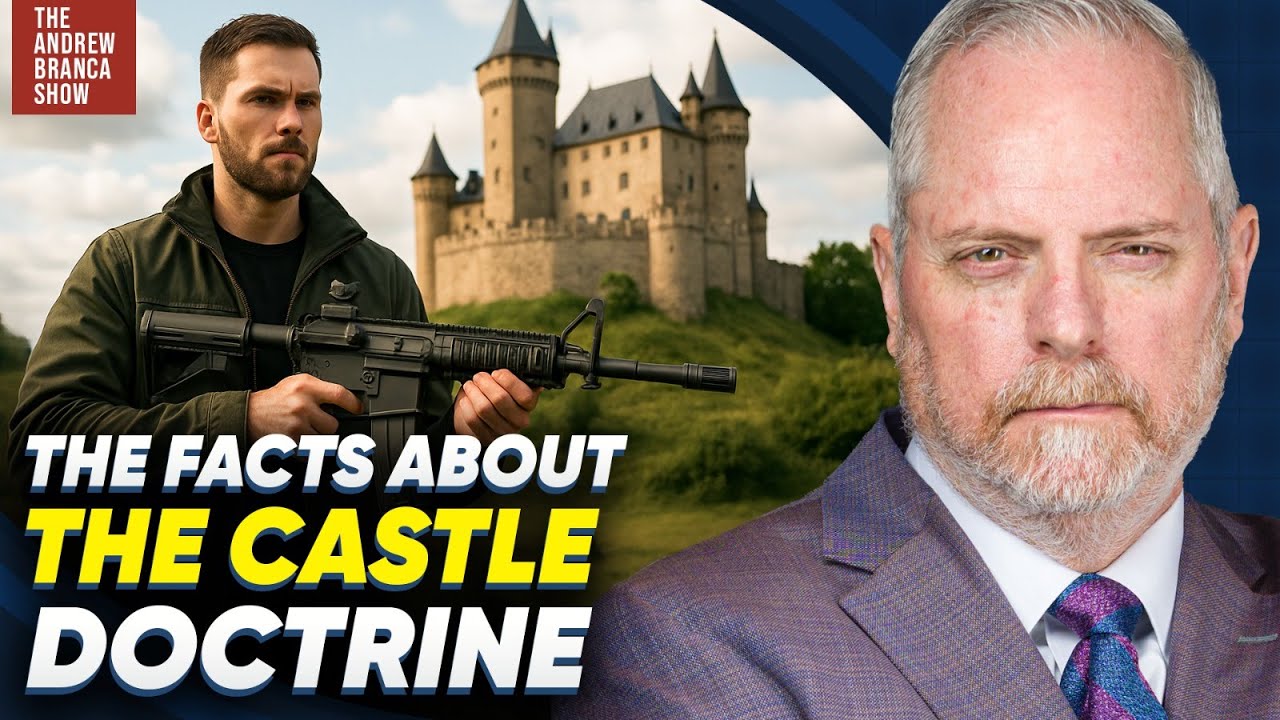







Self-defense law is based on ancient principles from Greek, Roman, and English common law, and while underlying principles remain consistent across all 50 states, specific applications vary significantly. Texas, as a 'hard stand your ground' state, prohibits juries from considering retreat, while 11 duty-to-retreat states require individuals to retreat if a safe avenue exists. Imperfect self-defense, where a person's actions are nearly justified but have a small defect like an unreasonable perception of threat, can mitigate murder to manslaughter. Texas uniquely allows deadly force in defense of personal property without a threat to life, whereas most states prohibit this. Provocation of a confrontation, such as intentionally escalating a situation, can result in losing self-defense rights entirely.
Legal Analysis of Self-Defense: Carmelo Anthony Case with Attorney Andrew Branca
Added:Oh, he's there.
>> Hey, man.
>> How you doing?
>> I'm living the dream. How about yourself?
>> Dude, you look substantially younger than the last time I saw you.
>> It's the lighting. I'm I travel. I'm in a Holiday in Express, so I'm super smart today. Uh, but I I travel with this little portable studio and the lighting is is very I'm not using a filter, but but the lighting does this. I don't Okay, Andrew, it's been a while and there's been substantial what's the word I'm looking for when the audience or not people might not know who you are, but I know your audience does, my audience.
Remind everybody who's watching who you are, what your area of expertise is, and then we're going to get into the thick of it when it comes to this case.
>> Sure. So, I basically I have two jobs.
I'm like a Jamaican cab driver. Uh my my my core job, the longest one, is law of self-defense. I'm an attorney, criminal defense. specialize in use of force law, meaning self-defense, defense of others, defense of property. Uh, I write I work on cases as a consulting attorney. I do expert witness testimony. I've written a bunch of books, do a lot of teaching, teach CL in it. U for so I teach other attorneys how to argue this stuff. Most attorneys are not taught this stuff in law school. I I only had five minutes of this in my three years of law school.
Uh, so that's my area of legal expertise. And then I also have uh the Brana Show at the Branka Show on X and on YouTube where I do political and legal commentary. And when we have a high-profile case like this, it just kinds of overlaps.
>> People in the chat seem to think they have found my cell number. Uh just so you know, I don't know whose number that is. It's not my cell number, people. Uh all right, that's in Rumble. So, um Andrew, you're now hold on a second.
What is the expression two jobs like a Jamaican cab driver?
>> You You don't know that cliche? I have never heard it in my life.
>> Back in the day in New York, if you had a Jamaican cab driver, you started talking to him. He also was doing roofing. He also was doing, you know, he had like 18 different jobs because they were they hustle. They hustle.
>> Um, you're following. So, your expertise is self-defense. It's more sec I mean, I say Second Amendment, not to relegate self-defense to only Second Amendment, but you do a lot of firearm self-defense. Uh, you got the catalog, you got the training course, you got all the stuff.
>> Yeah. You do you do self-defense at large as well in in more than one state?
>> Yeah, all 50 states. It does it it doesn't vary that much. The self-defense law is very old law. I mean, you know, the ancient Greeks and Romans had rules for when you could defend yourself. Our law comes from hundreds of years of English common law. Uh so, the self-defense law across 50 states actually doesn't vary that much. Uh, of course, they have their own statutes and court decisions and jury instructions, but the underlying principles are fairly common. Now, I I don't expect everybody to watch all of the content I put out or Robert and I put out. Even my wife does not keep up to speed on all of it. Did you see the [ __ ] that Barnes is taking for his take on Carmelo Anthony from yesterday's show?
>> You know, people mention it to me and but I I have to be honest. I I live stream like three hours plus a day. I don't have time to watch other people's content. I just don't. So, I don't see it. And I and I always have to tell people they say, "Oh, Robert's taking this saying this crazy stuff or something just happened on my end."
>> No, no, it looks uh you're Well, you're still I still see you.
>> Are you getting audio of me in the background?
>> Yeah, you're good.
>> You You still hear >> you still see me, right?
>> One of my own tabs started autoplay.
>> Yeah. You hear You hear two audios. I I I have it's a it's a completely different show. It's me, but I'll fix it. I'll uh >> All right. Well, what I love is this.
>> I have like 800 tabs open is the problem. You got it.
>> I found it. Okay, I got it. So, people are always asking me about about Barnes.
They're saying Barnes said this crazy thing. You should debate Barnes and stuff like that. First of all, I didn't see it, so I I don't know what's true or not true. But I always tell people, listen, Barnes is a very smart guy. He's very entertaining. There may be a lot of stuff he says I don't I don't agree with. That's that's just how lawyers are. We're entitled to have our differences of opinion. I don't have anything negative or malicious to say about Robert, but but he may be saying stuff I would disagree with. I don't know. And I I think I have a great relationship with you. I mean, I call you my friend. I always have fun being on your show. So, I I I I think people are sometimes trying to like ignite one of these YouTube, you know, Thunderdome uh kind of things. And I I don't feel that way about either you or Robert.
>> No, it does drive me a little crazy.
People want to drive wedges and they want to they want to create internet fighting for the sake of, you know, entertainment, right? Barnes, you know, first of all, whether or not you agree or disagree with them, the idea that people are going to say, well, you cut ties with someone who said something that even if you find it outrageous, um, it's so it's stupid. You don't you learn from everybody. Barnes's main issue was more on the procedural side of how quickly this trial was trial was rushed in terms of 20 minutes opening statements, an hour and 45 minutes for jury selection, the absence of a black jury member on the jury. Barnes took >> I did see that post. So, I mean, I could address those things from my perspective. You know, doesn't mean Robert's wrong, but so like the the speed of the jury selection and and the the the 20 minutes for opening statements. I mean, if he if he's talking by if by problems he means like there's a realistic prospect these are reversible error. I presume that's what he means. Otherwise, who would care, right? Um, you know, the the standard is have you selected a jury that's unbiased and impartial. And if you did that in 30 seconds, that's a legitimate jury.
There's not some specific amount of time you're supposed to take. Now, is most jury trials, I mean, the public won't know this because they only ever see the the high-profile trials that take weeks, and sometimes you spend two weeks just selecting a jury, but a normal murder trial in America takes a day. I mean, from beginning to end, from jury selection to verdict, it takes one day, sometimes two days. Um, so even this is an unusually long murder trial for America. So, jury selection often happens in an hour. I mean, it's it's not that uncommon.
Uh so 90 minutes I mean does it feel quick for a jury that a trial of this high profile? It does but the question the legal question is well did are they legitimately an unbiased and impartial jury and if they are then 90 minutes doesn't make any difference and in terms of the opening statements you know that's left really entirely to the discretion of the trial judge. If he gave the two parties different amounts of time that would be a serious problem.
Um but the fact is this is not that complicated a story. I mean, 20 minutes should be all you're doing. You're not making your case. You're just telling the jury, "This is what we'll be telling you. This is the story we're going to tell you over the course of the next several days." You're just kind of laying out a map so they can follow along, where the witnesses are are being questioned. And is 20 minutes enough to do that in a case where really all that happened is a two-minute confrontation where someone ended up stabbed. There's not like uh he bought the weapon here and then this other person was involved.
It's it's pretty straightforward. So, I think 20 minutes 20 minutes is not uncommon. I just don't I don't see that being reversible error. It would have to be an abuse of discretion to be meaningful to an appellet court. I just don't see that.
>> The the I think what irked people is, you know, the rhetoric that Baron Robert used is that, you know, it looks like it's a it's a judge and a prosecutor trying to rig a a lynching effectively like get a conviction, we want a conviction, and so ram it through quickly. The the flip side is, and this is what where my issues, and it's not to sit on a fence. You know, sometimes jury selection takes way way too long. It's absurd. I was looking up the longest uh jury selection in criminal history was Ramirez in 87, 88, 89. Took five months.
So, you know, between between a day and between a month, you know, two days, okay, fine. three days, okay, a week you start looking like you're selecting a jury to curate the jury and not, you know, almost quicker is almost better in terms of looking like you're not curating a jury. When it comes to the absence of a black jury member, Andrew, I mean, I say like a jury of your peers doesn't mean a jury of you a race. It doesn't mean a jury of what do what do you make of it and the reason for which the three alleged um what were they called? not the prospective jury, the ones who were eligible were ultimately struck. What do you what do you make of why the three who were eligible were struck?
>> Yeah. So, I mean, I can only speak generally to this because I wasn't following the jury selection when when it was happening. And by the way, a jury of your peers used to mean your peers.
It was the House of Lords. The House of if you're a member of the House of Lords, you could elect to have a jury of other members of the House of Lords. So, it was people of your class and status in society. It wasn't just a random selection of voters in the community like we do today. Uh but there are there are legitimate and illegitimate reasons for excluding a black juror. Uh the ones that had the highest profile in this case were basically saying I can't be unbiased and impartial. If you had a thousand prospective black jurors and they're all saying that you could exclude all of them for cause. I mean that's that's just permissible. Now if they're being excluded because they're black, that's a problem. That's unconstitutional. So, I don't know what happened here, but um you know that's the parameters. If they were excluded for a legitimate reason, it's not a problem. If they were excluded for an impermissible reason, that would be a problem. Do we know that they were excluded for an impermissible reason?
>> Well, the apparently the reason >> would there be a Batson hearing or I mean >> I don't I don't Yeah, I don't know that there was a Batson hearing in this case.
I know that the the reason given is they didn't want educators or they alleged they didn't want educators on the jury.
Not sure if that was the excuse for a a perempary strike that could have been challenged. I but from what I understand it wasn't. A lot of things that Barnes is, you know, took umbrage with yesterday weren't even challenged by the defense. And then it's, you know, whether or not they're getting effective counsel, but one of the main issues, >> but they did object on the jury issue, didn't I? I I thought I heard someone say that. Did they at least or >> I'm going to check to to fact check. I don't know that they did a Batson uh challenge. I I'll I'll do I'll check that in a second while I ask you this question. Uh is that Barnes had one of the issues, you know, fast jury selection, uh minimal opening statements. There were, and I think we all agree on this, questions of law that were asked to witnesses of fact, you know, did he did he commit murder? Was it legitimate self-defense?
>> Yeah.
>> So, I mean, we all know that these are bad these are bad questions, but from what I understand, there weren't any objections by the defense. And at some point maybe they're just going to allow these and hope that the answers were going to be favorable and when they weren't then people are taken back. I mean >> well first of all that's insane right?
So as you should never be asking questions you don't know what the answer is going to be especially if the answer is going to be bad enough to to depth charge your case. I I will say that was the main thing I heard in these proceedings that really struck my ear.
Was this self-defense? and and the the witness says yes or no or um so ultimate conclusions are factor are for the jury and and and I testify as an expert witness in self-defense trials. I mean I'm on the witness stand and I'm I'm always cautioned and I would never do this anyway that I'm not supposed to tell the jury this was self-defense or this was not self-defense. My job as an expert and I'm not just a layman. I I know Robert was saying, "Oh, they're asking layman this stuff." But I'm a genuine expert. I mean, I'm qualified by the court as an expert and I still don't do that. uh my job is to provide kind of a roadmap for the jury to understand how to answer the question. These are the factors you look at. Um and then you have to decide whether or not the evidence in this case meets those factors. You have to make the ultimate decision. Now, in fairness, if you allow me to draw the map, I can pretty much determine where you're going to end up.
But but I don't get to say this was self-defense. So, when I heard that question asked and answered, yeah, that really that really struck me as unusual.
when I'm not allowed to do it, but a high school athlete is allowed to do it.
It seemed a little weird. But here's the thing. Is it is it a meaningful problem?
First of all, as you say, so of course we're all following this from journalist reports. It's a huge problem in my mind that this is not being live streamed.
The journalists are not telling us these things were objected to. That doesn't mean they weren't objected to. I don't know if the journalists would know enough about why that's important to bother noting objections. Uh but if it was not objected to, it's not preserved for appeal. So that could take it off the table right there. Also, before the end of all this, the judge is going to tell the jury, I will be instructing you on the law. The only law you can apply to arrive at your conclusions is what I tell you. To the extent anybody in the course of this trial made representations to you about what the law is or what the law is not, you have to ignore that. And that that's curative of the problem that Barnes is describing.
>> And I just looked it up now. Again, we have to take it for what it's worth because we're dealing with um information relayed through the journalists, some of whom are attending.
It should have been streamed. It would have quelled a lot of the racial concerns here. Uh there was a Batson challenge uh arguing that the strikes were racially motivated. Uh the prosecution countered that the strikes were raceneutral, primarily based because the structurers were educators, teachers who worked with school-aged children, a concern given the case's context involving high school students.
Presiding judge Benjamin Roach denied the Bassin challenge, accepting the state's raceneutral explanations and allowing the strikes to stand. I mean that. Okay, so that's a is that'll be an issue for appeal, I guess. Well, for those who don't know, I if after a conviction it's a Batson challenge is successful on appeal that does that nullify the the conviction?
>> I I would expect you it would be remanded for a new trial. I mean, what what other remedy would there be? Yeah, I I I I mean I guess I No, I don't know.
I mean, I'm only thinking out loud if it's if if there were multiple jury if there was a you know, more than one jury so that it wouldn't have impacted the outcome anyhow. Uh I have to think about that through any >> Well, it can't be harmless error, right?
If it's harmless error, you're not going to get a new trial. Uh so I mean, you know, the appellet courts, they have all kinds of ways of dealing with this. They can say, "No, we agree with the trial judge." Or even if we disagree, we're going to defer to his judgment. It's not an abuse of discretion. or they can say, "Yeah, he should have done a different way. That was an error." But the evidence was so overwhelming of of guilt that it's a harmless error no matter what jury you put in. So, but you know, at the end, you know, we a lot of people think about this criminal justice system like it's some kind of computer algorithm, right? You put law and facts into one end and you get justice out the other end, but these are all human beings. Uh, and it's difficult to know what decisions human beings are going to make. on the legal merits, you know, the prosecution put forth a raceneutral reason that was acceptable to the trial judge. Uh so that that feels credible to me.
>> Yeah. Well, now and the explanation does make sense. I I was going with educators like not appreciating that it's educators who work with children or high school students that might be incapable of dealing with this.
>> Now, could it could it have been pretextual, you know?
>> Well, I mean, yeah, you'll never you'll never know that. said, "Man, we really want to get these last three black people off the trial. Hey, they all happen to be teachers. Let's just say the reason is that they're teachers." I guess so. You know, that's the kind of thing that would have to be argued on appeal.
>> Now, let's get into the actual merits of the of the argument of self-defense.
There's two things that are going around. Nate, the lawyer, uh, put in a super chat yesterday during the stream saying that, you know, Texas is a state that allows for, I think he the term was imperfect self-defense. even if your fear is irrational or uh ill-founded that it is either is it is it still a legitimate defense or it's a mitigating factor for a conviction.
>> It's a mitigating factor. So uh and I I can't pretend to have a perfect recollection now of of imperfect self-defense has different flavors in different states. And Nate could be completely correct. That's the flavor that Texas uses. Another flavor is if you act in self-defense but you use excessive force which could also be applicable here. Uh so you were allowed to use force but not allowed to use deadly force. You went to deadly force inappropriately. Uh basically what they say then is so perfect self-defense is as it says perfect and and if you act in perfect self-defense, your use of force even if you take another human life is simply not a crime. It's it's a justifiable killing. Imperfect self-defense is when you have almost perfect self-defense, but it's not perfect. So you can't get acquitted. It is a crime of some kind. Uh but maybe it's not the full crime. So, you have a small defect in an otherwise lawful case of self-defense. Either an unreasonable perception of the threat. That was Nate's um that was his point, right? Or or you use excessive force, whatever flavor of imperfect self-defense that state uses. And then what the state will say is, "Well, we can't acquit you because it's not perfect self-defense."
But because it was almost perfect self-defense, what we'll do is give you imperfect self-defense. And the effect of that is to mitigate what would have been a murder conviction to a manslaughter conviction. So, it's kind of a backdoor way of getting to manslaughter.
>> And now, let's I mean, we have to get into this as well because you have people just repeating the catchphrase, stand your ground. Texas is a stand your ground case. So, if someone shoves you, >> it's a hard stand your ground state.
>> There's a difference.
>> Okay, explain that.
>> All right, so you have a duty to retreat states, right? There's only 11 of those.
It's very much a minority position. But in a duty to retreat state, before you can kill someone in self-defense, if you have a perfectly safe avenue of retreat, you're required to take that before you can kill in lawful self-defense. If you kill someone in otherwise lawful self-defense, it's otherwise perfect.
You were the innocent victim. The attack was imminent. They were trying to kill you. You were acting reasonably. Your only mistake was you had a safe avenue of retreat and you didn't take it. You lose self-defense. You you just murdered someone. Um the majority of states, 39 states are stand your ground states.
What the stand your ground states say is you don't have that legal duty to retreat as long as you have the other components. You're the innocent victim.
The threat is eminent. You were being threatened with death. You were acting reasonably. We're not going to throw you in prison because some prosecutors said, "Well, they had a safe avenue of retreat, so they're they're guilty of murder." But stand your ground comes in two flavors, uh soft and hard. I I guess I should call it something more interesting, like, you know, flaccid and erect would probably get us more clicks and views. Um but uh what the majority of of soft stand your ground states what they they don't allow the prosecutor to say you had a legal duty to retreat. You don't in a stand your ground state but they do allow the prosecutor to argue that hey ladies and gentlemen of the jury he didn't have a legal duty to retreat. We're a proud stand your ground state but a reasonable person would have taken advantage of that duty to retreat he had. And therefore his failure to do that is unreasonable. and you fail him not for a failure to retreat per se, but for making an unreasonable decision. And self-defense has to be reasonable. So, it's a backdoor way of attacking a failure to retreat. And they're allowed to make that argument in most stand your ground states. The hard stand your ground states, of which Texas is one, in their stand your ground law, it actually prohibits the jury from even considering any possibility of retreat and evaluating the reasonleness of self-defense. So in the hard stand your ground states, you don't have this this flanking attack on a failure to retreat.
Jury's not allowed to consider it. And if the juries are not allowed to consider it, then the parties aren't allowed to argue it.
>> Is there a difference and I'm again thinking out loud, you know, between the the duty to retreat or a hard stand your ground state which is not even allowed contemplating the idea of retreat. Is there a distinction? I mean, there is a distinction between retreat and deescalation or retreat and not provocation because the idea is like someone's going to say, "Well, Carmelo, two different things."
>> Yeah. He he had no duty to retreat, but between retreating where even if you thought there was a threat from the hand on his shoulder versus escalating that which never needed to get to the position in the first place. I mean, I guess that's where it's a question of fact as to whether or not >> I mean, retreat retreat's irrelevant here because I mean, first of all, he in an you don't have a duty to retreat in an otherwise lawful case of self-defense. And this one's not otherwise lawful. But let's let's pretend that's not the case. Let's just take that element of avoidance completely off the table. So, retreat just doesn't matter here at all. Can't cannot be used to harm Camello Anony's defense. He loses on on everything else.
I mean, he he provoked the confrontation. I the evidence is overwhelming. Um, touch me and see what happens. He's calling people the B- word and the P word and he's telling them your your athletes suck, right? Their ass, I think he said. I mean, he's clearly engaged in provocative con. If if this was a white athlete in a black team's tank and saying these things, you wouldn't be surprised when he got his ass beat. Right. So, he's provoking the confrontation. And under Texas law, you lose self-defense just for the provocation. Then then he's using deadly force in a circumstance in which there's there's no credible evidence that he was facing an eminent threat of deadly force harm. Nobody else was presenting a weapon. What would there's no evidence there was a disparity of numbers attack that the only person is um Austin Metaf and even if he did start swinging they're in a tent with a couple dozen people. We're supposed to believe all those other people are going to stand there and watch Carmelo Anthony get beat to death or maimed with the hands of it's just not credible. The guy he just lost his cool. He he was maybe looking for a confrontation. He was wired for a confrontation. I I believe given the speed with which he struck the hand his hands in that bag. He had that knife open in his hand already while he's still provoking the confrontation. And the moment Austin Medaf touches his shoulder, multiple witnesses, a soft touch, a soft push. When they do, the defense asks for demonstrations in court and everyone every time they did it, the witness would say, "No, it wasn't that hard." I mean, it was it was terrible.
And immediately he's touched it was so fast people saw the shove and didn't see the knife. They they thought they thought Carmemelllo Anthony had shoved back. That's how quick it was. This is what's one thing that drives me crazy where you talk about one screen two films and people say uh what I think is provocation like touch me and see what happens and then other people say oh no that was him warning you know to not escalate so that when he does touch him that's Austin Medaf escalating and my only reasonable way of interpreting that is if you say like touch me and see what happens that is the sort of the provocation that in my mind you lose all rights to self-defense Especially when you know that you are carrying a gun. I know we might disagree on Chud the Builder case, but when someone who's armed goes and appro hypothetically assuming the fact pattern is what it is, Chud the Builder goes and approaches somebody to instigate knowing that he's armed and then ends up shooting whether or not it turns out to be, you know, factually justified under the circumstances once all the evidence is fleshed out, you know that someone's going to raise that argument. When Carmemelllo Anthony says, "Touch me and see what happens." That's not warning, you know, of not escalating. That is the escalation. And one thing I've been saying, and you'll tell me if I'm right or wrong, had Carmemelllo Anthony said to Austin Medaf, "If you put a finger on my shoulder, I'm going to stab you in the heart." That would have been a criminal threat. I'm not I'm not wrong in saying that. Had that been the fact pattern, that would be a criminal threat. And it doesn't become self-defense when he actually follows through on it.
>> I mean, listen, if he had said, "Touch me and see what happens." and Austin touches him and he punches Austin, you know, that that might be a warning. I'm going to lawfully defend myself if you commit a battery on me, right? But you can't say, "Touch me and see what happens." And then what happens is you're touched and you drive a knife into someone's heart. You you can't warn somebody, I'm going to commit murder on you if you touch me. That's that's not a legitimate caution that you're I'm simply here prepared to defend myself.
You think that I mean I don't know what the latest updates on the trial are, but this is I mean I'm not I'm not biased. I I came in >> Oh, they're done for the day. So, the defense rested and shut up. Closing >> defense rest.
>> Yeah. Yeah. Yeah.
>> And they have closing arguments tomorrow.
>> Uh and they're going to try to strike a strike some sort of a plea deal tonight.
25 years uh for for a plea.
>> I mean, is has somebody said that or you're just >> No, no, no. That's my that's my hypothesis. The idea that they're they were scheduled for another week and a half. could, you know, they can do a plea deal anytime they want to, but whe whether or not there's a plea deal is up to the state. That the defense doesn't have any control here. And and this is as tight a murdered prosecution as I I mean, it's it's unbelievably tight. So, I'm not sure on the legal merits.
There's no reason for the the state to propose a a plea. That's ridiculous.
Now, there there might be political reasons if they think, hey, if we do a plea for manslaughter, say the city won't burn down. But but say you how do you know that? I mean, the defense can't guarantee that. It's not in the defense's control whether or not the city gets burned down. And and frankly, also, you know, I I'm not seeing the energy outside that courtroom in Colin County, Texas, that we've seen in some of these cases, right? This is not the crowd outside the Derek Schovin trial.
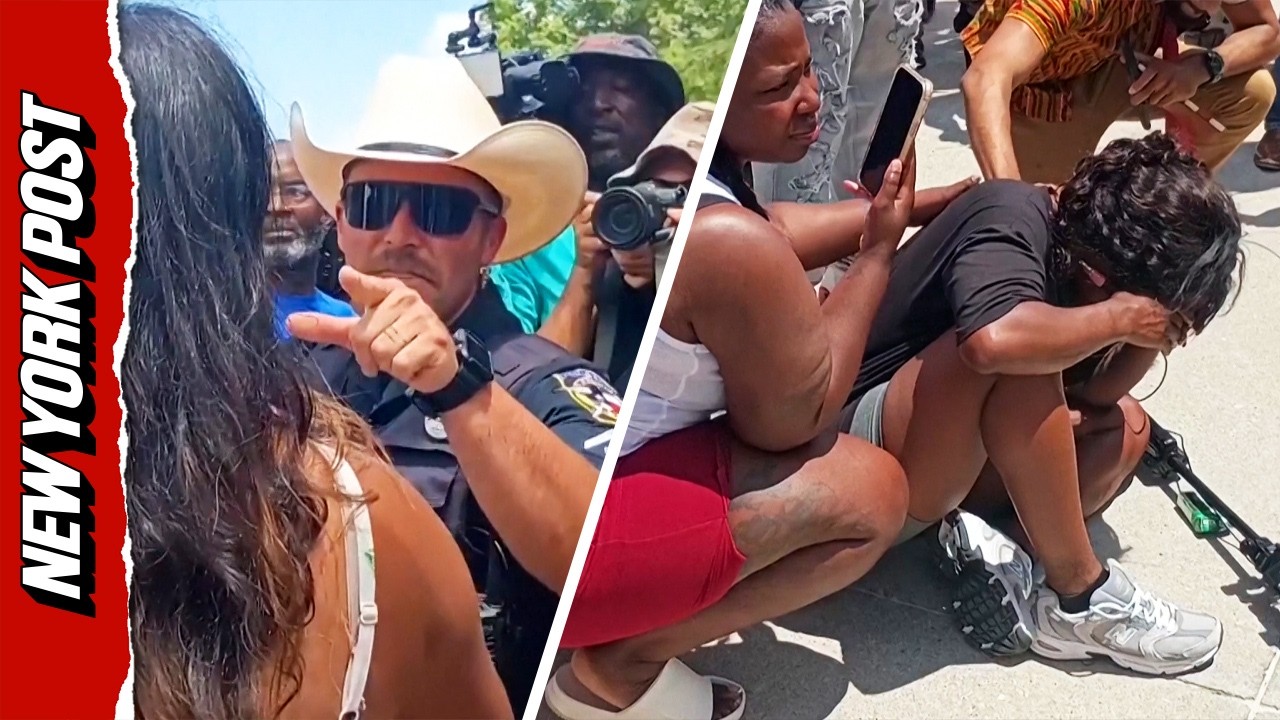
This is not the crowd that was outside the trial for the Ahmad Arbory case where where the crowd was carrying coffins around. I mean, it's completely different level of energy. I I I see a half dozen guys dressed in Black Panther outfits and some some angry black women shouting at journalists and but I I don't know is is the city really going to burn down the population black population in Colin County is 12 12%. Um and and most of them are normal people, right? So >> also it's it's Texas and not W. I mean I don't know that it's Texas and not Wisconsin, but even still Wisconsin.
>> Yeah, >> like Texas Texas you can legitimately use deadly force to defend your personal property, right? So, I mean, if if someone starts throwing, you know, Molotov cocktails at storefronts in Texas, the prospects, they're not going to get shot dead, I wouldn't want to be the person throwing a box.
>> Well, Andrew, what case was it we were talking about this where you you have the right to use lethal self-defense in defense of property. And I found that, you know, not not morally objectionable, just totally foreign because in Canada, not only you have a duty to retreat, you have the duty to submit. Like, let yourself get assaulted and take your licking. Like, what's it? But what do you remember that case offh hand? It wasn't the the guys fighting over the the mattress.
Was it the porch one where the guy got shot on the porch by the the the wife's um ex-husband?
>> I I do remember talking about that case with you, but that that would be that would be a different matter because we we have to differentiate between two classes of property. So there's there's highly defensible property like a home, your castle or a place of business or an occupied vehicle where there's there's human beings like what's really being protected there is not literally the physical property. The property is acting as a shelter for the people inside the property. It's just giving you kind of a an earlier trip wire to use deadly force without having to let the person actually break in, right? And be able to have access to you. Um, there are special rules that allow for a broader use, the use of deadly force under broader circumstances. Basically, they presume that the elements of self-defense have been satisfied. If you're defending yourself against someone forcibly and unlawfully breaking into your house, it's legally presumed you had a reasonable perception of an eminent threat of deadly force harm, which is most of the elements of self-defense. But that's different than just personal property. Personal property would be an unoccupied dwelling or uh items, a laptop, a cell phone that someone's stealing or an unoccupied vehicle without people inside. It is just personal property. And in well, this very recently we had a change here, but traditionally uh 49 states, you were simply could not under any circumstances use deadly force in defense of mere personal property. That includes pets, by the way. I heard your dog back there.
Pets are just personal property in American law. Um but uh no under no circumstances unless the only time you can use deadly force is in defense of innocent life against a deadly force threat. Texas was always the outlier.
Texas was the one state that has an explicit statutory provision. Um if if someone's interfering with stealing or vandalizing uh even just personal property and there's a number of hoops sometimes it has to be at night time there's a bunch of boxes that have to be checked but if the boxes are checked there can be a complete absence of any threat to life at all and you can just shoot that guy through the head. Uh and I've seen it done in Texas. I was involved in a case where a husband and wife were walking down the street in the evening. They'd gone out to dinner. They were all dressed up. the wife has a nice necklace on and and and some dude just runs up and rips the necklace off her neck and starts hoofing it down the street and the husband just pulls out his gun and shoots that guy in the back and that because he was stealing the necklace and that was perfectly lawful under Texas law. Um now I don't encourage people to do that because if a jury happens to disagree with you and there's a lot of references to reasonleness in that Texas statute, you go to prison for the rest of your life over a necklace. I don't I don't think it's a very good balance of uh risks and stakes, but nevertheless, Texas law has that provision. Now, just a couple weeks ago, Tennessee, the state I'm moving to, Tennessee adopted a kind of a middle ground between uh Texas and the other states, allowing for the use of deadly force in defense of property. Other states say never can never use it. In the absence of a threat to persons, can never use deadly force. Texas says, "Yeah, there doesn't have to be a threat to persons at all. No threat to persons.
you can kill over property. What Tennessee has just adopted is a law that says you can use deadly force in defense of property, but there has to be some threat to a person. There has to be at least a non-dely force threat to the person. So, they're using force taking your property. Uh, you can't shoot them in the back. They have to be facing you.
U, but that's that's a brand new change in use of force law, which which doesn't happen very often, actually.
>> Andrew, I got one of those tickles in the back of my throat.
>> Sure. You want me to sing for a little bit? What I'm about to do and I'm starting to water in my eye. I'm going to raid into somebody. Tell everybody where we can find you. I might have to go get some water. I don't know what I inhald.
>> Okay. All right. I get it. So, we're signing off at the Brank Show on X or YouTube or lawf.com. And I'll be on Tim Pool tonight. So, Tim Pool IRL 800 PM Eastern time. Oh, >> do do you have time for a few questions in an after show once I get my voice back?
>> Oh, I just tell me what you need me to do. Sure. I got time. I I got about an hour.
>> Okay, I'm gonna raid. Oh gosh. Yeah, this happened to me in the first interview that I did for a law firm where I couldn't talk for about 10 minutes in the uh thing. Okay, it's getting a little better now. Holy crap, apples. Raid.
>> It's the power of personality here.
>> No, I Okay, it's get it's it's raid redacted. There we go. I'm back to normal. And we're going to go to locals and Rumble Premium, but I want to get bring up some of the chats because there's a couple of questions here for you. Holy crap, apples.
Um, let me bring it up and we're going to see in the chat here. Okay, we got Texas me Texas MCM13 says, "Viva, here from Andrew stream today. Missed the ice fishing posts and snowy dog walks. Much love from Texas. Check out Viva Random on Rumble and Viva Family on uh Comey Tube because I do some fun stuff. I I do the videos just not as many." Ghost Dog Man says, "If they were attempting to prevent riots with the always offended, they didn't try very hard. Feels like it's a social upheaval, i.e. not objecting to asking witnesses. This is self-defense. Sometimes jury picked themselves and Russell Brand has raided us." Okay, now what we're going to do, we've got my voice back. We're going to go to Locals and Rumble Premium. Andrew, I'll put your links up for everybody to find you after this. And we're going to take some questions uh in the afterparty. Holy crap, are you going to uh you're going to Tim Pool in person, right? Yeah.
>> Okay, cool. Uh, >> that's why I'm in this hotel. They're gonna >> driving a motorcycle up there or you uh did you fly?
>> No, I flew I flew when it's I'm moving to Knoxville in a couple weeks. Once I'm in Knoxville, maybe I'll come out to Tims on on the motorcycle, but from from from Denver, it's too long a trip for too short a visit.
>> How long a trip is it if you do if you do that?
Uh, well, the way I ride, so when I take motorcycle trips, I I do I'm only on the bike six, seven hours a day because I I still do my show. So, I travel with this little portable studio. So, I wake up in the hotel, I do, you know, a live stream, a membersonly show, and check out of the hotel at 10:00 and then I ride to the next hotel. But when I do it at that pace, it it would take me four days.
>> Um, we're going to get a question here.
My goodness. Sorry. This this Okay, it's getting better now, but I uh had that unbearable tickle in the back of my throat. Okay, what do we got? Get your questions in, people. We're gonna see if we do this. Will Tieless Brona be on Tim Pool?
>> I'll be wearing a tie. I brought a shirt and tie with me.
>> It's not your first time on Tim Pool, is it?
>> No. No. I I forget how many times I've been on, but >> No, that's good. And you're I mean, I guess you're going to be talking about this. Um people trade part of their lives for their property. Time they cannot get back ever. Some Some property is essential. This should be able to they should be able to defend their property. I you know people call me a [ __ ] for this because I you know I'd sooner not live without having to have killed someone. A dog is a separate matter. I'm actually surprised that you know stealing a dog is that you >> everybody is. They always ask me what if it's a service animal. It doesn't matter. Doesn't make any difference.
>> But that's one of those things right. I mean reasonable people could say hey if someone's trying to kill my dog I should be allowed to kill them. My dogs as much a member of my family as the humans maybe more than the humans in the family depending on the humans in your family I guess. U listen folks I don't tell people what the law should be or I don't you know if you want morality you need to go talk to your pastor. I can only tell you what the law is. Now could could I imagine happily living in a world where it was lawful to kill people over your propert? I get that argument.
You invest time, effort, your life into these resources and the thought that someone could just and you know they're never held accountable. I mean, we don't live in a world where thieves of personal property are held accountable.
The cops laugh at you when you file the report. You're never going to get that back. It's just gone. We're being our resources are being harvested by these cretins with no consequences. Can I imagine living in a world where it's lawful to shoot people over personal property everywhere? Yeah, I can. I I I don't know that I have a moral problem with that. I'm just telling you that right now it's not permitted unless you're in Texas uh and with this variation in Tennessee.
>> Yeah. Like in Canada, it's beyond duty to retreat. You you literally had the police issuing uh public, you know, not even public service announcements, public statements saying if your home gets broken into. Don't what do they say?
>> Antagonize and lock yourself in a bathroom if you if you can.
>> And when when my house was it was getting broken into, it ended up being a drunk guy at 4 in the morning banging on the door. I um I went onto the roof and and closed the hatch down because you don't have the right to shoot, you know, anybody. Um, it's it's it's it's wild.
There's a couple of good questions in here. Can you kill your own dog with it being without it being animal abuse?
Yeah, I think Christy Gnome proved that.
I don't know what states it becomes a problem and jump to recent messages.
Roosten says, "Andrew, CNC laws that is um >> I think he means concealed and carry."
>> Yeah. Differ State to state. Have you noticed that more recently it is harder to defend a good self-defense shoot?
>> Well, it's they're they're really conflating two different things. So concealed carry is like when can you carry a gun, under what circumstances, in what places, maybe what kind of gun, what kind of ammunition capacity. Th those are I call those gun laws. And they're important, but they don't really have anything to do with use of force law. When can you use that gun? It's a completely different set of questions.
In fact, when it comes to deadly force, self-defense, most commonly in America, that involves a gun. But the the law doesn't care what you use. If you're privileged to use deadly force in self-defense, the law doesn't care if you use a gun or a knife or you drop a piano on someone's head from a great height, it doesn't matter. If deadly defense of force is permitted, it's permitted. It doesn't really matter what the form is. Uh and and that's one of the reasons self-defense law understood that way. When can you use how much force is is kind of weapon agnostic. Gun law is definitely not. Gun law is highly variable across the 50 states. Even within a state, you'll have different gun laws between the state, the city, the county. Um, it gets very complicated, but that's not really what I do. I do the use of force law stuff.
>> And Pound says, "Canada, you just have to say come and take what you wanted.
You see my car keys next to the door for your convenience."
>> I heard that. I remember that story.
>> While there now, by the way, I don't know. Oh, how does this work? Now, I got to go here. Uh over on Rumble there was Bill Tong who said uh Andrew do you know who Bill Tong is?
>> King of Bill Tong if you give me authoriz. Well I don't realize I think we don't have each other's number. I text you my number if you want some Bill Tong. Um I'll >> I'll text you my number back. I called you. You should have it, right?
>> Yeah, I think I Well, unless I haven't spoken to you on my new phone, which would still be >> I'll text it to you.
>> Okay, good. All right. Well, that means >> it is my personal number, though. Don't give it to anybody. Oh, I give it to nobody. But Bill Tong said uh he said I I didn't read it actually. Get me some get me I'll get some Bill Tong to Andrew. He has earned it. He has earned it for sure. Um >> I I always feel bad about this because I listen guys, I'm a boomer. I don't spend actually that much time on social media and every once in a while I have someone reach out to me. I had someone ask me to come on the other day and I was like h I don't know who this person is. A lot sometimes I get invited on shows and I go on the show and like 30 people are watching the show, you know? I'm like I just don't have that kind of time. So, I I was very wishy-washy with this request. And then I looked him up and the guy has like 10 million followers, I was like, "Oh, I guess I'll come on the show. That'll be worthwhile." Uh, so if I don't know you, even if you're famous, that that's a reflection on me. I'm not trying to denigrate your your tremendous success.
>> I love the fact that you have the exact same problem I have so often. And then you have so many tabs open or it just takes one tab. The worst is when it's in another uh what's the thing when it's in another browser and then you can't even find it in the tabs you're looking at.
Um, >> I just finished a live stream, so I had like 10 sets of 20 browsers because I click them for content, you know, uh, open and then one of them started autoplaying me. I was like, >> I just closed everything down.
>> Are you do you mean it's going to be a totally question of conjecture like the idiocy online? I mean, do you think it's it's authentic organic or is it, you know, foreign countries sewing discord?
Some of the takes on the Carmelo are so wildly uh detached from reality, you only you just got to wonder if people are paying these people to be idiots and if some of these accounts are just uh bond accounts.
>> Uh yes, the answer is yes. Yes, and yes, and yes to all of that. So I don't I don't know if it's foreign countries like why wouldn't China do this kind of stuff. You know, if I were China, I would be trying to foster division within America. That's that would be in their national interest. Uh but what I see is a is a combination of things that are first of all every we got to remember folks the average IQ is 100 right and then there's a distribution from there and there's no IQ filter on social media so there's a substantial percentage of the population on social media they're dealing with IQs of 90 and 85 and we've all met people like this is this is the cashier who can't count change right you've all met her this is the person at McDonald's who has trouble hitting the buttons that has the pictures of the burgers on it right So they don't have to do anything complicated. These people just don't function at a very high level. And they're on social media and they believe things and say things that are irrational and unfounded. And there's there's no way you could ever change their mind about anything. And they'll just keep repeating the same nonsense forever. So that's one bucket. Then you have another bucket of people who are, you know, semi-professional or professional or self-motivated political agitators. and they know what they're saying is untrue, but they know if they say it often enough, it'll get them clicks and views. They're they're pulling for a particular audience out there. Maybe they're pulling for the stupid people to to be their subscribers and followers and and you know, they I know they know they're lying because I they're prominent enough accounts that I keep seeing them and I keep explaining the same thing to them over and over again and they just they don't want to understand. It's in their interest not to understand. Um, and then of course you just have people who are, you know, there's racists in every demographic.
They're just no matter what, Carmemelllo Anthony is a black guy and they're going to defend the black. We saw I saw an interview clip. I think it was uh Savannah Hernandez was talking to a black woman outside the courthouse.
>> Yeah. Who had a bottle of white wine in her I didn't notice the line.
>> That's what I've been told.
>> I basically asked her, "Listen, if the trial's over and it's clear the evidence supports a conviction, would you support that verdict?" and the black ladies just like, "Nope, he's black and I'm gonna I'm gonna support my black people." It's like, you know, there's there's no reason there. It's it's just a very tribal kind of alliance. So, all of those people are online. And those of us who are actually engaging in what we hope is, you know, an objective legal analysis based on the law and the evidence that we see, we're we're just a we're a tiny segment of that and not the most energetic segment.
>> Got to bring this one up. Shame on you, Viva, for calling the murder reactionary. Dude, first of all, if you start a sentence with shame on you, you lost already. But I also think Wang, you haven't read or watched anything I've said.
>> By the way, this is emotion on the other side of the spectrum, right? They're they're they're saying I my understanding of what he's trying to get to is that Carmelo brought the knife there, therefore he intended to stab somebody. Those two things don't follow.
I mean, personally, I carry a knife everywhere. I'm carrying a knife right now. I'm carrying a gun right now. It doesn't mean if I get involved in a shooting or I have to defend myself. I planned on doing that because I had it on me. When I was in high school in the 1980s, I carried a knife every day. I carried a buck knife in my back pocket of my jeans. You could it it formed an outline, a silhouette of the buck knife on the back and everyone at school knew it. I would open up packages for teachers and stuff. U it just no one thought anything about it. Of course, we weren't stabbing each other with those knives.
>> That's Look, I said I said this. Let my dog quiet.
Let's go then. Quiet you.
>> And folks, welcome to the Ander Branka Show.
>> Check me out on X at the Branka Show and at law selfdefense.com and on Tim Pool tonight, 8:00 PM Eastern time. Tim Pool in real life. Uh if you don't follow me on X, you really should because it's a good time.
>> Yeah. Who Who was it that asked if you can shoot your own dogs?
>> I'm the dog. One gets defensive over food. The other one knows there's food in this room. Uh, what I was about to say was I I carried a knife. Well, first of all, I got suspended for carrying a knife to school when I was a kid, but like I I I remember getting it. It was an ankle knife and you know, you carry it. Hey, I don't know if you think you're being a badass or to like, you know, carve wood. You don't carry it to stab people. Now, I don't know if if if you know, someone had come up and try you can think of maybe where you would use it because you had it. I I I've been saying premeditated murder for the entire time in this case. So, I don't know what the person is talking about, but that's just what you also get on the internet where people watch five minutes and and think they understand.
>> You don't need that. He doesn't need to have brought the knife to kill somebody at the meet. All that's necessary for murder is he just he had the knife. He didn't like what somebody was saying or doing to him and he killed him unlawfully. And I mean that the premeditation happens in an instant. And and by the way, there's more than an instant here. I mean, we know with the speed of the strike that knife was open in the bag, he had his hand on it. So, certainly for a few seconds at least when he put both hands in that bag and secured that knife and opened the blade, uh certainly was premeditated.
>> Yeah. No, and also and and it's the decisiveness with which he struck it.
Like e even in the Ireina Zorutka, like not to say the guy the guy knew he meant to he carried out the actions with with with fatal malicious intent, but often times he had a grip on it that he didn't even lose the grip of the knife and he punctured bone from what they say. It's like that that's not like a a half-ass uh reluctant sort of hesitant strike. It was it was >> right. So, he didn't pull the knife out and wave it around a bit and say, "Stay away from me." And then he's he slashed somebody. You say, "Well, it was unintentional. The slashing was un inadvertent." Right? That's not what happened here. He drove that blade through the sternum of a big 200 what, 20, 230 lb football player hard enough to compress the chest to get the blade of that knife into the guy's heart.
That's you don't do that unintentionally.
>> No. And without losing the handle, without having the hand slip off the handle, like it's it's it's just it's just atrocious. Everything about it is right.
>> Okay, there is a legal defense of accident in American law just like there's a legal defense of self-defense u and you can raise the legal defense of accident. I mean in theory you could have had a case where Carmelo Anthony uh sees a knife on the ground, right? And he oh look, a knife and he picks it up and then he slips and he falls and he plunges it into into Austin Medcaf's chest and then he could argue if he's charged with murder. Listen, that was just it was literally an accident.
That's a legal defense. There's no culpability. But of course, you know, he can't he's not arguing that here and he can't argue that here. It's it's not credible.
>> Well, yeah. Apparently, I I didn't hear it, but someone has suggested that the defense actually intimated that that Austin might have in lunging forward >> could have thrown himself on it.
>> Holy crap. Another empty food bowl being looked around the studio. Yep. That's what the noise was. Bring out the bag when under duress not claiming this.
Well, and then there were some people saying he was there, you know, potentially suggesting he was there to thieve some stuff. They had their iPhones and whatever. doesn't that none of that changes anything there. It was clear murder and there was no self-defense anywhere in this even b I can't believe the defense has arrested this case now it's I mean that's that's the end of it premed >> just think how bad just think how bad their this was the best evidence they had to offer in other words their next witness was not going to help them right or they would have brought him >> so the best witnesses they had or what they presented one of them was a cop who basically had nothing to say about the merits of the case the others were kids who were saying yeah it doesn't look like self-defense to me I pills were the defense witnesses. It was crazy.
>> Well, we're going to see if uh I guess they're going to So, they're going to make closing arguments tomorrow. They're going to be 20 minutes and we're going to have what, five minutes? I'm not going to say five minutes of deliberation. What is the uh the law on lesser end included? So, they he didn't get charged with manslaughter, but he got charged with the at least my understanding under Canadian law is the higher crime includes the lower. So, you don't need a specific charge for the lower. So, they could say not guilty of murder, but guilty of manslaughter. So yeah, every state does it differently.
So and I'm not sufficiently familiar with Texas. So what what you just described is uh you know the general concept, but different states have different procedures about this stuff.
Uh so in some states like the the defense would have to request the lesser included in order for the state to be able or maybe the state has to request it in order for it to be on the table. I think the defense does, but but the bottom line is it's not always automatic that there's a lesser included on the table that you automatically get that lesser included jury instruction. the parties play a role strategically. It's a strategic legal decision. Do we want to put our client at risk of a compromised verdict? Right? Um because a lot of defense attorneys, depending on the facts, will say, "Listen, it it's either murder or nothing." And we think we have a good defense against murder.
But if we allow manslaughter in there, the jury just might compromise on manslaughter regardless of any legal merits. Right? You get half the jurors want murder, half of them wanting to quit. Everybody wants to go home. Oh, let's just convict them of manslaughter.
Whereas, if it's only the choices of murder or nothing, the guys who think it's not murder, they're never going to compromise. Uh, so you have a better prospect for an acquitt. But the procedures that govern when you get what like sometimes of sometimes it's possible that you wouldn't be allowed like a manslaughter lesser at the start of the trial, but then evidence develops over the course of the trial from witness testimony where suddenly people hadn't thought about it before, but they're like, "Oh my gosh, it looks like this evidence could support an imperfect self-defense argument." So, you ask for that at the end because you didn't know that evidence was going to develop when you started. And the judge will look at it and say, "Yeah, all right. We'll add that in because it's supported by the evidence. You're supposed to get whatever jury instructions you request that are supported by the evidence. And sometimes evidence develops over the course of the trial that you didn't anticipate.
>> And I don't know why I know this as a lyric from an Eminem song, but yeah, I know those lyrics from it was a song by Eminem. Uh Andrew, it's been amazing. There was one. Was there any other question that I had? I think we covered all of them. And thank you for coming on on on such short notice, by the way. Uh because this is amazing.
I I I I you're you're on you're right on this one. I I love the fact that you're going hard in terms of trying to interact with and uh educate the rabble on X because it's it's it's so frustrating.
>> Oh, I'm not really trying to educate them. I'm just having fun. I'm being polite if there's any prospect of educating them. Listen, for me, it's just and I always have to tell people this because of course people get emotional on one side or the other about these cases. I'm not emotional about these cases. I don't care on an emotional level. Uh, neither Carmemelllo Anthony nor Austin Medaf are friends of mine. They're not family. It doesn't make any difference to my personal life if Carmemelllo gets convicted or not.
All I do is legal analysis. I I I look at the facts that are credible. I apply the law to them and come to a a legal conclusion to a reasonable degree of legal certainty as we would say in court. Uh, and it's the same thing with the Chud thing. Um, you know, I mean, the facts could develop that looked like if if my biggest concern for Dalton Etherly was that he he was doing his shtick where he's calling black people the n-word and that looks to me like provocation that you should expect is going to get you involved in a violent confrontation. Should lose your self-defense. Um, and if that were true, I think he'd be in serious trouble in this case. I don't think he's in serious trouble on the legal merits. I mean, there's political dynamics here that are very high risk for him. Uh but just on the legal merits, I I don't see any evidence that he engaged in that conduct in this particular confrontation with Joshua Fox, which is what should control. Now, if he did do that, that would change the analysis, but I'm not seeing that. The fact that he did it lots of other times, that doesn't count as provocation for this particular physical confrontation.
>> I'm glad at least people are going to hear you having said it because when I suggest that people call me a [ __ ] Canadian saying words are not provocation, we're you you run up to No.
No, no, no, no, no. Guys, guys, leave him out. Leave him out. Clo the door.
Where you run up to a black person and call him the n-word, you you are expecting to get punched in the face at least. And if you go up to you go up to a guy and call his wife a fat [ __ ] you're asking to get punched in the face. And if you know you're doing that, >> what people confuse is they think when I say that or when you say that, they think we're saying that the other person is justified in doing that. And that's not what I'm saying. Uh I if if if Dr. Neily had called Joshua Fox the n-word and Joshua Fox attacks him, that's an unlawful attack, it doesn't justify the attack. Joshua Fox should be prosecuted for that attack. At the same time, it can be true that the attack was provoked and that loses Dalton Heathly self-defense. Those things can be true at the same time. But when people hear, "Well, he provoked it. He should have expected that to happen. He loses self-defense." They think that means, "Well, that then I think the attack was justified." Th those are two different things. Both people can be wrong in their own way.
>> Andrew, we're going to say our proper goodbyes. I'm going to figure out what the hell is wrong with the dog today.
Again, everybody knows where to find you. But, uh, what's your schedule in terms of going live?
>> Uh, normally I go live noon Eastern time. I do a open access show for an hour, an hour and a quarter, and then I do a members only show right after that.
That's our normal schedule.
>> All right. Amazing. Uh, stick around.
We're going to see we're going to talk a bit offline. Uh, everybody, you know where to find Andrew. Locals, thank you for being here. Sorry for the bit of the headache. A cough and a dog attack. And the dog is getting he's a little bastard. One of them is blind and the blind one has now gotten very irritated over the other one approaching what he thinks is his food. Uh and now you all know that the other one just ate his food. So, all right everybody, I will see you all tomorrow. Andrew will see what happens tomorrow on the trial.
Thank you for being here. Godspeed everyone.
Up Next
Menendez Brothers Resentencing: New Evidence Explained | 48 Hours Review
@48hours
502.9K views•2024-10-11

US Secondary Sanctions Impact on EU Businesses and Blocking Legislation
@Bureauvandijk
1.6K views•2019-03-20

Sargon of Akkad Legal Fee Motion: Akilah Hughes Copyright Case Reply
@VivaFrei
213.2K views•2020-03-14

Police Interrogation Tactics: False Confessions & Legal Reform
@LastWeekTonight
7M views•2022-04-18
Related Study Plans & Knowledge Roadmaps
Structured learning paths in Law