









![I Sort of Won Fair Use Fight v Sony/YouTube Support [Lawyer on @wingsofpegasus video fight]](https://i.ytimg.com/vi/xb3JTNHQomE/maxresdefault.jpg)





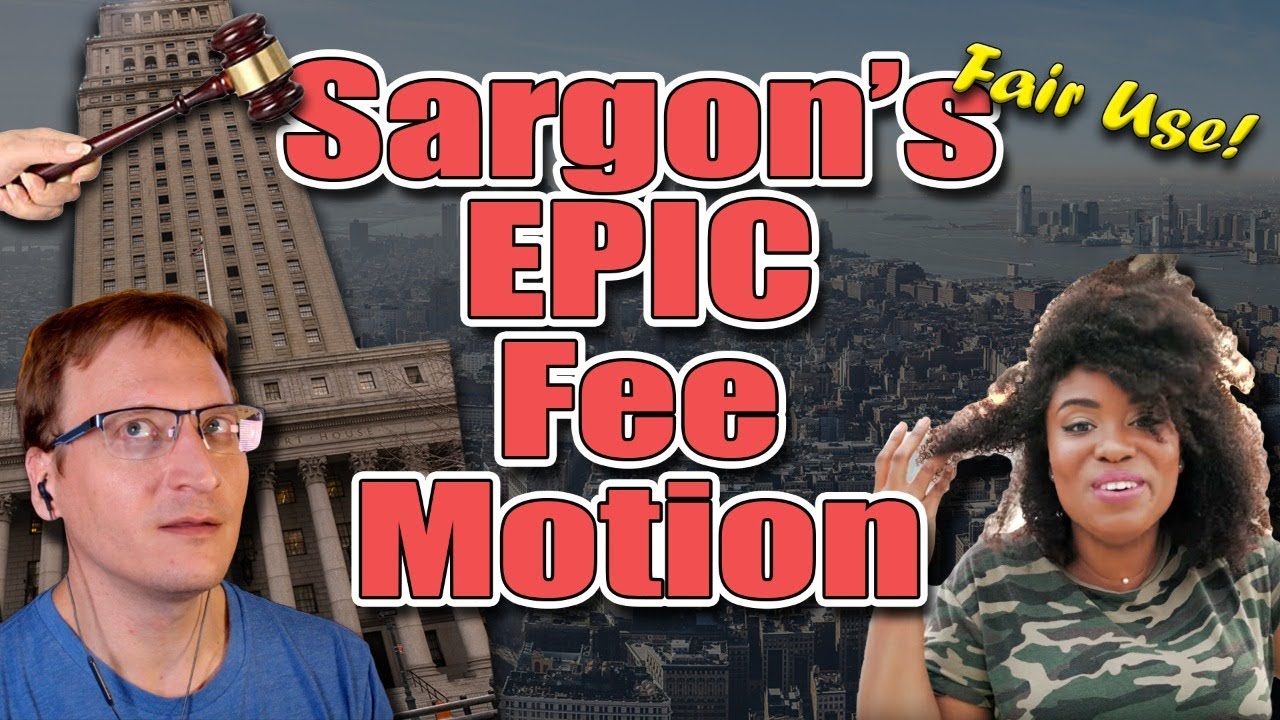
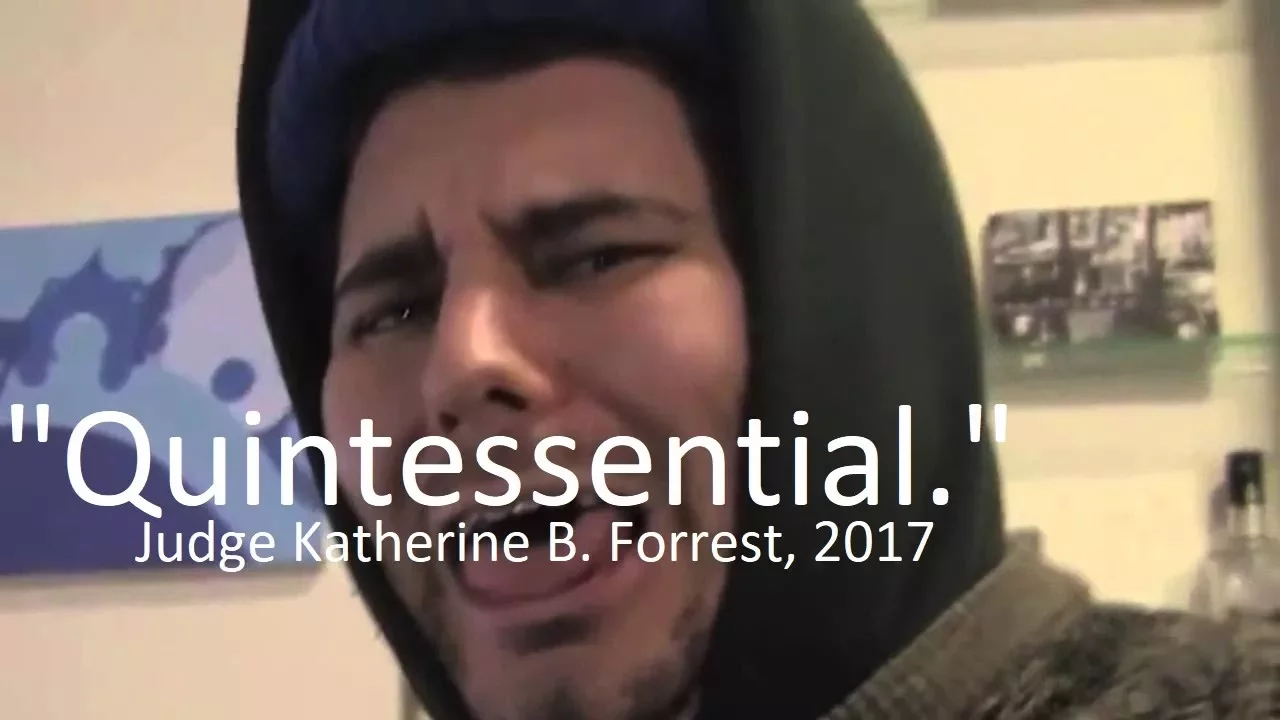
In copyright disputes, courts apply an objective test to determine fair use, meaning that even if a party subjectively believed their claim had merit, the court will evaluate whether the use was objectively reasonable based on the circumstances. When a court finds that a copyright claim was objectively unreasonable, the prevailing party may be awarded legal fees under Section 505 of the Copyright Act, regardless of whether the losing party had a subjective good faith belief in their case. This principle was demonstrated when Akilah Hughes' lawsuit against Sargon of Akkad was dismissed with prejudice for quintessential fair use, and the court subsequently awarded legal fees to Sargon of Akkad as a deterrent against objectively unreasonable claims.
Sargon of Akkad Legal Fee Motion: Akilah Hughes Copyright Case Reply
Added:it's a car vlog but it's not a Saturday why because our kids school has been canceled for two weeks two weeks we'll be fine we'll be fine today is an update of Akilah obviously versus sargon of akkad vive frying Montreal litigator turned youtuber and with everything that is going on in the world these days I have two weeks where I may have to be doing car vlogs but as my grandmother always used to say it is better to light a candle than to curse the darkness and water on Maxim's let me make one up right now attorneys and clients have to appreciate that goodwill is a non-renewable resource this is now my third or fourth video on the subject whatever I'll link the playlist of those videos right here if you are new to the subject give those a watch then come back to this video in the smallest of nutshell 30,000 foot overview mixing of metaphors this is what's going on in this situation her real name is Akilah Hughes she is an online personality who has a channel called akela obviously she is described as being progressive and in 2016 she made a video about hillary clinton's loss of the presidential campaign entitled we thought she would win sargon of akkad whose real name is carl benjamin is also an online personality youtuber he's got two channels sargon of akkad and a cod daily the internet describes him as being either all right or right winger I'm not sure but apparently that is not a fair description of who he is regardless he is also an online personality and a well known one at that in 2016 Akilah Hughes put out this video called we thought she would win and basically documented the evening of the elections where they all thought Hillary Clinton was going to win and had documented their emotions and rollercoaster as they found out she wasn't going to win Akilah Hughes video was something like 9 minutes and 50 seconds long and shortly after she put out her video Carl Benjamin put out a video entitled want to say the letters of my fingers levels of awareness which was a sort of reduced edited down commentary of Akilah Hughes original video there was no verbal commentary or anything in it it was just actual clips from Akilah Hughes longer video I think it was a minute and 50 seconds long his re-edit with that commentary of a title Akilah Hughes filed a copyright claim on YouTube and a DMCA takedown notice that is a Digital Millennium Copyright Act takedown notice Carl Benjamin filed a DMCA takedown counter notice on the basis that it wasn't copyright infringement it was fair use by definition Akilah Hughes disagreed and took Carl Benjamin to court over three years later Akilah obviously copyright lawsuit against Carl Benjamin is dismissed with prejudice it was dismissed on the basis that it was quintessential fair use that the Edit was clearly commentary as evidenced by aquila office his own admission to the effect that the Edit was demeaning embarrassing and criticized her the judge came to the conclusion that editing something even if there is no verbal commentary coupled with a title that is clear the critique can qualify as quintessential fair use her lawsuit is dismissed with prejudice and immediately thereafter sargon of akkad files a memorandum to claim legal fees without getting into the procedural nitty-gritty under the United States Code and Federal Rules of Civil Procedure the court has the authority to determine whether or not to award legal fees to one party or the other in the context of a copyright claim and in this case sargon of akkad who is the victorious party filed a memorandum to reclaim legal fees under Section 505 of the USC and 54 D of the Federal Rules of Civil Procedure in the context of that debate what happens procedurally speaking is that sargon of akkad files his memorandum to claim legal fees Akilah obviously files an opposition a response to sargon of akkad memorandum to claim legal fees and then following the procedure sargon of akkad gets to respond to akela obviously so position two sargon of akkad memorandum to claim legal fees and typically that's where it ends and just to understand the procedure conceptually this is the way it works typically a party who is seeking something from the court makes a motion to that effect the other party then gets to make a motion where they respond to the allegations of the petitioning party as they call it they say what they agree with what they disagree with and why and then the party the original petitioning party gets to respond to the response to the original motion and typically exceptions aside that's where it ends and that's where we are right now sargon of akkad just filed his reply to Akilah obviously opposition to his memorandum for legal fees let's read it shall we United States District Court Southern District of New York Akilah Hughes plaintiff Carl Benjamin aka sargon of akkad al defendants reply memorandum of law in support of sargon of akkad motion for attorneys fees and costs defendant respectfully submits this reply memorandum of law in support of his motion for attorneys fees and costs under 17 USC Section 505 and Federal Rules of Civil Procedure 54 D plaintiffs claims were objectively unreasonable because quote the fair use defense clearly applies based on the face of the complaint opinion at nine objective unreasonableness carries substantial weight when awarding fees under Section 505 of the Copyright Act now while some of this is procedural mumbo-jumbo what is important to know is that when you see Oh P dot and a page number that is referring to the page of the original opinion and it is a direct quote from it so let's just read from the opinion shall we because three of the four statutory fair use factors favor Benjamin including the most important factor purpose and character of use and the least important factor nature of the copyrighted work is neutral the court concludes that the fair use defense clearly applies based on the face of Hughes complaint and a review of the videos themselves accordingly Hughes has failed to state a claim of copyright infringement for the purposes of rule 12 B 6 there is no stronger authority to cite than the judgment that said you were right hey that rhymes the opposition responds that plaintiff sued quote upon the guidance of her former counsel and with a subjective quote good faith belief that her claims had merit first of all can we acknowledge what a raw deal Akilah Hughes original attorneys are getting in this file now in fairness Carl Benjamin and his attorneys are not actually throwing Akilah Hughes first attorneys up to the bus they are just trying to make a point here those arguments are misplaced because Fogerty and curse Tang prescribed an objective test not a subjective one we don't need to go through all of the case law but the bottom line is apparently according to the case law is that what is required is not a subjective test but rather an objective test in other words it doesn't matter what the party thought all that matters is what the situation actually was think about it in terms of certain statutory crimes where the defendant or the accused says oh I thought the person was of a certain age it doesn't matter it doesn't matter what you thought it just matters how old that person was similarly when it comes to Akilah Hughes it doesn't matter if she genuinely sincerely thought that her case had merit what matters is the objective test and objectively speaking her case had no merit according to the judge who rendered the judgment the fair use defense clearly applied on its face and then at the end of that paragraph citing case law sargon of akkad quotes as follows frivolousness is not a prerequisite to an award under Section 505 this is a very important distinction to draw because basically what sargon of akkad is arguing here is that the case does not need to be frivolous in order for the other party to get their legal fees it just has to be objectively unreasonable I guess there will be a defense as to whether or not the fair use defense applying clearly on its face whether or not that is tantamount to objective unreasonable list but that will be for the judge on the merits to decide the opposition also argues that plaintiffs should not pay because fair use ordinarily requires a case-by-case analysis that weighs in favor of fees not against them fair use is a closed factual call in plenty of cases but in the exceptional case like this one where quote it is clear from the face of the complaint that he defendant copied for the transformative purposes of criticism and commentary opinion page six pursuit of an infringement claim is unreasonable speech shilling and contrary to the purposes of the Copyright Act reading from page six of the judgment here it is clear from the face of Hugh's complaint that Benjamin copied portions of we thought she would win for the transformative purposes of criticism and commentary in law there is nothing better than citing the judge who rendered the decision that you are citing finally the opposition claims that plaintiff quote litigated reasonably because she offered to settle her claim for forty six thousand dollars 10 days before defendants motion to dismiss was due it makes no effort to justify a forty six thousand dollar price tag on claims that the court warned were likely to be dismissed and the assertion that defendant made quote no attempts to resolve the matter is unfaithful to the record for those of you who may not be too familiar with reading legalese this is pretty much as polite and legalese of a brutal takedown as you can possibly get calling conduct unfaithful to the record is a polite way of calling a party a liar and why is sargon of akkad saying that akilah hughes conduct is unfaithful to the record well they have reasons defendant made early efforts to settle and promised to seek fees when plaintiff ignored him now this is not something I've gone into in any of my previous vlogs on the subject but there was a lot of email back and forth between Akilah Hughes and Carl Benjamin I didn't go over that correspondence between Akilah Hughes and Carl Benjamin but it was perfectly drafted material Carl Benjamin is either a very intelligent person has very intelligent lawyers who are giving a very good advice or both when it comes to the practice of law and when it comes to life in general I always say draft everything as though a judge is going to read it and if it's not a literal judge it might be a cosmic judge so to speak but Draft everything as though someone higher above is going to read it and you'll draft things differently Carl Benjamin drafted every correspondence he had with Akilah Hughes as though a judge we're going to read it Akilah Hughes not so much and at the end of the day a judge did read those correspondence and then those correspond as Carl Benjamin was relatively politely saying this is clearly fair use I'm clearly going to win this case and when I do if you keep going after me I'm going to claim my legal fees from you now Carl Benjamin ended up being right in this particular case but he did warn her if you go after me and sue me I will claim my legal fees from you when I win this file but it's not just that the disingenuous nasaan his face of his forty-six thousand dollar settlement offer for 10 days before the motion to dismiss was due like I said in my last video that settlement offer was never a sale that was a declaration of war and that was a declaration of war after Akilah Hughes already declared war on sargon of akkad by taking these legal proceedings plaintiffs motivations were improper because she used the lawsuit to silence criticism for self-promotion and to leverage a settlement of meritless claims years of public taunts prove plaintiffs purposes and this is when it gets really juicy and when I talk of Legally smackdowns get ready for this one the opposition hardly denies it instead citing no Authority it asserts that plaintiffs conduct is irrelevant now the conduct in question and I dealt with it in detail in my previous vlog but it was tweets that Akilah Hughes was putting out there to the effect that she was gonna bankrupt sargon of akkad that she was gonna shut down his patreon account that she was sending him Christmas gifts of legal proceedings it was years of taunts on Twitter and another thing that I said before I'll say it again don't take your legal battles to Twitter don't take any personal battles to Twitter it never ends well and when sargon of akkad lawyers say citing no authority what they're basically saying is you're pulling an argument out of thin air to be polite you say no authority you make a bold assertion of pure opinion so as to minimize a highly relevant fact years of taunting on Twitter how you're gonna win the lawsuit you're gonna bankrupt sargon of akkad you're gonna shut down his patreon account and she said other things which I'm not going to repeat in this video for fear of getting demonetized to the contrary circumstantial evidence that a copyright claim was not brought because of its inherent merit is properly considered on a motion for fees under Section 505 and what do good lawyers do they cite Authority one of my first memories from the practice of law a senior lawyer asked me to do some research and I come to him afterwards and I say here's what I think he says I don't care what you think show me the judgments I care what the court thinks dismissing years of taunts on Twitter as irrelevant is a pure matter of opinion show me case law that says that that is irrelevant when determining whether not to award legal fees Akilah Hughes attorneys cite no authority Carl Benjamin's attorneys cite Authority and this is my favorite part of the response to the opposition to the memoranda for legal fees while try to say that five times in a row the opposition also attempts to minimize plaintiff's conduct as quote heat-of-the-moment banter between plaintiff and defendant that rings hollow because plaintiff has been caught up in the quote heat of the moment for the better part of two years so I should have put my finger in my mouth nor was it banter between the parties plaintiffs performance was a one-woman show while she hyped this lawsuit on social media defendant plotting lis litigated his defense before the court and by the way that says plotting lis not plotting lis and those two are very different plotting we might seem to imply that there's some sort of sinister plot to the behavior plotting Lea just means slow moving and unexcited and that in a way is kind of what litigation is just hurry up and wait hurry up and wait and talk about being unfaithful to the record referring to years of taunting tweets as banter between the parties that's like throwing a glass of water on his face and saying that you're exchanging fluids it is a purely disingenuous way of describing the interaction and one that no judge is going to buy it wasn't between the parties it was one way taunting it wasn't heat of the moment it was prolonged calculated over years interests of compensation and deterrence support fees when an action is objectively unreasonable the interest of compensation is compelling that compelling interest endures even or a prevailing party raised money to fund the defense of an objectively unreasonable claim by a publicity-seeking plaintiff the opposition argues that section 505 should not apply because sargon quote earned a surplus after plaintiff sued him but it offers no reason fees should be reduced by collateral source payments its sole case highlights how compensation is served by awarding fees to prevailing copyright defendants who like sargon are not entitled to compensatory damages and in that case declining to award fees where plaintiff was quote appropriately compensated by a 2.5 million dollar damage award that serves as sufficient deterrence some lawyers offer Authority but good lawyers offer good Authority and it's an important thing to understand here the authority that Akilah Hughes filed in support of that statement that because sargon of akkad raised money for his legal fees that somehow now Akilah obviously should not be ordered to pay his legal fees in fact it proves the exact opposite from that case it seems that the party that was claiming legal fees was already awarded two and a half million dollars in damages so the court came to the conclusion that they don't also need legal fees because the two and a half million dollars in damages serves as a sufficient deterrent to frivolous claims in this case sargon of akkad just had the frivolous claim dismissed he didn't get paid any damages so the repayment of the legal fees is exactly that deterrent any view of damages which he was not awarded because he was just having the claim dismissed and this is where I go back to that initial idea that goodwill is a non-renewable resource when you cite in appropriate case law it might look like you were trying to pull the wool over the courts eyes and when you do that you lose goodwill that is difficult if not impossible to regain the very case that Akilah Hughes invoked to justify her claim that she shouldn't have to pay Sargon ever cause legal fees because he raised legal fees on the side actually proves the exact all right that might be a little hyperbolic but it certainly undermines the position the opposition argues ineffective plaintiff has so dearly suffered by way of widespread public criticism that an award of fees will have no further deterrent effect but the criticism is not punishment it is an earned result of plaintiffs unreasonable conduct financial deterrents is still warranted and it is especially warranted here where one of plaintiffs motivations was publicity it is entirely conceivable that the quote widespread criticism plaintiff claims to have borne as a result of her lawsuit will rebound to her financial benefit in the form of likes subscriptions followers and royalties alright and to be critical for the first time in this vlog I don't really care for these hypothetical examples that don't actually further any argument it does no good hypothesizing as to what might happen what really drives the point home here is that the ridicule and criticism that akela obviously is suffering is as a result of her having publicized this lawsuit she is suffering the consequences of her own actions that has nothing to do with the deterrent effect of awarding legal fees in the context of abusive copyright claims in any event plaintiff does not claim inability to pay because the opposition does not avert that plaintiff lacks resources or argue a disparity in the parties financial circumstances a reduction in the award of fees would be inappropriate more legalese humiliation as to what you should have argued if you're going to argue for a reduction of legal fees but you didn't so you can't some might argue that it's a little dangerous to raise arguments that were not raised in the opposition itself I tend to think it's good to address those argument because you never know what a judge might raise even if the opposing party did not raise it themselves but this allegation here is basically saying you didn't do your homework you had other defenses that you did not allege but here's why they would not have worked even if you had alleged them and finally the requested award is reasonable defendant seeks thirty two thousand five hundred and forty five dollars and 89 cents in fees and costs plus five thousand dollars for the cost of this motion plaintiff does not contest reasonableness they could have tried but I don't think any judge in the country would agree that the amounts claimed were unreasonable that being said they did raise other arguments which were equally untenable so why not add another one to the list the request is consistent with comparable awards to prevailing defendants more authority to justify the claims they are not just matters of opinion that people are just pulling out of the air conclusion for the reasons stated defendant respectfully request that the court award thirty eight thousand five hundred and forty five dollars in 89 cents in cost and attorneys fees pursuant to 17 USC 505 all right the Sun is setting on a well drafted response to the opposition to the memorandum for legal fees it is concise it is fact-based it responds to the arguments and its it's proper Authority in support of those arguments in law the only opinions that matter are the opinions of the judge and if you tell a judge that you think something you better give the judge the authority of another judge that allows you to think that in which case you don't really think it you just agree with another judge which is the better way of phrasing it not I think but rather this is what other judges have said and this is why it applies in this particular case telling a judge what you think really is nothing more than an accusation and as I've always said in law accusations for show facts for doe and that is so good that is going on a shirt oh and incidentally if you like my videos you like my content please be sure to like share subscribe hit the notification bell and drop a comment in the comment section below all support links are in the pinned comment below and I genuinely appreciate any and all support even if it's nothing more than sharing my content on social media I will be following this until judgment and my prediction is that sargon of akkad is getting all of his legal fees paid for by Akilah Hughes I stand by it there my prediction is made and now you know your vlog Pizza [Music]
Up Next

Fair Use vs. Extortion in Copyright: A Legal Analysis
@HoegLaw
113K views•2020-01-10

US Secondary Sanctions Impact on EU Businesses and Blocking Legislation
@Bureauvandijk
1.6K views•2019-03-20

Legal Analysis of Self-Defense: Carmelo Anthony Case with Attorney Andrew Branca
@VivaFrei
6.4K views•2026-06-09

Police Interrogation Tactics: False Confessions & Legal Reform
@LastWeekTonight
7M views•2022-04-18
Related Study Plans & Knowledge Roadmaps
Structured learning paths in Law