



















Director Sam Mendes explains how he used a single continuous shot throughout the World War I film 1917 to create an immersive viewing experience, making audiences feel physically present in the trenches with the soldiers; this technique required precise coordination between camera mechanics, weather conditions, and actor performances, as the camera never left the two main characters during their dangerous mission to save 1,600 lives.
Behind the Scenes of Sam Mendes' WWI Epic 1917: Filmmaking & History
Added:Basic Historical Context of World War I: Understanding the geopolitical landscape of the Western Front and the stalemate between the Allied and Central Powers.
The Mechanics of Trench Warfare: Familiarity with the physical layout of trenches, the concept of 'No Man's Land,' and the tactical challenges of the era.
Fundamental Cinematography Concepts: Understanding basic film grammar, including tracking shots, camera takes, and how editing traditional films establishes continuity of time and space.
The History of the 'One-Shot' Technique: Exploring the evolution of continuous-shot filmmaking from Alfred Hitchcock's 'Rope' to Alejandro Iñárritu's 'Birdman' and Alexander Sokurov's 'Russian Ark'.
Advanced Camera Rigging and Technology: Studying the specialized engineering, such as stabilizers and remote-controlled cranes, required to execute complex, mobile sequences in real-time.
Cinematic Historiography: Analyzing how modern filmmakers balance historical accuracy with narrative dramatization when representing real-world conflicts.
Immersive Sound Design in War Cinema: Investigating how diegetic and non-diegetic soundscapes are mixed to enhance the sensory illusion of real-time suspense.
7.1M views43.4Klikes4:15Original Release: 2019-09-30
The First World War starts with literally horses and carriages and ends with tanks.
So it's the moment where modern war, you could argue, begins.
From the very beginning I felt this movie should be told in real time.
Every step of the journey, breathing every breath with these men felt integral.
And there is no better way to telling this story than with one continuous shot.
<i>Three...two...one</i> <i>Go! Go!</i> From the first moment I talked to Sam about the idea as a one-shot movie, I knew it was going to be really immersive.
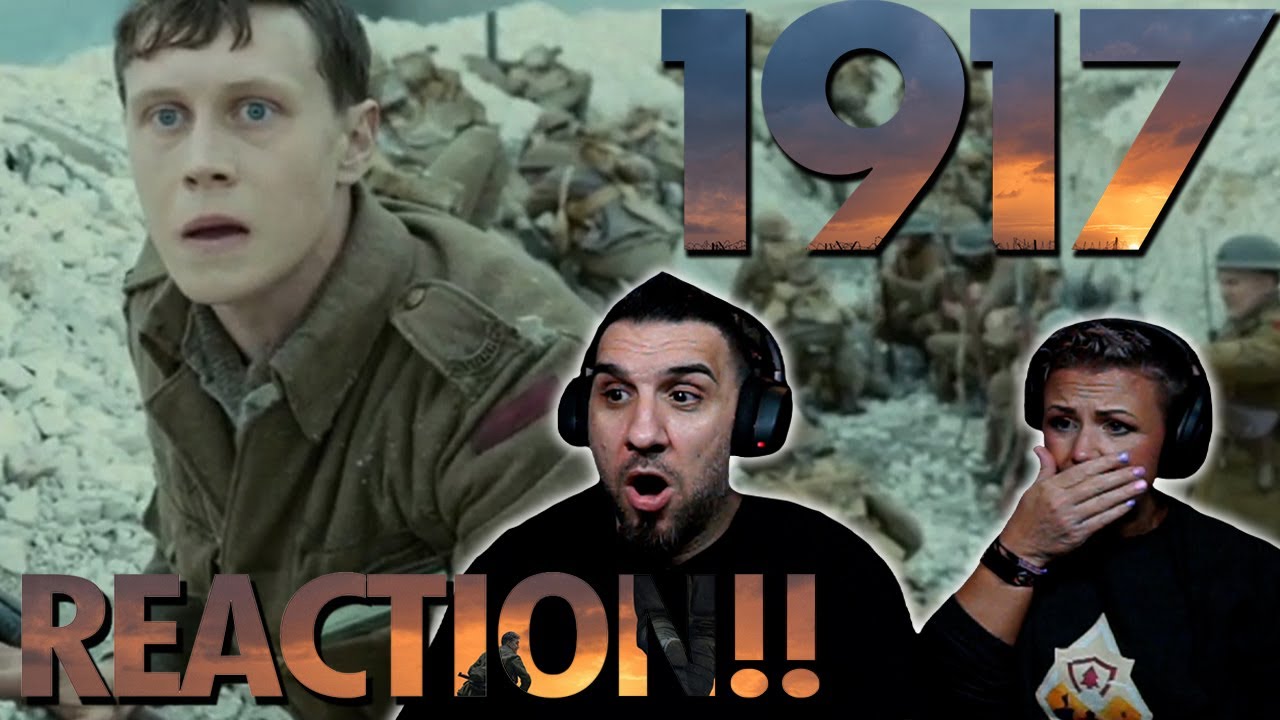
It's meant to make you feel that you are in the trenches with these characters.
The film in itself is a slice of time.
These two young men get sent on a mission to deliver a message to stop an attack.
<i>Action!</i> So they've got to cross into enemy territory on a race against time to deliver a message that will save 1,600 lives.
And the camera never ever comes away from the two characters.
There's always that sort of "get out of jail" card that you have with a movie "Well, you know, we might be able to cut around this or we might take that scene out."
That's not possible on this film.
The dance of the camera and the mechanics all have to be in sync with what the actor is doing when you achieve that it's really beautiful and exhilarating.
Sometimes you have a camera being carried by an operator hooked onto a wire and the wire carries it across more land and it's unhooked again that operator runs with it then steps onto a small jeep which carries him another 400 yards and he steps off it again and goes around the corner.
<i>Let's go back to one.</i> This film does not take place in a series of interiors.
This is endless exteriors.
No location ever repeats, so you're constantly moving through landscapes.
Being such an exterior movie, we're very dependent on the light and the weather.
And we kind of realized, well for a start you can't really light it.
<i>Action!</i> Because, you know if you were running down a trench and turning around 360 degrees there's no way to put a light anywhere.
And because we were shooting in story order we had to shoot in cloud to get the continuity from scene to scene.
So some mornings the sun would be out and we couldn't shoot.
So, we would rehearse.
<i>And we're rehearsing.</i> And then we'd be waiting around, everyone with their eyes up in the sky, trying to see how long it would take for the sun to move behind the cloud.
And as soon as it comes over you've got this five-minute window.
Everyone would be like, "Come on! Go, go, go."
<i>Go! Go! Go!</i> So you are also in the lap of the gods.
It was like a piece of theater every take.
Once it starts it can't stop.
If something goes wrong you just have to keep going.
Until you actually see it on a screen you don't really realize how immersive it is and how that technique kind of draws you into it.
For me, engagement is very important.
And that is behind the way in which we decided to shoot this film.
I wanted people to understand how difficult it was for these men.
And the nature of that is behind everything.
Up Next

9:48
The 12-Minute Action Sequence in Extraction: A BTS Filmmaking Breakdown
@Insider
8M views•2020-05-14

26:22
Walking in the City: Urban Rituals and the Flâneur in Contemporary India
@PSBTIndia
1.9K views•2016-08-02

9:49
FastAPI vs Flask vs Django: Choosing the Right Python Web Framework
@TechWithTim
302.5K views•2024-05-26

1:42
Game of Thrones Opening Credits: A Cinematic Analysis
@gameofthrones
46.3M views•2011-04-18
Related Study Plans & Knowledge Roadmaps
Structured learning paths in General & Interdisciplinary Studies
general-studies
Artificial Light: History, Tech & Human Impact
01The Pre-Electric Era: Fire, Oil, and Gas Lighting
02The Incandescent Revolution and Grid Electrification
03Gas Discharge and Fluorescent Illumination
+ 3 more learning modules
14h6 modules
Explore Roadmap
general-studies
Elevator Engineering: History, Physics & Cities
01From Hoists to Safety Brakes: The Dawn of Vertical Lift
02Hydraulic vs. Traction: The Engineering Physics of Elevators
03Modern Speed, Safety, and Algorithms
+ 2 more learning modules
12h5 modules
Explore Roadmap
general-studies
Rubber: Material Science, History & Geopolitics
01Origins of Natural Rubber & Mesoamerican History
02The Chemistry of Natural Rubber & Vulcanization
03The Geopolitics of the Rubber Boom & Colonization
+ 2 more learning modules
12h5 modules
Explore Roadmap
general-studies
Containerization: Evolution, Logistics & Trade
01Ancient Trade & Bulk Cargo: Amphorae to Barrels
02The Industrial Revolution & Cardboard Packaging
03The Containerization Revolution: Malcom McLean
+ 2 more learning modules
12h5 modules
Explore Roadmap