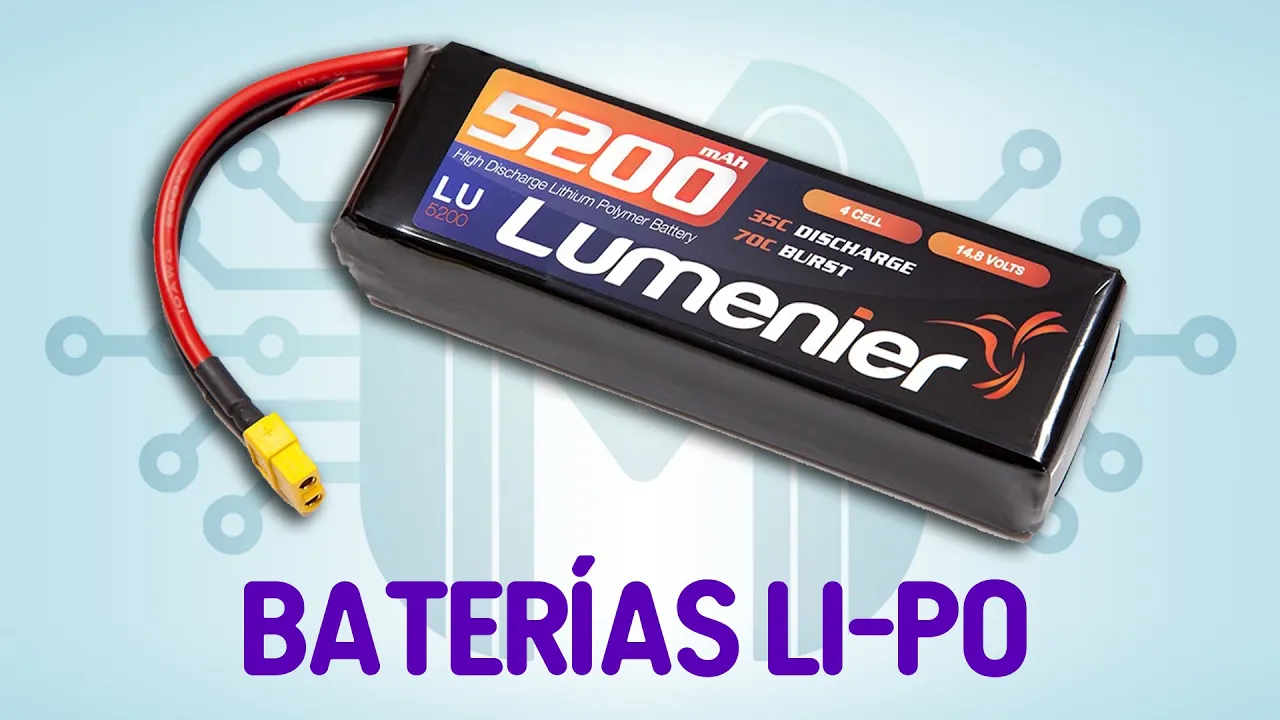

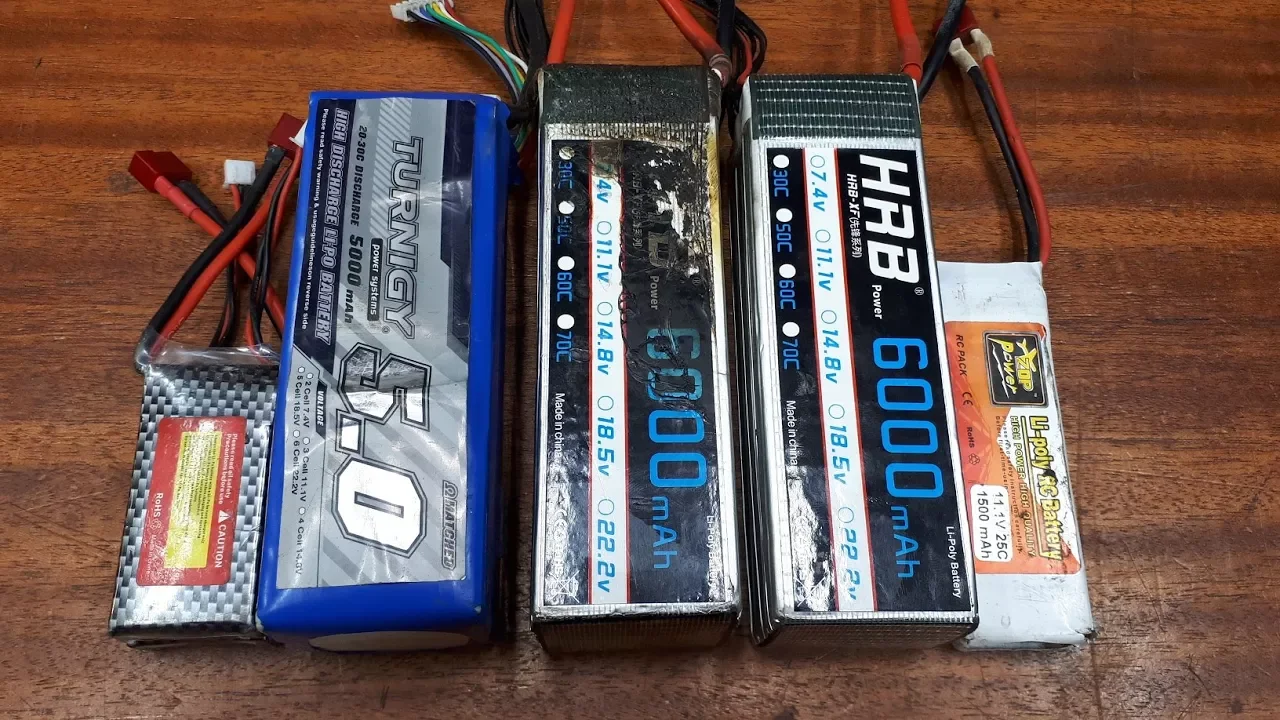







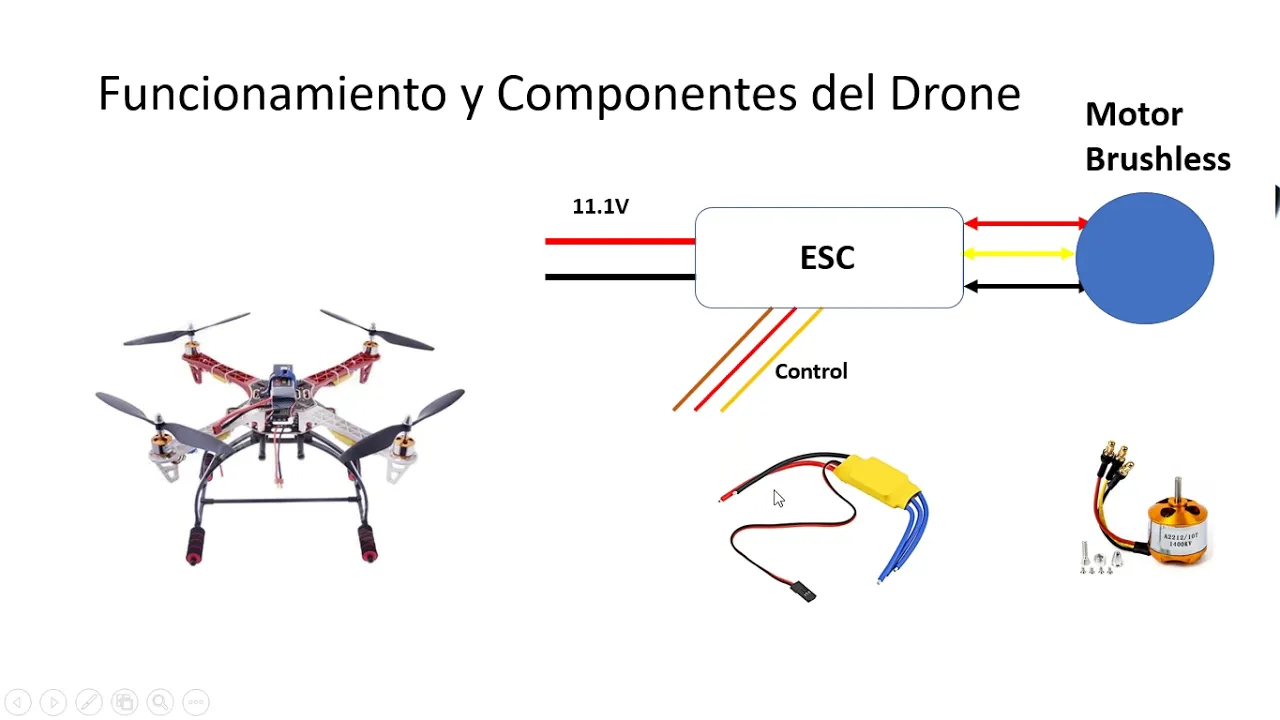




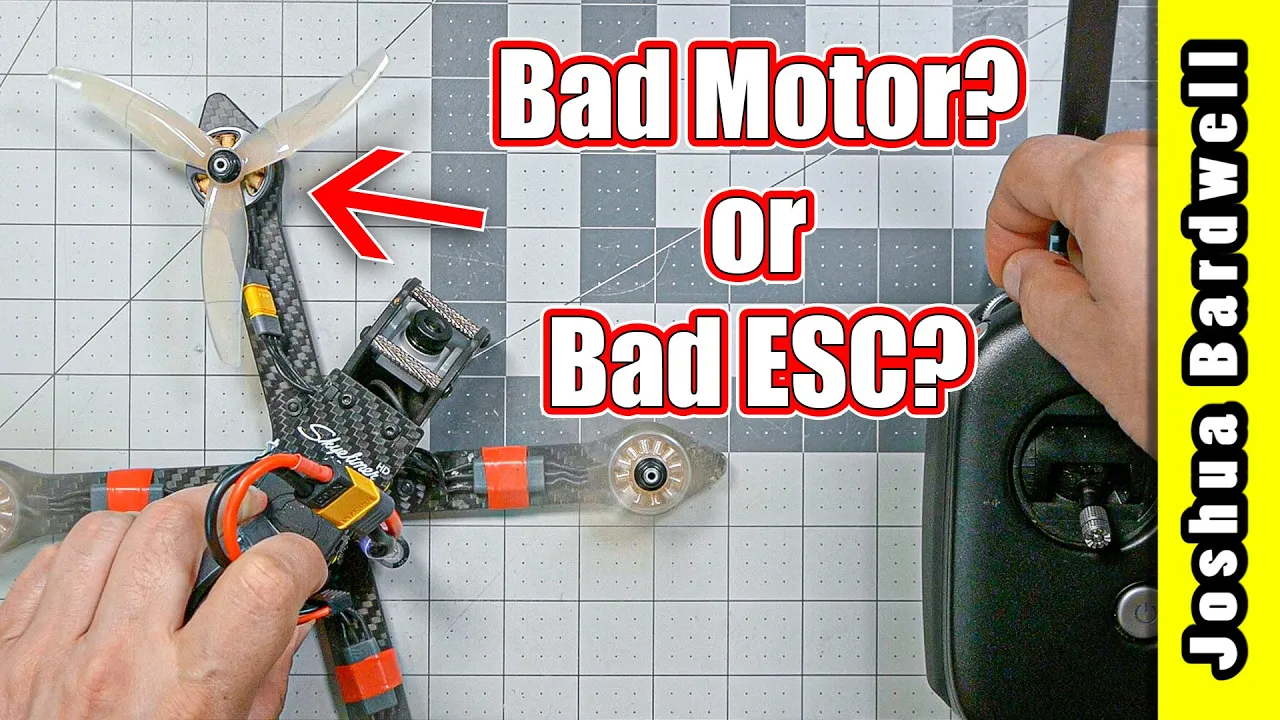




Electronic Speed Controllers (ESCs) are essential drone components that convert direct current from the LiPo battery into three-phase alternating current to power brushless motors, with key considerations including voltage ratings (typically supporting up to 6S batteries), current ratings determined by motor specifications and propeller requirements, and protocol types (analog protocols like PWM, OneShot125, OneShot42, MultiShot and digital protocols like DShot150, DShot300, DShot600) that affect signal transmission speed between the flight controller and ESC.
How Electronic Speed Controllers (ESCs) Work in Drones
Added:Basic DC electrical concepts, including voltage, current, resistance, power, and how LiPo batteries (S-ratings) deliver energy.
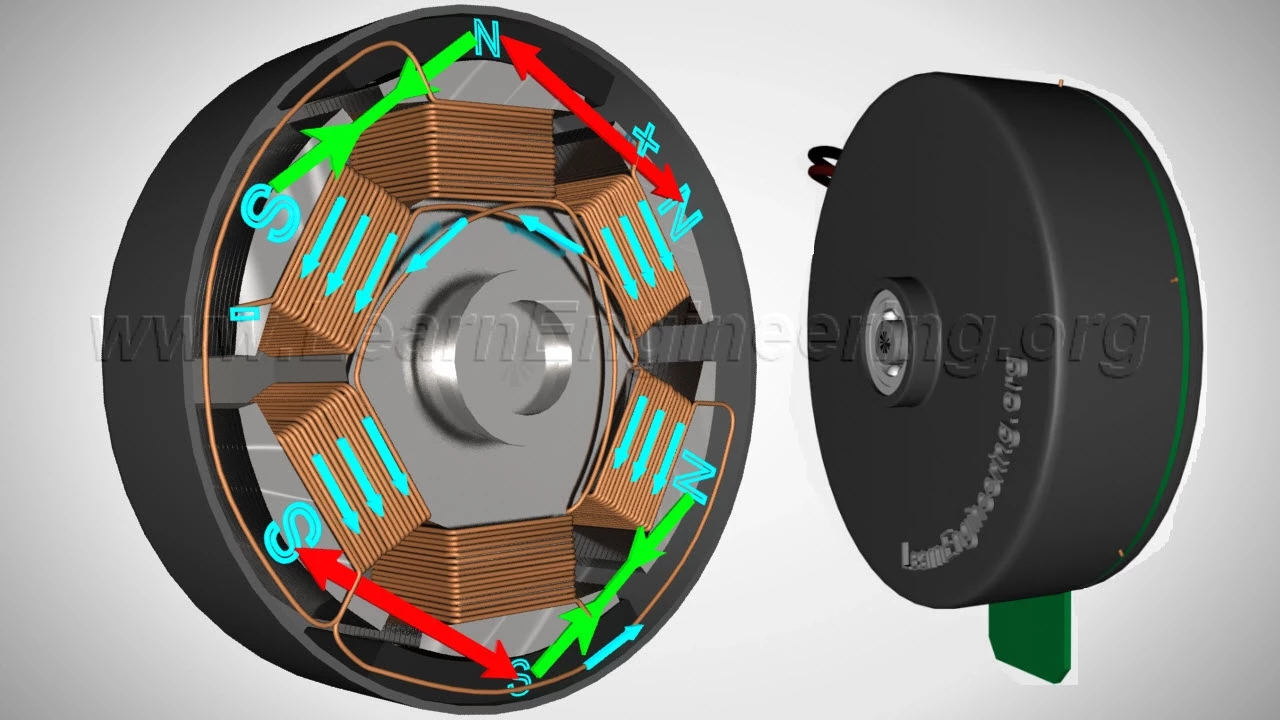
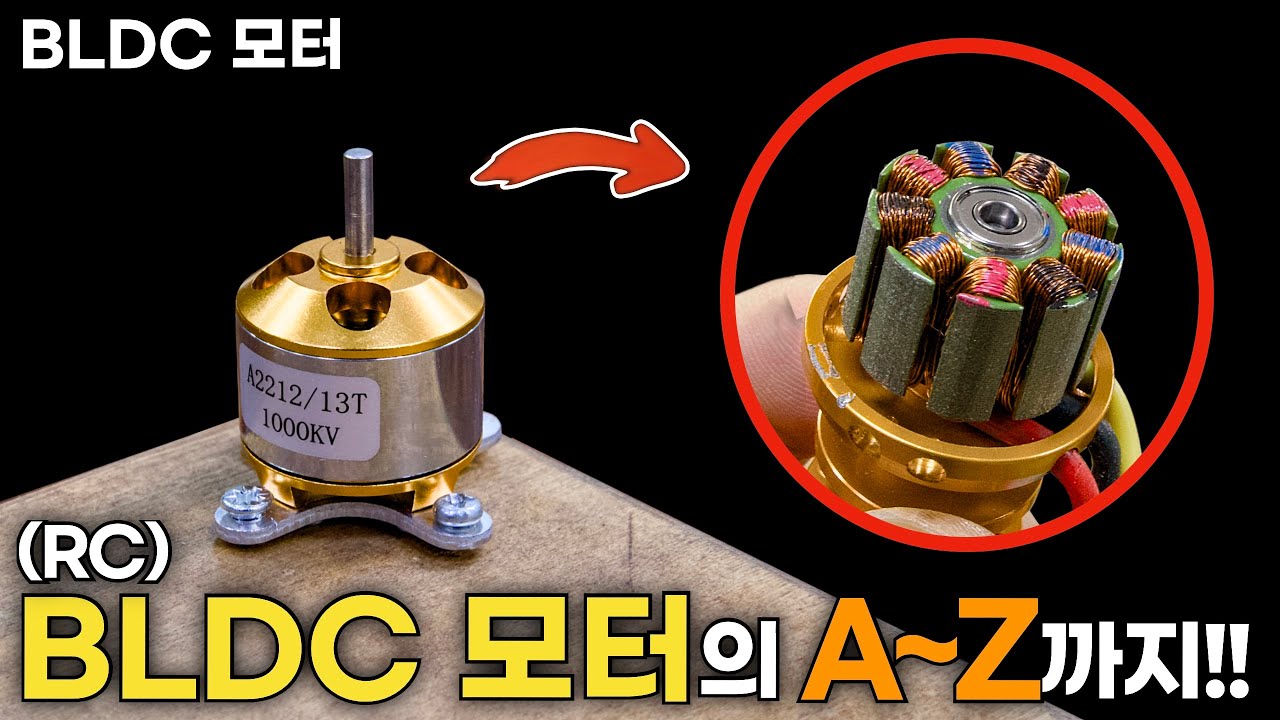
The operational principles of brushless DC (BLDC) motors, specifically how three-phase power rotates the motor electromagnetically.
Fundamental pulse modulation concepts, particularly Pulse Width Modulation (PWM) and how it is used to transmit control signals.
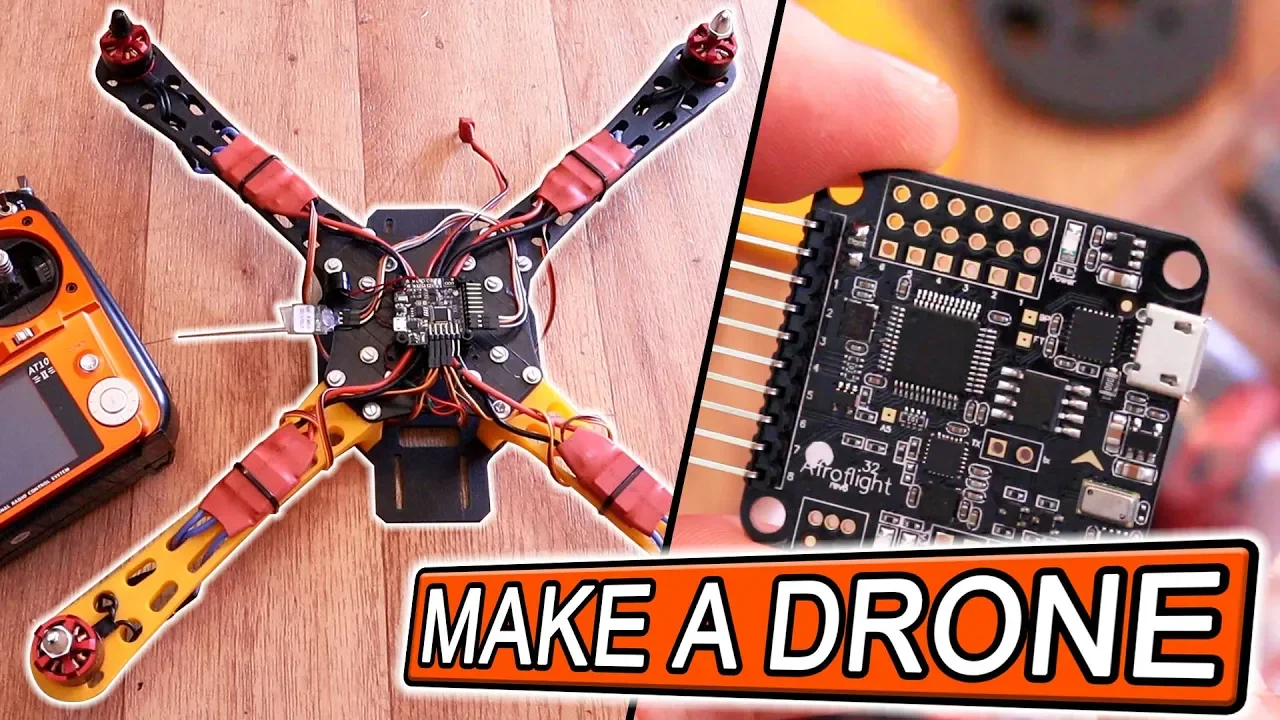
The basic architecture of a drone, including the relationship between the battery, flight controller, receiver, and motors.
Configuring and flashing ESC firmware, such as BLHeli_S, BLHeli_32, or AM32, to customize motor timing and startup power.
Advanced digital ESC protocols, including DShot (DShot300, DShot600) and how Bidirectional DShot enables RPM filtering in the flight controller.
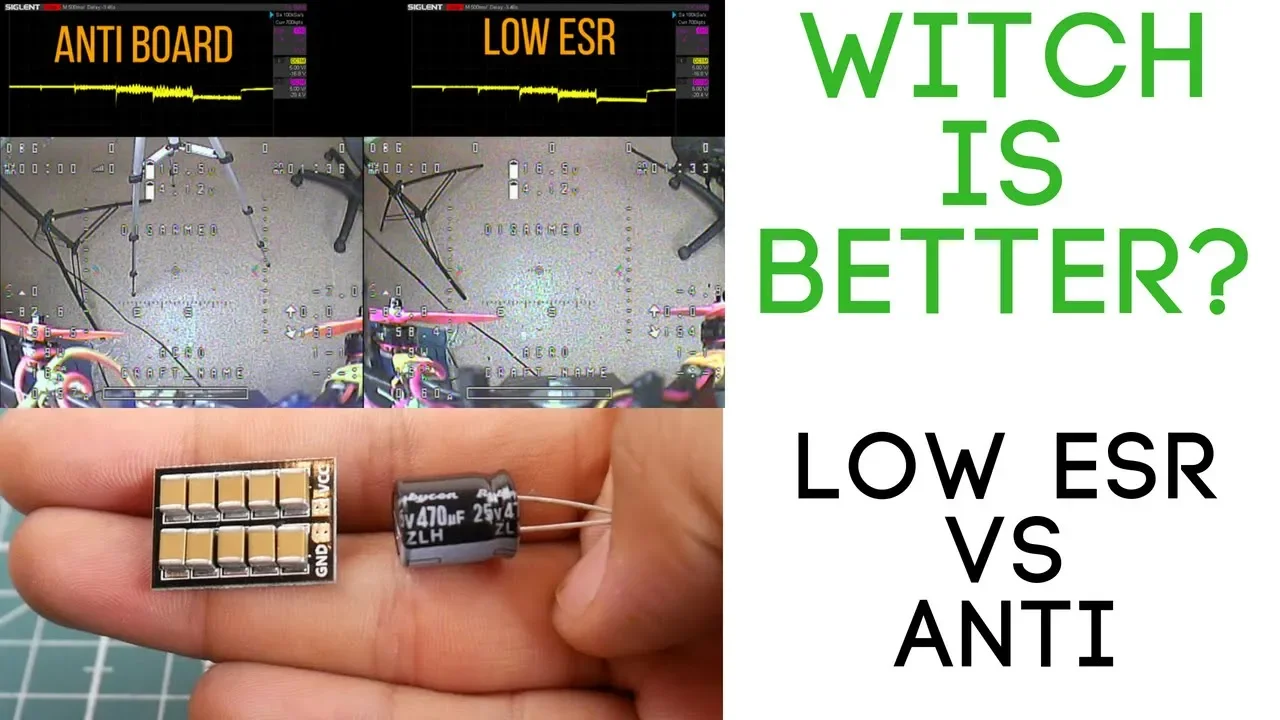
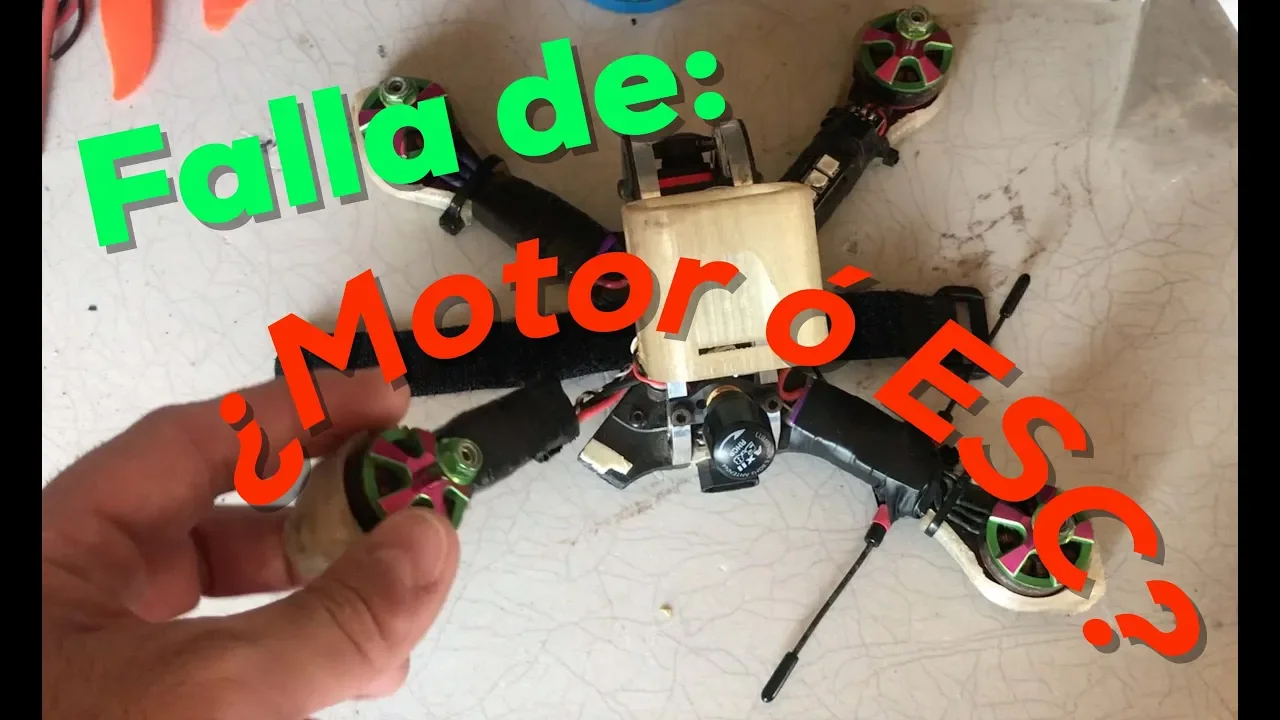
Diagnosing and troubleshooting ESC-related flight issues, such as motor desyncs, overheating, voltage spikes, and the proper placement of low-ESR capacitors.
Tuning PID loops and dynamic filters (like gyro RPM filters) in flight control software (e.g., Betaflight) based on ESC telemetry data.
8.2K views183likes8:28Original Release: 2022-05-25
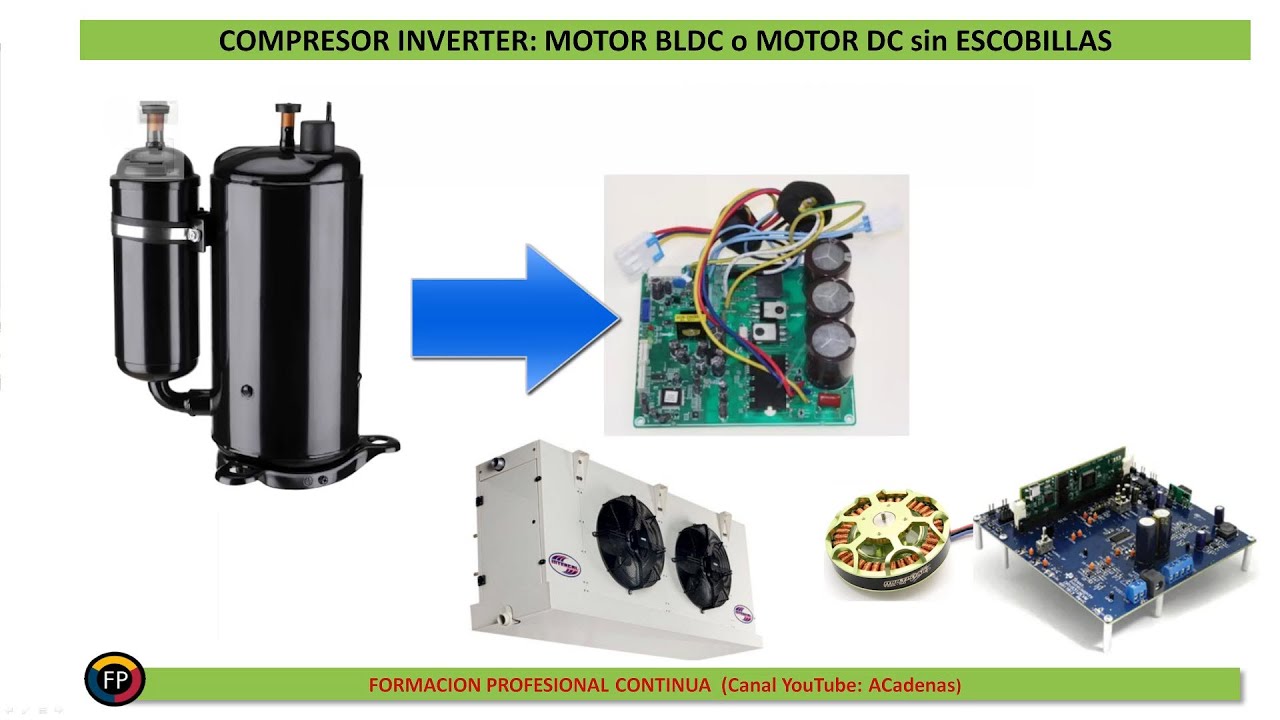
hey welcome to another dronedoc episode i'm your host the dronedoc and in today's episode we're gonna be talking about escs a little bit about voltage ratings a little bit about current ratings uh the benefits to different types of escs and also a little bit about the anatomy of what's on an esc itself let's get started [Applause] now esc's are an essential part of the drone and the performance of the drone is entirely dependent on the variable speed of the motors so esc's are powered from direct current so essentially your lipo battery they take the motor signal from the flight controller output and they provide a three-phase alternating current to power the motor so they offer high resolution high power and high frequency outputs to drive your motors now let's talk about the different types of eses you have four in one esc's and you have single esc's so four and one escs simply means that four escs are mounted on a single circuit board those escs can be moved from the arms of the drone into the center of the drone where the cg is more centralized now let's talk about some of the benefits of an individual esc in the event of a crash if you do crash you can replace one esc rather than four at once so the cost is typically uh a quarter of the price of a four and one esc there's also slightly more cooling effect when the single eses are mounted on the arms though i will say there are some disadvantages to single esc's in fact the wiring can be a bit more complex when the soldering is involved typically you always need a power distribution board uh to distribute that incoming voltage from your lipo battery to each individual esc also having four esc's on the arms plus a power distribution board also makes your drone a bit heavier so the weight is distributed along the arms which also makes your motors work a little bit harder so when you're looking at an esc and you're determining what kind of amp draw you need typically the motor that you're going to be running and the voltage that you're going to be applying to that motor will be on the products of the spec page and usually they have a product page that shows the thrust generated for your specific propeller or the battery voltage that you intend to use so what are the current requirements for your fpv build well it's kind of up in the air with that typically what i do is i i buy an esc that's overrated um for my application that just gives me better performance all around but if you really want to get down to the nitty-gritty you can always find the motor tests that are associated with the motor that you intend to use for your fpv build and what you're going to want to look for is the amp draw generated at 100 throttle for the prop and voltage that you intend to use and that will determine the proper amp rated esc that you will need and for more information on that you can always go and check mini quad test bench uh ryan he's a great guy he's been doing this for a long time been tested motors as long as i've been in the hobby and if you're looking for thrust generated for a particular motor you might want to check out his website and we'll put a link down in the video description for you to go and check that out for yourself so just want to give you a little warning here drawing more amps than your asu can handle can also heat up your motors and cause your esc to fail prematurely things that will increase your current draw can include things like high kb motors large motors or even propeller weight like your pitch and uh and the length of the propeller itself now again it is okay to use a higher rated ese for your application in my case i like to use a high rated esc for my application because some of the advantages i can get from a higher rated esc means that i have less chance of overheating better performance higher efficiency but more importantly a longer lasting esc now let's talk about some of the voltage ratings some escs support up to 6s voltage you just want to make sure that they're compatible with the battery voltage you intend to use powering your escs with excessively high voltage can potentially fry your esc no one wants to fry an esc trust me i've done it before now let's talk about esc protocols now esc protocols determine the speed of the motor signal from the flight controller to the esc and that's chosen inside of your flight controller software so like betaflight for example there are two types of esc protocols you have analog and you have digital and some of the analog speeds from slow to fast are pwm which is the og one from back in the day that has a very long pulse width it's no longer typically used in fpv drones but it always works on esc's when you need them the next fastest one is one shot 125 followed by one shot 42 and finally multi shot and those are the four analog protocol speeds the next four are going to be your digital protocol speeds and that is in order from slowest to fastest at d shot 150 d shot 300 d shot 600 and d shot 1200 and you'll notice if you're an fpv guy and you've been in betaflight before you may have seen the shot 1200 at one point in in the past uh but the beta flight devs have taken that out because they see no benefit to the faster speed of d-shot 1200 so we are stuck on d-shot 600. now esc protocols are independent of the esc itself it's what the flight controller uses to talk with the esc at a certain speed now that you know the back end let's discuss some of the anatomy of an esc itself so this is a typical four in one esc this is made by iflight and what i really like about this ese is all the components are laid out on the board for us to discuss together the first one you have is the current sensor followed by a low dropout voltage regulator and the question becomes what are the actual components on the esc that control the speed of the motor first you have the micro controller unit and then you have the gate driver and that's sent out to the mosfet and finally that signal is outputted to your motors in order to drive your motors then you have filtering capacitors so what is the job of the current sensor well it senses the incoming current and it feeds that information through the current wire from your esc to your flight controller in order to display amp draw in the osd amp draw has to be calibrated to display the proper current rating in your osd now what is the low dropout voltage regulator's responsibility or the ldo voltage regulator so low dropout voltage regulators are used to convert the incoming voltage so your battery voltage down to the proper voltage in order to power the microcontroller or the mcu on the esc they're used to power the microcontrollers because they can regulate the voltage even when the supply voltage is very close to the output voltage now the mcu is a compact unit designed to govern a specific operation it includes processor it includes memory and input output peripherals now the mcu's job is to store the bl holley firmware and that's essentially the brain of the operations the purpose of the mcu is to process the incoming motor signal data and output the resulting calculation to the gate driver now gate drivers are used to rapidly and completely switch the gate of the mosfet it accepts low power input from the mcu and produces the power input needed to switch the gate of the mosfet the gate driver ups the voltage to the required level in order to switch the gate of the mosfet so in essence that's exactly what gate drivers do they're used to drive the switch on the mosfet now some blholi 32 eses also contain the gate driver and mosfet on a single chip so mosfet is an acronym for metal oxide semiconductor field effect transistor and i know that's a mouthful just don't get confused it's kind of a fancy way of saying it's a switching regulator that changes voltage polarity thousands of times per second so essentially mosfets are used to drive your motors they change the polarity of the stator poles and drive your permanent magnet on the motor belt around the stator and lastly we have filtering capacitors and those are used to filter out the electrical noise and the ripple current in the power supply it basically acts like a tiny battery when there are incoming voltage spikes in your electrical power system it absorbs those voltage spikes similar to like charging a battery and it will release that energy when there is a voltage tag towards the end of your battery and that basically results in smoother and more constant voltage for the components on the esc now that you know everything you need to know about esc types electrical ratings protocols and even anatomy go out and pick up yourself a good esc for that fpv build that you've been itching to put together we'll see you guys next time drone doc out [Music] you
Up Next

37:35
MPU6050 Pitch & Roll with Complimentary Filter on Raspberry Pi Pico W
@paulmcwhorter
4.3K views•2024-01-09
30:32
Ultrasonic Transducers: Resonant Frequency Measurement and Horn Design
@imajeenyus42
229.9K views•2017-02-22
54:16
Polymer Environmental Degradation: Mechanisms & Stabilization
@iit
1.8K views•2012-07-10
33:39
How a Student's Question Saved a NYC Skyscraper from Collapse
@veritasium
22.8M views•2025-04-26
Related Study Plans & Knowledge Roadmaps
Structured learning paths in Engineering
engineering
Building Acoustic Levitators: Physics & Arduino
01The Physics of Sound and Standing Waves
02Piezoelectric Transducers and H-Bridge Drivers
03Arduino Programming: Generating 40 kHz Signals
+ 2 more learning modules
14h5 modules
Explore Roadmap
engineering
Building Peltier Cloud Chambers: Particle Tracks
01Cosmic Rays & Cloud Chamber Physics
02Thermoelectric Cooling (TEC) Fundamentals
03Custom Liquid-Cooling Loop Design
+ 2 more learning modules
18h5 modules
Explore Roadmap
engineering
Yagi-Uda Antennas: Modeling, Build & VNA Test
01Introduction to RF and Antenna Fundamentals
02Yagi-Uda Antenna Design Principles
03Antenna Modeling and Simulation in 4NEC2
+ 2 more learning modules
18h5 modules
Explore Roadmap
engineering
ECG Monitor Design: Op-Amps, Filters & Noise
01Electronics & Breadboard Basics
02Op-Amps and Instrumentation Amplifiers
03Bioelectricity and ECG Fundamentals
+ 2 more learning modules
18h5 modules
Explore Roadmap