











![Pierre Bourdieu. Capital humain, capital culturel [1977]](https://i.ytimg.com/vi/WIXOVJ4XNJ8/hqdefault.jpg)



![Sociological Theory: A Skeleton Key to Paul Willis' Learning to Labor (1977), [© Dan Krier]](https://i.ytimg.com/vi/fKyxWUC-gPU/hqdefault.jpg)




Cultural capital, a concept developed by French sociologist Pierre Bourdieu, refers to the cultural knowledge, skills, tastes, and credentials that serve as a form of social currency enabling individuals to navigate society and access opportunities; this capital exists in three forms—embodied (knowledge within individuals), objectified (material possessions), and institutionalized (formal qualifications)—and significantly contributes to social inequality, as those from disadvantaged backgrounds often lack the cultural capital valued by society, making it harder for them to succeed academically and professionally.
Cultural Capital Explained: Bourdieu's Theory of Social Inequality
Added:An understanding of basic social stratification and the classic sociological definitions of social class, specifically Karl Marx's focus on economic capital and Max Weber's theories of status and power.
The concept of social mobility, particularly the distinction between meritocracy (advancement based on individual talent and effort) and social reproduction (the structural inheritance of social position).
The sociological role of formal education, particularly the debate over whether schools function as great social equalizers or as institutions that reinforce existing social hierarchies.
Bourdieu's complementary concepts of 'Habitus' (deeply ingrained habits, skills, and dispositions) and 'Field' (social arenas of struggle), which are essential to fully grasp his complete sociological framework.
The conversion of capital, exploring how cultural capital is systematically converted into economic capital (e.g., high-paying careers) and symbolic capital (social honor and prestige).
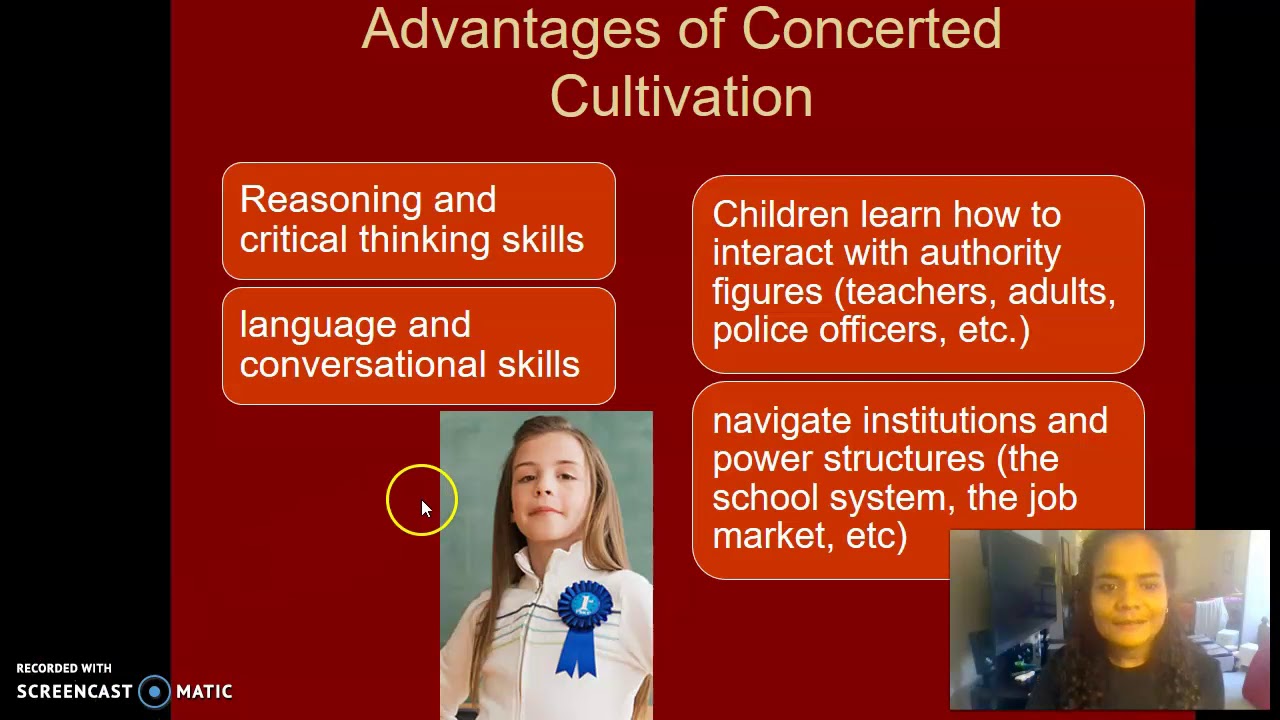
Annette Lareau’s ethnographic research on parenting styles ('concerted cultivation' vs. 'accomplishment of natural growth') as a real-world application of cultural capital theory in child development.
Contemporary critiques of Bourdieu, such as Richard Peterson's 'cultural omnivore' theory, which argues that modern elite status is defined by eclectic, diverse cultural consumption rather than exclusive high-brow tastes.
481.5K views3.2Klikes5:29Original Release: 2015-11-17
cultural capital is a theory developed by French theorist Pierre bardue and is the cultural knowledge that serves as currency that helps us navigate culture and Alters our experiences and the opportunities available to us while cultural capital can be material objects such as clothing or what car you drive bardue also focused on the symbolic elements that embodied cultural capital such as tastes manners skills and credentials that one receives or earns cultural Capital really isn't about economics or how much money you have but it can be exchanged for money and the crazy thing is this money can help you earn more cultural capital according to bdue cultural capital can be a source of social inequality too it is hard for those who are poor or who are part of the working class to gain the types of cultural capital that are valued in society for example having an education and earning a degree is a very important piece of cultural capital let's say a student in poverty has difficulty finding time to study because he works evenings to help support his low-income family this leads to poor performance due to his lack of studying which results in lower test scores and then being placed in lower ability classes which in turn affects his GPA and what college he is able to get into if he goes to college at all in the United States if you are in a lower social class such as the student in our example you tend to have less cultural capital the upper middle social classes have more cultural capital and therefore their social class views tend to dominate in culture Society also tends to give them more Prestige cultural capital takes on three forms the embodied State the objectified state and the institutionalized State the embodied State refers to Capital in the form of knowledge that resides within us while capital in the form of formal schooling is part of the embodied State this type of capital also refers to knowledge that we seek out on our own one of the earliest forms of capital in the EMB embodied state is that which we acquire through language when formal education and culture expect you to not only be able to know your ABCs but to write or recognize words before entering kindergarten it has become important to be exposed to such things as books at home and to be read to in our earlier example the student who cannot study because he works to help support his low-income family may also not have had books in the home or was not read too early in life and therefore lacked capital next cultural capital in the objectified state refers to material objects that we use to indicate our social class or how much Capital we have this might be the easiest state for us to recognize since we focus a great deal on acquiring things and we often tend to assign social class based on a person possessing certain material items for example a person owning a Mercedes or a Lexus indicates greater Capital than a person owning a Ford Focus in today's technological world we can can express our Capital through buying only Apple products as they tend to carry a certain amount of prestige and are an expression of our identity even the type of food such as a person buying only expensive organic food because they have the means to afford it or Box Dinners because they are an expensive and they must do so out of necessity indicates an abundance or lack of cultural capital in the objectified state last the institutionalized State refers to the way that Society measures cultural capital one of the best examples we have is the type of post-secondary degree that we have and how Society tends to view or value US based on that degree a doctor degree has more Social Capital than a master's degree and a master's degree has more Capital than an undergraduate degree we can say that each degree gives a person more Prestige than the next this capital and Prestige can then be exchanged for actual economic capital and it is evident that the higher the degree the more money you can expect to make at your lifetime unfortunately the institutionalized state values formal education and rewards it accordingly but often places a lesser emphasis on Capital that is not considered prestigious such as being StreetWise essentially if you were born into a family with cultural capital it is easier for you to acquire more because you are socialized to embody the values and behaviors Society rewards for example if a student is part of a family where they were read to every night and they were taught manners such as being polite and to listen to adults this will benefit them when they go to school a student who can read and write and who is also respectful may earn opportunities such as being placed in advanced classes or receive higher grades this then gives them more opportunities later on such as being accepted into a prestigious college and then that college then connects them with a strong network of people and companies they can work for when they graduate this is not the same with people who are either born into or grow up with less cultural capital so what is one well-known public figure that you can think of that has significant cultural capital how can you demonstrate that they have that Capital other than education what ways does society reward or punish People based on their having or lacking cultural capital and how has cultural capital changed over time what is one example of a type of capital that is no longer valued as it was in the past and what is one new type of cultural capital in our society
Up Next

27:32
Social Class & Education: External Factors Explained
@EsherSociology
50.7K views•2016-08-04
54:57
Contemporary Sociological Theory: Micro, Macro, Integrative
@NaSESYNC
45.7K views•2016-02-17
4:57
Labeling Theory: Society's Reaction and Deviance Explained | Sociology
@sociologylive4343
351.4K views•2015-11-06
9:41
What is Sociology? The Sociological Perspective Explained
@crashcourse
4.6M views•2017-03-13
Related Study Plans & Knowledge Roadmaps
Structured learning paths in Sociology
sociology
Celebrity Culture: From Hollywood to TikTok
01Foundations of Celebrity Sociology
02The Rise of Micro-Celebrity & Digital Platforms
03Parasocial Relationships & Algorithmic Intimacy
+ 2 more learning modules
12h5 modules
Explore Roadmap
sociology
Hostile Architecture: Space, Power & Control
01Introduction to the Sociology of Space
02Social Control and Surveillance in the City
03Hostile Architecture and Defensive Design
+ 2 more learning modules
12h5 modules
Explore Roadmap
sociology
Loneliness Epidemic: Third Places & Isolation
01Foundations of Social Capital and Community Cohesion
02The Death of Third Places and Urban Space Erosion
03The Privatization of Leisure and Atomization
+ 2 more learning modules
12h5 modules
Explore Roadmap
sociology
Sociology of Tourism: Gaze, Power & Heritage
01Foundations of the Sociology of Travel and Leisure
02John Urry and the 'Tourist Gaze'
03Staged Authenticity and Cultural Commodification
+ 2 more learning modules
14h5 modules
Explore Roadmap