


















Successful paid communities require paid membership models with clear value propositions, structured onboarding processes, and continuous value delivery; free communities fail because people don't invest effort without skin in the game, while paid communities create accountability and engagement that drives results.
Paid Community Launch Strategy: Lessons From a $50K Failure
Added:Fundamentals of Subscription Business Models: Understanding metrics like Monthly Recurring Revenue (MRR), Customer Acquisition Cost (CAC), and Customer Lifetime Value (LTV).
Basic Sales Funnel Architecture: Familiarity with lead generation, conversion paths, and the conceptual structure of an 'offer' or value proposition.
Core Principles of Online Community Management: Understanding member dynamics, basic engagement strategies, and popular hosting platforms (e.g., Circle, Discord, Slack).
Introduction to Customer Retention: Conceptual knowledge of customer success, churn rates, and why users disengage from subscription services.
Advanced Churn Analysis and Cohort Tracking: Utilizing data analytics to pinpoint member drop-off phases and executing targeted interventions to boost retention.
Designing and Optimizing High-Value Offer Ladders: Structuring high-ticket backend products, such as mastermind groups, intensive coaching, or certification programs, for mature community members.
Community Tech Stack Integration and Automation: Designing automated onboarding workflows, event triggers, and payment systems using tools like Zapier, Stripe, and specialized CRMs.
Community-Led Growth (CLG) Playbooks: Utilizing highly engaged community members as brand advocates to drive organic acquisition and build viral marketing loops.
Scaling Governance and Moderation Frameworks: Transitioning from manual, founder-led management to structured peer-to-peer moderation and self-governing community systems.
867 views46likes11:20Original Release: 2025-06-30
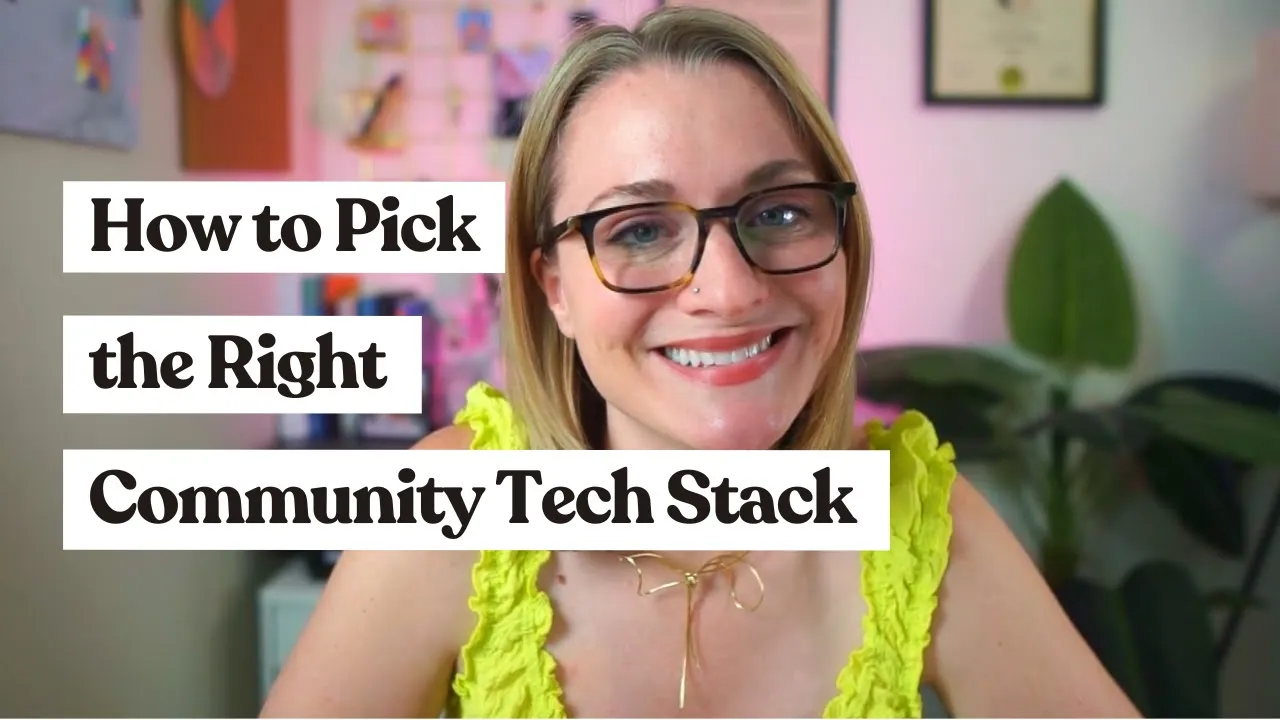
Here's some real talk. I screwed up my first community launch so badly that I probably left $50,000 on the table in the first year alone. And I see creators making the same exact mistakes that I made over and over, launching free communities, wondering why no one shows up, then giving up and thinking that community just isn't going to work for them. And so today, I want to pull back the curtain on my Creator Wizard community, what bombed, what worked, and the specific changes that took me from crickets to over 2400 engaged members who are landing consistent brand deals.
And if you're thinking about launching a paid community or you've got one that's just not working, this is for you. And this video is sponsored by Circle, which is the platform that powers my entire community and course ecosystem. I've been using them for years, and they've literally transformed how I run my business. I'll show you exactly how throughout this video. All right, so let's rewind a little bit. When I first started building my community, I launched a free private Facebook group.
And my thinking was I need to like meet people where they're at. Facebook's familiar. Everyone's already on it. It's just going to kind of lower the barrier to entry. And to be fair, people did join. At first, things looked pretty promising. People introduced themselves.
They dropped a few comments here and there, but after a few months, engagement basically flatlined. This is not hyperbole. It was like yelling into a void. There was basically, you know, at that time maybe 500 members in there and ultimately we had every time I would make a post the reach would be like 10, right? And I just kind of found myself chasing people down like, "Hey, are you still alive in there?" And this was like basically two wakeup calls. Number one, social media platforms always decrease your organic reach, not just on your public facing platforms, but if you have private groups on there like Facebook.
And number two is that when people don't pay, they don't pay attention. And so I I pivoted when I launched my course, Brand Deal Wizard, which people were paying for. I included lifetime community access as a bonus, which by the way sounded great on paper, but what I didn't realize was that I never defined what lifetime access really meant. Did it include lifetime support?
Was I answering questions forever? I kind of left all that super vague. And over time, that lack of clarity became a problem. People assumed different things, and I just really hadn't set those boundaries. And so eventually I realized something really important is that people don't just need a place to hang out. They need structure. They need buyin. They need skin in the game. So when I ultimately launched my coaching program, that completely changed the dynamic because when people pay for ongoing support, they really pay attention. They show up. They take it seriously. And honestly, they get better results because they're actually invested. I want to drill a bit deeper into this idea about skin in the game because again, it's not just about charging money. It's about the psychology of commitment. When someone joins a free community, there is no real expectation. They're like, "Okay, cool.
I'll poke around maybe." But when they pay even a little, it just changes the way that they show up. They think, "Okay, I'm in this. I want to get something out of this." They start engaging. They start asking questions.
They start actually using the resources.
And this part's critical. You have to help them understand what results they should expect and how fast. So, just as a quick case-in- point example here, something that I that I changed recently was eliminating monthly installments as an option for my coaching program. On its surface, I thought, "Oh man, you know, three grand a year is kind of, you know, a large investment for people. Let me have like a $300 a month option there." And a lot of people did ultimately choose that monthly option, but they had the wrong expectation going in. They thought, "Okay, I'm going to get a brand deal in the first 30 days."
And when they didn't, they thought, "Okay, well, I'm going to churn. This isn't working for me. Brand deals aren't going to work for me." And even though I never explicitly said, "Oh, you're going to get a brand deal in the first 30 days." Like very clearly in all of my content on the sales page for my coaching program, I never make any guarantees about what the timeline is.
In fact, it's the opposite. I say brand deals take a long time, right? It takes a long time to actually forge these relationships with brands. Might be, you know, 3 6 12 months before you can get like a very lucrative deal across the finish line. And so eliminating the monthly payment option felt like the right move to realign those expectations because otherwise they're either going to expect a miracle in week one or they're going to think they're failing when they hit a normal dip in motivation. And so I think really where where my mind has landed on this is that what folks get out of your community is directly tied to the effort that they put in. And it's your job to set that tone from the very first touch point.
Here's another thing that most people don't understand about community. It's not just about the forum discussions.
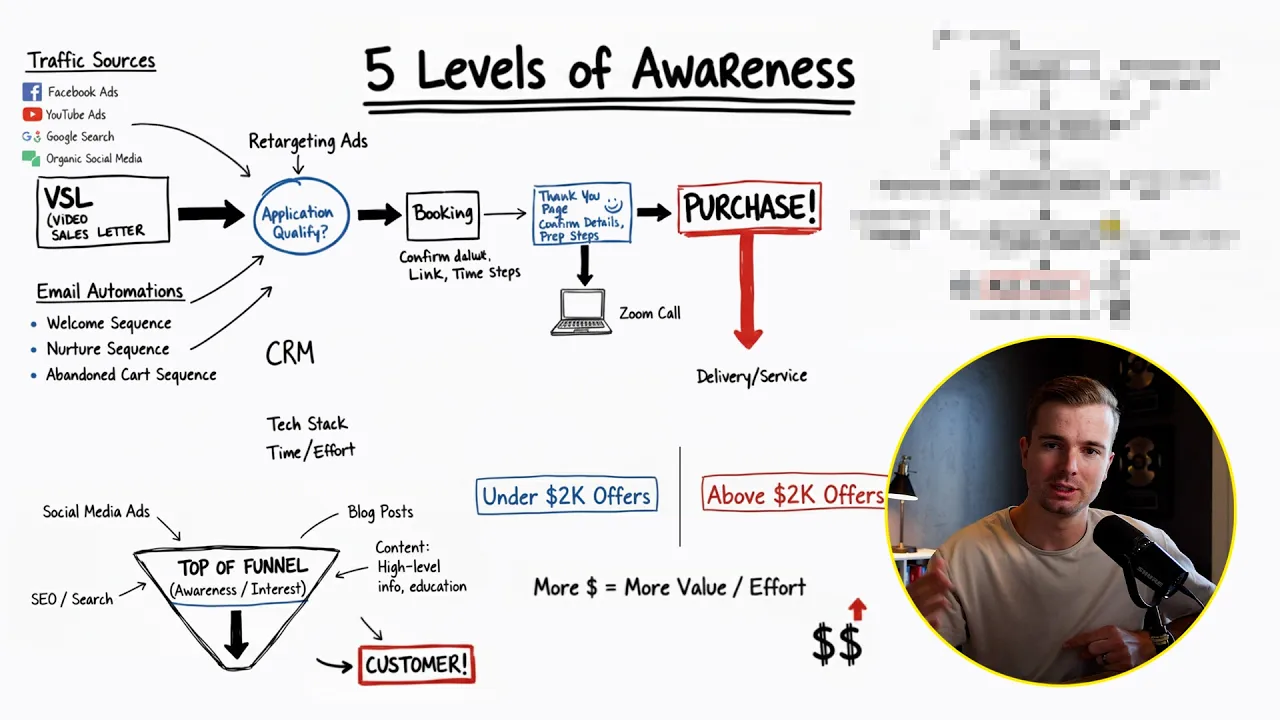
It's about creating a complete ecosystem. And so with Circle, I'm able to build what I call my offer ladder all in one place. So the first tier is my free creator wizard space group. And this is where people basically stumble into after they join my weekly newsletter cuz I drive them there. And basically I share sponsorship opportunities, not just on my newsletter, but in this circle space because they're like quick turnaround time opportunities like, oh, this brand, you know, in the next 24 hours, they need to find some creators. And so there's like an incentive for people to be in there. And the genius of Circle is that I can make this space broadcast only to everyone. So there's not like hundreds, thousands of comments in there asking for support, but it's still super valuable for people to be in there. I can drop more content, my YouTube videos, interviews I've done, blog posts, etc. Then tier two is my brand deal wizard course. And all of my course videos live directly in Circle. No more sending people to Thinkic or other course platforms and just hoping they remember their login, right? And so again, the people who are in the free space group can see the brand deal wizard course in there, but they can't access it. There's a payw wall essentially. And so, not just the course, but the next rung up is the coaching program that they think, "Oh, wow. I've got this opportunity right here in my inbox. I could really use support from the the team of of sponsorship coaches here. There's a lot of like natural FOMO there to upgrade.
And so that next tier up, tier three is the Wizards Guild coaching." And this is where the real transformation happens. I think Circle's privacy settings are perfect for this, right? I can create private spaces where only coaching members can participate in things like our, you know, like our twice monthly co-working sessions, for example. So, now let me explain where I really screwed things up in the beginning, which was onboarding. I thought I could just kind of throw a bunch of like smart creators into a circle space and let them introduce themselves and then just, you know, magic would happen. Awesome.
Spoiler alert, it didn't. My friend Jake Klaus actually has this amazing analogy that totally changed how I think about community. He says, you know, joining a community should feel like joining a gym where someone kind of gives you like a personal tour. They walk you through the layout. They show you where the dumbbells are. They maybe introduce you to a regular who like comes in every Monday like, "Oh yeah, meet this person.
That's awesome." And say, "Oh, here here's a class that I think you would like, you know, based on the goals that you shared with me." And you know, that basically like five minute tour makes all of the difference because now you're not just a stranger. You you feel oriented and you're not guessing where the value is, you've seen it. And so right now the things that I'm working on are uh improving my email onboarding sequence, right? So when people join the coaching program, for example, I'm sending them like a drip sequence over like I think it's like a two-month sequence where I'm saying like, "Hey, have you done this yet? Hey, you should log in and do this. Hey, have you done that?" So like kind of like nudging people, right? Creating like an actual onboarding miniourse. That's something that my friend Jay does, which I love and I'm going to duplicate soon. I'm considering doing maybe welcome calls.
actually might be interesting with like cohorts of new members really standing up a member directory that's actually updated populated with people's information so they can start connecting with each other. Circle has a bunch of of really advanced like gamification features that we're I'm going to be digging into soon like you know milestones and participation streaks and so on. And so just like every few weeks, every few months, my goal is to just basically like add something new to just continue to stack the value. And my goal is not to overwhelm people in my community. It's to give them momentum, like a sense of direction, like here's exactly what to do next. All right, we have to talk about AI for a second here because I think this is on a lot of people's minds. Either you're terrified about it, you're excited about it, maybe a little bit of both. That's kind of like me. And of course, Circle has a bunch of like amazing tools that they're developing to help you with this, like, you know, AI agents and chat bots and and things like that. For me, the way I'm thinking about this is basically like rolling out over time custom AI tools that are going to help people in my community. So maybe this is something like, you know, a pitch assistant to help you write pitches using my proprietary framework, maybe helping you generate proposals, maybe helping you draft post campaign reports. These are the things that I'm actually tinkering with right now because the key to me is that these, you know, uh things are are not replacing human coaching in my mind.
They're making the human coaching more effective. a creator can use the, you know, AI, the pitch assistant to draft the pitch and then post it in the coaching space for feedback, right? And this can kind of like cut down on the time from idea to execution. And because this is all inside circle, these tools are exclusive to my paid members. This is not an upsell. I'm not going to become a software founder and sell access just to the tool. That's not the model that I want to have. I want to continue to stack all these cool tools inside of the community because this is just value, value, value over and over.
And I've got to share one more thing that I'm really excited about which I'm tentatively calling retention reports.
So, you know, I I occasionally do these like quarterly challenges or other, you know, kind of seasonal promotions or things like that. And so, I have a bunch of people join the community in like a very short time span, like 7 days, like, okay, we got 20 more people, this type of thing. And so, I have these situations where a bunch of people are deciding whether to renew their community membership all at the same time. And that represents like a very large injection of capital into the business. And so it's in my best interest to essentially figure out ways that I can illustrate to my community members the value that they're getting out of the program. So the things that we're exploring right now is like, okay, is there a way in which we can take all of the comments, all of the posts that, you know, this person has made in the community over the last year, run this through some sort of custom AI tool, and it can spit back out some sort of report saying like, here's all the value that you've gotten out of being part of my coaching program over the last year. I mean, if if people are like mentioning the numbers of the deals, right? Oh, I got a deal for this amount of money, whatever, in their posts or comments or whatever, that's even better because we can pull that information out and be like, "Hey, just as a reminder, you've gotten x,000 worth of deals over the last year, and we've helped you negotiate in the following ways, blah blah blah." Again, I don't really know if this is going to work, but these are the things that I'm working on right now that AI can enable. So, if I were launching a paid community today, here is exactly what I would do. Number one, I would start with Circle from day one.
Don't mess around with Facebook groups or separate course platforms. Build your entire ecosystem in one place. Number two, I would use Circle's privacy settings strategically. Like let people see what they're missing without overwhelming them. Number three, I would create an actual onboarding strategy, right? Like using Circle's course feature to like guide people through their first weeks and months. Number four is I would build my offer ladder inside the platform. Just make it easy for people to upgrade when they're ready. And number five, if you're going to do coaching, I would really consider making it asynchronous because I think it's more scalable and I think it's often more effective than live calls. So to me, community is not passive income.
It's kind of like relationship income, but if you do it right, if you create real value and help people get real results, it can become one of the most rewarding parts of your business, both financially and personally. So thanks again to Circle for sponsoring this video. And if you're ready to get started, make sure to check them out in the link below. And if your brain broke when I said the word offer ladder and you thought, "What the heck is that?" I break down my entire offer letter/funnel step by step in this video right here.
Up Next

139:14
Alex Hormozi Live Q&A: Scaling Advice for Business Owners
@AlexHormozi
31.4K views•2026-03-14
46:36
Retention Habits of Top DTC Ecommerce Brands Revealed
@SendItPodcast
44K views•2026-03-03

15:23
Decoy Effect: How Pricing Psychology Influences Consumer Spending
@bobinvestsUS
90K views•2026-01-05

17:30
The Planned Obsolescence of Light Bulbs and Tech
@veritasium
25.3M views•2021-03-26
Related Study Plans & Knowledge Roadmaps
Structured learning paths in Business
business
Pop-Up Retail: Strategy, Design & Execution
01Introduction to Pop-Up Retail & Strategic Goal Setting
02Budgeting, Site Selection, and Legal Essentials
03Experiential Retail Design & Visual Merchandising
+ 2 more learning modules
15h5 modules
Explore Roadmap
business
Reg CF: Startup Funding, Marketing & Launch
01Introduction to Equity Crowdfunding & Reg CF
02Platform Selection & Legal Preparation
03Crafting High-Converting Campaign Assets
+ 2 more learning modules
14h5 modules
Explore Roadmap
business
Productized Services: Scaling Solo Freelance
01Foundations of Productized Services
02Packaging and Scope Definition
03Pricing and Subscription Models
+ 2 more learning modules
15h5 modules
Explore Roadmap
business
Gov Procurement: Find, Bid & Win Contracts
01Introduction to Government Procurement & Business Setup
02Small Business Certifications & Set-Asides
03Finding and Analyzing Contract Opportunities
+ 2 more learning modules
14h5 modules
Explore Roadmap