


























Business scaling requires transitioning from roles-based expansion (adding more people) to workflow-based expansion (reorganizing processes into automated workflows), where each activity becomes a specific agent or sub-agent trained to perform defined tasks, enabling businesses to scale without proportionally increasing headcount.
Alex Hormozi Live Q&A: Scaling Advice for Business Owners
Added:Fundamental business unit economics, including concepts like Customer Acquisition Cost (CAC), Lifetime Value (LTV), and gross profit margins.
Basic marketing and sales funnel frameworks, specifically how leads are generated, nurtured, and converted.
The distinction between cost-plus pricing and value-based pricing models in both service and product businesses.
An understanding of basic organizational structures and the transition from a solopreneur to a small team operator.
Advanced operational systemization, such as developing Standard Operating Procedures (SOPs) to build self-managing business units.
Mergers and Acquisitions (M&A) and joint venture strategies as vehicles for rapid inorganic business growth.
Strategic compensation design, including performance-based incentives, profit-sharing, and equity structures to attract and retain top talent.
Capital allocation theories and portfolio management for reinvesting enterprise profits into high-yield assets or new acquisitions.
31.4K views1.1Klikes2:19:14Original Release: 2026-03-14
Where do I?
You want to go live? Oh, we are. Jet, what's up, dudes?
>> All right. Am I on these things?
>> Yeah.
Hey, Alex.
What's up? Look at the mosy. That's me.
That's me. That's my name. All right.
Um, let's put this over here. Fantastic.
All right. Do I have some paper or am I going to remember all this [ __ ] Paper.
All right. Let's rock.
Greetings from Miss.
>> You are connected as the host. Welcome host. You are now in the host room and can manage your callers from the call-in studio web interface.
Audio recording is on dual channel.
>> What's up?
Who am I looking at?
So, I'll uh I'll rock I'll rock and roll for you guys. Happy uh what day of the week is it?
Friday. Jesus. All right. Happy Friday, everybody. I've been trying to do more of these for Rosie Hotlines because y'all have asked for them and so I am doing them. Um because I'm I'm a slave for approval. I need to fill the hole in my soul where the approval of others uh goes. Um I'm kidding. You guys rock. Appreciate you. Um thanks for tuning in. I know there's many places that you could draw your attention and I thank you for flying Herozi Airlines. So uh Heroszi Airlines is actually hilarious. But uh we good rock and roll. All right. first one. Let's rock.
>> Yo, uh >> yo, what's up, Alex? How are you, man?
>> Hey, just remember to mute me in the background. All right, so what's uh what's up?
>> Perfect. So, my name is I have three locations, three dental offices in Southern California. So, as of right now, we are doing around $2 million in revenue and we are essentially stuck.
One of our offices is doing $1.2 million in revenue and the other two offices are underutilized.
>> Okay.
>> About three to 400,000.
>> Okay.
And you said dental offices.
>> Health conscious.
>> Yeah. Yeah. Dental offices.
>> Okay. Got it.
>> Do dentistry in Orange County.
>> Word. So what's what's holding you back?
So, we have a lead evolution problem.
So, as of right now, we get about 30 new leads a month from a referral >> for all three locations.
>> Still, yeah, for all three locations.
>> So, you must be high ticket.
>> Yeah. Yeah. High ticket.
>> Okay. What's the average case size?
>> Average case size presented is probably around 19,000 or so.
>> Okay. Is this uh like veneers or something like that?
>> A lot of implants, veneers.
>> Okay.
>> And like full mouth rehab. Yeah.
>> Got it. Word. Okay. So, what do you you have one referral partner who's getting you 30 leads a month?
>> Correct.
>> Okay. Got it. Um any reason you don't get like what did you do to get the referral partner that you have?
>> We essentially just signed up signed up on our website. She's a big YouTube personality.
>> Okay. and we're on a map essentially.
>> Okay, got it. Um, are there other people who exist like her in the world?
>> There are there's one more. He's in Germany, but she's kind of the biggest one.
>> Okay. Uh, can you get more from her or 30 is the absolute max of what she offers?
>> So, I mean, we can get more, but it's it's not a direct referral.
People find us on our website.
>> Okay. And then they call us and they schedule.
>> And how do they find you?
>> They just find us on the map. We're the only people in Orange County.
>> Okay. So, any reason you're not running PPC pay-per-click?
>> So, we we do run PPC at the moment. We ran a Facebook campaign about $10,000 a month with an agency.
>> Okay.
>> And the agency was the the copy was all towards low fruit and there was a lot of discount come through.
>> Uhhuh.
>> So right now I mean sorry over those three months >> we got zero patients.
>> Okay. Uh >> and then as of right now we're at $12,000 a month in Google campaign.
>> And so so you are still spending that money. You're just not getting patience from it.
>> Just started. Just started last week to be honest.
>> Got it. What's the offer?
offer is essentially a free consultation with a free trobe scan, free smile assessment discounted cleaning.
>> Yeah. Um, what can you do?
Well, so you're spending this money now.
Are you getting clicks? Are you getting leads?
I've had a few clicks, few leads, but a lot of the keywords we're searching for are pretty low low volume.
>> Uhhuh.
>> So, we don't get too many clicks to be honest, but we had a few phone calls, but no no actual conversion just yet in the past week and a half.
>> Yeah. Um, so what's the sales motion?
So, they opt in on the site, then what happens?
>> They opt in and then I give them a call personally within two minutes.
>> Wow. Okay.
And then what happens?
>> So once they once I get my calls, I get them scheduled as soon as possible.
But as of right now, so we have one doctor working within three offices.
>> Okay.
>> Booked out about two and a half weeks.
>> Okay.
>> So we are essentially booking empty slots which are few and far between. So our show rate is decent. It's about 70% but it's about three weeks out.
>> Okay. And you just haven't met with these people yet or you have >> Sorry if I'm sorry if I'm talking a little weird. I'm hear a little echo in the background.
>> Yeah. And I hear it. So they opt in, you call, you schedule them three weeks out.
Okay. Then what happens?
>> They they show up. We present the treatment plan. We educate them on exactly why we're doing this and what the difference is between normal.
>> You pitch them >> and holistic dentistry is.
>> Yeah. And you pitch them, right?
>> Yeah.
>> Okay.
>> Scheduled as soon as possible.
>> And then you get them rescheduled after they pay. You mean >> rescheduled? Uh I guess scheduled for their first appointment.
>> But the first appointment is the thing that they show up for, right?
>> Correct.
>> That's where you tell them all these different you pitch them and then they come to another appointment that's a dental appointment.
Yes.
>> Okay. So, you do sell them on that first appointment, correct?
>> Correct.
>> Okay. Got it. And so, you have leads that are going through this process.
Since you're spending money on PPC right now, have you made any sales from that >> from PPC? Not yet. Now, >> so you said you have 70% that are showing up. How many have showed up to create the 70%.
>> So, we used to run PPC in the P, but it was pretty low. So, right now, >> you said you're running Google Ads. So what ads are you running for Google ads that you're spending 12,000 a month on that you're getting 70% shop rates for?
>> So we have the Google ads running for 12,000 a month right now, >> right? So what are the what are these Google ads >> on what platform? Like I said PPC which is AdWords which is the same like basically I'm saying the same thing.
You're saying what you're saying we used to run PPC now we run Google ads. Those are the same thing unless you're running Google Display, which I doubt, or YouTube ads that are pre-roll, but you probably would have said YouTube ads.
So, what are you what are we talking about?
>> I think we're talking about the same thing. I think I'm being a little bit confused.
>> I agree. That's my point. So, you had an agency and then now you run it inhouse and you're spending 12,000 a month. You have 70% showing up. So, people So, you're spending 12,000 on these keywords, right?
>> Not yet. We We have 12,000 aotted.
Haven't been able to spend it yet. So, you haven't spent $12,000?
>> No. No. We have $1,200 budget.
>> Then what are these where are the 70% Where's the 70% show rates coming from?
How many leads do you have that created that?
>> The 70% show up rate is coming from the referral.
>> So, okay.
>> Okay. So, you have a budget of $12,000 for Google Adwords that you have not run yet.
>> Correct. It's running. Okay.
>> I haven't utilized budget yet.
>> Yeah.
>> So, you haven't spent any of the money?
>> No. Maybe 100 bucks so far has been actually utilized.
>> Okay.
Okay. Did the Did the other the agency were they able to spend your money?
>> Yes.
>> Okay. Got it. So, I I'll tell you I'll tell you the the two solutions. All right. Number one is the agency that you were working with, did they have customers who sold the level ticket that you sell?
Yes.
>> Okay. Got it. And so what were those people doing that you weren't doing?
>> So they were You know what? Let me break it down. I'm so sorry. We were higher ticket than every single one of their customers.
>> Okay. But did any of them sell like >> they provided >> Did they sell anything that was in like the 8,000 plus range?
>> Oh yeah. Yeah. 100%. everything. They they only marketed one thing essentially. They they marketed like all X is what it's called.
>> Okay.
>> Which for us is a $40,000 procedure.
>> Okay. So they do sell stuff that's more expensive.
>> Yes.
>> 10 to $20,000.
>> Yeah. So what I was trying to what I was trying to lead you to was the idea that you agent there was nothing wrong with the agency. They were getting you leads and you had a [ __ ] up sales motion.
And so I'll say like if I'm in your shoes, I would probably call that agency back up and say, "Can you connect me with the three or four people that you're currently working with that are not in my area that are making this work?"
Now, in all likelihood, you said they were bringing the wrong type of people, right?
>> Correct.
>> But it's only the wrong type of people because there's no sales motion to basically educate them into becoming the right type of people. So I'll give you an example of this. Back in the day when Groupon was a thing, which you may remember, there were plenty of businesses that got on Groupon and people would flood, you know, the front end with kind of these low barrier offers. The business owners that didn't understand sales and basically compared, well, I get these referrals that are super hot and they just buy when I offer it to them compared to cold traffic sales, which is what this is. Uh, these people are all low quality. It's like, yeah, of course, compared to referrals, they're they're all going to be low quality, but believe it or not, these leads that that agency was sending you is still higher quality than meta leads.
And so you had this the second hottest leads coming to you and you weren't able to convert them. And so the problem is the process. So can I walk you through what I think you should do and probably turn the agency back on.
>> Yeah. So just just want to let you know one thing as well. So the agency was metal leads.
>> Okay. Well, yeah. Then then metal leads.
Yeah. That's going to be lower quality.
But I'll walk you through what what should happen. If you've never had metal leads come in and you just like were expected to run the same process, there's no chance you're going to be successful. I'll just tell you right now. Mhm.
>> Okay.
>> Yeah.
>> So, let's say you've got meta ads. I'm just going to walk you through and this is what we're going to wrap with. Okay.
So, you've got your meta ads. You're going to go to whatever the offer pages and they're going to opt in. Okay. Cool.
Did they make the opt-in page?
>> Yes.
>> Okay. So, I'm sure they already had a format that was working. After the opt-in page, what was the step in that funnel?
>> After the optin page, it would pop up in a go high level page.
>> Okay.
>> And then I would call them immediately.
>> Okay. So you would did was there a scheduling thing there on the thank you page?
>> Yeah, they received a VSSL >> that I made as well as they would also receive automated reminders and text messages.
>> Okay. But you set them on the phone, right?
>> Yeah.
>> And you're saying none of the leads were good?
>> None of them qualified for financing. We brought we brought a few of them in, but I mean these are all people who are missing most of the retreat. So almost like borderline homeless people were coming in. So they just weren't worth our time to get free consultations.
>> Yeah. So you don't have to give free consultations to people if they don't qualify.
So I would say fundamentally like I this still feels very confusing because like PBC is probably the number one channel for for uh dentists doing high ticket work like this. And so the keywords that you were selecting uh or that you're currently bidding on. Uh there's probably more that you're missing.
Number one. Number two from the sales process having the VSSL before and after that stuff's good. Meta will always get you more leads than PPC will because it's disruption based rather than intent based. But the leads will be colder. But there's an ocean of them and you can spend a lot more, right?
>> And so, um, the vast majority like there's also a cost thing like you probably have to spend, I would say somewhere in the neighborhood 5 to $10,000 per sale is probably what you would expect, uh, to spend for something like this. And that would be kind of like industry average. And so, you know, the spend that you actually had with them was relatively low. Um, especially if it was kind of like the first time you were really doing it. So, you spent 30 grand. I can understand why that would be frustrating. Um, but like I would I would get out of the perspective of like all the leads are so like are you in a poor area?
>> No.
>> No, you're in Orange County, right? So like there there's for sure like there is a PPC path. There is a meta path.
Both of them work. There's going to be opt-in speed to lead VSSL before when they walk in the door, second VSSL when they're in person for the waiting room.
And then when you present, you'll anchor high, get financing from the wait from them walking in the door. you'll also get card on file. It'll probably be split because some people take financing, some people pay with the card. Um, but you should collect that before you present payment regardless.
And then from the sales motion itself, um, I mean, if they were truly homeless, then yeah, that's a waste of time. And we should have we should have screened for that on the on the call itself. But like, what was your cost per lead right on on Meta?
>> I wouldn't honestly get my 100% sure.
>> Okay. Um, that would be worth knowing obviously. Um, but like I would say that if you're on Meta, you're probably going to expect to convert, especially at your price point, somewhere in the like 2 to 5% of leads range at your price point.
>> And so it's like, okay, let's say cost per lead is 50 bucks. Uh, then it cost you if you convert 1%, you're at 5 grand a sale. That that math maths. It's just that you have to expect when you're using meta ads that like these are not going to be PPC or referral ads. Like you're going to convert one out of 20, one out of 50 >> and you're going to have to put heavy screening on the front end.
Yeah, >> the like those are the two >> screening. Would you suggest deposit?
>> Say it again.
>> For the screening for metal leads or even the paper click on Google campaigns as well.
>> Huh?
>> Would you suggest clipping a deposit?
>> I would I would do a deposit if I felt if if we were having show up rate issues, but we aren't having show rate issues. The issue I think is in the set.
So basically the friction to get on the call with you and what you're saying on the set, you should have like shouldn't have had homeless people showing up at your dental office.
Like you should have been able to qualify that on the phone. And so on the set we should have gone for band, right?
Budget authority need timing. Like hey, what are you looking for in terms of budget wise for this? Obviously this is a four figure plus investment. Just want to make sure this isn't some sort of shock for you. The second thing is need-wise. Like how important is this from you from 1 to 10 to get this solved? Uh like right. And then they'll give you a number and you're like great.
whatever the number they say, you say, "Why isn't it a 10?" And you say, "Why wasn't it a one?" Right? And both of those scenarios basically get them to sell themselves on why it actually is important. Then the third question that you would ask is um timing. Like if we could wave a magic wand, would you want it to get solved today or when would you want to do this? You want to solve the people that are either today basically as soon as possible within the next few days. The people who are like, "I'd want to do this and push it out into the future." Those are car kickers and are unlikely to close. And then authority is are you the person who's going to be able to make the financial decision for yourself or do you need someone else's permission?
>> And so if someone opts in after watching a VSSL, they fill out an application uh and then you get on the phone and you go through bant, you shouldn't have people who are unqualified who are walking in the door.
>> Yeah.
So it sounds like >> out of out of all the people that we actually screened and got in the door, one I would say was qualified.
>> Yeah. So I think like and the front end offer was a a free what?
>> Free consultation and free $300 skin about $500 worth of value.
>> And it was leading to the implants, correct?
Yeah. Yeah. Leave lead game plan.
>> Yeah. I don't think there like honestly like that offer is fine. The the process that you laid out is more or less fine.
It was probably missing a VSSL before you walked in the door. But at going through all of these pieces with you, the set call was the issue.
>> And I also don't know anything about the metrics. Like I don't know how many leads we had and how much the cost per lead was. If you had like five leads for $10,000, that's too expensive. If you had a 10,000 leads, something was wrong.
So, if you were in the 50 to call it 150 range, it's probably about right. I don't know what the creative looked like.
>> Yeah.
>> Were you in the creative or was it just statics?
>> It was only me essentially.
>> Okay.
>> Full videos.
>> Okay. I've got good news and I got bad news for you.
>> You might look homeless.
>> I hope not.
>> I'm half joking. But the the reality is that Meta will find people that look like the avatar that's in the ad. And so making sure that the ad looks really premium, really high-end, and if you have a demographic that is more like your ideal customer, you want that person to be in the video.
>> Yeah. Yeah. In the ad, we were in our Newport Beach office and I'm wearing a full suit essentially.
>> Yeah. Are you wearing a suit or are you wearing a white lab coat?
>> Dude, I'm not a doctor.
>> You do dental implants?
>> I'm not the doctor. I only manage the business. I am co-owner of the business, but we have a head doctor.
>> Okay. You can wear a white lab coat, by the way.
>> I mean, I can. Yeah.
>> Okay.
>> Yeah.
>> I'll tell you right now, if you didn't have a lab coat, no one knew that it was a dental office.
>> So, if what's the ideal customer for you?
ideal customer is moms anywhere from 35 to 65.
>> Okay.
>> That are health consscious.
>> So, >> and kind of going against Western medicine.
>> So, that's who you want in the ad. And you want her wearing a white lab coat, ideally attractive.
>> Fair enough.
>> I'm being dead serious, man.
>> Yeah.
>> That's what you need in the ads. that fixes the creative and then you the set call piece was messed up. I do think though given everything you're saying, I think PPC is going to work better for you because it's a little bit easier because the leads are hotter. You're going to have a lower quality in the beginning. So, I would probably like if I were you, I would pay for one-on-one with somebody who works at a PPC dental ad agency. I would look it up on LinkedIn. I'd find the guy who's one or two levels below who's actually doing the clicking of the buttons. And I pay that guy 500 bucks an hour to walk through the keywords that you should be bidding for. That's what I would do.
>> Gotcha.
>> Cool.
>> Okay.
>> Sounds good.
>> Appreciate you, man.
>> Alex, I appreciate it, man. Thank you so much.
>> You bet, dude. All right. Talk soon.
>> You have a good one, man.
>> You, too. We got there. We did it. We did it. We got there. Success. Why does Alex hate everything? Thank you, Adonius. I I appreciate it. Alex is so done. Alex is pissed off. No, man. I'm just trying to find this. Trying to figure out the main point. The reason I was walking through this was because a lot of the pieces were right and it didn't make sense. So, it's like something's off here. The set call piece, I think, was like getting bad people in. And then it had to be either like the offer wasn't that bad. So, it's like it can't be the offer. Um, and so it had to be creative and or targeting.
But with Meta, he's dropping a pixel.
You know, they're probably just dropping a radius thing. So, it still had to come down to creative and process. And so just in in case you're curious like why like what why did I keep asking all those questions? That's what I was looking for. Okay.
Let's go. Next one. Let's rip.
>> Hello from Russia. Kipek.
>> Hey Alex.
>> What's up >> dude? This is Will. I run a run a company on virtual assistant for healthcare businesses and there's a ton of feedback on my line.
>> We have lots of feedback on his line. So sorry Will. We'll we'll do the best we can.
>> Hey, no worries.
So, I'm doing seven million this year if I add nothing else to my business and uh we are getting almost all my leads from speaking at events.
>> And so, for me, what's been great is because I've been working with you guys and Vantage, I have started hiring my CEO replacements. I've been able to start developing my price raises and just everything in terms of my margins are improving.
But the problem is is that right now my growth is capped by my schedule >> and I've hit the same like industry events for the past couple of years and they're starting to dry out a little bit >> so for me what would be really useful is trying to decide if I can find bigger newer stages or virtual stages or maybe my own stages or any other avenue to create leads >> so that it's not capped by my calendar >> and this is I mean this is healthcare right?
Yeah.
>> I mean, I feel like there's a lot of healthcare conferences. No.
>> True, true. There are a ton. I am hyperfocused on my avatar who's an owner of a PTO SLP practice >> that has five locations or so.
>> So, those are the customers that buy and repeat. They'll buy two, then five, then 20 VAS.
>> Yeah. So, I think I mean there's the there's the the obvious like more better like can we find better stages, but I'm not going to go down that path because you already know that. Um, >> I think the like call it like the 10x move, you know what I mean? Like the move that's like the order of magnitude move that probably unlocks things for you is I think you would probably be really well served learning to run a webinar.
>> And so I think because Andromeda and meta ads have gotten so good in terms of targeting that if you just said, "Hey," and what did you say? OTE. Was it OTT slash what was the the type of >> Sorry. Yeah. Occupational therapist, physical therapist, and speech therapist.
>> Okay, great. So, I would literally make an ad that would just say like, "Hey, if you're an occupational therapist, a physical therapist, or whatever, and you've got five or more locations, um like I I'm running a virtual thing. I'm I'm Will. All I do is specialize in XY andZ. You're probably suffering from these pains. And the good news is like you can get out of it. You can do it in less than 60 days. I'll walk you through the whole process for free. On the webinar, you just basically show them what's possible of like the types of things that are getting automated. So rather than like like let me show you uh how we do this like that's really boring, but just show like 10 different use cases um of like things they're doing that are painful that and uh a virtual assistant uh could handle. And then basically the the last half of it is kind of like all the classic FAQs that they're going to come up with like how are they do they speak English? Are they going to be well trained? Uh is it going to be a pain to manage? How do I even pay these people? Are they technically employed? All the stuff that you normally have like that would come up.
>> And I think that if you just ran Meta ads with those kind of clear callouts in the beginning, uh Meta and Andromeda will basically find those people and bring them to the webinar and then basically you can soft pitch a call. And I would say like I would probably pitch some sort of like savings assessment for free, which is like if you just show us your growth rate in your current payroll, we'll show you what you could be saving. It would be dropping to your bottom line with increases. Like this isn't just swap what you have for someone for less. This is get someone who's better for less and who can work some of your leads, you know? Like, you know what I mean? It's like no one wants to get sold just for less. It's like this is better than what you have and costs less. It's like you want both. And so I think that that's like because then you kind of own the stage, right? And then you can you can scale this thing to the to the moon, >> dude. Let's go. So it's cool because I love this idea of being able to just add infinite webinars because I had one webinar last month. It was one of the few that I do and I cleaned up at it.
>> Yeah. That presentation that you gave scale that piece of it.
>> That presentation that you gave in person, you can more or less give online. The only difference I would say is that the first like you're gonna have to be really crisp at the beginning.
>> Yeah.
>> But that's about it, man. Like you already do pitch from stages. We're just taking you from in person to online. And the only concern that you'll have in the beginning is just um uh what am I uh is targeting, right? But because Andromeda like the target >> I don't know that world.
>> Yeah. Yeah. The targeting is going to be much easier because it's going to be in the creative itself. And you make content, don't you?
>> Oh, yeah. I have dozens of followers, remember?
>> Dozens of followers. So, I would take your best performing content as your first 20 ads that I would start with.
>> Um, and then just put a CTA at the end.
So, basically have the have the ad or have the content and then just film like a 5-second, by the way, like I'm doing a webinar on this thing. I just spoke at this this this and people had to pay to be there. I'll give it to you for free.
Just show up. That actually has real value. um because people had to pay to be at those events that you spoke at.
Right.
>> Yeah.
>> Right. So it's like I'm giving you something that other people had to pay for for free. So there's a bargain there. Um and you can do it from the convenience your home. And then I would do a second version of each of those that would have just have a text overlay that's like a banner that doesn't even include a a kind of a cutin CTA from you at the end. So that probably be my first like 20 to 40 ads. Um and I would also put a banner across the top that says occupational therapist, physical therapist, speech therapist. um so that they know like it's for them. That's probably what I would do from the ad strategy. And then it's literally a simple opt-in page. You send them a Zoom link with reminders. That's it.
>> Dude, that is so epic. What about using partnerships in my industry with other B2B companies that I know?
>> I think you totally can. I think it's either would work. I would say pick one.
Like either say, I'm going to do virtual stages or I'm going to go basically turn outreach on and reach out to all these B2B providers. Honestly, both will work because I think you could get the B2B providers to love you just because your personality. I think you'll win either way. Which one do you feel more comfortable with? I'll just say that >> webinars because for me, I've as a company has grown there a lot of potential relationships with these other partnerships, but it feels more takey for me and so I could leverage those.
>> I think it'd be great to be independent and create my webinars and feel like I'm on my own.
I do think that as we walk down this path, we will end up pursuing the B2B thing and we'll probably think like I want to think more with you on like how do I would want to break the belief that it's takey because if you're serving their customers and it's helping the customers make more money, they'll spend more money with the B2B partner. And so I would like I would push back on that piece. Um but I would say pick >> either one will work.
>> Either one >> just do the one that you feel more comfortable with because the B2B offer is straightforward. Like it's already to your network. Like if I had to think like what is the highest likelihood thing that will work because there's there's no tech B2B if you just have the offer which is just simply like hey our practices make this much more your services cost X by the introduction they could always pay for your thing no problem and what I would want to go for is how can I get integrated into their sales their sales motion. So it's like you don't want to do like a webinar with them. I mean, you could do it as the first one, kind of like the launch then integrate model that I talked about in the leads book, but the the long-term nirvana is they sell their thing and then they plug you in so that they can basically justify the cost.
>> I see. Yeah, that would be great because I do have a lot of connections. At my event this last weekend, we had 16 companies sponsoring it and all of them killed. So, I think there's some goodwill there that I could reach out to and it would feel like >> if I had to do order of ops, I would do the B2B partnership first because it takes no tech and I would just start with like two and just like heavily focus on it.
E, like I said, either of the strategies will work. I do like the B2B just because you don't like you already have the connections, you already have the relationship, they made money from you already. So, it's like they're already, you know, 80% of the way there. You just say, "Hey, wouldn't it be cool to do make more money like that? Here's how we could do it. Here's how I'd position it.
>> So, how do they make money on those webinars? The first one you're saying that that would be both of us together?
>> No, they would make money in in that their customers would make more profit which they could spend with them. That's how I'd frame it.
>> I see. So, >> so are they recurring revenue business?
>> So, sorry, go ahead.
>> Are they recurring revenue businesses?
>> Uh, most of them. Yeah.
>> Yeah. Yeah. So, I would just say, listen, on the first phone call, you'll say, "Hey, we'll introduce you to a partner of ours who will decrease your payroll cost so that all of our stuff's basically free."
>> Oh, okay. Awesome.
>> Right. That way, you don't have to worry about this as an expense anymore. That's how I'd pitch it.
>> Dude, that is so epic. And it's cool because I just was with these guys last weekend. There's a lot of like connection and buzzing, so it would be very natural.
>> Yeah, this would be the time to do it.
Um, but yeah. Has Vintage been worth it, >> dude? Game changing again. I kid you not, this is an answer to a prayer right now.
>> Awesome, man. I appreciate you, Will.
Thanks for being the man.
>> You, too. Talk to you soon.
>> All right, see you.
All right, for those of you uh I think Manthagori, I don't know. I I don't know how to actually say that. How can I submit a question? I think um Kaio pinned the link. Um, I'm taking questions from Vantage, which is our community of million-dollar plus business owners. Um, and so I'm taking I'm taking VIPs. Um, and I'm answering questions. That's what we do. So, we're just grabbing from there and answering as many as we can.
Um, before my brain turns into mush. All right, with that, fellas, let's rock and roll. Next one.
Hannah.
>> Hey, Alex. Oh my gosh, I can't hear anything.
Hello.
>> Hey, Hannah. What's up?
>> Hey, Alex. Oh my gosh, thank you so much.
>> Thank you.
>> Okay. Um, my name is Hannah. I own a company that sells custom career planning services for 18 to 20 year olds and their parents.
>> So, we made a little over 800K in 2024, >> 300K in 2025, and we'd like to do 2 million this year.
>> Let's go.
>> So, my question for you is about pricing. Okay.
>> Our current flagship offer is called the launch program.
>> Okay.
>> It's a 4-week one-on-one planning service that is priced at $4,000.
>> Okay.
>> So, from the launch program, people get a personalized career plan.
>> Okay.
>> Now, we want to start a second program.
It's called the career year.
>> Okay.
>> So, this would be a one-year hands-on one-on-one white glove implementation.
Yeah. Where job placement's guaranteed, >> entry level job placement because they're young. Okay.
>> Um, we've sold this offer one time for 30K.
>> Okay.
>> But we don't know if it will consistently sell at that price.
>> It'll parents.
>> Sorry, I got a little feedback.
>> It'll totally sell at that price.
>> Okay.
>> Can I prove it to you?
>> We don't know.
>> So you feel better about it?
>> What's that?
>> Can I prove it to you so you feel better about it?
>> Please do. I know the average cost of a year is 38K. So, I know that's I want people to look at college for a year and look at us and and make the make the make the decision.
>> Why do parents pay for college?
>> Because they think it's going to get their kids a job, >> right? And then it doesn't >> it does not, >> right? And so we can leverage% >> of them will, >> right? And make sure and I mean the good news is that the stats in that industry only get worse, which means it's only better for you, >> right? Right time, right? Right market.
>> Yeah, for sure. And um is there any kind of financing that that that you can offer?
>> Okay. So I kind of have like two semif follow-ups.
>> Okay.
>> So right now we're struggling with sales motion.
>> Okay.
>> So I'm kind of I'm a chicken. So I've only pitched this twice. So I have a 50% close rate on this.
>> Oh no.
>> Um which I should have pitched it more.
>> Okay.
>> Um but our you know our our flagship we've sold hundreds of times. So we got a lot of you know we got a lot of um >> Yeah. What's the close rate on the forecast? it. What's that?
>> What's your close rate on the 4K?
>> Um, of clo of calls that show it's between 40 and 50.
>> That's great. Okay. So, and how are you getting leads right now?
>> Uh, it's all organic social.
>> Okay, that's great. Okay, so there So, you post stuff, right? So, you post >> a lot a lot of content.
>> Okay. And then that drop >> we don't know where to >> Yeah. Yeah, >> we don't know where to sell them the career year because we don't want to, you know, should I pitch this first thing?
>> Like they book a call for the launch program and I book them and I and I pitch them then because we've kind of set it up like the workshop, you know, they have to go through the workshop to get into the career year >> because sometimes they don't need us.
>> Okay.
>> And that's good, you know.
>> Yeah. I mean, I think you could just sell it before the end. So, I would probably sell it at between week two and week three.
>> Oh, perfect. That's kind of where we had bookmark to do it now.
>> Yeah. You want to sell it before it's over because then it's another buying decision. You kind of want to have them have that quick win. They are a little bit in it, but they're not done yet. And you say, "Hey, you know what? I know you just did this for, you know, this one thing. We're going to keep doing that.
We're going to wrap that up, but let's take all this work and plug it into the career year so we can actually get you what you really want."
>> Okay. Um, would you How do I qualify them?
>> Yeah.
>> You might just have to meet with all of them. I mean, that's a that's a a possibility, but I think rather than me telling you what's going to qualify them, I think if you meet with a bunch of them, you'll quickly see who buys and then you'll be able to basically reverse engineer the qualifications. In the beginning on any sales motion, we kiss all the toads.
>> We kiss them all and we figure out who turns into into princesses and we say, "Okay, the toads with red spots, these are the good ones. The ones with blue and black spots suck. So, let's just sort for those." And then what happens is your front-end funnel, you start marketing more to the red red dotted toads. And then those are the ones who are buying the 4K, but now you have three or four times as many who buy the ascension.
>> Okay.
>> And so what I want you to do though is in the one-on-one thing that you're selling, is the is the parent there at all?
>> Yeah. So we actually built our whole program to do that. So they have to be there on the fourth call because we collect a testimonial on that as well.
>> Great. So why don't we do this? But we thought about doing a sale a service call after the after the third session >> before the fourth one so it doesn't take the wind out of their sales if they don't buy.
>> No, for sure. I would do it as like the um call it a halfway call uh or like a check-in call. It's like, hey, you like parent, you got to show up to two calls.
One is halfway, one is at the end. Uh the halfway point is just to make sure we show you the progress and what we're working on. And at the end, we'll show you kind of like what next steps look like. And you can pitch on both.
>> Okay. Okay. Awesome. And then do you think we should do third party financing or should we just do that in house?
>> Um I mean if you can get it it would be great. Um but yeah, you can make payment plans over the year. It's not the end of the world. My whole goal would be to drag the cash up front as much as you can.
Like go for 30 and then downell for 15k down and then uh 15k over a year and then downell again to like okay we'll do 10k now and then and then 20k over the year. you know, I mean, just keep trying to have as much up front so there's more like skin in the game.
>> And then I would say >> I have one >> Yeah, go ahead.
>> One problem there.
>> We're kind of too good at this sometimes. So sometimes we get kids jobs in like >> six weeks and sometimes unlike good jobs, you know, like 60k, 70k, >> that's easy. All you got >> I'm talking 19-year-olds.
>> You're good. All you got to say is Yeah, that's fine. Is you want us to be incentivized the same way you are and so this is paid per placement.
And so like you pay it off. Like I mean we'll find out, right? Um the alternative like I'll give you I'll give you a couple skins. You figure out which one you like better. All right. B1 is you do exactly what you're doing and then you just set the expectation up front which is hey we're really good at this stuff. Um and so you want us to be incentivized and so uh instead of saying hey pay us and we'll keep working with you. It's like it's 30 grand. Um, and you have to pay at least a third or half to start and then the rest you pay. And as soon as you get a job, you you basically continue to pay it until until it's done. And now your kid can pay it out of their side. So you kind of future paste a little bit. That's V1. That'll probably be the easiest to sell because it's got basically what you're currently doing and you're hoping they pay. Right.
>> Right.
>> Wow. Okay.
>> Option two, >> you think 30?
>> Yeah. Option two, you're good. Option two is >> uh you got to pay. You can break it into as many chunks as you want. Um, but until you pay, we don't start working.
>> And so, however fast you want your kid to get a job, that's how fast you should pay us. And we have third party partners who will do financing or if you don't qualify, we'll do it. We'll finance you in house.
>> Okay. Right.
>> That's option two.
>> Um, option three, let me see what other option is there. Um, also I just I I was going to say it earlier, make sure that before you have your halfway call with the parents, the first pitch, make sure they watch a VSSL before they talk to you. That's just like a bunch of proof.
>> Okay.
>> Um, >> the other way we could do it is you could say it's half now, half when you get. So, it's 15 now and 15 when you get the job offer or you accept the job offer.
That's good >> because that way it's like listen parent, you're going to you're going to split split it with your kid. That way they're going to understand the price of this stuff. So you're going to pay 15 and then as soon as little Josie gets her her 70k job. Uh when when she gets that offer, we'll do the other 15k, we'll basically plan it out off of that 70 that she's making. She'll pay 15 the first year and then she's done.
>> Okay. Wow. All right.
Well, awesome.
>> Feel good?
>> Yeah. Yeah. So, thank you. I can't thank you enough. We were really stuck.
>> Do you think um 30 or 35? Like, should I try to keep pace with a year of college?
>> Yeah, totally.
>> Okay, cool.
>> I think 35 will go the same as 30.
>> Okay, awesome. So basically 12 12 months and and 35 probably half now half.
>> Yeah, I like that. I like option three the best. And then it has a nice like uh >> nice ring to it. You know what I mean?
>> Transferring.
>> Yeah. Half you like we believe in long-term accountability and part of this is like you're becoming an adult now and you're going to start having to pay for [ __ ] Not mom and dad. I'm sure mom and dad will love you saying that.
It's like they just paid for you to go to this great college. So they're going to front this half to get you started but the second half you got to pay. But don't worry, we're going to set it up as long as parents are cool with it. And then I would just say, "Hey parents, if for some reason your kid doesn't pay, your card's the backup card."
>> Oh, okay. Nice.
>> Right. And we're willing to do 12-month, you know, payment plans per, you know, when they when they get the job. Either way, for you though, you're doing a 15K sale on the back. I would do this, too.
take the 4K, make it uh make it >> make it 19k up front >> and tell them if they do it, you credit the 4K that they just paid towards it to make that 20 turn into to 15.
>> Oh, okay.
>> Right. So, they have a little they makes them feel a little better. It's like, hey, I'll credit the first week towards it because I pretty much just use that to get you ready for this step. And the whole idea in this is that like you did phase one, this is phase two. We want to make it feel like it's incomplete on a multi-step process, not a new sale. Make sense?
>> Okay. Sure. Like you're just completing what you've already started.
>> Exactly. It's like, well, you don't want to stop now. It's like we're halfway there.
>> Awesome. Awesome. Oh my gosh. Thank you so much.
>> So, [ __ ] it's been worth it so far.
>> Um, yeah. I got a lot of work to do.
>> Well, rock and roll. I appreciate you, Hannah.
>> Thank you so much, Alex.
>> All right. Rock and roll.
For those of you asked how these calls work, I'm just calling Vantage members, which is our million dollar plus community. Um, two qualifications.
Either you're over $100,000 a month, three months in a row, that's the minimum, or trailing 12 is over a million. Um, you can check it out at the link if you're curious. But yeah, that's where these calls are coming from. All right, let's do it.
>> Jordan.
>> Hey, Alex. My name is Jordan and I'm the owner of a multi- lawn care franchise locations. We make tall grass short.
We've been in business for one year and reach 600k in revenue.
>> Nice. Nice, man.
>> I'd like I'd like to copy and paste that.
>> Uhhuh.
>> And reach 25 million.
>> Okay.
Um and Yeah. Go ahead. You're good.
My biggest constraint is people.
>> When I hire experienced technicians, they aren't always a culture fit.
>> And when I hire culture fits that aren't experienced, we've been unsuccessful in training them.
>> So this is lawn care.
>> And since we were seasonal, we lose half the workforce.
>> Yeah. And so this is lawn care. Correct.
>> Correct.
>> Okay. So what I'm not, this is not me, you know, being insulting here. I want to be really clear.
How are you unable to train people who are good culture fits on how to mulons?
>> Um, it's probably the pressure of the short timeline.
>> Okay.
>> And with the lower margins, you have to be really efficient to be successful in our process.
>> Uhhuh.
Okay.
Um, how are you paying them?
>> Uh, we're using pay for performance.
>> Okay.
>> So, we have a a low base pay.
>> Mhm.
>> And then a option to earn a percentage of revenue.
>> Okay. Um, and that option is based on what?
Uh basically the budget hour has a a fixed cost for the customer >> and if they complete that work inside the budget hour >> they get a percentage of that >> of the of the like excess right so they're incentivized to do more jobs faster >> absolutely >> does that is that actually working >> it is for the a players Okay. So, right now, like you have a cleaning business. I'm just going to tell you right now, you have a cleaning business. Um, the business will always be constrained by talent. It's not hard to have people who would rather have somebody else mow their lawn. And so, you will always be in the recruiting and training business. And so, this is a feature, not a bug. And so, to your point of like wanting to be able to copy and paste this, the thing that you need to nail before you scale is your recruiting, hiring, and onboarding process. like the fact that you're getting customers and you can sell them all that stuff like that's very easy.
Also, if you're in a supply constraint industry, which you are, you likely have more pricing power even though you feel like um you know margins are thinner, right?
If you can barely take on more business, then you are supply constrainted, right?
And when you have supply and demand and supply constraint, you can typically raise prices. What are your close rates right now?
Um, we are like right at 70%.
>> Okay. So, if you're familiar with my pricing guide, if you're at like basically everything above basically every 10% above 35, you usually have like a 25 to 50% lift in pricing. All right.
>> So, what are you charging right now?
>> I'm charging $75 >> an hour. Okay. Um, you could probably go up to like, I don't know, 85 95 and get away with it because you're closing 70%.
I doubt your close rate is going to cut in half if you go to 95. What are your margins right now?
>> Um, my margins on the direct cost of labor is about 55%.
>> Okay. And so that means hold on one moment, please.
All right. So, we've got >> 75 an hour. You're making uh 55. So, you you pay them 34 bucks an hour roughly.
>> Yeah. There's some there's some inefficiencies that come that cost us >> driving between place to place and all that kind of stuff, right?
>> Correct.
>> Yeah. Yeah. Got it. So, but for you though, if you could add an extra $10 per hour or $20 per hour, it'd be pretty material, right?
>> Yes. I I think the reason why we're at the price we are is we still have um extra capacity and we wanted to fill that before we raise prices.
>> Okay. So, do you have a legion issue or do you have a talent issue?
>> No, we we will reach that.
>> Okay.
>> Um once the the like in the next month.
>> Okay.
>> But that would it would include me adding like eight new technicians.
Wait, you just said that you're you already have you need to fill up >> what you already have. Correct.
>> Uh for for like physical capacity or equipment >> for equipment capacity, not headcount capacity.
>> Correct.
>> Okay. So, okay. So, right now you cannot take on more business.
Correct.
>> Incorrect. I guess without with >> all right listen to me real quick this is feeling complicated >> you're closing 70% you're going to hit capacity you need to raise the price you need to raise the price so you can pay people better so you can get better talent that's the process that being said on the recruiting side um what are you doing right now to bring people in um >> Indeed ads >> okay I mean there's nothing really wrong with that I mean the thing that I tend to reject is just like at the onset you said like people who are good culture pits I can't train like how how hard is this to train?
>> Um it's it's not hard and that's why I put culture into the >> the question >> because it seems like uh the where we really fall apart is you we're trying to raise the level of professionalism in the industry.
>> So quality is really big. Yeah.
>> And we train them. They they they show us they can do the worksh >> and then when they're on their own, the quality falls apart.
>> Okay. So part of the incentive, right?
How do you know the quality falls apart?
>> Uh complaints from customers and audits.
>> Really, really easy. So the problem is your incentive plan is only one-sided, not two-sided. So whenever you have a KPI, it has to have a has to be a paired metric. So the classic is quality and speed, right? So you have a speed performance, but you don't have something that weighs out the other side. So in the cleaning world, it's you get X per clean and you want to clean as many times as you can. But if you have a one-star review or a complaint, you got to go back and clean it again, >> right? And so in your situation, it's going to be if you get a complaint, they don't get paid for the whole day.
And we do that, but we only hit them for the work they have to complete.
>> Okay. Just make the make it make it for the week. I mean, you know what I mean?
Like you just like you have to enforce this.
>> Yep.
>> And to be clear, you pro do you teach them like how to talk to customers?
>> Um, yes, but I would say that 75% of the time they don't have to.
>> Okay. So then like what are the complaints about that? They just like literally cut corners quite literally or don't cut corners.
>> Yeah. The the short grass that we're supposed to make is still long.
>> Yeah. Got it. Okay. So, I would say you got to do two. Number one, if I'm going to pay you this performance thing, if you cut a corner, you got to go back on your own time and do it. Zero. I'm not paying you for it. Number one, that would probably be my first level of defense. If that doesn't fix it, I would say that. And you don't get you don't get your performance bonus for the whole day.
>> Correct. So I just got to be a a little bit more >> you need to enforce the >> rules without enforcement are not rules.
They are suggestions.
>> Like you sound like you want to be a nice guy because I'm just listening to you on the phone. Um, but like it's like you have to protect the business and the thing that you have to pro protect most is the reputation because that goes fast >> for sure.
>> Right. Okay. Zooming out. We're going to raise the price by at least $10 an hour.
Please commit to that one >> because you have 70% close rate. It's not going to be an issue. I bet you can go 25 an hour or more. It still won't matter. Number one. Number two, we have to add a second pairing to this, which is that if they [ __ ] up, they got to go back and do it on their own time. If that doesn't, you know, reinfor, you know, basically punish the adversive behavior. You also pair in that if they have to do it, you know, two times in a month or I mean, you would know the cadence better than me. Two or three times in a month, uh, they'll miss their bonuses for that and on the third time they lose their job, right?
>> Yeah.
The third thing that um we need to do is that you need to be very you need to be more specific about the training uh in terms of the actions they need to take. But I think a lot of this just comes down to like if you just put the incentive right from what it sounds like if they're never even talking to the customers, you got just got to get them to do the job.
You just got to incentivize them well and that's basically it. And if you want to you could put a third piece of this which is that they have to take a video on their phone of the whole lawn. It probably takes I don't know 5 minutes >> and and then that includes it.
>> And and if they aren't demotivated or incentivized by money, does that mean they're not the right person?
>> Um they should be incentivized by what you reward publicly.
Money is going to be a portion of that needs to align with it. But if you allow people who cut corners, I love that that's literally lit like what this is.
If someone actually cuts corners in your business and you don't publicly, you know, give kudos to the people who are consistent and you don't punish or remove the people who are not, you basically reinforce that it is okay to cut corners.
>> Mhm.
>> It's unfortunate but like you have to make an example and vast majority of people do not know how to build culture >> for sure.
>> Like you need to be >> if I understand you.
>> Yeah. Go ahead.
is so by setting that example that's how you're building culture.
>> Yes. You have to define exactly what you want into observable terms. You have to demonstrate it in front of them. You have to uh get them to actually do it and then you have to see what they did and then you have to immediately correct the people who [ __ ] up. You have to give kudos to the people who do it well and you have to keep repeating it until it sticks. And then you'll move on to reinforcing people for giving kudos to each other. And as soon as they start giving kudos to each other in public, that is when you'll know that you'll start to have built the culture. And then after that, what ends up happening is they start punishing each other in private. Meaning they say, "Hey man, you [ __ ] that up. Don't let him see that.
It's going to get all of us in trouble."
>> Awesome.
>> Like those are the behaviors. That is how you do it.
Cool.
Cool and easy. Thank you very much.
>> Rock and roll, Jordan. Appreciate you.
>> Yeah. Thanks, >> Bobby. Damn businesses are ruthless. No, man. Standards. Like standards, bro.
Like, every business that you like that you think does a [ __ ] amazing job, they have standards. Every business that you think is a piece of [ __ ] that you're like, "Fuck that business." That's because it's an owner didn't have standards.
Period.
And the vast majority of owners don't have standards that they communicate into observable actions and they don't even model what they want to have done.
It's like it's like somebody saying, "I want all my team to show up on time or I want all my team to show up early." And they're not there early. Like you have to lead by example or no one takes you seriously. Like there's a story of Gandhi where a woman comes to Gandhi and she says, "Gandhandi, can you help my kid uh stop eating candy and sugar?" And he says, "Okay, come back to me in a month." And so the mother comes back with the kid and says, you know, Gandhi, can you help my my kid stop eating sugar? Uh, and so Gandhi looks at the kid and he says, stop eating sugar. And then the kid stops eating. And she's like, why did that take a month? And he's like, well, I had to stop eating sugar.
And so like that is how you lead. All right, let's do it. Let's rock and roll.
For those of you who are asking questions about um how you get on the calls, this is just from Vantage, which is a group for million dollar plus business owners. You can find the link in the the chat. Not the chat, the chat.
All right, let's do it.
>> Mirroslav, the email king. What is up, my friend?
Moslav. I mean, you win the award for coolest name of the day. While we wait for V Mosslav, Alex, can you find some terms for us? I have lots of terms.
>> What's up, Moslav?
>> Where where are you calling in from?
>> Oh, hey. Yeah, I'm calling from Czech Republic. Hi >> from It took a minute to hit the satellite and come back down. It's all good. All right. What's up, dude?
>> Yeah, probably. Yeah, thanks for having me. I sell a monthly meat subscription box to chronically ill and healthconscious people and we launched five months ago and we are currently doing like 33k per month in revenue.
>> So, this is a brand new thing that you just started.
>> Yes, that's right. And my question is about churn.
>> Okay. Because customers who stay past the first couple of months tend to stick. For example, our very first group of customers from five months ago, they just placed their fourth order and churn from last month to this month >> was only 16%.
>> I mean, >> but new customers churn a lot after their first month.
>> Uhhuh.
>> From the group that bought for the first time last month, 75% did not buy a second box.
>> Okay.
So the question is what should I do to specifically reduce the churn between the first and second month of the subscription?
>> What do you want to do with this business?
>> Well, this was the first business that I wanted to do something that would compound because before I was >> info just education one course that I would have to promote all over again.
>> Yeah. Yeah, I got you. All right. Um, >> and I'm sorry, just a little reminder. I hear myself double in the phone.
>> Good to know. Sorry about that. Can you hear me without hearing the double?
>> Yeah, I hear you. Perfect.
>> All right. So, I'll just I'll do more of the talking. How about that? Um, okay. So, here's the deal.
You're you're selling like wellness boxes to people who are sick, right?
>> Yes.
>> Okay, got it. Um, is it a changing thing every month? Like what's inside of it?
>> Yeah, they they actually have to place the order each month again.
>> They have to manually place it again.
>> Yes.
>> Oh, I mean that's I mean that's thing number one. I mean it has to be automatic. No one's going to want to do that every month.
>> Yeah. So, I would just say like have a default box and they can choose to edit it if they want to, but like you send a default box to everybody even if it's new. Does that make sense?
>> Okay.
>> So, that's thing number one. Um, but what the reason I asked like what do you want to have happen with this business?
Is this all drop shipped or is this like you have a warehouse full of like goodies?
>> Uh, we have we have uh rented a warehouse and we have farmers who who sell the sheep who sell the meat to us.
>> Okay. Okay. So, it's meat.
>> I'm sorry. I I just hear Yeah. Good.
>> It's meat.
>> Just beeping sounds.
>> H got it. Okay. So, this these are meat boxes. This is like butcher box.
>> Yeah. Yeah. It's exactly like box.
>> Got it. Okay. Understood. Um avatar selection is going to be really important. Number one. Number two. So, it's like if you go to poor people, they will turn out because they basically bought you for a onetime discounted like stake or whatever. Um, you want to be positioning against groceries and like their source of food.
>> Um, and you'll probably need a mix of different meats. It is very elastic from a pricing perspective, which I don't love. Um, I'm pretty sure like actually I don't know if I'm under NDA.
>> Well, I've seen very big ones of these and they run paper thin margins.
>> So, I don't know if this like I'm being like really real with you. I don't know if this is like, hey, I want to just have like it's tough because people's people's flavors change, their pallets change. This isn't me trying to tell you not to do this business, but like this is going to be a hard business that will eat capital for a long time.
>> We actually didn't have to invest anything into that.
>> Uhhuh.
>> We have like third party logistics and we just >> people people pay to us and then we go buy the meat.
>> Yeah. Yeah. Yeah. No, I get it. Um, okay. So, number one is that you have to give them a sample box every month and just have them uh agree to the the mix of meats. That'll be much easier for you and make everybody do the default there.
Um, I'm assuming the next issue is that people will basically feel like they already have enough meat, so they don't need more. And so, before they do their subscription, you need to text them and tell them like they have the option of skipping uh skipping a month and so it can go every other month. Um or like they can change their order via text if they want to just like cut the cut the portions down in half. Both of those are viable and they have to be able to do that conveniently. Um but I think the biggest thing though is going to be how they're being sold. If it's sold fun only based on like is it is it is it mostly sold on the discount the fact that it's cheaper to buy it this way?
>> No, no, no. It's quite opposite actually.
>> Okay.
>> We we called it better meat.
>> Okay.
And we just sell at a premium. We take the from the farmers pasture and everything.
>> Cool. Then what was the number one reason that people canled >> or did they just not reorder?
>> We we just did a survey and there were two reasons. First one was that they were not able to curate their box and second was price.
>> Got it. Okay.
So, I would sell on the meat being superior as obviously the strong angle, which you already have, which is good.
Um, from the customization, I think you have to make it easier. So, it's like you will get the default box and you can edit it via text. No one wants to like log in into it. I'm just telling you right now. So, I think you could just have an agent that receives it and then and then edits the orders on the back.
That's super doable. Now, >> um, so there's that. I think editing the the system flow. In terms of the pricing, normally I ignore people who say price stuff, but when it comes to food, it is so elastic. Um, in terms of pricing, so it may be like a Are you pricing it by pound?
>> No, we just price it third box.
>> Yeah, I would The nice thing that you can do is you can probably because it's not going because you're just getting started with this new business. Um, I would consider price testing like do this first stuff first, right? add in add in the the the like a default box that they can change whenever they want.
Add the text in ahead of time so they can skip, they can cut the portions in half or edit all in that one flow.
That's the first thing that I would do.
Beyond that, um I would test uh funnels that are like maybe like quarterly shipments because that'll also help you offset cash because you'll be able to get more cash up front and it'll be less frequent. So that's another option that probably be like test number two that will allow you to scale more that will probably allow to scale faster.
>> Um and um number because you could also basically think about this way as like you could have the subscription renew on a different cadence than the boxes are being shipped. Does that make sense?
>> Yes.
>> So that that's probably like I know I'm giving you but like you have one clear thing which is meat. So a lot of the a lot of the tests are going to be in like kind of like pricing and offer driven.
Um but these are the things that I'd be looking at.
>> Can can I just add >> uh we tested the pricing because very first month we calculated poorly and we had to increase the price and we did it in AB test and it was like plus 35% and plus 50%.
>> Mhm.
>> And now we see that those with 50% churn less.
>> Turn less. Okay. So this is good. So what it is is basically what so to be fair I don't know I mean the the sample size seems kind of small given the revenue so I don't know if it's statistically significant so I would probably just keep running that >> but if the 50 keeps winning >> then what that would indicate to me is an avatar thing. So that means that you need to lean more in terms of the creative on the types of people who resemble the ideal customer more.
>> Mhm. So it's like we need to target those people and we need messaging that resonates more with that person.
>> And so it might I mean you might find that 50 and then 100% boost actually goes even higher because they just want the best stuff.
>> Mhm.
>> Does that make sense? Like if you become a stre like I'll tell you a completely different example, but like in the gym world when we had memberships that were like at $300 a month, it was a price point that was like a stretch for a middle class person but too cheap for a rich person. And so it kind of gets in this no man's land. And so you might find that plus 75 even performs better than 50. Again, if this data holds, >> yeah, it it's holding for two months already and we are at the top of the market right now.
>> Okay. Then there might be a position for you to continue to raise the price so that they can associate with premium and just say and I would say like in then if that becomes the position then all my copy in the ads is like we are not the cheapest meat. In fact, we're the most expensive you can find, but that's because we're the best. And meat is probably the most mealy thing that you're eating as a portion of your diet.
And so you should probably think about like every single calorie that you eat is what your body gets made of. It's like wouldn't you want to eat the best stuff?
>> Mhm.
>> So those are probably the marketing angles I would take. I would experiment with the different billing cycles and for sure I would add in the AI agent.
There's part of you that's probably going to be afraid of like texting them before the billing, but you have to just get rid of all of that. You want to just have a product that people want to keep subscribing, not that they forget about it.
>> Yeah. Yeah. Yeah. Yeah. No, no, that's okay. Because anyway, in Czech Republic, we have to remind them before before the charge.
>> Even better. So, yeah, that like I would have the AI agent allow them and then I would really strongly consider switching to a quarterly billing cycle um as a test and then you you deliver them weekly or whatever.
>> Yeah, makes sense. Makes sense. and and focus on the avatar on the higher avatar.
>> 100%. That's what it's I mean that's what it's showing very clearly. It's the richer people who want it. So then like keep honestly I'll keep going until the they they tell me no.
>> Mhm.
>> So like if if this test can elaborate >> so when this test concludes between plus 30 and plus 50 you might have a plus 50 versus a plus 75 and run that test.
>> Yeah, understood. Even if it's the same, it's like it's a huge amount of extra profit.
>> Yeah. Yeah. Yeah.
>> Cool.
>> It is.
>> Thank you.
>> Appreciate you, man.
>> Thank you very much. See you.
Salutations.
>> Salutations. Salutations.
All right. What to buy for productivity setting and creating environment of productivity. Get a timer. Get nicotine.
Get blackout windows. Get uh earplugs.
Get energy drinks and caffeine.
And if you're below the age of 18, don't do anything that's nicotine. Um, there you go. See, I got my little my little disclaimer on there. Um, also, if you rec copy and paste the same thing over and over again, I will literally never answer your question.
Just let letting you know.
Nice one, guy. Um, if you could ask once and then I'll do it. Uh, do not do it over and over again on the same screen.
Uh how do you know what marketing services to focus on with a marketing agency? Um I look at the thing that has the most operational scale that delivers the absolute highest value to the customer. Uh fundamentally it's like what delivers the highest value to the customer that cost me the least that requires the fewest people to do it.
Thanks a viral porn. A vir viral. Yeah.
I don't know what that is. All right.
Who's next?
>> Neil.
>> Neil, what it do?
>> What's up, bro? Okay. So, super excited. Uh, I have a, if you guys don't know, my my business sells personal branding and content education to real estate agents and mortgage loan officers >> and other adjacent industry pros. We do four and a half million a year. This year, we'd like to do six million.
>> Mh.
>> So, what I want to talk to you about is I have a huge upcoming virtual event on March 26th. And during this event, >> it's our big launch. We have a primary goal to sell out the tickets for the whole event. So, in a 2-hour webinar, we're going to sell 1,000 tickets.
>> Amazing.
>> Um, I feel like I'm going to do that.
I'm going to hit that goal based on the amount of people we have opted in and the amount of people are going to show up live and also pack I put together for tickets. Last year, I sold about 70 uh 76% of the tickets out on this on the webinar and this year I'm going to do 100%.
>> Okay. What's the price I'm torn on? I feel like I'm leaving a huge amount of money on the table by just having one offer. Like these are people who have followed me for years. They're going to be excited. They're going to be on the call. We're going to have special guests. It's going to be fun. And >> there's going to be 5,000 people on the call live. So my question is, should I be making a second offer during the live stream?
>> And would this dilute focus, confuse the room or cost me the primary sale? And if I end up doing two offers, how do I sequence it without killing the room?
>> How far away is the event from the virtual event?
>> Uh, so the virtual event is on the 26th.
>> Mhm. So, in two weeks now and then the actual forward event is in July.
>> Okay. Um >> I have a school community. I've done workshops. I have other things I could sell.
>> Yeah.
>> But I don't know. Uh I don't want to miss out on the first goal.
>> Yeah.
So, I'll tell you I'll tell you what I'm thinking. So, if I have like obviously an in-person selling environment is going to be superior in conversion to a virtual selling environment. And so, if I know that I'm going to be able to sell everybody from virtual to in person, then I know I'm going to have that sales opportunity with the vast majority of the market, right? And then I'm assuming at your inerson thing, you sell the expensive stuff, right?
>> Yes.
>> So, I I So, I'll say this. I wouldn't sweat that you're like leaving a lot of money on the table. When you sell your tickets right now, do you sell tiers of tickets or just like one standard ticket?
>> We sell a $1,000 regular ticket and a $3,000 VIP ticket.
>> Okay. Um I I like I think that you will like the only reason I would consider selling something because you're going to have uh so you have March well is it will be the end of March. So you have April, May, June. So you have three months and then July, right? Typically in that kind of like 14 to 16 week timeline, people will forget that they spent money with you already.
Um, so you could actually sell two things, but the risk of [ __ ] up your event feels relatively high and you're going to pitch everybody there anyways.
So like this is um >> Yeah, that makes sense.
>> Yeah, this is where Ila that Ila would come in and she would say, "Alex, this is not a problem to solve. This is an opportunity that you made up that you're calling a problem.
Oh, okay.
>> So, like it's honestly one of the most helpful frames that Leila's ever given me is like this is a missed opportunity, not a problem to solve.
>> But I don't think you're really missing it because all those people you're going to see in person, then you're going to absolutely sell the highest ticket stuff to those people. Because the next question we'd have is, okay, if we sell them a thing, what are we going to sell them? It has to be a onetime thing. We have to deliver between now and then, right? And then what do we sell off the back of that? It becomes this whole other thing when I think it's like I'm going to sell shitload of tickets and then they're going to go to the thing and then I'm going sell I show a lot of people there.
>> Yeah, that sounds good. And then maybe like we upsell replays and other assets for regular ticket holders. Those are just like oneclick upsells.
>> Yeah.
>> Yeah, I think that's all fine. Yeah.
Like anything that's automated on the way in, that's like normal. That's fine.
And then I mean if you felt if you wanted to feel crazy, you could add another ticket level that included a benefit.
You could do that. Have a $10,000 ticket.
>> What about like at the Okay, at the end of the call, >> huh?
>> I'm I'm sold out.
>> We're celebrating on the call. I'm like manifesting right now.
>> Okay.
>> Um, so then what about then telling him about my school community or doing something? Is that cool?
>> Well, yeah. I mean, if you've already hit the goal, it's fine. Um, and what's the price point of the school community?
>> It's $2,000 a year.
>> Yeah. Um, so what I would do is this. I would say how and the ticket for the event is a thousand, right?
>> Yes. We'll probably discount it for the people who buy on the live session.
>> Okay. Got it.
>> Add value. I'm not I haven't decided on that.
>> Yeah, I prefer you add value. Um, but this I'll tell you what I'm thinking.
Um, you could this I'm I don't want like again there's part of me that's like it's don't get too cute. You know what I mean? Like don't [ __ ] with it. But if I wanted to be cute, I would consider what I'm I'll tell you what I'm thinking about right now is like, could I take the $1,000 thing and credit it towards the $2,000 thing so that I get everybody on $2,000 a year?
>> Oh, yeah, that could work, >> right? And say >> we typically do special deals to sign up for annual anyways, >> right? And so I'd say if you do it while you're on the call, you can I'm going to change the price right now live. You can do it right now and you can go for an extra thousand. You can have this >> purchase is credited towards the cool community.
>> Yeah. The again, the only fear that you could have there is that that cannibalizes sales at the event. That's the only fear. The way I would position it is this is what's going to keep you going between then and here and then.
That's how I'd position it.
>> Got it. Okay. Yeah. because a lot of people in that lower ticket community end up purchasing the higher ticket anyway.
>> That's probably the that would probably be the offer I would do at that time.
>> Okay, cool. I think I that uh gets me out of the fact that I'm leaving on table.
>> How much do you pay to uh fill the event?
>> So, right now we're going to spend 50,000 in ads and then um >> that's insane, dude. It's just organic posting, emailing, and we're gonna get 10,000 optins and hopefully show up.
>> That's amazing. Yeah, that's crazy. And you're going to sell a,000 tickets at a,000 bucks off of 50K.
>> Yes, >> we already pre-sold 300 at the end of last year's event.
>> Beautiful.
>> So, I already have a 300 p a 300 person head start.
>> Love it. Yeah, you're going to crush them, man. I do like that is that once you've got once you've hit your goal, then make the offer.
>> Okay, sounds good, bro. And whoever set up these calls, the feedback is killing me.
>> I know. Believe me, it's killing me, too. We uh we're 0 for like six on call setups. We just incapable of doing something simple. But thank you. I appreciate it.
>> Hopefully I didn't get them in trouble right now, but you >> They already know. I appreciate it, man.
>> Thank you, bro.
>> All right, dude. Good luck.
All right, I'm going to take uh roll over credit one time to 2K year recurring is pretty genius. Thank you, Kevin. I appreciate that. Um 20 without experience. just join a marketing agency, start one or try AI automation agency. Um, I think if you join a marketing agency that could make a lot of sense if they if you feel like basically learn or earn. I think a lot of times you will be able to learn more in a small business because like the advantage of of working at a small business is that you're going to learn a lot of stuff. I think the like a step that I wouldn't like is like the massive corporation that puts you in a tiny hole that like doesn't like teach you a lot.
You teach this one very specialized skill that I'm not a big fan of. But there are on the other hand other big corporations that have amazing training programs. So like for example our our associates who come work at the advisory practice for us. It's like they get such like they have like the perfect job.
They have the job I wish I had my whole life which is like they get to basically sacrifice their lives to learn a shitload about business in like 6 months. It's insane. Um and they are the ones who do a lot of the kind of the the the grunt work of putting things together for the directors that we have.
So, that's like a great that's a great role, but that's very akin to like the associates or the analysts in like an investment banking world or a management consulting world. Okay. Join AI startup or start my own, drop out of college. I mean, I'm not going to make more stances on college. I've been pretty clear about that right now. Um, it's going to depend on the opportunities. Uh, hey Alex, thank you for all you do. wanted to ask you how you'd help a managed service provider it grow its leads. Run ads, make content, reach out to affiliates of people who already have your audience.
Uh or reach out to individuals you already know. Four methods. Pick whichever one you feel like you have the better skills for. Uh work for two years on a spa. Is it possible to start spa launch starting out? If not, what I can what can I do to get that? You can work I mean whether you work for two years on a spa relatively irrelevant to me. I think that you could start it if you know how to get the customers for it. So, if you were the one who was in charge of marketing and sales for the business and you know how to operate it more profitably, then for sure from a credibility perspective, it's a little bit tougher. But at the end of the day, all that really matters is can you deliver value to the customer? Like that's it.
All right, let's do our next one.
>> Slava. Slava.
Slava. Alex, >> what's up?
Alex, you're the man. Thank you for everything.
>> Thank you.
>> Alex, so I run a business. I run a school where we help Russian speaking green card holders, fast US naturalization, become US citizens.
>> Yeah, we currently do 1.35 per year and we really want to get 4.5 million.
>> 1.25 per year.
>> Yeah. 1.35 >> 35, excuse me. 1.35 million per year.
And you want to get to where?
>> 4.5.
>> 4.5. Okay. How big is this market? How many people are in that little bucket?
>> It's not a little bucket. There's a million people a year that pass US interview. Out of them, well, Russian speaking is not a million. Obviously, >> for them, it's Latino.
There is no exact stat but it's it's like um 70 to 50k people per year.
>> Okay. So like I said the little bucket.
>> Okay. So 50 to 70k. All right. That's fine. So you have 50 70,000 people there. All right. What are you charging right now?
>> The core offer is 2,000. That's average price.
>> Okay.
>> Got it. Uh, that sounds good. Um, so for you to hit 4.5 million, we got to sell uh 2250.
2,200 or something like that of those.
>> Exactly. 2,230.
>> Okay. I'll just say 2500 just to make sure we're good. Okay. So, you got to sell 2500 of these units. Um, so that's going to be what? 50 a week.
>> Okay.
>> Yeah.
>> Which is seven per day. Okay. So what are you doing right now to sell these customers?
>> We run meta ads. We have a big relatively big YouTube channel within our niche dominating the niche. Um yeah, so meta is the biggest channel. Actually the conraint that we have right now is that we can't scale past 10 to 12k per week. We run it to the webinar and um we currently enroll about 10 students per week. Get to like 4x.
>> Okay. And then when you scale ad spend, what happens?
>> We scale the ad spend. We just don't get four of the good leads. We just get a bunch of the tires that are, you know, either too early to actually apply or they don't have a visa or they out of the >> We should just do bones or something.
I'm tired of these systems. Um, say it again, man.
>> Yes. Can you hear me?
>> Yeah. Go ahead again.
>> Yes. So, we run meta ads through the webinar.
That's biggest acquisition channel. And we have a YouTube channel.
>> Yeah. And what stops you from scaling it?
>> Uh, yeah. When we when we scale it, we just don't get the quality of lead get.
That's what that is.
>> Okay. So, right now, uh, how many pieces of creative are you making and, uh, how much are you spending per week?
>> Uh, we're spending 10,000.
We have two campaigns running. Between them, we have about 30 40 active creat.
>> Okay, that's not bad. Um, and do you make 30 to 40 per week new?
We we could but we don't because you know I can't I mean it seems like with my ad spend we're not able to like swap out the ads all the time like I need to give it more breathing room >> and uh you know to see iffortable not >> but when you spend 20k a week it you said the lead quality goes down.
>> Yeah.
>> So the lead quality is going down for one of a few reasons. So number one is because either the creative isn't good enough. Um, number two is because you don't have enough creative because of the Andromeda machine that exists. Uh, so you just actually need to hit more fresh creative to feed the machine.
Option three is because you're going outside of your warm audience and you're going into colder traffic.
Which one do you think it is?
>> Yeah. Go ahead.
>> Which one do you think it is?
>> Um, I think we're going to the cold.
>> Okay. As far as like the creative the way that it looks in in our era meta is that like five to seven ads sprint well all the other ones are either not getting any or or I kill them don't get >> yeah so >> with Andromeda the way that it it's function this goes for everybody when right now this is how the new system works you feed it a ton of ads and then it picks the top like 10% that it thinks are good and then it runs it to those which makes advertising more efficient so advertisers are happy but you have to feed that machine because your 100 ads only turns into 10 useful ones and so you got to feed it again so you get way less waste because I mean every advertiser would say like if you could wave a magic wand you say I wish I could only run the ads that are going to perform and so Andromeda more or less does this for us but the problem that you realize then is like well oh my god I have to make so much creative to find those 10 winners and that is the creative machine that has to get built And so I want to say two things from a solution perspective. Number one is we have to spend more. But in order to spend more, these are the two paths.
Path number one is that of the customers that are coming in, we need to create a self-licking ice cream cone. So what that means is that we need to be able to take these 10 new clients per week and get two or three ads from each of them, right? So how do we do that? It's like we could have life cycle ads, which I talk about in the in the playbook. So this is in the marketing machine playbook that you already have. All right? So look at the life cycle ad.
That's number one that I think will be really successful for you. Number two, do you do any kind of inerson events?
>> No.
>> I would encourage you to do some sort of inerson events to do two things. Number one, primarily to capture testimonials and videos and clips and media. And then number two, you can sell some sort of continuation thing, job placement, things like that, which could be significantly higher ticket, which would for sure on its own on the back end get you to your goal. So that's number that's like 1.5. Now, in order to also scale the creative, you're going to want to think more top offunnel. All right?
So, what that means is like, how would I talk to somebody who doesn't know what I do or doesn't know my brand?
>> Mhm.
>> So, imagine you go to a party, right?
This is the easiest way to think about it. If you go to a party and no one knows who you are and you have to get that person to buy your services and they have to be in your core audience, what would you tell them?
>> Wow. I do. Do you have a green card?
>> Right. That's probably the first question you'd ask. Do you have any hooks in any of your ads that are that question?
>> Yes. Yes, of course.
>> Okay.
>> Well, Alex, I just want to maybe push back on that because it seems like that's the problem for us because we address people, hey, if you had your green card for five plus years, you want to become a citizen and your English isn't great.
>> Yeah, >> I'm translating. That's our biggest pain point for the avatar. We have tons of ads like that and it just brings us the leads that are not actually interested in contextualization.
>> But you're taking them to a webinar, right?
>> Yeah.
>> So, I will stand by the two things that I said, which is number one, I think you could do you need to create a self-licking ice cream cone so that you can get more creative out. That is what I think will allow you to scale. Number two, I think you need a backend in order to make more revenue per customer.
$2,000 is a little low and I think you could probably make more. The back end is probably the thing that would get you to four and a half. It would also probably allow you to spend more to get cold traffic in and the self-looking ice cream cone gets you more creative.
>> Alex, would you be looking to actually get profitable within the 30 days?
Because it seems to me the constraint is like cost to acquire customer within a month is higher than what they bring within first.
>> Are they paying $2,000 up front or is it a payment plan?
>> There is a payment plan and some of them pay Yes.
I didn't hear what he said. What did you say?
>> We incentivize people in full, but some of them choose because that's all they can.
>> Yeah. So, when I hear this, it probably means you need a back end.
>> We do have we do have upselles people that join the core offer. They have one-on-one classes. Uh 30% take that. And then we have English classes because the main problem for the avatar, they don't speak English well enough. So either before they become a citizen or after they become a citizen with us, we take them on one-on-one classes for English and that's like fitness. You never get your English to 100%. We just, you know, keep improving.
>> Okay. So what's the solution, man?
>> The solution is to build the creative machine, right?
>> Mhm. So we can spend more >> more creative. And you said you have a backend. You don't have a back end. You have upsells. I'm saying you need another another offer which you could sell at an inperson event where you could create you could get more creative.
And I think it's probably around job placement stuff and job skills.
>> Wouldn't that be completely different?
>> So think about it this way. I think about it as more as like jobreated language rather than like job like not like a new business just like a new kind of a new portion of language. Does that make sense?
>> Yeah, >> that's how I think about it because basically >> we have a lot of elder >> that are done with >> Okay. Well, then it sounds like you just need to make more creative.
>> Yeah, that's that's the plan.
>> Yeah. I also think kind of like I started with the market that you're going after. You said 50 to 70,000 are Russian right now. Of those Russians that are 50 to 70,000, how many of them are over five years and are struggling to speak English?
>> Yeah. Much less, >> right?
>> We make we take about thousand people last year, >> right? And so my point is is that like there is somewhat of a limit to this business because the pool you're going after is very small.
Mhm. So >> would the next logical progression be you know work with other immigrants that are on that process of more of a million people that go through?
>> Yeah.
>> I just thought as you know you have to focus on the avatar you have to focus on the offer and I thought that would be like a distraction for >> I agree. I think you can basically you should be realistic about how many people this is per year of who are actually eligible for the things that you sell. And then if you can get 30 or 50% of them, like you're winning, right?
But for you to hit your $5 million goal without an increase in LTV, you need 2500. You said there's 50 to 70,000.
Now, of those 50 70,000, we know for sure that a lot of those people are not necessarily struggling to speak English.
Some of them are just they speak English fine, right? I have multiple Russian employees that work for me and they naturalized and they speak English perfectly. Right?
>> So of that 50, is it half? Is there 25,000 that are there? Is it is it a third that are really struggling? Is it 15,000? Selling 2500 to 15,000 is very significant market penetration. And so again, yes, I think we can do more creative. Yes, I think we can have more cold hooks. But I think that in order for you to scale this business, you will likely need to add some sort of thing on the back end or you go adjacent.
>> Damn.
do the ad thing first.
>> That might be able to take you to three >> backend would be able to get you to like maybe fiveish, but I don't think this is going to become a $50 million thing unless you go kind of adjacent verticals for language.
>> Yeah. Yeah. Cool.
>> All right, >> that's the plan.
>> Appreciate you.
>> Thank you, Alex.
>> Yeah, you bet. You're a G. All right.
Um, for those of you who are curious, these calls were from Vantage, which is school committee for million dollar plus business owners. Two ways to qualify.
Either over a million dollars or you've had three consecutive months in a row over 100K, meaning you're scaling quickly. Um, and if you're curious about the price point, uh, I surveyed the the the people in the group where 1/3 or over 10 million, um, and then I think 2/3 or whatever it is is right in that in that million to 10 range. And I said, "What is the absolute cheapest price that I could charge for this that you'd still believe that we could deliver it?"
And the the concentrated point around it was a,000 bucks a month. That was the cheapest price. Um, anything below that, people started to think that it wasn't legit. Uh, and so that's what I did. All right. So, just pricing it there cuz I um, for me personally, I wanted to have a community people and a lot of the breakthroughs that I've had have just been around people who are further ahead than me. All right. Let's do some let's do some A's and Q's. Okay. Uh Jack Brener, how would you go about the early marketing/gathering of sales of premium products?
I would develop an audience first.
Gather a bunch of people around the thing that you are interested in and then ask them what they want. And then that way you can both develop kind of demand ahead of time and you can also make sure the product is correct. All right, I'm going to do one more and then I'm going to take this next call. Okay. When are you releasing $100 million sales or persuasion? It's a great question, man.
Um, it's on my it's on my to-do list.
Uh, how much would you price an MR web design business and do you think it's still viable in 2026? Yes, I 100% think it's viable in 2026. I think, okay, I'm going to say this for everybody because I get these questions all the time.
The opportunity of 2026 is taking what was formerly a very high operational complexity, high headcount, high coordination business and doing it with sub aents and agents throughout the business. And so for example, heavy people businesses like legal, heavy people businesses like accounting, heavy people businesses like marketing agencies and SEO, these are all businesses that have virtually limitless demand. Every business wants more businesses. Every business has to do taxes. Every business has to do legal [ __ ] right? You every business has to do these things. And so, you know, you already have product market fit. The issue is the operational complexity of scale. And so, since you know getting customers is not hard, if you say, "Hey, I can help you get more customers." It's not difficult. The issue is delivering on that once you saturate your existing capacity. And so, you have to think no longer, and this is the transition of 2026, is no longer a roles-based expansion. you have to switch it to a workflow-based expansion. Meaning, instead of having an organizational structure, is there a camera that's on for above me?
>> Yeah.
>> Okay. So, instead of having an organizational structure that looks like this, where you have, you know, people that report to people that report to people, for sure, there's going to be components of that for the near term, but the long term is that each of these people actually do these activities.
And these activities when you stack them together become one very long workflow that turns attention into money. That's the inputs and outputs of the equation. And so all of these little dots you need to reorganize. And each of these are agents and sub aents that are trained on how to do specific workflows. So, for example, this what we're recording right now, we already have a mega prompt and multiple sub agents who can clip these clips in real time. So, rather than me needing an extra 10 people to manage the shorts that come from this, the the mids that come from this for the highlight channel, the stories that the the team will take, all of that stuff is now being automatically done. All right. And so the last thing that's happening now is that we've got one guy who reviews all the clips where the AI listens to what's the hook, what are the interesting moments, what are the kind of the payoffs of the clip, and it's collapsing them into multiple clips. So if I have a seven minutee clip with somebody, it's going to say hook one.
And this is V1 of the clip, hook two, second version of the clip, hook three.
And we can take all of those and run them as trial reels or on YouTube shorts. We can take the best performers and then we can put them on Instagram or whatever. But all of that is happening.
And then the only thing that the the the editor has to do is just like make sure that it sounds right. The captions all make sense. And for me, I already know that it's on brand because I'm talking about businessto business owners. So I know it's already good. And so that's that is the process. And in the old way of thinking, we'd be like, "Oh, we're going to have to stand up a whole department in order to handle her hotline." But in the way of the future, what we're talking about here is we have to think in workflows. Okay. So does that make sense? Give me some fire in the chat if you understood what I'm saying. This is a very important concept.
I'm rich as [ __ ] brother. I appreciate that, Ian Kim, bro.
Okay, I'm a graphic designer. Any idea?
I can tell my service. All right, I'm going to take this last caller. Let's do it. Thank you. I got one fire in the chat. That makes me feel mildly better.
Um, okay. Maybe there's a delay. I think there's a delay. Makes me feel slightly better. Thank you for the flames. It It stokes my stokes my ever ever breaking heart. Thank you, technical Joe, for all of the flames. Kayla, more flames.
Flames all around. You get a flame. You get a flame.
Okay, last caller. Let's do it.
>> What was it?
>> Ah, >> what was it?
>> Hi, Alex.
>> What's up?
>> Oh, from Norway. I've been been a follower since the subundk days.
>> Nice. And firstly, I would like to thank you for the opportunity.
>> Thank you, man.
>> I run uh uh hunting and fishing company uh equipment from two brick and mort two brick and mortar stores and an e-commerce site.
So, I built that from a 4K student loan.
>> Nice. And I didn't take any pay for two years, provided uh three 3k a year to find inventory. And and since twins 2015, we've been on top. We three profitability in our niche.
I'm sorry. I have a terrible feedback.
>> Yeah, I know. Sorry, brother.
>> Okay. Yeah. In 2025, we did $6.5 million revenue, a million1 EBIDA.
>> Okay.
>> Based off of a 39 and a half grand gross profit.
>> Got it.
>> Uh I have 60,000 active customers out of 143K total.
>> Mhm.
>> And a market size of $100 million.
>> Okay. Uh we're decent decent cash cow, but I'm still the chief ex chief everything officer.
>> Mhm.
>> Working 80 80 hour week.
>> Mhm.
>> I have a massive skill debt in attracting hiring and and onboarding a players which is stopping me from scaling.
>> Mhm. If you were in my shoes, what would be the exact sequence of building a people people playbook so I can stop being the bottleneck and build a sellable asset?
>> What takes the majority of your time?
>> Everyday tasks.
>> More specific.
talking to customers, taking out the trash, doing uh more or less every no one else does.
>> Yeah. So, I mean, in terms of sequence, the first thing I would do is be able to answer that question clearly with a time study.
And so, the reason I do time studies is because if you have a 15-minute increment, what appears to be random things tend to fall into patterns. And so if you do it 15 minutes every single day for one or two weeks, like we do this with new CEOs when we acquire a company, the first thing we have them do is do a time study because that way we can actually tell whether like, hey, my head's on fire, day-to-day operations.
It's like, how do we translate that?
Because what we'll do is we'll see all the activities that you're doing and say, okay, is there a role right now that exists that encompasses the vast majority of the stuff? And it might mean that you have one or two roles that are missing or three roles that are missing um within the business. I do understand that you got 1.1 million in IBA and it's like you don't want to hurt that but the idea would be can we replace you know twothirds of your time so we can free up some more of it so we can create more profit in the business with the time that you have doing higher leverage activities.
>> Yeah I' I've been look looking at that hiring chief operations officer. Okay, so chief, you know, head of ops is not necessarily a bad role overall, but a lot of times it tends to be a junk drawer. And so if you, when I say junk drawer, just like you open it up and there's just a whole bunch of stuff inside of it. And so if you want to hire that person successfully, you're going to have to really clearly define all of the activities that you want them to do.
And so either way, you're going to have to start with this time study to get a better hold on the many things from taking the trash to talking to customers that you're currently doing. I would also bet that there's some stuff that you're doing right now that you could also just choose not to do and the business would be okay. So like when you're talking to customers, what are you doing it for and how often?
>> Basically more or less every every day.
>> Yeah. But for what what reason?
>> Because usually when things start to shift.
>> Okay. So customer So this is customer service.
>> Yes.
>> Okay. And so, do you have no customer service reps?
>> I do. I have one guy, but he's he's he's too young.
>> Okay. I would I will I will How old is he?
>> 24.
>> Okay. Well, like right now there's a bunch of 24-year-olds who have like billion dollar companies and so I don't think he's too young. Um, I would say that you probably haven't trained him on the skills required because a customer service role, it's like there's five things that are happening in that role and we just need to give them a script for how to handle all those things and then train them on saying the script.
>> Okay.
Because there's no like 24 years old. I mean, my god, that's it's a grown man.
>> Yeah, but he's still a kid. Well, I mean, if you treat him like one, >> is it your kid?
>> Okay. No, it's uh the son the son of a really good friend of mine.
>> Yeah. Then maybe you treat him like a kid still, right? But I mean, fundamentally like he probably wants to do a good job and you probably have to empower him to do so because if everything every time something gets difficult, you jump in rather than basically I'm gonna say this and don't take offense to it, okay? you're being lazy by jumping in to solve the problem for him rather than doing the work of training him to do it for you because in the short term it will cost you more time and frustration than it does in the long term. And so right now you jump from short-term fix to short-term fix to short-term fix all day long rather than taking the excess time in the front end and the risk of what happens if this person leaves after I train them.
>> Yes.
So, I think like that's once you talk to customers, so that's like, okay, if we train this guy up, that'll take off some portion of what you're already paying him to do. So, that'll free up your time and you don't have to pay anymore. What else are you spending your time on?
>> Marketing. Uh, okay. Purchases.
>> Okay. When you say per, you mean marketing to get customers to buy, right?
>> Yes.
>> Okay. Is purchases something different?
Are you like are you buying material?
Like what are what is that a separate item or you saying marketing to you get purchases?
>> Yeah. No no no merchandise >> like purchasing merchandise.
>> Yes.
>> Okay. Got it. So you so you do the buying and you do the marketing to sell a product and you have a customer service team. So we can offso some of the customer. Do you have anyone who helps you helps you on the purchasing?
>> Some.
>> Okay. What stops them from doing all of it?
>> Uh on the larger scale on larger scale stuff.
>> Yeah.
>> Especially the ones that are above probably 100k a year.
>> Yeah.
>> I want to make sure that I I hold in those myself.
>> Okay.
>> Because the the the main the the main scaling of the business has always been the main the gross margin. Yeah, I hear you there. So, um, by percentage of purchasing activity, what percentage are you doing versus the guy you've hired?
>> Total purchasing a year?
>> Mhm.
>> Probably 55 to 60 60%.
>> Is you or him?
>> No, me.
>> Got it. Is that by dollar amount or by number of transactions you have to buy?
No, that's a dollar amount.
>> Okay. So, he's still doing the majority of them and then you saved the few bigger ones, but they tend to be the lion share, I'm guessing.
>> Yes, sir.
>> Okay. So, is that a huge time suck for you? How many how many hours a week do you say? Would you say?
>> Uh, it depends on time of year because it's such a seasonable seasonable >> Yeah.
>> business. So, I would say uh this time of year, first quarter, probably half my time.
>> Got it. That's a lot. Okay. So, the the document like I'll just tell you right now, it sounds like the big issue is documentation and training.
>> So, the process Yeah. So, the process that you go through is you have a decision tree. You haven't written it down, but it's in your head, right? And so, what you have to do is basically walk through how you make the decisions for these purchases around pricing. like you it's and it you know what it it's a lot of if then statements and I know this because I have to train our AI on how I make business decisions and so you can imagine how how difficult it for me to to train a business generalist right they have to be able to answer something for a restaurant as much as an e-commerce as much as a an HVAC business as much as an internet marketing business or an agency or a core seller or a school community like it has to be able to know all of these things so how do you train something like that well you start with decision trees are you supply you know constrained are you demand constraint like for you it sounds like the issue overall is that >> um I mean you said it was a cash cow so I'm guessing it's flatish right um and the real constraint for you right now is uh you could sell more but you can't really because the supply constraint is you like the supply of your time is basically zero and so as much as you'd want want to ramp you can't because you are the bottleneck right now right >> oh yeah I'm the bottleneck >> yeah and so fundamentally and this is like this will My easy limus test for you is that if you look at your calendar and your activities do not change from last week to this week, nothing is going to change.
What's your headcount right now?
>> 14.
>> 14. So, I would bet right now probably a third of your time is going to probably have to be dedicated to retraining or really first time training your staff on the things that they should be doing but that you're jumping in to do for them.
Yeah, it it's it's both uh um they're a low insecure and that's probably poor bo because of poor training.
>> Yeah, I mean it makes sense. If you haven't trained somebody, they're going to do a bad job. I agree with you. You know what I mean?
>> Of course. Like I said, it's uh it's uh >> Well, how do we get over this insecurity thing? How do we get over this trust issue? Right. You've been wronged before. Somebody made a mistake. You gave up, you you loosened up the reigns.
They [ __ ] it up and they lost you money. Right.
>> Yeah.
>> Right. And so you basically have two paths. Path one is you keep doing what you're doing and you're going to keep making money, which is relatively reinforcing. And I'm I'm like, but you will not build a sellable business. You keep working 80 hours 80 hours a week, which let's be real, a lot of people do that and they just and they just kind of like moan their way through it, right?
The other option is that you're going to lose more money in the short term, but you'll be able to learn the skills of training a team and they're going to make mistakes, but you will eventually be able to get above it so you can actually make the business grow and make more money.
>> Okay, think about this.
>> You have like a uh >> Yeah, think about this. Think about how many mistakes you've made over your career that you've learned from. A lot, I'm sure. Right.
>> Yes, sir.
And so I think it's unfair to ask them to know everything, you know, without having made any mistakes of their own.
>> And so I think honestly it's just a small shift in perspective. I would look at my schedule. So I really would I would start with the time study. I would look at all those activities. And the first question once you finish that time study, which is, and I'll just say it really clearly because I have some people watching, is open up an Excel sheet, set a timer on your phone, have it say Monday through Sat or Monday through Sunday, and it starts at whatever time you start working, and you do 15-minute increments for each cell.
In each cell, you set a timer on your phone. Every time the 15 minutes goes off, you write down what you did. At the end of the week or two weeks, next to each of those columns, you color. You can go red, yellow, green, whatever you want to do. But there's going to be one bucket that is a delegate bucket which is these are jobs that I'm already paying people to do that they're not doing. So I need to delegate and then the next step is going to be training.
I've got to train those people on the things that they should already be doing in their job. That's going to open up some of the time and that realistically is going to be the first real step and that might take a month or two months.
That's the first thing we do after we've delegated more. Now you're going to have a little bit of bandwidth. Now, in that delegation and training process, you're going to have to give them a decision box. Meaning, some things should come to the owner for sure. Someone's about to sue you and they're getting you on the phone, like that should probably come to you, right? Is that going to happen a lot? Probably not, right? And so, the idea is you can make decisions up to x amount of money.
And if someone's upset, you're going to do one of these three things. And you're going to start with thing one. If they don't like that, you're going to thing two. If they don't like that, you go to thing three. If they don't like that, you can talk to me. But at least that covers 80 or 90%. Right?
On the purchasing side, it's going to be the same thing. You're going to position box. This is the tree. We always ask for a second uh you know, a second number.
If the number this is what it was last year, it has to be within 6% of last year. And if it's not, send them this email or say this text back to them. And we keep because you have a way that you grind people, right? I mean, it's just negotiating. You have a way that you grind people and you just have to teach them that that way of grinding them. And so, you'll teach them on the on the purchasing side. And then we have to go task by task until what's left over is the few things that you don't have roles for. And then with that leftover amount, then we can instead of hiring three more people that you're not going to train, we can hire maybe one person that actually gets the job done. And now the vast majority of your schedule's open.
So you can either grow this business or sell it.
>> Be good.
>> But it's you're g I mean this is going to be all people [ __ ] which I'm going to guess you're not like the most stoked about, but this is just the game. I mean, here's the good news. You're you're in physical product sales. that has less headcount than a service business. In a service business doing six and a half million, you'd want to kill yourself. This is I mean 14, you know what I mean? Like you you would hate it. So this is the game though.
>> Okay. Thank you.
>> No, I appreciate you. Thanks so much.
>> Thanks. Bye-bye.
>> Good luck. All right. See you, babe.
Okay.
Okay. Wow. I feel like I was in an echo chamber. Alrighty. Um, so let's do I'm gonna answer two more questions, then we're going to wrap this B for Friday night so you can go out with your with your ladies and your and your and your loved ones or your your men, whatever you're into. Um, for the 13% of females that follow my channel, I appreciate you. Um, okay, let's go here. So, uh, let's pause. What is the Okay, any tips on AI agency? What automations is better to sell? All right, guys. Dear God, the nice thing with an AI automation agency for the the big thing here is that you do not want to sell the fact that you do AI. No one cares. They just want the outcome. I'm telling you right now, this is the big mistake everyone who's getting into businesses who are like AIdriven are doing is they're including AI in their advertising. No one cares. If you can do my legal work, do the legal work. If you have one AI that's doing 500 customers, good for you. I just want it done right. And also saying that it's AI assume literally anchors your pricing lower. Why would you do that? Like if you have an SEO agency, it's an SEO agency. The fact that you use AI, good for you. I don't tell people that I use a CRM, right? I don't tell people I use the internet. I don't tell people I like, you know what I mean? Like what are we talking about?
So just do the job. And so this is what people are messing up in their marketing too, right? So if you want to do accounting, you want to like I want to do, you know, AI automation for small businesses, just say you do automation for small businesses or rather just say you save businesses money, which is what they really want. I save businesses money and headcount. That's what they want. AI is just a vehicle for getting there. Okay, rant over.
>> Indian 13% is Indian. Thanks. Where my 91's at? Where my 91's at? Uh you know, if you know, you know. Okay. Uh I'm unable to find prospects. I target B2B, lead genen, and client acquis. How could you not find them? I Hold on. I'm unable to find them on any platform. Just starting out. I post 20 times a day. You target B2B, lead genen, and client acquisition agencies, bro. Those people market [ __ ] everywhere. They are the easiest people.
They they answer all phone calls and messages.
Like, they're marketers.
Like, how can you not find There's probably 50 on this chat.
Okay. I don't I don't even know what to say. Like they're everywhere. It's like I don't know how to find realtors. It's like literally all they do is post their pictures everywhere trying to be found.
Okay. Alex, you always say that your capacity to work itself is trainable.
Yes. How do you make sure you don't affect your health? For example, in book launch days, you were not sleeping much.
Yeah, but I'm still alive, right?
I mean, I'm like, bro, I want to win.
I mean like like you're not going to die. You'll be okay.
Like if you're working so hard that you're like not sleeping as much, fine.
No, I'm not saying you shouldn't sleep.
You absolutely should sleep. But sometimes sometimes it's war time, right? And I think um this term keeps coming up in my mind and maybe I'll write a book about it because I love the term so much. But like built for war, right? Like I remember like like during the launch I just thought to myself I was like I am built for this and some people aren't and I think that's fine. Like like winning isn't for everyone. That's why only a few people can do it. And so like we have to be willing to make trade-offs. Like there are no solutions.
There are only trade-offs. You trade one thing for another and then you decide whether it's worth it or not. And literally the entirety of life is making those trades. That's it. And some people trade short-term for, you know, short trade long-term for short-term. Some people trade getting high for being productive. Some people trade Netflix for getting forward in life. And those are just trades. Nothing wrong with it.
It's only wrong if it's not getting what you want, right? And so, like the health thing, yeah, be healthy long term. I mean, obviously your longevity in the game is going to be important, but I would struggle to say like, show me somebody who's ultra successful who hasn't had periods or seasons where they're lopsided. And so my encouragement for you during these like seasons of lots of work is to think about work life balance on a longer time horizon. And so meaning like you might have the decade of your 20s being a work season and the decade of your 30s being a semi work season with more family and then as you kind of progress on those seasons will shift.
But like if you're not where you want to be you will have to do more stuff to get there. And until you have money, you will basically have to use work as your primary mode of getting ahead. And so you have to use violent, unreasonable, ruthless amounts of effort for extended periods of time and be able to delay gratification because you sure as hell aren't going to win fast. And so if you need that to keep going, good luck. But the vast majority of people have something that they're running towards or something they're running away from.
And whatever it is that fuels you, use it.
By the way, if you repeat your [ __ ] you're just gonna get deleted. So, don't do that. All right. Um, Abdul, I'm a big big fan of Alex and his thinking. Thank you. Me, too. Uh, I've been following you for three years now. I have one question. I'm from Pakistan. Building AI agency in the US. What should I do?
Don't build an AI agency. Do something for someone and happen to use AI.
I feel like I keep reading the same question. Alex, what is the one skill I have to learn to make money right now?
Dear God, get a stranger to give you money in exchange for doing something for them. That is it. That is all you have to do. You go to someone and say, "What do you do? What would you like to not do?" I will do it for you in exchange for money.
That's it. And then you go down the rabbit hole and you see how many more valuable things you can do for somebody and how much more they're willing to pay. And then over time, you go to better and better people because you solve better and better problems and you get paid better and better. That's literally the one the monodirectional path and then you get more and more skills and you say I wonder if I could develop an app that would do solve this problem for many people at once, right?
Or maybe I hire other people to help me do these things, right? You just start getting more leverage.
Um, what do I think about edtech? I think it's about like edtech I think is very interesting from an AI perspective.
Um, because AI for the first time ever is going to allow one-on-one tutoring at scale. And so for many of you, I would so strongly encourage you like if you don't know how to learn something, just ask an AI how to do it step by step.
It's like not that hard.
Okay. Um, sorry, I'm just reading some of these.
Do you think you can make 10,000 a month with done for you YouTube services for entrepreneurs? Yeah, you can make 10,000 a month from one entrepreneur.
Like go find an like thing is is like you need to be good at YouTube. You need to have proof that you're good at YouTube. So either you work at a YouTube channel and you use the credibility of that channel to then do the thing because you've learned the skills or you build your own YouTube channel.
Cyber security is going to go up. Um, how to help my dad's hardware business which is located in a rural area. It's a good question, man. Um, honestly, I would do lives like this and I would show the tools and I would use them and I would pitch the tools online because the fact that it's in a rural area is going to limit you. And so, if you really want to help them out, go find the tools and go sell them.
Are you interested in making a yourself in the future? Yeah, I'm sure I have an AI of myself now. Um, what if I'm stuck with a bad business partner in a podcast because our brands are tied? Should I build my own projects too or would that spread me too thin? I think you probably need to have a conversation with your partner on like why do we want to end this partnership or why do you want to end this partnership? Is it like are you doing more of the work? They're getting more of the money. Like what is happening? At the end of the day, like I will say this, if you don't think the partnership's going to work out o over the next 20 years, it's like you might as well end it today and get started.
Um, and I think if you do it in a graceful way, there's plenty of partnerships that have ended gracefully and just say, "Hey, we're like, we've had an amazing time. We've had an amazing journey with you. I'm going in this direction. He's going in this direction. Follow both of us."
Like, it doesn't have to be this combative thing.
Do I have to be unethical to be successful in business? Well, the implicit uh question there, which is interesting because if you were to ask that question, if you deem me successful, then you deem me unethical.
And why would you want an unethical person to answer your question?
So, um I would say that's a silly question. So, I reject the premise. Um but why don't you tell me what is unethical about this?
You have a problem. I know how to solve that problem.
And in fact, the problem you have is a problem that many people have. And so it's I'm unable to solve that problem for everyone. And so for the people that care the most about solving that problem, some of them are willing to spend money to solve it. And for those people who are willing to spend money, I say, "I will solve that problem for you in exchange for your money." Where do you see an ethical dilemma? The issue that people who don't have money have with people who have money is that they believe that you need to deceive in order to earn. And I 100% agree that deception is a very poor practice in business, especially in the long term.
And so if you state the facts and tell the truth, which is the number one rule of marketing that I have that I I will restate until I die. If you state the facts and tell the truth and then two people voluntary exchange of money for services and both people say thank you.
What is unethical about that? You need to get out of your head, dude. Like you will never and I will say this. If you believe that making money is wrong, you will never make it.
All right, what else we got?
I'm creating a resource MR service for apprentice. I don't even know what this means. For apprentices in order for them to qualify.
How do I chase prospects before I go and launch and advertise? I actually don't know what any of that means.
Sorry, DBX.
Do Okay, let's see. Uh, I do residential security assessments. What is the best platform for B2B marketing? What are some ways I can make myself unique? Um, residential security assessments, dude.
Okay, so first off, uh, there's a lot of things you could do here. So, if you do residential security, how hard would it be for you to literally walk around a neighborhood and just show all of the security fuckups every single house has?
Not that difficult. You want to go B2B, you can post those assessments on LinkedIn. literally what show demonstrate you doing what you do. So, I'm going to zoom out for a second. What do you think this is, right? Someone would say, let's say, let's say you're good at business, right? How would I how would I how would I advertise that, right? Well, I could advertise the proof, right? I could say we have the fastest selling non-fiction, you know, in history. I could say we did 106 million a weekend. I say our portfolio is $250 million a year. I could say that stuff, right? I could say this building, could see pictures of, okay, he's got stuff. You must you must do something right. I give you proof. What else could I do? I can do it in front of you.
That's what this is. It's demonstration.
And since it's live, you know, it's not scripted, right? And so the idea is like I think what is slept on so much in marketing is demonstration. Do it and record it and then post it. So, if you're like, I'm really good at cyber security, it's like then like go either show where someone's weak and document it and post it, which is a very common way of doing this. Um, which by the way, sometimes you'll get business from the the businesses that you're basically doing these case studies for free on. Or do it for the customers you have. And as always, start for free. Start for free.
Well, people don't value my time. It's like, bro, you don't even have money.
You have no customers. You shouldn't value your time. You're currently your time is valued at zero. So, at least get something for it because the thing is is you might not get paid for it, but you are getting something for it. What you're going to get is you're going to get experience. You're going to get potential testimonial. You get a potential referral, right? And you might even get a potential customer after you stop working with them for a while because you have more and more people if you're good who will work with you for free. And you know how easy it is to get a referral from somebody if you're also free for their friend? Very if you're good. And if you suck, charging nothing certainly softens the blow.
What are interesting entrepreneurial errors for medical student in the last year? Tough, man. Um, very interesting. Um, I would probably look at I would honestly get into business as fast as I possibly could.
Um, I'm giving you the real answer and I would because the thing is is your medical license does afford you a bunch of uh benefits. So, I think uh the peptide space is really interesting. I think HRT and tele medicine is very interesting. Um, I would look at acquiring businesses that require um, a physician in order to own them. And there are businesses that are like that.
Um, those are things that I would look at doing. And if you're like, well, how would I acquire business? I'm poor.
Don't worry about it. Because one, there's tons of lenders for medical students. And number two, there's tons of doctors who are tired and want to retire and are willing to give you their entire practices for nothing just for you to take o take it over and take care of their patients for real. They just a lot of them don't want to sell to PE because PE's are going to make them work for another five years and they don't want to do it and they don't want to have a boss and so if you could just like get in a semi- apprentice with them they'll do it with you. Um Alex, how do you personally prevent rabbit holes when building your business?
Where's Floppy Hoppy?
Um inside joke for my own team. Um I don't even know what that means. Uh, I'm guessing you mean like side quests or like women in the red dress.
>> Um, you focus on the problem in front of you. So focus is subtraction. If you think about the most hypothetic post hypothetically post Jesus hypothetically focused person in the world, they would do literally only one thing. They wouldn't eat. They wouldn't sleep. They wouldn't shower. They would only do one thing. And so if your question is, I'm doing more than one thing. How do I do one thing? Just stop doing everything that's not the thing. That's how you focus.
And then you're like,"Well, I can't do it." It's like, "Of course you can." If you were in a white room that had no door and the only thing you had in front of you was the work, the work would become the most important and interesting thing in the room. And I think this is wildly misunderstood. If you if you have nothing else to do, work becomes more interesting than boredom.
The problem is that you have alternatives for your attention that have shorter and faster feedback loops.
And so the reason that I'm so militant about removing all of the attention sucks in my environment is because I want work to be the only thing that takes me out of boredom. And so it's not about discipline about arranging it's about arranging your environment so that the only natural thing you can do by being lazy and not being bored is work.
And that is why I believe it doesn't require a tremendous amount of willpower. You live in a black box staring at a wall. Amazing. I love this for you. Okay. Um, I'm 21 years old. I served in the army. I had a tough life.
Okay. I never gave up on something I wanted. I want to succeed in business, but I'm solo and it feels like too much.
Why does that feel like too much, man?
You don't even have employees.
It's way easier. You just got you to manage.
Army's harder. One of my guys is in the army. He's army's way harder. Dude, literally just again go to somebody do the thing that they don't want to do.
Like many of you can start what I call nuisance businesses. Like a lot of people try to like this is I think this is one of the big mistakes is thinking that you need to somehow invent some new category and become the next Facebook.
99% of people who make money look at the market, see businesses that already exist there and say I think I could do that too. And believe it or not, you don't actually have to try that hard to beat business owners because many of them are lazy and they have employees underneath them who aren't very well trained because they never train them very well. I talked about one earlier today, right? And so you don't have to beat the business owner. You have to beat the unmated unmotivated employee or account rep at 123 Acme Co. to win. And the pitch you just say is, "Hey, I'm starting out and so for the same price as that guy, you actually get the owner and you've got my cell phone and you can call me whenever you want and you can harass me and I'm going to do everything I possibly can because I want to get your testimonial and get a referral and this is how I'm starting my business."
And guess what? People will take a shot on you because you're right. As long as you don't suck, you will be better than the person who's been barely trained.
You always have an advantage. And when you start out, there will always be a room for the small player because you will always try harder than somebody who doesn't have the incentive of the owner.
And so the only reason that you are succeeding right now is because of deficiency of skills. Period. Not because business is hard. It's just because it has more steps. That's it.
Okay? I mean, let's be real. Tying your shoes was hard when you were four. You just know how to do it yet. It's not hard now cuz you know how to do it. So everything you don't know how to do feels hard until you learn how to do it.
How do you learn how to do it? You try.
Then you get feedback loops. And you find out why you suck. And then you suck less because you keep doing it. And you get feedback.
And then you're actually good. Then you make money. Okay. Alex, the Middle East markets have zero competition. Amazing.
You told an agency to switch to the US even though there's some clinics in the Gulf. Yeah, I remember that. Why switch?
Um I think I can't honestly there was context for that one. I can't remember.
There was a reason. Um I think it's it Yeah, it was it was a weird one. It was a very weird agency. I can't remember what it was, but it was something. Um Hey, Alex. How do I learn to be articulate and charismatically? Thanks, man. Um I often stumble over my words and freeze up in conversation. Cold calling is very daunting to me. All right, let's be real. Hold on. This will be good. This will be worth it. This will be fun.
This will be fun.
This will be good. All right. Hold on.
All right. Ready for this? You guys ready?
Okay.
See if you guys can hear this. Let's see if my my Wi-Fi actually works.
Welcome back to the second video. Um, so I just wanted to cover what we're going over today. First thing, just to recap the last time on your back, on the back of your arms and on your stomach is caused from excess toxins in your body when you have surplus calories. All right, so those are the things that we need to deal with. So today we're going to be covering blood flow. Now, you tend to not be able to get rid of the fat on your backs, the back of your >> Are you [ __ ] kidding me? Of course you're going to suck.
You practice, you do it again. You do it again. That was a piece of content that I made 16 years ago or whatever it was at my gym that I was explaining how fat calories worked or whatever I was saying, right? And does that that sound like banger content to you? Probably not. Did I sound charismatic there?
Probably not. Did I sound articulate?
Certainly not. Right? It's like you just got to try. You got to start. And like think about this. like I have a lot of reps here. So, I I'll tell you I'll tell you a story that might make sense for you. I have been making ads and I'm talking like 50 ads or more per week myself, not my companies, me for 14 years.
So 50 ads a week is 2500 ads a year times 14 years. I've made 25,000 30,000 ads. And so we were like, man, and my team knows this. It's like, man, just put the camera on. Just tell like Alex what the what the hook or the angle is, and then he'll just like he'll just go.
It's like, right, when you do something 30,000 times, you get decent at it. And so this is like I get I get I get I get attacked publicly for saying this stuff, but like you have to do a lot more than you think you do. And you have to do it for a lot longer than you think you're going to have to do it for. And you're going to get paid way less than you think you're going to get paid for a much longer period of time than you expect. And it is still worth it.
It just takes a while. And it's because like you're just not that good yet. And there's a reason that income goes like this, right? for a very long time and you keep getting better and better and better, but your income still barely moves. And it's because it's at the very ends is where you get all the returns, right? A lot of markets are winner take all. And so in order to be the winner who takes all, and I'm not saying I'm that guy, but I'm saying in order to at least start getting up this curve, you got to be better than a lot of people.
But this is the good news. 90% of people don't even start. And I think the podcast metric is one of the most famous ones cited for this, but I think it's so important. Many people want a podcast.
Almost no one starts. Of the people who start, 90% do not make it past the 20th episode. 20. I said I just did 30,000 ads. Let me give you an idea to like think about this for a second. 1 2 3 4 5 6 7 8 9 10. See how boring that is. Now count to 30,000. And that is still not as long as I've actually made ads because ads take longer than the time it takes to say a number. That is how many ads I've done. And so like you have to practice to get better and you have to do a lot of reps to practice. So I don't know how to do this faster.
All right, I'm off my rant there. What is the most efficient way to scale a service-based business?
It's it's actually a very odd question because I'm guessing you mean fastest.
Um because the most efficient way would be to not have service business.
How do I How do I have my revenue per headcount be the highest? Have no headcount.
Um, have a lot of automation. How would I buy equity into my dad's business if I don't have money? Okay, that's a great question. Uh, what AI AI aids do you use for ACQ? We use a blend of different um LLMs, but then we have all of our proprietary data on top, which we spent 50,000 hours of consulting hours to train it on. Um, which is kind of like the the long-term model for why that's valuable. Um, but the question of like, how do I buy the business from my dad?
Um, you will earn it by working for him.
And there's two ways you can kind of pay for it. Actually, there's a lot of ways, but I'll give you a couple. So, number one is that you can say, "Hey, what would I what would you pay this role or these two roles or these three roles?"
Because hopefully you should work harder than one or two or three people in your dad's business. You can take that amount of money and say, "Don't pay me at all.
Credit it towards buying the business."
Thing one. Thing two, if you buy a business, there's also some element of seller financing that typically occurs.
So, let's say that the business makes a million dollars a year and he agrees uh to the company being worth $3 million.
I'm making it up. Okay, $3 million is what the company's, you know, worth. You say, "Okay, can I finance half of that?"
So, $1.5 million over five years. Okay, that means you have to pay $300,000 a year, but the company makes a million.
And so, that means, okay, you now have 700,000 left over. Okay, great. So now we took over one and a half and maybe in that time period you have the salary that you're also chipping away at it for. And then this is where small business loans and things like that come in come in handy. And small business loan would be senior debt. Your dad's seller financing debt would be second to it. And so they're willing to do that.
And so you then get him paid and then you use the business to fund the rest. As long as you don't suck and you'll be fine. That would be a way to do it.
Okay.
Bam. this banner cornball. Appreciate it. What do you think of studying 12 hours a day for six days a week?
Fine.
Good question. Um, is learning ads for local service businesses still good? 15K a month to learn in 2026?
Um, yeah. There's a a lot of brickandmortar businesses that need customers. Like a lot. Like you could create like today you could create a billion multi-billion dollar company if you just were better at helping brick-and-mortar companies get ads that or get leads and customers than anyone else for sure. You just have to be good.
You have to know how to scale. Uh how do you balance between using AI missed it?
All right. Uh let's see one. Okay. I Alex, I run a roofing company. I do door to door for all my revenue. How do I scale my team without running paid ads?
Doortodoor turnover is insane. It's a feature, not a bug, man. It's a feature, not a bug. Um, you're going to have to create career paths for your door to door guys because I'm guessing they're turning out for either better opportunity. So, you probably have a multi-prong approach. That's probably the issue. So, one is you have to have the economics in the business so that you can pay better. Number one. Number two, the career paths have to be clearly spelled out. So, I think I made a post about this the other day, but one of my favorite ways to build out a career path for what I call repeated roles. So if you have a business where you have a lot of a specific roles you have a lot of sales people a lot of editors a lot of accountants whatever it is you have a lot of this person when you have a lot of people you need to have a more robust onboarding and training system and then a very clear career path for why basically you have to answer the question why should I stay with you for 5 years that's the question you have to answer and so in order to answer that question one we have to have the economics the second is we have to show growth and this is a big one I think it's wildly underestimated and so there's growth in terms of like quantitative stuff but also growth in terms of the intangible which is like what are the skills I'm learning along the way and so an easy way to do that is let's say you imagine the career path like a zigzag.
Okay?
And so what we zigzag at each of these kind of corners is you have title increase and then you have a pay increase and you have a title increase and then you have a pay increase and you keep going all the way down. And for each of these title increases, you literally just change the title and you can add a perk, right? You get to work the higher income neighborhoods, right?
That's a perk, right? You get to not have to work weekends if you don't want to. You get to work at the home field instead of the away field, right? There always could be perks. You get to after a certain point, you start to get fed some inbound lead and the referral leads go to you. These are all things you can have as perks as people move up. And so what is the title? It's like, well, they're just closers. It's like, well, that's because you decide that closers is the only role. But you could have junior setter, setter, senior setter, junior closer, closer, uh, senior closer. Great. That's six. And then we have manager. And then you have junior manager, manager, senior manager. Great.
Now we have uh, nine, right? And then each of those has a corresponding pay bump that happens with each of them.
You're like, "Well, I can't make that many pay increases." You can go down to a penny. You can give one penny at a time. Of course, you can do that many pay increases. And what is more important is that people feel like they're making progress. And so, if you can show them, and the big turn points, by the way, for any of these types of careers, the door to door roofing guy is going to be obviously like first 14 days for doortodoor, first 30, and then the next big drop off point is at month three and the next one that month six.
After that, if you keep them past month six, you know the likelihood that they stick is way longer. And so all your focus has to be around activation and decreasing churn. Now part of the reason that you're probably not able to get this churn is because you're not able to attract sales leaders. And sales leaders obviously have to sell first. Then they have to basically bring someone in and recruit. And they have to get that person activated, which means they have to learn how to teach how to sell. Wow.
Have to learn how to teach how to sell.
There you go. And so typically in door-to-d dooror driven businesses, they are not that good at training if you haven't reached scale yet, which usually means that you have unclear language in how you train your staff. And so you're like, I need you to be a better leader.
That means nothing to nobody. So you have to break down leadership into the activities that make a leader, which means like, I need you to do the activities I want them to do in front of them. I need you to define the activities of selling into things that are observable that you can see or hear.
Right? So, it's not be more charismatic.
It's nod your head and raise your voice at the end of questions. I need you to have natural v variety in your voice.
So, it goes up and down and up and down.
Sometimes you speed up, sometimes you slow down. Sometimes you raise your voice, sometimes you lower it. And I need you to have this in the script. And you have to memorize the script. We just have to be clear about what we want. And most of the times when I go into sales teams, they have a lot of vague language. They say he's not being curious enough. So, you just mean just tell him to ask questions. Don't say be curious because then you force him to translate that. And often times the translation they have and what you want are two different things. And they're certainly different if you don't even know what it is. And you're expecting them to guess and somehow get it right.
All right, I think we wrap. It's Friday.
I'm sure Leila's blown me up. Okay, so with my people, I love you all.
Peace and blessings be upon you, to you and your bloodline, and to the 13% women that I have. I appreciate you all. Thank you for for coming to my uh my aggressive my aggressive live stream.
You guys rock. Rock and roll. Catch you later. Bye.
Up Next
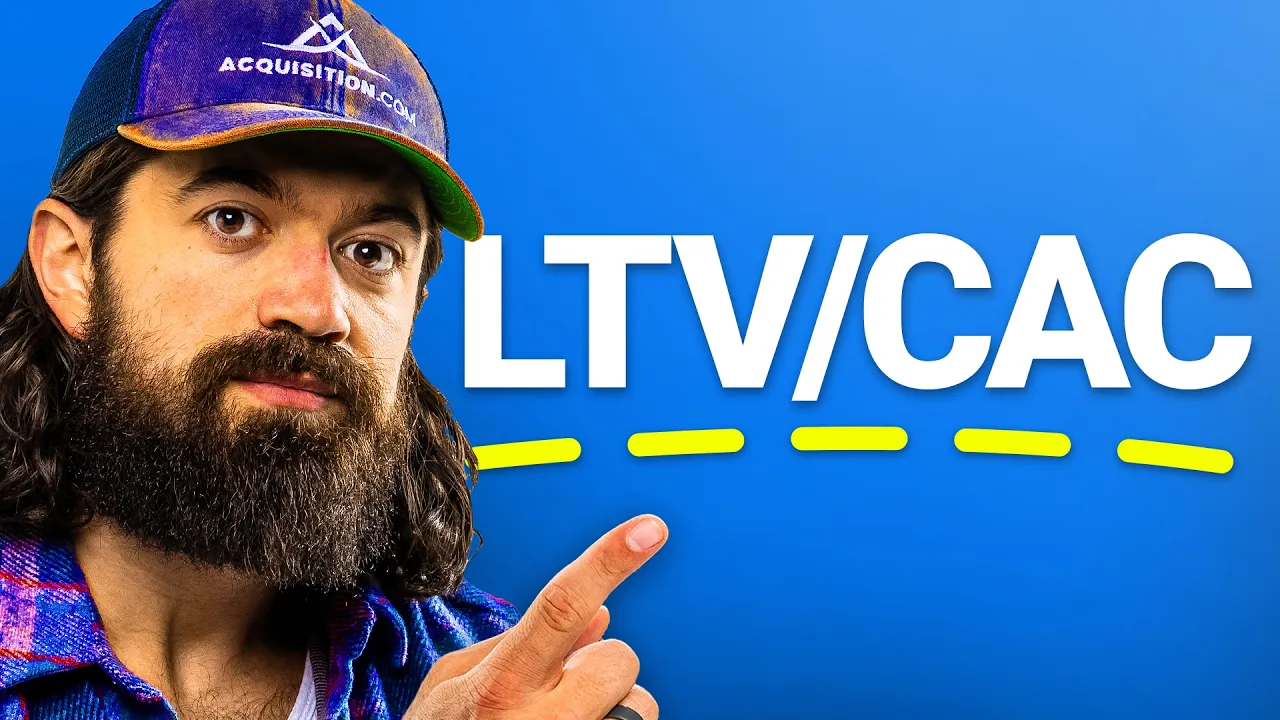
28:26
Mastering the LTV to CAC Ratio for Business Growth
@AlexHormozi
208.1K views•2024-06-30

66:41
Web3 Social Decentralization: Farcaster Co-Founder on Crypto Social Networks
@levychain
1.5K views•2022-10-18

63:08
Business Growth Strategies: Scaling With Marketing Levers
@AlexHormozi
1.1M views•2025-01-02

17:30
The Planned Obsolescence of Light Bulbs and Tech
@veritasium
25.3M views•2021-03-26
Related Study Plans & Knowledge Roadmaps
Structured learning paths in Business
business
CPG Retail Strategy: Pitching & Trade Spend
01Foundations of the CPG and Grocery Ecosystem
02Retail Math and Designing the Pitch
03Securing Shelf Space & Category Reviews
+ 2 more learning modules
12h5 modules
Explore Roadmap
business
Pop-Up Retail: Strategy, Design & Execution
01Introduction to Pop-Up Retail & Strategic Goal Setting
02Budgeting, Site Selection, and Legal Essentials
03Experiential Retail Design & Visual Merchandising
+ 2 more learning modules
15h5 modules
Explore Roadmap
business
Reg CF: Startup Funding, Marketing & Launch
01Introduction to Equity Crowdfunding & Reg CF
02Platform Selection & Legal Preparation
03Crafting High-Converting Campaign Assets
+ 2 more learning modules
14h5 modules
Explore Roadmap
business
Productized Services: Scaling Solo Freelance
01Foundations of Productized Services
02Packaging and Scope Definition
03Pricing and Subscription Models
+ 2 more learning modules
15h5 modules
Explore Roadmap