

















![Otimização de conversão na prática [Analytics Talks EP 206]](https://i.ytimg.com/vi_webp/q0HJ0FQG_UQ/maxresdefault.webp)





The LTV:CAC (Lifetime Value to Customer Acquisition Cost) ratio is the fundamental economic metric that determines a business's scalability and profitability; businesses with high ratios (such as 100:1) can afford to be inefficient while still generating substantial returns, enabling them to outspend competitors in advertising and scale rapidly, whereas businesses with low ratios struggle to grow because they cannot sustainably reinvest their limited returns.
Mastering the LTV to CAC Ratio for Business Growth
Added:Basic definition and calculation of Customer Acquisition Cost (CAC), including marketing and sales expenses.
Understanding of Customer Lifetime Value (LTV), including purchase frequency, average order value, and customer lifespan.
Fundamental concepts of business unit economics, particularly the distinction between gross revenue and contribution margin.
The concept of customer churn rate and how retention impacts overall business growth.
Cohort analysis methodologies to track how LTV and CAC trends evolve across different customer groups over time.
Advanced retention and expansion strategies, such as upselling, cross-selling, and subscription pricing models, to actively increase LTV.
CAC optimization techniques, including conversion rate optimization (CRO) and organic referral loops.
Financial modeling for venture scale, specifically analyzing the LTV:CAC payback period to determine capital allocation and growth velocity.
208.1K views8.4Klikes28:26Original Release: 2024-06-30
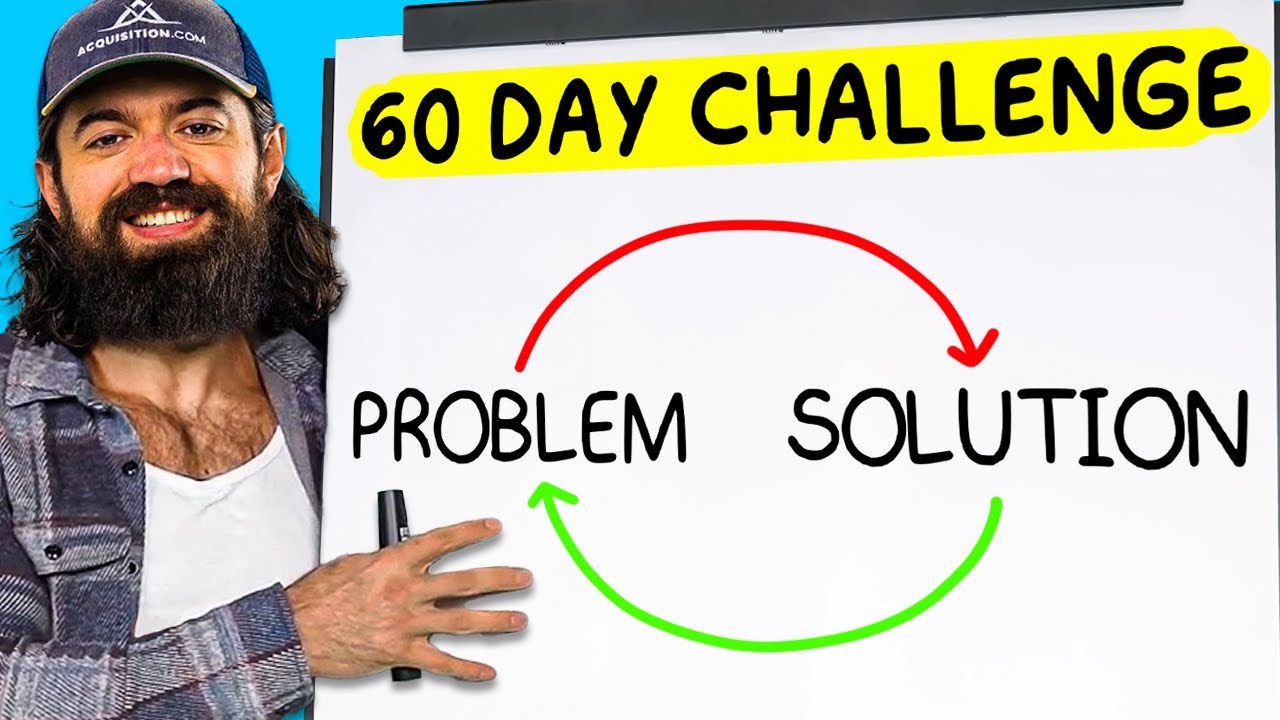
I want to talk to you about a formula better stated a ratio that you need to absolutely know like the back of your hand if you want to grow a big ass business and if you understand this number you'll be able to make better decisions you'll be able to predict how far you can scale your advertising how profitable you're going to be how many customers you can get and a number of other factors that are all derived from this one number in the business I cracked $100 million net worth at age 31 all of the huge growth in money came from times when this number was maximized and most businesses kind of putter along at a mediocre version of this number but when you really knock it out of the park you can absolutely have a license to print money for as long as you possibly can and at the very end I'm going to tell you the two levers you can crank to move this number into the stratosphere so what is the number well the number is actually a ratio between two different numbers and these numbers have multiple metrics that create those numbers so it's an incredibly densely packed number and it describes so many things that happen within the business and it will tell you how much opportunity you have which is why it's so exciting for me the first number of this ratio is LTV so lifetime value now in common speak people say lifetime value but what they really mean is Lifetime gross profit and so let me explain the difference most people say lifetime value and they think okay well somebody pays me $1,000 a month for five months that means their lifetime value is $5,000 no that's not the lifetime value you have to take out the cost of delivering on whatever service or good you have and then you have the lifetime gross profit because that is the profit that you'll be able to reinvest in growing the business or that you'll be able to take out as a business owner on the other hand you have hard costs which is the CAC to get that customer to pay you the money and so if you think about relationship between these two metrics it's really how much it costs you to make more money and so you spend money to acquire a customer or time which still costs money to make more money and this is the fundamental economic unit of the business that propels the business and predicts how big it can get if I see a small business at at 100 to1 LTV toac ratio and they a reliable way of getting customers then I know that this thing's get scale to the absolute Moon because I can get so inefficient I can be on Tenth is efficient on my advertising and still have 10 to1 Returns and so people get obsessed in the stock market about 5% 10% per year returns whereas the reason that businesses can create disproportionate wealth in very accelerated time periods is because you can put $1 in and get $100 back tomorrow there's nothing else that does this and that's why mastering the LTV toac ratio has been something that I've obsessed with my entire life as as a business owner as an entrepreneur and now as an investor so let me tell you what it looks like when it's done wrong so I had a Facebook ads agency come up to me and say hey we're crushing it we're getting five to one return on our ads meaning cost us $1 to make five and so it costs us $2,000 to get a customer and they're worth $10,000 to us and they're like but we're losing money every month rather than jump immediately into payroll and try to figure out what the costs are I said well break down your LTV metrics forming and again I'll use LTV because that's what common speak is in business world I say lifetime gross profit because I think it's more specific so break down your LT lgp for me and he said okay it's $2,000 a month for our service and the average person's day is 5 months and I was like okay in other words they had 20% churn so you take the price divide it by churn which is 20% equals $10,000 so there two different ways of explaining it five months on average is $2,000 Time 5 is 10 or $2,000 divided by 20% turn is also 10 you have to know this stuff I know people don't like money math but I swear to God if you can't do this division you will literally never make money okay back to it from the $2,000 a month I was like so what do they pay an ad spend he like oh no we wrap it into that I was like okay here we go what are you spending per month for them in ad spend they're like well we we budget $1,000 a month I was like okay so $2,000 becomes $1,000 left over I was like okay do you have a super efficient delivery model and they're like yeah every account gets you know a a a representative I was like okay well how many accounts can a representative handle they're like well we used to do 10 but they can't really handle that so we have them do five accounts I was like okay well what do you pay those reps and they're like well $5,000 a month each and I was like okay $5,000 a month each divided by five accounts means $11,000 per account so $1,000 went to ad spend $11,000 went to management 0 left over and I was like so what you guys have figured out is a way to take $2,000 and turn it into zero and they looked at me like I had you know killed their mother uh but the point is this is an extreme example but a lot of businesses have this situation where they have have a cost of goods they have some cost of service that's that's added on top and they take it as though it's Revenue when it's really you have to look at the gross profit what's left over after you deliver the goods now to be clear there are fixed costs in a business meaning you've got rent you've got some people that have nothing to do with delivery you don't Factor those into gross profit because if you sell an additional unit that additional unit that additional gross profit goes to you that you can either reinvest in the business or just pocket as a business owner which who doesn't like that and so fundamentally this is LTB this is how much money you make from the customer for real not your wink wink stripe screenshot and if you're a business owner and you like learning this language of business and want to understand more deeply the many other metrics that exist in the business to that you can pull on The Leverage that accelerate the value you have we just started a workshop div Vision at acquisition. comom for companies that we don't own if you want to see if you qualify you can fly out to Vegas we spend a whole day with the company and our our teams there and we show you all the things that we would do if we bought your business tomorrow to grow it so if that sounds interesting you can go to acquisition. comom hit the scale button and if you qualify our team will reach out the CAC is actually very simple to understand it's just how much it cost you to get the customer and all you have to do here is just look historically you say okay over the last 30 days I spent this much on my marketing payroll I spent this much on my media the advertising dollars I spent and I spent this much on my sales team in commissions you add all that up and then you divide that by how many customers you got so if you spent $10,000 in ads and you spent $10,000 in payroll between sales and marketing your cost is 20,000 and if you had 20 customers then it'd be a th000 bucks a customer that would be your CAC and so then you look at that CAC which now is very clear a lot of people can understand their CAC quickly where they get messed up as their LTB but once you have these two metrics you can understand the fundamental economic unit of the business which is when I put $1 in here I get this much juice on the back end back to me so let me talk about what it looks like when it's done right and this is where you start printing money so I'm going to give you an extreme example that some of you guys may or may not have heard of so there's this little company called Starbucks that has little coffee business you might have heard of them they got 38,000 locations you want to know how were able to grow to that scale without franchising to grow now they do have a tiny little bit of franchising but the vast vast vast majority of the stores are corporate owned and so something that has cost that much Capital opening up you got all these new stores you got these build outs you got marketing budgets for these local locations how are they able to do that and do it privately they made a lot of money every time they put a dollar into their economic machine so let me tell you how much money they make every customer that comes into Starbucks the lifetime value how much money they make from a customer is $4,99 and that is gotten $5 macchiato at a time $6 frappuccinos at a time and that means that they keep customers for years and years and years and years it turns out that when you boil hot water and you sell for six bucks you make a lot of money and one of the crazy things about a business like Starbucks is that the cost you acquire customer for a local food business is typically very small now I don't know their CAC and I probably could look into their public data and try figure out how many customers they have but I'll tell you that I had a personal experience marketing for a Cookie Company years ago I ran ads locally for them to have a free cookie with a beverage the average lead cost was under a dollar and we got one out of 10 leads in the door and so it cost us 10 bucks to get somebody in the door if you have a $14,000 lifetime value and it costs you $10 to get somebody to walk in the door you make a lot of money and so that wasn't a 5 to1 a 10:1 even a 100 to1 return that was a 14 100 to one return and that is how you build something that is absolutely massive so once you get into business whether you're at a million or 3 million or 10 million whatever it is a year that you're at you start to run into this wall becomes more costly to get customers because you're reaching out to colder and colder audiences you're going to new channels to find them and it just simply costs you more and so the only way to continue to scale obviously you can make your ads better you can make your offers better but the other way to scale is to be able to afford to Simply acquire customers for more expensive and so let's say that Starbucks cost car customer went from $10 to $50 well boohoo still really really good the point is is that if you have a massive LTV toac ratio your cat can double or triple and you're still printing money and so that allows you to enter new marketing channels New Media channels colder audiences and outspend your competition and so this is in some ways an ethical competitive mode there's two ways to have a monopoly one way is that you have a way to under cut everybody in the marketplace so they can't survive and then eventually put everyone out of business because you have enough Capital to do so another way of having a monopoly that is legal is that you can literally just outspend people to get customers and so most advertising marketplaces are based on an auction so they auction for attention and the highest bidder is the one who wins the eyeball they win the click and so if you in the purchase of the eyeball or of the click you can outspend 100% of your competition then you can ethically take all of their money and all of their customers the reason this is so important as a business owner is that if you don't know these metrics you might be able to get to a million two million maybe $3 million a year but you're not going to be able to scale be on that because you're not going to have a consistent way to spend money on the front end and then know how much you're recouping and at what time and so I had a business owner who actually was a business coach ironically uh who was doing three million bucks a year and I said well what's your LTV to C creation he's like I don't know and I was like how are you doing this right and I say this with love it just said know your data so that you can scale your company I just kept repeating he just kept asking me questions I was like you have to know your data so that you can scale your company that's it and these two data points are so simple to get and yet so few businesses do it and this is not a testament to the fact that you can see see despite it it's a testament to the fact that that's why so few businesses make money I mean shoot only one out of every 250 businesses gets to $10 million a year and getting to $10 million a year you just have to follow fundamental business and know that I make $10 for every $1 put in I want to run this machine as many times as I can can so let me break down a couple of these comp sets for you so you've got the lcgp and you've got CAC all right cac's the easy one just whatever your cost is on a monthly basis divided by number of customers you can look at this on a monthly basis you can look at a weekly basis and if you really want an accurate metric look at over a year just say how much did I spend over this entire year in payroll for marketing total in ad spend total whatever and you divide it by number of customers it's back of napkin but honestly that takes out a lot of the volatility of campaigns good sales guys or bad sales days whatever and it gives you a number it's realistic this is actually how much it costs me to get a customer now on the lifetime gross profit side there's a few more numbers so you have your price most people know what that is and then you have to subtract that your cost of goods sold all right now in a physical product business if I'm selling books let's say it cost me $10 to print and Chip a book if I sell the book for $20 then my gross profit is 10 bucks most people in the physical product space tend to get this pretty quickly what's interesting is that the service based guys don't get it at all and so for some reason they think okay well I have you know Five Guys on payroll that do all of my delivery all of the customers I get is just all profit it's like no you have to take out the fact that you've got five guys on payroll and you've got 20 customers and you take that payroll and you divide it by 20 and that's what your cost of delivery is which means that the cost of deliver may change as you get more customers but you can model out what it looks like at scale so if you know that every five you need to hire another guy then you either going each guy is's going to max out at this and you know that that's going to be your fixed amount of cost to deliver your service and so the service guys tend to get this more mixed up than the physical product once now once we know what our gross profit is which is just the price minus that cost then it says how many times do I get this and so that's a function of either the number of purchases they make or the number of months they stay the number of months they stay you can take the inverse of that which is what percentage of people leave and you can divide that and you can get it as a hypothetical metric and so I'll give you an example a lot of business owners who are younger or starting out are like okay well I've only been in business for six months and so I don't know what my LTV is because people are still coming in and we're still growing you can actually still get a hypothe I on this which is you just simply say I had 10 customers last month of the 10 that I started the month with 30 days later how many of those 10 are still with me if nine are with you then you have 10% churn and so you divide your price by 10% and that gives you your LTV which is the same as multiplying by 10 which means the average duration they stay is 10 months and that's why they call it lifetime gross profit and so once you understand this this gives you an enormous amount of power to do a number of things so number one is I had a business the other day that came to me and was saying hey I have two front ends for my business I it was a hair salon uh girl and so she was able to teach other hair stylists how to make extensions I think she was charging $2,000 or something like that to teach them how to do extensions and then she also had like a business coaching thing where she helped them grow their business and she said I just you know I'm running ads for both of them I don't know how I should structure my business and I was like okay well what's the LTV to cek she had done her homework and so she said well this one we make 34 to1 meaning her cost to get somebody who wanted to learn how to get hert exensions or how to put hair extensions in it cost her like 30 or 40 bucks whatever the math is there on a $2,000 sale and so she had a $2,000 sale and so she was getting 30 to1 on that and so it cost her 67 bucks to get a customer who's going to pay her $22,000 for a digital product so the rest of that's gross margin wow what a great LTV to CAC right on the flip side she had her business coaching thing which she had something close to like 7 to one and so that thing was $115,000 and it cost her whatever it was $2,000 to get the sale and so she's like well I like these customers a lot but there you know there's fewer of them uh and they cost more to acquire and she says so what should I do because these obviously stack up fast you know you get 10 sales 150 Grand in a month it's not bad right and she's like I got to sell so many more of these and so I asked her these questions I said well are there more of these people that just want the hair thing than these people and she said yes I said is there a percentage of these people that also buy this thing and she saides said great and so what we need to do is you stop advertising this and then you make this the front end for this and this becomes the back end and so then all of your focus after you acquire the customer is to ascend these people into this thing which means your cost to customer here becomes zero and then we can tack on 20% of this price to the total LTV here and so this is how you start stacking LTV the point is is let's say she got 20% of people to do the $115,000 thing so that means that that $2,000 becomes a $5,000 LV so let me break that down so $2,000 guaranteed because every person who buys gets that now we multiply 20% the number of them that buys the $15,000 thing which is 20% time 15,000 $3,000 and you add that to the front end so means one out of five pays an extra 15 great so that means on average make $5,000 so that took her LTV to CAC from 30 to1 to 75 to1 that means that she can Market even more aggressively and she can mark it to the biggest H many of you have one or two or three different products or offer on the front end and you're trying to figure out what's the thing I should advertise look at the LTV to CAC and then start with the thing that has the best LTV toac ratio and then stack behind it everything else and then that further increases your ratio of how much you can spend to get the customer to make more money so many business owners ask me questions that they can solve with math like this is an opinion thing this isn't like well I talked to three mentors and one guy gave me this advice and like this is a math problem which is why you have to learn it and so if you have a stronger LTV to CAC the exception here is if the Tam is Tiny your total addressable Market the number of heads that you can sell but most of you who are listening to this aren't even close to saturating your Market you're like I've sold 100 customers and my market is 1 million people okay you don't need to worry about saturation yet and so fundamentally if you've got something that has an ocean of customers and you have a crazy amount of what you put in versus what you get out you do as much of that as you possibly can and then you stack the other things behind it to further increase your leverage the last consideration that I'll bring up which is already factored into LTV is the operational efficiency so let me explain I had a business that we were looking at acquiring it was a chain of glass repair all right and they specifically focused on glass work for residential and so they had a number of different customers that they worked with they had high-end you know Million Dollar Plus Homes that would have those big glass you know things and weird bathrooms and whatever people do with glass one of the partners from that business peeled off and started a chain only doing one thing in the entire product stack and so what he did was he did his homework he figured out that shower doors were a product that was very easy to sell people many people wanted it there was a huge market for people who just wanted to replace their shower doors and the delivery so the cost of goods sold to deliver the door was actually very low and so one guy could do five 10 doors a day whereas doing the custom glass work might take months so even though the ticket was higher they could productize that service to such a higher degree and the LTV to CAC was actually higher even though the average ticket was lower and so because of that though he could turn this into a machine that he could repeat again and again and again and I had the same conversation with somebody who was in the pool design business he said well I designed commercial pools I designed Resort pools I designed residential pools and I designed modular pools and I said okay how hard is it to do all these and he's like well they're all kind of hard but these ones the modular pools are the ones that like I could do easily because it's only like six or seven variables and you just kind of plug them together and I was like okay how is the margin on that he's like well the margin's good there and I also have a much faster cycle because you can from the time they say yes to the time it's in their backyard is really fast and I was like okay are there more people who can buy modular pools than Resort pools and he was like yeah okay now we're starting to talk about something that looks interesting and so he was like what do I do and I was like well this is a math problem you have something that has a higher LTV to CAC you have a higher Tam and it's something and this is just side benefit it's faster so you have a way faster Loop and you can productize this to much a higher degree whereas all of this stuff is custom and oneoff stuff which makes it very very difficult to scale many of you have a big Resort thing and a modular po many of you guys have custom glass work in the house or a shower door you want to find the shower door in your business that everyone immediately understands they can come in that's really cheap many people want it you can deliver that value quickly now some of you are like well I'm not passionate about shower doors the question is what game you want to play listen there's tons of people that are out there that say like Follow Your Passion whatever in my opinion so this might be contrary business at the highest level is all the same so if you succeed at your passion to a high enough degree your business and what your day-to-day will look like will almost irely be the same you're going to be having a team of people who report to you you're going to have a head of sales you're going to have a marketing you're going to have a legal you're going to have it you're going to have Finance you're have some Ops maybe some tech whatever all those people are just going to roll into you and so whether you're selling books or you're selling pools or you're selling shower doors you're selling marketing agency Services if you succeed taking to its natural end you're going to end up in the same boat so I'd recommend starting with the one that has the highest chance likelihood of getting there cuz otherwise what you don't want to have happen is have your passion turn into work so it many of you guys don't know is that the first year of gym launch my LTV toac ratio was 100 to1 I spent $100,000 and made $10 million back and yes it was that insane for me too A lot of the wealth that I've been made is made in these punctuated periods of time when my LTV to CAC Racers were absolutely absurd and so when you have one of those things and if you do crack this code I highly recommend Jam as much as you possibly can through that through that machine you think it's going to be illegal because you're making so much money and that's okay it's normal just keep pushing as hard as you can let's talk about how to improve it so I talked briefly about the LTV stuff which for the most part is going to be decreasing turn increasing price those are the things that are going to increase LTV and having additional cross selles and upsells I'll just give you the Highlight Reel of how to improve that you can increase the price you can decrease the cost of delivery you can get people to buy more times you can cross- sell them additional things so that's like if you buy a burger you buy fries you can upsell them a better version of the thing so instead of this burger you get a sirloin or wagy Burger you can sell a higher quantity of that one Burger to two burgers you can down sell them turning a no sale into a sale so they would have been a zero instead of you get a junior Whopper you get a smaller burger or you go from a sirloin burger to a mystery meat burger right and so that's the down sell that gives you more better smaller worse cross sell different more number of options that you sell increase the price decrease the cost of goods and you can do that with any product you have if I sell iPhone cases I can increase the price of this case I can become more efficient with the manufacturing to decrease the cost of my delivery to make this case I can cross sell a wallet that tax onto this I can increase the likely they buy another case in 6 months by trying to say hey do you want to have different color cases so you can do them by mood I can increase the number of cases saying hey do you want a spare case I can increase the quality of the cas and say this is a metal case versus a you know plastic case I can make this a cheaper case or I could do in terms of uh the quality of the material or I could sell fewer units if I had that case every product that exists on the marketplace you can find a better version a more version a cheaper version a fewer version a cross- sold version you decrease the cost of goods you get them to buy more of them or you increase the price those are the ways that you increase LTV and so if you want to improve your ratio that's your homework for this video and you can show this video to your team and you have to check off those boxes okay if we did have our book How do we make this book make us more money well I can raise the price of the book I can try and buy volume of printing so that I can drive down the cost I can spread out the books between three different warehouses so that I can have cheaper shipping prices because it's closer to my customers those would be the first two price and then cost of goods I can cross- sell an additional book I can try to get somebody to buy more of this book can't really get someone to buy less of this book I could have a book lit or a summary version of of the book that I could choose to sell that would give me a worse or inferior version of the book in terms of decreasing quality if I sold a number of units instead of selling a three-pack I'd down sell a one pack and so each of these you can look at any product through these lenses and think is through each of those which of these is the easiest for us to immediately Implement within our business that doesn't create operational drag me writing a second book probably a lot of work me asking people to buy a second book much less work now let's talk about decreasing the other side CU remember this is a ratio right and so you can not change anything about your LTV and still massively improve the ratio by decreasing CAC your cost to acquire customer and so what do you do here so CAC is a funnel right and so in order to decrease CAC it's about efficiency and so advertising always works you always Reach people when you input something into the system if you make a post You Reach people if you were to spend a billion dollars you could reach everyone on earth right the idea is simply how efficient are you with that dollar and so with CAC everything is a percentage off of 100% so you start with an advertisement reaches 100% of people and then a small percentage of those people click or take the first step from there you have a percentage of people that schedule certain percentage people that show certain percentage that buy certain percentage that then upsell whatever and so as you go through this funnel to decrease CAC you either have to get cheaper eyeballs the raw unit that you're taking this price tag off of or you improve the efficiency after you've paid for the eyeball to increase the likely that the person Buys in cro just like so conversion optimization just like LTV often times there isn't a silver bullet i' would say the only thing that's the closest thing to a silver bullet in the CAC world is nailing your offer nailing what thing you're going to package together that you can put out the marketplace that everybody wants I'll give you an interesting monitor concept around this is that I build LTV back to front meaning I want to think about the most expensive thing and work my way backwards so that I can stack as much lifetime gross profit into my customers as I can I think about CAC front to back the reason for that is that I want to optimize the things in the earlier parts of the funnel because they affect a higher percentage of people you often working with smaller percentages at the onset and bigger percentages later and so I'll walk you through an example so if your ad gets shown to call it 10,000 people and you have a 1% clickthrough rate well me having a better ad might get a 3% click-through rate there's almost nothing that's going to take my show rate well there is nothing that's going to take my show rate from 60% to 180% there's nothing that's going to take my close rate from 35% to 105% like it's not going to happen I like going front to back because in terms of order of magnitude of how much I can impact or grow the business or rather decrease the cost to acquire customer I can have a greater impact from the front to the back I'll make one one tiny Pro tip on this which is that I in general work front to back for CAC if I have a clear outlier if I have a 5% show up rate but everything else is amazing and I know the industry average is 60% well then I do see that I have a 12x there that I can go get it's it's just not often and so most of the time the biggest gains are going to come from Improvement in advertising improving the offer improving the headline and the availability of the team if you have a sales team or if you have an e-commerce business then it's going to be cro on the page the offer you're making on the page the headline on the page and the quality of the advertisements themselves and so whenever I enter any industry and to be fair at this point I've seen so many businesses because we get so much deal flow at acquisition. comom I have a really good pulse for what it cost to get a small business owner for an SEO agency I have a pretty good pulse for what it costs to get somebody to buy a $99 a month uh software package I have a pretty good idea of what it costs to sell someone into a uh you know a franchise right there's there's very different benchmarks that exist but the good thing is it's very rare that you have truly novel businesses because more often you're selling to an existing Avatar so even if you have a novel business you're still selling the same person so it's going to cost you about the same amount of money to get in front of those people and then convert them into a customer now the variable will be what that person's worth to you which is the LTV but calcul is much less variable between different players and so the reason that some businesses stay around forever and others don't is that the ca between the biggest businesses is often times about the same the difference is how much LTV they've been able to stack and that is what creates that long-term competitive Advantage for them and if this was a denser video this was literally just unpacking one ratio inside of business and you have to get fluent with this I'd encourage you to re-watch it or relisten to this if you're listening to it you have to be able to breathe this stuff this has to be your first first language if you want to get in business this is the language of business your ability to conceptualize ideas is directly proportional to your vocabulary within a given domain I create Frameworks that people find simple because I'm fluent in the language and I can draw pictures about it because I've had to think through it so many different times and so many different types of business I could draw it what is the difference between selling a book and selling an iPhone and selling SEO services and selling a franchise can you apply LTV to back to investing interesting what's the cost to buy a company what do you make on that company over the lifetime interesting it's just chunked up at another level where the product and the customer itself is really the business so this principle applies at all levels of business the more you EMB brain it into your DNA and your Lexicon and the language that you think with rather than just what you speak with but what you think with understanding that this is the ratio that drives the business means that you're going to Lad up the initiatives and the activities that you do in the business to drive one of these two sides if what you're doing is not getting you more customers cheaper or making those customers worth more then you are probably wasting your time this LTV CAC ratio is just one of many numbers that we use to analyze and grow a business and I have a YouTube video that's more in- depth more advanced stuff if you're a business owner and you want to grow your business faster comment below or have one of your teammates comment below which one of the eight ways that I just talked about you can Implement in your business tomorrow
Up Next

70:47
Sustainability in Business: Membership Economy Trends
@notredamebusiness
752 views•2019-05-01
46:36
Retention Habits of Top DTC Ecommerce Brands Revealed
@SendItPodcast
44K views•2026-03-03

63:08
Business Growth Strategies: Scaling With Marketing Levers
@AlexHormozi
1.1M views•2025-01-02

17:30
The Planned Obsolescence of Light Bulbs and Tech
@veritasium
25.3M views•2021-03-26
Related Study Plans & Knowledge Roadmaps
Structured learning paths in Business
business
Pop-Up Retail: Strategy, Design & Execution
01Introduction to Pop-Up Retail & Strategic Goal Setting
02Budgeting, Site Selection, and Legal Essentials
03Experiential Retail Design & Visual Merchandising
+ 2 more learning modules
15h5 modules
Explore Roadmap
business
Reg CF: Startup Funding, Marketing & Launch
01Introduction to Equity Crowdfunding & Reg CF
02Platform Selection & Legal Preparation
03Crafting High-Converting Campaign Assets
+ 2 more learning modules
14h5 modules
Explore Roadmap
business
Productized Services: Scaling Solo Freelance
01Foundations of Productized Services
02Packaging and Scope Definition
03Pricing and Subscription Models
+ 2 more learning modules
15h5 modules
Explore Roadmap
business
Gov Procurement: Find, Bid & Win Contracts
01Introduction to Government Procurement & Business Setup
02Small Business Certifications & Set-Asides
03Finding and Analyzing Contract Opportunities
+ 2 more learning modules
14h5 modules
Explore Roadmap