




























![[CNU NAOE/AVSE] 난류유동 1장 (3)](https://i.ytimg.com/vi/4MYt7udjEi0/maxresdefault.jpg)

Turbulent flow is characterized by unpredictability, sensitivity to initial conditions, chaotic mixing through eddies spanning multiple scales, and energy dissipation from large to small eddies; unlike laminar flow which is orderly and predictable, turbulence is prevalent in nature and technology—enabling airplane flight through vortex generators that delay stall, improving golf ball aerodynamics via dimpled surfaces that reduce pressure drag, and facilitating processes like raindrop formation, while requiring constant energy input to maintain.
Turbulent vs Laminar Flow: Fluid Dynamics Explained
Added:Basic definition of a fluid (liquids and gases) and how they deform under applied shear stress.
The concept of fluid viscosity, representing a fluid's internal resistance to flow.
Fundamental principles of kinematics and dynamics, particularly pressure, force, and velocity in continuous media.
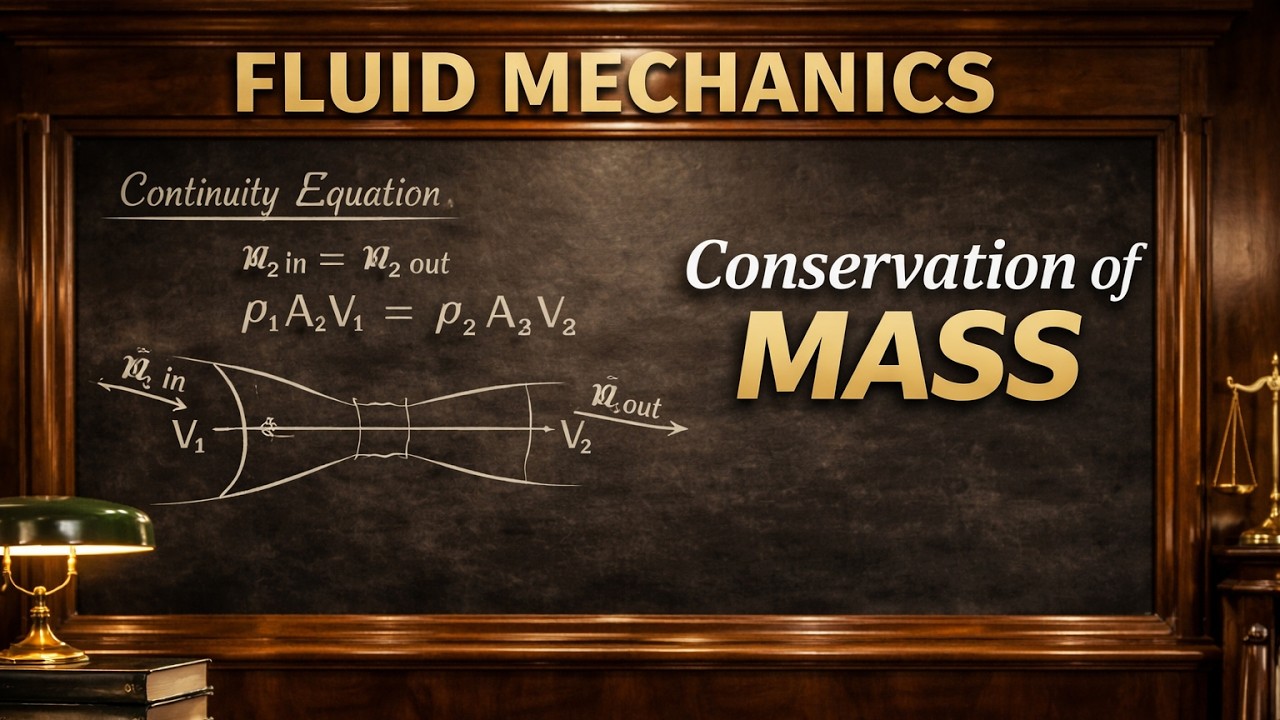
The principle of conservation of mass in fluid flow, often expressed through the continuity equation.
The Reynolds Number (Re) as a dimensionless metric used to predict the transition from laminar to turbulent flow.
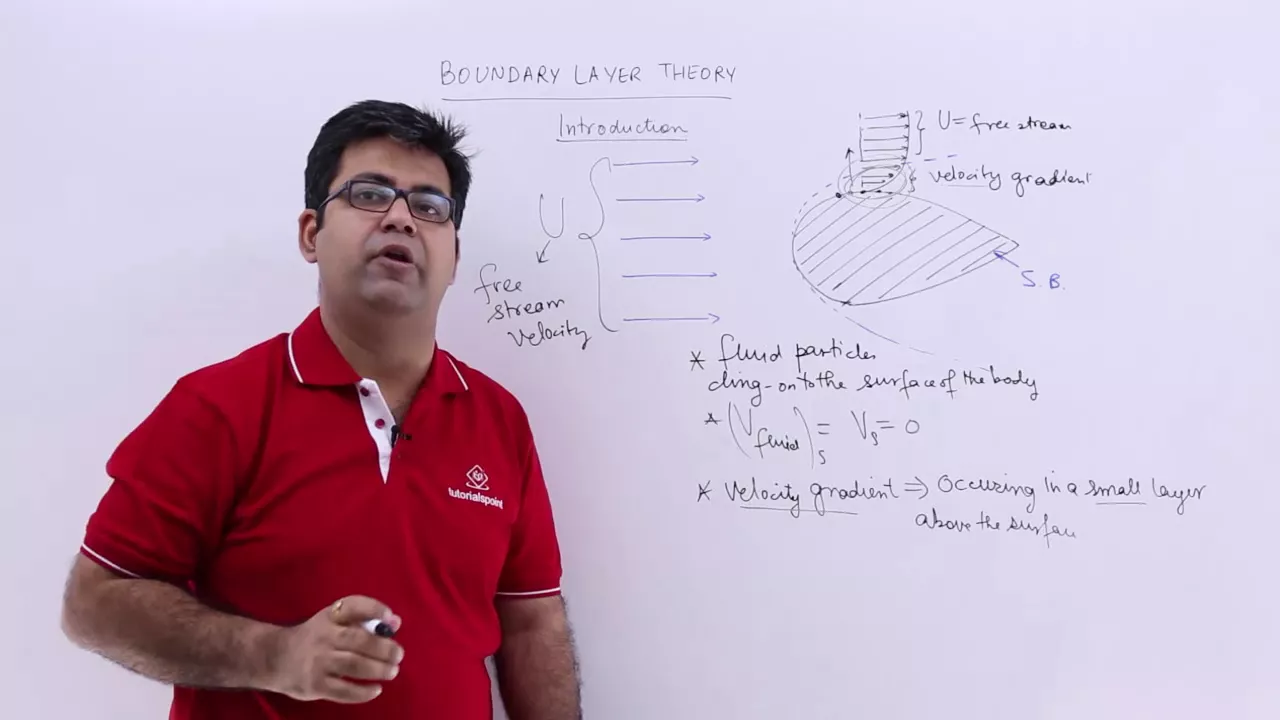
Boundary Layer Theory, which examines fluid behavior and shear stress directly adjacent to solid boundaries.
The Navier-Stokes equations, the fundamental system of partial differential equations describing viscous fluid motion.
Practical applications of turbulence control in aerospace engineering (lift and drag) and meteorological modeling (weather and rain formation).
11.2M views247.3Klikes18:32Original Release: 2020-06-11
A portion of this video was sponsored by loda This is like a scientist trap.
It certainly is; case in point, that is Space Station commander Chris Hadfield What this isn't is turbulent. Nope, this is largely laminar flow.
“Did somebody say peculiar flow!?” no i dont If you didn't know, Destin from smarter every day loves laminar flow, where all the particles of the fluid move parallel to each other in organized layers or laminae look at that it made a bubble!!!
Where I live people will roll down the window in their car when they see me in the street and they will scream “turbulent flow” to me That happens, that happens in Huntsville. Yeah.
Here- Here's my argument to you, Destin nashe Okay.
but turbulent flow if you make that effort is actually more awesome.
Um... no.
Turbulent flow is not better than laminar. It is awesome But it is not better than laminar flow.
Can I just say I get it I get where Destin is coming from I mean laminar flow is pretty and it's well behaved, Meanwhile turbulent flow is a mess in more ways than one.
I mean, there isn't even a universally agreed-upon definition of turbulent flow.
You know it when you see it [Laughing] Hahaha, So that's the deal with turbulence, you know it when you see it?
Pretty much. Yeah.
So instead of a formal definition, in this video we are going to build a checklist of characteristics of turbulent flow, so that you know it when you see it and the first characteristic of turbulent flow is that it is unpredictable That's right. Turbulent flow is messy it's unpredictable.
It is literally definitionally chaotic meaning it is sensitively dependent on initial conditions.
So if you were to change something somewhere in the fluid well, it would completely change the final state and that means you can't make predictions with turbulent flow All you can do is speak about it statistically.
I mean, there are the Navier-Stokes equations which are meant to govern all fluid flow Including turbulence, but they are notoriously difficult to solve.
In fact, there is a million-dollar prize for anyone who can even make progress towards getting insight into these equations that would explain turbulence, so yeah, I get it, turbulence is a mess, laminar flow is easy to love It's like the bell of a ball whereas turbulent flow is kind of an ugly duckling But in this video I want to transform that ugly duckling into a beautiful swan I want you to see that if you make the effort The love you can have for turbulent flow is so much deeper and richer than that superficial fling you have with laminar flow You are looking at the motion of air in a room, which is generally turbulent the physics girl and friends imaged a cross-section of air using a fog machine and a laser sheet one of the defining characteristics of turbulent flow is that it consists of many interacting swirls of fluid also called Eddies or Vortices These eddies span a huge range of sizes In the case of air in a room, from the micrometer scale all the way up to meters in diameter Can you think of another physical phenomenon that exhibits structures over such a range of sizes?
But turbulence can be much larger.
The surface of the Sun is turbulent as hot plasma rises to the surface in huge convection currents.
The cell like structures here are roughly the size of Texas Larger still are the turbulent swirls on Jupiter.
The Great Red Spot is a vortex bigger than the Earth The rest of the planet is covered in Eddie's of all sizes down to the limits of our ability to measure them from orbiting spacecraft Even the dust between the stars is in turbulent motion It makes radio sources twinkle the same way the turbulence in our atmosphere makes stars twinkle a stunning example of this turbulent dust is the Orion Nebula: twenty four light years across Turbulence is cosmic. In contrast, laminar flow has to be small.
This was shown experimentally in 1883.
Osborne Reynolds passed water through a glass pipe at different flow rates and to visualize the flow, he introduced a stream of dye in the middle of the pipe He found at low flow rates the dye remained in a steady stream: laminar flow but as the flow rate increased the dye began to oscillate back and forth and beyond a certain critical point, the dye became completely diffused throughout the pipe.
This was turbulent flow.
Reynolds had observed another essential characteristic of turbulence, It is diffusive, meaning it mixes things together Turbulent flows caused things to spread out not only dye, but also heat or momentum They all become distributed throughout the fluid Reynolds found the transition to turbulence was not only dependent on the flow rate turbulence occurred more readily in wider pipes But less readily with more viscous fluids, things like honey He calculated a dimensionless quantity now called the Reynolds number Equal to the velocity of the fluid times the characteristic length, say the diameter of the pipe Divided by the kinematic viscosity of the fluid which you can think of as a measure of its internal friction high Reynolds numbers result in turbulent flow Have a look at the smoke rising from a candle flame At first, it's laminar. But the hot gases accelerate as they rise, and once the Reynolds number gets too big the smoke transitions to turbulence so laminar flow only occurs at low Reynolds numbers Which means it is limited to low speeds small sizes or viscous fluids This is why in our everyday lives most fluid flow is turbulent Turbulent flow is the rule.
Laminar flow is the exception.
The air flowing in and out of your lungs is turbulent, the blood pumping through your aorta is turbulent the Atmosphere near the surface of the earth is turbulent as is the air flow in and around cumulus and cumulonimbus clouds In fact modeling shows that turbulent flow plays an essential role in the formation of rain drops so turbulence literally makes it rain.
[Thunder crashes, Rain sounds] I'm going to create turbulence in this rheoscopic fluid Rheoscopic just means that it shows the currents and it does that by having these tiny particles suspended in the water But what you notice if you look at this turbulent flow is that it gradually dies away And that's because another characteristic of turbulence is that it's dissipative That is it takes in energy at the largest scales at these big eddies, and then that energy gets transferred down to smaller and smaller eddies until on the smallest scales that energy gets dissipated to the fluid as heat And so in order to maintain turbulence You need a constant source of energy, something to keep generating those large eddies, which is why we often think about turbulence around objects that move through a fluid things like planes cars or boats.
So I want to think about the interface between an object and the fluid.
So picture fluid flowing over a flat surface far away from the surface, the fluid isn't affected. It keeps moving with what will call its free stream velocity But right at the surface,due to friction and adhesion The molecules of the fluid are effectively stuck to the surface. Their velocity is zero.
The fluid next to it can flow only slowly due to friction with this stationary layer with increasing distance from the surface,the fluids velocity increases from zero until it reaches the free stream velocity and this region of velocity adjustment is known as a boundary layer.
In this case, it's a laminar boundary layer To form this boundary layer, the surface is applying a force to the fluid That means the fluid is applying an equal and opposite force on the surface and this is known as skin friction Now if the fluid velocity is particularly fast or if the surface is long the boundary layer will grow and eventually transition to turbulence in a turbulent boundary layer,the fluid swirls and mixes bringing faster flowing fluid closer to the surface and this increases the skin friction so turbulent boundary layers result in significantly more drag than laminar ones and the boundary layers around planes and large ships are mostly turbulent and skin friction accounts for the majority of the drag they experience to make matters worse laminar boundary layers can be tripped into becoming turbulent by small obstacles or rough surfaces in practice this means clean smooth surfaces can significantly reduce drag saving on fuel costs If your car is really dirty, it likely gets worse gas mileage than if it were clean This is what the Mythbusters found when they tested it.
It also explains why planes are frequently washed So when you think about airplanes, I imagine that they would be built as smooth as possible I think of the scene in The Aviator where Leo says he wants all of the rivets shaved down flush and you can see that with this plane all of these screws are are set in to the wing and really to make the smoothest surface possible, but then you look over here and there are these ridges that stick up out of the plane, which seem to make no sense I mean, why would you add roughness to the surface of the wing?
the answer is actually to induce turbulence in the flow of air over the wing when cruising in level flight, air smoothly follows the curve of the wing but at low speeds or higher angles of attack the airflow can separate you can think of it as not having enough energy to follow the curve of the wing This leads to a condition known as stall which dramatically decreases lift Here you can see the airflow of via strings taped onto the wing and as the plane slows the flow separates and the strings go wild This plane has stalled.
The way to delay flow separation and stall is by adding small fins on the wing called vortex generators What these vortex generators do, is they actually cause turbulence which mixes the faster flowing higher up air down closer to the surface so you're energizing that fluid flow as it passes over the wing and because that flow has greater energy it is able to follow the surface of the wing for longer That means the air flow remains attached and if you have attached airflow over the wing then you can maintain lift so in the case of airplanes You actually need turbulence and you induce more turbulence on the wing in order to fly efficiently and effectively and be able to climb at higher angles of attack.
A similar principle is at work with golf balls.
The Scott found out about turbulence the hard way because they started playing with a very smooth golfball and it wouldn't fly as far as it would once it got sort of dimple nicked and dirty you can see why by observing the airflow in a wind tunnel with a smooth ball the air forms a laminar boundary layer over its surface this leads to low skin friction, which is a good thing But it also means the air flow separates easily leaving a large wake of low pressure turbulent air behind the ball and that leads to a different form of drag.
Is that a pressure difference drag?
That's right, that's a pressure drag.
So the boundary layer itself has a skin friction drag and then if it separates there's a pressure drag And if you force that boundary layer to become turbulent So you have mud or roughness or mix on the golf ball then a turbulent boundary like this can get further around the golf ball before it separates And so it reduces that wake and reduces that pressure drag.
So by reducing the pressure drag to more than your increase in this kind of drag, golf ball travels further Yep!
Golfers started carving grooves into their golf balls before the aerodynamics of this was fully understood And since then dimples have found to work the best for creating a turbulent boundary layer Dimples are very shallow compared to the diameter of the golf ball, but they have a pretty massive effect What sort of effect are we talking?
Looking at the drag, and we call it drag coefficient You see a really big drop almost a factor of two when the boundary layer becomes turbulent.
So having a turbulent boundary layer reduces the size of the turbulent wake but turbulent wakes themselves are interesting and scientists are looking for ways to harness the energy they contain I came to Caltech to see this experiment where the water flows around a cylinder and transitions to turbulence in its wake The flow is visualized here using a fluorescent dye You can see how under the right conditions Vortices are shed by one side of the cylinder, and then the other, alternating back and forth in a regular pattern This is known as periodic vortex shedding and the pattern it creates downstream is called a von Karman Vortex Street These patterns appear all over the place, most spectacularly in images taken from space At this scale, an Island acts as the obstacle that creates the periodic vortex shedding and the vortex street is made visible by patterns in the clouds These patterns can even be seen from ground level Obviously this phenomenon is not strictly turbulent because it follows a predictable pattern but it is part of the transition to turbulence and these scientists are looking for ways to harness the energy in these vortex structures One experiment showed that if you put a dead fish in the wake of an object it will actually swim upstream This suggests fish can take advantage of turbulent water to swim more efficiently It's just one way that animals have adapted to live in a turbulent world So to sum up, turbulence is everywhere, it's inside you around you from the smallest scales up to the largest structures in the universe and it's useful for flying airplanes, forming raindrops, making golf balls fly further, and helping fish, dead or alive, swim upstream In contrast, laminar flow is small, superficial, it's a toy That's why it's most notable use is in decorative fountains It appeals to your desire for order, but the world like turbulence is messy That's why I personally prefer the richness, the unpredictability of turbulent flow No, but but turbulent flow has its places too.
I'm actually like studying turbulent flow for like my my schooling, Like I'm studying turbulent flow in rocket nozzles. That's a thing.
So cheating on laminar flow, is what are you doing.
Um, no, yes. Yes, maybe, I don't know But I wonder you will not get me to say turbulent flow is not awesome and not beautiful, you will not get me to say that So I will concede and I agree with you turbulent flow is awesome. I will agree All right. All right.
Well it's just not as awesome as laminar flow. Let's be honest Hey, I just wanted to let you know that this video was filmed before the COVID outbreak and before the shelter-in-place guidance was put into effect Now this portion of the video was sponsored by Cottonelle flushable wipes and since the outbreak they have been working around the clock to get their products back on shelves And back when I filmed this video I actually did a little experiment with these wipes to find out how flushable they really are So let's check that out So here I have a baby wipe, a paper towel, and a Cottonelle flushable wipe and I'm gonna submerge all three of these in the fish tank for 30 minutes and then test how strong they are Flushable wipes actually became really important to me a couple years ago When the main sewer for my building backed up into my condo and flooded the entire downstairs And the reason was my neighbor was flushing baby wipes down the toilet and that blocked up the whole system So it was pretty awful.
But in fact, this is a thing people do a lot There was this study from 2016 that found in the US 60 million baby wipes are purchased every year and seven million of them end up being flushed down the toilet In fact when they looked in the New York City sewer system They found that 38 percent of the stuff you find in there is actually these baby wipes Meanwhile, 14 million flushable wipes are purchased every year and flushed down toilets But they make up only 2% of what you find in the sewer system So I think it's so important that whatever you throw in the toilet has to be able to break apart so it doesn't clog everything up.
Okay, 30 minutes have elapsed and it is time to test the strength of these three wipes So I'm gonna test their strength with a roll of pennies.
Here we go on the baby wipe It can still support that weight.
What about the paper towel?
Still supports that weight What about the Cottonelle flushable wipe?
Ah!
It fell through so this is what makes the Cottonelle flushable wipe flushable it immediately starts to break down after flushing So you should purchase some cotton nail flushable wipes and try them out for yourself I want to thank Cottonelle for sponsoring this video, And I want to thank you for watching
Up Next

4:59
How Do Solar Panels Work? | Solar Energy Explained
@TEDEd
26.5M views•2016-01-05

12:53
21cm Hyperfine Transition in Neutral Hydrogen: Radio Astronomy Basics
@AaronRobertParsons
12.4K views•2011-10-13
6:32
Schlieren Imaging: How to See Air Currents and Temperature Gradients
@veritasium
1.6M views•2017-06-15

27:14
Entropy and the Second Law of Thermodynamics Explained
@veritasium
27.5M views•2023-07-01
Related Study Plans & Knowledge Roadmaps
Structured learning paths in Physics
physics
Nuclear Physics (Decay, Fission & Reactors)
01Atomic Structure and the Binding Force
02Radioactive Decay and Half-Life
03Nuclear Fission Mechanics and Chain Reactions
+ 2 more learning modules
12h5 modules
Explore Roadmap
physics
Soft Matter (Polymers, Colloids & Rheology)
01Foundations of Soft Matter & Thermal Forces
02Polymer Physics and Macromolecules
03Colloids, Surfactants, and Self-Assembly
+ 2 more learning modules
38h5 modules
Explore Roadmap
physics
Analytical Mechanics: Lagrangian & Hamiltonian
01Mathematical Foundations: Calculus of Variations
02From Newtonian Mechanics to Constraint Dynamics
03The Principle of Least Action & Lagrangian Mechanics
+ 3 more learning modules
28h6 modules
Explore Roadmap
physics
General Relativity (Spacetime & Cosmology)
01Foundations of Relativity: Special Relativity
02The Geometry of Spacetime: Equivalence Principle & Curvature
03Einstein's Field Equations: The Mathematics of Gravity
+ 2 more learning modules
55h5 modules
Explore Roadmap