


















Solar panels convert solar energy to electrical energy through the photovoltaic effect, where photons from sunlight knock electrons loose in silicon solar cells, creating an electric current that flows through an external circuit; this process involves n-type silicon (with extra electrons) and p-type silicon (with electron holes) meeting at a junction, with the electric field separating charges so electrons flow toward the n-side and holes toward the p-side, generating usable electricity.
How Do Solar Panels Work? | Solar Energy Explained
Added:Basic atomic structure, specifically the behavior of valence electrons and how doping creates n-type and p-type semiconductors.
The nature of light and the electromagnetic spectrum, particularly the concept of photons as packets of energy.
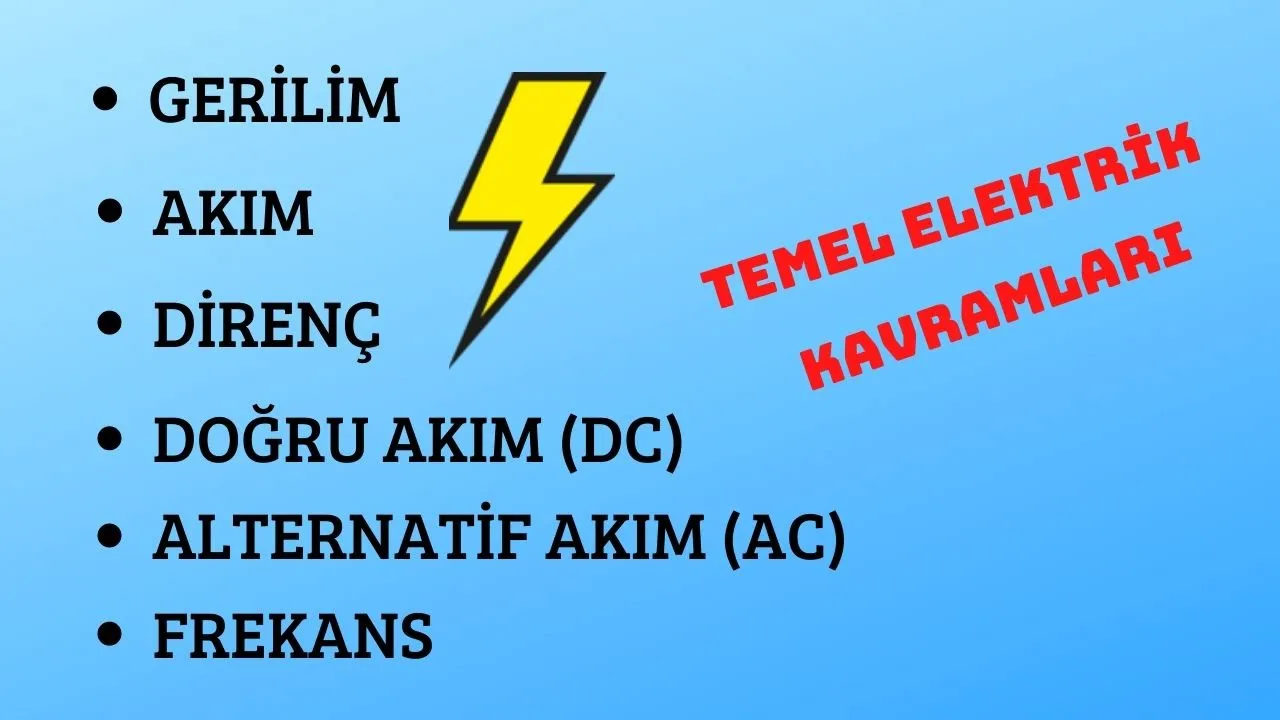
Fundamental electrical concepts, including voltage, current, resistance, and the difference between Direct Current (DC) and Alternating Current (AC).
The Law of Conservation of Energy, specifically how energy is converted from radiant light energy into electrical energy.
Balance of System (BOS) components in photovoltaic setups, such as inverters, charge controllers, and mounting systems.
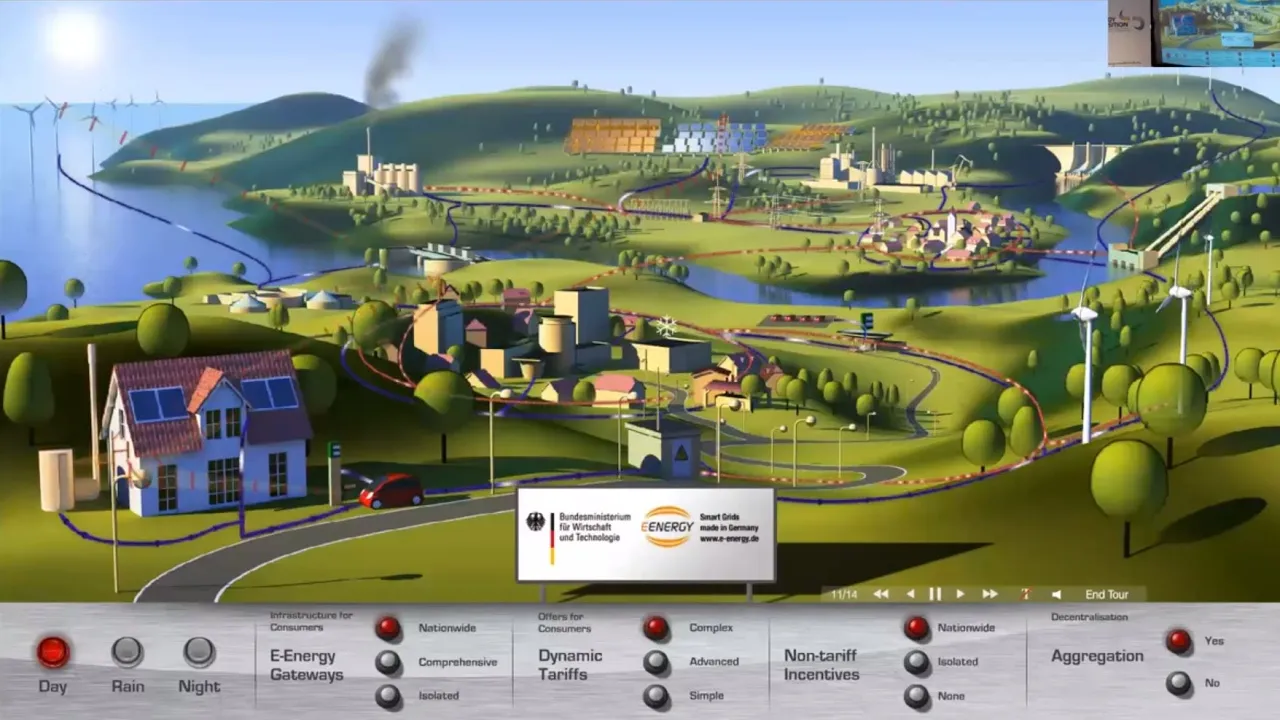
Grid integration challenges, net metering policies, and how smart grids manage intermittent renewable energy sources.
Advanced solar technologies, including thin-film solar cells, perovskite materials, and concentrated solar power (CSP).
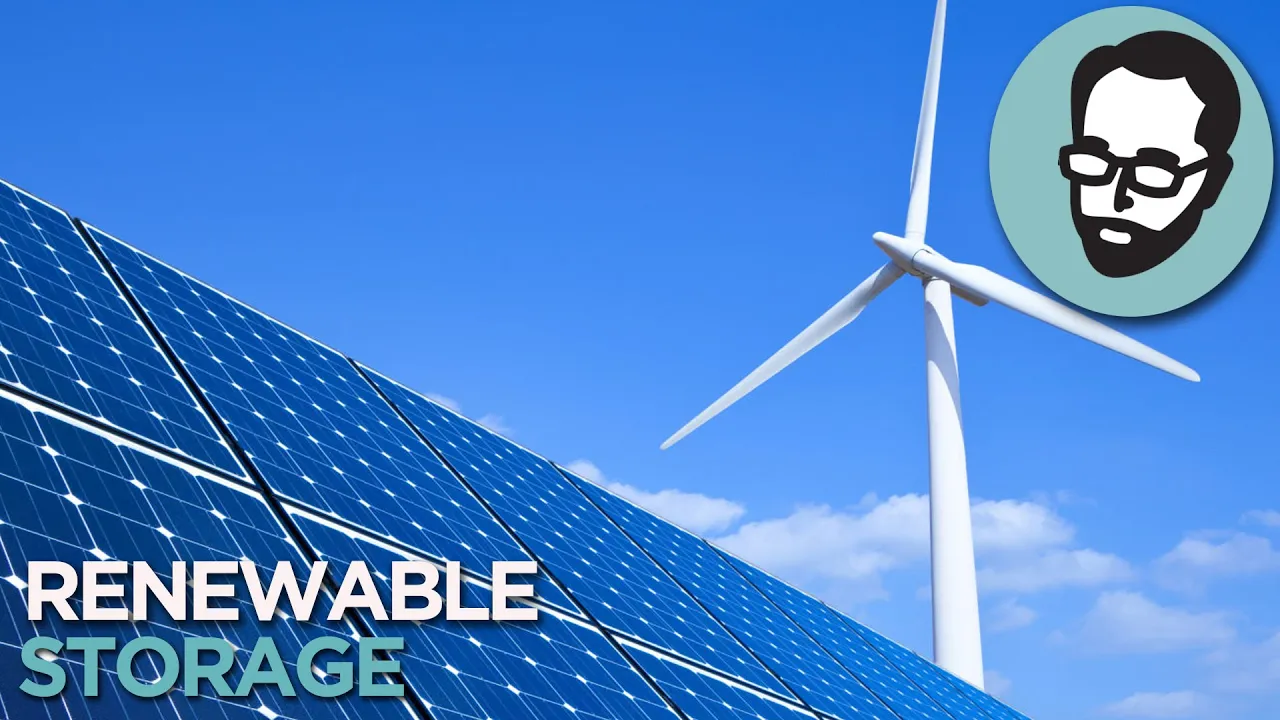
Energy storage technologies, such as lithium-ion battery banks, flow batteries, and gravity-based storage, to address solar intermittency.
The lifecycle analysis and environmental impact of solar panels, including resource extraction, manufacturing footprints, and recycling methods.
26.5M views124.5Klikes4:59Original Release: 2016-01-05
The Earth intercepts a lot of solar power: 173 thousand terawatts.
That's ten thousand times more power than the planet's population uses.
So is it possible that one day the world could be completely reliant on solar energy?
To answer that question, we first need to examine how solar panels convert solar energy to electrical energy.
Solar panels are made up of smaller units called solar cells.
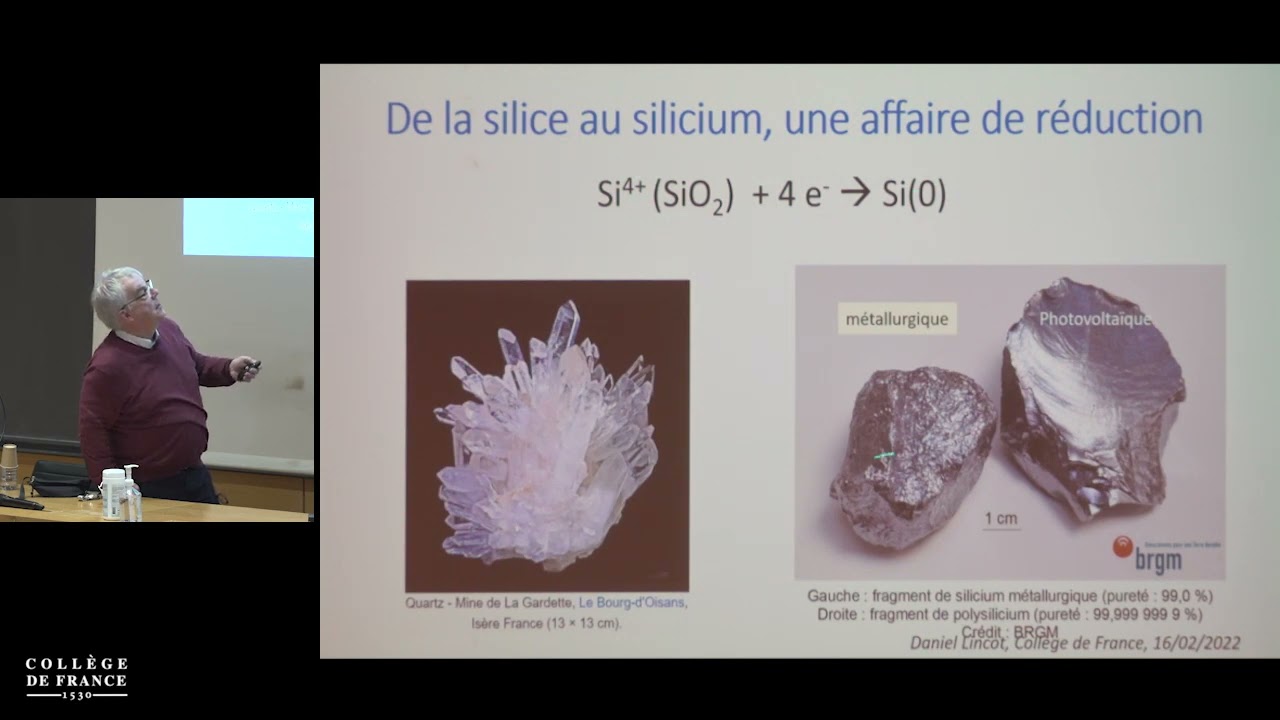
The most common solar cells are made from silicon, a semiconductor that is the second most abundant element on Earth.
In a solar cell, crystalline silicon is sandwiched between conductive layers.
Each silicon atom is connected to its neighbors by four strong bonds, which keep the electrons in place so no current can flow.
Here's the key: a silicon solar cell uses two different layers of silicon.
An n-type silicon has extra electrons, and p-type silicon has extra spaces for electrons, called holes.
Where the two types of silicon meet, electrons can wander across the p/n junction, leaving a positive charge on one side and creating negative charge on the other.
You can think of light as the flow of tiny particles called photons, shooting out from the Sun.
When one of these photons strikes the silicon cell with enough energy, it can knock an electron from its bond, leaving a hole.
The negatively charged electron and location of the positively charged hole are now free to move around.
But because of the electric field at the p/n junction, they'll only go one way.
The electron is drawn to the n-side, while the hole is drawn to the p-side.
The mobile electrons are collected by thin metal fingers at the top of the cell.
From there, they flow through an external circuit, doing electrical work, like powering a lightbulb, before returning through the conductive aluminum sheet on the back.
Each silicon cell only puts out half a volt, but you can string them together in modules to get more power.
Twelve photovoltaic cells are enough to charge a cellphone, while it takes many modules to power an entire house.
Electrons are the only moving parts in a solar cell, and they all go back where they came from.
There's nothing to get worn out or used up, so solar cells can last for decades.
So what's stopping us from being completely reliant on solar power?
There are political factors at play, not to mention businesses that lobby to maintain the status quo.
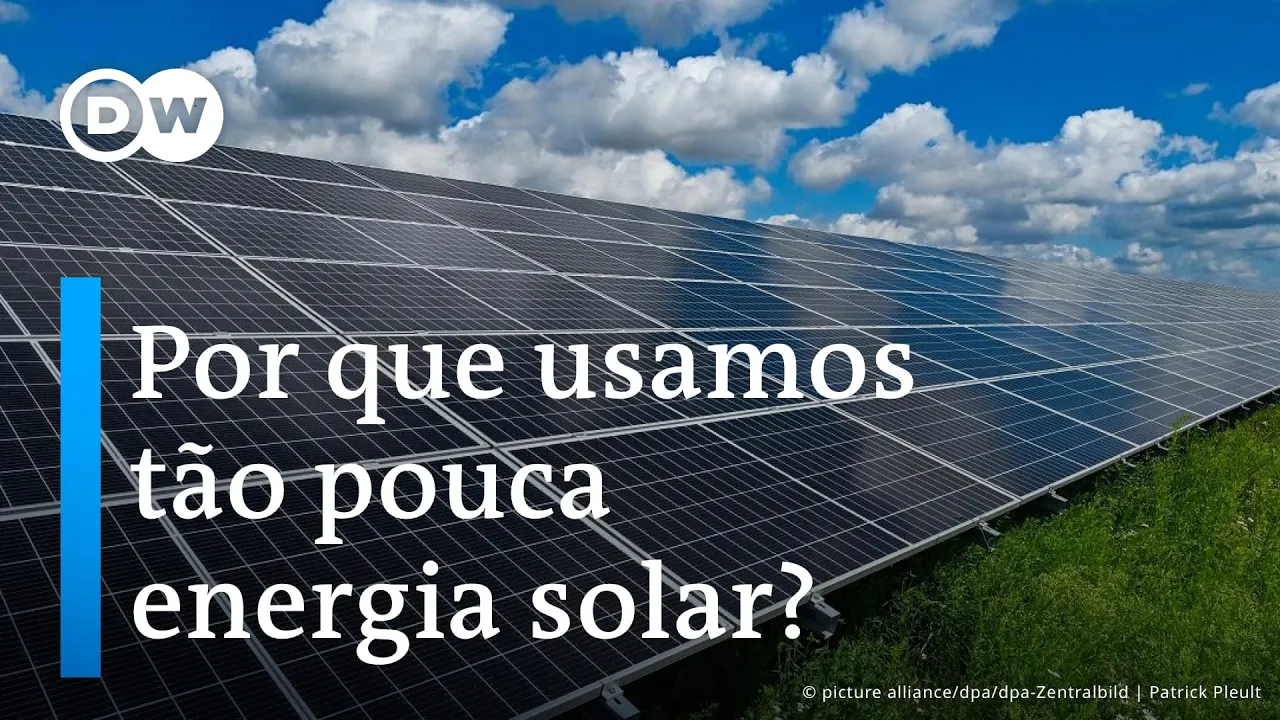
But for now, let's focus on the physical and logistical challenges, and the most obvious of those is that solar energy is unevenly distributed across the planet.
Some areas are sunnier than others.
It's also inconsistent.
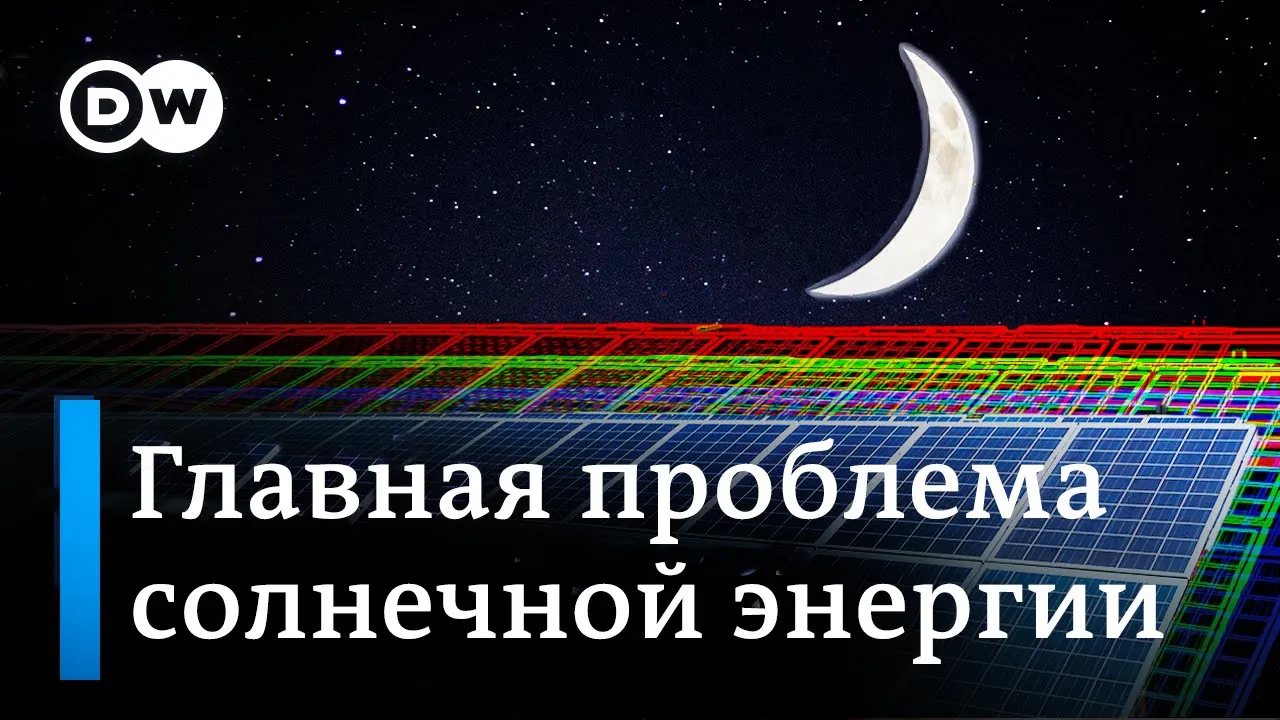
Less solar energy is available on cloudy days or at night.
So a total reliance would require efficient ways to get electricity from sunny spots to cloudy ones, and effective storage of energy.
The efficiency of the cell itself is a challenge, too.
If sunlight is reflected instead of absorbed, or if dislodged electrons fall back into a hole before going through the circuit, that photon's energy is lost.
The most efficient solar cell yet still only converts 46% of the available sunlight to electricity, and most commercial systems are currently 15-20% efficient.
In spite of these limitations, it actually would be possible to power the entire world with today's solar technology.
We'd need the funding to build the infrastructure and a good deal of space.
Estimates range from tens to hundreds of thousands of square miles, which seems like a lot, but the Sahara Desert alone is over 3 million square miles in area.
Meanwhile, solar cells are getting better, cheaper, and are competing with electricity from the grid.
And innovations, like floating solar farms, may change the landscape entirely.
Thought experiments aside, there's the fact that over a billion people don't have access to a reliable electric grid, especially in developing countries, many of which are sunny.
So in places like that, solar energy is already much cheaper and safer than available alternatives, like kerosene.
For say, Finland or Seattle, though, effective solar energy may still be a little way off.
Up Next

66:45
Fundamentals of Photovoltaics: Course Intro & Solar Energy Overview
@mitocw
122.7K views•2014-03-20

12:53
21cm Hyperfine Transition in Neutral Hydrogen: Radio Astronomy Basics
@AaronRobertParsons
12.4K views•2011-10-13
4:17
Physics of Swimming: Sperm vs. Sperm Whale — Reynolds Number Explained
@TEDEd
4.4M views•2013-09-23

27:14
Entropy and the Second Law of Thermodynamics Explained
@veritasium
27.5M views•2023-07-01
Related Study Plans & Knowledge Roadmaps
Structured learning paths in Physics
physics
Nuclear Physics (Decay, Fission & Reactors)
01Atomic Structure and the Binding Force
02Radioactive Decay and Half-Life
03Nuclear Fission Mechanics and Chain Reactions
+ 2 more learning modules
12h5 modules
Explore Roadmap
physics
Soft Matter (Polymers, Colloids & Rheology)
01Foundations of Soft Matter & Thermal Forces
02Polymer Physics and Macromolecules
03Colloids, Surfactants, and Self-Assembly
+ 2 more learning modules
38h5 modules
Explore Roadmap
physics
Analytical Mechanics: Lagrangian & Hamiltonian
01Mathematical Foundations: Calculus of Variations
02From Newtonian Mechanics to Constraint Dynamics
03The Principle of Least Action & Lagrangian Mechanics
+ 3 more learning modules
28h6 modules
Explore Roadmap
physics
General Relativity (Spacetime & Cosmology)
01Foundations of Relativity: Special Relativity
02The Geometry of Spacetime: Equivalence Principle & Curvature
03Einstein's Field Equations: The Mathematics of Gravity
+ 2 more learning modules
55h5 modules
Explore Roadmap