

















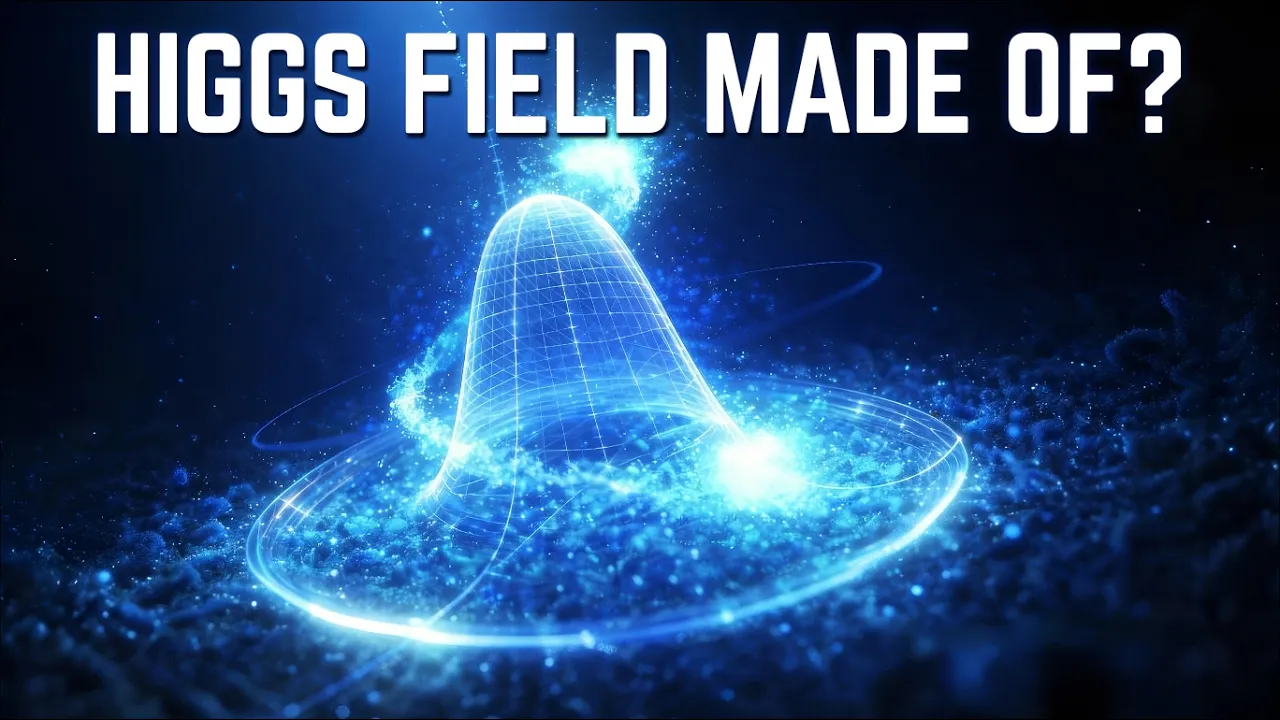
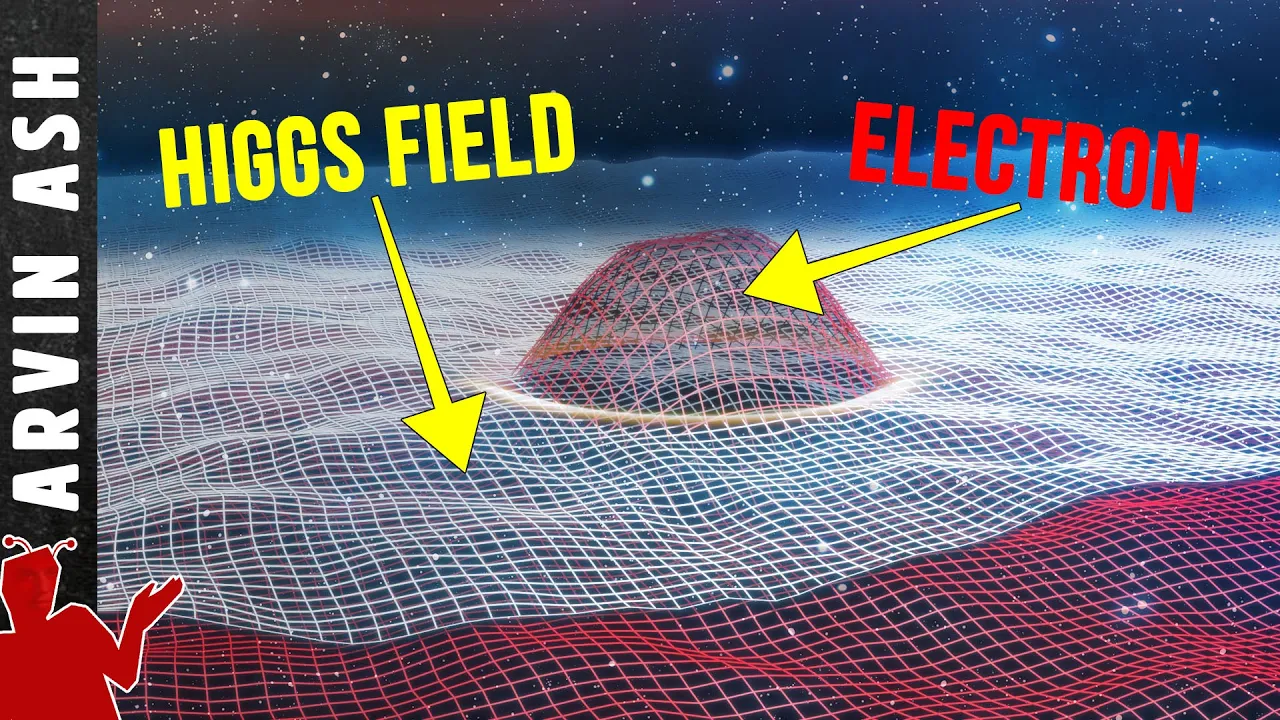





The Higgs Field is a fundamental field that permeates all of space and gives mass to fundamental particles through their interactions with it; particles that interact more strongly with the Higgs Field (like Peter Higgs in a crowded room) gain more mass, while those that don't interact (like photons) remain massless, and the Higgs boson itself represents a temporary disturbance or 'clump' in this field, similar to a rumor spreading through a crowd.
The Higgs Field Explained: Particle Physics Analogy
Added:Basic understanding of the Standard Model of particle physics, including the distinction between fermions (matter particles) and bosons (force carriers).
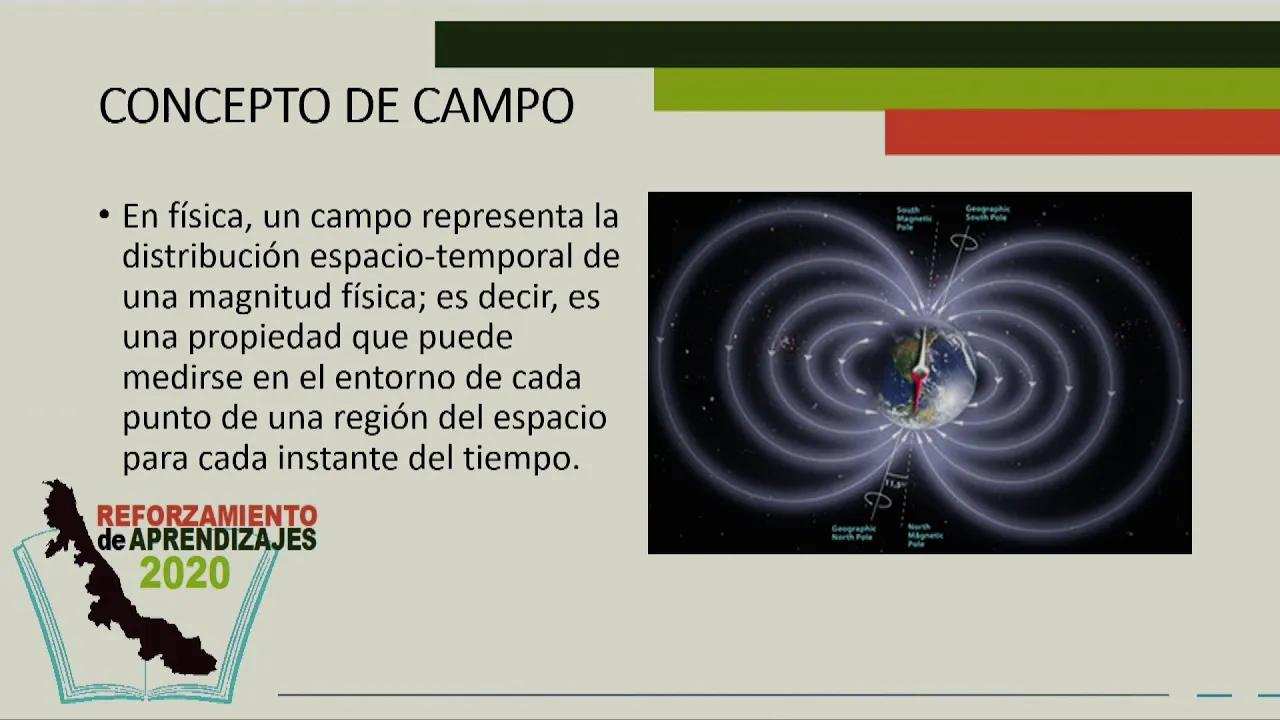
The physical concept of a 'field' in physics (such as gravitational or electromagnetic fields) and how particles interact with them.
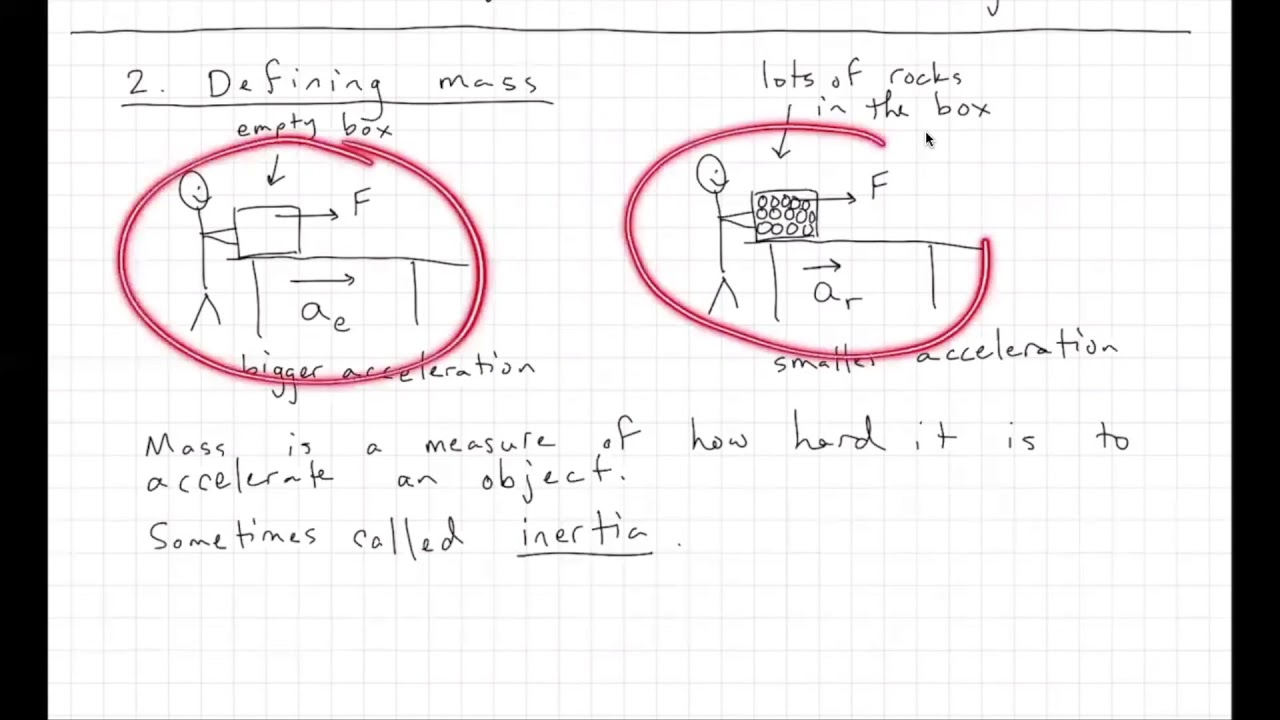
The fundamental definition of mass, specifically the concept of inertia as a resistance to acceleration.
The distinction between elementary particles (like quarks and leptons) and composite particles (like protons and neutrons), and how their sources of mass differ.
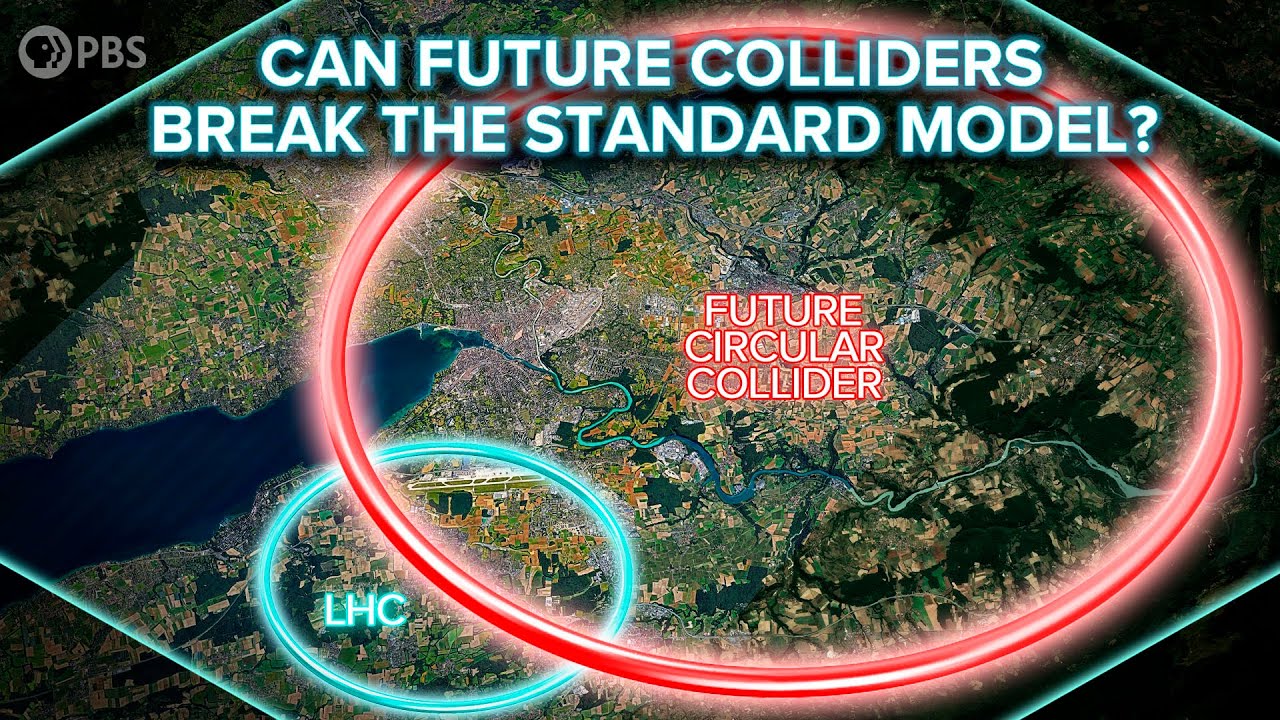
The experimental discovery of the Higgs Boson at the Large Hadron Collider (LHC) in 2012 and how excitations in the field are detected.
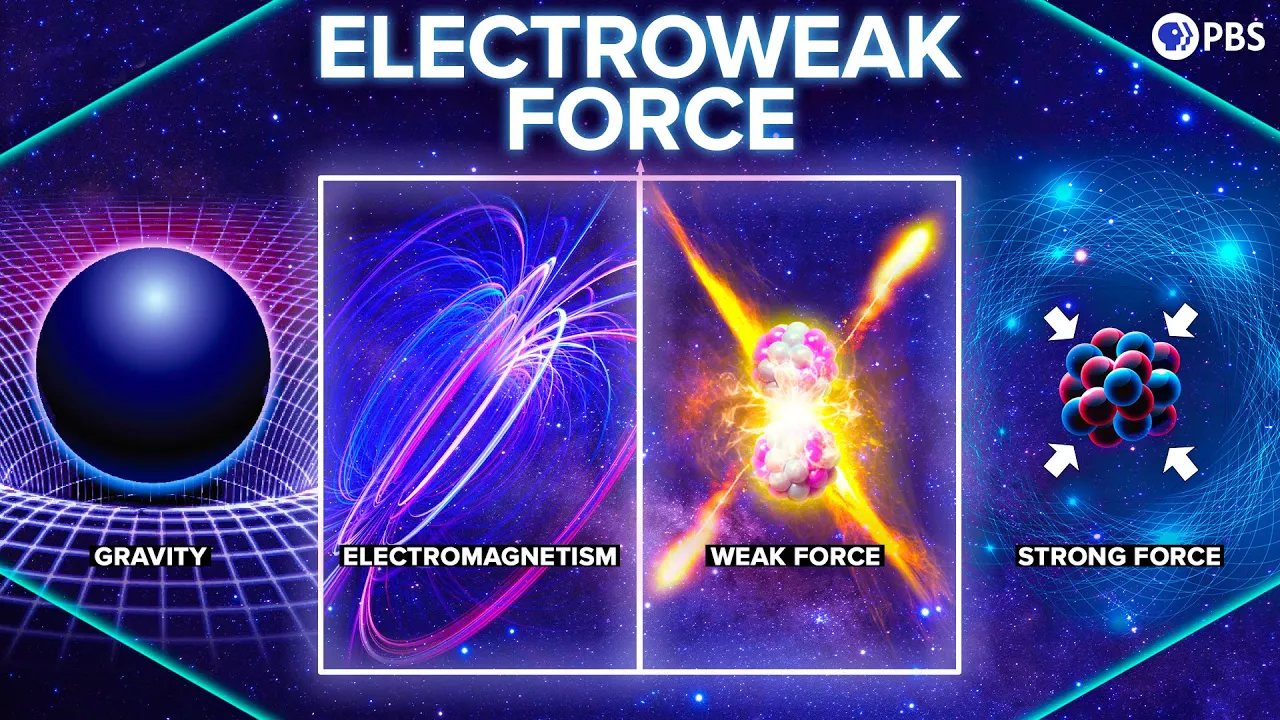
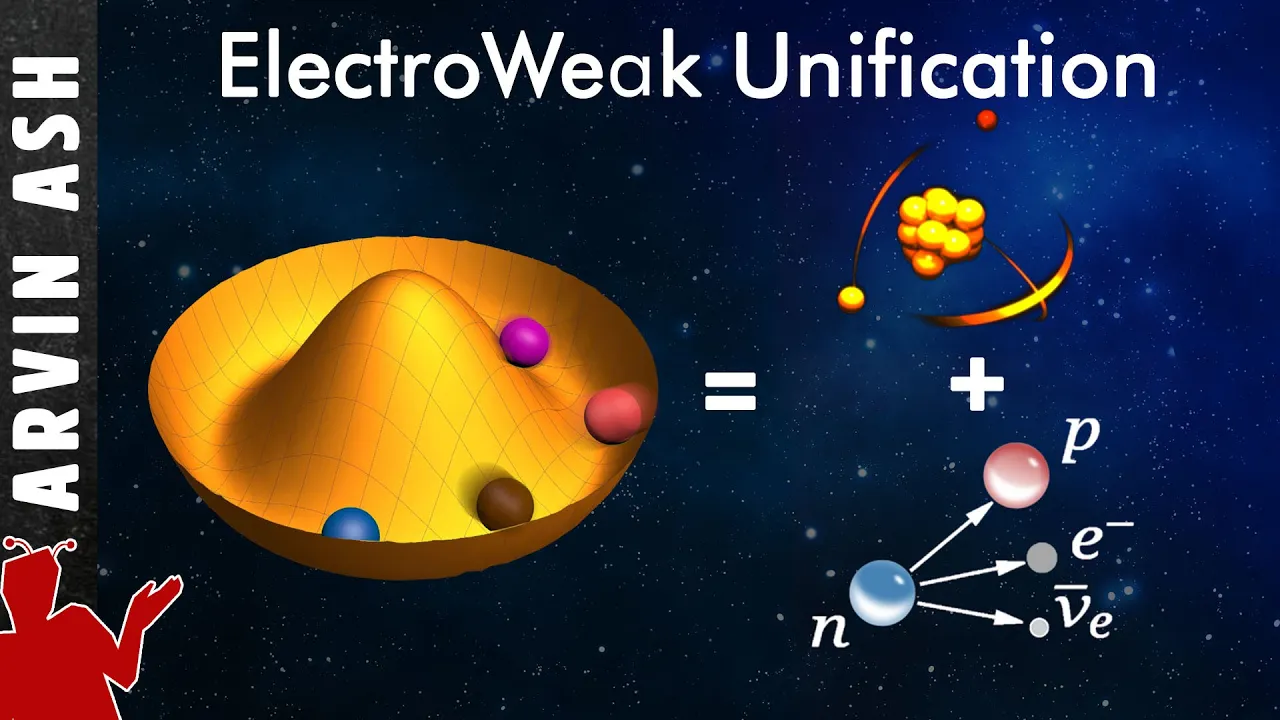
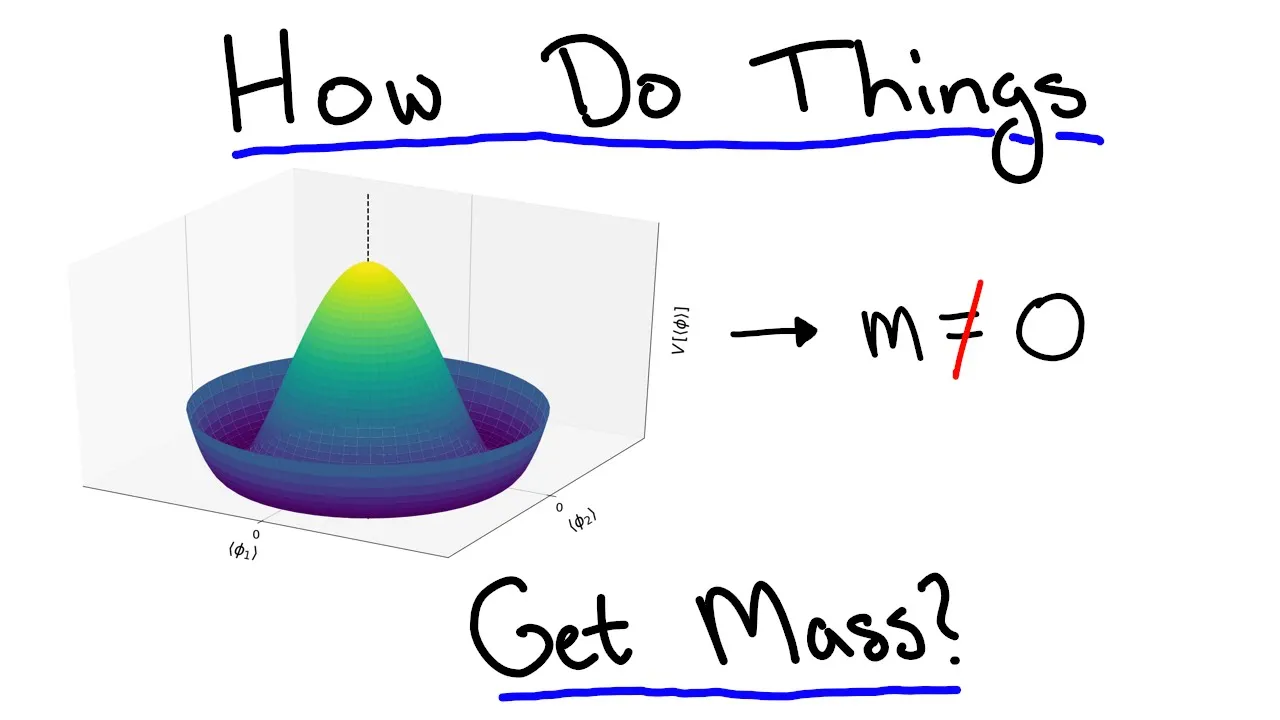
The theoretical framework of the Higgs Mechanism, including Spontaneous Symmetry Breaking and how the electroweak force split into electromagnetism and the weak force.
The concept of vacuum expectation value (VEV) and why the Higgs field has a non-zero value in its vacuum state.
Advanced topics beyond the Standard Model, such as the Hierarchy Problem, Supersymmetry (SUSY), and the search for dark matter candidates interacting via the 'Higgs portal'.
1.1M views23.9Klikes3:19Original Release: 2013-08-27
Without a doubt, the most exciting scientific observation of 2012 was the discovery of a new particle at the CERN laboratory that could be the Higgs boson, a particle named after physicist Peter Higgs.
The Higgs Field is thought to give mass to fundamental, subatomic particles like the quarks and leptons that make up ordinary matter.
The Higgs bosons are wiggles in the field, like the bump you see when you twitch a rope.
But how does this field give mass to particles?
If this sounds confusing to you, you're not alone.
In 1993, the British Science Minister challenged physicists to invent a simple way to understand all this Higgs stuff.
The prize was a bottle of quality champagne.
The winning explanation went something like this: Suppose there's a large cocktail party at the CERN laboratory filled with particle physics researchers.
This crowd of physicists represents the Higgs field.
If a tax collector entered the party, nobody would want to talk to them, and they could very easily cross the room to get to the bar.
The tax collector wouldn't interact with the crowd in much the same way that some particles don't interact with the Higgs field.
The particles that don't interact, like photons for example, are called massless.
Now, suppose that Peter Higgs entered the same room, perhaps in search of a pint.
In this case, the physicists will immediately crowd around Higgs to discuss with him their efforts to measure the properties of his namesake boson.
Because he interacts strongly with the crowd, Higgs will move slowly across the room.
Continuing our analogy, Higgs has become a massive particle through his interactions with the field.
So, if that's the Higgs field, how does the Higgs boson fit into all of this?
Let's pretend our crowd of party goers is uniformly spread across the room.
Now suppose someone pops their head in the door to report a rumor of a discovery at some distant, rival laboratory.
People near the door will hear the rumor, but people far away won't, so they'll move closer to the door to ask.
This will create a clump in the crowd.
As people have heard the rumor, they will return to their original positions to discuss its implications, but people further away will then ask what's going on.
The result will be a clump in the crowd that moves across the room.
This clump is analogous to the Higgs boson.
It is important to remember that it is not that massive particles interact more with the Higgs field.
In our analogy of the party, all particles are equal until they enter the room.
Both Peter Higgs and the tax collector have zero mass.
It is the interaction with the crowd that causes them to gain mass.
I'll say that again.
Mass comes from interactions with a field.
So, let's recap.
A particle gets more or less mass depending on how it interacts with a field, just like different people will move through the crowd at different speeds depending on their popularity.
And the Higgs boson is just a clump in the field, like a rumor crossing the room.
Of course, this analogy is just that -- an analogy, but it's the best analogy anyone has come up with so far.
So, that's it.
That's what the Higgs Field and the Higgs boson is all about.
Continuing research will tell us if we found it, and the reward will probably be more than just a bottle of champagne.
Up Next

5:04
How the Higgs Field Gives Particles Mass | Quantum Physics Explained
@SciTechUK
24.4K views•2010-03-17

12:53
21cm Hyperfine Transition in Neutral Hydrogen: Radio Astronomy Basics
@AaronRobertParsons
12.4K views•2011-10-13
4:17
Physics of Swimming: Sperm vs. Sperm Whale — Reynolds Number Explained
@TEDEd
4.4M views•2013-09-23

27:14
Entropy and the Second Law of Thermodynamics Explained
@veritasium
27.5M views•2023-07-01
Related Study Plans & Knowledge Roadmaps
Structured learning paths in Physics
physics
Nuclear Physics (Decay, Fission & Reactors)
01Atomic Structure and the Binding Force
02Radioactive Decay and Half-Life
03Nuclear Fission Mechanics and Chain Reactions
+ 2 more learning modules
12h5 modules
Explore Roadmap
physics
Soft Matter (Polymers, Colloids & Rheology)
01Foundations of Soft Matter & Thermal Forces
02Polymer Physics and Macromolecules
03Colloids, Surfactants, and Self-Assembly
+ 2 more learning modules
38h5 modules
Explore Roadmap
physics
Analytical Mechanics: Lagrangian & Hamiltonian
01Mathematical Foundations: Calculus of Variations
02From Newtonian Mechanics to Constraint Dynamics
03The Principle of Least Action & Lagrangian Mechanics
+ 3 more learning modules
28h6 modules
Explore Roadmap
physics
General Relativity (Spacetime & Cosmology)
01Foundations of Relativity: Special Relativity
02The Geometry of Spacetime: Equivalence Principle & Curvature
03Einstein's Field Equations: The Mathematics of Gravity
+ 2 more learning modules
55h5 modules
Explore Roadmap