




![CAIE AS PHYSICS 9702 KINEMATICS & DYNAMICS [MCQs] #Part 12](https://i.ytimg.com/vi/zfA1fHnr7l4/maxresdefault.jpg)





![[강연] 거시 세계의 양자 물리: 온 세상이 떨고 있다 _ by이필진ㅣ 2021 '시간, 물질 그리고 우주' 4강](https://i.ytimg.com/vi/FxkItBFv8HE/maxresdefault.jpg)


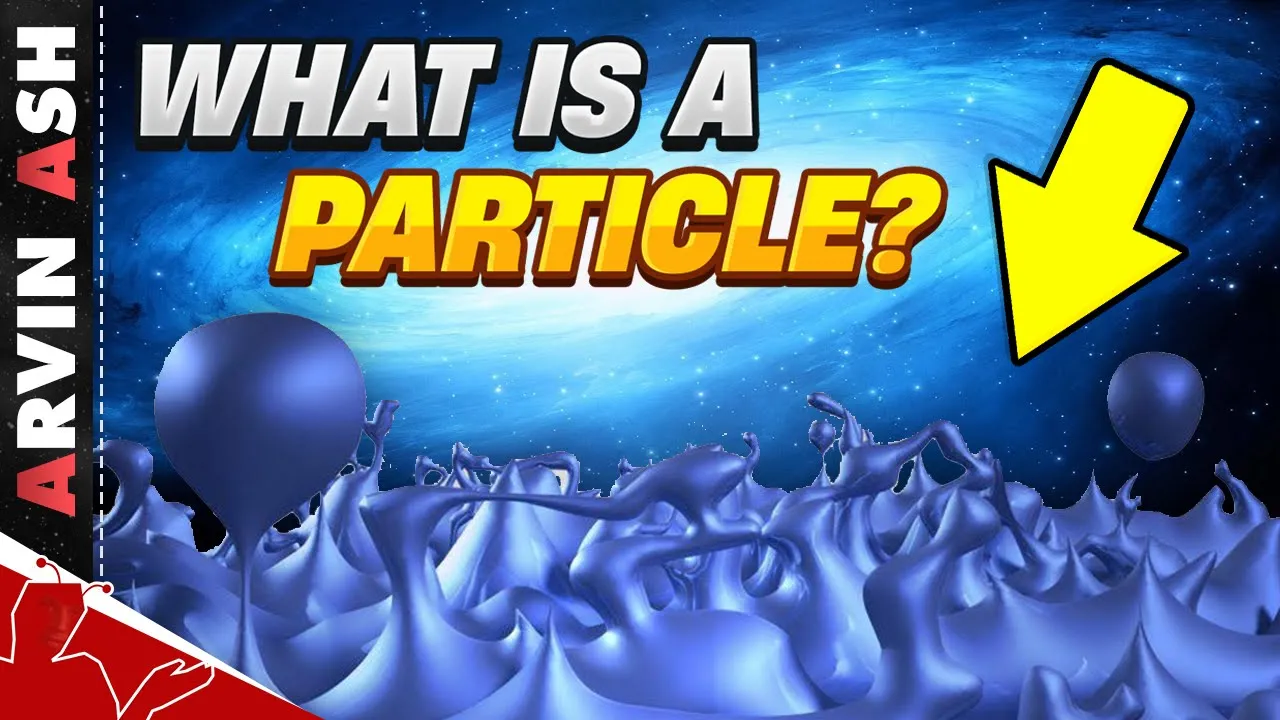


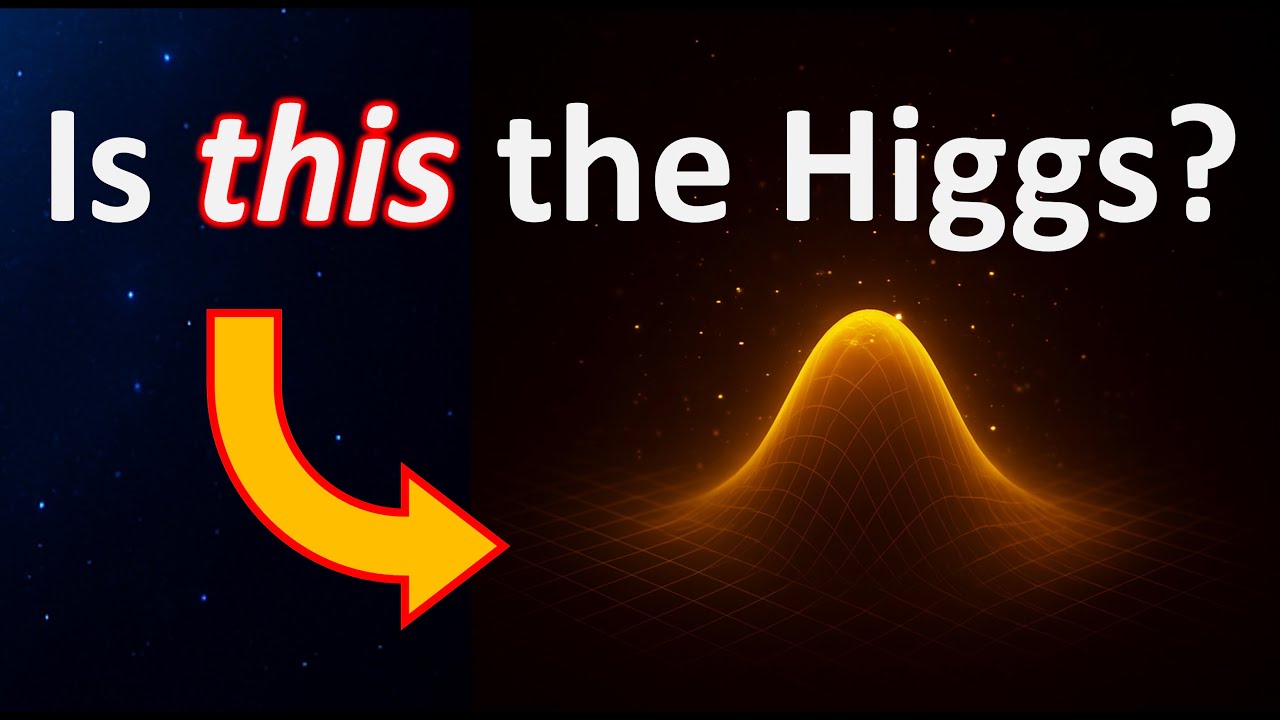




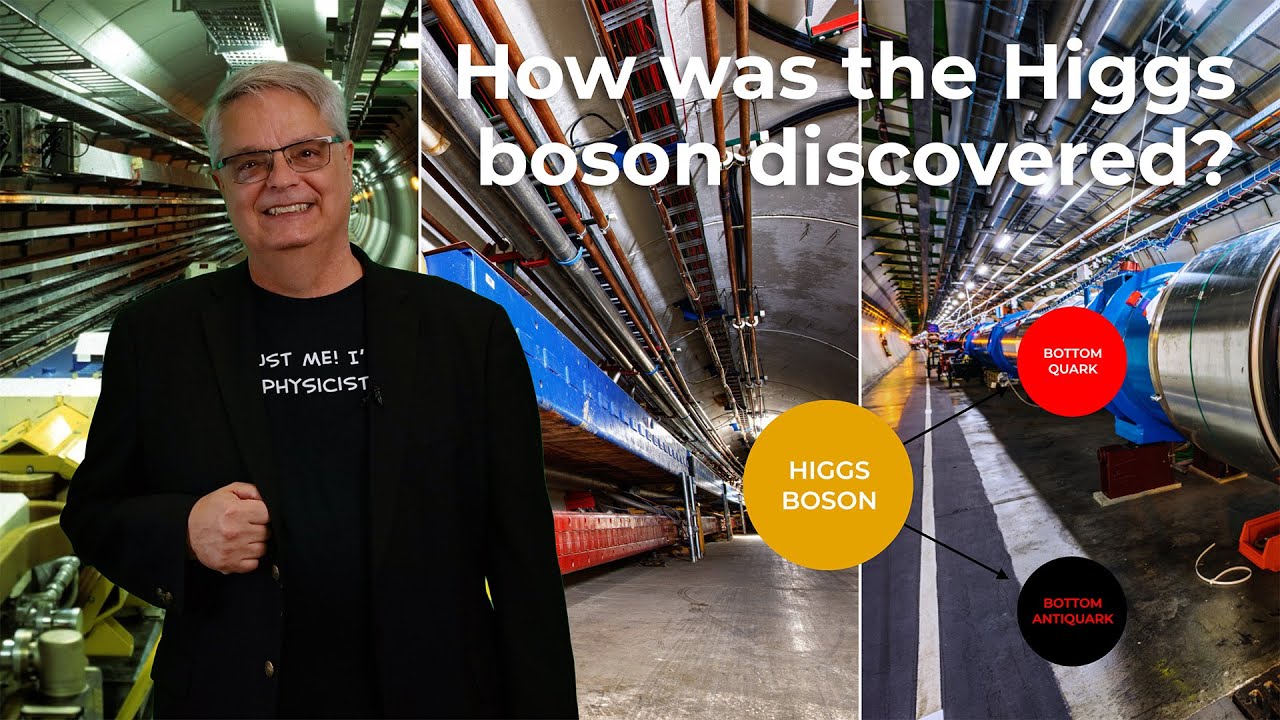






The Higgs field, which emerged approximately 10^-12 seconds after the Big Bang, acts as a selective filter that imparts mass to elementary particles by slowing them down through interactions with Higgs bosons; particles like electrons pass through easily with minimal mass, while top quarks interact heavily and become nearly entirely mass, with the Large Hadron Collider at CERN designed to create and detect Higgs bosons through high-energy proton collisions to confirm this theoretical framework.
How the Higgs Field Gives Particles Mass | Quantum Physics Explained
Added:The basic structure of the Standard Model of particle physics, including quarks, leptons, and force-carrying bosons.
The conceptual difference between mass and weight, and how mass represents a particle's resistance to acceleration (inertia).
The physics concept of a 'field' (such as gravitational or electromagnetic fields) that permeates space and exerts forces on objects.
The fundamental principle of wave-particle duality, specifically how excitations in a quantum field manifest as localized particles.
The concept of spontaneous symmetry breaking and the Higgs mechanism's mathematical framework (the 'Mexican hat' potential).
The 'Hierarchy Problem' in theoretical physics and the question of why the Higgs boson's mass is so much lighter than the Planck mass.
Experimental physics methodologies at the Large Hadron Collider (LHC), including how detectors like ATLAS and CMS identify Higgs boson decay channels.
Theories Beyond the Standard Model (BSM), such as Supersymmetry (SUSY) or Dark Matter candidates that may interact with the Higgs field.
24.4K views170likes5:04Original Release: 2010-03-17
At the big bang, tightly packed superenergetic particles filled each minute drop of space time. As a drop stretched and cooled, its particles began to lose their energy. The mysterious property known as mass had not yet come into being. A hundth of a billionth of a second after the big bang when the temperature had dropped a fraction, something strange began to happen. The entire universe seemed to have become permeated with a field or presence that dramatically materialized in a similar way that steadily cooling water suddenly turns to ice.
This phase change into what is now known as the Higs field appears to have had a remarkable effect on the elementary particles that had previously been whizzing about at the speed of light. Some particles travel through the Higsfield virtually unimpeded, but other types of particles were dragged to slower velocities by varying amounts. It was as if the Higsfield was acting as a kind of selective trile.
The more the particles were slowed by the Higs field, the more of their energy has been condensed into a super concentrated form of energy known as mass. Einstein showed that energy and mass were interconvertible. Energy can become mass and mass convert back to energy.
The Higs field appears to share these two manifestations differently for our four particles.
The electron is mainly energy. The muon a bit more mass. The W particle more still. And the top quark is nearly all mass and very little energy. But how can this Higsfield confer mass on a particle? In the quantum mechanical world, fields such as the Higs field are envisaged as being made up of many tiny particles. These messenger particles that convey the effects of such fields are known as Bzons. In this case, they'd be Higs Bzons. On closer inspection, the Higs field is far from static. Its fluctuating levels are represented by Higs Bzons coming into and out of existence. The result is a boiling sea of jostling particles.
Now when our electron enters this field, it slips past the Higs particles with ease. The muon being less slippery encounters more friction with the Higs field. The W particle makes quite heavy weather of its passage with the Higs particles getting quite a purchase on it and slowing it down considerably.
Finally, the top quark locks readily with the Higs bosons and is slowed down greatly, converting much of its kinetic energy into mass. If this hypothesis is correct, and Higs bzons do come into an out of existence, theoretical physicists believe it should be possible for experimenters to create and destroy Higs Bzons.
And that is one of the primary missions of CERN's large hadron collider. Theoreticians predict that the energy exchanged in a direct collision between two protons traveling at nearly the speed of light in the large hadron collider should force the creation of a Higs Bzon. An exact head-on collision of two protons is rare, but that is still not accurate enough. is getting a direct hit between ingredients of each proton that could create a Higs Bzon. Chances of such a collision are low, but if enough are generated, CERN hopes that such events will occur and like roadside speed cameras will flash the Higs for all the world to marvel at.
Physicists suggest that if there is a Higs bzon, it will immediately disintegrate into other recognizable particle pairs. And it's the presence of these smoking guns that will finally indicate that the Higs Bzon is more than a figment of theoreticians minds and so will have revealed yet another major building block of our understanding of the universe.
Up Next
18:42
Particle Physics Explained Visually via Feynman Diagrams
@ArvinAsh
421.7K views•2020-12-20

12:53
21cm Hyperfine Transition in Neutral Hydrogen: Radio Astronomy Basics
@AaronRobertParsons
12.4K views•2011-10-13

32:32
NMR Spin Physics I: Zeeman Effect, Resonance Condition & Larmor Frequency
@nptel-indianinstituteofsci8064
2.3K views•2024-01-17

27:14
Entropy and the Second Law of Thermodynamics Explained
@veritasium
27.5M views•2023-07-01
Related Study Plans & Knowledge Roadmaps
Structured learning paths in Physics
physics
Nuclear Physics (Decay, Fission & Reactors)
01Atomic Structure and the Binding Force
02Radioactive Decay and Half-Life
03Nuclear Fission Mechanics and Chain Reactions
+ 2 more learning modules
12h5 modules
Explore Roadmap
physics
Soft Matter (Polymers, Colloids & Rheology)
01Foundations of Soft Matter & Thermal Forces
02Polymer Physics and Macromolecules
03Colloids, Surfactants, and Self-Assembly
+ 2 more learning modules
38h5 modules
Explore Roadmap
physics
Analytical Mechanics: Lagrangian & Hamiltonian
01Mathematical Foundations: Calculus of Variations
02From Newtonian Mechanics to Constraint Dynamics
03The Principle of Least Action & Lagrangian Mechanics
+ 3 more learning modules
28h6 modules
Explore Roadmap
physics
General Relativity (Spacetime & Cosmology)
01Foundations of Relativity: Special Relativity
02The Geometry of Spacetime: Equivalence Principle & Curvature
03Einstein's Field Equations: The Mathematics of Gravity
+ 2 more learning modules
55h5 modules
Explore Roadmap