


















Feynman diagrams provide an intuitive visual framework for understanding fundamental particle physics by representing interactions between fermions (matter particles) and bosons (force carriers). In these diagrams, fermions are depicted as straight lines with arrows indicating matter (forward) or antimatter (backward), while force carriers like photons, W/Z bosons, and gluons appear as wavy or straight lines connecting fermion lines. The diagrams illustrate how particles interact via the four fundamental forces: the electromagnetic force (mediated by photons) causes repulsion between like-charged particles and attraction between opposite charges; the weak force (mediated by W± and Z bosons) can change a particle's identity or flavor, such as converting a neutron to a proton; the strong force (mediated by gluons) binds quarks together within protons and neutrons through color charge exchange; and the Higgs boson confers mass to fundamental particles. These visual tools simplify complex quantum field theory calculations, making fundamental particle physics comprehensible through intuitive graphical representations.
Particle Physics Explained Visually via Feynman Diagrams
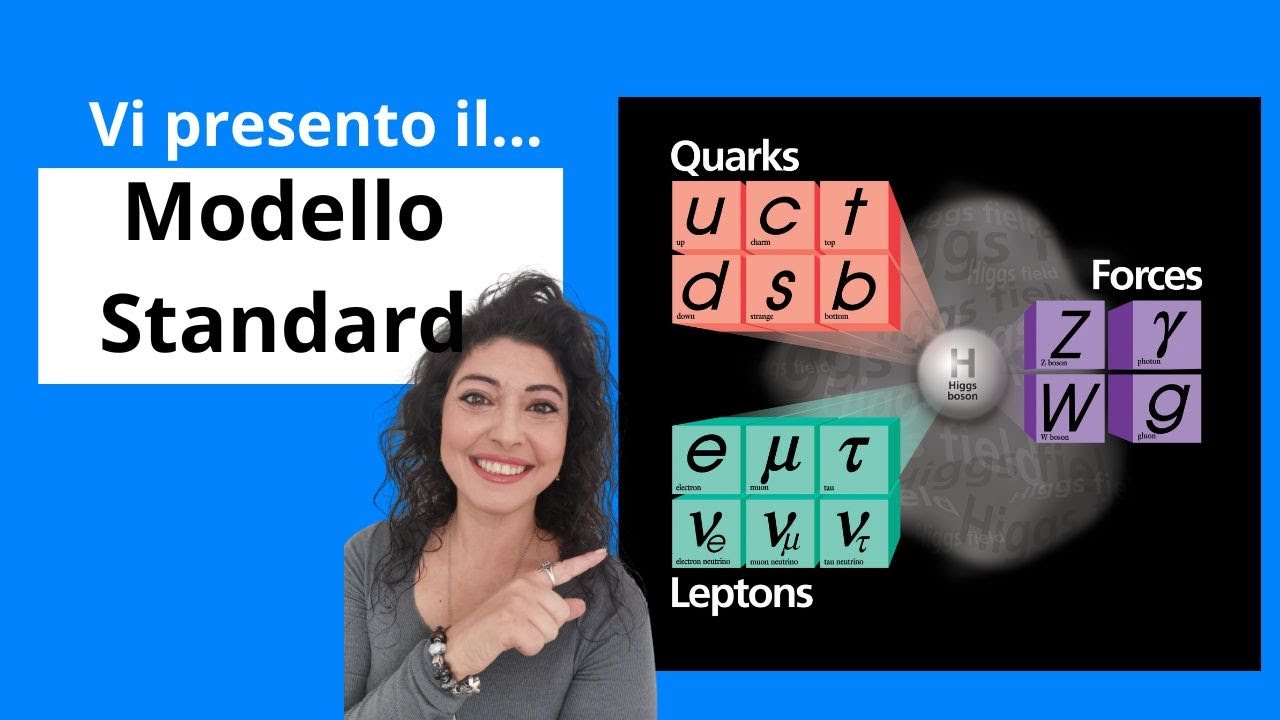
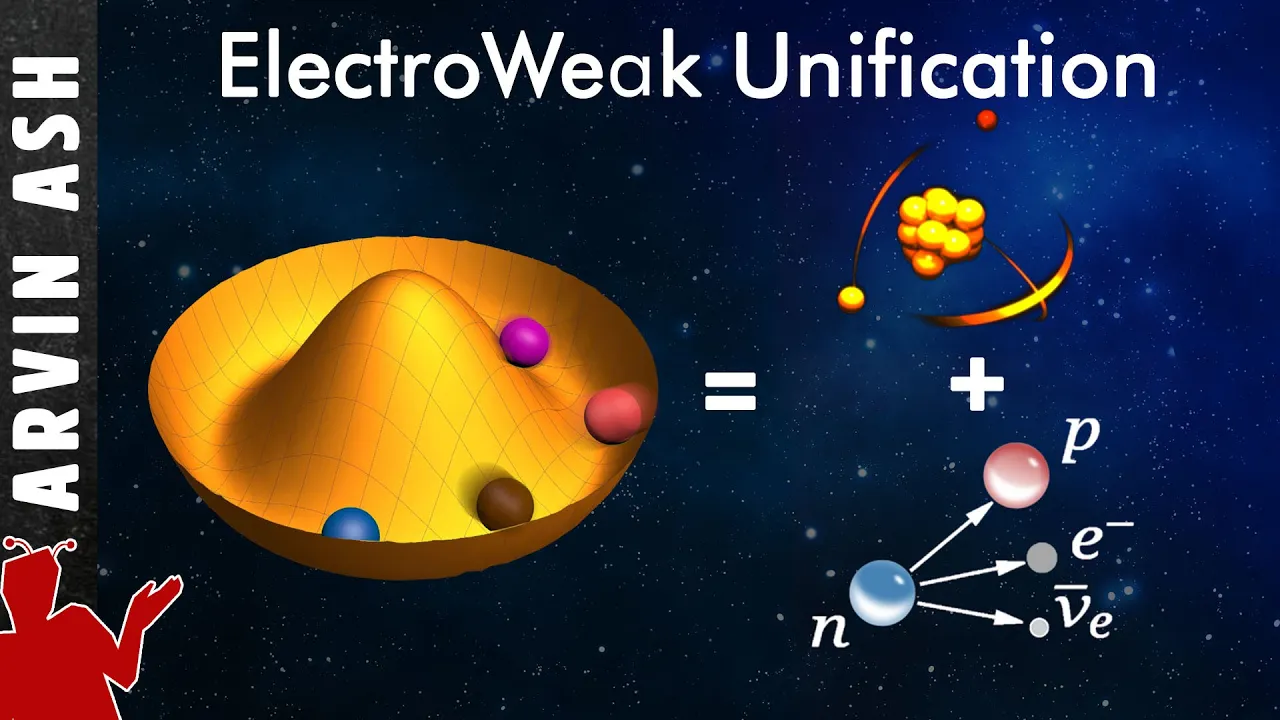
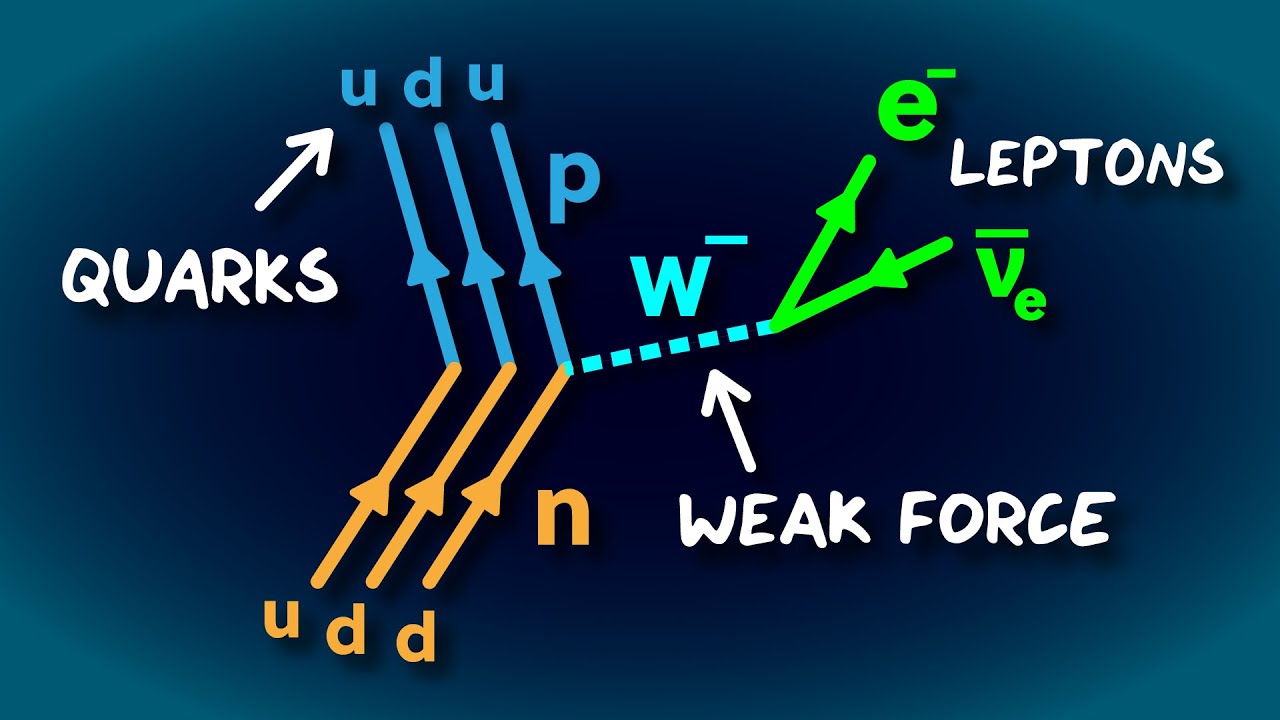
Added:if you wanted to learn all fundamental particle physics you would first need to know that the world we live in is governed by four forces the strong weak electromagnetic and gravitational force we have a quantum description for three of these forces the odd one out is gravity for which there's no quantum theory as yet but it is so weak that it doesn't have a significant effect at the quantum level since the other forces overpower it so it's generally ignored in quantum calculations but after almost 100 years of scientific progress we can very accurately describe the other three forces in terms of quantum field theories these theories explain how particles like quarks and electrons interact with each other via these three forces each force is mediated by a force carrier also called a mediator the electromagnetic force is mediated by the photon the weak force by the w and z bosons and the strong force by the gluons in a quantum field theory we represent each of these mediator particles with a field for example the photon field mediates the electromagnetic force between electrically charged particles like electrons other fundamental particles of the standard model are also represented by their own respective fields and these fields can interact with each other thus the photon field can interact with the electron field causing a repulsion of two electrons for example if we generalize this concept of force carrying particles interacting with other particles we can get all fundamental particle physics we can take space-time add a quantum field for each type of fermion like quarks add quantum fields for appropriate bosons like gluons that mediate the force that the quark is subject to and we can get a great representation of how it all works these theories can be complicated but american physicist richard feynman came up with an ingenious way to represent these interactions and what is now called findman diagrams and even though these diagrams represent complicated mathematical equations they can be visualized intuitively and drawn for any process using some simple rules if you want to understand all fundamental particle physics with the help of these simple intuitive feynman diagrams then merry christmas because that's coming up right now we review all particle physics i'd like to take a moment to thank magellantv for making this episode possible magellan is an ad-free documentary streaming service created by the filmmakers themselves their documentary collections are richer and broader than just about any other streaming service you can dive deep into subjects like history culture science and technology and see many of them in 4k i'm excited to tell you that magellan is now offering a buy one get one free gift card for the people in your life that you want to give the gift of knowledge if you're new you'll get a free one month trial of magellan if you're already a member you'll get an extra month anytime you purchase a gift card there has never been a better time to spread the gift of knowledge i highly recommend magellan tv so be sure to click the link in the description first let's learn to make a simple findment diagram to do this we'll start with the standard model which is like a periodic table for fundamental particles what is important here is to understand what the different classes of particles can do so on the left the 12 fermions are represented with straight lines with arrows and finding diagrams the arrow is important just like how in an electrical circuit the current flows through the circuit the arrows represent the flow of fermions no two arrows point towards each other this is to conserve the fermion current or in other words we must have the same number of fermions in the end as we started with note that there are some notations which use these arrows differently if we consider time in the x direction then we can interpret fermion arrows going forwards in time as matter particles and fermion arrows going backwards as antimatter particles this is the general rule for all fermions now the fermions can be divided up further in terms of charges when i say charges i mean the electric and color charge if you don't know what a color charge is please check out my previous video on qcd all six quarks have color charges all particles with color charges interact with the strong nuclear force thus all quarks feel this force the quarks also have an electric charge so they also feel the electromagnetic force the other class of fermions are the leptons these can be divided into the electron which makes up an atom and its heavier cousins the muon and tau particles these all have electric charges but no color charges so they feel the electromagnetic force but not the strong force the last three leptons are the neutrinos these do not have a color charge or an electric charge thus they are not affected by the strong or electromagnetic forces and they have a very low mass so they're only slightly affected by gravity this is what makes them very difficult to detect now you might ask hey what about the weak force and its charge the answer is that all fermions carry something called weak isospin this can be thought of as a kind of charge of the weak force for fermions it can be plus one-half or minus one-half so all fermions interact with the weak force but weak isospin can also be negative one zero and plus one the w minus boson has a weak iso spin of negative one w plus has plus one higgs has minus one half and z bosons and photons have a weak isospan of zero note that this zero is not the same as having no isospin both z and photons interact with the weak force everything in the standard model has a weak isospin except gluons so gluons do not interact with the weak force weak isospin is a quantum number relating to the weak force it's a property just like electrical charges a property of some particles the number of the charge is just related to how they feel it weak isospin must also be conserved just like you must conserve electrical charge and color charge it's a stretch to call the weak force of force it's more like a power the weak force has the power to turn one particle into another particle so for example it can turn a down quark into an up quark turning a neutron into a proton by emitting a w minus boson this is the only force that can do that electromagnetism and the strong force can't do this to recap quarks interact with all forces electron-like particles interact with electromagnetism and the weak force but do not interact with a strong force neutrinos only interact with the weak force and nothing else only quarks and gluons carry the strong charge higgs bosons do not interact with photons or gluons they conform mass to fundamental particles so all fundamental particles with mass interact with the higgs so with that you have the basics needed to understand feynman diagrams there are potentially a large number of diagrams where we can build almost everything by looking at the most important ones where fermions interact with forces the simplest force is the electromagnetic force described by qed which as we know interacts with quarks and leptons note that the w bosons which are the mediator particles for the weak force are charged so they also feel this force but we'll ignore them for the moment let's interpret one of the simplest diagrams shown here the x-axis represents time an arrow pointing to the right represents matter particles there are two ways this diagram can be interpreted we can view it as an electron moving from left to right while at the same time a photon moves from the bottom to top this would depict a photon being absorbed by an electron this is how the electron in an atom can move from a lower orbit to a higher orbit by absorbing the energy from the photon we can also view this as an electron moving from left to right emitting a photon and then continuing in this scenario it would represent the electron losing energy by emitting a photon this is how an electron in an atom moves from a higher orbit to a lower orbit by the way this is also how lasers work how is electromagnetic repulsion depicted in refinement diagrams as we discussed the force-carrying particle for electromagnetism is the photon this diagram also called molar scattering depicts repulsion two electrons come near each other and exchange of virtual photons causes a transfer of momentum which pushes the two electrons apart note that we cannot measure the virtual photons only the incoming and outgoing electrons so sometimes this diagram is drawn like this these both depict the same process what about electromagnetic attraction the diagram for this is called the baba scattering diagram there are two potential diagrams the first diagram depicts an electron and positron that have opposite charges attracting each other this also happens to the exchange of virtual photons this looks very similar to the diagram for repulsion the only difference is that the photon exchange in this case results in an exchange of negative momentum which attracts two particles instead of positive momentum which repels two particles we can see this in our boat analogy where the boats represent electrons and the object being thrown is like the virtual photon positive momentum exchange is like two people throwing basketballs at each other which pushes the boats apart but a negative momentum exchange is like two people throwing boomerangs which results in the boats being attracted to each other the second diagram shows a different phenomenon which can also occur when electrons and positrons are near each other this shows that when the particle antiparticle pair come near each other they annihilate resulting in energy production or photons being created the energy of these photons in turn can create a new electron positron pair this leads us to the slightly more complicated weak force this force is felt by all the standard model particles except gluons the most interesting weak force diagrams involve w bosons which can have a plus one or minus one charge these particles can do something very special they can change the identity or flavor of a particle so for example they can change an up cork into a down quark this is so important that we probably would not exist without it so for example here's one of the most important weak force interactions relevant to life this involves a neutron decaying into a combination of a proton electron and anti-neutrino on the left side we have a neutron which is composed of one up quark and two down quarks one of the down quarks can change flavor and become an up quark this happens due to the w minus weak force mediator particle when the w boson is emitted the down quark changes its flavor to an up quark this w minus boson then almost immediately decays into an electron and an antineutrino because the new particle now has two up quarks and one down quark our original neutron has turned into a proton note that charge is still conserved because the emitted negative charge of the electron is balanced by the positive charge of the proton and weak iso spin is also conserved because the isospin change of plus one created when a down quark changed to an up quark is balanced by the combined minus -1 spin of the electron and anti-neutrino if this decay did not occur the early universe may have been awash in neutrons and atoms may never have formed another interesting weak force interaction involves a z boson it has no electric charge just like the photon but unlike the photon it can mediate interactions with electrically neutral particles like the neutrino and higgs so for example as the feynman diagram below shows a z boson can transfer spin and momentum between an electron and a neutrino but in the process of doing so it does not transfer any charge and leaves the particles otherwise unaffected this brings us to the strong force which is the most complicated mathematically but since it only relates to quarks and gluons there are fewer interactions to understand one of the simplest diagrams is the quark interaction diagram here a pair of quarks simply change color this process happens all the time inside protons and neutrons and this color charge exchange is the glue that binds the quarks together and keeps them confined to the inside of nucleons a blue and red cork for example can change colors by the exchange of a gluon so on this diagram we have a red quark coming from the top left it emits a gluon with a combination of red and anti-blue color charge gluons always have a combination of color anti-color charges the outgoing anti-blue of the gluon immediately turns the quark into a blue quark the blue quark at the bottom absorbs this gluon this blue color gets neutralized by the anti-blue contained in the gluon and this quark turns red by absorbing the red that was also part of the gluon note that colors conserved in this interaction because gluons themselves contain color charges they also interact with each other by a complicated diagrams these gluon gluon interactions is what the flux tubes inside nucleons are made of these tubes are formed when you try to pull quarks apart as discussed in the video about qcd the diagram here shows possible constructions now let's look at what is the most complicated feynman diagram in this video but may very well also be the most important this diagram represents the strong force interaction that binds protons and neutrons together in the nucleus without this interaction there would be no atoms heavier than hydrogen and life as we know it would not exist essentially this diagram shows that a proton and neutron interact with each other via gluons yielding some residual energy which becomes mesons these mesons are a combination of quark anti-cork pairs these in turn mediate the strong force between the proton and neutron let's take a close look at exactly how this attractive force works we have a proton up top and a neutron at the bottom keep in mind that color must always be conserved that is the three quarks inside a proton or neutron must be a combination of red blue and green which combine to make a neutral white color let me clarify that this is the same way that optical colors combine but color charge is a metaphor and has nothing to do with colors that you can see with your eyes inside the proton the blue up quark interacts with the red down quark via a gluon this turns the up cork red and the down quark blue as this down quark leaves the proton an anti-blue anti-cork is created together with a green down quark via a gluon interaction between the green up quark which was initially green but now turns blue the blue down quark and the anti-blue anti-don quark leaves the proton forming a charge and charge neutral pi meson meanwhile the newly created green down quark in the proton remains in the proton the pi meson now interacts with the neutron the anti-down quark of the meson annihilates the down quark of the neutron at the same time there's a color exchange between the red down blue down and anti-blue antiquark such that the quark which is not annihilated becomes red the down quark of the meson joins the neutron by taking the place of the annihilated down quark at the same time an exchange of colors occurs with the green up cork of the neutrons such that the up quark turns blue and the new dawn quark from the pi meson turns green you might ask why are there so many color changes happening in this interaction the color exchanges have to happen in order to maintain a neutral color charge in both the proton and neutron that's the way quantum chromodynamics works it can't work without it note that this interaction works equally well both ways whether you go up or down also note that these virtual meson interactions are what keep protons and neutrons bound together in atoms but the attraction is much weaker than the gluon interactions that keep the quarks within the nucleons and they work only at short distances much smaller than the width of a proton the last thing i want to show you is how physicists produce the long sought after higgs boson while there are several ways it can be made the most prominent process used at the large hadron collider is the so-called gluon fusion process what happens is that in some high-energy proton proton collisions at the lhc two high energy gluons can be produced these can in some cases due to strong force interactions turn into top quarks and fuse together by a triangle loop the loop represents top quark anti-top quark creation and annihilation the energy of this annihilation can create a higgs boson because the top cork has the highest mass of all elementary particles it has the best chance to decay into a higgs boson which has the second highest mass of all the elementary particles in general when particles decay they tend to decay into the next highest mass particle now even though there are an endless number of finemen diagrams if you understood the ones i talked about then you understand the most important diagrams responsible for the particle physics of our everyday lives my message to you is that even the most complicated physics which involves complex math can be understood intuitively especially with the help of these finding diagrams i hope it inspires some of you to study these phenomena further become the next einstein and change the world i will see you in the next video my [Music] friend [Music] [Music] foreign
Up Next
Reading Feynman Diagrams: A Beginner's Guide to Particle Physics
@domainofscience
245.9K views•2021-03-19

21cm Hyperfine Transition in Neutral Hydrogen: Radio Astronomy Basics
@AaronRobertParsons
12.4K views•2011-10-13
Why Is the Speed of Light Constant? Maxwell's Equations Explained
@ArvinAsh
2M views•2020-03-25

Entropy and the Second Law of Thermodynamics Explained
@veritasium
27.5M views•2023-07-01
Related Study Plans & Knowledge Roadmaps
Structured learning paths in Physics