



![Basic Concept of Quantum Physics - Tiny Particles, Infinite Possibilities -[Hindi] - Infinity Stream](https://i.ytimg.com/vi/R77vIMRiXr4/maxresdefault.jpg)


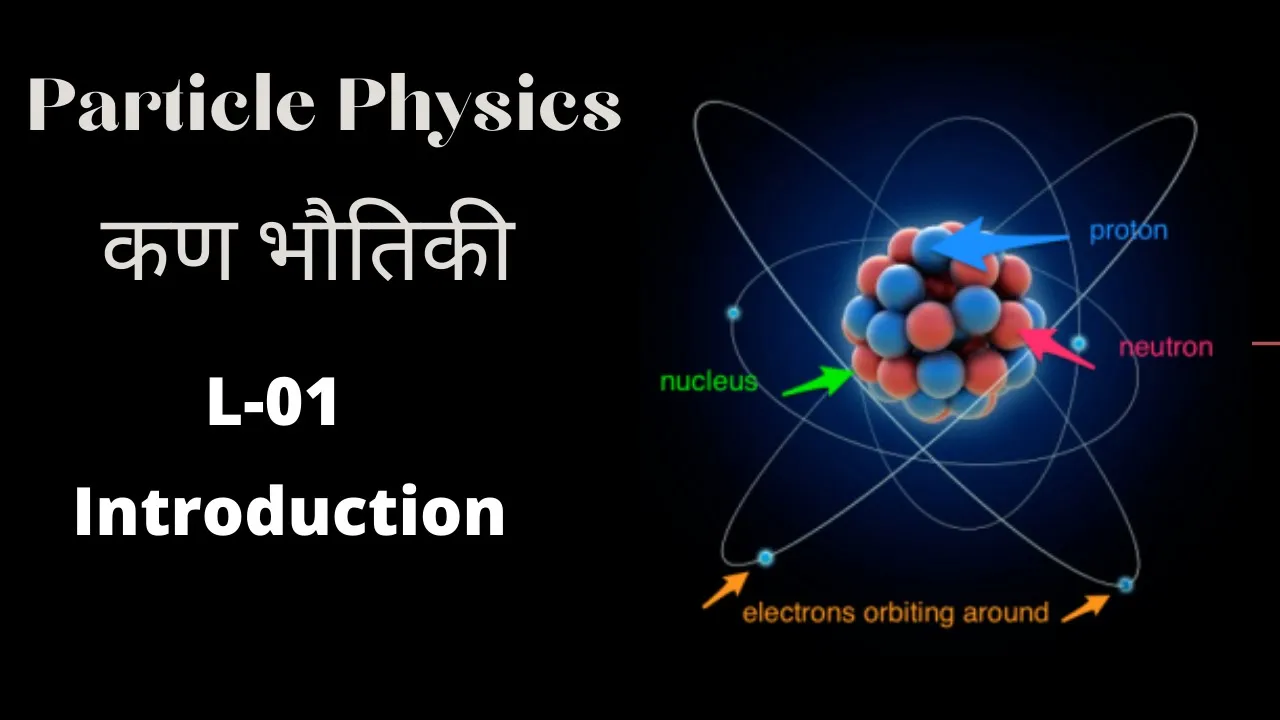















Matter is composed of atoms, which are primarily empty space with a tiny, dense nucleus containing protons and neutrons surrounded by electrons in probability clouds; these atoms combine through various bonds (covalent, ionic, metallic, hydrogen) to form molecules, and the fundamental building blocks of matter are quarks (which make up protons and neutrons) and leptons (such as electrons), governed by four fundamental forces (gravitational, electromagnetic, strong nuclear, and weak nuclear interactions), with the Standard Model providing a comprehensive framework that includes the Higgs boson responsible for giving particles mass.
Exploring the Quantum World: From Atoms to Subatomic Particles
Added:Basic atomic structure, including the arrangement and roles of protons, neutrons, and electrons.
The concept of wave-particle duality and the fundamental difference between classical and quantum mechanics.
The four fundamental forces of nature: gravity, electromagnetism, the strong nuclear force, and the weak nuclear force.
The Heisenberg Uncertainty Principle and its implications on predicting the behavior of subatomic particles.
Quantum Field Theory (QFT), which explores how particles interact as excitations of underlying physical fields.
Theoretical frameworks aiming for a 'Theory of Everything,' specifically String Theory and Loop Quantum Gravity.
Experimental particle physics, focusing on how particle accelerators like the Large Hadron Collider (LHC) detect quarks and leptons.
Practical applications of quantum mechanics, such as quantum computing, quantum cryptography, and superconductivity.
766.3K views10.5Klikes1:33:18Original Release: 2023-07-17
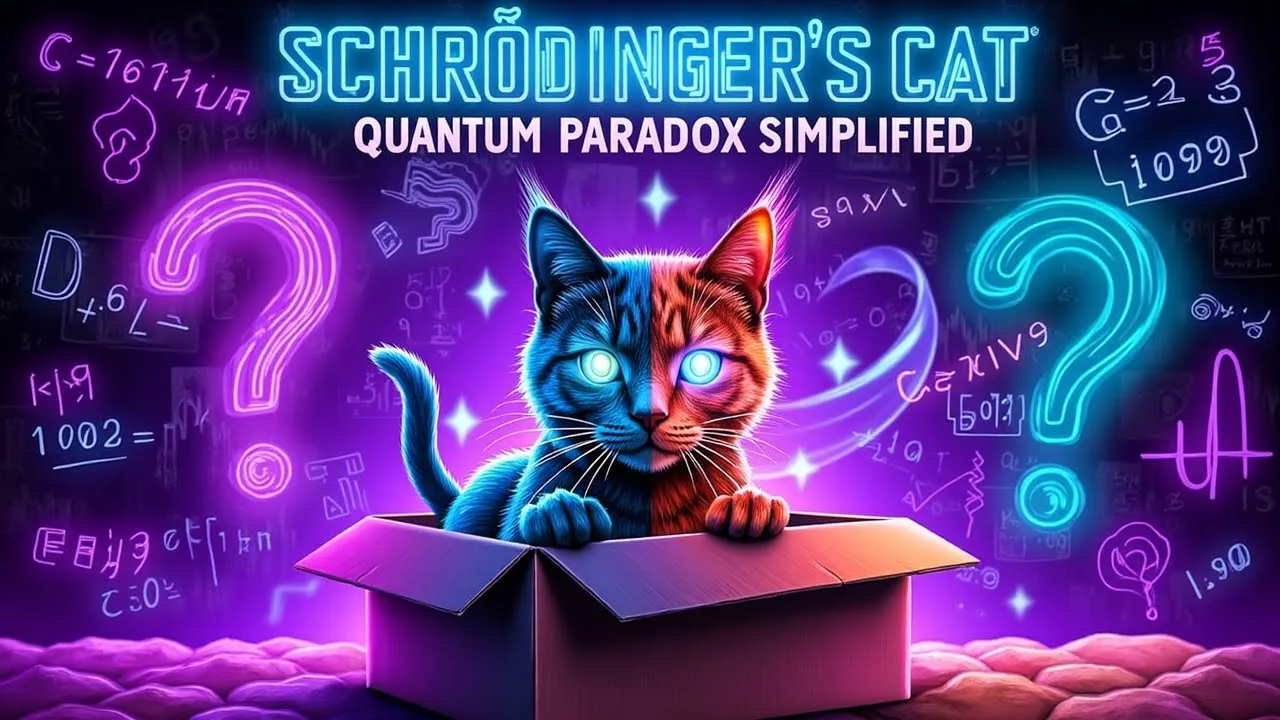
have you ever wondered about the foundations of our reality what if I told you that the world around us is governed by mysterious particles and invisible dimensions would you believe me nothing could be further from the truth yet the nature of the forces and elements that shape our universe is unknown to us admittedly scientific advances over the last few centuries have enabled us to understand in detail the events that unfold on a macroscopic scale but when we venture onto smaller scales it's as if we're entering a parallel reality whose workings Escape us in this world of the infinitely small the laws of physics and relativity we know no longer apply instead we find strange sometimes invisible particles interacting in such mysterious ways that we find it hard to believe they actually work quantum physics string theory supersymmetry the uncertainty principle so many Expressions that attempt to describe the mechanisms of this invisible reality to make it easier to understand unfortunately some parameters still elude us and it's possible that Mankind's intellectual capacities will never allow us to tame the events at the heart of atoms that said as long as the mystery remains research will continue each Discovery inevitably raises its own set of questions by probing the microscopic World scientists have been able to venture deep into Nature's smallest universe while a few decades ago we thought that atoms were the Inseparable building blocks of matter today we know that these elements are home to an incredible bestiary of particles quarks gluons Higgs bosons neutrinos photons it's enough to make you dizzy to say that these elements are minuscule is an understatement to understand this let's compare scales observations of the cosmos tell us that the diameter of the observable universe is around 93 billion light years until recently the number of galaxies in the universe was estimated at between 100 and 200 billion according to the latest estimates there are in fact 2 000 billion in fact our Milky Way is just a tiny drop in the cosmic ocean yet from our perspective its dimensions are inordinate it's estimated to be over one hundred thousand light years across that's enough to house between 200 and 400 billion stars and probably more than 100 billion planets among these stars is our sun nearly 700 000 kilometers or 430 000 miles in radius that's around 10 to the ninth power times the diameter of the Earth our beautiful blue planet gigantic to our eyes is in reality invisible in this Cosmos for if the solar system were a city 20 kilometers across the Earth would be little more than a grape and yet more than 8 billion human beings now live on it but then again appearances are deceptive for a man is far from occupying all the space available on Earth if we were to group together all the human beings currently living here they would fit on an area equivalent to the city of Los Angeles so compared to a modestly sized terrestrial planet man is a grain of sand if this scale comparison gives you a slight headache just wait for the next part because it's possible to go much further each human being however microscopic compared to the cosmos is made up of around thirty thousand billion cells and these tiny cells observable only under the microscope are themselves made up of one hundred thousand billion atoms this figure varies greatly from cell to cell but it's still completely excessive wait we can go even further if we look at the heart of atoms we'll be amazed to discover that their 99.9 percent empty in other words the elementary particles that give life to atoms occupy just 10 to the minus 14 power percent of their structure we can say it matter is theoretically made up of nothingness it sounds crazy but hidden in this nothingness are tiny elements of the quantum world that give life to the reality we know and although we are made of atoms their profound nature seems even more distant than the confines of the observable universe so the infinitely small conceals many Mysteries [Music] dear traveler good morning today we're off to explore the heart of matter in the infinitely small together we'll try to unravel its Secrets by literally looking deep inside ourselves but before we set off on a new adventure remember to like the video and subscribe to the channel so you don't miss a thing thank you and have a great trip before embarking on our journey into the world of the infinitely small we must first take a look at the world around us as you know it is governed by physical laws that seem immutable these include Albert Einstein's general relativity Newtonian mechanics and Maxwell's classical electromagnetism but to get down to the quantum scale you'll have to forget a lot of these General truths in this world we observe intriguing phenomena that are not taken into account by the classical laws of our reality would you like an example well in that case do you know anyone who is both dead and alive apart from in George Romero zombie films this is quite impossible these two states are quite distinct nobody can be both dead and alive at least in the literal sense of the word but in quantum physics things are quite different a particle can exist simultaneously in several different states this phenomenon is known as Quantum superposition [Music] it's perfectly illustrated by the famous Schrodinger cat thought experiment formulated by the physicist of the same name in 1935.
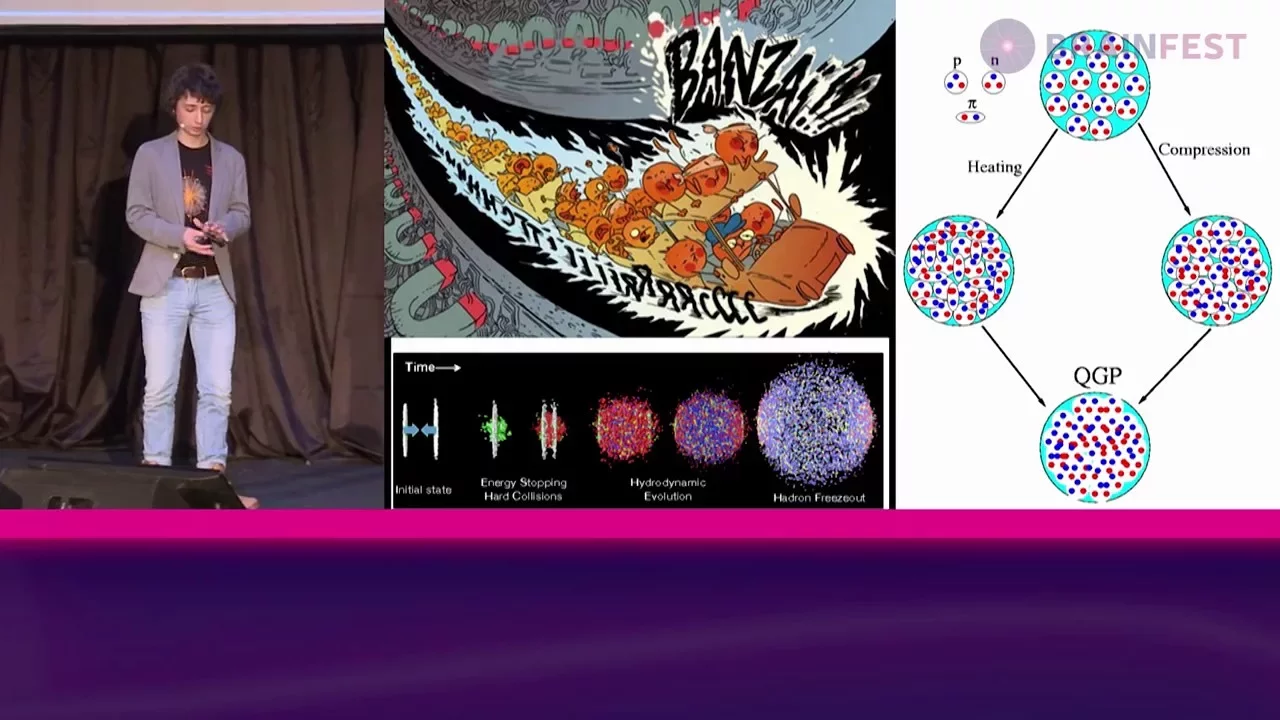
in this experiment we imagine a hermetically sealed box containing a cat a vial of poison a device for detecting radioactive particles and a piece of radioactive material when the radioactive material Decay is it triggers the detection device shattering the poison vial and killing the cat according to quantum physics before the Box is open for measurement the state of the system the cat the radioactive material and the poison is described by a Quantum superposition this means that the cat is theoretically in a state of superposition both dead and alive until the box is opened obviously this funny experiment doesn't reflect reality on a macroscopic scale but it does help us to understand the phenomenon of superposition specific to subatomic particles do you find it strange well we've only just scratched the surface of The Oddities lurking in the realm of the infinitely small within it we also find quantum entanglement [Music] this law tells us that when two particles are entangled their Quantum states are inseparably linked regardless of their spatial distance and if two particles are in a state of entanglement only a measurement will tell us which final State they will adopt a measurement made on one of the two particles will instantly affect the state of its twin particle even if the two are separated by great distances it's as if the two entities could communicate immediately at an instantaneous speed that exceeds the speed of light challenging the laws of modern physics we call this a phenomenon of non-locality all this may seem very complex to you and so it should quantum physics is totally counter-intuitive so much so that more than one physicist is torn his hair out trying to unravel its secrets but don't worry we'll be coming back to the specifics of quantum physics in Greater detail as we continue our journey in the meantime let's get back to the macroscopic world around us [Music] like Erwin Schrodinger we too are going to conduct a thought experiment and to do so we're going to imagine that we have the ability to grow and Shrink at will a bit like Marvel's superhero Ant-Man with this power we can travel close to Mount Everest the highest mountain formation in the Earth's crust its highest point is almost 9 000 meters or 29 500 feet above sea level so we're going to grow until we reach that height let's just say that this will be our starting point for our descent to microscopic scales but to shrink we need different frames of reference in this case after the highest natural formation it makes sense to head for the largest human Construction for that we need to go to Dubai to the Burj Khalifa this gigantic Tower is 828 meters or 2700 feet high now let's go down another level and measure up to the largest animal on Earth namely the blue whale a whale that can reach 30 meters or 100 feet in length and weigh close to 200 tons and this same whale feeds on plankton a collection of very small organisms that live in aquatic environments their size varies considerably according to the type of organism but the smallest of them measures no more than a few micrometers that's one thousand times smaller than a millimeter thanks to our superpowers we can shrink to the size of microplankton to observe them we're tiny now but we're still a long way from the atom like bacteria and other single cell organisms where the size of a cell but we've yet to scale up to the size of a virus yes viruses are much smaller than bacteria although the two are often wrongly associated bacteria are micrometers in size so they're easy to observe under an optical microscope for viruses things are very different viruses measure between 20 and 300 nanometers they are therefore between 10 and 100 times smaller than a cell but make no mistake this ridiculously small size makes them extremely dangerous these microscopic entities are composed of genetic material such as DNA or RNA they are then said to be intracellular parasites as they reproduce inside the host cells they infect although they are not considered living beings they can still replicate and propagate autonomously anyway back to our descent into the world of the infinitely small if we take the size of the smallest viruses I.E around 20 nanometers were still Giants compared to the elementary building blocks that make up matter the famous atoms their size varies according to the element in question but overall they are of the order of 10 to the minus 10 power meters or 100 picometers or 0.1 nanometer this is particularly true of the hydrogen atom composed of just one proton and one electron it is two times smaller than a carbon atom whose diameter is around 0.2 nanometers that said talking about the diameter of an atom is a gross simplification in reality its size is determined by the distribution of electrons around the atomic nucleus most of an atom's mass is concentrated in its nucleus which is itself made up of protons and neutrons electrons on the other hand are much lighter and occupy a much larger volume so the size of an atom is determined by the volume the electrons can occupy around the nucleus this is the electron cloud the electrons always remain at fixed Quantified distances these are called outer electron layers all this may seem rather complex to you to illustrate this distribution let's take an example with elements on a macroscopic scale [Music] imagine that the Moon is an electron and the Earth is the nucleus of an atom in this hypothesis the moon can orbit the Earth but only on certain well-defined radii also imagine that the moon does not move on a two-dimensional plane but on the surface of a sphere its position takes into account all three dimensions of space but always with a fixed distance from the earth corresponding to the various external electronic layers the moon can potentially be found anywhere on one of these layers with greater or lesser probabilities of presence in certain places and the only way to know its exact position is to take a measurement by repeating the measurements a large number of times we can then estimate the probability of presence for each zone of each layer [Music] it's exactly the same principle with the electrons that gravitate around Atomic nuclei this uncertainty about their presence is purely Quantum in nature in reality the moon does not behave at all like an electron its position can be determined with great Precision simply by calculation and without direct observation but due to the quantum nature of electrons their exact position at a given moment is always unknown if no measurements are taken in physics this is called an atomic orbital this is a mathematical function that gives us the probability of an electron's presence around a nucleus in a given region keep these explanations in mind as they will be useful for the rest of our journey they also help us to understand why atoms falsely represented as marbles are in fact mainly made up of vacuum [Music] to better understand this let's return to our hydrogen atom and shrink it down to its size of 0.1 nanometers at this point we're fast approaching the infinitely small at 0.1 nanometers were smaller than mankind is in relation to the sun to understand just how disproportionately small atoms are we can also give the following estimate the body of an average adult would contain one hundred thousand times more atoms than there are stars in the entire observable universe in other words something like 7 times 10 to the 27th power atoms when you hear these figures your brain may be on fire but to really observe the smallest known elements of matter we still have to go all the way down to its heart and once again the drop is dizzying as we said the hydrogen nucleus is made up of a single proton this proton is not a picometer but a femtometer that's 10 to the minus 15th power meters to be more precise the size of a proton is 0.877 femtometers hydrogen's core is therefore 10 000 times smaller than the atom itself to give you an image if hydrogen's Atomic Cloud where the diameter of a soccer stadium its nucleus would be no bigger than a marble placed in the center of the pitch as for the electron it is considered an elementary particle I.E it is not made up of smaller parts it is very difficult to estimate its size which has never been precisely determined however scientists agree that it would be less than 10 to the minus 22 power meters so to return to our soccer stadium example if the proton is a marble in the middle of the pitch the electron would be no bigger than the smallest virus just as we are unable to imagine the infinite expanse of our universe we are unable to conceptualize the size of the most Elementary particles in any case after this formidable descent into the realm of the infinitely small we can now Plunge Into the Heart of atoms we are now on the scale of atoms but before we discover what's hidden deep inside them let's first take a look at how they behave in relation to each other as you probably know all the matter around us is made up of atoms and molecules we can interact with it and our bodies are subject to the same laws of physics hypothetically there are also other forms of matter that don't interact with the atoms we know the most famous of these is dark matter but to avoid getting lost in the limbo of the material world will concentrate solely on known matter as we've just explained everything around us is made up of atoms your body the food you eat the clothes you wear the air you breathe or even the screen on which you're watching this video but to form the countless types of elements we know atoms have to come together and combine this is how molecules are born for example a hydrogen atom can bond with another hydrogen atom to form dihydrogen two hydrogen atoms can also bond with an oxygen atom to form a dihydrogen monoxide molecule in other words a water molecule it's as if each atom were a Lego brick with its own shape bricks can be assembled by certain forces deconstructed by others and reassembled to create a new element this cycle of creation and destruction is happening all the time all around us sometimes it gives rise to small molecules like dihydrogen dioxygen or even dinitrogen each composed of just two atoms but in other cases the molecules created are extremely long and complex these are known as macromolecules this is particularly true of polymers long chains of molecules with interesting physical properties there are natural polymers such as the starch and cereals or the nucleic acids in DNA there are also synthetic polymers the famous Plastics such as polystyrene but one of the largest molecules is a natural protein called Titan or connectin it's also the largest known protein it plays a crucial role in muscle structure and elasticity if you want to name it by its scientific name you'll need a lot of Courage because its name is made up of over 64 000 letters as for its size it can reach several micrometers in length due to the thirty thousand or so amino acids that make it up all this makes us wonder about the forces that enable such tiny atoms to bind together to form elements as complex as they are strong naively enough we might think of gravity unfortunately its intensity is linked to the mass of the objects since atoms have virtually zero Mass this hypothesis is out of the question but then how do they relate to each other well to find out we'll have to go back to our physics and chemistry lessons let's start with the best known Bond the covalent bond in a covalent bond atoms share one or more pairs of electrons to achieve a more stable electronic configuration the shared electrons create a mutual attraction between the atom's nuclei thus maintaining the bond to put it more simply it's as if two atoms pooled their resources in this case electrons to guarantee their stability let's call it an exchange of courtesies if you will the covalent bond is the strongest and most widespread Atomic Bond but they're also so-called ionic bonds based on the same principle here atoms transfer all or part of their electrons to form positive and negative ions an ion is simply an atom that carries a positive or negative charge due to a lack or surplus of electrons gravitating around it yes electrons are particles with a negative electrical charge as a result the force of attraction between ions of opposite charge hold atoms together do you still follow normally yes because so far we haven't tackled very complex subjects however when our journey takes us into the Realms of quantum phenomena things are likely to get a little more complicated but back to our bonds in addition to ionic and covalent bonds there are also metallic bonds in this case atoms release their electrons and the layer furthest from the nucleus this is called the valence shell the electrons thus released spin between the metal atoms creating an electrostatic attraction between the positively charged ions the result is the solid malleable structure is typical of metals perhaps you're also familiar with Van Der waals forces these are exerted between molecules at Short distances but their impact is rather weak compared to the previous bonds they are due to Temporary fluctuations in the distribution of electric charges creating an attraction finally there are hydrogen bonds these come into play when a hydrogen atom bonds to a highly electronegative element in other words an element capable of strongly attracting electrons to itself examples include oxygen nitrogen and fluorine in this configuration the hydrogen atom develops a slight positive charge as its electron is partially captured by another atom this creates an electrostatic Bond known as a hydrogen bond these bonds are stronger than Van Der waals forces and are at the root of many biological and chemical phenomena for example they enter water to form droplets that adhere to surfaces it is also this force that enables geckos to climb walls hydrogen bonds are even involved in the stability of proteins in the structure of DNA so without even getting to the heart of atoms we can see that they are incredibly complex they obey forces of their own which give rise to the laws of matter that we observe on our own scale yet are unable to understand and now that we've seen how many atoms behave in relation to each other it's time to continue our journey by observing them in isolation just as there are large individuals and smaller ones atoms come in many different forms these shapes are characterized by the number of electrons they possess and the elements that make up their nuclei these elements are called nucleons but you probably know them better as protons and neutrons the more nucleons an atomic nucleus possesses the more massive the atom that carries it in fact hydrogen with just one proton is the lightest atom as for the heaviest atom its uranium-238 its nucleus contains 92 protons and 146 neutrons despite being the most massive of the atomic bestiary its mass remains ridiculously low on our scale around 4 to the 10 to the minus 25 power kilograms and if you're wondering about its diameter it's 350 picometers or 0.35 times 10 to the minus 10 power meters and yet it Remains the king of all atoms found in nature other even more imposing elements have been created in the laboratory not least organism officially the heaviest element on the periodic table artificially synthesized for the first time in 2002 it is highly unstable disintegrating in less than a millisecond today many scientists believe that it is impossible to create a new heavier element but others maintain the opposite in any case to avoid making things unnecessarily complex we'll continue our adventure at the heart of a simple atom the oxygen atom thank you the oxygen atom contains 16 nucleons that's eight protons and eight neutrons around this hard core gravitate eight electrons these form what is known as the atom's peripheral cloud since electrons are negatively charged particles they are attracted to positively charged protons a bit like the North and South poles of a magnet attracting each other in fact this electrostatic attraction maintains the atom's structural Integrity in perfect charge balance and yes while atoms bind together via various cohesive forces other forces are also at work to ensure their stability let's do some Elementary physics at present it is estimated that four major forces govern our universe these are known as the fundamental interactions on a macroscopic scale the two most prevalent interactions are gravitation and electromagnetism but at the center of atoms other forces take over these are the strong and weak nuclear interactions strong interaction holds the atomic nucleus together this extremely powerful force acts between nucleons it holds protons together despite the electrostatic repulsion due to their positive charge to take the example of magnets again you've no doubt already tried sticking two magnets with the same poles together which tend to repel each other here we can make the following analogy the magnets that repel each other are the protons and your hands that exert pressure to stick them together are the strong nuclear force just as gravitation is insured by gravitational waves the existence of which was recently demonstrated the strong nuclear force is insured by strange particles called gluons don't worry we'll come back to this in the next part of our Atomic Odyssey as for the weak nuclear forces they act between leptons and quarks in simple terms leptons are simply Elementary subatomic particles like electrons quarks are the building blocks of protons and neutrons weak nuclear forces are responsible for certain types of radioactive decay in which one particle is transformed into another bees are mediated by other subatomic elements called bosons once again we'll explain all this in more detail as we turn our attention to the forces that maintain the internal organization of atoms we slowly begin to scratch their surface this microscopic excavation allows us to discover many more of the strange particles mentioned above now it's time to continue our exploration and meet the subatomic particles a formidable bestiary of small mysterious Elements which are nonetheless at the origin of the reality in which we evolve [Music] let's take a look back at our journey so far our observable universe is about 93 billion light years across within this Cosmic immensity our galaxies which cluster together in clusters galaxies usually a hundred thousand light years across contain an incredible quantity of stars Stellar gas and dust these Stars millions of kilometers across usually capture planets in their orbits and we know for sure that one of them contains life our beautiful blue planet everything we can see with the naked eye from the tallest skyscrapers to the tiniest fleas is on the so-called macroscopic scale then there's the microscopic World which can only be seen through a microscope that is with Dimensions smaller than 0.1 millimeter but if we go further down as we have done we find that living beings are made up of cells these in turn are made up of DNA itself made up of smaller elements but what are molecules if not an assembly of atoms and what are atoms if not a bubble a vacuum in which electrons of an elusive nature move around a nucleus of nucleons all governed by strong and weak fundamental nuclear interactions this descent into the world of the infinitely minuscule is already incredibly dizzying and yet it's possible to go even further yes even further than if we were to go to the very edge of the observable universe on such a scale the journey seems infinite for at the heart of protons and neutrons we find yet more Elementary particles the famous quarks [Music] while ancient Greeks such as Democritus and epicurus had theorized about the notion of atoms in their time without being able to validate this hypothesis the word would be revived many years later in the 18th century scientific progress had made it possible to prove the existence of these Elementary building blocks of matter physicist John Dalton was one of the first to revive the concept of the atom in the 1800s subsequently other scientists such as JJ Thompson Ernest Rutherford and Albert Einstein validated and enriched this hypothesis it would be demonstrated that the atom is not unbreakable or indivisible as the Greeks thought but rather that it is a mainly empty body in the strictest sense of the term composed of an electrically charged nucleus around which electrons move Einstein also demonstrated the wave corpuscle duality of particles such as photons laying the foundations for quantum physics yet little did these Brilliant Minds realize that the atom was not the end but a new gateway to an even more complex world the so-called subatomic universe and its main occupant is none other than the cork which we mentioned earlier let's take a closer look at the cork it will be an excellent introduction to the subject before we go on to discover more about its congeners [Music] first of all it's important to remember that a quark is not a single entity it's a term used to describe a group of fundamental particles we speak of fundamental particles when they cannot be divided into smaller parts at least not according to our current knowledge quarks are therefore considered the elementary building blocks of matter they are responsible for the formation of protons neutrons and other subatomic particles [Music] the discovery of quarks dates back to the 1960s when physicists Marie Gelman and George zwig independently propose the theory soberly entitled Quark Theory they put forward the hypothesis that protons neutrons and similar particles were made up of smaller indivisible particles it wasn't until 1975 that the first Quark was observed experimentally thanks to cern's particle gas pedal this technological feat is located on the French Swiss border near Geneva and is also known as the Large Hadron Collider or LHC a circular tube 27 kilometers or 18 miles long buried underground it accelerates particles to near light speeds until they collide the result is a microscopic shock but one of unprecedented violence enabling matter to be fragmented to reveal its constituent parts [Music] but let's get back to our little quarks we currently know six types the last of which was discovered in 1997.
here's the list one up quarks two down quarks Three Strange quarks four charm quarks five top quarks six and bottom quarks each of these quarks has unique properties these include Mass electric charge and spin their charge is said to be fractional corresponding to either two-thirds or minus one-third of the charge of an electron as for spin it's important to Define this notion as its ubiquitous in particle physics it's a Quantum property that indicates how a particle interacts with its peers and with magnetic fields it can be seen as a kind of internal rotation of particles to give a concrete example let's take the Earth's motion around the Sun our planet revolves around it it moves in an orbit with a certain speed this corresponds to its momentum but the Earth also rotates on itself the quantity associated with its rotation is called its angular momentum in quantum physics the Notions of speed and position no longer make sense this is the uncertainty principle but we'll come back to that later however angular momentum retains a certain relevance albeit in a more abstract sense spin is therefore the equivalent of angular momentum but on a Quantum scale for example the electron has a spin of one half this means it can exist in two different states spin up and spin down it's as if it had two possible types of internal rotation and only two we can imagine these two states as arrows pointing in opposite directions the importance of spin lies in the fact that it determines how electrons interact with each other and with other particles for example in the magnetization of a material electrons with spins aligned in the same direction help to create an overall magnetic field spin is a complex concept but it describes a fundamental property of particles it plays a crucial role in various Quantum phenomena that translate to the macroscopic scale so much for physical properties now pay close attention because things get complicated together the six types of Quark form a large family of Elementary particles hadrons but within this family there are two classes of particles first there are the baryons made up of an indissociable system of three quarks like protons and neutrons this is why the classical matter that surrounds us is called baryonic matter then there are misons these are formed by a bizarre system of an even number of quarks and anti-corks all known quarks belong to one of these two classes it is impossible to find an isolated cork in its natural state as would be the case for an electron for example so quarks always form combinations called hadrons this very special property is known as hadron confinement a name that has the Merit of being clear earlier we spoke of the strong interaction that holds protons together in the nuclei of atoms but in reality this interaction affects the quarks themselves in fact the quarks of a single proton are Neutron remain welded together to form hadrons as they are constantly exchanging bosons a word of advice take notes if you don't want to lose track of the story the term boson also covers a group of particles these particles act as vectors for the transmission of the four Great Universal forces gravitation electromagnetism the strong nuclear interaction and the weak nuclear interaction the bosons responsible for the strong interaction are called gluons this term suits them quite well since light glue they keep the elementary building blocks of matter together don't worry we'll be coming back to the bosons behind the other three interactions shortly with each passing moment the bosons at the heart of matter Exchange gluons this exchange takes place within nucleons themselves to ensure the cohesion of hadrons but also between nucleons and the same atomic nucleus to keep them welded together at very short distances as is the case at the subatomic level the strong interaction is more intense than electromagnetism as a result protons despite their repelling electric charges remain grouped together this interaction is so powerful that in theory it would take an infinite Force to break up a triptych of quarks like those at the heart of nucleons this explains why no single Quark is found today quarks are considered the ultimate subdivision of matter however this statement is problematic as it limits many theories that attempt to solve the mysteries of quantum physics the most popular being string theory but again we'll have time to come back to this in more detail in a few moments [Music] after quarks and more generally hadrons the other major family of subatomic particles is that of leptons this group includes our famous electrons but as you'd expect leptons also come in different classes first there are electron leptons or electrons then there are muonic leptons or muons and finally there's the Tau lepton each of these three leptons is associated with a neutrino another elementary particle with almost zero mass and a neutral electric charge [Music] among leptons we have a total of six particles one the electron two the muon three the Tau particle also called Taiwan four and the three neutrinos specific to each of these entities leptons are also stable particles they interact mainly via electromagnetic and weak forces they are not subject to the strong nuclear force which is responsible for the cohesion of atomic nuclei leptons like quarks have only two types of charge zero or minus one because of their charge and Mass properties leptons play a crucial role in nuclear reactions and radioactive decays they form the basis of particle creation and Annihilation processes what's more they are of great importance and understanding the fundamental interactions in the universe for example neutrinos have recently been recognized for their role in astrophysical phenomena such as supernovas neutrons stars and black holes they are also being studied to understand the expansion of the universe we've talked about leptons and hadrons but we've also started to talk about another type of subatomic particle bosons these could be described as the vectors responsible for transmitting the four Great Universal forces to the other particles to illustrate this with an image we could say that leptons and hadrons are bricks while bosons are cement together they make up all the matter around us and give our universe the strict laws we know as we have seen gluons are the bosons that ensure the strong interaction and cohesion of atomic cores they give life to neutrons protons and mesons gluons have no mass and there are eight in all next comes electromagnetic interaction if you know anything about physics you'll already know that the vector of this interaction is none other than the photon often referred to as grains of light it would be more accurate to speak of energy carriers they are produced by radiation or scattering when an atom receives energy to return to a more stable State the atom in turn emits photons which carry energy and therefore light yes depending on the energy of the photons emitted atoms will radiate with different colors visible colors from Violet to red blue green and yellow but also invisible colors electromagnetic waves in the infrared or ultraviolet range photons also help to structure atoms photons link electrons to the atomic nucleus last but not least photons have zero Mass they cannot disintegrate into lighter particles and are therefore completely stable after photons and gluons come the W plus W minus and Z zero bosons these are the expression of the weak interaction they have a very high mass for subatomic particles so their range is quite restricted note that this interaction affects all matter particles both leptons and hadrons finally gravitation is a special case of the four Great forces it is indeed the weakest but it is also the only one with an infinite range as for the boson that carries gravity it should be the graviton unfortunately this has never yet been observed on the other hand we now know that gravitational waves do exist they were first detected in 2015 by the ligo and Virgo collaborations following the distant Collision of two massive black holes exactly 100 years after they were predicted by the brilliant Albert Einstein in his theory of general relativity however the graviton question is still open to sum things up Elementary particles of matter transfer discrete quantities of energy to each other by exchanging bosons and each fundamental Force has its corresponding Boson that is if we accept the existence of the mysterious graviton all this classification of matter particles forces and carrier particles is organized under a model whose name may be familiar to you it's the standard model of particle physics in order to organize their discoveries and classify the various subatomic elements particle physicists have developed a theory to group everything together it's known as the standard model of particle physics or more simply the standard model this fundamental Theory describes Elementary particles and the forces that govern them it was developed in the 1970s with the aim of organizing the fundamental constituents of matter and the interactions between them the model is based on the principle of symmetry and builds on the earlier work of many scientists including James Clerk Maxwell Albert Einstein Niels Bohr and others over the years a number of discoveries such as those concerning individual quarks and neutrinos have reinforced The credibility of this model the standard model includes all quarks and leptons known as fermions as well as the bosons responsible for the fundamental interactions it is therefore based on the triptych particles forces and mediators but this model itself uses other theories to describe particles and their interactions these include the Symmetry principle and Quantum field Theory all this is quite complex for anyone without the requisite knowledge but to simplify things we can say that Quantum field theory is a mathematical framework used to describe Elementary particles and their interactions according to this Theory space is bathed in a set of fields these are mathematical entities that propagate through space and interact with particles Quantum fields are described by equations called field equations which specify how they evolve in space-time this theory is based on the principles of quantum mechanics which postulate that particles can be described by probabilistic wave functions thus one of its essential features is the notion of quantization according to this idea particles and Associated Fields exist in discrete quantized States rather than in an infinite continuum this implies that Elementary particles can have only certain discrete values of energy momentum charge and so on Quantum field theory is also based on the principle of superposition According to which Quantum States can be combined in a linear fashion to form new States this makes it possible to describe phenomena such as the creation and annihilation of particles as well as the interactions between them in short the standard model is more an attempt to unify different theories rather than a theory in its own right and to say the least it's a very successful attempt but unfortunately there are a few gray areas starting with gravity which is struggling to find its place in this model yes the standard model encompasses electromagnetic interactions as well as the strong and weak nuclear forces it explains very satisfactorily how these forces act on all matter particles it also predicted the existence of certain particles that were discovered years later in cern's particle Collider but what about gravity this is a crucial question because today gravity is not included in the standard model and the discovery of the famous gravitons is still a long way off on the one hand we have quantum theory used to describe the microscopic world and on the other we have the theory of general relativity used to describe the macroscopic world the problem is that nobody can reconcile the two on the face of it you'd think that this wouldn't be a problem since all you'd have to do is use quantum physics for the infinitely small and switch to general relativity for macroscopic phenomena but where's the limit when should the switch be made is there a threshold distance at which we instantly switch from quantum physics to relativity the unification of these two theories known as The Theory of Everything could well solve some of the enigmas that plague scientists these include the expansion of the universe The Disappearance of anti-matter after the big bang and many other questions and more questions are being added to the list at present gravity is negligible at the subatomic level this is because the intensity of this Force depends on the mass of objects which is virtually zero in the world of the infinitely small that said there are many special cases where intense gravity and microscopic scale exists side by side can you guess which ones the answer lies at the heart of black holes and in the very first instant of the universe where a phenomenal amount of matter is contained in a point of infinite density called a singularity adding gravitation to the quantum physics model would unlock the secrets of the heart of black holes and the origin of the Big Bang we also know that there are three groups or rather three generations as scientists call them of quarks and leptons with totally different masses but how can we explain the extent of this Mass scale not to mention the fact that the standard model doesn't perfectly describe neutrino oscillation or mass either researchers instinctively sense that they are missing a parameter there's a piece of data missing a piece of the puzzle missing and it's likely that the limits of human understanding will never allow us to arrive at a Theory of Everything the Ultimate Fantasy of every physicist a theory that would unite all the others and make it possible to describe all physical phenomena regardless of scale interesting Concepts such as supersymmetry string theory and loop quantum gravity attempt to extend the standard model to resolve these questions but nothing has been done we're still waiting for the famous Eureka that will finally relieve us of the weight of these questions nevertheless the standard model seems to be getting much closer to reality if the discoveries of black holes and gravitational waves were strong arguments in favor of Einstein's relativity another recent discovery has come to the fore in favor of the standard model this unexpected Discovery is the famous Higgs boson in 2012 CERN researchers made a sensational Discovery using their particle gas pedal they use their machine to accelerate protons to very high energies then collided them these high-energy shocks created conditions similar to those that existed just after the big bang for the search for the Higgs bosun involve the detection of its Decay products in its primordial environment the Higgs boson itself is unstable and disintegrates almost instantaneously into other sub-particles that's why scientists looked for signatures of these specific decays to identify the hidden Boson and then in July 2012 the discovery was announced the data collected showed significant markers corresponding to the expected signatures of the Higgs boson after a thorough analysis of the data the existence of the Higgs particle was officially confirmed this was some 50 years after British physicist Peter Higgs formulated the hypothetical existence of a Quantum object that would give particles Mass Higgs theory was that Elementary particles acquire their mass by interacting with a field that fills all space the more sensitive a particle is to this field the more massive it is and the quantum manifestation of this field is none other than a boson known as the Higgs boson in fact the most massive particles such as quarks and electrons interact strongly with the Higgs field while massless particles such as the photon do not interact with it at all at first glance all this seems rather far-fetched and yet it seems to be reality the discovery of the Higgs boson marked a turning point in the confirmation of the standard model it was also crucial to understanding the origin of electro-week symmetry but what is electro-week symmetry well when the universe was very hot just after the big bang the electromagnetic force and the weak Force were unified into a single Force the electro weak Force particles had no mass and moved at the speed of light as the universe cooled the Higgs field was triggered breaking this Symmetry and separating the electromagnetic and weak forces this field also gave particles their Mass creating the universe we know today it's fascinating to see how an entity as Tiny as a boson can explain the formation of our supposedly infinite universe so far our journey has taken us to the very edge of matter starting from our own scale we've descended to observe the smallest known particles that make up our world and order the physical laws of our universe we've also seen how scientists have unlocked the secrets of the atom and the theories they've used to organize their discoveries however we've said very little about the behavior of subatomic particles in their environment yes they obey their own laws codes that overturn our beliefs and test the limits of our understanding so it's time to move on to the final stage of our microscopic Odyssey but be warned to continue the adventure you'll have to set aside your beliefs and convictions about the limits of the possible you'll have to be prepared to question yourself and accept your inability to grasp the profound nature of the infinitely small as you can see we're about to enter a dimension as strange as it is fascinating the quantum world you've probably already heard of quantum physics perhaps you're even Vaguely Familiar with some of its most popular Concepts such as entanglement Heisenberg's uncertainty principle or quantum decoherence however it's unlikely that you really understand how it works and with good reason even the most imminent scientists have their doubts about this mysterious branch of particle physics rest assured we won't attempt to decipher all its Mysteries here instead we're going to explain some of its main principles as well as the theories that have emerged in its wake but first let's get down to Basics let's define what quantum physics actually is simply put it's a branch of physics that studies the fundamental properties of matter and energy at the atomic and subatomic scales it enables us to understand phenomena such as the structure of the atom the nature of light superposition quantum entanglement and wave particle duality yes in our current understanding of physics every particle can be likened to a wave in a field white for example is a wave in an electromagnetic field but also a stream of particles called photons this dual nature of subatomic particles notably electrons is called wave corpuscle duality this was demonstrated by the famous young slit experiment one of the most beautiful experiments in modern physics here's a brief summary in 1801 British physicist Thomas Young conducted an experiment to demonstrate the wave nature of light until then the scientific Community had believed that light was made up of particles as the great Isaac Newton had thought but Young's experiment proved otherwise by passing a beam of light through too tiny closely spaced slits young saw an interference pattern forming on the screen behind the slits since this pattern is characteristic of waves the debate was settled however a century later Albert Einstein who needs no introduction came to the fore with an idea that at first sight seemed absurd light is not a wave but a stream of corpuscles which he dubbed Quantum and later renamed photons he proposed an experiment to prove his assertion and the surprising thing was that his experimental results were indeed valid on the one hand young had succeeded in proving that light was a wave and on the other Einstein proved that it was made up of photons this discovery led to the photoelectric effect used to generate electricity via solar panels it even earned him a Nobel Prize in 1921.
at this point the debate on the nature of light was reignited and the question seemed insoluble later the young slit experiment was repeated not with a beam of light but with A continuous stream of electrons since electrons are particles they should have formed two distinct spots as they pass through the two slits but the result of the experiment left everyone speechless the photons did indeed make punctiform marks on the screen as particles would but all these marks form the pattern typical of waves an interference pattern yes instead of just two distinct beams a series of luminous interferences were observed on the screen similar to the alternating bands of light and dark the conclusion was clear to form this pattern each electron must pass through both slits at the same time otherwise interference is impossible however when intercepted on the screen the electrons form a point characteristic of a particle the scientists then measured the electrons as they pass between the slits and what a surprise if we try to observe the electrons at this precise point the interference patterns disappear and the electrons behave as simple particles passing through one or other of the two slits this completely mind-boggling phenomenon was one of the cornerstones in the development of quantum physics we now know that certain particles such as photons and electrons are both waves and particles but we also know that experimental measurements force in quotation marks Quantum objects to adopt one of these two states and that's just one of the crazy properties of quantum particles wanna know more all right but hang in there because you could lose your footing when faced with the complexity of these Notions [Music] one example is Heisenberg's uncertainty principle this was formulated by the physicist of the same name in 1927.
it is one of the founding Notions of quantum physics it tells us that there is a fundamental limit to the Precision with which we can simultaneously measure certain pairs of complementary physical quantities such as the position and momentum of a particle in other words the more precise we try to be in measuring the position of a Quantum particle such as an electron the more we lose Precision in measuring its momentum on a macroscopic scale this question doesn't arise we are perfectly capable of knowing the position momentum and velocity of a Celestial body at any given moment it's important to understand that this uncertainty has nothing to do with the Precision of our measuring instruments rather it's as if nature itself were erecting barriers to prevent us from penetrating its Mysteries it's almost as if the laws of physics are designed to prevent us from grasping their full complexity this raises a host of questions is this limitation voluntary is there a higher entity that knowingly hinders and limits our understanding of the world are we forced to evolve in order to uncover the secrets of matter is this a way for an omnipotent omniscient Observer to test our limits to tell the truth it doesn't really matter it's not in man's nature to be discouraged by the great existential questions and as long as a curious brain lives answers will continue to be relentlessly pursued after all things that seemed unimaginable a few centuries ago are now at the heart of our societies and who knows what discoveries await Us in the decades to come the fact remains that the quantum World resists Us For Better or For Worse and yet we are beginning to understand its various nuances wave corpuscle Duality the uncertainty principle superposition quantum entanglement the veil of incomprehension remains thick but it's gradually dissipating and the discoveries have also led to a host of theories theories that aim to unify the laws of the quantum world with those of the macroscopic world remember the standard model while quite promising does have a few limitations and to fill this void some theorists have been racking their brains to come up with more satisfactory alternative explanations the most famous of all of course is string theory although no experiment has been able to validate this Theory we're going to take a look at it string theory is a must for anyone trying to explore the foundations of matter but despite its celebrity few people really know what the ideas behind it are so let's take a closer look in fact String Theory attempts to develop a unified description of the universe by combining quantum gravity and the other fundamental interactions of physics it proposes that Elementary particles are not structureless dots but rather one-dimensional entities called strings yes tiny strings plunge deep into matter at the theoretical limit of possibility just as absolute zero is the lowest temperature that can be there would also be a limit Beyond which it would be impossible to go any lower the plank length a distance about a billion billion times smaller than the proton radius that's about 10 to the minus 35 power meters and it's at this distance in the depths of the infinitely small that the famous strings at the heart of this Theory would be found according to this hypothesis strings are fundamental objects that vibrate at different frequencies and modes these modes of vibration determine the properties of the particles we observe such as their Mass charge and spin so instead of having a limited set of Elementary particles such as neutrinos electrons or quarks String Theory suggests that there is only one type of particle strings filaments vibrating on themselves and driving through their different modes of vibration the diversity of Elementary particles we know and even those we don't know about but assume to exist such as gravitons do you still follow right on String Theory also proposes that gravity is a natural consequence of string interactions to sum things up very simply considering Elementary particles as one-dimensional objects and not as dimensionless points makes it possible to arrive at a valid quantification of Relativity Theory String Theory thus solves the problem of the incompatibility between quantum mechanics and general relativity the two pillars of modern physics in fact this is the Crux of the palliative theories to the standard model they all attempt to quantify I.E to propose a workable alternative to the theory of relativity but on a Quantum scale more commonly known as the quantum gravity problem the task is a daunting one since the forces of gravity on the subatomic scale are so weak as to be almost non-existent in this respect String Theory offers a tantalizing Prospect for a Theory of Everything the famous El Dorado of physics capable of describing the entire universe from subatomic particles to Cosmic structures it even suggests the existence of an additional particle the Axion which would be an ideal candidate to explain the origin of dark matter however in attempting to solve some problems this Theory raises others yes an essential feature of this big idea is the need to add extra Dimensions to the four dimensions of space-time we know for in reality there are several unknown Dimensions that are coiled or compressed on a scale beyond the microscopic and the consensus is that 10 dimensions are needed for string theory to work that is one dimension of time and nine dimensions of space for the uninitiated this somewhat far-fetched hypothesis would explain why we don't perceive these extra Dimensions despite the refinement of our detection devices to overcome these various inconsistencies string theory has been expanded in a number of ways by giving strings a spin or by stipulating the existence of the Multiverse understand then that string theory is still a work in progress its proponents are still far from possessing its complete formula in fact it leaves many researchers baffled not least because of the many mathematical and conceptual challenges it raises to date no direct experiment has been able to confirm it and with good reason because of the six unknown and hidden Dimensions postulated by this Theory there are so many experimental predictions that they cannot be confirmed but all hope is not lost for there is one component of string theory that could well be verified in practice [Music] this promising component goes by the name of super symmetry a theoretical extension of particle physics that proposes symmetry between the components of matter the universal forces and the mediators that bind them together it aims to resolve certain limitations and unresolved questions in particle physics such as the nature of dark matter the persimmetry postulates the existence of partners for every particle known to the standard model at present there are 12 Elementary particles in the standard model but if we Count Their different versions as well as anti-particles we arrive at 61.
but supersymmetry tells us that there are twice as many particles 122 in all these supersymmetric partners are called super partners for every particle of matter for every fermion in other words there is a super partner for example the electrons double is called a selectron and for every Force particle the bosons there is also a super partner in the case of the photon this would be the photino and each supersymmetric particle would belong to the opposite category to that of its double thus the selectron would be a boson and the fotino a fermion so there would be as many bosons as fermions and the standard model would be incomplete however none of these hypothetical twins has ever been observed but where the idea seems promising is that thanks to advances in technology we should soon have an answer indeed the creation of supersymmetric particles requires phenomenal theoretical energy and cern's particle gas pedal should soon be capable of producing sufficient energy to observe these potential duplicates if despite cern's progress no supersymmetric particle is detected in the next few years this will call the theory into serious question an as a logical consequence String Theory itself now it's time to conclude our journey and for that what better way than to introduce you to another theory once again this one aims to fill the gaps in the standard model by proposing a different approach to string theory its name Loop quantum gravity [Music] unlike String Theory which includes the existence of fundamental objects Loop quantum gravity focuses on the geometry of space-time itself in this Theory space-time is not seen as a smooth Continuum but rather as a discrete Network made up of Loops or links that connect its various points these Loops represent the fundamental Quantum interactions between regions of space-time and form a discrete structure or a discontinuous structure if you prefer to make this point she uses Concepts from graph Theory and Quantum mathematics to describe these loops and their evolution over time it also relies on quantifying the area and volume of regions of space-time it's as if space-time were made up of Elementary bricks in layman's terms atoms of space-time an important aspect of loop quantum gravity is the notion of lattice spin but what exactly does this mean well you have to understand that each Loop in the lattice carries a quantized quantity of angular momentum or spin and this quantity represents the quantum properties associated with the geometry of space-time this view of spin makes it possible to describe the gravitational properties of space-time on a microscopic scale indeed Loop quantum gravity proposes that gravitational interactions between particles are due to the exchange of discrete quantities of angular momentum between each Loop in short this hypothesis solves the problem of quantum gravity [Music] however like the previous Theory Loop quantum gravity is still under study the problem Remains the Same it is very difficult to test experimentally as it predicts significant effects but on extremely small scales that are not directly accessible by our measuring equipment again all this takes place at plank length which is 10 to the minus 35 power meters remember there are many other theories whose aim is to meet the greatest challenge of modern physics the unification of the four Great Universal forces at all scales of size The Theory of Everything but will it ever be possible to unify the infinitely large and the infinitely small is man not condemned by his condition to remain ignorant of the profound nature of the matter that makes him up and of the universe he inhabits perhaps so but should we give up in the face of such a daunting task certainly not today thousands of researchers physicists and scientists are working hard to find answers to the questions that torment them comforted by discoveries that multiply over time we feel deep down that the answers are close at hand but each Discovery also brings its own set of questions after all isn't this the greatest secret of the universe isn't it its capacity to offer us ever more challenging enigmas to solve never revealing all the keys to understanding it a source that will sustain our wonder and curiosity for as long as we live [Music] foreign [Music]
Up Next

29:03
Standard Model of Elementary Particles | Fermions, Bosons & Quarks
@eziocolicchia4010
297 views•2020-01-07

12:53
21cm Hyperfine Transition in Neutral Hydrogen: Radio Astronomy Basics
@AaronRobertParsons
12.4K views•2011-10-13

74:51
Journey to the Edge of the Universe | Space Documentary
@wondody
80.4K views•2023-04-09

27:14
Entropy and the Second Law of Thermodynamics Explained
@veritasium
27.5M views•2023-07-01
Related Study Plans & Knowledge Roadmaps
Structured learning paths in Physics
physics
Nuclear Physics (Decay, Fission & Reactors)
01Atomic Structure and the Binding Force
02Radioactive Decay and Half-Life
03Nuclear Fission Mechanics and Chain Reactions
+ 2 more learning modules
12h5 modules
Explore Roadmap
physics
Soft Matter (Polymers, Colloids & Rheology)
01Foundations of Soft Matter & Thermal Forces
02Polymer Physics and Macromolecules
03Colloids, Surfactants, and Self-Assembly
+ 2 more learning modules
38h5 modules
Explore Roadmap
physics
Analytical Mechanics: Lagrangian & Hamiltonian
01Mathematical Foundations: Calculus of Variations
02From Newtonian Mechanics to Constraint Dynamics
03The Principle of Least Action & Lagrangian Mechanics
+ 3 more learning modules
28h6 modules
Explore Roadmap
physics
General Relativity (Spacetime & Cosmology)
01Foundations of Relativity: Special Relativity
02The Geometry of Spacetime: Equivalence Principle & Curvature
03Einstein's Field Equations: The Mathematics of Gravity
+ 2 more learning modules
55h5 modules
Explore Roadmap