













![Cosmic Inflation - A Brief History of the Universe – [Hindi] – Infinity Stream](https://i.ytimg.com/vi_webp/WAriiGakYv8/maxresdefault.webp)





![Is TON-618 the Largest Black Hole in the Universe? [OOTW]](https://i.ytimg.com/vi/dx53GHSHrSA/hqdefault.jpg)





The universe contains countless mysteries that science continues to unravel, from the oldest stars like HE 1523-0901 (13.2 billion years old) and the Methuselah star (600 million years after the Big Bang) to the most massive stars like R136a1 (230 solar masses) and the largest galaxy IC 1101 (6 million light years across). Black holes, including our galaxy's supermassive black hole Sagittarius A* (4 million solar masses), represent the most extreme cosmic objects where nothing, not even light, can escape. The universe is composed of approximately 80% dark matter and 20% ordinary matter, with dark energy driving the accelerating expansion of the universe. These discoveries reveal that our understanding of the cosmos is still limited, and the universe remains full of surprises that continue to challenge scientific understanding.
Journey to the Edge of the Universe | Space Documentary
Added:have you ever contemplated The Starry Sky on a summer night as we look up at the cosmos existential questions arise in our minds are we alone among the Stars how far does our universe extend what Mysteries can it Harbor what is hidden at the limits of what we can observe these questions as terrifying as they are fascinating are beyond our capacity to understand and unfortunately it is likely that we will never find all the answers but the scientific discoveries and the technological advances of these last decades have nevertheless allowed us to open our eyes our vision and our understanding of the universe are limited and the universe is full of surprises black holes EXO planes vampire Stars supernovas comets nebulae dark matter yes space is full of Curiosities each one more surprising than the next deer trap welcome today we are embarking on a journey to the mysteries of our universe before leaving for a new adventure think of liking the video and subscribing to the channel to not miss anything thank you have a nice trip foreign [Music] within our solar system our celestial bodies that hold many Mysteries why does Mars our twin have almost no atmosphere no Global magnetic field perhaps it never had any however the maven satellite launched in 2013. estimated that Mars had indeed experienced a magnetic field comparable to that of the earth during its first 3.7 billion years of existence this sudden disappearance of the magnetic field could explain why a large part of the Martian water has also vanished the case of Pluto has also animated the debate a few years ago first considered as the ninth planet of the solar system Pluto is now recognized as a dwarf planet it is the largest body in this category of Stellar objects ahead of Eris series and makimaki three other dwarf planets orbiting around Neptune for the first in the asteroid belt for the second and in the Kuiper belt for the Third yes our solar system is fascinating but it is nothing compared to The Oddities that are hidden in the immensity of the cosmos so get ready for an exceptional Journey to the farthest reaches of our universe but beware on your journey you'll pass by objects whose danger is matched only by their power you will discover areas that still raise questions for astronomers passing through places where the laws of physics as we know them no longer apply this adventure will push us to the limits of the observable universe 14 billion years old are you ready your journey into the cosmos begins now if our universe is about 14 billion years old you should know that our Milky Way was born almost at the same time indeed scientific research has allowed us to estimate its age by observing the oldest bodies in it this is the case of the star he-1523-0901 of the oldest in our galaxy aged 13.2 billion years this red giant is located at 7 500 light years from Earth this news surprise scientists including the astronomer Anna frebel and her team who discovered it in 2007.
however only six years later it was the turn of the Star HD 140283 to steal the show estimates do not allow to know precisely what is its age measurements made with a Hubble satellite led to the conclusion that it could be 14.5 billion years old which is more than the observable universe but taking into account the uncertainty of the results and the new measurements bring this estimate between 13.2 and 13.7 billion years another fascinating Discovery concerning hd140283 comes to question its origin in view of its high rotation speed and its location researchers have put forward a hypothesis it could be that the star was not formed in the Milky Way but that it was born in a dwarf Galaxy nearby this dwarf Galaxy in question would then have collided with ours to end up devoured thus offering us part of the Stars it housed however hd140283 is no longer the oldest star observed to date this title belongs to a supermassive star born only 600 million years after the big bang its name being too complex to be mentioned astronomers refer to it as the Methuselah star located only 200 light years from our solar system it is the oldest star we have ever seen the chances of finding it were slim but this feat was possible thanks to the pictures taken by the sky mapper telescope to estimate its age scientists based themselves on its iron abundance indeed The Telltale signed the star is so old is the complete absence of any detectable level of iron in the spectrum of the star indeed it took a few million years after the big bang for heavier elements such as iron to form in the core of the first Stars the explosion of these stars in supernovae allowed the diffusion of new atoms everywhere in the universe thanks to this discovery we know that the Milky Way is almost as old as the cosmos itself in the almost 14 billion years of its existence billions of stars have been born and died in it the effect of its gravitational force has allowed the creation of complex solar and planetary systems such as ours systems much closer than we could have hoped this is the case of Proxima of The Centaurus if this name rings a bell it is not without reason indeed Proxima Centauri is the closest star to our sun ever discovered but Beware with the Technologies we currently have it is impossible for us to reach it let's imagine that you are driving a space shuttle going at a speed of 100 kilometers per hour or 60 miles per hour to get to Proxima you would need 60 million years now if you had the possibility to travel at the speed of light the travel time would be more acceptable a little more than four years only located almost 4.2 light years from the Sun it is a small and not very luminous star compared to ours Proxima is about eight times less massive and twenty thousand times less bright than the Sun as for its size it is estimated to be seven times smaller it belongs to the category of red Dwarfs red dwarfs are the most common stars in our galaxy they represent about 80 percent of the stars in our galaxy a total of 240 billion out of the 300 billion stars an hour Milky Way galaxy [Music] even more surprisingly searches for exoplanets near our own have revealed that three relatively massive bodies orbit our small neighbor these planets are respectively named Proxima b c and d unfortunately these new worlds do not seem to be ideal candidates for the emergence of Life as We Know It due to its strong and unstable magnetic field solar flares are frequent on Proxima Centauri thus although Proxima B is located in the habitable zone of its star the chances of it harboring life forms remains Slim another surprising feature of Proxima Centauri is its relationship with two other nearby Stars these double stars are called Alpha Centauri A and B and together with Proxima Alpha Centauri C they form an unusual star system [Music] not far from Earth there are other planetary systems just as incredible fueling beliefs of extraterrestrial life if you're a science fiction fan you may be familiar with the series Babylon 5.
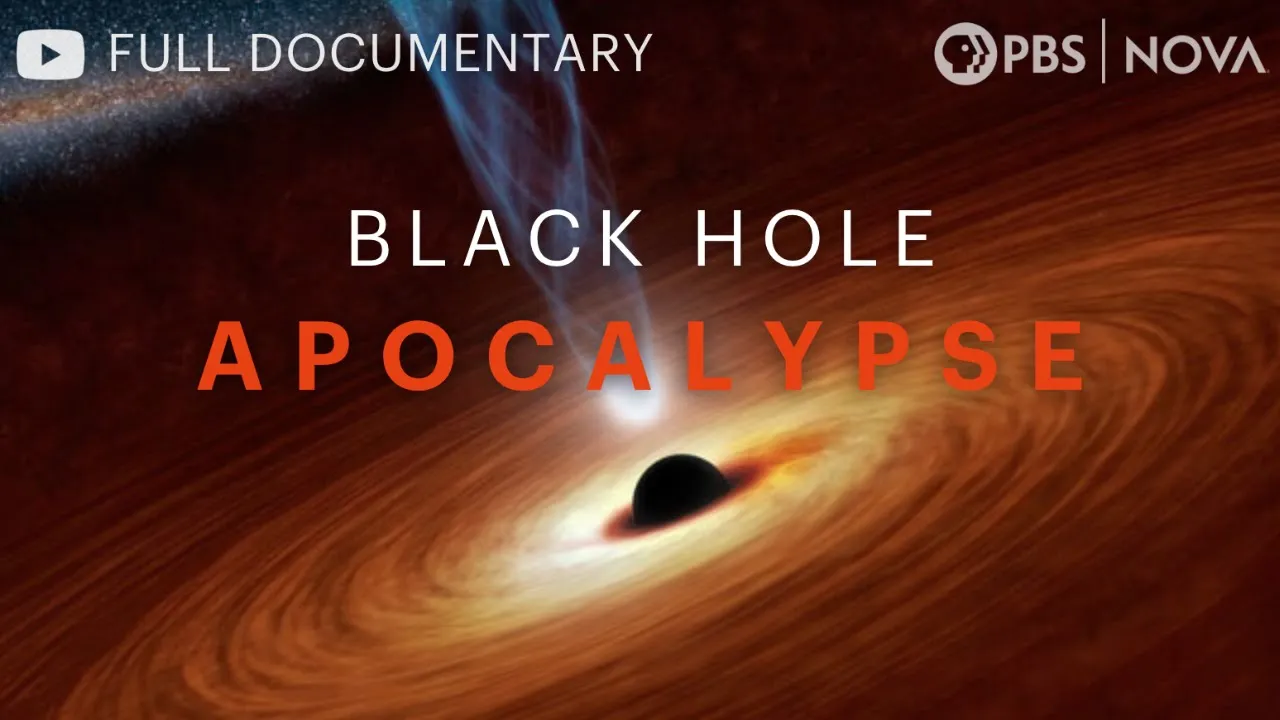
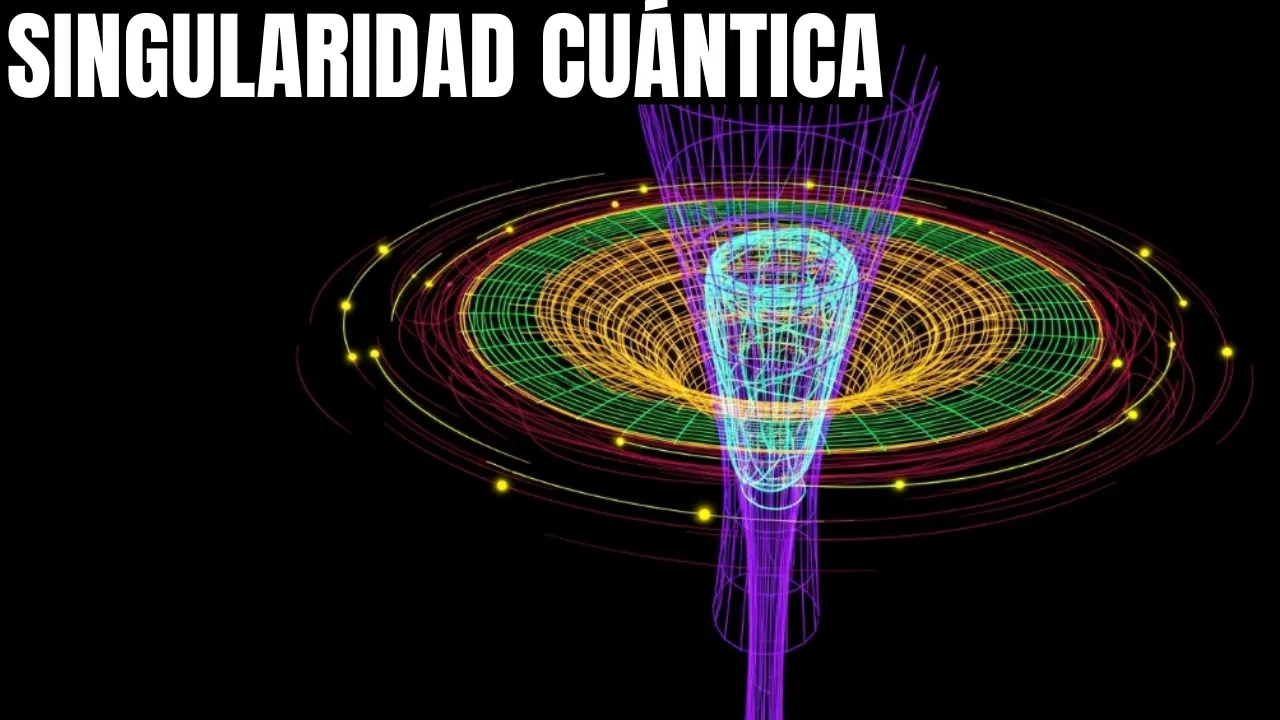
in this show the eponymous space station is located in the Epsilon iridani system but this system was not invented for the purposes of the script it does exist located at 10.5 light years from us the orange dwarf in its Center is the 10th closest star to us more massive and bright than red dwarfs these Stars remain less imposing than yellow dwarfs such as our sun according to astronomers estimates the star is 800 million years old it is therefore a newborn among the wonders of the cosmos this star gives us a glimpse of what our sun was like after only a few million years of existence but that's not all after observation astronomers have revealed the existence of a remarkable exoplanet a gas giant 1.5 times more massive than our Jupiter and located at about 3.5 astronomical units from its star that is 3.5 times further away than the Earth is from the Sun between the star and its planet is a belt of dust asteroids and other Cosmic debris the same is true outside the planet's orbit this second belt would shelter colder bodies such as comets this particular Arrangement is not unlike that of our own solar system between Mars and Jupiter is a ring of low mass bodies called the asteroid belt and outside the orbit of Neptune we find the famous Kuiper Belt populated by comets Epsilon iridoni System interest scientists so much it is because it gives us a good overview of what our solar system may have been at the beginning of its formation currently research continues in order to detect other planets that have escaped the measurements of astronomers if our Milky Way is home to many red dwarfs orange dwarfs and other yellow dwarfs it also has much more impressive Stars bodies with phenomenal Dimensions constantly growing until they swallow the planets that have The Misfortune to be near them these stars are called red giants some are visible from Earth and are sometimes the source of myths about constellations this is the case of Arcturus observable from the northern hemisphere of our globe it is the brightest star in the constellation of the Cattleman if its mass is equivalent to that of the sun its Luminosity is 300 times greater but how did Arcturus get there well the star has consumed all the hydrogen contained in its Center to attack the outer layers it is then that nuclear fusion reactions started consuming helium For the synthesis of heavier elements because of these reactions the star has gained in volume but it has lost in density and temperature since then its radiation tends towards the red hence its name at the end of the combustion process the red giant will give way to a huge cloud of gas with a white dwarf at its Center you know these clouds as planetary nebulae you should know that a similar fate awaits our sun in about four to five billion years by observing our Sky astronomers have counted more than a thousand white dwarfs in our galaxy but some estimates suggest that there are several tens of billions let's get back to Arcturus in addition to its enormous size this star is intriguing because of its orbit located in the so-called Milky Way Halo it moves on a very inclined plane unlike most other stars it is therefore not centered on the disk of the Milky Way like our sun at present we know that about 30 stars orbit on this particular plane together they form the Arcturus group one reason for this unusual behavior is that the stars in this group are believed to have come from another galaxy that collided with ours five billion years ago in any case Arcturus will no longer be visible to the naked eye within a few hundred thousand years if Arcturus is a big star it is nothing compared to VY Canis Majoris a red hyper giant located in the constellation of Canis Major about 3 900 light years from Earth it is considered one of the largest known stars in the observable universe but it is also the largest star in our galaxy [Music] the latest estimates indicate a monstrous size 2200 times that of our sun if it took the place of our sun in our solar system it would extend between the orbits of Jupiter and Saturn next to it our sun so huge in our eyes would be only a speck of dust v y Canis Majoris is also very bright it emits about 400 000 times more light than the Sun however even Giants are not Eternal and this hypermassive star is dying little by little being very unstable it loses huge amounts of matter second after second thus its lifespan should not exceed more than one million years [Music] within a hundred thousand years VY Canis Majoris will explode into a gigantic supernova [Music] yes v y Canis Majoris has a terrifying scale but lurking in the cosmos even more massive stars radiate throughout the observable universe such is the case with r136a1 a massive Star located in the tarantula nebula in this region of the cosmos Stars grow like mushrooms on the edge of country roads this Star Nursery is located in the large magellanic cloud a dwarf Galaxy very close to the Milky Way behind the great dog in Sagittarius just as the Moon is a satellite of the earth we can say that these Galaxy embryos are satellites of our Milky Way r136a1 is thus to date the most massive star known in our universe its mass is estimated at 230 times that of the Sun also emitting 5 million times more light thus if we were to compare our sun to this star it would not be brighter than the full moon this unprecedented brightness indicates that the star is losing mind-boggling amounts of matter at every moment thus taking this data in Reverse it is estimated that r136a1 must have weighed at its birth 320 times the mass of the sun a record as fascinating as terrifying breaking our beliefs about the maximum size of stars at the time of its discovery but like VY Canis Majoris its lifespan will be short this giant among giants will probably not Shine for more than 4 million years [Music] on the scale of the universe this represents only a blink of an eye when it reaches the end of its life it could explode in a cosmic fireworks display of enormous proportions a supernova fortunately hypermassive stars are few and far between in our galaxy however there are celestial objects even rarer and more dangerous than these molten Giants objects so massive that nothing can escape neither matter nor light these are of course black holes it has been known for several years that most Galaxies have a hypermassive black hole in their Center ours is no exception in 2002 a group of astronomers used higher resolution observations made with a Tech telescope and the VLT to detect this Cosmic Abyss by observing the motion of stars in the center of our galaxy they found that some of them were undergoing abnormal accelerations this could only mean one thing an invisible object with an incredible force of gravity must be nearby this discovery was a direct proof of the existence of supermassive black holes the hypothesis had already been formulated by Albert Einstein at the beginning of the 20th century following his work on relativity however the Austrian genius did not believe in the existence of such objects to understand how Einstein's theories predicted the existence of black holes we need to look at a physical data called libration velocity this value tells us how fast the body must travel to get out of the gravitational field of a star whose mass and radius are known by pushing the reasoning we understand that for a star of extreme density The Liberation speed is higher than the speed of light however the theory of general relativity tells us that this speed is a universal constant and that nothing can exceed it it is therefore assumed that for a star with a very small radius compared to its mass it would be able to swallow light this is how the hypothesis of black holes was put forward today their existence is accepted and research continues to decipher their Mysteries indeed our current understanding of black holes is limited we know that these celestial objects are extremely massive and compact their gravitational force is so strong that nothing not even photons can resist their attraction some of them are formed when supermassive Stars die the heart of the ladder collapses on itself in a cataclysmic event bringing into play prodigious forces this is how Stellar black holes come into existence but Stellar black holes although impressive pale in comparison to their cousins if the mass of a stellar black hole born in the ashes of a star can reach 10 to 20 times that of the sun it is nothing compared to the 40 billion solar masses that supermassive black holes can have Sagittarius A located 27 000 light years from Earth is the black hole at the center of our galaxy with a mass of about 4 million times that of the sun our star appears tiny and yet next to these Monsters of the cosmos even our galactic black hole although immense can hardly compete m87 of its name would have a mass equivalent to 6.5 billion times that of the Sun thus m87 would have a mass 600 times greater than Sagittarius A but how did these Giants that inhabit the middle of most galaxies come into existence this question is very much debated by the scientific community at the moment some believe that they were originally Stellar black holes that evolved by accretion of matter over several billion years however many researchers reject this hypothesis for this they argue that there is not enough matter available near the black holes to ensure such expansion thus others believe that these chasms were formed during the first moments of our universe when it was much hotter and denser perhaps we will know more in the next few years another fascinating thing about black holes is what is called The Event Horizon this is a region around the black hole from which gravity is so strong that it becomes impossible to escape its attraction this boundary thus separates the observable World from the heart of the Abyss allowing us only to make assumptions about its nature it is not a physical limit like a wall or a barrier but a zone of space from which everything that falls inside is ineluctably swallowed up Beyond this point the laws of physics as described by the theory of relativity no longer apply however if you were able to pass the Event Horizon and survive your journey it is likely that your body would undergo a phenomenon of spaghettification this strange term designates a phenomenon that is much less so on Earth gravity is strong enough to hold us down however it is not strong enough for a difference in attraction to be felt between our head and our feet however this is precisely what would happen if you were to get too close to a black hole the simple distance between your upper and lower body would be strong enough to stretch your body like a long string moreover at the Horizon of the black hole it is considered that space and time become infinite one of the Feats of the genius Albert Einstein is to have demonstrated that space like time are nested Dimensions that can be bent thus the incredible density of black holes bends space and dilates time in a spectacular way As you move closer to their Center you would see time passing slower and slower until it almost stops at the horizon [Music] it is difficult to imagine what lies at the heart of them our current understanding of things leads us to think that a singularity is hidden there this Singularity designates a point of infinite density causing a curvature of space-time also infinite as you can imagine this image does not please scientists they are therefore trying to unravel The Mystery of the heart of black holes by appealing to the various theories of quantum mechanics unfortunately no satisfactory conclusion has been found so far nevertheless our observations of black holes have revealed something quite surprising we were just explaining that nothing not even light can escape from a black hole light is an electromagnetic wave so black holes cannot emit radiation and yet a genius scientist managed to demonstrate the opposite in 1974.
his name is Stephen Hawking he proved that black holes do emit radiation and that this is an integral part of their nature although this radiation is undetectable with the current means because extremely weak several experiments confirm its existence to explain this paradox we must once again turn to quantum mechanics thanks to it Hawking was able to demonstrate that black holes do emit a radiation now called Hawkins radiation this is a thermal radiation caused by Quantum fluctuations in the space-time around the black hole these variations would lead to the creation of virtual particles separated into two groups the first part would be absorbed by the black hole while the other would escape from it thus generating the famous radiation if black holes have not yet revealed all their Mysteries they nevertheless remain objects of fascination that are conducive to the emergence of many theories interdimensional portals origin of the Big Bang glass holes gateway to the Multiverse one thing is sure these spatial abysses have not finished making talk about them [Music] our galaxy is home to many things that arouse our curiosity it alone contains between 200 and 400 billion stars but also between 100 and 200 billion exoplanets so we are still in the early stages of discovery nevertheless we also know that the Milky Way is only a drop of water in an ocean of other galaxies of various sizes and shapes the observable universe would contain two thousand billion of them this inordinate number is enough to make one dizzy and yet the observable universe would represent only a dust indeed the entire universe could contain 13 million times the observable universe with so many bodies in the universe it would be logical to think that at least one of them would contain a form of life such as it exists on Earth some even believe that life could be much more diverse than we can imagine it is possible that within our own Galaxy there are tens of thousands of planetary systems with primitive and complex life forms extraterrestrials with reason capable of thinking and interacting in complex societies unfortunately there is no direct evidence that life exists anywhere but on Earth but if life is potentially so abundant in the cosmos how can we explain that we have never come across at least one living creature outside our planet this question which obsesses astrobiologists as much as amateur astronomers is known as fermese paradox Enrico Fermi is an American physicist of Italian origin who among other things worked on nuclear physics during the first half of the 20th century winner of the Nobel Prize in physics in 1938 he was also interested in the question of the number of planets in the universe after making estimates he concluded that the probability that we are the only life form in the universe was ridiculously low he then asked the question if there were extraterrestrial civilizations their representatives should already be with us where are they then this sums up fermi's Paradox quite well in response to this question many scientists have put forward hypotheses one of the most commonly accepted is that the distances separating the planets of the same galaxy are such that it would be impossible to cover them even traveling at the speed of light it would take too long especially when we know that our galaxy is about one hundred thousand light years in diameter others also put forward the problem that resources are too limited to colonize other planets by traveling through space even if we progressed by colonizing planets in succession many of them would be too inhospitable or too poor in certain materials to serve as staging points for such an expansion finally some think that a form of life capable of traveling rapidly from planet to planet would have no interest in coming to Earth to meet us for these beings coming from elsewhere we would not be more of all than simple bacteria but it is human nature to dream our thirst for knowledge feeds a burning desire to meet people from another world thus even if the probability that the human species will one day encounter extraterrestrials is low we will always look for their presence at the edge of the universe if we haven't discovered alien counterparts despite all our research there are stranger but also more dangerous things that scientists have observed while scanning the cosmos terrifying discoveries such as the existence of black holes and other phenomena of cataclysmic proportions as explained earlier the death of some massive stars can give rise to Stellar black holes but sometimes things happen differently giving rise to a much more spectacular event a supernova supernovae are very violent Stellar explosions that occur at the end of the life of a massive star there are two types type 1A supernovae and type 2 supernovae type 1A supernovae occur when a neutron star accrets too much matter around it often from a neighboring star this gain of matter continues until it triggers a nuclear fusion chain reaction that causes the star to explode these explosions are extremely bright and all give off about the same luminosity this constant allows scientists to measure their distance quite accurately type 2 supernovae are formed when the core of a massive star collapses under its own weight triggering an explosion that destroys the star type 2 supernovae are even more luminous than type 1A supernovae but the amount of light they give off varies considerably from one explosion to another these Cosmic booms are uniquely violent events fortunately the chances that we will ever be affected by one of them are Slim although they occur every three seconds in the observable universe they are rarer in the Milky Way it is estimated that the frequency is in the order of one to three every 100 years it is also important to understand that under their destructive appearance supernovae play a crucial role in the evolution of the universe by expelling matter over incredible distances they allow the propagation of heavy elements thus serving for the creation of new stars and planets as the astrophysicist Hubert Reeves said we are all Stardust because the atoms that make up our bodies and the world around us come from stars that died billions of years ago for as long as we have known that supernovae exist none have been observed in our Milky Way however such a phenomenon would have occurred near us in the year 1604.
[Music] SN 1604 of its scientific name is better known as Kepler's supernova this one remained visible in the skies for more than a year before gradually disappearing the German astronomer Johann Kepler thought he had just observed the appearance of a new star he detailed this unprecedented phenomenon in a book entitled on the new star in the foot of opiocas since then no other explosion of this kind has been observed directly in our Milky Way however it is very likely that it has happened since the second closest Supernova that we have seen is called SN 1987a its light reached the Earth on February 23 1987 and was observed only a few hours later by professional and amateur astronomers it occurred in a nearby Galaxy the large magellanic Cloud located more than 160 000 light years away according to recent analyzes it is probably a type 2 Supernova produced by the death of a red supergiant the study of the latter has allowed us to learn more about the death of stars and the way they propagate matter through the cosmos moreover some elements from this explosion have reached us this is the case of neutrinos Elementary subatomic particles of very low mass that hardly interact with matter SN 1987 allowed us to prove their existence advancing research on particle physics thus even such distant events can inform our local understanding of the world it is also fascinating to see how such a large explosion finally leads us to discoveries on the subatomic scale even if supernovae are very interesting it is not recommended to get too close to them just like black holes they bring into play considerable forces with disastrous consequences for example type 2 supernovae which are the most powerful but also the rarest emit illuminosity equivalent to 10 billion times that of the Sun to put it another way the explosion of a single star can shine brighter than the entire galaxy that hosts it this is notably the case of the Supernova SN 1999em located 25 million light years from Earth its light in the visible range is currently equivalent to 200 million times that of the Sun all this is impressive even terrifying but it is nothing compared to hypernovae these particular explosions are hotter brighter and even more destructive we speak of hypernova when the explosion is of the order of 100 supernovae the Power released is then 10 to the 46th power joules the Tsar Bomba the most powerful nuclear bomb ever exploded only released 10 to the 17th power jewels it was therefore about one hundred thousand billion billion times less powerful to put it another way if our nuclear bombs had the force of a flick of the wrist hypernovae would be as powerful as a kilo of TNT in this very specific category of cosmic explosions there is one that absolutely outclasses all others it is the most powerful Supernova ever detected its name is asassn-15 LH this is literally a cosmic assassin whose magnitude exceeds the limits of our imagination the scientists behind its Discovery explain that ASA ssn-15lh is the most powerful Supernova ever discovered in human history the source of the power of the explosion and the energy released remains a mystery since no Theory of physics can really explain it and for good reason when the intensity of explosion was at its peak this hypernova shown 20 times brighter than all the stars in our galaxy combined faced with this discovery scientists were left speechless How could a phenomenon of such magnitude have occurred and yet they still managed to observe the hypernova even though it is located 3.8 billion light years away all the analyzes have come to the conclusion that the light spectrum of this formidable blast does not resemble at all that of other previously studied supernovae in particular they tell us that the original Star must have been poor in hydrogen which is not the case for most of the Stars around us one theory is that asasn-15lh is the consequence of the explosion of a particularly rare type of neutron star a magnet star also called a magnetar it would be a rotating star with a rotation speed of 1000 revolutions per second converting all the energy of its rotation into light other scientists put forward another theory to explain the extreme characteristics of asasn-15lh it is known that most of the observed supernovae are found in faint and small galaxies this is a sign of their Genesis and intense activity stars form and die more quickly the hypernova occurred in a galaxy even larger and more luminous than our Milky Way the second hypothesis is that it is not a star explosion but an unusual phenomenon near a black hole of extreme Mass in any case the studies around this mystery continue let's hope that it will lead us to other fabulous discoveries in the years to come if type 2 supernovae are the result of the collapse of a massive star type 1A supernovae work differently for these explosions to occur the presence of a neutron star is necessary but what exactly is a neutron star in fact neutron stars are very Compact and dense celestial objects that form when massive stars in their life cycle lighter Stars would become white dwarfs while heavier Stars could form Stellar black holes these Giants would eventually collapse into their own gravity causing an extreme compression of matter this compression is such that the two Elementary particles protons and electrons end up fusing to form neutrons this nuclear fusion produces a lot of energy which prevents the total collapse of the star creating a stable neutron star neutron stars have diameters of a few kilometers but a mass comparable to that of the Sun if you could buy a one liter bottle containing the same volume of a neutron star the mass of that bottle would be about 1 000 billion tons that's about the weight of all the things produced by all of humanity from clothes to packaging roads dots and skyscrapers this incredible density produces extremely strong gravitational fields which can reach millions of times the Earth's gravity it is also important to know that neutron stars are not very bright at least in the visible spectrum because they do emit light but it is mainly X-rays and gamma rays [Music] like supernovae and black holes there are several kinds of neutron stars they are mainly grouped in two categories on the one hand we have pulsars and on the other hand neutron stars that produce gamma-ray bursts the pulsars emit bursts of x-rays or gamma rays at regular intervals we could compare them to a kind of cosmic sonar discovered for the first time in 1967 by Jocelyn Bell and Anthony hewish they have recently been used to demonstrate the existence of gravitational waves a particular type of wave and very difficult to detect subjecting matter to the laws of gravitation their existence had been predicted by Einstein's relativity but it was only proven in 2016.
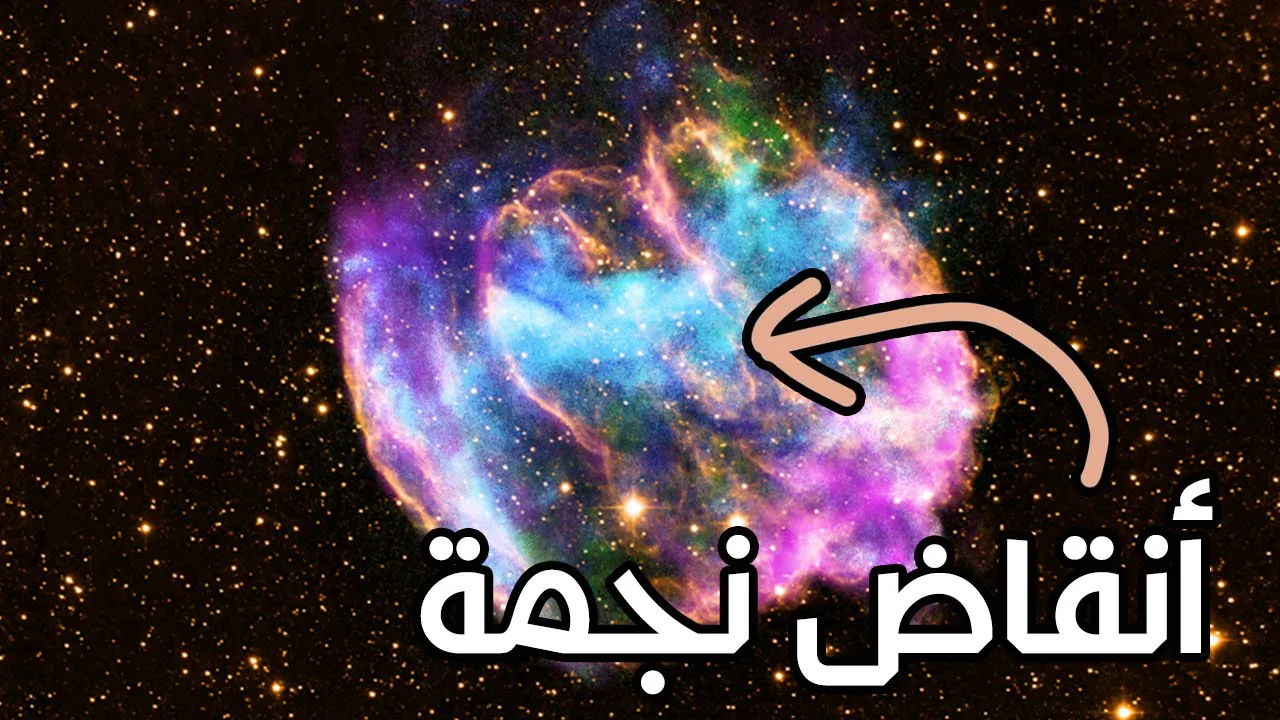
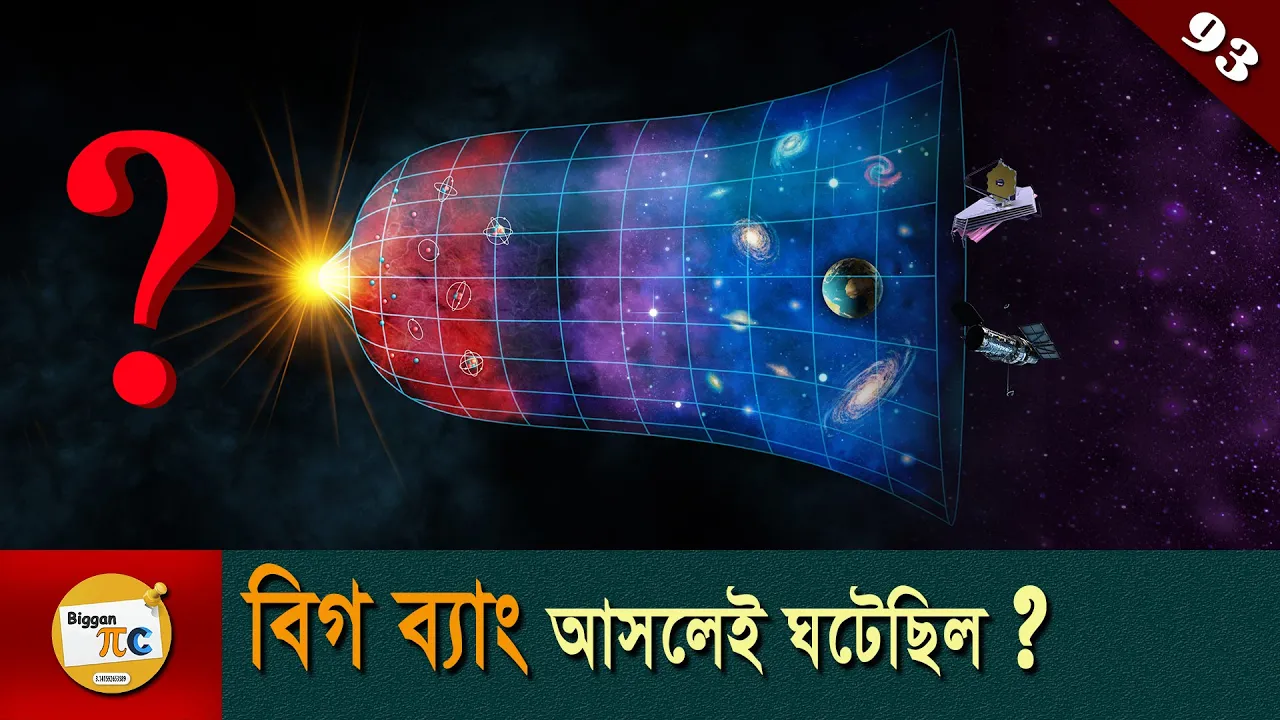
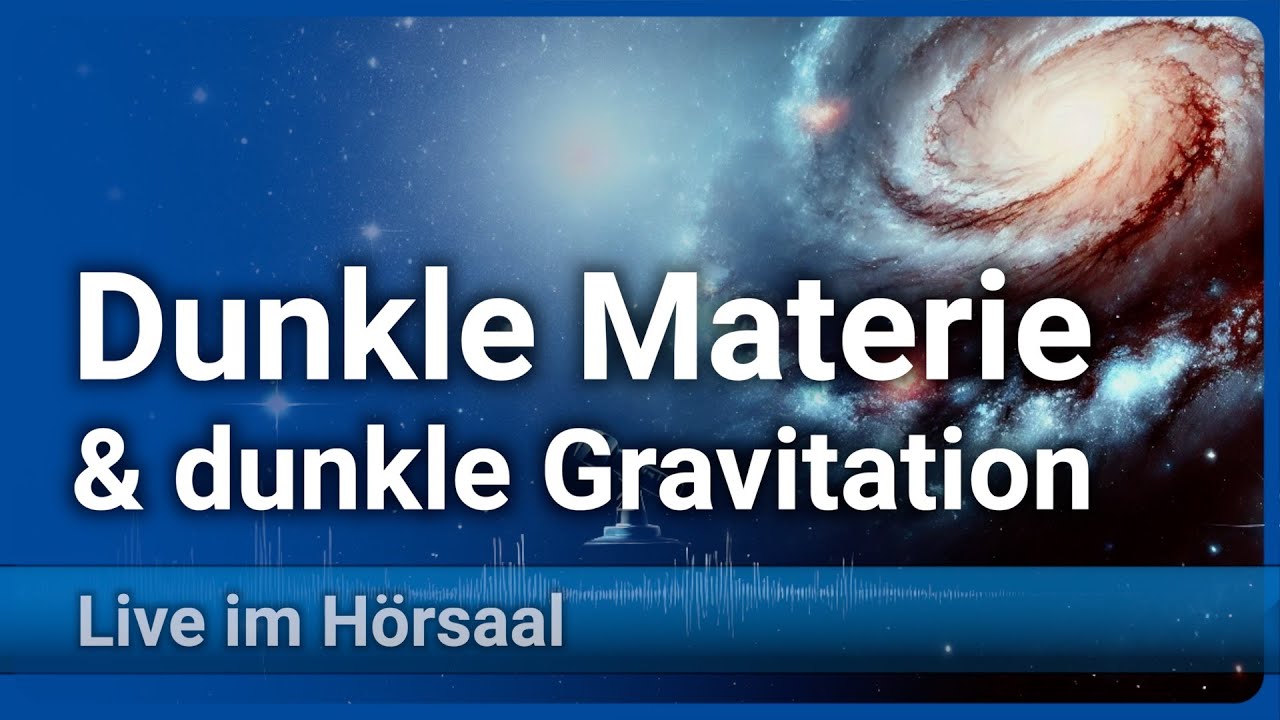
following the Collision of a binary system of two black holes this Cosmic event of massive magnitude generated waves strong enough to be detected on Earth despite the 1.3 billion light years that separated them from us it was also the first direct evidence of the existence of black holes but let's get back to our pulsars at present we have been able to detect about 3 000 of them mainly in our galaxy and in our close Neighbors the reason pulsars amid such regular waves is that these dense bodies rotate on themselves at an extreme speed their rotation period varies between a few milliseconds and a few seconds this period of rotation is given to us by the nature of the Waves they emit radio waves for the slowest and x-rays are gamma rays for the fastest as for pulsars producing gamma-ray bursts it is not one but two bodies these two pulsars orbit each other at high speed forming a binary system when they Collide they also create a wave of gravitational waves that can be detected from Earth a gamma ray burst is certainly one of the most violent phenomena that occur in the cosmos like supernovae this shock generates a Luminosity that can reach billions of times that of the Sun sometimes gamma-ray bursts are associated with very high frequency radio waves these are called frbs these are short-lived emissions of intense electromagnetic radiation of extra Galactic origin [Music] frbs are considered to be very rare and enigmatic phenomena with only about 100 events detected to date [Music] during our journey we have seen that the universe is full of intriguing objects at any given moment events of unprecedented power are taking place an uncontrollable forces are at work black holes are a good example if these objects by their nature are already mysterious there is a particular type even stranger they are called quasars this is an acronym for quasi-stellar radio sources they are Celestial artifacts very bright and very distant which are found in the heart of some galaxies these galaxies are called active because their Center produces a Luminosity that nothing not even supernovae equals in the cosmos the most likely theory is that quasars result from a large accretion of matter around a supermassive black hole particles such as hydrogen or helium are thus strongly accelerated under the effect of gravitation this high speed gives them such energy that they produce a strong electromagnetic radiation of a blinding brightness let's take the example of the quasar 3c273 discovered with the help of photos taken by the famous Hubble Telescope it is located about 2.4 billion light years from our galaxy its prodigious Luminosity exceeds one thousand billion times that of the Sun this represents as much light as one thousand times all the stars in our galaxy combined thus 3c273 is one of the brightest objects ever observed today probability calculations suggest that there are about 100 billion quasars in the cosmos since the quasars are all located at cosmological distances I.E several billion light years this tells us something about the nature of our own universe indeed if the universe was static and unchanged since its creation we should observe these prodigious sources of light near us but this is not the case the vast majority of them are located in the outer reaches of the observable universe this discovery is therefore a strong argument in favor of The Big Bang Theory the light that reaches us from quasars is in fact an after Mirage of the formation of galaxies several billion years ago shortly after the big bang it thus informs us about the formation of the universe as we know it but also about the Genesis of our own Milky Way [Music] since it also contains a supermassive black hole it is likely that a quasar was there at the beginning of its formation another theory a little more unusual tries to explain the incredible Luminosity that results from quasars according to this Theory quasars are in fact white holes the opposite of black holes instead of absorbing matter white holes would eject huge amounts of it at a very high speed this jet of accelerated matter would produce the characteristic light of quasars but for this hypothesis to be valid it requires believing in the existence of wormholes Bridges between points and space-time that would allow instantaneous travel from one place to another in the universe [Music] wormholes would then be found at the center of some black holes and would emerge at the heart of whitehalls explaining why the latter rejects so much matter unfortunately wormholes remain hypothetical objects like many others in the Beastie area of relativity but a recent discovery could put everything in question at the end of 2022 scientists from the University of Caltech in California worked on a quantum computer that is to say a computer whose operation is based on the laws of quantum mechanics and particle physics they have succeeded in creating a miniature Wormhole within the Sycamore Quantum processor developed by Google they observed that two distinct groups of particles were connected through a tunnel causing a particle to instantly migrate from one group to the other today this feat of science is still being studied but it could well represent a further step in the reconciliation of quantum mechanics with a theory of general relativity to date these two models make it possible to explain the laws of physics at the scale of the infinitely small and the infinitely large respectively however a deep incompatibility exists between these two approaches which scientists are trying to bring together we have just traveled to quasars objects that shine billions of light years away stop over allowed us to understand that in its infancy our universe was very active galaxies were emerging here and there gradually filling the void and Gathering matter around them this process of creation gave birth to clusters of forms as diverse as intriguing if we know that the Milky Way like Andromeda is a spiral galaxy observations of the sky show us that this is not the case for all our neighbors indeed some of them take much more incongruous Contours spiral galaxies have a flattened disc shape in which spiral arms wrap around a central nucleus generally this core is a supermassive black hole rich in gas and dust the activity within them is strong so that many stars die and are created at any time there are also elliptical galaxies as their name suggests these have an ellipsoidal shape similar to a rugby ball they are generally poor in gas and Stellar dust their activity is therefore less we can say that they are in a Way galaxies at the end of their life [Music] even more surprising The Bard spiral galaxies form a flat disc crossed by a central bar of matter this is notably the case of the dwindalu one galaxy located in the constellation of Cassiopeia there are several types of Bard spiral galaxies and according to the classifications ours is also one let's also mention the lenticular galaxies which form a flat disc surrounded by a spherical Central nucleus these Galaxies have no spiral arms the disc of matter surrounding their nucleus is uniform to make an analogy we can say that the heart of these galaxies would be like a planet surrounded by a ring of matter like Saturn this matter is mainly dust so that we observe very little star formation some argue that these galaxies were once spiral galaxies but that today they have consumed all their gas and star formation however because of their High Luminosity others believe that they are the product of the merger of two galaxies giving them a large Mass free of spiral arms there are many types of galaxies in the cosmos and classifications by shape are not absolute some even straddle two distinct shapes probably because of a galactic merger this sometimes leads to strange mixtures we have for example galaxies in Tidal Tale for these a bridge of matter is created between two galaxies so that they never merge completely they thus present two nuclei that leave behind them long Trails of matter forming huge tidal Tales this is the case of the spectacular antane Galaxy as for the cartwheel Galaxy it would be the result of the Collision of two galaxies one very large and the other much smaller the small Galaxy would have crossed the larger one in its Center and perpendicular to its disk giving rise to an incredible nesting speaking of nesting it happens that two galaxies never merge completely until they form a very particular Cosmic architecture this is the case of the ARP 143 system a triangular shaped structure containing two galaxies in constant interaction sometimes it happens that under the effect of gravitation many spirals of matter are grouped together forming what is called a cluster the most famous representative is undoubtedly the Virgo cluster located at about 60 million light years from us it would contain more than 1500 galaxies all within a radius of only 7 million light years this is approximately 132 times the diameter of our Milky Way as you can see if only in their shape galaxies are fascinating this is even more true for the Curiosities they contain but the most curious thing about them is that they are not visible in fact we don't even know if this thing is real it is commonly called dark matter in the late 1970s an American astronomer named Vera Rubin became interested in the Motions of stars within galaxies new from Newton's Laws of Motion that bodies orbiting a central point have a slower period of revolution as they move away from it this is the case for Uranus and Neptune whose speed of rotation around the Sun is much lower than that of Venus and Mercury within a Galaxy the same phenomenon should occur the more the stars are in the periphery the more their speed should be slowed down however Vera Rubin notes that from a certain point the speed of stars ends up stagnating as one moves away from the center instead of constantly decreasing this unexpected Behavior poses a problem of understanding the most likely hypothesis is that somewhere lurking in darkness of the cosmos there must be a mass of unknown nature allowing the Stars to maintain their speed it is called dark matter it would then have the very specific property of not emitting or reflecting light and of interacting weekly with the other known forms of matter its effect would be solely gravitational thus explaining the structures and movements within galaxies it is estimated that it makes up 80 percent of our universe in other words this means that we would only be able to understand twenty percent of our universe and that within this twenty percent many things like black holes still Escape our understanding if we accept the Dark Matter hypothesis most of our universe would be hidden from our view at first scientists thought that this lack of matter was due to the presence of black holes exoplanets Brown dwarfs and neutron stars that we had not yet observed but after the discovery of fossil radiation that is the reminiscences of the first photons emitted in the observable universe this idea was invalidated indeed the fossil radiation allows us to determine quite accurately the amount of matter known in the universe and this amount would be far from being sufficient to replace the hypothetical dark matter at present the most promising candidates to explain the nature of dark matter are the wimps this stands for weekly interacting massive particles massive particles that interact weekly with ordinary matter but again the problem is repeated if wimps do exist their nature is completely unknown to us in particle physics a hypothesis called supersymmetry gives us some answers for this hypothesis to be valid it predicts the existence of a bestiary of particles never before observed one of the goals of the experiments conducted at the CERN particle gas pedal is to find these mysterious elements if supersymmetric particles are favored by some researchers it is because they are also a key factor in string theory this complex theory of particle physics mainly tells us that subatomic elements are in fact made of one-dimensional objects close to the infinitely small called strings it is important to note that currently no observation is validated the hypothesis of the string theory or dark matter in addition some argue that dark matter simply does not exist the problem would in fact come from the theories that we use namely the theory of general relativity relativity would explain only a part of the physics that governs our world but it would be incomplete just like Newtonian mechanics in its time still dark matter does not only explain the structure of galaxies and clusters it is often associated with its counterpart dark energy also called Dark Energy it is another hypothesis explaining the expansion of the universe to understand it we must keep in mind that the universe is constantly expanding on an astronomical scale all galaxies are moving away from each other to illustrate this phenomenon with an image imagine a dotted grid drawn on a balloon now imagine blowing up the balloon again and again you would then see the dots move away from each other as the space expands in this simplistic example we are in two dimensions but in the universe the same phenomenon occurs in all three dimensions of space more surprisingly the expansion accelerates more and more for Galaxies located at the limits of the observable universe it is to date the only phenomenon whose speed exceeds that of light Dark Energy would therefore be one of the forces explaining this phenomenon of incomprehensible expansion by taking it into account we are able to determine the real size of our universe we know from the fossil record that the universe is about 13.8 billion light years long but because the expansion is exceeding the speed of light photons emitted by even more distant objects have not yet reached us if we could capture them we would be able to see the universe in its current state and size it would measure not 13.8 billion light years but 46 billion light years an absolutely immeasurable size which for us is similar to Infinity all this raises even deeper questions if the universe is expanding what is it expanding into is there another Universe with well-defined borders surrounding ours or are there simply No Boundaries and if the universe is expanding what will happen when all the galaxies are separated from each other by billions of light years we may never get answers to these questions but one thing is for sure we will never stop asking them we are almost at the end of our Interstellar Journey but before we leave let's take the time to observe some more fascinating discoveries we talked earlier about the shapes of galaxies but what about their size well if you turn to the constellation Virgo you can observe the largest galaxy known to date ic1101 is 600 million light years away and is 6 million light years across compared to it our Milky Way barely one hundred thousand light years wide seems ridiculously small within it there are no less than one hundred thousand billion stars 250 times more than in the Milky Way with a total mass estimated at one hundred thousand billion times that of the Sun this is quite simply gigantic it is possible that ic1101 is the result of successive mergers between several galaxies but nothing is certain about it where things get really dizzying is when you consider that even more monstrous galaxies probably exist but they have simply never been discovered ic1101 is the largest known Galaxy but it is by no means the most distant this title goes to HD1 its distance 13.5 billion light years from Earth because of its distance the images that reach us from it show it in a completely new light indeed we are witnessing the beginning of its formation when it was only 300 million years after the big bang to hope to see it we must look in the direction of the Big Dipper since it is still in its infancy from our perspective it is a small Galaxy it is only 6 000 light years long which makes it ridiculously small compared to ic1101 but this youth also makes it more active according to the images we have of it it produces about 20 times more stars per unit area than the Milky Way if a few hundred years ago we were still struggling to detect distant stars in our own solar system like Neptune or Pluto it is incredible to see how much our ability to scan the cosmos has evolved let's hope that the discoveries will continue for many years to come in the meantime we can already Marvel at what the sky gives us to observe on Summer Nights during our journey through the cosmos we have discovered many artifacts each more surprising than the other between red giants red dwarfs and neutron stars we know that not all stars are as warm as our sun even worse they can give rise to Violent events such as the formation of Stellar black holes and Supernova explosions but they can also in their days peacefully letting their gases dissipate and giving the universe the necessary material for the formation of new glowing stars we have also seen that black holes hold many Mysteries they can form quasars or produce a phenomenal amount of gravitational waves when they collide they are also an excellent source of imagination for science fiction [Music] by going back to the limits of the observable universe we have seen that mechanisms that escape our understanding are at work and at every moment in a way we can say that the Universe invites us to remain curious so it is up to us to do everything possible not to disappoint it by constantly trying to pierce the mysteries of the infant [Music] foreign
Up Next

Supernovae and the Origin of the Elements | Astrophysics Lecture
@osuccapp
459 views•2016-07-06

21cm Hyperfine Transition in Neutral Hydrogen: Radio Astronomy Basics
@AaronRobertParsons
12.4K views•2011-10-13

Exploring the Quantum World: From Atoms to Subatomic Particles
@wondody
766.3K views•2023-07-17

Entropy and the Second Law of Thermodynamics Explained
@veritasium
27.5M views•2023-07-01
Related Study Plans & Knowledge Roadmaps
Structured learning paths in Physics