









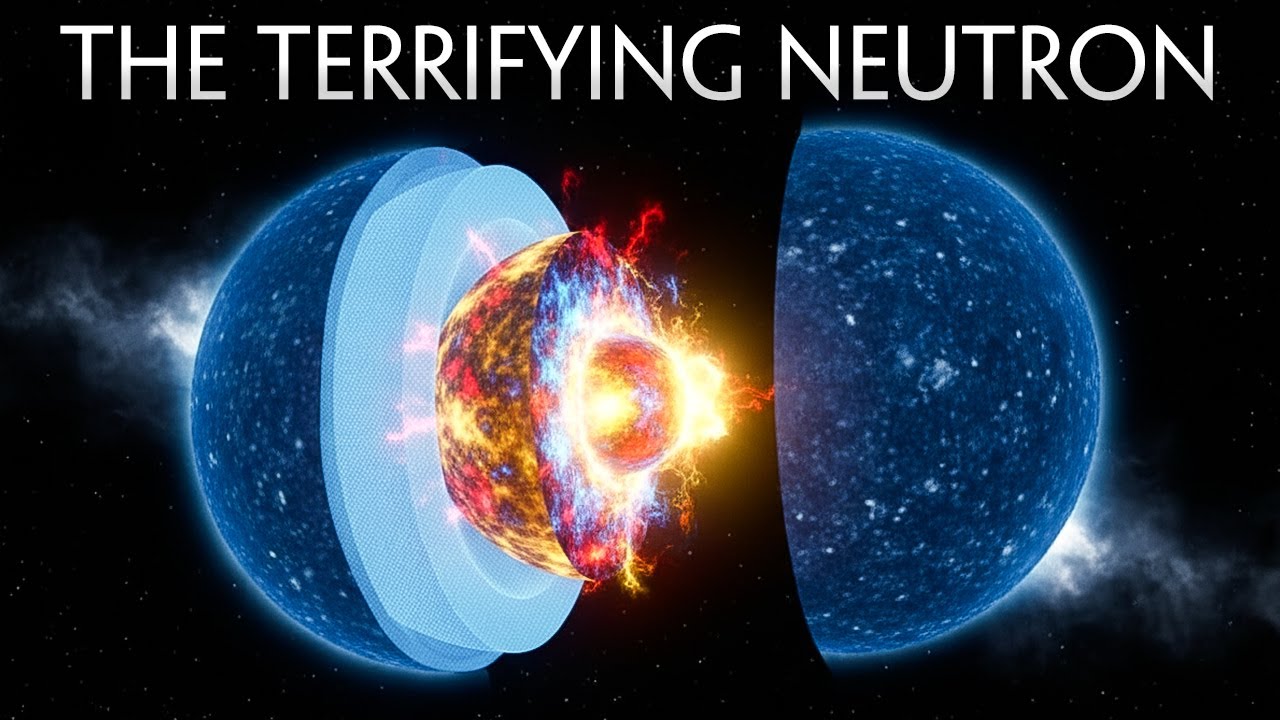












Supernovae are the cosmic furnaces that create and distribute the elements essential for life, including carbon, oxygen, and iron. Low-mass stars like our Sun fuse hydrogen into helium and eventually become carbon-oxygen white dwarfs that cool forever, while massive stars fuse elements up to iron through successive stages (hydrogen → helium → carbon → neon → oxygen → silicon → iron). When a massive star's iron core collapses, it triggers a supernova explosion that disperses these newly forged elements into space, enriching the galaxy for future star and planet formation. The iron in our blood and the oxygen we breathe originated in these stellar explosions, making us literally 'star stuff' as Carl Sagan famously stated.
Supernovae and the Origin of the Elements | Astrophysics Lecture
Added:Basic atomic structure and the organization of the periodic table, specifically understanding protons, neutrons, and atomic numbers.
The fundamentals of nuclear fusion, particularly how main-sequence stars fuse hydrogen into helium to generate energy.
The stellar life cycle, with an emphasis on the distinct evolutionary paths of low-mass versus high-mass stars.
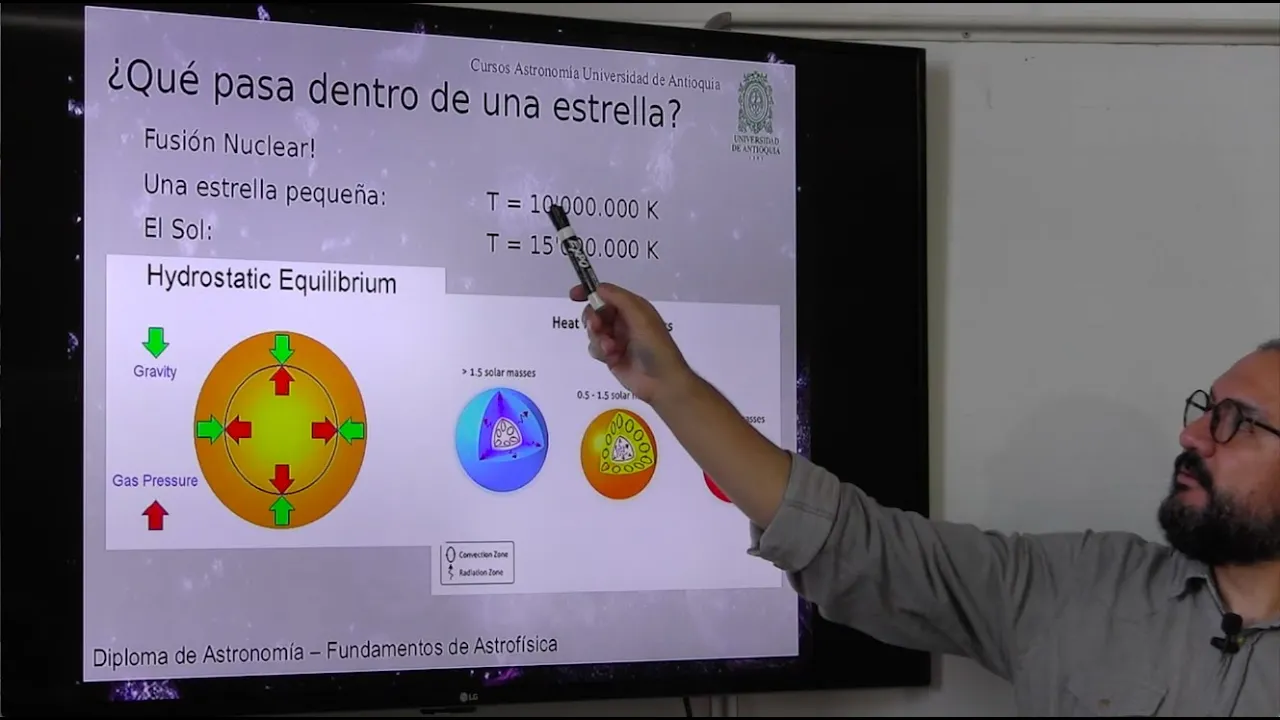
The concept of hydrostatic equilibrium, which is the balance between inward gravitational collapse and outward thermal/radiation pressure.
The r-process and s-process nucleosynthesis, which explain how elements heavier than iron (such as gold, lead, and uranium) are created.
Cosmic chemical evolution, tracing how the universe's chemical composition becomes enriched over successive stellar generations.
The dynamics of supernova remnants and how shockwaves disperse elements into the interstellar medium to seed new star systems.
Astrobiology and planetary formation, linking the abundance of stellar-forged elements to the creation of rocky, habitable planets and the chemical precursors of life.
459 views8likes1:03:50Original Release: 2016-07-06
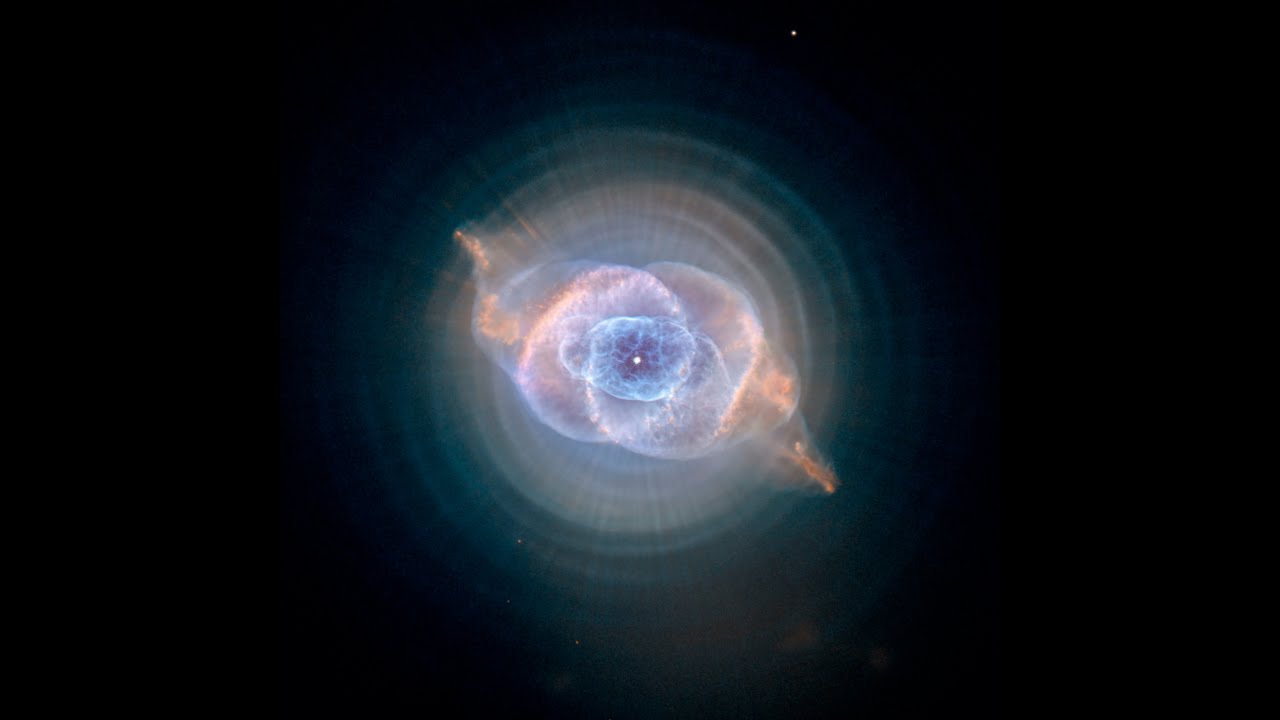
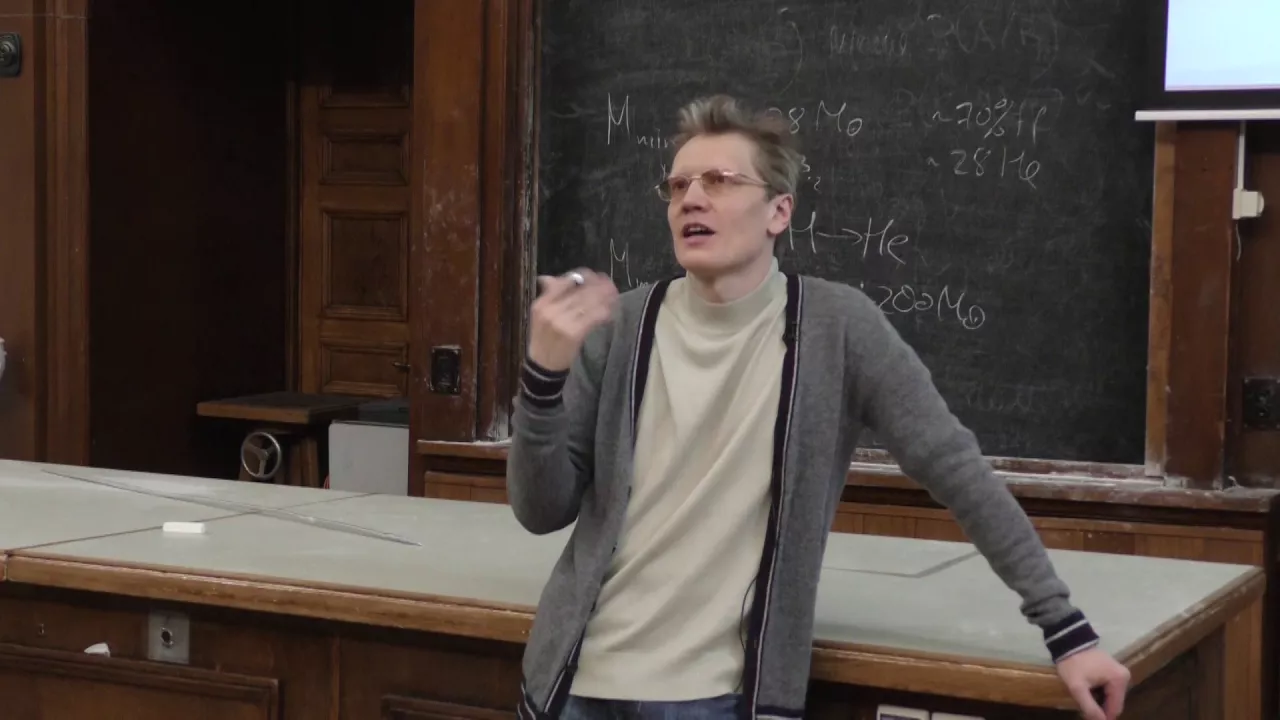
good afternoon but afternoon and welcome to today's edition of science Sunday's I'm John become director of the Center for cosmology and astroparticle physics or C CAP so the science on Days is a monthly free lecture series that you all know about obviously is put on by the College of Arts and Sciences at The Ohio State University it's organized by eight sponsoring centers of which ste cap is one and we try to make these events broadly available for scientists from scientists who are active to members of the public who are interested in what we do all the way down to the next next generation of scientists the children over here and at the end when we take questions will prioritize questions from anybody under say 15 so this like this lecture series is now in its fifth year and it's grown every year there's still seats in the front go ahead just don't steal my backpack today's lecture we're doing something new and special for making a video tape and it'll be posted on YouTube this was made possible thanks to a generous donor we're interested in expanding this program if you'd like to help please contact us so the center for cosmology and astroparticle physics has a three-part mission one is to explore our amazing universe and all of it's even more amazing contents figure out what they mean second is to train the next generation of scientists on that research those are our students and postdocs and third is to help inspire the next next generation of scientists the children by showing them what a career in science could look like and for everybody else to satisfy their curiosity of what we're up to one of our members is todd thompson is a leader in all three of our areas of research teaching and outreach thought is an internationally acclaimed researcher he's a winner of the Alumni Award for distinguished teaching from Ohio State and he frequently presents results to the public of all ages so let's thank to others welcome in and we'll take questions at the end thanks very much John thanks everybody for being here so my title today is the fantastic Forge I owe that part of that alliteration to my brother can't be here today but he did contribute by helping me talk about the title I want to take you on a tour today of the furnaces the kilims forges inside sora's low-mass stars and high mass stars and I want to tell you about their supernova especially and their be beautiful pictures and some some whiz-bang and some movies but I also want to tell you a little bit about what it's like to be a theoretical astrophysicist I want to try to bring you a little bit into my world about how I think about astrophysics what the outstanding questions are and what the deep mysteries surrounding these particular issues are and how we're trying to move forward on them so I probably i start with a quote from carl sagan one can hardly talk about the elements in the universe without talking about some of the very famous folk quotes from carl sagan and many of you know and so I thought I'd start with that this is a quote from carl sagan's cosmos in which she says the nitrogen in your DNA the calcium and your teeth the iron in your blood and the carbon in our apple pies or made and interiors of collapsing stores we are made of star stuff and indeed that's true if you look into your body you will see it is made mostly of hydrogen oxygen carbon and so on and fully two-thirds of your stuff was in not just made it not just not just it didn't just come from the store it was made in a star I'd like to remind you of the periodic table of elements or before he before me me jeez before before we get started I apologize so let's begin so here we have hydrogen hydrogen has one proton I was made it almost exclusively in the Big Bang here we have helium with two protons and two neutrons also made in the Big Bang then there are some things lithium and beryllium and there's there's some things you really care about carbon nitrogen oxygen and we're going to focus on carbon nitrogen and oxygen oxygen in particular and we're going to get up to about iron and if you're wondering about elements after iron I encourage you to continue wondering and feel free to ask me after or even during the talks the main thing to start with is that our universe was made with hydrogen and human the Big Bang gives us a store of gas and everything that happens after that this story I want to tell you today so there are about 100 billion stars in the Milky Way our Milky Way is composed of approximately 100 billion stars all formed over the last 14 billion years of cosmic time when you look up at the night sky you see perhaps a thousand maybe stars in the night sky but they diffuse glow you see towards the center of our galaxy is billions on billions of stars in that direction clouds of gas mostly hydrogen and helium collapse to form new stars with a range of masses from point 1 to 100 solar masses I'm going to use this this nomenclature here of solar masses so what I want you to think about is the Sun is easy that's one solar mass point one is a tenth the mass of the Sun a hundred is a hundred times the mass of the Sun and every year gas is converted in stars in our galaxy so our galaxy you should think of as this plate of orbiting gas dust and stars and every year some of that gas collapses because of the force of gravity to form new stars and collections of new stars like this beautiful star cluster and their stars are always born with a range of NASA's some stars one solar mass some stars to solar masses some stars five solar masses some stars one hundred solar masses and they have different evolution and different structure and direct consequences for our physical world so for example most stars are like the Sun many of the stars you look up you see in the night sky are like a son and the most common type of star is a bit like the Sun and if my first question is can you explain them how would you explain them how would you explain a star you need to explain at least several things first its structure second its energy loss and energy production and third its lifetime and its evolution you'd like to explain all simultaneously and how are you going to do that and was a theoretical astrophysicist what you do is you first make some hypotheses you first observe you observe that the star is neither expac expanding your contracting rapidly and you say well I'm going to guess that pressure balances gravity everywhere in this ball of gas just like in you right now gravity is pulling downwards gravity is always trying to make you fall and you hold yourself up right against gravity okay using your energy your source of energy for me that source of energy is yogurt ie yogurt in the morning for lunch and in the evening and as I do I get energy and my body takes that energy and it allows me to keep myself up a star has a different power source it's not yogurt it's instead a huge ball of hydrogen and some helium and some trace elements not always always always at every point on its surface at every point in its inside wants to fall in but instead everywhere it's supported and it's supported against my pressure that is the gas pressure okay so we're going to first say pressure balance is gravity and the second thing we're going to hypothesize is that the energy source is hydrogen fusion in the core and we're going to deduce implications of that so the first is that the our push with gas pressure balances the inward pull of gravity and this is something I remind my students of several of which are in the audience and i will tell you now because you might not think that you could do theoretical astrophysics you may never have done theoretical astrophysics in your life and indeed there are some aspects of theoretical astrophysics they're very complicated and take a while to learn but when you write down the sentence like this the outward push of pressure balances the inward pull of gravity I want you to see that you're incredibly close to making an equation you're very close to make an equation all if you're just bold enough to write that down you've written an equation and so the first thing I want to I want to say is that often times a simple declarative sentence is an equation that you can then turn into something that you might not have believed was even possible for example this this says that the outer words force equals the inwards force I always tell my students when they know something like that they should write it down because you just take an equation like that you can expand it a little bit you can add into little pieces you could say well that in orbits forces gravity that's going to have something to do with the mass and size of the body it might have to do with some physical constants of nature whereas the left-hand side of that equation says the force out words which is this pressure this hot gas if you take a flame and you heat the gas in this room the pressure will increase its temperature increases if you increase its density is pressure will increase and many of you are might even already be having flashbacks to high school chemistry when you learn something like PV equals nkt or p equals NRT or PV equals NRT or p equals n kt or something like that Mitzie Bertie's and densities and so on that related pressure to temperature and so we can take this and why want to show you how easily it is to deduce something you didn't already know if you say that the outwards pressure now its force is pressure times area it's like a balloon imagine a balloon you have gas inside the balloon is pushing out against the balloon the pressure content area and then you take mass times acceleration which is the death addition of force Newton said F equals MA f equals mass times acceleration and then you write down the area for a spherical star which is 4 PI R square and you're right down the mass and the mass and the acceleration you're right down as the gravitational acceleration you need to know some physics to do this okay but I just want you to see something if you know the radius of the Sun and you know pi and you know for and you know big G which the Google will tell you and you know the mass of the song which we do very well you can invert this to find the pressure at the core of the song it's really that easy and if you do that you will deduce that the temperature in the core is approximately 10 million degrees Helen the surface temperature of the sun is 6,000 degrees Kelvin the temperature in this room is a few hundred degrees tenting with the core just from this simple theoretical argument is pure theory here we assert a principle which is what I technically is called hydrostatic equilibrium but outward pressure force equals in or pull of gravity and we do something that I bet many of you did not know we'll come back to that then we then say I do the infusion in the court well how does that actually happen hydrogen what is hydrogen hydrogen forget about the electrons we don't care about the electrons we don't care about electrons for this entire lecture electrons are for chemistry ok a probe saw a hydrogen a hydrogen is just a photon and we want to take a bunch of hydrogen's and we want to make them something with fusion how are we going to do that well the first problem you run into is that like charges repel so if you want to get protons together to do something you have to work very hard because they're to positively charged particle primary you have to bring them together and that takes an incredible pressure and incredible force to do that if only you had such a big force around maybe you could get a bunch of these hydrogen's together and turn them into a human but then you have a different problem and that's you remember that helium has two protons and two neutrons okay but you know I had wrote ons on this side so how are you going to take protons and convert them to neutrons and supposedly you're going to have energy because after all when we walk outside on a sunny day maybe not this sunny day it feels more okay so how to get protons to combine how change protons and neutrons and where does this energy come from and so here's the amazing thing they're a bunch of amazing things first you find that if it is hot enough protons can actually get close enough to fuse if you want to fuse the reason why fusion is not happening this room it's not hot enough it's not probably not dense enough to but it's not hot enough okay and if you could only heat this room up to 10 or 20 million degrees Kelvin we might be able to have fusion that we would die instantly but anyway you would at least have fusion okay and what you find is the same number in order to get protons to fuse together you need to be hot about 10 or 20 million degrees next you find protons can change into neutrons in a nuclear reaction by emitting an anti-electron and a neutrino okay and the details of this are actually quite complicated in fact these these couple words right here prediction and confirmation could be their own talk and in fact John Biko who's here is an expert in this issue exactly so we need to break it down slightly if you change a neutron if you change your proton into a neutron you produce this thing called a neutrino right now there are millions of neutrinos flying through every square centimeter of your body millions in them every square centimeter of your body from the Sun they're going right through you right through the earth and they're all produced by fusion the core of the Sun and so here's the thing if you believe that the Sun is powered by whatever this reaction is then you assert that in the process of changing protons to neutrons you emit a neutrino and if there are neutrinos coming through right now millions of them per second you might might be able to detect them and that makes a prediction okay this is the kind of thing I look for when I'm doing theoretical astrophysics I think first I'll do it I'll do an estimate like an estimate i showed you that says the core temperature of the sun is 10 million degrees then i find i need to make a prediction which is their neutrino after neutrino after neutrinos coming through this room right now and then i can confirm that prediction by actually detecting those neutrinos where does the energy come from it comes from nuclear binding energy helium wants very much to form if you can get the atoms close enough and where does this energy come from this nuclear binding energy I want you to imagine that you have particles and if they get together they kind of fall together and release energy not only like this book is the book of balance of the earth if I let it go what will happen but what will happen to the energy good the energy comes out you're exactly right the energy comes out the energy comes out in the forum for this book of sound vibration a tiny bit of heat most of that vibration is absorbed by everyone here in the room and by the room itself in this case that nucleus wants to form badly if only it can get in the right conditions and when it does radiates energy in a way analogous onto how that book fell so the helium wants the form is strongly bound and this energy this famous most famous equation in all of physics which is that energy is directly related to mass by the speed of light squared gives you a way to convert some of the energy in this interaction some of the mass in this interaction into energy and vice versa and this implies that the lifetime of the Sun will be 10 billion years and it implies that this interaction can be better written as 4 hydrogen's that is for protons come together to make a helium nucleus produce energy and produce neutrinos and I want to highlight these neutrinos because this is how you know that I'm not making this up I'm telling you stuff about the core of the Sun we derive that poured the Sun you were not 2gether derived at the core of the Sun was 10 or 15 million degrees Kelvin why should you believe that why you should believe it because we can do a test we can look for the neutrinos that come out of this and related interactions that are happening in the Sun right now and we can see that there is literally one-to-one correspondence between every single neutrino that comes out and every fusion interaction that happen in the core and that's why you should believe me now what happens after a hydrogen fusion after a hydrogen fusion it turns out there's helium fusion so the star eventually runs out of hydrogen star starts with a certain man say one solar mass like our Sun it burns through the hydrogen where does goes into healing what does it do nothing anyone sits around nothing happens with the healing for a while it's only when the star starts to run out of hydrogen that a collapse isn't gets hot enough to burn him him and why do you care about that you care about that because you care about carbon and oxygen this is the first time carbon and oxygen makes a step we've been taken one step on the periodic table from hydrogen to helium and then from helium to carbon and oxygen if you take three helium nucleus nuclei you can convert them be a series of interactions into carbon and oxygen and energy and yes again more neutrinos and this is actually the end of a story it's actually kind of a boring story for low-mass stars well low mass stars like the Sun basically ends here the star at the end of forming carbon oxygen won't finding a center um nothing happens after that it throws off its outer layers and it makes fuel for new stars so here's a picture of a star with a central white dwarf and a outer layer blowing its outer layers off and this thing is this white dwarf on the refer to is made of pure carbon and oxygen and what happens in that carbon oxygen it does nothing on that white work basically cools off for all eternity in space if you chuck it into space basically it starts out hot cools off cools off more similar to what would happen to you if I through your window space you start off warm you cool off very rapidly and then you pull off more okay and that happens forever and as far like a sudden leaves behind a point six solar mass white dwarf why is that number interesting that number is especially interesting because it leads to the first sad story in all of us wrong way there are actually many sad stories in astronomy and astrophysics and this is the first sad one imagine you start with a universe filled with hydrogen and helium okay and then the hydrogen helium form stars and that'll leave behind this thing called a CO white dwarf and every time you make a one solar mass star you leave behind a point six solar mass white dwarf that does nothing well that means that point six solar mass white hope just sits there forever the point for solar masses gets flung back off and gets incorporated into a new generation of stars but you can see very quickly that you verse runs out gasps the universe does run of gas the universe starts with a supply of hydrogen and helium from the Big Bang and it works its way through it the total amount of gas in the universe is decreasing because objects like this white dwarf are forming and they do nothing okay nothing at all and that's the end of the nucleosynthesis or the production of the elements and low mass stars now there is one way important way for this white dwarf to undergo a transformation a transmigration it changes from one thing into another thing and this happens when you do what what am I what my German friends do and you look out into space okay so far we've been talking theoretically but if you look out into space do you know what you see you see white works exploding in gigantic supernova explosions um called white dwarf supernovae okay and so this is the way you can make another step you take a normal one solar mass star like the Sun it does just saying it does hydrogen fusion does healing infusion these bonds carbon oxygen right to work what happens if the star if that star is in a binary system another standard so imagine if you will that the Sun is not a single star but instead of binary star to start small and then the son of wolves and it becomes a white dwarf like this little guy right there that little thing is a white dwarf next to a very famous star called Sirius in the night sky one of the brightest stars in the night sky and serious as a buddy and that's its whiteboard buddy and this star already evolved already did what I just told you already burned through a supply of hydrogen all the way through its helium and produce this carbon oxygen white dwarf and the question is what will happen when serious swells up at the end of its life it might dump some matter from itself like this artist's depiction this is an artist depiction most of everything i'll show you is a picture but this is an artist depiction of a star and there's a white dwarf here that stealing matter stealing matter from its buddy okay we call this process accretion as if stuff is gathered on to the white dwarf so I'm going to imagine there's a white dwarf it's in a binary system it creates all this matter okay and it gets bigger because matters landline and it gets bigger and bigger and bigger from point six solar masses up to one solar mass over 1.1 1.2 solar masses and if the mass gets up to a special mass there is it turns out a maximum mass for white dwarfs in nature and it gets up to this special Mass a little bit about one solar mass at one point four times the mass of the Sun it could initiate thermonuclear explosion and this co a white dwarf that was going to do nothing just like you in space for the rest of eternity could be converted into pure iron in about in a few seconds few seconds you take an entire star higher half the solar mad or one solar mass of material and you convert it from pure carbon oxygen into iron in a second okay and that's important for us because you have iron in your body and you would like to know where it comes from and if you go and talk to our observer colleagues you find hundreds of these white dwarf supernovae are seen per year here's one I was shining its entire host galaxy this is a supernova and in fact the observations of these beautiful supernova that light up the night sky are consistent with the theory of an exploding white dwarf consistent with the idea that you incinerate a white dwarf okay but the story i just gave you the story of a big star swelling up and dumping its matter onto a binary companion um is wrong what's wrong how do we know that well with least we know part of its wrong or at least in some circumstances just give you some idea this so here's a cool movie okay let it play again and what you're seeing here is that imagine a story I just told you was true memory or theoretical astrophysicist now so I want you to think that way imagine a story I just told you was true and then there was a white work over here where the star is and it was a creating matter from its companion star that's here you'll see it it's it's it's undisturbed at the beginning and then is violently disturbed okay when reform here right there that star is donating matter on to this but then that star gets so big that it then explodes like I just told you the story I just told you if I were true then we would expect this big boom here to rip the outer layers of the hydrogen off of this star from the companion okay so here's the thing if you're going to be a theoretical astrophysicist and you're going to say how can I turn a white dwarf from just pure carbon oxygen stone is a hero of iron in some big thermonuclear detonation you might say I could do that in a binary and then you immediately run into this problem the supernova should rip off the outer layers of hydrogen from the companion and yet when we study and we look and we look very hard and people in this room in fact had looked exceedingly hard for this hydrogen none of that hydrogen stand and I say bah not because I frustrated just because it's a good idea that doesn't seem to work and you might wonder if there's another way to trigger an explosion that doesn't involve this hydrogen and there is so theorists this one happens theorist go and they try to think up ways and in fact most of my job is to sit and imagine ways in which nature could produce the thing that is seen the observers see things they are exceptionally good at seeing things they see new things all the time and then I try to figure out how it works and why it works using the equations of physics and using simple declarative statements like we started with force outwards equals forcing words and the theorists have come up with following idea that if you really wanted to make a white dwarf explode but you didn't want any hydrogen to be around maybe you just say there's not a hydrant there's not a sea of white dwarf in another star there's two white dwarfs to white works that somehow merge together okay and this is just showing a simulation from raskin of two white dwarfs merging together our theoretical picture of how to white dwarfs would merge together there's a bigger white dwarf at a smaller white dwarf and they merge together and the idea is is that when that HAP and it should happen a lot in fact me see these binary white dwarf systems and we see that they should merge the idea that maybe that will trigger a supernova and unfortunately the jury is out we don't really know or fortunately depending on your perspective the theories don't really know whether this will in fact trigger a supernova an idea of people are just exploring now is that a white dwarf white or binary in a triple system actually with another star if you can imagine it to whitehorse going around each other and a third star going around that might actually cause these two white works to physically collide into each other and that might trigger an explosion and why are we doing this we're doing this for a couple reasons one we'd like to know the origin of iron to we'd like to be able to explain these massive supernova we see all over the universe going off every night okay and so the question is how is the explosion triggered we see these Co white works we see these white horse exploding and they're completely consistent with the idea that somehow someway a white dwarf was exploded okay in time but we don't know how the explosion is triggered what are the stakes most of your blood most of the iron in your blood most of the iron in the universe comes from here so when you look at the red of your blood if you break your finger on those iron atoms came from this type of a supernova explosion this is actually exploded white dwarf guts in a supernova that was seen by Tycho Brahe hey so a supernova was same type of Braha the source says he was walking home and he looked up in the sky and saw what he thought was a new star and we train our biggest most awesome x-ray telescopes on this region of sky right now and this is what we see which is hugely iron enriched explosion guts of a co white dwarf and you would like to know wasn't another binary star was a to whitehorse that merge together was it the third star and we don't know the answer to that the answer at this moment is i would say completely up in the air all right i want to change from low mass stars to higher Matt Stone and I show Orion because Ryan is spectacular Orion is up right now and you can see Orion Orion is is emblematic of almost everything in every stage having to do with massive stars Orion if you look closely has a has a beautiful star forming region right there a bunch of gas collapsing to form brand new baby massive stars here is Betelgeuse the right shoulder of Orion a massive star that may explode tomorrow may be exploded 600 years ago we will see it tonight may not explode for 1 million years but you certainly have better odds of that going off in the next week than you do of winning the Powerball jackpot there's bellatrix which is a massive star there's Rigel which is a massive star there's the belt stars Mintaka all alignment on the top which are all massive star some of them in fact in triple systems binary systems so okay so what's so interesting about stars and have higher mass than one solar mass why would that be interesting you don't understand why it's interesting you just need to know one piece of physics which is that if you want to fuse elements and needs to be hot and if you want to fuse heavier elements it needs to be hotter okay so if you want to fuse hydrogen into helium okay if you need to be a certain temperature okay and if you want to fuse heavier elements into yet heavier elements you need to be hotter than that okay a massive stars can reach high temperatures in their cores and they do the exactly the same things when they form so this is 10 times the mass of the Sun so for example Betelgeuse is about 20 times the mass of the Sun it starts with a whole bunch of hydrogen and inning and then what does it do it takes the hydrogen and converts it to healing just like I showed you before bend a heavier elements up to aya it takes that helium at the end when it ones out of helium in its core takes that helium converts into carbon and oxygen and instead of that being end of the story instead of that being a carbon-oxygen white dwarf that just cools off forever like it's snowing in space it keeps going okay it goes up to heavier elements all the way up to iron and one massive star per century or so dies in the Milky Way before they die most get huge red and luminous so Betelgeuse is a very evolved star and could die should die in the next approximately 1 million years so you have a chance a massive star on its last day so here's a cartoon of what a star looks like we call this the onion skin structure of a star before it died and so let me start imagine there were none of these layers here it was just hydrogen if there were none of these layers here and it was just hydrogen what would it be doing it would be fusing the hydrogen into helium in its core but then afterwards they would take that helium and it would fuse it into carbon and oxygen and after that carbon burning into neon and then find Neil and burning and the oxygen and then oxygen silicon and silicon finally into iron and if you could think back to the periodic table no need to have it memorized but there was sort of hydrogen and helium and lithium beryllium and carbon and nitrogen oxygen and then it went up and then somewhere farted in the middle top was iron 26 protons not very far up actually and this is what a massive star does and why does it do this it does is because the things I mentioned before gravity is always always trying to win just like you if you trip on your way out of here gravity will be will try to win okay it will try to pull you down all right so gravity is pulling everywhere always in words and if there isn't all of a sudden if you just shut off the fusion supply the star would be immediately start contracting and it would start heating up and every time the star runs out of a certain fuel in its core some transformation takes place it has to get hotter and denser and it can then ignite new fusion processes so not just hydrogen into helium and then from helium into carbon and oxygen like a low mass star but it can go further and if you go further because it's hotter you can go further because it's denser and all of those are just because of the mass you were born with certain mass but then you got bigger and then maybe you get smaller and at least for me bigger and smaller and bigger and smaller okay every six months a star is born with an initial mass something about those gas clouds collapsing gives it's an initial mass and that basically dictates its future evolution and things i want you to notice your carbon oxygen or right here including the elements of existence namely your facts right your sugars c6h12o6 glucose monosaccharide or is that c6 Nereo see where's the oxygen there okay where's the hydrogen will the hydrogen is where we started out with and sorry will eventually a jet all this hydrogen and I love this quote also from Carl Sagan since I was going through Carl Sagan quotes I decided to include it if you wish to make an apple pie from scratch you must first invent the universe and it's true you need to start with a bunch of hydrogen in a successful Big Bang you need to let massive stars form from clouds of gas and galaxies you need to let them the ball for me hydrogen to helium and so on all the way up and then you need to let them die and only then and that material be ejected and form new stars and planets and people who are interested in apple pie all right now I want to talk to you about the last few seconds really the last moments of this massive star massive star on its last day starts with a big ball of silicon in its core and what is it doing it's taking those silicon atoms and pushing them together to make iron and why is it doing that because gravity makes it so it drives this temperature such an extent that the silicon has to fuse and higher and is trying to hold the self up in hydrostatic equilibrium try and try and try and trying okay and in one single day it converts at the entire core about 1 times the mass of the Sun or made you two times the mass of the Sun from pure silicon into pure iron and when that happens it reaches a horrible impasse and the horrible impasse is that you may not go beyond this at least normally in a star you can't take iron nuclei and put them together and get energy in all the other phases before remember I even wrote it down I had a bunch of hydrogen's and then a helium and I had energy and neutrinos okay the energy is what's holding the star up yeah but in this case you don't get any energy out if you try to fuse iron together um it won't work you'll get it you're at you can't liberate anymore that nuclear binding energy I told you about and I are nuclei begin to dissolve as it gets hotter and hotter and hotter and the whole thing collapses um because gravity always wins grab me no reason somehow that collapse leads to an explosion and how do we know that we know that because we see massive stars explode we say see individual massive stars like you see beetlejuice we see them and then later we watch them die okay and this is a picture from the southern hemisphere which shows the large and small Magellanic Clouds and in particular a star in this particular gad little satellite galaxy to the Milky Way exploded in the late 1980s and we watched it die and this is it so here's a star a known to be roughly speaking about 15 times the mass of the Sun in the range we would think we go through all of the evolutionary stages I just showed you and which should die at the end of its life and which looked a little bit like beetlejuice the astronomers in the room will say that it was blue instead of red true but anyway we knew that it was an evolved star and this star gets to the end of its life and here had boarded 23rd 1987 I was 12 it exploded and we saw the light emitted and we saw the star died and we've been following the evolution of that supernova since so we know that massive stars die and we're not the first to see um a supernova many have seen massive star supernova before us in 1054 um the Chinese during the Song Dynasty saw a new star in the sky just like Tycho saw a new star in the sky except this was not a low-mass star that turned from a white dwarf into a supernova it was a massive star that turned into a supernova and we know this because if we point our telescopes at the location where this bright guest star was seen in the sky which was visible in daylight for three weeks visible in daylight for three weeks we see the inside exploded star guts of a massive star rich with oxygen iron and other elements beetlejuice you can look forward to none okay still up it's supernova would be as bright as the full moon for weeks could happen could happen any time hopefully in the winter and that way we'll have something like not not for several weeks should be watching so what's ejected we see these supernova remnants that's what we call them supernova remnants the exploded star guts technically we don't say exploded star guts we say we say ejecta um this is a picture of the ejecta from a exploded massive star went off and sort of the mid sixteen late mid to late 16-under let's call Cassiopeia A and the thing I want to show you is that this particular picture is picture of silicon we can take a picture of the silicon house and the oxygen atoms flying Adwords and so if you wonder and you should wear the silicon in your iPhone comes from your cell phone it comes from here comes from this now this is flying out at 20,000 kilometers per second so we only need to multiply that by 3600 to get km/h this is a big number I don't know 70 million kilometers per hour or something like that and so this blast wave goes flying into the galaxy and though all those silicon atoms get mixed up with rest of the galaxy over time and that's what we see when we look out at the Galaxy at large you see supernova remnants overlapping on top of other supernova remnants and all of these metal rich silicon rich oxygen rich material flying out into space overlapping with the other material that's already there the hydrogen and helium and then that coalesce is into new stars new planets new people with their deep interest in have five so what's left behind well there are lots of things that are left behind there's first the guts the ejecta which you see blowing out here and there's also sometimes this thing called a neutron star or a pulsar left in the middle sometimes a black hole what you may want to ask me about my job I have a bunch of jobs but one of the things I do is I try to make super novae happen so one thing I do is I sit around and I try to imagine physics that could explain how these massive stars explode in order to do that it's quite like the Carl Sagan quote you know in order to make an apple pie first you have to invent the universe in order to figure out how massive stars explode we have to begin from the beginning we have first have to understand how massive stars evolve which I summarized in one diagram about haida hydrogen is converting helium helium in car oxygen and so on then we need to write down all the equations that describe this physics and their equations that can be stated as simple declarative sentences like I showed you these forces balance but another one is like energy energy is conserved energy going into this system is equal to the energy coming out of the system momentum is conserved and momentum going into a system is equal to one into coming out of the system we write down those equations then we write down some special equations about how matter behaves at high temperatures and densities how fluids flow and how exotic particles like those neutrinos i mentioned interact with matter we then solve the equations and see what happens we make predictions and we compared with observations and our best guess right now is that when that iron core is collapsing when it's finally lost its final battle with gravity we believe or we think that out so if I won't say believe our guess is that an intense stream of neutrinos from the neutron star heats the matter so much that it explodes and I write down this chemical reaction here because many of you have heard of neutron stars neutron stars are actually the things that form in the center of the massive star during the explosion and you might wonder how all of this matter gets converted into pure neutrons and i want to show you that if you have iron iron is composed of neutrons and protons and electrons and you're going to get rid of all those protons by combining them with electrons you take an electron you combine it with a proton and you make a new trauma and you also make a new train this is the second time that neutrinos have raised their head in this talk the first time was as experimental proof the fusion is going on in center of the Sun and here is that we predict that when the iron core collapses all of these electrons are combined with protons should leave behind a neutron star and should radiate a huge number of neutrinos and the number of neutrinos radiated should be something we can predict because we know how much iron how many protons and electrons there were when they think collapsed and so here's a movie of that what you're seeing is you're seeing inner 300 kilometers of a massive star and that's what stars are very big be uses gigantic be Leo's to take up a good fraction of the solar system it's huge but I'm showing you the inner 300 kilometers few hundred miles and this this is the center of the star right here and what you see in the beginning of the movie which will replay again in a second is that all the matter comes falling in you see these green things falling and falling in falling in this is what happens when gravity wins when gravity wins things full okay and so at the beginning of the movie which I'll show you what happened now so there's going to be an explosion and I will sort of movie that everything falls in mm boom forms a bit little baby neutron star your neutrinos are streaming out okay matter is falling in okay there's so many neutrinos streaming out that you see this thing convection it's like a pot boiling and then all of a sudden on after about a tenth of a second or a couple tenths of a second there's an explosion that's the explosion that's left behind it figures collapse I'll let you watch it again there's boiling and boiling matter falling in and then boom boom boom they're good and that shockwave will then propagate through the star remember I only showed you the inner 300 kilometers before but that shockwave that just got pushed out by that neutron star that was just energized by all those neutrinos flies out words an amazing speed and it disassembles the star it's really quite beautiful these are super computer simulations that show you over a few thousand seconds ten thousand seconds not so long some hours how the star is disassembled taken apart by the explosion and all of that is power at least a nice in this picture by these neutrinos that are streaming out from the central core you have neutrinos of course like I said millions and millions passenger every square centimeter of your body but nothing none o that is happening to you and that's good okay and the reason is is that you're not nearly as dense as this region down here this region the densities where I was showing you where those neutrinos are doing their interactions are a trillion or even 100 trillion times your density your density is the density of water is one gram per cubic centimeter this matter is 100 trillion times or a trillion times more dense than that and that's why the neutrinos can do such damage the question how do massive stars explode the stakes the oxygen in the air you breathe the water you drink and the sugar and the fat you eat comes from here you've heard the law freeze it's all of threes you can live for three weeks without food three days without water three minutes without air three seconds without hope oxygen plays a vital role and probably all of those okay the food water and air the answer answer is unknown I made it just look like it was known because I showed you some simulations that exploded I showed you seen emulations that actually worked okay truth is I did that mostly for pedagogical purposes and also because no fun to show me you duds things that don't do anything the truth is is that most of the models fail model after model after model actually fail and you know what happens they all form black holes black hole formation none of them explode none of them form a neutron star at the center none of them eject all of this iron and oxygen rich bad why is that I don't know we're wrong stars explode we see the next slope we're looking for a good idea about how to make them explode I said our best guess was this intense and your tree know Flux doesn't mean it's right okay and you would say why should I believe anything about what you just said if your models fail to explain the supernovae and I can get one good reason when that supernova went off when that supernova 1987a went off in February of 1987 we saw the neutrinos we detected the intense neutrino burst and the energy of those neutrinos the time it took for them to be emitted okay and the total amount of energy we received in neutrinos all almost exactly matched our expectation from these models so the models that predict the neutrinos that we saw from a supernova that actually exploded fail to produce the supernova that means that something's missing what's missing I don't know I don't know and I'm claiming that most people don't know I want to take a moment because we're at Ohio State and because John introduced me and say that Ohio State astrophysics we are a leader in these fields we have some of the world's experts in stars and stellar structure a neutrinos and their interactions in supernovae the observed properties of supernovae supernova remnants nucleosynthesis the origin these elements that I've been talking about observations and discovery I've been focusing on the theory but I want you to know we have a contract a quite a large group of people and to give you two quick examples we right now are engaged with Professor Chris kochanek as the p.i looking for the first search for massive stars that collapse the black holes you might think that we've seen stars collapse the black holes no we have not and we are looking for them and also the most successful survey for bright supernova of all types p I by Chris Stanek and also Chris kochanek prosthetic is an audience here with John beacon and myself cheering from the sidelines the most successful survey for bright super novae of all types and other explosions is also housed here on this led here by Ohio State University that's called the old sky automated search for super novae asus to set asus SN or assassin for sure and we're all supported by and take some inspiration from the people and resources at the Center for cosmology astroparticle physics here at Ohio State I want to summarize and remind you the Big Bang starts with hydrogen helium fusion in stars makes heavier elements and then those elements are ejected when you think about a galaxy this picture is a beautiful image of enter Amida if you want to you can envision our own Milky Way in the time it takes the Sun to go from here and to go all the way around to orbit once it does so in a couple hundred million years there are millions of supernovae that go on so in a small you're a little life time you're 100 years on earth you may be lucky enough to see say feel juice explode you may be lucky enough to see one supernova slow because what happens per century but if you put on your goggles that let you live for a hundred million years and watch one complete orbit of the Sun go around you would see millions each one injecting solar masses of silicon and oxygen and for the white dwarf supernova iron and that would all be enrich into the medium that then makes the next generation of stars and the next generation of stars in the next generation starves them for that in the 10 billion years that we've been around about 10 billion new stars about 100 million super novae billions of Suns where the elements ejected and that's for future stars and planets there are many mysteries I've highlighted few of them I can discuss the more if you like the mechanism of white dwarf supernovae or white dwarf supernovae we do not know we know that it's consistent with the incineration of a white dwarf thermonuclear detonation but we don't know how it's actually triggered massive star supernova I showed you some pretty movies but the movies mean squat if they don't actually conform with reality and right now most of our movies and most of our simulations fail the origin of elements above iron I haven't even touched on origin of elements above iron and you might wonder where does gold come from it's a good question there are many other mysteries to an answer what do we need we need new ideas we need new ideas and we need to data the type of data that are provided here by the assassin survey and by others now when I showed you that first quote by carl sagan many of you might have been thinking wasn't there another quote where I remember another quote about star stuff and you're right there is one it goes like this a little longer i'll read the surface of the earth is the shore of the cosmic ocean on this Shore we've learned most of what we know recently we've waited a little way up maybe ankle deep and the water seems invited some part of our being knows this cause an ocean where we came from we long to return and we can because the cosmos is also within us we are made of star stuff we are a way for the cosmos to know itself I recently had a student from one of my classes who asked me as part of his philosophy course to fill out a form answering some questions and one of the questions was how does your work give you any other different appreciation for the universe um than someone else and I thought well maybe it does know there are two things first thing is a is the sort of the size of space and the isolation I think of the earth and the very vast distances between things but also there's a certain connectivity to the rest of the universe and this is embodied not just in carnal staying as quote here but in other Carl Sagan quotes and in other quotes by neil degrasse tyson you can go and you can google the most astounding fact and Neil deGrasse Tyson puts it better than I will but what he says and what I want to say and what saying it said before me is that you should feel a deep connection between yourself and the stars yourself in the universe because you are star stuff a very very large fraction of everything in your body came from stalkers and the rest and directly from the Big Bang so I tried to communicate some of that to you um I hope you've enjoyed it thank you okay so I have some questions for Court let's see uh oh yeah there we go this little fellow here good dogs can repeat the question yes so if you try to push the two irons together pick an odd question so the question is is it possible for the iron to fuse together if the star was maybe massive enough or if there were some extreme conditions to hire a fuse together and the answer is on you confuse it you could kind of push two irons together but you won't make a heavier nucleus what happens is actually the whole thing will kind of dissolve into a bunch of cook um you know some some helium nucleus and protons and neutrons and you won't get that bang out so you can in fact fuse it it just won't fuse into the way we talk about fusion it won't make a bigger nucleus and it won't release the energy that you need in order to stave off on this gravity that's pulling inwards other question the red shirt there good bargain by protons neutrons it we can wait have your ad yeah what does it say those processes also don't produce our life okay that's a great question so the question is um you know we know that we can create exotic elements by bombarding nuclei with neutrons and protons doesn't or shouldn't that happen in stars and the answer is is it does and that it is in fact how you make the heavy elements so what you do is you take up some iron nucleus or carbon nucleus or oxygen and you fire a huge beam of protons or neutrons Adam okay and usually we think about neutrons and what happens is the neutrons get absorbed by the nucleus and then they turn into a proton by emitting a new treatment and when that happens you build up heavier and heavier nuclei and the question is where does happen and four elements above iron on the periodic table about half of them are produced we think in normal stellar evolution kind of intermediate-mass stars for solar masses three solar masses to solar masses I didn't talk that much about it for the heaviest elements and gold in particular sorry here's this same movie I accept this the color coding is different now but it's the same way I showed you before and what happens is that the core collapses core collapses sorry technical error alright i'll skip that the point is is that i want to go back to the other movie the whole thing collapses there's boiling and roiling and the explosion happens okay after the explosion happens it disassembles the whole star and there's a wind actually that comes off the neutron star right after it's born and what and that is filled with tons and tons and tons of neutrons so we think some of the heavy elements might come from this very strong neutrons you would get right here so if I stuck you here at ten to the ten degrees Kelvin and densities of 10 billion to a trillion times your current density you would absorb neutrons and as you absorb neutrons you would be transfigured from your stuff into interesting elements like strontium yttrium zirconium and possibly gold europium dysprosium uranium thorium perhaps we're not sure but we think that's basically how it works let's see get a phone center here my name's a fallacious interesting question the question is how would the presence of dark matter change nucleosynthesis there are several levels of answer so the dark matter pervades the universe dark matter is important for binding galaxies together it's important for the evolution of the universe as a whole and they're probably although we can't be sure dark matter particles moving through our bodies right now just like neutrinos are very weakly interacting it is possible that massive stars accumulate Dark Matter aim their course and it is also possible that that might actually affect the evolution of the stars as they accumulate more and more dark matter because it's a separate thing and you're adding into the mix that wasn't there before and so it should change the evolution of stars we don't know is the answer it could happen under certain models of what dark matter is it could make a difference in other models it doesn't make hardly any difference people are trying if you could find a way the dark matter would affect the star it would be a beautiful way to test models of dark matter of what we have not been able to do that yet oh you sort of the photo the question is would it be possible to unuse the elements fused by stars yes so if you make very heavy elements they can they can fission they can radioactive decay they can split apart into lighter elements so that's a way in which nature unfuse 'as very heavy elements that become radioactive and they break into different pieces you can also take a nucleus like an oxygen nucleus and if an oxygen nucleus was hanging around in space it turns out that there is a there's a bunch of very high energy particles roaming around in the galaxy called cosmic rays and those very those very high-energy particles can come in and bust up nucleus and essentially fun fuse them into lower into yeah into smaller into smaller nuclei so yes it is possible to unfuse the products of fusions star those we don't think our are dominant in the sense most oxygen just came from the way that I just said but it's an interesting any other questions okay you listen the second rope go ahead hi so the question is can you pick up the iron that it makes so what you should think of is that all of the iron all of the I have you been to the beach yes okay so if you've ever been to the beach you've seen sand if you ever seen sand was made of silicon and oxygen and iron and in each of those little sand particles their atoms of oxygen and silicon and iron and all those atoms were made in these big star explosions and then they flew out into space and then they kind of came together to make the earth and then you went on vacation and you sat on top of those those were those little rocks so yeah you can't really pick up the atoms that are that are there good user yeah yes the 11-year cycle on the 22 the question okay so the question is can I explain the 11-year cycle of activity in the Sun and does this happen in any star and presumably how is it related so that so yeah so the so for example the the Sun undergoes different levels of activity it becomes more active and less active and by that we mostly mean that has more sun spots and less some spots and its large-scale magnetic field the magnetic field of some changes those those processes are related to the structure of Sun the Sun but not so much its fusion they're not directly related to that they're more directly related to its rotation and the convection going on inside it which are which are partially driven by the nuclear fusion so no right now with with what I've said I can't explain the 11-year cycle but it's related to this this magnetic dynamo going on inside the star driven by driven by its convection and rotation so that's my answer damn it stick one more question a bit all right yeah yes so the question is we start with these basic building blocks carbon nitrogen and oxygen and how do we get to unicellular organisms that's a great question I do not have a complete answer but I will tell you a few interesting things the first thing is that we see molecules in space we see lots of molecules and space and actually some fairly complicated molecules in space so some simple molecules like carbon monoxide carbon dioxide other molecules and we've just have a telescope now Alma which is looking for when you look into space you see whole galaxies like like the Andromeda galaxy are emitting in the radiation of different types of molecules and some are you know very simple but some would also be considered prebiotic from the point of view of the people who study that type of thing I'm certainly not an expert there has yet to be I think a discovery of some I discovery of many complex molecules let me let me leave it at that so how you get from there eventually you make the earth okay all this stuff gifts together processing subject of a separate talk if you give but the whole material comes together and then somehow you have to take those building blocks and those complex molecules probably at least on earth with a big admixture of water and then you need to make the creepy-crawlies and I don't know about the many steps in between but I know that there are people here who are working on just that fact of good colleague a friend of mine des bong who's here in the chemistry department is working on some issues related to that and there are some other experts in the room oh I can see looking at me but I don't know the answer all right let's take to it again you you
Up Next
18:03
How Massive Stars Die: Supernovae, Neutron Stars, and Black Holes
@LaunchPadAstronomy
92K views•2020-01-03

12:53
21cm Hyperfine Transition in Neutral Hydrogen: Radio Astronomy Basics
@AaronRobertParsons
12.4K views•2011-10-13

32:32
NMR Spin Physics I: Zeeman Effect, Resonance Condition & Larmor Frequency
@nptel-indianinstituteofsci8064
2.3K views•2024-01-17

27:14
Entropy and the Second Law of Thermodynamics Explained
@veritasium
27.5M views•2023-07-01
Related Study Plans & Knowledge Roadmaps
Structured learning paths in Physics
physics
Nuclear Physics (Decay, Fission & Reactors)
01Atomic Structure and the Binding Force
02Radioactive Decay and Half-Life
03Nuclear Fission Mechanics and Chain Reactions
+ 2 more learning modules
12h5 modules
Explore Roadmap
physics
Soft Matter (Polymers, Colloids & Rheology)
01Foundations of Soft Matter & Thermal Forces
02Polymer Physics and Macromolecules
03Colloids, Surfactants, and Self-Assembly
+ 2 more learning modules
38h5 modules
Explore Roadmap
physics
Analytical Mechanics: Lagrangian & Hamiltonian
01Mathematical Foundations: Calculus of Variations
02From Newtonian Mechanics to Constraint Dynamics
03The Principle of Least Action & Lagrangian Mechanics
+ 3 more learning modules
28h6 modules
Explore Roadmap
physics
General Relativity (Spacetime & Cosmology)
01Foundations of Relativity: Special Relativity
02The Geometry of Spacetime: Equivalence Principle & Curvature
03Einstein's Field Equations: The Mathematics of Gravity
+ 2 more learning modules
55h5 modules
Explore Roadmap