














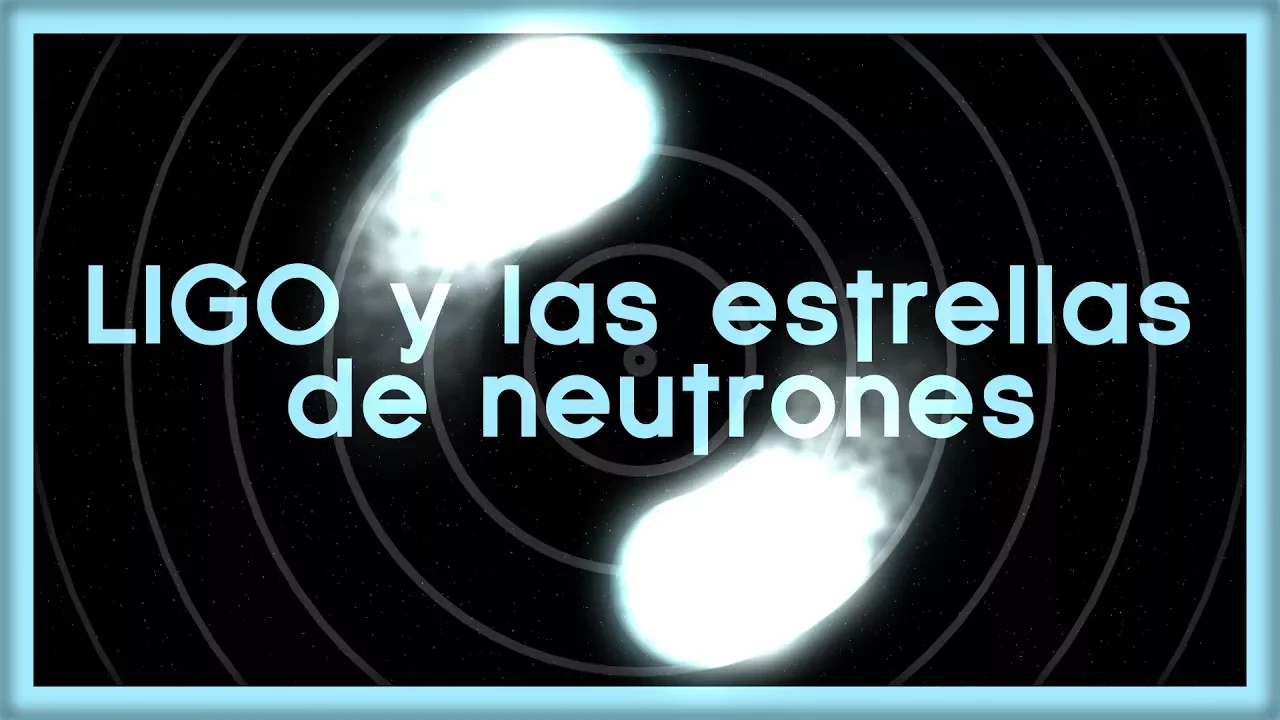

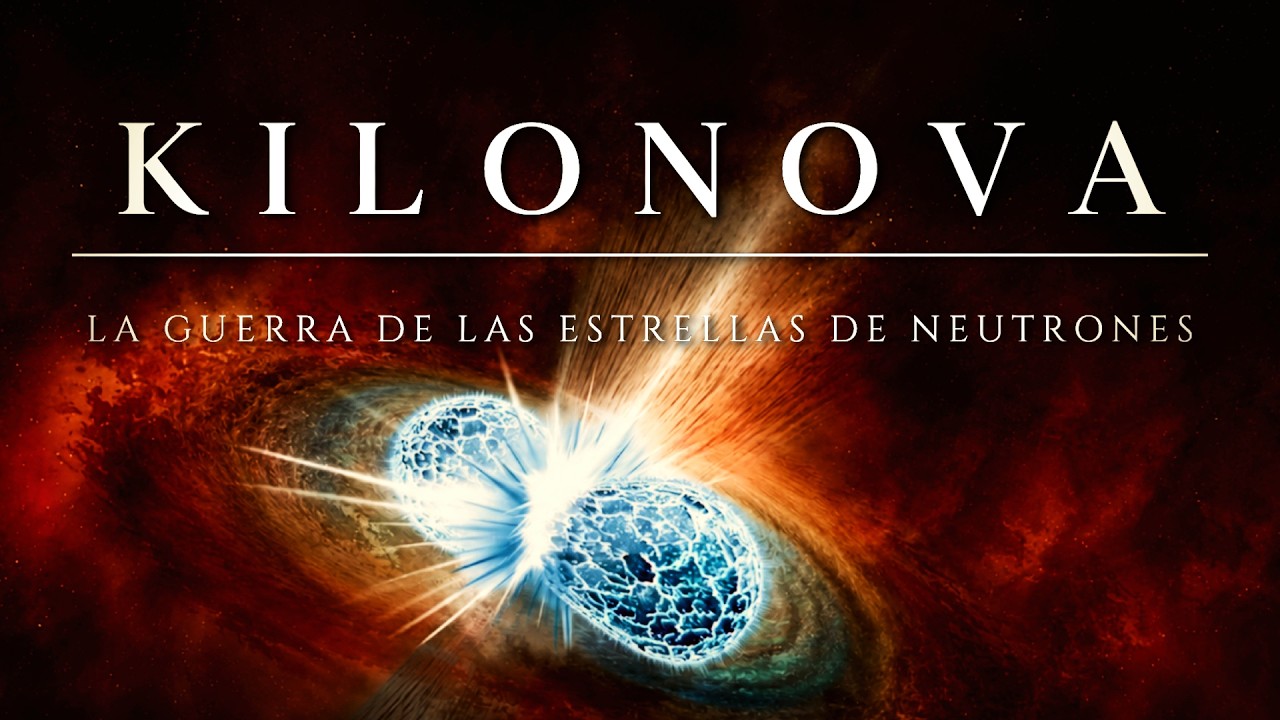

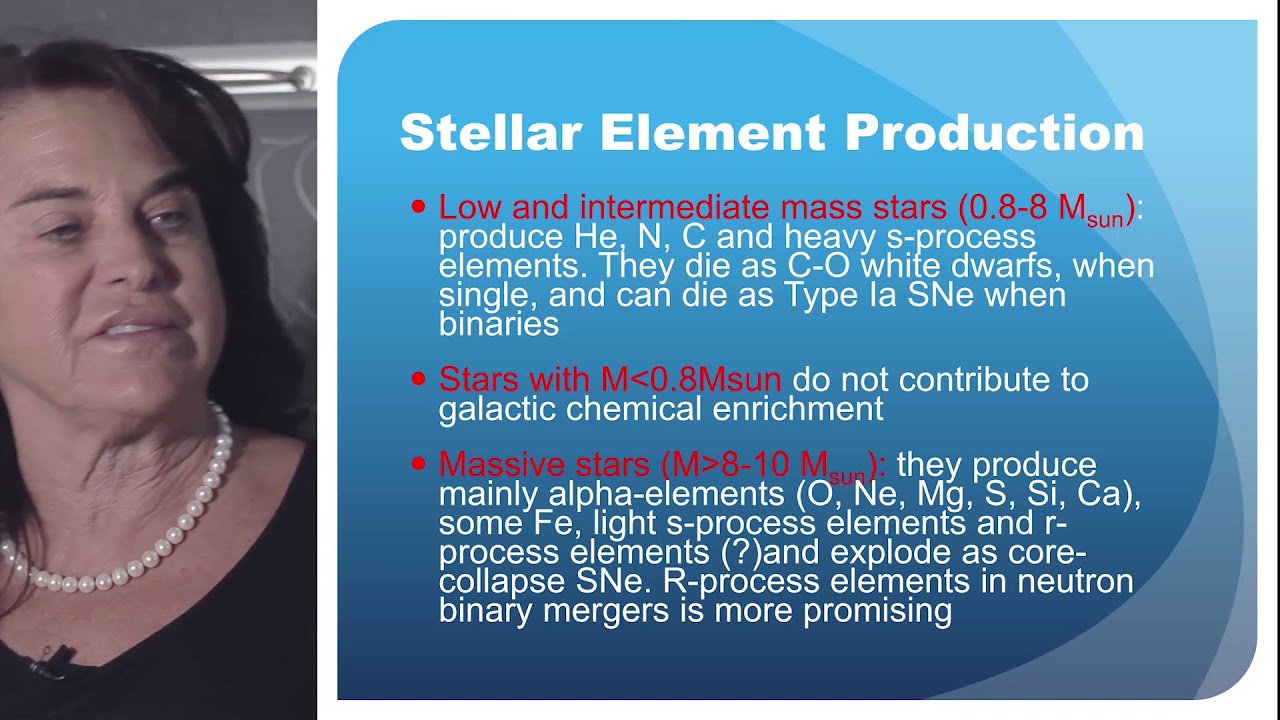




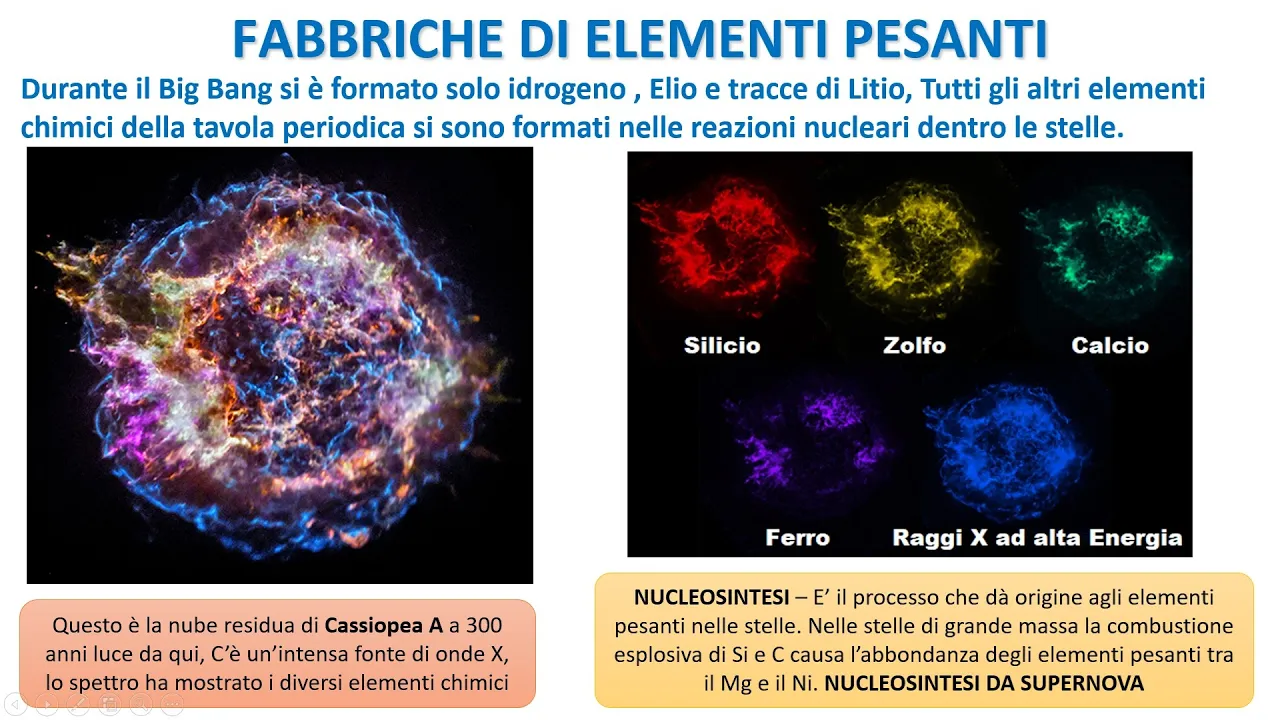
Heavy elements beyond iron are created through neutron capture processes, with the rapid neutron capture (r-process) occurring primarily in neutron star mergers. Astronomical observations of metal-poor stars in dwarf galaxies like Reticulum II reveal characteristic abundance patterns that match r-process signatures, providing evidence that these rare cosmic events produce the heaviest elements including uranium and thorium. The LIGO detection of neutron star mergers has confirmed these sites as major contributors to the universe's heavy element inventory.
Cosmic Origins of Chemical Elements | Neutron Stars & Supernovae
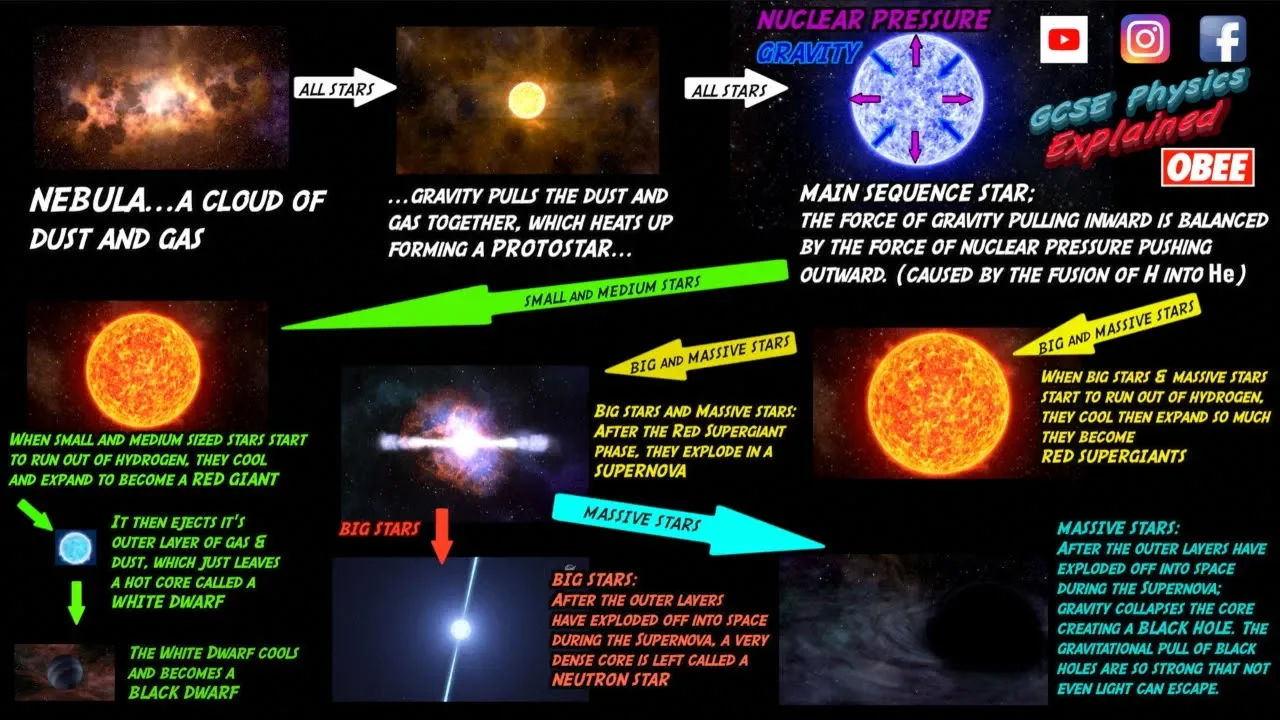
Added:Basic stellar life cycles, including the transition of stars from the main sequence to red giants and stellar remnants.
Fundamental nuclear physics concepts, particularly nuclear fusion, atomic numbers, isotopes, and the nuclear binding energy curve (understanding why fusion stops at iron).
A basic understanding of extreme cosmic phenomena, specifically what supernovae are and how neutron stars are formed through core collapse.
The structure of the periodic table, recognizing the difference between light elements (hydrogen, helium) and heavier elements (metals, gold, uranium).
Detailed study of neutron capture processes, specifically comparing the r-process (rapid) and s-process (slow) nucleosynthesis pathways.
Multi-messenger astronomy, exploring how gravitational wave detections (like GW170817) combined with electromagnetic observations (kilonovae) provide empirical evidence for element synthesis.
Galactic chemical evolution (GCE), studying how the distribution and abundance of chemical elements evolve across galaxies over cosmic time.
Cosmochemistry and planetary composition, linking cosmic nucleosynthesis to the elemental makeup of the Earth, meteorites, and biological life.
224 views3likes37:54Original Release: 2024-04-25
hello everyone my name is Anna fro I study SAS and I would like to take you on a little journey into the cosmos but first uh I have to introduce reintroduce someone meet Professor Lisa mner I have a couple other photos of her obviously not many remain um this was her in the lab with otan as a young woman and here we see how short she actually was again next to otan here in Fritz strasman he actually happened to live in the neighborhood of my grandparents in gutting in Germany so my mom as a as a younger child um used to see him walk around so a nice personal connection I was also born in Berlin uh and as you will see in a moment there are many connections between her and my work um there's much to say about Lisa mner and I don't have the time today to do so but I would like to highlight that of course she did not get the Nobel Prize despite being nominated some 42 times over three decades um but she did win a number of honors later including I'm not sure if it's exactly a win but uh one of the elements was named after her and this is the only element named specifically after a non- mythological woman it's a special kind of achievement um certainly warranted but also just a little bit odd so Mt here for m narium one of the heavy elements that are indeed not long lived but uh you know can only be made in the lab uh so her story is is fascinating and worth sharing even though she hasn't really made it into the history books because again she didn't get that kind of prize that warranted that um and so I'm happy to to share her story and tell you a little bit about that and what her work has has done we all stand on the shoulders of giants and I stand on her shoulders and I'm sure many of you do too um before I uh continue though I would like to give credit to um my uh friend and the producer and director of of this little play Jen maronic from stem on stage um I have a little bit more about it um at the end because there is also a play about Marie C and this was much inspired by that so some 80 85 years later since this discovery what has changed now we know that there are no heavy elements but physicist and astronomers are still Contin continuing to try to understand the origin of the elements um it remains not fully understood where and how all the elements form and that's something I'd like to tell you a little bit more about because this is one of the research areas of mine and uh the modern challenge indeed is to understand you know we we don't as the astronomers we don't have the experiments in a lab our experiments is out there we also only have one experiment and we have to kind of make sense of it all but it's good fun and we we still ask the VAR very similar questions right what what are the elements like where do they come from how are they made and I would have really liked to discuss that with her in the absence of that I will discuss it with you so um my talk today a very brief version is on the uh Cosmic origins of the chemical elements so uh all you probably have heard of this before all elements are made in Stars I would like to uh extend that a little bit and say and merging neutron stars um and here you see some examples of them there's a depiction here of a of two emerging neutron stars but let's dig a little bit into that all right so I will actually not say too much about old stars but I need to give you a little bit of introduction so that you know from which angle I'm coming um let's look at the universe what happened early on we had the big bang 13.8 billion years ago the universe was just hydrogen and helium at the time we don't need to worry about the little lithium and from this primordial matter the very first Stars emerged and they were really massive something like 100 times the mass of the Sun and that meant they exploded really quickly uh as massive super noi um why was that really significant point in the history of the universe because during those explosions all the elements that were cooked up for energy generation purposes in their cores were expelled into the surroundings so the chemical composition of the universe changed forever with the onset of the first Stars the primordial Universe was no more then the next generation of stars now formed from this slightly enriched material and ever since every generation had mass of stars they added more element more of all the elements to the gas and with time we have an increasing uh situation of you know the elements all get you know you get much more and more of them so if you want to find the oldest stars then um you have to look and I'll explain it more in a moment um for the stars that have the least of the heavy elements in it and we try to find these very early generations of stars here because this is about as as far back as we can look with stars or probe I should say and um they have survived until the present day today so I can observe them with my telescope they are there and Shining happily kicking around um and um I'll I'll show you a little bit more how we do that so let's talk about element production uh again I'm I'm assuming here that you probably have heard of fusion processes you you you put together protons um you get two hel if you have three helium nuclear and you put them together you get a carbon you add another helium you get to oxygen and so forth and why is this important because this is the mechanism by which stars shine right they need to have sustained large amounts of energy for billions and billions of years and that only works with nuclear fusion and what was mentioned in the play the um MC squared here is that the the mass of the constituents protons and neutrons you know if we add up we have two protons and two neutrons in a helium nuclei we get to 4.03 but if you measure so that's theory if you measure it experimentally the mass of helium that consists of two protons and to neutrons you measure only 4.00 right so there's a little bit of mass lost and that has been converted to energy via this equation it's not a lot but stores have a lot of protons and atoms in their course right so it all adds up and that's ultimately enough for stars to shine and uh so this is what happens Prim primarily in Supernova explosions you go all the way up to iron in this fusion um fashion and then the Supernova explodes and that looks kind of like this in the inner part you have a higher concentration of the elements uh that you know being pushed out into the gas and then further out you have sort of dilution that's why the concentration is lower so you know imagine that to be a first star a first super NOA that exploded in the universe um and then you form your next star let's say here or there or maybe out here and so they will have different abundance signatures depending on what this gas was enriched with and then these little stars that form from there they Preserve in their OU atmosphere exactly this birth gas cloud signature and so when we observe it 13 billion years later it's as we would be studying this situation soon after the big bang right so that's that's the cool thing about old stas they preserve the the chemical composition of their birth gas clouds for us here is a diagram that illustrates that again imagine this to be the primordial Cloud you have some stuff forming some massive ones that explode they dump their their Elemental yields into the reservoir and then the next Generation forms with this slight enrichment and then you have the cycle go round and round and round and with every generation the element content is going to go up up up up up ever so little right until today and so if you want to find the older stars as already indicated you need to find the stars that formed after this cycle had only gone round once so one enrichment from the first stars and then you know what what comes from that and so naturally the consequence is indeed old Stars contain much less of all the elements than younger stars like this sun and so here is another uh illustration of that this is what the chemical composition of the you know at the time of the Big Bang look like 75% hydrogen 25% helium the Sun at the time of the sun's birth 4.6 billion years ago it had already changed so some hydrogen has been converted into helium this goes down this goes up and some helium has been converted in all the other chemical elements together combined So 1.4% today we're at about 2 point something per.
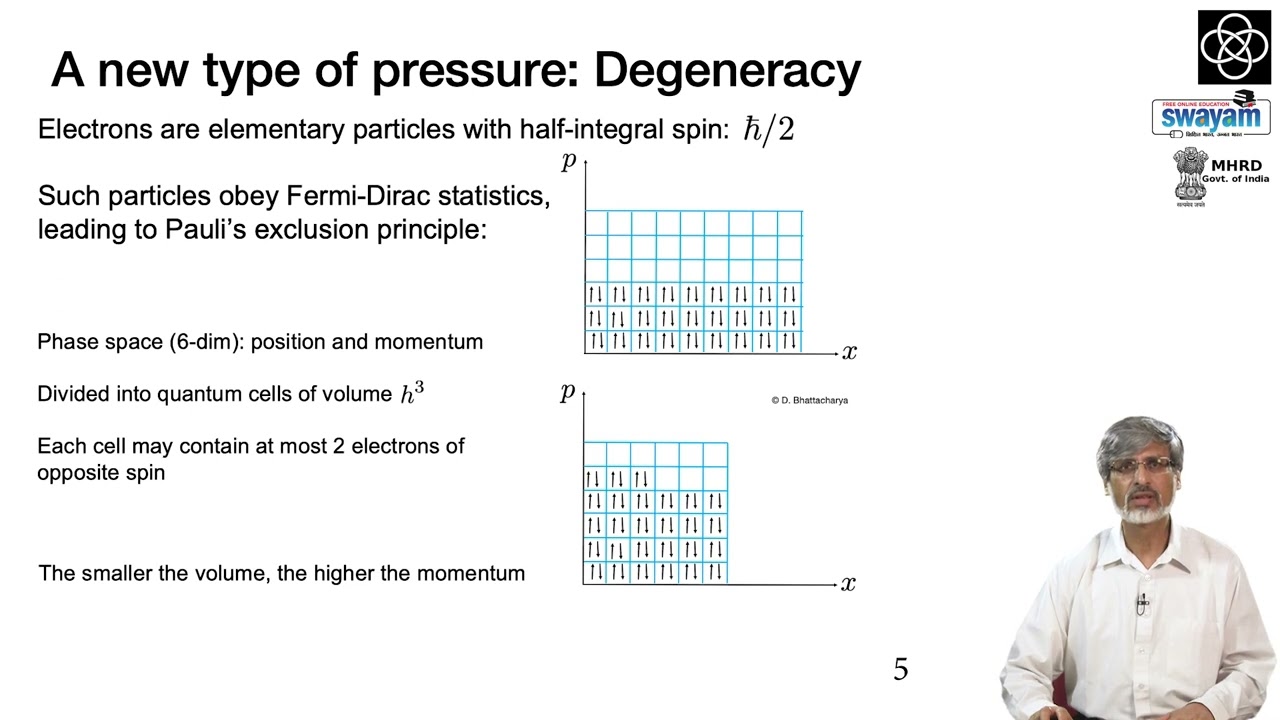
it's going to go up faster and faster but we're not going to live in an iron Universe anytime soon so you can keep brething and I just have to throw that in for general education purposes this is the astronomer parodic table if you ever run out of conversations at the dinner table please the universe is made exactly of three things x y and and z z hydrogen is X helium is y and then all the other elements are combined and they're called Z about 2% as I said today because you know the universe is a complicated place who cares about all these elements they're much more complicated than hydrogen at Helium so let's break it up accordingly right X Y and Z you're going to win the trivia with that every single time but don't we like the details and the little problems oh just in for jargon I have to educate you also on this so the stats with the least amounts of heavy elements these older stars we term them metal poor stars because actually I forgot to say all these other elements are also called Metals for simplification purposes any Chemists in the room sorry dude nothing I can do neon is totally a metal otan would not have approved either but again I didn't come up with this so Metals this are all metals and we call these old Stu metal Poe because they have a low abundance of these heavy elements okay so we just got to live with it but really we want the details right so here this one looks better at least for some of us astronomers um and uh in chemistry of course you you know that the rows uh The Columns are important right because they have the same chemical properties give or take but uh for astronomers and and nuclear physicist the rows are important and so you know you see in color color coded here the different process he said get you elements you know some jump these are the alpha elements um then these iron Peak elements um transition elements and then in blue here these are the neutron capture elements and I want to talk a little bit more about that because that's where the fun begins and so oh I should say everything that's not blue is fusion and then the other stuff is Neutron capture so let's talk a little bit about that'ss are already set where Fusion it goes up to iron how does this work this is what happens through SE sequences of burning stages in the inner parts of massive stars eventually they have an iron core at the at the very center but if you put try to put two iron atoms together you can't get any energy out of it anymore it's the end right we sit here in the in the bottom and so this is when the star goes Supernova because it can no longer produce energy right right but then we do have all these blue elements so where do they come from they are not directly made in Stars so we need to work our way there to understand that a little bit better so let's say you do have a situation where there's lots of iron nuclei let's bombard that one with neutrons just like what they did back then here we just use iron as a seed nucleus and so there are two ways you can bombard uh nuclear with neutrons in a slow fashion and in a rapid fashion I'm not going to talk much about the slow fashion um this is Illustrated here but you have neutrons so this is a piece of the charts of the nuclei um number of neutrons number of protons you add a neutron it converts then into a proton sorry you yeah you add that sorry long day um uh you add your neutrons blop blop plop one after another but you always wait until the the the radioactive isotope that that that occurs after the bombardment has decayed back into a stable of configuration and then you add another one and another one and so it zigzags up there that's good I like it but the rapid Neutron capture site is much more fun because it kind of goes more like this you bombard whatever you can onto this seed nucleus and within two seconds you have all the elements made this is a timeline of 10,000 years who has time for that okay okay so this is my cartoon version Let Me Now show you in a moment um an actual simulation of this R process that creates these heavy elements but before I do so I wanted to just come back to the play this is what uh the Berlin folks discovered so they had here is the uranium nucleus they're bombarded with one Neutron it fishion and but they didn't know what it was and they they observed the barium and then liisa not added this piece here to it right that you do need to get a second nucleus out and energy and so that's exactly the same what we're going to look at now so again this is the charts of the nuclei um the squared little boxes that you can see here is the valley of beta stability so these are all the stable isotopes that we know of um I'm going to run this now it's going to start here with protons as seed nuclei but same difference as iron you just have a seed and you bombard it with neutrons and you see what happens and you will see that it shoots up here all the way into the trans uranium region and then decays and I want you to look at um here at this uh one of these two is barium let's say 56 yeah so here you will see a pile up so it shoots and look at the time here within the millisecond regime and so with not even a second we have all these crazy Neutron Rich Isotopes made then the neutron flux stops and everything decays you know diagonally back up the the neutrons get converted to protons and then it takes some time but we're we're still you know at a minute or something now and then it will become stable right this is how you create heavy elements within literally a couple seconds and uh yeah there are big pileups here um around barium actually so if you take these Isotopes and per element you know sum them all up and look at the abundance distributed uh uh produced in this process you you will get to see this pattern here so this is abundance as a function of atomic number and here um this is the barium Peak so elements around barium pile up because efficient cycling processes going on in this thing right uranium nuclei or precursor nuclei of course created they keep being bombarded with neutrons within the r process and then they fishing and so you have this pile up here at these characteristic Peaks first Peak second Peak third Peak um that that are a direct signature of that now why am i showing you this plot here well first uh I should say we see the signature in some of the old Stars what does this mean it means they must have formed from a birth gas cloud where one of the r processes have you know occurred it occurred it dumped all the elements into the gas then our little star fall 13 billion years later we observe it right I think she would have liked that I think she would have liked to see that so here's the spectrum of one of those Stars those AR proccess Stars it's the Red Spectrum the black one is like a normal old star for comparison here's europium very heavy element bombastic line here's iron black and red overlap um oh and uh no EUR no europium in in this normal star but bombastic line here various other elements linum samarium serium dysprosium itum herum serium samarium I'll ask you the elements later uh we take data like this with the melan telescope that I'm showing you there beautiful site in Chile where we take high resolution Optical Spectra such as these here um and to to explore the the elemental abundance signatures of of stars and some of them small amount 5% of them do show this our process signature and here are the now is a similar plot the here's the pattern again in blue and the red dots are not a connection or you know match to the to the pattern there but it's it's actual abundance measurements in a star that show we do see that abundance pattern in some of these Styles it's pretty amazing and they all look at identical so between barium and technically uranium this is a universal pattern that we see in many many stars by now so this this process just knows what to do there's not much wiggle room and uh Lisa that one is for you um because she liked uranium this is a uranium measurement um if uranium hadn't decayed the Spectrum would like the blue line but because it has decayed from here to there uh sorry if there was no uranium present it would be the blue line but um there is a little bit here if it had not decayed it would look like this but it had decayed up to there sorry about the mixup here is a a blow up so we can measure pretty much all of the neutron capture elements in in these Stars including thorium and uranium and some even lad and of course lead is the product the Decay product of thorium and uranium they have very long half life so they they are long long lived elements uranium has 4.7 billion years for halflife and thorium has 14 so for us that's basically stable but technically they they're radioactive all right so where does the r process occur that's an age old question by now um but there has been some progress um but of course as as you probably know with every door that you open well one closes but there will be more doors right right after so we we still have many doors to open but I'd like to very briefly talk about neutron star mergers um already before the ligo confirmation of that that this is a thing that that is observable from a gravitational wave perspective we actually saw a pretty strong evidence in a small dwarf Galaxy for the occurrence of a neutron summerer but uh what what are neutron stars for those of you who are new to this in the room um neon does extremely dense compact leftover bits and pieces from Supernova explosions remember you have an iron core at the end of a master star's life during the Supernova explosion that that iron core is converted and pressed into a neutron star so you squeeze all the electrons out and the protons convert to neutrons you just have a giant atomic nucleus made from neutrons uh the diameter is 10 km but it can have a solar mass um if you happen to have two neutron stars orbiting each other so you had two massive stars orbit each other one goes pop the other one goes pop you have two neutron stars that still magically orbit each other which is actually pretty fantastic on in its own right you can end up in a situation like this eventually they will lose energy so they will you know Inspire and merge send out gravitational waves that we can now detect and then uh during the merger you have this explosive event um and guess what there'll be neutrons Galore in this process and that's exactly what we need for for a heft our process right so they have been hypothesized to be our processed sites for for a long time but there wasn't any observational evidence so ligo has certainly helped to to cement that um and so I wanted to just show this to you again with one addition because I hope you all familiar with the associated kilo Nova event that was observed by the astronomers following the the merger of the two neutron stars in 2017 you know so then after glow um in in the visible and other wavelength ranges and I want to show this to you again because that Afterglow that kilonova is nucleus synthis in action you could almost literally see it with your eyes because the kilonova is nothing else but the de the radioactive decay once that Cloud moves diagonally right the neutron flux stops and now it decays it sends out photons so I'm going to show this again and now you can witness that kilonova that occurred in that neutron star merger so this is still doing the bombardment and now and this runs now on the time scale of several weeks which was the time scale observed for that thingle fade that radioactive decay light is the kilonova and I think this is really neat right because we can actually never really see the fusion inside of stars we know that it's there because we calculated it and we made we compared it with predicted observables for the surface of the stars but we have never really seen it here you can see it yeah you can almost take a picture of it I mean you map it out and you you You observe a light curve individual measurements of of that brightness of that K brightness all right so and as I said um before Lio even one year beforehand we had observed stars in this dwarf Galaxy that uh it is here trust me if you don't see anything that's fine there's much to see this is the smallest faintest wimpiest galaxies that we know it only has a few thousand stars we do know that it's a Galaxy so you got to trust me on that too and it's one of the satellite G galaxies of the Micky way so it's just a tiny thing that's orbiting the Micky way waiting to be eaten because that's what big galaxies do they eat little ones um we observed uh Nine Stars and seven had that R process pattern here it's purple now you see we made a bunch of measurements they follow that pattern the gold one is the S process you can clearly see it's not an S process thing the pattern of the r process matches even in the case of here where we only have two elements definitely are process so now you have a small Galaxy really tiny you have a massive R process event it has the same energy as a supernova explosion 10 to the 52 IRS that's that's quite a a thing and you need like enrichment that kind of works and explains what we have observed there so to cut a long story short this is the punch line here these El these abundances in retic are the big fat red dots here they're really high that's all you need to take away much higher than these ones and these are upper limits not even measurements of barium and here europium of stars in other little dwarf galaxies that are also orbiting the Mickey way so just you know from a comparative perspective most well n minus one dwarf galaxies show very very low levels of heavy Neutron capture elements except for the stars in reticulum two two orders of three orders of magnitude higher right so you need a really prolific R process source and as we've calculated and and of course others before us neutron star mergers give you a very prolific result whereas super noi are not really having enough umph to to get through all the heavy elements now you could say now if you're clever at saying Anna Supernova everywhere lots of them why don't you just we just take a thousand Supernova to bump up up the yield right but here's the cool thing what would have happened to that little dwarf Galaxy if you dump a thousand Supernova into the system it would have blown apart but this thing is around it's it's going around the Mickey way so that constrained us to say okay there were a few supern noi a little little bit of that stuff needs to be produced that's fine we want that actually a little because it explains normal environments but once in a while you're lucky and there's a neutron sub merger they are rare and when it happens you get you go all the way and that's when you get them so good evidence that Neutron sub mergers are a major source and site of the r process there's additional data that I can't show you today but they suggest that definitely there is room for another site perhaps some Magneto rotationally driven super noi or jet super noi or some other quirky things where you have more knobs to turn as a theorist to kind of give it enough energy and juice to really go all the way to uranium and not Peter out around the first Peak which has been shown to be the case for normal core collap supern noi so there's room there that's why I said we have more doors to open but at least we have two pieces of evidence now reticulum to this dwarf Galaxy as well as the ligo event that Neutron St mergers do play a very important role in the production of heavy elements in the cosmos and so with that I want to say heavy elements are produced all across the universe ever since the earliest times and by studying the oldest Stars we keep finding evidence of it until we know the exact astrophysical site how Cosmic environment shapes element production and what all the nuclear physics details are so we can all thank Lisa mner that we know today that our jewelry uh has been made billions of years ago throughout Cosmic history and that we are wearing the products of neutron star mergers and super noi and other fun things going on there so remember that if nothing else and uh again thank you to um stem on stage for uh the collaboration to come to bring this uh this play to um to life living history theater it was inspired by this film that uh exists about Marie kir with um this actress here Susan Marie franek and um yeah we hope to push that a little bit further and eventually also turn it into a digital theater presentation so you have seen a work in progress and hopefully it will get better with time and uh if you in general in general curious about elements now and the origins of the elements in the cosmos um a long time ago I had apparently Too Much Time on My Hands So wrote a book aptly called searching for the older Styles because that's what I do um if reading isn't for you and I totally get it you can watch my YouTube series that's the short version of the book um and U I'm happy to take your questions as well thank you think just a few a few questions we have time for how often does a neutron star merger occur in the galaxy I don't know the exact number but it's it's not not a lot because it takes quite a while for these things to inspire the shortest times that the theorist can sort of cook up is something like 30 million years it's much more likely that it takes a billion years or something or longer so given that and then again you need to have a situ situation where you have two massive stars orbiting each other so first you need to form those in the right kind of way you get two massive stars and then they need to turn into neutron stars and not fling one out of the system so there's a lot of chance encounters kind of that that that need to happen so I I don't know the exact rate but it's yeah it's not a lot and is a nutron capture a local event thing around collapse or um it's reasonably local yeah it it depends a little bit so for example if you take a small dor galaxy in the early Universe you have an I process event there that means a huge energy injection into into this local region right and in if that is mostly what the Galaxy is is all about then it would actually puff up and then it needs to cool down so that would have an effect on the entire dwarf Galaxy because it get gets mixed and and kneaded like dough essentially whereas in the mikeyway if you have a larger region there would be less of the sort of energetic Dynamics occurring well yes um do I know anything about the creation of dark matter and what it consists of um unfortunately I don't I don't think anyone knows if I had the answer I would probably win the Nobel Prize so thank you for bestowing that on me um we know quite well that that it exists because it can be mapped the Stars feel it the stars are basically blind but they feel matter around them and they can't distinguish between luminous matter and dark matter so they only feel matter and so they're swimming in this mattera sea and we see how they move and so from that we can deduce because we can see the Luminous matter we can measure okay how are they moving and then what is this left over bit that that then we attribute to Dark Matter so we'll have to wait and see maybe in your lifetime we have an answer but maybe also not it's a really difficult problem question what's your favorite kind of star or structure within the universe what is my favorite star or structure in the universe well I really like the tiny dwarf Galaxy they're cute and there's only so much you can do to them right so they they really constrain our interpretation because you can't destroy them um and of course I have several of my uh old stars that I really like h30 27- 2326 or at 1523 minus 0 901 uh so I've grown to to like a whole bunch of them are those pet names no they are their actual names I didn't give it to them their based short version of an old coordinate system used for for them um you talk about like M and Mari uh Maria goer Meer is she's the nuclear Atomic nucleus scientist the shell model Maria goer Meer since heavy element probably you can consider a future play about her yes I I'm happily willing to take names if you can also fund this that would be great because I do this in my non-existing spare time you must know any other questions Dr we got here I just had so I think to some degree it's a little bit unclear because the the the devils in the the detail and supern noi on its own on their own are actually hardly understood there's a lot of lot of things that we think we know about it but nobody can simulate a 3D explosion for example and and it it gets even more complicated with Neutron submer just because you actually have different components of it that spew out you know ultimately heavy elements it gets it gets quite complicated but um it I think there you know just common sense tells you that obviously you know energy plays a role in the sense of that you need have a strong enough Neutron well you need to have enough neutrons so you can have a strong enough Neutron flux that that lasts in that strength for long enough it may only be two seconds but if you run out of neutrons you are not going to make it all the way to the trans Uranian elements that then Decay so maybe the proton neutron stars that are developing in um in the Supernova just can not provide that because again if you contrast with the neutron St merger they're shearing the neutrons out out of each other when they when they kind of inspiral and deform and scrape you know at each other you're ripping out neutrons more and more and more that that sort of violent process doesn't occur in in the in the making of a proton neutron star right so you have lots of neutrons around but so that's that's sort of the best guess um but the the details of you know how to get there is a TVD so I think Dr fre is going to be available for a little bit in the The Atrium if especially if any of you future uh scientists want to chance to meet and talk with her and but in the meantime let's thank her again for an Excell
Up Next

11:38
How a Quadrupole Mass Filter Works: Chemistry Tutorial
@dkreller01
122.5K views•2013-02-22

12:53
21cm Hyperfine Transition in Neutral Hydrogen: Radio Astronomy Basics
@AaronRobertParsons
12.4K views•2011-10-13

32:32
NMR Spin Physics I: Zeeman Effect, Resonance Condition & Larmor Frequency
@nptel-indianinstituteofsci8064
2.3K views•2024-01-17

27:14
Entropy and the Second Law of Thermodynamics Explained
@veritasium
27.5M views•2023-07-01
Related Study Plans & Knowledge Roadmaps
Structured learning paths in Physics
physics
Nuclear Physics (Decay, Fission & Reactors)
01Atomic Structure and the Binding Force
02Radioactive Decay and Half-Life
03Nuclear Fission Mechanics and Chain Reactions
+ 2 more learning modules
12h5 modules
Explore Roadmap
physics
Soft Matter (Polymers, Colloids & Rheology)
01Foundations of Soft Matter & Thermal Forces
02Polymer Physics and Macromolecules
03Colloids, Surfactants, and Self-Assembly
+ 2 more learning modules
38h5 modules
Explore Roadmap
physics
Analytical Mechanics: Lagrangian & Hamiltonian
01Mathematical Foundations: Calculus of Variations
02From Newtonian Mechanics to Constraint Dynamics
03The Principle of Least Action & Lagrangian Mechanics
+ 3 more learning modules
28h6 modules
Explore Roadmap
physics
General Relativity (Spacetime & Cosmology)
01Foundations of Relativity: Special Relativity
02The Geometry of Spacetime: Equivalence Principle & Curvature
03Einstein's Field Equations: The Mathematics of Gravity
+ 2 more learning modules
55h5 modules
Explore Roadmap