





















The Standard Model of particle physics, which describes all known fundamental particles and forces except gravity, has been remarkably successful but leaves profound mysteries unresolved, including dark matter (27% of the universe), dark energy (68%), and the matter-antimatter asymmetry; recent anomalies in B-meson decay measurements at CERN's Large Hadron Collider may hint at new physics beyond the Standard Model, potentially involving an additional force or structure that could explain the three generations of matter particles.
Beyond the Higgs: What's Next for the LHC? - with Harry Cliff
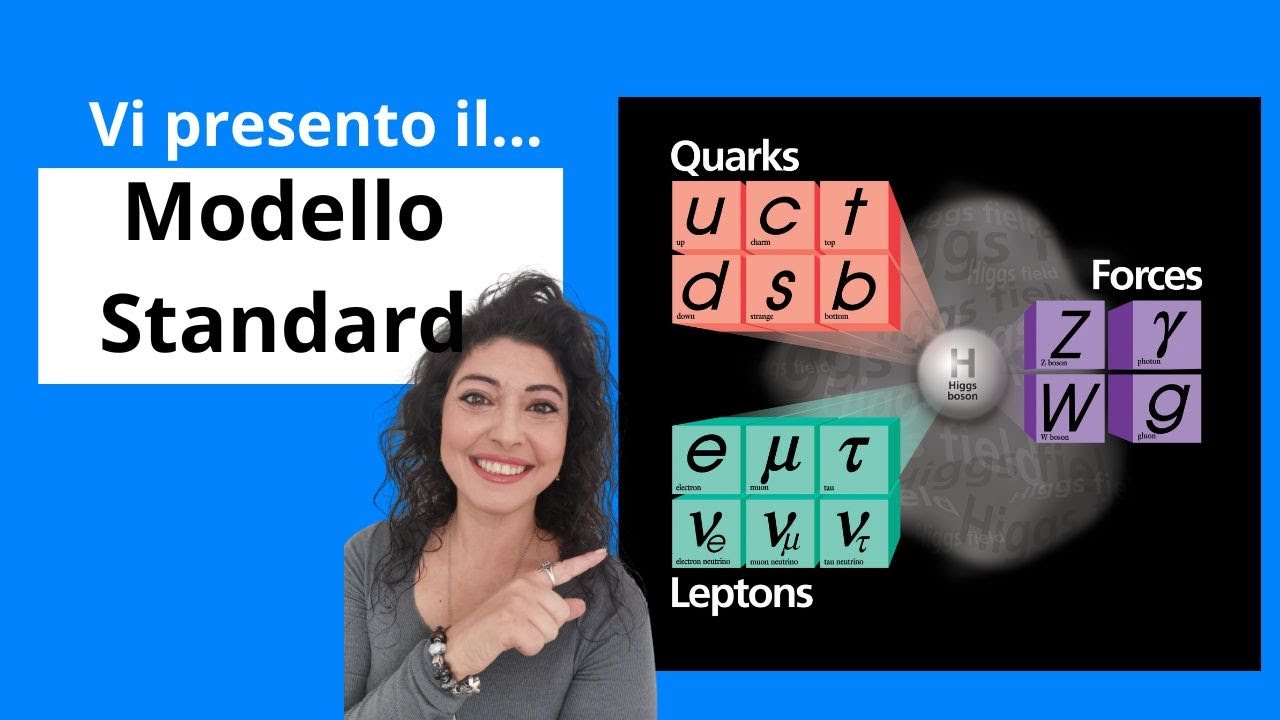
Added:The Standard Model of particle physics, including the classification of elementary particles (quarks, leptons, and gauge bosons).
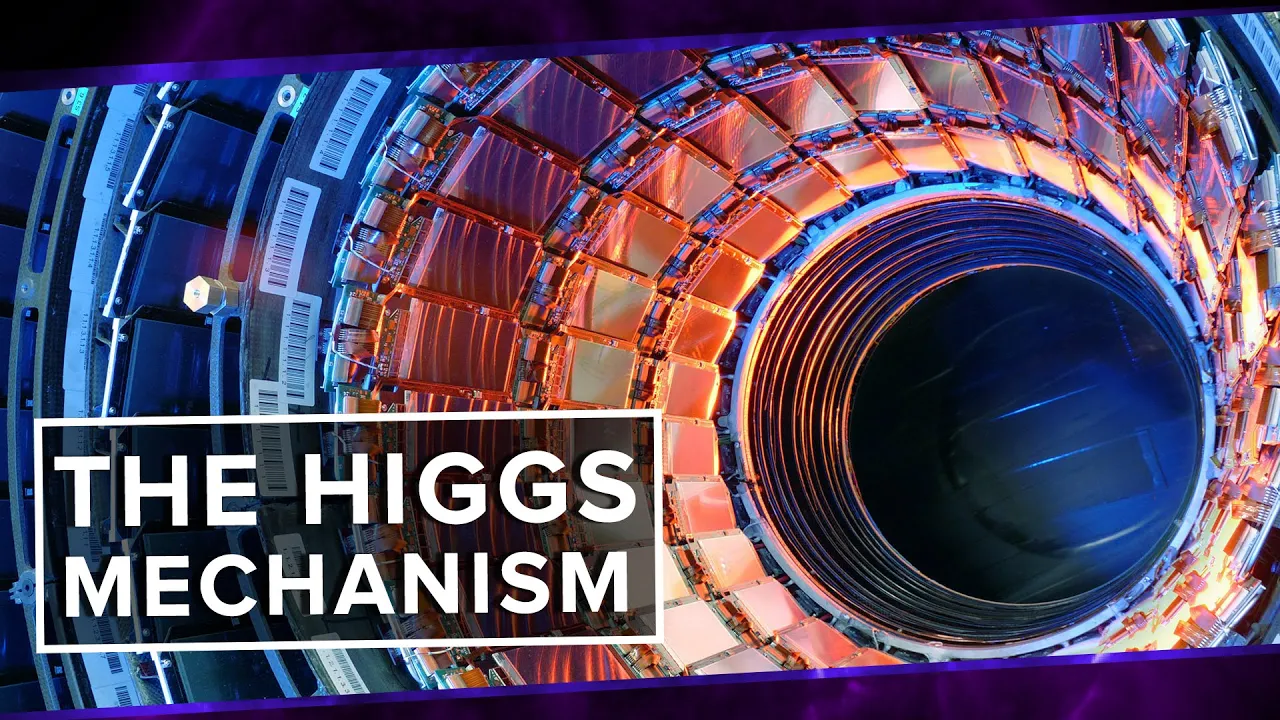
The role and significance of the Higgs Boson and the Higgs field in mechanism of mass generation.
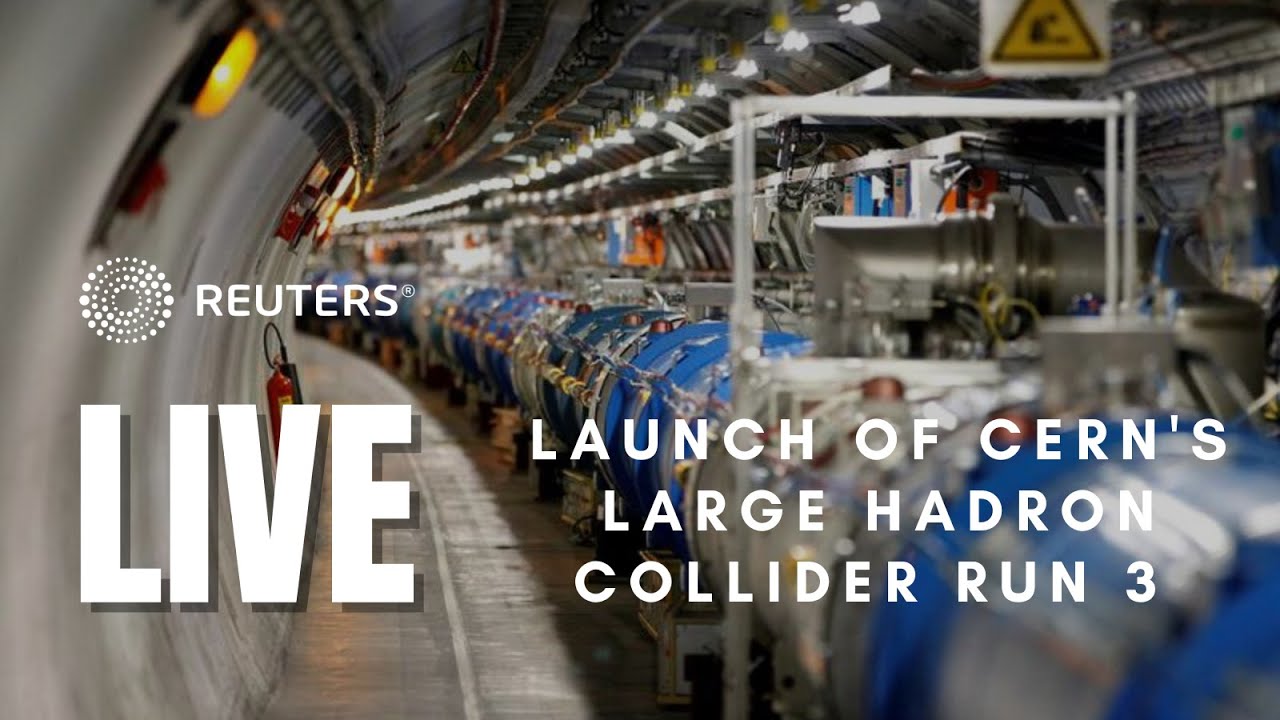
The basic operation and purpose of the Large Hadron Collider (LHC) and its major detectors like ATLAS and CMS.
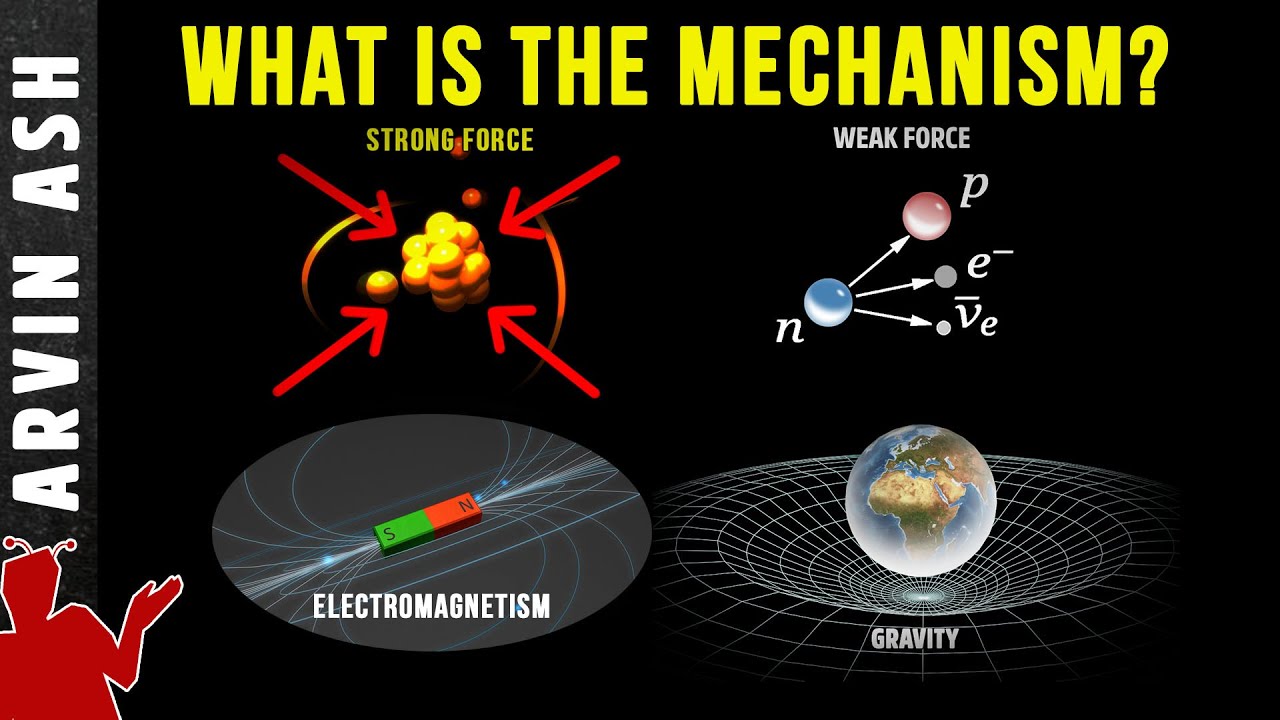
Fundamental forces of nature (gravity, electromagnetism, weak nuclear force, and strong nuclear force) and how they are mediated.
Theories of Beyond the Standard Model (BSM) physics, such as Supersymmetry (SUSY) and Extra Dimensions.
The cosmological search for Dark Matter and Dark Energy, and how they relate to unresolved anomalies in particle physics.
Planned future particle accelerators, such as the High-Luminosity LHC (HL-LHC) and the proposed Future Circular Collider (FCC).
Recent anomalies in flavor physics and B-meson decays that suggest potential new physics and lepton universality violations.
3.2M views31.8Klikes59:44Original Release: 2018-01-17
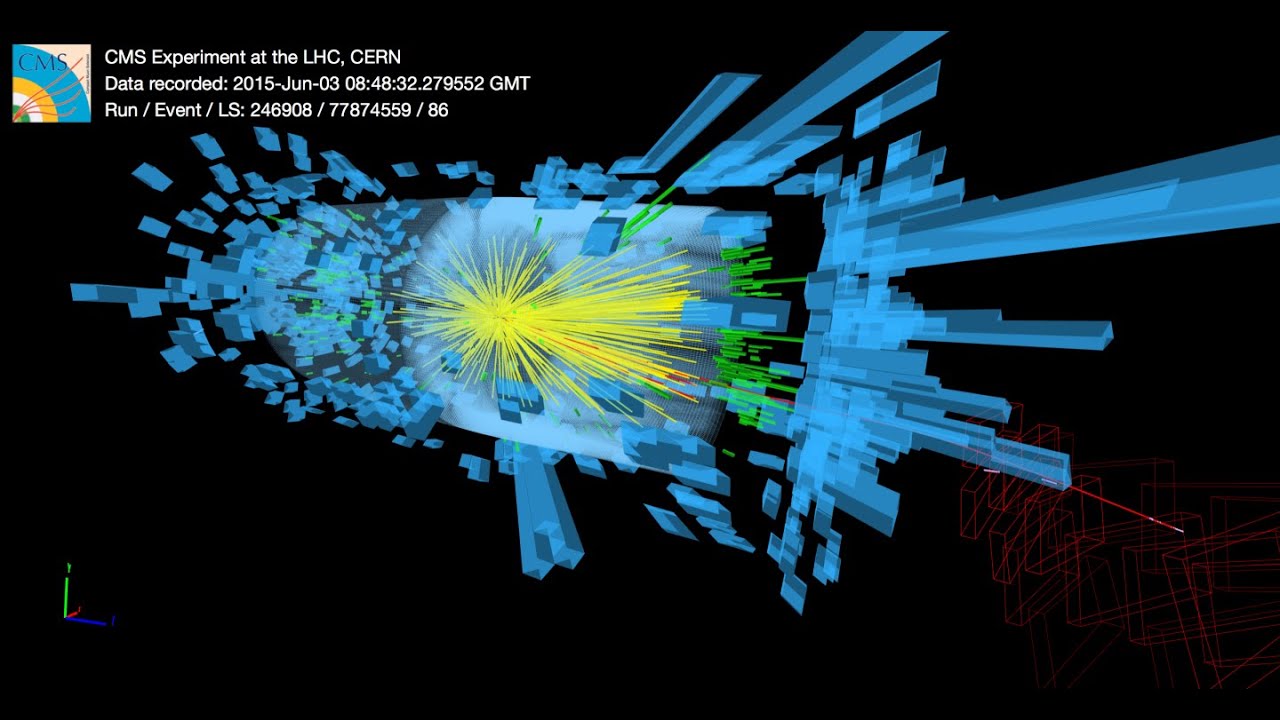
[Music] well thanks Martin very generous introduction that's very kind of you um so it was actually five and a half years ago almost now that CERN announced the world they discovered a new what they cautiously described at the time as a new boson which we've now sort of fairly confidently concluded is at least a Higgs boson and around that time suddenly particle physics was all over the news Brian Cox was wheeled into every television studio to explain to slightly bemused looking TV anchors what spontaneous symmetry breaking was and then and then everyone sort of moved on with their lives and forgot about us and you might be forgiven for thinking that actually we put our feet up at CERN and just had a holiday for the last five years cuz it hasn't really been another big breakthrough at least not one that's got in the news so what I want to talk to you about today is what we actually have been up to and particularly there's something quite is right it's true there hasn't been a really big breakthrough yet but just in the last year or two there have been some really intriguing signs that we might be and being very cautious about this we might be about to discover something really quite profound so this is CERN which is the European Organization for Nuclear Research just outside Geneva it's a sort of the size of a lot of small town population of CERN at any one time is about two and a half thousand people there about seven thousand physicists from around the world who are involved in research there and it's got everything that a small town should have it's got a restaurant it's got a post office travel agents it's um got hotels it's a kind of town populated exclusively though by particle physicists you can kind of imagine what that must be like this was the scene in the main auditorium at CERN on the 4th of July 2012 now this is as excited as you will ever see particle physicists getting they were sort of clapping cheering you know people punching the air one of the people in the crowd described it as being like had a football match I'm not sure he'd ever been to a football match but I mean it was certainly very lively by physics standards and this is what they were all cheering as a bump so physicists get very excited about bumps this is if you want to know what Higgs boson looks like this is basically what Higgs boson looks like it looks like a bump in a graph so I'll explain actually what this shows a bit later in the lecture but really the thing you're looking for here is there's this smoothie falling line and then there's this little tiny XS here and that was the smoking gun telling us that there was a new particle that had been found which over the last few years has been almost certainly confirmed to be the Higgs boson that Peter Higgs predicted back in 1964 so what is a Higgs boson you might ask and that's very reasonable question so I'm going to very briefly take you on a quick tour of particle physics to try and understand what this thing actually is so let's start with maybe something slightly more familiar this is the periodic table of the chemical elements which dates back to the 19th century so at the end of the 19th century are sort of well the understood theory of what the universe is made from is there are you know more than a hundred different chemical elements and thanks to Dalton's atomic theory what that's what he said was that for every element hydrogen helium lithium and so on there was a atom which was a fundamental indivisible indestructible little thing that and you had different atoms one for every element so that was a sort of Victorian view of the nature of matter now so here's your atom then it the turn of the 20th century so 1897 actually the Canada story where I work I knew a particle was discovered the first elementary particle that we we found called the electron and that led over the next few years to a revision of the structure of the atoms the atoms as I said before was thought to be something hard indestructible indivisible when the electron was discovered that was revised and we get the model of the atom that we all learn about in school which is a nucleus which contains most of the mass of the atom and that's positively charged and around the atom go these electrons now the periodic table if you look at it in the way that the elements were arranged there are there's a certain there are certain patterns in the properties of the different chemical elements so for example if you look at the group one elements they all tend to have react in similar ways and they get more reactive as you go down but there are clear patterns in the way the elements are arranged and that was sort of indicative of some deeper structure and this is the deeper structure so essentially you can explain the properties of all these different elements by different numbers of electrons going around the outside of atoms and electrons are what determine the chemical properties of that particular element now this isn't the end of the story so if you zoom into the nucleus it was discovered in sort of the nineteen 1930s that the nucleus itself is made of smaller things and these are called protons and neutrons so these are smaller part smaller particles which make up most of the mass of the atom the proton is positively charged the neutron is electrically neutral they're much much heavier than electrons are about two thousand times more massive than electrons now this may be where you're sort of school physics ended possibly but in the 1960s if you discover that actually protons and neutrons themselves are not fundamental they're made of even smaller things and those smaller things what we call quarks quarks depending on your taste so the proton is made of two up quarks which are these red triangles and one down quark and the neutron is made of two down quarks and one up quark and that's it so that basically says that all of matter every atom in the universe everything that we know about is made up actually of just three different elementary particles so you have the electron first of all discovered by JJ Thompson in Cambridge in 1897 you've got and the two quarks the up quark and the down quark so everything that exists is made of just these three things so you are just quarks and electrons arranged in a rather peculiar way essentially and these are the first three particles of what we call the standard model now the standard model of particle physics is a rather boring name for something quite extraordinary it's really the closest we have to a complete description of the universe at the fundamental level the only thing well it misses quite a few things actually but the main thing that you might be familiar with that it doesn't include is gravity but other than that it's got it pretty well pinned down so you've got these three particles that make up all the matter that we are made of then there's something else that gets added to this table called a neutrino neutrinos are sort of like ghosts they're they're these invisible and almost almost undetectable particles there are trillions of them going through you right now they're produced by the Sun in vast quantities that go straight through you straight through the earth and they very very rarely interact with the ordinary matter that we're made out of so that's why we're not really that aware of the existence of neutrinos most of the time so this column of four particles makes up what we call the first generation of matter now for some reason which we do not understand nature provided us with two additional copies of these particles there's something called the second generation and in the second generation all the particles are exactly the same as in the first generation except they're more massive and they're unstable so for example the electron has a sort of heavy cousin called the muon which is about 200 times more massive than the electron and the reason we don't we're not made of muons and there aren't muons hanging around is because if you make a muon it will very quickly decay into an electron and some neutrinos so these second generation particles don't hang around very long they're unstable but you can make them in high-energy collisions like at the LHC for example and then for start another and then there's a third generation which is even heavier so this is these are what these are what is this four by three twelve particles are the matter particles so they make up the kind of solid stuff of the universe essentially or at least they would if they weren't all unstable apart from this first column and we do not know it is a big mystery we do not know why there are two extra columns in this table it's a bit like the periodic table in a way where you have this sort of structure and you can see these patterns but you don't actually understand yet back in the nineteenth century what underlies this but there's something suggestive here something that sort of hints that maybe there's some deeper structure that could explain why we've got this rather peculiar set of matter particles and I'll come back to that in a little bit and then the last ingredient the standard model are the force particles so there are three fundamental forces in the standard model probably the most familiar to you and one that a lot of important work was done in this building on is electromagnetism so by Faraday and Maxwell and various others so that's the force that causes electrons to stick to the nuclei of atoms it binds atoms together it's responsible for chemistry is responsible for basically most of the stuff that is important to us and the particle that transmits the electromagnetic interaction is the photon the particle of light so light itself is also an electromagnetic phenomenon then there are two other or three other particles which you may not have heard of there's something called the gluon which is the force particle of something called a strong nuclear force which is a force that binds quarks together inside the atomic nucleus and binds protons and neutrons together it's called a glue one because it glues things essentially and then there's two rather weird ones called the w and z particles and these are particles that transmit a third force and even weirder one called the weak nuclear force now the weak nuclear force doesn't really bind things together like electromagnetism or the strong force this force is responsible for causing particles to decay so when a muon turns into an electron that happens through the weak force and I'll talk a bit more about the weak force it's very important the weak force although we don't really notice it in our daily lives if it wasn't there the Sun wouldn't be able to fuse hydrogen into helium and there would be no matter in the universe so it's very important even though it's not something we're very familiar with so this is the standard model and this was the standard model as had been sort of studied and observed on the 3rd of July 2012 and on the 3rd of July 2012 there was one piece missing which was this the Higgs so what is this Higgs boson thing and why is it so important well to understand that we actually need to ask a slightly deeper question which is what do I actually mean by a particle so you could be forgiven I sort of did the way I've described this to you in the last few minutes you could get the idea that maybe these particles are somehow like little Lego bricks or they're a bit like the Victorian atoms they're sort of solid little points that move around and stick together but actually that's not what modern particle physics tells us particles are in fact particles aren't really what matters at all it's with our field is kind of badly named in sense what actually we think of as being fundamental or not particles but fields so a field we've all probably if you've ever held a magnet next to a piece of steel or iron you've felt the effect of a field so a field is something that and cause for example a force to be exerted over a distance where there's no physical stuff actually causing that force to be exerted so you have something I feel can be certain for uncle a magnetic field and that can you know be strongly a magnet and get weaker as you move further away or it could be a gravitational field like the one that the earth creates around it or the Sun creates around there so we believe that actually for every in particle physics every one of these particles has an Associated field so there is a field for the quarks for the electrons for the neutrinos and for all the force particles and the way we think of these particles are actually as little tiny ripples moving through these fields so this is a rather nice cartoon but my colleagues at Cambridge David Tong is a theoretical physicist so here you've got your fields this kind of blue sheet and then here you've got some particles having a punch-up so they're kind of these little localized disturbances in these fields and that's how we think of all matter so electrons quarks everything are just little ripples moving through these cosmic energy fields that fill all of space are everywhere which is quite a sort of strange idea but that's really how we think things are so coming back to the Higgs what is the Higgs well the problem existed in the 1960s when the standard model was being put together it was discovered that if you tried to make the particles in the standard model massive then the theory broke down it gives you nonsensical answers so in particular there was a particular problem with these W and Z particles these particles that transmit the weak nuclear force it was known that if they existed they had to be extremely massive but if you gave them mass in the theory the theory gave you nonsensical answers so there had to be some solution to this and the solution was essentially to invent another field so just like the other fields that these particles are ripples moving about in well Peter Higgs essentially said and actually five other colleagues he was working with around about the same time was imagine that there is throughout the entire universe an additional cosmic quantum field and as these massive particles these things that we think are massive moved through it actually they are imbued with mass by this field so for example the electron which has a certain mass what the Higgs mechanism tells a is actually the electron is mass less but by interacting with this cosmic energy field it acquires the property of mass so Higgs wrote his a paper in early 1964 and he had this idea which was written down with very elegant mathematics which looks a bit like this and don't worry I won't try to explain what this means and he sent it off to the journal and he was rejected was rejected they basically said this has nothing whatsoever to do with physics so Peter Higgs he has nice maths but you know nothing to do with reality so Peter Higgs went back to his paper and he said well I need to connect this with something that could be experimentally measured and what he added to his paper was actually basically one line that said if this cosmic energy field that gives mass to all the particles exists then you should be able to create a ripple or a disturbance in it which would show up as a new particle and that thing that ripple in the Higgs field is what we call the Higgs the Higgs boson so the thing that gives mass to all of all to the particles we made of at least is this field and the Higgs really is the proof that this field is out there and that's why finding it was so important because the Higgs mechanism this Higgs process by which the particles get mass is absolutely fundamental to the standard model it's kind of like the keystone in an arch if you take it away the whole theory just falls in on itself so it was absolute people were almost kind of convinced actually is that this thing must be out there and that's why finding it was so so crucial and what everyone got so excited back on that day on the 4th of July so with the discovery of the Higgs this completes this standard model of particle physics that I've been telling about and this theory is really a kind of incredible achievement actually because we can it can be used to pretty much explain all the physics that we can see around us so you can use this animal in principle to describe everything from you know why how a light bulb produces photons to how atoms are fused together inside stars it's the closest we have as I said to a theory of everything and to give you a sense of the power the predictive power of this theory and this is actually as I'm gonna tell you about now is the best scientific prediction anywhere in in science as far as I'm aware so here's the electron now the electron as well as having electric charge also behaves a bit like it's a tiny bar magnet so it has a north and south pole and it gives off a magnetic field and you can use the standard model to calculate how strong the electrons little bar magnet should be and you can do this to absolute fantastic precision so essentially what you do is you use a supercomputer you put the theory into the computer and you calculate and you get a number that looks like this one one five nine six five two one eight zero seven point three plus one is two point eight times ten to the minus thirteen there's a very small number but very precisely calculated with a very small uncertainty this is your theoretical prediction now if you do a very very clever experiment you can measure this quantity is very very tiny quantity two very high accuracy and this is what you get one one five nine six five two one eight one seven point eight plus or minus seven point six so you can see these numbers agree right down to the last sort of three significant figures and the difference between this number and this number is within the experimental uncertainty on this measurement so this is a prediction and a measurement accurate to one part in a billion that is really kind of extraordinary so that that tells you that this standard model is definitely on to something I mean you don't get this kind of result by accident so it's a really stunningly successful theory but it is not without some problems and these problems are actually what motivated in part the building of the Large Hadron Collider in the first place as well as the discovery of the Higgs which was really kind of closing the chapter of 20th century physics what everyone was actually really after well a lot of people were after were answers to some big unsolved questions that the standard model cannot address now I'll go back to this this picture so this is actually an image taken by the Hubble Space Telescope it's called the Hubble Ultra Deep Field and what essentially it is is where the telescope is pointed at a very dark patch of sky where there are almost no stars and it you wait for a very long time and let for extra wait for extremely faint light to build up on the sensor of the telescope and eventually this is the image that you get so what you can see in this image there are actually a few stars there the things with the kind of cross twinky patterns but everything else pretty much is a galaxy these are extremely distant galaxies right sort of almost out to the edge of as far as we can see with with telescopes um so for example in the center of image you can see there's a kind of cluster of galaxies these kind of blobs now hopefully you should be able to also see that on this image there is this smearing pattern so there's kind of these circular structures arranged around this central cluster of galaxies now what this smearing is is something called gravitational lensing so this is essentially where light from distant galaxies travels towards the earth now thanks to Einstein we know that gravity doesn't just make matter move in orbits or curves it also curved space-time and it will cause light to travel in curved paths so what's actually happening is imagine you have your if you if i if mike if i'm a galaxy is here and the earth's over there and there's something heavy in between me well neither galaxy and the earth over there as the light leaves the galaxy and travels past this heavy object is bent by its gravity and pulled back towards the earth again and what you end up getting it basically acts like a lens and you end up getting this kind of smeared multiple image of the same galaxy across the whole sky and this lensing effect can actually therefore be used to work out how much matter there is in the center of this image because the more gravity the more mass there is here the more the more strongly lens the light will be and the more pronounced this effect will be so what you can do is if you use this lensing you can work out how much mass effectively there is in the center of this image and then you can compare that with the visible light that you can see so we can see there are lots of galaxies here there's obviously a very large amount of mass and what you actually find though is that there's a very large discrepancy between the amount of stuff you can see with your optical telescopes and the amount of stuff we know needs to be there to explain this lensing effect and if you map overlay a map of where the matter appears to be in this image from lensing this is what you get you get this kind of bluish purple cloud this is evidence of something called dark matter which is essentially some kind of invisible substance which we don't know what it is which apparently makes up a very large fraction of the universe in fact it's far far more abundant than the atomic matter the stuff the standard model describes basically I mean this dark matter actually so you have evidence of dark matter from lensing you also have evidence of dark matter from simulations like this which show how the universe formed in the early stages and essentially you find that if you want to show how structure in universe formed you need dark matter if you don't put dark matter into your simulations then you don't get a universe that looks like the one we live in this is from the illustrious simulation group was rather lovely thing anyway you can sort of see galaxies bursting to life and stars turning on things very pretty but you need the dark matter to make this work and to agree with what we see out there in the sky and through these kinds of techniques through lensing and also by looking at the rotations of stars around galaxies you can calculate to a fairly high degree of confidence how much dark matter is out there even though we can't see it and this is what you get this is our cosmic pie and essentially what you see rather extraordinarily is this slice here which I've labeled atoms which is basically us and everything that we can see when we look up at the sky so all the galaxies and stars and planets in the universe and everything the standard model describes is just 5% of the total content of the universe 27% of it so more than five times more of the universe is made of this invisible dark matter stuff and we don't know what that is and then 68% is something called dark energy and we really don't know what that is so dark energy is some kind of mysterious repulsive force that appears to be causing the universe to expand at an ever-increasing rate so the lesson from this is essentially when you hear the word dark in physics you should get very suspicious because it basically means we don't know what we're talking about and this is really an extrordinary in you've constructed this what seems to be the stunningly successful theory over a century with all these clever experiments and clever theories and then you realize that what you've been describing is actually only a tiny fraction of the total content of the universe so in this extraordinary position of having a theory that works really really really well in the very narrow domain in which we've applied it but tells us basically nothing about ninety-five percent of what's out there so is definitely a bit of a an omission I suppose you could say in the standard model there are other problems as well so we don't know what ninety-five percent in universe is pretty big another one is to do with something called antimatter so that table I showed you the beginning with all the matter particles the quarks the electrons and their their cousins and the neutrinos for every one of these particles there is a sort of a mirror image particle and this was actually this has been known about for very long time it was discovered back in the 1930s predicted by someone called Paul Dirac and then discovered in experiments very shortly afterwards every particle in this table has I said has a mirror image where all the properties are exactly the same but the electric charge is the other way around so for example the electron which is negatively charged has a positively charged version called the positron or the anti electron depending on what you prefer and there's your muons anti muon there's the up quark and the ante up quark the down quark the anti down quark and so on and these are also part of the standard model we know these things exist they can be created very reliably in experiments their properties are studied and we know they're out there and we know also know that they are actually indistinguishable from the matter particles except for their charges being the other way around now this is a bit of a problem actually because if you naively apply this sort of understanding of matter antimatter to the formation of the universe then this is what happens so at the Big Bang you have a huge amount of energy and that energy is converted into matter and antimatter and in the standard model whenever you make a matter particle you also have to make the corresponding antimatter particle so if you make an electron you also make with it the positron and there's this called me kind of maelstrom all these particles anti particles being created and at the same time as they're being created there also bumping back into each other and annihilating and turning back into light so this interchange between energy and matter and antimatter is boiling and boiling away and then eventually what happens is the universe expands enough that it cools down low enough that all the matter/antimatter meet up annihilate and you lit what you're left with is a cold dark and lifeless universe with a few photons whizzing through the infinite blackness this is what the standard model says the universe should look like this is what the universe looks like though so copyright Lucasfilm so the existence of staff and us and galaxies is a bit of an inconvenience if you're a theorist because yeah we can't really understand that either so then there must be some kind of process by which you can allow a little bit more matter to survive this cosmic annihilation at the beginning of the universe and actually you can you can work out how big that imbalance has to be only has to be very very tiny if you look at the the sky and count essentially the number of photons whizzing through space there's a rough correspondence between how many photons there are out there and how many particles antiparticles our nile ated at the beginning because every annihilation more or less creates two photons there are about a billion photons for every atom in the universe and what that tells us that we really we are we are one billionth leftover of a much larger amount of stuff that was there at the beginning but we don't know how this billionth survived it shouldn't be there by rights it should have all been wiped out and we shouldn't be here so that's two big problems that there's the fact we don't know 95% of the universe is and also the theory tells us the universe shouldn't exist so two big problems I'll come up to a third one and this is this is one that's probably motivated a lot of theoretical physicists particularly almost since war since Einstein really in the 20s and 30s so this is a problem to do with gravity now gravity as it turns out although it feels quite strong it sticks us to the floor if you fall out a window it hurts quite a lot it's actually terribly weak it's a fantastically weak force and this cartoon illustrates that point so we have the earth which is pretty but pretty large by any standard and it's got a gravitational attraction and it's pulling on this paperclip I can use a very weak fridge magnet which is only this big to pick up that paper clip so that magnet is overcoming the gravitational attraction of this huge ball of rock you know many many many times more you know larger in terms of mass so that tells us essentially that the electromagnetic force is way way way stronger than gravity if you had a magnet the size of the earth it would be fantastically powerful you can compare these two so if we say that electromagnetism has a strength of 1 then gravity strength is this 10 to the minus 36 more or less I won't read that one out and this is a real puzzle this why is there such a huge hierarchy between gravity and the other forces so the strong the weak and electromagnetism are all way way way stronger than gravity and we don't understand why that is either so there are lots of problems potentially it's not some very big problems and that's what in large part the LHC was built to try and to try and solve fortunately though there are some possible theories out there that could explain some of these and one of the most popular is an idea called supersymmetry now supersymmetry the essential idea is to invoke a new kind of symmetry in nature and it's a symmetry rather odd symmetry so it's not really like this mirror image of antimatter but it's kind of comparable to it I suppose so in supersymmetry there is a symmetry between the matter particles so that's things like the quarks and the electrons and the neutrinos and the force particles which are the gluons the photons and the weak particles and the Higgs as well and in supersymmetry every matter particle gets a force particle partner and every force particle gets a matter particle partner so you end up with an extra table of particles that look like this they all have really stupid names so basically if you want to know what particles name is in supersymmetry you add an S to the front of it so the electron becomes this electron the muon becomes this mule you get I think worst of all possibly is the strange quark anyway there should be some kind of Commission to name things I don't know how this happens they're called sparticles it sounds very silly the way I've described it is very clever as supersymmetry though I don't do it done but supersymmetry is actually I mean it's sort of the interest in supersymmetry began in the 80s and it's been the most popular extension of the standard model for a very very long time and that's because it's incredibly good at solving some of these problems that I've described to you so in particular dark matter so one of the reasons that supersymmetry is very popular with particle physicists is that often the lightest sparticles is stable and often it's also electrically neutral and that's exactly what you want for dark matter so I said dark matter is invisible and that's because it doesn't reflect absorb or emit light and things that don't emit absorb or reflect lights are electrically neutral so you have an electrically neutral particle that doesn't interact with photons it could well make up the dark matter in the universe so that's one reason for liking supersymmetry another one there's a sort of obsession in physics which is to try to unify things to simplify complicated phenomena into one sort of single underlying phenomena and that's true with the forces particularly and unifying the different forces in physics has been a sort of ongoing quests in as well since Maxwell unified electricity and magnetism in his equations back in the 19th century so this is a rather confusing graph unfortunately is I didn't always produce this way but it's upside down but basically what you've got here this axis is the strength of the three different forces in the standard model except they get stronger as you go down rather than going up but I worry about that too much now if you do experiments and measure the strength of these forces what you find rather curiously is that the strength of the forces change as you go higher and higher in energy so that basically means if you have some Collider and you bash particles into each other the harder you hit them into each other the the the forces the strength Lee's forces alter essentially and what you see in the standard model if you do experiments at higher and higher energies and these are energies that way higher than we can actually produce in an experiment but this is done with theoretical calculations you'll find that at some very very high energy scale there is a point where these three lines the electromagnetic force the weak force and the strong force sort of come together a bit but not quite if you introduce supersymmetry these lines meet rather exactly at a particular place labeled unification and this suggests that with supersymmetry these three forces are unified into some single you know over overlying force which possibly should be called the force and so that's another reason for liking supersymmetry unifies these three apparently disparate forces into one actually we've already unified these two that's partly what the Higgs is involved in but never mind rather it's just a strong force the other thing the reason to like supersymmetry is that we now double the number of fundamental particles to discover so people like me are kept employed for a very long time so that's that's good so we like supersymmetry another possible theory so this one tries to explain the weakness of gravity's there are a number of different versions of this out there essentially these theories posit an extra dimension of space or sometimes more than one extra dimension of space as a way of explaining the weakness of gravity now this is apparently an image of what extra dimensions look like I mean okay I'm not so sure but yeah apparently is anyway so essentially what the idea is there are some extra directions in which you can move then the up and down left and right and forwards and backwards and the reason that we don't observe them is either because the particles that we're made of a stuck on are three dimensional sort of space-time and only certain things can travel through these high dimensions or it's because these extra dimensions are squished up very tiny and therefore they're impossible to observe and the way you explain the weakness of gravity is usually by gravity leaking away into these extra dimensions so gravity can move through all of the dimensions of space and therefore it's diluted whereas electromagnetism is restricted to just live inside these three dimensions that we're familiar with and if you want to know the results of having extra dimensional theories like this this is this is this is what an extra dimensional Theory looks like according to the Daily Express so you make a black hole at CERN and it swallows the entire world so we haven't seen that yet actually this is what they really look like so if you make basically an extra dimensional theories often you can make tiny black holes so this is where you collide your particles with enough energy they actually collapse a little region of space-time for a tiny moment into a black hole and the reason we're not really worried about these black holes eating the earth like in that rather silly animation is the according to Hawking's theory these black holes should almost immediately evaporate so as soon as they're created they just and this is a simulation of one these black holes disintegrating so the black hole was here and it's turned into a whole load of other particles and they give a very characteristic signature in your detector if you manage to make one of these things and it's not the whole world falling into a hole so this finding the Higgs was one objective but finding all these things was a really big part of the reason the LHC was built and I'm now going to take you on a brief tour of this really extraordinary Sheen so this is a map of Europe we're gonna zoom in on Switzerland this is Lake Geneva Geneva is just down here and stands about therefore going a bit closer this is an aerial shot from a plane of the Geneva area so again you can see Lake Geneva city of Geneva is this kind of gray smudge this long thing here is the airport runway turns over there and they're marked in yellow on the country side is the route of the Large Hadron Collider so this is the the largest scientific instrument ever built by the human race by some measures is the largest machine they ever built is 27 kilometers in circumference it crosses the Swiss French border twice it's actually this yellow line is not there in real life it's about 100 meters under the ground the main reason it's underground is actually not because it's dangerous and somehow it emits lots of radiation it need to be shielded from it's because it'd be very expensive to buy 27 kilometers of land to build it on so it's just below the surface and the way it works is really quite simple and rather brutal over here at CERN there is a bottle of hydrogen gas about this large which is plugged into a 30 meter long particle accelerator and that hydrogen is taken out of its canister it's zapped with an electric field the Hydra atoms are ripped apart the electrons are ripped off the hydrogen atoms and you're left with protons which are just the nuclei of hydrogen atoms and those are sent down an accelerator and they're sent through a series of accelerators at CERN so imagine kind of whizzing round a number of different loops eventually it goes into this ring called the super proton synchrotron which back in the 80s was the most was the largest particle accelerator in the world but now it's just a feeder for the much bigger Large Hadron Collider so you have a beam of protons that goes one going this way one going the other way and then four points around the ring these protons are brought into collision inside antek three-dimensional digital cameras that take photographs essentially of these collisions and try to see if we've created new particles so if you go underground this is what you see very very very long blue tube curving away into the distance people actually use they're about eight access shafts that take you down to the tunnel people actually use bicycles to get around because the distances are so large so this blue tube is essentially the world's largest thermos flask inside it there is a bath of liquid helium at minus 271 degrees Celsius so it's about just above tube a bit less than two degrees that absolute zero the lowest possible temperature and the reason it's very cold is because the way that these particles are steered around the ring are using incredibly powerful magnets and these magnets are superconducting which means they have no electrical resistance and that means you can create extremely strong magnetic fields but they only work at very very low temperatures so the whole machine is cooled down with liquid helium pumped intravenously through this entire ring so make the magnets operate the engineering challenges in building this are absolutely extraordinary too just to give you give you one fact that I found amazing when I learnt it is that so you probably learn it maybe you remember from school if you get a piece of metal and you cool it down it gets a little bit smaller it contracts slightly so you're cooling down a 27 kilometer long basically piece of metal by 271 degrees and what happens when you do that is the entire machine shrinks by 30 meters in length so this this thing which has to be aligned to you know kind of micron level has to be able to contract by 30 meters without breaking and without misaligning without going wrong and the fact that it works is really amazing this these are the other parts of machines you have a very very long blue tube and then at four places around the ring this tunnel opens out into these huge subterranean caverns that sort of Cathedral sized and inside these caverns are extraordinary looking machines like this this is the compact muon solenoid which is a strange use of the word compact so this thing is 15 meters high so there's a guy in a hardhat for scale just there it's 20 25 meters long it weighs 12,000 tons it contains enough iron to make two Eiffel Towers essentially what this thing is is incredibly sophisticated gigantic 3d digital camera so what happens is the particles the protons come in through this beam pipe and in one for the other direction this thing is barrel shape so you imagine it goes off the edge of the image they collide in the center you get a whole load of stuff going everywhere and this detector records those collisions in real time actually 40 million times every second this is the this is another one of these there's four of these things this is the biggest of all this is Atlas which is kind of a rather is a good cool sounding name it's a bit of a tortured acronym so I won't try and tell you what it actually stands for but essentially Atlas is even bigger than CMS this thing is 25 meters high 40 meters long it's absolutely huge if you ever get a chance to go to CERN and get down underground to see these things which i think is quite difficult sadly these days because it's quite busy there I mean when I saw them a few years ago they really are the most amazing things you'll ever seeing unbelievable so the Atlas does essentially a very similar job to CMS they're two different experiments but they work on in print they work on similar principles but have completely independent teams and independent technologies and they're really there to cross check each other's results so this is a representative image of what happens when two particles collide it's actually a real image so this is what they've got the date on I think so it says 2011 June 25th at 6:30 in the morning this has two protons meeting what happens the reason we're doing these collision experiments is what we're actually doing is making matter so there's you can often hear um particle accelerators or colliders described as atom smashers and that sort of suggests that what we're doing is breaking atoms apart in order to see what's inside them but that's not really what we're interested in people have known what's inside atoms for quite a long time now what particle colliders actually are are ways of making matter that doesn't normally exist in the universe so you load a huge amount of energy onto each protons they're given huge speeds they're going at 99.999999 1% of the speed of light when they collide at this point they're carrying 7,000 time's their rest mass energy as kinetic energy so that means you can make something essentially that is 14,000 times heavier than a proton in the collision they come together the energy their kinetic energy is converted into matter and that's what you're seeing so you're seeing hundreds of particles being created and these are not things that are coming from inside the proton well in some cases they are but a lot of it is stuff that's being made essentially out of this kinetic energy this happens this process of collisions happens forty million times every second inside all four of these experiments and they run for most of the year so usually from about April March through to just before Christmas so 24 hours a day with you know occasional technical stop so you can get a sense of how many of these collisions are produces absolutely vast and the data challenges of coping with this rate of collisions is really extraordinary as well so I'm gonna try and briefly now explain to you what that bump was in that graph I showed you at the beginning so how do you find a Higgs boson well two protons collide and if you're extremely lucky they will create a Higgs particle now the Higgs particle only lives for a tiny fraction of a second I think it's some like 10 to the minus 24 seconds so way way way too short to be detected the Higgs doesn't ever reach the detector it just is just it's created and it disintegrates instantly now one of the ways it can decay is into two particles of light so you get two high-energy photons two gamma rays that fly out from the collision point that came from this Higgs decay and this is what this event shows this is from Atlas again from 2011 so you can see these two big bars here are two photons so what an analyst does a physicist will say okay I'm looking for the Higgs so go through all these trillions and trillions of collisions and find me all the collisions where there were two high-energy photons produced because they might have come from a Higgs boson and then you take the energy of those two photons you add them together and you work out what was the mass of the object which they came from which was created right at the center of this collision so you're kind of reconstructing what the Higgs sort of decayed into from the bits that you end up flying through your detector it's a bit like kind of blowing up a car and trying to work out what kind of car it was from the bits of shrapnel ago flying past essentially and what you then do is you take all these pairs of photons you calculate the energy the total energy and you plot it on a graph and that's all this is so it's just on the vertical axis you've got the number of pairs of photons and on the horizontal axis you've got the total mass of the object they would have come from now most of the time when you see two photons they didn't come from a Higgs they came from something else so there's lots of ways of making photons if you bang protons together very hard you get light that's what happens so most of the time it's just background noise essentially and the reason the bump is important is a certain mass which is a hundred and twenty five times more or less the mass of the proton you can see this little excess and that's because every time you make a Higgs the Higgs is always the same a Higgs always has the same mass so the photons from the Higgs will always add up to the same mass so you get a little excess at that particular value so this bump is the sign that this thing is really there and the thing that really convinced everyone on that day back in July 2012 was that both experiments Atlas and CMS both saw a bump in the same place and that was what everyone stood when everyone really got excited inside cheering so that's great so the LHC switched on for the first time successfully without blowing yourself up in 2009 it ran for about two and a half years until the Higgs was and the Higgs announcement came in July 2012 and everyone was very very happy that day but then since then there's been a kind of a string of bad news this is a this is a story from 2011 actually even before the Higgs was found saying certain results were sort of really causing some problems for some of the other theories that we were looking for particularly supersymmetry so there were some ideas when the LHC was first switched on that there be so many supersymmetric particles so many sparticles who wouldn't be able to handle them and now we won't be able to read out the data quickly enough actually what happened is there's there's not been a sign of these things at all so there's one tell us 11 this is another one from 2015 LHC keeps bruising difficult to kill supersymmetry popular physic theory running out of hiding places so you get the idea and this is this is really honestly being the story at the last well last 400 four and a half years five years now since the Higgs was discovered we've we've done there's been lots of very important physics being done there gave me wrong so for example one of the things Alice and CMS have been doing is studying the Higgs and to truly try to try and pin down is this thing really the Standard Model Higgs boson that Peter Higgs said should be there or is it some other more exotic type of thing potentially so maybe it's a supersymmetric Higgs boson for example but all those measurements seem to say it actually is it looked very very like the Standard Model Higgs boson and all these other theories extra dimension of supersymmetry so far there hasn't been any sign of them and people I think have honestly been getting a little bit anxious about this there was a big moment of excitement last back in 2016 it's the summer of 2016 a new bump turned up I told you physicists like bumps so this is a very similar plot to the one I just showed you it's again adding up pairs of photons from insides in this case inside the Atlas experiment and what they saw again was something that maybe looked a bit like a bump and it was at much higher mass this time so the Higgs mass was about 125 protons more or less this thing was about 750 protons so it was much much heavier and this created a huge amount of excitement at the time possibly a little bit prematurely so the thing you have to be very careful about an experimentalist and generally physicists a whole lot very cautious when they see something like this because there is a certain chance that this kind of bump could just be a fluctuation it's just sometimes just by random chance you might happen to get a few more pairs of photons produced at that mass and that's a bit it's a bit like rolling a dice and occasionally you might roll ten sixes in a row even if that's very improbable if you do enough experiments you'll get that kind of result once in a while so maybe this was just a statistical fluctuation but people did get very excited this showed this is a graph that shows the excitement of physicists this is so this result was announced around the 15th of December 2015 and this is the number of papers put on the archive over the next 10 days so you can see just by Christmas Eve there were almost 100 papers theoretical papers trying to explain what this little wobble in a graph was so there was a huge amount of excitement and I know maybe not justified as it turned out it wasn't justified unfortunately so when Atlas produced the result again with more data what they found was this little wiggle had disappeared and essentially it was that it seems it wasn't any missed never made a mistake it wasn't that the experiment had got it wrong just sometimes by you know by luck or bad luck sometimes you get a little fluctuation in your graph and it makes it that makes you think briefly that you've discovered something new but actually you haven't sadly but I said they were sort of something interesting happening and it's actually a series of results that have come out of the experiment that I work on and I can't claim to have been instrumental in these measurements myself but it's been very exciting being kind of an observer in all of this so my experiment is called the Large Hadron Collider beauty experiment LHCb and beauty well beauty stands for a particular type of particle the be quark which is actually usually referred to as the bottom quark but we would rather be known as beauty physicists at bottom physicists so it's the Alexa V Beauty experiment it's not as pretty as Allison CMS it does look a bit like a multicolored toast rack or something but it's a very very clever experiment what LHCb does is really rather different to the other two big guys Allison CMS so broadly speaking what Alice and CMS do are what we call direct searches for new physics by which I mean they want to bang protons together so here's your one proton another proton they're given lots of energy they're smashed into each other and then you make some new much heavier particle and you observe it like the Higgs for example and this kind of direct process the the mass of the thing that you can make is limited by how much energy you can put into the collision so if you remember you know Einstein's equation e equals MC squared so that tells us that energy and matter are essentially interchangeable so if you have e energy here in EE energy here then the amount of mass you can make is to e divided by the speed of light squared so that tells you how heavy the thing is that you can possibly create and that's a that's one way of doing physics and that's how the Higgs was discovered and that's how a lot of the Dark Matter searches all the supersymmetry searches work as well what LHCb does is a bit different it does measurements which are broadly speaking indirect now as a sort of a silly analogy you all heard the joke how do you know an elephant's been in your fridge footprints in the butter yeah exactly so if you like Atlas and CMS hunting elephants they're going out into the jungle with a shotgun and trying to find an elephant don't do that and what HCB are doing actually is trying to find footprints left by elephants so in a way there's they're kind of complementary in a sense they're actually it might be quite if there aren't very many elephants in the jungle running across one might be quite quite rare but if it leaves footprints all over the place you might be able to infer there's an elephant out there although you may not know exactly what type of elephant it is from just looking at his footprints so that's the sort of an analogy for what we're doing in terms of the actual physics the B as I said stands for B quark or bottom quark or beautii quark so what we tend to study are the ways that the beak walk can decay so for example you have this green blob represents a B quark and let's say it can decay into some other set of particles some three other particles that it'll disintegrate into now in standard model any decay process where one particle turns into a bunch of particles usually happens via the weak force so this is the force that mediates these kind of decay processes so essentially this particle goes via the weak force into these three particles and just like you could use the standard model to predict very accurately the property of the electron I showed you that a very long number at the beginning you can also use it to work out how often should it be quark to code turn into these particular sets of particles and you can count rate the number often - quite a high level of accuracy now if there exists some other force field let's say there's a fifth force let's just make it there it could be supersymmetry it could be something else if that force exists it can very subtly influence the way these particles decay it effectively provides another route from the initial state into the final state so the standard model might be the most kind of the strongest the strongest way of getting from you'll be quark into your set of particles that you're decaying into but your new physics can also provide a route and that essentially will slightly enhance the decay rates of what the kind of game we we play is we measure these sorts of decay rates how often does a B quark turn into some set of particles and we compare that number with what the standard model tells us it ought to be and if that number disagrees that can be an indirect hint there's some other matter from other particles some other force field is coming in and helping that decay along so it says sort of precision physics rather than going out and banging things into each other and looking for some big particle you're creating you're studying much more abundant these are still created in collisions I mean we're still banging things into each other you make but the thing with the B quark is you make billions and billions and billions of them so you can make very very precise measurements and you can detect potentially these very subtle effects caused by new forces that lie beyond the edge of even beyond the energy that the collider can reach actually so that's the advantage of indirect measurements it's complimentary to what Alice and CMS do now the the thing that's been really interesting in the last couple of years are tests of something that sounds a bit arcane called lepton universality this is essentially a property of the standard model which is the leptons which are the electron the muon and the Tau these three negatively charged particles so they're each heavier than the other the electrons when we found 100 years ago has a heavier version the muon an even heavier version called the towel and in the standard model all three of these particles are treated identically so that means that all the forces interact with these three particles pretty much in exactly the same way and that means if you compare two processes that say involve electrons and muons they should have exactly the same rate more or less and what we've been looking at LHCb is this process so you have your be your beauty quark and it decays via the weak force into a strange quark and two electrons so that's the decay it's from one particle into three and the two electrons the crucial bit odd things to pay attention to now a test of this idea a test of lepton universality the fact the standard model treats all of these different versions of the electron the same that tells us that if we look at a corresponding decay where the B quark turns into a strange cork and two muons which are the heavier versions of the electron then the rate of this should be exactly the same as the rate of this and when people started to think about this measurement there wasn't any really very good reason to think that it was going to produce anything interesting it was kind of a it's good to test it the lepton universality is a sort of a principle of a standard model so it's good to test these things just to make sure and what they found was this is what the standard model says if you if you take the number of muon decays and decay divide it by the number of electron decays they should be equal so what the standard model says is the number more or less should be 1 - quite a high level of precision in 2014 LHC be produced the paper and this is what they measured so that's that's even balance between Aeons electrons they measured 0.75 plus or minus 0.1 so it seemed that there were fewer muon decays than electron decays now this isn't yet anything to get terribly excited about so you if you look at the uncertainty its 0.1 this number is only 0.25 away from one so that means you only need to kind of I talked about these fluctuations that can fool you into thinking you found something new it wouldn't take a very big fluctuation just to send your number down a bit and make it look like you've seen something something new and interesting so there was definite interest in this it's what we call a sort of 2 Sigma effect which means it's about two errors away from what you expect it to be and there were lots of papers produced in 2014 as a result of this then just this year the experiment produced a equivalent measurement so it's with a slightly different set of particles but basically the same basic thing so comparing muons and electrons and this is what they measured so they measure 0.68 plus or minus point naught 8 so this is a little bit further away from one it's suspicion is very close as well to what was measured in 2014 these are two independent measurements though so they're not using the same data they're using different sets of data the fact that they line up like this is quite intriguing and it's caused really quite serious interest so these these measurements are at the moment the the biggest deviations from the standard model anywhere in any experiment that we're aware of and it's not just these there are a few other measurements as well of similar sorts of processes that all show slight discrepancies with the standard model nothing independently yet to really be sure that it's something new but they all seem to be lining up in a consistent way and people are still going at you rightly being very cautious cuz it could be when these measurements are updated in a year or two that it goes back to one that it was just you know some statistical fluke or maybe we made a mistake maybe we've missed some systemic effect in the experiment hopefully that's not the case but that's always possible so it could be that these things will disappear but the other possibility is it's not a statistical fluctuation we haven't messed up this is actually the sign of something really fundamentally new and what's interesting is it's something that no one really expected either it's not supersymmetry and it's not large extra dimensions it's something else and that in a way would be even more exciting because finding something that you really didn't expect is quite often when the biggest breakthroughs happen so what could this be well there are not there were lots as I said I showed you that graph with a hundred papers for that previous bump there are something like 450 papers now out there citing these two results from LHC being a number of other results as well I'll mention just one and that's partly because it's a theory that some of my colleagues at the Cavendish laboratory have been talking about again very cautiously so what their line is it's extremely unlikely that this is a real effect because the standard model works so well if we're going to say that it's broken in some way that requires really extraordinary evidence but if this is real then it could be telling us something really really fundamental and it's a question that in a way that's been slightly ignored and it's back to this pit this picture again this picture the standard model that we had at the beginning so I said that there are these three generations the Quayle coming up co-op and down quark and the electron and then this charm and the strange quark and the muon the top and the bottom quark and the tower and I said we don't know why there are three generations we don't know why there are these articles well one of the possible explanations of this discrepancy could explain this structure so what we might be on the edge of finding is some extension of the standard model that will a bit like the discovery of the electron in the 19th century explained this peculiar periodic table of particles that we currently have at a deeper level it essentially involves invoking an additional force a new very strong force a high energy and that would it would also imply some other very interesting things apart from possibly being a clue to explain this problem it would also tell us that the Higgs is not an elementary particle at all it's not fundamental is actually made of other things other strongly interacting exotic particles so we would really change fundamentally our understanding of the standard model and it would be very exciting if this does turn out to be real now people on my experiment are working very hard everyone's trying to get into this area as you can imagine including me so I'm starting to sort of do measurements like they were trying to do measurements like this there will be updates to these papers quite soon so probably within the next year certainly within the next year or so so the answer to this question should be should be should be coming in very short order so either we're going to confirm this effect or it's going to disappear and we're all going to get very depressed but hopefully it's the first or not the second but it is a very exciting time to be in particle physics so definitely keep your eyes peeled over the next year or two because we should get an answer either way thanks very much you
Up Next
10:28
The True Scale of Atoms: A Visual Guide to Their Size
@Facts.inMotion
1.4M views•2019-04-15

12:53
21cm Hyperfine Transition in Neutral Hydrogen: Radio Astronomy Basics
@AaronRobertParsons
12.4K views•2011-10-13

32:32
NMR Spin Physics I: Zeeman Effect, Resonance Condition & Larmor Frequency
@nptel-indianinstituteofsci8064
2.3K views•2024-01-17

27:14
Entropy and the Second Law of Thermodynamics Explained
@veritasium
27.5M views•2023-07-01
Related Study Plans & Knowledge Roadmaps
Structured learning paths in Physics
physics
Nuclear Physics (Decay, Fission & Reactors)
01Atomic Structure and the Binding Force
02Radioactive Decay and Half-Life
03Nuclear Fission Mechanics and Chain Reactions
+ 2 more learning modules
12h5 modules
Explore Roadmap
physics
Soft Matter (Polymers, Colloids & Rheology)
01Foundations of Soft Matter & Thermal Forces
02Polymer Physics and Macromolecules
03Colloids, Surfactants, and Self-Assembly
+ 2 more learning modules
38h5 modules
Explore Roadmap
physics
Analytical Mechanics: Lagrangian & Hamiltonian
01Mathematical Foundations: Calculus of Variations
02From Newtonian Mechanics to Constraint Dynamics
03The Principle of Least Action & Lagrangian Mechanics
+ 3 more learning modules
28h6 modules
Explore Roadmap
physics
General Relativity (Spacetime & Cosmology)
01Foundations of Relativity: Special Relativity
02The Geometry of Spacetime: Equivalence Principle & Curvature
03Einstein's Field Equations: The Mathematics of Gravity
+ 2 more learning modules
55h5 modules
Explore Roadmap