




![The Federal BUREAUCRACY [AP Gov Review Unit 2 Topic 12 (2.12)]](https://i.ytimg.com/vi_webp/FdCM8VRhzA8/maxresdefault.webp)
![AP Government UNIT 2 REVIEW [Everything You Need to Know!]](https://i.ytimg.com/vi/FepoztzFG4E/maxresdefault.jpg)





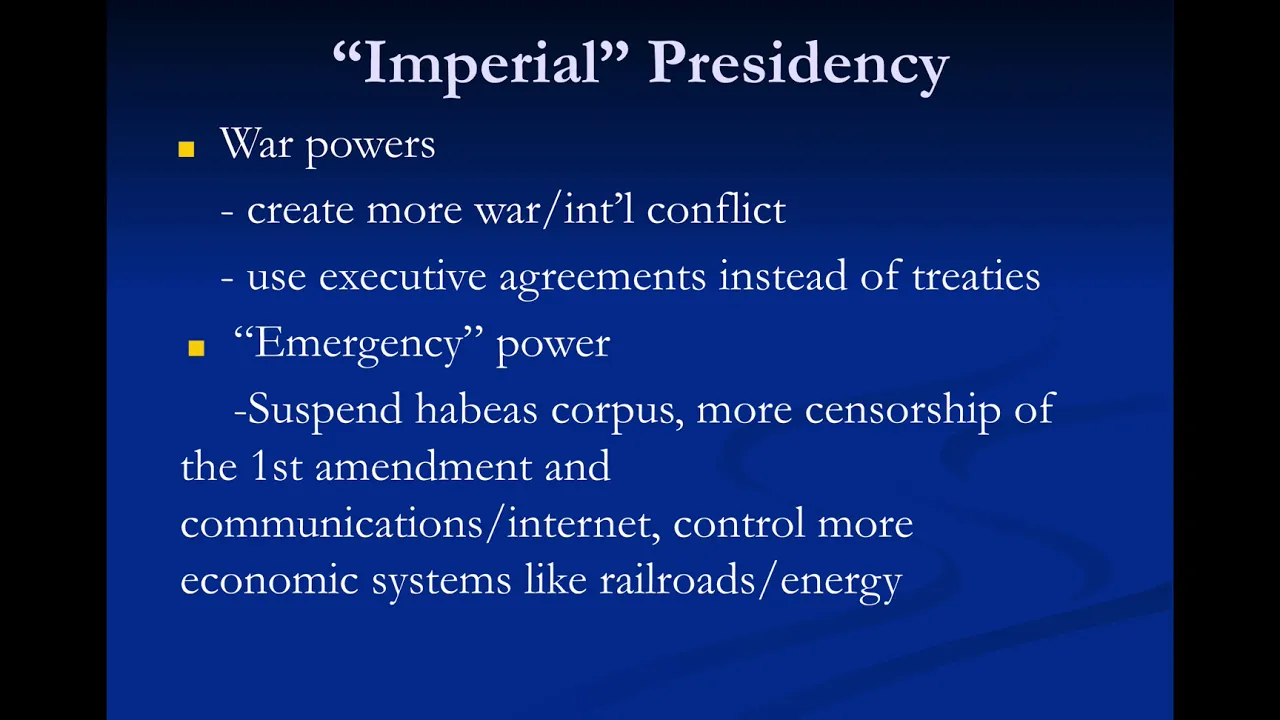





The unitary executive theory is a controversial legal doctrine that asserts the president has unlimited power to control the entire executive branch, allowing them to hire and fire employees, override independent agencies, disregard expert scientific opinions, and ignore congressional appropriations—all without accountability. This theory, which originated during the Nixon and Reagan administrations and gained traction under George W. Bush, has been aggressively applied by the Trump administration to centralize executive power. The theory fundamentally conflicts with the U.S. Constitution's system of separation of powers and checks and balances, which was designed to ensure no single branch or individual, even a popularly elected president, could operate above the law.
Understanding the Unitary Executive Theory and Its Impact
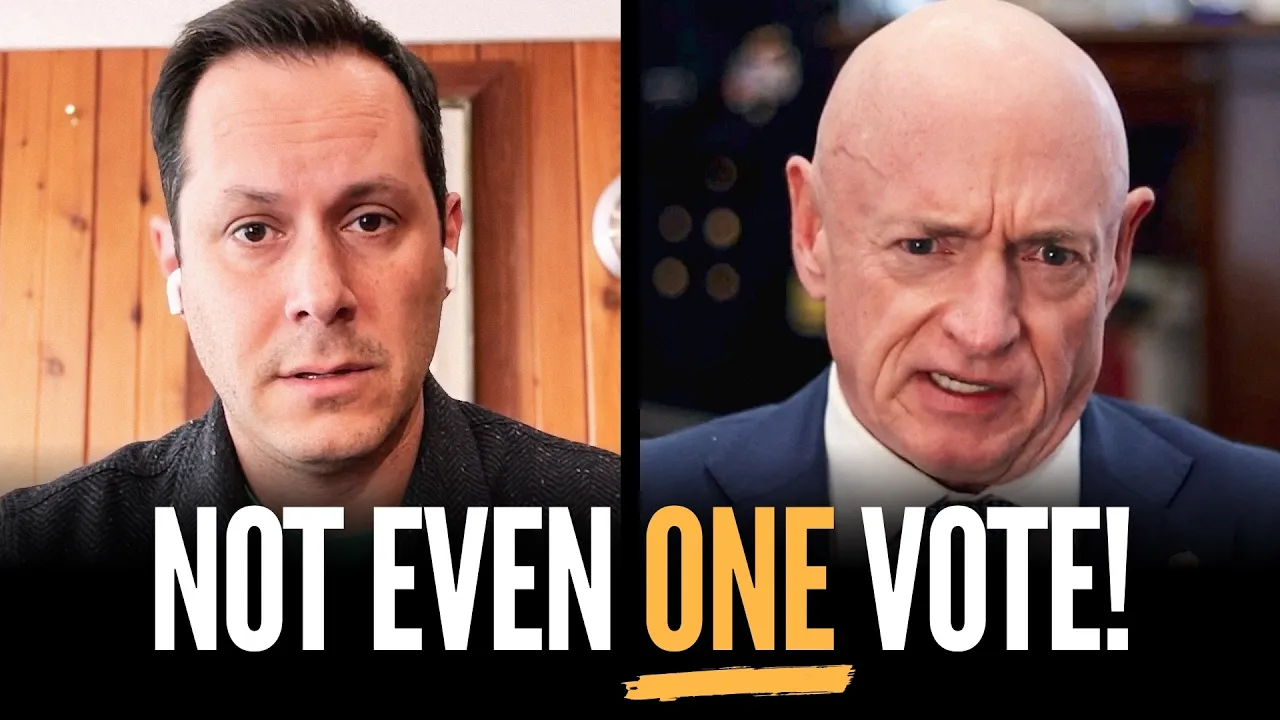
Added:a fringe right-wing legal theory is sweeping through the Trump Administration and it threatens the very Foundation of American democracy welcome back to democracy bucket I'm Mark Elias and I'm Paige mosquit let's get started you know Paige we seem to spend a lot of time doing videos about Fringe right-wing theories that are like ticking time bombs ready to blow up and end democracy we spent a lot of time on The Fringe independent state legislature Theory uh that would have if successfully uh Advanced uh uh essentially gutted the ability of state courts to apply their state constitutions to protect their citizens in voting cases but even that Pals in comparison to what we are facing now in the so-called unitary executive Theory right this is a right-wing Fringe idea that somehow the president has unlimited power to control the actions of the nearly 4 million people who make up the executive branch he can H whoever he wants he can nominate whoever he wants he could put people in charge that are not Senate confirmable to do certain things and basically everyone in the executive branch just has to listen to the president and do exactly what he says with no consequence yeah and I want people to understand just how sweeping this is okay it is not just that he can control everything in the executive bran and he can hire and fire so let's just like walk through a couple things he can dispose of independent agencies he actually issued an executive order many of you may not know he saying that he was doing exactly that that only he could interpret what the law is not independent agencies he can fire civil servants for no reason other than he wants to replace them with his own political loyalist he can fire people like inspector's general which he's done who are watchdogs who are supposed to be independent so that they can root out uh waste Fraud and Abuse um uh he can decide that not withstanding what the experts say a policy is not withstanding whether the experts say a chemical is safe or a chemical is not safe whether a pollutant is destroying clean water or clean air he can disregard all that he and say I don't care what those scientists think I alone get to decide whether that chemical goes in the water or doesn't go in the water this is a very very dangerous Theory this is a theory that basically says the president of United States is unbounded in his power in how the law is executed you know Congress can appropriate funds but he can decide not to not to spend them they can appropriate it for one purpose and he can reprogram them for something else this is a fancy name dreamed up by a bunch of federalist Society types for what is really just the raw exercise of power and for what Donald Trump himself has told told us he believes it means he's a king he's a dictator and he is above the law and Paige I hope people understand that you know just putting a fancy legal name on it doesn't make it anything better than that I think it's important to note that this Theory predates the Trump Administration right-wing conservatives have been working on it for decades it really develops during the Nixon and Reagan administrations and then gain traction during the W Bush Administration but really it says that the president is in charge of everyone and everything and there's very few ways to stop him and I think Mark what's very interesting is that the Trump Administration is trying to dress up how they're using the theory and when they issue executive orders or talk about it in press conferences you'll hear president Trump or his spokespeople say a lot about how he's the democratically elected leader and that the American people have given him a mandate for sweeping change and to completely reform the government and just doing whatever he wants is a part of that right you know and it's ironic because these are the same people who were constantly when I was on Twitter uh they would constantly you know every time I would post something about democracy doggy they'd say we're not a democracy we're a constitutional republic uh and look we are both a constitutional republic and a democracy right those are not inconsistent things but it is important to recognize that that in our country there are separation of powers and that is in the US Constitution there are restraints on each of the branches of government and that is in the Constitution and that that is more important that is supreme above uh the whims of anyone elected official I mean the whole point of having a written constitution of having a government of checks and balances of having enumerated powers and limits on government power is precisely to say that we do not have a king we do not have a dictator we do not have someone anyone even if they are President even if they were popularly elected even if they were elected by L much larger margins than he was that we do not have anyone who is above the Constitution we do not have anyone who can ignore the courts we do not have anyone who as president can decide not to spend appropriated funds or to spend money in ways that are inconsistent with Congress because that's what the Constitution provides and so the Constitution is still the the the the last line of defense there I founded democracy doet five years ago to help expose Republican voter suppression and be a critical tool in the fight for free and fair elections well since then it has been on the front lines tracking lawsuits breaking news and holding those in power to account you know democracy doesn't defend itself it takes all of us and by becoming a premium member of democracy docket you'll help sustain its critical work for years to come so please click on the link above or in the description below to sign up and help power democracy docket for the next five years Paige I want to say you know you say that this was a doctrine that goes back all the way to the Reagan and Nixon era and that is entirely correct um there is something sort of weirdly poetic about the fact that it goes back to Nixon you know like you know maybe maybe that maybe that origin story like should have been a cautionary tale uh but it has been around for a long time but you know when we used to talk about the independent state legislature Theory this theory that the courts don't uh state courts can't apply their state constitutions to invalidate state laws that violate the rights of their citizens with voting one of the things we always talked about was there was a strong form and a weak form right the strong form of independent state legislature theory was that Governors couldn't even veto acts of the legislature right remember like there's this like cartoonish version of independent legislature Theory and then there's the version that you know that gets sort of dressed up in in right-wing circles as more respectable well that is also true with the unitary executive Theory right there was a version of this as you say in the bush era which I didn't agree with but was sort of dressed up like it was not a you know George W bush can do anything he wants it is it was not a George Bush can ignore court orders it was not a George Bush doesn't have to pay attention to con Congressional Appropriations it was um it was not even by the way you know that that that independent agencies heads could be fired and it definitely was not that he gets to decide on a caseby casee basis who gets criminally prosecuted I mean the Attorneys General under George Bush had independence from the White House it was a much subtler version of the unitary executive Theory um it was not a fire all the civil servants and replace them with political cronies version again I'm not defending George W bush I'm not defending the unitary executive Theory I I have never thought that this was uh constitutionally sound it is not something that the courts have uh adopted but we do have to recognize the moment we're in page which is that there is a cartoonish quality to what Donald Trump is saying you know there is something that is quite unamerican in what he is saying because if this country uh was founded on any principle it was that we do not have a king it was founded on any principle was that the head of state the the head of government uh does not is not able to sort of unilaterally decide every policy and every decision um without regard to the other checks and balances in the system so you know again far be it for me to to defend Rolan Reagan or Richard Nixon or George W bush but um there's a reason why even a lot of conservative legal SC are blanching at what Donald Trump's Administration is putting forward in the name of a doctrine that you know used to at least have the pretense of of more respectability Mark I want to talk about the courts now that you mention the courts and legal Scholars so I think we're starting to see a bit of this unitary executive Theory creep into some of the legal arguments we're seeing many of Donald Trump's executive actions and orders are being challenged in court and in some of the filings in oral argument you're seeing that language of you know Trump is the head of the executive branch that gives him the power the ability to do XYZ I think the big question is for this Theory to actually work you would kind of need the approval of the other branches of government right you would need them to kind of be like yes the executive has wide range of powers and there's nothing we can do to stop him but is there really an appetite maybe there is in Congress because John Thun and Mike Johnson are finess cowards but is there appetite in the Judiciary to say yes it is not the role of the courts to check the actions of the executive branch yeah so it's a very interesting question you ask I mean let's let's first dispense with Congress you know I mean um Mike Johnson is theoretically third and line to the presidency um in reality he has as much importance in Washington DC as a puddle like a shallow puddle ble of water like he's sort of to be stepped over if you can if you can't you step on it you get a little wet but otherwise you just move on with life like he's just like he's just an irrelevancy jonth is like trying to blend in and be a puddle he's less than a puddle he's maybe like a half a puddle like he like literally doesn't want to anyone to even know that he is the Senate Majority Leader the republicans in Congress want you to believe that they like have not read anything going on they don't know anything going on they're not responsible for anything going on even though they're in the majority and I'm going to say something that I just have to say you know any of you who who think that the most productive thing you can do with your time is to bash Democrats uh you need to you need to re-evaluate your priorities the problem right now is not Congressional Democrats the problem right now are congressional Republicans okay they run the show um and they are the problem put Democrats in charge in the house and the Senate you'd have a very different situation right now anyway that's a bit of a digression but Paige um you know so the legislative branch under these Republicans they don't want to be a check and balance they literally want to just be a puddle uh the courts are different you know the one thing John Roberts cares about more than anything else is the Primacy of judicial the judicial decisions right that that what they say is the final word and so one could imagine a counter Universe a universe in which you had a much more strategic Trump Administration and it would have gone something like this um on day one they would have issued a handful of executive orders one of them for example might have targeted USA I did uh they would have uh issued that executive order it would have been challenged in court and they would have lost okay and then they would have said okay we're going to keep funding usaid while this case goes up to the US Supreme Court and then when it gets to the Supreme Court you know then John Roberts and the conservative majority are sitting there being like Oh okay well yeah USA is founded by is founded by Congress it's a congressional statute but on the other hand you know he is the president the United States it deals with foreign aid Foreign Affairs are like quintessentially presidential powers and you could almost see the opinion writing itself right like the conservatives on the court kind of want to go along get along here with the Trump Administration they're only asking about USA ID after all they've complied with the Court's orders up until now and you know maybe they they give that to him and and and what ends up happening is Donald Trump leaves the Supreme Court with a big victory that he could then rolls out to other agencies instead what they've done is they've now rolled this out all over the place it's not just usaid it's the treasury Department it's the you know it's NIH it's all of these other it's all of these other agencies Department education department and the justices are reading in the newspaper every day that this is causing all kinds of trouble in Mayhem and then on top of it you have the depart you have the White House and these various uh doj lawyers seemingly playing games with the Judiciary you know game of cat and mouse we're not going to tell you this oh you misunderstood that we're gonna do this we're not going to do that like and it is definitely challenging the the the one thing that John Roberts cares most about which is that people think the courts and its orders are the final work and so I think in some ways the Trump Administration is doing itself a real disservice in the way in which these cases are proceeding up to the courts now doesn't mean that in the end they will lose you know you still have at least a couple of justices if not three of them who I think will probably go along with this but I do think they have probably cost themselves at least one vote if not others on the Supreme Court by simply being as contemptuous and I don't mean that necessarily in the literal sense although they may be held in contempt at some point soon but in the in the um in the way in which they are dealing with the courts um I think that there is no question that there is a disrespect that is being shown to the federal Judiciary and I think to the extent the Supreme Court gets a sense that part of the unitary executive Theory here is the undermining of Court Authority then they may wind up losing some cases that they thought they were going to win and Paige I think that's what happened with the independent state legislature Theory because you know independent the state legislature theory on its on its face is the kind of doctrine that you would imagine conserva on the Supreme Court would be open to but as that case progressed and certainly as it got argued in the court if you listen listen to that argument it had a little bit again of this feel of like well you're honor the courts aren't so important and that's the thing that I think snapped them back there and it may wind up snapping them back here so Paige look that I think is where we stand today but of course this is going to be a very Dynamic situation Mark as these lawsuits challenging Trump's actions progress throughout the court system do you think we'll see the Trump Administration kind of doubl down on these arguments or will they you know kind of button up and professionalize and try to hold it together a bit more until they get a stamp of approval from a judge or maybe Congress you know legislates that they can defund usaid or that they can withhold funds like wait for approval for someone before they actually let all hell break loose no I think they're doubling down I don't think that I think that they have they've been given every opportunity by the courts to button it up and be more professional and let this proceed in a more orderly fashion and they have rejected it and honestly they have they have left a number of their lawyers out to hung out to dry and I think a lot of those lawyers May wind up worse for this experience because I think some of these federal judges are are at the end of their rope with the lawyers I mean the lawyers are standing in their courtrooms telling them things that turn out not to be true and like you get only so many times that you get to say to the judge I didn't know your honor like at some point that that starts to Splash on you and the second thing is you're starting to see uh lawyers who are starting to adopt the sort of mentality a little bit of the Swagger of of the Trump Administration in seemingly not wanting to answer judges and basically telling them that to the judges and so I think this is not sitting well and I think this will age badly but I think that the Trump Administration is all in on this and you know we are not at a constitutional crisis yet because the we have not reached that point of complete loggerheads where they're ignoring court orders but but you know every day that goes by the Trump Administration is not showing signs that it is smartening up here it is showing signs that it is doubling down and look this is the time for you uh the viewers um to make sure that you are also doubling down and staying up to date that you know what is going on in all of these cases and what more generally is going on with our democracy and five years ago I started democracy docket to be an independent news source that provides Fearless accurate information to you uh accountable to no billionaires no corporate interests uh and so please take a second to click on the link above or in the show notes below to become a subscriber to democracy docket and stay up to dat on all of that we will see you next time [Music]
Up Next

Chevron Deference Overturned: Impact on Federal Agencies and Law
@LegalEagle
1.2M views•2024-07-10

US Secondary Sanctions Impact on EU Businesses and Blocking Legislation
@Bureauvandijk
1.6K views•2019-03-20
Forensic Phonetics: Speaker Identification in Legal Cases
@nptel-nociitm9240
539 views•2025-03-19

Police Interrogation Tactics: False Confessions & Legal Reform
@LastWeekTonight
7M views•2022-04-18
Related Study Plans & Knowledge Roadmaps
Structured learning paths in Law