
![[Case Law Constitutional & Administrative] Cheney v Conn [1968] 1 All ER 779 (HC)](https://i.ytimg.com/vi_webp/6aA0QwBFx4U/maxresdefault.webp)










![Loper Bright v. Raimondo [SCOTUSbrief]](https://i.ytimg.com/vi_webp/YLS0lW-EDYc/maxresdefault.webp)


![Panel II: The Executive Power, the Legislative Power, and the Administrative State [2024 SS]](https://i.ytimg.com/vi/r5ThgQveu5M/maxresdefault.jpg)








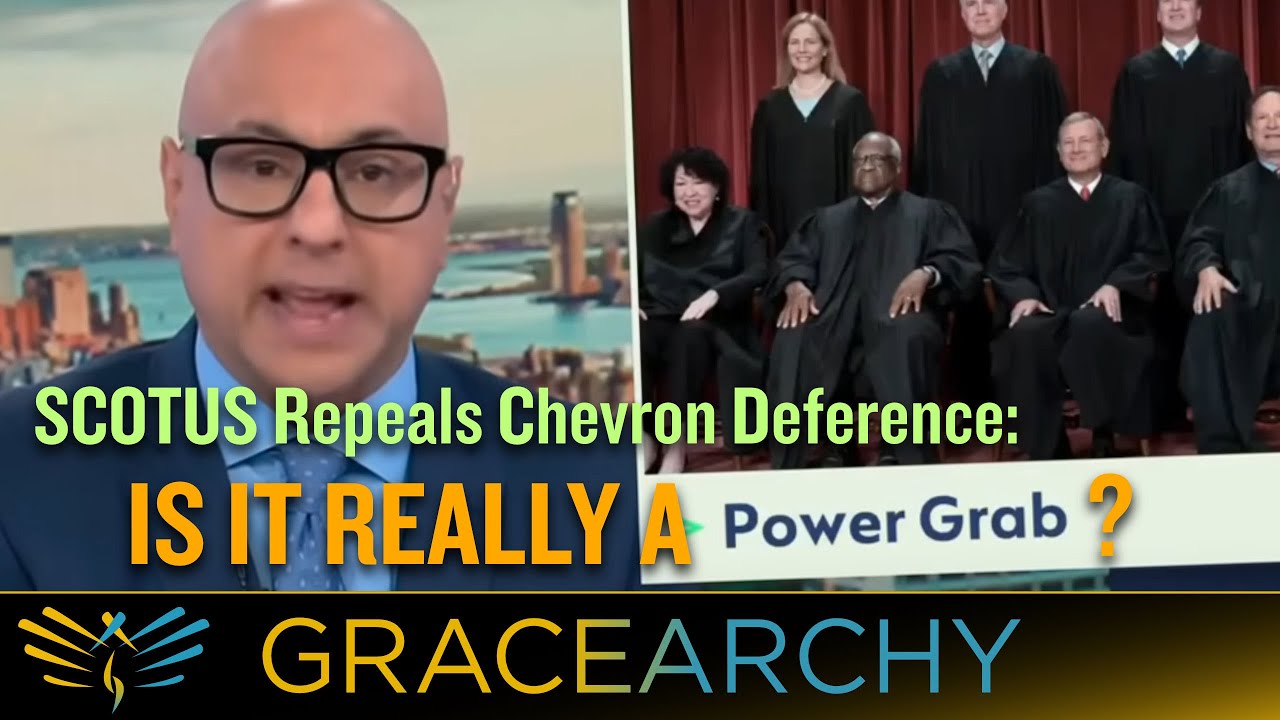
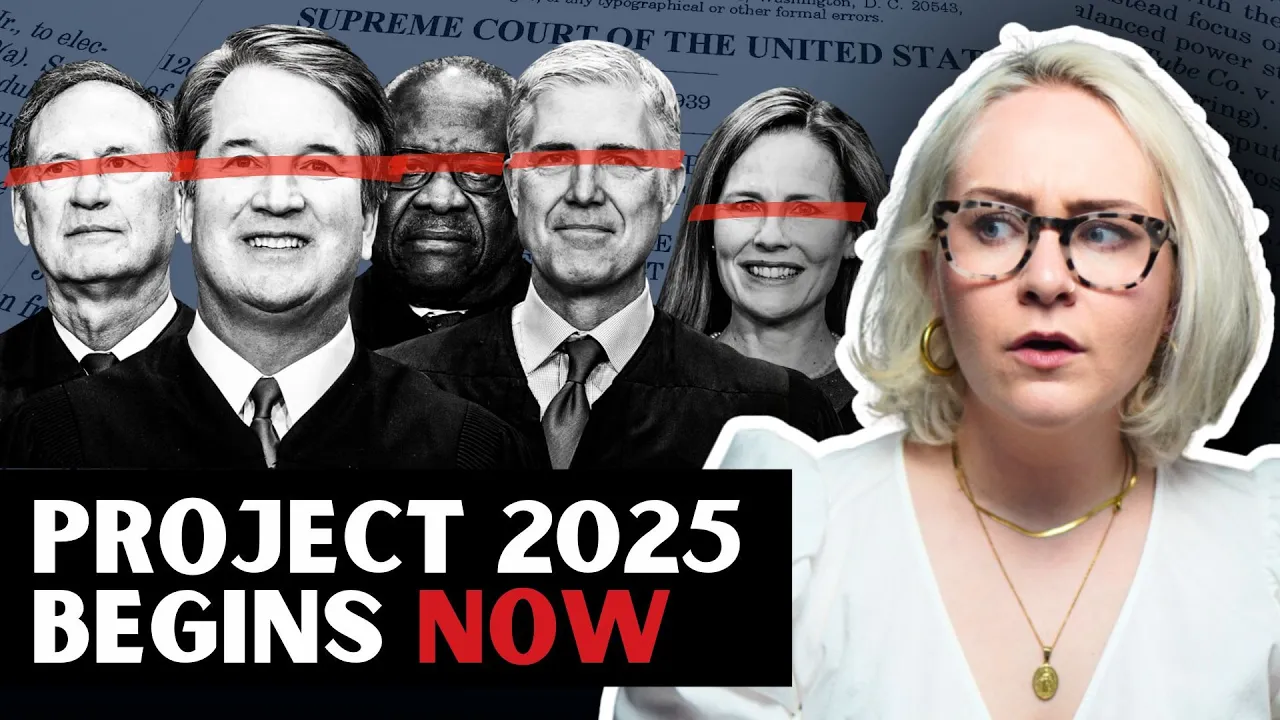
In 2024, the U.S. Supreme Court overturned the long-standing Chevron deference doctrine in the case Loper Bright Enterprises v. Department of Commerce, ruling that courts must independently interpret ambiguous statutes rather than deferring to federal agency interpretations. This decision, authored by Chief Justice John Roberts and joined by the six conservative justices, represents a major shift of power from the executive branch to the judiciary, ending decades of administrative law precedent where courts gave deference to expert agency interpretations of ambiguous statutes.
Chevron Deference Overturned: Impact on Federal Agencies and Law
Added:The constitutional principle of Separation of Powers, specifically the distinct roles of the Legislative branch in making laws, the Executive branch in enforcing them, and the Judicial branch in interpreting them.
The role and structure of Federal Agencies (e.g., EPA, SEC, FTC) and how they derive their regulatory power from acts of Congress.
The concept of Judicial Review, including the court's authority to determine the constitutionality and legality of government actions.
The Administrative Procedure Act (APA) of 1946, which establishes the legal framework for how federal agencies propose and establish regulations.
The original 1984 'Chevron v. NRDC' Supreme Court ruling, including the traditional 'Chevron two-step' test used by courts to defer to reasonable agency interpretations of ambiguous laws.
A deep dive into the Supreme Court decision in Loper Bright Enterprises v. Raimondo (2024), examining the specific constitutional and statutory arguments used to overturn Chevron.
The 'Major Questions Doctrine' and 'Skidmore deference' as alternative legal standards that courts may now apply when reviewing federal regulations.
The impact of the ruling on Congressional legislative drafting, particularly whether Congress will begin writing more detailed, technically specific laws to avoid leaving gaps for courts to interpret.
Analyzing active litigation and real-world regulatory impacts in fields heavily reliant on agency expertise, such as environmental law, financial regulation, and public health.
The broader philosophical debate concerning judicial activism versus judicial restraint, and whether judges are equipped to make complex policy decisions without agency expertise.
1.2M views48.4Klikes24:26Original Release: 2024-07-10
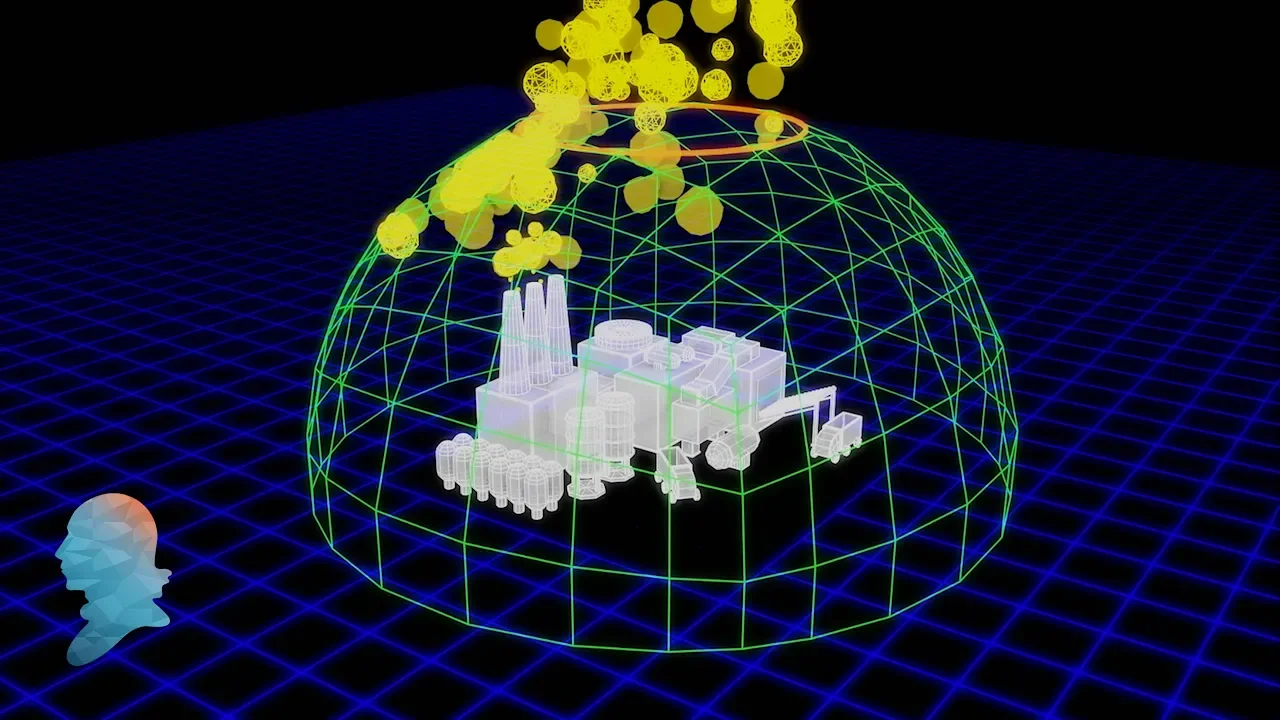
and the Supreme Court has destroyed the entire federal government well that's only slight hyperbole maybe just the entire administrative State now you might have heard of Chevron or Chevron Defence well the Supreme Court just killed it and that's a big deal it's a huge deal it's one of those things that generally you have to be in the know to understand but it would be like if the Supreme Court just said all briefs must be filed in Latin maybe it won't affect you on an everyday basis but it really screws up the judicial system and it's going to be a pain in the ass for lawyers and judges going forward now understand this massive decision you need a quick primer on administrative law here's three things you need to know first Congress passes laws and generally courts interpret those laws because sometimes those laws are ambiguous a lot of those laws establish or Empower Federal Agencies because the government is big and does a lot of stuff and finally a ton of what those agencies do is highly technical or scientific so sometimes Congress intentionally leaves laws ambiguous so those agencies can do their jobs and Chevron deference is all about what happens when a federal agency deals with an ambiguous law and Chaos lawyers liai has more on this catastrophe thanks Devon the Supreme Court has executed its biggest power grab in decades and it's all thanks to a tiny little fish yes the nation's High Court issued a joint holding in two cases known as lower bright Enterprises versus Gina Rando the secretary of the Department of Commerce and Relentless Inc fee Department of Commerce both of which involved regulation of Herring fishing in ocean waters the ruling which overturns a long-standing principle known as Chevron Defence paves the way for court to rewrite administrative regulations more or less at will so now judges can overrule those pesky experts on stuff like what constitutes a distinct population segment Under The Endangered Species Act when does an alpha amino acid polymer qualify as a biological product under the public health services act or how much airplane noise reduction is sufficient to substantially restore the Natural Quiet of the Grand Canyon under the 1987 overflights act those three examples come from The Descent authored by Justice Elena Kagan and joined by her fellow liberal justices Sonia sotoor and katangi brown Jackson as Kagan notes the majority's holding in ler brigh allows courts to substitute their judgment for that of scientists and policy wonks who certainly know more about the topic than federal judges and that represents a massive shift of power away from the executive branch to the Judiciary it all started in 1977 when Congress amended the Clean Air Act to force polluters to submit to a permitting process known as new source review every time they wanted to construct a new stationary source of pollution under President Jimmy Carter the Environmental Protection Agency interpreted the law to require permits for every new Smoke Stack so to be clear Congress did its job and enacted a law and then the executive branch implemented it through rules and regulations which is its job but when President Reagan was elected in 1980 his EPA took a different approach it decided that new source review was only triggered if the Improvement increased the amount of pollution in the bubble of the entire project so a factory could install a new highly polluting modification without a permit so long as its overall emissions didn't go up defeating the purpose of the Clean Air Act amendments which were intended to force new construction that reduced pollution overall in 1981 the national resources defense Council sued the EPA in federal court in DC that case was captioned nrdc versus Gorsuch because the nominal defendant was EPA administrator an M Gorsuch the mother of future Supreme Court Justice Neil Gorsuch in an opinion authored by Future Supreme Court Justice Ruth Bader Ginsburg the DC circuit invalidated the rule change because it conflicted with both precedent and the stated purpose of the statute which was to reduce pollution the Chevron Corporation an oil Behemoth whose interest did not lie in cleaning up the environment intervened and by the time the case landed at the Supreme Court it had been reisen Chevron USA versus nrdc writing for a unanimous Court Justice John Paul Stevens reversed the DC circuit articulating what was known for the past 40 years as the Chevron Doctrine or Chevron Defence under Chevron courts conducted a three-part test when faced with a challenge to an executive agency's interpretation of federal law first the courts examined the statute authorizing the agency action to see if its language was ambiguous if there was ambiguity it was presumed that the agency was authorized to make rules to fill any Gap left implicitly or explicitly by Congress that Gap constituted an Express delegation of authority to the agency to elucidate a specific provision of the statute by regulation second the court assessed whether the challenged agency interpretation was reasonable and if so courts would defer to that interpretation hence the name Chevron Defence only if the agency's interpretation was unreasonable would courts rewrite agency regulations so as to make them comply with the law Justice Stevens noted that judges are not experts in the field and are not part of of either political branch of the government when a challenge to an agency construction of a statutory provision fairly conceptualized really centers on the wisdom of the agency's position rather than whether it is a reasonable Choice within a gap left open by Congress the challenge must fail in Chevron versus nrdc this meant that the EPA was free to water down the standards of the Clean Air Act and let corporations continue to pollute the air but in practice this gave presidential agencies broad power to interpret federal law and enact regulations that reflected the administration's political priorities so for example the Trump and Biden administrations took radically different approaches to whether title 99's prohibition on discrimination because of sex required sports teams to include or exclude transgender athletes since the Chevron decision came down in 1984 conservatives took control of the Judiciary solidifying a six-seat majority on the Supreme Court and seating the federal bench with loads of federal judges selected from the conservative movement specifically to oppose liberal policies meanwhile as the country became ever more sharply divided Congress has become ever less effective passing fewer and fewer laws with Congress functionally broken presidents have come to rely more and more on Executive action and rulemaking and so overturning Chevron became one of the main goals of the conservative movement allowing them to more easily challenge executive actions by Democratic administrations without the annoying obligation to defer to an agency's interpret of laws in 2020 Justice Thomas wrote that Chevron compels judges to abdicate the judicial power without constitutional sanction and gives federal agencies on constitutional power in 2022 Justice Gorsuch warned that the doctrine poses a serious threat to some of our most fundamental commitments as judges and courts and deserves a tombstone no one can miss and so it was clear that Chevron like roie Wade was doomed although it wasn't obvious that Chevon would be toppled by a tiny little fish now obviously if you're going to challenge the entire administrative State you're going to need a good lawyer but if you want a great lawyer let my Law Firm the eagle team help if you a loved one has suffered from mesoa if you've been in a car crash or suffered a data breach especially if you got one of those data breach letters saying that your information might have been leaked or just about anything else we can represent you or help find you the right attorney because it's so important to talk to a lawyer right away so you get the best representation and find out what your options are so click on the link in the description or call the number on screen for free consultation with my team because you don't just need a legal team you need the eagle team so click Below in 1976 Congress enacted the Magnuson Stevens fishery conservation and management act so named for Democratic senator Warren Magnuson and Republican senator Ted Stevens the law established eight Regional fishery management councils dedicated to protecting commercial fishing stocks the councils were vested with various Powers including authority to require that one or more observers be carried on board a vessel for the purpose of collecting data necessary for the conservation and management of the fishery and it was that power enumerated in 16 USC C 1853b which wound up taking out the edifice that held up administrative law in this country for 40 years because the law did not specify how those observers were to be funded or to be more precise it did but not super clearly section 1855 contained a general implementing Clause authorizing the secretary of the Department of Commerce to promulgate such regulations as may be necessary to discharge such responsibility or to carry out any other provision of the act and section 1858 G G allowed the councils to punish any vessel owner for failing to pay for the Observer Services which would strongly imply that Congress intended the councils to be able to charge votes for The Observers and that was certainly the position taken by Donald Trump's Secretary of Commerce Wilbur Ross but it was not the position taken by a company called ler bright Enterprises which sued the Department of Commerce in February of 2020 calling the regulation an unlawful mandate by the federal government that requires Herring fishermen along the Eastern Seaboard of the United States to carry National oce Oceanic and Atmospheric Administration contractors called at C monitors on their vessels during fishing trips and moreover to pay out of pocket for costs associated with allowing these government contractors to monitor their fishing Activity 2 weeks later a similar lawsuit was filed by a commercial fishing company under the caption Relentless Inky Ross now here's a fun tip when you're trying to figure out why a lawsuit was filed skip to the signature block and Google the lawyers who put their names on it the ler bright case was brought by Ryan mvy and Eric bolinder two lawyers from the group Americans for Prosperity which was set up by billionaire Brothers Charles and David kooch to combat climate legislation unions and minimum wage laws and generally fight all Progressive policies and the Relentless case was brought by lawyers from the new civil liberties Alliance another group funded by the coch brothers to attack government regulations which is a pretty good indication that the fish here was just a big old red herring these cases were always Torpedoes aimed straight at the Chevron doctor and they scored a direct hit the plaintiffs lost at the trial courts in DC in Rhode Island and then lost again at the DC in first circuits and by the time they wound up at the Supreme Court the only question being considered was whether the court should overrule Chevron or at least clarify that statutory silence concerning controversial Powers expressly but narrowly granted elsewhere in the statute does not constitute an ambiguity requiring Defence to the agency in short the justices had given up the red herring and were aiming straight for the Iceberg Iceberg right ahead thank you chief justice Roberts wrote the opinion for the Court's six conservatives framing the reversal of Chevron as the righteous repudiation of a grievous error in his telling Chevron ushered in a four decade period of judicial laziness where courts abdicated their responsibilities under the Constitution he said when faced with the statutory ambiguity the ambiguity is not a delegation to anybody and a court is not somehow relieved of its obligation to independently interpret the statute he quoted Chief Justice John Marshall from 1803 saying in marber D Madison that it is emphatically The Province and duty of the judicial Department to say what the law is he quoted The Federalist Papers noting that the framers also envisioned that the final interpretation of the laws would be the proper and peculiar province of the Court he also quoted the administrative procedure act which was originally passed in 1946 and specifies that courts not agencies will decide all relevant questions of law he referenced various respected commentators who endorsed his position that only the court can interpret a law and that the court owes respect but not deference to the executive branch agencies charged with actually carrying it out and he cited various attempts by his own Court to water down the holding in the past 20 years as evidence that the Chevron test imposes a dizzying break Dan on the courts and is wholly [Music] unworkable he even sneered at the bare Quorum of six justices who decided Chevron since justices Marshall ranquist and oconor recused themselves it's an odd way to describe a unanimous opinion particularly since Roberts himself is speaking for just six justices and it's especially odd in a holding where Justice gorsuch's own mother was the defendant in the case being overturned the majority's opinion boils down to this in every case where a statute is ambiguous there must be a best reading of the law and courts are obligated to use every tool at their disposal to determine the best reading of the statute and resolve the ambiguity themselves rather than letting the expert s tasked by Congress and the voters fill in the blanks but is Justice kagan's descent for the courts three liberals points out sometimes statutes are just sloppily drafted and there is no best answer for a blank Congress forgot to fill in and if there is a best answer it's probably not going to be arrived at by courts applying general principles of law in fact it may not be a question of law at all the Chief Justice yada yada Yad is that Congress expects courts to handle technical statutory questions that's a particularly ironic thing to say on the same day when Justice Gorsuch dropped an opinion in which he confused nitrogen oxide a greenhouse gas with nitrous oxide better known as Laughing Gas because there isn't a balls and Strikes answer to every technical question of administrative procedure and Justice Elena Kagan made this point by highlighting a bunch of cases decided on the basis of Chevron Defence like T A Pharmaceuticals versus the FDA which turns on the question of when does an alpha amino acid polymer qualify as a protein or what does distinct mean when you're talking about various populations of endangered squirrels that was the issue in Northwest ecosystem Alliance versus US fish and wildlife services or what does a geographic area mean when you're talking about Medicare reimbursement rates see Belleview Hospital Center of V 11 I'm a lawyer and a reasonably smart person and I don't know the answer to those questions and neither did the federal judges who decided those cases because there wasn't one best answer for the court to Divine by scrutinizing the statute and applying principles of law Congress writes laws which are pretty General and leaves it to the executive to carry them out which is why the judges deferred to the federal agencies that administer the food drug and cosmetics act and The Endangered Species Act and the Medicare act to define those terms but according to Chief Justice Roberts it's actually the Court's job to grab a pen and mark up a statute anytime the law is unclear he wrote it therefore makes no sense to speak of a permissible interpretation that is not the one the court after applying all relevant interpretive tools concludes his best in the business of statutory interpretation if it is not the best it is not permissible that that line is hard to draw in some cases I would say not in most cases and make sure that this is the question that you the judge are supposed to be deciding rather than someone else and it's certainly not what he said about the foundational doctrine of star decisis or at least it's not what he used to say star decisis is a Latin term meaning to stand by things already decided in law it means that precedent is binding on subsequent courts and once an issue has been ruled on that is the law of the land and while the Supreme Court can overturn president there has always been a strong institutional taboo against doing it because it makes the justices seem like partisans who rule based on their own policy preferences but president is also important because we all rely on knowing what the law is and if that law is constantly changing then it can cause major Civic and social instability please dis nothing to see here please but Donald Trump's election prompted a major sea change he was able to name three justices decisively swinging the Supreme Court to the right at which point conservatives got a whole lot less concerned about star decisis so during their confirmation hearings justices kavan on Gorsuch mumbled a little bit about robu being settled law before immediately voting to overturn it in the dobs case since then Senators have switched to asking judicial nominees whether Brown V Board of Education the seminal School desegregation case is settled law with a law aring results do you believe that Brown versus Board of Education was correctly decided Senator I don't mean to be koi but I think I get into a a difficult um a different difficult area when I start commenting on Supreme Court decisions which are correctly decided and which I may disagree with yikes there is just no argument that Chevron was anything other than settled law as Justice Kagan noted in her descent the doctrine has been applied in thousands of judicial decisions it has become a part of the war and woof of modern government supporting regulatory efforts of all kinds to name a few keeping air and water clean Food and Drugs safe and financial markets honest overturning it requires total disregard for star decises and more than a we smidge of judicial arrogance luckily Justice Gores was happy to oblige in a 34-page concurrence he praised the majority for its Brave Act of judicial humility in conceding that its own president was wrongly decided then he celebrated the tombstone on Chevron no one can miss calling back to his own earlier writing as all truly humble jurists do along the way he rubbished the idea of star decisis generally noting that in the 18th century common law judges did not broadly speaking afford overwhelming weight to any quote single precedent and in Ye Old the England a judge's decision might bind the parties to the case at hand but none of that meant the judge had the power to make a law properly so-called for Society at large for that only the king in Parliament can do the Chief Justice wasn't willing to go quite that far but that's why he spent so much time talking about marber V Madison and pre- Chevon practice while claiming that Chevron was totally unworkable and force judges to break dance or whatever because if you say well this law was working fine for four decades but we didn't like it and now we have the votes to overturn it so we did it sounds kind of bad or as Justice Kagan put it this court has a avoided deferring under Chevon since 2016 because it has been preparing to overrule Chevron since around that time that kind of self-help on the way to reversing precedent has become almost routine at this court stop applying a decision where one should throw some gratuitous criticisms into a couple opinions issue a few separate writings questioning the decisions premises give the whole process a few years and voila you have a justification for overruling the decision ouch but Justice Kagan wasn't done pointing out the hypocrisy she observed that the major cannot destroy one doctrine of judicial humility without making a laughing stock of the second that is the majority was so excited to ditch the Chev Doctrine and substitute their own opinions for those of government experts that it trampled the doctrine of star decisis and showed their whole hering to the world she added that if opinions had titles a good candidate for today's would be hubris squared in his holding the Chief Justice went out of his way to minimize the chaos that this ruling will unleash he offered assurances that all the previous decisions made based on Chevron Doctrine are still good law and the Holdings of those cases that specific agency actions are lawful including the Clean Air Act holding of Chevron itself are still subject to statutory star decises despite our change in interpretive methodology but it cannot be overstated what an earthquake this will be for administrative law if the EPA wants to regulate industry to cut pollution or the FDA wants to ban harmful additives or the labor department wants to set standards for overtime rules or the Federal Reserve wants to limit credit card swipe fees all those things will be challenged in fact that last one is not a hypothetical in a case called corner post Inc V Federal Reserve Board of Governors decided on the last day of the term the Supreme Court effectively abolished the statute of limitations for challenges to an administrative regulation previously a rule had to be challenged within 6 years of its enactment now a party has 6 years from when it began being harmed to sue meaning that a bank can set up shop tomorrow and challenge a rule that has in place for decades because its harm is brand new and as vox's Ian milhiser warns ler Brite makes the courts and ultimately the Supreme Court responsible for resolving thousands of low stakes policy questions which often cannot be resolved simply by reading the laws naked text the justices in other words can look forward to missing their children's basketball games skipping out on date nights with their spouses and not really doing much of anything at all besides deciding the crushing weight of cases they're about to land on their desks yeah Bo a blog post by the union of concerned scientists predicts that the end of Chevron will introduce a new level of difficulty into the regulatory process agencies like the EPA will need to try to anticipate every potential legal challenge alleging statutory ambiguity and prepare comprehensive justifications that can withstand unbounded judicial scrutiny this could slow down the implementation of new regulations as agencies might take more time to ensure their rules can survive such legal challenges worse agencies may decide not to even try all of which is very bad for people who like clean air and drinkable water and overtime pay and capping fees lenders can charge consumers and hot dogs without too much rat hair in them and a million other tiny decisions which were previously made by experts and will now be subject to challenge by industry lawyers responsible to shareholders in special interest and not answerable to voters but on the plus side Justice scor such finally got that Tombstone so I guess it was worth it now that was a great explanation but I want to emphasize more about this onew punch of ler brigh in corner post because frankly corner post might be an even bigger deal than lerb and the end of Chevron Defence because it's possible the end of Chevron Defence wouldn't have that big of effect on its own in part because bad faith jur have been claiming to apply Chevron Defence for years but basically just ignoring it and coming to outcome oriented decisions many have said that Chevron has been dead for a while but now it's truly dead and judges will be the last and only word on ambiguous statutes and with corner post truly no Federal Regulation will ever be settled corner post is effectively done away with the statute limitations when it comes to federal regulations and that's going to lead to an absolute Deluge of litigation I would not want to be a federal judge right now they were already overworked and underpaid and now they're going to be interpreting and reinterpreting regulations all the time but of course it's not going to be all courts as we've already seen there are a few judges especially in the middle of nowhere Texas that love nothing more than to overturn current laws so you're going to see thousands of newly minted corporations Incorporated in Amarillo Texas challenging a regulation and and then going before that company's preferred judge just to overrule federal regulations and additionally because those judges are not subject matter experts you're going to get a lot of wacky decisions not necessarily smaller government but definitely weirder less predictable government we're going to get a whole weird Patchwork of dueling interpretations and rules with inconsistencies between the states and circuits and we're going to see a lot of junk science and cherry-picked history to get to outcome oriented decisions but if you a federal judge who will be interpreting a whole bunch of technical regulations you'll probably need to brush up on your math or science skills which you can do with today's sponsor brilliant brilliant.org is the best way to learn math and computer science interactively brilliant is an online learning platform for stem that replaces lecture videos with Hands-On interactive lessons brilliant is for Curious Learners young and old professional and inexperienced you can quickly learn to Ace your high school or college math course or just learn stuff you always wanted brilliant helps you reach your goals whether you are a student or a professional looking to get ahead their first principles approach helps you build understanding from the ground up and each lesson is filled with real world problem solving that lets you play with Concepts a method proven to be six times more effective than watching lecture videos one of my favorite courses is all about logic brilliant logic courses cover liar and Truth teller riddles logical fallacies machine logic and even some strategic game theory and another great one is how llms work which is an immersive AI Workshop that lets you experience and harness the mechanics of today's most advanced tools you can get Hands-On training with real language models as you explore how they build vocabulary choose their next word and more you'll understand the importance of training data by comparing models trained on Taylor sff lyrics to models trained on big text terms and conditions and you can learn how to tune in llm to generate different kinds of output now you can sign up and start learning for free today by clicking on the link that's on screen right now or down in the description if you click on that link you'll get a free 30-day trial plus 20% off their annual subscription so help build your critical thinking skills with a free 30-day trial and 20% off your subscription to brilliant.org by clicking on the link below and after that click on this box over here for more legal eagle or I'll see you in court
Up Next

3:45
Major Questions Doctrine: Administrative Law Explained
@TheFederalistSociety
39.6K views•2024-09-30

4:27
US Secondary Sanctions Impact on EU Businesses and Blocking Legislation
@Bureauvandijk
1.6K views•2019-03-20

21:38
SLAPP Suits and Anti-SLAPP Laws: A Legal Analysis of John Oliver vs. Bob Murray
@LegalEagle
4.8M views•2019-11-16

24:42
Police Interrogation Tactics: False Confessions & Legal Reform
@LastWeekTonight
7M views•2022-04-18
Related Study Plans & Knowledge Roadmaps
Structured learning paths in Law
law
Self-Defense Law: Imminence & Castle Doctrine
01Foundations of Self-Defense Law
02Imminent Threat & Reasonable Belief
03The Principle of Proportionality
+ 3 more learning modules
12h6 modules
Explore Roadmap
law
Defamation Law: First Amendment & Actual Malice
01Introduction to civil torts and the First Amendment
02Elements of Defamation: Libel and Slander
03Public Figures vs. Private Individuals
+ 2 more learning modules
8h5 modules
Explore Roadmap
law
Hearsay Rule: Trial Evidence & Exceptions
01Introduction to Trial Evidence & Courtroom Basics
02Demystifying Hearsay: The Core Definition
03Non-Hearsay: Exclusions Under FRE 801(d)
+ 3 more learning modules
14h6 modules
Explore Roadmap
law
Medical Malpractice: Law, Liability & Care
01Foundations of Tort Law and Civil Liability
02The Four Elements of Medical Malpractice
03Defining and Proving the Standard of Care
+ 2 more learning modules
12h5 modules
Explore Roadmap