
















![📚 RESEÑA 📖| La Parábola de los Talentos [Earthseed II] - Octavia E. Butler | PENNYLINE](https://i.ytimg.com/vi/pFdjUiy3YUw/maxresdefault.jpg)


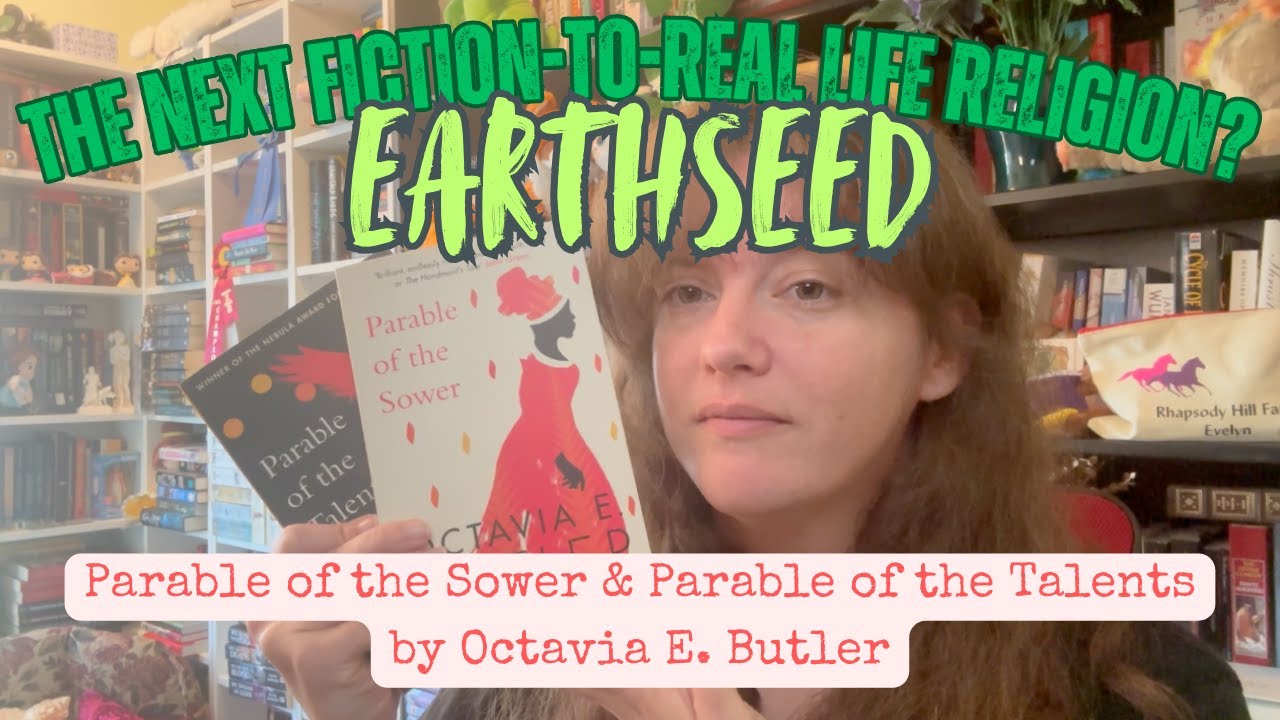









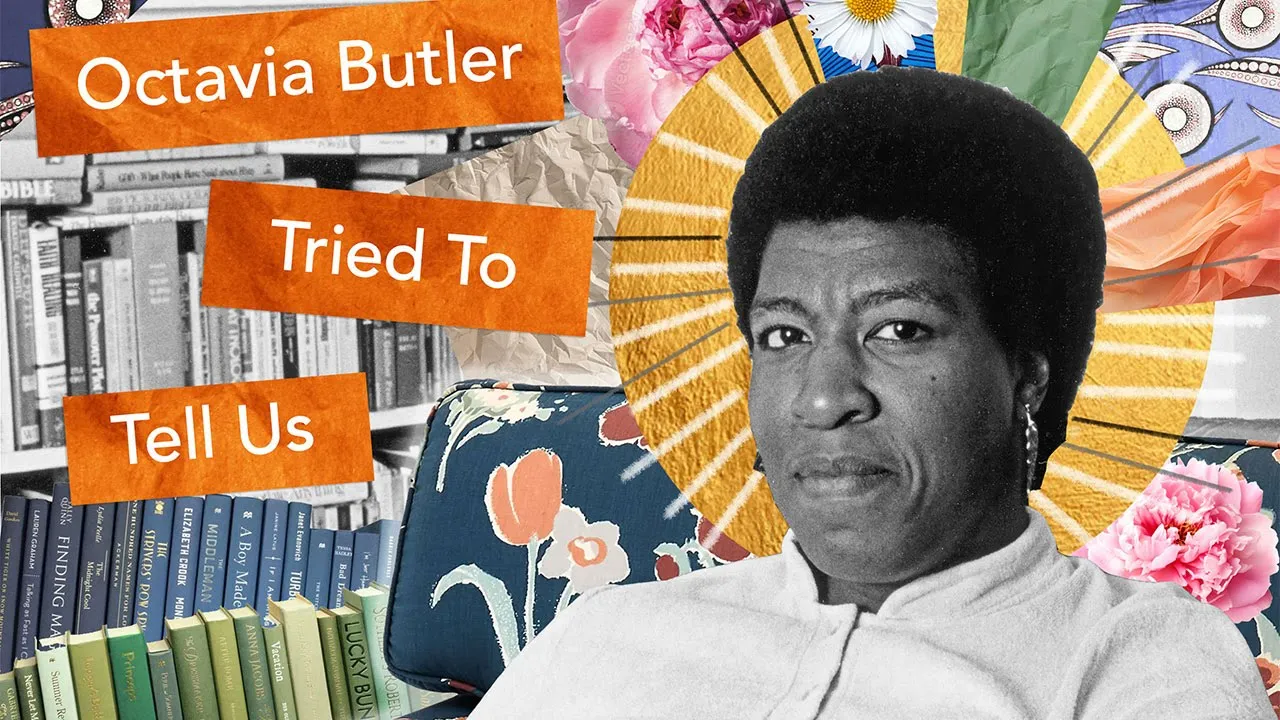
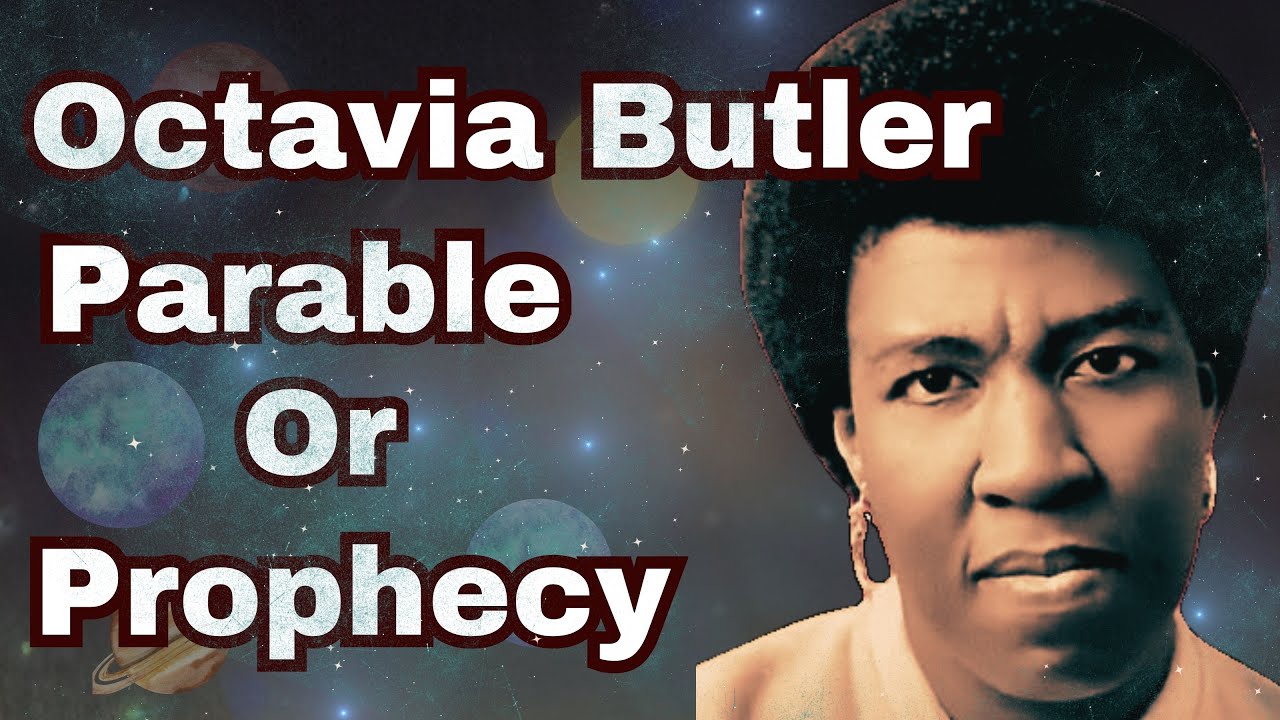
Octavia Butler's 'Parable of the Sower' (1993) is a groundbreaking science fiction novel that serves as a prophetic warning about climate change and social collapse, blending multiple genres including bildungsroman (coming-of-age), dystopia, and sacred text through the story of Lauren Oya Olamina, a fifteen-year-old girl with hyperempathy who develops a new religion called Earthseed centered on the philosophy that 'God is Change,' ultimately teaching that embracing change and diversity is essential for human survival and collective progress.
Parable of the Sower by Octavia Butler: Dystopian Literature Analysis
Added:Familiarity with the defining characteristics and conventions of dystopian and post-apocalyptic literature.
An introductory understanding of Afrofuturism and Octavia Butler's historical significance within speculative fiction.
Historical context of the early 1990s in the United States, specifically regarding socioeconomic inequality, racial tensions, and early climate change awareness.
Foundational literary analysis skills, such as identifying recurring motifs, character-driven themes, and the role of the protagonist in societal commentary.
A comparative study of the sequel, 'Parable of the Talents', to analyze the expansion of Earthseed and the rise of religious fundamentalism in politics.
Advanced exploration of 'Cli-Fi' (Climate Fiction) and environmental justice, examining how modern literature addresses ecological collapse.
A philosophical analysis of 'Earthseed' as a functional, change-oriented belief system compared to traditional theological frameworks.
An examination of contemporary sociological issues—such as privatization of public services and climate-induced migration—through the lens of Butler's predictive writing.
398.4K views9.9Klikes11:59Original Release: 2017-12-20
Hi I’m John Green, this is Crash Course Literature and I have some bad news.
Disease is devastating the planet.
Soon the global food supply will be compromised, clean water will become scarce, violence will grow epidemic, dangerous new street drugs will circulate, the income gap will increase, corporate slavery will return and a strongman president will be more interested in issuing tough-guy slogans than actually improving the lives of the people.
Of course none of that’s happened yet.
What’s that?
Oh, Stan informs me that some of it has happened.
But the only place it’s all happening, so far, is in “Parable of the Sower,” Octavia Butler’s 1993 science fiction novel.
It’s just made up.
Thankfully.
But jeez, I have never read a dystopia that feels more possible, or more terrifying.
And yet, it’s also one of my favorite books, and a genuinely hopeful one.
The kind of hard-won, uneasy hope that actually means something.
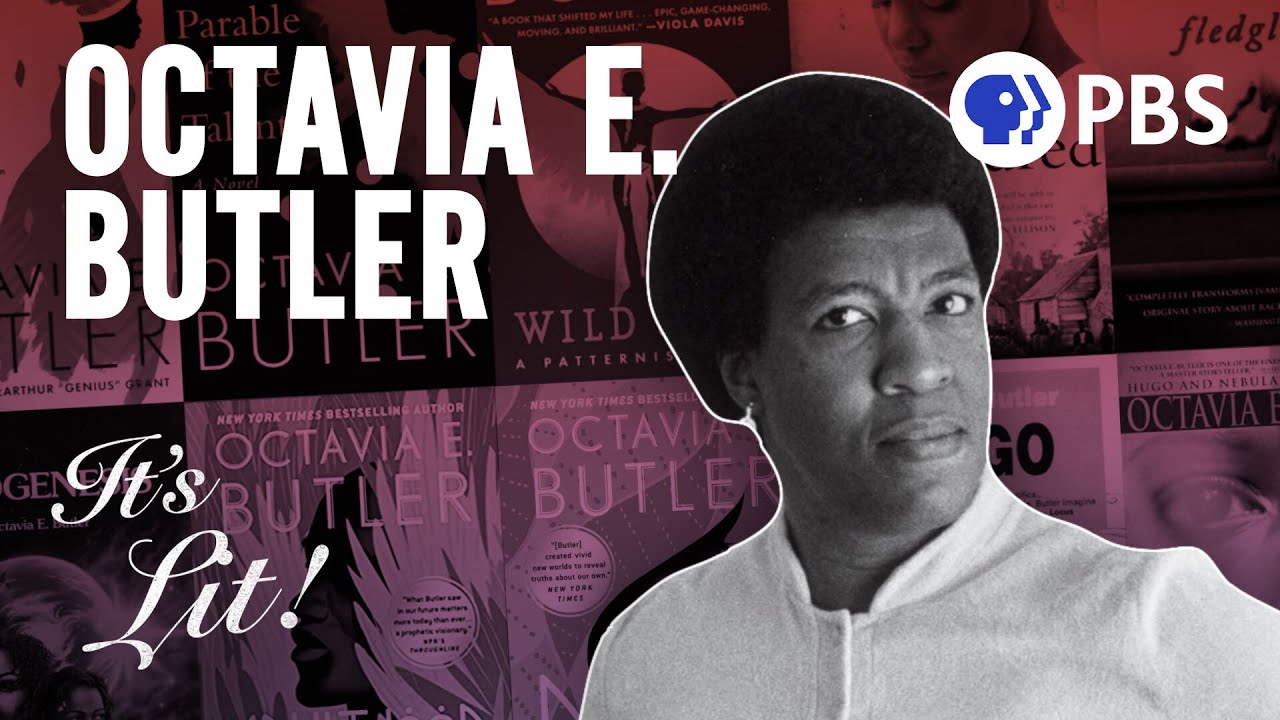
INTRO Let’s start with a brief introduction to the author, Octavia Butler.
She was an African-American science fiction writer who won the Hugo and the Nebula Awards and a MacArthur genius grant.
She died in 2006 at the age of 58.
Growing up as a shy only child in Pasadena, California, Butler spent a lot of time reading at her local library and telling herself her own stories.
And then, when she was nine, she saw a movie and thought, I could write a better story than that.
So she did.
Her aunt told her that an African-American girl couldn’t be a writer, but she kept going.
And as a young adult, she would get up at two in the morning so that she’d have time to write before working jobs like dishwasher and potato chip inspector.
It wasn’t until her early thirties that she was able to support herself entirely as a writer.
Her works deal with race, class and power, and most of her books also include fantastic elements like time travel, and alien life forms and telekinesis.
She described herself as “A pessimist if I'm not careful, a feminist, a Black, a former Baptist, an oil-and-water combination of ambition, laziness, insecurity, certainty, and drive."
“Parable of the Sower” is a coming-of-age story-one of the best of the past several decades.
It’s also a story about being black in America, and a feminist story and a theological story and a dystopian story and in some ways maybe a bit of a utopian story.
It takes its name from a Bible parable.
In which Jesus describes someone who goes out to distribute seed.
Some of the seed falls on the path and is eaten up by birds, some falls in a rocky place and can’t grow, some falls near thorns so that’s no good, but some of it falls on fertile ground and grows beautifully.
So before we talk about genre and theme, let’s briefly look at the story of “Parable of the Sower.” in the Thoughtbubble: When the book begins, Lauren Oya Olamina is a fifteen-year-old girl growing up in a small community outside of Los Angeles, in 2024.
She lives with her father, a professor and a Baptist minister, her stepmother and her four half-brothers.
Climate change and disease outbreaks have increased social disorder so much that Lauren’s community has built a wall all around it.
When people leave the community, they leave armed.
Both Lauren and her father become more and more worried about how long the community can survive, and they prepare stashes of money and supplies so that they can run away if they have to.
And Lauren has other secrets.
Because of drugs that her mother abused during pregnancy, Lauren has “hyperempathy”—she feels what other people feel, which makes it hard for her to hurt anyone.
Also, Lauren has begun to develop her own belief system, one that is different from her father’s.
It locates god in chaos, and change and uncertainty.
Throughout the book, we read pieces of a new kind of scripture.
“All that you touch, you change.
All that you change, changes you.
The only last truth is change.” Lauren comes to call this religion Earthseed and believes that its purpose is to prepare humankind to “take root among the stars.” Eventually, her walled community is overrun, and unlike most of her family and friends, she manages to escape and then Lauren meets up with other survivors.
For a time, she disguises herself as a man, and eventually begins walking north with a growing community--the first members of the Earthseed movement.
Thanks Thoughtbubble.
There’s a lot of death in this book, and like the Handmaid’s Tale, the narrative voice is so strong that it all feels terrifyingly real.
And yet, it IS science fiction.
It’s set in the future--albeit barely.
And there’s speculation from 1993 about how climate change and wealth inequality and walls will shape the world of the future.
Part of what makes Parable of the Sower, and its sequel Parable of the Talents, so powerful is how prophetic they seem.
Another term for this kind of science fiction, which is set on earth and uses contemporary technology is “mundane science fiction,” although this is one of the less mundane books you’ll ever read.
In 1998, Butler told an audience that she liked to think of science fiction in terms of categories established by the writer, Robert A. Heinlein, “the what-if category; the if-only category; and the if-this-goes-on category,” She described “Parable of the Sower” as “definitely an if-this-goes-on story.
And if it’s true, if it’s anywhere near true, we’re all in trouble.” Oh it’s time for the open letter?
An Open Letter to my future self.
But first, let’s see what’s in the secret compartment today.
Oh look!
It’s the sky express rocketship that I’m going to use to travel around the solar system in the future.
Dear future me, Parable of the Sower is set in 2024, it’s currently 2017, you’re watching this in 2024—how we doin’?
Was Octavia Butler right that we were all in trouble?
Because I’m concerned.
So it’s seven years in the future, how are things going?
I think you guys recently had an election hopefully?
Did climate change turn out to be a hoax?
Are we still doing Crash Course?
Did the Looking For Alaska movie every get made?
Does Diet Dr. Pepper turn out to be bad for me?
Has Liverpool won the Champions League?
I have so many questions!
But mostly, I just hope you’re around to answer them.
Best wishes, current John.
So “Parable of the Sower” is obviously an exploration of if-this-goes-on, but it’s also lots of other things.
I want to look at two of the book’s other genres—the book as a bildungsroman and also as a sacred text.
So you might remember bildungsroman is a long and fun to say German word that means a novel of education, a story in which a young person grows up and becomes more or less independent.
At the beginning of the book Lauren is a teenage girl who does what her family expects of her.
She agrees to be baptized in a religion she doesn’t believe, because her father wants her to, she helps out in the school her stepmother runs, teaching the set curriculum.
But as the book goes on, she starts thinking for herself more and more.
She establishes her own belief system and begins to study how to survive in case her community breaks down.
After talking things over with her father, she also starts conveying some of that information to the children at the school even though survival skills are definitely not in the curriculum.
And then, when her neighborhood is overrun, Lauren learns her capacity for leadership.
She protects others in her group even though her hyperempathy makes violent action nearly impossible.
And she keeps them going until they find a safe place in Northern California.
And we should mention here that Lauren’s suffering and her escape, as well as her journey north, have led some critics to draw comparisons between Lauren’s story and narratives of escape from slavery.
And Lauren is an escapee and a leader, but she’s also something else.
In an interview, Butler explained that she wanted to tell the story of someone who, “sometime after her death – after people have had time to forget how human she was – might easily be considered a god.” Now Lauren is human, but she does have this god-like capacity for empathy, and “Parable of the Sower” is in many ways a sacred text.
It’s structured as a series of journal entries, but also features many these passages from what Lauren calls, “The Book of the Living,” a devotional text that people in the future might read and interpret.
And we learn a lot about the belief system of Earthseed in these beautiful little passages from The Book of the Living: Earthseed is focused on the inevitability of change--several times, in fact, it says that God is change.
Lauren says that she has based these religion on “everything I could read, hear, see.
All the history I could learn.” And Butler seems to draw on elements of Buddhism, Taoism, matriarchal religions, even a little bit of the Yoruba religion.
It’s probably not coincidental that Lauren’s middle name, Oya, is the name of the goddess of the Niger river.
But Lauren doesn’t really believe in goddesses, as she says, “Earthseed deals with ongoing reality, not supernatural authority figures.” And as a person she isn’t perfect or puritanical.
She gets angry.
She steals when she has to.
She has sex when she wants to.
“I mean to survive,” she says.
She also isn’t always certain about the moral choices she’s making, some of which are influenced by her hyperempathy, which she calls “a biological conscience.” But that’s all part of what makes this portrait of a prophet so fascinating.
Butler shows us how her actions and her beliefs might influence future generations.
According to the verses Lauren writes, Earthseed understands that: “God is Power— Infinite, Irresistible, Inexorable, And yet, God is Pliable— Trickster, Teacher, Chaos, Clay.
God exists to be shaped.
God is Change.” Change is the one inevitability in “Parable of the Sower”, it’s the only constant in Lauren’s trauma-filled life.
In an essay on the book, the professor Philip H. Jos writes that those who practice Earthseed must learn to respond positively to change.
He writes: “‘God is Change” is an invitation to respond to fear with creativity, productivity, and compassion.
[Practitioners must] fully acknowledge and accept suffering and struggle as an inevitable companion to love and happiness.’” And I want to pause here and acknowledge that for a lot of hardcore fans, “Parable of the Sower” is a sacred text.
Another way to look at “Parable of the Sower” is as a dystopian novel, exploring a world gone very, very wrong.
And if we read the novel this way, Lauren and her community’s journey toward a safer place can make the end of the book seem a little utopian, or at least as utopian as a book can be where political instability and environmental degradation mean that almost everyone dies horribly.
I’d argue though, that Butler takes care not to make the Earthseed community, or its leader, seem ideal.
She once said, “Personally, I find utopias ridiculous.
We're not going to have a perfect human society until we get a few perfect humans, and that seems unlikely.” For Lauren--and for Butler--the past, with legal racism and misogyny, wasn’t ideal.
And what’s fascinating to me about Parable of the Sower is Lauren’s struggle to imagine a better world that is not based on past models, that isn’t trying to go back in time or return to some imaginary golden age.
The hope is less that Lauren’s followers will create a utopia, on earth or elsewhere, and more that they’ll learn new and better forms of relating to each other and to the world around them, and that they will find something to unite them.
Instead of a search for a paradise where nothing ever changes, they have to learn to embrace change and use that change to move forward and seek life among the stars.
Whereas so many utopian and dystopian novels seem to argue for dismantling technology, Lauren sees this interstellar travel as a goal that can unite humanity.
As we come to the end of our miniseries on dystopias--although I suppose Macbeth is also fairly critical of traditional power structures--I think it’s worth pausing to consider the if-this-goes-on-ness of Parable of the Sower.
What forces or goals can unite and pacify us?
We know how will humans of the past have responded to resource pressures and deprivations—is there a way that we can somehow avoid their mistakes, when responding to the pressures and deprivations of a changing climate?
And can we reconcile ourselves to change, and live with it, as The Book of the Living calls us to do?
“Parable of the Sower” is so page-turningly, compulsively readable that it’s easy to miss the moments where Lauren, and Butler, speak directly to us and to our times.
So I want to leave you with a quote from one such moment in the novel.
Lauren writes, “Embrace diversity.
Unite— Or be divided, robbed, ruled, killed By those who see you as prey.” Good advice.
I’ll see you next time.
Up Next
33:43
New Wave SF: Delany & Star Trek | ENG 2420 Lecture
@dynamicsubspace
243 views•2020-04-27

13:43
Formalism in Literary Criticism: An Academic Lecture Overview
@mattalberhasky9952
39.1K views•2015-08-05
12:38
Frankenstein, Part 2: Romanticism and Critical Readings
@crashcourse
1.1M views•2014-04-03

15:25
1984: Orwell's Dystopian World and the Mechanisms of Totalitarianism
@AlternateHistoryHub
7M views•2017-03-04
Related Study Plans & Knowledge Roadmaps
Structured learning paths in Literature
literature
Graphic Memoirs: Visual Art, Trauma & History
01Foundations of Sequential Art and Visual Language
02Autographics and Processing Historical Trauma
03Visualizing Personal Trauma, Grief, and Graphic Medicine
+ 2 more learning modules
14h5 modules
Explore Roadmap
literature
Campus Novels: Evolution, Themes & Critique
01Introduction to the Campus Novel Genre
02Mid-Century Satire and the Post-War Academy
03Dark Academia and the Critique of Privilege
+ 2 more learning modules
14h5 modules
Explore Roadmap
literature
Theater of the Absurd: Philosophy & Plays
01Postwar Existentialism & Historical Roots
02Dismantling Narrative: Esslin & Absurdist Conventions
03Samuel Beckett and Tragicomic Existentialism
+ 2 more learning modules
12h5 modules
Explore Roadmap
literature
Revenge Tragedy: Justice, Madness & State
01Foundations of Early Modern English Theatre
02Anatomy of Revenge: Structural Conventions
03Psychological Complexity: Madness and Melancholy
+ 2 more learning modules
15h5 modules
Explore Roadmap