


















Toni Morrison's Beloved explores how slavery systematically destroyed family bonds and human dignity, using the haunting figure of Beloved—a symbol representing the 60 million+ enslaved Africans whose stories were erased—to examine how trauma affects generations. The novel centers on Sethe, a former slave who kills her daughter to save her from slavery, illustrating how extreme love becomes a form of resistance when faced with dehumanizing systems. Through fragmented narratives and shifting perspectives, Morrison shows that true freedom requires confronting painful memories rather than suppressing them, and that human resilience emerges even from the most devastating historical injustices.
Beloved by Toni Morrison: Slavery, Ghosts, and Memory | Crash Course
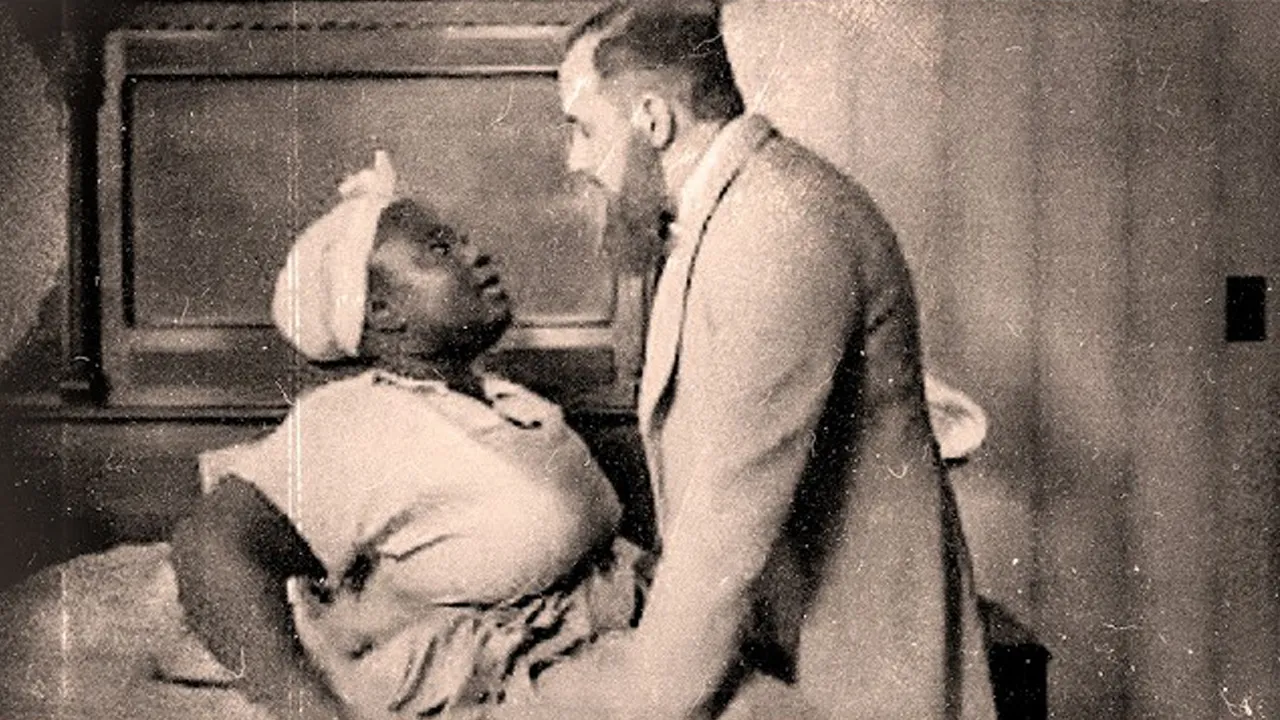
Added:Historical context of chattel slavery in the United States, including the Fugitive Slave Act of 1850 and the psychological horrors of the Middle Passage.
Familiarity with literary genres and devices, specifically Gothic fiction and Magical Realism, to understand how supernatural elements can represent real-world trauma.
An introduction to Toni Morrison's narrative style, characterized by non-linear timelines, multiple perspectives, and the concept of 'rememory'.
Basic understanding of the concept of generational trauma and how systemic oppression impacts individual and collective identity.
An in-depth study of the historical Margaret Garner, the escaped slave whose life and tragic choices served as the real-world inspiration for Sethe's story.
Critical analysis of 'Beloved' through advanced literary lenses, such as Psychoanalytic theory (repressed memory and maternal bonds) and Feminist criticism.
Comparative analysis of Morrison's other works, such as 'The Bluest Eye' or 'Song of Solomon', to trace her development of themes surrounding Black identity and community.
Exploration of the 'Neo-Slave Narrative' genre by comparing 'Beloved' with modern works like Octavia Butler's 'Kindred' or Colson Whitehead's 'The Underground Railroad'.
870.3K views15.9Klikes11:39Original Release: 2014-05-29
Hi, I'm John Green, this is Crash Course Literature, and today we're going to talk about Beloved.
MFTP: Mr. Green, Mr. Green! I actually like this book.
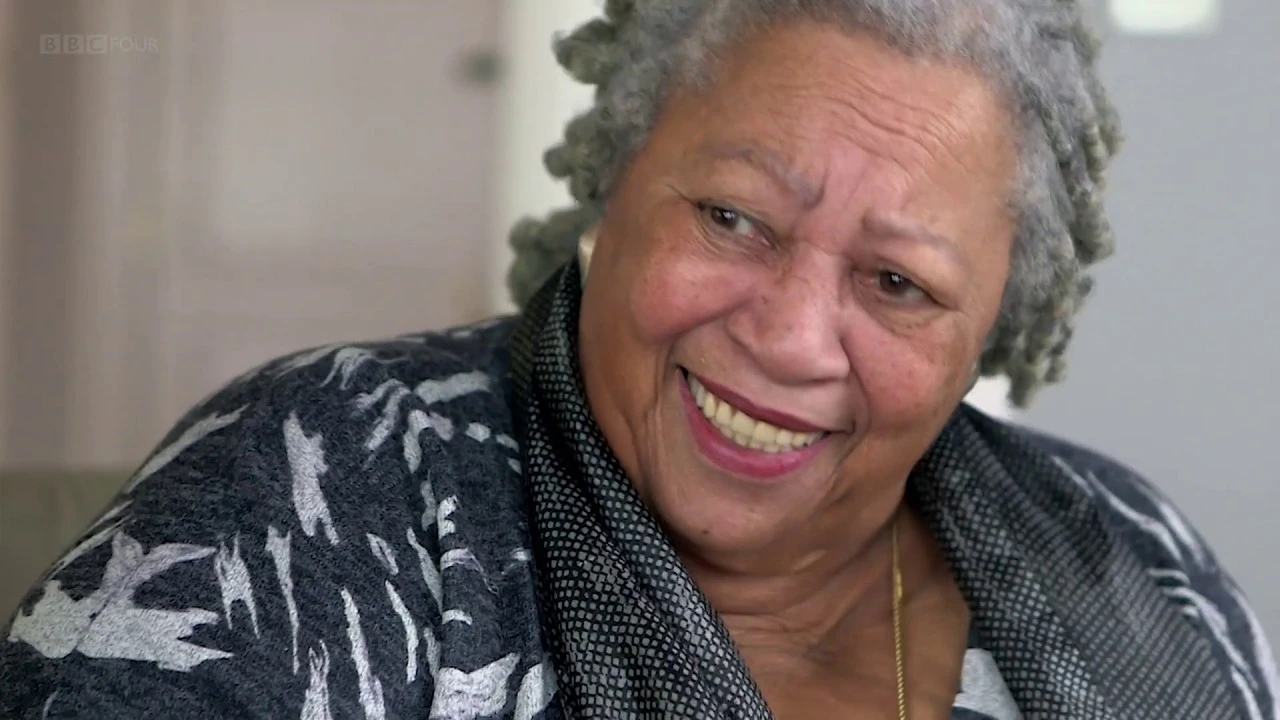
Yeah, I know you do, me from the past, because I'm you. So you read Song of Solomon in class the year that Tony Morrison won the Nobel Prize and that summer you read Beloved, the first, like, proper good book you ever read for fun.
Although in the case of Beloved, I suppose one uses the term 'fun' loosely.
So Morrison says in a foreword to the novel, "I wanted the reader to be kidnapped, thrown ruthlessly into an alien environment as the first step into a shared experience with the book's population." And that worked for you, me from the past. You were scared and upset and also suddenly turned on to the idea that good novels were not just hurdles that you had to jump over in order to get a high school diploma.
Good books could also be, like, ways into better understanding of the lives of others and history and race and consciousness and what the real difference is between those who walk on two legs and those who walk on four.
MFTP: Yeah, I don't know, it was pretty good. Wasn't that good.
Aauugh you're ruining it, me from the past, we were having a moment there.
MFTP: It's just kind of confusing, like, I couldn't figure out, like, if Beloved was a real ghost or not...?
Ugh, you just have this special gift for asking the least interesting possible question about everything we read!
If you take a hard line on the question of Beloved's quote unquote 'realness', or even spend too much time thinking about it, you're missing the point. I mean there are clues in the book that speak to each perspective. Some that suggest that Beloved is the ghost returned in human form, and others hinting that she is a woman who has recently escaped sexual slavery and exploitation who happens to just call herself Beloved.
We're not supposed to know definitively whether Beloved is really real, I mean isn't that the nature of ghosts? And it is her ghostliness that makes her such a brilliant embodiment of all those disremembered and unaccounted for. Ultimately, Beloved is a symbol for the 60 million and more lost in slavery whose stories and names we will never know.
[Theme Music] So critics often call good novels, like, 'beautiful' and 'haunting', but Beloved—both the character and the novel—are actually haunting. For me at least, when I'm reading this novel, my pulse begins to quicken as I feel the presence of unsettled wronged souls beneath and around me. I mean, there are so many untold fates and stories in this novel, right?
There's the 14-year-old boy who lives alone in the woods and never remembers living anywhere else; there are the other Pauls, the men on Paul D's chain gang; Sethe's mother; Halle.
Beloved embodies the disremembering that is woven into life and art in the United States.
I mean Morrison's story is fiction, it's full of improbabilities and ghosts, but it's also one of the most powerfully convincing depictions of slavery I've ever read. Because in the process of what Sethe and Paul call 'rememory', we're confronted with the reality of what love looks like in a world of twisted conscience, and we're finally left with the unassailable resiliency of human beings to continue in the face of all attempts to dehumanize them.
"Definitions belonged to the definers, not the defined," we read in Beloved, but in a world where slaves were defined as inhuman—I mean, in this story they're compared to hogs and cattle and horses—they find ways to humanness anyway. And that is what made slavery untenable, not Abraham Lincoln, not Harriet Beecher Stowe, but slaves themselves, unnamed and unknown, who resisted and persevered, and therein lies the hope in this very, very sad novel.
So let's start with mothers. The mother-child relationship is mythologized as, like, the most important among humans and most other animals, but in the context of slavery, as Morrison writes, "Unless care free, mother love is a killer," and that is not meant figuratively.
So, the central character of Beloved is Sethe, and she was raised basically motherless in a system of slavery that intentionally disrupted mother-child relationships. Like baby Sethe is fed by another woman's milk, for instance, which is one of the reasons that having her own milk stolen by the white men who abuse her is so horrifying to her.
Children were often sold separately from their mothers, marriages were not recognized, and in the era of the Fugitive Slave Act, even in freedom Sethe's children were still claimable property.
And when your children literally do not belong to you, what does it mean to be a mom?
Sethe's main mentor for mothering is her mother-in-law, Baby Suggs, but her life has also been profoundly disrupted by slavery's breaking of family. In all of Baby's life, as well as Sethe's own, men and women were moved around like checkers. Anybody Baby Suggs knew, let alone loved, who hadn't run off or been hanged got rented out, loaned out, bought up, brought back, stored up, mortgaged, won, stolen, or seized.
So Baby's eight children had six fathers. What she called 'the nastiness of life' was the shock she received upon learning that nobody stopped playing checkers just because the pieces included her children.
So Sethe stands in this disrupted line, but she tries to resist by holding onto her family.
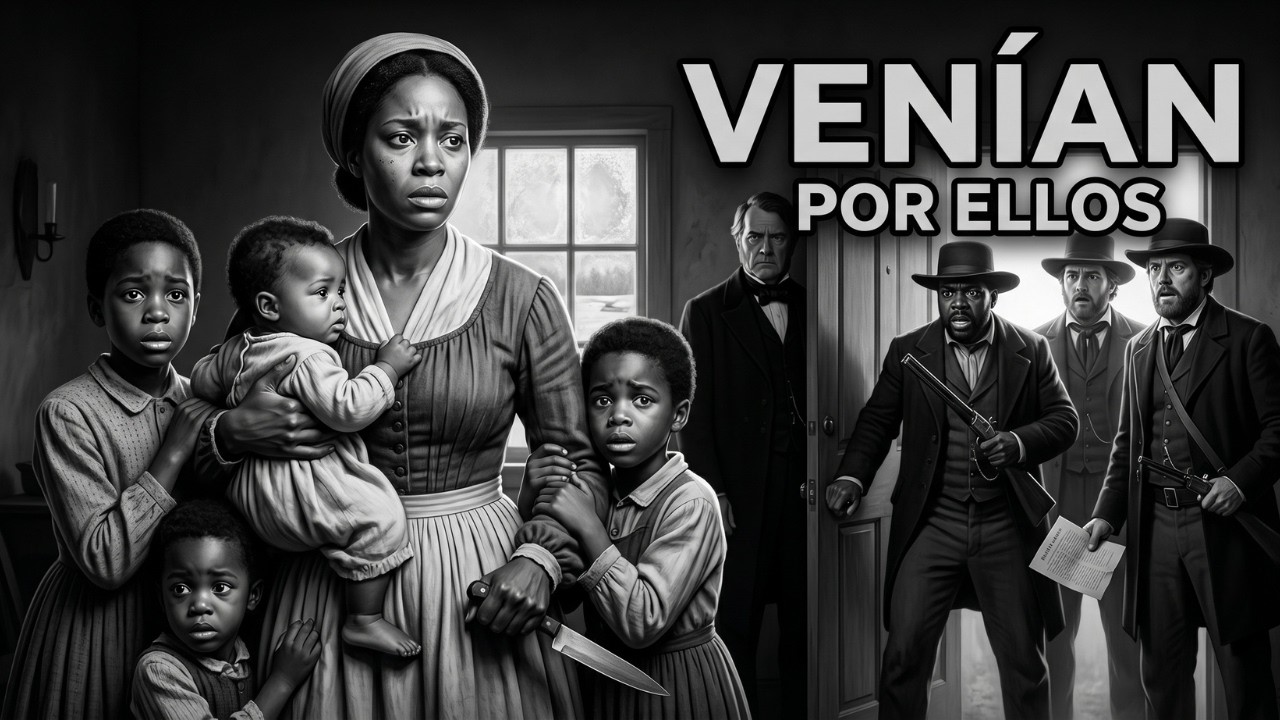
She gets all her children across the Ohio River to freedom from the slave farm Sweet Home where they were born, and she carries one in her womb on swollen feet to freedom, but when the slave-owner comes to Ohio 28 days later to claim them, she takes them out back to the woodshed to kill them all before he can take them. She only manages to kill one, sawing through its neck. "If I hadn't killed her," she says, "she would have died."
When explaining this to the Beloved who has wondered into her life in the flesh, she goes deeper into what she did and the intergenerational destruction that slavery put upon the mother line: "My plan was to take us all to the other side, where my own mam is. They stopped me from getting us there, but they didn't stop you from getting here. You came right on back like a good girl, like a daughter, which is what I wanted to be and would've been if my mam had been able to get out of the rice long enough before they hanged her and let me be one."
Sethe never got the chance to be a daughter, but she does get to be a mother, and the intensity of her mother-love is incomprehensible to everyone else— to her remaining daughter, Denver; to her lover, Paul D; to her entire community who ostracizes her.
"Your love is too thick," Paul D says to her.
He feels that she didn't have the right to decide her children's future, to deny them a future; he thinks her inhuman. "You got two feet, Sethe, not four." But what does it mean to have two feet in a system aimed at breaking families and individuals apart, especially women, who were not meant to be mothers and daughters, but cattle and calves?
This is made very explicit early in the novel when it's said that sex with a slave woman was not, for Halle, so different from sex with a calf.
To be a mother, and to allow her daughters to be daughters, Sethe has to escape the system itself.
First, for her, this means escape to the north and then, when that fails, it means escape to the other side.
As Sethe responds to Paul D's accusation of too-thick love, "Love is or it ain't. Thin love ain't love at all."
So, what, ultimately, is the truly human response to this oppression?
What is the proper response of the two-footed creature? Okay, let's go to the Thought Bubble.
So when Beloved begins, Sethe and Denver's house is haunted by the ghost of the dead baby, and then Paul D, who lived with Sethe at Sweet Home, arrives and in short order begins a relationship with Sethe, rids the house of the ghost, and takes Denver and Sethe to a carnival.
And then the adult Beloved wanders into their house 18 years after the already crawling baby was killed.
We slowly learn of Paul D's past, including his horrifying time being abused in every way imaginable on a chain gang, and of Sethe and Denver's isolated life in the house they share, while Beloved consumes more and more of Sethe's life. After Paul D finds out that Sethe killed her baby, the Sethe-Beloved-Denver dynamic goes from somewhat weird to truly terrifying.
They consume each other and each others' stories, and as Beloved grows larger, Sethe grows ever smaller. Even Denver is eventually locked out from Beloved and Sethe's mutual obsession.
The novel moves among many perspectives: third-person; close in on Baby Suggs or Denver or Paul D or Sethe; and then in moments, first-person from various perspectives. And it also changes tense from past to present, as if the past isn't really past, especially to the women in the novel. They cannot lock it away and move on. Sethe's attempt to kill herself and her family saves them all from a return to slavery, but she can't escape it. As Toni Morrison later said in an interview about Beloved, "You can't let the past strangle you if you're going to go forward. But nevertheless, the past is not going anywhere." Thanks, Thought Bubble.
So Beloved ends on a somewhat hopeful note. I mean, there's an attempted murder, but in the context of Beloved, that's actually fairly hopeful.
Denver begins to care for herself and she sees clearly both the value of holding on to the mother line and the danger of holding on to trauma. And then there's Paul D, who once had less freedom than a rooster called Mister, who's seen rape and death and dehumanization, who along with his fellow slaves has been made to feel like quote "Trespassers among the human race, Watchdogs without teeth; steer bulls without horns; gelded workhorses whose neigh and whinny could not be translated in a language responsible humans spoke."
Paul D believed that to survive such a world, you protected yourself and loved small. He picked the tiniest stars out of the sky to own. "A woman, a child, a brother?" he thinks, "A big love like that would split you wide open."
"Anything could stir him," we read, "and he tried hard not to love it." But Sethe helps him to see that quote, "To get to a place where you could love anything you chose—not to need permission for desire—well now, that was freedom." And he, in return, encourages Sethe to imagine a future, saying to her near the end of the novel, "Me and you, we got more yesterday than anybody. We need some kind of tomorrow."
So in the end, Denver has learned to stand on her own two feet and Beloved has moved on, only after the entire community has come to Sethe to forgive her. And Paul D opens himself up to big love, to thick love, to the love of Sethe, because quote, "he wants to put his story next to hers." And in his love, he describes what all the characters, who all love each other in their own ways, do for each other. He says, "She is a friend of my mind.
She gather me, man. The pieces I am, she gather them and give them back to me in all the right order."
The novel itself is a dialogue with the American idea of itself and with the original American sin of slavery, and it tells us something about how to walk on two feet, not four.
And yes, like any horror novel, it is revolting. It's revolting because we are forced to look at ourselves as we have been and as we still are in many ways. We've seen this from Oedipus to Slaughterhouse Five—great books can show us the ways that man can be a wolf to man.
But they also show us something of how to go on and why.
Morrison's genius here is in taking the tragedy of slavery and giving it shape for us to deal with it.
So often, horrors feel overwhelming to us, and formless, and that can make them unfathomable.
Near the end of the book, Morrison writes, "Disremembered and unaccounted for, she cannot be lost because no one is looking for her. And even if they were, how can they call her if they don't know her name?" But now we do have at least one name: Beloved.
Thanks for watching. I'll see you next week.
Crash Course is made with the help of all of these nice people and it exists because of your support on subbable.com, a voluntary subscription service that allows you to support Crash Course directly. You can also get great perks like signed posters or these sweet, sweet Crash Course bookmarks, and you'll help keep Crash Course free for everyone forever.
Thank you for watching, thanks for your support, and as we say in my hometown, Don't Forget To Be Awesome.
Up Next

5:55
Exploring Salman Rushdie's Midnight Children: Postcolonial Magical Realism & Indian History
@TEDEd
501.6K views•2019-09-10

13:43
Formalism in Literary Criticism: An Academic Lecture Overview
@mattalberhasky9952
39.1K views•2015-08-05
12:38
Frankenstein, Part 2: Romanticism and Critical Readings
@crashcourse
1.1M views•2014-04-03

15:25
1984: Orwell's Dystopian World and the Mechanisms of Totalitarianism
@AlternateHistoryHub
7M views•2017-03-04
Related Study Plans & Knowledge Roadmaps
Structured learning paths in Literature
literature
Graphic Memoirs: Visual Art, Trauma & History
01Foundations of Sequential Art and Visual Language
02Autographics and Processing Historical Trauma
03Visualizing Personal Trauma, Grief, and Graphic Medicine
+ 2 more learning modules
14h5 modules
Explore Roadmap
literature
Campus Novels: Evolution, Themes & Critique
01Introduction to the Campus Novel Genre
02Mid-Century Satire and the Post-War Academy
03Dark Academia and the Critique of Privilege
+ 2 more learning modules
14h5 modules
Explore Roadmap
literature
Theater of the Absurd: Philosophy & Plays
01Postwar Existentialism & Historical Roots
02Dismantling Narrative: Esslin & Absurdist Conventions
03Samuel Beckett and Tragicomic Existentialism
+ 2 more learning modules
12h5 modules
Explore Roadmap
literature
Revenge Tragedy: Justice, Madness & State
01Foundations of Early Modern English Theatre
02Anatomy of Revenge: Structural Conventions
03Psychological Complexity: Madness and Melancholy
+ 2 more learning modules
15h5 modules
Explore Roadmap