





















Salman Rushdie's 'Midnight's Children' is a seminal work of postcolonial literature that uses magical realism to explore India's transition from British colonialism to independence, with protagonist Saleem Sinai born at midnight on August 15, 1947, symbolically linked to the birth of India; the novel weaves together historical events like Gandhi's assassination, Partition, and the Indo-Pakistani Wars with fantastical elements where midnight-born children possess extraordinary powers, illustrating how Rushdie challenges singular historical narratives by presenting multiple versions of reality and emphasizing that no single truth captures the complexity of postcolonial identity.
Exploring Salman Rushdie's Midnight Children: Postcolonial Magical Realism & Indian History
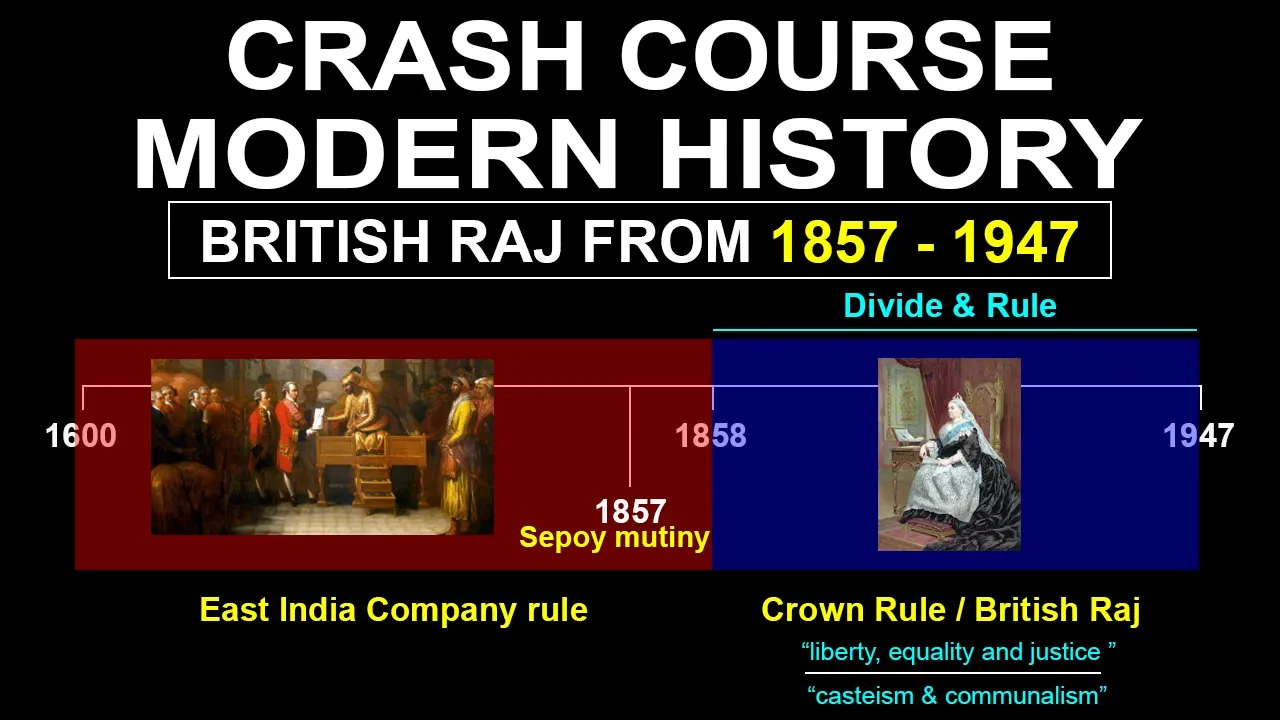
Added:A foundational understanding of modern Indian history, specifically the transition from the British Raj to Independence and the Partition of 1947.
An introduction to the literary genre of Magical Realism, including its origins and its primary characteristics of blending the mundane with the supernatural.
Basic concepts of Postcolonialism, such as cultural hybridity, identity reclamation, and the critique of colonial narratives.
Familiarity with postmodern narrative techniques, such as unreliable narration, fragmented structures, and metafiction.
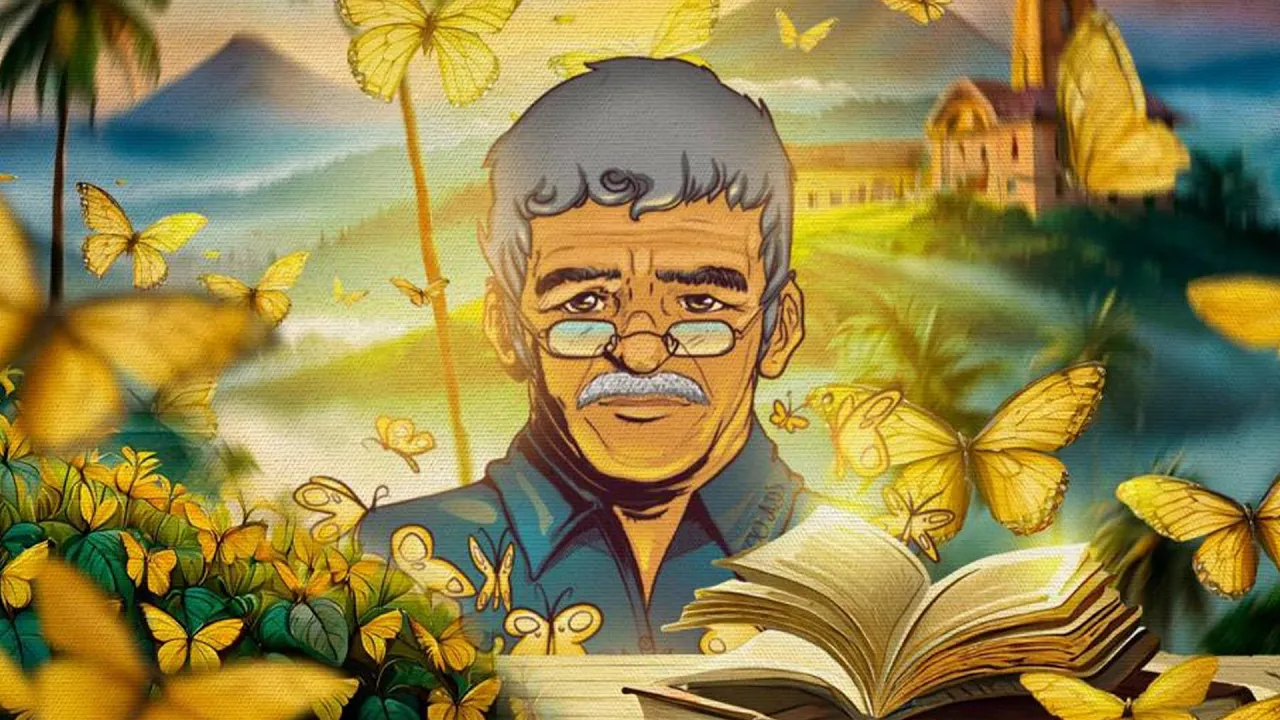
A comparative study of Magical Realism in South Asian literature versus Latin American literature (e.g., Gabriel García Márquez's work).
An exploration of 'Historiographic Metafiction'—how postcolonial novels challenge official historical archives through creative storytelling.
The theoretical framework of 'National Allegory' to analyze how individual character trajectories in literature mirror the socio-political development of a nation.
In-depth analysis of Rushdie’s subsequent works, such as 'Shame' or 'The Satanic Verses', to examine his ongoing critiques of post-independence nationalism and religious fundamentalism.
501.6K views18.2Klikes5:55Original Release: 2019-09-10
It begins with a countdown.
On August 14th, 1947, a woman in Bombay goes into labor as the clock ticks towards midnight.
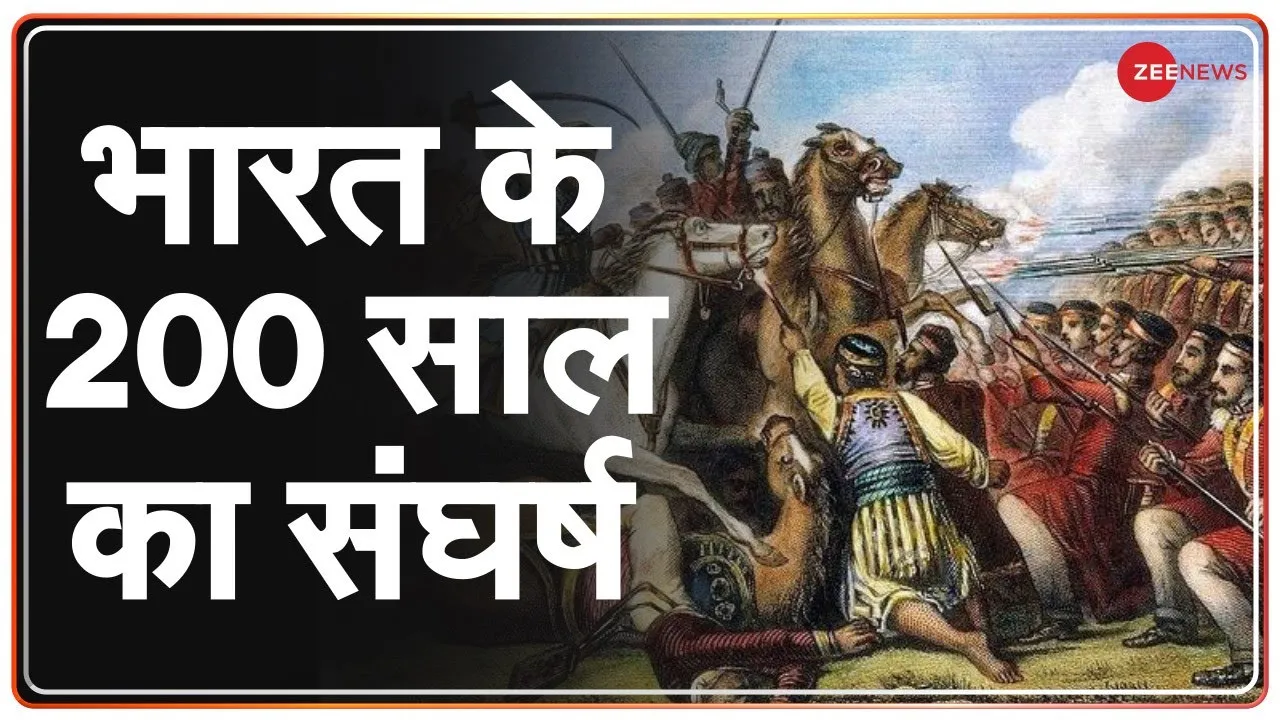
Across India, people hold their breath for the declaration of independence after nearly two centuries of British occupation and rule.
And at the stroke of midnight, a squirming infant and two new nations are born in perfect synchronicity.
These events form the foundation of "Midnight’s Children," a dazzling novel by the British-Indian author Salman Rushdie.
The baby who is the exact same age as the nation is Saleem Sinai, the novel’s protagonist.
His narrative stretches over 30 years of his life, jumping backwards and forwards in time to speculate on family secrets and deep-seated mysteries.
These include the greatest enigma of all: Saleem has magic powers, and they’re somehow related to the time of his birth.
And he’s not the only one.
All children born in and around the stroke of midnight are imbued with extraordinary powers; like Parvati the Witch, a spectacular conjurer; and Saleem’s nemesis Shiva, a gifted warrior.
With his powers of telepathy, Saleem forges connections with a vast network of the children of midnight— including a figure who can step through time and mirrors, a child who changes their gender when immersed in water, and multilingual conjoined twins.
Saleem acts as a delightful guide to magical happenings and historical context alike.
Although his birthday is a day of celebration, it also marks a turbulent period in Indian history.
In 1948, the leader of the Indian independence movement, Mahatma Gandhi, was assassinated.
Independence also coincided with Partition, which divided British-controlled India into the two nations of India and Pakistan.
This contributed to the outbreak of the Indo-Pakistani Wars in 1965 and 1971.
Saleem touches on all this and more, tracing the establishment of Bangladesh in 1971 and the emergency rule of Indira Gandhi.
This vast historical frame is one reason why "Midnight’s Children" is considered one of the most illuminating works of postcolonial literature ever written.
This genre typically addresses the experience of people living in colonized and formerly colonized countries, and explores the fallout through themes like revolution, migration, and identity.
Rushdie, who like Saleem was born in 1947, was educated in India and Britain, and is renowned for his cross-continental histories, political commentary, and magical realism.
He enriches "Midnight’s Children" with a plethora of Indian and Pakistani cultural references, from family traditions to food, religion and folktales.
Scribbling by night under the watchful eyes of his lover Padma, Saleem’s frame narrative echoes that of "1001 Nights," where a woman named Scheherazade tells her king a series of stories to keep herself alive.
And as Saleem sees it, 1001 is “the number of night, of magic, of alternative realities.” Over the course of the novel, Rushdie dazzles us with multiple versions of reality.
Sometimes, this is like reading a rollercoaster.
Saleem narrates: “Who what am I? My answer: I am everyone everything whose being-in- the-world affected was affected by mine.
I am anything that happens after I’ve gone which would not have happened if I had not come.
Nor am I particularly exceptional in this matter; each 'I,' every one of the now-six- hundred-million-plus of us, contains a similar multitude.
I repeat for the last time: to understand me, you’ll have to swallow a world.” Saleem’s narrative often has a breathless quality— and even as Rushdie depicts the cosmological consequences of a life, he questions the idea that we can ever condense history into a single narrative.
His mind-bending plot and shapeshifting characters have garnered continuing fascination and praise.
Not only did "Midnight’s Children" win the prestigious Man Booker Prize in its year of publication, but in a 2008 competition that pitted all 39 winners against each other, it was named the best of all the winners.
In a masterpiece of epic proportions, Rushdie reveals that there are no singular truths— rather, it’s wiser to believe in several versions of reality at once, hold many lives in the palms of our hands, and experience multiple moments in a single stroke of the clock.
Up Next
11:54
To Kill a Mockingbird: Harper Lee, Plot & Themes | Crash Course
@crashcourse
2.1M views•2014-05-01

13:43
Formalism in Literary Criticism: An Academic Lecture Overview
@mattalberhasky9952
39.1K views•2015-08-05
4:45
Sylvia Plath's Poetry: Why Her Unflinching Voice Still Matters
@TEDEd
2.3M views•2019-03-07

15:25
1984: Orwell's Dystopian World and the Mechanisms of Totalitarianism
@AlternateHistoryHub
7M views•2017-03-04
Related Study Plans & Knowledge Roadmaps
Structured learning paths in Literature
literature
Graphic Memoirs: Visual Art, Trauma & History
01Foundations of Sequential Art and Visual Language
02Autographics and Processing Historical Trauma
03Visualizing Personal Trauma, Grief, and Graphic Medicine
+ 2 more learning modules
14h5 modules
Explore Roadmap
literature
Campus Novels: Evolution, Themes & Critique
01Introduction to the Campus Novel Genre
02Mid-Century Satire and the Post-War Academy
03Dark Academia and the Critique of Privilege
+ 2 more learning modules
14h5 modules
Explore Roadmap
literature
Theater of the Absurd: Philosophy & Plays
01Postwar Existentialism & Historical Roots
02Dismantling Narrative: Esslin & Absurdist Conventions
03Samuel Beckett and Tragicomic Existentialism
+ 2 more learning modules
12h5 modules
Explore Roadmap
literature
Revenge Tragedy: Justice, Madness & State
01Foundations of Early Modern English Theatre
02Anatomy of Revenge: Structural Conventions
03Psychological Complexity: Madness and Melancholy
+ 2 more learning modules
15h5 modules
Explore Roadmap