







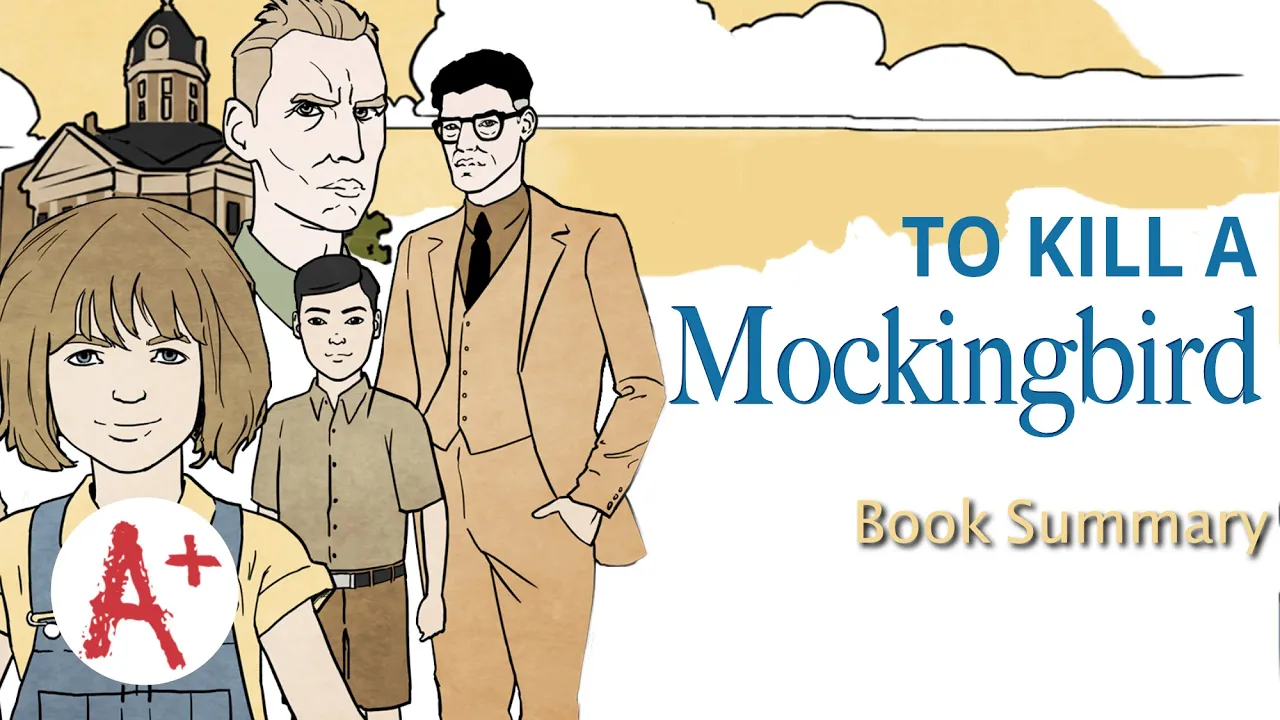


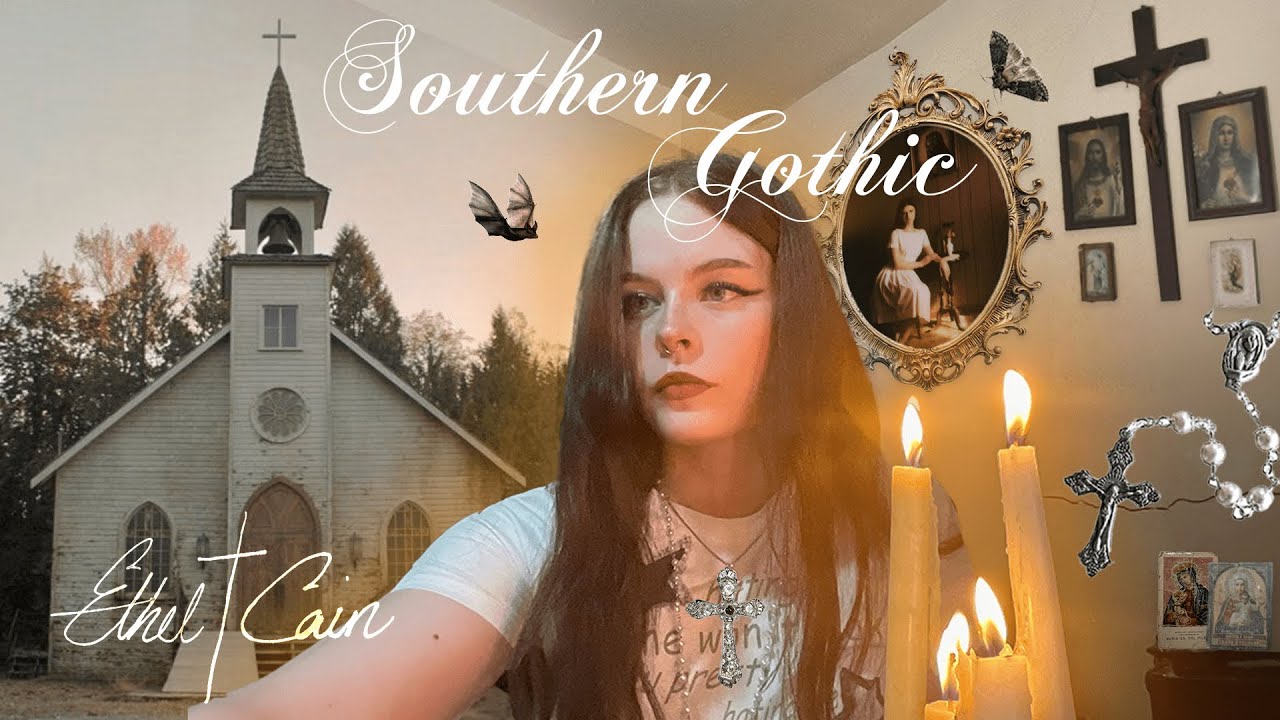












Harper Lee's To Kill a Mockingbird (1960), which won the Pulitzer Prize and has sold over 30 million copies, is a Southern Gothic bildungsroman that follows young Scout Finch's coming-of-age journey in Depression-era Alabama, using her perspective to explore themes of racial injustice, gender roles, and moral growth through the lens of her father Atticus Finch's defense of Tom Robinson, a Black man falsely accused of rape, while simultaneously depicting Scout's evolving understanding of empathy and her community's entrenched prejudices.
To Kill a Mockingbird: Harper Lee, Plot & Themes | Crash Course
Added:Historical context of the American South during the 1930s, specifically Jim Crow laws, racial segregation, and the Great Depression.
Fundamentals of literary analysis, including narrative perspective (specifically the use of a child narrator) and thematic development.
A basic familiarity with the plot and main characters of Harper Lee's 'To Kill a Mockingbird'.
The core characteristics of Gothic literature, which serves as the foundation for understanding the 'Southern Gothic' style.
An exploration of the Southern Gothic literary genre through other seminal works by authors like William Faulkner, Flannery O'Connor, and Carson McCullers.
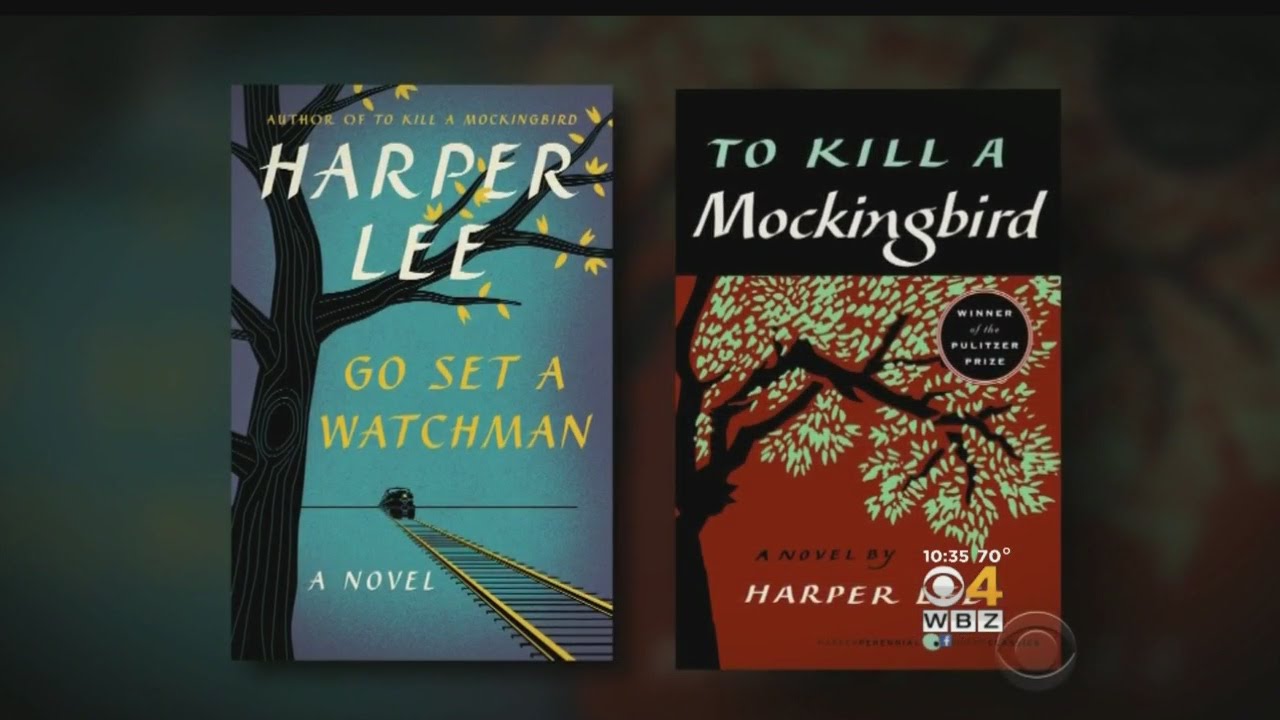
A comparative analysis of Harper Lee's 'Go Set a Watchman' to examine the evolution of key characters, particularly Atticus Finch.
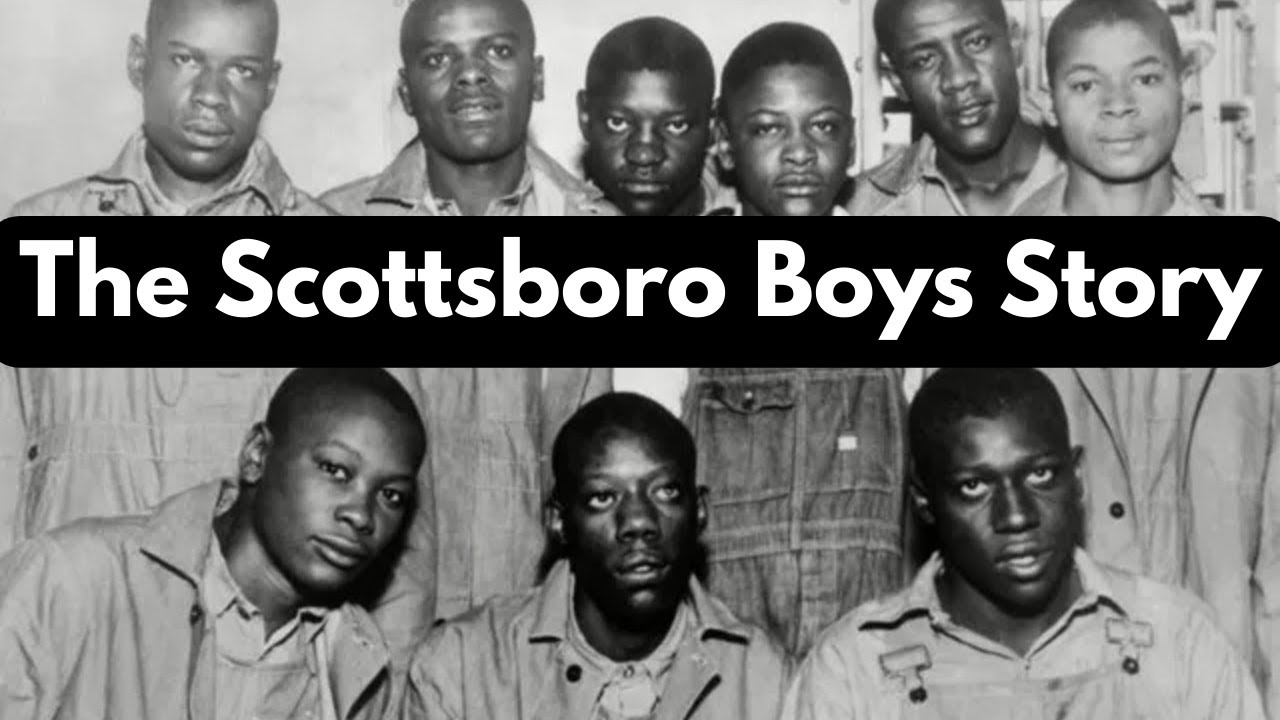
Historical research into the Scottsboro Boys trial and other real-world legal injustices of the 1930s that influenced the novel's courtroom drama.
Critical study of contemporary debates surrounding the novel, including the 'White Savior' trope and its pedagogical role in modern classrooms.
2.1M views31.1Klikes11:54Original Release: 2014-05-01
Hi, I’m John Green, this is Crash Course Literature, and today we’re going to talk about To Kill a Mockingbird. So Mockingbird is the rare class of American literature that is both one, relatively easy to read and two, pretty fun to read.
I mean, it’s got a cool and somewhat creepy plot that draws you in. There is a young girl, Scout; her brother, Jem; and their weird neighbor, Dill, who become obsessed with their even weirder neighbor, “Boo” Radley. The kids spend a lot of time reenacting Boo’s backstory — the highlight of which involves him allegedly stabbing his father in the leg with scissors — and the children become schooled in gender, race, and class relations in Depression-Era Alabama.
MFTP: Mr. Green, Mr. Green, I’m from Alabama!
I know, Me From the Past, because I am also you. Anyway, the kids, and also, of course, we as readers, are schooled in all things ethical by the Gregory Peckian Atticus Finch: public defender, sharpshooter, and one of the most beloved father figures in American fiction [Theme Music] So, To Kill a Mockingbird was an absolute literary sensation when it was published in 1960.
The Chicago Sunday Tribune called it “a novel of strong contemporary national significance.” Time Magazine said that it "teaches the reader an astonishing number of useful truths about little girls and about Southern life."
Now some disparaged Lee’s treatment of poor Southern whites and African Americans as one-dimensional, but Mockingbird so far, at least, has a kind of timeless appeal to it.
And to be fair to those critics, there is something simple about Mockingbird and the way that it imagines justice, but it’s also very compelling.
And there are times when it feels dated, but again, it was written in 1960.
Anyway, it won the 1961 Pulitzer Prize for fiction, it’s been printed over 30 million times, translated into over 40 languages. That’s a lot of dead mockingbirds. So who would write a story with such a depressing title? Well, Harper Lee.
So Harper Lee was born in 1926 in the bustling metropolis of Monroeville, Alabama.
MFTP: Alabama! Roll Tide! Ooooh, yes, Me From the Past, we are aware.
So critics often point out that there are many parallels between Lee’s childhood and that of her main character, Jean Louise “Scout” Finch. Lee’s father was an attorney who unsuccessfully defended two African American men accused of murder. Lee’s brother, Edwin, was four years her senior. The family employed an African-American housekeeper who was central in Lee’s upbringing. Lee’s mother, was not dead, but she was quite distant.
And Lee’s childhood playmate, Truman Persons, was a weird kid who spent extended periods visiting relatives next door. Now in literature, this boy Truman provided the model for Dill Harris. In real life, this Truman reinvented himself as Truman Capote — icon of American letters, author of Breakfast at Tiffany’s and In Cold Blood. That’s right - he spent his summers in Monroeville. In fact, there’s a longstanding literary conspiracy theory that since Harper Lee never wrote another book, maybe Truman Capote is the real author of To Kill a Mockingbird. Which, if you read Mockingbird alongside anything Truman Capote ever wrote, you will immediately realize that it’s just ridiculous. Harper Lee wrote To Kill a Mockingbird. Harper Lee has not written another novel.
She didn’t enjoy the spotlight and has declined most requests for interviews and speeches.
But she did write a brief, and piercing foreword to a later edition of Mockingbird: “The only good thing about Introductions is that in some cases they delay the dose to come. Mockingbird still says what it has to say; it has managed to survive the years without preamble.” Her publishers were like, “We need a new foreword so we can sell more copies of the book.” And she was like, “All right, but my introduction is gonna be about how useless introductions are.” All right, before we discuss how Mockingbird manages to “[say] what it has to say,” let’s look at the plot in the Thought Bubble: So, Scout, Jem, and Dill spend two summers sipping lemonade and cultivating fantasies about their mysterious homebound neighbor, “Boo” Radley and daring one another to touch his door. The children act out events from Boo’s life. And although Boo remains hidden, his chewing gum does not. This gum, along with other gifts, appears in a tree outside the Radley house.
Meanwhile, Scout learns that her father, Atticus, has been appointed to defend Tom Robinson, a black man with a deformed left arm, wrongly accused of raping Mayella Ewell, a friendless white nineteen-year old who lives behind a garbage dump. Mayella lives with a gaggle of filthy and uneducated siblings and an often-drunk father, who beats and possibly molests her.
Despite Tom’s obvious innocence, I mean, Mayella was hit on the right side of her face by a man without a left arm, the white population of Maycomb resents Atticus for being his court appointed public defender. With the help of Jem and Scout, Atticus dissuades a mob from lynching Tom. Atticus is less successful, however, at swaying the jury. Tom is declared guilty; He escapes from prison and then is shot and killed.
Bob Ewell, the father of Mayella, is miffed at being ridiculed by Atticus in court. After spitting at Atticus, Ewell attacks his children. Boo Radley comes to the rescues and makes good on his history of stabbing people, and the children are saved.
Thanks, Thought Bubble. So there we see, like, two of the biggest problems with To Kill a Mockingbird. First, that the Ewell family is kind of like one-dimensionally villainous.
And secondly, that the great hero of the story is this, like, rich white dude.
But having acknowledged that, I don’t wanna miss all the stuff that’s still really resonant and important to contemporary readers. So throughout the book, Scout is encouraged to look at things from other peoples’ perspectives. Which of course was, like, the great fundamental failure of the Jim Crow South. Like at the end of the novel, Scout no longer sees Boo as this, like, terrifying other, she’s able to imagine how events appear from his perspective. And in doing so, she’s following Atticus’s famous advice: “You never really understand a person until you consider things from his point of view -- until you climb into his skin and walk around in it.“ I just want to clarifying that we’re not talking about, like, Silence of the Lambs-style walking around in someone else’s skin, I’m talking about empathy.
That said, it occurs to me that bringing up Silence of the Lambs allows us to talk about the macabre and Mockingbird as, like, a Southern Gothic novel.
So you all remember the Gothic novel from Frankenstein, with its blend of horror and its interest in the sublime. So Gothic literature relies on archetypes, like grotesque monsters, innocent victims, heroic knights, etc.—to create dramatic tension and it uses dark settings, like medieval castles, to heighten the emotional impact of a story.
Now in the Southern Gothic movement that emerged in the American South, “real,” although still fictional, people replace those Gothic archetypes. Like at the start of Mockingbird, Boo is a reclusive monster; Jem, Scout and Dill are his potential victims; and Atticus is an heroic knight.
Now later, ignorance, racism, and violence prove to be the novel’s real “monsters.” And Tom and Mayella are their victims. Atticus, of course, gets to remain the hero.
And in Southern Gothic fiction, decaying buildings or bodies replace the medieval castle as the dark settings that heighten a story’s emotional impact.
I mean, we’re told that Maycomb is a town in which, “In rainy weather the streets turned to red slop; grass grew on the sidewalks, the courthouse sagged in the square.” And many of Maycomb’s inhabitants also have bodies that are broken, infected, or off-balance, right? Like Atticus is too old to play tackle football and, to his daughter’s inexplicable horror, he wears glasses.
He’s a monster! Now he’s a regular person. Now I’m a monster again.
Mrs. Dubose, the cantankerous morphine addict, has a particularly heinous mouth. Tom’s left arm has been torn apart in a cotton gin. Jem’s left arm is eventually deformed by Ewell. And ultimately, these broken, off-balance, horrifying attributes of Maycomb and its inhabitants expose the corruption and decay of Southern culture itself. So Mockingbird is one of the great Southern Gothic novels, but it’s also one of the great American bildungsromans.
Like Jane Eyre, it’s a novel about a young person’s education and coming of age. So at the beginning, I’m like - Ooohhhh, it must be time for the open letter.
Oh hey there, Darth Vader. An open letter to the German language: Dear German, you’ve given us so much. “Vader” for instance, the German word for “father.” “Schadenfreude”, the pleasure we experience when others suffer. “Kummerspeck”, which literally translates to “grief bacon,” the way we eat when we’re sad.
And, of course, terms like “sitzpinkler,” a man who sits to pee.
But perhaps your greatest gift is “bildungsroman,” because not only did you give us the word, you also kind of gave us the idea. So this sitzpinkler would like to thank you for that and all of your many linguistic gifts. Best wishes, John Green.
So at the beginning of Mockingbird, a six-year-old Scout can already read the newspaper, in spite of a lack of formal education, and when Scout demonstrates that she can read at school, Miss Caroline — a teacher with a loose grasp of John Dewey’s philosophy — commands: “Now tell your father not to teach you any more. It’s best to begin reading with a fresh mind. You tell him I’ll take over from here and try to undo the damage—“ But of course both academically and morally, Scout doesn’t get her education in school, she gets it precisely from her father. Scout’s also called a tomboy, and most women in her community critique how she speaks and dresses and plays. Yet who can blame her for wanting to be a tomboy? Jem often tells her that girls are hateful and embarrassing and frivolous and worse, when Dill begins “following Jem about,” he starts to treat Scout as an object: “He had asked me earlier in the summer to marry him, then he promptly forgot about it. He staked me out, marked as his property, said I was the only girl he would ever love, then he neglected me.” Scout consistently resists the notion that women are a form of property. In fact, throughout the novel, Lee uses Scout’s reflections to expose the performative aspects of gender — or the ways in which gender, like, results from what feminist critic Judith Butler describes as the “repeated stylization of the body, a set of repeated acts within a highly rigid regulatory frame that congeal over time to produce the appearance of substance, of a natural sort of being.” That’s a bit complicated, but basically, Scout stands in opposition to the idea that you have to do or be a, b, or c in order to, like, be a real woman. But of course, there are limits to how much Scout can act like a boy. Like when Jem and Dill spend afternoons “going in naked” swimming in a creek, Scout is left to divide the “lonely hours” between Calpurnia, the housekeeper, and Miss Maudie. And these two women prove to be Scout’s strongest female allies. Calpurnia supports Scout’s independence by teaching her to write in the kitchen. And Miss Maudie bolsters Scout’s confidence. Like when a neighbor ridicules Scout for wearing pants, Scout recalls, “Miss Maudie’s hand closed tightly on mine, and I said nothing. Its warmth was enough.” Vitally, neither of these women is able to serve on a jury in the town of Maycomb — Maudie, “because she’s a woman,” and Calpurnia, because she is both a woman and black. This not-so-subtle social commentary provides the backbone for Harper Lee’s argument about the dangers of limiting women’s political rights, like had those women sat on that jury, Lee implies, the trial might have gone very differently. But of course, the jury ends up taking the side of Mayella Ewell. And although it’s difficult to forgive her for wrongly accusing Tom, it’s clear that she is also a victim of this perverse form of patriarchy.
Rather than being permitted to, like, attend school and have a normal life, Mayella has been forced to care for seven siblings and keep house for a violent, drunk father. She’s isolated and friendless, and she tries to kiss Tom and when her father catches her, he beats her, and possibly rapes her. And only then does she allow herself to try to escape that violence by blaming someone else. Mayella’s world is circumscribed and terrifying, which is strongly contrasted with Scout’s pre-adolescent freedom and wonder.
So in the end, I would argue that what some critics read as a one-dimensional treatment of the Ewell family, turns out to be a pretty sophisticated commentary on gender relations in the time and place of the novel. This reminds us again that when we read, we as readers are empowered to make choices. A novel really is a collaboration between the author and the reader. And Harper Lee’s great novel may be straightforward in its prose and in its plot, but when it comes to opportunities for that collaboration, it is extremely rich. Thanks for watching. I’ll see you next week.
Crash Course is made by all of these nice people, and it exists because of your support at Subbable.com, a voluntary subscription service that allows us to keep Crash Course free for everyone forever. Through your subscription, you can also get great perks. Thank you for making Crash Course possible; thanks for watching, and as we say in my hometown, “Don’t forget to be awesome.”
Up Next

16:23
Southern Gothic Literature: An Academic Overview
@RCcola-444
35.4K views•2015-04-10

13:43
Formalism in Literary Criticism: An Academic Lecture Overview
@mattalberhasky9952
39.1K views•2015-08-05
12:38
Frankenstein, Part 2: Romanticism and Critical Readings
@crashcourse
1.1M views•2014-04-03

15:25
1984: Orwell's Dystopian World and the Mechanisms of Totalitarianism
@AlternateHistoryHub
7M views•2017-03-04
Related Study Plans & Knowledge Roadmaps
Structured learning paths in Literature
literature
Graphic Memoirs: Visual Art, Trauma & History
01Foundations of Sequential Art and Visual Language
02Autographics and Processing Historical Trauma
03Visualizing Personal Trauma, Grief, and Graphic Medicine
+ 2 more learning modules
14h5 modules
Explore Roadmap
literature
Campus Novels: Evolution, Themes & Critique
01Introduction to the Campus Novel Genre
02Mid-Century Satire and the Post-War Academy
03Dark Academia and the Critique of Privilege
+ 2 more learning modules
14h5 modules
Explore Roadmap
literature
Theater of the Absurd: Philosophy & Plays
01Postwar Existentialism & Historical Roots
02Dismantling Narrative: Esslin & Absurdist Conventions
03Samuel Beckett and Tragicomic Existentialism
+ 2 more learning modules
12h5 modules
Explore Roadmap
literature
Revenge Tragedy: Justice, Madness & State
01Foundations of Early Modern English Theatre
02Anatomy of Revenge: Structural Conventions
03Psychological Complexity: Madness and Melancholy
+ 2 more learning modules
15h5 modules
Explore Roadmap