
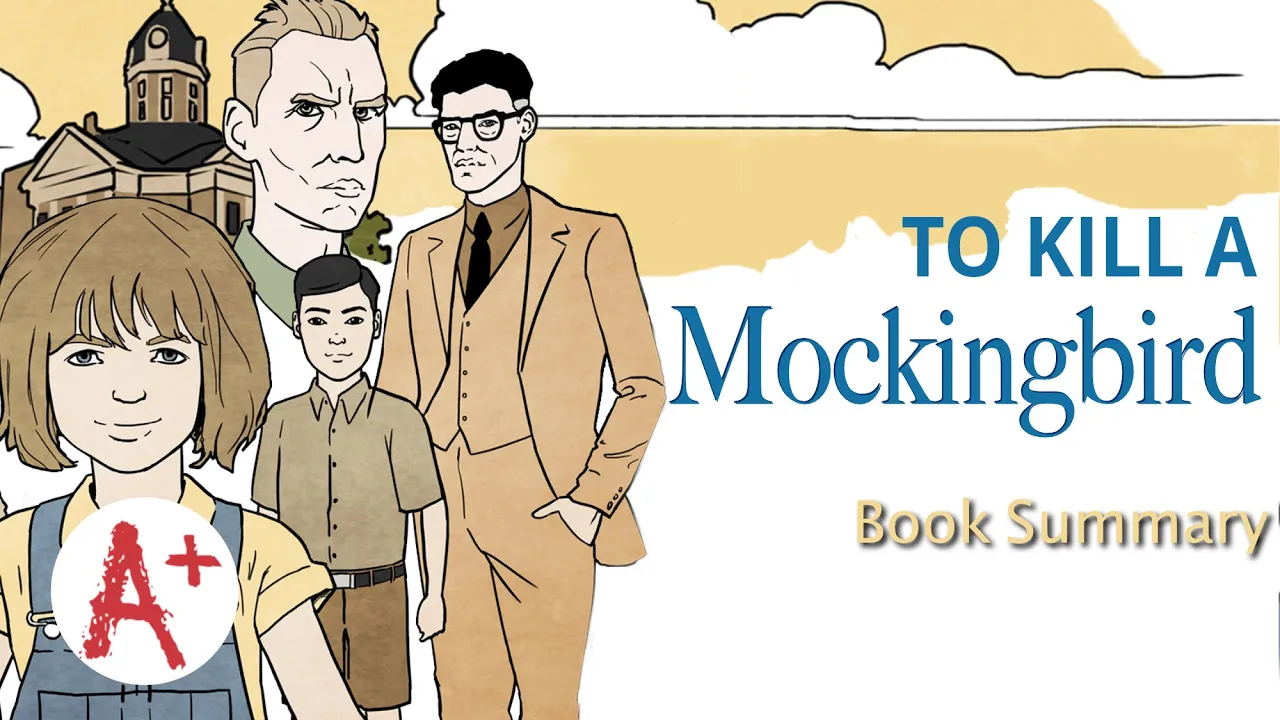



















Harper Lee's To Kill a Mockingbird, while widely taught as an anti-racist text in American schools, has been criticized for centering white perspectives on Black oppression through Scout's eyes rather than centering Black voices, and for creating a white savior narrative around Atticus Finch that absolves white readers of accountability; this complexity was further revealed when Lee's previously unpublished manuscript Go Set A Watchman was published in 2015, showing Atticus holding racist views that contradicted his portrayal in the original novel.
To Kill a Mockingbird Analyzed: A Classic Novel's Modern Critique
Added:Familiarity with the plot, major characters (Atticus Finch, Scout, Tom Robinson), and setting of Harper Lee's novel 'To Kill a Mockingbird'.
Understanding of the historical context of the American South during the Great Depression, specifically regarding Jim Crow laws, racial segregation, and systemic inequality.
Basic knowledge of narrative perspective, particularly the use of a child narrator (Scout) to explore complex adult themes.
An introductory understanding of literary tropes, specifically the 'white savior' trope, which is central to modern critical analyses of the text.
Critical analysis of Harper Lee's 'Go Set a Watchman' to examine how the character of Atticus Finch and the themes of race are recontextualized.
Comparative study of African American literature from the same era or addressing similar themes (such as works by Richard Wright, James Baldwin, or Toni Morrison) to contrast perspectives on racial injustice.
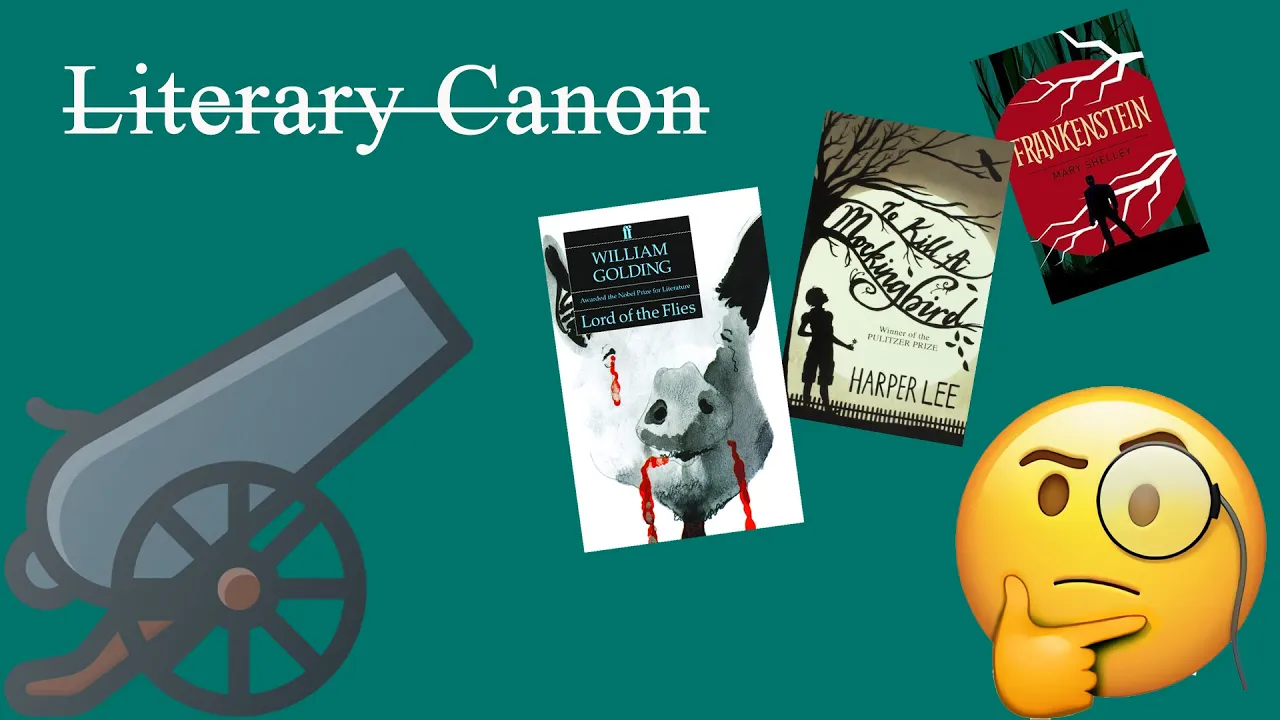
Exploration of the debates surrounding the literary canon, specifically focusing on why certain texts are prioritized in school curricula and the arguments for and against replacing them.
Application of Critical Race Theory (CRT) to analyze how systemic racism and legal structures are depicted and critiqued in mid-20th-century American fiction.
126.6K views6.4Klikes12:37Original Release: 2021-08-25
One of the trademark texts of the American school system is Harper Lee’s 1960 novel To Kill a Mockingbird. For decades it has been widely read in high schools and middle schools an a key anti-racist text. But how did this novel, with its Southern Gothic and Bildungsroman elements become a book that in 2006 the British said “every adult should read before they die” ahead of the Bible.
That’s a flex.
[Open] To Kill a Mockingbird was written by Harper Lee and was loosely based on Lee’s real life experiences, the book tells the story of Jean Louise Finch, better known as Scout, a young girl growing up during the Great Depression in the fictional town of Maycomb, Alabama with her older brother Jeremy aka Jem, and her widowed lawyer father, Atticus Finch. A name, that will be imprinted on the world … forever.
Atticus is appointed to defend a Black man named Tom Robinson, who is accused of sexually assaulting a white woman named Mayella Ewell. This causes a lot of racial harassment towards the Finch family and at one point in the novel Atticus has to stop an attempted lynching, with the help of Scout and some of the other children.
Scout and Jem watch the trial from the Black section of the courtroom. It is revealed that Mayella is lying and attempted to seduce Tom, but was beaten by her father, who has been sexually abusing his daughter. Despite being labeled as “white trash” Tom is convicted for the assault and is later killed while trying to escape jail.
Mayella’s father, Bob, tries to get revenge on Atticus by attacking Jem and Scout, but are saved by the town recluse Boo Radley. Bob is killed by a knife wound from Radley, but it is covered up and Scout is forever changed by this experience.
So who was the mind behind the mockingbird?
Born Nelle Harper Lee in Monroeville, Alabama, she was also the young daughter of a lawyer father named Amasa Coleman Lee. One of her childhood friends, and long time writing companion was Truman Capote, who visited their town during the summers. They would end up living near each other years later in New York City.
After publishing Mockingbird, Lee went on a bunch of book tours, worked on the film adaptation of her book, and then just went on to lead the successful life of someone who published one awesome book.
Just one.
One book.
No sequels.
[oh fortuna] The success of To Kill a Mockingbird was instant and surpassed the expectations of Lee tenfold. Professor Alice Hall Petry wrote in the introduction of On Harper Lee: Essays and Reflections: “During the eighty-year period between 1895 and 1975, Mockingbird was the third-best-selling novel in the United States, and the seventh-best-selling book of any kind. Sales have not fallen off in the ensuing twenty-five years. In 2001, for example, more than 1 million copies of Mockingbird were sold.” It has been kept alive through it’s pop culture influence via the film adaptation, and being a regularly included text for middle school children. Of course, just because a book is taught at school doesn’t automatically make it popular.
People aren’t this interested in something like The Scarlet Letter, and even that wasn’t as huge of a success when it was released.
UNC chapel hill Professor Emerita Doris Betts ties it’s longevity to the very simplistic morality of the text in her essay “The Mockingbird’s Throat: A Personal Reflection”: “In Scout Finch, Lee has produced a girl as appealing as Jo March of Little Women but stopped her story sooner than Louisa May Alcott stopped hers, and the point where initiation became new maturity. By producing no other novels, Lee also has left readers feeling that this book has particular significance in that it contains all she had to say, or all she could.” And with all of that symbolism and light discussion of race it raises the question: what exactly is the value of teaching To Kill A Mockingbird versus an actual book about race written by a Black author?
Gerald Early, professor of African American Studies, states: “I read To Kill a Mockingbird the summer before I read Richard Wright’s Uncle Tom’s Children, a famous collection of stories by a black writer about race in the South. The difference was, of course, astonishing because the perspectives were so clearly different[…] The Wright stories taught me two contradictory but inescapable facts: first, that books like To Kill a Mockingbird were inadequate for me as a black reader and failed, in their fumbling literal way, to give me black people as I knew them to be; and second, that I needed books like To Kill a Mockingbird if ever I were going to understand the South as a construction of the white southern mind.” To Kill A Mockingbird offers some semblance of safety for white readers who do not want to feel alienated or called out by an anti-racist text. They can see Scout and her father, Atticus, as a fair depiction of Southern progressivism and put the legacy of racism and all it’s terrors on “other white people.” But it does that, as Professor Isaac Saney writes in “The Case Against To Kill a Mockingbird” by making Atticus a white savior and turning the Black characters and their community into pawns on Scout’s journey.
“Perhaps the most egregious characteristic of the novel is the denial of the historical agency of Black people. They are robbed of their role as subjects of history, reduced to mere objects who are passive hapless victims; mere spectators and bystanders in the struggle against their own oppression and exploitation.” Which brings us to the complex issues of Atticus Finch himself, one of literatures great white heroes. What does the role he plays in the books actually say about the role white people play as allies? Well, not much of anything.
According to bad tweeter Malcolm Gladwell in his essay, “The Courthouse Ring: Atticus Finch and the limits of Southern liberalism”: “Finch will stand up to racists. He’ll use his moral authority to shame them into silence. He will leave the judge standing on the sidewalk while he shakes hands with Negroes. What he will not do is look at the problem of racism outside the immediate context of Mr. Cunningham, Mr. Levy, and the island community of Maycomb, Alabama.” Atticus delivering an inspired defense of Tom Robinson and protecting him has positioned him, especially in the eyes of white audiences, as the perfect ally. Until Go Set A Watchman.
And it is at this point I am obligated to have to discuss Go Set A Watchman.
Remember how Harper Lee only had that one awesome book? Well, that changed in 2015 when Go Set A Watchman was released. The book’s road to publication was a controversial one.
The novel was “re-discovered” and Lee released a statement with Harper Collins: "In the mid-1950s, I completed a novel called Go Set a Watchman. It features the character known as Scout as an adult woman and I thought it a pretty decent effort. My editor, who was taken by the flashbacks to Scout's childhood, persuaded me to write a novel from the point of view of the young Scout. I was a first-time writer, so I did as I was told. I hadn't realized it had survived, so was surprised and delighted when my dear friend and lawyer Tonja Carter discovered it. After much thought and hesitation I shared it with a handful of people I trust and was pleased to hear that they considered it worthy of publication. I am humbled and amazed that this will now be published after all these years."
Some argued that this “re-discovery” was suspicious because there were conflicting reports about the state of Lee’s mental health and if this was ever meant to be published. But people were excited. I mean it is the sequel to one of the most popular books of all time … why wouldn’t they publish?
And then it was bad. Like really, really bad.
Alexandra Petri of the Washington Post said in her review: “It’s the Jar Jar of classic literature: It takes place in a beloved fictional universe, and it’s uncomfortably racist. It has, at best, a scholarly interest. I can’t imagine that Lee would want it to represent her in the world. I don’t think it should have been published.” Michiko Kakutani for The New York Times specifically addressed in her piece the big point that got people upset: the fact that their beloved Atticus Finch was … racist.
“[...] Atticus is a racist who once attended a Klan meeting, who says things like “The Negroes down here are still in their childhood as a people.” Or asks his daughter: “Do you want Negroes by the carload in our schools and churches and theaters? Do you want them in our world?” In “Mockingbird,” a book once described by Oprah Winfrey as “our national novel,” Atticus praised American courts as “the great levelers,” dedicated to the proposition that “all men are created equal.” In “Watchman,” set in the 1950s in the era of the Brown v. Board of Education decision, he denounces the Supreme Court, says he wants his home state “to be left alone to keep house without advice from the N.A.A.C.P.” and describes N.A.A.C.P.-paid lawyers as “standing around like buzzards.” This was a really awkward moment to be an Atticus.
People were betrayed. It was the last season of Game of Thrones levels of distraught. Their Khaleesi turned fascist so quickly and without warning. Some people, like Naa Baako Ako-Adjei, a writer and educator, saw this as another reason why To Kill A Mockingbird is not that ideal of a text to teach about anti-racism. Not simply because it was a very white voice on Black oppression, but also elements of classism on which kind of white people are to “blame” for the situation in Jim Crow America: “...Lee is certainly not the first Southerner to blame poor whites for racist violence in the South; it’s a practice with its own long history. In 1932, the well-known liberal, Southern journalist, Gerald White Johnson, wrote in the then influential North American Review that “Southerners with money in the bank do not lynch” and that lynch mobs were usually composed of “fellows who have not two nickels to rub together, those inexpressibly forlorn outcasts known in the South as the poor white trash.”...There are, however, moments in the novel in which you see Lee falter in her attempts to make only poor whites responsible for the region’s race problem and absolve ‘fine families’ for the nature of things in the South when she acknowledges that both rich and poor whites mistreat black people. “As you grow older,” Atticus tells Jem, “you’ll see white men cheat black men every day of your life, but let me tell you something and don’t forget it—whenever a white man does that to a black man, no matter who he is, how rich he is, or how fine a family he comes from, that white man is trash” (p. 233). But in the end, Lee reverts back to scapegoating Bob Ewell and other poor, ‘white trash.’” For so long, Mockingbird was able to give white readers a story to teach them about racism, but also remove them from any accountability of perpetuating that system. They had Atticus to show them that it wasn't all of them, and Watchman took that away.
When I finally read To Kill a Mockingbird, for myself in college, I found it a very readable novel and I got through it fairly quickly. While well written, and definitely good, I found myself glad I didn’t read it for school because the question I found myself asking is: who is this for?
It is not without merit, but it doesn’t center Black characters or Black experiences, it simply observes them through Scout. It is an introduction to empathy but at a distance, and that layer of separation is deeply felt. At least to me. I don’t think we need to stop teaching To Kill a Mockingbird, but I think it should be followed up with a Bildungsroman that actually puts you in the space of a Black person, rather than a white child.
Up Next

16:47
Faulkner & Race: An Analysis of His Works
@BookishTexan
4.1K views•2019-07-18

40:06
Street Haunting: Virginia Woolf’s London Essay Analysis
@ExtraLiteraryAffairs
146 views•2025-01-24

6:08
Point of View in Fiction: First Person vs. Third Person
@magicalthriftyteacher
153.8K views•2014-03-31

15:25
1984: Orwell's Dystopian World and the Mechanisms of Totalitarianism
@AlternateHistoryHub
7M views•2017-03-04
Related Study Plans & Knowledge Roadmaps
Structured learning paths in Literature
literature
Graphic Memoirs: Visual Art, Trauma & History
01Foundations of Sequential Art and Visual Language
02Autographics and Processing Historical Trauma
03Visualizing Personal Trauma, Grief, and Graphic Medicine
+ 2 more learning modules
14h5 modules
Explore Roadmap
literature
Campus Novels: Evolution, Themes & Critique
01Introduction to the Campus Novel Genre
02Mid-Century Satire and the Post-War Academy
03Dark Academia and the Critique of Privilege
+ 2 more learning modules
14h5 modules
Explore Roadmap
literature
Theater of the Absurd: Philosophy & Plays
01Postwar Existentialism & Historical Roots
02Dismantling Narrative: Esslin & Absurdist Conventions
03Samuel Beckett and Tragicomic Existentialism
+ 2 more learning modules
12h5 modules
Explore Roadmap
literature
Revenge Tragedy: Justice, Madness & State
01Foundations of Early Modern English Theatre
02Anatomy of Revenge: Structural Conventions
03Psychological Complexity: Madness and Melancholy
+ 2 more learning modules
15h5 modules
Explore Roadmap