












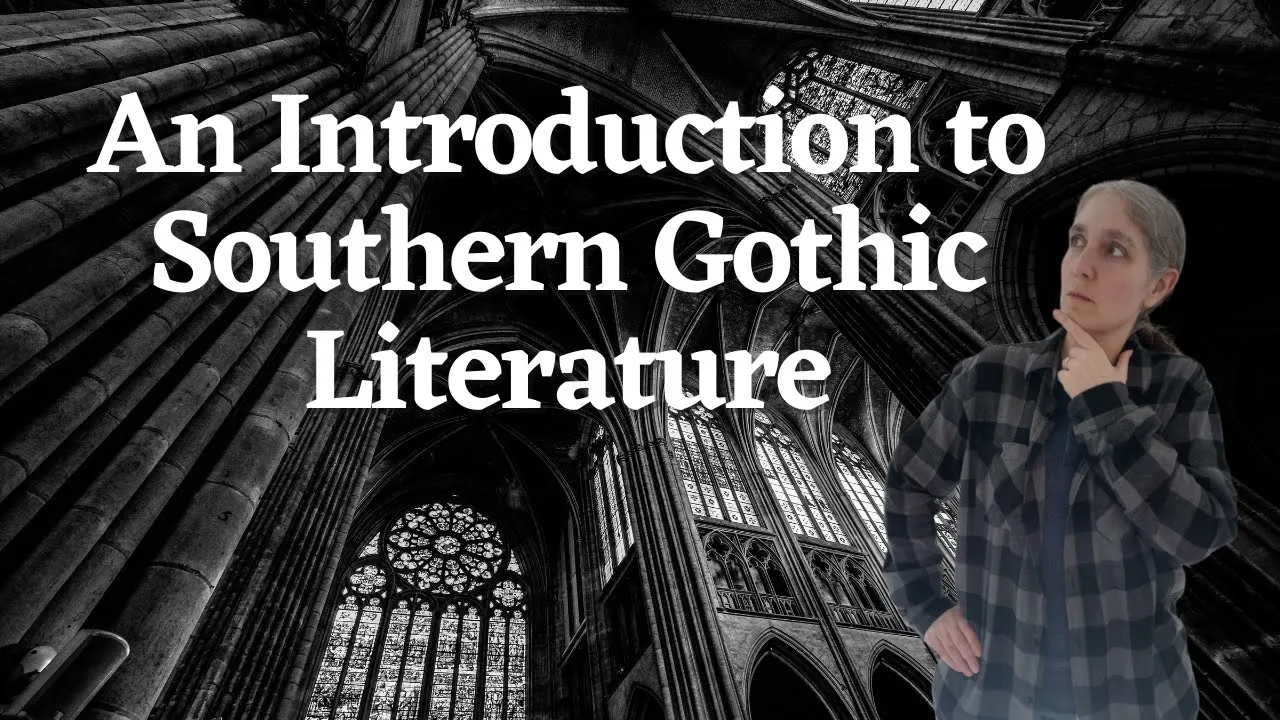







Southern Gothic is a literary tradition that developed in the United States during the early 20th century, rooted in European Gothic conventions but uniquely focused on critiquing Southern society through themes of moral blindness based on race and social class, the decay of the post-Civil War South, and the rejection of rigid social expectations; key elements include the fragility of refined social surfaces concealing disturbing realities, the transition from slavery to sharecropping, and recurring character archetypes like the reclusive spinster and the ex-slave, all framed by irony and absurdity that demonstrates the futility of resisting social progress.
Southern Gothic Literature: An Academic Overview
Added:Familiarity with traditional 18th and 19th-century Gothic literature conventions, including elements of terror, the sublime, and decaying settings.
A foundational understanding of the history of the American South, specifically the aftermath of the Civil War, Reconstruction, and the socio-economic decline that followed.
Basic literary analysis skills, particularly the ability to identify themes, motifs, symbolism, and social commentary in narrative fiction.
An understanding of literary regionalism and how geographical and cultural landscapes shape the narrative style and thematic concerns of American writers.
In-depth analysis of major Southern Gothic texts and authors, such as the works of William Faulkner, Flannery O'Connor, Carson McCullers, and Tennessee Williams.
An examination of the 'grotesque' in literature, exploring how physical and psychological aberrations are used to critique social norms and moral decay.
Comparative studies of Southern Gothic literature with other regional gothic subgenres, such as Midwestern Gothic, Suburban Gothic, or Postcolonial Gothic.
An exploration of how Southern Gothic themes and aesthetics have influenced contemporary media, including modern film, television series, and contemporary Southern fiction.
35.4K views518likes16:23Original Release: 2015-04-10
hello um we are going to be talking about the concept of Southern Gothic literature today um on the leftand side at the bottom you'll see Tennessee Williams and on the right hand side you'll see William fauler um two of our Great Southern Gothic writers both of whom we're reading in this class so where's the term Southern goth that come from well it comes from this is Sou United States um it's a literary tradition that developed in the early 20th century and it's rooted in the gothic style which had been popular in European literature in the previous century and of course we'd read Edgar Allen Poe who is pretty much the king of Gothic literature in the United States um and again just as a reminder Gothic style focuses on the maob the grotesque the supernatural the Sinister and a feeling of decay some of the writers of Southern Gothic fiction who you may have heard of include Tennesse Williams William fauler flanner O Conor who wrote one of the great short stories called A Good Man is Hard to Find Carson McCullers kkin Caldwell yodora Welty Walker piery and Harper Lee who wrote tequilla mocking bird um 55 years after she published that book she has a new new book coming out um apparently it was written 50 years ago it was just never published so some little interesting anticipation for this coming up now where Gothic writers had used the characteristics of Gothic writing to build suspense Southern Gothic writers use the conventions of Gothic literature to critique the society in which they lived especially and there's two areas that they really focused on one the moral blindness of Southerners and again it's this idea that you know um if a young black man whistles at a white woman then it would be okay to Lynch him however if a wealthy white woman had one of her servants killed because he did something wrong people would turn a blind eye so you know it's this idea that our moral compass is really um a determinant based on race based on social class based on who you are in their society the second aspect is the decay of the society that they had lived in for two centuries keeping in mind that you know the South was an agricultural area that was sustained by slave labor that in 1865 after the end of the Civil War was basically taken away from the south and we're going to talk about some of the aspects of that and how it plays into this Southern Gothic style also they use the same techniques to celebrate some of the more quaint features of Southern life and again you know the idea here is not necessarily to mock but to appreciate the um some of the Southern things that are done and again you know if you enjoy writing about or reading about um certain cultures you know the Southern Gothic tradition is extremely interesting and captures a generation or two of people that were only 40 or 50 years removed from the Civil War so a big issue is the rejection of the social expectations Southern Gothic writers were interested in exploring the extreme antisocial behaviors that were often a reaction against the confining code of social conduct and here you see pictures on the left a woman with her hoop skirts on obviously this is not someone who can do a lot of activities in this dress it was a very difficult maneuvering process to get down the street you know you were literally walking in dust and animal um poop for lack of a better word um mud on the rightand side you would see the men with all the finery the frilly shirts the top hats the major ties the way the suits are cut and part of this tradition of dressing in this particular way comes from the British aristocracy in the 1700s you saw the rise of the Enlightenment and this was the idea that humans are capable of anything and as such we need to declare our superiority the superiority translates into our manners how we act how we dress the rules of society so you saw this rise of the rules of society becoming a dominant feature in how to assess whether someone is upper class or middle class and this was huge in England and if you've watched a show like dtown Abbey you will see that they have all these ridiculous rules about when you have to bow or curtsy or call someone sir or lady or whatever this translates into the American World in the sense that again you had to differentiate the classes and by doing so you did it through the manners the social conduct the clothes the expectations that Society had on these upper class Southerners and so you had these people like Tennessee Williams and William fauler writing about these kinds of people because their lives were no longer living this kind of existence you know they weren't Rich they had been pretty much bankrupted after the Civil War so you have these people like blanch deis in Street carame desire who no longer have the lifestyle in which they grew up and how they are managing or not managing this kind of scenario the other issue that we often saw in Southern Gothic literature is the belief that daily life and the refined surface of the social order were fragile and elusory disguising the disturbing realities or Twisted psyches so what you want to think about is you know you go in the forest you pick up a rock or a log and what's underneath is it nice and clear no there's all kinds of creepy crawlies and Moss and bugs and everything that you can imagine that could freak you out and it's the same concept in the sense that on the surface you have these men and women who are dressed to the nines that have the most polite manners who call each other by their you know Mis or M but underneath all of this lay a Heart of Darkness so to speak on the left you'll see a picture of a slave who had been beaten and these are the scars and again what you think about is that these Southerners who were so focused on manners and polite company this is what their society wrought on the right hand side you'll see a raffle you could get a horse or motto girl um m is a term it's an old term that referred to a person who is biracial and of course in those days children that were biracial generally came about because the master of the um house would often times dally with the slave girls resulting in pregnancy um and oftentimes these young women um were not given any opportunity to keep their children because of course the lady of the house necessarily wouldn't want her husband's bastard child around especially a bastard child that was a different color so again you see all these manners and politeness and underneath is this murky lifestyle that is really just rejecting of all social niceties so Southern Gothic focuses on some broad ideas including the tensions between the North and the South the old ideas versus modernity you know the north was the industrialized center of the country it's where mechanics or the mechanical Revolution took place in this country whereas The South was way more Agricultural and live this old-fashioned ideal there's also the complexities of a changing World Order um as I had said the Civil War decimated the South's eon eony um if the economy relies on slave labor and then you take slavery away you know everything has to change it's like doubling the minimum wage in this country everything would change um and of course with the end of the Civil War came the fact that slave labor was made illegal and at this time um we saw something called sharecropping come into place the concept of share propping is basically um the slaves who had been freed were given an acre or two um by the master of the um farm that they had worked on and they could work the property they were given and of course they had to give the vast majority of their crop to the person who owned the property um so really it transitioned From Slavery into a modified slavery y because really these folks weren't making much more than enough to live on another aspect is the disappearing Realms of gentility and aristocratic ideas um and again we've seen a lot of this with street car name desire and blanch deis and this idea that you're raised to be an upper class Aristocrat and the world changes and all of a sudden you're not trained to do anything so what you do see is Northerners also known as Carpet Baggers who came South to help rebuild after the Civil War and then you know they were really there to build their own fortune so they were often seen as opportunistic and um in Southern Gothic literature the Northerners or Carpet Baggers are often considered to be negative characters other Southern Gothic elements included the confused understanding of Good and Evil um the idea that there is no clearcut right or wrong also secrets and Revelations about the dark underbelly of people's lives again those secrets that we all keep that we would be horrified if people knew about them um the transition in society from a focus on manners and social class to a focus on money and wealth you know that today is how we define success is how much money you have um people who are extremely happy but but don't have a lot of money are not necessarily seen as successful we focus on the fact that a certain actor makes $20 million for a movie or a um industrialist makes a billion dollars more this year than he made last year the fact of the matter is that you know Society changed radically after the Civil War and this was a big issue and then we have the rigid social constraints placed on women because things were changing um the role of women hadn't really changed that much so black men got the right to vote but women had not and women were not going to get the right to vote until after 50 years more than 50 years after the Civil War um women didn't have many options other than getting married and having children um they could join a Convent and become a none in some cases they could become a nurse or a teacher but that was really not for the upper class people a lot of times so you know these upper class women were literally bred to marry and have Southern babies and so their constraints were not just social but they were economic too some classic Gothic characters that you tend to see a lot um we have the reclusive spinster the woman who never married and does not uh is not seen very often um the town drunk who's often used as com comedic relief um the ex slave who does jobs for his former master and these are these relationships um between the races that are sometimes the most interesting parts of a story uh the northern Carpet Baggers who represent the worst parts of modernity the quiet wise lawyer that we saw in Tequila Mockingbird Criminal with a skewed moral compass and the odd person who may have a physical or mental handicap and you know the southern characters who are odd are classic um and as we see through even modern representations of these Southern characters it becomes um a archetype that really hearkens back to what we would call the fool of Shakespearean days the Paradox of the odd character who speaks a general sense of honesty and truth but in a silly way lastly when we look at Southern Gothic literature we have to understand that irony and absurdity became a very huge element in all of this and it demonstrates the futility in trying to stop time and reverse it you know the fact of the matter is time is a human construction we have built the concept of time and it is Unstoppable um in a general sense now in a personal sense we all have memories and often times they fade they change they become elastic as we age the story that you remember about Grandma or Grandpa when you're 12 is going to fade a little bit as you get older because as we get older our memories do shift in a sense and as a consequence they become elastic in the sense that we're not entirely sure how accurate that memory is and ultimately what we want to think about with Southern Gothic literature is that the southerners tried very hard to hold on to their old way of life but you know what the literature shows is that you can't stop progress no matter how much you want to focus on manners and gentility and attitude progress is going to happen no matter what because Time Marches On so that's going to finish us up for Southern Gothic literature if you have any questions please email or text me and I hope you have a terrific day thank you
Up Next

62:25
Furnace Creek Novel Discussion | National Humanities Center
@NationalHumanitiesCenter
320 views•2022-05-18

13:43
Formalism in Literary Criticism: An Academic Lecture Overview
@mattalberhasky9952
39.1K views•2015-08-05

6:08
Point of View in Fiction: First Person vs. Third Person
@magicalthriftyteacher
153.8K views•2014-03-31

15:25
1984: Orwell's Dystopian World and the Mechanisms of Totalitarianism
@AlternateHistoryHub
7M views•2017-03-04
Related Study Plans & Knowledge Roadmaps
Structured learning paths in Literature
literature
Graphic Memoirs: Visual Art, Trauma & History
01Foundations of Sequential Art and Visual Language
02Autographics and Processing Historical Trauma
03Visualizing Personal Trauma, Grief, and Graphic Medicine
+ 2 more learning modules
14h5 modules
Explore Roadmap
literature
Campus Novels: Evolution, Themes & Critique
01Introduction to the Campus Novel Genre
02Mid-Century Satire and the Post-War Academy
03Dark Academia and the Critique of Privilege
+ 2 more learning modules
14h5 modules
Explore Roadmap
literature
Theater of the Absurd: Philosophy & Plays
01Postwar Existentialism & Historical Roots
02Dismantling Narrative: Esslin & Absurdist Conventions
03Samuel Beckett and Tragicomic Existentialism
+ 2 more learning modules
12h5 modules
Explore Roadmap
literature
Revenge Tragedy: Justice, Madness & State
01Foundations of Early Modern English Theatre
02Anatomy of Revenge: Structural Conventions
03Psychological Complexity: Madness and Melancholy
+ 2 more learning modules
15h5 modules
Explore Roadmap