

















![The Truth About Probate in Oklahoma, What Most Homeowners Don't Know [August 2025]](https://i.ytimg.com/vi_webp/XMJwOWAGpB8/maxresdefault.webp)



A trust is a legal relationship where a grantor transfers assets to a trustee who manages them for beneficiaries. Revocable trusts, which can be changed or revoked by the grantor, are primarily used to avoid probate and maintain control over assets during the grantor's lifetime, with assets becoming irrevocable upon death. Irrevocable trusts, which cannot be changed once established, are used to remove assets from an estate for estate tax purposes, qualify for government benefits like Medicaid, provide creditor protection, or protect beneficiaries who may not manage assets responsibly.
Revocable vs Irrevocable Trusts: Key Differences Explained
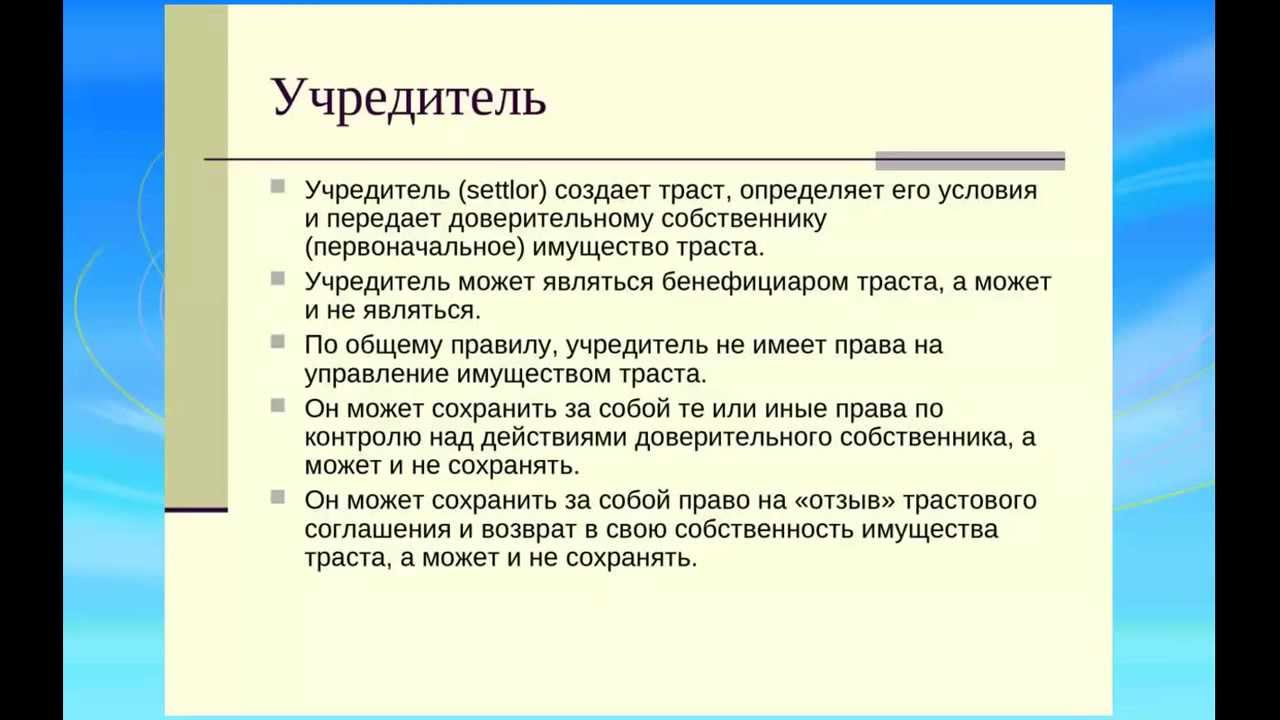
Added:The basic definition of a trust and its core parties: the grantor (settlor), the trustee, and the beneficiary.
The fundamentals of estate planning, including the difference between a will and a trust, and the concept of probate.
Basic property law concepts, specifically how legal title versus beneficial interest works in asset ownership.
An introductory understanding of personal taxation, specifically how assets are valued for estate tax purposes.
The tax treatment of trusts, including how Grantor Trust Rules apply to income tax and how assets receive a step-up in basis.
Specialized irrevocable trust structures, such as Irrevocable Life Insurance Trusts (ILITs) and Charitable Remainder Trusts (CRTs).
Advanced asset protection strategies and how spendthrift clauses safeguard wealth from creditors and lawsuits.
The mechanical process of funding a trust, including retitling real estate, re-registering accounts, and updating beneficiary designations.
Legal mechanisms for modifying or terminating an irrevocable trust, such as trust decanting or judicial modification.
22.9K views338likes50:08Original Release: 2024-01-06
hey everybody Paul rabay here another YouTube live stream uh quick intro then we're going to jump right into it again my name is Paul ramay I'm an estate planning attorney I've been helping thousands tens of thousands of individuals couples families get and keep their estate legal Affairs in order I'm the founder of a national estate planning Law Firm that helps people around the country get and keep their estate planning legal Affairs in order if you have an interest in starting a discussion feel free to check in the description there's a link where you can request a zoom meeting and that's enough right there so let's Jump Right In All right we have a topic today it's um I really don't I really don't get too excited when somebody because I get the question often just people want to know they they don't have much working knowledge of the whole estate planning trust stuff they just ask you know Paul what's the difference between a revocable and an irrevocable trust and you know I kind of want to give the the the kind of smart elic answer well a revocable trust is revocable and then irrevocable trust is irrevocable you can't change it you can't revoke it but that's not a fair answer a a fair answer not only defines what they are but they talk about the the best uses of the different kinds of trust so what we're going to do today is I'm going to talk about I really feel like for the beginners we got to talk about just what a trust is kind of trust 101 and then that'll be just the first one of four parts then we'll go into part two where we'll talk about kind of what a revocable trust is and and what are its most popular uses and then we'll talk about number three I know what's an irrevocable trust and what are its most popular uses and why and then four I want to have a a case study to really put it all together and talk about how a you couple might utilize one form of a tri TR or another and how these things kind of go back and forth um so before I jump in you've got some chat there feel free to share some questions comments experiences be as be as clear as you can I know at the end I always go through the chat I always make my best effort as at answering the questions but sometimes the way people type in the questions I really don't know what they're asking so just be as clear as you can and that'll uh make it easier for me to interpret what you're asking and hopefully give you give you the answer that you're looking for or at least the right answer to the question that you're asking okay so what's a trust this is going to be real quick um a trust you know technically it's defined not as an entity many people think of an LLC as an entity as a corporation as an entity but technically and this is really just semantics it doesn't matter a trust is really defined as a relationship where a person who sets up a trust and transfer their assets one or more assets to a trust we're going to call that person who sets up a trust and transfers their assets to it we're going to call that person the set lore but it's also referred to as a grantor or a trust or sometimes you see it called a trust maker we'll call it a set lore all those terms mean the same thing the person who set up a trust and transferred assets to that trust and really they're not transferring assets to the trust because a trust is a relationship they're transferring those assets to a trustee and it could be co-trustees but let's just call it a trustee for now set lore transfers assets to a trustee and the trustee's job is to manage that asset and and use it wisely for one or more beneficiaries there's another party or parties to a trust beneficiaries of a trust so you have the set lore who sets up the trust and transfers assets to a trust or transfers assets to a trustee whose job it is to use it wisely for the beneficiaries let me just give you one example and then we'll jump right into some of the revocable and irrevocable stuff so let's say a husband has U $2 million let's just keep it simple yeah he's got all kinds of other stuff but let's say he has a an account it could be a brokerage account with $2 million in it and he's thinking if I die you know my my wife is great I have a great wife um but I'm not feeling real good about just leaving my wife that $2 million I know her intentions are well and I feel confident that feel fairly confident that she would use that money for the right reasons and then when she dies she'd leave it to the people that you know that I would want to have it but you never know what happens in the future so so what that husband does is and he could do this during his lifetime but typically it's done when he dies when he dies he leaves that let's call it that $2 million account or whatever value it is when he dies he leaves that account to a trust because he doesn't want his wife while he loves her he wants to provide for her he he doesn't want her to make a mistake after he dies he's not going to be around to kind of watch after her he doesn't want her to make a mistake either an intentional mistake or an unintentional unintentional mistake intentional might be leaving it to her next spouse or unintentional might be her getting influenced by someone in her later years when her mind starts to slip and that $2 million or whatever it might grow to just vanishes never W never winds up going to the husband's kids so so he says I'm going to leave that $2 million to a trust he says I'm going to name my wife and my oldest adult child to be the co-trustees of that trust and he's gonna say if if that account after I die produces some income let's let all that income go to my wife so if it's a $2 million account let's say it produces you know interest dividends rental income whatever it might be let's say it produces $3 $40,000 a year of income he's like I want my wife to get that income that this trust produces after I die so she can have that that's hers and then he says he may also say I want to make I also want the if the the co trustees if they both determine that my wife after I die needs distributions of principal for her maybe they'll use the typical standard health education maintenance and support he says I would want those co-trustees if they both agree together I don't want my wife to be able to do it by herself because somebody might influence her into taking distributions that she really shouldn't so he says let let my my wife and my oldest son be the co-trustees if they both determine that she needs it let's go ahead and allow the co-trustees to make principal distributions to my wife D while she lives after I pass away and then the trust says now when my wife later passes away the Trust In and whatever trust assets remain revert back to the husband's children who whoever the husband listed as the ultimate principal beneficiaries of that trust to receive the trust assets when his surviving wife later passes away so that's just one example of a trust when we talk about what is a trust all right so that's part one what is a trust there's many different kinds we're going to get into that now let's go to part two of four of this live stream let's start talking because this is a revocable versus irre irrevocable conversation let's jump into the revocable and sometimes when I when I say that people will say now now which one are you talking about so I always have to say we're talking about revocable with an R starts with an R revocable okay first let me just jump right into the use of it and then we'll maybe you know Define it as part of the process so the overwhelming reason the the you know if there's a reason number one to use a revocable with an R trust it's this and then number two is just a way distant second so we're going to focus on the primary and and overwhelming reason people use revocable trust and that's to avoid probate so when we talk about using revocable trust to avoid probate we got to talk about what Pro probate is quickly probate is that court and attorney involved process of when you die with Assets in your name now certain assets are going to be left to beneficiaries like 401ks IRAs retirement accounts life insurance you'll have beneficiaries on there those are non probate assets but you're likely to own some probate assets that are in your name when you die they'll be frozen maybe an interest in a business or a home or a piece of rental property or shares of stock and those assets will be frozen if they're in your name when you die and so your survivors have to hire lawyers and and and lawyers and The Heirs and judges and other people are all involved in this court process because it's been determined by the powers at be that our our government our judicial system is in charge of of making sure that when somebody dies with Assets in their name that uh the government or or or the judicial system kind of oversees the making sure the the debts get paid and making sure the assets get distributed to the right air so we can't fight that system it exists but we can take advantage of other rules so people what people do to avoid their survivors and and a lot of people complain about probate very expensive they say very timec consuming they say and just an all-around hassle they say so you hear that all the time for people who have been through it it it isn't an act an absolute disaster in every case there have been some simple probates there have been some some that have been streamlined but you hear a lot about the because the the the government is involved courts are involved and because lawyers are involved and it's fairly complicated because you have to follow a a predetermined set of procedures um and then you know lawyers of financial institutions are involved um it just can get messy fairly quickly um so what many people do in an attempt to enable their survivors to avoid um that probate process is is they create what I'll call their revocable living trust living trust means it's set up during your lifetime and uh as opposed uh well we'll get to other circumstances later but when I say living trust it's I'm referring to it's set up during your lifetime and the idea here is is create your living trust and when your living trust is prepared is written up you're going to designate that you are the trustee during your lifetime so you can manage everything during your lifetime you designate a successor trustee to be in charge of your trust when you die and you'll provide in your trust who the beneficiaries of your trust are um to receive those trust assets to have that successor trustee distribute the trust assets to the beneficiaries when you pass away so um why why would you want that trust to be revocable well well you want to be able to change it and uh because we we typically want to have as much control as we want to have over our things but still accomplish what we're trying to accomplish so um people like the revocable aspect of a trust because it enables them to stay in control someone creates a revocable living trust they transfer their home their stock account their brokerage account their l their business um they transfer all of those things so so John Doe would transfer his home from John Doe to John Doe as Trustee of the John Doe trust or Jane and John Doe May transfer their home from John and Jane Doe to JN and Jane do as Trustees of the John and Jane do trust so all that paperwork gets signed gets recorded in the county where the property is located they go to their brokerage firm and they transfer their brokerage account from John and Jane Doe to John and Jane Doe as Trustees of the John and Jane do brokerage account and so now they have their revocable living trust they want it to be revocable because we'll get to irrevocable in a minute but irrevocable generally means you can't change it so John and James set up their revocable living trust they you know in in their trust they said when we both pass away we want $50,000 to go to each of our grandchildren we want the rest to go to our three children equally whatever they wanted to do they maybe named an adult child as the successor Trustee of their trust to handle all of that and so they like the aspect of being of it being revocable because it can be revocable and it it accomplishes what they're trying to accomplish of enabling their survivors to avoid probate and now and and if they change their mind and want to increase what they provide for their grandchildren or add a charity or change any aspect of that revocable trust they have the flexibility to do that because it's a revocable trust that they can revoke and put everything back into their name they can amend they can restate it so that's the that's the primary purpose for a revocable trust or a revocable living trust um something people set up during their lifetime and actually transfer their assets to it the key there is you don't want to die with Assets in your name you want those assets that would otherwise have to go through probate to be in your trust so then that successor trustee can go to the brokerage firm with your death certificate after you pass away with your death certificate and a and perhaps a copy of the trust instrument that shows that they are the successor trustee that financial institution is not going to need any court orders is not going to need lawyers involved um the beneficiaries won't have to be represented by lawyers and go through Court proceedings that successor trustee will be able to immediately access the brokerage account and make those appropriate dispersements to the appropriate beneficiaries if your house is in the trust when you pass away the next day your successor trustee can put the for sale sign in the in the yard actually close on a sale because things in a trust are just easier to handle than they are from a formal estate that must go through the court process okay so hopefully that gives you just a an idea I will say that if John or John and Jane Doe set up a revocable living trust let's keep it simple let's say it's just John by himself if he set up a revocable trust then the moment he dies and we haven't gotten irrevocable trust yet but but just keep in mind that the the moment someone who creates a revocable living trust dies particularly a single person then that trust becomes irrevocable and now nobody can change the terms of it so once John Dies nobody can go in and change who the beneficiaries are or change who the trustees are it becomes irrevocable when John dies and John would want it to be irrevocable because he doesn't want anyone changing that kind of intent um that testamentary intent of who gets his stuff when he dies okay so there you go all right another kind of simple thing about revocable trusts is it has to do with you know you know with all all the income tax um a revocable trust is what's called for income tax purposes a grantor trust which means all of those trust assets are still considered John's for for example because he was the set lore all those assets for income tax purposes are still considered John's JN doesn't have to um get a new tax ID number he can use his own social security number on trust accounts he doesn't need to have a trust tax return prepared every year he doesn't have to pay the trust doesn't have to pay income taxes all that income just still flows through to his personal return because John retained all of that control the IRS says just treat trust as John's own assets and he just still reports everything on his personal return okay so there's your revocable trust primary purpose avoid probate let's move on to the irrevocable trust um okay so people often during their lifetime establish trust that that generally they can't change we'll talk about some exceptions to that in a minute which are which are are few and far between but some people do set up an irrevocable trust what what is what is an irrevocable trust well just like the name says irrevocable IR R um means that you can't revoke it it also means you can't change it so if you set up an irrevocable trust and you name someone as the trustee and you said these people are the beneficiaries generally speaking you can't go in and change any of those terms it's irrevocable so now why in the world would someone want to set up an arrangement like this that they can't change well because the rules say whether it's tax rules or other rules or government program rules the rules say uh to in order to get the benefit that you're trying to get or in order to accomplish the goal that you're trying to accomplish that trust must be an irrevocable trust let me give you some examples so I'll give you maybe three examples um some people set up um irrevocable trusts in order to avoid the 40% federal estate tax when they pass away so let me give you an example let's say somebody has um you know an $8 million estate I know most people don't don't holler at me I wish I had an $8 million estate who has an $8 million estate only 1% of the people or less than that have $8 million estate we're just hyp talking hypothetically here and giving you some some uses but they're like they're thinking okay this estate tax exclusion amount is $13.61 million if I die in 2024 but I know that it's scheduled in on January 1st of 2026 to be cut in half let's say cut in half to7 million there's some inflation adjustments there and so they Envision they Envision living well past 2026 when the exemption is say $7 million so and they have an 8 million estate so that means that you know when when they die and they they expect their $8 million estate to grow it's been invested and it grows at whatever eight to 10 Perc per year and they're and they're going to keep working and keep adding to it so they're thinking you know what um if I pass away I'm over the I'll likely be over the estate tax exclusion amount let me get some of these assets out of my estate I've got eight grandkids I can give them each $18,000 a year if I want to in order to get that stuff out of my estate without using any of the estate tax exclusion amount but I don't want to just hand them a check for $118,000 because they're not going to be responsible with it so I'm going to put it in a trust for them I'm gonna set I'm gonna set up a trust for each of my eight grandchildren and every year I'm gonna put $118,000 into that trust it's going to be a topic for another live stream a crummy trust CR mme Y in order to take advantage of the $188,000 present interest annual exclusion more on that in another live stream but my point here is Grand paaul is setting up irrevocable trust for his grandkids and he's you know every year let's say he has two kids and eight grandkids he can if he wants to you know transfer $180,000 out of his estate every year into trust and that will grow and grow and grow outside of his estate and none of that none of those gifted assets as well well as none of the appreciation on those assets after it's given away and invested none of that will be subject to the 40% federal estate tax when he passes away so that is an uh and now why is it irrevocable why didn't he set up a revocable trust to do that well if if Dad or Granddad whatever if he would have the right to revoke that trust and have those assets revert back to him then he never really gave them away so so those if if that trust was a revocable trust um the IRS says sorry that's not out of your estate if you have the right to go in there and get it back it's still in your estate for purposes of the 40% federal estate tax so he needed to make those irrevocable trusts in order to to get those assets out of his estate some people number kind of number two example or number two use uh of an irrevocable trust is in order to enable people to get certain government benefits you know on Tik Tok I've done a lot of uh recently you may want to look look me up on Tik Tok I've done a lot about the ethics and of transferring assets out of your name in order to qualify for long-term care Medicaid Eligibility um one of my posts there had thousands of comments really interesting stuff you may want to go check that out so but some people do transfer their assets to an irrevocable trust their house their savings their invest Investments let's say John Doe has $500,000 you know of Investments uh he's 72 years old he's worried he might go into a nursing home in the future the nursing home costs $111,000 a month and if he has that $500,000 in his name he's got to deplete all of his $500,000 of savings at $11,000 a month before he would qualifi qualify for Medicaid Eligibility so what John might consider doing is transferring those assets into a very particular kind of irrevocable trust now hear me out here this isn't a Medicaid Eligibility live stream but some people just make the false assumption okay if it's a revocable trust no good for Medicaid if it's an irrevocable trust automatically good for Medicaid that's not necessarily true so in order to get those uh to qualify for those long-term care Medicaid um benefits at least five years after he makes this transfer to the trust because there's this fiveyear look back period that trust um must be irrevocable and it must also state in addition to being irrevocable it must also state that under no circumstances can the setor or grantor ever have any access to the principle of that trust and then there's more stipulations as well you might imagine the long-term care Medicaid Eligibility rules can be very complicated but I I want you to walk away with if if this thing about trying to move your assets into a trust to qualifying for Medica Medicaid Eligibility is important to you I want you to walk away with not just any irrevocable trust is good it's it's got to be the type of irrevocable trust that meets all of the requirements of the Medicaid Eligibility rules so so but that's another reason if if uh you can't transfer your assets to a revocable trust with an r and have Medicaid no longer consider those as countable resources you have to put those in a trust where you have under no circumstances would you ever have access to that principle again so again another use and and for an irrevocable trust is to perhaps move assets um out of someone's name in order to secure um some government benefits that might be available some people use irrevocable trust um most people inquire about this when it's too late they get into a bad car wreck they call up they like oh can I move my assets into a trust and protect them in case I get sued um really it's it's a big gray area but that's too late to do that um some people who kind of who who have the concern I'm in a profession where I'm likely get Su going going to get sued in the future but thank goodness nothing has happened yet then some of those people will consider moving assets into some form of an irrevocable trust for creditor protection purposes but you got to be real care careful with that okay um so what I just went over with the irrevocable trusts are the kinds of irrevocable trust that people set up while they're alive with their assets to get assets out of the estate before they die to avoid estate tax to get assets out of their estate before they need to qualify for some government benefit and perhaps even to avoid potential future creditors that may arise now people also set up irrevocable trust that really don't take effect until they die so it's very common for example parents who have minor children in their estate planning documents whether it's in their will or whether it's in their revocable living trust it will say that when the parents die their assets will go into irrevocable trust for their minors because they don't want a judge's office to oversee the management of that until the minors reach the age of 18 or reach the age of majority and they don't want all of that money dumped into their child's lap on their 18th birthday they want to leave those assets to an irrevocable trust Nam trustees to manage those assets for those minor children and perhaps enable those children to control those assets themselves in fact um a really nice couple I met with yesterday we set up that distribution schedule so that um their their minor children that they have now if the parents pass away those children would be entitled to own oh one4 of their inheritance when they reach the age of 30 onethird of what's left at 35 one half of what's left at age 40 the rest at 45 so um parents with minor children at kind of automatic for them to set up irrevocable trust that really don't take effect until the parents pass away other people set up trust for kind of irresponsible layers um people will tell me Paul I I have a child my child's 32 years old but they've been in and out of rehab they've had addiction issues no way um do I want that child's portion to be distributed to that child in a lump sum I want it set up they say so that when I pass away that child share will be placed in a trust I'll name somebody as the trustee here's how I want it distributed and here's you know how it will be distributed for that beneficiary over a long period of time so that irresponsible air can really benefit from that inheritance for the rest of his or her lifetime as opposed to getting a big check in Al lump suum and blowing it so so and then another really popular trust that takes effect upon someone's death particularly Upon A married person's death is are these trusts for spouses so generally speaking when when I'm working with a married couple you know I I've got to give that married couple uh some options as to how you're going to leave things to each other and I'm oversimplifying here but let's say the couple has a 4 million doll estate each spouse owns $2 million I say option A husband if you die she'll still own her $2 million but you'll leave her two your $2 million to her she controls the whole whole whole $4 million estate and if you want to be blunt about it she can leave it to her next husband and so that husband and wife typically has children and I'll say well option two husband is if you pass away or I'm making the same having the same conversation with the wife but always pick on the husband because he thinks he's gonna die first and sometimes he's older and husbands always just think they're going to die first so I'll say husband the the other way to do it instead of just lumping everything that you have into your wife's estate not knowing what's going to happen to it is you could leave your assets in a trust for your wife perhaps she gets the income from that trust for the rest of her lifetime perhaps the trustee can make distributions a principal to her for her needs but then when that surviving wife dies what's left of the husband husband's part you know must revert back to their children the husband's children the husband's desired beneficiaries whoever that might be so the surviving wife has no say so over where the husband's part or what's left of it goes when that surviving wife passes away so lots of irrevocable TR uh trusts for spouses that take effect when the first spouse dies okay so um and again of course it's irrevocable because the husband after he dies he was doesn't want anybody to be able to change the terms of that trust he he wants it fixed he want wants it to be for his wife and then for his kids he doesn't want anybody to change that it's irrevocable okay so what I want to do next is really part four of my four parts here is I want to I want to go over a case study and show you how it's not uncommon for ordinary folks in America to ultimately utilize various forms of revocable and irrevocable trust in just the kind of typical estate plan so let me talk here about uh Travis and Taylor who are married and they do have some kids and grandkids and let's say Travis and mil and and Taylor if you get my drift but they have am amazely $6 million estate between the two of them so now you know kind of ordinary people can relate I still know $6 million is a lot of money and it's more than most people have but I just picked that number for various reasons they are confident it's it's going to grow um because you know uh five years ago it was $4 million and now it has appreciated and they're still working and uh I think Taylor is an Entertainer and Travis is I believe in professional sports so they're still they're still making the bank and um and so they expect their $6 million maybe 10 years from now to be $12 million uh or $15 million and it's going to grow from there so um they also know that this estate tax which is $13.61 million is going to revert back to somewhere around $7 million in in 2026 so even though they don't have this taxable estate right now they plan to live a long time they plan to continue uh uh investing and growing and and their estate is likely to grow most Estates do so um one of the first things that they do is for the benefit of each other and for the benefit of their children which they have is they set up their revocable living trust so it's the Travis and Taylor revocable living trust the trust says that Travis and Taylor are the trustees the trust says after both of them pass away then all of the trust assets will then go into an irrevocable trust for the children to be managed Maybe by Taylor's brother as the trustee and so the first thing they do is in order to avoid probate not necessarily this isn't a this isn't a tax-driven thing they set up their revocable living trust they transfer their home and they have a couple of homes actually I think they have one in Kansas City and one somewhere else they transfer all those homes to their trust um they transfer all of their investment accounts to their trust so that when if Travis happens to pass away first um nothing's Frozen Taylor as that Soul trustee now can continue to manage everything without assets being frozen without having to go through the public um probate process and and then when Taylor later passes away that successor trustee will be able to instantly um transfer everything to the um appropriate children's trust so they set excuse me one second let me turn this light off which is blinking okay so they set up um their revocable living trust ordin and and very common not tax-driven but probate avoidance driven and then what they also did because they do Envision and they live really um meager lifestyle they they know they'll never need all of their $6 million they want to go ahead and do some gifting to kind of get ahead of this potential estate tax liability that they may have I think their financial advisor did a forecast that if they live for another 30 years based on their income and their Investments and their investment philosophy they're likely to have $50 million when they pass away in 30 years or 40 years or 50 years or whatever it may be so they they're confident they're going to have this um estate tax situation when they pass away so they want to start doing some gifting now the $188,000 and actually between the two of them they can give $36,000 in a trust for each of their children each of their grandchildren really anyone for that matter but they don't like the idea of just handing people a check because some of these people are really young some are immature so they create these irrevocable crummy trust crummy when you're doing the gifting for gift tax exclusion amounts we'll get to that another time so now Travis and Taylor have set up their revocable living trust to avoid probate and in in addition they set up irrevocable trusts for their future heirs children and grandchildren to do some gifting from from their estate whether it's from assets that are in their revocable living trust they they can gift those assets uh into irrevocable trust um for their ultimate heirs and then when one of them passes away let's say Travis dies first Travis's portion of their revocable living trust Travis's portion when he dies becomes irrevocable and now Taylor still has her part which is revocable and now there's the Travis part that is irrevocable that does provide for distributions to Taylor if she needs them and so they have their joint revocable living trust they do some gifting into irrevocable trusts and then when one spouse dies that spouse is shared becomes irrevocable and the surviving spouse has their revocable portion so now you can see where this starts to get a little convoluted but you also perhaps can see how just the typical family could have various kinds of trust for various kinds of reasons all right so um summing up here summing it up um we started with the trust is semantics a relationship not necessarily an enti entity between the grantor setor same thing the trustee or co-trustees and the beneficiary or beneficiaries we talked about how revocable trusts are typically used the overwhelming purpose for that is to avoid probate we talk about how irrevocable trust are used during people's lifetime they set up irrevocable trust to get assets out of the estate qualify for government government benefits in some cases to get some lawsuit or creditor protection and we talked about how certain trusts become irrevocable when somebody dies and we talked about how certain people set up their estate so that assets go into an irrevocable trust for the benefit of others when that person passes away all right so uh that's my best shot at revocable versus irrevocable now I'm excited about going to the chat I'm going to do my best um and so we'll just let me just jump right in all right and says good evening that's a great start um in fact I always like to see Larry from Bakersfield in here just give me a sense of calmness when I see Larry in here always nice to have you Larry from Bakersfield California all right Angie it's good evening to you Corvette girl says hi so we're off to a great start in the chat um Lux fash how do you put the deed in the trust are the and are there any immediate tax implications we do get a lot of questions about putting a house in a trust so paperwork gets prepared I talked about John Doe signing that paperwork that says that John Doe is actually transferring the home from John Doe to John Doe as Trustee of the John Doe trust that paperwork gets recorded in the land records of the county where the property is located that's what indicates that the property is now in the trust so um so for title purposes when John passes away and that successor trustee wants to sell it then they don't have to wait on a probate for that successor trustee to be able to sell it or for that successor trustee to transfer that property to one or more beneficiaries depending upon what the trust says so uh that's how you transfer a home and no typically there aren't any tax consequences to any of that in fact there's no mortgage consequences if there's a house with a mortgage the gar St Germaine act says that the DU on sale Clause Is Never triggered when a homeowner puts their house subject to a mortgage in a trust like that LD does LD is often yeah Larry does a revocable trust protect assets let's say a home from a lawsuit resulting in a judgment again with the trust insulate the no so um basically our creditor protection laws or our lawsuit protection laws generally say if if you if you have access to an asset in a trust then a creditor can get that access that you would have so if your home or any asset is in your revocable trust and you have the right to undo that trust and put that asset back in your name well the Creditor can exercise that right as well but if you if you put that asset into a particular type of irrevocable trust either because you're getting it out of your estate for tax purposes for creditor protection purposes or uh to obtain some certain government benefit and you have no right to get that asset back now your creditors can't get at that asset either all right uh let's see an says I'm putting my property in the trust at Courthouse told me to do a quick deed yeah quick cling deed probably is what you were going to write there to put the property in my trust now I have to title now I have to title company to get to transfer in my trust is this common I think I don't really understand what you're saying but I think you're on the right track an says sounds fair y thanks Lux fash n you can do quick claim to put deed in trust and just pay County Clerk to file no court needed so yet there's typically a recording charge it's not a tax charge but uh typically a recording charge with the county clerk as Lux says Matthew moris Paul thank you for the information thank you for all you do for the community fantastic it's it's kind of my thing I I want as many people out there to get and keep those legal Affairs in order I actually kind of uh poting all out there I received an inheritance from my grandmother I never knew my grandfather he died when he was 42 never met him never knew him but when my grandmother passed away she left some shares of stock to me I was eight years old boy did that uh probably had a life-altering effect on me you know I was able to go to college go to law school earn my masters in tax law from Boston University uh and uh just enabled me to get a head start on life so the the more people that we can educate and uh allow people to make people's lives better in these Hard Times uh that's all I'm trying to do here is just give people education yes I do have a law firm that helps people nationally get this stuff done but my goal more is is more just to have as many people as we can get and keep their estate legal Affairs in order and have that positive and impactful um effect on their survivors regardless of uh who and and what and how they use to get that done so I ranted there for a minute but somehow you got me going Monica thank you for the information you're welcome an hi that what I thought now they changed everything seems like I'm jumping through hoops thanks and I like all the Emojis good stuff there especially the ones with the hearts and the one with the like that too good job Jose both me and my wife are police officers in the state of California thank you for your service that's my words what kind of trust should we set up so we can protect assets from potential lawsuits as everybody here is Sue crazy and everybody everywhere is too crazy so we'd have to have a little bit more of a a discussion about uh what you own for example many these people have retirement accounts and those retirement accounts are exempt from claims of creditors you don't have to even do anything and then other people have rental property and so then there's a conversation about you know having those properties in llc's to limit your B liability there's also conversations about liability insurance that's all part of the how do I protect my assets from lawsuits so we'd have to have a kind of a more thorough conversation about what you have to come up with a plan that um accomplishes what you're trying to accomplish and is manageable good question and hate that umbrella Insurance might help too excellent if we're on the Creditor protection thing umbr Insurance uh good tool there thanks for all you doing and and your wife okay are you thanking my wife Ann because she is in the Next Room um probably waiting for me to eat dinner an do you put Utilities in the trust name I would say not typically you could but um utilities um aren't typically a problem when somebody dies especially especially if the utilities just need to be turned off sometimes if you know that's in your name um um the utility company may need to see some formal estate paperwork where the executive's been confirmed but um I'd say most people don't put their utilities in the trust name Bank there RDI Bank there is POD payable in death and retirement fund there's a beneficiary do I still need a living trust will all right so um you have your retirement account has designated beneficiaries great avoids probate you have bank accounts have pod payable on death beneficiaries great so what I'm not finding out is do you have other assets that may that you either need to designate who gets those or you need to put them in a living trust to avoid those assets going through probate maybe a house or uh brokerage accounts that aren't a retirement fund that don't have beneficiaries so a business interest so we got to look at look at the overall picture of what you have and what you're trying to accomplish to figure out the easiest way to accomplish what you're trying to accomplish good question all thank you for the answer asking on behalf of a friend okay asking on behalf of a friend you don't get that much in the estate planning Arena but uh I like that an says okay thanks piter other than a Medicaid trust and gifting is there any way to use a trust that will shelter it from taxes thanks for all your time and education now you got to be careful with that and again uh just a kind of what prompts me from that question is there's different kinds of taxes so when I talk talked about setting up a trust and grandparents transferred assets to trust for their children and grandchildren I was essentially talking about avoiding federal estate tax what you may be asking about is how how can income tax be avoided by using trust you got to be careful and I don't want to mislead anybody here so um uh trust income tax rates I'm just going to start by saying they're they're very high however um revocable living trust for example um the trust tax rates don't apply to them because all of the assets are deemed to be owned by the grantor and so the gr but but irrevocable trusts that tend to accumulate income um based on the requirements in the Trust In instrument will pay income tax at the higher trust income tax rates than if that trust income was distributed to beneficiaries and beneficiaries paid income tax at the at their personal um level so uh anyway just just know that we have uh that sometimes not every time but sometimes with trust they pay income tax at higher income tax rates but I'd say that's the exception more so than the norm because trusts are either grantor trusts trust income tax rules are ignored or trust distribute income to beneficiaries and the beneficiaries pay income tax at the personal level on that income so all right uh I have intellect photography and then LLC would it be best to put the LLC in a row um so if the goal there is yeah if you is for that LLC to avoid probate if you if you just say in your will I leave my estate to so and so or I leave my LLC to so and so then when you die that that LLC is going to be shut down for for some period of time until the lawyers and the courts and the judges and the parties go through the probate and the court orders are issued ordering that the LLC be transferred to someone so typically business owners LLC owners um much more efficient to create their living trust transfer their LLC to their trust that living trust creator dies the successor trustee that's named in that revocable living trust instrument can then immediately handle LLC business without any disruption so that's the idea there all right oh you're asking for a joke before I sign off uh I I used to at the beginning of these live streams tell a a real dad joke and I had a couple of people say I'm a terrible comedian so not talk to if you have some jokes I'd love to give you the credit for the joke but I just don't have one on my mind so all right an thanks okay thanks again so from here now you'll just want to um ah thank you pilter um from here on I haven't posted any live streams for next week but you can go to my channel on YouTube check the live tab from time to time and see what I have coming up and uh got a got a long list there and of topics I want to address so you guys have been fantastic the chat was probably the best I ever had um in all these live streams thanks Larry we'll see you next time
Up Next

74:43
Revocable vs Irrevocable Trusts: Tax Differences Explained
@TobyMathis
18.2K views•2022-03-03
4:27
US Secondary Sanctions Impact on EU Businesses and Blocking Legislation
@Bureauvandijk
1.6K views•2019-03-20
15:40
Understanding Intestate Probate Procedure: A Legal Guide
@estateplanningseries
227K views•2020-03-01

24:42
Police Interrogation Tactics: False Confessions & Legal Reform
@LastWeekTonight
7M views•2022-04-18
Related Study Plans & Knowledge Roadmaps
Structured learning paths in Law
law
Self-Defense Law: Imminence & Castle Doctrine
01Foundations of Self-Defense Law
02Imminent Threat & Reasonable Belief
03The Principle of Proportionality
+ 3 more learning modules
12h6 modules
Explore Roadmap
law
Defamation Law: First Amendment & Actual Malice
01Introduction to civil torts and the First Amendment
02Elements of Defamation: Libel and Slander
03Public Figures vs. Private Individuals
+ 2 more learning modules
8h5 modules
Explore Roadmap
law
Hearsay Rule: Trial Evidence & Exceptions
01Introduction to Trial Evidence & Courtroom Basics
02Demystifying Hearsay: The Core Definition
03Non-Hearsay: Exclusions Under FRE 801(d)
+ 3 more learning modules
14h6 modules
Explore Roadmap
law
Medical Malpractice: Law, Liability & Care
01Foundations of Tort Law and Civil Liability
02The Four Elements of Medical Malpractice
03Defining and Proving the Standard of Care
+ 2 more learning modules
12h5 modules
Explore Roadmap