


















![[너무쉬운 금융용어 경제용어 20] 보통주와 우선주의 차이](https://i.ytimg.com/vi/BWXvViMPqjc/hqdefault.jpg)




A C Corporation is a legal business entity that provides the strongest liability protection but involves the most complex setup and maintenance; unlike pass-through entities like S Corporations or LLCs, C Corporations are separate tax entities that file their own taxes using Form 1120 and do not generate K-1 forms, leading to double taxation where corporate profits are taxed at the corporate level and then dividends are taxed again at the shareholder level, though they offer significant advantages for raising capital through unlimited share classes and easier share transfers.
C Corporation Taxation and Structure Explained by CPA
Added:Basic understanding of different business structures (e.g., Sole Proprietor, Partnership, and LLC) and their primary differences.
Fundamental concepts of taxation, including the difference between individual income tax and business tax.
The concept of a separate legal entity and how limited liability protects personal assets.
Basic accounting terminology, specifically corporate equity, dividends, shares, and retained earnings.
S Corporation election (Form 2553) criteria and how it compares to C Corporation taxation.
Advanced corporate tax strategies, such as Section 1202 Qualified Small Business Stock (QSBS) tax exclusions.
The mechanics of capital raising, venture capital requirements, and issuing different classes of stock (common vs. preferred).
Corporate governance practices, including drafting bylaws, holding annual shareholder meetings, and the role of the Board of Directors.
587 views27likes7:01Original Release: 2024-12-29
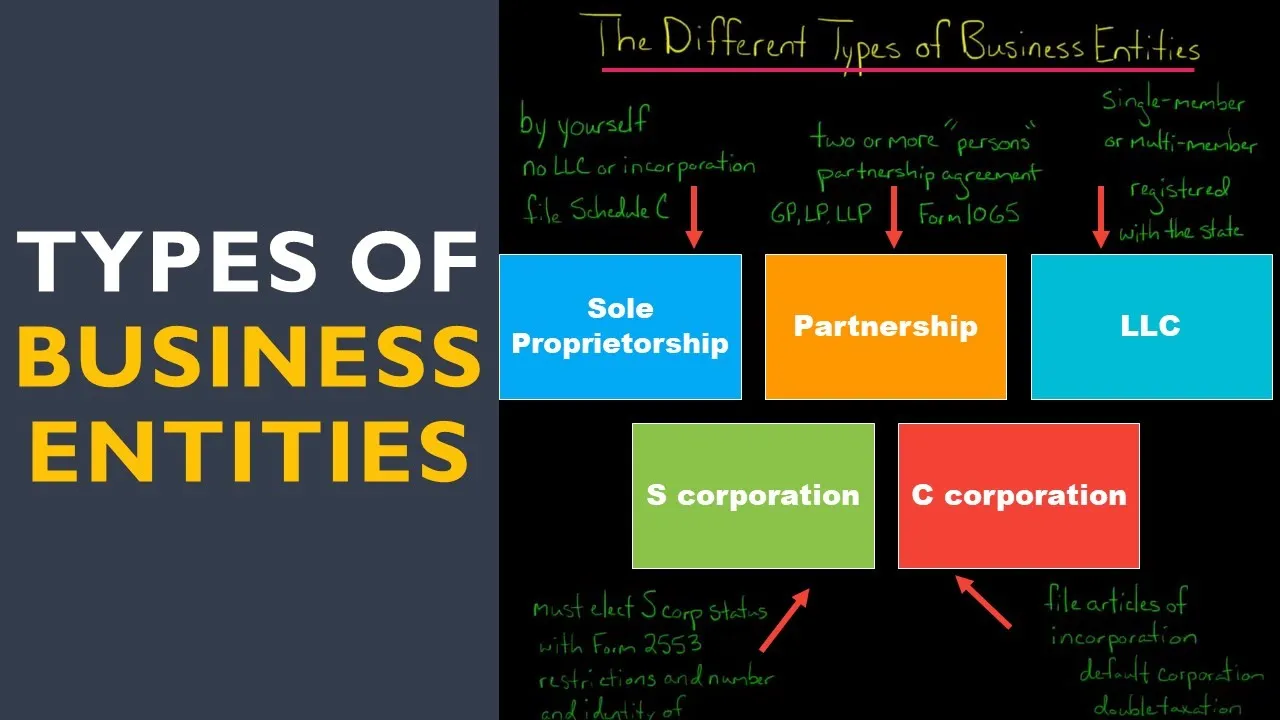
[Music] our last legal entity is the almighty C corporation corporations offer the greatest liability protection but they're their most but they are the most involved structure to set up and maintain like an S corporation a C corporation issues stocks to shareholders and the shareholders elect the board of directors who hire management to run the company there are no shareholder limits or share class limits when you're setting up a C corporation this will be defined in the Articles of Incorporation the Articles of Incorporation govern the corporation much like a S Corporation this will cover items like the board of directors responsibilities how many shares have been authorized and can be issued if a C corporation declares a dividend all shareholders are entitled to their Prat por of that dividend C corporations can get very complicated you absolutely don't want to Wing setting up a C corporation and let's go over some taxation considerations CU they this is very different from what we've talked about so far everything has been a pass through entity up until this point C corporations are not pass through entities they're totally separate entities that pay their own taxes C corporations will file Tax Form 1120 no K1 is generated every other entity besides the single member LLC generated a K1 C corporations there's no K1 the C corporation again is paying their own taxes C corporation Dividends are also subject to a personal income tax and this is why this is why a C corporation can be considered double taxation because the C corporation is filing and paying taxes on their in on its income and then CC Corporation Dividends are also subject to personal income tax this is where we can run into double taxation C corporations are paying taxes on the income they generate on the 1120 and then if they declare a dividend each shareholder receives that dividend and has to report that on their 1040 and pay taxes on the dividend so the same income has been taxed at the C corporation level and then in the form of a dividend which is still income that has been taxed it's getting taxed again at the 1040 level now usually it's going to be qualified dividend rates which are lower but it's still a second taxation of the same income let's go through an example of double taxation our C corporation income is 1 million and our corporate tax rate is 21% our C corporation has net income or taxable income of $1 million and the corporate tax rate is 21% so our taxable income of $1 million times the tax rate of 21% results in $210,000 of tax the C corporation is going to pay now if the C corporation then declares a $500,000 dividend of the $790,000 that's left over qualified dividend tax rate of 20% that $500,000 that's been paid to shareholders will carry a tax of $100,000 that's reported on 1040s or other tax returns of those who have received the dividend so in this instance our C corporation taxable income of a million doar has resulted has resulted in $210,000 of corporate tax and then another and then another $100,000 of qualified dividend tax which gives it an effective tax rate of 31% on the million dollars of taxable net income the only time a C corporation shareholder will receive a tax form is if the shareholder received a dividend which we just went through or they have sold shares in that C corporation other than that shareholders of a C corporation will receive NADA they're not going to receive tax form they're not getting a K1 let's go through some pros and cons of a C corporation Pro number one raising money C corporations offer the best structure to raise money and scale up a big business shareholders receive shares and exchange for cash and property and don't have to and don't have to worry about receiving and filing a K1 the the only time they have a taxable event is when they receive a dividend or sell shares Pro number two unlimited share classes C corporations can authorize and issue as many shares to as many shareholders through as many share classes as defined in the Articles of Incorporation only liit is the articles of in corporation to how many shares and share classes that a corporation can offer that is very different from an S corporation where you can only issue one share type and only have 100 shareholders Pro number three selling shares selling shares of a C corporation is significantly easier comparatively speaking to a pass through entity the difference between your cost basis and the fairet market value of the sale will be your taxable gain when you're dealing with pass through entities and k1s it's a lot trickier and can be a lot Messier trying to determine what your capital gain is on the investment that you've made that's very attractive to a shareholder con number one C corporations are the most complicated and expensive legal entity to set up especially when you compare it to an S corporation partnership or LLC con number number two double taxation C corporations get taxed twice once at the C corporation level where they're paying the taxes on the taxable net income of the C Corp and then again when it declares a dividend the shareholders have to pay taxes on the dividends they received con number three Administration C corporations are the most administratively burdensome of the four entities discuss it files it and pays its own taxes you have to keep board meat of all the bard director's meetings there's a lot of corporate governance involved with running a C corporation there's also the aspect of authorizing issuing and buying back shares of stock and especially of different share classes that's going to get more complicated and complex as the business scales up and grows yeah yeah yeah yeah
Up Next
41:01
Corporations Basics: Module 1 | Law Exam Prep & Corporate Law Fundamentals
@BizLaw
13.3K views•2014-12-09

46:36
Retention Habits of Top DTC Ecommerce Brands Revealed
@SendItPodcast
44K views•2026-03-03

15:23
Decoy Effect: How Pricing Psychology Influences Consumer Spending
@bobinvestsUS
90K views•2026-01-05

17:30
The Planned Obsolescence of Light Bulbs and Tech
@veritasium
25.3M views•2021-03-26
Related Study Plans & Knowledge Roadmaps
Structured learning paths in Business
business
Pop-Up Retail: Strategy, Design & Execution
01Introduction to Pop-Up Retail & Strategic Goal Setting
02Budgeting, Site Selection, and Legal Essentials
03Experiential Retail Design & Visual Merchandising
+ 2 more learning modules
15h5 modules
Explore Roadmap
business
Reg CF: Startup Funding, Marketing & Launch
01Introduction to Equity Crowdfunding & Reg CF
02Platform Selection & Legal Preparation
03Crafting High-Converting Campaign Assets
+ 2 more learning modules
14h5 modules
Explore Roadmap
business
Productized Services: Scaling Solo Freelance
01Foundations of Productized Services
02Packaging and Scope Definition
03Pricing and Subscription Models
+ 2 more learning modules
15h5 modules
Explore Roadmap
business
Gov Procurement: Find, Bid & Win Contracts
01Introduction to Government Procurement & Business Setup
02Small Business Certifications & Set-Asides
03Finding and Analyzing Contract Opportunities
+ 2 more learning modules
14h5 modules
Explore Roadmap