








![Contract Law Introduction Part I [Hindi]](https://i.ytimg.com/vi/2Z9hqPGv0A8/hqdefault.jpg?sqp=-oaymwEmCOADEOgC8quKqQMa8AEB-AH-BIACqAOKAgwIABABGFYgYihlMA8=&rs=AOn4CLDtfkFk4rPHYZ5OOxLoUFnucqayAQ)

















A corporation is a legal entity characterized by five essential features: separate legal existence, perpetual existence, centralized management, limited liability, and transferable ownership, which serves as a framework for bringing people together in a business for profit while managing risks through mechanisms like diversification and insurance.
Corporations Basics: Module 1 | Law Exam Prep & Corporate Law Fundamentals
Added:Introduction to Business Entities: Familiarity with simpler organizational structures, such as sole proprietorships and general partnerships, to contrast with corporations.
Principles of Agency Law: Understanding how agents can legally bind a principal, which is fundamental to how corporations act through directors, officers, and employees.
Basic Contract Law: A foundation in how agreements are formed, performed, and breached, as corporate charters and bylaws function as contractual agreements.
The Concept of Legal Personality: Understanding the distinction in law between a natural person and a legally recognized artificial entity.
Fiduciary Duties of Directors and Officers: Analyzing the core duties of care and loyalty, alongside the Business Judgment Rule.
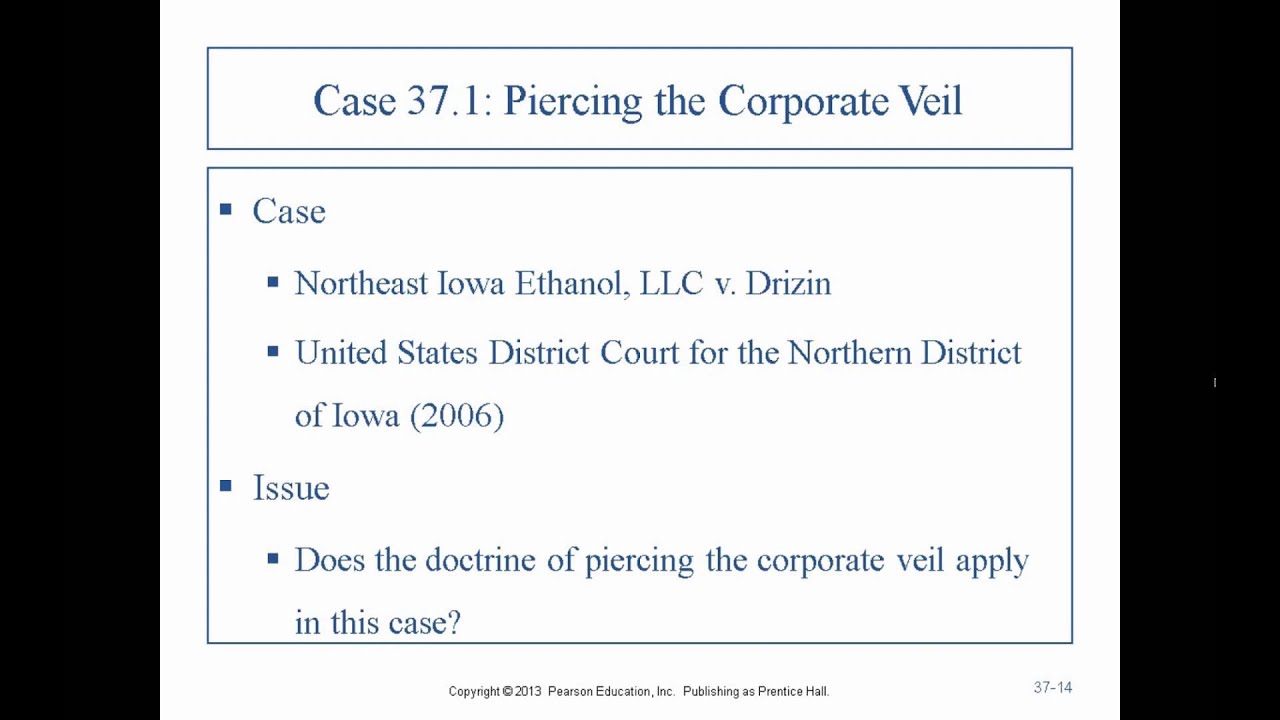
Piercing the Corporate Veil: Examining the legal doctrines and equitable exceptions where courts will bypass limited liability to hold shareholders personally liable.
Shareholder Litigation and Governance: Learning about shareholder derivative lawsuits, voting rights, proxy fights, and minority shareholder oppression.
Securities Regulation and Corporate Finance: Exploring how corporations raise capital through debt and equity, and the federal laws (like the Securities Act of 1933) governing those transactions.
13.3K views141likes41:01Original Release: 2014-12-09
hi and welcome corporations an overview I'm here to teach you about corporations in a brief period of time we're going to go through several modules to learn about corporate basics and this is designed as a review for my course I took this year at Florida State University but this may be useful for many individuals who are looking to learn about corporations or taking in law school and are looking for a review or exam prep but I'm professor Seth Warner I teach at the Florida State University in the College of Law I teach corporations electronic discovery and closely held business and my experience in corporate comes from working at families in West Silicon Valley firm and so I just want to reduce myself then thank you for watching this is going to be a modular approach to teaching corporations so that people can only watch what they need to know so we're going to cover corporate basics corporate lexicon or language corporate formation it's for corporate authority then we're going to move into a brief review of corporate finance and then we're going to talk about some of the shareholder issues that regard corporations with shareholder liability shareholder approval and then the largest module at the end I'm combining your litigation with direct reliability as one is the flipside of the other so with that let's get started with our first module so we're here to talk about module 1 corporate basis this is meant to be an introduction to what is the corporation and the first question really is why study corporations so students may be asking why am I in this class well one reason is that this is tested on the margin and so it's relevant to that except but it's also relevant if you intend to of course practice corporate law and if you intend to participate in the economy in general amounts of corporations is very helpful so these basics might prove helpful for example for someone who was looking to what a company might be offer stock options and wants to understand how stock options work or to invest in the public markets or any variety of other activities where we engage with corporations in our daily life so the first question that you might ask about corporations some of your determines to study them it is what is a corporation there are many definitions i'll start by suggesting the definition that is a framework for bringing people together in a business for profit so because those helmets is important the corporation is a for-profit enterprise and we'll learn later that one of the purposes of corporation is to maximize shareholder wealth but might also argue that a purpose of the corporation is corporate social responsibility but before Brock bellman is important it's a business and that people are engaged in commerce and involves more than one person the corporate form is designed to be a vehicle to bring people together in a collective enterprise where there's this shifting risk allocation at etc and it's a pretty working to send it is a construct a legal creation which is designed to provide the necessary structure for people to engage in mind adventure if you will know her and several other definitions that people will use of corporation one is a legal entity meaning it's a constructive law you may have been citizens united where it was a debate over whether or not a corporation could vote whether had any status equivalents that of a person for at least free speech purposes you can look at it as a team of people as a group of people that are organized together and here we talk about the framework in the sense of the actual individuals it's also described sometimes as a web of contracts in a nexus or a combination of agreements people have with each other both inside and outside the firm and that theory relates to concepts about price structure and we of course working in an American and in a capitalist society where you have a market and the firm is in a way the antithesis of the market people agree to be employed by a company for a certain price and provide their services to it as well as their investment capital so the corporation has contracts with the outside world with other corporations as well as within itself it's an investment vehicle and the fact that is structured deliberately so that people can put money into it and have certain guaranteed returns on that investment and some might say it's a drama in that as the stage on which human activities played out it has five characteristics the corporation has five essential characteristics and there are separate systems perpetual existence there were a little bit viability centralized management and credibility of interests everyone is incorporating a three basic price they can both stew and sell their shares that's really the limit of their rights because that will learn it's the board and not the shareholders that control the corporation ads day-to-day activities so it's important to remember the shareholders have limited liability to also eliminate rights and those rights are further limited by many contexts such as restrictions on ability to sell shares transfer restrictions restrictions on ability to sue like in domestication and other provisions which should make it not cost-effective and restrictions on voting for example share alerts can only propose votes on certain matters like collective directors and others like firing the CEO as we'll see in later chapters let's talk about business a little bit so there's two ways to think about risking business at least two different types of risky business and one is grifs affects everyone I'm going to call that systemic risk and there is also R is that it is more individualized that affects a particular firm because of its structure or makeup I'll call that idiosyncratic so we have two kinds of business risk systemic and you syncretic did you see credit risk couple other synonyms for using practice would be controllable unique individual diversifiable the reason i use these terms is to explain that to employee the using credit risk and investor can invest in many companies let me call the portfolio theory and that if you invest in any companies it's unlikely that all of them will have the same unique problem you can diversify away idiosyncratic risk that's what differentiates interesting credit risk from systemic risk systemic risk affects everyone all the firm's in a particular operation for example is the cost of coal goes up that affects the price of power and all firms that require power as an input to their product will be affected by the price of coal so that's a systemic it's not controllable by the investor it's going to affect the entire market its global and it's not diversifiable by definition of course depending on how broadly or narrowly you define a market you could have a type of systemic risk in a certain market which is diversifiable by investing other markets for example the cost of gold has impact on semiconductors and other electronic equipment that useful so i'm by investing in that industry the price of gold would be a systemic fact there is a risk factor that could change the cost structure of silicon fabrication but you could go around that by investing in a little different industry so we go back to coal mining coal mining I may not be affected by the price of gold and so you can diversify from the risk of gold prices increasing by investment in mining operations so when you talk about a uses a product and systemic it's a little bit more flexible but the general idea is that idiosyncratic risk is something that you need to affirm systemic risk is going to be more global that applies to firms generally and we're fuller theory will help you get rid of it a lot of people invest in doesn't make profit so how do we talk about profit profit is going to be calculated by looking at expected returns so we'll consider multiple scenarios we the business person or investor evaluated and we look at you know a bad case scenario an adverse scenario a good case scenario the expected money will receive in those scenarios the expected probability of them happening and that will calculate what we call our expected return so it's a weighted average of multiple possible future scenarios given their appropriate weight given how likely they are and how much money we're going to make or lose in those scenarios people determine whether or not you make an investment generally people think that determination based on their own preferences so individuals have a certain amount of risk tolerance built-in some people are natural risk seekers they would look for high-risk opportunities some people are risk averse they look for low-risk opportunities and the sort of prototypical rational person the economically rational person would be someone who is a risk neutral person but realize there are different types of people in the world than and whether or not you were one type of the other may change in your lifetime depending on for example your wealth and many other factors that contribute to whether you're willing to risk your money so with low wealth maybe less willing to risk amount of money and so with higher wealth so there are many things that affect risk tolerance and combining risk tolerance with expected returns we start to see what generates the profile that investor and how they choose their investments in addition to understanding risk we should understand as attorneys and business people how to manage risk so there are four main waste management's wanted by purchasing insurance though we do this in our own line there's a risk that we'll get sick we purchase health insurance it pools the risk so every every month we pay a premium for our health insurance and as a result we are entitled to receive money or services if you get sick up to actually unlimited amount or a capital meant depending on your policy there are other features that are common with insurance such as cocaine so we have a caps copay requirement but very much like your health insurance business can purchase insurance for many things a business stuff on an ongoing basis so a business might have employees and they might get injured on the job so there are ways to insure against that there are ways to insure against prices of commodities going up for example so earlier we talked about goals being a factor could affect the price of silicon fabrication which uses gold as an input so one way to mad at the inset risk is to invest in gold so the price of gold goes up you make money so there's also ways to diversify away risk and hence risk as like as I mentioned there you can diversify using portfolio 3 by investing multiple companies the idea there being that you can eliminate to send you some credit risks you can't eliminate using credit risks but you can eliminate systemic risk by investing in a suite of companies for diversification and risking the alkane within a firm with people that can afford a ferret and it can one of the features of the corporation is that it has limited liability of course the limited liability is itself of it will see when limited liability is not respected in what we call veil-piercing but in general and in very much the most part of corporate life and for your understanding the risk of the shareholders limits the amount of they invest and the risk of the directors also limited to the amount that they invest or they're often identified for other responsibilities so it's society is society self that bears the risk that's left over and that's called the externalization and it has some contentious elements but we heard about too big to fail and we looked at recent medicine Lehman Brothers where a company had a lot of risk and that risk end up being borne by the American taxpayer by the world economy in general not by the individual shareholders because a doctrine of limited liability various risk externalization though when we look at a company you should understand some basic things about agency law what does the agency law agency law is the governing relationship between what we call the principle who might be a capitalist or or an investor and an agent who would be someone like a manager who actually takes care of the day-to-day operations on their behalf we usually even see all the time a lawyer is a type of agent and agents have to do cieariy duties the reason that we need these whitey sherry duties is because it's very clear the most people that agents and principals can have different interests so why is that so there we just explain briefly principals want to maximize the return on their investment capital an agents want to maximize return on their labor on their effort so basically if you have an employee they're going to want to get paid as much as possible or as little as possible and this employer you want to pay some as little as possible that haven't worked as much as possible we see that these interests are diametrically opposed so we need agency law to ensure that these relationships function properly without acting in terms of special contracts to ensure all the ins and outs the principal who is this principle not referring to well there are other synonyms for principle we might call the principal investor or the owner or the capitalist pending on the circumstances but the case of corporation the principle is to shareholder shareholders invested the order and the shareholder the principle is always certain duties by the agent the agent being the employee officer or director of the corporation who is acting on the shareholders behalf and come on assurance we have to fulfill the intentions of the shareholder in making that investment this results of certain types of agency costs so one thing that aliens will do in order to demonstrate the potential they are good candidates for agencies able to signal and some signals are inexpensive to send some signals are costly let me give you an example if you're in law school you're earning a signal that you are a member of barley for hardly graduated and that as a result people can trust you part of the reason we earn degrees part of the reason that we go to high school at college the entire reason I would hope that part of the reason is that we demonstrate through participating those activities that we're capable of fulfilling certain obligations to society then waking up on time is a big part should be showing up this is a big part and so we can signal that were able to show up by showing up for four years and earning a bachelor's degree hopefully again education is more than that too many people but again the idea here is that we can send signals through our behavior which can be costly like it's any lawful for a period of time and then becoming a member of a Bar Association so the relationship our relationship to a principal is backed by some kind of obligations so for a lawyer their fiduciary obligations are backed by our risk of losing license to practice law which would be very expensive so by having that license in order to signal their ability to perform their fiduciary duties a principal also will have to spend some costs who spent some effort in order to monitor employees so what does that mean to monitor monitoring means that literally the employee is watched by the principal so you may have been in a fast-food restaurant recently and you will see that they are both employees have managers on the floor to given time the manager is there to ensure the employees is their job oh and the reason that you've seen this is because the employees make sure if they are not being monitored that's risk of having Asian again their interest is in getting their salary which is a quadrate regardless of how well the company does in many instances we talk about some situations where interest can be aligned better between principles agents using options but if a person is receiving a salary regardless of how hard they work they may have an inclination to to shirk their responsibilities which would not be in the interests of the principal so the principal has to monitor and if detecting deviation from the contract agreement needs to discipline the employee it needs to say you need to work harder you might be fired so disciplining and monitoring are expensive for the principle that requires many costs like hiring other managers and signalling is expensive before the agent have the leaders from the costs that are incurred in order to have this agency relationship function we talk about fiduciary duties at agents of de principals there were essentially two types use of performance and duties of loyalty so we will go through with them all here but in general we see the performance is used to act in a certain way with a certain amount of care what we called reasonable care happens in the scope of authority compliant lawful instructions those are all duties a performance is that you must do they're using oil tea which are almost shall not so good is it boil tea would be things that you should not you should not take a corporate opportunity for yourself you are a agent your obligation to give that opportunity to the principal if it's in the scope of your work so we see here on slide there are some loyalty duties as well that have to do with uniqueness to not duty to refrain from competing with the principal or taking proprietary information there are also rules that govern corporate relationships and in fact this applies to all law and the idea here is that they are both mandatory and default rules but simply that means that some rules you cannot get rid of those certainly certain things the unity of implied unity of good faith and all contracts is a mandatory duty you can't write up the contract we don't have to have a good faith in our dealings it's a mandatory duty implied by law but they are also default rules what is it this ball roll the fall rule is a rule which can be changed so it essentially Delaware General Corporation law which is the monologue we'll use for this lecture of this discussion is based on I have a book manager in the fall so for example there are a default that that you can exculpate your director for certain activities it's a rule which is default that there's no exculpation but you can get around that it's permissible to have excellent patient for your director meaning they won't be responsible for certain acts however boring milady those are the types of corporations so there are these four ways to think about corporations public and private those and nonprofit now these are not usually exclusive and there are two ways to think about what it means to be a public versus a private corporation so first off one might think of a public corporation as long as publicly listed on a stock exchange where the stock in the trade it bought and sold by ordinary people I usually do common stuff another way to think about a public company is one that is a municipality one that is actually owned by the government public consensus of about people a private corporation on the other hand well that stock which is not really transferable which is privately held which is not loose about stock market or in the other definition of private we think about a company which is owned by private individuals not by the sea in this lecture I'll primarily be thinking of a public corporation as one that's listed and private corporation as one which is not listed Lucey a public corporation is one that's listed subsequently now seven your stock exchange and private corporation would be not listen privately held I may be helped by venture capitalist or small family or small group of individuals although public companies are not necessarily large and private companies are not necessarily small for example Facebook add hundreds and hundreds of investors and billions of dollars invested before it went public in its IPO an IPO or additional public offerings when a private company becomes a public company is listed a closed corporation in the term used for a company that's held by only a few people in general we think about closed corporations as a type of private corporation although it is conceivable that a closed corporation could be public would be a little bit strange because part of the nature of a closed corporation and the that are involved or the fact that only a few people know about the goings-on though there are more opportunities for mismanagement because there's not much light shed on the activities of managers you want to talk about nonprofit corporations but a 501 C 3 corporation is one which is designed not to make a profit and it's exempt from tax so again we have our corporate characteristics we'll talk a little more detail about each of them now what does it mean to have separate existence this means that the corporation is distinct from the people that format so corporation is not to some of its parts and it's not constituted a group of shareholders it exists separately from them it's created by filing a certificate of incorporation or Articles of Incorporation with the state at that point it's given essentially a life of perpetual light one that lasts forever so perpetual existence means that a corporation is designed to exist forever unless dissolved or otherwise the Creator dipankar another the number of things can happen of course in corporate life but I'm like a human life that has a natural term a corporation is designed on paper at least due to last indefinitely a limit liability we've alluded to a few times what does this mean this means that shareholders are not responsible for depth debts and ports of the comic the corporation you're not responsible for debts and torts of the corporation beyond with a development so if you have Charles that contributed million dollars each you attend shareholders the company has only that ten million dollars and commits some wrong acted as one hundred million dollars only 90 can be recovered sorry I only tend to be recovered and the 90 million cannot be recovered unless there's some theory for piercing the corporate veil which would allow limited liability to be disrespected but it one of the core characteristics is limited liability we also see centralized management as I mentioned shareholders have three basic price votes who and sell they don't have the right to manage the day to day if there is that power arrest in the Board of Directors the board of directors is the centralized management of the company companies are designed in a hierarchical structure with shareholders 0.24 the board allows the CEO and makes the major decisions subjects sometimes the shareholder approval which we'll cover in later modules yeah I did hear is that again with agency we're looking to have agents such as the management fulfill the responsibilities and day-to-day operations of the company to free up the investors to invest in multiple companies needing multiple projects do other things with their time this allows investors to diversify for one thing and allows for professional managers make a business of managing things and getting expertise in that now I mentioned that there are some restrictions on selling shares but in general the general rule is that corporate stockholders can transfer their shares relatively freely share as a share to share it's comfortable like a dollar bill one dollar bills the same as another dollar bill one share the same as another share at least with regard to common stock I will talk later about the series and types of stock but within a a series all common stock each share is the same it's wonderful and it can be generally through the transfer unless there are frustrations of course there are many restrictions and we will cover them private companies are restricted from sellings and non-accredited investors and people company Tiffani restrictions in the bylaws in computer descriptions among the investors not to sell but what are the corporate documents well when we talk about what constitutes the body law about corporations we actually first look to the US Constitution although it doesn't have much to say about corporations most of corporate law is found with state statute in this class we refer to the dollar-driven corporation want the D GCL as the primary place where corporations are incorporated industries always focus on that body of law but every state has a corporate law and many of them are based on model Corporations Act model act amazes that not be very similar rules about corporations which are somewhat different from Delaware but then within the corporation there are some private choices to be made what might be called a private Constitution the documents creating a private Constitution when the shareholders are the bylaws and the Articles of Incorporation so the Articles of Incorporation are a documents file they actually create the company authorize a certain amount of shares of you a number of other things and they set forth the rights the shareholders have easily each other and the bylaws set forth the rules and procedures for our company will operate in each company can choose the one complies with the manager rules in Delaware to have the corporation's articles and its bylaws either make additional duties or get rid of some default rules that would create these for shareholders or directors and allow the corporation of function has is useful for that corporate purpose do you look at the last uses certificate corporation and bio US as private constitution of the corporation who are these shareholders as I mentioned shareholders can be seen as principals they can be either common or preferred stockholders both are considered owners of the innocence and moreover there certainly consider principals and investors but we have most common and preferred stockholders who have talked more in future models about the difference in common and hurt her son again we have a shareholder voting rights an important reminder what does it mean the rights of both shareholders have the right to vote for directors they also have the right to vote of eyewall amendments and they have the right to vote on what are called private or proposals which are recommendations or does not have follow preparatory proposals hence their name they are not mandatory but they are in some ways when the influence management's decision of I shouldn't have shareholders believe about certain action they have limited rights to call special obedience and those rights be found in the bylaws in the right to sue we're going to talk about shareholder litigation our final and our large small modulate and shareholder rights suit Greece a threat that management essentially will not do certain things that can create the risk of liability for management and the shares have a right to sell all the best limited by transfers versions like I mentioned such as a red version fusil those daily bylaws will define those terms of mockery to the board of directors the directors can hire to be inside directors or outside directors what does that mean an inside director or someone who is involved with the company siphoning directors usually an officer the inside the record would be both the director and CEO for example someone who is in an outside director would be not affiliated with the company aside from the Wreckers a good place to mention that directors believe by virtue being directors are not employees directors are not employees by virtue of being directors they may be employees by virtue of having some other involved with the company Light Beings yo you also have interested and distant disinterested directors a interested director of a stockholder or otherwise has some claim on the company's assets and might have near other ways be interested by being in the other side of the transaction we'll talk about that more in director conflict but in general the idea here is a shareholder miscellany gain from the very game by being shareholder that director is interested in the company as opposed to a disinterested director who would have no financial gain in any decisions the corporation makes so sometimes decisions need to be made by disinterested directors in order to prove that they're good for the shareholders in general and not just for the interests of that particular director there are two main ways to think about director of duties we can think about duties of care and news of loyalty so what does it mean have a duty of care and duty of care is essentially a duty to do certain things to provide certain amount of oversight and it's generally protected by the business judgment rule which will discuss more against in the introduction chapter so this leads us into our other modules the business judgment rule protects many directory decisions and we also have duty of loyalty so the directors cannot take a corporate opportunity for themselves typically if the director is interested meaning that they have a personal gain from a transaction the business government will not apply such a director because it's assumed that they're not in a position to make a decision on the corporation's best interests alone because they have a personal interest in how that transaction is recalled but we see that duty of care to be loyalty are going to be evaluated differently by the courts disease care is the benefit of a business judgment presumption general and duty of loyalty in general doesn't get the benefit of that presumption because there is an issue about the directors ability to make a business judgment where they have an interest in a transaction who are the officers the officers of corporation typically at a minimum are a CEO who's often also the president a CFO who's often also the treasurer any secretary the secretary is sometimes an outside lawyer will come in to attend board meetings to take notes all of the officers are employees but notably in contrast the directors a CEO is an employee this creates certain employment rights and labor rights so remember we need to receive power in one wage and sometimes for very small start-up companies this can be an issue PLC is a term in holders describe people who have an interest in the company but are not shareholders or directors and so they include creditors employees community in general we use the term stakeholders when we think about the broader range of people that are affected by corporations and their actions corporations raise money by issuing two types of securities you see debt securities and equity securities what is the difference well the main difference is the tech debt securities typically receive interest for his equity securities simply get a share of the profits that was a way to make about the tip of course the distinction is much deeper than that but for our purposes we're going to look at yet as having two flavors unsecured and secured secured means that the assets of the corporation so for example if you're a pencil factory the inventory might be a lot of pencils and those pencils would be what's called collateral meaning that if a corporation then expenses fills the base desk the inventory of pencils taken by the predator that's the security for the loan so there's some security for many loans especially long-term loans the other way to toggle that is we understand they're both short term and long term loan short term loans have less risk because you have to worry about get your money for a short period of time government higher interest as well now we look at equity we have two main flavors of equity common stock you prefer stock so common stock is how it sounds it's sort of your vanilla stock it's your residual it's what's left over after the corporation pays and step holders and preferred holders prefer just a bit of a hybrid between Denton equity it is a type of equity but it has some characteristics of debt for example it might get what's called dividends which look a lot like interest enemies paid first it has priority you talk about three things from time when stock stock is first is authorizes authorized in the Charter what does that mean the charters a document is about the Secretary of State and standing corporation and we'll say so many shares of stock are authorized that means the corporation is able to issue up to that amount of shares couple things to remember about authorizing stock one is that when you authorize preferred you often need to increase your authorized comment because in general preferred stock as we talked about a moment ago can at any time convert into common there has to be enough common authorized to cover the conversion of preferred you have to have enough common authorized also cover any stock options and they convert into common will talk about those terms more detailed company chapters it appears that you authorize it in the Articles of Incorporation so essentially in the stock of this file with the Secretary of State you create the ability to make side when the stock is actually given to someone it's called issue it's only issued once igoe's issued once from the authorized we're human becomes issue and what is issue is it becomes outstanding does that need to be outstanding it means is actually helped by someone in the world the corporation conventionally buy back shares of issues so here's how we differentiate issued an outstanding stock which is the pre purchased from an outstanding stockholder still is issue because it was issued but it's no longer outstanding because it's no longer held by stockholders so we can view these and call them treasury shares and then authorized and issued but not outstanding so we have three different terms to talk about stock me to make sure there's enough authorized stock to cover the conversion of Hereford and any stock options that might be purchased or other other rights we need to make sure that we calculate correctly the amount of stock which is issuing outstanding looking at voting and I'll mention here also that when stock is issued then repurchased by the company may become a Treasury share and treasury shares can't vote so when you're looking at trying to decide how many shareholders make a majority move look at the outstanding stock brokers can be liable to the shareholders of a company and the tensions of other stakeholders on there a number of theories it's very hard to prove direct liability in general because you want the records you feel free to take risks as I mentioned in the beginning we have two kinds of risks to use & pratik and systemic and there is a certain reward anticipated retaining risk so we don't want to overly discourage our directors from taking risks so we allow them to take risks and we don't penalize them from that for those risks in general unless and we're going to talk about this in module 8 they fail to meet certain inners and respect values etc the one way you are to be liable is that they make an uninformed decision that would be protected by the business judgment rule business judgment has to be an informed judgment there's a waste doctrine discomforted property law any here that you cannot spoil someone else's property so here with the director being an agent or the principle the shareholder they are in charge of the property which is the corporation and they're not allowed to spoil it or give it away as a gift as so as a result of that we have this waste doctrine which sort of grows out of property law and makes it impermissible for the directors to give away the corporation the directors can also be liable if they're interested in the transaction we've talked about this a little bit before how the directors can be interested by having a stake in the transaction that they will receive a personal game those type of decisions where company where directors elect to do something I'll be happy to call my personal gain from it generally don't have the protection of the business judgment rule and this also applies to the directors may not receive the game themselves are beholden to someone who gets game and so as a result they are not able to make any informed rational business judgment but shareholders have a right that to do that they can do it in either one of two ways depending on the type of right and they can either have a direct litigation which is typically the form of class action for rice the shareholders as shareholders when those are violated again the shareholders being the principals of certain duties that are owed to them and when those duties are not respected there's possibility for a direct class action by the shareholders an interesting phenomenon in orbit law however is the derivative lawsuit and the derivative lawsuit has this work called a demands required what this basically means and again probably this is modulate a large module is that directors make the day-to-day decisions and each side one thing off you should do for example however there are some cases where directors would not suit themselves the corporation may have a claim against the directors in those cases they allow the shareholders to sue on behalf of the corporation that's what a is a derivative action where the shareholders sue when you have the corporation and again we want to limit that because it here is that these sort of lawsuits are expensive than they made chill prevent directors from engaging in the kind of risk-taking activities we want them to take but we don't want to have too much of this litigation and so we have this as a man excuse procedural requirement for derivative actions I mentioned before that corporations are appreciative state law and primarily their creature of Delaware law most public corporations are incorporated Delaware and there's only one body while you study howbeit this start however practitioners should also know the body of law of their own state for example California house with interesting business weeks license to practice in California California corporations Code section 21 15 says that even a corporation incorporated in Delaware is up to some California law this is not this is different then what we call the internal affairs doctrine which says the corporation need only follow the laws of the state in which is incorporated again internal affairs doctrine as a corporation for procedural matters and matters of his own internal affairs you know we follow the laws of the state of which is incorporated the California section 21 15 says California doesn't necessarily respect this and will suck at companies that happens and some business in California the California corporation law even if they're incorporated in Delaware so the two main strategies to look at if you're looking at two would be the Delaware law and I'm the model Business Corporations Act the NBC a I'd call it here the model actor because Macy's has adopted that and use of model actor work in whole or in part to form their state corporate law but again the important part here corporations creatures of state law in general the state of their corporation is what's relevant for their internal affairs the certain exceptions from states like California and New York that may impose those state laws are what we call forward corporations or incorporation not from another country necessarily but simply from another state so a Delaware corporation doing business in California may be subjective California law that's the opposite sort of of the internal-affairs doctrine of eternal spirit doctor who says that a filmer corporation is subject only Delaware law regardless of where its operating well we talked about the firm view of some scholarship to help us and so for those who are interested in more setting up some of the scholarly notions I point out some of the larger thinkers in this field so Monaco's wrote the nature of the firm and described why firms exist and came up with the notion that they had this non-price structure inside the price economy there was a analogy about lumps of butter no performing in a pail the idea here being that in this sort of ether of the price economy in capitalism we have these islands of corporations where they form and they have a network of contracts with employees and they pay them a flat rate and they don't use the price structure in the firm to make this more clear work for a company you don't pay for every copy and you make that the copier like you would at Kinkos instead it just part of your equipment that you access copier you know you use the price system within the it's more efficient to have this one contract certain things like employment as opposed to having multiple contracts over and over again like 10 cents of H of your problems parallel means the modern corporation private property Jensen McLean described manager behavior and Vigliotti and Miller brought up the period corporate finance some further reading there that concludes module 1 and will continue on with module 2 definitions is just a minute thanks
Up Next
107:16
Corporate Governance Explained: Principles and Board Roles
@targetprofessionalconsult7673
20.8K views•2021-01-02

46:36
Retention Habits of Top DTC Ecommerce Brands Revealed
@SendItPodcast
44K views•2026-03-03

15:23
Decoy Effect: How Pricing Psychology Influences Consumer Spending
@bobinvestsUS
90K views•2026-01-05

17:30
The Planned Obsolescence of Light Bulbs and Tech
@veritasium
25.3M views•2021-03-26
Related Study Plans & Knowledge Roadmaps
Structured learning paths in Business
business
Pop-Up Retail: Strategy, Design & Execution
01Introduction to Pop-Up Retail & Strategic Goal Setting
02Budgeting, Site Selection, and Legal Essentials
03Experiential Retail Design & Visual Merchandising
+ 2 more learning modules
15h5 modules
Explore Roadmap
business
Reg CF: Startup Funding, Marketing & Launch
01Introduction to Equity Crowdfunding & Reg CF
02Platform Selection & Legal Preparation
03Crafting High-Converting Campaign Assets
+ 2 more learning modules
14h5 modules
Explore Roadmap
business
Productized Services: Scaling Solo Freelance
01Foundations of Productized Services
02Packaging and Scope Definition
03Pricing and Subscription Models
+ 2 more learning modules
15h5 modules
Explore Roadmap
business
Gov Procurement: Find, Bid & Win Contracts
01Introduction to Government Procurement & Business Setup
02Small Business Certifications & Set-Asides
03Finding and Analyzing Contract Opportunities
+ 2 more learning modules
14h5 modules
Explore Roadmap