

















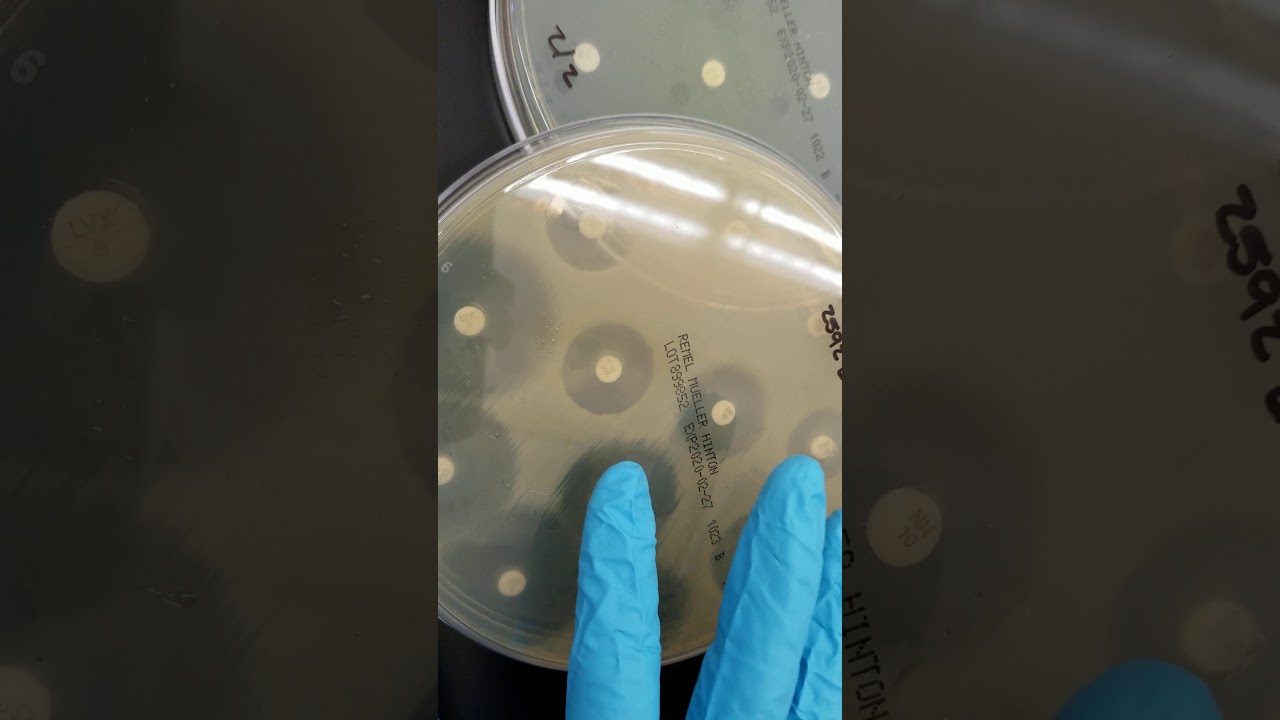








The Kirby-Bauer method is a standardized disk diffusion assay used to determine antibiotic susceptibility by measuring zones of inhibition around antibiotic-impregnated discs placed on Mueller-Hinton agar inoculated with bacterial lawns. The test requires strict standardization including pH 7.2-7.4 agar, 4mm plate depth, 37°C incubation for 18 hours, and standardized drug concentrations to ensure meaningful results. Results are interpreted as sensitive (effective normal dose), intermediate (higher-than-normal dose required), or resistant (no effective dose exists). Zones indicate growth inhibition, not bacterial death, as some bacteria may form endospores or the antibiotic may be bacteriostatic. Drug synergy occurs when two antibiotics combined are more effective than either alone, such as trimethoprim-sulfamethoxazole targeting different steps in bacterial folic acid synthesis.
Kirby-Bauer Antibiotic Sensitivity Test: Disk Diffusion Method
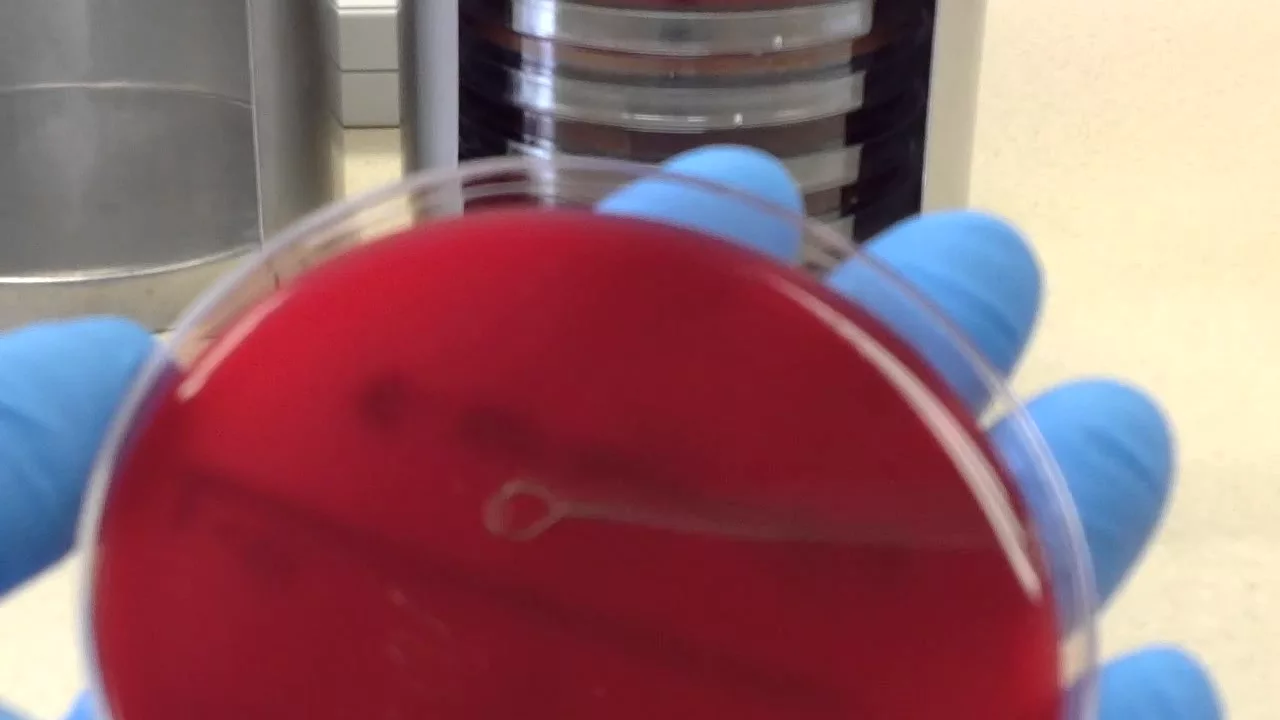
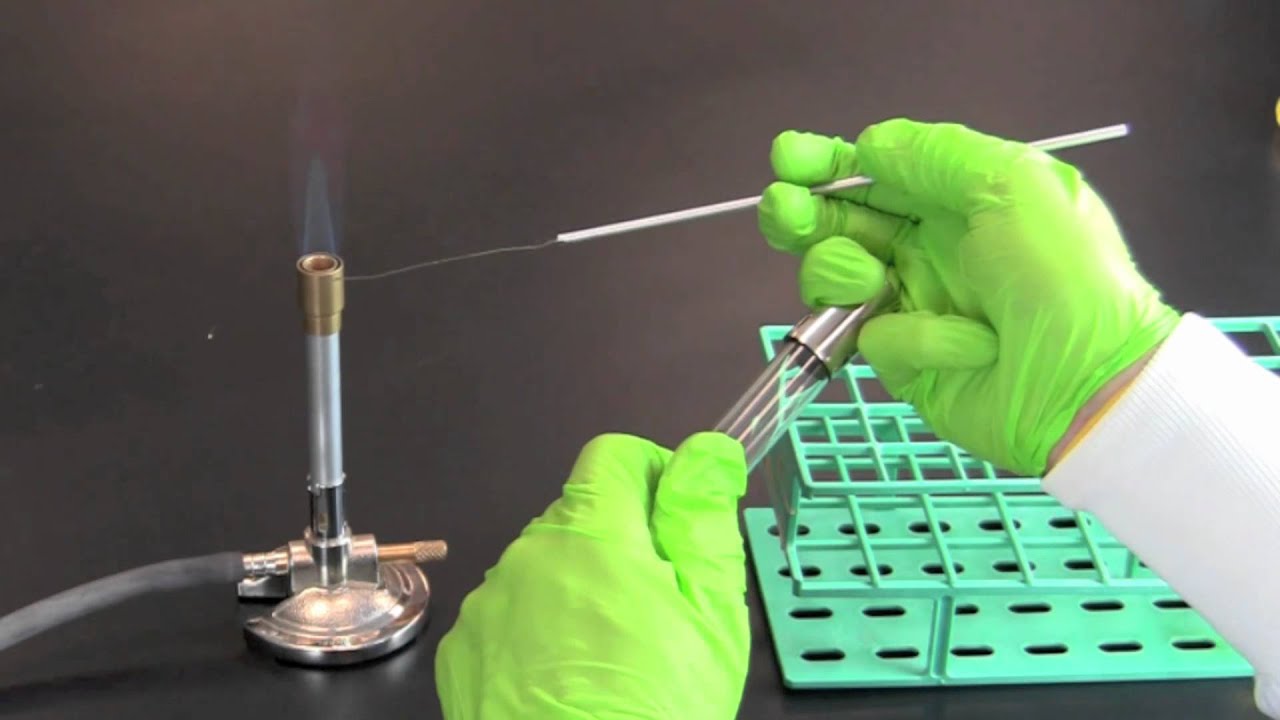
Added:so in this video i'm going to cover the kirby bauer method day one which is going to be our setup and this is also known as the disk diffusion assay or an antibiotic sensitivity test and so this is activity 7-3 so the purpose of the kirby bauer method is to perform a culture and antibiotic sensitivity test of an organism essentially what that means is that we want to know what antibiotic would be the best choice against a particular organism so let's say for example that a patient comes in and they have a uti a urinary tract infection and the doctor wants to know what drug to prescribe to that patient so what we would do is we would first start by getting a urine culture right so the patient would give a urine sample then you could take that bacteria and streak it on a plate and then we have these disk dispensers that has a variety of different antibiotics on it and we would put those antibiotic discs on the plate and see which of those antibiotics is specific and will inhibit bacterial growth because the one that the bacteria responds to would be the one that we might choose for treatment and so this is what we call a antibiotic sensitivity test we're basically looking at which antibiotic would be effective against a particular organism so this experiment would be done in pairs you and a partner would do this together you would use a large what's called a mueller hinton agar plate so these are very large petri dishes and you would be given one of these organisms and so in this experiment there are six organisms that get tested we have staphylococcus aureus we have aceresia coli pseudomonas regenosa seratio marcescens enterococcus faecalis and bacillus megaterium and so each pair would be given one bacteria and you would use a swab and you would make a lawn of that bacteria so essentially you're going to put that bacteria all over this plate after that is accomplished then you would dispense the antibiotic discs onto the plate and then incubate the plate upside down at 37 degrees celsius and so i have a video that's going to show you this technique so that you can actually see how this is done so here is the link for this video and so you can watch this on your own but i will also input this into this video in this video lesson we're going to learn how to do the bower kirby method of antibiotic susceptibility testing for that method we use a standard size auger and plate called mueller hinton auger and these are the large 150 millimeter plates that will hold 12 different antibiotic discs so the first thing we have to do is inoculate the mueller hidden auger with the organism we're testing now in this case this is one of the bacteria we're using in today's lab enterococcus focalis so we're going to be using a swab for this we're going to remove the inoculum by flaming the tube putting a swab in then we're going to bring the swab out against the inside of the tube to get rid of excess liquid flame the tube and replace the cap now we're ready to streak the plate now we've divided our plates into thirds as you'll see in the illustration in your lab manual help guide our streaking and we're going to streak perpendicular to each line going all the way to the edge of the plate and overlapping the lines working our way down to the center so we lift the lid and we're going to go perpendicular to this line notice i'm going all the way to the edge of the plate and i'm overlapping the lines until i hit the center of the plate now we're going to rotate the plate and streak perpendicular to this line again all the way to the edge and all the way to the center use the same swab you don't have to dip it in again so again all the way to the edge overlapping the lines until we hit the center and finally rotate it to the last line and streak perpendicular to that line all the way to the edge of the plate and all the way down to the center and now we've inoculated the plate so that the whole plate will show solid bacterial growth next time of course when we're done with the swabs they're going to go in the biohazard container now we're ready to put on the antibiotic discs now since this is enterococcus for calis a gram-positive bacterium we're going to use the antibiotic dispenser that contains antibiotics often useful against gram-positive bacteria you see that the lid is labeled ram positive so very simple to put on the antibiotic disks we remove the disc dispenser it also says gram positive on the handle and we're going to take the lid off of the plate put the antibiotic disc dispenser down over the plate and push down firmly on the handle and as you see that dispenses the 12 antibiotic discs and it also tamps them so they won't fall off when we turn the plate upside down and incubate at 37 degrees celsius so we just looked out how to set up our kirby bower test and now we're going to go over day two which is going to be the readout of this test so again the purpose of the kirby bauer method is to perform a culture and antibiotic sensitivity test on an organism so again we would use this method to try and determine what antibiotic would be preferred to use against a particular bacteria because if a patient has an infection then you're going to need to treat with an antibiotic and we need to know which one to use so when we do this this test is what we call standardize and this is going to use mueller hint and auger and so this mueller hint and auger is standardized in several ways meaning that in order for the results to be meaningful we need to have consistency when doing this test and so there are several ways that this is standardized the first is is that the ph of this agar needs to be between 7.2 and 7.4 and the reason for that is that is the ph of blood if you think about how these antibiotics typically get into our system it's going to be through the bloodstream whether we take it orally right and if we take it orally it's going to be digested and it's going to be absorbed in the intestines and then it's going to end up in the bloodstream or if it's an injection into a vein that would also end up in the bloodstream and so in order for this experiment to be meaningful the antibiotics have to be effective at blood ph because that's typically going to be the ph that those drugs are going to be found in [Music] next we have soft auger for diffusion the agar has to be soft enough that the drug is able to diffuse through the auger so it has to be soft auger the plate must be poured at four millimeters in depth and that controls for what we call lateral diffusion and so what that means is that if we look at this disc the drug is going to diffuse out from the disc right it's going to go out it's also going to go down and then out so if we don't pour these plates consistently let's say we pour this plate very very thick well if we pour our plate really thick it's going to go it's going to have to travel down longer before it travels out and so it's not going to diffuse out as much if the plate is formed thick if the plate is too thin conversely it's going to make the drug diffuse out farther so to keep that consistent we always pour our plates at four millimeters in depth in terms of the auger and so again that's going to control for what we call lateral diffusion how much the drugs will diffuse outward plates are incubated at 37 degrees celsius you can probably guess the reason that we incubate them at 37 degrees celsius well that's because that's human body temperature and these drugs are going to be used in the body to train treat an infection and so this test is done at human body temperature we incubate our plates for only 18 hours and the purpose of that is to select for young organisms organisms that are metabolically active and dividing and therefore would be the ones that would respond to the antibiotic so we do this with plates that are only incubated for 18 hours to again select for young organisms and then the amount of drug is standardized so what that means is that the amount of drug will control lateral diffusion because if i put a lot of drug on this disk it's going to diffuse out further if the concentration is low it's not going to move as much so if you think about this the concentration of drug that's going to be on that antibiotic disk should be a concentration that is physiologically relevant meaning that it's a dose that could be safely given to a patient right because let's say that i can only give a patient 10 milligrams of a particular drug well i don't want to test 10 000 milligrams in this test because if i do that well yeah the bacteria might be sensitive to the antibiotic but that's not a dose that is physiologically relevant it's not a dose that i can actually give a patient so we have to also control the amount of drug that's on the antibiotic disc again to control for lateral diffusion and to make the meat the results very meaningful in terms of if they could be used in a patient and so this is these are the different ways that this kirby bar method is standardized so that the results are meaningful so when we do this test you might recall that in the video demonstrating the technique that the organism was streaked in a lawn so what you can see here is you see all this bacterial growth this is a staph aureus plate and so this is going to be streaked and this is all a lawn and then here are our disks and the disks contain the antibiotic and again remember that the purpose is is we're trying to see if the bacteria is sensitive to that drug so the way that we would do this experiment is that we would need to measure what are called our zones of inhibition so our zoi is our zone of inhibition basically that's measuring the clear zone around the disk and this is going to be recorded in millimeters so if you look if i look at this disk i would measure from the edge of the clear zone across to the other end now when i do this it's important that i make sure to record in millimeters this is a centimeter this is two centimeters this is three centimeters within each centimeter are 10 millimeters so that means that these little lines this is one millimeter two millimeters three four five etc so if i'm measuring this zone of inhibition and i'm measuring the diameter meaning the entire distance across i would measure from here so notice that's lined up with the zero and it goes to about here which you could either record as 29 or 30. it's kind of right on the cusp right because if this is three that's three centimeters which is equal to 30 millimeters so i would record this as being 30 millimeters now if you ever get into a scenario where you can't measure the diameter meaning that the clear zone is so big that you can't really measure the entire diameter instead you could measure the radius meaning from the middle of the disc out to one edge and then multiply by two because you would expect that it would be equal on either side so most of the time though you're able to measure the diameter you're able to find one way in which you can measure from one edge of the clear zone to another now when we get our results we have three levels of susceptibility the first we would say that the bacteria is sensitive to the antibiotic and what that means is that a normal dose of the antibiotic would be effective so if i look for example this very large clear zone here right would usually indicate that the bacteria is going to be sensitive to that drug it inhibited the growth of that microbe in this area and so that would be a drug that would be effective to use for that infection if we say that um bacteria are resistant so we'll go down to resistant first if we say that the bacteria is resistant to the antibiotic what that means is no acceptable dose of the antibiotic would be effective so in some cases you'll see in our examples that the bacteria might grow right up next to that disc meaning that the antibiotic has no effectiveness it's not effective against inhibiting that bacteria's growth and therefore in that case there's no dose of that antibiotic that could be used that would be safe so that we would say that the bacteria is resistant to that drug it doesn't respond to that drug the drug does not inhibit their growth now in between sensitive and resistant we have what's referred to as an intermediate now if we say that a drug has intermediate susceptibility it means that a higher than normal dose of an antibiotic is required so again it's like in the middle it's not sensitive it's not resistant it's somewhere in between and that it's somewhat effective but you would need to give your patient a higher than normal dose you might need to increase the dosage itself you might need to extend the length of the treatment but a higher than normal dose of the antibiotic would be required now under what circumstance would you give an intermediate susceptibility drug well if you think about it let's say that you're testing a patient to see what antibiotic to give to them and let's say that you're working with a strain of bacteria that is extremely resistant and it's resistant to most drugs if that's the case if you have no drug that the bacteria is sensitive to well then you might choose an intermediate susceptibility because it's your best choice at that point at least there's some response to the antibiotic so an intermediate drug would be used if there is no sensitive organism or drug that could be used so intermediate you would have to use a higher than normal dose and again you would use that if the bacteria is not sensitive to any of the drugs if your best option might be an intermediate well then you know that you need to give a higher than normal dose in order for this test to be effective so now you'll notice that the clear zones we refer to as our zones of inhibition right they're zones of inhibition [Music] true or false so i want you to think about this first and then once you think about it then go ahead and push play but it would definitely be useful for you to think about it first before hearing the answer but true or false all bacteria found within the clear area around the disc are dead so that's saying that in this clear zone that all of this bacteria is dead so pause and think about this for a minute and then when you're ready push play to hear the answer and the answer is false it does not necessarily mean that the bacteria is dead remember zone of inhibition all we can say by looking at this plate is that the bacteria's growth was inhibited it's again it's not a kill zone it's a zone of inhibition the bacterial's growth is inhibited and so let's talk about what are some reasons why they might not be dead there's actually a couple reasons why they might not be dead reason number one bacteria may have formed endospores right and so remember that in response to a harsh condition bacteria can form endospores and so when challenged with the drug the bacterium may have formed endospores in this region and they may be inhibited right they might not be growing but they're not in fact dead they could still germinate if the drug was removed so reason number one is that bacteria may have formed endospores reason number two could be that the drug is what we call bacteriostatic and what that means is that the drug inhibits growth stasis means to stay the same the drug inhibits growth but does not kill them and so there are some instances where we would want to choose a drug that is bacteriostatic meaning one that just inhibits their growth and a good example of this would be for gram-negative bacteria if you recall the composition of gram-negative bacterial cell walls you will recall that within that outer membrane is a chemical called lps lipopolysaccharides and within the lps part of that includes something called lipid a lipid a is an endotoxin if large amounts of lipid a is released into the patient's bloodstream it may cause the patient to go into shock and so if we want to treat a gram-negative infection it might be a better choice to choose a drug that is bacteriostatic because the alternative is a drug that's bacteriocidal cytomeans kill if the drug kills the bacteria and it causes the bacteria to lyse or to break open well that's going to release large amounts of lipid a if the infection is caused by a gram negative and that's going to cause the patient to go into shock so if we know that it is a gram-negative infection well then choosing a drug that is bacteriostatic where it just inhibits their growth and therefore gives the immune system time to catch up that is going to be preferred because again we don't want that lipid a released into the patient's bloodstream and so a drug being bacteriostatic is not necessarily a bad thing yes it doesn't kill them but it does inhibit their growth and in some cases that's actually preferred now how would we test if bacteria are actually killed within the clear zone well one of the ways that we could determine if bacteria are dead within the clear zone would be to take a swab or a loop and basically just touch it to this clear zone right and so you take your swabbery loop and you touch it to this clear zone and then you could inoculate a new plate and if you inoculate a new plate where the drug is not present and the bacteria now grows well that tells you that there was actually bacteria in this clear zone but their growth was just inhibited it didn't die if i were to swab it and then put it on a new plate and nothing grows well then the bacteria were dead there were no living bacteria in that clear zone and so there are ways that we can distinguish between those possibilities but a good thing to to know is that just because you see a clear zone doesn't necessarily mean that the bacteria are dead it simply means that the drug is successful in inhibiting bacterial growth so that is what we're looking for we're looking for our zones of inhibition so when we do this test we have this standardized chart that we look at in order to determine if the bacteria are sensitive resistant or intermediate to a particular drug so for example if i look at this drug on the disc it's going to say cc2 cc2 stands for clindamycin and the 2 is the dose 2 micrograms so when doing this experiment i would look at the disk and i would see what the disk is labeled it's going to have one of these disk codes on it and then i would measure my zone of inhibition so for example if i'm looking at clindamycin if it's less than or equal to 14 millimeters in terms of my zone of inhibition then i would say that the bacteria are resistant to that drug right that clear zone is very small and therefore the bacteria are resistant there's no effective dose that can be used if it's between 15 and 20 well then we would record that as intermediate susceptibility if it is greater than or equal to 21 millimeters meaning again that the clear zone is very large then we would record that that the bacteria is sensitive to that drug meaning that the drug was able to inhibit bacterial growth so that would be what we call sensitive and so when doing this experiment you would measure your zone of inhibition for each of these drugs and then you would record how large that zone of inhibition is and then record whether it would be resistant intermediate or sensitive based on your numbers that you get and so again this is why this test has to be standardized you have to control for lateral diffusion and all of the other things that we talked about because you are comparing against these standard zone of inhibitions and so if you pour your plate too thick for example well that's going to affect the way that the drug diffuses and therefore your zone of inhibition might not be the same and so this test really needs to be standardized in order for the results to be meaningful so here are some example plates of organisms that we would typically use in this lab so you can see we have e coli here and if you look at this plate right you'll notice that for cc2 which again was our clindamycin notice that the bacteria grow right up next to that drug so your zone of inhibition is basically nothing right so in this case e coli is resistant to clindamycin and so for each of these discs you would label or you would record your zone of inhibition again you would measure from the edge of one clear zone to the other and record that in millimeters and so again this is just some example plates i do have a table where i summarize the results so using the measurements on these plates um i will give you what the results would be um but i just wanted to kind of show you what these plates look like so on the right here we have serration marcescens over here we have pseudomonas aeruginosa and one thing that's really obvious when you look at this plate of pseudomonas notice that there really is only one drug that you can choose all of these other drugs are not effective against pseudomonas pseudomonas is extremely resistant to antibiotics it's extremely resistant there's only one choice and that's going to be our norfloxacin everything else pseudomonas is resistant to and pseudomonas is just inherently very resistant and in fact there have been outbreaks in a hospital before um pseudomonas can actually grow in what are called quaternary ammonium ions or things like lysol for example that bacteria is so resistant that not only does it not inhibit it but it can actually grow within the lysol and so there have been outbreaks um in hospitals before where this bacteria was in the disinfectant that they were trying to use and it grew in there and so when they thought they were cleaning surfaces in the hospital in fact they were just spreading bacteria all over it and so pseudomonas is basically inherently very very resistant here are the results for staph aureus so you can see that staph aureus generally doesn't have too much resistance now be aware that this staph aureus is not the antibiotic resistant strains this is just typical staph aureus not all staph aureus are the same there are what we call strains there are different versions of staph aureus that have different levels of resistance and so that's why it's so important to do these antibiotic sensitivity tests because yes you could say well if i know that the bacteria that this patient has is staph aureus if that's what i'm using to guide my antibiotic treatment it might not be effective because there are different strains of staphorase and that patient may have a strain that the that the bacteria is resistant to that antibiotic like mrsa for example mrsa methicillin resistant staph aureus that is a strain of staph aureus that is resistant to methicillin-like antibiotics and so it's not going to respond the way that normal staph aureus would and so that's why these culture and sensitivity tests are so important is because they are going to test the specific bacteria that is causing the infection and so again like a urine sample because the urine sample is testing the specific bacteria that are present in the urine if we look here we have bacillus magnetarium we have enterococcus fecalis and so again i'm going to show you in a minute what this data looks like so here is our data for this so if we look for example at clindamycin you'll notice that e coli is r which means again resistant serration marcescens resistant pseudomonas aeruginosa resistant staph aureus sensitive bacillus megaterium resistant enterococcus fecalis resistant so notice that in this case our clindamycin was only effective against staph aureus so when you're looking at this there are reasons that we chose these different bacteria so e coli seratio marcescens pseudomonas aeruginosa these are all examples of gram-negative bacteria on the flip side if i look at staphylococcus aureus bacillus megaterium and enterococcus spicalis those are all going to be gram positive so what that allows us to do is it allows us to compare between gram-negative bacteria and gram-positive so that we can see is a drug only effective against one type of bacteria or is it effective against a broad range of different um a broad range of different organisms and so that's why these were chosen so we have a group of gram-negative we have a group of gram-positive and again if you look at bacillus megaterium notice that you see s's on almost everything except clindamycin and you might think well bacillus megaterium doesn't that form endospores and you're absolutely right it does form endospores so again those zones of inhibitions don't mean that the bacteria is killed all it means is that the drug is inhibiting their growth and so that's why you see so many sensitives here because the drug is effectively inhibiting their growth but it's not necessarily killing them and so if we compare how resistant gram negative and gram positive are to the different drugs one of the things that you're going to see is that if we look at e coli and we count the number of drugs that are resist that e coli is resistant to there are four seratia has six uh pseudomonas aeruginosa has eight so collectively these three organisms are resistant to 18 different drugs if we compare that with the gram positives we only have one resistant for staph aureus we only have one resistant for bacillus megaterium and we have five for enterococcus fecalis so collectively this has 7 resistant so we have 18 resistant here 18 resistant there and only 7 resistant here so at what you'll notice is that in general gram-negative bacteria are typically more antibiotic resistant than gram-positive and so in the next slide i'm going to walk you through why you might see more or less resistance for certain organisms so but this is just to show you that in fact there is a difference between gram-negative and gram-positive you do not need to memorize this table i will not ask you which drug is effective against which bacteria but you just want to learn how to interpret this and so again you need to understand that you need to measure your zones of inhibition and then you would take those numbers and you would compare them with that standardized table and then you would record s i or r um s i or r to see if bacteria are sensitive intermediate or resistant so notice if you look here you'll see that some of these are labeled ir intermediate or resistant it's kind of right on the border and so on some plates it might measure as being intermediate on some plates it might measure as being resistant but again seeing that um seeing that there are other drugs that could be chosen for enterococcus norfloxacin could be chosen trimethoprim vancomycin well then these drugs that are ir are probably not the ones to choose and so similarly there's one here that's just an eye again if we have drugs that bacteria are sensitive to typically those are the ones that we are going to use for treatment we're not going to use the eye ones the intermediate susceptibility because we would need a higher than normal dose so let's talk about what makes an organism more resistant or less resistant to various types of antimicrobial drugs so starting with the most resistant the most resistant are going to be what are called prions and prans the reason that they're the most resistant is that they're not alive they're not living organisms they're not made of cells they are simply heat resistant proteins so they're heat resistant proteins and so they're not living so we can't target cell walls we can't target you know nucleic acids they don't have these structures so prions are very very resistant they're not alive and in fact they are also heat resistant proteins and so prions are extremely resistant an example of a prion disease would be mad cow disease mad cow disease is caused by prions and people get mad cow disease when they eat undercooked beef products of cows that are infected with this prion and if they're infected with this prion and we eat the meat that's not been cooked like for hamburgers for example if it's not been cooked thoroughly well then patients could end up with mad cow disease you may remember quite a while ago there was an outbreak of mad cow disease at jack in the box the meat that they were getting and the hamburgers that they were getting were infected with these prions and patients were getting very very sick prions are very very resistant next on our list of most resistant would be our endospores and remember that that's because endospores have that tough keratin shell remember that that keratin is a tough structural protein that's also found in skin and so endospores have that tough keratin shell which helps make them very resistant and this is why bacteria produce endospores because they're going to produce them in response to a harsh environment and so they're resistant because of their tough keratin shell next we have our mycobacteria and our mycobacteria remember is would be our acid fast positive bacteria and for mycobacteria the reason they are resistant is because they have that waxy cell wall with 60 mycolic acid you might recall that when we did our acid fast stain and we did our endospore stain that we had to steam during the addition of the dye in order to get the dye into the cells and so both endospores and mycobacteria have these outer structures that make them very resistant and that's why when we stain those organisms we have to use steam while applying the dye so that the dye can penetrate those structures and get in so endospores are very resistant mycobacteria is very resistant but a little bit less than endospores protozoans this is what we are going to be learning currently protozoans have two main stages what we call a cyst stage and what we call a troph stage or vegetative protozoans the cyst is going to be the most resistant and the cyst is going to be the most resistant because it has a thick wall on the outside that is made of chitin you might recall that chitin is that tough polysaccharide it's found in the exoskeleton of arthropods for example but that chitin is very it's a structural protein and so as a result the cysts are going to be very resistant you'll also see this when you learn about protozoans that any of the ones that are transmitted by fecal oral root meaning that you ingest fecally contaminated food or water the stage that you ingest that's going to cause the disease is going to be the cyst because the cyst is the one that's resistant and can withstand stomach acid if we look at the vegetative protozoans they have a pellicle which is like a cell wall but it's not in fact the cell wall and so the vegetative protozoans are going to be a little less resistant than the cyst the cyst is the one that's more resistant if we look at gram-negative bacteria gram-negative bacteria are going to be fairly resistant because they have an outer membrane with porins and those porins regulate what goes in and out additionally gram-negative bacteria are more likely to be bacteria that produce capsules or slime and so gram-negative are going to be more resistant than gram-positive and you might recall that in the table that we just looked at we saw that gram-negative was much more resistant than gram-positive and so it's because the gram-negative bacteria have that outer membrane with those porns in it for our fungi including fungal spores those have some resistance because again they have a cell wall made of chitin it's a tough structural protein when we look at viruses viruses are either non-enveloped or enveloped viruses and viruses without a lipid envelope are going to be more resistant because there's no envelope to be dissolved by a lipid soluble antimicrobial meaning that the way that some of these drugs work is that or these chemicals work is that they dissolve that outer membrane and if they dissolve that envelope well that's how the virus is going to get into the cells so if we can dissolve those envelopes well then the the bacteria is not going to be very or i'm sorry the virus is not going to be very resistant so not resistant would be gram-positive and viruses with lipid envelopes because if they have a lipid envelope they can be dissolved the lipid envelope could be dissolved by the chemical and therefore the virus is inactive it's no longer able to infect a host cell um viruses without that envelope they're much more resistant because we can't simply dissolve their envelope they don't have one and so this is basically just showing you from most resistant down to least resistant and you're seeing this in other parts of the course as well so you'll also hear this again so if we look at our antibiotics we can kind of break down antibiotics into two main categories we can call a drug a broad spectrum drug and that means that it kills or inhibits both gram-positive and gram-negative broad spectrum means it targets a variety of different microbes it's not only targeting one type it's targeting multiple types of microbes there are pros and cons between using a broad spectrum or a narrow spectrum drug a broad spectrum drug might be preferred if for example your patient is extremely sick and needs treatment right away meaning we don't have time to figure out what antibiotic would be effective if that's the case if we're in a life or death situation and the patient needs the drug right away to get rid of that infection the best approach might be to give the patient a broad spectrum because it's going to target a wide variety of microbes so even though we don't know what's causing the infection at least that drug hopefully should inhibit the bacterial's growth now while it's useful in some cases again if you need a drug right away it's not always the preferred method it's not always the preferred choice and the reason is is that we don't want to overuse broad spectrum because it kills normal flora so it kills bacteria that's part of your body normally and so we don't want to get rid of that normal flora because that normal flora in many cases are actually beneficial bacteria they are bacteria that are doing something useful and so one of the side effects that you'll see sometimes with a broad spectrum is that for females for example you might end up with a yeast infection as a result and that's because when you take that broad spectrum you're not only getting rid of the bad bacteria but you're getting rid of the good bacteria too and when you do that now you're getting rid of the good bacteria that are normally competing with other organisms for limited resources so in the case of a yeast infection when a female takes a broad spectrum drug she loses a lot of bacteria that's part of her normal flora in the vagina and as a result the yeast that's always there but is kept in check by the bacteria when that bacteria is now gone the yeast has a little party and says woohoo food space and the yeast starts to grow and that leads to a yeast infection and so you know broad spectrums have a use but they also have a drawback they're not always preferred because they're not only getting rid of the bad bacteria but they're getting rid of the good bacteria too and this can also lead to what we call a super infection and a super infection is an infection following a previous infection usually by microorganisms that have become resistant to the antibiotic used earlier so basically it's a secondary infection and so if if we're using a broad spectrum and it's not killing all the bacteria let's say that you don't finish the drug for example well you're getting rid of the weaker bacteria first and the ones that are more resistant are more likely to survive and then grow and now you end up with a population that is highly resistant and they are resistant to that drug that was used previously and so again a broad spectrum is not always the preferred choice yes it's going to kill you know a variety of different microbes but in some cases that's not always a good thing we don't want to get rid of all bacteria in the body we need those bacteria a narrow spectrum drug is one that kills or inhibits only specific types of bacteria meaning they might only target gram-positive bacteria for example and so an example of this would be penicillin penicillin is only effective against gram positive because it targets peptidoglycan and remember that gram positive have a thick layer of peptidoglycan gram-negative on the other hand has a much thinner layer of peptidoglycan so for narrow spectrums they only target certain types of bacteria and so again that can be a good thing because it's not going to disrupt normal flora it's more targeted towards the bacteria that is causing the infection and oftentimes as a result of it being more targeted it's also more effective because it's only inhibiting bacteria that are causing the infection or bacteria that are that are likely to cause the infection um and so oftentimes patients will get better faster with a narrow spectrum drug because it is more targeted so again there are times where a broad spectrum would be preferred there are times when a narrow spectrum is preferred it really depends on the situation if we have time to figure out what's causing the infection well then choosing a narrow spectrum drug may be the way to go because then it's targeting that specific bacteria if on the other hand the patient is very very ill and they need a drug right away then a broad spectrum might be the way to go and so these are different types so let's look at our data and see which of the drugs that were tested were broad spectrum and which ones were narrow spectrum so if we look at our data if we look at clindamycin for example notice that the only bacteria that is sensitive to clindamycin is staphylococcus aureus this is extremely narrow spectrum very very narrow spectrum notice it's not effective against all gram positives it is specific to staph aureus clindamycin is typically used in topical acne treatments so it's a drug that is used on skin for people who have acne staph aureus is a skin type bacteria so notice that it is sensitive staph aureus is sensitive to clindamycin so clindamycin would be a narrow spectrum if i look at penicillin notice that penicillin is effective except our bacteria that are sensitive to penicillin would be bacillus megaterium and enterococcus fecalis both of which are gram positive so again penicillin would be a narrow spectrum because it's only targeting gram positives it has no effect on gram negatives and then lastly we have our vancomycin vancomycin notice only targets gram positive but does not target gram negative and so this would be another example of a drug that is a narrow spectrum so the yellow boxes indicate drugs that are narrow spectrum let's look at which drugs are now broad spectrum so one that really jumps out is norfloxacin this is in the quinolone family of antibiotics which you'll learn about later and what you'll see is that basically it was effective against all six bacteria that we tested e coli was sensitive to its ratio sensitive to it pseudomonas was sensitive to it notice that's the only drug that pseudomonas was sensitive to so you know norfloxacin is very very broad spectrum it can be used against a wide variety of different bacteria that is a good and a bad right so again it can be a downside because it gets rid of normal flora and we don't want to overuse drugs that are very broad spectrum because they're useful right if you have a patient that has a pseudomonas originosa infection well you better hope that it's sensitive to that that norfloxacin it's the only drug to choose if we overuse norfloxacin and bacteria become resistant to it well then we're going to be in trouble for pseudomonas infections because we have now lost our only drug that pseudomonas is sensitive to in this case and so norfloxacin should only be reserved for cases where it's absolutely necessary again because we don't want to get more antibiotic resistance to those broad spectrums they have a use but they shouldn't be overused another example of a fairly broad spectrum would be trimethoprim which is labeled on the disc tmp5 notice that the only organism that was resistant to the trimethoprim was the pseudomonas aeruginosa in every other case bacteria were sensitive to the trimethoprim so that would be another example of a broad spectrum now again you're not going to have to memorize this list and tell me which ones were broad and which ones were narrow that i don't care if you memorize that detail but if given plates and they're labeled with r's and s's you should be able to determine whether or not it's a broad spectrum drug or a narrow spectrum and the way that you do that is that you look to see for any given disk for example let's say it was cc2 you would look at that cc2 disc and see if it says r or s if it has you know a bunch of s's if it's sensitive for both gram-positive and gram-negative well then you know you're looking at a broad spectrum if only one bacteria responds or only one type meaning only gram positives um were sensitive to it well then you know it's a narrow spectrum so again you don't have to memorize this list but if given pictures of plates you should be able to say whether or not that drug is going to be broad spectrum or narrow spectrum and so when we talk about broad spectrum or narrow spectrum we're referring to the drug itself is the drug targeting a variety of bacteria or only one type when we talk about sensitive or resistant we are talking about the bacteria the organism is the organism sensitive to that drug it's not is that drug sensitive to the e coli is e coli sensitive to the cephalathen for example so just be aware that when we're doing the antibiotic sensitivity test we're testing if bacteria are sensitive to those drugs and so that's what we're looking at now another phenomenon that we see when looking at a kirby bower method is we can see what's called drug synergy and two drugs display greater effectiveness together than either drug alone for example if one drug has an effectiveness of 4 out of 10 and the other 3 out of 10 right then you would if you would expect that combined it would be 7 out of 10 yet when you look at it it's actually 10 out of 10.
they're more effective when combined than either drug individually and so an example that you can see here is here's your disk here's your clear zone here's your clear zone and notice that if i were to look across this disk my zone of inhibition should end roughly where this dotted line is yet we still see a zone of inhibition in between there this is an example of drug synergy this drug synergy is because when these two drugs are combined it's more effective than either drug alone and so this would be drug synergy so if we were to look at this on our plates that we did if you were to look at this plate which two drugs on this plate do you notice exhibit drug synergy and so if we look at trimethoprim this red dotted line so notice it's going across you would expect that this zone of inhibition ends here and if we look at this desk this disc that's labeled g25 based on the fact that it's this much on this side you would expect it's the same on this side so my zone of inhibition should only be here yet look at all this additional clearing that we have in between so we would say that these two drugs exhibit drug synergy combined they're more effective than either drug alone and so the drugs that are on this plate would be this trimethoprim which is labeled tmp5 and sulfoxazole which is labeled g25 these two drugs when combined are more effective than either drug alone and in fact when these are combined they make up something called bactrum and bactrum is used for urinary tract infections a lot and when combined when these two drugs are combined only about 10 percent of the normal dose needs to be used when you combine them so it allows you to give a lot less of the drug than if you were to give them individually and so they're combined in bactrim because these two drugs displace energy combined they're more effective than either drug alone and so let's look at why so if we look at this we have here paba para amino benzoic acid this is an essential nutrient used by many bacteria to make folic acid and so this paba normally pava gets converted into this dihydrofolic acid the dihydrofolic acid gets converted to tetrahydrofolic acid so basically through this process bacteria are synthesizing their folic acid now why do they need folic acid well folic acid is used to make nucleic acids it's used to make dna and to make rna for humans we don't synthesize folic acid we get our folic acid from our diet we need folic acid too to make our nucleic acids but bacteria on the other hand they use papa and they will convert paba into folic acid [Music] now the way that the sulf the sulfa drugs work is that they inhibit this step going from paba to dihydrofolic acid in the metabolism chapter you'll learn that the sulfa drugs are competitive inhibitors for the enzyme that converts paba to dihydrofolic acid and so this sofa drug is going to inhibit dihydrofolic acid from being produced so if we don't produce the dihydrofolic acid then we can't produce the tetrahydrofolic acid the reason that the sulfa drugs and trimethoprim are synergistic is because trimethoprim inhibits a different step in the process it inhibits the step going from dihydrofolic acid to tetrahydrofolic acid and so the sulfa drug inhibits this step trimethoprim inhibits this step so when combined they're much more effective because it's hitting this pathway in multiple places and ensuring that folic acid can't be synthesized and if bacteria can't synthesize that folic acid then they can't grow because they can't make their nucleic acids and so this is why these two drugs display drug synergy they display drug synergy because they target two different steps in the same pathway they are basically ensuring that folic acid doesn't get produced and if folic acid doesn't get produced well then if we can't make if the bacteria can't make folic acid they can't make their nucleic acids and they can't grow and so that's why these drugs are antibiotics because they're inhibiting bacterial growth by targeting in this case this metabolic pathway and so these two drugs display synergy they are more effective combined than either drug alone and so again those those drugs go under the trade name of bactrum and again only about 10 of the drug is needed when you combine them and so this would be an advantage and so this concludes our kirby bower method
Up Next

Central Dogma: DNA to Proteins | Animated Molecular Biology Guide
@thebiologyprimer8529
162.4K views•2017-04-20

Circadian Metabolomics: Sleep, Food Timing & Human Clocks
@tscnlab
359 views•2022-11-10

Enteric Nervous System Explained: The Gut's Brain | Neurobiology Lecture
@alumniu6029
438 views•2018-09-12

Bacteriophages: Earth's Deadliest Killers and Future Antibiotics
@kurzgesagt
34.6M views•2018-05-13
Related Study Plans & Knowledge Roadmaps
Structured learning paths in Biology