The Consumer Packaged Goods (CPG) industry encompasses daily-use products like food, beverages, personal care items, and household goods that are mass-produced, frequently purchased, and sold in large quantities with relatively high shelf turnover; these products emerged during the Industrial Revolution when local production shifted to factory-based manufacturing, enabling brand creation through standardized packaging and new distribution channels.
Consumer Packaged Goods Industry: Evolution and Key Segments
Added:Deep Dive
Basic understanding of microeconomics, specifically the distinction between durable and non-durable goods.

Qual a diferença entre bens duráveis e bens não-duráveis?
712
In economics, durable goods are consumer goods that can be used multiple times over a relatively long period and typically have considerable value, such as cars, appliances, and houses; they often require financing due to their high cost and are sensitive to interest rate changes. Non-durable goods are consumer goods that are used once or a few times with a relatively short lifespan and generally have low value, such as food, clothing, and household utensils; they are typically not recorded as family assets due to their low value.
Click to watch →

Basic Concept of National Income Class XII Economics by S K Agarwala
169.8K
Goods are classified as durable or non-durable based on their usage pattern. Durable goods can be used repeatedly over time (e.g., furniture, appliances, vehicles). Non-durable goods are consumed in a single use and lose their identity after consumption (e.g., food, clothing, fuel). This classification applies to both consumer goods and capital goods.
Click to watch →
Plus Two Commerce - Economics | National Income Accounting | Xylem Plus Two Commerce
93.9K
Durable goods are goods that last for a long period of time, such as televisions, bicycles, and cars. Non-durable goods are goods that do not last long and are consumed quickly, such as eggs, milk, fruits, and vegetables. The distinction is based on the lifespan and durability of the goods.
Click to watch →

What is Difference Between Durable And Non Durable goods | azher Hussain FMCG|
154
Durable goods are consumer products that last for a long time and can be used repeatedly, such as appliances, furniture, and electronics, while non-durable goods are items that are consumed quickly and have a short lifespan, such as food, beverages, and toiletries.
Click to watch →

Introduction à l'économie S1 Partie 1
587.4K
Durable goods (biens durables) are goods that last a long time and can be used multiple times, such as cars, houses, and appliances. Non-durable goods (biens non durables) are goods that are consumed in a single use, such as food and beverages.
Click to watch →
Deep Dive
Fundamental concepts of the supply chain, including manufacturing, distribution, and retail channels.

Supply Chain Concept I Explainer
3.8K
The supply chain consists of seven fundamental elements that work together in a coordinated process: (1) Demand - the quantity of goods consumers are willing and able to purchase at various prices during a given time; (2) Raw Material - unprocessed material used for primary production; (3) Supplier - an entity that provides goods or services to other organizations; (4) Manufacturing - the processing of raw materials or parts into finished goods; (5) Distribution - spreading the product throughout the marketplace; (6) Retail - selling a product or service to an individual customer; (7) Customer - an entity that purchases goods or services from another company.
Click to watch →
Complete Marketing Management Mcq || Marketing management Ugc Net || Nta Ugc Net Commerce
92K
The supply chain includes: (1) Manufacturing - production of goods, (2) Distribution - moving goods from manufacturers to retailers, (3) Retail - final sale to consumers. The supply chain also includes: (1) Pipelines - major transportation means for moving goods, (2) Wholesalers - intermediaries who buy from manufacturers and sell to retailers, (3) Brokers - intermediaries who bring buyers and sellers together.
Click to watch →

Основы маркетинга. Часть 5 | Филип Котлер
59.5K
Marketing channels (distribution channels) are networks of independent organizations that move products from manufacturers to consumers. The supply chain includes upstream partners (raw material suppliers) and downstream partners (wholesalers and retailers). Channels are difficult to change once established, unlike price or promotion. Companies sell through various channels: direct sales (Dell), internet (Amazon), or phone (Calyx & Carolla). Channels vary in complexity: direct marketing (no intermediaries like Mary Kay, Amway) versus indirect marketing (with intermediaries). Successful channels require close cooperation between all participants to maximize system profitability.
Click to watch →

Unit 1 Chapter 1: Over of Retail Management
14.4K
Retail is selling goods from a single point (stores, malls, online) directly to consumers for personal use. Retailers are the final business in the supply chain linking manufacturers to consumers. The distribution channel involves three flows: product flow (manufacturer to consumer), funds flow (consumer to manufacturer), and information flow (bidirectional). Retailers add value by completing distribution channels, saving manufacturers from selling in small lots, serving as first point of cash transaction, communicating consumer needs, stocking goods, connecting brands, breaking bulk, holding inventory, and offering services like credit.
Click to watch →

FAMUSBI MAR4156 04042021 Chapter 12 "Global Marketing Channels & Physical Distribution"
494
A supply chain represents the complete sequence of activities transforming inputs into outputs for customers. The process involves three core stages: Inputs (raw materials from suppliers), Production (manufacturing/assembly), and Outputs (finished products distributed to end users). Customers can be direct consumers, wholesalers, or retailers. The length of the supply chain creates a fundamental trade-off between time and cost - longer channels typically increase delivery time but may reduce per-unit costs through specialization. Marketing channels exist to create utility: Place utility (convenient availability), Time utility (products available when needed), Form utility (ready-to-use formats), and Information utility (product knowledge). Value equals benefits divided by price, meaning companies must strategically manage both numerator and denominator. Distribution channels represent the physical flow of goods through coordinated groups of individuals or firms that add utility to products. Key channel types include: Direct channels (e-business, mail order, interactive TV, door-to-door sales); Manufacturer-owned outlets; Independent sales forces and brokers; Wholesalers who purchase in bulk and resell to retailers; and Street vendors in developing markets. Wholesalers provide economies of scale, inventory management, geographic distribution, and credit terms.
Click to watch →
Deep Dive
Introductory knowledge of consumer behavior, particularly routine response behavior and low-involvement purchasing decisions.

Introduction to Marketing and Markets
121
Consumer behavior is the study of how individuals, groups, and organizations select, buy, use, and dispose of goods and services to satisfy needs and wants, including psychological, social, and personal factors that influence decisions. Models of consumer behavior include: (1) Traditional models - economic model (rational decision-making based on cost-benefit analysis), learning model (behavior results from learned patterns and reinforcement), psychochronological model (subconscious motivation and emotions influence decisions), sociological model (social factors like family, friends, social class, and culture influence choices); (2) Contemporary models - Engel-Blackwell model (five-stage decision-making process), blackbox model (focuses on internal psychological processes and external stimuli), Harvard Shake model (recognizes numerous marketing and social inputs), Nessoria model (focuses on marketing communications and customer feedback). Factors influencing consumer behavior include: psychological factors (motivation, perceptions, learning, attitudes), social factors (reference groups, family, social roles), cultural factors (cultures, subcultures, social class), and personal factors (age, occupation, economic situation, lifestyle, personality). Consumer decisions are conclusions reached after considering multiple possibilities and alternatives. Levels of consumer decisions include: routine response behavior (low-involvement purchases), limited decision making (moderate involvement), and extensive decision making (high-involvement purchases requiring the full five-stage process). The consumer decision-making process consists of five stages: need recognition, information search, evaluation of alternatives, purchase decision, and postpurchase evaluation.
Click to watch →
IBPS SO Marketing Officer 2025 | Consumer Behaviour Models in Marketing | Marketing by Joneja Sir
2.7K
Consumer behavior models are theoretical frameworks explaining why and how consumers make purchasing decisions. The Engel-Kollat-Blackwell (EKB) model (1968) describes a five-step decision process distinguishing high-involvement purchases (houses, cars) from low-involvement routine purchases. The Howard-Sheth model (1969) is the most complex, integrating psychological, social, and marketing influences with three input types: significant stimuli (product attributes), symbolic stimuli (advertising), and social stimuli (peer influence). It identifies three decision levels: extensive problem solving, limited problem solving, and habitual response behavior. The Black Box Model is the simplest, treating consumers as individual thinkers who process stimuli without observable internal processes. These models help marketers understand the complete consumer journey from awareness to purchase.
Click to watch →

Consumer Decision Making
4.6K
Consumer decision making involves individual determinants (personal factors) and environmental determinants (external factors). The Tata Nano case illustrates how understanding target market characteristics leads to successful innovation - Ratan Tata observed families traveling on unsafe two-wheelers with children, identifying three key problems: safety concerns, inability to afford cars due to income constraints, and difficulty traveling in adverse weather. In consumer purchase decisions, different family members play distinct roles: Initiator, Influencer, Decider, and User. Routine response behavior involves low-involvement, frequent purchases like toothpaste and snacks, where consumers make quick decisions with minimal effort. This behavior carries high brand switching risk - when preferred brands are unavailable, consumers easily switch to alternatives. Marketers must ensure product availability, visibility, and maintain brand recall to prevent replacement by competitors.
Click to watch →

Mod-04 Lec-07 The Consumer Decision Making Process
7.6K
Consumer decision making is the process of gathering and processing information, evaluating alternatives, and selecting the best option to solve a problem or make a buying choice. This process varies across three levels: Extensive Problem Solving (EPS) for high-involvement, expensive products with high perceived risk requiring extensive information search and cognitive effort; Limited Problem Solving (LPS) for moderately priced, frequently purchased items where consumers are familiar with the product category but need to evaluate new brands; and Routinized Problem Solving (RPS) for low-involvement, routine purchases where consumers have established preferences and minimal decision effort. Additionally, five buying roles exist in consumer purchasing: Initiator (identifies the need), Influencer (provides recommendations), Decider (makes the final choice), Buyer (executes the purchase), and User (consumes the product).
Click to watch →

🔥Answer key Minor : Consumer behaviour. Lnmu Semester 4 Exam 22 dec 2025.
540
Consumer behavior is the study of how individuals make decisions to spend their available resources on consumption-related items, influenced by psychological factors such as perception, motivation, and Maslow's hierarchy of needs (with self-actualization being the highest need). The consumer decision-making process begins with need recognition and progresses through stages including information search, evaluation, purchase, and post-purchase behavior. Consumer involvement refers to the level of interest and importance a consumer attaches to a product, while routine response behavior represents low-involvement, low-cost purchasing decisions. Understanding these fundamental concepts is essential for analyzing consumer purchasing patterns and making informed marketing decisions.
Click to watch →
Deep Dive
The concept of market segmentation and how industries categorize products to target specific demographics.

La segmentación de Mercado en Marketing
3.7K
Market segmentation generally uses four main classification categories: (1) Geographic segmentation divides markets based on location including country, region, city, urban vs. rural areas, population density, and climate. For example, swimwear companies focus on warm climates with beaches rather than cold mountainous regions. (2) Demographic segmentation divides markets based on measurable characteristics including age, gender, income, education level, occupation, family size, marital status, and social class. Hair loss products target people over 45, while pink clothing targets women. (3) Psychographic segmentation divides markets based on lifestyle, interests, values, personality traits, opinions, and concerns. This requires market research to understand consumer psychology. (4) Behavioral segmentation divides markets based on purchasing behavior, usage patterns, brand loyalty, and buying habits. Companies should select variables relevant to their specific product or service.
Click to watch →

Marketing Basic Class A Z
862
Markets are classified as consumer markets (individuals purchasing for personal use) or industrial markets (organizations purchasing for resale or production). Consumer markets have more buyers but smaller purchase quantities, while industrial markets have fewer buyers but larger quantities. Market segmentation divides markets into smaller groups based on shared characteristics: demographic (age, gender, income), psychographic (lifestyle, personality), behavioral (usage rate, brand loyalty), and geographic (location, climate). Effective segmentation requires measurability, accessibility, substantiality, differentiability, and actionability. The marketing mix (product, price, place, promotion) is customer-centric, with all activities revolving around understanding and satisfying customer needs.
Click to watch →

MM Unit -2 | Market Segmentation| One shot | Bcom sem-2 Ccf | Calcutta University
4K
Demographic segmentation divides the market based on measurable population characteristics including age, gender, income, education, occupation, family size, and marital status. Age segmentation includes baby products (0-3 years), teenager products (15-20 years), middle-aged adult products (20-40 years), and senior citizen products (60+ years). Gender segmentation separates markets into male and female categories. Income segmentation targets customers based on purchasing power. Education and occupation segmentation helps businesses reach specific professional or academic groups. Family size and marital status segmentation allows businesses to tailor products to different household structures.
Click to watch →
Part 7: | Marketing Management | PSC- KFC - Assistant | As per new Syllabus
914
Market segmentation is the process of identifying buyers with similar characteristics and grouping them accordingly, then adjusting marketing activities to suit each group. Geographic segmentation is based on region and climate. Psychographic segmentation focuses on social class, lifestyle, and personality. Niche marketing targets small, specific market segments. Differentiated marketing uses different marketing mixes for different segments. A product is defined as a bundle of benefits rather than just a physical object. Industrial products are classified into raw materials, capital items, and supplies, distinguishing them from consumer products.
Click to watch →
Hora da Verdade CAIXA: Atendimento Bancário e Administração - Prof. Stefan Fantini
32.6K
Market segmentation divides large markets into smaller, homogeneous groups with similar characteristics. Geographic segmentation divides markets by location (countries, states, cities, neighborhoods). Demographic segmentation uses variables like age, gender, marital status, education, and income—banks particularly use income-based segmentation for differentiated products. Psychographic segmentation divides markets by personality, values, beliefs, and lifestyle. Behavioral segmentation focuses on consumption patterns: knowledge level, usage rate, loyalty status, benefits sought, purchase occasions, and response to marketing programs. Banks use these approaches to segment clients by financial knowledge and risk tolerance, enabling targeted product offerings and marketing strategies.
Click to watch →
Prerequisite Knowledge
- Concept 01Basic understanding of microeconomics, specifically the distinction between durable and non-durable goods.
- Concept 02Fundamental concepts of the supply chain, including manufacturing, distribution, and retail channels.
- Concept 03Introductory knowledge of consumer behavior, particularly routine response behavior and low-involvement purchasing decisions.
- Concept 04The concept of market segmentation and how industries categorize products to target specific demographics.
Subsequent Learning
- Step 01Advanced CPG supply chain strategies, such as Just-In-Time (JIT) inventory and cold chain logistics.
- Step 02Brand management and positioning strategies used to differentiate homogeneous products in hyper-competitive markets.
- Step 03The impact of e-commerce, Direct-to-Consumer (D2C) business models, and omnichannel retailing on traditional CPG structures.
- Step 04Sustainability practices in CPG, focusing on eco-friendly packaging innovations and circular economy regulations.
CPG Basics
Industry Scope
CPG Basics
0:00Playing Section
- 1
Industrial Revolution enabled mass production of daily goods.
- 2
Key categories include food, personal care, home, and health items.
- 3
Fresh unbranded goods fall outside the standard CPG definition.
The Degrowth and Circular Economy Critique of the CPG Model
While traditional narratives celebrate the efficiency, scale, and steady growth of the Consumer Packaged Goods (CPG) industry, ecological economists and sustainability critics argue its foundational business model is inherently flawed. This counterpoint posits that the CPG sector relies on a 'linear economy' framework—take, make, waste—which drives global crises in plastic pollution, resource depletion, and carbon emissions. Rather than viewing CPG evolution as a triumph of branding and supply chain optimization, critics argue that legacy CPG companies systematically externalize their environmental and public health costs onto society. From ultra-processed foods driving chronic health crises to single-use packaging choking global ecosystems, the traditional high-volume, high-turnover CPG model is seen as ecologically untenable. Proponents of this critique argue that true sustainability cannot be achieved through minor packaging tweaks; instead, it requires a shift toward 'degrowth' and strict circular systems that dismantle traditional CPG paradigms by eliminating disposable packaging, localizing production, and curbing the culture of hyper-consumerism.
Deep Dive
Advanced CPG supply chain strategies, such as Just-In-Time (JIT) inventory and cold chain logistics.

Just in Time (JIT) Supply Chains
65.2K
Just in Time (JIT) supply chain strategy, which originated from post-WWII Asian automotive manufacturers, requires five critical conditions to succeed: a fixed bill of materials, small product line with high volumes, linear and constant demand, vendor base in close proximity, and the ability to match payables to receivables; most companies cannot implement JIT because they lack these specific conditions, particularly the fixed bill of materials and economies of scale needed to dictate vendor terms.
Click to watch →

Aulão Especial MP SC: Administração de Materiais - Prof. Elisabete Moreira
13K
O Just-in-Time (JIT) é um sistema operacional de controle de estoque criado no Japão (década de 50) que puxa a produção conforme a demanda real, minimizando estoques. Características: demanda responsável por puxar produção em quantidades determinadas e no momento certo; uso do método Kanban (cartões de controle); flexibilidade de acordo com a demanda; relacionamento de longo prazo com fornecedores (sistema de condomínio). Em ambiente estável e previsível, recomenda-se manutenção de baixos níveis de estoque e redução de custos de produção, ideal para o JIT. A cadeia de suprimentos é o sistema de organizações, pessoas, atividades e recursos envolvidos no transporte de produtos. Tipos: cadeia direta (fornecedor até cliente final), cadeia reversa (fluxo contrário para reciclagem), cadeia de ciclo fechado (economia circular). Logística é conjunto de ações para entregar produtos certos no local e tempo combinado, englobando processamento de pedidos, manutenção de estoques e gestão de transporte. Gerenciamento da cadeia de suprimentos (SCM) vai além da logística, integrando todos os processos de todos os atores do fornecedor ao usuário final. A co-operação (copa fabricação) é relacionamento estratégico entre cliente e fornecedor com confiança mútua, participação conjunta na produção e integração estratégica. O efeito chicote é fenômeno onde pequenas flutuações de demanda no cliente geram grandes oscilações de estoque ao longo da cadeia, porque cada elo não tem acesso às informações reais de demanda. Compras é atividade da logística que recebe ordem de compras, seleciona fornecedor, acompanha negociação e controla recebimento. Pode ser centralizada (maior controle, padronização, melhores preços) ou descentralizada (atende necessidades locais com rapidez). Fonte única (fornecedor exclusivo) é usada em relacionamentos de longo prazo (JIT); fonte múltipla garante competitividade. Recebimento verifica condições qualitativas e quantitativas; aceite é momento em que servidor assume responsabilidade pelo material.
Click to watch →
Strategia di impresa - Mario Rapaccini
1.6K
Tim Cook implemented just-in-time logistics at Apple, dramatically reducing inventory levels. Apple maintains only 5 days of inventory rotation compared to Samsung's 50 days. This requires extensive partnerships with major international couriers for continuous worldwide shipping. The strategy involves reducing supplier numbers to qualified partners located near manufacturing facilities, enabling daily component flows without maintaining safety stock. This approach minimizes holding costs while ensuring rapid product availability.
Click to watch →
The Supply Chain World in CPG | Strategic Logistics to Grow Businesses · The Atlanteans Podcast
215
Supply Chain Management has evolved from a backstage operational function to a strategic business partner that drives profitability through supplier relationships, production efficiency, and customer satisfaction; modern supply chain professionals must possess dynamic personalities with high business ownership, strong analytical skills for forecasting and scenario planning, and the ability to adapt to disruptions like pandemics and geopolitical events while balancing competing priorities such as working capital, regionalization, environmental responsibility, and omnichannel logistics challenges.
Click to watch →

UJAR - MANAJEMEN LOGISTIK - PERTEMUAN 4 PART 2 (SISTEM PENGENDALIAN INVENTORY)
161
This extensive section explores advanced supply chain management strategies. Logistics Network Planning (LNP) analyzes trade-offs between inventory levels, warehouse locations, and transportation costs to optimize supply chain performance. Distribution centers serve multiple functions: buffering production planning, separating demand from capacity, managing seasonal inventory economically, improving customer service, enabling full truckload shipping, and facilitating order assembly. Enterprise Resource Planning (ERP) represents integrated computer-based systems consolidating all organizational resources across departments including HR, purchasing, sales, production, warehousing, and finance. ERP enables real-time data sharing, process automation, and enhanced competitiveness through unified information management. Just-In-Time (JIT) inventory represents a lean manufacturing philosophy receiving materials only when needed, minimizing holding costs while reducing stockouts, lowering inventory levels, decreasing material handling requirements, and enabling continuous quality improvement. Successful JIT requires precise delivery timing, reliable supplier relationships, and highly coordinated production schedules.
Click to watch →
Deep Dive
Brand management and positioning strategies used to differentiate homogeneous products in hyper-competitive markets.

CBO Capital Partners a minority shareholder in Union Dicon Salt
103
In markets with homogeneous products (like salt), brand differentiation becomes crucial for competitive advantage. Companies invest in brand management, advertising, and public consciousness building to distinguish their products. Quality reputation and brand recognition help companies compete effectively in crowded markets where products appear similar.
Click to watch →

Posicionamiento de marca para Emprendedores en 2023
8.4K
Brand positioning is the first and most important marketing strategy where entrepreneurs establish the specific idea, image, and perception they want to create in the customer's mind. This strategy addresses competition by helping brands communicate their uniqueness and distinctiveness. In hyper-competitive markets, differentiation is essential for survival, as businesses without unique value propositions risk being eliminated. The goal is to position the brand as either the market leader or co-leader in the customer's mind, as customers typically only prefer two maximum brands per category.
Click to watch →

A nova marca de suplementos do João Adibe (Cimed): marketing inteligente ou loucura?
266
In competitive markets, brands can differentiate themselves through strategic brand product positioning rather than competing solely on product specifications or price; successful brand products leverage community belonging, founder identity, and unique market positioning to create customer loyalty, even when the underlying product is a commodity.
Click to watch →

Target marketing and brand positioning/Principle of Marketing chapter 4 part 3 #abel
17.9K
This extensive section explores positioning as the core of competitive differentiation. Positioning shapes how consumers mentally categorize products relative to competitors. Key strategies include: best position (establishing dominance as top choice), against position (aggressive contrast against competitors or industry norms), and new category positioning (creating entirely new market categories). These approaches enable companies to differentiate in crowded markets by establishing unique mental associations that competitors cannot easily replicate, ultimately building sustainable competitive advantages through strategic positioning.
Click to watch →
APA ITU ENTREPRENEURIAL MARKETING feat HERMAWAN KARTAJAYA
16K
Brand management involves positioning and differentiation. Positioning creates perception in the customer's mind, but it must be backed by differentiation to be effective. Differentiation is what makes a brand unique and competitive. Without differentiation, positioning becomes meaningless and can even be mocked by competitors.
Click to watch →
Deep Dive
The impact of e-commerce, Direct-to-Consumer (D2C) business models, and omnichannel retailing on traditional CPG structures.
24. How PepsiCo is Growing its Ecommerce Business in Europe
2.6K
Traditional CPG business models are transactional, with brands selling to retailers who then sell to consumers. Digital commerce enables CPGs to establish direct-to-consumer relationships, transforming e-commerce from a sales channel into a consumer engagement platform. For D2C to succeed, brands need additional value propositions beyond the product itself, as demonstrated by Gatorade's combination of beverages, powder mixes, performance patches, and companion apps. Digital commerce serves as a platform for building capabilities that benefit the entire organization, including data analytics tools, automation for marketing effectiveness, and AI for prescriptive and predictive analytics. Successful digital commerce transformation requires leadership characteristics: humility, agility, and willingness to amplify diverse voices. Teams must have room to experiment, make mistakes, and learn from failures. A specific example of learning from failure involved testing gaming as an occasion for snacking, which did not perform as expected because the target audience often does not consume the brand's products.
Click to watch →

CPG Bytes Ep 34: The Harsh Reality of DTC
999
Digitally native direct-to-consumer companies like Allbirds and Warby Parker are facing significant challenges as their foundational business assumptions have changed. Increased Facebook advertising costs, rising shipping expenses (sometimes tenfold), and privacy regulations limiting consumer data access have disrupted their models. Rather than the direct-to-consumer concept being a failure, this represents a shift in competitive advantage. Traditional CPG companies with established brand equity now have an opportunity to leverage their brand awareness, physical retail presence, and omni-channel capabilities to capture market share. This 'reverse disruption' allows legacy companies to capitalize on their strengths while digital-native competitors struggle with rising costs and data limitations.
Click to watch →

Atomberg – Appliance Brand: Journey from D2C to Traditional Retail
6.8K
Atomberg, India's fastest-growing consumer appliances brand, successfully transitioned from a digital-first D2C model to traditional retail by leveraging three key value propositions (65% electricity savings, remote control feature, and unique design), building a data-driven sales culture where leadership works hands-on at retail counters, and making calculated mistakes that provided valuable learning experiences. The brand's journey demonstrates that successful market expansion requires understanding that Indian consumers are value-conscious rather than price-conscious, and that building for long-term sustainability (100+ years) creates more value than short-term exit strategies.
Click to watch →

The Changing Landscape Of Consumer Packaged Goods
4.2K
Direct-to-consumer distribution offers CPG companies control over brand perception, reduced supply chain complexity, direct customer relationships, and improved margins. Removing intermediaries allows brands to capture more value from their offerings. Venture capital investment in CPG reached 88 unique investors in 2014. Harry's exemplifies successful DTC strategy through targeted demographics, subscription models, vertical integration (owning German blade factory), and limited product lines. This approach contrasts with traditional CPG strategies of extensive line extensions and heavy retail dependence, representing a fundamental shift in how consumer goods companies operate and compete.
Click to watch →

Ask An Expert | Kristin Kohler Burrows and David Ritter of A&M Consumer and Retail Group
122
The retail industry is undergoing a fundamental shift in distribution models driven by changing consumer expectations and technological capabilities. Traditional wholesale-dominated models are giving way to multi-channel approaches where retailers maintain direct control over customer relationships. Nike's successful transition to direct-to-consumer, with approximately 50% of business now online, demonstrates that major CPG companies can achieve significant DTC growth by consciously limiting wholesale partners and maintaining control over customer touchpoints. However, this transition presents substantial barriers for traditional CPG companies: most lack digital front-end expertise developed for B2B wholesale operations, and bulky, expensive-to-ship products create challenging economics. The fundamental principle remains meeting customers wherever they choose to shop while optimizing profitability across all channels.
Click to watch →
Deep Dive
Sustainability practices in CPG, focusing on eco-friendly packaging innovations and circular economy regulations.

Designing Packaging Made to Be Recycled
108
Consumer packaged goods companies pursue interconnected sustainability goals: achieving high percentages of reusable/recyclable/compostable packaging, implementing recyclability labeling, meeting PCR content targets (typically 25%), reducing virgin plastics, and eliminating problematic materials. Three main drivers shape these efforts: retailer demands for sustainable packaging influencing supplier practices, brand reputation considerations for competitive advantage, and legislation including Extended Producer Responsibility (EPR) laws requiring producers to fund recycling infrastructure based on plastic sales volume, establish PCR minimums, and potentially ban materials like expanded polystyrene. Companies not motivated by these factors face increasing regulatory pressure and market disadvantages.
Click to watch →

Economía circular aplicada a los procesos de manufactura
260
This segment covers packaging sustainability including function assessment (communication and protection), overdimensioning problems, and the Ellen MacArthur Foundation's three strategies: elimination (repurposing products to eliminate packaging needs), reuse (refill and return systems extending packaging lifespan), and material circulation (facilitating return to biological or technical cycles). It addresses Colombia's Extended Producer Responsibility (2018) and plastic single-use legislation, emphasizing that packaging decisions should consider whether products are necessary and whether materials can be returned to productive use.
Click to watch →
Delivering Packaging Innovation for a Circular Economy #GreenINX
223
Sustainable packaging innovation for a circular economy requires a multi-faceted approach that balances environmental goals with consumer needs, combining lightweighting, recyclable design, and new delivery formats like reusable vessels, while leveraging open innovation partnerships and measuring impact through both technical metrics and consumer engagement to drive meaningful business transformation.
Click to watch →

Nachhaltige Verpackungsinnovation erreichen mit Carolina Schweig | Smart Innovation Podcast Ep 107
215
The EU's Green Deal and new regulations like CSRD, Taxonomy, and the Packaging Waste Directive are creating a unified regulatory framework that forces companies to adopt sustainable packaging practices, making circular economy approaches economically viable and providing a competitive advantage for early adopters.
Click to watch →

a Live : มีอะไรใน SCGP EP.26 : 7 ข่าวเด็ด ประเด็นดัง 2024🗞️✨
289
SCGP implements a three-pronged environmental sustainability framework: (1) Carbon Footprint of Product certification covering 145 products and 16 manufacturing processes, (2) Eco-friendly packaging innovation including recyclable materials and waste separation design, and (3) Low-carbon economy development through knowledge sharing and community collaboration. This framework earned SCGP the PRIME Action Reading Organization Award at excellent level for the second consecutive year. The approach demonstrates how companies can systematically reduce environmental impact while maintaining operational excellence.
Click to watch →
CPG Basics
Industry Scope
CPG Basics
0:00- 1
Industrial Revolution enabled mass production of daily goods.
- 2
Key categories include food, personal care, home, and health items.
- 3
Fresh unbranded goods fall outside the standard CPG definition.
The Degrowth and Circular Economy Critique of the CPG Model
While traditional narratives celebrate the efficiency, scale, and steady growth of the Consumer Packaged Goods (CPG) industry, ecological economists and sustainability critics argue its foundational business model is inherently flawed. This counterpoint posits that the CPG sector relies on a 'linear economy' framework—take, make, waste—which drives global crises in plastic pollution, resource depletion, and carbon emissions. Rather than viewing CPG evolution as a triumph of branding and supply chain optimization, critics argue that legacy CPG companies systematically externalize their environmental and public health costs onto society. From ultra-processed foods driving chronic health crises to single-use packaging choking global ecosystems, the traditional high-volume, high-turnover CPG model is seen as ecologically untenable. Proponents of this critique argue that true sustainability cannot be achieved through minor packaging tweaks; instead, it requires a shift toward 'degrowth' and strict circular systems that dismantle traditional CPG paradigms by eliminating disposable packaging, localizing production, and curbing the culture of hyper-consumerism.
Basic understanding of microeconomics, specifically the distinction between durable and non-durable goods.
Fundamental concepts of the supply chain, including manufacturing, distribution, and retail channels.
Introductory knowledge of consumer behavior, particularly routine response behavior and low-involvement purchasing decisions.
The concept of market segmentation and how industries categorize products to target specific demographics.
Advanced CPG supply chain strategies, such as Just-In-Time (JIT) inventory and cold chain logistics.
Brand management and positioning strategies used to differentiate homogeneous products in hyper-competitive markets.
The impact of e-commerce, Direct-to-Consumer (D2C) business models, and omnichannel retailing on traditional CPG structures.
Sustainability practices in CPG, focusing on eco-friendly packaging innovations and circular economy regulations.
10.8K views55likes2:29@primerliOriginal Release: 2022-11-22
[Music] consumer goods that is products for daily use such as food soap and candles have existed for centuries but in the 1800s the Industrial Revolution transformed the choice of products for people in Europe and America instead of being produced locally and at small scale they were now mass-produced in factories more standardized products and new forms of packaging such as cans and cardboard boxes were the opport opportunity for an explosion in creating identities or brands for these products consumer packaged Goods or cpgs were born today we see cpg products whenever we walk into a supermarket or a grocery store food and beverage or FNB is the largest category this includes everything from Staples like tinned vegetables and dry pasta to confectionary and soft drinks to ice cream personal care and beauty products help keep us clean and looking good for example shampoo toothpaste and cosmetics like makeup Home Care includes household products like cleaning supplies and paper products in healthcare we can find over-the-counter medicine vitamins and supplements then come alcohol and tobacco and finally we have special categories such as baby and pet care what about the products in the fresh section including meat and vegetables they're often sold loose and even when they have packaging they're usually free of branding so so these products are usually not considered to be cpgs cpgs are bought frequently sold in large quantities and are generally perishable within 2 to 3 years they also have relatively High turnover or rotation on the Shelf in store so they are also known as fast-moving consumer goods or fmcg a small number of important new subcategories have developed in response to Major shifts in consumer demand such as gluten-free and plant-based meat but overall the major product categories we mentioned have historically been very stable in most cases they've existed for many decades and some famous brands or even individual products are over a hundred years old in this primer we will see how products are created and managed the economics of running a cpg company and the key trends shaping this industry let's begin [Music]
Up Next
4:15
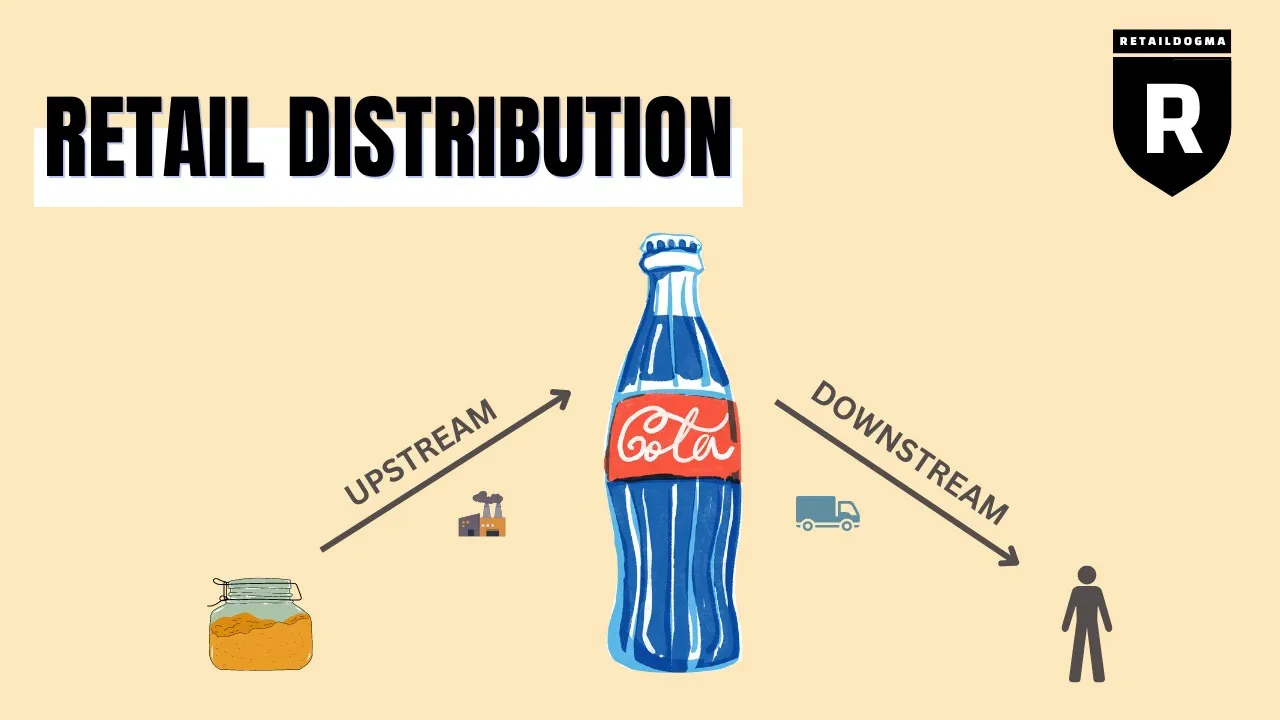
Retail Distribution Channels: Why Brick-and-Mortar Matters
@RetailDogma
4.8K views•2023-06-08
46:36
Retention Habits of Top DTC Ecommerce Brands Revealed
@SendItPodcast
44K views•2026-03-03

15:23
Decoy Effect: How Pricing Psychology Influences Consumer Spending
@bobinvestsUS
90K views•2026-01-05

17:30
The Planned Obsolescence of Light Bulbs and Tech
@veritasium
25.3M views•2021-03-26
Related Study Plans & Knowledge Roadmaps
Structured learning paths in Business
business
Pop-Up Retail: Strategy, Design & Execution
01Introduction to Pop-Up Retail & Strategic Goal Setting
02Budgeting, Site Selection, and Legal Essentials
03Experiential Retail Design & Visual Merchandising
+ 2 more learning modules
15h5 modules
Explore Roadmap
business
Reg CF: Startup Funding, Marketing & Launch
01Introduction to Equity Crowdfunding & Reg CF
02Platform Selection & Legal Preparation
03Crafting High-Converting Campaign Assets
+ 2 more learning modules
14h5 modules
Explore Roadmap
business
Productized Services: Scaling Solo Freelance
01Foundations of Productized Services
02Packaging and Scope Definition
03Pricing and Subscription Models
+ 2 more learning modules
15h5 modules
Explore Roadmap
business
Gov Procurement: Find, Bid & Win Contracts
01Introduction to Government Procurement & Business Setup
02Small Business Certifications & Set-Asides
03Finding and Analyzing Contract Opportunities
+ 2 more learning modules
14h5 modules
Explore Roadmap