The Elixir Community introduces itself through a tutorial on building a distributed key-value store application, demonstrating the language's capabilities for creating substantial, real-world software systems beyond simple examples.
Understanding the Dedication of the Elixir Programming Community
Added:Deep Dive
Basic understanding of the functional programming paradigm, including immutability and pure functions.

The purest coding style, where bugs are near impossible
1.2M
Functional programming is a paradigm that emphasizes immutability, pure functions, and declarative code structure, utilizing concepts like closures, higher-order functions, and currying to reduce bugs and improve code maintainability; while purely functional programming enforces strict immutability and eliminates side effects for maximum reliability, practical functional programming applies these principles selectively to enhance code quality without requiring complete paradigm adoption.
Click to watch →

Functional Programming - FP-in tarixi, inkişafı və prinsipləri | JAVASCRİPT DƏRSLƏRİ - #86
153
Functional programming is built on immutability - data should not be changed after creation. Instead of modifying existing data, new data structures are created with desired changes. Pure functions always produce the same output for the same input and have no side effects. This predictability makes programs easier to test, debug, and reason about. While this approach may use more memory, it provides significant benefits in correctness and maintainability. The Toyota case study demonstrated the real-world consequences of mutable data in large systems.
Click to watch →

Teórica 26/05. Paradigma Funcional I.
190
Functional programming differs fundamentally from imperative programming. In imperative programming, developers control the flow of instructions line by line. In functional programming, developers declare functions with specific input-output behavior, and functions are composed to build programs. Functions become first-class citizens, treated as data types like integers and strings. The paradigm is based on Lambda Calculus, a mathematical framework for defining algorithms in terms of functions. Key characteristics include: programs composed of functions, functions as first-class citizens, pure functions, immutable data, higher-order functions, function composition, and recursion. Pure functions are deterministic, meaning for the same input, they always produce the same output. They do not use data outside their scope, have no side effects, and do not perform I/O operations. Immutable data means that once data is created, its state cannot be changed. Data pipelines are a common pattern where data flows through a sequence of functions, with each function transforming the data passed to it.
Click to watch →

¿Qué es la PROGRAMACIÓN FUNCIONAL?
39.1K
Pure functions are fundamental to functional programming, following two rules: no side effects and deterministic output for identical inputs. Side effects occur when functions modify external state, interact with the outside world, or change data outside their scope. In JavaScript, objects are passed by reference, meaning modifications inside functions affect the original object outside. To maintain purity, developers must create deep clones of objects before modifying them, using structuredClone() for nested objects. Functions depending on external state like time or random numbers are not pure and should accept such state as parameters instead of obtaining it internally. Pure functions make code more testable, debuggable, and maintainable.
Click to watch →

Las Cosas en Programación que Nunca Cambiarán
20.9K
Functional programming offers an alternative paradigm emphasizing functions as primary building blocks. Pure functions have no side effects and always produce the same output for the same input, making them predictable and testable. Immutability prevents data modification after creation, eliminating unexpected side effects and enabling safe data sharing. Closures are functions that maintain their own state independent of the surrounding environment, capturing variables from their enclosing scope. First-class functions can be assigned to variables and passed as arguments, while higher-order functions accept or return other functions, enabling powerful patterns like callbacks.
Click to watch →
Deep Dive
Familiarity with the history of the Erlang VM (BEAM) and how Elixir is built upon its ecosystem.

Por qué deberías aprender Elixir y también usarlo en producción
22.7K
Elixir is built on top of the Erlang Virtual Machine (BEAM), inheriting Erlang's abstractions including the actor model for concurrency. This allows Elixir to access Erlang's libraries (OTP) and invoke any Erlang function. This foundation makes Elixir one of the most powerful modern languages for building scalable, robust web applications and distributed systems requiring high concurrency and fault tolerance.
Click to watch →
Problem Solving with Erlang & the BEAM • Robert Virding & Francesco Cesarini • GOTO 2023
27.9K
Erlang, originally developed at Ericsson in the 1990s to solve telecom concurrency and fault-tolerance problems, evolved from a single language into a comprehensive ecosystem through the emergence of new languages (Elixir, Gleam, Efene), frameworks (Phoenix), and continuous virtual machine improvements (BEAM), demonstrating how problem-driven language design can create adaptable platforms that serve diverse application domains beyond their original purpose.
Click to watch →

02 - Aprendendo Elixir v2 - A Beam
261
The BEAM (Bogdan's Erlang Abstract Machine) is the virtual machine foundation for Erlang, Elixir, and other languages. Developed in the 1980s by Ericsson engineers (Joe Armstrong, Robert Virding, Mike Williams) to address telecommunications needs, it evolved from the PLEX language. The BEAM provides guarantees of resiliency, concurrency, scalability, and fault tolerance. Key features include hot upgrade capability (allowing system updates without downtime) and 99.999% availability. The BEAM implements process isolation where everything is a process, and each process has its own isolated heap. The term-based memory model enables efficient pattern matching. The BEAM uses preemptive scheduling with reductions (function executions) to ensure fair CPU allocation across processes.
Click to watch →
Lars Wikman - Introducing Elixir: Your entire web stack | Øredev 2023
21.1K
Elixir combines Ruby/Rails productivity with superior performance, concurrency, and parallelism at high-level abstraction. Built on 40-year-old Swedish innovation (Erlang), it serves gaming giants, telecom companies, and startups. Programming language design involves trade-offs: Ruby/Python are elegant but slow at concurrency; Java/.NET require massive corporate investment; Node.js excels at I/O but struggles with CPU work. Erlang was designed for telecom requirements: concurrency, low latency (soft real-time), high availability, and hot code updates. To achieve performant concurrency, Erlang implements shared-nothing message passing, avoiding shared state and locking. Immutability is built-in, preventing shared state. Processes are the primary unit of concurrent execution. The actor model emerged from its architecture, enabling millions of lightweight processes. The BEAM VM has proven itself at Ericsson, WhatsApp, Discord, Blizzard, Riot Games, and AWS. Elixir provides Mix (CLI), IEX (REPL), Hex (package repository), and ExUnit (concurrent testing). Phoenix web framework utilizes Erlang's concurrency with optimized templating. Phoenix Channels demonstrates two million concurrent connections. Phoenix LiveView enables real-time interactive web UI without JavaScript. Membrane solves media streaming challenges. Bumblebee enables machine learning integration by compiling computation graphs to accelerators like Google XLA.
Click to watch →

Elixir in 2021 – Saša Jurić & Jonn Mostovoy
13.6K
Elixir targets the Erlang Virtual Machine (BEAM) and is designed for building software systems that run continuously for years or decades. Unlike simple programs that succeed or fail in binary terms, software systems operate in shades of gray where partial success is acceptable. Elixir provides building blocks to separate failures of different activities, ensuring most of the system continues working when something goes wrong. The BEAM provides lightweight concurrency through isolated processes, each with its own memory space. When a process crashes, only that process is affected while others continue running. Crash notifications enable fault tolerance patterns where supervisors can detect failures and restart workers. Elixir was created by José Valim around 2011 to address limitations in Erlang, providing better tooling including Mix, better syntax, and powerful macros. The ecosystem includes Registry for dynamic process naming, code formatter for consistent style, and Credo linter for enforcing coding standards. Just-In-Time compilation provides 30-130% speed improvements. The scheduler uses pre-emptive context switching, preventing a single misbehaving process from blocking the entire system.
Click to watch →
Deep Dive
General knowledge of how open-source software communities operate, collaborate, and maintain libraries.

Como funcionam as bibliotecas no Python ou R? Quem as atualizam? OM - Responde
544
Open source software libraries are maintained through community collaboration rather than single developers. Original developers release code with open permissions, enabling others with equivalent or superior knowledge to contribute updates. Python libraries are scripts utilizing advanced programming features, with object-oriented characteristics facilitating developer usage. Developers publish libraries to repositories like PyPI, choosing to open source code for community contributions. Collaboration platforms allow developers to control participation while volunteers contribute improvements. Motivations for contribution include personal satisfaction, professional recognition, ideological alignment with sharing software freely, and desire to provide community value.
Click to watch →

Ultimate GSOC Preparation 2026 | How to Get Into GSOC 2026
10K
Open source communities function through a specific workflow: developers write code and publish it on platforms like GitHub where anyone can view and access it. Once shared publicly, communities form around projects—groups of people with similar interests. As development increases, maintainers review contributions, provide optimization suggestions, and facilitate discussions. For example, changing a button color might seem good locally but could conflict with overall product goals, prompting healthy community discussion before code gets merged.
Click to watch →
Keynote: Our Responsibility to the Global Open Source Community - Erica Brescia, COO, GitHub
670
Open source software is built on a collaborative ecosystem where importing an open source library into a project is equivalent to adding a team of developers to your project. When developers use open source libraries, they are essentially giving those developers commit access to their code, while simultaneously benefiting from the ongoing improvements those developers make to the libraries. This interconnected community model replaces the outdated image of the solo developer working in isolation.
Click to watch →
What is open source?
119
Supported open-source library systems like Aspen, Koha, VuFind, and Metabase maintain active global communities driving all development. These communities consist of individual developers, employees from supporting companies, and customers themselves. Community members engage through annual conferences worldwide, webinars, open discussions, videos, and shared development platforms like GitHub and Bugzilla. User groups exist regionally and by library sector, with extensive repositories of shared knowledge including reports and guides. This vibrant ecosystem ensures continuous improvement and peer support.
Click to watch →

L'INTERVISTA STORICA SU UFFICIO ZERO LINUX!
417
The open source community provides a unique model for software development and collaboration. Key aspects include: (1) Community-driven development - software is improved through collective contributions from users worldwide; (2) Knowledge sharing - communities like PHP User Groups foster learning and innovation; (3) Forking - when community members disagree with project direction, they can create forks like OpenMage; (4) Maintainer responsibility - community members take ownership of maintaining software, often without formal employment. This model enables continuous improvement and adaptation based on user needs, demonstrating how distributed collaboration can produce software that serves global communities.
Click to watch →
Deep Dive
A foundational grasp of concurrency concepts, specifically the Actor model used in modern software development.
![[CSE 116] Lecture 25: Concurrency and Actors](https://i.ytimg.com/vi/zzpdEUiyMZk/maxresdefault.jpg)
[CSE 116] Lecture 25: Concurrency and Actors
441
This section introduces concurrency concepts and the actor model for achieving parallel execution. It explains why sequential execution fails for modern applications—web servers cannot queue millions of simultaneous requests, and GUIs cannot process multiple user inputs without blocking. The actor model provides a concurrency solution through independent actors communicating via message passing. Key Scala constructs include case classes (for data with value equality) and case objects (for event signaling). Actor classes extend Actor and implement receive methods using pattern matching to handle different message types, enabling decoupled, concurrent components.
Click to watch →
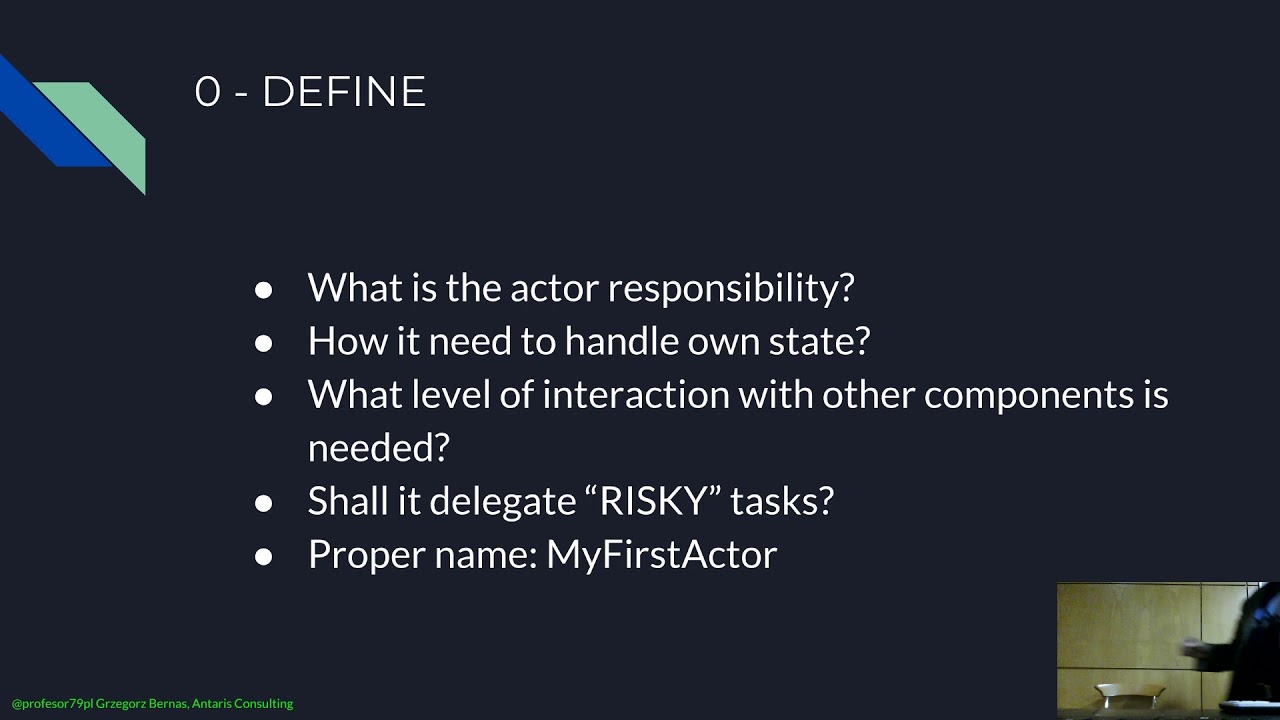
akka.net in a nutshell - devConference 20190223 Letterkeny
127
The actor model is a concurrent programming paradigm originating in 1973, predating modern software development. An actor is a piece of code that encapsulates state and behavior, processing messages asynchronously without blocking. The model is built on three axioms: actors can create new actors, send messages to known actors, and process messages by executing code, skipping, or throwing exceptions. Actors maintain internal state that persists between message processing cycles, enabling complex workflows. This stateful nature allows actors to remember previous interactions and make decisions based on accumulated information, making the actor model suitable for building responsive, concurrent systems.
Click to watch →

Concurrency Primitives - Actor Model
227
The Actor Model is a concurrency primitive where each actor runs on its own thread, has its own mailbox for message passing, and communicates exclusively through sending immutable messages to other actors' mailboxes, eliminating the need for locks and mutexes for synchronization.
Click to watch →
Vaughn Vernon - The Language of Actors
1.3K
This comprehensive section establishes why concurrency is essential in modern software development. It begins with Grace Hopper's nanosecond demonstration emphasizing that even small inefficiencies matter, balanced against Donald Knuth's warning about premature optimization. The narrative traces hardware evolution from 1973 (processors under 1 MHz, 7,000 transistors) through Moore's Law to 2003 when speed growth stalled while core counts increased. The section exposes fundamental limitations of traditional multi-threading: work queue patterns require synchronization that blocks threads, transforming multi-threaded applications into single-threaded ones despite having multiple cores. This leads to the actor model solution, formally articulated by Carl Hewitt in 1973, which enables asynchronous non-blocking communication. The section covers how Joe Armstrong rediscovered these principles in Erlang (1986) for telecommunications, and how modern implementations like Akka and Elixir extend these ideas. Key advantages include lock-free share-nothing architecture, millions of actors per VM, and natural embrace of latency inherent in distributed systems.
Click to watch →
Up And Out Scaling Software With Akka • Jonas Bonér • GOTO 2012
9K
This comprehensive section introduces actor-based programming as a fundamental approach to concurrency and distributed computing. The speaker explains that actors provide a common theme for solving concurrency problems, addressing the challenge of using different tools for different aspects of system design. The actor model, coined by Carl Hewitt in 1973 and adopted by Erlang in the 1980s, offers a way to program at a higher abstraction level compared to traditional thread-based concurrency. The key insight is that actors enable location transparency, where the same components can run in-process or distributed without code changes. The section covers workflow-based concurrency design, where developers think about how messages flow through the system rather than dealing with low-level threading primitives. The actor model embodies three things: processing (behavior), storage (state), and communication (message passing). When a message arrives, an actor can create new actors, send messages to known actors, or become something else (transform its behavior). This last axiom makes the model extremely dynamic and flexible. The section also covers actor system architecture, including the actor system container, ActorRef for safe actor interaction, actor hierarchies with file system-like naming, and asynchronous message passing with no locks in the hot path.
Click to watch →
Prerequisite Knowledge
- Concept 01Basic understanding of the functional programming paradigm, including immutability and pure functions.
- Concept 02Familiarity with the history of the Erlang VM (BEAM) and how Elixir is built upon its ecosystem.
- Concept 03General knowledge of how open-source software communities operate, collaborate, and maintain libraries.
- Concept 04A foundational grasp of concurrency concepts, specifically the Actor model used in modern software development.
Subsequent Learning
- Step 01In-depth study of the Phoenix Framework and LiveView for building real-time, interactive web applications.
- Step 02Advanced OTP (Open Telecom Platform) design patterns, including GenServer, Supervisors, and fault-tolerant system architecture.
- Step 03Practical engagement with Elixir open-source projects, including library creation and contributing to the Hex package manager.
- Step 04Exploring domain-specific Elixir frameworks such as Nerves for embedded systems or Nx for machine learning.
Initial View
App Project
Functional Core
Initial View
0:00Playing Section
- 1
Presents an opening perspective on Elixir's language and its community.
- 2
Sets the stage for a practical application-building session.
Practical Barriers and Niche Insularity in Passion-Driven Ecosystems
While the Elixir community's dedication is highly praised, critics argue that such intense passion can create an "echo chamber" that obscures practical limitations. This insularity can lead to over-evangelism, glossing over real-world challenges such as the steep learning curve of functional programming, the BEAM VM's poor performance with CPU-bound tasks, and a lack of mature libraries compared to giant ecosystems like Python or Node.js. Furthermore, community-driven passion does not easily solve enterprise adoption barriers; companies still struggle with a scarce talent pool and the lack of major corporate backing (unlike Go or TypeScript). Consequently, the very enthusiasm that unites the community can alienate mainstream decision-makers who prioritize market stability and hiring ease over ideological alignment with functional programming.
Deep Dive
In-depth study of the Phoenix Framework and LiveView for building real-time, interactive web applications.

Getting Started with Phoenix LiveView (UPDATED)
12.8K
Phoenix LiveView enables real-time web applications by combining three core components: the mount callback initializes state in the socket, the render function generates HEEx templates to display current state, and handle_event callbacks process user interactions to update state, automatically triggering re-renders whenever state changes.
Click to watch →

The Power & Performance of Phoenix LiveView • Geoffrey Lessel • GOTO 2021
10.5K
Phoenix LiveView is a real-time web framework built on Elixir that enables server-to-client HTML communication over websockets, allowing developers to build interactive web applications with minimal JavaScript by sending only changed data to clients, which improves performance, reduces bandwidth, and enables features like real-time form validation, live navigation, and distributed state management across multiple users.
Click to watch →
StripCode
84.2K
Phoenix LiveView enables real-time interactive web applications by creating a dedicated server process and websocket connection for each user, allowing server-side rendering with reactive variables that update without full page reloads, making it ideal for interactive games and applications requiring real-time responsiveness.
Click to watch →

Phoenix LiveView for web developers who don't know Elixir.
106.1K
This section demonstrates practical implementation of Phoenix LiveView through a counter application. Key concepts include: (1) Project setup using mix phx.new with Elixir; (2) Configuring LiveView in the router with live/2 routing rules; (3) Creating LiveView modules in web/live directories; (4) Using mount/2 to initialize state via assign/2; (5) Rendering templates with sigils (~L) and injecting values via @ syntax; (6) Adding phx-click attributes to buttons for event binding; (7) Implementing handle_event/3 functions with pattern matching on event names; (8) Returning :noreply tuples with updated sockets. The demonstration shows how minimal code creates interactive applications where state changes automatically trigger view updates. The architecture supports complex real-world applications like basketball scorekeeping, where each page maintains its own state and communicates through server-side processes.
Click to watch →
Phoenix LiveView Crash Course
7.8K
Phoenix LiveView enables building interactive web applications through a systematic five-step process: (1) Router determines which LiveView to load based on URL patterns, (2) HTML Mount calls mount, handle_params, and render callbacks to load data and generate initial HTML, (3) WebSocket Mount calls the same callbacks to establish real-time communication, (4) Form bindings (Phoenix click, value, change) capture user interactions and trigger handle_event callbacks on the backend, and (5) Context layer handles database operations through Elixir schemas. This architecture abstracts away serializers, adapters, and deserialization, automatically re-rendering HTML when data changes, providing SPA-like functionality with minimal JavaScript and backend-focused testing.
Click to watch →
Deep Dive
Advanced OTP (Open Telecom Platform) design patterns, including GenServer, Supervisors, and fault-tolerant system architecture.

Learning Erlang - the advantages of keeping things simple
16.6K
Behaviors abstract common patterns into reusable code with generic parts (OTP library) and specific callbacks (user code). The five predefined behaviors cover most patterns: GenServer (client-server), GenFSM (state machines), GenEvent (event handling), Supervisor (fault tolerance), and Application (application management). Supervision trees ensure long-lived systems: supervisors monitor children (workers or other supervisors), restart them based on rules, and handle failures hierarchically. OTP is open-ended—developers can create custom behaviors when predefined ones don't fit, allowing integration with non-OTP code while maintaining consistency. When supervisors keep restarting failing children, OTP provides restart limits: supervisors give up and die when limits are reached, passing failures upward. This prevents infinite restart loops while allowing diagnosis time. The combination of predefined patterns and open-ended design provides both structure and flexibility.
Click to watch →

ElixirConf UY - Closing Keynote: Elixir Works Like My Brain - Andrea Leopardi
7.1K
Most OTP abstractions (GenServers, Supervisors) can be built from three primitives: message passing, process links, and trapping exits. GenServers implement request-response patterns where callers send messages and wait for responses. Supervisors spawn children, link to them, and trap exits to manage lifecycle. When children crash, supervisors restart them according to strategies. This demonstrates that complex concurrent systems can be built from simple, well-defined primitives, making systems more understandable and maintainable.
Click to watch →

ElixirConf UY - Let OTP Guide Your Architecture - Yuri Oliveira
4.6K
A Gen Server is a process running an infinite loop waiting for messages. It handles initial conditions (like checking for signal before receiving calls) and becomes available to receive messages. The key insight is that Gen Servers should be able to receive new messages immediately upon starting. For fault tolerance, supervisors define how processes start, end, and restart based on strategies. Supervisors create a supervision tree, a well-known pattern in Erlang/Elixir that enables automatic recovery from failures. This combination of Gen Servers and supervisors provides resilient, self-healing systems.
Click to watch →

Start GenServer Process on Demand using DynamicSupervisor || GenServer || Supervisor || Elixir
107
This comprehensive section covers the foundational concepts of GenServer process management in Elixir. The GenServer.start/2 function starts processes without linking them to parents, causing termination on errors without recovery. The GenServer.start_link/2 function links processes to parents, causing error propagation. When GenServers encounter unhandled messages, they terminate with reasons visible through process_info/1. The supervisor pattern provides automatic restart capabilities, with DynamicSupervisor added as a child of regular supervisors in application.ex. Process.whereis/1 retrieves registered process PIDs. Trap_exit configuration isolates crashes, preventing error propagation to other linked processes. This architecture enables fault-tolerant, self-healing systems.
Click to watch →

Unique resiliency of the Erlang VM, the BEAM and Erlang OTP - IRINA GUBERMAN
1.9K
A typical OTP application structure includes an application module (top-level supervisor), supervisor modules for managing groups of processes, and gen_server modules for handling individual requests. Each gen_server can be created dynamically when needed, and they can communicate with each other while handling requests. The controller spawns handlers and uses gen_server calls with configurable timeouts. If a handler does not finish within the specified timeout, the controller dies and terminates the handler. When running an OTP application with infinite loop bugs, the system handles failures gracefully, with the gen_server calls timeout causing the controller to die, which then terminates the handler.
Click to watch →
Deep Dive
Practical engagement with Elixir open-source projects, including library creation and contributing to the Hex package manager.

Elixir и Фин-Tech
977
The Elixir community and package ecosystem is highly active and valuable: (1) The community is very responsive and actively contributes new packages daily, (2) When developers encounter gaps in existing functionality, they can contribute their own packages, (3) Many companies have contributed their custom packages back to the community, (4) The Hex package manager provides access to thousands of packages (around 3,779 at the time of the talk), and (5) This ecosystem enables rapid development while maintaining code quality through community review.
Click to watch →

Gerenciador de Pacotes do Elixir
250
Hex is the official package repository for the Elixir programming language, where developers can find, download, and install components, libraries, and frameworks for their projects. The Mix tool, Elixir's project manager, retrieves dependencies from Hex. Developers can search for packages by name (such as PDF generators or database drivers like MySQL), view download statistics to assess package popularity and stability, check the last update date to ensure the package is actively maintained, and identify the committers (such as José Valim, one of Elixir's creators) to evaluate package quality. This ecosystem is analogous to RubyGems for Ruby, npm for Node.js, and Maven for Java.
Click to watch →

Elixir, Phoenix LiveView & Erlang • Sophie DeBenedetto & Andrea Leopardi
793
Open source contribution often begins with documentation work and gradually increases in responsibility. The Elixir community is known for welcoming contributors and providing them with agency and responsibilities, making it an accessible path for newcomers to become core team members. This community-driven approach allows individuals to grow from documentation contributors to library maintainers and core team members over time.
Click to watch →

What are the Best Tools for the browser Testing Click to find out - Vanessa Lee
649
Ways to contribute back to the Elixir community include: Making pull requests when you find issues with libraries, reporting issues, and trying to fix them. Building something new that wasn't in scope of your work. Adding a small paragraph in your open source project's README explaining why you chose your dependencies and what went into your decisions. Making sure your open source projects are findable using proper tags on GitHub. The speaker shares an example of a testing library that queries against an absent schema without HTTP requests.
Click to watch →

Ari Lerner - Building Performant Backends with Elixir | Øredev 2018
117
The Elixir community is growing and provides many resources for learning and development. Elixir Bridge provides open source curriculum for learning Elixir. Hex provides a package registry for finding and publishing Elixir libraries. The community provides many open source libraries and frameworks that can be used to build applications. The community is active and responsive, providing support for developers learning Elixir.
Click to watch →
Deep Dive
Exploring domain-specific Elixir frameworks such as Nerves for embedded systems or Nx for machine learning.
Por qué deberías aprender Elixir y también usarlo en producción
22.7K
Elixir extends beyond web development through projects like Nerves for embedded systems (e.g., smart agricultural devices) and Nx for machine learning. Nx unifies NumPy and JAX libraries for working with multidimensional arrays and tensors. Broadway enables complex data migrations between different database technologies, achieving 22x faster performance compared to traditional data engineering tools.
Click to watch →
Elixir in 2021 – Saša Jurić & Jonn Mostovoy
13.6K
Nx is a new Elixir library for machine learning that provides tensor operations and GPU acceleration. It represents 'vendor unlocking' - the ability to run Elixir code on different hardware backends without changing source code. This is achieved through a new compiler backend that fuses computations and generates optimized code. Nerves is a platform for running Elixir/Erlang code on embedded devices like Raspberry Pi, providing deployment tools and dashboards for IoT applications. The fault tolerance and supervision patterns of BEAM are valuable for embedded systems requiring continuous operation. Static typing for BEAM is an active area of development, with projects like Gleam and Caramel exploring this direction. WhatsApp has been working on typed Erlang, which would bring static typing while maintaining concurrency and fault tolerance benefits.
Click to watch →

Scaling Edge AI with Elixir and Nerves - Vittoria Bitton & Paulo Valente | Code BEAM Lite STO 2025
776
This video demonstrates how to build efficient, scalable edge-device AI systems using Elixir and Nerves framework on Raspberry Pi with the Hailo HAT NPU. The system leverages NX as a common interface for data exchange between libraries, enabling real-time machine learning inference (such as YOLO V8 object detection) without cloud connectivity. The solution involves writing Elixir wrappers for Hailo runtime functions, implementing pre-processing and post-processing pipelines, and creating a self-contained on-device data capture and processing pipeline that can be scaled across multiple edge devices for distributed processing.
Click to watch →
Introducing Trellis: Open Source Hardware for Nerves - Gus Workman | ElixirConf EU 2025
972
Nerves is an open-source framework enabling Elixir execution on embedded hardware, specializing in IoT and industrial applications like autonomous boats and smart energy systems. It creates minimal custom Linux through mix compile scripts, providing hardware libraries for GPIO, UART, and I²C protocols. Key features include simplified time management and best-in-class firmware updates. Nerves runs on Linux-capable devices including Raspberry Pi, Beagle Bone Black, and Grisp. While Atom VM targets microcontrollers, Nerves focuses on Linux-based platforms for higher-level embedded development.
Click to watch →

Connor Rigby - Functional farming with Nerves | Code BEAM SF 19
1.6K
Nerves is an open-source framework for crafting and deploying Elixir/Erlang firmware for embedded devices. It supports Raspberry Pi, BeagleBoard, and virtual hardware like QEMU. The framework integrates a slimmed Linux kernel (10-15 second boot) with Buildroot for cross-compilation. FWUP bundles Elixir code with kernel and utilities into deployable packages. Elixir Circuits enables low-level hardware control via UART, SPI, I2C, and GPIO. Nerves also supports deployment to Voltron and future AWS services.
Click to watch →
Initial View
App Project
Functional Core
Initial View
0:00- 1
Presents an opening perspective on Elixir's language and its community.
- 2
Sets the stage for a practical application-building session.
Practical Barriers and Niche Insularity in Passion-Driven Ecosystems
While the Elixir community's dedication is highly praised, critics argue that such intense passion can create an "echo chamber" that obscures practical limitations. This insularity can lead to over-evangelism, glossing over real-world challenges such as the steep learning curve of functional programming, the BEAM VM's poor performance with CPU-bound tasks, and a lack of mature libraries compared to giant ecosystems like Python or Node.js. Furthermore, community-driven passion does not easily solve enterprise adoption barriers; companies still struggle with a scarce talent pool and the lack of major corporate backing (unlike Go or TypeScript). Consequently, the very enthusiasm that unites the community can alienate mainstream decision-makers who prioritize market stability and hiring ease over ideological alignment with functional programming.
Basic understanding of the functional programming paradigm, including immutability and pure functions.
Familiarity with the history of the Erlang VM (BEAM) and how Elixir is built upon its ecosystem.
General knowledge of how open-source software communities operate, collaborate, and maintain libraries.
A foundational grasp of concurrency concepts, specifically the Actor model used in modern software development.
In-depth study of the Phoenix Framework and LiveView for building real-time, interactive web applications.
Advanced OTP (Open Telecom Platform) design patterns, including GenServer, Supervisors, and fault-tolerant system architecture.
Practical engagement with Elixir open-source projects, including library creation and contributing to the Hex package manager.
Exploring domain-specific Elixir frameworks such as Nerves for embedded systems or Nx for machine learning.
94K views1.6Klikes0:23@ThePrimeTimeagenOriginal Release: 2025-11-14
I'm going to make a initial observation about Elixir as a language and as a community. So this is the introduction into using like Elixir and Mix and all the things that go together into actually writing an application. What do you think the example application is going to be? Uh we're going to build a distributed key value store. Okay, this is not a to-do application. We actually got some we got a little bit of meat here. THESE PEOPLE, THEY'RE FUNCTIONAL OVERLORDS. Very excited about that.
Up Next

23:38
Building a Distributed Transactional Key-Value Store with Rust
@fosdemtalks
1.2K views•2018-02-06
87:26
Introduction to Secure Multiparty Computation with Yehuda Lindell
@fhe_org
7.7K views•2021-02-04

15:03
Building a Java Virtual Machine in Rust: A Deep Dive
@ThePrimeTimeagen
71.4K views•2023-07-22
19:25
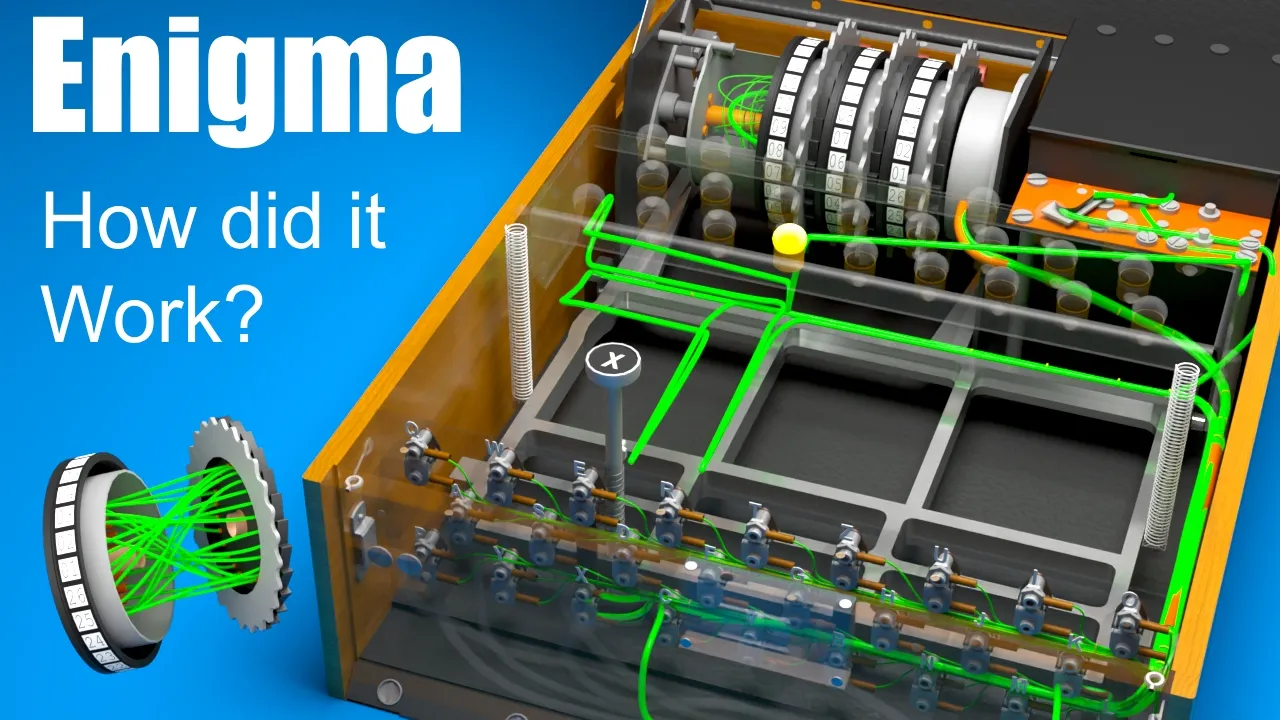
Enigma Machine Mechanics: WWII Encryption Explained
@JaredOwen
13.2M views•2021-12-11
Related Study Plans & Knowledge Roadmaps
Structured learning paths in Computer Science
computer-science
Container Runtimes: Namespaces, Cgroups & Go
01Linux Systems & Go Programming Foundations
02The Core of Isolation: Chroot and Filesystems
03Linux Namespaces: Process Isolation
+ 3 more learning modules
32h6 modules
Explore Roadmap
computer-science
Building a CHIP-8 Emulator: Rust & CPU Basics
01Computer Architecture Foundations (Bits & Bytes)
02Rust Programming for Systems Development
03CHIP-8 Virtual Hardware Specifications
+ 2 more learning modules
32h5 modules
Explore Roadmap
computer-science
Building BitTorrent: Go, P2P & Concurrency
01Go Fundamentals & Concurrency
02Networking Foundations & P2P Architecture
03Bencode Parsing & Torrent Metadata
+ 3 more learning modules
26h6 modules
Explore Roadmap
computer-science
Actor Models (C++ Concurrency & Lock-Free)
01C++ Multi-Threading Foundations
02Thread Pools and Task Scheduling
03Atomics and Lock-Free Queue Design
+ 3 more learning modules
45h6 modules
Explore Roadmap