




















![Phonology and Morphology ( chapter 2 ) [ Linguistics ]](https://i.ytimg.com/vi/kRBFhGuQBHc/maxresdefault.jpg)


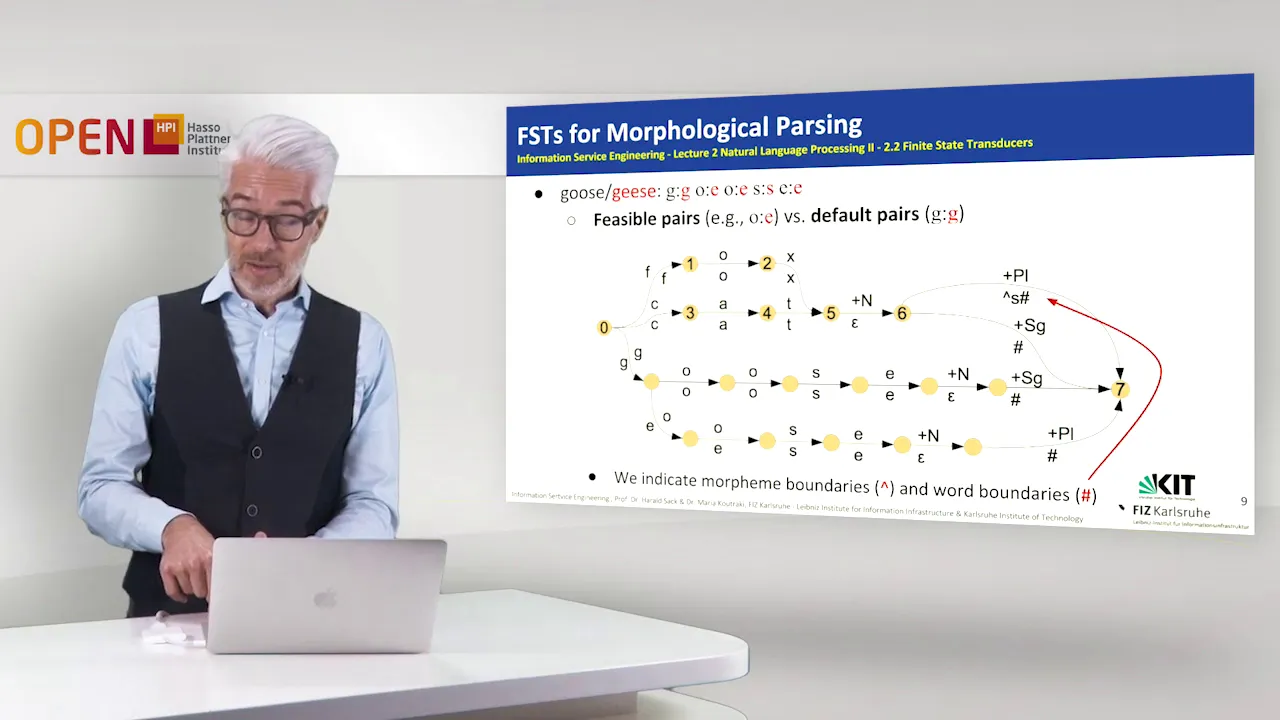


Morphological analysis must be based on phonology rather than orthography; for English plural formation, the default affix is a voiced alveolar fricative /z/, with alternations occurring when the preceding segment is voiceless (requiring /s/) or when the stem itself changes (requiring lexical memorization), following Charles Hockett's principle of preliminary normalization that establishes a normalized base form before defining alternation rules.
Morphological Analysis in English: Plural Formation & Hockett's Normalization
Added:Basic phonetics and phonology, specifically the distinction between voiced and voiceless consonants and phonetic classes like sibilants.
The core concepts of morphology, including the definitions of morphemes, allomorphs, and the distinction between free and bound morphemes.
An understanding of phonological processes, especially assimilation, where adjacent sounds influence one another's phonetic features.
Familiarity with the structuralist approach to linguistics, which emphasizes systemic relationships within a language.
Exploring the debate between Item-and-Arrangement (IA) and Item-and-Process (IP) models of morphological description.
Analyzing complex morphophonemic processes in non-English languages, such as vowel harmony or consonant mutation.
Transitioning to Generative Phonology and Morphology, studying how underlying representations and rule ordering replaced structuralist normalization.
Applying morphological principles to computational linguistics, such as developing finite-state transducers for stemming and morphological parsing in NLP.
36.2K views226likes10:32Original Release: 2012-03-18
in the following I will apply the main principles of morphological analysis to an example from present day English I will confine the analysis to British English and receive pronunciation as the standard accent furthermore I will show that even though we are familiar with the present day English orthography that the basis for a morphological analysis must be phology the examples I've chosen concern the formation of number that is singular versus plural and even though present day English uses non-concatenative operations in this morphological process such as um woman women or Mouse mice I will confine myself to the concatenative operation that is plural formation by means of affixation here are my examples presented orthographically dog dogs cat cats horse horses box boxes Echo EO Thief thieves Ox oxen now on the basis of an orthographical representation we would have to postulate the following plural well let me say endings we have something like a simple s we have something like es s or here well and we have something like en en if we compare the plural with the singular so using orthography it seems as if there are different conditions under which you have to add a simple s versus es s and then maybe as a special case n that this is not so and that there is some different condition at work here can only be shown if we provide a morphological analysis based on phology now it becomes clear that dog and dogs and Echo Echoes for example well that they do not have different endings but uh that in both cases a voiced alviola fricative is added to the singular form in order to generate the plural and also horses where you would add a simple ESS in orthography and boxes where you would have to add es in orthography have the same AIX phonologically let's perform the next step and isolate the affixes well in this case we have suffixes only now we have three variants we have the variant where a voiced alveola frickative is added where a voiceless alv frive is added and where a more complex suffix is added the en n well that may be a special case so what sort of alternation have we got we have six stems that remain unchanged where the singular stem form is identical with the plural stem form and then we have one stem where the stem changes in the single singular we have a voiceless Final fricative in Thief and in the plural the final element is a voiced labu Dental fricative well and then we have four affixes where one the one in Ox oxen can be excluded or it is relatively um rare um because it only attaches to some selected stems I've listed some of them here Ox oxen child children with a stem change in additional um alular approximant R and brother Brethren a very specific word and that's it now two of these involve a stem change so this is a very special case so let's concentrate on the situation with the uh vo ative Zed the sir and the is so let's look at that distribution well the voiced alv fricative occurs after all those stems that are voiced before the word boundaries dog echo echo the final V vowel is voiced of course and theve the voiceless alveola fricative attaches to all those stem forms where where the final element is voiceless as in cat now this would also apply to horse or box because the final element is voiceless however here we have a special condition and that condition is ranked highest so we have to check that first if any of these phones stands before the um stem boundary then we have to add is well with this in mind we can now apply a principle that has long been known this principle was first introduced by Charles hawkett in the mid 1940s and is referred to as normalization or preliminary normalization so what is it well the idea is that in the case of morphological alternation we first of all Define a general morph um that involves a set of Alternatives as a default well of course in our case this must be the um voiced variant the simple voiced variant because the majority of the environments where this one occurs are nouns that end on a voiced phon and there are more voiced phones in English than voiceless one consider the fact that um 50% or even more of the consonants are voiced nasals are always voiced and vowels are of course was voiced so voiced consonants occur in words like echo or dog so the default is clearly the voiced alular fricative now with the default we can now connect a set of alternation rules where the default has to be changed so rule one to Rule n and perhaps then we Define a context where no change occurs well these alternation rules can be subdivided as follows first of all we have phological alternation and we've already said that the default changes into is if any of these phones stands before the word boundary and it changes into the voiceless alular fricative if any other voiceless element constitutes the last segment before the morph boundary in words such as cat cats then we have what morphologists call lexical conditioning well in principle this means that the information about the choice of a plural is stored in our lexicon that is we have to remember it so we simply have to remember that the plural form of ox is oxen of child is children of brother special type of brother is Brethren and so on well then finally we have a special condition which we call morphological alternation or morphological conditioning where the morphological category determines the choice of alamor so here we have to postulate a special case for the category plural where the stem changes well let's Mar Market here from voiceless ones as in Thief life and cloth into voiced final stem elements theve live cloth now in cloth clothes there's also a vowel change involved well and this has to be contrasted with the environment of the genitive singular where no stem change occurs so the genitive is still phonologically conditioned it is thieves lives and cloths note that in this case in the case of morphological conditioning we also have to remember the various words because it is on the one hand Thief thieves but on the other it is Chief and Chiefs and it is um cloth clothes but moth moths so in other words the morphological condition must be combined with a lexical condition so let's now summarize morphological analysis must be based on a phonemic representation in our case echos and dogs would have been different in orthographical terms but they're identical in terms of a phonemic analysis using the phonemic analysis we first have to isolate the morphs so that's always something we have to do first and then we set up a normalized form in the case of variation in our case a normalized AIX well and if there are alternation rules well we have to Define them very precisely on the basis of the conditions under which they operate
Up Next

14:39
Morphological Analysis: Words Into Morphemes & Allomorphs
@oer-vlc
65.2K views•2012-02-24
36:52
Constraint Interaction in Optimality Theory: Epenthesis & Deletion
@Vidyamitra
180 views•2018-08-20
19:54
Understanding Grammatical Case: A Cross-Linguistic Study
@oer-vlc
13K views•2012-10-30

21:32
Accent Expert Explains U.S. Regional Dialects | Part 1
@WIRED
9.3M views•2021-01-21
Related Study Plans & Knowledge Roadmaps
Structured learning paths in Linguistics
linguistics
Optimality Theory: Tableaux & Constraints
01Phonological Basics: Sounds, Syllables & Rules
02Foundations of Optimality Theory: GEN, CON, and EVAL
03The Constraint Inventory: Markedness vs. Faithfulness
+ 2 more learning modules
15h5 modules
Explore Roadmap
linguistics
Morphosyntactic Alignment: S, A & P Systems
01Foundations of Syntax: Transitivity and Arguments
02The Linguistic Variables: Mapping S, A, and P
03Nominative-Accusative Alignment
+ 3 more learning modules
12h6 modules
Explore Roadmap
linguistics
Analyzing Sign Language: Phonology & Syntax
01Foundations of Sign Language Linguistics
02Phonology: The Five Parameters of a Sign
03Morphology: Word Formation and Classifiers
+ 2 more learning modules
14h5 modules
Explore Roadmap
linguistics
Pragmatics: Speech Acts, Grice & Politeness
01Introduction to Pragmatics: Meaning in Context
02Grice’s Cooperative Principle & Implicature
03Speech Act Theory
+ 2 more learning modules
14h5 modules
Explore Roadmap