



























Small businesses can effectively prepare for and respond to crises by following a five-step strategy: (1) conduct scenario planning to identify potential high-impact risks using a risk assessment matrix, (2) establish a pre-defined crisis response team with clear roles and responsibilities, (3) implement early warning systems like social media monitoring and customer feedback tools, (4) develop detailed checklists and decision-making processes for each scenario, and (5) create strategic response protocols including holding statements that demonstrate empathy, acknowledge the issue, communicate values, outline corrective actions, and commit to follow-up. The key principle is that the single biggest predictor of reputational harm is the perception that an organization doesn't care, so responding with genuine empathy and clear communication is essential for maintaining stakeholder trust.
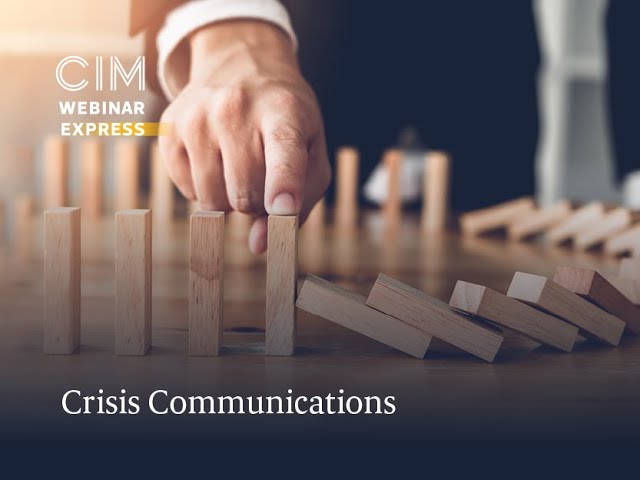
Crisis Communications Readiness Strategies for Small Businesses
Added:Welcome to the Tory Burch Foundation business webinar program presented by our partners at Bank of America.
Today's session is crisis comms readiness and you are going to learn about how to identify potential challenges before they happen. Wouldn't that be great to activate your team members on how to respond to a crisis and ultimately how to foster trust with your stakeholders after a major event.
I'm Molly Hefernan, vice president of marketing for the Tory Birch Foundation, and I am beyond thrilled to be here with Kelly Vulkar, CEO and founder of KVA Communications. Kelly is a seasoned communications professional with over 20 years of experience under her belt, helping organizations like Vitamix and Conair, which I'm sure many of you have heard of, navigate really complex communications challenges and landscapes. Prior to starting her own company, Kelly also led PR for Graco Children's Products and helped that company navigate six product recalls in less than three years. So to say that she has navigated and experienced the exact topic that we are covering today is an understatement. She is an absolute pro. She also has a rich background at big industry firms like Edelman and is just such an asset to us all today. and on top of it all is a Tory Burch Foundation fellow um part of our 2022 cohort and community and we are just so excited to have you here Kelly to be lending advice back to the many many entrepreneurs on today's call.
Awesome. Kelly, before I pass it to you, I just want to remind folks that we are going to have plenty of time for Q&A today. So, please use the chat for all this community fun, all the energy, connecting with each other on LinkedIn.
And use the Q&A box to submit your questions. That way there we don't miss them because that chat moves fast. Um, feel free to take notes if that is your preferred style, but today's session will be recorded and available to you after. So, check your link inboxes afterwards for a replay link. Um, so I think with that, Kelly, I'm gonna pass it over to you so we can dig into crisis comms. Yay. Awesome. Everyone's favorite topic, right? Um, Molly, thanks so much for such a wonderful introduction. I just want to check that everyone can see my screen. Okay, looks great. Thumbs up.
Perfect. Okay, awesome. All right, so um, so as Molly said, I'm Kelly Vulkar.
I am the founder and CEO of KVA. Um, also a 2022 Tory Birch Foundation fellow. And it's just so amazing to see how active and vibrant this community is and to just stay a part of it over the years is um is really really special. So Molly gave a great introduction. I've spent over uh two two decades in reputation management on both the agency and the client side. and I founded KBA in 2014 and we really help companies navigate the most complex corporate communications challenges. So we focus on things like companies going through change and transformation, crisis communications of course we're going to talk about today and corporate employer branding. So these are things that we see have really a tangible lasting impact on a business and often are very complex. Uh so that's that is really the space that we work in. Um and we have a variety of clients across industries, different sizes. Um so have seen a lot over the last few decades in terms of how a crisis can happen, how to navigate that and how to sort of mitigate it before it even happens.
So I want to start today with a story.
Um, so in in this field I get I get this call very often, right? So someone calls me, it's usually on a Friday afternoon and they say, "Um, Kelly, you do crisis communications, right?" Um, and so we do and in and in this case in particular, you know, we had a client who had an influencer that came to them was very very big in their industry and they had a terrible experience with one of their salespeople. And so this influencer not only was threatening a harassment lawsuit, but also was threatening to go public with um their experience with the brand. So, a small company um but really a a a big issue for their brand potentially. And so when a situation like this happens, you really need to be able to move quickly and do three things. So the first is just gathering information. So making sure you have the facts. Second is making quick decisions and and good sound decisions for your business. And then the third is communicating. And so communicating doesn't always mean going on the news or issuing a public statement, but there are going to be audiences that you need to communicate with. And so we're going to talk about those three things today and the steps that you can take to prepare to do these three things before a crisis even happens. And the steps that I want to talk to you about today, you know, there are some cases where you can prevent a brand crisis altogether.
Um, and so having this preparation done in advance and taking these steps ahead of time just increases the opportunity to mitigate a crisis before it come becomes a crisis at all. That's really the ideal state, right?
So what are the five steps? So the first is scenario planning. So I'm going to take you through a process that we use to look at issues in advance that could negatively impact your business. And so that is something that we'll go through in terms of how do you anticipate some of these things and then plan ahead for them. The scenario plan is really at the center, right? That's your first step to then identify what is the team that you would activate if something like this happened. What is an early warning system that could help you see if that issue is kind of bubbling up a little bit um and that you could react more quickly to it versus reacting once it becomes a big issue. Fourth is process.
Process is my favorite because it's one of those things that's really overlooked. Um, but having some good checklists, good process in place ahead of time could make an issue become either a total mess if you don't have it or it's really more organized and you're able to get to those decisions more quickly if you've got good process in place in advance. And then finally, strategic response. So we'll talk a little bit about what goes into responding, what makes a good response, what are some of the things that you need to keep in mind if you are going to issue an a response. And so we'll talk through how to get ready for that. So five steps. So we'll start first with scenario plan.
So why why do we scenario plan? I think that, you know, you could say, well, you know, let's just think about overall what would our team be and how would we respond to a crisis and really the way that you respond is going to be different depending on what happens. So, you really want to look at what are the top things that could have a major impact on my business. So, this grid is like a standard risk management, risk assessment sort of tool. uh you may have seen it before but if not it really looks at a scale of how likely is something to happen and what would the impact be on your business. So you can see it's just a 5x5 and you give it a score based on okay if it is likely and it would have a catastrophic impact that has a score of 20. You really want to focus on this top quadrant. Right? So so when you do this exercise you kind of give a laundry list of okay what are all the things that I could imagine that would impact my business and then let me score it onto the sheet. And then if you're doing scenario planning, you're going to really focus on that top right quadrant. And ideally, it's really maybe three. Start with three as a small business. And think about what that looks like. So, a couple of examples for you. So, social media criticism that picks up traction. These are all super business dependent for you. You you're going to have to do this exercise and think about, okay, for my business individually, how likely is that to happen? And what would the impact be? So in this example, you know, you put A at the top. Sure, that's a score of 20 and that could have catastrophic impact and could be pretty likely, right? A product safety issue, for example, for one company that might be significant impact. Another company it could be catastrophic. So you go through each of these items and say, okay, what would the potential impact be? How likely is it to happen? And then think about the ones that are ranking the highest. Last one, poor customer experience going public. That's the example that I just gave you of that client calling me saying, "What do I do?" Um, and so I'll give you guys some examples throughout today on how we manage that and how we also have used this process to manage other crises potentially.
Okay. So from here, let's go ahead and talk about your team.
So I know many of you are entrepreneurs um as you are thinking about this. So imagine a negative story about your business is picking up traction. Who is the first person you call? So if you're so inclined, throw it in the chat. Tell me who is the first person that you call because you want to have this answer before the moment hits, right? So you don't want to be thinking about, okay, I think we have an issue. I don't have somebody on deck that I could call to support me.
A lot of you might be soloreneurs, have small teams, may have a a couple of people that you work with on a daily basis. Um, a crisis is really not the time that you are going to want to bring on new legal counsel or if you don't have an HR consultant that you work with today or somebody who's fractional, that is somebody that you're going to want to interview. You want them to get to know your business. You want to identify that person now before you have a crisis. So you have someone to call when a crisis does happen. I think the other thing is is look, if you have a bigger team, you want to be able to assign roles, right?
So you don't have to take on all of it as the CEO or founder. Um, so who's going to be your spokesperson? Who's going to provide input on messaging? who handles each of your audiences, media, investors, customers, your staff. Um, as an entrepreneur, that a lot of those are going to be you. And so, you just want to make sure ahead of time that you are trained, that you feel really comfortable playing these roles. And if you don't, is there somebody that you could bring on in a temporary fashion or as fractional support to be able to help you um communicate during a crisis and and be that sort of counsel depending on the audience? Um, a couple of things just to point out here. You know, the the team that you need usually is is pretty small. Um so in the example of this influencer going you know public with a harassment claim that team was tiny. We really had the CEO was not involved at all. It was really their HR con head so their head of HR they had um legal involved. They consulted with the sales team to just understand who this person was and then it was us as as the communications consultant. So um very very small team uh in place and then the CEO was really just informed and and gave the final approval on the approach overall. So it doesn't have to be a huge team but identifying it in advance is is really critical. Um, when we go to the example of, okay, somebody is speaking negatively about you in social media, let's say, you know, legal is definitely one that you're going to want to have involved. Uh, communications, and then if it's like a service or a product issue, you're going to want somebody maybe from operations that could weigh in on on the facts. So, um, so that is the team and how to get that ready for you in advance.
All right, early warning system. So again, scenarios are going to help to inform you on what kind of early warning system do you need to have in place.
So some examples of this. So news media monitoring tools, social listening, um if you have products, you might be wanting uh review tracking. Um but beyond tools also if you have a customer service process or um client satisfaction surveys for example if you're a service-based company having a way to either identify trends in that data or an escalation process that can be a really really good early warning system for you.
Benefits of having an early warning system. So this is all about early detection. You want to know when something is just sort of simmering um before it's like full on boil, right? Um so learning about okay, you know, we're starting to see a few more posts about this product in particular or this element of um our product or this service that we offer. Um it can also help you determine scale, right? So sometimes it feels like, oh my gosh, somebody's like posting all this bad stuff and it's really just one disgruntled person or two, right? So understanding and using these tools to know is it really a widespread issue or is it just one really vocal disgruntled customer, right? Um this really helps you to position and and correct uh your like the information that's out there, right? so you can react more quickly.
Um, and and the good thing about these tools is that sure you might use them in a crisis to detect if a crisis is coming, but it also really helps you to stay just on top of your overall brand perception, um, any industry sentiment or trends. Um, so that's a real benefit of the early warning system as well. So an example of how I have personally used this in the past. So, when I was at Graco, um, we started to see a few comments in social media about the chest clip that goes at the top of a baby's car seat. And so, parents were starting to post with concerns about that clip being a little too hard to open. And they were really starting to get concerned. And so, as we saw that starting to um, come to life, we checked in with the customer service team. they validated, yeah, you know what, we are starting to get some um questions about this. And so we went to the team that was manufacturing that specific clip and said, hey, is there anything that could be done? And and believe it or not, there was a pretty easy fix to that. So, we were able to reach out to every consumer that had posted an issue with it, which it was not a huge volume, but it was starting to gain speed. um we were able to address their concerns, replace that clip, and it really mitigated any issue. I mean, you think about if there was um an injury or if there was an issue where a child was like trapped in their car seat in an emergency, that could have been a huge huge crisis for the company. Um and instead, we were able to mitigate that by just keeping a pulse on the conversation and being able to react quickly before um it escalated into something bigger.
All right. So, some example tools of early warning systems. I won't go into these um in great detail, but I'm happy to share them. Um these are some that we have used uh or our team has used. And you know, one that I'll call out is um you know, chat GBT. I think a lot of people are saying like, "Oh, we can use AI for everything now." Uh and it actually is pretty useful in terms of getting some directional insights. Um, so if you go on there and ask for, okay, hey, what is the latest news coverage on this topic or um, what is uh, the sentiment around this topic? It can give you some decent directional information.
Um, I say that with one caveat that it really it does not catch everything. Um, and it definitely can have some errors.
So, um, in my personal use of it of looking for just trends and coverage, um, I know for a fact that it is missing things that I know are out there. Um, so it can be a decent starting point and then supplement that with other tools to make sure that you're really getting full and accurate information. Um, and you know, regardless of what tool you use, it's less about the specific tool and more about what you do with it. You really need to look at it as an early warning system that can catch negative sentiment before things escalate. And if you use it in that way, it can be really, really powerful.
All right, so let's move on to process.
And so I said at the beginning, you know, the three things that you need to do. Um, good processes are mission critical. And so I have a process for each one of these three things that you could prepare as early as today. um before you're facing an issue. So, we talked about gathering information. I'm going to take you through some scenario-based checklists. So, um you are going to want to look at your scenarios and then this is something that you will use as a tool for you that is customized based on the scenario. So, I'll talk about that in a minute, but it really helps you understand what information you need to gather quickly if the issue did arise.
The second one is make decisions. So I'll go through um an example of what needs to happen in the first 24 to 48 hours based on the scenario that we've been walking through. Um we recommend going through this with each of your scenarios again and then preparing to communicate. So, I'll talk through some considerations for audio audience assessments and how you can make that process of communicating a lot smoother just by doing a few things ahead of time. So, let's go into the checklists. So, as I mentioned, you will want to take your scenarios and then come up with a checklist of what information will you need right away.
So, you won't be able to read this super well, but this is available as a download on our website. We'll share the link after this. Um, but this is something that is so so helpful if an issue arises. So, this example is based on negative coverage of your brand. And so, what would you need to know immediately and as quickly as possible if you're starting to see this happen, right? So what's the scope and the volume of the coverage? Who is uh who is driving the conversation and what is the sentiment? Uh if it's like traditional media, what outlets are covering you? Um what's the impact so far? So having this in place, you know, if if you've never had a real issue hit your business, it's a very very emotional thing. Um, and so having this guide in front of you to say, "Okay, don't panic. Here's the first thing that we need to find out."
It can help you to move into action mode faster versus that sort of momentary freeze when you're like, "What do I do?"
Um, and so this checklist is just one example. If it's a product safety issue, you're going to want to create a different checklist, right? So um SKUs involved, how many customer complaints have you had? Um do we know of any injuries and what is the scale of that?
So depending on the scenario, this checklist is going to be a little bit different. So this is a first step for you um to create after you have assembled your team and see that your early warning system is signaling that something might be coming. Right? So that's a checklist. All right. a tool and process for you to make decisions.
So, this is going to be your next step.
Now, you're going to want to write down, okay, what do I need to do in the first 24 to 48 hours? Now that I've gone through my checklist of information, what needs to happen? So, very practical example for you on let's keep the same example, right, of negative social media coverage is bubbling around your brand, right? So you've assembled your team.
This is where you're using your checklist and gathering all of the facts. Then you're going to come together and really evaluate the risk.
So how severe is it? What level of response is required? What's the potential impact? And then we're going to get into a holding statement in just a minute. This is the time to dust that off and use that as a starting point.
You're going to want to revise it and make sure it really applies to the current facts. And then um it's a much faster process to edit and update that than to start trying to draft a statement in the moment. Um and then all of that information is going to help you determine your response strategy. So I said before, you know, a public response may not always be appropriate, but there may be somebody impacted that you need to in uh to communicate with individually. Um, and so this is the time in that first 24 hours, depending on the scale and severity of the crisis, that you're really going to want to make sure you have your facts and that you have at least connected with, um, the audiences that would expect you to be in touch with them after that. So, um, you know, this could be between 24 and 48 hours depending again on the severity of things, right?
And the expectations of your audience on how quickly you should be responding. um key stakeholders always need to come first. So if you need to um make a public statement, make sure you're really thinking about the cascade of who needs to know first, right? So somebody impacted or an employee is not going to want to find out about what's happening in a public statement. So, you really need to think about who needs to know and who needs to know first and then next and um and really put that flow down on paper so that if you do have an issue, you know who would need to know first. Um and then then is the time to start to engage thoughtfully. So, correcting misinformation, trying to pull the conversation offline if at all possible. Um, and then making sure, you know, if you do have employees or contractors that are working for you, um, depending on the scale of the crisis, making sure that they have some talking points. Um, if you have a customer service team, make sure they know what's going on so they're not kind of blindsided if they get customer questions and they know how to um, respond appropriately.
This time period is really, really critical for um, sentiment and uh, media volume monitoring. And so using that sort of early warning system tool to keep tabs on how is the conversation um tracking, is it increasing, is it escalating in severity, um making sure that you're really able to keep an eye on that and then documenting as much as possible. So, this is where it's helpful to sort of bring on someone um that can help you with this because things get deleted or it's really hard to go back and find a comment on a certain thing.
So, especially if it's like negative coverage around one of your products or services or people are making claims about your business, you're going to want to capture that um and make sure you know who posted it, the time and the date, uh what the sentiment is just for posterity and to be able to look at trends overall. So, um documenting is also really important.
And then processes around communicating.
Um, you know, I can't tell you how many times we have gotten into a situation where we have said, "We really need to reach out to our customers about this and then we're like, we don't have distribution lists ready to go for that audience." And so you're scrambling to try to get a distribution list. Um, so simple simple things can either be the like will make or break your communication process in a crisis. So a couple of simple things to keep in mind.
So which audiences are going to expect to hear from you. So again, this is based on your scenario plan. So this is why that scenario plan is right at the heart of everything that you do to prepare. Um because for each one, it's going to look a little different, right?
So which audiences are going to expect to hear from you? What order? Do you have distribution lists easily available? Like really simple things. um what scenario in would you speak publicly and and what scenario in a scenario would you speak publicly? You want to just think about that and so you can go back and say you know when we were really thinking about this with a clear head we said we wouldn't make a public statement unless this was the case. Um you can go back to that and revisit it and then think about okay we're in the situation now does it still apply? Um and make a better decision based on that.
Um, other simple things, do you have a central location for your usernames and passwords? Website access, login details, do you know who have who has access to them? Um, and making sure, you know, we hear all the time about like make sure that you're, you know, auditing your um access levels and auditing your social channels to make sure you know who has access. Um, now is a good time to do that and to do that regularly. So you just make sure that you um don't get in a situation where someone has access that you wouldn't want to have access in a crisis. Um and then finally process for collecting information. So, you know, if a crisis happens, it can be a real whirlwind to figure out like what is the truth, right? And so, really simple processes of um timestamping when you get updates to information and having a running document. So it's one place that is a source of truth and you are making sure that you are documenting people's names, the time, the date and so you know, okay, Mark said that this was the situation at 12:52 on Tuesday. That is the latest information that we have about this issue. So some of these things are just really help the um situation to flow more easily. um one real life example. So we um we helped a company that was required to um mandate vaccines during COVID because they were a government contractor. And so uh one of the things that we did that really made the communications process run a lot smoother was we had um what we called a war room. So both a physical space, a conference room for um that team to gather in and then just an open Zoom room. So it was literally the place that we worked from all day for a few weeks on end. Um where you just check in if you're not in another meeting and you have one central place where everyone can go to say I have an update on information. I'm coming here and this is where the people that make the decisions need to be. Um and then we also had a very specific schedule on when we would debrief. So we would say okay we are going to meet it could be every hour it could be every 2 hours to make sure that we are staying current on as much information as possible. Um and so that really close connected communication made all the difference on staying up todate on the facts of how the issue was evolving.
Okay, the fifth step. So, strategic response. Um, this is is so important because there's always going to be somebody who's going to be expecting to hear from you in an issue if you do have a crisis. And your goal is building trust. So, look, building trust is something that you do for a long time before you get to any point where you have a crisis. But I think in the moment some of the things to keep in mind are you can build trust in three ways. So first is staying true to your values. So um you know in the fellowship we do a lot of work around how do you define your values as an organization and how do you live those values every day. Um and this is something that really should come through in any response and even any decision- making. This is where it really really uh matters, right? Um keeping your promises. So um it it sounds funny to say this, but in a in a crisis situation, make promises so you can keep them and make small promises, right? So these are things like I will follow up with you in one hour and then in one hour follow up and then do it again. And that repeated sort of followth through and keeping your commitment can be one of the fastest ways that you can start to build trust with somebody that maybe doesn't know you very well yet. Um, and then audience expectations. I think again this is something to really think through ahead of time before you're feeling that emotion of the moment and say, you know, what is this audience really going to expect me um a company like mine to say in this situation or to do in this situation? What if this happened to me?
What would I want? And write those things down before you get into the moment. Right?
So this is from PRSA. I'm sharing it verbatim because I think this is so important is the single biggest predictor of loss of trust of reputational harm and of competitive advantage is in a crisis the perception that you don't care. And so it sounds really simple, right? But keeping that sort of at the center of your decision- making and communication process of how do we authentically show people that we care and that doesn't mean like giving everything away or you know causing damage to your company but really just genuinely showing empathy and remembering that um I want to say like trolls are people too. Um, I mean, we like go crazy on like we're willing to go crazy on social media, but then you know you take it offline and you have a conversation, you realize like this is an actual person like how do we connect um and show that care. So, um that is going to be really at the center of what you do. So, there are things that you can do in advance. Again, uh the whole theme that we're talking about today, there's there are communications that you can actually draft and should draft in advance, right? So, they're not going to be perfect. They are not going to be distribution ready the day of, but they're a great starting point. Um so, a holding statement, a customer email, a social response, um communication to your staff or vendors based on the scenario. Uh one that I love is the Virginia Department of Education. They have a letter already drafted for parents in the case of a bus incident.
So there if there's an accident involving children riding on a school bus, they have a letter already pre-draft and drafted and ready to go to send to parents that they can review, give the circumstances that are specific to whatever happened and give resources to parents to help them deal with that situation. So, that's a really great example of something that you could do right now um that you would be able to have ready after you do that scenario planning exercise.
So, what makes a good holding statement?
Um so, there look it the the formula is not exact and it shouldn't sound like a formula, right? So, we talked about care. It needs to be a genuine communication. But there's typically five things that come through in good communications um as you are pulling together a more detailed response. Right? So acknowledgement, making sure that the the person knows, the audience knows that you are aware of the issue. Um empathy. So again, care keeps coming back up. Um a lot of times it's super simple to skip this one. A lot of people skip this one, right? it's we know that this happened. Here's what we're doing about it. We will make it right and and they forget about the people side of it.
And so making sure that that empathy is is a part of any response is is really really important. Um and you can do that in a way that doesn't assume liability.
Right? So I think that that's another thing that um a lot of people worry.
Okay. Well, if I say, "I'm so sorry that you had a bad experience with our company." Does that accept liability?
And look, sir, it's going to depend on the situation. You need legal counsel to be able to guide you on that. Um, but there are cases where you can have an empathetic response without a legal issue.
Uh, values. So, again, just reiterating your values and working those in in a genuine way. Um, telling them what you're going to do. So, making sure that they know your approach from here and then making a commitment. So, again, that really simple commitment of when will I hear from you again and then following through? Um, super super important to building that trust.
So, here's an example. So, again, negative social media coverage, how would you initially address that? Right?
So, this is again a starting point. this wouldn't be a final communication that I would recommend would go out, but here's some of the ways that you can start thinking about um what a response might look like with each of these elements included. Right? So, I appreciate you bringing XYZ to our attention. Uh I'm so sorry you didn't have an outstanding experience. We're committed to making it right. Um values, it could be something like our customer satisfaction is our top priority. Um, in the case where we had the influencer threatening a harassment suit, we said, "Look, our company is about supporting women, we have invested in this. We are committed to it. We would never want um one of our customers or anyone to be treated this way. And so, we are so sorry that you had a a bad experience with one of our team members." Um, then what what are you going to do? Right? So I'd like to it might be in the beginning you might say I want to have a quick call with you.
This is what we did in the chess clip situation is we had phone calls with uh customers to just get more data and more information about what their complaint was, how serious it was. Um and then again commitment. So, if I don't hear from you, I'll reach back out to you in a week or a day or um you know what, I'll go get an answer for you on that and I'll follow up in by the end of the day. And being able to to be really mindful that whatever you commit, you have got to stick to. And so, um being really specific in that commitment and being really realistic in what you're able to do.
Just a few other tips before we wrap up.
Um so responding beyond the holding statement. I think uh a few of these things that we've talked about. So staying true to your values always. Um it's okay to say we don't know. I think a lot of people feel like they have to have all the answers before they respond. And it's actually better to come out and say we are aware of this.
We are looking into it. We will have another update in a few hours when we have more information. Um, you know, I talked about telling people when they'll hear hear from you next and keeping that commitment. Um, overcommunicating is safer than undercommunicating. So, this one I would say one caveat is when you are going public with information, you got to be a little careful here on on what is too much and what is just enough. Um, but when it comes to individual communication with somebody who feels like they have been slighted by your brand or had a negative experience with your brand, one of the biggest ways that a crisis escalates that I have seen is that the company just did not keep that person who was impacted in the loop enough, did not communicate enough. Um, so they didn't have that perception that the company cared. And what happens is then that individual starts to get more upset and more upset and then they're upset that they didn't hear from the company and then it's a big public thing and it's turned into a really big issue when if the company had just overcommunicated to that person on here's where we are in the process, we really care about your experience. Um it could have potentially mitigated a bigger issue. Uh and then the last thing is like this is so critically important and why the checklists are in place and why those you know the steps that you're going to go through are so important is because the information that you do share has to be accurate. The last thing you want to do is go back and issue a correction on something that people would expect you to know as a business. And so um having some checks and balances in place, validating things, asking really good questions. So if information is coming in, verifying sources, that you know timestamp that we talked about, um doing everything that you can to make sure that information is accurate is critical.
Okay, so those are the five steps. Um I could probably talk about this all day, but I'm going to stop here. I would love to make sure that we have time for questions. Um but definitely want to offer up a few things as a followup. So, um, we have some tools on our site. So, that scenario planning template that I showed you, that process checklist example, so you guys can create your own depending on the scenarios that you built. Um, our site address is here. Um, I also would love to meet with anyone who has additional questions. So, we are offering a free 15minute consultation with anyone who's participated in the webinar. So, a calendarly link to get that scheduled is right here. And then if you're interested in additional insights, you can scan this QR code, sign up for our newsletter. Um, and I'm also just happy to answer questions personally. So if you want to email me, I know the team um can share my email, it's just [email protected].
Um, I would love to connect with any of you. So with that, Molly, uh, we can start for questions. Yeah. And there, you know, Kelly, this has been fantastic. I think there's so much to chew on. There is sort of this repeat energy and question from folks and many have asked in different ways. So I think we should start there and it's it's really you know the the bigger question about crisis at large. You know when we think about crisis there are the ones that are societal and human and um whether that be a natural disaster or political issue. And so for the founders on that feel an urgency to respond, what lens do you recommend they run that decision- making through? Yes. So we get that question all the time and counsel clients a lot and I think that um the biggest filter is how how does it impact your business and what are your values? And so for example, there could be um let's say like a okay so Russia and Ukraine crisis I think that was a question where a lot of people would say gosh we feel like we need to respond and our question would be do you sell in Russia? Do you have suppliers in Russia?
Do you have customers in Russia or in Ukraine? Um so what is the specific impact on your business and then what value does that address right? So um if you are if you are active and and speaking out on certain issues that impact your business then it makes sense but I think what happens is companies start to feel pressure on okay this is something that's bubbling in the news and is a big issue. do I need to say something? And the answer really is it depends because it will feel like it's out of left field if there's not a direct impact to your business or it doesn't impact an issue that you have committed to as a company.
So if you're committed to women's rights, you should speak out on things related to women's rights. Does that help? It absolutely is helpful, Kelly.
And I think even to take that example further and like Tori Tory Burge for example, we did speak out during Russia and Ukraine because of the impact on women in a crisis like that and our value being to stand behind women as a company. So it was through the lens in which how does this touch something that we've been so outspoken about. So I think that that's a great and we had employees impacted. So, it was a nice double filter to say this this is a moment to step in, right? And this is relevant to our business and here's how we feel about it. Precisely. So, thank thank you for starting there. Um, you know, because I think that that's just weighing on on folks and, you know, it's hard to know where to go, but I think that's such a great great piece of advice. You know, the other um thing that's really interesting is you shared that matrix at the beginning, which is so helpful to to show, you know, you have your scenarios and at what scale and degree does do we warrant a crisis?
And so, how would you encourage founders to think about full-scale response versus handling maybe what is negative feedback that you're receiving and kind of not overindexing? every time we see critical feedback to consider that a crisis especially like our brands as as founders just mean so much to us that you're like more apt to go this is a crisis. Yeah. And I can't tell I've seen brands are very likely to overindex.
Right. So sometimes you'll get a email to all customers saying oops we did something and we're so sorry. and you're like, I didn't even I didn't even know about that. And so now you've actually told more people about what's happening and the negative perception of your brand than maybe they would have known about in the first place, right? And so, um, I think that that is something that you want to look at is first of all, what is the scale and the scope of it?
So, you know, we talked about these monitoring tools. Is it a complete like you have a big percentage of customers that are coming out with something or um it could be a potential safety issue for a broad audience? Those are times where you really want to think about a a broader response. But, you know, in the in the chess clip example I gave, there there were a lot of complaints, but we never went out with a big public statement. We looked to address that one on-one with the people who are having that issue. And so, um, I do think it don't take up a snake to kill it. That's right. That is a perfect way to perfect way to put it. um is that it it really comes down to how widespread is it and how big could the impact be before you respond. Yeah. You know, the other um the other thinking around a crisis is the ones that ultimately are adjacent to your brand that you sort of feel really connected to or might receive blowback from, whether that's like a major partner, a key supply chain vendor, or you know, an influencer that you previously worked with.
How would you consider those scenarios as it relates to the brand? Would you still run them through the same filter when you're not really in control of the narrative? Right. So, do you mean um like you're working with an influencer and they're kind of getting into hot water negative? Yeah. Yeah. And maybe you worked with them once and you're like, "Oh, now we're bracing for blowback."
I mean, I think that you've got to watch that and see is your brand like how closely is your brand being tied back to it, right? So, if you're right in the mix of it, you're going to have to make some decisions really quickly on, okay, does that partnership continue? Or if it was a past partnership, you know, it may make sense to say, look, we've had we had a past relationship with this person. These are our like reiterating your values is always the best way to approach that. Um, but it's really going to be like specific dependent on the situation, I would say. All right. Well, I'll throw one more scenario at you.
Yeah. When your competition is going through a crisis, what should you be watching out for? Like the press may be trying to get you to comment on what's happening. like how can founders strategically navigate the crisis that somebody else really close or in their same space is going through? Yeah, I mean I don't want to oversimplify it, but my best advice is always take the high road and um you know capitalizing on somebody else's crisis. I mean that could be you someday. And so I think um just trying to remain focused on what is most important to your business.
Commenting on a competitor's crisis, I would I would not recommend that. Um it's almost like look, continue with business as usual. Stay focused on your goals and just keep moving forward. Um because that is how to just stay in a positive space. Yeah. Now, um, switching gears a little bit, somebody asked, you know, as my company grows, how frequently should I be coming back to the scenario planning so that it's relevant to the scale in which the company is at? Yeah, I would say look, if you are a steady growth kind of company, I would say it's like once a year, uh, maybe twice a year if you have major major changes to your business. So you go from, you know, one employee to 20 in a 3month period. Like one, good on you. But also like you're going to have some different expectations. Um, and so revisiting that plan at that time is really important. So it doesn't need to happen super frequently unless you're having really big changes in your business. I think it makes sense. And if you are on the smaller end of things or you're still solo Yeah. And really in those early days, what would you say of everything that we've sort of gone through today would be like this is the most essential that you should be doing when your resources are of course strapped. You're the only one doing the whole thing. Yeah. So what should they be doing for crisis planning? I mean, beyond the team, I I mean, I think even if you are solo, you've got to have somebody that you can bounce ideas off of because um like I said, the emotions can just take over in a situation like this. It is your baby and it is like somebody is threatening your baby and you are going to go mama bear. I mean, and you need somebody to check you on that. Um, so just knowing, okay, like back to that question, who's that first person that you're going to call um even if it is somebody who can um just be a sounding board for you or an advisor, you just need somebody else who's not as invested as you are to help you through, right? Um, and then I think that then beyond that, it's like if you can just put down the first few steps that you will take, you h you you like leap over the paralysis more quickly, right? So when something happens, you immediately are like, I don't know what to do. Um, and so the faster that you can switch into action mode, um, and just having those few steps, so you say, okay, I got my checklist. I've got to look for my information now. I've got to call this person. This is going to be my first step. Um I think that that can be infinitely helpful when you're kind of going it alone. Yeah, that deep breath that you just need to take. It's all mapped out. I love that. Yeah, that's right. You know, somebody asked really tactically about glass door workplace reviews.
When you think about brands engaging in discourse on platforms, commenting back on glass door, commenting on Google reviews, hopping into the Yelp. Yeah.
What do you recommend there? And are there platforms that you're like, they're not even worth touching?
Yes. Um, we see glass door a lot. Um, look, sometimes I mean I don't mean to oversimplify it, but it's kind of like haters going to hate, right? And so, are there things that you can tangibly do to make a difference? And and if you and if you do, can you um like is it gonna make a difference, right? And so um I think it depends on the nature of it. So look, if they are unearthing things that like this is a toxic environment and it's not just somebody who like you know had a bad experience with your company because you need to let them go for whatever reason, right? But somebody's really posting something of like, oh, we're starting to see a theme. it.
I think it can be a good source for monitoring. Not necessarily like you really don't want to get into the fray of negativity unless like you responding means that you could reach out individually to that person and potentially resolve their issue versus them just kind of complaining, right?
Yeah. You know, somebody did just drop in the chat. Does every single piece of negative feedback warrant a response?
No, I don't think so. I I mean, I think sometimes there are a lot of companies that just choose to let it go and not respond. And and that's a good strategy in a lot of cases, right? That sometimes I mean, you'll see negative reviews on products or services all the time where it's like, okay, come on. Like really that that is not something that could have ever been managed by our team, right? Like somebody's like, "The weather was terrible and I had an awful experience." And you're like, "I'm I'm so sorry, but that's not my fault." Um, so I would say the ones that weren't a response are like you genuinely like someone genuinely did not have a good experience with your brand and you could fix that.
Um, but no, I don't think that that every complaint warrants a response. Um, you know, another really interesting question came in and I think many of us have even seen these people on social media. It's your employee that is the ultimate brand ambassador and crusader for your business. Are there policies that should be in place, rules and regulations that you would recommend communicating to your employee base? so that you know that they're not escalating the situation because they're just thinking they're doing the right thing. Right. Right. Um I think one thing that I would recommend for every small business is just like a basic code of conduct if you don't have one. Um it just gives you something to kind of go back to and just gives you some guidelines also of like hey here's when we engage and when we don't. Um, also I think it goes back to that like communicating very early and very often around we have seen something happening.
This could be a real issue for our company. I'm going to ask you not to engage on this issue right now and if you do see something here's the process to escalate it and who really should be responding from the company. That's fant. It's so clear. So clear and so outlined for people. Yeah, that's right.
Yeah. Um, so I, you know, I think if I was just to sort of step back, you know, in our last minute here, um, you've worked with so many different companies, so many different brands. If you had one singular piece of advice that would transform the way people engage in a crisis, what would that be?
I think it is um, don't be afraid to care, you know? I mean like have that real like really work to have that human connection with people because I think that is what people are seeking, right? Is that they want to feel seen, they want to be heard. Um I think people are hesitant to have like a one-on-one conversation with somebody, but a lot of times somebody just wants to know that they were being listened to, right? That someone cared enough to sit on the phone with them and listen to what they had to say. And a lot of times that's how things get diffused. So that would be my best advice. Yeah. You might even win that customer back because you just showed you care better than the next. Yeah. Um, you know, Kelly, I I can't thank you enough for sharing your expertise with the community and being such a valued member of the community in general.
Up Next
Social Media Crisis Management Plan: How to Prepare
@HubSpotMarketing
17.9K views•2020-03-24
Retention Habits of Top DTC Ecommerce Brands Revealed
@SendItPodcast
44K views•2026-03-03

Decoy Effect: How Pricing Psychology Influences Consumer Spending
@bobinvestsUS
90K views•2026-01-05

The Planned Obsolescence of Light Bulbs and Tech
@veritasium
25.3M views•2021-03-26
Related Study Plans & Knowledge Roadmaps
Structured learning paths in Business