











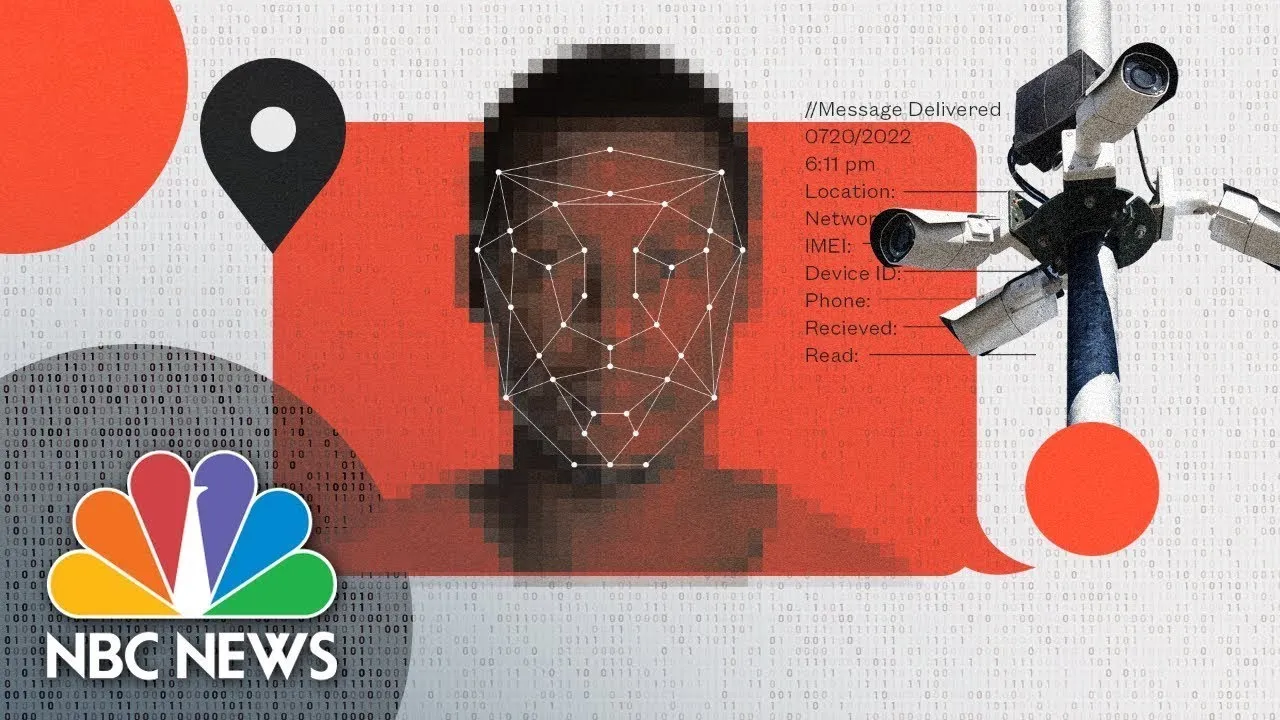







Personal data is collected, packaged, and sold by data brokers through various online and offline sources, including location tracking, shopping habits, and public records; even seemingly anonymous data like postcode, date of birth, and gender can uniquely identify individuals (as demonstrated by research showing 87% of Americans can be identified by just three data points), meaning our data footprint extends far beyond our awareness and can be used to predict behaviors, influence decisions, and compromise privacy.
Data Brokers: How Your Identity is Sold Online | Academic Insight
Added:The concept of a 'digital footprint,' including how tracking pixels, cookies, and device fingerprinting collect user behavior online.
The economic model of 'Surveillance Capitalism,' where free digital services monetize user attention and behavioral data.
Basic principles of data aggregation, specifically how disparate datasets can be combined to Deanonymize individuals.
An introductory awareness of major data privacy frameworks, such as the General Data Protection Regulation (GDPR) and California Consumer Privacy Act (CCPA).
The study of Privacy-Enhancing Technologies (PETs), such as differential privacy, zero-knowledge proofs, and homomorphic encryption.
Analyzing the downstream social impacts of brokered data on algorithmic discrimination, predatory advertising, and predictive policing.
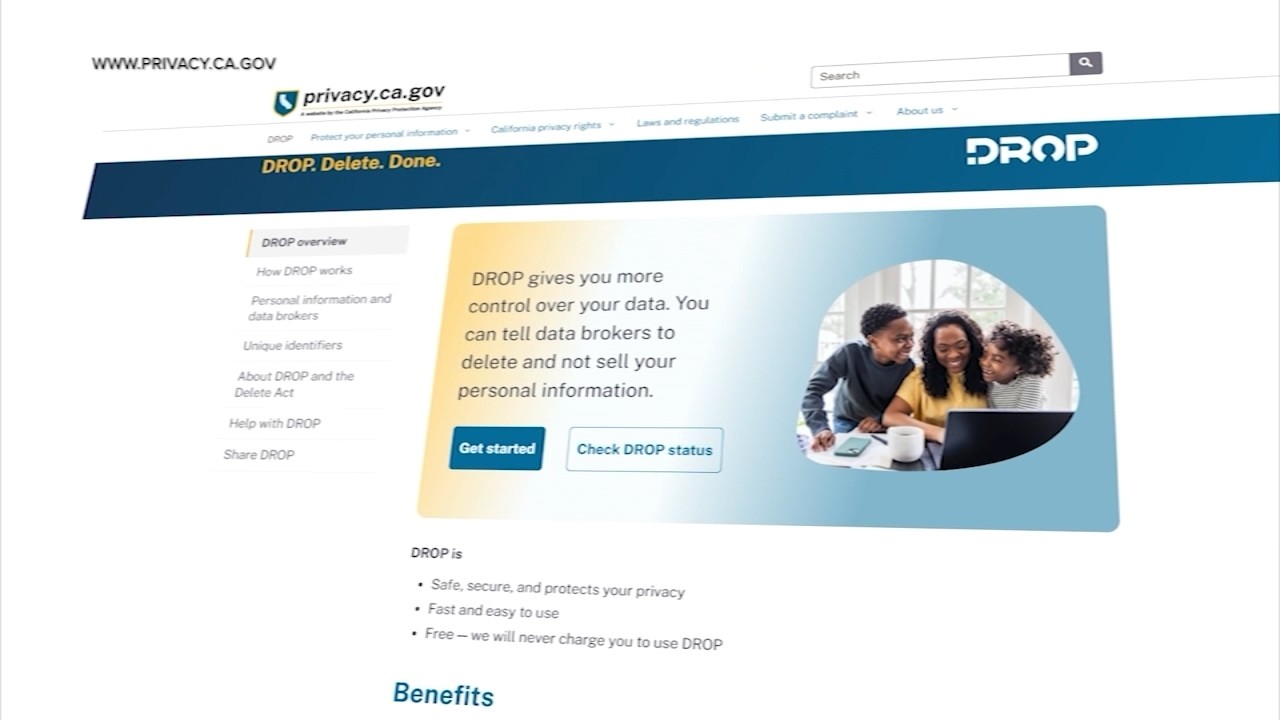
Evaluating emerging legislative reforms specifically targeting data brokers, such as California's DELETE Act and federal regulatory initiatives.
Designing and implementing organizational data governance frameworks, focusing on data minimization, consent management, and secure data deletion.
173.1K views3Klikes16:20Original Release: 2017-05-23
Translator: Riaki Poništ Reviewer: Ellen Maloney I'm a 26-year-old British Asian woman working in media and living in a South West postcode in London.
I have previously lived at two addresses in Sussex, and two others in North East London.
While growing up, my family lived in a detached house in Kent and took holidays to India every year.
They mostly did their shopping online at Ocado, gave money to charities and read the Financial Times.
Now, I live in a recently converted flat with a private landlord, and I have a housemate.
I'm interested in movies and startups, and I have taken five holidays in the past 12 months, mostly to visit friends abroad.
I'm about to buy flights within 14 days.
My annual salary is between 30,000 and 40,000 pounds a year.
I don't own a TV or watch any scheduled programming, but I do enjoy on-demand services such as Netflix or Now TV.
Last week, I passed through Upper Street in North London on Monday and Wednesday evenings at 7 p.m.
I cook a little, but I tend to eat out or get takeaways often.
My favourite cuisines are Thai and Mexican food.
I don't own any furniture, and I don't have any children.
On weeknights, I tend to spend the evenings with my university friends having dinner.
I usually buy my groceries at Sainsbury's but only because it's on my way home.
I don't care for cars or own one.
I don't like any form of housework, and I have a cleaner who lets herself in while I'm at work.
On Fridays, you'll find me at the pub after work.
At home, I'm far more likely to be browsing restaurant reviews rather than managing my finances or looking at property prices online.
I like the idea of living abroad someday.
I prefer to work as a team than on my own.
I'm ambitious, and it's important to me that my many thinks I'm doing well.
I'm rarely swayed by others' views.
This motley set of characteristics, attitudes, thoughts, and desires come very close to defining me as a person.
It is also a precise and accurate description of what a group of companies I had never heard of, personal data trackers, had learned about me.
My journey to uncover what data companies knew began in 2014, when I became curious about the murky world of data brokers, a multi-billion-pound industry of companies that collect, package, and sell detailed profiles of individuals based on their online and offline behaviours.
I decided to write about it for Wired Magazine.
What I found out shocked me, and reinforced my anxieties about a profit-led system designed to log behaviours every time we interact with the connected world.
I already knew about my daily records being collected by services such as Google Maps, Search, Facebook, or contactless credit card transactions.
But you combine that with public information such as land registry, council tax, or voter records, along with my shopping habits and real-time health and location information, and these benign data sets begin to reveal a lot, such as whether you're optimistic, political, ambitious, or a risk-taker.
Even as you're listening to me, you may be sedentary, but your smartphone can reveal your exact location, and even your posture.
Your life is being converted into such a data package to be sold on.
Ultimately, you are the product.
Ostensibly, we're all protected by data protection laws.
In the UK, the law states that any personal data set has to be stripped of identifiers such as your name or your National Insurance number.
Personal data is considered anything that can be traced directly back to you.
without the need for additional information.
This doesn't mean it can't be sold on.
It only means that they need your permission.
Simple examples of personal data include your full credit card number, your bank statement, or a criminal record.
However, I discovered that online anonymity is a complete myth.
Particulars such as your postcode, your date of birth, and your gender can be traded freely and without your permission because they're not considered personal but pseudonymous.
In other words, they can't be traced back to you without the need for additional information.
So why does it matter if a bunch of companies you've never heard of know your age or your postcode, you may think.
Well, it matters quite a lot.
About a decade ago, Latanya Sweeney, a professor of privacy at Harvard University proved that about 87% of US citizens could be uniquely identified by just three facts about them: their zip code, their date of birth, and their gender.
In the UK, where we have far fewer citizens serviced by much longer postcodes, that probability is far higher.
Professor Sweeney proved this in a rather cheeky way when William Weld, a former governor of Cambridge, Massachusetts, in the US decided to support the commercial release of 135,000 state employee health records along with their families, including his own.
These records did not contain a name or a social security number, but did contain hundreds of fields of sensitive medical information including drugs prescribed, hospitalisations, and procedures performed on these employees.
For $20, Professor Sweeney purchased the voter records for Cambridge, Massachusetts, containing the names, zip codes, dates of birth, and gender for every voter in the area, and then cross-referenced this with their health records.
Within minutes, she had pinpointed Governor Welds' own health records.
Only six people in Cambridge shared his date of birth.
Three of them were men.
And he was the only one living in his zip code.
Professor Sweeney sent the governor his health records in the post.
(Laughter) Every day, we hear about new examples of companies digging ever deeper into our personal lives.
In the November US presidential election, a little-known British company known as Cambridge Analytica was tasked with winning the election for a certain candidate: Donald Trump, using data analytics.
The company employed cookies online to track people around the web, logging every website visited, every search term typed, and every video watched.
They also created a viral Facebook quiz to dig into people's personalities, which was taken by over six million people.
In total, they managed to amass data on 220 million voting Americans with an average of about 5,000 pieces of data on each person.
They then used this data to understand people's inner feelings and then targeted adverts to them on Facebook.
Researchers have called them a propaganda machine.
It's not just large companies digging into your life; it's free apps and small startups as well.
I realised on my phone that every time I logged fitness data into the app Endomondo, it was sharing my details including my location and gender with third-party advertisers.
WebMD, a symptom checkers app, was sharing even more sensitive information including the symptoms, procedures, and drugs viewed by users within its app with its third parties.
Fitbit was sharing data with Yahoo.
A pregnancy tracking app was selling on information about its users' ovulation cycles and fertility cycles with people or advertisers like InMobi.
As long as my phone is turned on, my location can be tracked, not just by the obvious apps like Google Maps, but a whole host of unrelated services from Uber to Twitter, Photos, Snapchat, TripAdvisor, and others.
You're not even safe in your own home.
In 2015, Samsung was found to be recording people in the homes in which their TVs had been sold using their voice recognition systems.
They have now adapted this so they only record when the voice recognition is activated.
But the creepy factor remains.
Even services like Google and Facebook, trusted and used by billions around the world, have been accused of crossing the line.
A few weeks ago, my husband and I were driving home from work and discussing where we should have dinner.
I suggested a restaurant that I knew was somewhere on our way back and then opened up Google Maps to plot it.
Turns out it was already marked on the map with a little bubble.
That sinking feeling of being watched is not unique to me.
There have been several anecdotal reports of people being shown adverts based on things and conversations they were having in real life, prompting concerns that Facebook and Google are eavesdropping on people via their personal devices.
To piece together what all these companies knew about me, I spoke to a data profiler called Eyeota.
Eyeota uses cookies to assign me to thousands of different categories, including my job, how many children I have, and whether I'm likely to buy Star Wars memorabilia.
(Laughter) They don't know my name, but they know more about me than my neighbours do.
Eyeota also buys information from third parties such as the credit rating agency Experian, which amasses a massive database of 15 different demographic types and 66 lifestyles, all based on people's post codes.
Because Eyeota buys this information, it knows that I'm more likely to take taxis home rather than night buses late at night and that I'm very, very unlikely to ever be found in a DIY store.
(Laughter) It can then sell this information on to the highest bidder.
Sometimes, large data sets can be useful for the public good, for example for the use of health researchers or city and urban planners.
But most of this information being collected is sustained by advertisers and traded commercially.
In fact, eMarketer has predicted that the online advertising industry, which is based almost completely on data targeting and tracking, will hit an all-time high of 77 billion dollars this year.
If you think you don't care about being unmasked, you may want to reconsider.
Personalised browser ads may be harmless, but connecting disparate aspects of your life to predict your future behaviour could lead to unexpected consequences.
For instance, decisions on whether your child gets to go to a certain university or what price you pay for your home or car insurance premiums could be made based on data given to third parties that you never intended to, such as your own lifestyle habits or family members' ailments.
In 2014, Ross Anderson, a professor of Privacy and Security at Cambridge University found that the NHS had been sharing its hospitals' database, which included details of hospitalisations for every citizen in Britain with the Institute and Faculty of Actuaries, a body that was researching how likely people are to develop chronic illnesses at certain ages.
Of course, this resulted in an increase in health insurance premiums.
As the amount of data that is collected increases exponentially, it becomes much easier to identify you.
For example, your Fitbit measures our heart rate or your gait patterns and these can be used to estimate things like your height, your weight, or even your gender.
These are details that are very hard to mimic or change.
The data is no longer about you.
It is you.
Companies are also starting to predict future behaviours - for example, whether you're a trustworthy driver, a good employee, or a good credit risk, based on things like your social media activity, your health and fitness, or your home energy use.
The more the companies know about you - where you live, how many children you have, what your medical ailments are, what you buy - your anonymity becomes irrelevant.
What's more, you lose your right to free choice, as companies make decisions on your behalf without your knowledge.
Along my journey of discovery, my first reaction was shock.
I immediately wrote to my local council and asked them to make my voter records private.
I made up a fake email address, and I started registering with a fake age and gender.
I turned off targeted advertising, and I asked Facebook to send me all the information that they held on me, including things I had deleted, and spent hours poring over it obsessively.
But after a few weeks I realised this was a pointless exercise.
I couldn't be a digital hermit.
It wasn't realistic for me to stop using social media, search and navigation apps, and my iPhone, all a part of modern life that I cherished and needed.
Instead, I realised that the knowledge itself was empowering.
Knowing all the different ways in which my data was being shared and collected made me more responsible about where I put it.
For example, I stopped signing up to supposedly free services, for example, a VIP card at my local hairdresser or a discount coupon at your supermarket.
Whenever I download an app, I make sure to check my settings to see what permissions it has.
Anything that seems unnecessary like access to my location, I turn off.
Ultimately, there is hope.
As more of us begin to realise the extent of our data footprint, we will start to demand custody and control of this data.
Some critics have even suggested that people be paid for their data in order to give them more control.
This means it will become too expensive for companies, governments, and non-profits to recklessly mine and hold our data, and sell it on indiscriminately But until the data economy matures, and power moves back from the corporation to the individual, I have lost more than my anonymity.
I have given up my right to self-determination and free choice.
All I have left is my name.
Thank you.
(Applause)
Up Next

5:10
The Risks of Police Facial Recognition Technology
@TheVerge
180.3K views•2019-07-26

12:54
Triumph of Orthodoxy Icon: Byzantine Art & History Explained
@BenCallan
2.1K views•2024-08-06

11:43
Indigenous Astronomy: Rethinking Space Ethics | Karlie Noon TEDx
@TEDx
15.1K views•2025-11-30

1:42
Game of Thrones Opening Credits: A Cinematic Analysis
@gameofthrones
46.3M views•2011-04-18
Related Study Plans & Knowledge Roadmaps
Structured learning paths in General & Interdisciplinary Studies
general-studies
Elevator Engineering: History, Physics & Cities
01From Hoists to Safety Brakes: The Dawn of Vertical Lift
02Hydraulic vs. Traction: The Engineering Physics of Elevators
03Modern Speed, Safety, and Algorithms
+ 2 more learning modules
12h5 modules
Explore Roadmap
general-studies
Rubber: Material Science, History & Geopolitics
01Origins of Natural Rubber & Mesoamerican History
02The Chemistry of Natural Rubber & Vulcanization
03The Geopolitics of the Rubber Boom & Colonization
+ 2 more learning modules
12h5 modules
Explore Roadmap
general-studies
Containerization: Evolution, Logistics & Trade
01Ancient Trade & Bulk Cargo: Amphorae to Barrels
02The Industrial Revolution & Cardboard Packaging
03The Containerization Revolution: Malcom McLean
+ 2 more learning modules
12h5 modules
Explore Roadmap
general-studies
Textile Tech: Evolution, Labor & Global Impact
01Pre-Industrial Textiles: Handloom & Cottage Industry
02Mechanization: The Spinning Jenny to the Power Loom
03The Factory System & Global Labor Transformation
+ 2 more learning modules
10h5 modules
Explore Roadmap