














Afrofuturism is an inspirational creative mode that centers Black imagination and self-determination, using speculative thinking to reimagine historical injustices and envision alternative futures; this exhibition applies Afrofuturist principles to reconstruct Seneca Village, a 19th-century Black community destroyed for Central Park, transforming a period room into a speculative future home that honors Black creativity, celebrates cultural heritage, and offers possibilities for resilience and liberation.
Afrofuturist Period Room: Seneca Village Reimagined | Met Exhibitions
Added:The history of Seneca Village, a 19th-century landowning, predominantly African American community in Manhattan that was destroyed through eminent domain to build Central Park.
The core tenets of Afrofuturism as a cultural aesthetic, philosophy of science, and philosophy of history that intersects the African Diaspora with technology and speculative fiction.
The traditional role of 'Period Rooms' in art museums, which historically aimed to recreate historical domestic interiors, often reflecting wealthy, Eurocentric narratives.
The concept of speculative design, which uses design proposals to challenge assumptions, raise questions, and provoke debate about the past and the future.
Critical studies in museum decolonization and how contemporary curators use speculative narratives to challenge institutional biases and fill historical gaps.
The socio-political implications of spatial justice, eminent domain, and urban displacement, comparing Seneca Village to modern gentrification and urban renewal projects.
The Black Speculative Art Movement (BSAM) and the analysis of material culture, exploring how artists use physical media to encode cultural memory and resistance.
Digital humanities methods, such as counter-mapping and 3D digital reconstructions, used to preserve and visualize lost historical communities.
46.2K views0likes24:22Original Release: 2021-11-11
This is historical in a way- this is history.
This is bringing my community into a place where oftentimes you do not feel like you belong there.
It’s this acknowledgement of what happened, the evil that happened in the beginning and what that evil has done over time.
And is there an end and is there a beauty at the end of that?
And it became more about this voice to the Black community and the acknowledgement that we so want. This is that.
So, I hope when people see it that they’ll feel the love that went into it and they’ll feel the pain that went into it, the happiness and so that’s where that went and that’s why it’s so special and important.
Every period room is a fiction.
It’s an imagined reconstruction where you bring together, walls from one place, furniture from another place.
The objects gathered together have never actually been in the same place, at the same time.
But the effect of the period room is the invisibility of the curator’s hand, that fiction of authenticity which is what people respond to.
When Max Hollein first arrived at the museum, he presented a challenge to us.
To ask, "What would a contemporary period room look like," or in fact, "One of the future?"
It was of great importance to me and to Sarah, not to create yet another room that centered a kind of aristocratic, white, Euroentric vision of it’s fictional or not so fictional resident.
We were also intrigued to think about a lens of history for a 19th century New York that’s not so well represented in our holdings here, and that’s particularly the experience of Black New Yorkers.
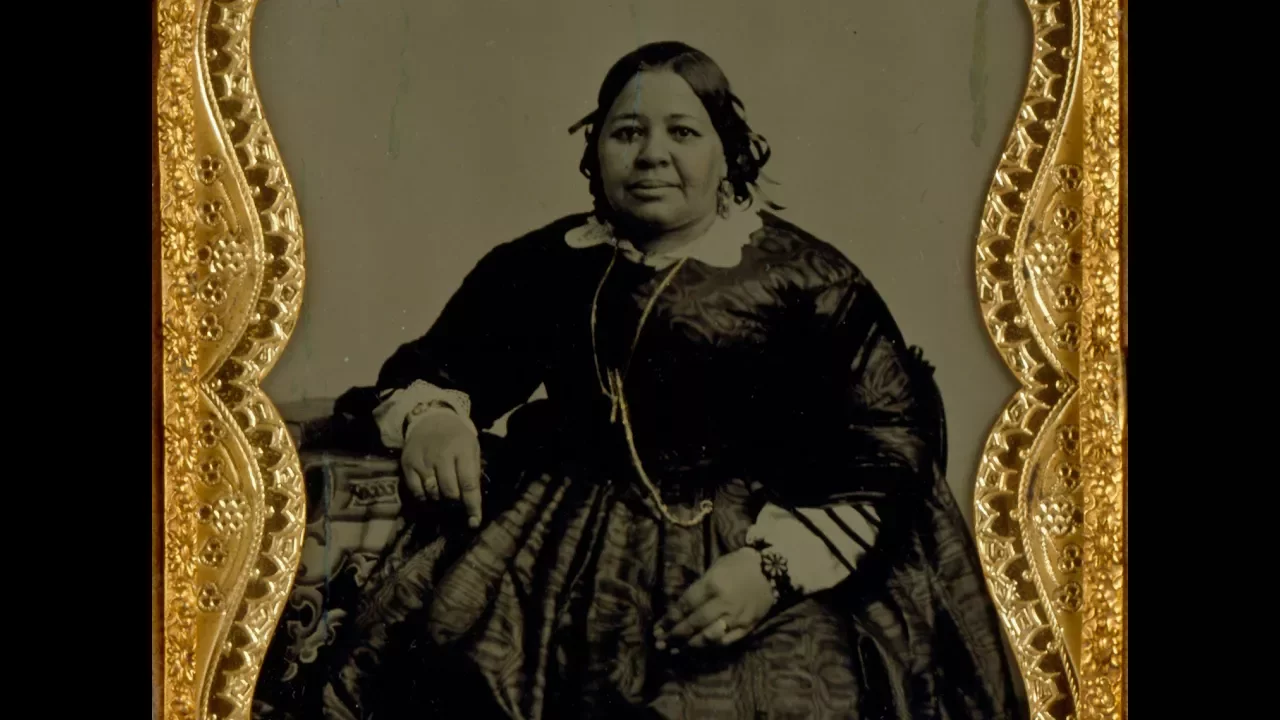
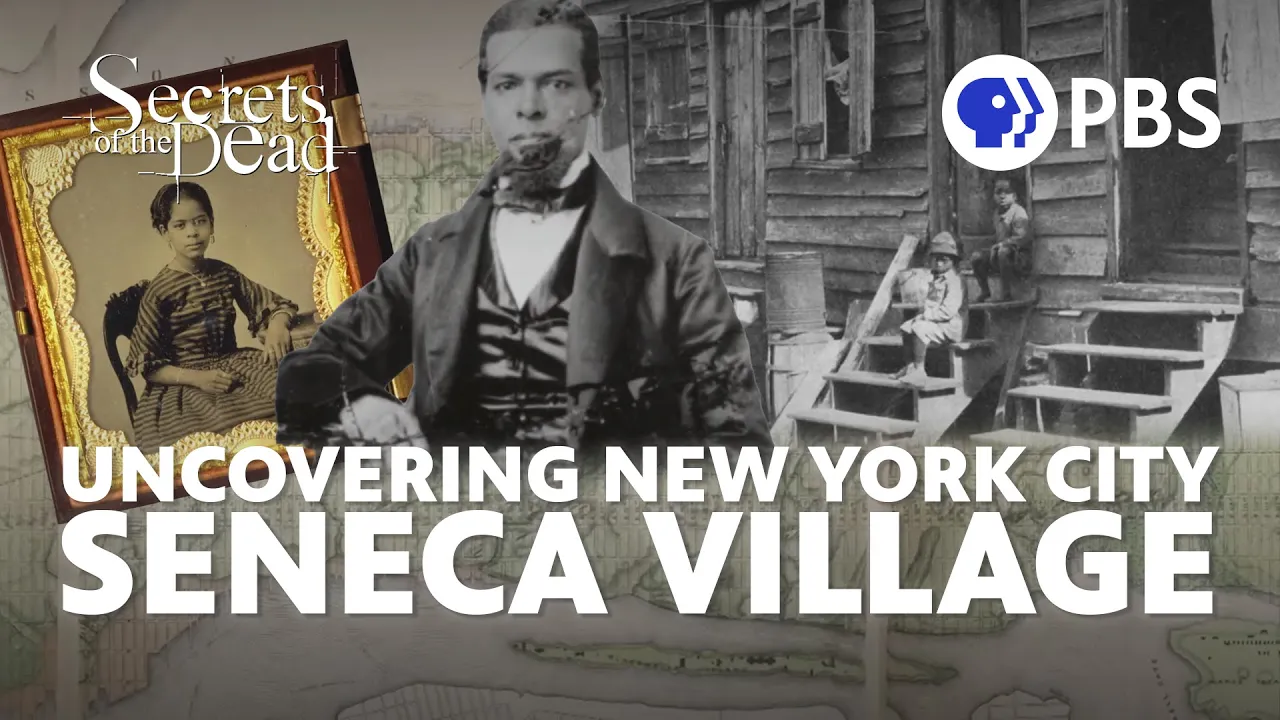
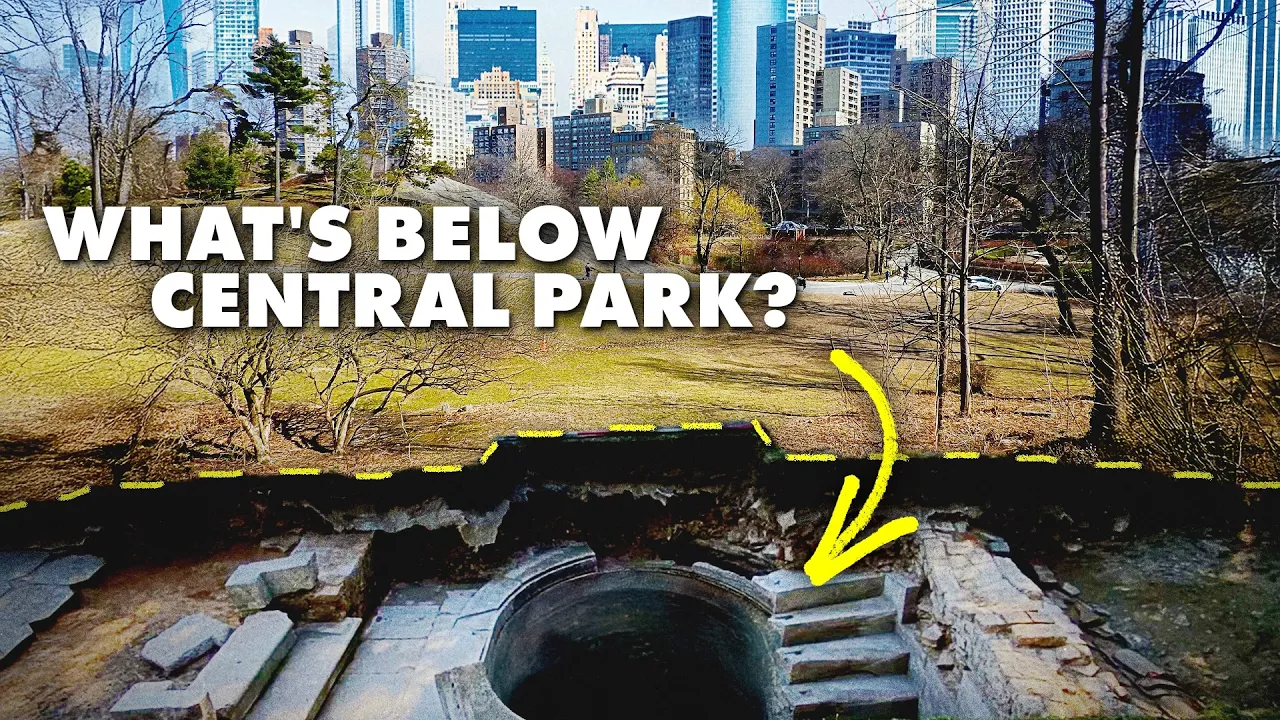
And something just in our backyard, the former site of Seneca Village, the community of largely free Black Americans that thrived from the 1820s to the 1850s.
Afrofuturism is an extraordinary creative mode that centers Black creativity, self-expression, self-identity, excellence, and future thinking.
Afrofuturism’s power is in its speculation and it’s collapsing of time.
We thought that that might be an incredibly forceful lens through which to look back at Seneca Village and imagine what would be, had it not been bulldozed to make way for Central Park.
And instead, if someone still lived in one of their ancestors’ houses, was able to amass the material generational wealth that comes with such ownership, and what would that subject, what would that descendant of an original Seneca Village resident be collecting now, to center her own lived experience and celebrate Black creativity.
Having decided that the fiction of the period room was going to be the residents of Seneca village, we recognized this was no longer our story to tell.
So, we reached out to Hannah Beachler, the production designer for the movie Black Panther, who had so effectively imagined and realized interiors of Afrofuturist residences.
We also reached out to the extraordinary Michelle Commander, who is a Curator and Associate Director of the Lapidus Center at the Schomburg Center for Research of Black Culture, at New York Public Library.
Seneca Village was an important community that was established in the 1820s in what is now Central Park.
This was a very interesting time in America where you did see the abolition of slavery in New York state but you still had the threat of slavery.
And so I think Seneca Village would have presented for African American people a place that was kind of a safe haven, and it would have just been a quieter kind of existence where they probably felt that they could breathe.
In the 1850s, the city of New York decided that they wanted to have more green space for public use.
Unfortunately it was Seneca Village, along with a number of other communities, that were destroyed through the use of eminent domain to make this land available for the public.
They were given paltry amounts of money in exchange for their land, and Seneca Village, for a very long time, was forgotten.
An archeological dig around a decade ago uncovered a lot of what we know now about the peoples who lived there.
And so what we’ve tried to do in this project is imagine these spaces for their historical moment in the 19th century, but also in ways that inform and speak to our present moment, and into the future.
Some type of structure that sort of spoke to Seneca Village is where we wanted to start.
And nobody really knew what it looked like.
So, that kind of gave us a lot of leeway to take liberties with how this structure would look.
And I based a lot of that on late-19th century Black communities, what people could build with in Black communities at that time, as well as slave cabins.
I’m from New Orleans so I see that a lot.
So we knew this structure, what it kind of wanted to be, doing the research, looking at the details of the materials and the cladding.
We have windows that are low, windows that are high, just little peek-a-boos, right?
Because as a Black American, your perspective of your past is but a window.
Because nobody really knows- so much language was taken, so much of our traditions.
So, you know, we’re the lost tribe.
My look into the past is a window.
Visitors that come through, will have that same experience that most Black people in this country have with their past.
And then the living room, it is in its essence very futuristic.
We also knew we had, as a curatorial team, to think about what to do on the perimeter walls that house this structure.
And we knew we always wanted to evoke the kind of bucolic, idyllic locale that I think the first residents, the first arrivals at Seneca Village would have discovered themselves.
You know this was the countryside, far away from the squalor and crowded conditions of Lower Manhattan in the 1820s.
It had a fresh water spring.
We thought immediately of approaching the extraordinarily talented LA-based artist, Njideka Akunyili Crosby.
Njideka was able to combine all of these kind of layered histories using this photo transfer technique.
And this lies underneath this beautiful foliate okra design, and kind of resonates with references to the 19th century lived history of Seneca Village and Black New Yorkers more generally.
What we have in this kitchen space I think that’s so special, is this idea of African American people and people of African descent really thinking about this notion of creating a communal place for gathering that might have been there in spirit in the 19th century, but certainly one that animates the space for us today.
The fragments that were found at the site show us that the people of Seneca Village were much more diverse than the people of their time gave them credit for.
We had landowners, we had people who were literate, we had a range of individuals who lived there, who were making a better life for themselves.
In these fragments, we see lots of glass, that archeologists have been able to piece together somewhat and reveal that they were perfumes, they were special items that were used within the kitchen space, medicine bottles.
And so within this kitchen space we have placed many glass items that are very much inspired by what was found there at the site.
We also have been very intentional in trying to match works of art from the American Wing’s collection, with actual pot shards and other discoveries from the 2011 archeological excavation.
And bring back into full form those things that were discovered.
All the cooking utensils and other materials in sealed jars on the walls, with hanging herbs and flowers evoke a kind of continuity of 19th century culinary practice and bring it into the contemporary.
The kitchen actually is a technological advance.
People don’t think of it because it’s domestic.
But so much technology was invented and designed by Black women, by white women in the kitchen.
And I wanted to validate that invention, and not just look at it like some domestic place that we were told to be or that we were chained to be.
That this was a freedom to be here, and that we can heal here.
That we can survive here. That can help others survive.
In African American culture, the kitchen space is one that is used in a traditional way to prepare meals, to partake of meals, but also it’s often used to style ones hair, and so we have a hair comb that is from around 1851 and also a hot comb, a tool that was used, and is used sometimes today to style hair that has not been chemically treated.
And so you have in the kitchen space an opportunity to convene with family, with friends, to partake of food, but also the kind of talking with one another and gossiping that comes along with doing one’s hair.
Roberto Lugo was brought in early on, having identified himself as our village potter.
He is a Philadelphia based ceramic artist, who is deeply inspired by ceramic sevre porcelain.
And his interest in using the forms, and the motifs of this 18th century French porcelain is a process of appropriation and transformation to situate his own work into that very distinguished history.
In his work he often honors politicians, activists, literary figures who have been so important to Black history and Black culture.
People like the novelist Zora Neale Hurston, the astronaut Mae Jemison, the recent politician Stacey Abrams, Beyoncé, whose work recently has definitely gone over to the side of speculative reclaimings of Black history.
We also have in Robert Lugo’s work and in our kitchen items that feature graffiti.
And so we have these nods, this inspiration that he’s gathered from 1980s, 1990s culture, and his reverence for these figures who have come before, or who are continuing to inspire our contemporary moment.
I’ve always been interested in time travel.
I think a lot of that had been because I wanted to get out of here, right?
I wanted to go to a time where I was not scared to be who I am, not scared to be in my skin, and what could that look like?
On the journey of research, a lot of what I was seeing were these giant hearths.
And there’s a lot of stories about slaves burning down kitchens, and I always thought "What happened to them?"
And thinking about the fireplace, and kind of going through it it was like, maybe they didn’t burn it down.
Maybe they disappeared inside of it and went someplace safe.
The hearth in the middle of the kitchen is our time machine.
That will bring forth things from the past, things from the future, things from space.
That is the little machine that is holding our tradition, holding who we are as a community, holding who we are as a people, and keeping it safe.
The hearth and fire served as such an important thing if you look back into the 19th century and even beyond, starting in 1619, right?
You gathered around the fire and you told stories orally.
Oral tradition is the only thing the Black community really had to move their stories and traditions forward.
We’ve lost a lot of that.
That’s what was so important about that hearth.
It served as many things but the interesting thing about it is that it served as a time machine.
The television in the living room, the future space, serves in the same way.
It’s in conversation with the hearth.
Jenn Nkiru is doing fabulous media to put on it.
Now, if you talk about recent past and present, the television is how we tell our stories.
We gather around in our living room and we watch stories.
That’s where we found out Martin Luther King was assassinated, Malcolm X was assassinated, JFK was assassinated.
By the same token, that’s how we celebrate too.
The television for me was how I escaped, and where I disappeared to.
The living room space is where you really venture into the idea of Afrofuturism.
And then thinks about this creative mode where you’re able to weave parts of the past with a contemporary moment using science and technology, and thinking about this kind of historical revisionism that’s actually liberating.
So, within this space we have items that point to earlier African societies, such as the bird staff that’s from the 19th century Fon peoples.
We have a prestige stool that features a leopard from the Bamileke, or Bamum peoples from the 19th and 20th century.
But the room also has items that come together in interesting ways.
One of my favorite pieces is from the artist Willie Cole, who’s a Newark-based artist, who has taken women’s high heeled shoes, and placed them together in a way that looks as if it’s a mask.
These are shoes that may have been donated that Cole goes on a hunt for in stores, and other places to find these shoes.
We’re thinking about the soul, the people who have been able to wear them, and the things they leave behind within their shoes.
And I think what he does within this piece is sort of think about something that has been given away, or thrown away to fashion something new, that tells us about how interconnected we are as a people.
- [Hannah] The flooring, which is the earth and mud, goes through the entire space.
So, there’s not a transition in that, and I think that’s also the thing that links them together as well.
The structure itself becomes more bones.
There’s a bookcase on one side and then framing on the other side.
And I think for me, aesthetically, architecturally, it felt more futuristic in that sense but I think it also served to peek-a-boo right into it, only you’re seeing more.
Because your future can be anything you want it to be.
It’s not written yet.
So now this is more open, this space, than the past.
We really wanted it to feel comfortable.
And this circle of chairs around our five-sided television And the chairs are all different.
And whether those represent different people that were there, or whether it represents different times, different places.
Again it’s the visitor’s narrative to have.
And I think it was important to have that circle because the circle is life and it doesn’t have an end, and it doesn’t have a beginning.
And it never will, and it never has.
And I think that that’s one of the things for me that that symbolizes.
All of this very beautiful, elegant, sleek, on this earth and mud because our future is based on where we were because that’s what’s holding us up.
We stand on the shoulders of those that came before us.
It was really important to bring in contemporary artists throughout the diaspora within the future space that we’re creating.
This isn’t just one story, it’s many.
So, you need all of those voices to create the chorus.
- [Sarah] One of the first things that caught my eye with this project is a pair of chairs by Atang Tshikare, who is a South African designer.
We acquired from him a pair of chairs that he calls his Leifo chairs, referring to the hearth, that these were chairs that he envisioned putting in front of a fireplace.
And in fact, in the period room we’ve done exactly that.
These are chairs that are incredibly elegant and beautiful in appearance.
They are a specific reference to 18th-century French fauteuil, but remade using indigenous artisanal practice, charred wood, woven grasses.
He refers to learning these techniques from his grandmother, but he understands these as a kind of reclamation of Tswana culture from the French Colonial period.
So, as a curator of European Decorative Arts, I really enjoyed seeing a very powerful articulation of the continuity of these stories.
And these are stories that we want to tell in our galleries.
- [Michelle] We have the Mido Chair which is created by Jomo Tariku, who is Ethiopian American, who has very much reimagined the hair comb in the living room space.
- [Hannah] Zizipho Poswa, she’s a ceramicist in South Africa.
And we have some beautiful work from her.
And it speaks to again about African hair, and it’s bringing this aspect of this political nature that speaks to what is so important to our survival.
Just in the United States, we have to have legislation to be able to wear our hair naturally or braided to work.
And only 11 states have passed that legislation, called the Crown Act.
And that was so important for a young Black girl, or a young Black boy who is coming through the exhibit to see that their hair is beautiful, their skin is beautiful.
It’s not something that you have to hide.
It’s not something that should ever be legislated.
But to see themselves in this very celebratory, and regal way is important to how then they will react to and experience their future.
Cyrus Kabiru created a radio for us.
And I thought that that was a really important addition in so much as how we feel about the future.
What is technology?
Again, kind of going back to the kitchen conversation.
So, Cyrus’s work I think is very eminently important within the aesthetic of the Afrofuturist Period Room.
Another person is Ini Archibong, who is a beautiful designer, and artist.
And it became very customized what he’s doing for us.
The lighting just kind of drips through the middle of this space and that’s the thing.
This thing should feel like it’s catapulting through space and landing in Central Park.
And I think the light that’s emanating out of that, that Ini has created is really important, and it’s also evoking the materials excavated in Seneca Village.
- [Michelle] In addition we have a painting by the artist Henry Taylor, who is thinking about Andrea Motley Crabtree who is the first African American deep-sea diver.
And the way that he has fashioned this picture is sort of thinking about her as an astronaut, as someone who is able to take flight in these varying kinds of ways.
And with Andrea Motley Crabtree and her work, I think often too about the deep-sea divers today who are doing the work of going into the Atlantic Ocean to find shipwrecked slave ships and to identify them, locate them and also memorialize them in these very, very fascinating ways.
- [Ian] In thinking about what other sorts of objects and presences we wanted in this structure, in this house, Hannah Beachler brought our attention to an extraordinary artist who lives and works not far away in Brooklyn.
The Haitian-born Fabiola Jean-Louis, who is known for using paper to create extraordinarily life-like garments that evoke a kind of 18th or 19th century past, but remain extremely colorful with references to all kinds of trans-Atlantic traditions.
And the design that Fabiola has come up with is based on a kind of mid-19th century dress that carries with it the colors that evoke a particular Haitian voodoo spirit.
- [Hannah] Right on the threshold, and sitting we have Fabiola Jean-Louis’s beautiful paper dress.
And she sits between the future and the past in beautiful clothing, at rest in the past.
Which you never see.
And it became very important not so much about evoking a person as much as evoking a way of being that you do not know.
And to be able to see that, it just really, it did something to me.
It changed sort of how I carried myself.
- [Michelle] Afrofuturism is a creative mode, it’s a concept that’s always changing, but it’s one that’s about the liberation of people of African descent.
And it’s all about the idea of a kind of differing existence from what we’re living right now.
It’s about imagining a place where one can truly be free.
I hope that for the public and especially in generations of young Black children, that they’re able to see the value in going into the past, in the archive.
But also that they see the possibilities, that speculation, that Afrofuturism can really bring to people at large.
There was hope at Seneca Village, and I think that this continuous kind of idea of building community, of thinking speculatively, is liberating as well.
- [Hannah] I don’t even know that I’ll ever forget this experience or the people that I’ve worked with, the history that was made, the change that I think The Met wants and needs.
That there might be even one Black child who sees this and it changes their life.
And I want people to know that this exists for you.
I want them to know their worth.
And that’s why this is so incredibly important.
Up Next
5:29
Afrofuturism in clipping.'s 'The Deep': A Musical Analysis
@subpop
306.2K views•2017-08-19

12:54
Triumph of Orthodoxy Icon: Byzantine Art & History Explained
@BenCallan
2.1K views•2024-08-06

37:45
Harlem Renaissance Art's Role in Civil Rights Activism | The Met Podcast
@metmuseum
4.3K views•2024-03-21

1:42
Game of Thrones Opening Credits: A Cinematic Analysis
@gameofthrones
46.3M views•2011-04-18
Related Study Plans & Knowledge Roadmaps
Structured learning paths in General & Interdisciplinary Studies
general-studies
Elevator Engineering: History, Physics & Cities
01From Hoists to Safety Brakes: The Dawn of Vertical Lift
02Hydraulic vs. Traction: The Engineering Physics of Elevators
03Modern Speed, Safety, and Algorithms
+ 2 more learning modules
12h5 modules
Explore Roadmap
general-studies
Rubber: Material Science, History & Geopolitics
01Origins of Natural Rubber & Mesoamerican History
02The Chemistry of Natural Rubber & Vulcanization
03The Geopolitics of the Rubber Boom & Colonization
+ 2 more learning modules
12h5 modules
Explore Roadmap
general-studies
Containerization: Evolution, Logistics & Trade
01Ancient Trade & Bulk Cargo: Amphorae to Barrels
02The Industrial Revolution & Cardboard Packaging
03The Containerization Revolution: Malcom McLean
+ 2 more learning modules
12h5 modules
Explore Roadmap
general-studies
Textile Tech: Evolution, Labor & Global Impact
01Pre-Industrial Textiles: Handloom & Cottage Industry
02Mechanization: The Spinning Jenny to the Power Loom
03The Factory System & Global Labor Transformation
+ 2 more learning modules
10h5 modules
Explore Roadmap