














![Sharon Needles - I Wish I Were Amanda Lepore (feat. Amanda Lepore) [Official]](https://i.ytimg.com/vi_webp/tlgnTREnqZo/maxresdefault.webp)

Afrofuturism is a cultural aesthetic that centers Black experiences in alternate and imagined realities, using speculative fiction to address historical underrepresentation. Missy Elliott's music videos from the late 1990s and early 2000s exemplify this genre through innovative visual storytelling, where she creates futuristic worlds where Black culture thrives and Black women occupy positions of power. Her videos employ techniques like levitation, body transformation, and dystopian settings to reimagine Black identity in speculative futures, demonstrating how Afrofuturism serves as both a lens for understanding art and a tool for cultural visibility.
Missy Elliott's Afrofuturist Music Video Aesthetics Explained
Added:Understanding the core definition and history of Afrofuturism as a literary, artistic, and cultural movement.
Familiarity with the musical and cultural landscape of late 1990s and early 2000s hip-hop and R&B.
Basic concepts of music video analysis, including how costuming, set design, and visual effects convey narrative and thematic depth.
An introductory understanding of intersectionality, specifically how race, gender, and technology intersect in media representation.
Analyzing the Afrofuturist themes in the works of other contemporary musical artists, such as Janelle Monáe, Outkast, and Sun Ra.
Exploring the literary foundations of Afrofuturism through speculative fiction authors like Octavia Butler and Samuel R. Delany.
Investigating the role of music video directors like Hype Williams in pioneering the digital and futuristic aesthetics of early 2000s pop culture.
Examining how avant-garde fashion and body-positive presentation in music videos challenge traditional gender norms and commercial standards in the music industry.
153.8K views12.7Klikes13:32Original Release: 2019-08-08
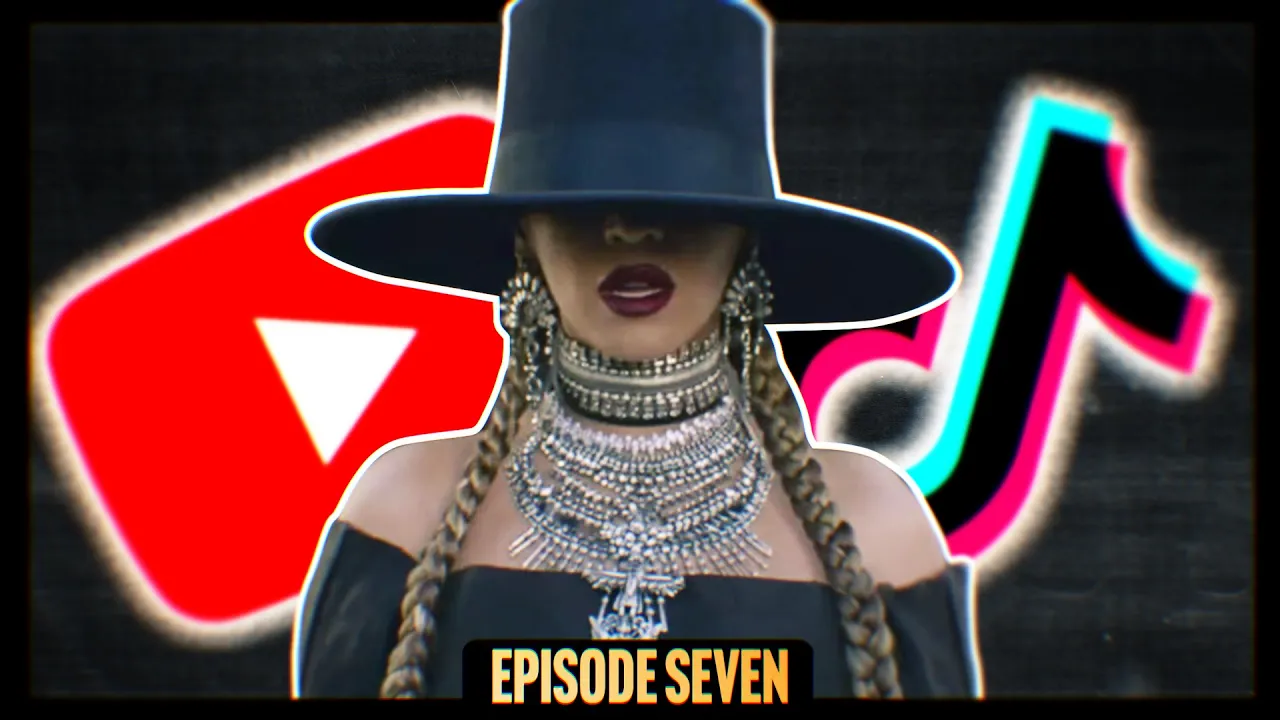
we don't know if it's fashion trends making a comeback or maybe our favorite shows getting rebooted but we're feeling a tinge of nostalgia lately so of course we purposely fell down a rabbit hole of late 90s early 2000s rap videos and something interesting happened on our journey once we got to Missy Elliott her videos are still ahead of our time the beat still slap timeless and the video concepts still blow my mind was she an alien dancing inside of where is this then the Teletubbies universe did she predict Gmail the minds of Missy Elliott and her frequent collaborators combined to produce over two decades of what we think can be classified as afro futuristic work and we want to explore how something like this falls into the genre look let's just cut to the chase this right here purely a Missy Elliott appreciation episode and an excuse to binge watch music videos for work and maybe dance an inflatable trash but what I don't know about y'all I feel like we learn best by doing so [Music] we're talking about afrofuturism as a visual aesthetic not within literature worth to Octavia Butler which is a whole nother rabbit hole if you're interested in that we'll link to a video that's a good jump off now Missy knows she's ahead of her time and by being unapologetic about her body and her blackness she's saying that people like her do exist in these alternate realities yeah now why would we need to remind people of that is it cuz we're hidden figures mm-hmm rarely recognized in history let alone imagined in distant features using afrofuturism as a lens to understand or categorize art is to point out how black folks have been underrepresented in speculative fiction as a whole like sci-fi in Missy Elliott's case music videos helped close that gap the beauty of speculative fiction is it seemingly endless possibilities but unfortunately us Earthlings are forever two steps forward one step back security sweeps of all decks are negative mr. Spock no evidence of intruder very well cancel red alert but maintain increased security people in 1968 were able to imagine traveling through the Milky Way before comprehending an interracial lip lock and really that's where afrofuturism comes in where science fiction might just erase human cultural differences and create a world where we've evolved past race afrofuturism imagines a world in which black cultures thrive like imagine a future where your race exists but doesn't have to be a burden yeah everybody knows the Navi in Avatar was black anyway what okay now intergalactic guns that's a lot we come in peace we're humans who rarely ever come in peace [Music] earth third Rock from the Sun from Earth yes like Chris Pratt I prefer pine but sure like Chris Pratt definitely Isis so it's complicated it's like you know it's a it's a color palette thing you know same species different color palettes that's it dude how do I do this okay um Star Wars there you go okay um can we uh fit there you go there you go John boyega eh all right um Billy Dee Williams that's 1980 yeah Donald Glover 2018 okay wrong fandom wrong fandom rocket USS enterprise-d okay all right okay us all right levar Bernie oh come on okay the rules of afrofuturism as a visual medium are in flux constantly is a vibe usually mark dairies 1994's a black to the future was the first time this term popped up afrofuturism to him was speculative fiction that treats african-american beans and concerns using technology or prosthetic aliy enhanced future my favorite definition is from Ashley Clark who wrote an opinion piece for The Guardian in 2015 and curated spaces the place afrofuturism in film for the Brooklyn Academy of Music Clark's definition says it is the centering of the International black experience in alternate and imagined realities [Music] in the video for she's a director hype Williams transports us to this Lux and sleep underground lair there's a highway tunnel where cars move at super speeds there's this 360 floor-to-ceiling circuit board s room that lights up by the camera spins this alternate reality definitely had better internet than we did in 1999 this technology boosted Universe is elevated even higher by Missy herself she's a menacing yet ultra smooth ball headed super villain dressed in the finest black vinyl Darth Vader is shaking he could never wesley snipes wishes Morpheus yeah through the lyrics we understand she's taking on this larger-than-life persona to reclaim an embody a word that's been used to demean women for being too cocky or not nice enough what clerks definition provides Missy is centering her experience as a black woman in hip-hop and inserting herself as the ruler of her many domains this reality isn't dope in spite of her blackness it's cool because of it it could be the year 3000 and she's still rocking an arc chain she know she gives you life pipes expensive visuals timberlands hypnotically sinister beats and Missy swag combined to create a world where powerful black women don't need praise because they admire themselves if that's too figurative for you then let's take the video for sock-it-to-me where Missy literally leaves Earth to have intergalactic adventures with Lil Kim and a breath you can definitely tell this was inspired by the Mega Man video games and afrofuturism is all about ensuring your presence or represented in these imaginary worlds and when you think about it we even have preconceived ideas about what video game music is supposed to sound like but what if we told you the soundtrack could be sultry and soulful in our particular society nerdy things are often coded as not black but this video bucks that notion we can participate in that a little different flavor to it the future isn't all about space or tech gadgets though which is great because what is this sometimes it's a dystopian earth take past that Dutch and two years later lose control both were directed by Dave Myers another one of Missy's frequent collaborators in past that Dutch it's an unknown virus taking over people's bodies making them dance wildly I mean sure it's a drug reference but she also meant just to Riverdance under the beam of a spaceship while dancers heel-toe in the cornfields not to mention the beat itself co-produced with Timbaland is the perfect rhythm for double dutch which by the 1980s was associated with early hip hop culture in new york this video's brand of dystopian afrofuturism is cemented at the end of the video when we completely switch gears and missy is on top of a skyscraper like King Kong the fact that she becomes this larger-than-life figure could be doing two things reclaiming and otherwise negative image of black folks and rising above it all or acknowledging her superiority within the hip-hop genre but she uses this elevated status to be a leader and directly address black people in affirm our various experiences this is what Mark Gary's definition of afrofuturism referred to using alternate realities to acknowledge african-american concerns similar to past that Dutch loose control exists in a frantic dance field dystopia again black culture is allowed to exist in this deserted place of course we are here kicking up dust in tall teas and temps even when she's referencing past time periods visually the music reminds us we're still listening to the soundtrack of Missy's mind and when you really think about it dance is sort of an ancient technology stay with me stay with me used over generations as a form of communication and mind control so when Missy said this beat was hypnotic nothing is more Afro futuristic than making a beat that will make anyone listening to it in the future lose control what I think it works there are devices present in almost all Missy videos these techniques show us that the world were watching isn't like our own even if intricate costumes aren't involved in the video for the rain supa dupa fly high poems uses a fisheye lens to create a distorted perspective so even in the shots when Missy isn't an alien balloon we know she's not a mere earthling her eyes and lips pop out kind of like those snapchat and Instagram filters do now huh they know hmm they also play around with speed and skipping frames during choreography adding to the robotic movements she makes her world seem so natural that we forget our bodies don't really move like that what does another technique we see pretty often she levitates in several videos including hit him with the heat and witch magic can be classified as an ancient technology thank you very much her head snakes toward you and get your freak on she takes her head off completely in one minute man and don't forget all the dance moves where it's worth it and definitely not her body it adds to her otherworldly persona and it's why we think Missy Elliott is more innovative magical being than faux human no matter where we are in time or space Missy Elliott just works its Afro futuristic to insert our cultures into these worlds a vicious heel-toe can still exist a Nigeria shoki can still exist breath trina is in a Salvador Dali inspired room we can literally be anywhere we want now remember this is simply a lens we're using to interpret a body of work sometimes the backstory behind these videos is just a matter of budget hype Williams is known for video concepts that make rappers seem larger-than-life the data a gigantic hydraulic M coming out of water most music videos wouldn't be able to do something like that that is like may have been a million dollars just for that Missy Elliott has inspired others with her ownership of writing music production and performance style us we were just a couple of y2k tweens drawn to these videos for me the connection is strong I grew up loving movies but Hollywood always felt very far away and inaccessible it's because of Missy Elliott's videos that I wanted to become a music video director and she's from Portsmouth Virginia my family's hometown which made telling stories in the short form medium even more to me and I was definitely that kid who dressed up and played pretend and these videos showed me it's not childish or silly it's creative it's cool to be imaginative and while we stand real-life astronaut mae Jemison or nasa mathematicians like Catherine Johnson as lovers of the humanities we use arts and culture to take us places we've never been and Missy is still out here both in her own music and that of other artists she was inducted into the Songwriters Hall of Fame in June of 2019 only the third rapper to receive such an honor in its 50-year history afrofuturism and striving to be visible even in our artistic imaginations is not only valid but valuable so what will the future look like with us in it anything's possible over here it's a allowed we wanted to take you to space figuratively but real space is cool too PBS is bringing you the universe with summer of space which includes six incredible new science and history shows streaming on PBS org and the PBS video app along with lots of space EFS ODEs from our show friends at PBS Digital Studios so make sure to check it out the link is below what's your favorite Missy Elliott video and why let us know in the comments click here to watch the story scape explain Alfre futurism in books and click here to watch an interview with Tomi Ida yummy author of children of blood and bone a fantasy novel based on Nigerian folklore and click here to watch more of say it laugh subscribe give this video like follow us on social media at say outloud PBS and we'll see y'all next time [Music]
Up Next

45:14
Amaro Freitas | Sankofa: An Album of Black Brazilian History & Jazz
@faroutrecordings
32.6K views•2021-12-22

12:54
Triumph of Orthodoxy Icon: Byzantine Art & History Explained
@BenCallan
2.1K views•2024-08-06

9:49
FastAPI vs Flask vs Django: Choosing the Right Python Web Framework
@TechWithTim
302.5K views•2024-05-26

1:42
Game of Thrones Opening Credits: A Cinematic Analysis
@gameofthrones
46.3M views•2011-04-18
Related Study Plans & Knowledge Roadmaps
Structured learning paths in General & Interdisciplinary Studies
general-studies
Elevator Engineering: History, Physics & Cities
01From Hoists to Safety Brakes: The Dawn of Vertical Lift
02Hydraulic vs. Traction: The Engineering Physics of Elevators
03Modern Speed, Safety, and Algorithms
+ 2 more learning modules
12h5 modules
Explore Roadmap
general-studies
Rubber: Material Science, History & Geopolitics
01Origins of Natural Rubber & Mesoamerican History
02The Chemistry of Natural Rubber & Vulcanization
03The Geopolitics of the Rubber Boom & Colonization
+ 2 more learning modules
12h5 modules
Explore Roadmap
general-studies
Containerization: Evolution, Logistics & Trade
01Ancient Trade & Bulk Cargo: Amphorae to Barrels
02The Industrial Revolution & Cardboard Packaging
03The Containerization Revolution: Malcom McLean
+ 2 more learning modules
12h5 modules
Explore Roadmap
general-studies
Textile Tech: Evolution, Labor & Global Impact
01Pre-Industrial Textiles: Handloom & Cottage Industry
02Mechanization: The Spinning Jenny to the Power Loom
03The Factory System & Global Labor Transformation
+ 2 more learning modules
10h5 modules
Explore Roadmap