

![[HÓA 12] THẾ ĐIỆN CỰC VÀ NGUỒN ĐIỆN HÓA HỌC (Sách Cánh Diều, Sách Chân Trời, Sách Kết Nối Tri Thức)](https://i.ytimg.com/vi/xlBNFQkz3_E/maxresdefault.jpg)










![REPLAY BIO[K+] SOX B2 | Cadena respiratoria, estrés oxidativo y vía de las pentosas](https://i.ytimg.com/vi/-B1zjQ6Q5rY/hqdefault.jpg)
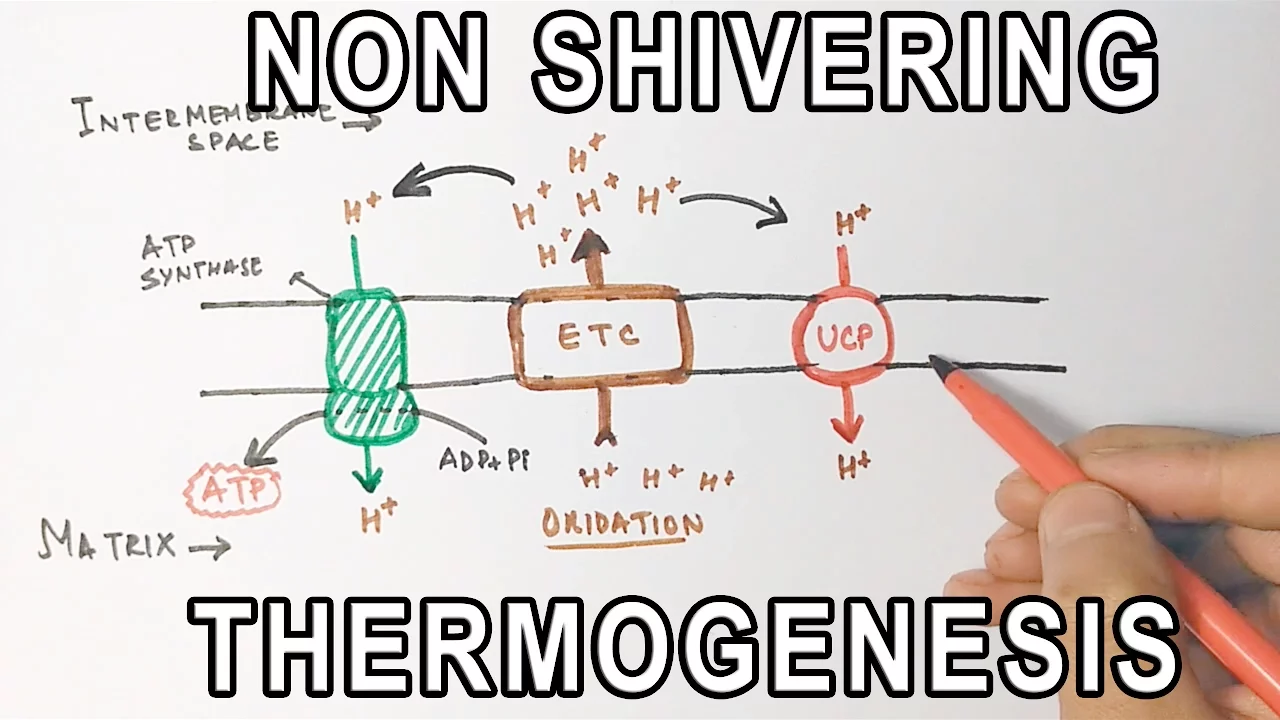

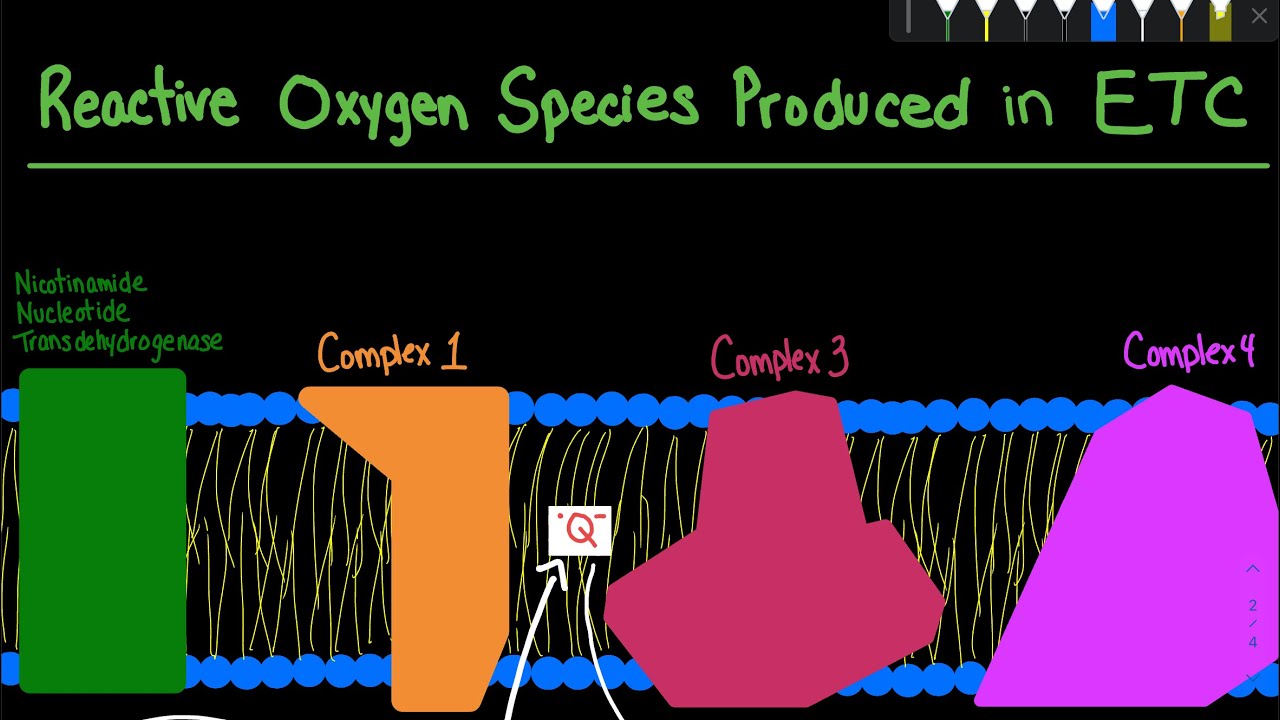



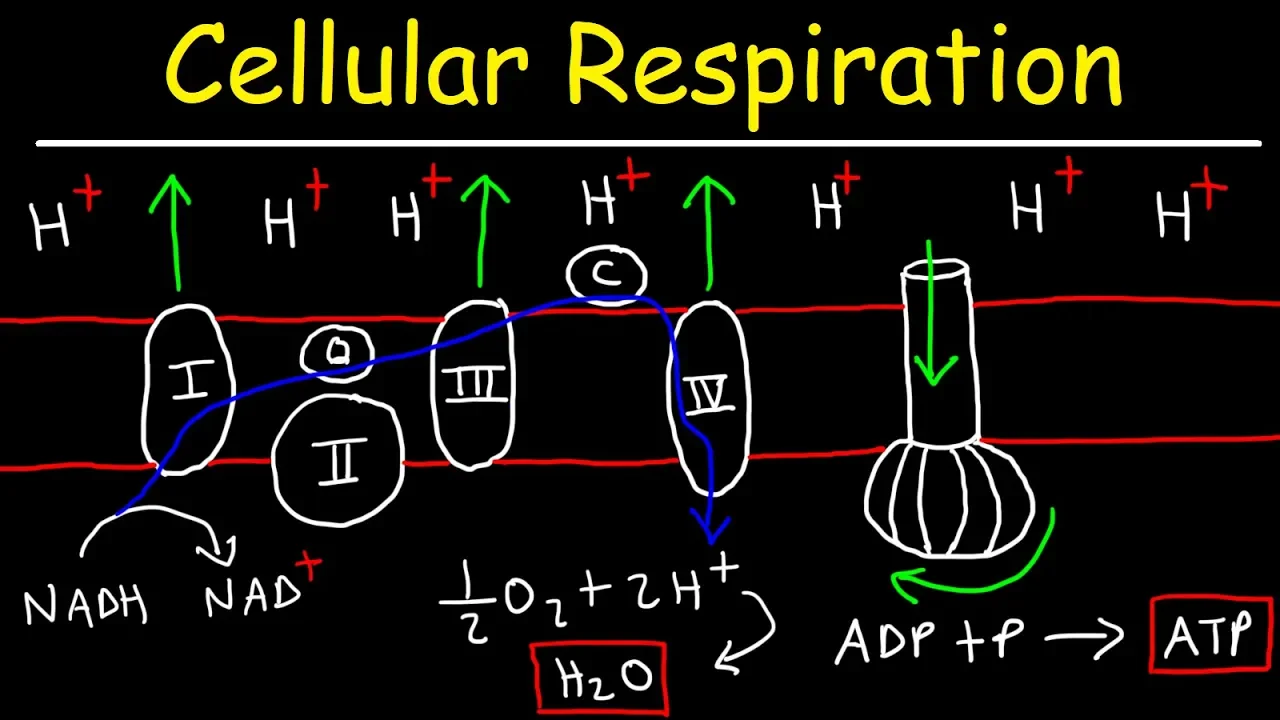
The electron transport chain is a series of protein complexes (Complex I, II, III, IV) in the inner mitochondrial membrane where electrons from NADH and FADH2 are transferred through coenzyme Q (the traffic cop) to cytochrome c, ultimately reducing oxygen to water; this process pumps protons across the membrane, creating an electrochemical gradient that drives ATP synthesis via ATP synthase (Complex V) in oxidative phosphorylation, with NADH yielding approximately 3 ATP per pair of electrons and FADH2 yielding approximately 2 ATP due to fewer proton-pumping opportunities.
Electron Transport & Oxidative Phosphorylation | Biochemistry Lecture
Added:Understanding of the Citric Acid (Krebs) Cycle, specifically how it generates the electron carriers NADH and FADH2.
Fundamental concepts of Redox (reduction-oxidation) reactions, including standard reduction potentials and electron flow.
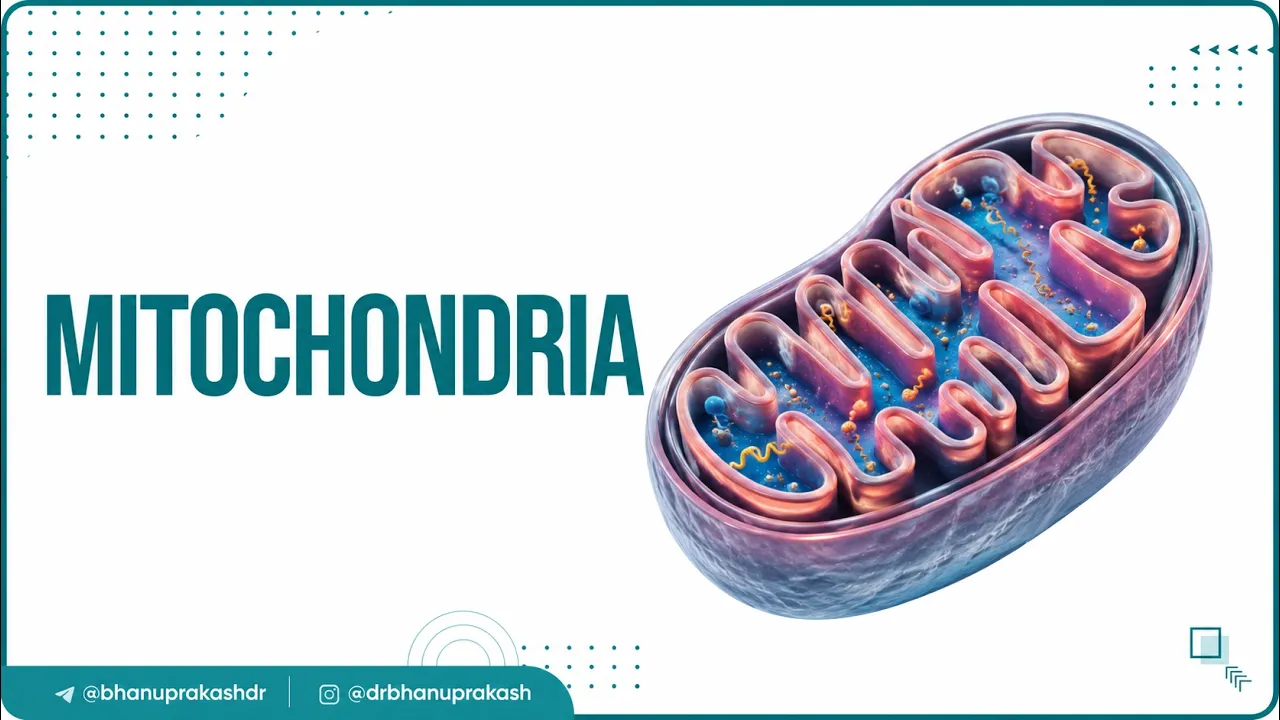
Basic anatomy of the mitochondrion, particularly the structure and properties of the outer membrane, inner membrane, intermembrane space, and matrix.
Principles of thermodynamics, chemical equilibrium, and how electrochemical concentration gradients store potential energy.
The regulation of oxidative phosphorylation, including acceptor control (the availability of ADP) and feedback inhibition.
The mechanism of uncoupling proteins (such as thermogenin in brown adipose tissue) and synthetic uncouplers like 2,4-dinitrophenol (DNP).
The formation of reactive oxygen species (ROS) during electron transport and the cellular antioxidant defense systems (e.g., superoxide dismutase and catalase).
Mitochondrial diseases and clinical pathology resulting from genetic mutations in mitochondrial DNA or nuclear genes encoding ETC subunits.
30.4K views193likes50:38Original Release: 2012-01-25
Professor Kevin Ahern: Okay folks, let's get started!
Captioning provided by Disability Access Services at Oregon State University.
I have a request to talk about the photosynthetic fish today.
And it's actually relevant to what we're talking about.
So I'm going to give you a blueprint for how to make a photosynthetic fish, and all I want is a postcard out of it or something.
But if you make your million dollars out of this idea, then I want some kind of credit or something.
I don't know.
So last time I got started talking about the mitochondrion, I talked mostly about structure, and I gave you some terms to be aware of.
I'll briefly tell you that mitochondria are interesting organelles in several perspectives.
One perspective is that they are the only non-nuclear organelle in animals that has its own DNA.
So mitochondria have their own genome, and it is called the mitochondrial genome.
And it appears that mitochondria have their origins originally as a primitive bacterium that got engulfed by another cell.
And over evolutionary time what has happened with the mitochondrion is it has given up many of its genes, and those genes have migrated to the nuclear genome of cells.
So the mitochondrion doesn't have everything that it needs to make a mitochondrion.
A lot of those genes are actually now in the genome of the cell.
But the mitochondria does make many of its own proteins.
And the number of proteins it makes varies from one organism to another.
The reason that we suspect that it was engulfed from a primordial cell is that when we look at the way that the sequences are used in mitochondria, they're more similar to the way that bacteria use them than the way that eukaryotic cells use them.
So pretty good evidence that mitochondria were originally free-living organisms of their own.
The other organelle that has its own genome are the chloroplasts.
And the chloroplasts are in fact related to the mitochondrion.
And it appears that they, too, probably were originally engulfed cells.
Now when we talk about reduction-oxidation, which I have briefly mentioned and I'll briefly mention again, we remember that reduction-oxidation always occur together.
Every reduction leads to an oxidation.
And that's because reduction means gain of electrons and oxidation means loss of electrons.
So in order for something to gain electrons, something else has to lose them.
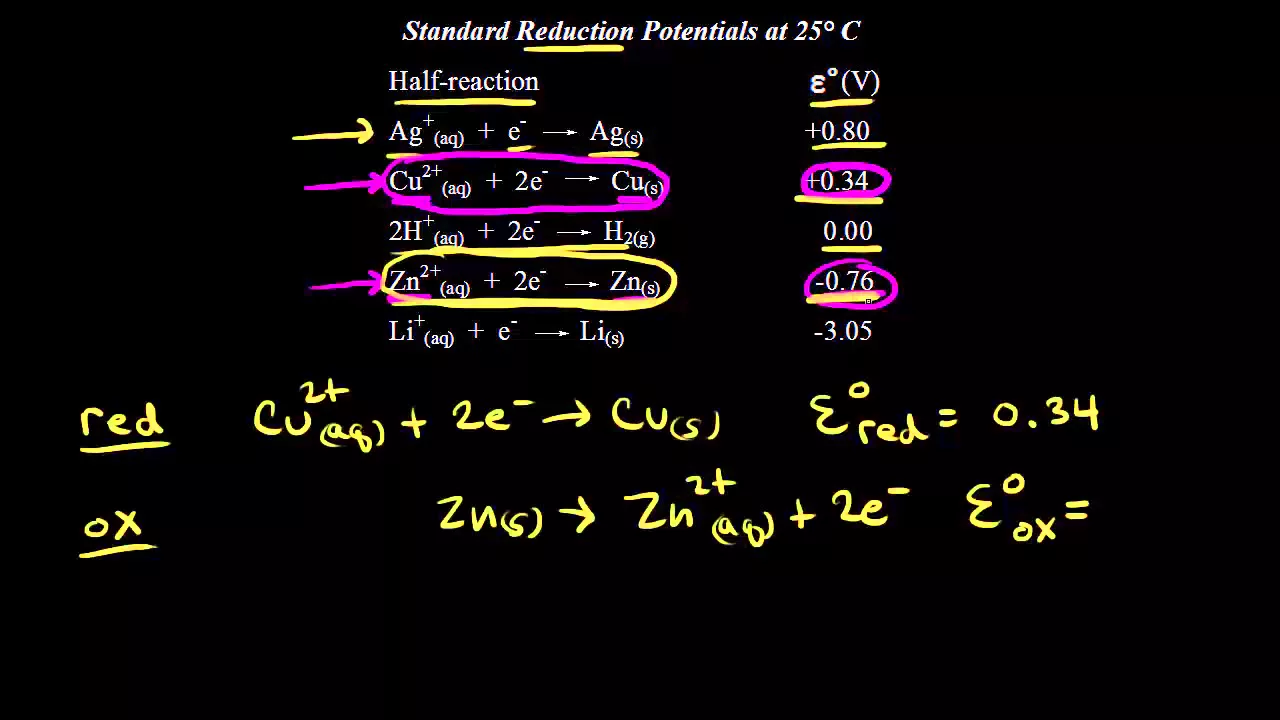
We can measure the tendency with which that occurs by doing some fancy experiments that I'm not going to talk about and create what is called a redox potential.
And they're expressed in voltages.
You can see these voltages up here.
And the voltages are such that the more positive the voltage, the redox potential voltage, actually is, the stronger the pull is for electrons.
So we see that at the very bottom of this scale that oxygen really has very good affinity for electrons.
And it's no surprise that oxygen is in fact the terminal electron acceptor of the electron transport system.
The result of oxygen accepting those electrons plus two protons is that we create molecular water.
Now what I want to do is dive into the electron transport system and say a few words about how it works, and you probably had this in other classes before.
So I'm probably not going to at least at the surface level tell you anything that's basically very new.
Electron transport system is a system where electrons are moved from one, what I will call, complex to another.
And these complexes are located in the membrane, the inner mitochondrial membrane.
This is the membrane I've told you that was so important because it was impermeable to protons.
And this inner mitochondrial membrane has many, many, many proteins embedded in it.
The inner mitochondrial membrane, I've mentioned in class before, it has as much as 90% of its mass comprised of proteins.
So it's very, very rich in proteins.
And as we will see, these proteins largely are these guys that you see on the screen.
So what happens in electron transport?
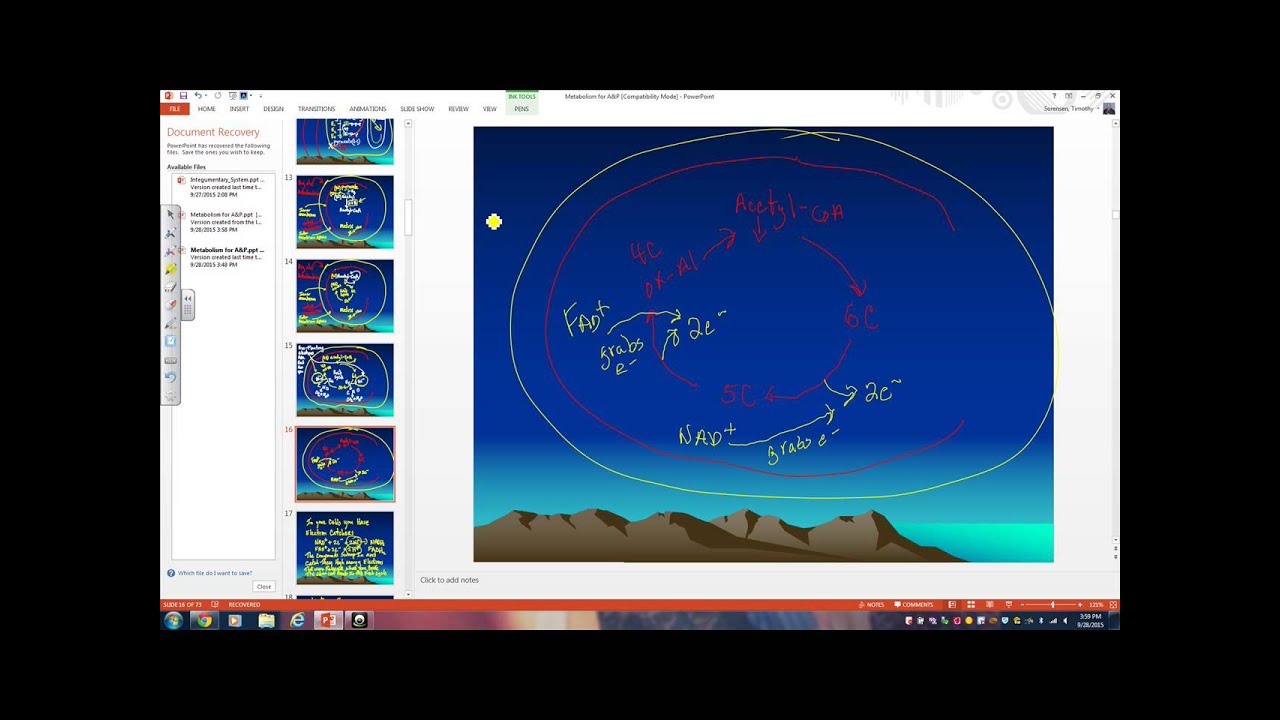
Well, if you recall in glycolysis and in the citric acid cycle, we made reduced electron carriers.
This included NADH in glycolysis, it included NADH and FADH2 in the citric acid cycle.
Now you see the citric acid cycle depicted on the screen.
And the reason you see the citric acid cycle depicted on the screen and not glycolysis is that glycolysis occurs in the cytoplasm.
And cells cannot directly get NADH into the mitochondrion.
They have to use a shuttle.
They have to use some tricks whereas the reduced electron carriers NADH and FADH2 that are produced in the citric acid cycle are just sitting here waiting to donate their electrons.
Well, in the electron transport system, we see that NADH and FADH2 have two different routes that they can take.
NADH donates its electrons to Complex 1.
And if you get looking through books, you will see some very long, mouthful names for Complex 1, Complex 2, Complex 3, and Complex 4.
We're not going to use those long, mouthful names.
We're going to call them Complex 1, Complex 2, Complex 3, Complex 4.
Very simple things.
Now NADH donates electrons to Complex 1.
When that happens, NADH becomes NAD.
So that's how we're regenerating NAD in the mitochondrion.
We're regenerating NAD by donating electrons to Complex I.
Complex I takes those electrons, and this is a transport system so the electrons are moving from one position to another, to another, to another.
This figure is a little misleading in that it looks like Complex 1 electrons are going through Complex 2.
That's not correct.
Complex I donates its electrons directly to this little thing called coenzyme Q.
Coenzyme Q is the only portion of the cycle that's not a protein.
It's a small molecule.
And coenzyme Q has an interesting and important ability.
Coenzyme Q has the ability to accept electrons in pairs.
When NADH donates its electrons, it is donating a pair of electrons to Complex 1.
And Complex 1 is donating that pair of electrons to coenzyme Q.
However, coenzyme Q has the ability to accept two electrons, but it passes them off one at a time.
And that turns out to be important, because Complex 3 can't take a pair at a time.
They can only take one at a time.
So coenzyme Q is what I refer to in the mitochondrial membrane as the traffic cop.
It's deciding when electrons are passing through, it's accepting them in pairs, passing them off one at a time.
FADH2 you recall was also produced in the citric acid cycle.
That's also a reduced electron carrier.
And that also needs to be converted back to FAD.
FADH2 dumps its electrons into Complex 2.
And Complex 2 also donates electrons to coenzyme Q.
So now we see the traffic cop nature of this.
We see electrons coming in from a couple of different directions, we see them coming in in pairs, and we see coenzyme Q passing them off one at a time because these guys downstream can only handle them one at a time.
Well, coenzyme Q passes its electrons off to Complex 3.
We'll see that cycle up close and personal in a couple of minutes in something called the Q Cycle.
Complex 3 passes its electrons off to another protein.
It's not shown on here, which is another reason I don't like this figure, called cytochrome c.
It's a small protein.
It's located in the inner mitochondrial membrane as well.
Cytochrome c accepts those electrons and passes them off to Complex 4.
And it is in Complex IV that those electrons reach their final destination, that final destination being oxygen to make water.
Now in the process of this happening, there's a couple of considerations that we have.
The first one I'm going to give you is something I'll come and talk about later, and that is that electrons are starting in pairs, they're hitting the traffic cop, and they're going off in ones, and they're reducing molecular oxygen to water.
Obviously, you're going to make two waters if you do this because you have two oxygen atoms.
In order to make two water molecules, it takes four electrons.
Four electrons.
Those electrons are coming through one at a time.
If something interrupts the flow of electrons, we make oxygen species that have unpaired electrons.
Those are what we refer to as reactive oxygen species because they are very reactive.
And because they're reactive, what we see is that they can cause damage.
They will react with things that we don't want them to react to.
And one of the things that we see in mitochondria as they age, we look at the mitochondria of an old cell and we compare it to the mitochondria of a new cell, say that of my cell versus your cells, my mitochondria are going to look more beat up.
And that's because my mitochondria have had more chances to make more reactive oxygen species and react with things that I don't necessarily want them to react with and cause damage to the mitochondria.
Important consideration.
Now that's one consideration.
So reactive oxygen species, I'll say a little more about later.
But before I do that, I need to tell you the most important component of the electron transport system besides the oxidation of NADH and FADH2.
The most important consideration for the cell is the fact that the movement of electrons through three of the complexes causes the complexes to pump protons out.
So we see Complex 1, as electrons move through it, protons get pumped out.
Complex 3, as electrons move through it, protons are pumped out.
Complex 4, as electrons are moving through it, protons are being pumped out.
You may recall that a gradient of protons, that is more protons outside than inside, creates an electrochemical potential.
You saw how that could be used to do things in the membrane transport lecture.
That electrochemical potential in the mitochondrion is used to make ATP in oxidative phosphorylation.
So like in that schematic diagram that I showed you on Monday, this process is charging the battery.
It is putting those protons out there, creating a gradient.
Those protons want to come back in.
And we will see that in the oxidative phosphorylation process, they come in through a protein that makes ATP.
Very important thing.
Another thing that we note is we look at the fate of electrons that come in through NADH and we compare them to the fate of electrons coming in through FADH2, and we see that electrons coming through NADH have one more opportunity to pump protons than FADH2 because FADH2 is bypassing that very first step.
Now people do calculations.
And I want to emphasize these calculations are approximations.
We always want to say there's one of this, one of this, one of this because you get taught in chemistry that one NaCl makes one Na and one Cl-, right?
Stoichiometrically, that's what that means.
When we start measuring amounts of products that are made here, they are not stoichiometric.
We can approximate how much ATP is made by how many electrons flow through.
So let me just tell you about that, alright?
For every pair of electrons that start with NADH, there's enough electrochemical gradient made to synthesize approximately three ATPs.
People argue about the exact amount.
It really doesn't matter.
It's approximately three ATPs for each pair of electrons coming from NADH.
Now FADH2 doesn't get the opportunity to generate so many protons pumped as does NADH, and so we would expect that FADH2 would result in the production of less ATP, and that's correct.
Approximately, again approximately, two ATPs per pair of electrons coming in through FADH2 are produced.
Now I want to emphasize these ATPs are not produced in electron transport.
They are produced in oxidative phosphorylation.
We're charging the battery here.
We're discharging it in oxidative phosphorylation.
It's the discharge of the battery that yields the production of ATP.
Yes, back there.
Female student: Is the electrochemical gradient different than the proton motor force?
Professor Kevin Ahern: Is the electrochemical gradient different from the proton motor force?
And the answer is they are one and the same.
Ulterior motives.
Right here and then back there to you Jarrod in just a second.
Male student: The reactive oxygen species, are those different in anyway from calling them free radicals?
Is there a distinction?
Professor Kevin Ahern: Are the reactive oxygen species different from free radicals?
They are a type of free radical.
They are specifically an oxygen free radical.
Yes, sir.
Jarrod: Are these complexes…[inaudible] Professor Kevin Ahern: That's a good question.
Jarrod asked if they're organized like we see them here or are they more chaotic than that.
The answer is they are more chaotic than that.
We're actually looking at a slice right here, and so we put that slice very simply there.
In fact, a membrane has two dimensions or almost three dimensions that's there.
And so these guys are bouncing around with each other quite a bit.
So it's a lot more chaotic than what you actually see here.
Yes, sir.
Male student: Does that high proportion of protein in the mitochondrial inner membrane make it more inflexible and enable it to maintain the cristae?
Professor Kevin Ahern: His question is does the high concentration of protein in the membrane make the membrane less flexible and less able to support cristae, I think that was sort of… Male student: More able.
Professor Kevin Ahern: More able, okay.
I don't know the answer to that question.
You would expect that if a membrane had a lot… I would expect that if a membrane had a lot of protein in it, it would in fact be less flexible.
But I don't know the answer to your question.
Male student: They don't have like a cytoskeleton?
Professor Kevin Ahern: Not a cytoskeleton per say like we think of in the cytoplasm, no.
Yes?
Male student: So is cytochrome c an integral membrane protein?
Professor Kevin Ahern: Is the cytochrome c an integral membrane protein?
The cytochrome c is actually what we would classify as a peripheral membrane protein.
So it's only embedded in one layer of the bilayer.
Good question.
I'm going to say a little bit more about some of these things.
I've just given you an overview there of the cycle.
I wanna say a little bit about inhibition of this cycle.
Now don't let these names confuse you.
There's Complex 1.
There's Coenzyme Q.
There's Complex 3.
There's cytochrome c.
There's Complex 4.
And we see that if we were to bring in, Complex II would come in right here.
Now, the reason I show you this figure is not to give you a bunch of names to confuse you because as I said, I'm not asking you to know what the names of those complexes are, but rather to show you that the cycle can be blocked by various chemicals.
And these turn out to be interesting and useful things.
The first one is the block of the electrons out of Complex 1.
The movement of electrons out of Complex 1 can be blocked by two compounds, rotenone and amytal.
Rotenone is an interesting compound.
It is actually used as an insecticide.
It is a natural compound.
It is actually produced by some plants.
And so it's actually used in organic gardening and farming.
And it has a very nasty effect on insects.
So insects are much more susceptible to rotenone than we are.
I don't recommend eating rotenone, for example.
But insects are much more readily killed by rotenone.
And the way it's acting is it's acting on the movement of electrons through their Complex 1.
Well, you sit here, and you think, 'Well, if I block Complex 1, could I still have electron transport going on?'
And the answer is yes I could to some extent, because I could shuttle things in through Complex 2.
I'm not recommending for career purposes that you shut off your Complex 1, but that does give you an alternative if you have Complex 2.
If we look at the movement of electrons out of Complex 3 into cytochrome c, that movement can be blocked by the compound antimycin A.
And if you're thinking that antimycin A might be a nastier compound to us than rotenone is, you would be correct.
You might think that it would just completely kill us.
And to be honest with you, I don't know its exact poisonous nature.
But I will tell you that there are some ways of getting electrons in past Complex 3.
They're kind of unusual, but there may be a very minor way of bypassing a block here.
The compounds that are the most poisonous on here are the ones that you see at the bottom because they stop things from moving through Complex 4.
Let's imagine we stop things here.
If we can keep everything else going down here, we're not so bad off.
If we stop things here and we can keep everything going here, we're not so bad off.
But if we stop everything here, there's no bypassing that.
There's no bypassing a block here.
So if we block things at Complex 4, we're pretty much hosed.
Well, look at the things that are there.
Cyanide.
That's the CN.
Cyanide is nasty stuff.
Carbon monoxide.
I told you last term carbon monoxide kills you two ways.
One, it nails your hemoglobin.
Two, it nails your electron transport system.
Boy, talk about a way to really get rid of you.
It's getting you in two ways.
So if we block in any of these places, we're going to have some consequences.
And the biggest consequences are going to be if we block right here.
Let's see.
Keeping things as simple as we can, I'm going to move past the quinones and the structures there, which I don't think tell us much, and instead show you a mechanism, one mechanism that we'll talk about, and it's not as nearly as bad as it looks.
It's a mechanism for how electrons are moving from Coenzyme Q into Complex 3 and through it.
So let me orient you for where we're at right here.
As we look at the screen, here is something called the Q pool.
Why do we call it the Q pool, and why don't we call it Coenzyme Q?
Well, we can think of the Q pool as being composed of two things, Coenzyme Q that has gotten electrons and Coenzyme Q that hasn't gotten electrons.
So we've got a mixture of those in the mitochondrial membrane.
Some of them have electrons.
Some of them don't have electrons.
We call that mixture of the two the Coenzyme Q pool, okay?
Coenzyme Q I told you is capable of accepting two electrons and passing them off one at a time.
In this system, the two electrons are shown right here.
When you see QH2, you have something that has two electrons.
When you see something that has one electron, it's written as a Q dot minus, and when you see something with no electrons, you simply see it as a Q.
That blue and the black are the same thing there.
Two electrons.
One electron.
No extra electrons.
Well, what's happening in the Q cycle?
Remember this big complex is Complex 3.
The green guy on top of it is cytochrome c.
I'm sorry, Complex 3 is passing electrons off to cytochrome c.
The Q pool starts the process by putting into Complex 3 two different Qs.
One Q has two electrons.
You see it right there.
One Q has no electrons.
You see it right there.
So these two guys start the process.
So don't pay attention to anything else there.
We've just started the process.
One of these has two electrons.
One has no electrons.
Well, what happens?
We see in this process that the electrons go two different directions.
This guy that has two electrons dumps one of them off upwards to cytochrome c.
It takes the other one and dumps it downwards onto the Q that had no electrons.
That results in a Q having one electron.
And since it's given up its two electrons, it's lost both of its electrons, it also gives up its protons.
It becomes Q.
And that's all there is to this.
We're going to finish it up in the next cycle, but that's all that happens.
QH2 brings in two electrons and passes them off two different directions, one to cytochrome c and one to Q.
Are we clear on that?
The key is that we started with one that had two electrons and one that started with no electrons.
Well, this guy's done its thing.
It's given up its electrons.
It's given up its protons.
You'll notice that protons are getting pumped out.
This guy isn't worth anything anymore.
So what happens?
It gets kicked back into the Q pool.
It's kicked out.
What happens to cytochrome c?
Well, cytochrome c is only capable of taking one electron at a time.
So it says, "I'm outta here."
That's not shown on here.
That's a dumb thing in this figure.
Cytochrome c with that electron takes it off.
It's going to go find Complex IV to give it to.
So at that point, we have nothing in here.
It would be nice if they had a middle thing.
We have nothing in here.
And we have nothing up here.
And down here we're still sitting here holding this one guy that's got this one electron.
We're getting ready to finish the whole process.
What's going to happen next?
Well, the cytochrome c that has no electrons is going to come in.
A new QH2 is going to come in.
And what we saw happen here is going to happen again.
Electron goes to cytochrome c.
Bang.
Electron goes to this Q that has one electron.
And how many electrons does it have now?
Well, you can do the math.
It's got two.
We've completed the cycle.
These guys go away.
This guy goes away.
We start with an empty complex.
And we are right back where we started, ready for a new Q and a new QH2.
I'll stop there and take questions.
This is usually where I have questions.
Yes, sir.
Male student: So were you saying that there was an intermediate stage where you have a Q with nothing and a Q with one electron on it?
Professor Kevin Ahern: So the intermediate stage you can think of as Complex 3.
And let's say it's right here.
It simply has this guy right there.
This site is empty, and this site is empty.
Then both of those sites fill to get us over there.
Yes, Connie.
Connie: What is the Q pool equal to?
Professor Kevin Ahern: The Q pool is equal to QH2 + Q.
Qs that have two electrons and Qs that have no electrons.
Jodi?
Jodi: That's entirely in the membrane itself, correct?
Professor Kevin Ahern: It's entirely in the membrane itself.
Jodi: So if you're looking at this, there should actually be a band of membrane with Q pool, and then matrix on the bottom, and intermembrane on the top?
Professor Kevin Ahern: That's right.
Female student: Is it only…[inaudible] Professor Kevin Ahern: The one, that's why it gets held in here.
The cell doesn't let that loose.
That guy's reactive, and Complex III just holds onto it.
That's why even in this intermediate state, it's still there.
Good question.
Yes?
Student: [Inaudible] Professor: Say it again.
Student: For the second part of the Q cycle [inaudible] Professor: So keep in mind, people want to say this proton goes there and this proton goes there.
We've got enormous numbers of protons in this solution.
We're seeing two protons come in.
They can come from anywhere.
So we're not directly tracking one proton going to that proton.
Keep in mind this process.
I'm just showing you one of these.
There are thousands of these going on in every mitochondrion in every cell of your body all the time.
So these are being pulled out just generically from the pool of protons that are there.
Student: How does Complex 3 facilitate all this?
Does it kind of just hold everything?
Professor: How does Complex 3 facilitate all this?
It facilitates it by having these docking sites.
If you think about it, and it's a good question because Complex 3 is doing a lot of stuff here.
Complex 3 is just a meeting place for all these things to come together.
We can think of it as like in the old days when they had what was called a telephone exchange.
And I'm not even old enough I know this, but I can read history books, okay.
In the old days when you had a telephone, every town had their exchange.
And the exchange had an operator who sat there, and a person calls up and says, "I wanna call so and so."
Well, the operator has to say, "Okay.
“Here's your line.
“I'm going to plug it into this line over here."
So the telephone exchange provided a way to make connections between a variety of things and because of that, make communications possible.
This is what's happening here.
Here's a connection.
Here's a connection.
These connections are wired such that electrons and protons can move accordingly.
It's a good thing to think about.
There's a lot of complexity here.
Student: So when you say that the complex is pumping protons out, is that the protons coming onto that Q…[inaudible] Professor: So again, you're trying to track the protons.
But in this case I can answer your question, yes.
The protons that are being pumped out are in fact the protons that are on right there.
What I'm saying you can't track is you can't track these, because these are just being pulled out of solution.
Student: But it's not like one proton going all the way through.
Professor: Protons are going from QH2 out.
That's where they're going from.
Where do these guys come from?
Well, look where they came from.
They came into here to make this.
So ultimately the protons did come from the matrix, alright, but in the immediate moment they're coming from QH2.
Look over this.
It's fairly straightforward.
Like I said, the main thing is QH2 splits electrons each way.
You got it.
Don't confuse electrons and protons.
Protons get pumped.
Electrons get moved.
The force that makes the protons get pumped is the movement of electrons.
That's the force.
That's the energy that makes the protons get pumped.
Let's take a minute and think about Complex 4.
Complex 4 is interesting.
Now, when we look at Complex 3, what we see is that we have involvement of hemes that facilitate this movement of electrons.
Heme we saw of course in hemoglobin.
And that heme, you remember, is that structure, that flat structure that we had in hemoglobin.
It had an iron in the middle of it.
Hemes have iron.
However, when we look at Complex 4 So for example, Complex 3 has hemes; those hemes have iron; our mitochondria need iron so that electron transport can occur.
However, Complex 4 is interesting in that addition to having iron, we have copper.
So we see a variation on this theme here.
We have copper.
There's heme to remind you what heme looks like.
We have copper ions that are able to facilitate the movement of electrons.
So now I'm moving to Complex 4, and I'm going to show you how oxygen is converted to water.
Here's Complex 4.
Here is an incoming cytochrome c.
And again, this isn't the best figure in the world, so I've got to talk you through it a little bit.
Remember that electrons come in one at a time.
You're seeing them coming in as two cytochrome c's, but in fact it takes one.
The first one has to let go of its electron and go away.
Then a second one has to come in, and let go of its electron, and go away.
That process is happening as we are right here.
What we're doing is we're taking an oxidized iron and we're taking an oxidized copper.
What does it mean to have an oxidized iron?
An oxidized iron has a charge of +3.
An oxidized copper has a charge of +2.
If we add one electron to each of those, we create an iron with a charge of +2 and a copper with a charge of +1.
That's what we see here in red.
So the very first step, one electron gets pushed all the way over here to copper.
One electron gets pushed to iron.
And we're here.
So we've got two electrons that have come in.
The next step in the process, molecular oxygen sees this as a great thing to bind to, and it does.
And molecular oxygen, you may recall on that redox scale, really likes electrons.
What's it going to do?
Well, it's going to pull electrons towards itself.
And you see these nice, red, reduced guys became blue because oxygen is gobbling up the electrons.
And again, we see them coming in singly even though they're showing two here.
One comes in.
Then another one comes in.
And the result of the addition of these two more electrons causes these guys to become hydroxyl groups on an iron and on a copper.
The next step in the process, two protons look at these guys and say, "Oh, we can make water."
That's what they do.
Water comes off, and we're left back with the oxidized iron and copper.
Now it's at this point we think about, 'Well, what if only one electron came in, what happens?'
Well, I'm going to make something in here that's very reactive.
What if I get stuck here?
I've got something that's very reactive.
If I make only one of these, I've got something that's very reactive.
Anytime I don't complete this cycle, I'm making something in here that's very reactive and the way that very reactive thing is going to react is going to be difficult for me to predict.
It's going to cause some problems.
Questions about this?
You guys all look worried now.
Yes, sir?
Male student: So in this particular step where the two protons come in and you form the hydroxyl groups, do the electrons actually come in first and then nucleophilically attack protons from the matrix over them?
Or does it solvate instead?
Or does it really matter?
Professor Kevin Ahern: So the protons are in fact attacking this.
Those electrons have to come in first.
You have to make that hydroxyl before the proton will attack that.
Yes, Connie?
Connie: How often does the electron stream get cut off?
Professor Kevin Ahern: How often does it get cut off?
Well, we like to think about things in the macroscopic world as, "I can turn the lights off.
And then the lights are off.
And that's that."
But when we think about the chaos that's happening inside of cells, that we have thousands of these going on constantly, it's a little different scenario.
And if you want an answer in terms of a percentage, I can't give that to you.
And the reason I can't give that to you is that it will vary upon the circumstances of your nutrition.
It will vary upon the circumstances of your exercise.
A whole bunch of things.
Does this mean that if you exercise more, you make more reactive oxygen species?
The answer turns out surprisingly no.
So this is not a reason not to exercise.
Dang!
"I'm looking out for my health “sitting here on the couch watching the tube."
Alright, so that's basically what I want to say about electron transport.
I want to jump to oxidative phosphorylation.
I'm going to come back and talk about superoxide dismutase next time.
Because it is very relevant right now that we think about oxidative phosphorylation.
Oxidative phosphorylation, when it was first proposed by Peter Mitchell back in the early 1960s, it was Mitchell's Folly.
People said, "There's no way that this is the way we make ATP."
Now he proposed this mechanism that turned out to be right, and he later won the Nobel Prize for it, because nobody could find a really good way that ATP was being made by mitochondria.
The reason was that everybody was looking for substrate-level phosphorylation.
You've seen substrate-level phosphorylation.
If you recall, that's where a high energy molecule transfers a phosphate to an ADP to make an ATP.
And that does happen to some extent.
We see it happen in glycolysis.
We see it happen in the citric acid cycle.
That's how GTP gets made.
But neither one of those reactions could account for the vast majority of ATP that's being made.
So people said for the longest time, "Well, there's got to be a really high energy phosphate “that's being made in the mitochondrion, “and then it's transferring that phosphate to an ADP."
Well, people looked, and looked, and looked, and looked, and nobody could find it.
The reason they couldn't find it was because it didn't exist.
Well, Mitchell says, "We've got to rethink “how ATP is being made.
“We have to think about the mitochondrion being like a circuit."
And what happens is what I've already described to you.
Electrons move through complexes.
They pump protons out.
That gradient is the energy source.
And when the protons come back in through Complex 5, which I'll show you in a second, ATP is made.
And the idea of cells having the equivalent of a circuit in them was so foreign in the early '60s, as I said, it was literally Mitchell's Folly.
Well, he turned out to be exactly right.
It's better to be right than to go along with the crowd in my opinion.
My mother always used to tell me that, right?
Did your mothers ever used to tell you that?
"I suppose if they went and jumped off a cliff, “you would, too, right."
He was right.
He stood by his guns, and he was right.
His hypothesis was called the Chemiosmotic Hypothesis.
The Chemiosmotic Hypothesis.
It's what you've already seen.
You already accept it as fact.
He had to derive it from what he knew about mitochondria and how they worked.
Let's think about what it requires for it to work.
What do we have to have?
Well, first of all we have to have pumping of protons, right?
We have to have movement of electrons, right?
We have to create an electrochemical gradient, which means that we can't break the gradient.
If we use dinitrophenol, what going to happen to the gradient?
It's going to disappear, and we're not going to make ATP.
That was the miracle diet drug, remember?
So we have to have an intact mitochondrial inner membrane.
And last, we have to have ADP.
Because if we don't have ADP, we're going to be in trouble.
Now you'll see why that's the case in a second.
So those are the things we have to have in order for this guy to go forward.
Here's what's happening.
These guys have been pump, pump, pump, pump, pumping.
High concentration of protons.
Protons want back in.
This is an intermembrane space.
This is like the folding of a cristae right here.
What you see in red on the screen is something people call Complex 5.
And you can call it Complex 5.
But just because it has the word "complex" in its name, does not mean it's part of electron transport.
It's not.
It is dependent upon electron transport, but you see no electrons involved with Complex 5.
What Complex 5 does is it provides a channel, and there's another channel for us, it provides a channel for protons to pass through it.
And here's the remarkable thing.
I used to have a video I could show you of this.
And the link broke, and they don't use it anymore.
So I can't show you, unfortunately.
But it's beautiful.
Movement of protons through this guy right here causes this mushroom structure like you see to spin like a propeller.
It spins like a propeller.
It literally spins.
Hundreds of rpm.
The spinning of this guy is what makes the ATP.
I will show you how ATP is synthesized there in just a second.
It's a remarkable thing.
When we think about nanomachines, we think about little complexes that we can make that do things.
You always see these headlines about people who've designed a new nanomolecule that can walk.
Well, nature figured these things out long before we started playing with these guys.
Nature figured out how to make a propeller.
Or if you want to think about it like a turbine.
I like to think about it like a turbine in a waterfall.
The spin that's making electricity.
This guy's capturing energy with its spinning and using that energy to make ATP.
How does it work?
Well, another name for Complex 5 is ATP synthase.
Either one of those, I'll take either name.
ATP synthase.
This is where it looks like at the level.
Now unfortunately, it's flipped from what it was before.
So the mushroom structure we saw before was on top.
Now it's on the bottom.
It doesn't really matter relative to our purposes.
This mushroom structure of Complex 5 has a stem that's embedded in the inner mitochondrial membrane, and it has a head, the head of the mushroom is down here.
It is in the head where the ATP is made.
So orienting you here, we are in the matrix down here.
We are in the intermembrane space above.
The entry of protons comes from the top downwards.
And they come in this little slot right here.
It is like loading a gun or something.
It comes in that little slot right there.
The proton then migrates to one of these little blue tubes.
The migration of that proton is what causes that spinning to occur.
Once a proton gets in there, it spins.
Another proton, it spins.
Another proton, it spins.
It keeps spinning.
Eventually, it spins all the way back around and comes out this side over here.
So the proton goes on a little joyride in there.
It comes in here.
It goes out here.
And in the meantime it causes this guy to spin.
Well, what does that spinning do?
It doesn't spin the top.
The spinning is inside of the top.
So I lied to you a little bit before.
The spinning is inside of that top.
That's where the propeller is.
It's the spinning inside of this top that causes ATP to be made.
So we'll see that the movement inside of this top causes conformational changes that cause ATP to be synthesized.
Does everybody got this visualized?
Protons in.
Spinning here.
Attachment here.
And this thing right here is spinning in the middle of this complex.
How was ATP made?
ATP is made.
Now we're looking at that stalk.
Not the stalk, I'm sorry, the head of the mushroom.
Here is the head of the mushroom right here.
What we see is that there are two identical units called alpha and beta... I'm sorry.
Two units, three of which are identical.
Alpha, alpha, alpha.
Beta, beta, beta.
You see that they have slightly different configurations on the screen.
And the reason they have different configurations depends upon which direction this middle spinning thing is pointing to.
In this case, it's pointing downwards.
And when it's pointing downwards like we see here, that beta unit is in the T configuration.
There's three configurations it can be in.
This beta unit over here is facing a different portion of that middle propeller, and it's in what is called the O configuration.
This guy over here doesn't have anybody to play with, and it's in the L configuration.
What do L, T, and O correspond to?
L, T, and O correspond to loose, tight, and open.
They each have a function.
Open is basically releasing.
It's a little misleading here.
But it's basically releasing ATP.
Once it releases ATP, ADP and Pi come back in.
Loose is more tight than open.
We've closed the doors, and we've got everybody inside now.
Tight is where ATP is made.
What's happening in tight is this conformational change known as T is literally scrunching ADP and Pi together so that chemically they react and make ATP.
This slight change in structure that's happening upon the configuration of T is scrunching these two guys together to make an ATP.
When this guy now flips into the open configuration, what's going to happen?
ATP is going to get released.
Well, what's happening?
These three aren't changing position.
The middle thing is changing position.
So now when this guy rotates one-third of a revolution, what's going to happen?
This portion is going to be pointing there.
What's going to happen to it?
It's going to go to the loose, right?
We're going to go to loose.
This guy over here is going to go to become tight.
And this guy down here is going to become open.
Loose, tight, open.
Loose, tight, open.
That's how things move through.
Yes, ma'am.
Female student: So can ATP only be produced in the beta subunit?
Professor Kevin Ahern: ATP is produced in the beta subunit.
That's correct.
Female student: And there's always ATP... [inaudible] Professor Kevin Ahern: There's always, well, not always because as I said this isn't showing the release of ATP.
So this guy is releasing ATP and then allowing new ADP and Pi to come in.
Yes, Jarrod?
Jarrod: [Inaudible] Professor Kevin Ahern: Say it again.
Jarrod: This reaction is reversible?
Professor Kevin Ahern: The reaction is reversible.
Jarrod: And then you could also move hydrogen backwards by… Professor Kevin Ahern: You could move hydrogen backwards.
Again, that would be an unusual thing to happen, but that is possible to have happen.
Okay, I was going to talk about fish, but I don't have time.
Let's sing one song.
And it's relevant to this, and then we'll call it a day.
Anybody like Monty Python?
Lumberjack song.
I'll sing a line.
You sing back at me.
[I'm a Little Mitochondrion by Kevin Ahern] [professor sings] Oh I'm a little mitochondrion Who gives you energy I use my proton gradient To make the ATPs [class sings] He's a little mitochondrion Who gives us energy He uses proton gradients To make some ATPs [professor sings] Electrons flow through Complex 2 To traffic cop Co-Q Whenever they arrive there in An FADH-two [class sings] Electrons flow through Complex 2 To traffic cop Co-Q Whenever they arrive there in An FADH-two [professor sings] Yes tightly coupled is my state Unless I get a hole Created in my membrane by Some di-ni-tro-phenol [class sings] Yes tightly coupled is his state Unless he gets a hole Created in his membrane by Some di-ni-tro-phenol [professor sings] Both rotenone and cyanide Stop my electron flow And halt the Calculation of My "P" to "O" ratio [class sings] Both rotenone and cyanide Stop his electron flow And halt the calculation of His "P" to "O" ratio Professor Ahern: Alright, guys.
Thank you.
See you on Friday.
[END]
Up Next

16:26
Electron Transport Chain Complexes I-IV Explained
@josephebriani2353
1.4K views•2020-06-03

41:32
Circadian Metabolomics: Sleep, Food Timing & Human Clocks
@tscnlab
359 views•2022-11-10

5:35
Enteric Nervous System Explained: The Gut's Brain | Neurobiology Lecture
@alumniu6029
438 views•2018-09-12
7:08
Bacteriophages: Earth's Deadliest Killers and Future Antibiotics
@kurzgesagt
34.6M views•2018-05-13
Related Study Plans & Knowledge Roadmaps
Structured learning paths in Biology
biology
Circadian Clocks: TTFL, SCN & Periphery
01Foundations of Molecular Biology & Gene Expression
02Introduction to Chronobiology and Actograms
03The Core TTFL: Molecular Architecture of the Clock
+ 3 more learning modules
14h6 modules
Explore Roadmap
biology
Population Genetics: Math, Drift & Selection
01Genetic & Probability Foundations
02The Hardy-Weinberg Principle and Baseline Models
03Mathematical Modeling of Natural Selection
+ 3 more learning modules
18h6 modules
Explore Roadmap
biology
Animal Migration: Sensory Systems & Navigation
01Foundations of Animal Migration
02Magnetoreception: The Quantum and Chemical Compass
03Celestial Navigation: Sun, Stars, and Polarization
+ 2 more learning modules
12h5 modules
Explore Roadmap
biology
Proteostasis: Folding, Ubiquitin & Autophagy
01Foundations of Protein Structure and Synthesis
02Chaperone-Assisted Protein Folding
03The Ubiquitin-Proteasome System (UPS)
+ 2 more learning modules
12h5 modules
Explore Roadmap