



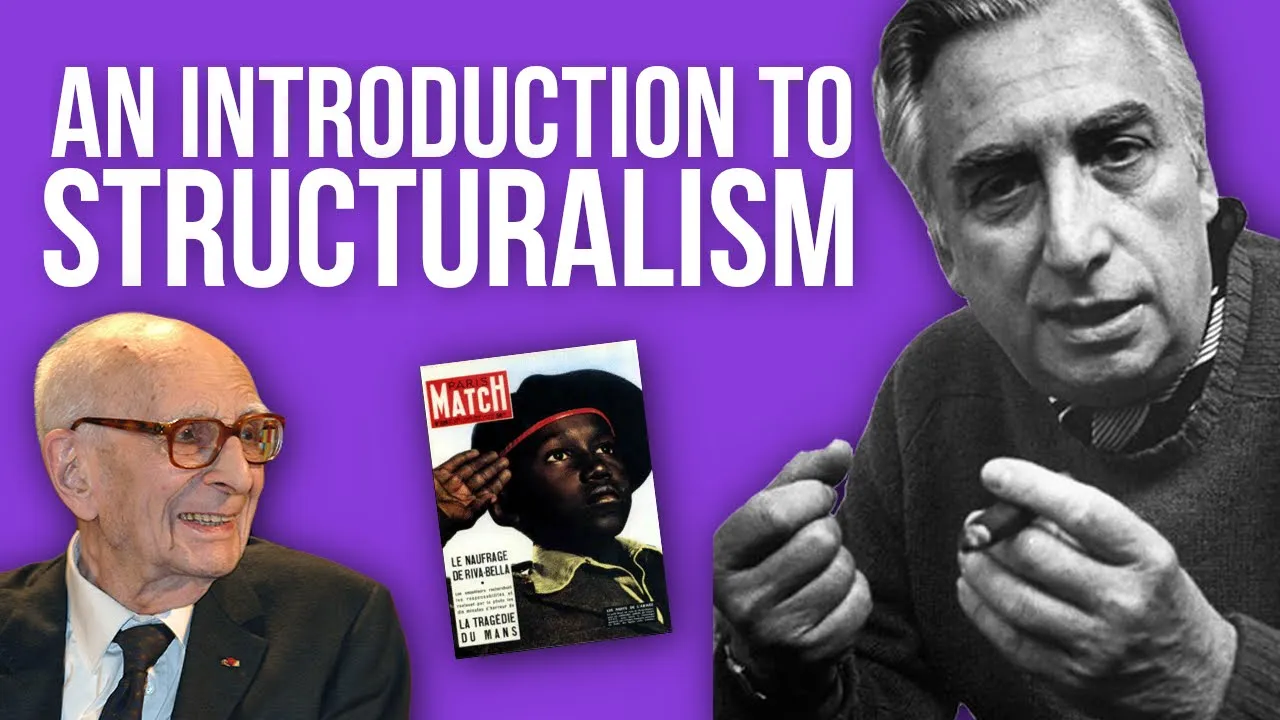
















Roland Barthes' seminal 1967 essay 'The Death of the Author' argues that cultural texts do not possess a single, objective meaning determined by the author's intentions, but rather exist as multi-dimensional spaces where multiple writings from various cultural sources blend and clash; since neither authors nor readers can definitively know or control the meaning of a text, the emphasis should shift from authorial intent to the reader's interpretive experience, marking a pivotal transition from structuralism to post-structuralism in literary theory.
Roland Barthes' Death of the Author: Theory & Impact Explained
Added:Traditional biographical criticism, which assumes a text's meaning is directly tied to the author's life, intentions, and historical context.
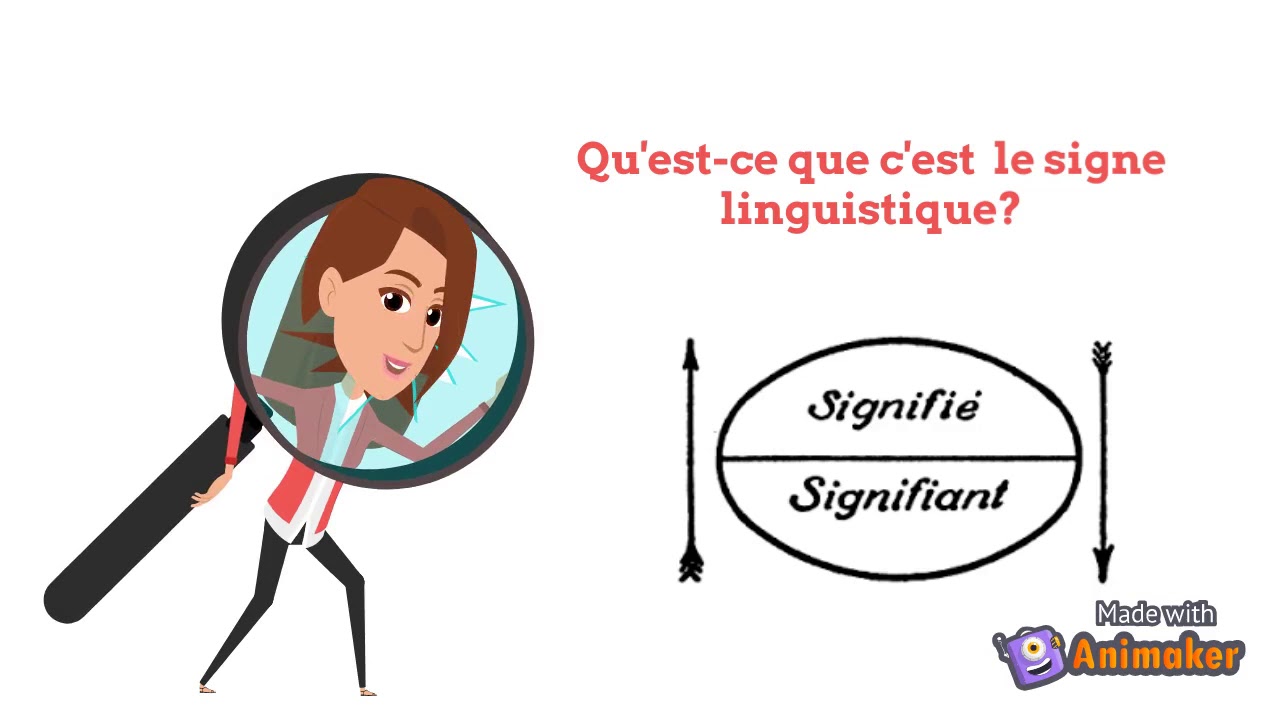
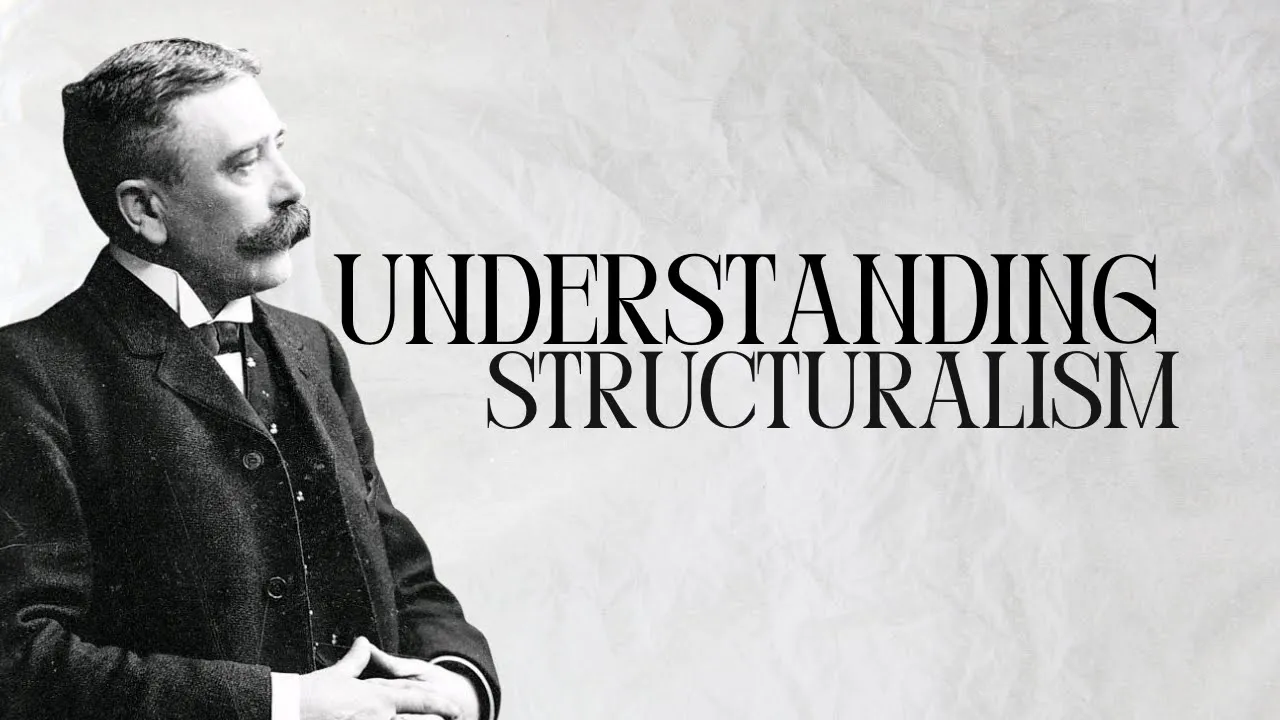
The fundamentals of Structuralism and Semiotics, particularly Ferdinand de Saussure's concept of language as a system of signs rather than a tool for direct expression.
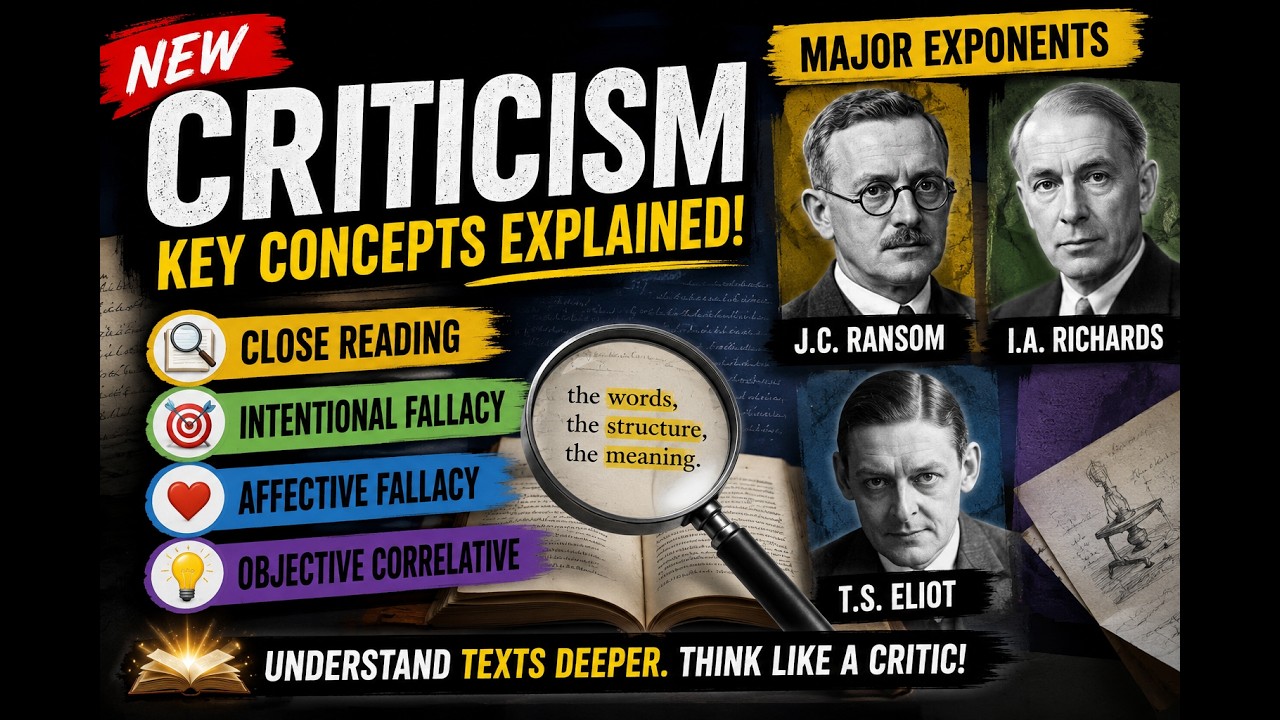
The New Criticism movement and the concept of the 'Intentional Fallacy' (developed by Wimsatt and Beardsley), which argues against using the author's intended meaning to judge a work.
Michel Foucault's critique and counter-perspective in his seminal essay 'What is an Author?' and his concept of the 'author-function'.
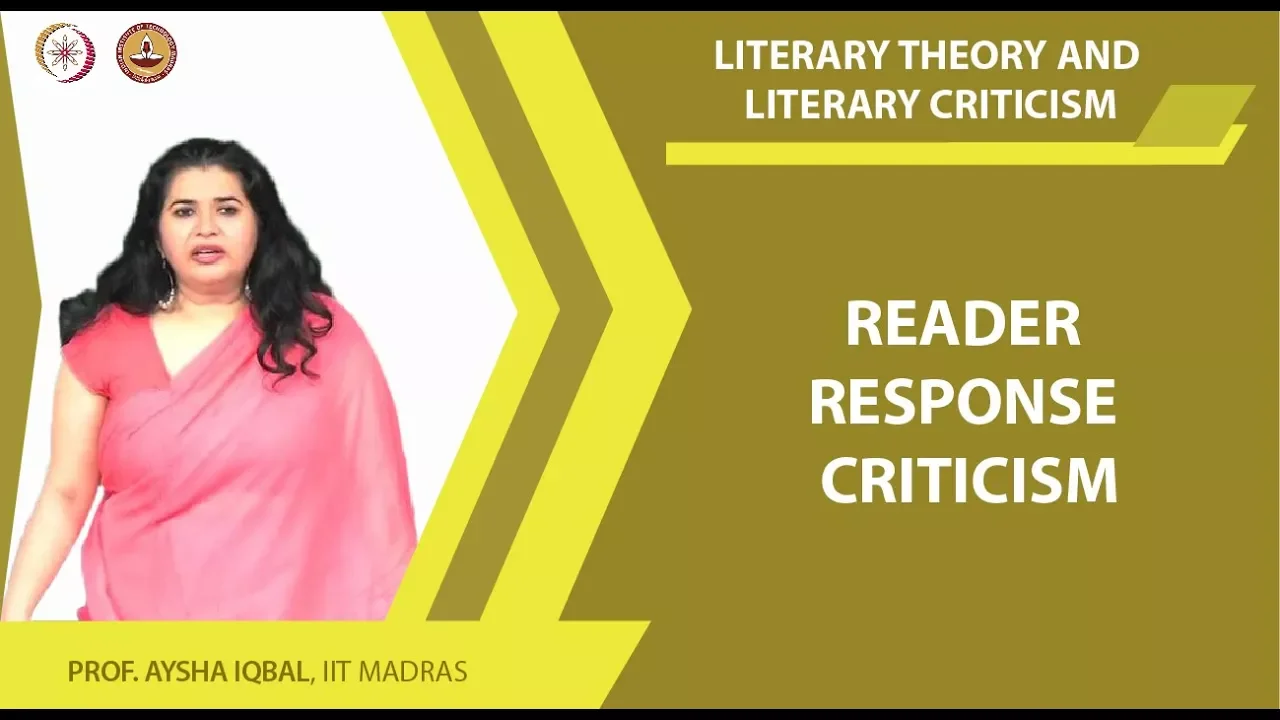
Reader-Response Theory (e.g., Wolfgang Iser, Stanley Fish), which explores how readers actively construct meaning when interacting with a text.
The transition from Structuralism to Post-Structuralism and Deconstruction, particularly the ideas of Jacques Derrida on the instability of language.
Julia Kristeva's concept of Intertextuality, examining how texts are made up of pre-existing cultural codes and other texts rather than being original creations of a singular genius.
153.8K views6.5Klikes15:41Original Release: 2019-04-03
Hi, my name's Tom, welcome back to my channel into another episode of What the Theory?, my ongoing series in which I aim to provide some accessible introductions to key theories in cultural studies and the wider humanities. Today, we're going to be taking a look at Roland Barthes' seminal 1967 essay The Death of the Author and considering its implications for how we read (whether that involves actually reading or watching, listening, playing etc) cultural texts and how we interpret them. As always, if you have any questions or suggestions as we go along then please do feel free to pop those below and, if you're new around here and this seems like your kind of thing, then please do consider subscribing and tapping that notifications button. For now, however, let's crack on with The Death of the Author: What the Theory?
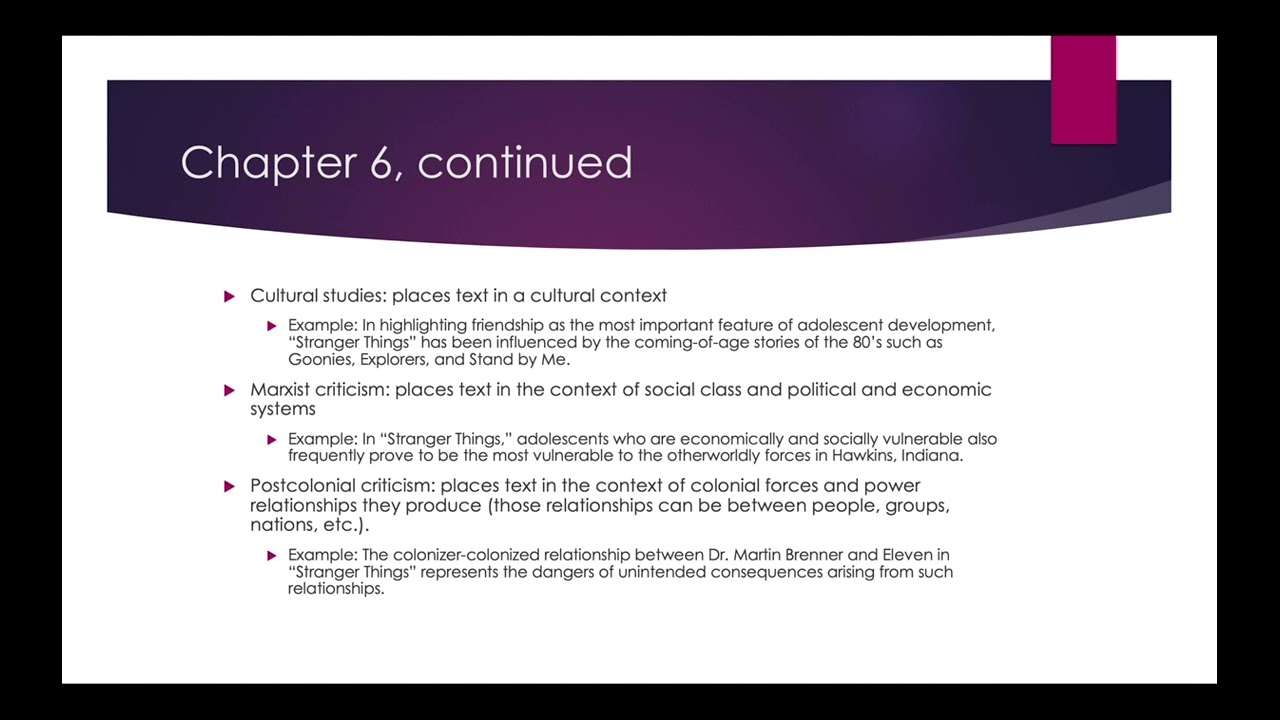
The Death of the Author is a 1967 essay by the massively influential cultural and literary theorist Roland Barthes. It is incredibly short, just seven pages long in the version reproduced in Barthes' anthology Image Music Text yet, despite this short length, it has gained quite the reputation. A great deal of that notoriety, I would argue, stems from that very provocative title; where other theoretical texts or treatises may tends towards language which is either highly technical or obscure, there's something undoubtably appealing about the pronouncement of the death of the author. Nevertheless, beneath that murderous title lies a far more measured piece of writing and the use that we can find from Roland Barthes' ideas here lie as much in it theoretical incisiveness and precision as in the strength of the language. Today, then, as well as introducing some of the key ideas from Barthes' essay, I also want to try and look beyond that title in order to draw out some of the subtler elements of Barthes' argument. In a similar mode, one of the reasons The Death of the Author is so often referred to in the present day is because it marks a seminal moment in the development of what we now call "Theory". It is often considered the moment where literary scholars abandoned approaches which we might group together as "structuralism" and embraced "post-structuralism". As we go along today, however, what I would like to do is slightly refute this popular notion that The Death of the Author represents some massive, violent break from all previous scholarship. Because, rather than some kind of manifesto in the door moment, I think we can more accurately frame it as a sort of subtle bridge from one school of thought to another. So, to frame today's video not entirely unrelatedly in Marxist terminology, today's video is about viewing The Death of the Author as reform rather than as revolution. But first, some context. Of all the theoretical approaches to analyzing literature and culture flying around in the 1960s (and there were a lot of them), the most dominant ones can be grouped together as what refer to as structuralism. To summarise very briefly and in very broad strokes, structuralism seeks to consider how the meaning that we derived from individual cultural texts might be reliant upon much wider cultural codes and ideas. The notion of genre, for example, is a highly structuralist one, it asks us to consider how different cultural texts might be grouped together and how they might draw upon similar narrative ideas, tropes, devices, character traits etc. A structuralist analysis of a comedy, for example, might seek to consider how the meaning that we derive from that comedy (including the laughter) might not only be reliant upon elements within that text itself but also upon our wider knowledge of comedy as a form.
Roland Barthes himself had been a key proponent of such approaches and his book Mythologies is full of numerous engaging and really insightful examples of a structuralist approach to cultural analysis. Where many previous schools of thought had focused on the analysis of cultural texts as individual, self-contained objects then, structuralism invited scholars to take a step back and to consider the wider cultural codes and meaningful systems of which that cultural text was a part. And, against this theoretical backdrop, Barthes found himself asking whether, if the meaning that we derive from any individual cultural text is so reliant upon wider cultural codes and sign systems, we should really give that much credit to any individual author at all.
So, in The Death of the Author, Barthes seeks to critique the significance that we so often instinctively find ourselves ascribing to an individual author of an individual cultural text. And he does so from multiple angles. However, to bring out the subtleties of Barthes' argument, I really want to start today by focusing on how he develops this notion of the importance of cultural context.
Barthes writes that 'a text is not a line of words releasing a single "theological" meaning (the "message of the author-god") but a multi-dimensional space in which a variety of writings, none of them original, blend and clash'. He continues that 'the authors only power is to mix writings [...]. The inner "thing" he [sic] thinks to "translate" is itself only a ready-formed dictionary, its words only explainable through other words'. Here, Barthes is forwarding an argument that we might have often heard: that no cultural text can ever truly be original, that any cultural text will draw upon narrative devices, character traits, jokes etc from pre-existing books, films, television shows, performances. Yet, what Barthes is using this idea to do is to suggest that we might more accurately consider an author, not as some kind of divine creator of meaning from nothingness but, instead, as a sort of collage-maker, piecing together pre-existing ideas in a unique and original way. Indeed, Barthes argues that the celebration of the author as some kind of divine creator is in fact very specific to the modern "West" and a result of the European Protestant Reformation's privileging of the individual.
He points out that, in what he slightly problematically refers to as "ethnographic" societies, 'the responsibility for a narrative is never assumed by a person but by a mediator, shaman or relator whose "performance"—the mastery of the narrative code—may possibly be admired but never his [sic] "genius"'.
In short, in such societies, someone might be celebrated for their articulation of a story but no one's ever particularly interested in whether they created the meanings present within that or not. If we look to the Ancient Greeks, we can see a very similar disinterest in authorship as individual conception. Although each epic poet or tragedian who retold the story of Odysseus or Electra, Achilles or Medea undoubtedly altered the meaning of those narratives, the fact that they were very clearly writing into a tradition of pre-existing versions of that same narrative meant that few would have been interested in what, if anything, they had created themselves. Certainly, texts within our contemporary culture do far more to hide their influences than those of the Greeks and very much seek to present themselves as original. Yet Barthes argues that the process is still very much the same; again, that the act of authorship is more one of assembling different influences rather than some kind of magical process of creating something from nothing. Barthes therefore argues that we might more accurately refer to the creator of a literary text not as an author but as a "scriptor" who 'no longer bears within him [sic] passions, humors, feelings, impressions but rather this immense dictionary from which he draws a writing that can know no halt: [...] the book itself is only a tissue of signs'. And it's important to note that, in doing so, Barthes is not seeking to attack the skill that the creation of a cultural text undoubtably involves, he is simply asking us to reconsider how we think of that act. All this being said, the aspect of The Death of the Author which often receives the most attention is Barthes' argument that, when analysing any given cultural text, we should not be too preoccupied with what the author's intentions were. For, although the case against what Wimsatt Jr. and Beardsley had, in 1946, called the "intentional fallacy", had been made numerous times, as Barthes saw it, literature scholars were still far too preoccupied with uncovering an author's intentions in the meaning of a text. He bemoans that 'the explanation of a work is always sought in the man or woman who produced it, as if it were always in the end, through the more or less transparent allegory of the fiction, the voice of a single person, the author "confiding" in us'. When taking such an approach, it is almost considered that the text itself is simply a flawed expression of a set of meanings which the author themselves holds on to. In this mode, then, the goal of any analysis is almost to look through the text to seek what meanings it is that the author is still clasping. Very often, this encouraged a biographical approach, and Barthes foregrounds in particular the way in which analyses of Van Gogh's work had been restricted to solely considering how the Sunflowers or Starry Night, for example, might be some kind of expression of the artist's psychosis. And this is clearly a limiting way to look at things. Because succumbing to such an approach relies upon two assumptions: the first is that it is possible to uncover what an artist's intention with a cultural text was and, the second, is that that meaning is the objectively correct meaning of that text.
And, in The Death of the Author, Barthes seeks to debunk both of these assumptions. In the very opening of the essay, Barthes draws upon an extract from Balzac's Sarrasine in order to consider whether we can truly know who is speaking from a text and thus what the author's intention ever was. To slightly update Barthes' terms of reference, I want to draw upon Martin McDonagh's 2017 film Three Billboards Outside Ebbing Missouri. Throughout this film, Sam Rockwell's character, Dixon, frequently throws around racial epithets. But how should we interpret these? Is such language simply a character trait of Dixon's? Is the writer himself using the character to channel his own love of throwing around such terms? Or is it part of a broader attempt to explore racism in contemporary America? In truth, Barthes argues, we can never be truly certain. Of course, the difference is that Balzac had been dead for over a century at Barthes' time of writing whereas Martin McDonagh is very much alive. However, even if we asked him what his intention with the character of Dixon was, we could never truly be sure that he was telling the truth and, indeed, much of the conversation surrounding JK Rowling's frequent returns to her Harry Potter series to, kind of, add intention there has revolved around the fact that many of the fans of her work seemed to think that maybe she's not being entirely genuine. Thus, while, contrary to popular belief, Barthes does not suggest that trying to work out what an author's intention with the text was is never an interesting pursuit, he does argue fairly strongly that to arrive at a definitive conclusion is near impossible. He does not end on such a fatalistic note however. Instead, he draws upon the impossibility of deriving an author's intention to suggest that maybe a cultural text does not have an objective meaning at all. For, just as the author brings all those pre-existing texts they've seen, all those cultural codes and all those pre-existing influences to the table when they create a text, so does the reader bring a similar amount of baggage to the table when they read it. This means that the meaning that any given reader will derive from a text will be different to that of any other; my reading will be different to yours. Barthes writes that 'a text is made up of multiple writings, drawn from many cultures and entering into mutual relations of dialogue, parody, contestation, but there is one place where this multiplicity is focused and that place is the reader not, as was hitherto said, the author. The reader is the space on which all the quotations that make up a writing are inscribed'. In this way, Barthes argues that the process of signification, through which meaning is communicated,is only truly completed when a text is read and, as such, that any given reader will have a different reading of it and, thus, that any text has multiple meanings.
Yet he does not see this as a downfall or a defeat of literary analysis. Instead, he sees it as a truly freeing notion in which the emphasis is shifted away from the writing and creation of texts and towards the experience of the reader.
To paraphrase Barthes' final sentence here, the most important part of this essay is not so much the death of the author but instead the birth of the reader, for, while many of the ideas within The Death of the Author draw upon ideas and extend ideas from structuralism, it is in pronouncing the birth of the reader that Barthes really lays the foundations for post-structuralism to begin. Thank you very much for watching this video, I hope it has been useful and interesting in some small way. As ever, if you think this might be a vague net positive for the world then I would very much appreciate a thumbs up down below and, if you haven't already, then please do consider subscribing. Thank you very much for watching once again and have a great week!
Up Next
10:21
If on a Winter's Night a Traveler by Italo Calvino | Summary & Analysis
@100PercentEnglish-M-Garg
2K views•2025-08-19

13:43
Formalism in Literary Criticism: An Academic Lecture Overview
@mattalberhasky9952
39.1K views•2015-08-05

6:08
Point of View in Fiction: First Person vs. Third Person
@magicalthriftyteacher
153.8K views•2014-03-31

15:25
1984: Orwell's Dystopian World and the Mechanisms of Totalitarianism
@AlternateHistoryHub
7M views•2017-03-04
Related Study Plans & Knowledge Roadmaps
Structured learning paths in Literature
literature
Graphic Memoirs: Visual Art, Trauma & History
01Foundations of Sequential Art and Visual Language
02Autographics and Processing Historical Trauma
03Visualizing Personal Trauma, Grief, and Graphic Medicine
+ 2 more learning modules
14h5 modules
Explore Roadmap
literature
Campus Novels: Evolution, Themes & Critique
01Introduction to the Campus Novel Genre
02Mid-Century Satire and the Post-War Academy
03Dark Academia and the Critique of Privilege
+ 2 more learning modules
14h5 modules
Explore Roadmap
literature
Theater of the Absurd: Philosophy & Plays
01Postwar Existentialism & Historical Roots
02Dismantling Narrative: Esslin & Absurdist Conventions
03Samuel Beckett and Tragicomic Existentialism
+ 2 more learning modules
12h5 modules
Explore Roadmap
literature
Revenge Tragedy: Justice, Madness & State
01Foundations of Early Modern English Theatre
02Anatomy of Revenge: Structural Conventions
03Psychological Complexity: Madness and Melancholy
+ 2 more learning modules
15h5 modules
Explore Roadmap