








![[BIOS 332] Dominant and Recessive Genotypes - Jason Tresser](https://i.ytimg.com/vi/vOLXbYe1wRo/maxresdefault.jpg)






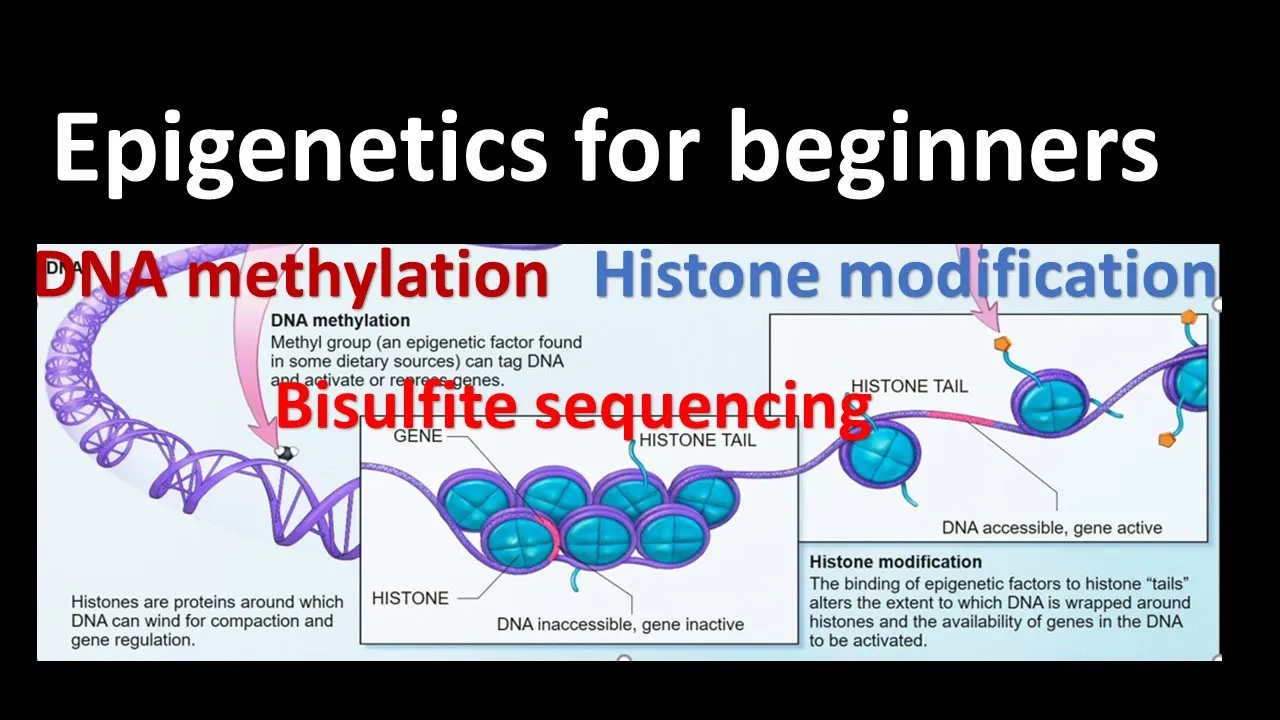
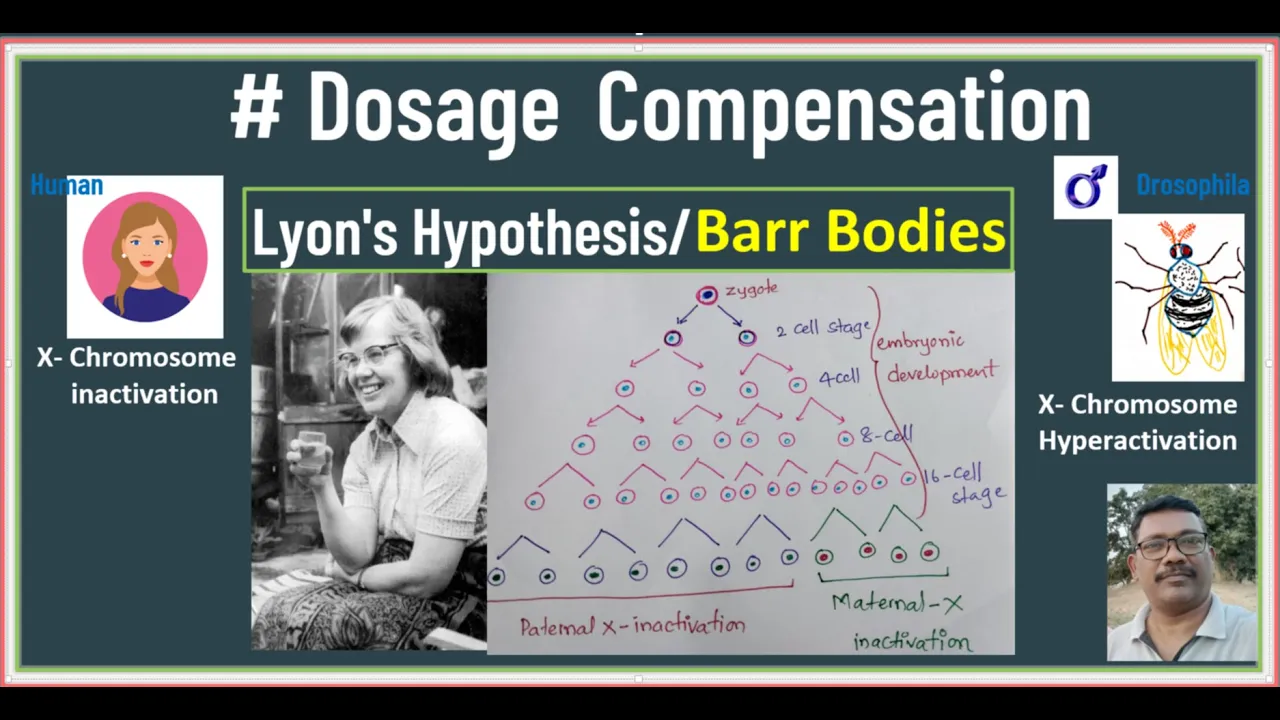
In female embryos, one of the two X chromosomes is randomly inactivated through epigenetic mechanisms including DNA compaction, histone tail modifications, and DNA methylation, creating a mosaic pattern of cells with either maternal or paternal X chromosome expression that persists throughout life and is visible as stripe-like patterns in tissues like skin.
X Chromosome Inactivation: How Women Get Stripy Epigenetics
Added:Understanding of mammalian sex determination, specifically the XX (female) and XY (male) sex chromosome configurations.
Basic concepts of genetics, including how chromosomes carry genes and the definition of gene expression.
The foundational definition of epigenetics, particularly how chemical modifications can turn genes on or off without altering the DNA sequence.
The concept of gene dosage and why organismal survival relies on regulating the expression levels of X-linked genes (dosage compensation).
The specific molecular mechanism of X-inactivation, focusing on the role of the Xist long non-coding RNA (lncRNA) and the formation of Barr bodies.
Phenotypic mosaicism in heterozygous females, exploring real-world biological examples like Calico cat coat patterns and anhidrotic ectodermal dysplasia in humans.
Skewed X-chromosome inactivation and how it influences the severity of symptoms in female carriers of X-linked genetic disorders (e.g., Rett syndrome, Hemophilia).
The process of epigenetic reprogramming, specifically how the inactive X chromosome is reactivated in the germline during embryonic development.
9.9M views264.8Klikes5:17Original Release: 2014-06-04
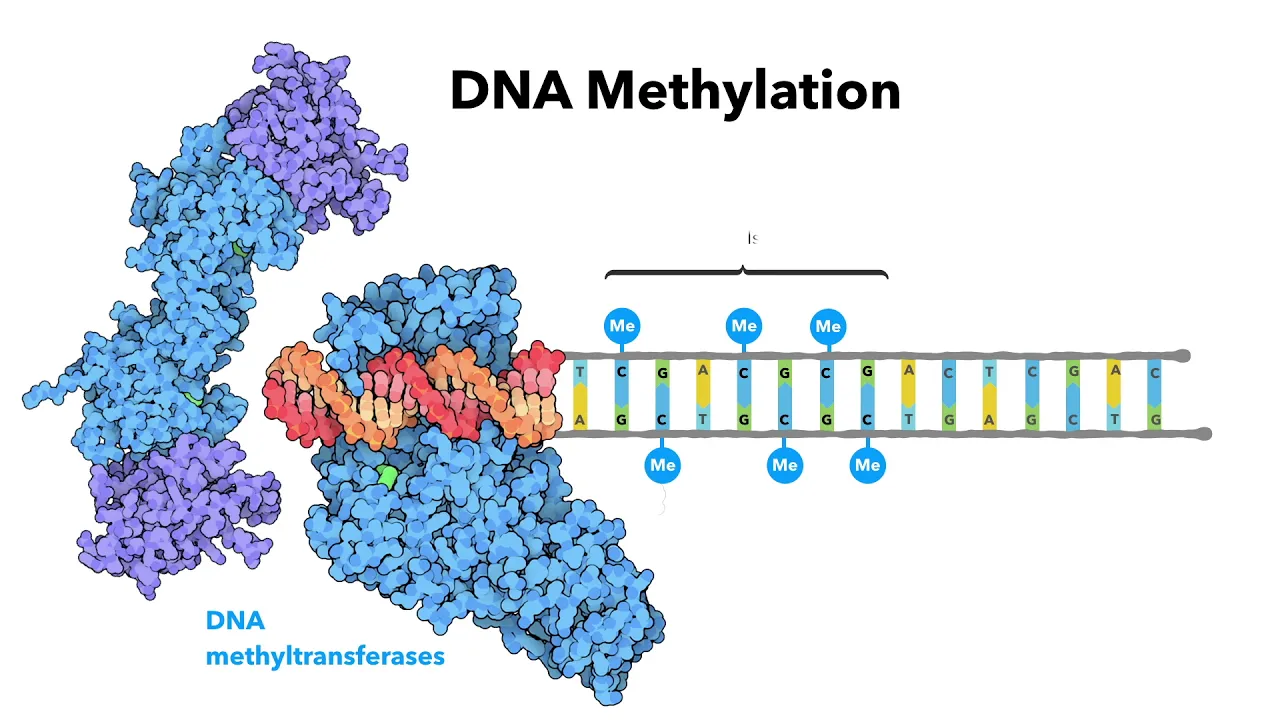
[Applause] inside each one of your cells there is six feet of DNA made up of six billion letters of genetic code now your DNA is split into 46 pieces each 3 to 4 cm long called chromosomes now normally we think of chromosomes as looking like this but they only take that form when a cell is ready to divide so usually DNA is just a wiggly thread within the nucleus now if you can imagine DNA is only about 2 nanom wide but a chromosome is cm long so you would think that it would get tangled worse than the headphones in your bag so the DNA is actually wrapped around proteins called histones now those histones have Wiggly Tails which will come in handy as we'll see in a moment your unique set of DNA first formed when 23 chromosomes from your mom mixed with 23 from your dad now 22 of those chromosomes from each parent form matching pairs but the 23rd set is the sex chromosomes so two X chromosomes make you female and an X and A Y make you male now since the male sex chromosomes are different both can remain active for the rest of your life but for females one of the X chromosomes needs to be inactivated in order for proper development to occur this happens when a female embryo is Just 4 days old and consists of only 100 cells right now in this cell the ex chromosome from Dad and the one from Mom are both active but through a tiny molecular battle one of the X chromosomes wins and remains active while the other is inactivated this is done by packing the DNA closer together and making modifications to those dangly histone tails that signal this inactivation new structural proteins are also added to bind everything closer together and finally methyl groups these tiny little molecular markers are added to the DNA to basically signal to the cell that this DNA shouldn't be red so all of this together makes the DNA very difficult to access for the molecular Machinery that would harness the code in this DNA it is Switched Off This DNA is silenced in contrast the active X chromosome DNA is more spread out this allows better access to the genes on the chromosome histones can be slid along the DNA or removed entirely and the histone Tails have a different modification signaling this DNA is active now all of this makes it possible for RNA polymerase to access and transcribe this DNA into messenger RNA which then goes out into the cell and is used to make a protein now what's surprising about X chromosome in activation is that it seems kind of random which X chromosome wins I mean in some cells dad's ex chromosome winds and in others mom's ex chromosome winds so this 100 cell embryo ends up with a mixture of active X chromosomes but from this point forward as these cells divide they maintain the active X chromosome that they had inside so all of the cells with dad's active X chromosome give rise to further cells with dad's active X chromosome and this continues on into adulthood so if you could look at a woman's skin and see which X chromosome has been inactivated you would see a stripy pattern which shows the growth and Mig of all of these first 100 cells when the embryo was just 4 days [Music] old now of course you can actually see that in humans but you can see this with Calico cats and that's because the gene for coat color is actually on the X chromosome so just by looking at the pattern of her spots here her dark and light spots you can see where her mom or dad's ex chromosome has been inactivated and this also shows us that only female cats can be calico cats and that's because well only female cats can inherit two X chromosomes with two different color genes now this is just one really cool example of epigenetics but epigenetics doesn't normally work on one whole chromosome in fact it's at play in all of your chromosomes turning on and off your genes for example it's epigenetics which makes a pancreatic cell capable of producing insulin because that Gene is switched on there but Switched Off everywhere else what's more interesting is that it seems the behaviors you take can actually affect your epigenetics and even weirder perhaps the things that your parents or grandparents did can affect your epigenetics now can affect your DNA so you are not just a product of your genetic code you're not just a product of your DNA you are also a product of your epigenetics and that is influenced by your behavior and the behavior of your ancestors [Music]
Up Next
5:06
Exploring X Chromosome Inactivation | Genetics Explained
@TEDEd
1.2M views•2017-04-18
50:12
Bacterial Communication: Quorum Sensing and Biofilm Formation Explained
@JHUAAP
12.6K views•2011-06-28
28:50
Evolution and Gene-Centric Natural Selection Explained
@veritasium
6.8M views•2025-10-31
7:08
Bacteriophages: Earth's Deadliest Killers and Future Antibiotics
@kurzgesagt
34.6M views•2018-05-13
Related Study Plans & Knowledge Roadmaps
Structured learning paths in Biology
biology
RNAi: Biogenesis, RISC & Gene Silencing
01Molecular Biology Foundations: DNA to Protein
02Introduction to RNA Interference (RNAi)
03Molecular Biogenesis of miRNA and siRNA
+ 2 more learning modules
10h5 modules
Explore Roadmap
biology
Mycorrhizae: Signaling, Biophysics & Ecology
01Foundations of Mycorrhizal Symbiosis
02Molecular Signaling and Root Colonization
03Biophysics and Bioenergetics of Nutrient Exchange
+ 1 more learning modules
11h4 modules
Explore Roadmap
biology
Circadian Clocks: TTFL, SCN & Periphery
01Foundations of Molecular Biology & Gene Expression
02Introduction to Chronobiology and Actograms
03The Core TTFL: Molecular Architecture of the Clock
+ 3 more learning modules
14h6 modules
Explore Roadmap
biology
Population Genetics: Math, Drift & Selection
01Genetic & Probability Foundations
02The Hardy-Weinberg Principle and Baseline Models
03Mathematical Modeling of Natural Selection
+ 3 more learning modules
18h6 modules
Explore Roadmap