Lexical analysis, also known as tokenization, is the fundamental process in computer science where a sequence of characters is converted into meaningful tokens—such as keywords, symbols, numbers, and identifiers—that carry semantic meaning. Unlike characters which have no inherent meaning, tokens represent distinct syntactic elements that compilers and interpreters use to understand programming languages. This process is generally not whitespace-sensitive, meaning spaces between elements do not affect token identification, though certain contexts may require careful distinction between types and variables.
Lexer Explained: From Characters to Tokens
Added:Deep Dive
Basic understanding of programming language syntax, including concepts like keywords, variables, operators, and literals.

Plus One Computer Science Public Exam | All Sure Questions | Exam Winner
47.1K
This segment covers programming fundamentals including variables, identifiers, and literals. Variables are named storage locations in memory that can hold values which can change during program execution. Identifiers are names given to variables, functions, and other program elements. Valid identifier naming rules include: Identifiers can contain letters, digits, and underscores; Identifiers cannot start with a digit; Identifiers are case-sensitive; Identifiers cannot be reserved keywords. Literals are constant values that do not change during program execution, including integer literals (42), floating-point literals (3.14), character literals ('A'), and string literals ('Hello'). Tokens are the smallest meaningful units in programming languages, including identifiers, keywords, operators, and literals. The programming process consists of several phases: Problem Identification, Algorithm Design, Flowchart Creation, Programming, Translation, Execution, Debugging, and Documentation.
Click to watch →
#Tokens || #Literals || #Operators || #Identifiers || #Basic Concept of All Programming language
1.7K
Programming languages consist of three fundamental elements: tokens (basic building blocks), keywords (reserved words with special meaning), and literals (fixed values). Tokens include identifiers (variable names), operators, and punctuation. Keywords like 'if', 'else', and 'while' cannot be used as variable names. Literals represent specific data values such as numbers (3.14) or strings ('Hello'). Understanding these elements is essential for parsing and writing valid programming code.
Click to watch →

C Language Full Course in 1 HOUR and Become a ZERO to HERO Programmer!
1.2M
C programming follows specific syntax rules: (1) Braces {} group statements, (2) Indentation improves readability, (3) White space enhances code clarity, (4) Comments (// or /* */) add explanatory notes. Key terminology includes: keywords (int, float, char), literals (constant values), identifiers (variable names), and variables (storage locations). Arithmetic operators (+, -, *, /) perform basic calculations. Violating syntax rules results in compilation errors.
Click to watch →

12th Computer Science | Python - Chapter 5 A to Z - Single Shot | Python Programs | Compulsory
1.6K
Comments in Python are ignored by the interpreter and used for documentation. Single-line comments start with #, while multi-line comments use triple quotes ("""). Indentation in Python defines code blocks. All lines in a block must have the same amount of indentation (spaces). Python uses indentation instead of braces or keywords to define code structure. Tokens are the smallest meaningful units: identifiers (variable names), keywords (reserved words), operators (symbols), and literals (constant values). Identifiers must start with a letter or underscore, can contain letters, digits, and underscores, and are case-sensitive. Identifiers cannot be Python keywords. Python arithmetic operators: +, -, *, /, //, %, **. Division always returns a float. Floor division returns the integer part. The modulus operator returns the remainder. Relational operators: >, <, ==, !=, >=, <= return True or False. Logical operators: and, or, not follow precedence: not (highest), and (middle), or (lowest). Assignment operators: =, +=, -=, *=, /=, //=, %=, **=. The ternary operator provides compact if-else: value_if_true if condition else value_if_false. Literals include numeric (int, float, complex), string, and boolean (True/False). Different number bases: decimal (base 10), binary (base 2), octal (base 8), hexadecimal (base 16).
Click to watch →
Class 11 computer science cs Unit 2 | Introduction to python | Getting Started with python Chapter 5
11.8K
Python tokens are the smallest individual units that make up a program, including keywords, identifiers, literals, operators, and punctuation marks. Python keywords are reserved words that have special meaning in the language and cannot be used as identifiers. Examples include print, if, else, for, while, and import. Identifiers are names given to variables, functions, and other program elements. Python identifiers must follow specific rules: they can contain letters, digits, and underscores; they must start with a letter or underscore; they cannot start with a digit; they cannot contain spaces or special characters; and they cannot be Python keywords. Identifiers are case-sensitive, meaning 'Variable' and 'variable' are considered different identifiers. Python supports various types of literals: numeric literals include integers (whole numbers without decimal points), floating-point numbers (numbers with decimal points), and complex numbers (numbers with real and imaginary parts); boolean literals are True and False; None represents the absence of a value; and collection literals include lists (ordered collections using square brackets), tuples (ordered collections using parentheses), dictionaries (key-value pairs using curly braces), and sets (unordered collections using curly braces). Python supports various types of operators: arithmetic operators (+, -, *, /, %, **, //) for mathematical operations; comparison operators (==, !=, >, <, >=, <=) for checking relationships between values; logical operators (and, or, not) for combining multiple conditions; identity operators (is, is not) for checking if two variables point to the same object; and membership operators (in, not in) for checking if a value exists within a collection.
Click to watch →
Deep Dive
Familiarity with regular expressions (Regex) used for pattern matching in text.

Regex Howto : Dominate Your Code with Regular Expressions
123.6K
Regular expressions (regex) are powerful text pattern matching tools that allow users to search, filter, and manipulate text efficiently using special symbols like carrots (^) for line beginnings, periods (.) as wildcards, dollar signs ($) for line endings, pipes (|) for command chaining, and curly braces {} for repetition control; these patterns can be applied across various Linux utilities like grep and find to extract specific information from large text datasets.
Click to watch →

TOPIC 11 - REGULAR EXPRESSIONS
2.1K
Regular expressions are patterns used to define how tokens should appear in text, enabling string matching, searching, text manipulation, data validation, and text processing. Pattern matching identifies whether specific words, numbers, or patterns exist within text. Examples include digit matching (0-9), date format validation (DD/MM/YYYY), email address matching, and Indian phone number validation (+91 6-9 followed by 9 digits). These patterns ensure text conforms to expected formats by defining acceptable character ranges and structures.
Click to watch →
Learning Regular Expressions (RegEx) : Lesson 1: An Introduction, and the ABCs
220
Regular expressions are powerful tools for extracting information from text sources like code, log files, spreadsheets, and documents. Everything in regex is essentially a character, and users write patterns to match specific sequences of characters (strings). Most patterns use ASCII characters (letters, digits, punctuation), while Unicode supports international text. Visual tools highlight matching characters as patterns are typed, making learning intuitive. Patterns must match exact sequences, not just contain characters. The goal is to write patterns that match across multiple lines by identifying common characters. For example, 'ABC' matches all three rows because it contains characters common to each line, while 'D' or 'F' match fewer rows based on character frequency.
Click to watch →

A look at using Regular Expressions (RegEx)
9.7K
Regular expressions (regex) are powerful text pattern-matching tools used across programming languages, SQL, KQL, and command-line utilities. They enable three core operations: checking if a pattern exists in a string, extracting specific elements from text, and replacing matched text with new content. Regex is essential for data validation, log file analysis, website scraping, and text transformation tasks. Understanding regex syntax enables efficient text processing in nearly any development or data analysis environment.
Click to watch →

Using UNIX shell and regex to Wrangle Data | Learn with Dr G
1.8K
Regular expressions (regex) are patterns used for text matching that are useful across many contexts including Unix shells, programming languages, and data analysis tools. They allow you to search for and match specific patterns in text. The regex101.com website provides an interactive tool for testing regular expressions, allowing you to see how patterns match against test strings before using them in actual commands.
Click to watch →
Deep Dive
A high-level understanding of the compilation pipeline (how source code is translated to machine code or bytecode).

Compiler Internals Explained | Front End, Middle End, and Back Endnow
156
Compilers transform human-readable source code into machine-executable binaries through a systematic pipeline. Hardware understands only binary instructions, so compilers translate high-level code into this format. The complete tool chain consists of four stages: Preprocessor converts source code to .i files, Compiler generates assembly language, Assembler creates object files (.o), and Linker combines them into the final executable. Modern compilers are organized into three distinct stages: Front End analyzes source code through syntax parsing, semantic analysis, type checking, and scope resolution to generate Intermediate Representation (IR). The Middle End performs optimization passes on IR to improve performance while preserving correctness. The Back End translates optimized IR into target-specific machine code through lowering, instruction selection, and code generation. This modular architecture enables independent development of each component, allows reuse across different source languages, and separates target-independent optimizations from architecture-specific code generation.
Click to watch →

In 54 Minutes, Understand the whole C and C++ compilation process
92.7K
The compilation pipeline consists of four main stages: (1) Preprocessor handles directives starting with # like #include, #define, and #if, performing text substitution; (2) Compiler generates intermediate representation and assembly code from the processed source; (3) Assembler converts assembly code into machine code (object file .o); (4) Linker combines object files and libraries into the final executable. This process transforms human-readable source code into executable machine instructions.
Click to watch →
CPUs Are Out of Order - Computerphile
190.5K
High-level programming languages like C are translated through a compilation pipeline into executable machine code. The process begins with source code containing expressions like A + B + C + D × E, which the compiler converts into assembly instructions. These assembly instructions represent low-level operations the CPU can execute directly. The resulting machine code consists of multiple instructions: loading values from memory into CPU registers, performing arithmetic operations using the ALU, and storing results back to memory. This translation enables human-readable code to interface with the binary instructions that CPUs understand.
Click to watch →

ACM Cyber | Intro to Assembly and Reverse Engineering
292
The compilation pipeline consists of four phases that transform high-level code into executable programs: (1) Preprocessing - modifies code with directives starting with # (like #include), copies header files, and deletes comments; (2) Compilation - translates preprocessed code into assembly language (.s file); (3) Assembly - converts assembly into relocatable object code (.o file) containing machine instructions; (4) Linking - combines object files and resolves external symbol references to produce a final executable. Static linking copies library functions directly into the executable, while dynamic linking uses pointers to load libraries at runtime.
Click to watch →
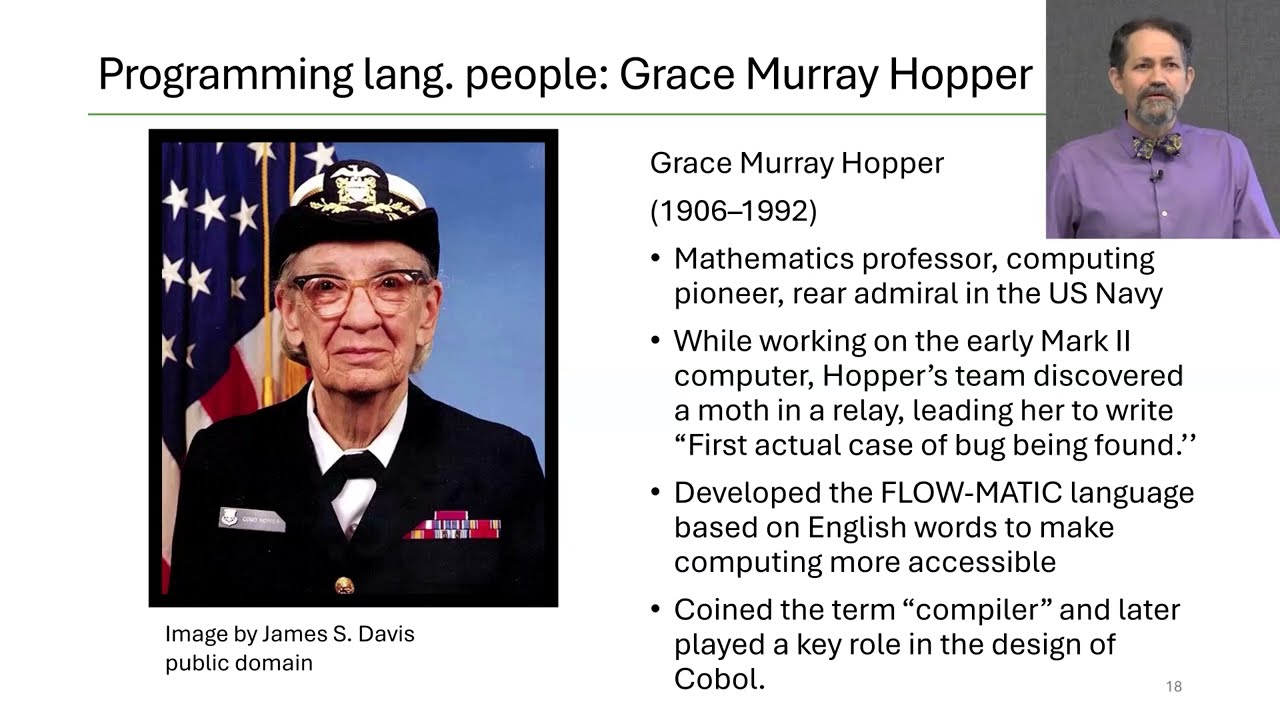
PLP 1.4-1.5: Compilation, interpretation, and environments
595
This section explains the complete compilation pipeline used to transform high-level source code into executable programs. The process involves multiple stages: source code is first compiled into assembly language, a readable textual format describing machine instructions. An assembler then converts this assembly code into binary machine language. When programs use external libraries, a linker combines the compiled program code with previously compiled library routines to produce a complete executable. Kathleen Booth invented the first assembly language for the ARC computing system, enabling low-level programming. Additionally, preprocessors like those in C allow conditional inclusion/exclusion of code sections based on configuration parameters, enabling single-source compilation across different platforms.
Click to watch →
Deep Dive
Fundamental concepts of character encoding (such as ASCII and UTF-8) and basic string manipulation.

ASCII, Unicode, UTF-8: Explained Simply
126.7K
ASCII is a 7-bit character encoding system that represents 128 characters using binary values, originally designed for English text but limited in scope; Unicode is a universal character encoding standard that supports virtually all written languages and symbols worldwide by assigning each character a unique hexadecimal code point; UTF-8 is a variable-length encoding algorithm that implements Unicode by representing common ASCII characters with just one byte while using up to four bytes for less common characters, making it backward compatible with ASCII and now accounting for approximately 98% of web pages.
Click to watch →

Você REALMENTE sabe o que é uma STRING?
67.4K
Strings in programming are sequences of bytes that require three components: size (memory length), charset (character mapping), and encoding (byte interpretation). ASCII uses 7 bits per character (128 total), while Unicode provides a universal character set. UTF-8 is an encoding algorithm for Unicode that uses variable-length bytes (1-4 bytes per character), making it backward compatible with ASCII. Characters like Chinese characters require multiple bytes (32 bits/4 bytes per character), which is why string indexing can corrupt encoding if not handled properly. This is why most programming languages make strings immutable to prevent encoding corruption.
Click to watch →

Unicode, in friendly terms: ASCII, UTF-8, code points, character encodings, and more
318.4K
Unicode is a comprehensive character encoding standard that maps human-readable graphemes (writing system units) to one or more code points (numeric values), which are then encoded into binary using schemes like UTF-8 (variable-length, 1-4 bytes, backward-compatible with ASCII), UTF-32 (fixed 4-byte encoding), or others; unlike ASCII where one character equals one byte, Unicode requires understanding that graphemes, code points, and bytes are distinct concepts, and using byte-level string manipulation on Unicode data can corrupt text, necessitating proper encoding awareness for correct string handling.
Click to watch →
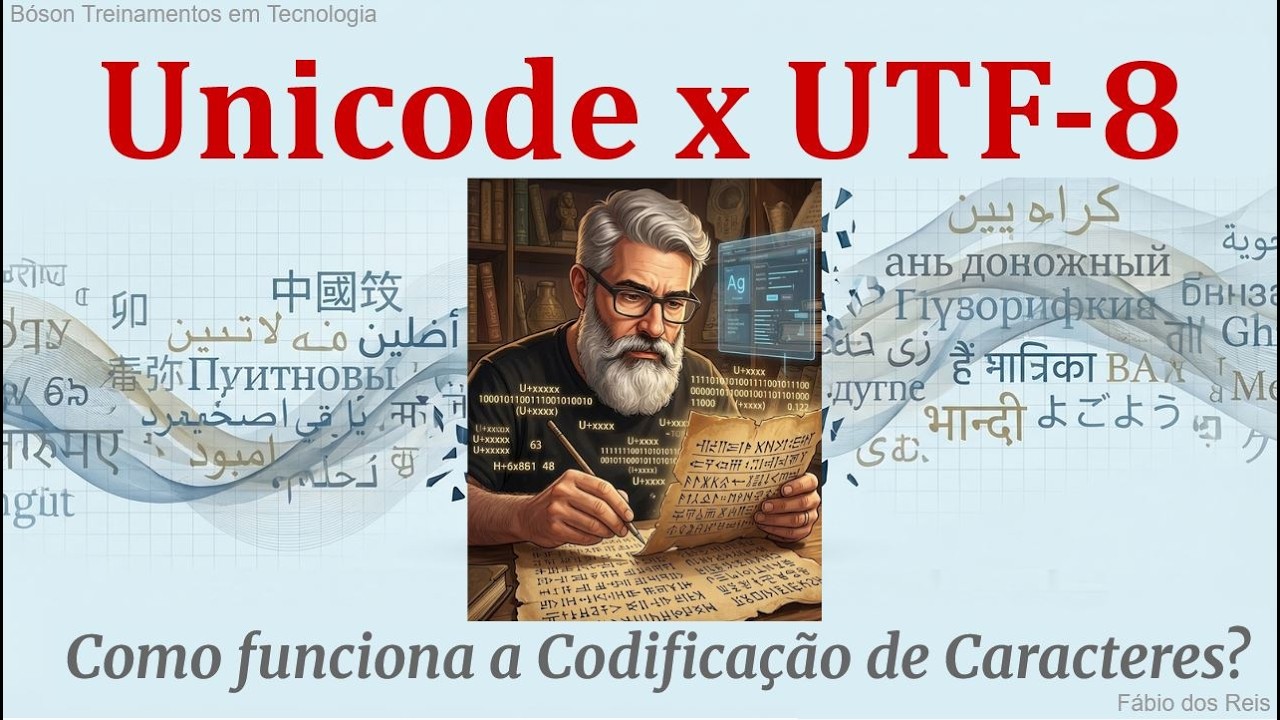
Unicode vs UTF-8: Diferença entre sistemas de codificação de caracteres
153
Character encoding determines how characters are represented in computers. ASCII (1963) used 7 bits for 128 characters, sufficient for English but lacking accents. Regional code pages emerged by using the 8th bit, doubling capacity to 256 characters, but failed to accommodate all human languages. Mojibake (character corruption) occurred when text encoded in one encoding was read with another. Unicode was created in 1988 to solve this by providing a single universal standard supporting over 170 writing systems and 150,000+ characters, assigning each character a unique code point (e.g., U+0041 for 'A'). UTF-8 (Unicode Transformation Format - 8) converts code points to binary using variable width: 1 byte for ASCII, 2 bytes for Latin Extended/Greek/Cyrillic, 3 bytes for East Asian characters, and 4 bytes for emojis. It uses bit prefixes to indicate character size and maintains ASCII backward compatibility. Endianness determines byte order for multi-byte encodings, while BOM indicates byte order for fixed-width encodings but should never be used with UTF-8.
Click to watch →

SDP on DSA for Product-Based Companies Mastering Day 7
675
Strings are sequences of characters represented by integer codes through encoding systems. ASCII assigns: uppercase A-Z (65-90), lowercase a-z (97-122), digits 0-9 (48-57), space is 32. Unicode is a superset supporting global characters including emojis. Python provides ord() to convert characters to integers and chr() to convert integers to characters. Understanding these encoding principles enables low-level string manipulation and character-based algorithms.
Click to watch →
Prerequisite Knowledge
- Concept 01Basic understanding of programming language syntax, including concepts like keywords, variables, operators, and literals.
- Concept 02Familiarity with regular expressions (Regex) used for pattern matching in text.
- Concept 03A high-level understanding of the compilation pipeline (how source code is translated to machine code or bytecode).
- Concept 04Fundamental concepts of character encoding (such as ASCII and UTF-8) and basic string manipulation.
Subsequent Learning
- Step 01Syntax Analysis (Parsing) and the construction of Abstract Syntax Trees (ASTs) using the generated tokens.
- Step 02Using automated toolsets like Lex, Flex, or ANTLR to generate lexical analyzers from grammar rules.
- Step 03Implementing lexical error handling and recovery strategies to deal with invalid characters in source code.
- Step 04Semantic Analysis and the creation of Symbol Tables to track variable scopes and types.
Lexical Analysis
Lexical Analysis
0:01Playing Section
- 1
Converts character sequences into meaningful tokens.
- 2
Tokenization is whitespace-insensitive in code structures.
- 3
Tokens are grouped characters with assigned meanings.
Scannerless Parsing
While traditional compiler design separates language processing into a distinct lexing phase followed by parsing, an alternative approach known as 'Scannerless Parsing' merges these two steps. Instead of converting a character stream into discrete tokens beforehand, a scannerless parser operates directly on the raw text stream using a single, unified grammar. This approach eliminates the 'lexical feedback' problem—where the parser must guide the lexer to resolve ambiguities, common in languages like C++ or JavaScript. By bypassing a separate lexer, scannerless parsing simplifies the handling of complex tokenization, nested comments, and context-sensitive keywords. Although it can be more computationally intensive than traditional two-phase systems, it provides a more flexible framework for processing modern, complex programming languages and domain-specific languages.
Deep Dive
Syntax Analysis (Parsing) and the construction of Abstract Syntax Trees (ASTs) using the generated tokens.

Syntax Analysis For Parsing
27.2K
Syntax analysis (parsing) is the third chapter of compiler design. The lexer (lexical analyzer) takes input strings and splits them into valid tokens. The syntax analyzer then takes these tokens and recombines them to create a tree-like data structure called an Abstract Syntax Tree (AST). The leaf nodes of this tree are the tokens, and reading them from left to right reconstructs the entire input sentence.
Click to watch →

Compilers explained like you were 5 years old
103
Syntax analysis (parsing) takes the tokens from lexical analysis and determines how they fit together according to the programming language's grammar rules. The parser builds an Abstract Syntax Tree (AST), which is a diagram showing the structural relationships between code elements. For example, in 'x = a + b * c', the parser recognizes that multiplication has higher precedence than addition (following mathematical order of operations like PEMDAS), and constructs a tree structure that reflects this hierarchy. Compilers like GCC and Clang perform this analysis, with Clang known for providing more helpful error messages.
Click to watch →
![Building a Parser from scratch. Lecture [1/18]: Tokenizer | Parser](https://i.ytimg.com/vi/4m7ubrdbWQU/maxresdefault.jpg)
Building a Parser from scratch. Lecture [1/18]: Tokenizer | Parser
185.4K
The parsing pipeline consists of two main stages: lexical analysis and syntactic analysis. The tokenizer (lexer/scanner) performs lexical analysis by grouping individual characters into tokens with type and value, such as identifiers and literals. The parser performs syntactic analysis by validating the token sequence against the language grammar and constructing an Abstract Syntax Tree (AST). The AST represents the program structure hierarchically, with operators and function names as interior nodes and operands as child nodes. This intermediate representation enables further processing by interpreters or code generators.
Click to watch →
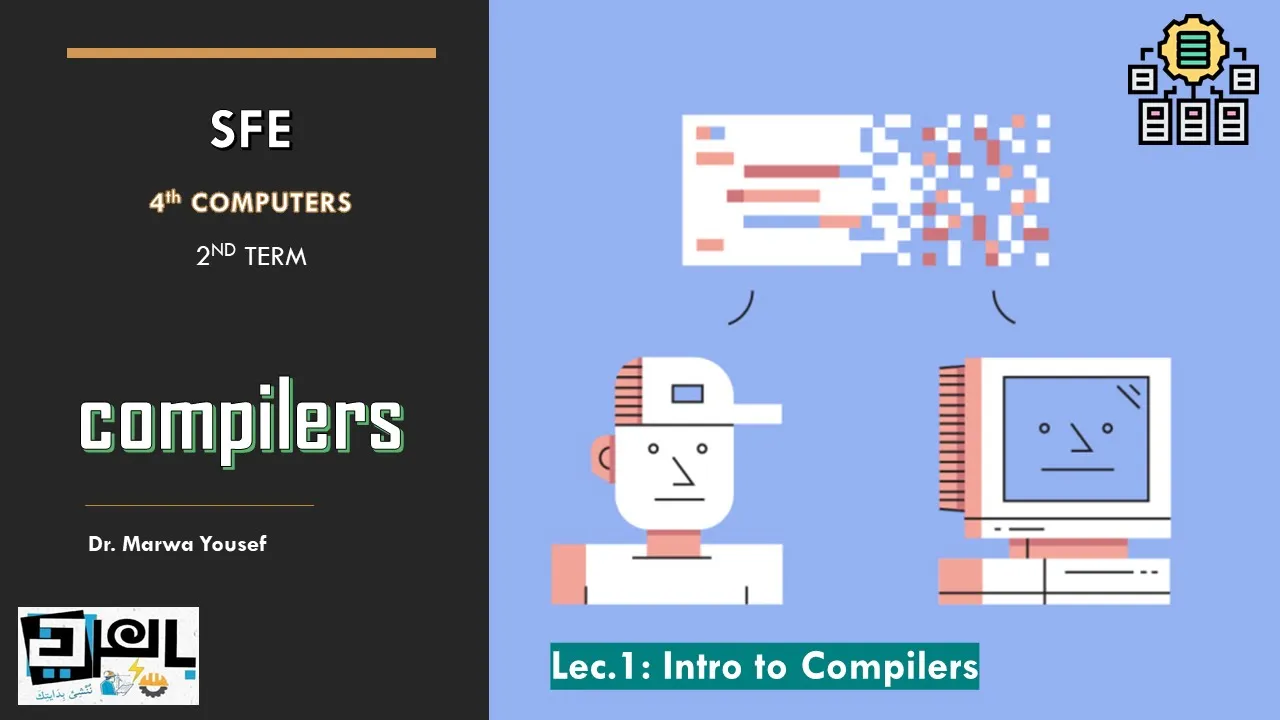
Compilers - Lec.1 (Dr. Marwa Yousef)
1.6K
Syntax analysis (parsing) checks whether the sequence of tokens forms a valid structure according to the language's grammar rules. The parser builds a representation of the program's structure, such as an Abstract Syntax Tree (AST). The AST captures the essential syntactic elements of the program in a more abstract form than the original source code. This phase ensures that the code follows the correct grammatical rules of the programming language. The AST is used for further analysis and optimization before code generation.
Click to watch →
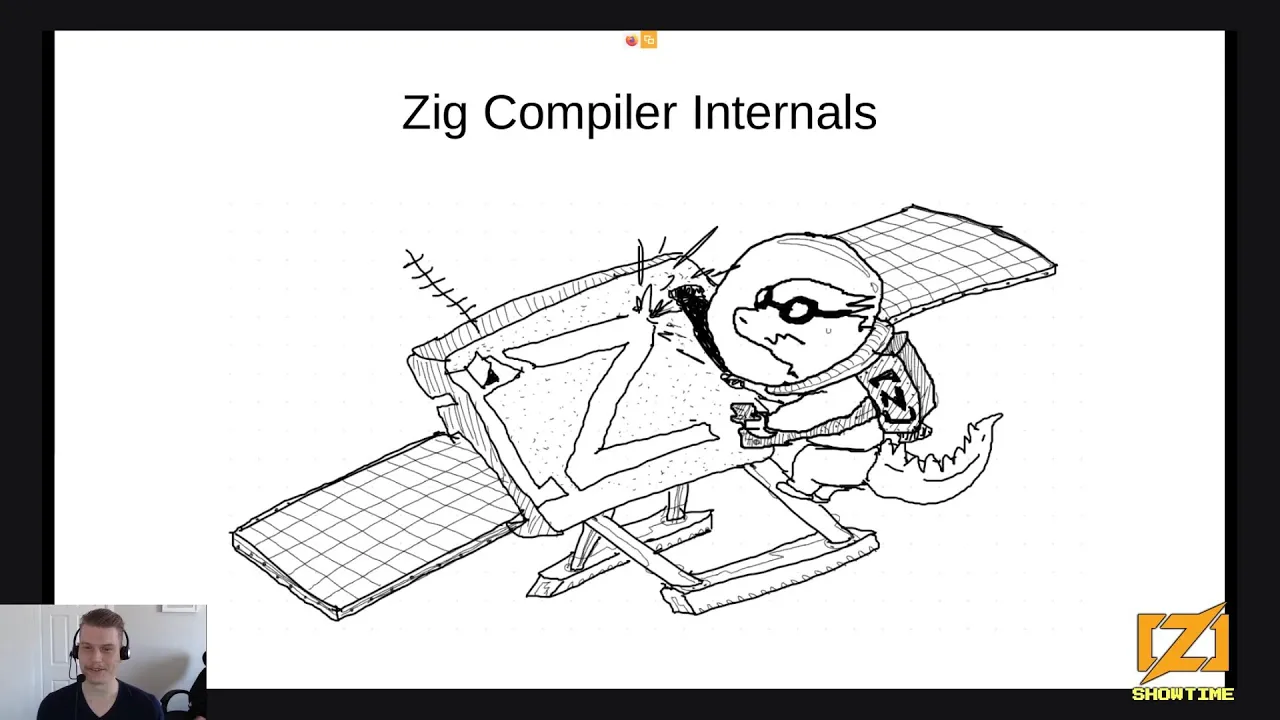
Zig Compiler Internals - Andrew Kelley
33.2K
After tokenization, the parser converts the list of tokens into an Abstract Syntax Tree (AST). This process involves analyzing the tokens to understand the structure of the program, determining whether they form an if statement, function call, function declaration, or other language constructs. Tools like flex and bison (parser generators) can automatically generate parsing code from syntax descriptions, while recursive descent parsers can be written manually for better error recovery and error messages.
Click to watch →
Deep Dive
Using automated toolsets like Lex, Flex, or ANTLR to generate lexical analyzers from grammar rules.

intro to flex/lex for tokenizing
2.4K
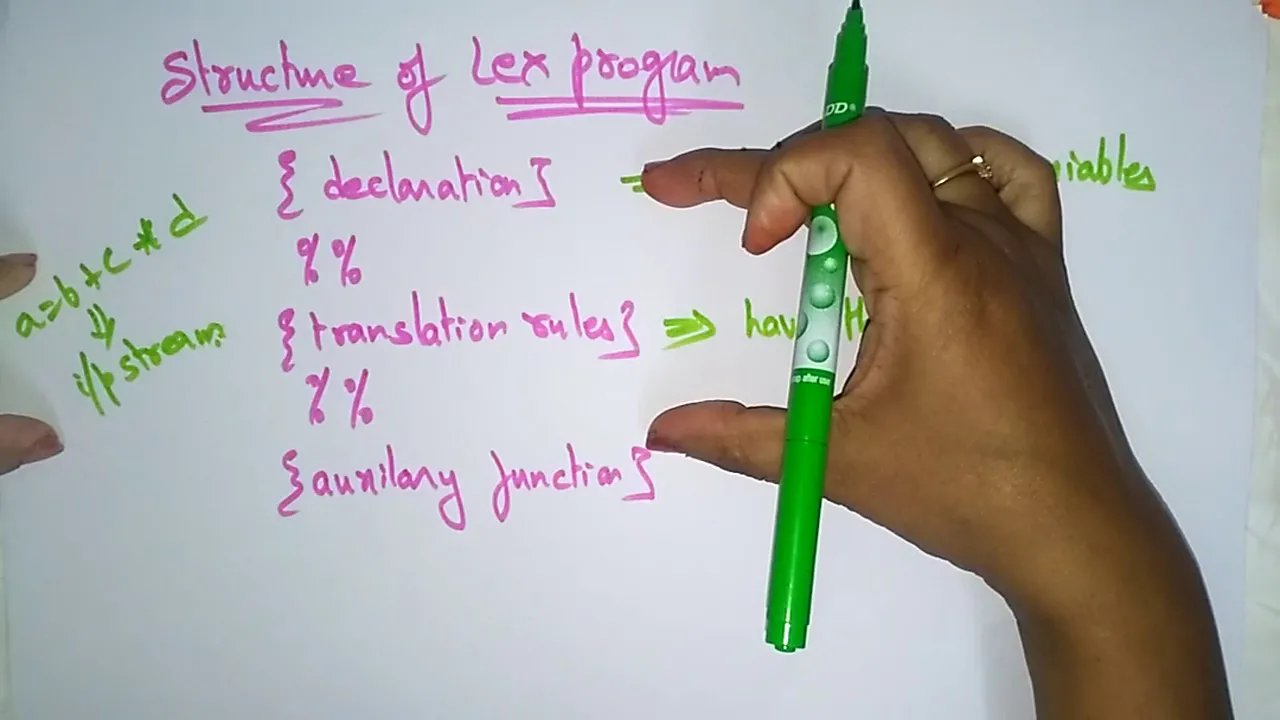
Lex and Flex are tools that generate lexical analyzers (tokenizers) from grammar specifications, enabling developers to create programs that analyze source code by breaking it into meaningful tokens like keywords, identifiers, and literals; these tools work alongside Yacc/Bison for parsing and semantic analysis, following a three-section structure in their input files: a declaration section for character sets and C code, a rules section for token patterns with associated actions, and a C-section for additional function implementations, with yytext storing the matched text and yylval holding the associated token value for further processing.
Click to watch →

The not-too-scary Introduction to Parser Combinators in Scala with Craig Tataryn
978
Traditional lexer-parser generators like Lex and Bison (or Flex and Yacc) are command-line tools that generate parsers from grammar files. Lex defines token patterns, while Bison defines grammar rules. These tools generate C code that builds parsers, but require separate files for tokens and grammar. Modern alternatives like ANTLR generate parsers in multiple languages (Java, JavaScript, C#) from grammar files, producing Java jar files that can be used directly in programs. Tools like ANTLR Studio provide graphical interfaces for creating and visualizing parse trees, making the process more accessible.
Click to watch →

Part 01: Tutorial on lex/yacc
446.5K
Lex is a scanner generator tool that automates the creation of lexical analyzers. Instead of writing a scanner by hand (which becomes complex for large languages), Lex allows developers to describe regular expressions for token patterns and associate each pattern with C code actions. When Lex processes this input, it generates a table-driven scanner implementation in a file named lex.yy.c by default. The original Unix Lex utility has been implemented open-source as flex, so references to Lex and flex typically refer to the same tool.
Click to watch →
Lexical Analysis using LEX tool | Implementation | Part-1/2 | Compiler Design | Lec-27 | Bhanu Priya
118.3K
A lexical analyzer (scanner) breaks input streams into tokens. LEX is an automated tool that generates scanners by converting source programs into token sequences. The process involves three steps: (1) Flex source (.l) is compiled by Lex to generate lex.yy.c; (2) C compiler produces executable (.out/.exe); (3) Input stream is processed to generate tokens. LEX automates the complex internal operations of lexical analysis, handling character-by-character processing, identifier recognition, and lexeme identification automatically.
Click to watch →

Specification of Tokens,Recognition of Tokens and Lexical Analyzer Generator
387
Lexical analyzer generators automatically produce lexical analyzers from specification files. Lex programs (.l extension) are compiled using lex or flex to generate C code. Structure includes: declaration section (auxiliary functions), translation rules section (pattern-action pairs), and auxiliary functions section. The generated code converts source programs into token streams, handling recognition and error recovery. This automation enables efficient development of lexical analyzers for various programming languages.
Click to watch →
Deep Dive
Implementing lexical error handling and recovery strategies to deal with invalid characters in source code.
Errors and Error Recovery in Lexical Analysis
92.8K
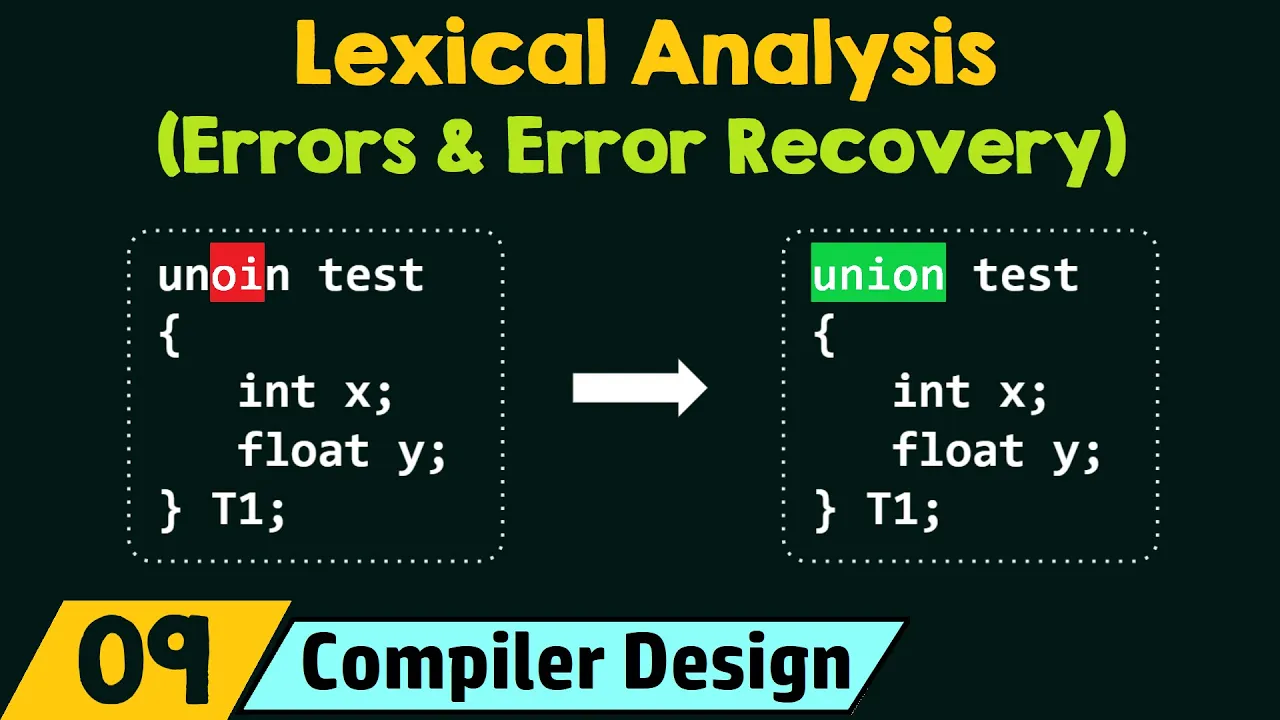
In lexical analysis, the error handler performs three key functions: error detection, error reporting, and error recovery; lexical errors include identifier names with excessive symbols, numeric constants exceeding data type ranges, ill-formed numeric constants, and illegal characters; common error recovery strategies include panic mode recovery (skipping characters until a delimiter is found), character transposition, character insertion, character deletion, and character replacement.
Click to watch →
COMP442/6421 - Compiler Design - week 2 - lexical analysis
1.9K
The final phase involves implementing the lexical analyzer using the state transition table. The next_token function reads characters and follows transitions until reaching a final state, then returns the corresponding token. Three implementation strategies exist: using lexical analyzer generators like lex, manual table-driven implementation, and handwritten lexical analyzers. Generators provide safety and efficiency but require learning their input formats. Lexical error recovery primarily involves unrecognized characters; panic mode (skipping invalid characters) is the safest approach. Ambiguous cases like 'n-1' should be resolved by the parser, not the scanner, maintaining separation of concerns between lexical and syntactic analysis.
Click to watch →
Role Of Lexical Analyzer|AT and Compiler Design-21CS51|VTU-Syllabus.Lec-2#compiler design
2.2K
Lexical errors occur when character sequences cannot match any valid token pattern, including misspellings of keywords, operators, or identifiers. Common causes include illegal characters at token beginnings, such as starting identifiers with digits. The lexical analyzer employs recovery strategies: deletion (removing one character), insertion (adding missing characters), replacement (substituting characters), and panic mode (ignoring successive characters until finding a well-formed token). These mechanisms allow the compiler to continue processing despite encountering invalid input, providing meaningful error messages while maintaining overall compilation progress.
Click to watch →
5. Role of lexical analyzer | lexical analysis | Compiler design in Telugu
975
The lexical analyzer implements error recovery mechanisms to handle detected errors: (1) Inserting Characters - when a character is missing, the analyzer inserts the correct one (e.g., inserting 'i' in 'for' to make 'for'), (2) Deleting Characters - when an extra character is present, the analyzer deletes it (e.g., deleting extra 'i' in 'fori'), (3) Replacing Characters - when a character is incorrect, the analyzer replaces it with the correct one (e.g., replacing 'e' with 'i' in 'for'), and (4) Swapping Characters - when two characters are in the wrong order, the analyzer swaps them (e.g., swapping 'f' and 'o' in 'fo' to make 'of'). These mechanisms help the compiler continue processing despite errors.
Click to watch →
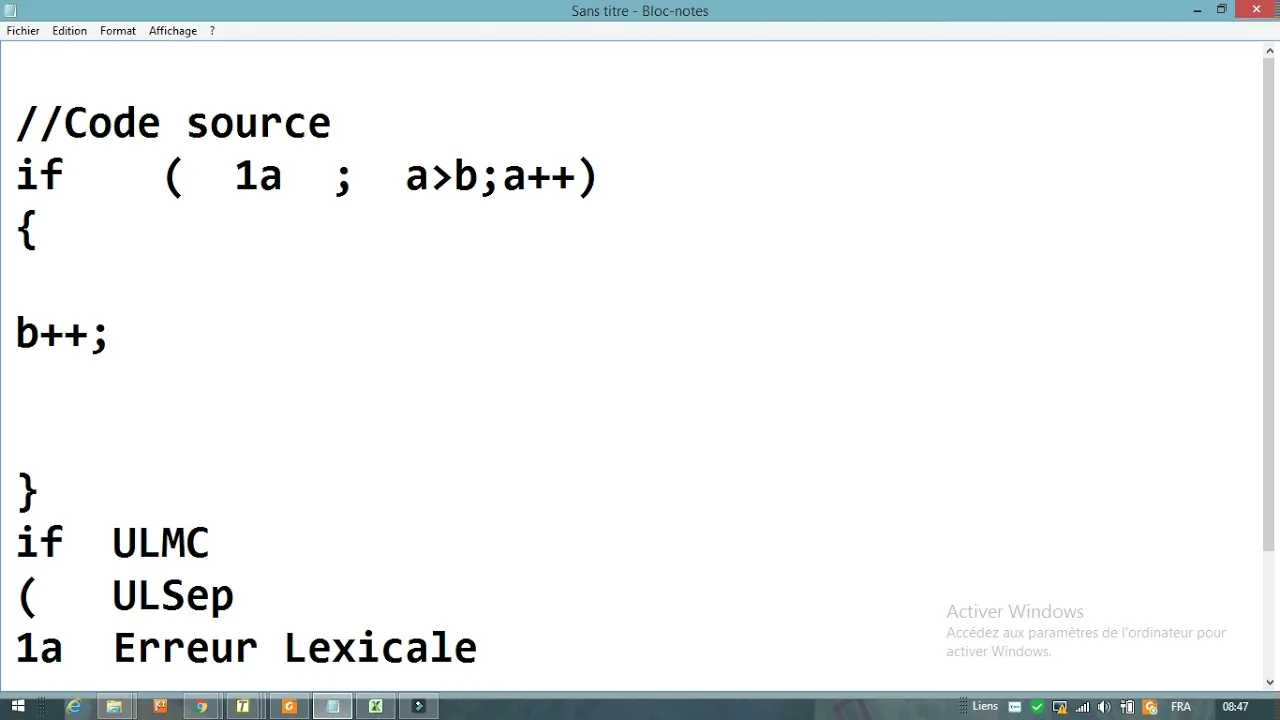
Chapitre II Analyse Lexicale
2.1K
Each lexical unit can be associated with a regular expression defining the language of all valid lexemes. Regular expressions use notation: character classes like [a-z] for letters, [0-9] for digits, union operator '|' for alternatives, Kleene star '*' for zero or more repetitions. For identifiers: (letter|underscore)(letter|digit|underscore)*. All lexical units in programming languages form regular languages, which can be described by regular expressions. Finite automata are used to recognize whether a given character sequence belongs to a lexical unit. The automaton simulates the regular expression and accepts the sequence if it matches the pattern. To implement a lexical analyzer, one can write a program that simulates a finite automaton. Modern compilers use various error recovery strategies: panic mode (skip characters until synchronization point), insertion, deletion, and substitution. The goal is to allow the compiler to continue processing and report all errors rather than stopping at the first error. Error recovery strategies include using heuristics or AI to suggest corrections.
Click to watch →
Deep Dive
Semantic Analysis and the creation of Symbol Tables to track variable scopes and types.

CE305: Semantics (part 2), Types and Intermediate languages
286
Semantic analysis ensures programs satisfy rules about variables, objects, expressions, and treatments. Key tasks include finding declarations, determining static types, reorganizing the abstract syntax tree, and detecting errors. Static properties can be determined without execution, while dynamic properties require considering all possible executions. Symbol tables provide additional information to the AST for determining variable scope and types, implementing narrow scope declarations that override wider scope declarations. They can be implemented using stack-based approaches (push declarations, pop when scope ends) or tree-based hierarchies.
Click to watch →
One Engine to Fuzz 'em All: Generic Language Processor Testing with Semantic Validation
333
Semantic validation builds symbol tables containing information about scopes and types carried by the IR. Each program has global and local scopes. The symbol table tracks names, types, and order IDs (statement order in source program) of every definition within a scope. To find available variables at any location, the system checks the most inner scope first, then moves outward. Only variables defined before the current location are considered available for replacement.
Click to watch →

Специальный выпуск: лекции по тулчейну, часть 1, фронтенд
20.3K
Semantic analysis performs context-sensitive checks that parsers cannot handle alone. It maintains symbol tables tracking declared variables, functions, and types. Semantic analysis verifies type correctness, checks for duplicate declarations, ensures proper function parameter matching, and performs other context-dependent validations. The analyzer works iteratively with the parser, providing feedback that may require resuming parsing. This phase catches errors that purely syntactic analysis would miss.
Click to watch →

Языки программирования и теория компиляции 3. Восходящие парсеры
582
Semantic analysis requires understanding token properties beyond syntax: type (identifier, keyword, literal), value, memory requirements (size, alignment), scope (visibility), and ownership (creation/destruction). The same token can have different meanings in different contexts—for example, an identifier might declare a variable, call a function, or name a type. Symbol tables map identifiers to their associated information, tracking declared entities throughout the program. Construction involves traversing the abstract syntax tree and populating tables with entries for each entity.
Click to watch →
C++ Compiler Construction - Early Insights and Running It in the Browser - Abhilekh Gautam
563
Semantic analysis checks code meaning, including type checking and scope verification. Scope is managed using a linked list where each scope has a parent scope. The symbol table stores identifier information (like types) and searches through nested scopes to find variables. If a variable isn't found in the current scope or any parent scope, it's considered unreachable. This helps catch errors like using undeclared variables or accessing variables outside their scope.
Click to watch →
Lexical Analysis
Lexical Analysis
0:01- 1
Converts character sequences into meaningful tokens.
- 2
Tokenization is whitespace-insensitive in code structures.
- 3
Tokens are grouped characters with assigned meanings.
Scannerless Parsing
While traditional compiler design separates language processing into a distinct lexing phase followed by parsing, an alternative approach known as 'Scannerless Parsing' merges these two steps. Instead of converting a character stream into discrete tokens beforehand, a scannerless parser operates directly on the raw text stream using a single, unified grammar. This approach eliminates the 'lexical feedback' problem—where the parser must guide the lexer to resolve ambiguities, common in languages like C++ or JavaScript. By bypassing a separate lexer, scannerless parsing simplifies the handling of complex tokenization, nested comments, and context-sensitive keywords. Although it can be more computationally intensive than traditional two-phase systems, it provides a more flexible framework for processing modern, complex programming languages and domain-specific languages.
Basic understanding of programming language syntax, including concepts like keywords, variables, operators, and literals.
Familiarity with regular expressions (Regex) used for pattern matching in text.
A high-level understanding of the compilation pipeline (how source code is translated to machine code or bytecode).
Fundamental concepts of character encoding (such as ASCII and UTF-8) and basic string manipulation.
Syntax Analysis (Parsing) and the construction of Abstract Syntax Trees (ASTs) using the generated tokens.
Using automated toolsets like Lex, Flex, or ANTLR to generate lexical analyzers from grammar rules.
Implementing lexical error handling and recovery strategies to deal with invalid characters in source code.
Semantic Analysis and the creation of Symbol Tables to track variable scopes and types.
44.1K views2Klikes3:12@TsodingDailyOriginal Release: 2023-02-07
uh can you Trill me tell uh what is Alexa oh okay let's give it open up google.com let's open it up Alexa so lexical anal Isis um analysis yeah analysis in computer science lexical and Analysis relaxing organization is the process of converting a sequence of characters we have a sequence of characters into a sequence of lexical tokens strings with an assigned and those identified meaning a problem that performs technical analysis may be a term texture whatever okay so we have a sequence of characters and you convert in it into a sequence of tokens and tokens is basically something that has actual meaning so characters by themselves don't have a meaning but the tokens do have a meaning right for instance let's take a look at the for Loop all right uh something like this what kind of tokens do you have so we have a sequence of characters it doesn't really have any meaning but the tokens that you have the first one is a keyword four the next one is open pattern the next token is integer notice how there's no spaces between four uh between four open pair and integer but it's still three tokens what's funny is that if you remove a space between end and I this becomes a single token right but if you put spaces in here in here or remove spaces from here it's still going to be 30 tokens so this kind of like separation into meaningful Parts is not really white space sensitive where here it is why space sensitive because it's kind of difficult to distinguish whether you mean a type or a variable right so and the process of analyzing where like what is a symbol what is equals what is a number what is a semicolon or something like that it's called lexical analysis or tokenization so here you have a sequence of characters here we have a sequence of tokens right and tokens are keyword this is a keyword then open parent then symbol another symbol right so then equals then number then semicolon so this process of taking a sequence of characters and actually grouping them and analyzing and assigning a sort of like kind to them or class to them is called lexical analysis relaxing tokenization whatever you wanted so this kind of process has like different names that's what it is it's no gatekeeping no any mathematical it's as simple as that you take a sequence of characters you convert it to a sequence of tokens a tokens and Groove characters they have meme
Up Next
14:19
Compiler Design Introduction: Phases & Architecture Explained
@nesoacademy
560.3K views•2022-03-26
87:26
Introduction to Secure Multiparty Computation with Yehuda Lindell
@fhe_org
7.7K views•2021-02-04
126:38
Cello: A High-Level C Library for Experimental Programming
@TsodingDaily
63.4K views•2024-09-26
19:25
Enigma Machine Mechanics: WWII Encryption Explained
@JaredOwen
13.2M views•2021-12-11
Related Study Plans & Knowledge Roadmaps
Structured learning paths in Computer Science
computer-science
Container Runtimes: Namespaces, Cgroups & Go
01Linux Systems & Go Programming Foundations
02The Core of Isolation: Chroot and Filesystems
03Linux Namespaces: Process Isolation
+ 3 more learning modules
32h6 modules
Explore Roadmap
computer-science
Building a CHIP-8 Emulator: Rust & CPU Basics
01Computer Architecture Foundations (Bits & Bytes)
02Rust Programming for Systems Development
03CHIP-8 Virtual Hardware Specifications
+ 2 more learning modules
32h5 modules
Explore Roadmap
computer-science
Building BitTorrent: Go, P2P & Concurrency
01Go Fundamentals & Concurrency
02Networking Foundations & P2P Architecture
03Bencode Parsing & Torrent Metadata
+ 3 more learning modules
26h6 modules
Explore Roadmap
computer-science
Actor Models (C++ Concurrency & Lock-Free)
01C++ Multi-Threading Foundations
02Thread Pools and Task Scheduling
03Atomics and Lock-Free Queue Design
+ 3 more learning modules
45h6 modules
Explore Roadmap