















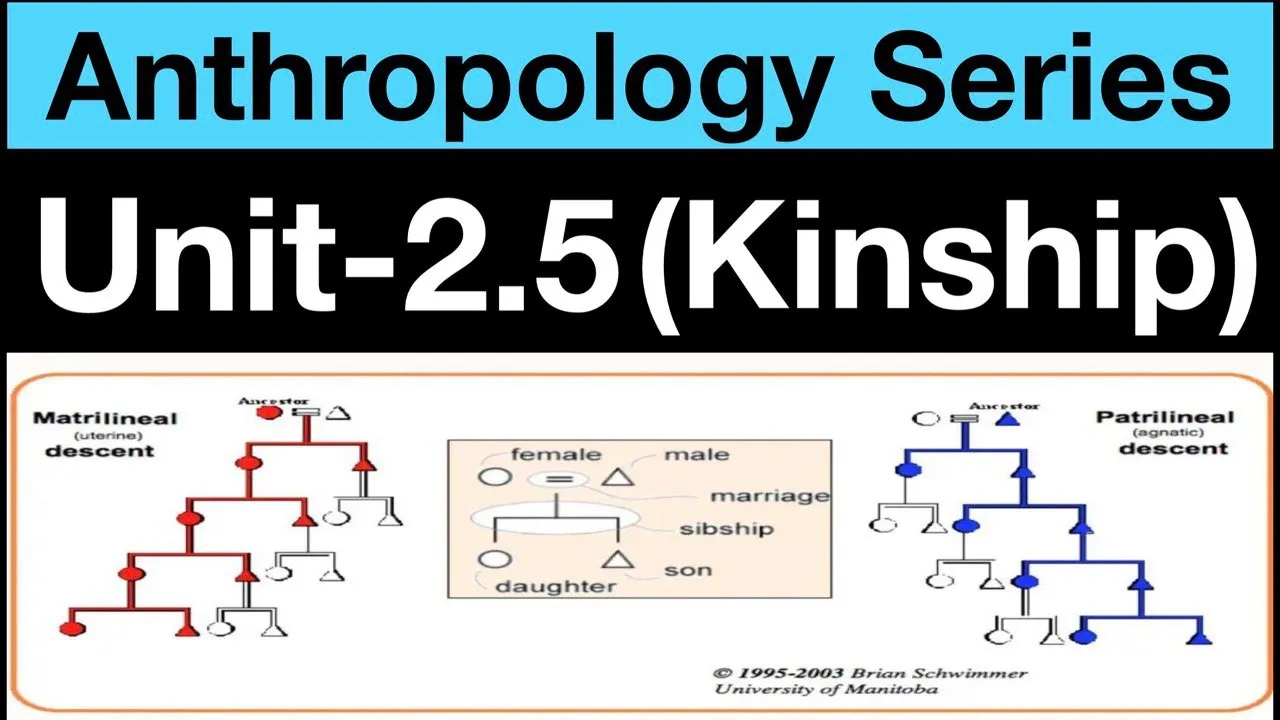









Kinship structures are fundamental to anthropology, encompassing descent systems (unilineal: patrilineal or matrilineal; cognatic: bilineal, ambilineal, parallel, bilateral) and marriage systems (monogamy, polygamy/polygyny, polyandry, group marriage, same-sex unions, ghost marriages), which together determine how families are organized, property is inherited, and social responsibilities are assigned across different cultures.
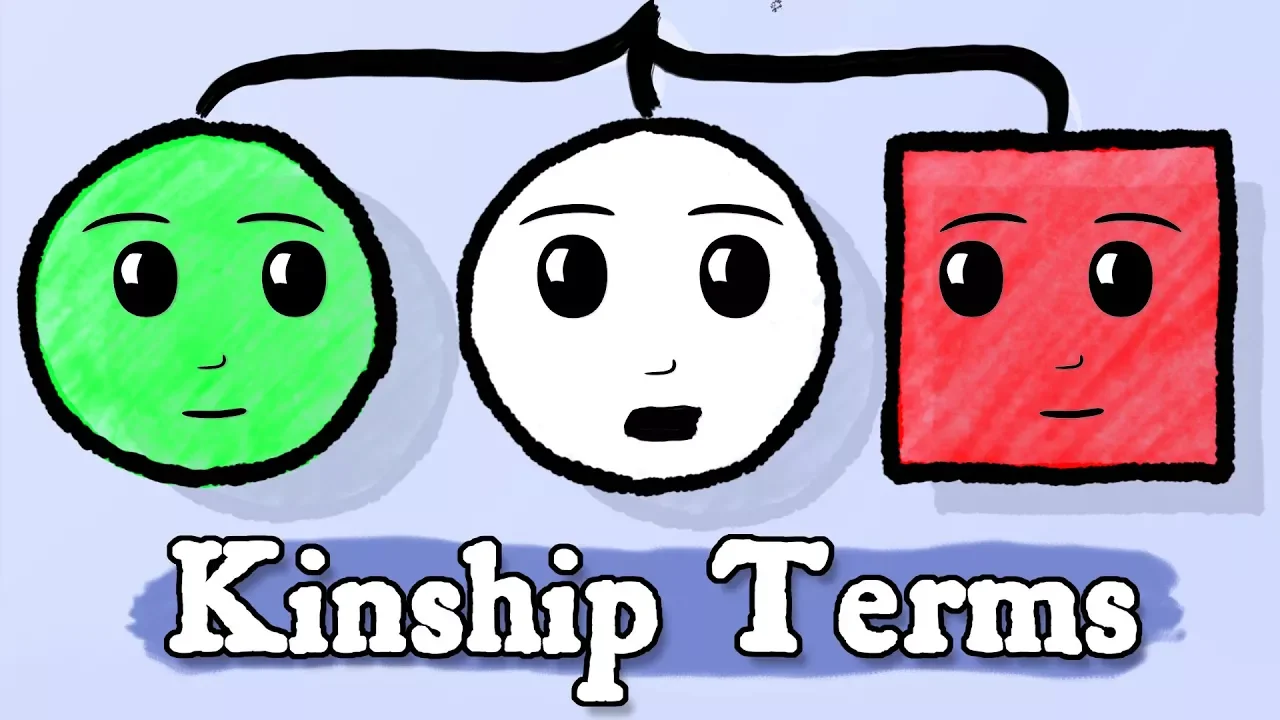
Kinship Structures Explained: Anthropology of Family & Marriage
Added:The core concept of cultural anthropology and how anthropologists study human societies.
The principle of cultural relativism, to approach diverse family structures without ethnocentric bias.
The fundamental distinction between biological relatedness (consanguinity) and socially constructed relationships (affinity).
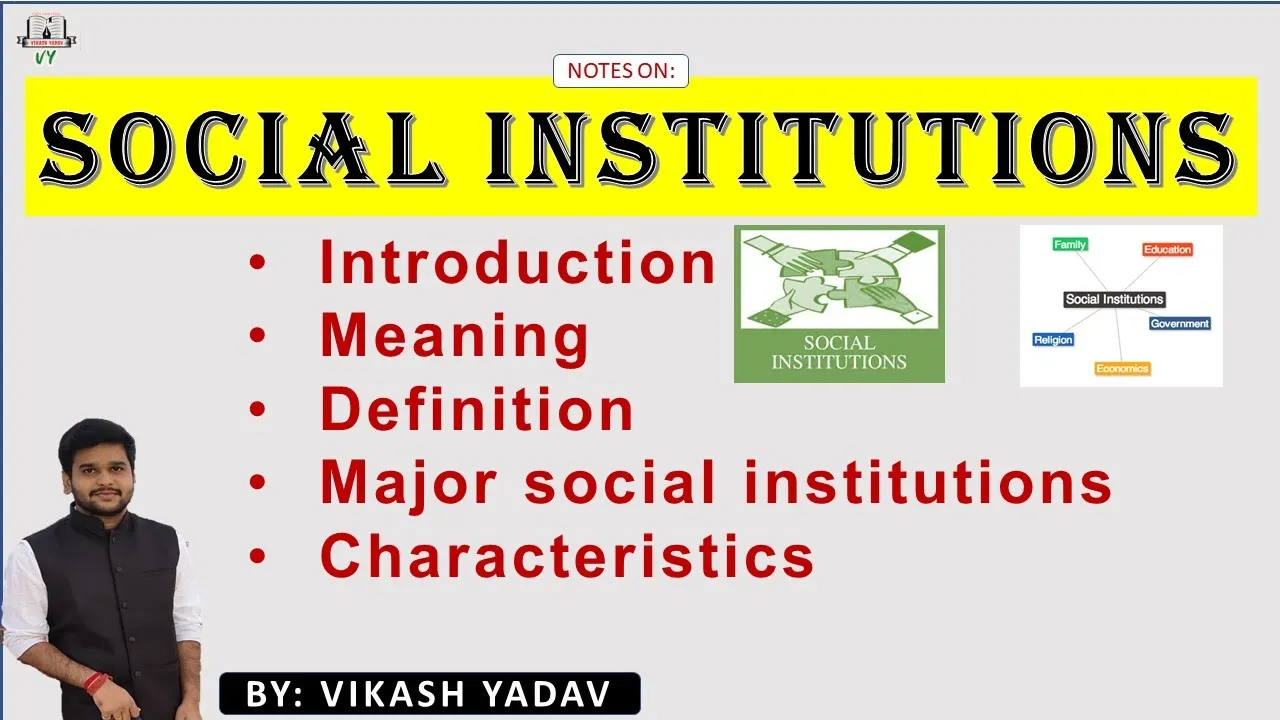
An understanding of basic social institutions and how they function to maintain societal cohesion.
The major kinship classification systems, such as the Eskimo, Hawaiian, Iroquois, and Sudanese systems.
Advanced anthropological theories of kinship, including Descent Theory (Radcliffe-Brown) versus Alliance Theory (Lévi-Strauss).
The impact of modern technologies, such as Assisted Reproductive Technology (ART), and globalization on contemporary definitions of family.
How kinship and marriage systems influence economic structures, inheritance laws, and political alliances in various societies.
104.5K views166likes19:08Original Release: 2023-11-28
[Music] welcome to [Music] anthodium makak kinship is one of the first topics Anthropologist studied over 150 years ago while the term may seem quaint issues of intimate relationships never get old part one kinship structures outlines different ways of structuring family through marriage part two brothers sisters and Beyond explores siblinghood and culturally specific kin relationships part three edus ubiquitous questions whether there are Universal psychological Dynamics between parent parents and children part four kinship and contemporary family making offers an anthropological perspective on significant contemporary shifts in the ways family is created and defined and part five manipulating kinship Cults and politics explores what happens when kinship structures and family ties are interrupted or controlled for political purposes no I am your father I don't have friends I got family who are you this is my family this little and broken but still good yeah still good caning sh fundamentally means family this can refer to biological or blood relations or to the culturally defined relationships between individuals who are commonly thought of as having family ties anthropologists have long been interested in kinship because the family is the fundamental unit of social organization some sort of kinship structure is present in every society and ultimately influences other culturally specific ways of classifying people forming groups assigning tasks and more earlier work in anthropology took a functionalist and structuralist approach to kinship interested in the technicalities of kinship categories and genealogical descent marriage apol Alliance and resulting rights and duties associated with certain kinship roles more recent approaches move away from genealogy and kinship systems to focus on individual meaning behavior and agency these explores the experiences of attachment and investigate how kinship intersects with cultural ideas and practices such as regarding gender power and the body look there isn't going to be one kind of family in the year 2000 we're moving towards a world with options we're moving towards a world in which people can set up all kinds of families what we can look forward to is a diversity of families overall the study of kinship has been fundamental to the discipline of anthropology because it has helped illustrate the diverse variations on this most basic unit of social life and ushering in ongoing discussions on the role of biology and culture in developing them kinship structures can primarily be understood in terms of descent marriage and siblingship descent determines answers to such questions as who takes takes the family name who is given property when Elders die who's thought to inherit particular characteristics or roles of parents caretakers or ancestors marriage rules govern who is allowed to marry who how many people are involved in a union how child rearing roles are determined in more siblingship might address such issues as who counts as a full brother or sister and how age senority is understood there are additional aspects to kinship such as ritualized relationships or Tabo that are specific to particular cultures and [Music] societies descent there are two overarching forms of descent unilineal and cognetic unilineal descent traces inheritance through one line of ancestors either the male or the female this type of descent has been most commonly found among smaller scale societies with Surplus Food Supplies such as rich foragers and smallscale Farmers when when descent is traced through the male Line This is known as patrilineal descent here both males and females belong to their father's King group but not their mothers and only males pass on their family identity to their children a woman's children are members of her husband's patrilineal line balon's descent is [Music] patrilineal [Music] [Music] [Music] [Music] for when descent is traced through the female Line This is known as matrilineal descent when using this pattern individuals are relatives if they can trace descent through females to the same female ancestor while both males and female children are members of their mother's matrilineal descent group only daughters can pass on the family line to their offspring this landowner has a son and also much to her satisfaction two daughters in Kazi Society overall responsibility lies with mothers the mother is the head of the family when she dies her daughter inherits her property that's how it's been for Generations the Kazi practiced matrilineal descent the youngest daughter of the family the kadu inherits all ancestral property sons live with their mothers until they get married then they move in with their wife's family every time a daughter marries the family extends the property to accommodate her new family our children have their mother's name not their father's name your task as a man is to fulfill your family's needs M the women are in charge of the home and the property they make sure everything runs smoothly in societies using matal descent the mother's brother as the closest Elder male Kinsmen often takes on significant responsibilities in raising Offspring so biological fathers play a larger role in rearing their sister's children than their own inheritance may also follow a similar pattern the Ashanti Kingdom of central Ghana exhibits this kind of unilineal descent the king traditionally passes his title and Status onto his sister's son who is a member of the ruling matrinal group rather than his own who is not in cognetic descent as opposed to unilineal descent descent is determined by both male and female lines the four basic types of cognetic descent are bilineal ambilineal parallel and bilateral descent in bilineal descent individuals Trace both patrilineal and matrilineal descent where each descent line governs different aspects of social duties and property inheritance the Toda of Southern India practice bilineal descent property is inherited patrilineally and ritualistic Privileges and duties particularly for funerals are inherited matrilineally an ambilineal descent the individual may choose which line of descent to claim depending on family status and individual situation this can work in different ways for instance if a man marries a woman from a politically or economically more important family he may agree to let his children identify with their mother's family line to enhance their prospects and standing within the society the ambilineal of the bharari in Oceana Works slightly differently and is expressed through local here descent allows for membership in a number of different descent groups and access to their Gardens as inherited from a founding ancestor over the course of their lives people may move and in doing so shift their primary affiliation and claim rights to different [Music] Gardens parallel descent is gender-based with men claiming the patrilineal line of descent and women the matrilineal the Ain of Brazil practice parallel descent finally comes bilateral descent in bilateral descent all Offspring Trace descent from all biological ancestors regardless of their gender or side of the family non-biological family members may also count into descent and kinship albeit more distantly such as quote unquote in-laws this descent pattern is characteristic of large Agricultural and Industrial Nations that is common throughout Europe and the Americas a slight male bias may be presentent in marriage and naming practices such as in North America where a Man's last name has typically been taken by his wife and children marriage there are two major forms of marriage found most commonly around the globe monogamy and polygamy monogamy refers to being married to only one spouse at a time if you ask couples why they chose monogamy you'll hear one answer again and again they fell in love we met in a candy store 1946 we went to a college together we were both in a relationship then we didn't cheat look so guilty every time we talk about I'm bad at talking about this it's the arranged marriage whatever they selected for me it was good and I'm very happy with that we had a study date one night and that study break turned into Anatomy I guess I've never felt this way about anybody before I feel God has blessed us we found true love but monog and love aren't the same thing we are so psychotically welded to this idea that monogamy means love and love means monogamy and in the absence of monogamy there is not love love is a feeling monogamy is a rule you'll only have sex with this one person and most people live in a culture where they're expected at some point to make that rule a legal contract called marriage polygamy or plural marriage refers to being married to more than one spouse at a time there are two main variations on polygamy polygyny is when one man is married to multiple women at the same [Music] time old school old school of thought maximum foreign spee spee speee spe this tension between human desire and society's needs is recognized by the Wabi of ner they are nomads but when they settle a while love and marriage are much on their [Music] minds they have two sorts of marriages those which are arranged and those which just happen the first for family stability the the second for love the madness somehow they both exist together the Wabi are polygamists each man can marry as many wives as his financial situation permits that is the number of cows he owns but this is not what differentiates them from other polygamous societies the difference is that it is the women who choose according to them for a man to be attractive he must have a broad forehead a large nose white teeth and eyes and a nice [Music] [Music] [Applause] voice during the Geral Festival the men dance dressed up as women while the women decide who they will spend the night or the rest of their days with until the time of marriage wavei women enjoy complete sexual Freedom which is only restricted from the birth of their first [Applause] child after marriage they lose this freedom but acquire the right to divorce their husband and return to their mother's camp or go with another man without this leading to any rejection from [Music] [Applause] [Music] society a much RAR form of marriage than monogamy or polygamy group marriage occurs when multiple individuals are married to each other at at the same time this is distinguished from polygamy in group marriage all members are considered married to each other and practice a certain extent of sexual communalism where in polygamy the spouse of one gender is the only one considered married to co-wives or co-h usbands and the only one enjoying a sexual relationship with him in Alaska upic people entered into formally acknowledged couple to couple marriages before missionaries Bann the practice in the early 20th century in the United States the utopian Onida Community founded in 1848 consider themselves all to be married to each other and any male female pair in the 200 plus group could have sex even in cultures where it is acknowledged and approved group marriage tends to be in the [Music] minority marriages could vary not only in the number of people they involved but the types of people as well well although the names and laws for such Arrangements may have differed publicly recognized same-sex unions have popped up in various civilizations throughout history Mesopotamian prayers included blessings for such couples while Native American two-spirit individuals had relationships with both sexes the first instances of such Arrangements actually being called marriage come from Rome where the emperor's Nero and elagabalus both married men in public ceremonies with the practice being explicitly banned in 342 ad but similar Traditions survived well into the Christian era such as ad alop puisis or brother making an Orthodox churches and even an actual marriage between two men recorded in 1061 at a small Chapel in Spain nor was marriage even necessarily between two living people ghost marriages where either the bride or groom were deceased were conducted in China to continue family lineages or appease Restless spirits and some tribes in Sudan maintain similar practices despite all these differences a lot of marriages throughout history did have one thing in common with crucial matters like property and reproduction at stake they were way too important to depend on young love how do you understand the kinship structure of your own family what would your kinship chart look like how and why do you think kinship structures matter today how are kinship structures understood differently today than previous generations of your family how do you think kinship structures and practices might change over the next 50 years thanks for watching I hope you enjoyed this video if you want to learn more about the study of kinship and family here are some useful resources in the description below don't forget to like And subscribe to get your regular dose of anthor [Music] fins [Music]
Up Next

86:22
Commercial Surrogacy in India: Labor, Kinship & Paradoxes | Amrita Pande
@indexingtransformation4075
1K views•2017-10-05

38:41
Astrobiology Through an Anthropological Lens: Field Insights
@georgiatechastrobiology
128 views•2021-04-14

10:11
Kinship as Social Practice in Contemporary Family-Making
@anthrodorphins
35K views•2023-12-07

10:38
Psychology of Internet Trolling and Pranks Explained
@AzzyLand
10.7M views•2017-12-20
Related Study Plans & Knowledge Roadmaps
Structured learning paths in Anthropology
anthropology
Space Anthropology: Analogs, Culture & Habitats
01Foundations of Space Anthropology & Cosmic Imaginaries
02Extreme Isolation & Micro-Societies in Orbit
03Space Analog Habitats & Earth-Based Simulations
+ 2 more learning modules
15h5 modules
Explore Roadmap
anthropology
Legal Anthropology: Customary Law & Pluralism
01Foundations of Legal Anthropology and Social Justice
02Legal Pluralism: Coexisting Legal Systems
03Customary Law and Indigenous Dispute Resolution
+ 2 more learning modules
15h5 modules
Explore Roadmap
anthropology
Global Tourism: Gaze, Authenticity & Heritage
01Introduction to the Sociology of Tourism
02The 'Tourist Gaze' (John Urry)
03Staged Authenticity in Tourism
+ 3 more learning modules
14h6 modules
Explore Roadmap
anthropology
Modern Kinship (ART, Adoption & Chosen Family)
01Foundations of Kinship and Family
02Assisted Reproductive Technologies (ART) & Relatedness
03Transnational Adoption and Global Kinship
+ 2 more learning modules
12h5 modules
Explore Roadmap